



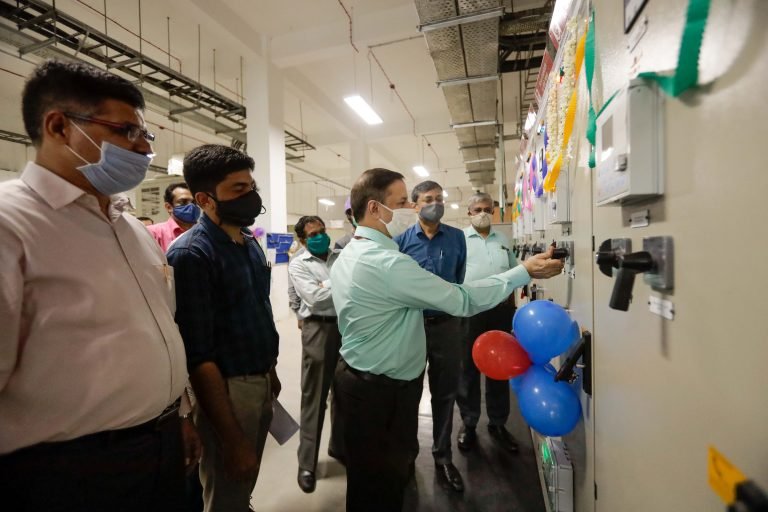
Kochi (Metro Rail News) : Kochi Metro Rail Limited has constructed a Combined Auxiliary and Traction substation at Muttom Depot.
The new substation will ensure continuous uninterrupted 415 V AC Auxiliary and 750 V DC Traction Power supply system at its Operation Command Centre at Muttom where the regular maintenance of Metro coaches, troubleshooting of any faults and Operational Controls are taking place.
Kochi Metro Rail Limited MD Alkesh Kumar Sharma, IAS, on Friday 11.09.2020 inaugurated the substation in the presence of metro officials.
“Upon commissioning of the combined substation, KMRL will be equipped with uninterrupted Train operations. The 2018 floods had disrupted the regular metro operations and this facility has been set up to obviate any such eventuality. The sub-station will prevent any financial loss to KMRL due to the damage to assets and spares that can be caused due to floods.” said Alkesh Kumar Sharma IAS.
The combined substation along with a 2-story building was constructed at a total cost of Rs 20 Crores. The auxiliary and traction substation is located at 1st floor of the building which will safeguard the substation from any water logging. The ground floor and the second floor of the building is dedicated for storage of spare parts and sensitive equipment.
The substation has a capacity of 3000 kVA for Auxiliary power supply and 2600 kVA for Traction power with 100 % redundancy. In the substation, the 33 kV Power supply will be converted into 415 V AC for meeting the Auxiliary loads such as lifts, lighting, AC and ventilation etc and 33 kV will be converted into 750 V DC to feed to the 3rd rail for Powering the trains to facilitate the train movement inside the yard for stabling, regular maintenance and troubleshooting of the trains. The substation has been designed and constructed taking into account the future load requirements of Kochi Metro yard at Muttom Depot due to the ongoing Kochi Metro extension project to Thripunithura and proposed phase II project to Kakkanad.
KMRL commissions a new electric sub-station at Muttom to fight floods
Indian Railways to float tenders for Vande Bharat Train Project
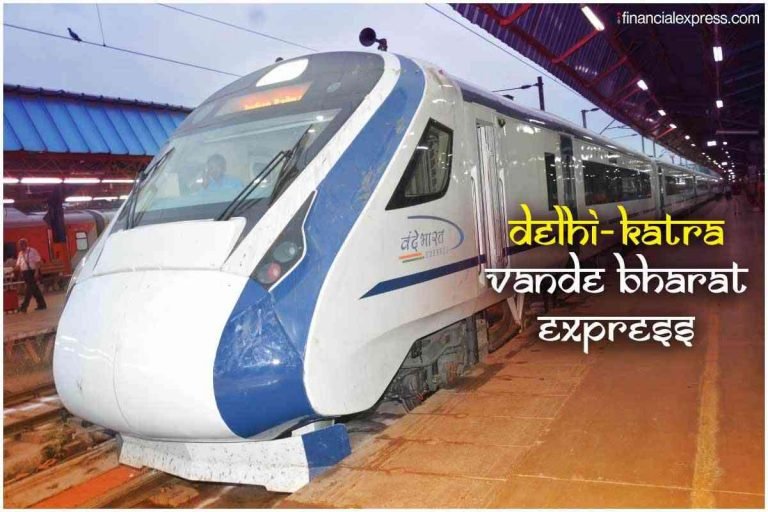
NEW DELHI (Metro Rail News): The Railway Board has taken charge of the Rs 1,500 crore Vande Bharat project, and will float the tender shortly after Integral Coach Factory (ICF) failed three times to bid out the train set manufacturing contract. The first two Vande Bharat train sets were successfully manufactured at the Chennai-based ICF.
buy cialis professional online https://blackmenheal.org/wp-content/themes/twentytwentytwo/inc/patterns/en/cialis-professional.html no prescription
“The Board took a conscious decision to take the initiative after the repeated failures on the part of ICF on the tendering process. Moreover, the ICF along with two other production units would be involved in manufacturing the train set after the tender was awarded,” according to a Railway Ministry official.
The last tender was floated on 22 December 2019 by the ICF and was opened on 11 July and finally discharged on 21 August. It was the third attempt for floating the tender, which was subsequently discharged as the production of the Vande Bharat trains, also known as Train 18, has been mired in controversy.
The railways maintained that the tender for 44 Vande Bharat train sets was cancelled to maintain transparency as some bidders had revealed financial details of their offer even before clearing the technical evaluation.
“While evaluating the technical bids, the tender committee noticed that some of the details of the financial offer have been wrongly revealed. Financial bids of only those bidders are opened who qualify in the technical bids,” Railway Board Chairman V K Yadav had said after cancellation of the tender.
The railways maintained that in order to have complete transparency, while evaluating the technical bids, financial bids are not available to the tender evaluation committee to enable “evaluation purely on technical conditions”. In the latest cancelled tender, Chinese state-owned CRRC Corporation, in a joint venture with an Indian firm, was among six companies in the race to bag an over Rs 1,500 crore Vande Bharat train project.
It would take about two years to develop the prototype after getting the contract, which the successful bidder would have to roll out by 2023, if the contract is awarded by December this year.
After the cancellation of the tender for manufacturing 44 semi-high speed Vande Bharat train sets, the railways has said in a statement that a fresh tender will be floated within a week as per revised public procurement norms, giving preference to local suppliers.
“Fresh tender will be floated within a week as per Revised Public Procurement (preference to Make in India) order,” the railways has said.
Vande Bharat trains are indigenous electric multiple units and the first train set with world class facilities was rolled out in a record time of 18 months by the ICF.
Currently, two Vande Bharat trains manufactured indigenously at ICF are operational between Delhi-Varanasi and Delhi-Katra.
The first 16-coach Vande Bharat Express, the locomotive-less train between Delhi and Varanasi was flagged off by Prime Minister Narendra Modi on 15 February.
Manufactured at an estimated cost of Rs 100 crore, the Vande Bharat service is equipped with top notch facilities, such as automatic doors, Wi-Fi availability and CCTV cameras and many other advanced features.
Kerala CM inaugurates extension of Kochi Metro
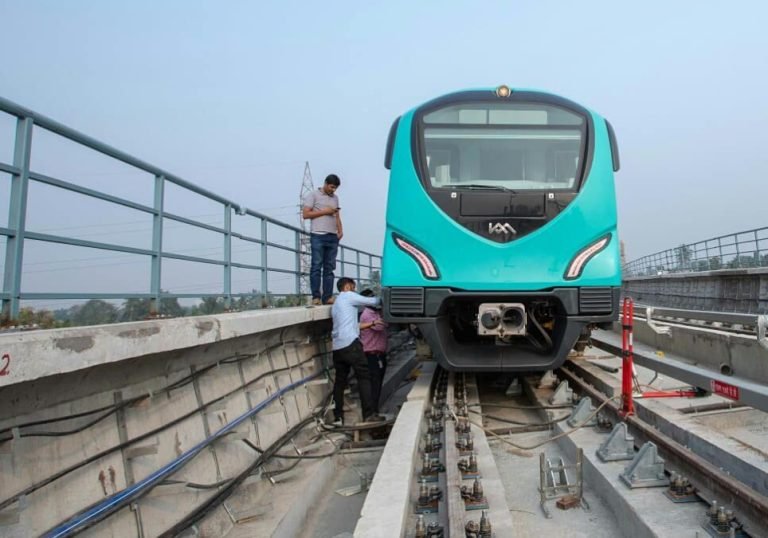
KOCHI (Metro Rail News): Kerala chief minister Pinarayi Vijayan Monday inaugurated a 1.33 km-long section of the Kochi Metro between Thykoodam and Petta, wrapping up phase 1 of operations of the project. The Kochi Metro now runs on a 25-km long fully-elevated section between Aluva and Petta with 20 stations in between.
The chief minister flagged off the first train from Petta station through video-conference from Thiruvananthapuram with Union Minister for Civil Aviation, Housing and Urban Affairs Hardeep Singh Puri from New Delhi. Ernakulam MP Hibi Eden, MLAs PT Thomas and M Swaraj, Kochi Mayor Soumini Jain and Ernakulam district collector S Suhas were present at the Petta station during the inauguration and subsequently rode the first train heading towards Aluva.
The extension of the Metro service till Petta incidentally came on the day that Metro services resumed across the country as part of the Unlock 4 measures of the Centre. The chief minister said the extension till Petta was ready in March, but owing to the pandemic the and the subsequent lockdown, the formal inauguration was pushed to September.
The event also marked the culmination of the association of Delhi Metro Rail Corporation (DMRC) with Kochi Metro as a consulting agency. Subsequent phases, including the extension from Petta till Thrippunithura, and the proposed corridor from JLN station to Infopark via Kakkanad, of construction and operationalisation will be helmed by the Kochi Metro Rail Limited (KMRL), the parent company running the Metro service. While the construction works on the extension till Thrippunithura are already underway, a detailed project report (DPR) on the Infopark corridor is awaiting clearance from the Centre.
MoHUA secretary MR. Durga Shankar Mishra said in a tweet, ”Delighted to participate in the inauguration of 1.33 km stretch of @MetroRailKochi from Thykoodam to Petta by Hon’ble CM, Kerala & Hon’ble Housing & Urban Affairs Minister on virtual platform today. With the completion of this section, Phase-1 of Blue Line is now complete”.
Lucknow Metro increases stay time limit inside the paid areas
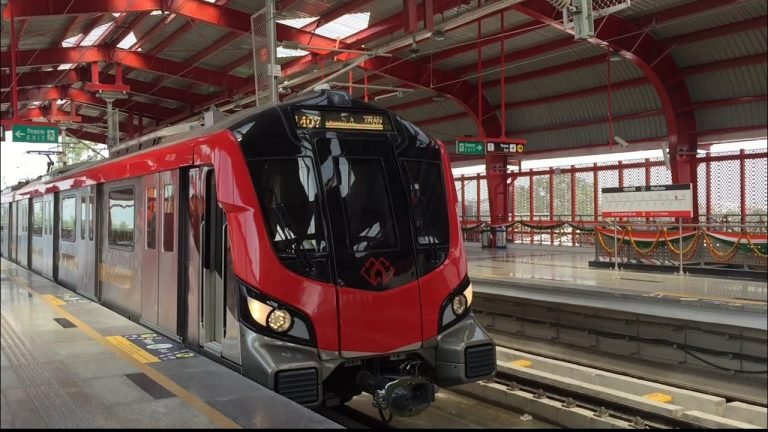
LUCKNOW (Metro Rail News) : To enhance travel experience of the commuters, the ‘Stay time limit’ inside the paid area of metro stations has been increased from 90 Minutes to 120 minutes wef 11.09.2020. It means validity of travelling with tokens and smart card per journey is increased by 30 minutes now. Stay time limit for exiting from the source station is still 20 minutes.
buy propecia online https://blackmenheal.org/wp-content/themes/twentytwentytwo/inc/patterns/en/propecia.html no prescription
“UPMRC has taken this decision to facilitate passenger convenience. The purpose behind increasing the travel validity of the Go Smart Card and Metro tokens in the paid area of the station premises from 90 to 120 minutes is to give passengers a smooth, safe and enjoyable travel experience”, a statement released by the UPMRC said.
“In fact, full vigilance is being exercised in Metro operations during Covid-19, as well as due to the time taken in thermal scanning and sanitization or security checks, Uttar Pradesh Metro has decided to provide these additional facilities to the passengers. But if a passenger stays within the paid area of the station premises, or metro system, even beyond the stipulated deadline, then the fine of Rs 10 per hour continues as before”, said the statement.
“Lucknow Metro has always given priority to the convenience and safety of the passengers. People traveling through Metro Token and Go Smart Card can now use 30 minutes more time in Metro journey than before which will definitely enhance their experience and satisfaction”, said Mr Kumar Keshav, Managing Director of UPMRC.
Metro services to commence from 6:00 AM on all phase-III sections of DMRC this Sunday

NEW DELHI (Metro Rail News) : Metro train services on Phase-III sections of DMRC which usually begin at 8:00 AM on Sundays will begin at 6:00 AM this Sunday i.e, 13th September 2020. This arrangement is being made to facilitate the candidates appearing for the National Eligibility cum Entrance Test (NEET 2020) Examination held by the National Testing Agency this Sunday. These sections are: –
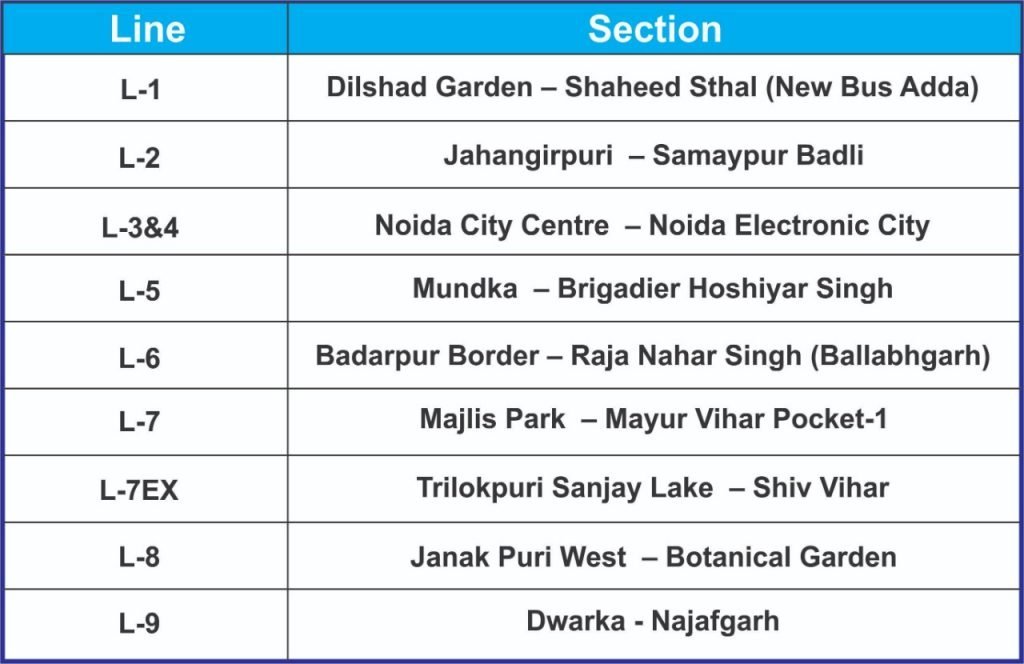
“Metro services on rest of the sections will remain running as per normal schedule from 6:00 AM onwards”, The DMRC said in a statement.
The DMRC further said, “As everyone is aware that amidst the ongoing pandemic, Metro has resumed services with new norms in place for travel by the Metro this week only after a gap of over five months”.
The DMRC has requested the commuters or students to follow the following things while going for a metro travel :-
1. As thermal screening/hand sanitisation of every passenger at entry point of station(s) is now a new normal and trains also halt for few extra seconds to ensure people board/deboard smoothly in adherence to social distancing norms, one must keep at least extra time of 15-30 minutes for his/her travel.
2. To regulate flow of passengers, only limited gates (not all) are opened at station(s) for the time being. One must check the earmarked gate opened for entry at the station(s) beforehand by visiting DMRC’s website www.delhimetrorail.com (Link for gate list is http://delhimetrorail.com/corona/entrygatedetails.aspx) so as to avoid wastage of time in locating the Gate after reaching the station.
3. For your and everyone’s safety and to help prevent spread of Coronavirus, wearing of face mask and adherence to social distancing norms throughout the travel has to be ensured by all commuters. Violation may attract penalties and removal from Metro premises. Entry at the station won’t be permitted if anyone reaches without face mask/cloth. Those having fever or symptoms of Covid will also not be permitted to enter the station.
4. For smooth and faster entry to the station, try to travel with minimum luggage and avoid carrying metallic items as baggage sanitisation and checking of metallic items during frisking by security personnel may further increase your travel time to the destination.
Kochi Metro to increase the frequency of trains for NEET aspirants
Kochi (Metro Rail News): Kochi Metro has decided to increase the frequency of trains during the peak hours for the benefit of people going to work. From Morning 8:30 am to 11:30 am the frequency of trains will be every 7 minutes. The Seven minutes headway will be maintained during the evening from 4:00 pm to 7:00 pm also. The change will be effective from Monday (September 14, 2020) onwards.
“Rest of the Time table will remain the same i.e. a frequency of 10 minutes from 7.00 AM -8.30 AM & 11.30 AM-12.00 Noon and 7 PM-9 PM and of 20 minutes during 12:00 Noon to 2 PM”, said a statement.
“The new decision is to help the office goers in Kochi City. We have been monitoring the situation since the resumption of metro services. To avoid rush we will run more trains .” said Alkesh Kumar Sharma, IAS who is serving as Managing Director of KMRL.
“Kochi Metro has also decided to maintain a frequency of 10 minutes throughout the day on Sunday (September 13, 2020) starting from 8 AM for NEET aspirants and their parents”, an official told Metro Rail News.
In Focus: The man behind the success of JSPL amid Economic Crisis
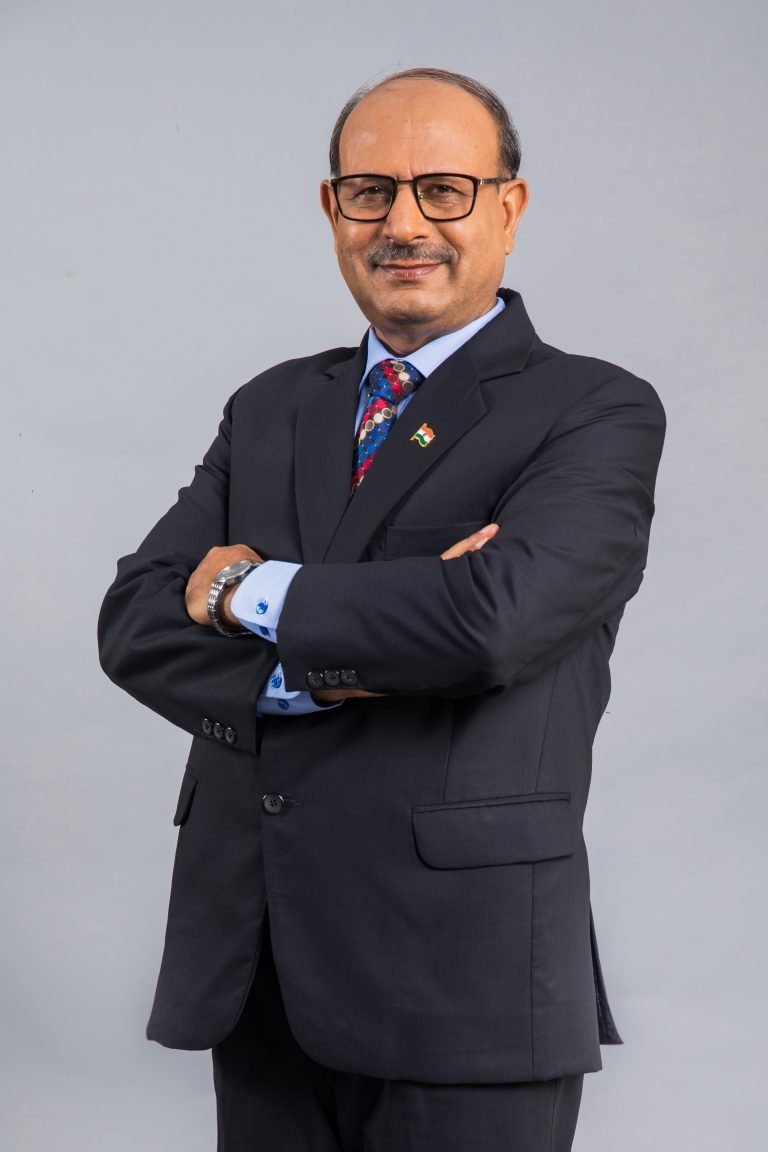
NEW DELHI (Metro Rail News) : The Indian economy is witnessing one of the worst slowdowns in its entire history with the GDP contracting to -23.9 percentage in the First Quarter of the financial year 2020 – 2021. The Iron and Steel sector is not an exception. The power sector is also experiencing a severe crisis since the lockdown. When the nation was under complete lockdown with most of the economic activities closed, Jindal Steel and Power Limited went on to succeed further in the leadership of its Managing Director, Mr V R Sharma. He inspired the entire workforce of Jindal steel and power limited after the Coronavirus spread to achieve extraordinary results in production and sales.
Mr Vidya Rattan Sharma generally known as V R Sharma is a leading Technocrat and a Mechanical Engineer by profession. He holds a degree in mechanical engineering from The United Kingdom. He has worked in the Power, Steel and Mining sector for the last 37 years, while his work experience ranges from planning and management to its execution on the ground. Mr Sharma is also a business graduate with having an MBA degree from the United
Kingdom.
He was working with Abul Khair Group of Bangladesh/UAE/Africa for five years before joining as the Managing Director of Jindal Steel and Power Limited in June 2019. He has also worked with ISPAT Industries, Bhushan Steel Group and Socialist Steel Libya which make his experience vast and enormous. In the last year under the dynamic leadership of Mr Sharma, JSPL has shown excellent performance on different levels. The higher production and Sales during Covid-19 has helped the company to gain a profit of Rs 226 crores and an ever-higher EBIDTA during Covid-19 (1st Quarter of the year 2020-21).

In an exclusive interview with Metro Rail News, he discussed various measures in place that helped the company to gain profits and higher production volumes. He said, “We took lockdown differently. When the lockdown was there, We decided to move on, We did not stop production. It was the reason which helped us to formulate the right strategy to move forward. We utilised our time to give pace to the marketing work along with mobilising our people at workplaces. In Jharkhand, Orissa and Chhattisgarh, the pandemic impact was very
minimal”.
“The local people were healthy. These are the places where we run our plants and keeping in view the concepts of social distancing and personal hygiene. We are working tirelessly to achieve our targets. We minimised overcrowding by allowing the workers of the commercial segment to work from home. These factors were the key to success”, he added.
JSPL is indeed very fast-growing company today & it is building rails which may fulfil the needs of the whole country as of now. The team under the leadership of Mr Sharma has also helped the people of surrounding areas of its establishments during lockdown imposed due to Coronavirus spread.
The company decided to provide help to the people living in the neighbourhood of its establishments. The company helped these people to remain well with deploying a team of doctors available on a 24/7 basis. It is one of the many humanitarian works which Mr Sharma has planned and executed keeping in view the social responsibility of the company along with making a profit with better planning for exports during the lockdown.
As of now, Mr Sharma has been working rigorously to help JSPL continue its success stories ahead in the long run. As the journey continues, The company is likely to achieve higher in the long run under his leadership according to industry experts.
USD 500 million loan for Delhi-Meerut RRTS Corridor
NEW DELHI (Metro Rail News) : The Asian Development Bank (ADB) and the Indian government have signed a 500 million US dollar loan for the Delhi-Meerut Regional Rapid Transit System Corridor.
The signed loan is a first tranche of the ADB approved one billion- dollar loan facility, to build a high-speed, modern, 82-km Delhi-Meerut RRTS Corridor that will improve the regional connectivity and mobility in India’s National capital Region (NCR).
The loan agreement for Delhi-Meerut Regional Rapid Transit System (RRTS) investment project was signed between Additional Secretary in the Ministry of Finance, Sameer Khare, and Country Director of ADB’s India Resident Mission, Kenichi Yokoyama.
The first tranche loan will be supporting the construction of the first of three priority rail corridors that are planned under the NCR Regional Plan 2021 to connect Delhi to other cities in the adjoining states.
The project will aim at providing better connectivity to allow other towns in the NCR to develop as urban economic centres surrounded by the residential areas while also easing the concentration pressure on Delhi. The corridor development will also have a huge demonstration effect. It will pave the way for the paradigm shift in the mobility and pattern of urban development within the region.
The 82-km Delhi-Meerut Regional Rapid Transit System Corridor, with a design speed of 180 km per hour and high-frequency operations of every 5 to 10 minutes, will connect Sarai Kale Khan in Delhi to Modipuram in Meerut in UP. It is expected to reduce the journey time to about 1 hour from the present 3 to 4 hours.
Outer structure of all elevated rapid rail stations finalised by NCRTC
NEW Delhi (Metro Rail News): The Regional Rapid Transit System (RRTS) project has started taking shape with the NCR Transport Corporation (NCRTC) placing of segments on the pillars. It has also finalised the outer structure of all its elevated stations in the Delhi-Ghaziabad-Meerut corridor.
The 82km RRTS route will connect the three cities through 24 stations, 21 of which are in Uttar Pradesh. The project will run high speed trains and estimates to have ridership of about 800,000 daily passengers. “The contours of the outer structure of the stations have been finalised. The buildings will be environment friendly and sustainable while giving a unique look’, according to Sudhir Sharma, chief public relations officer (PRO) of NCRTC.
The officials said that the RRTS station facade will be modular, easy to fabricate and erect. They will comprise of diamond shaped panels to give 3D effect to the external facade.
“Each station will be energy efficient with availability of ample natural sunlight and equipped with solar panels besides having exquisite aesthetic appeal. It will have diagonal structure in the facade which signifies mobility, a sense of motion which is the basis of high speed RRTS trains,” said an officer from NCRTC.
Officials added that the outer design was finalised for all 20 elevated stations, the rest are underground stations with one in Delhi and three in Meerut.
They added that the aesthetically appealing external envelope will be combination of perforated metal sheet, louvres, corrugated sheet, glass panel and polycarbonate roofing which will give unique identity to RRTS stations. All the stations will be designed with solar panels on roof and will be energy efficient and studded with environment friendly lighting fixtures will full compliance to Indian Green Building Council guidelines.
The entire RRTS project is pegged at Rs 30274 crore and proposed to run high-speed trains between Delhi, Ghaziabad and Meerut with a speed of about 180kmph.
The NCRTC has already identified a priority stretch of 17km in Ghaziabad (Sahibabad to Duhai) for which the work started initially while the works have also started for the other 33km connecting stretch from Duhai to Shatabdipuram in Meerut.
DMRC to get fully operational on all lines from tomorrow, frequency of trains increased
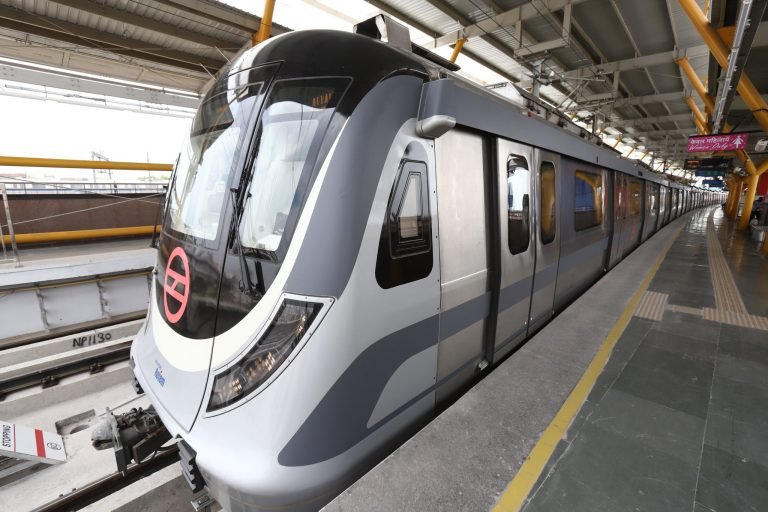
NEW DELHI (Metro Rail News): After resuming services on most of its Line under Stage-I of the Graded resumption from 7th to 10th September, where services were/are being run for 4 hours each in the morning and evening, the Delhi Metro will now resume services on its last major Line-8 i.e, Magenta Line from Janakpuri West to Botanical Garden (37.5 KM/25 stations) & Line-9, i.e, Grey Line from Dwarka to Najafgarh (4.3 KM/3 stations) from tomorrow i.e, 11th September 2020 under Stage-II.
The timings for running the services on Lines re-opened till 11th September 2020 under both stage-I as well stage-II will be for 6 hours each in the morning (from 7:00 AM to 1:00 PM) and evening (4:00 PM to 10:00 PM) with broadly the same frequency which used to be before lockdown. Accordingly, the details of trains/trips planned for each operational line for 11th September 2020 are given below:

“These service timings will remain valid only for 11th September only and normal timing of services throughout the day from 6:00 AM to 11:00 PM will become applicable from 12th September 2020 onwards on all Lines when the last line of Delhi Metro network i.e, Airport Express Line from New Delhi to Dwarka Sec-21 (22.7 KM/6 stations) is made operational under Stage-III, the last stage under graded resumption plan of Metro services. On Sundays (Starting from 20th September 2020 onwards) the services will commence at 8.00 AM from all such sections which had this practice in vogue before the lockdown also. However, on this Sunday, i.e., 13th September 2020, the services on these lines will commence at 6 AM as per the existing schedule”, said DMRC.
Thus, all Lines of the Delhi Metro network comprising 349 KM and 253 Metro stations will be fully operational once again from 12th September 2020, which were closed since 22nd March 2020 owing to the national lockdown imposed by the Government due to the ongoing pandemic.
Owing to new norms of social distancing in place now which has significantly reduced the number of persons to be carried in a train, DMRC has also decided to run the peak hour frequency* of trains from 8 AM to 8 PM, doing away with the concept of off-peak hours from 11 AM to 4 PM where services were available with less trains/trips earlier.
“General public is once again advised to adhere to social distancing norms/guidelines during the Metro travel due to ongoing pandemic and also keep following DMRC’s website/social media platforms for regular updates on various Do’s & Don’ts required to be followed in these times for their own convenience, before heading out for the Metro station”, said a DMRC statement.
*FREQUENCY/HEADWAY DETAILS:-
From start of service till 8:00 AM: Frequency will be available in the range of 3 min to 15 min as the trains are gradually inducted from Depots to Lines.
From 8:00 AM to 8:00 PM: On all the main stretches of Lines, frequency will be available in the range of 2 min 45 sec to 6 minutes
From 8:00 PM to close of services: Frequency will be available in the range of 3 min to 15 min as the trains are gradually withdrawn from Lines to Depots.
Ø Headway of trains in certain sections of a given Line where every alternate train movement takes place for regular services like Yamuna Bank to Noida, Yamuna Bank to Vaishali etc. will take double the time of the range given above.
Ø Frequency/Headway on Airport Express Line will remain available at an interval of every 10 minute from 8:00 AM to 8:00 PM as was available earlier.
Lucknow Metro returns lost bag containing a DD of RS 5.32 lakhs
LUCKNOW (Metro Rail News): Lucknow Metro Rail Corporation has always been receiving appreciation from the people of Lucknow for its exemplary customer service and dedication. Right from providing immediate first aid to the needy, or reconciling parents with their children who are left behind at stations and to returning numerous belongings left behind by the passengers, Lucknow metro team ensures that every passenger and belonging inside the metro premises is safe and secure.
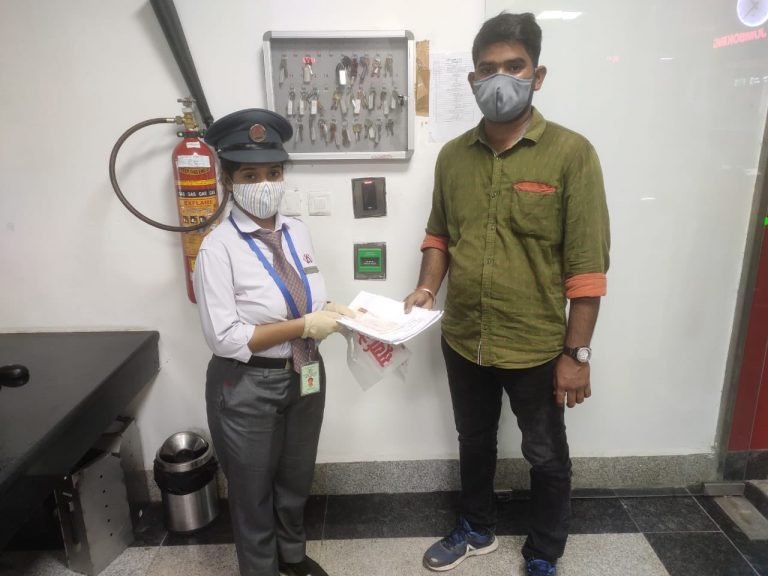
Yesterday, on September 9, 2020 (Wednesday), a bag containing Rs 5,32,286 Demand Draft was recovered during routine search inside the X-BIS machine. The promptness and integrity of the metro team helped the passenger get his belonging back preventing a major loss. On Wednesday, during an inspection of the X-BIS machine of the Vishwavidyalaya Metro Station, Security Staff found a Polythene bag. The Staff immediately informed the Station Controller, Ms. Priyanka Rai, and deposited the bag in the station control room. On checking the bag, it was found that it had Rs 5,32,286 Demand Draft.
After due verification and completing formalities, Mr. Prashant Kumar, was handed over his bag within 40 minutes of finding the bag inside the X-BIS machine. Mr. Prashant was overwhelmed by the integrity and dedication of Lucknow Metro Team and was all praise while thanking them for getting her belonging back to her safely averting a major financial loss.
“Today, security guard, Mr. Ramji Mishra, clock number 400891 at CCS Airport metro station found Rs 330 / – inside the train. As soon as the security personal, Mr. Arun Kumar (Nodal), clock number 685323 came to know, he took prompt action and deposited the money to the Station Controller, Mr. Nishant. Such incidents reinforce Lucknow metro’s dedicated approach towards passenger service and strngthen’s passengers’ belief that when they are travelling by Lucknow Metro, they are in safe hands”, said UPMRC in a statement.
buy kamagra oral jelly online https://www.mydentalplace.com/wp-content/themes/twentytwelve/inc/en/kamagra-oral-jelly.html no prescription
NMRC to Resume full-fledged operations on Aqua Line from Sep 12
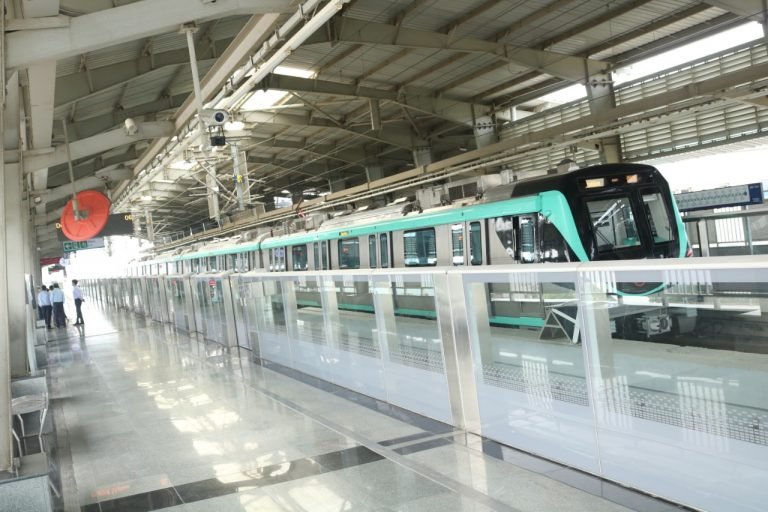
NOIDA (Metro Rail News): Noida Metro Rail Corporation Ltd. (NMRC)’s Aqua Line connecting Noida and Greater Noida is all set to resume full-fledged operations from 12th September 2020 (Saturday). This means that NMRC will run as per the time-table and schedule that was being followed for the Aqua Line before the lockdown.
From 12th September 2020 (Saturday) NMRC will operate its metro train services from 6 AM till 10 PM from Monday to Saturday. The services on Sundays will begin from 8 AM till 10 PM.
Important Information
The trains will run at an interval of 7.5 minutes during Peak Hours (8 AM to 11 AM and 5 PM to 8 PM) and 10 minutes during Non-Peak Hours from Monday to Friday. Metro train services on Saturdays and Sundays will be available at an interval of 15 minutes throughout the day.
Only one Entry / Exit gate will be opened at the following stations: Sector – 101, Sector- 81, NSEZ, Sector-83, Sector -137, Sector-142, Sector-143, Sector – 144, Sector – 145, Sector – 146, Sector -147, Sector -148, Alpha -1, Delta – 1 and GNIDA Office according to a statement released by the NMRC.
The stations where both Entry / Exit gates will be kept open are: Sector – 51, Sector –50, Sector –76, KP-II, Pari chowk, Depot Station.
Stations falling in containment zones will be closed and trains will not stop at these stations. This information will be communicated to the public through public notices, announcements and on the NMRC website and Mobile App.
The services on the Aqua Line were resumed after almost five months of lockdown from 7th September 2020. The Metro services are currently running from 7 AM to 11 AM in the mornings and 5 PM to 9 PM in the evenings at an interval of 15 minutes.
The NMRC has also made available at the following 10 stations: Sector – 51, Sector –76, Sector – 101, Sector- 81, Sector -137, Sector-142, KP-II, Pari Chowk, Alpha -1 and Delta – 1.
To facilitate the commuters and boost last mile connectivity, free E – Rickshaw facility is available for connectivity between Sector 51 station of NMRC’s Aqua Line and Sector 52 station of DMRC’s Blue Line. Besides this, E – Rickshaws on payment basis are also available at Sector 137 and Sector 142 metro stations.
“NMRC is taking all necessary measures to ensure a safe journey for Aqua Line commuters. The NMRC trains are also fully sanitised after each trip. The stations, platform and other “contact areas” like Call buttons of lifts, AFC gates, Handle belts of Escalators & Staircases, POS machines etc. are also sanitised at regular intervals. The E- Rickshaws are also regularly sanitised after every journey”, said Mrs Ritu Maheshwari, the Managing Director of NMRC.
“The ridership of the Aqua Line has seen a steady increase since the first day of resuming operations from a ridership of approx. 600 passengers and by the third day the ridership crossed 1, 000 passengers”, said a statement released by the NMRC.
Lucknow metro says: Commuters enjoying fully contactless travel with Go Smart Card
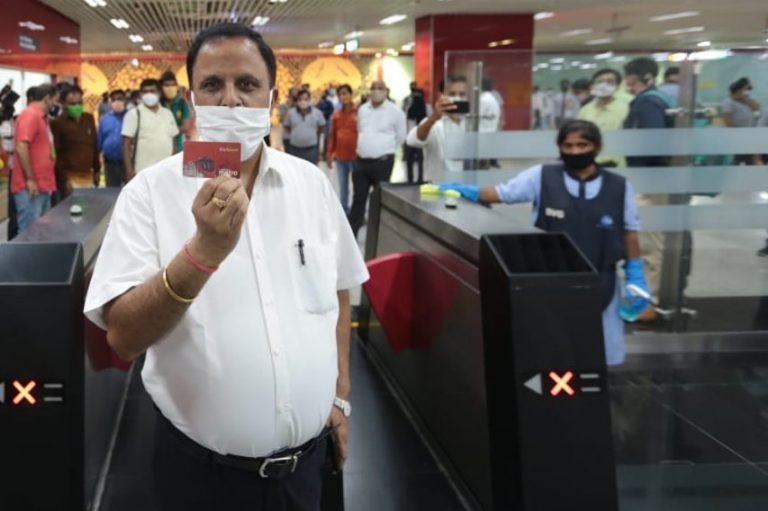
LUCKNOW (Metro Rail News): Lucknow Metro has been vouching for Contactless Travel since the resumption of Metro services and considering their safety and health, passengers are showing a positive attitude towards the usage of Go-Smart Cards for an absolute contactless travel. These provisions and safety arrangements are giving passengers a sense of satisfaction and safety while travelling. Measures taken by UPMRC are leading to positive response among passengers in terms of footfall also. Among all others, Lucknow Metro is the only public transport that offers the provision of the total contactless travel experience by the usage of GoSmart cards. This mode of contactless travel benefits the passengers to a wide extent by making their journey safe and carefree.
The key highlights & Unique features of contactless travel through GoSmart Card are:
No currency exchange; facility of online recharge through net banking, debit card as well automatic TVMNo actual tapping of the GoSmart card on the card reader of AFC Gates. AFC gate equipped with a special sensor that scans the card when brought close to it right from entering the station, boarding the train and exiting the station, no physical contact with any object except for the sanitized metro seat. GoSmart Card saves both time & money with no need to stand in queue for buying tokens 10% fare discount on each travel facilitates buying of multiple tokens for co-passengers through cashless transaction via GoSmart card With GoSmart card users can avail & enjoy free Wi-Fi facility at Metro stations Contactless GoSmart card is compact, portable & is available for sale at all the Metro stations.
Shri Kumar Keshav, MD, UPMRC today took a visit to many metro stations starting from CCS Airport Metro station in the morning. He said, “I request our commuters to use GoSmart card to experience absolute contactless metro travel. The well-being of our commuter is paramount for us for which we encourage cashless transaction with the special facility of dispensing multiple tokens from GoSmart card.” The public can be rest assured with peace of mind in comparison to other modes of the public transport system. UPMRC is committed to the safety and security of its passengers by taking utmost care with strict compliance of guidelines & norms of the government.
Lucknow metro has specially designed & prepared comprehensive ‘Business Continuity Plan’ comprising all the safety measures, instruction & regulations for ensuring the safest travel to its commuters.This plan can be easily accessed and downloaded from our e-platforms. Public Relations Department Uttar Pradesh Metro Rail Corporation
Noida Metro makes a comeback
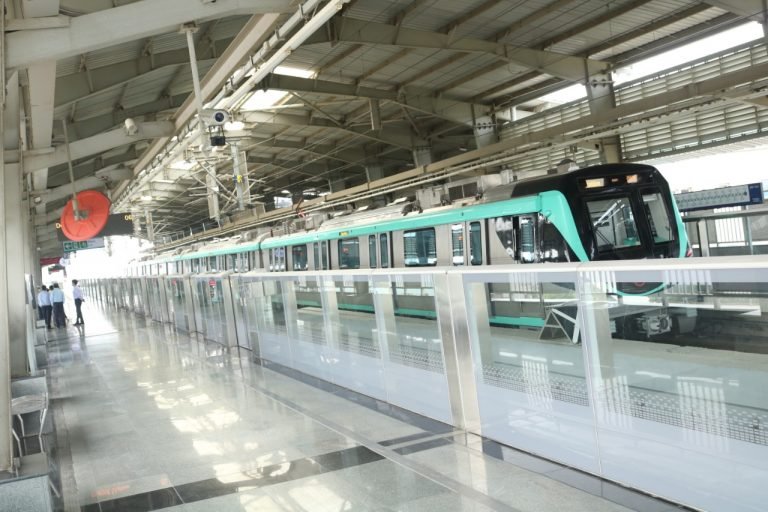
Noida ( Metro Rail News) – Noida Metro Rail Corporation Ltd. (NMRC) successfully commenced operations on the
first day of opening the Aqua Line for the general public at 7 AM on monday. The NMRC staff seemed ready in New Normal mode to welcome the passengers in the Metro system and guide them through all the new
procedures that have to be followed by the passengers for travelling in the Aqua Line.
On the first day of operations after the end of lockdown, NMRC recorded a ridership of
approx. 200 passengers after operating the trains from 7 AM to 11 AM in the morning at a
frequency of 15 minutes. In the evening NMRC will be operating from 5 PM to 7 PM with a 15
minutes frequency.
All the passengers were screened at the entry point for temperature. Their hands were
also sanitised at the entrance, post which they were allowed to enter the Metro premises. The
NMRC team also ensured that the passengers maintained adequate social distancing and
stood on the floor markings made at the stations, platforms and inside the trains.
The NMRC trains were also fully sanitised after each trip. The stations, platform
and other “contact areas” like Call buttons of lifts, AFC gates, Handle belts of
Escalators & Staircases, POS machines etc. were also sanitised at regular intervals.
Constant announcements were also being made at the stations and inside the trains
to generate awareness among passengers and to urge them to follow the guidelines. The
NMRC stations and trains were being NMRC constantly monitored at the Control Centres with the help of CCTV cameras.
“The passengers also cooperated fully with the NMRC staff and adhered to all the
guidelines prescribed by NMRC for their safety”, said a statement released by NMRC.