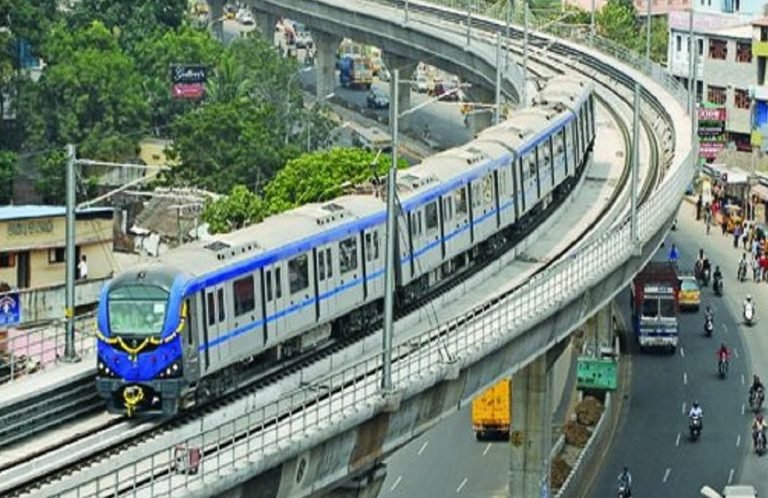
Mumbai Metropolitan Region Development Authority approves two proposals

NEW DELHI (Metro Rail News): MMRDA has approved two proposals for establishing direct connectivity between Metro-7 (Dahisar E-Andheri E) stations and two commercial complexes. It is also open to more proposals. The authority has approved proposals to build a 514-metre (m) foot overbridge (FoB) from the upcoming station at Poisar on the Metro-7 corridor to Sarova properties. It has also approved the proposal for construction of a 1,300-m bridge connecting the upcoming Aarey station to Oberoi Mall, officials said.

BG Pawar, joint metropolitan commissioner, MMRDA, said, “The work will commence once we approve the detailed engineering design.” Officials also said that the cost of building the connectors will be borne by the developers.

As both the routes pass along many commercial complexes, MMRDA said that it is expecting a better response from developers after the lockdown.

“Owing to the pandemic, we haven’t received a good response from developers. But we are hoping that they will approach us in the future, as direct connectivity to a Metro station will also increase the property value of a complex,” an official from MMRDA said.

The authority is looking to open Metro-2A (Dahisar-DN Nagar) and Metro-7 (Dahisar E-Andheri E) lines by May 2021.

This year in July, MMRDA had approved a policy to enable direct access between Metro stations and the complexes nearby. Direct access is a worldwide concept that will ease the problem of first and last-mile connectivity to the metro stations. The Mumbai Metro Rail Corporation (MMRC), which is executing the 33.5km fully underground Metro-3 (Colaba-Bandra-Seepz) corridor, has also been in talks with commercial and residential complexes along the route to enable direct access to its underground stations.

Delhi Metro goes full on with 1.5 lakh weekend travellers

NEW DELHI (Metro Rail News): With all its 10 corridors operational, Delhi Metro’s 288 trains made more than 3,700 trips in nearly 18 hours of service on Saturday. The resumption of services with the old timings, though with certain Covid-19 precautions in place, allowed more than 1.5 lakh people to travel by the urban train network. The high-speed Airport Express Line was the last corridor to reopen, but more importantly, the service timings reverted to the pre-lockdown schedule of 6 am to 11 pm and the frequency of trains was also increased. Before the suspension of services in March, Delhi Metro Rail Corporation operated fewer train between 11 am and 4 pm, considered ‘off-peak’ hours. Because of the strict social distancing norms reducing Delhi Metro’s carrying capacity, the peak hours have been done away with, and trains are available at an optimum frequency between 8 am and 8 pm.
Till 7.30 pm on Saturday, the ridership figure was 1,52,845, a rise of 18.5% against the 1,28,886 recorded in the same period on Friday. The Airport Express Line, which reopened on Saturday, carried 2,268 passengers. Like in the last couple of days, it was the oldest corridors of the Delhi Metro network that logged the most passengers. The busiest, Blue Line (Dwarka-Vaishali/Noida Electronic City), ferried 47,023 people, followed by Yellow Line (Samaypur Badli-HUDA City Centre) with ridership figure of 44,949 and the oldest, the Red Line (Rithala-Shaheed Sthal) at third place with 19,904 riders. The three corridors cumulatively accounted for 73.1% of Saturday’s ridership despite constituting just 42.5% of the Delhi Metro network.
“Now that services have resumed on all the corridors, DMRC will make public only the Line utilisation figures as was done before the lockdown because these figures only reflect the actual utilisation of a metro train system which is spread 400 km with 28 interchange stations providing comprehensive connectivity to the Delhi-NCR people,” said Anuj Dayal, executive director (corporate communications), DMRC.
While Saturday was a weekend and still saw 1.5 lakh passengers, Monday is going to be the real challenge for DMRC as its ability to handle increased footfalls through longer service hours will be put to test. “For your and everyone’s safety and to help prevent the spread of the coronavirus, wearing of face masks and adherence to social distancing norms throughout the travel has to be ensured by all commuters,” Dayal reiterated.
As part of its special drive to make people aware about the importance of wearing face masks or cover throughout the journey in the metro including inside the trains, “DMRC on Saturday counselled around 200 passengers for not wearing face masks properly. In addition, 114 passengers were fined Rs 200 each for violation of social distancing norms or for not wearing a mask inside the train,” Dayal said. On Friday, DMRC had counselled 150 passengers for not wearing face masks properly and penalised 92 commuters for not wearing a mask or not maintaining social distancing.

Indian Railways resumes services of Vande Bharat Express

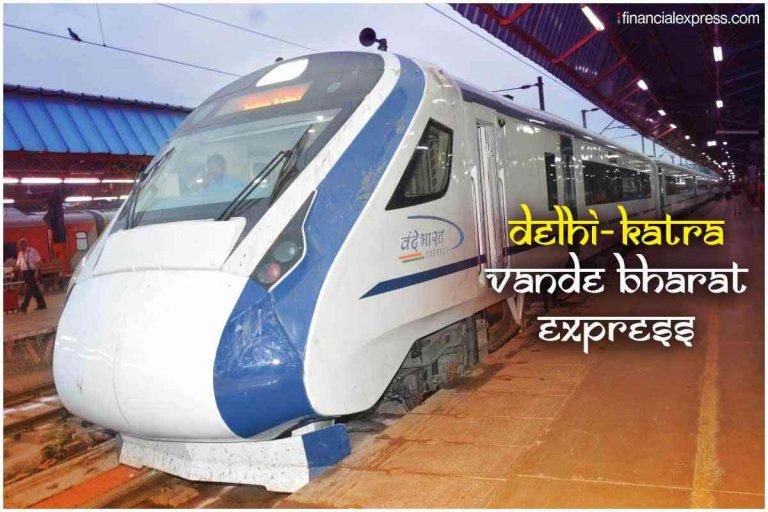
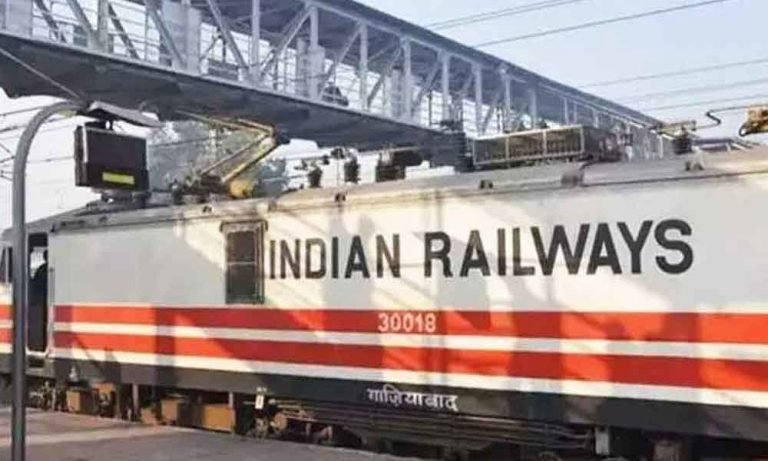
NEW DELHI (Metro Rail News): Railways on Saturday started operating an additional 80 (40 pairs) of trains across the country. The list includes India’s first semi-high speed train Vande Bharat Express which started operating between New Delhi and Varanasi after a gap of more than 170 days.

Indian Railways suspended the operations of Vande Bharat Express on 23 March after a nationwide lockdown was imposed to stop the spread of COVID-19 in the country. The second Vande Bharat Express train which operates between New Delhi and Katra, however, remains suspended. As of now, Indian Railways have started the New Delhi-Varanasi Vande Bharat Express which will operate five days in a week except on Monday and Thursday.
buy penegra online https://www.adentalcare.com/wp-content/themes/medicare/editor-buttons/images/en/penegra.html no prescription

However, on the first day of its operation, the premium train saw a low occupancy rate with just 2% passengers booking tickets on this train. “This is just day one. Many trains are weekly, bi-weekly and so on. Reservation for those trains is expected to pick up as we get closer to those days,” said one official. The train will be numbered 02435 which will leave Varanasi at 3 pm for New Delhi and 02436 will leave New Delhi at 6 am for Varanasi.

With the railways stating that they have introduced special trains in areas where there is more demand and tickets are being waitlisted, only three among the 80 have managed to garner even 50 per cent occupancy on the first day of booking, according to the data.

It is significant to note that when the railways announced that bookings were open for the 15 pairs of trains running on the Rajdhani routes since May 12 and 100 pairs operating since June 1 — the tickets were all booked within a few hours.

Earlier, at a media briefing, the railway board chairman VK Yadav said, “Eighty new special trains or 40 pair of trains will start operating from September 12. Reservations will begin from September 10. These will run in addition to the 230 trains already in operation.” Yadav said.

“Wherever there is a demand for a particular train, wherever the waiting list is long, we will run a clone train ahead of the actual train, so that passengers can travel,” he added.

All Phase-4 stations will accept ‘One Nation One Card’, says DMRC Chief

NEW DELHI (Metro Rail News): Fare collection system in the upcoming Phase-IV lines of the Delhi Metro will be fully compliant with the National Common Mobility Card (NCMC), and commuters will also be able to use a mobile phone to enter or exit a station on its corridors, DMRC chief Mangu Singh has said. Asserting that Delhi Metro is a “modern metro system” comparable to the best in the world, he also said that these two facilities might be rolled out at the Airport Express Line by the end of this year.

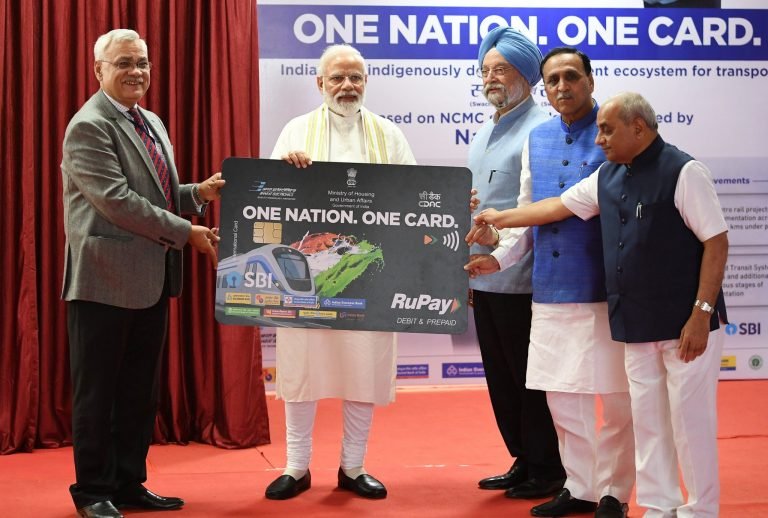
Prime Minister Narendra Modi in March 2019 had launched the indigenously-developed NCMC to enable people to pay multiple kinds of transport charges, including for metro and bus services across the country, through a common card. The proposed ‘One Nation One Card’, the inter-operable transport card would allow the holders to also pay their toll taxes, parking charges, retail shopping and even withdraw money.

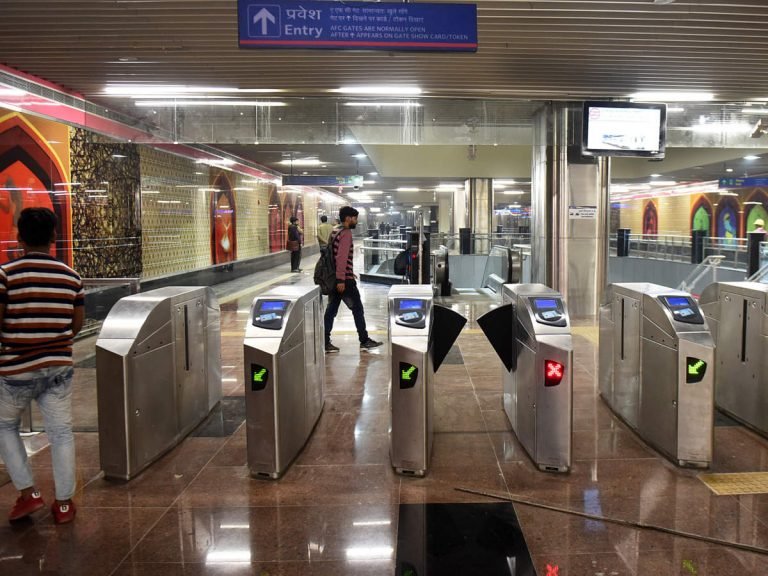
He further said that the facility to use mobile phones to enter or exit automatic fare collection (AFC) gates are available in major modern systems in various countries, including in the Seoul Metro. “We are working to continuously improve our system, with better technological and other interventions, to improve our rolling stocks and energy efficiency. In Ph-IV, our AFC system will fully accept the national common mobility cards, which can be used in any cities,” he told PTI.

“Also, a mobile phone will effectively work as a smart card, and riders will be able to use to enter or exit the AFC gates, in Ph-IV lines,” Singh said. The managing director of the Delhi Metro Rail Corporation, however, underlined that e-payment system and technology are fast-evolving and by the time the Ph-IV work is complete, new technologies may emerge.

“But, we have been working on it for quite some time, and the facilities of NCMC and entry and exit using mobile phones might be available by the end of this year on the Airport Express Line” he added. Currently, riders on the Airport Express Line can also enter or exit AFC gates using a QR code on mobile phone that has to be collected from a metro counter, but the future plan is to have a system whereby commuters can generate their own QR codes on phones and enter through AFC gates using that facility, Mr. Singh said.

The DMRC chief said, these two facilities will be first available on the brand new lines to be built under Ph-IV, and hopefully by the time the construction is over, the corridors to be built under this phase as extensions of existing lines, would “also be upgraded” for compliance. Asked if old smart cards will work in Ph-IV lines, he said, “Yes.” The Union Cabinet, in a meeting chaired by the Prime Minister, in March last year had approved three out of the six corridors of the Delhi Metro’s proposed phase IV.

Under approved segment of Phase-IV, 61.679-km of new metro lines shall be constructed across three different corridors comprising 45 metro stations. These new sections shall provide interconnectivity among the already operational lines of the Delhi Metro. According to the government, the Mukundpur-Maujpur, R K Ashram-Janakpuri West and Aerocity-Tughlakabad corridors were approved by the Cabinet. The other three proposed corridors of Phase-IV which have not yet been approved by the Union Cabinet are Rithala-Bawana-Narela, Inderlok-Indraprastha and Lajpat Nagar-Saket G Block.

After a long wait, work had begun on the construction of Delhi Metro’s Phase-IV project with a groundbreaking ceremony held at Haider Badli Mor here on December 30 last year. And, with that piling work had begun for construction of 10 stations of 28.92-km Janakpuri West-R K Ashram Marg corridor, which is an extension of the Magenta Line and will have a total of 22 stations. Asked about the status of construction of stations under Ph-IV, Singh said, tenders have been floated and finalised for all the major elevated sections.

Metros to provide a safer Travel during the pandemic

The Metros across the nation have resumed their services after the Centre gave a green signal for restarting the metro services in a graded manner. The metros have already been opened up and are expected to be fully operational by September 7. The Metros which possess only one line are fully operational in all cities except Nagpur and Mumbai due to the state government’s decision to go for a further lockdown of one month.

The metros having more than one line have opened their first line. The DMRC has opened up its yellow line on September 7 while the rest lines are expected to provide services by September 12. According to the guidelines issued by the Ministry of Housing and Urban Affairs, the set of things need to be taken care of while the metro starts providing their services again.

These guidelines are:

1. Stations in containment zones will be closed.

2. To ensure physical distancing, suitable markings at stations and inside trains will be
done.

3. Wearing a face mask is mandatory for all passengers and staff. Metro rail corporations
may make arrangements for supply of masks on payment basis to the persons arriving
without masks.

4. Only asymptomatic persons will be allowed to travel after thermal screening at entry into
the stations.

5. Provision of sanitisers would be made an entry into the stations for use by passengers.


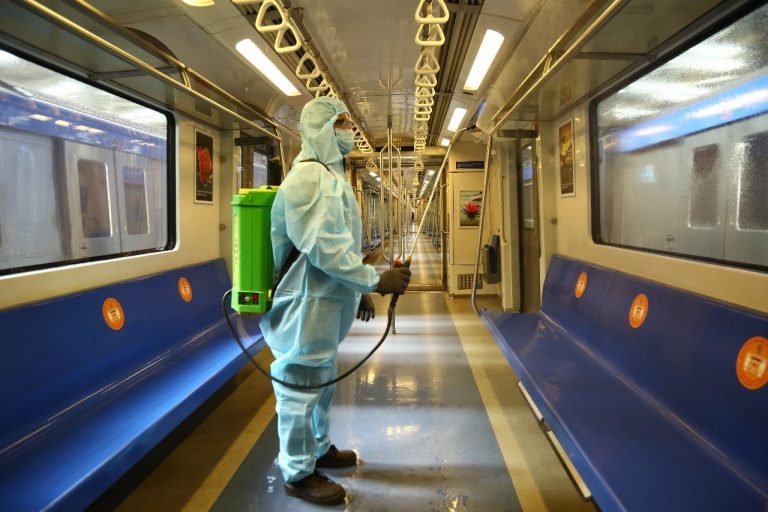
6. Sanitisation of all areas having human interface needs to be done at regular intervals.

7. Use of Smart Card and cashless transactions to be encouraged. Tokens and paper slip tickets to be used with proper sanitisation.Adequate dwell time at stations to be provided to enable smooth boarding/deboarding,
ensuring social distancing. Metro rail corporations may also resort to skipping of stations
to ensure proper social distancing.

8. Passengers to be advised to travel with minimum luggage and avoid carrying metallic
items for easy and quick scanning.

The government has already notified that the metros are needed to operate their Heating, Ventilation and Air-Conditioning (HVAC) systems according to the guidelines issued by Central Public Works Department (CPWD) and Indian Society of Heating, Refrigerating & Air Conditioning Engineers (ISHRAE). These guidelines are for increasing the fresh air intake which the metro corporations are already working on. Many of the Metro Corporations have said that they have planned in such a manner that the metro coaches get maximum fresh air while operating.

The metros are indeed not as safer as your private vehicles today due to Coronavirus spread but when as far as Public transportation is concerned, Metros are safest among all. It would help if you were calm and relaxed when you board a metro next time. You will feel a contactless service at the metro stations once you ride on a metro. However, People are encouraged not to travel for leisure. The need of the time is to travel only for essential works like going to office etc. We can hope for a safer and better journey in metros as compared to the other modes of transportation.

Way towards Digital Metros

Digitalization is not a very old thing for the Indian subcontinent. Instead, the concept is very old, but its Indian version is indeed very new. It came into limelight after the demonetization process announcement by the government of India in November 2016. The Digital India movement gained a rapid pace just after the country faced a total shortage of paper money. The concept behind the use of digital money that is based on the number system is to reduce the use of paper money, which further helps to reduce the cost spent by the government in printing notes.

Printing of notes takes a huge amount of investment, human resource and time as well as the best quality of papers which are imported from other countries. The government aims to reduce this cost and thus, in turn, helps payment interfaces. Before the demonetization process, the online payment services were chargeable. Paying for a job application included a payment interface charges of around Rs 20-30 just for a payment of Rs 500. The digital process was then not as easy as it is today.

When the government took the initiative to change the system with National Payments Corporation of India (NPCI) introducing the UPI payment system, the online payment system got transformed in a few years. In the year 2016, only Paytm used to be the sole player in the game. With the coming of UPI, a host of new players have come into the field and government is also helping these players, which further helps in reducing the payment interface service charges to zero. Today, we can see a lot of mobile apps available working on the UPI payment system.

The Metro Corporations had been using a blended model which included recharge of smart cards with both cash as well as through online payment mode as the Coronavirus spread has created a new demand of going for entirely cashless.

One alternative to the existing system could be the ambitious scheme of the central government, “National Common Mobility Card” or (NCMC) launched by prime minister Narendra Modi in March last year during the launch of the first phase of Ahmedabad Metro in Ahmedabad. The scheme commonly known as ‘One Nation One Card‘ Scheme is an umbrella the program under the ministry of housing and urban affairs of Government of India. This scheme proposes to include a common payment option for various services with being an indigenous prepaid card supported by the national payments corporation of India led the Rupay payments system.

The Digitalization in the metro faring systems will not only help the commuters or the metro corporations, but it will also help the government to reduce its expenditures on the printing of banknotes. The revenue generated by payment interface service providers will further help the startups and boost the Make in India concept.

The largest Metro network of the country, Delhi Metro run by Delhi Metro Rail Corporation (DMRC) has announced that it is not going to entertain any cash transactions on its network with going fully digital in the ticketing system.

The Lucknow Metro the other hand, has come up with a new card called Go Smart card. According to the UPMRC, the nodal agency for operating the Lucknow Metro says, ” The Go Smart Cardsaves both time and money as the users have to no longer stand in queues for buying tickets/tokens, moreover, they get a 10% discount on the fare (of the journey) each time they travel. Besides these benefits, ‘Go Smart card users can also enjoy free Wi-Fi facility at the MetroStations for which they just have to tap their card at the card reader. Tokens can also be purchased through Token Vending Machine (TVM) using ‘Go Smart’ Card, so a user’s relatives and friends can purchase tickets using the same card”.

There are few more things which can be given a digital shape in the Metros. In the metro coaches, AI-based digital displays can be used in place of audio which creates noise pollution in the metro coaches. The digitalization in the collection of fare will ensure health safety and transparency.

The further thing which the metro corporations may do is replacing the physical tokens or tickets with digital tickets. The QR code technology can be used in making it more accessible. The AFC gates shall adapt to such technologies which further helps the ticketing system through QR codes more efficient and easy to use. Metro Corporations can develop integrated Android & iOS apps to make the process smoother. As a person who boards a metro train just for a single trip in a year would never like to buy a smart card, it is the responsibility of the Metro Authorities to ensure that interests of such passengers are not neglected. The QR based online ticketing system will surely be of great benefit when it comes to cater to the demands of passengers in such difficult times of the Pandemic.

Mumbai’s Metro 2A, 7 trial runs to start in January 2021

Mumbai (Metro Rail News): Trial runs for two Metro lines – Metro 2A (Dahisar-DN Nagar) and Metro 7 (Dahisar East-Andheri East) – will commence from January 14, 2021, said commissioner of Mumbai Metropolitan Region Development Authority (MMRDA) RA Rajeev on Thursday. Commercial operations for the two lines are expected to start from May 2021.

“We will receive the first set of trains in December 2020. Post which, system integration will take about five months. We can assure citizens that the operations will start from May 2021,” he said. MMRDA will commence operations with 10 train sets, with a headway of 20-25 minutes between trains initially according to sources.

The Metro was expected to be operational by December this year, but the Covid-19 lockdown resulted in delays. Rajeev said MMRDA was making up for lost time by readying teams for each site and “maximising” labour force for Metro 2A and Metro 7.

According to MMRDA, 7,109 labourers were working at the Metro sites on March 16, before the lockdown was announced.
buy premarin online https://lasernailtherapy.com/wp-content/themes/twentytwentytwo/inc/patterns/en/premarin.html no prescription
Now, 6,332 labourers are at the Metro sites. “We have almost reached the pre-lockdown count. We are also arranging special trains for labourers to reach Mumbai,” he said.

While the authority was looking to employ locals at its sites, only 150-200 labourers at the two Metro sites are from Maharashtra. Officials said labourers from Maharashtra are trained for industrial jobs and not for working at construction sites.

A right-to-information (RTI) query dated September 8 by environment activist Zoru Bhathena revealed that the Delhi Metro Rail Corporation (DMRC), which is executing Metro 6 (Swami Samarth Nagar-Vikhroli) on behalf of MMRDA, has not been allotted land for the Metro 6 depot yet. “Exact location of depot is not yet finalised. The plan shall be prepared only after the finalization of the land,” the reply stated.

Direct connectivity for Metro 7 stations

MMRDA has approved two proposals for direct connectivity with Metro 7 stations. Sonia Sethi, additional metropolitan commissioner, MMRDA, said two foot overbridges – one from Aarey station to Oberoi Realty; and another from Poisar station to Shapoorji Pallonji – have been approved.

Kolkata Metro to resume services from September 14

KOLKATA (Metro Rail News): Country’s first metro railway network, the Kolkata Metro will resume its services for the general public from 14 September. The metro rail service will begin in a graded manner and initially, the metro services will be available from 8 am to 8 pm.

The services of the Kolkata Metro were suspended in the last week of March after a nationwide lockdown was imposed to stop the spread of COVID-19. The Kolkata Metro will also run special services for NEET aspirants and their parents on 13 September.

This service will be exclusively for medical entrance examinees and their guardians, Metro Railway spokesperson Indrani Banerjee said to media persons. Examinees will have to show NEET admit cards at the gates of Metro stations, said one official.

Railways Minister Piyush Goyal said in a tweet, ” Helping students in this time of need, Kolkata Metro to run special services for NEET aspirants & their parents on 13th September. Enhancing convenience for general passengers, Metro Services will resume in a graded manner from 14th September between 8 am to 8 pm”.

”The passengers can use only smart cards for travel and will have to download the Aarogya Setu App on their phones. It said no tokens will be used. The Metro authorities have decided to allow a maximum 400 passengers in a train at a time and colour-coded e-passes will be dispensed to the commuters through a link in their mobile phones to maintain the number”, said SOP released by Kolkata Metro.

“On successful booking of slots, passengers will receive e-pass on their mobile phone with information of time slot, passenger name, originating and destination stations,” the SOP said.

Entry to metro stations will be allowed only through verification of the e-pass by state police, while RPF personnel at stations will maintain close coordination with the state police and no tokens will be sold according to the SOP.

General Manager of Kolkata Metro, Mr Manoj Joshi inspected all the stations between Park Street and Noapara o­n Tuesday prior to the resumption of Metro services. THe also inspected the entry and exit gates of all the stations in this stretch. He inspected the markings inside the Metro premises which will help Metro commuters maintain social distancing and he also checked the sanitizer dispensing machines at the stations.

Introducing the Third Rail system in UPMRC’s Kanpur Metro

Kanpur Metro has given a contract to Sterling & Wilson for electrification for Third Rail system which is going to be a new experiment in UPMRC’s Kanpur Metro. The scenario of Metro operations is going to change rapidly in the coming years. Uttar Pradesh Metro Rail Corporation (UPMRC) which is the nodal agency for the development of Kanpur Metro Rail Project is going to experiment with the technology of the third rail system. As we proceed further, we need to know something about the third rail system and its working mechanism.

Third-rail system is a means of providing electric traction power to trains, and the system uses an additional rail which is known as “conductor rail” for its work. The conductor rail is placed on the sleeper ends mostly located outside of the running rails. However, a central conductor rail is also used in some cases. In the existing system of electric traction for providing power to trains, the electrification is generally done a few feet above the upper body of metro or train coaches. The Third Rail system runs with the rails itself, making it easy to use matter for the trains. However, it is not free from cons as it may create trouble as well if it rains or there is a flood-like situation.

The Third rail system may cause trouble through electric shock because it carries a very high voltage near the ground. The electrified rail also can create a loss of lives, especially when someone falls on the tracks accidentally. As stated above, the flood like situations also may make it a dangerous thing. The overhead system on the other side may be troublesome when there is s higher wind flow or something of the same kind.

Many Countries are using this system as of now. Let us have a few examples here.

France

The new tramway in Bordeaux (France) uses a novel system with a third rail in the centre of the track. The third rail is separated into 10 m (32 ft 10 in) long conducting and 3 m (9 ft 10 in) long isolation segments. Each conducting segment is attached to an electronic circuit which will make the segment live once it lies fully beneath the tram (activated by acoded signal sent by the train) and switches it off before it becomes exposed again.

Netherlands

To mitigate investment costs, the Rotterdam Metro, basically a third-rail-powered system, has been given some outlying branches built on the surface as light rail (called Sneltram in Dutch), with numerous level crossings protected with barriers and traffic lights. These branches have overhead wires. Similarly, in Amsterdam one “Sneltram” route goes on Metro tracks and passes to the surface alignment in the suburbs, which it shares with standard trams. In most recent developments, the RandstadRail project also requires Rotterdam Metro trains to run underwires on their way along the former mainline railway to The Hague. The light rail vehicles on this line are capable of using both 600 V DC and 750 Volts DC.

London

The North London Line changes its power supply once between Richmond and Stratford at Acton Central. The route was originally the third rail throughout but several technical electrical earthing problems, plus part of the route also being covered already by overhead electric wires provided for electrical-hauled freight and Regional. Mixed services are used in many European countries to make the system more efficient and safe. If one pedestrian walks on these rails, it is for sure that he/she will be no more after getting such heavy electric shock.

Any technology has its own merits and demerits. Nothing in this world is perfect and safe remains in trend when it comes to the Third Rail system. It is the work of the authorities to ensure that proper planning like that of Netherlands is made so that chances of casualties may be reduced.

Its use on a vast scale will surely help to make metros and trains operate even during the heavy winds or similar conditions. The future indeed depends on the way of execution, and if the plans are properly executed, it is for sure that the Third Rail system will prove to be a game-changer.

Delhi Metro in the New Normal mode

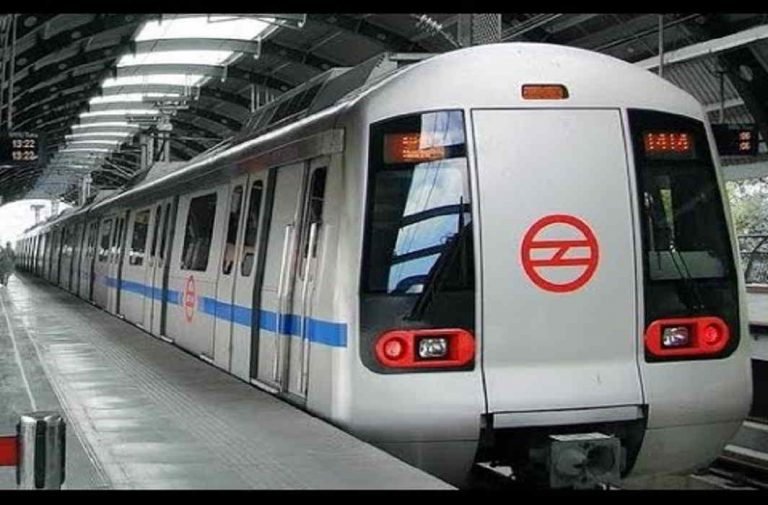
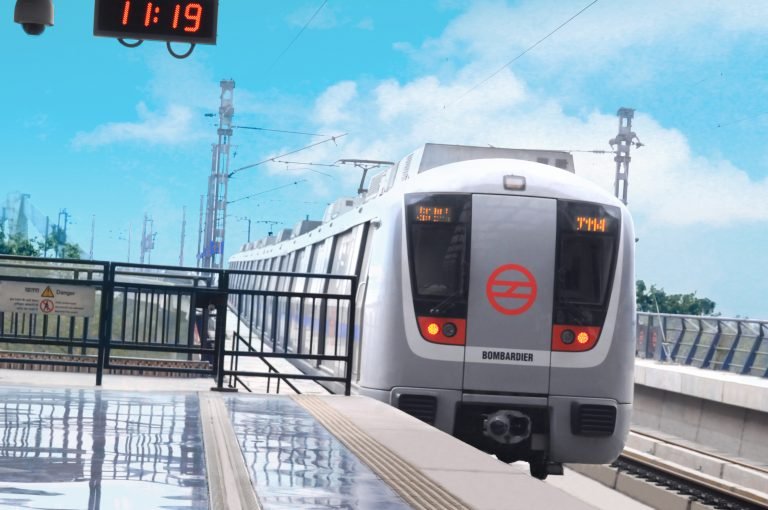
NEW DELHI (Metro Rail News): The Delhi Metro has started its services which were suspended since 22nd March 2020 due to Corona pandemic, from 7th September 2020 onwards from Yellow Line (Samyapur Badli to HUDA City Centre) in a staggered manner. For next five days, i.e., by 12th September, rest of the Lines will also be made operational with all safety measures in place to check the spread of Covid-19 in the Metro premises which requires everyone to follow a new normal of social distancing, face mask and hand sanitization.

Till 9th September, only the Yellow line (49 KM with 37 stations consisting of 20 underground and 17 elevated stations) will remain operational for four hours each in the morning (7 AM to 11 AM) and evening (4 PM to 8 PM). Trains will be available with a headway varying from 2’44” to 5’28” (at different stretches) with 57 trains performing around 462 trips. The same will be further extended in a graded manner from 9th to 12th September along with other Lines.

The DMRC said, “The resumption of services with a new normal to prevent the spread of Covid-19 desires public to understand and co-operate with DMRC/CISF personnel on few aspects for a comfortable and safe commuting experience”.

The steps being taken by the DMRC are :-

1. USE EARMARKED GATES ONLY: To maintain orderliness and regulate the flow of passengers with social distancing norms, only one or two gates will be kept open for entry /exit of passengers at a station. Therefore, passengers are advised to check the earmarked Gate number/location well in advance from DMRC website www.delhimetrorail.com

2. ABIDE BY NEW NORMS: Apart from regular frontline staff at the stations, DMRC has made additional deployment of around 1000 officials/staff across the line(s)/network to assist and guide passengers in the wake of new norms of Metro travel which may take some time to settle in. All staff have been advised to manage the passengers with a positive and caring attitude in these testing times with an initial focus on sensitizing rather than punitive, on new norms to be followed continuously during the journey for their own and everyone’s safety. All passengers are appealed to co-operate with the personnel on duty and keep listening to announcements on guidelines to be followed or updates on journey/services, if any.

3. TRAIN REGULATION: Though DMRC is making all-out efforts to provide its passengers a continuous and seamless travel experience, however, with the carrying capacity of a train drastically reduced to around 20% of the pre-lockdown period due to social distancing norms, it will be a challenge to regulate the passengers who may head to a station with the expectations of the pre-lockdown travel experience by the Metro. Therefore, in this changed scenario, the public is advised to:-

a. Avoid unnecessary travel as far as possible. Try to stagger travel timings for office/home/other works to the extent possible so that the carrying capacity offered with new norms can be reasonably utilized by creating a travel pattern in which people are not rushing to the station in morning or peak hours only. Rather, they are coming equitably at all hours of the operational timings of the Metro services to ‘break the peak’- a requirement of the present times. Besides ‘Break the Peak’, DMRC appeals to commuters to ‘Talk Less’ during travel in the Metro to prevent the possibility of short-range aerosol transmission.

b. To prevent the overcrowding in trains/stations, situations might arise wherein, DMRC may have to opt for starting certain empty trains from terminal stations or short loop some trains to manage the crowded zones on a particular route/section. This dynamic regulation of train movement will be based on the ground situation at given hours, and one may have to skip a train or two, leading to extra time in completing the travel. Similarly, dwell time is also increased by 10-20 seconds at stations for boarding-deboarding to ensure social distancing.
This may also increase the total travel time in a journey by a few minutes. Because of these factors, passengers are advised to keep the extra time of about 15 to 30 minutes for each travel, to be on time for their desired destinations.

c. Use of ‘AarogyaSetu’ app with regular health status update is advisable for commuters with smartphones.

4.CASHLESS TRANSACTIONS: Be a smart passenger and carry your smart card with you while heading for the Metro. It is contactless, easily rechargeable through online modes and offers a discount of up to 20% on every travel. Tokens will not be available at the stations for the time being as they need a frequent human interface for travel transactions and pose a risk of Coronavirus infection, so a SMART CARD IS A MUST for travel.
buy levitra soft online https://blackmenheal.org/wp-content/themes/twentytwentytwo/inc/patterns/en/levitra-soft.html no prescription
Transactions involving the Exchange of cash for recharge/refund of smart cards will not be permitted for the time being as the physical handling of currency may lead to transmission of coronavirus. The commuters are requested to cooperate with DMRC staff in this aspect to prevent the spread of the virus.

5. NO SERVICE IN CONTAINMENT ZONES: Since Delhi Metro operates in Delhi-NCR, it will not be providing services to such stations which fall under the containment zones for any given day in any of the state(s). State governments of Delhi, Haryana and Uttar Pradesh notify such zones on a regular basis on their websites. If any of the station(s) happen to fall in such zone, the same will also be made public through announcements at stations/trains and through social media updates as and when brought to the notice of DMRC by authorities concerned or observed by DMRC officials who will also keep a check on the daily updated list of containment zones on respective websites. Since most of the Metro stations lie on the median of the roads, there is a slim chance for stations to fall in the containment zone as a
regular practice.


Artificial Intelligence: The future ahead

Before moving ahead on the matter, we must know What artificial intelligence is all about, what does it mean and how it works? The technology has been in the news and uses on a vast level for the last few years.
buy intagra online https://calibudsman.com/wp-content/themes/twentytwentytwo/inc/patterns/en/intagra.html no prescription
As the technological advancements in all fields are growing up with time, let us assess the use of artificial intelligence in future operations of Metro systems. As I have written above, before moving ahead on the topic, let me tell you something about Artificial intelligence.
Artificial intelligence is also known as AI is a branch of computer science concerned with building smart machines capable of performing tasks that typically require human intelligence. With its introduction to the world, the tech industry has used it rigorously to grow their businesses worldwide.

From social media giants to Google, every firm is dependent on the technology of Artificial intelligence. As the use of technology is growing rapidly, we need to realise its importance in the recent future. For almost every online tech ranging from a cab app to social media platforms to Scientific innovations and the making of aircraft, artificial intelligence has become a necessity, and it’s importance can’t be neglected.

As we will further proceed towards a more digital world, the need for technology will become more and more important. In such a case, it becomes more important for us to know how does it work? We also need to know its history so that we may assess the progress made by people in this field.

In World War II, when the allied forces were able to break the code of Hitler’s Enigma, which subsequently made the Allied victory a huge success, it was argued whether machines were able to think. The success of whole World War II is based mainly upon the code-breaking mechanism of USA, Russia and Britain. Indeed, it was the first such war which showed that machines could fully replace few humans works. Mathematician Turing was later to say, “Can machines think?”
Turing’s paper “Computing Machinery and Intelligence” (1950), and it’s subsequent Turing Test, established the fundamental goal and vision of artificial intelligence. At its core, AI is the branch of computer science that aims to answer Turing’s question in the affirmative. It is the endeavour to replicate or simulate human intelligence in machines. Artificial intelligence works with four major principles which are as follows:-

  1. Thinking humanly
  2. Thinking rationally
  3. Acting humanly
  4. Acting rationally

The list of things where artificial intelligence is being used is autonomous vehicles like drones, self-driving cars, medical diagnosis, proving mathematical theorems, playing games, search engines like Google search, online assistants like Siri, image recognition in photographs, spam filtering and much more. The list is so long that one can’t be able to calculate all.

Things are changing today. Everything has taken a new shape. The Coronavirus spread is playing a critical role in changing the ways which we used to live, and a lot more is expected to change in the near future as we try to adopt the New Normal.

DMRC collaborates with Delhi Police to start pre-paid auto service at Shivaji Stadium

NEW DELHI (Metro Rail News) :

Delhi Metro, in coordination with Delhi Police, have started pre-paid auto service at the Shivaji Stadium here. The Delhi Metro Rail Corporation (DMRC) said on Saturday that passengers travelling via the airport line can avail of the pre-paid auto services from today.

“In coordination with Delhi Police, DMRC starts Pre-paid Auto Service at Shivaji Stadium. Passengers of Delhi Metro Airport Line can avail Pre-paid Auto Service at Shivaji Stadium from today,” stated DMRC.
buy doxycycline online http://padstyle.com/wp-content/languages/new/doxycycline.html no prescription
Earlier today, Delhi Metro opened all its operations with the resumption of its Airport Express line. All the services shall now be available from 6 am to 11 pm on all Metro lines.

Delhi Metro services continued to function for the sixth consecutive day post resumption of services in a phased manner in three stages beginning from September 7, after a gap of more than five months. The metro, which had suspended its services in March due to the COVID-19 outbreak, reopened with caution putting into place a series of measures such as closed token counters, limited entry and exit points, thermal scanners, and sanitisers among others to enable commuters to adhere to COVID-19 protection protocols.

Apart from regular frontline staff at the stations, the DMRC has made the additional deployment of around 1,000 officials/staff across the line(s)/network to assist and guide passengers in the wake of new norms of Metro travel, which may take some time to settle in.

Railways lose over Rs 7 crores in Kashmir in a single year

SRINAGAR (Metro Rail News): The trains in Kashmir valley have remained suspended for over 8 months since last year resulting in revenue losses to the tune of over Rs 7 crores.
The back-to-back lockdowns that the Valley witnessed last year upset the train services on the 135 Kilometer Banihal-Baramulla railway line in the Valley. “We restarted the services on November 12, 2019 and the train chugged uninterruptedly for the next four months,” a Railway official told.
The train services were then suspended because of the COVID-19 on March 20 this year and have remained stalled. In between, an official said, a four day special run of Vistadome coach was conducted for shooting a documentary. “The run commenced on August 31. A special service was likewise provided to the students who were appearing in exams in Jammu on Monday,” he said.
One of the reasons behind the heavy losses was the timing of both the lockdowns, as the operations remained suspended between May and October which is viewed as purple patch. “During this period the revenue increases in the Valley and for the rest of the time the revenue remains at an average of Rs 3 lakh per day,” an official said. He continued that if rough calculations are drawn, the Railways suffered a loss of around Rs 7.2 crores in eight months.
Except for one day of the week, 15 pairs of train ferry nearly 30, 000 commuters, usually students and employees between Banihal and Baramulla. The officials said since the railways here generate revenue from the sale of passenger tickets, snapping of services caused huge losses to the department.
“Railways in Kashmir generate Rs 10 crore earnings annually, but the expenditure for the same period is more than Rs 70 crore. And with this loss the income further declines,” said an official wishing anonymity.
Officials said the worst part is that they have to pay off the salaries of the employees irrespective of the situation. There are around 2800 railway employees, including the 1500 security personnel whose salaries have to be paid. “We have 25 officers here who get a pay of around Rs 1.5 lakh per month. Similarly, 1500 grade-3 employees receive an average pay of around Rs 80,000 and grade-4 employees receive Rs 30,000 per month,” he said, adding that approximately Rs 14-crores are spent on salaries alone.
Apart from these employees, the railways have to pay salaries to an additional 1000 youth, with an average salary of Rs 30,000, who were given jobs against the land that came under the railway line. “This puts an extra Rs 3 crore burden on us,” the official said, adding that a huge amount goes into the repair of unused railway tracks.

Around 25k commuters board Chennai Metro after resuming services

Chennai (Metro Rail News): Around 25000 passengers have boarded the Chennai Metro since the Metro Corporation resumed its services. More than 24,000 passengers used the Metro train services as of Wednesday since operations resumed on September 7. On the first day, 5,033 passengers used the metro services.

A total of 18,769 passengers travelled using Smart Card ticketing system and 637 utilised the QR code ticketing system till September 9, a Chennai Metro said in a statement.

“As part of encouraging contactless ticketing measure to minimise the spread of COVID-19, CMRL has decided to extend a 20 per cent discount on QR Code ticketing,” for single, return, group and trip passes from Friday.

This is to encourage passengers to avoid queuing up at stations and they could download the CMRL mobile app for using the QR code ticketing system. Travel card readers have been installed at all Metro Stations for passengers to avoid queuing in front of customer counters and ticket vending machines.

CMRL requested passengers to co-operate with its security, ticketing and other staffers for a safe and smooth travel in its efforts to prevent the spread of COVID-19 and maintain social distancing. Chennai Metro rail services resumed from Washermenpet to Airport on Monday and between St Thomas Mount and M G R Central Metro via Koyambedu on Wednesday.