



BANGALORE (Metro Rail News): Bangalore Metro Rail Corporation Ltd (BMRCL) has terminated Simplex Infrastructures’ contract for poor performance on the 21.386 km Pink Line’s 7.501 km elevated section between Dairy Circle Ramp and Kalena Agrahara, according to a news report by TOI.
Simplex Infra was awarded the 73.92 km Phase 2 project’s Rs. 578.70 crore contract for Reach 6 on Bannerghatta Road in September 2017 with a 27-month deadline. The scope of the works included building the line’s viaduct, entry line to Kothanur Depot and 5 stations at Kalena Agrahara (formerly Gottigere), Hulimavu, IIM-B, JP Nagar 4th Phase, and Tavarekere.
Simplex’s poor monthly performance is reflected in the BMRCL’s newsletters where the civil progress in December 2019 stood at 22% and advanced to just 35% in December 2020 as per a news report.
BMRCL Terminates Simplex Infra’s Pink Line Contract Citing Poor Performance

SYSTRA Gets Contract for GC for Systems of Mumbai Metro Line-5-7A

MUMBAI (Metro Rail News): SYSTRA MVA Consulting (India) Pvt. Ltd. in January won the General Consultant (GC) service contract for system works of Mumbai Metro’s 24.9 km Orange Line-5 (Thane – Bhiwandi – Kalyan), 3.17 km Red Line-7A (Andheri East – CSIA Terminal-2) and 11.38 km Red Line-9 (Dahisar East – Mira Bhayander) according to a news report.
SYSTRA’s selection among 5 bidders was made on the Quality cum Cost Basis System (QCBS) method in which the winner’s selection is made through a combination of points scored in the technical and financial evaluation as per a recent development.
Scope of the work includes Appointment of General Consultant for system works of Part of the corridor of Metro Line 5 (Thane-Bhiwandi-Kalyan), Metro Line 7A(Andheri (E) to CSIA), Metro Line 9 (Dahisar(E) to Mira Bhayander.
Budgetary Sanction Would Pave Way for Better Mobility in Semi-Urban, Rural and Industrial Areas of Nagpur : Maha Metro

NAGPUR (Metro Rail News): A significant provision of ₹ 5,976 crore was made for Phase II of Nagpur Metro Project in the Union Budget tabled in Parliament a day before. Even as 90 % work on the Phase I of the project is over, budgetary sanction would pave way for better mobility in semi-urban, rural and industrial areas of Nagpur district, in the future.
Phase I of Nagpur Metro Project caters to a population of 17 lakhs (approximately), while the second phase is expected to cater to a population of 8 lakh, as per 2021 population figures. Thus, once completed, the Nagpur Metro Project collectively, (including both the Phases) will cater to a population of over 25 lakh along Metro alignment. This would incrementally increase in the future with the increase in population. The record ridership of over 56,000 on Republic Day is a testimony to this.
“The Phase II covers the rural parts of Nagpur district and will serve as an extension to the ongoing first phase. The proposed Phase-II will be spread over 43.8 km length with 32 stations. Thus, once completed, Nagpur Metro would cover 82 km length and would have 70 Metro Stations. Phase II Project will enable easy, faster and comfortable journeys from one part of Nagpur to another. This will particularly help those employed in industrial areas of Nagpur and have to commute long-distance daily.
The areas of Kamptee and Kanhan have sizable populations which travel to Nagpur and Butibori for day to day work”, it said in a statement.
“Similarly, a good number of citizens from Nagpur travel to Butibori and Hingna Industrial Estate for jobs. Phase II will thus be a boon for all such workers and employees, as this project facilitates travelling and provides direct connectivity to these two industrial areas”, it added.
For some time now, Hingna has experienced the opening of residential colonies to a great extent. Some more colonies are expected to come up in the coming days. Phase II will also provide connectivity to the upcoming Smart City near Pardi. This will also provide easy access to Transport Nagar, which, over a period of time, has become a hub for heavy vehicles. This would also address the issues related to last and first mile connectivity.
The corridors identified for Phase II of Nagpur Metro include:
Automotive Square to Kanhan :
13 Km length and 12 Stations. The corridor will cater to the areas of Khasara, Lekha Nagar, Kamptee, and Dragon Palace.
MIHAN to Butibori MIDC ESR :
18.7 Km length and 10 Stations. The corridor will have the catchment area of Jamtha, Dongargaon, Mohgaon, Butibori, MHADA colony, Indorama Colony.
Prajapati Nagar to Transport Nagar:
5.5 Km length and 3 Stations. The corridor will cater the vicinity of Ambe Nagar, Kapsi, Transport Nagar & Asoli.
Lokmanya Nagar to Hingna :
6.6 Km length and 7 Stations. The corridor will pass through Nildoh, Gajanan Nagar, Rajiv Nagar, Lakshmi Nagar, Raipur, and Hingna Village including surrounding MIDC areas.
NMRC “Fast Trains” To Skip 10 Stations On Aqua Line During Peak Hours; Reduce Travel Time By 9 Minutes
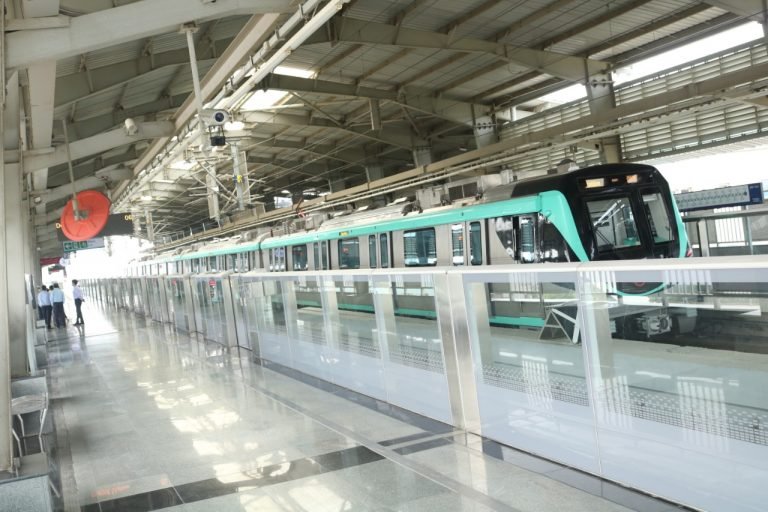
NOIDA (Metro Rail News): In order to reduce the travel time of Aqua Line commuters, Noida Metro Rail Corporation Ltd. (NMRC) has decided to introduce “Fast Trains”. These Fast Trains will skip the stations having low ridership during peak hours. NMRC will be implementing this soon in February 2021 according to a statement.
“Metro train services starting from terminal stations (Sector 51 Station and Depot Station) from 8 AM to 11 AM and 5 PM to 8 PM on weekdays i.e., Monday to Friday will be “Fast Trains”. Out of a total of 21 stations on the Aqua Line, 10 stations will be skipped by these “Fast Trains” during peak hours. The stations which will be skipped are: Sector – 50, Sector – 101, Sector – 81, Sector – 83, Sector – 143, Sector – 144, Sector – 145, Sector – 146, Sector – 147 and Sector 148 Metro Stations. QR Tickets will not be sold at these stations and for these stations during Fast Trains running hours”, the NMRC said in a statement.
The average run time of the Aqua Line from Sector 51 Metro Station in Noida to Depot Station in Greater Noida and vice versa is 45 minutes 43 seconds (one way), which will be reduced to 36 minutes 40 seconds, thereby saving around 9 minutes of travel time for the Aqua Line commuters.
“The run time between Sector 51 Metro station (having highest ridership) and Pari Chowk Metro Station (having second highest ridership), which is presently 37 minutes, will also become 28 minutes 30 seconds with the skipping of stations. The frequency of trains from Monday to Friday will remain the same i.e., 7.5 minutes during peak hours and 10 minutes during non-peak hours. On Saturdays and Sundays Aqua Line trains will continue to run at a frequency of 15 minutes with no skipping of stations”, Mrs Ritu Maheshwari said.
Adequate efforts are being made by NMRC to generate awareness among the general public regarding the schedule of Fast Trains and the stations that will be skipped. Signages indicating the timings of normal and fast trains and the list of stations that will be skipped will be displayed at all the Metro stations of the Aqua Line. Regular announcements in this regard will also be made inside the stations and the trains according to the statement.
UPMRC Conducts Industrial Visit for Engineering Students
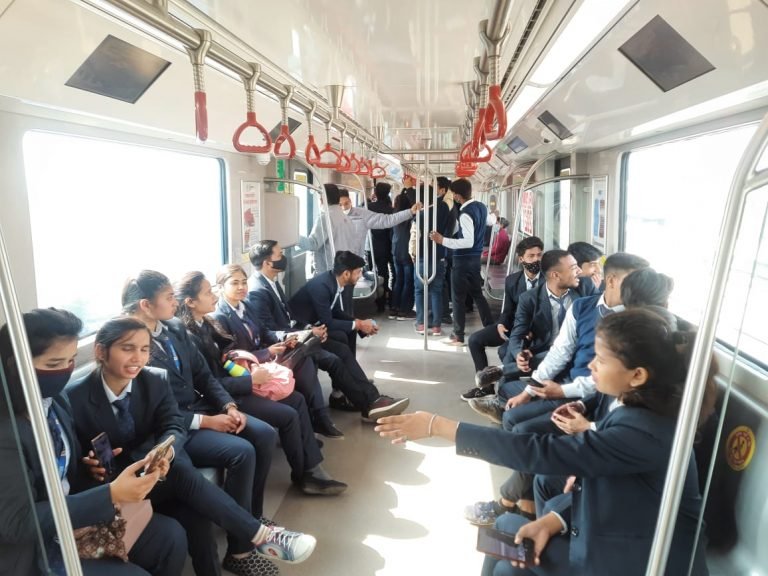
LUCKNOW (Metro Rail News): Uttar Pradesh Metro Rail Corporation (UPMRC) today conducted industrial visit of a group of 220 students of Electrical and Electronics & Communication Engineering Department of SR Group of Institutions. The visit began at Munshipulia Metro station followed by a to and fro ride from Munshipulia to Sachivalaya Metro station.
“During the visit the students were given an overview of the auxiliary system and other electrical functioning at Munshipulia Metro Station. Students were further briefed regarding the security system of Metro premises and Metro Trains. At Sachivalaya Metro Station students were given overview of ventilation and electrical operation of underground Metro Station”, the UPMRC said in a statement.
Mr Kumar Keshav, MD, UPMRC said,”Lucknow Metro is always keen to initiate educational visits of different institutes across the city. As one of the reputed organization of the city with world class infrastructure such visits are always helpful for students to gain practical knowledge and experience. These visits are highly beneficial for future prospect of students”.
DMRC’s MD Mangu Singh Conferred With ‘Distinguished Alumnus’ Award By The National Academy Of Indian Railways
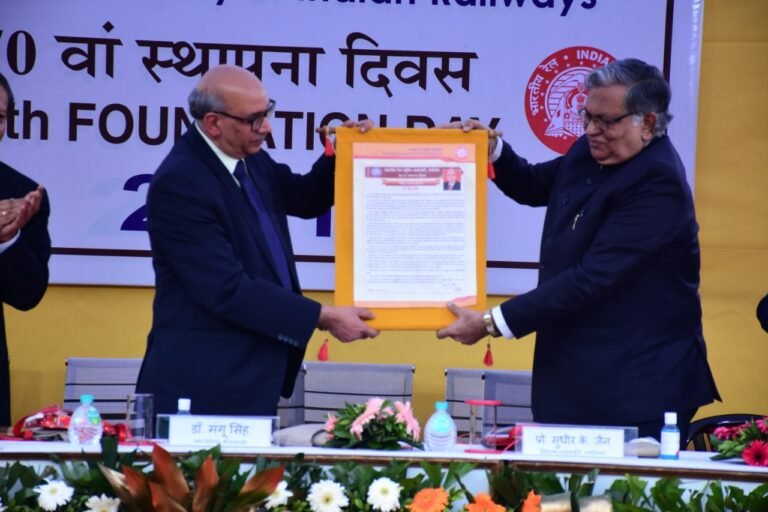
NEW DELHI (Metro Rail News): Delhi Metro Rail Corporation’s Managing Director, Dr. Mangu Singh has been conferred with the prestigious ‘Distinguished Alumnus’ Award by the National Academy of Indian Railways (NAIR) on the occasion of their 70th Foundation Day.
Prior to joining (DMRC), Dr. Singh had a long stint with the Indian Railways, where he served in various capacities across the country, including in the Kolkata Metro project. The National Academy of Indian Railways (NAIR) is the premier training institute for Indian Railways’ officers. The academy, located in Vadodara, celebrated its 70th Foundation day on Sunday.
Rs 1957 Crore Earmarked for Kochi Metro Phase-II in Union Budget 2021
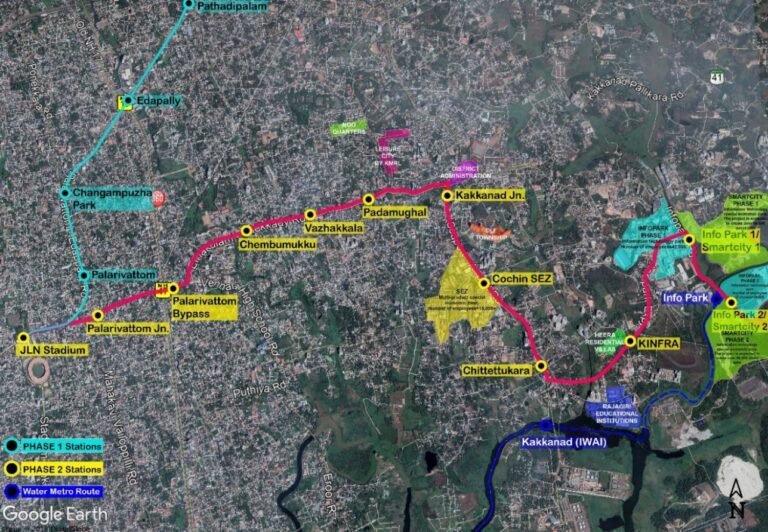
KOCHI (Metro Rail News): Phase II project of Kochi Metro Rail Project is starting from JLN Stadium to Infopark via Kakkanad is for a distance of 11.2 KM, at an estimated cost of Rs.1957.05 Crores (including taxes and duties) has been included in the central budget announced on 1st Feb 2021 by Smt. Nirmala Sitharaman, Honorable Minister for Finance, Government of India.
“The proposed network connects the central city of Ernakulam to the Infopark and Kakkanad. Infopark is known as largest IT hub of Kerala and Kakkanad is the place where the district headquarters and major residential and commercial hub with industrial area like SEZ is located. The alignment consisting of 11.2 KM viaduct and 11 Elevated metro stations will inter-connect existing Phase-I corridor at JLN Stadium Metro station. By connecting Phase-I to Phase-II, passengers will get a seamless travel experience. The Project is planned to be completed in 04 years.”, the KMRL said in a statement.
The Phase II of Kochi Metro Corridor will provide multi-model integration by integrating the metro alignment with Bus system, Water Transport-Ferry system, Public Bicycle etc. At Infopark-II station, integration with Silver line, which is the flagship semi-high-speed railway line between Thiruvananthapuram and Kasarkode is planned. The metro rail alignment will act as a feeder service of Silverline. The Phase-II metro corridor will integrate with Water metro at Kakkanad Jetty and at Infopark Jetty.
“It is a welcome move, we will now start the development plan as well as the design of phase II line and will also be now preparing the necessary tender documents so that we should be able to complete this process in next 4-6 months and by June-July we will be in a position to have the EPC contractor on board for implementing the project.” – Said Shri.Alkesh Kumar Sharma IAS, Managing Director, KMRL.
The project is expected to benefit the society, the city of Kochi and the state of Kerala in the following manner:
• Phase-II network of Kochi Metro shall connect the Central City of Ernakulam to Infopark and Kakkanad. Infopark is known as the largest IT hub of Kerala and Kakkanad is the place, where the district headquarters and major residential and commercial hub with industrial area like Special Economic Zone (SEZ) is located.
• The alignment will Interconnect Palarivattom, residential areas like Aalinchuvadu and Chembumukku, District headquarters Kakkanad, SEZ and IT hub Infopark.
• Phase II Kochi Metro Corridor will provide multi-model integration by integrating the metro alignment with Bus system, Water Transport-Ferry system, Public Bicycle etc
• Provide connectivity to proposed Semi High Speed- Silver Rail line project.
• The Phase II metro corridor will integrate with Water metro at Kakkanad Jetty and at Infopark Jetty.
• Major attraction of this corridor is the connectivity made to the district headquarters and IT hub to city Centre of Ernakulam.
• Reduces congestion on the roads and it will offer a safe, fast and comfortable travel experience.
• This project will provide continuous availability of affordable, reliable, safe, secure and seamless energy efficient transport system in the urban agglomeration of the city.
• The project will reduce the accidents, pollution, travel time and will regulate urban expansion and land use for sustainable development.
The government has given adequate support in the budget for creating an Aatmanirbhar Bharat : V R Sharma
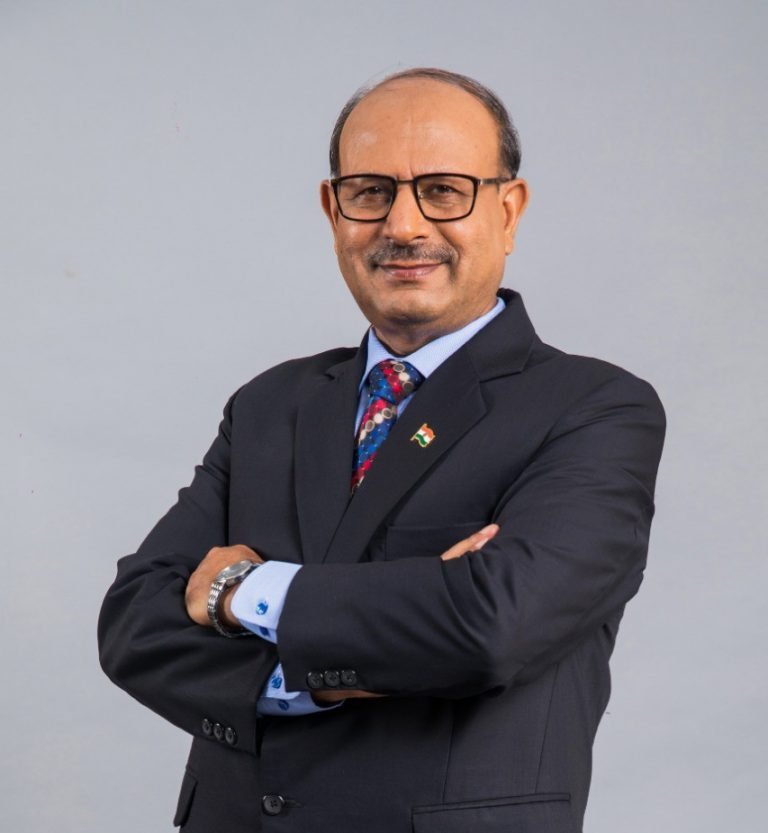
NEW DELHI (Metro Rail News): “The government has given adequate support for creating an Aatmanirbhar Bharat.
FY22 capital expenditure increase by +34.5% at Rs 5.54 lakh crore will help the steel industry. The Rs. 1.25 lakh crore investment for Railways is a welcome move”, said Mr V R Sharma while commenting on the budget.
He said that the Landmark vehicle scrapping policy will not only help reduce pollution and accidents but will help decentralization of the steel industry. Mr Sharma is known for his innovative management which has helped JSPL a lot even during the pandemic.
“To further promote Scrap based Electric Arc Furnace Steelmaking, Govt may consider immediate rollout of “One Nation One electricity tariff” policy so that the scrap can be melted in different regions”, he said.
“The announcement of the National Hydrogen Energy Mission is a great step toward greener manufacturing and sustainable development. Rs 25000 Cr of spending on roads sector in West Bengal is a great initiative. Attracting NRIs is going to boost investments in India. “Overall this is a progressive budget, which will help to boost growth, job creation with a focus on nation-building”, Mr Sharma added.
“Welcome the #Budget2021 proposals announced by Hon’ble FM @nsitharaman ji. It is a very progressive & development oriented budget focussed towards giving a further impetus towards #AtmaNirbharBharat . It will hopefully create both job opportunities & manufacturing opportunities”, said Mr Naveen Jindal, Chairman, JSPL in a tweet.
Budgetary Provision of Rs 5,976 and Rs 2,092 crore for Nagpur Metro Rail Phase-II and Nashik Metro Neo Projects
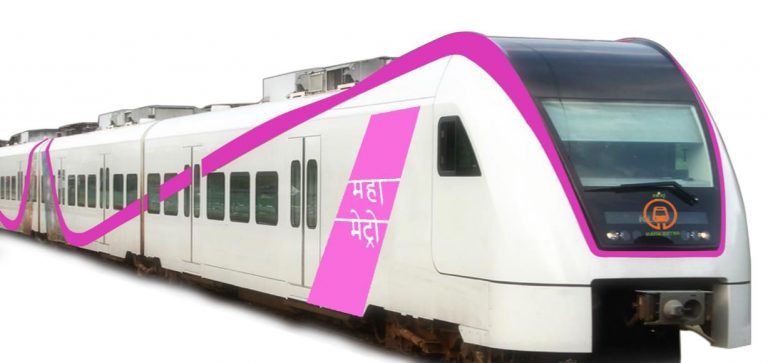
NAGPUR (Metro Rail News): In a significant development the Union Finance Minister Nirmala Sitharaman made budgetary provision of Rs 5,976 crore & Rs 2,092 crore for Nagpur Metro Phase-II and Nasik Metro Neo Projects respectively. The announcement for the same was made in the budgetary speech delivered by the finance minister today.
The budgetary provision is a testimony of the quality and speed with which Maha Metro has executed the Nagpur Metro Rail Phase Project. The Phase II covers the rural parts of Nagpur district and will serve as an extension to the ongoing first phase. The proposed Phase-II will be spread over 43.8 km length with 32 stations.
The corridors identified for Phase II of Nagpur Metro include:
i. Automotive Square to Kanhan : 13 Km length and 12 Stations. The corridor will cater to the areas of Khasara, Lekha Nagar, Kamptee, and Dragon Palace.
ii. MIHAN to Butibori MIDC ESR : 18.7 Km length and 10 Stations. The corridor will have the catchment area of Jamtha, Dongargaon, Mohgaon, Butibori, MHADA colony, Indorama Colony.
iii. Prajapati Nagar to Transport Nagar: 5.5 Km length and 3 Stations. The corridor will cater the vicinity of Ambe Nagar, Kapsi, Transport Nagar & Asoli.
iv. Lokmanya Nagar to Hingna : 6.6 Km length and 7 Stations. The corridor will pass through Nildoh, Gajanan Nagar, Rajiv Nagar, Lakshmi Nagar, Raipur, and Hingna Village including surrounding MIDC areas.
The entire Phase II network is elevated. The first phase of Maha Metro Nagpur is progressing well and as per scheduled timelines. Phase I has four corridors of 38 Km length with a total of 38 stations.
Phase II Project will enable easy, faster and comfortable journey form one part of Nagpur to other. This will particularly help those employed in industrial areas of Nagpur and have to commute long-distance daily.
Nashik Metro Neo Project:
The concept of Metro-Neo was formulated after a very extensive and comprehensive technical consultations, interactions and due diligence with several stakeholders/technical experts. The system is eco-friendly, energy efficient, reliable, safe and capable of providing an efficient mass public transport system which is ideally suitable for the traffic need of cities having population similar to Nashik in India as well as similar cities abroad.
Government of India has been contemplating since long to find an optimal transport solution for cities having population of 2-3 million since appropriate MRTS has not been explored anywhere in India. The model developed for Nashik was discussed on various forums and finally Govt. of India on 21.08.2019 constituted a committee under the chairmanship of Dr. Brijesh Dixit, MD/Maha-Metro for standardization of detail specifications for a Rubber-Tyred Mass Rapid Transportation System with a view to implement this across India.
The salient features of Metro-Neo is outlined below:
Two corridors are planned initially
• Corridor one : Gangapur to Mumbai Naka: Length: 10 KM, Stations : 10 (Gangapur, Jalapur, Ganpat Nagar, Kale Nagar, Jehan Circle, Thatte Nagar, Shivaji Nagar, Panchavati, CBS, Mumbai Naka).
• Corridor two -Gangapur to Nashik Road :length : 22 KM, Station : 15 (DHRUV Nagar, Shramik Nagar, Mahindra, Shaneshwar Nagar, Satpur Colony, MIDC, ABB Circle, Parijat Nagar, MICO circle, CBS, Sharda Circle, Dwarka Circle, Gayatri Nagar, Samta Nagar, Gandhi Nagar, Nehru Nagar, Datta Mandir, Nashik Road). CBS will be an interchange station where both the corridors meet.
Jindal Steel and Power Limited conferred with Mahatma Award 2020
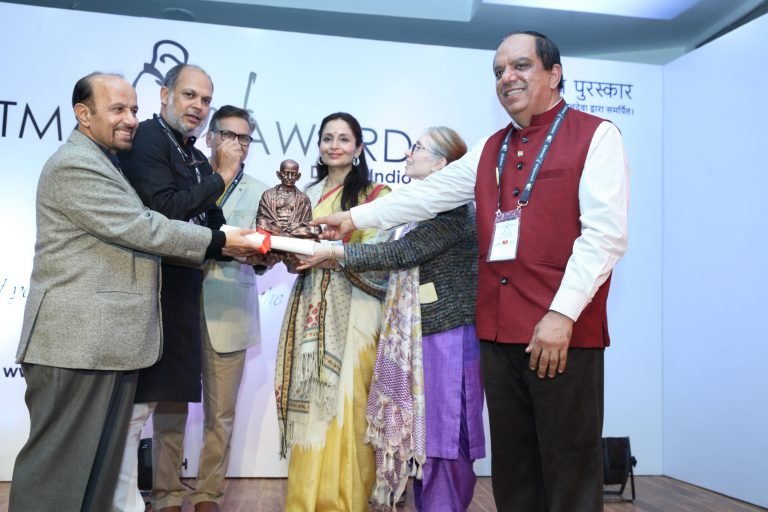
NEW DELHI (Metro Rail News): Chairman of Jindal Steel and Power Limited (JSPL), Naveen Jindal on Monday has been conferred with the prestigious Mahatma Award 2020 for its humanitarian effort to support the communities and local administration in fighting the COVID-19 pandemic.
Shallu Jindal, Chairperson of JSPL Foundation, the social arm of JSPL, received the award today at India International Centre, New Delhi.
Thanking the jury members for the award, Shallu Jindal said, “As a responsible corporate citizen, we launched Mission Zero Hunger in and around the operational geographies of JSPL and also in the National Capital to ensure that none is sleeping on an empty stomach because of COVID-19 induced human misery. We could also insulate the local community from loss of livelihood and ensured access to everyday cash income during this wage crunch period.”
“During the pandemic, the JSPL Foundation extended the customized rehabilitation training to more than 3000 children with special needs at its Rehabilitation Centres called as Asha-The Hope. JSPL also provided medically required oxygen for use by various COVID-19 hospitals and contributed Rs 25 crores to PM-CARES fund to fight the global pandemic”, a statement read.
-ANI
Lucknow Metro’s CCS Airport Metro Station Felicitated By IGBC
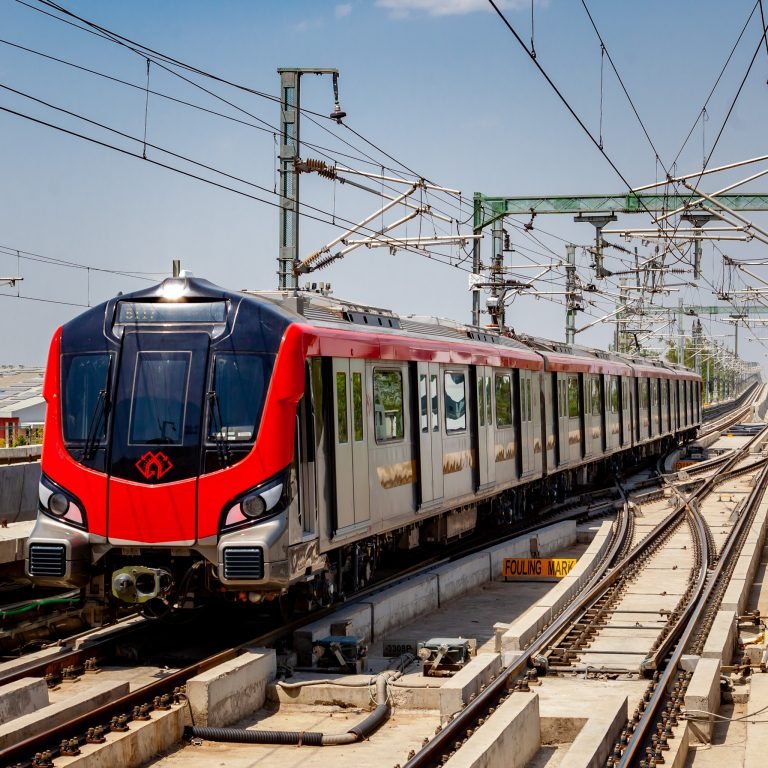
LUCKNOW (Metro Rail News): Lucknow Metro has been felicitated by Confederation of Indian Industry (CII) along with Indian Green Building Council (IGBC) for participation in ‘Performance Challenge for Green Built Environment 2020’. CCS Airport Metro station of Lucknow Metro was selected under ‘Transit Buildings’ in Metro category by IGBC for awarding the certificate of appreciation and recognizing the efforts of UPMRC for their excellent efforts towards enhancing the green performance in their Metro operations.
The green building movement started off in the year 2001 and has advanced rapidly since then. Green in all aspects of design and construction have been embraced by stakeholders such as architects, developers, MEP / green building consultants, builders, suppliers and manufacturers.
There are more than 2000 green building projects in the country which are up & running and today India stands tall amongst countries that have embraced sustainability. While many projects designed as green are in operation, there is now a dire need to sustain the benefits during the life time of the project.To facilitate fully certified green building projects to continue maintaining the facility as green, IGBC launched the ‘Performance Challenge for Green Built Environment’ programme.
Outstanding projects that have demonstrated leadership in their own typologies are recognized and felicitated during IGBC’s flagship event Green Building Congress.
Kumar Keshav while lauding UPMRC’s efforts for enhancing green environment said,” UPMRC has made considerable progress in providing eco-friendly mode of Mass Rapid Transit System (MRTS) to the people of Lucknow. We have already undertaken various energy efficiency & energy saving measures in Lucknow Metro like 100% LED lighting at station premises & inside trains, regenerative braking in Metro trains, etc. At Metro Depot (Transport Nagar) we have intensive facility of waste management & rain water harvesting. We will continue our efforts for environment sustainability in Kanpur & Agra Metro projects as well.”
Budget Live : Railways Gets Rs 1.10 Lakh Crore, Chennai Metro Rs 63,000 Crore
NEW DELHI (Metro Rail News): Finance Minister Nirmala Sitharaman allocated a gross budgetary support of Rs 1,10,055 crore for Indian Railways along with a boost of Rs 63,000 crore to the Chennai Metro Rail Project.
“I am providing a record sum of Rs 1,10,055 crore for railways of which, Rs 1,07,100 crore is for capital infrastructure only,” the finance minister said.
Elaborating on the development projects of the Indian Railways, she said, “The Indian Railways has prepared a National Rail Plan for India 2030. The plan is to create a future ready railway system by 2030. Bringing down the logistic cost for industry is at the core of the strategy to enable Make in India.”
She also announced Rs 63,000 crore For Chennai metro in her union budget 2021 speech. Bringing in massive news for daily commuters in Chennai, Sitharaman made the much-awaited announcement. This may help in faster development of the Chennai Metro.
The Sonnagar-Gomoh sections (263 kilometres) of the EDFC will be taken up in the public-private partnership mode in this year itself. Work at the Gomoh- Dankuni section will be taken up in short succession according to her budget speech.
“We will undertake future Dedicated Freight Corridor projects, namely, East Coast Corridor from Karakpur to Vijaywada, East-West Corridor from Busawal to Karakpur to Dankuni and North South Corridor from Itarsi to Vijaywada. Detailed project reports will be undertaken in the first phase,” she further said.
“Broad gauge route kilometres (RKM) electrified is expected to reach 46,000 RKM 72 per cent by end of 2021, from 41,548 RKM on October 1, 2020. 100 per cent electrification of Broad gauge routes will be completed by December 2023,” she said.
Metro & Railway Budget 2021-2022 Updates
Metro Rail News (New Delhi): Union Finance Minister Nirmala Sitharaman delivered her third Budget speech in the Lok Sabha today. The finance minister focused on the sustainable development of railways and metro projects.
Finance Minister Nirmala Sitharaman has made various announcements in her budget speech. Here are the major highlights announced for Metro & Rail sectors:-
Railway Budget 2021-22
- Indian Railways has prepared a National Rail Plan for 2030. The plan is to create a future-ready railways system by 2030.
- Western DFC and Eastern DFC will be commissioned by June 2022.
- A record allocation of Rs 1,10,055 crore to be provided for Indian Railways, out of this Rs. 1,07,100 is for capital expenditure only.
- Railways will monetise Dedicated Freight Corridors assets for operations and maintenance after commissioning.
Metro projects Budget 2021-22
In our Country currently, 702 km of metro rail already operation; 1,016 km of Metro and RRTS systems under construction in 27 cities.
- MetroLite and MetroNeo will be introduced in Tier 2 cities and peripheral areas of Tier 1 cities.
- Rs. 63000 crore for Chennai Metro phase-1
- Rs. 14,788 crore for Bangalore Metro Phase-2
- Rs. 5,976 crore for Nagpur Metro Phase-2
- Rs. 2,092 crore for Nashik Metro Phase-1
- Rs. 1,957 crore for Kochi Metro Rail Phase-2
The budget has given Chennai Metro the highest amount among all which may further help the metro corporation to speed up the development of the project.
RRTS Project Budget 2021-22
Rs. 4472 crores allocated for India’s first RRTS Project
In 2020, Rs. 2,487 crores were allocated to NCRTC, this year the budget allocation received is near to double what was allocated last year.
Pedestrian Subway For Connecting Netaji Subhash Place Market And Netaji Subhash Place Metro Station Made Operational

NEW DELHI (Metro Rail News): A pedestrian subway connecting the Netaji Subhash Place Metro station and the Netaji Subhash Place Shopping Complex in Pitampura was made operational today.
“The shopping complex at Netaji Subhash Place (Pitampura) is located right opposite to the Metro station, which is a vital interchange facility for the Red and Pink lines. The shopping complex consists of many shopping outlets, a Max Hospital Branch and a number of small vendors and attracts a lot of visitors every day. This new subway will provide much needed connectivity between the shopping complex commuters and the metro station”, the DMRC said in a statement.
The 76 metre long subway is crossing the busy Lala Jagat Narayan Marg and the adjacent Wazirpur flyover. Therefore, this new facility will also be of immense benefit to the pedestrians who intend to cross the road. The size of the subway is 4.0 metre x 3.2 metre.
“The subway has been constructed using the Box Pushing technology, with which vertical excavation or large scale digging is not required. This method is much faster than the conventional cut and cover technology used generally for the construction of subways. If DMRC had opted for the conventional cut and cover technology, then it would have had to excavate the road above causing great inconvenience to the movement of traffic”, it said in a statement.
In its Phase 3 corridors, DMRC has tried to provide such pedestrian subways at many of its stations wherever feasible to provide an additional facility for convenient pedestrian movement.