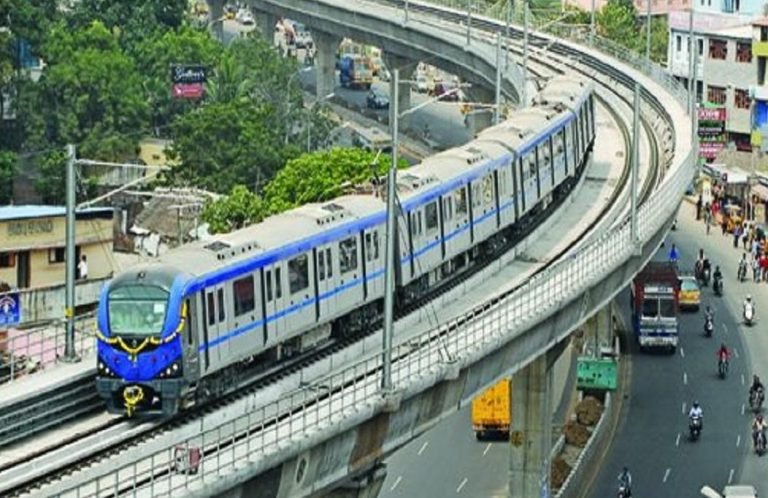
Delhi-Meerut RRTS to provide ‘premium lounge’ access to business class passengers

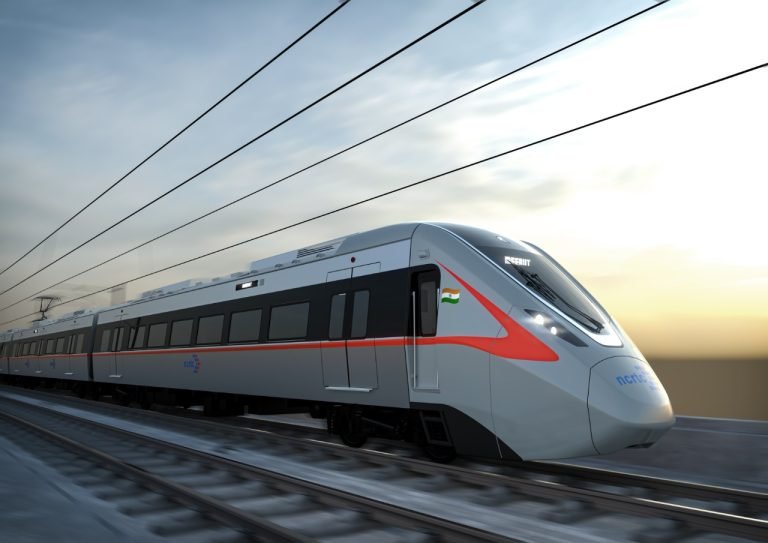
GHAZIABAD (Metro Rail News): National Capital Region Transport Corporation (NCRTC) officials on 28th May informed that the passengers who will travel by business on Delhi-Meerut RRTS are going to get access to “premium lounges” which will be built at RRTS stations and will only be reserved for the business class passengers.

According to the official, the entry for the premium lounge will also be kept separate from where the passengers can directly get into the coach.

“Every train will have one premium coach.
The fare of the business or premium class will be higher than that of the normal ticket. Premium lounge will be similar to lounges at airports and will have all business class facilities,” an NCRTC official said.

The premium lounge will include a luxurious ambience, comfortable couches, magazines, books, coffee and tea vending machines. The aim behind the idea of introducing premium coaches in RRTS is to provide luxurious facilities to those who are willing to spend more for their comfort.

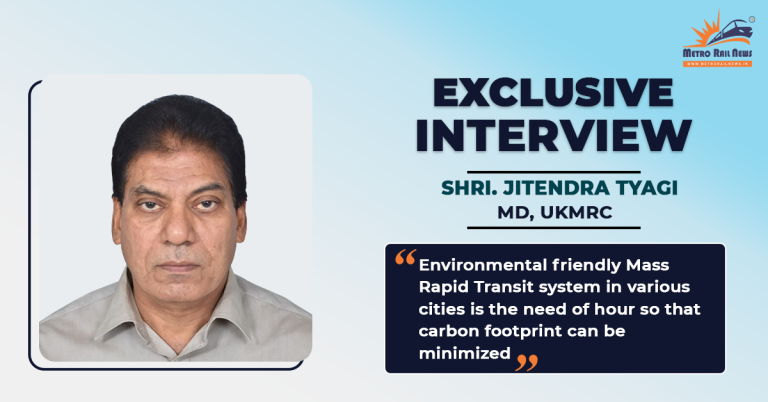
Exclusive Interview with Mr. Jitendra Tyagi, MD, Uttarakhand Metro Rail Corporation Ltd.

Metro Rail News conducted an email interview with Mr. Jitendra Tyagi, MD, Uttarakhand Metro Rail Corporation Ltd. In the interview Mr. Tyagi talked about the complex mobility plan of the Uttarakhand Metro Rail Project.

Managing director (MD) of Uttarakhand Metro Rail (UKMRC), Mr. Jitendra Tyagi has over 35 years of experience in the railway and metro sector. He is a 1983 batch officer of the Indian Railways Services of Engineers. As MD of UKMRC, his responsibility is to lead and oversee the planning, construction and operations of the upcoming Dehradun, Haridwar and Rishikesh metro rail projects. Prior to UKMRC, Tyagi has held various positions at the Delhi Metro Rail Corporation (DMRC), where he had a 13-year stint. Thereafter, he took charge as director (works) in DMRC and was involved in the completion of several corridors of Phase III of the Delhi metro. Along with this, he also oversaw the implementation of the Jaipur and Kochi metro rail projects also, as director.

Here are the edited excerpts: –

In what ways Uttarakhand Metro Rail Project is different from other rail projects in the country. Can you brief upon the comprehensive mobility plan of UMRP?

Let me first give you a brief about the Comprehensive Mobility Plan. We got the CMP prepared in the year 2019. CMP is a vision document covering all futuristic needs of mobility in the area it is prepared for. Dehradun, Rishikesh, Haridwar and Roorkee are 4 main urban developments in the Western plain area of Uttarakhand. The entire region has tremendous scope of urbanisation as it provides great employment opportunities, education as well as health care to public of Uttarakhand.  In view of this, entire region has been notified as the “Dehradun-Haridwar-Rishikesh Metropolitan area”. The CMP has addressed all mobility needs, including that of goods movement in the entire metropolitan area. As far as mobility of people is concerned, It has classified the mobility need of people in three categories mainly first order, second order and third order mobility corridors. First-order having the highest mobility requirement. It has identified following first order corridors in the metropolitan area:-

S.no.CorridorsRoute length(in kms.)
1ISBT to Kandoli 11.389
2FRI to Raipur13.975
3Haridwar to Rishikesh 34.151
4Vidhan Sabha/Rispana to Nepali Farm34.517
Total 94.032

In the first phase, we are taking up the two corridors in Dehradun having a total length of 23 kms. & 25 stations. Initially we planned Metrolite (LRT) on all the corridors but after Ministry of Housing & Urban Affairs, Govt. of India issued standard specifications for Metro Neo, we decided to implement this system on both the corridors of Dehradun. This decision to adopt Metro Neo is mainly based on economics, it being cheaper than Metrolite. Metro Neo is different than normal Metro system as it is a rubber tyre based system and can negotiate steeper gradients (upto 10-12%) which is suitable for this metropolitan area. Metro Neo system in Dehradun will run entirely on an elevated viaduct.

Besides being the ‘Land of Gods’ the Devbhumi, Uttarakhand also is a strategically important state sharing borders with Nepal & China. How are you planning to develop a modern, futuristic transport system for the state addressing a number of peculiarities Uttarakhand holds for itself?

From strategic point of view, two main transport systems are important. One good road network and second rail connectivity. UKMRC is mandated to develop mainly Urban transport system and therefore has no direct role in this aspect. However ‘All Weather Road’ project has served the strategic connectivity also besides connecting Char Dhams. Railway line between Rishikesh to Karnprayag is already under construction which will also help the better connectivity to various parts of Uttarakhand.

Uttarakhand is a fast-growing state in the country. The per capita income of the people of the state is also improving significantly. What in your opinion can be the best transport system for the state eyeing the immense tourism opportunities that can be developed on a circuit basis amidst tough terrains and a very diverse landscape?

For Uttarakhand, and infact for any state, one transport system alone cannot serve the purpose. You have to have a combination of various transport systems like Rail, Road, Metro, Ropeway etc. Uttarakhand has immense possibility of tourism. Many beautiful places can attract large number of tourist if these are well connected. As Uttarakhand is predominantly a hilly state, Ropeway can be one of the most suitable system to connect remote places having potential of tourism. Infact funicular system could also be a good choice for some of the places as this system itself is a tourist attraction. Infact UKMRC has also been given two Ropeway projects one between Har-ki-Pauri in Haridwar to Chandi devi temple and the other between Rishikesh to Neelkanth Mahadev temple. We are working on these projects. 

Which other major cities UKMRC is planning to develop and connect through metro or light transit systems in the state other than Dehradun, Rishikesh and Haridwar in the first phase?

As already explained earlier UKMRC plans to take-up Haridwar-Rishikesh Metro Neo project in Phase-2 and connecting this system with Dehradun in Phase-3. Besides this, we are also planning to develop Personalized Rapid Transit System (PRT), commonly known as POD Taxi, in the city of Haridwar on second order transit corridors identified in CMP.

Char Dham yatra, strategic rail links, and all-weather connectivity to the state are some of the priority works of the present government at the centre for the state. To what extent different works have been accomplished. Are you meeting the deadline?

As ‘All Weather Road’ to connect Char Dhams and Railway project between Rishikesh to Karnprayag are being looked after by other agencies and not UKMRC, it will not be correct on my part to comment. All I can say is that all these projects in the State are progressing quite well.

What would be your message to our readers?

I would like to convey that entire world is going through many crises. Covid-19 pandemic has already seriously affected the world economy. Russia-Ukraine war is another crises, the world is facing and another one is climate change. Climate change has been an area of serious concern for many decades. Lot has been done but lot more is needed in order to save Earth and keep it habitable for our future generations. In this regard, environmental friendly Mass Rapid Transit system in various cities is the need of hour so that carbon footprint can be minimized. We have to understand that use of private vehicles can be reduced only when public transport system is at least equally comfortable as private vehicle, if not better. Last but not the least, we should not leave any stone unturned to achieve the objective of ‘Aatmnirbhar Bharat’ set by our honourable Prime Minister and also make all out efforts to make India a net zero country which is also the vision & goal set by honourable Prime Minister.

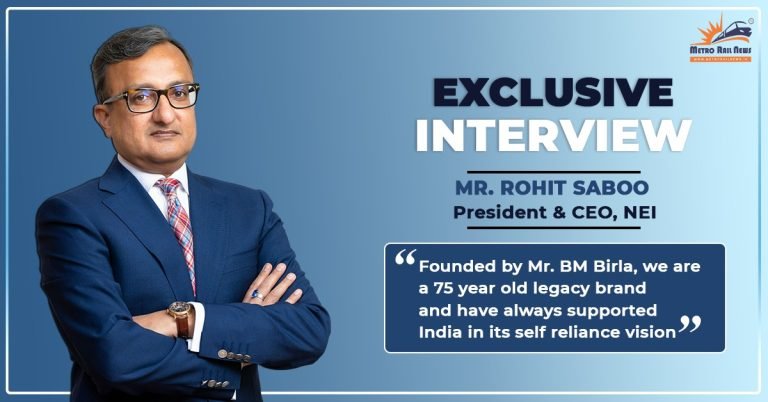
Exclusive Interview with Mr. Rohit Saboo, President & CEO, National Engineering Industries Limited

Metro Rail News conducted an email interview with Mr. Rohit Saboo, President & CEO, National Engineering Industries Ltd. In the interview, Mr. Saboo talked about NBC’s constant commitment to provide efficient solutions that have made them set benchmarks for themselves to keep growing over the last 7 decades.

Mr. Rohit Saboo began his journey as Executive Assistant to the Chairman of CK Birla Group. He has worked in manufacturing, R&D and is now President and CEO of National Engineering Industries. A business development professional, with expertise in strategy, business planning, operations management and operational excellence, at NEI, his purpose is to maintain the company’s legacy and fast-track its growth with increased sales, fostering a strong global presence.

Here are the edited excerpts: –

NBC is the first bearing manufacturing company in the world to get the prestigious Deming Grand Prize. How special is this accolade for the organisation which recognizes the highest standards in Total Quality Management? 

We at NBC are extremely delighted to join the distinguished list of companies across the globe that have been conferred with the prestigious Deming Grand Prize. This award serves as an epitome of NBC’s growing manufacturing prowess and quality processes. Our constant commitment to provide efficient solutions have made us set benchmarks for ourselves to keep growing over the last 7 decades. With the support of our stakeholders and customers as well as the relentless efforts of our employees, our journey over the years has been rewarding and this award serves as a great inspiration for us to move on with the winning spirit to achieve newer heights.  

Has the company been able to realise and achieve the objectives of a self-reliant India? 

Founded by Mr. BM Birla, we are a 75-year-old legacy brand and have always supported India in its self-reliance vision. We are the first Indian company to manufacture bearings for the Indian industries in India. We have grown over the years and are now not only supplying to Indian automotive, railways, and industrial segment but are also exporting to over 30 countries globally

We have worked very closely with Indian Railways since 1952. Our focus has always been to provide domestically developed bearings for Railways by understanding their challenges. In line to attaining self-reliance, we plan to leverage the technology through local manufacturers. With the acquisition of Kinex, our European subsidiary, we are planning to grow in international markets equally.  Our JV with Amsted Seals for manufacturing railway seals is already operational which will not only cater to domestic requirement but also to our international customers. 

Given the current focus is on “Atmanirbhar Bharat”, we are also considering to widen our existing portfolio by getting into the other critical sectors like, aerospace and defence industries. We are in discussion with several aerospace businesses and have realised that we can explore these sectors and help in lowering import dependency. 

Amidst global efforts and advocacy for reducing carbon footprints what is your strategy. Has there been any major development in this regard?

Environment, climate change, and sustainable development have been global concerns worldwide. Keeping to the spirit of our company purpose of ‘Enabling sustainability by making movement more efficient’, NBC has gone above and beyond boundaries to implement sustainability measures with a view to contribute in reducing carbon footprint. We remain committed to be carbon neutral by 2039.  We are working with our suppliers and other stakeholders to develop processes and structure which will enable us to deliver on this commitment. The measures include energy management systems, renewal power generation, environment friendly products, waste management, returnable/reusable packaging and environment friendly buildings. 

We have also been awarded with the Green Factory Platinum Certification for our 75-year-old manufacturing plant in Jaipur. Under this certification, our plant received the highest level of rating given by IGBC for the best-in-class sustainability practices.  Our other plan near Vadodara is also IGBC Platinum certified. 

Please tell us something about your partnering with Daimler group and your overseas operations. 

Our relationship with Daimler is since the time their operations commenced in India. At the same time, supplies of our products started globally to Daimler and we have come a long way since then. This partnership has grown and strengthened over the years. Now, our manufactured bearings are supplied to Daimler in various countries including India, Germany, Brazil, USA and Japan.

We have provided Daimler with bespoke solutions using latest technology in processes and products. Some of the products have been specifically designed for them in our state-of-the-art R&D centre located in Jaipur. Our supplies to Daimler ranges from bearings for axles, wheel-end solutions and transmissions. 

Over the last decade, we have been able to successfully develop an eco-system at global locations to support our international customers, including Daimler. This includes local key account management team, local engineering support and EDI enabled warehouses in USA and Germany.

Kindly throw some light on the CSR policy of the organisation.

The CK Birla group is deeply committed to creating a sustainable positive impact.  As part of the group, NBC has been helping the local community through heritage preservation, education, maintaining green spaces and skill development.  During the pandemic, NBC worked closely with the local authorities to provide food, masks, ventilators and face-shields to frontline workers.  We also supported local hospitals with oxygen cylinders and oxygen concentrators besides donating beds to the community health centre. We also helped SMS hospital in Jaipur by setting up a PSA oxygen generation plant.

Your acquiring of Kinex bearings in Europe has also been a topic of greater interest and discussion. Please share some details about the acquisition.

Kinex bearings was acquired by NBC in 2020 through its wholly owned subsidiary in Europe. This was aligned to our strategy to enhance our product portfolio and expand our geographic footprint, as well as serve our existing customers better and acquire new customers. This acquisition includes two production plants in Slovakia, with the capability to manufacture bearings for various critical sectors such as railways, industrial segments and textile. It also manufactures bearings for aerospace and water pump bearings for the automotive sector. The product mix is complementary which will help both organisations increase their market share.

In an era of cutting-edge technology, OEMs and advanced automobiles how are you matching up industrial and R&D needs in specialized areas such as advanced materials and processes, product design, tribology and lubrication, virtual simulation, testing etc.?

Innovation is the key to be competitive in the global market. Our state-of-the-art R&D centre in Jaipur is equipped with the best-in-class infrastructure including designing, testing and in-house validation.  It is critical for the R&D teams to be ready for numerous and concurrent changes, transforming the industry as a whole. We have a dedicated R&D team of over 130 qualified engineers, who conduct research in specialized areas such as advanced materials and processes, product design, tribology and lubrication, virtual simulation and testing. Constant push and focus on R&D has led to a substantial growth in patent filings for us. 

This has resulted in NBC developing solutions for our customers such as power dense solution, low torque bearing, low noise bearing, better sealing technology and hybrid bearing. 

High RPM and low noise bearings is a need of industry and market today for electric vehicles. What has been company’s strategy and development in this regard?

Anticipating the market demand, we calculated the moves and initiated the process of design, develop, testing infrastructure and validation of our indigenously developed bearings for electric vehicles (EVs), which is high rpm capable, reduced noise and friction, power dense and improved life. We have already launched these bearings and are supplying to few EV OEMs in the space of 2W, 3W and passenger cars and engaged with global OEMs in commercial vehicle space. Speaking of being future-ready, we are working closely with both the domestic and international OEMs to provide them optimized bearing solution for their upcoming vehicles.

What would be your message to our readers?  

The future of the industry is inching faster towards electric and digital solutions. Digital transformation will play a key role in the sustainability of business and improve resilience to future crises. With this evolving landscape, we at NBC are working towards implementing technology in our everyday working to fast-track our growth and enhance quality as well as sustainability for our stakeholders.


Jindal Steel to install rail wheels manufacturing plant in Chhattisgarh

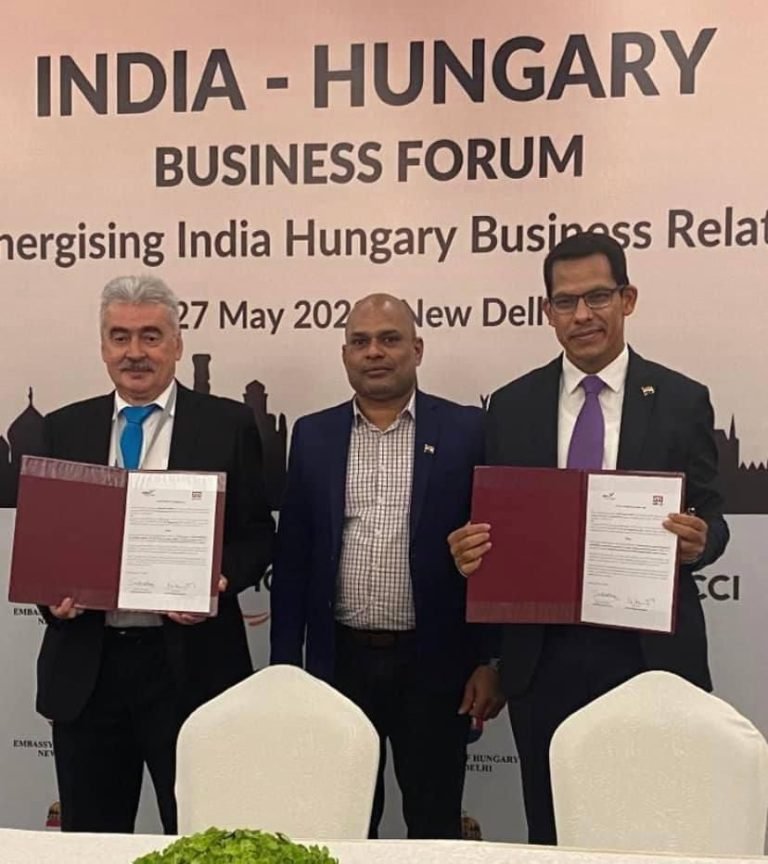
NEW DELHI (Metro Rail News): India’s first and only private sector rail producer, Jindal Steel & Power (JSP) has taken a big leap in rail infrastructure manufacturing. The company will install India’s first Rail Wheelset manufacturing plant at its Raigarh facility in Chhattisgarh. JSP has collaborated with GIFLO Steel – Hungary for this ambitious project.

The MoU for technology collaboration has been signed between GIFLO Steel – Hungary & Jindal Steel at the “India Hungary Business Forum” organized by the Embassy of Hungary along with FICCI in the national capital on 27th May 2022. The plant will have an initial capacity of 25,000 Wheelsets per year. Jindal Steel will also install a Rail forging unit for asymmetric rails which are used in rail track switches, especially for high-speed train tracks.

“We at Jindal Steel are committed to AtmaNirbhar Bharat Abhiyan launched by Hon’ble Prime Minister. Rail wheelset manufacturing plant will help Indian Railways to speed up the modernization of its Rail infrastructure; by making available world-class rail wheels to realize the vision of “Gati Shakti” by the Government of India”, said Mr V R Sharma, Managing Director of Jindal Steel.

“Having its competence and understanding of the nuances of rail rolling, JSP is working to meet our country’s demand for various grades of Rails while maintaining international quality and safety standards. Our Rail mill in Raigarh has been supplying superior grades of rails to various Metro and Indian Railway projects under execution”, he added.

JSPL is the only producer of Head Hardened Rail grades 1080 HH & 1175HT for a heavy axle load of more than 25 Ton & high-speed application in the country. JSPL also produces Rails in grades R 260 and 880 for 60E1, ZU 1-60 & 60E1A1 profiles. JSPL has also supplied R350 HT Grade Rails for its overseas customers.

India’s first semi high speed freight train ‘Gati Shakti’ expected to start in December

CHENNAI (Metro Rail News): India’s first semi-high speed freight train ‘Gati Shakti’ is expected to start by December, the officials informed. These trains will be manufactured at the Integral Coach Factory (ICF) in Chennai as well as these trains will have 16 coaches and can run at a speed of 160 kmph similar to the Vande Bharat Trains.

To implement the PM Gati Shakti initiative, the Railways has created a different directorate at the Railway Board with its branches at Khurda, Bilaspur, Delhi and Bengaluru divisions.

“The design work for these trains has already started.
We have also given the order for material by December this year, we will be able to manufacture two of these trains,” ICF General Manager A K Agarwal said. “The final number of trains will depend on how the initial ones are received by the market,” he added.

As per the officials, by introducing these trains the Railways is planning to target the e-commerce and courier parcel services meanwhile every train will include refrigerated wagons in the rear end and in the front to carry perishables like milk products, fish, fruit and vegetables. Electricity connection for these trains will be provided by the coach. The rest of the coaches will have rollers for moving the container and each coach will have two doors for loading and unloading the containers.

74 new ‘Gati-Shakti Multi-Modal Cargo Terminal (GCT) locations have been selected by the Indian Railways across the country. This policy was introduced in 2021 with the aim to boost investment in the development of additional terminals for handling rail cargo.

RITES signs MoU with Mizoram Govt for infra works

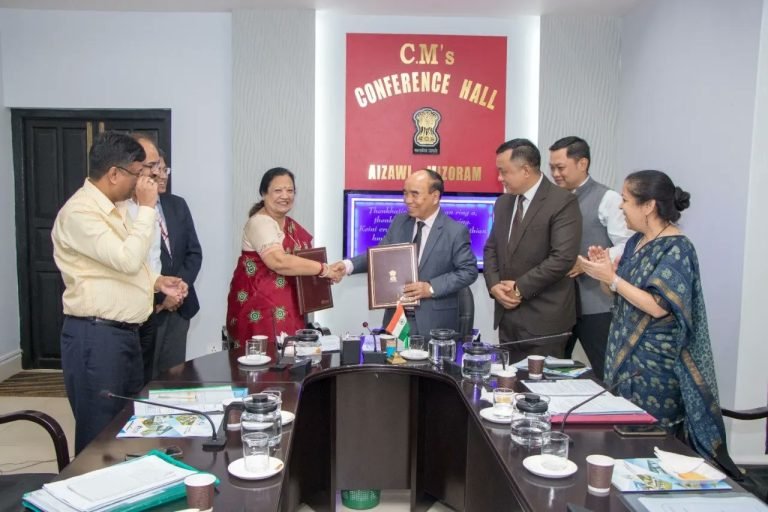
GURUGRAM (Metro Rail News): RITES Ltd., a leading transport infrastructure consultancy and engineering company, signed a memorandum of understanding (MoU) with the Planning & Programme Implementation Department, Government of Mizoram, to leverage the opportunities provided by the National Infrastructural Pipeline (NIP) and boost infrastructural development initiatives of the North-Eastern state.

As per the agreement, signed in the presence of Minister of State for Railways & Textiles, Darshana Jardosh and Chief Minister of Mizoram Zoramthanga, among other dignitaries, the state government, and RITES Ltd. will jointly identify projects in the areas of transport infrastructure as well as highways, buildings, airports, urban engineering, and ropeways, etc.

Executive Director (Privatisation & Concession), RITES Ltd., Manobendra Ghoshal, said, “The MoU with the Government of Mizoram heralds a new chapter in RITES’ journey and paves the way for infrastructural development in the North-Eastern state, where the potential for sustainable and resilient development is immense.”

RITES will lend its technical expertise and explore collaborations with the Government of Mizoram in developing industrial and logistic parks, including integrated check posts, signalling & workshops, metro railway systems, urban engineering & sustainability, water, sanitation, infrastructure, and renewable energy, etc., to attract public-private-partnerships and investments in the state.

Duhai Depot gears up for the arrival of first RRTS Train from Gujarat

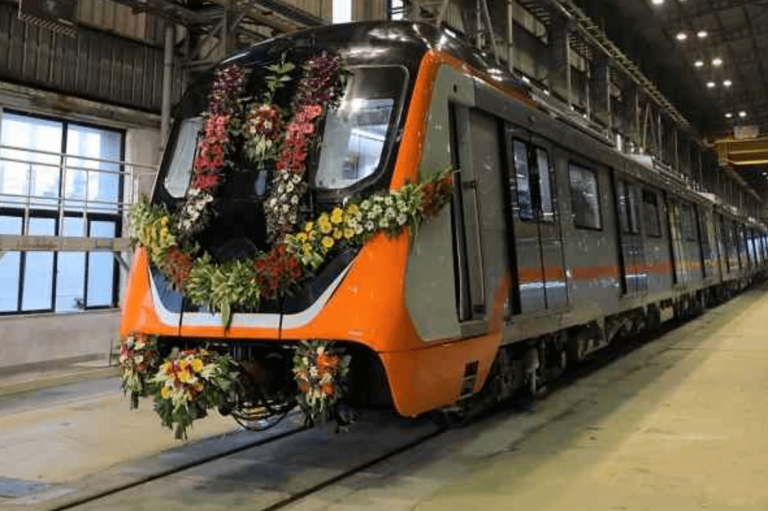
GHAZIABAD (Metro Rail News): The first trainset of India’s first RRTS trains were handed over to NCRTC on 7th March at Savli, Gujarat. It is soon to arrive at Duhai Depot, Ghaziabad, and the Depot is gearing up for its arrival. The tracks have been laid out, and preparations are being made for the testing of the train at the Depot. For the operation of the RRTS trains, an administrative building has also been constructed in the Depot.

For the testing and the maintenance of the RRTS trains, 11 stabling lines, 2 workshop lines, 3 Internal-Bay Lines (IBL) and one Heavy Internal Cleaning (HEC) line are being constructed. The construction of one workshop and one IBL line is in the final stage, while the construction of the rest of the lines has been completed.

Stabilizing lines are used to upload and park the trains. The maintenance of trains and rectification of technical faults are carried out on workshop lines. IBL lines are used for testing of trains, and Heavy Internal Cleaning Lines are used to clean the interiors of the trains.

DJI 0031
default

Before the RRTS trains are made operational for the public, various types of testing are carried out on them. They are tested through various processes to ensure signalling, rolling stock and continuous power supply. After the success of all the testing procedures, a pre-operational trial is conducted. Only after the success of pre-operational trials, the train is made operational for the passengers.

Other works, including installation of roof shed for trains, construction of underpass and boundary wall in Duhai Depot are being carried out at a brisk pace. The installation work of OHE for the power supply for trains is also to commence soon.
Poles and cantilevers have already been installed for the installation of OHE in the Depot. Soon, the entire Depot will be ready for the operation of trains.

Along with this, the construction of the Viaduct connecting the Duhai RRTS station with the Duhai Depot is also going on at a pace. With the completion of this viaduct, the line will be ready for the trains to exit the Depot. The track laying and installation of OHE in the priority section are also in progress.

The 17 km long priority section has five stations, Sahibabad, Ghaziabad, Guldhar, Duhai and Duhai Depot. NCRTC is planning to commence the trial runs on the priority section by the end of this year and to make it operational for the public by 2023.

UP government allots budget of Rs 747 cr for Kanpur Metro and Rs 547 cr for Agra Metro

LUCKNOW (Metro Rail News): The Uttar Pradesh government has proposed a budget of Rs 747 crore for Kanpur Metro and a budget of Rs 547 crore for Agar Metro whereas a budget of Rs 100 crore is proposed for Metro projects in Gorakhpur and Varanasi.

The work on the Agra Metro is going on at an accelerated pace.

The Kanpur metro has got Rs 747 crore for the current financial year against the approved cost of Rs 11,076 crore. Similarly, a budget of Rs 547 has been proposed for the current financial year for Agra metro against the approved cost of Rs 8,380. A budget of ₹1,306 crore has been proposed for the Delhi-Ghaziabad-Meerut RRTS Corridor too in the financial year 2022-2023.

UPMRC MD Kumar Keshav said, “With the support of state and central governments, Metro projects are being executed in Kanpur and Agra at a brisk pace and budget is being allocated timely. We are assured that the Gorakhpur Metro project will also commence soon.”

Haryana Orbital Rail Corridor Tunnel’s tender process for construction to be completed by Dec

HARYANA (Metro Rail News): The tender process for the construction of Haryana Orbital Rail Corridor Tunnel (HORC) will be completed by the month of December during the current financial year. Tenders will be invited during the month of July.

Haryana Rail Infrastructure Development Corporation Limited (HRIDC) has discussed this in depth with companies from tunnel construction sector regarding HORC Tunnel of length 4.69 kms, a major part of HORC of length of 121.742 km to be constructed parallel to Kundli Manesar Palwal Expressway (Western Peripheral Expressway).

The representatives of 20 companies from tunnel construction were present in the meeting held at Haryana Bhawan where HRIDC held detailed discussions on the latest technologies with companies from the tunnel construction sector.
Discussions were also held with the companies regarding the challenges generally faced during tunnel construction.

Rajesh Aggarwal, Managing Director, HRIDC said that the construction work of HORC Tunnel will be completed within the period of 30 months after the completion of the tender process.

It is noteworthy that the Haryana Orbital Rail Corridor Tunnel (HORC Tunnel) of length 4.69 km is to be constructed in the Nuh district area of Haryana. Former Managing Director of Delhi Metro Rail Corporation Limited (DMRC) and President of Tunnel Association of India and Principal Expert of HORC, Mr. Mangu Singh was also present in the meeting.

Tata Motors starts their new subsidiary focused on EV

NEW DELHI (Metro Rail News): Tata Motors has opened their new subsidiary named ‘TML Smart City Mobility Solutions’ (TSCMSL) which will cater to urban mass mobility business under an own, operate and maintain model.

With the launch of TML Smart City Mobility Solutions (TSCMSL), the Company intends to bring specific focus to its Electric Vehicles (EV) segment as a service offerings across its portfolio of commercial vehicles.

In addition to existing State Transport Units (STUs) and government fleets, TSCMSL will also cater to all business opportunities across passenger mobility applications, the company informed in a statement.

Railway Board gives green signal to BMRCL for new indigenously built trains

BENGALURU (Metro Rail News): Railway Board approves the operation of coaches which are indigenously built for Namma Metro. The seven brand new trains with 42 coaches which have been manufactured by BEML, are stationed at Peenya.

The Bangalore Metro Rail Corporation Ltd (BMRCL) now has a total of 57 trains that have six cars each which will be mainly used on the Baiyappanahalli-Whitefield line that is going to launch soon. 

The Railway Board informed the BMRCL director on May 18 that the coaches which cost around 8.5 crore each have been cleared to run at a maximum speed of 80 kmph. These coaches have also been approved for use on the Purple and Green Line corridors.

At least 65% parts of these trains are Made in India.
The trains received the speed certification from Railway Design and Standards Organization (RDSO) on 25th November after proper tests were conducted whereas the Commissioner of Metro Rail Safety authorized these on 4th March 2022. BMRCL MD Anjum Parwez said that these trains will be used for the Baiyappanahalli-Whitefield line and between Kengeri and Challaghatta.

DMRC opens social media account on Koo

NEW DELHI (Metro Rail News): The Delhi Metro Rail Corporation (DMRC) on 21 May signed up on the social media app Koo which is a Made in India digital platform. DMRC is already active on other social media accounts such as Twitter, Instagram and Facebook where it provides all the information regarding the Delhi Metro.

“The Delhi Metro today launched its official account on social media platform ‘Koo’ with the user name ‘OfficialDMRC’. The account can be accessed through the following link https://www.kooapp.com/profile/OfficialDMRC,” the DMRC said in a statement.

The Delhi Metro started using social media platforms in 2018 where they regularly update about the Metro-related news and developments such as service updates, new initiatives and construction of new corridors.

“Around five lakh users are following Delhi Metro accounts on Twitter, Facebook and Instagram,” the statement said. Presently Delhi Metro is very much active on its Twitter account where they post the press releases as well as answer the queries of the passengers travelling via Delhi Metro and assist them by providing the necessary information.

Maha Metro to construct five pillars near Khadki, Ministry of Defence approves

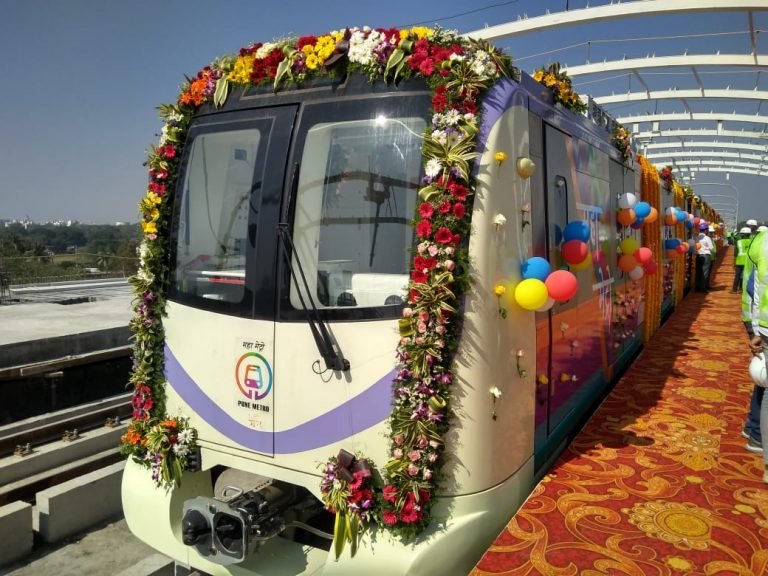
PUNE (Metro Rail News): Maha Metro is going to construct 5 pillars near Khadki After receiving approval from the ministry of defence (MoD).

Maha-Metro officials informed that the work will start after the lease of the property is cancelled at the local level. “Prime Minister Narendra Modi will be informed about the MoD’s approval at the Pragati meeting this week.
Local defence authorities will hand over the land after getting the working permission,” said Atul Gadgil, director, Maha-Metro.

“Work will begin only after the lease on the property is cancelled at the local level. We are going to meet local authorities this week,” he added.

A Maha Metro official has informed that “Most of the pillars on old Pune-Mumbai highway between Bopodi and Khadki stretch will ready in a few days.”

The Pimpri-Swargate route which is a 17.4 km long stretch, out of that 1.75 km corridor of elevated Metro between Range hills and Dapodi comes under the jurisdiction of the Ministry of Defence.

Siemens emerges as the lowest bidder for electrification work of Metro between Poonamallee and Light House

CHENNAI (Metro Rail News): Siemens has emerged as the lowest bidder for the electrification contract for the stretch between Poonamallee and Light House in Metro Rail Phase II project.

Seven companies had submitted bids for this contract among which Siemens was the lowest bidder. “Siemens quoted ₹390 crore and emerged as the lowest bidder. There are a few more procedures involved before we officially hand over the letter of agreement. It will take nearly a month,” an official said.

The scope of this contract includes design, manufacturing, installation of receiving substations, overhead electrification work, SCADA (supervisory control and data acquisition) among others for the Poonamallee-Light House stretch. The receiving substations will come up at Poonamallee and Alwarthirunagar. “Earlier, it was planned at Thirumayilai, but the cost of land was too high and hence we moved it to Alwarthirunagar,” an official said. The completion period of this project is 4.5 years.