New Delhi: Prime Minister Narendra Modi has flagged-off the Delhi-Faridabad Metro Line that would allow hassle free travel for around two lakh daily commuters between the national capital and the industrial hub in Haryana.The extension of the Delhi Metro connects Badarpur to Escorts Mujesar in Faridabad.The total cost of the project from Badarpur to Escorts Mujesar is nearly Rs. 2,500 crore. Out of this, Rs. 1,557 crore was borne by the Haryana Government, the Centre contributed Rs. 537 crore, while the Delhi Metro provided Rs. 400 crore.The nine stations in this section include, Sarai, NHPC Chowk, Mewala Maharajpur, Sector 28, Badkal Mor, Old Faridabad, Neelam Chowk Ajronda, Bata Chowk and Escorts Mujesar. buy kamagra polo online https://lasernailtherapy.com/wp-content/themes/twentytwentytwo/inc/patterns/en/kamagra-polo.html no prescription
All these are elevated and located on either side of the Delhi-Mathura Road (NH-2).“The nine-station metro corridor which was 95 per cent indigenously built will provide people a safe, affordable, quick, comfortable, reliable, environment-friendly and sustainable transport facility,” a Haryana government spokesperson said.Haryana Chief Minister ML Khattar, addressing a press conference on Saturday, had thanked the Prime Minister for “gifting” the Metro service which would take the city to “another level of progress” with better connectivity with other NCR towns.He had also said that the Prime Minister would be announcing the go-ahead for connecting Gurgaon with Faridabad by Metro.
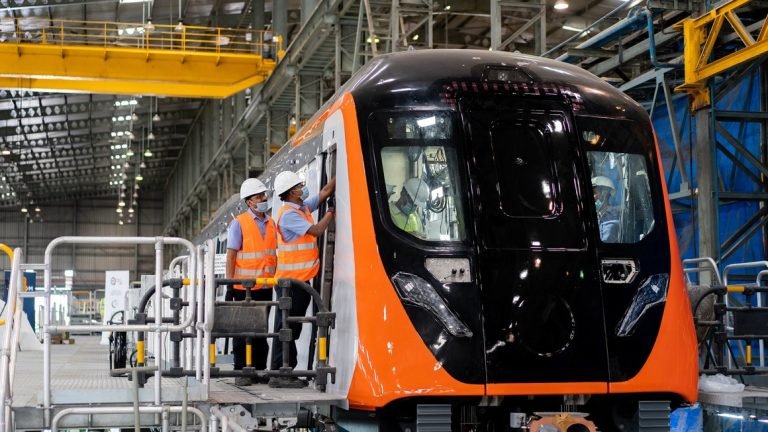
DELHI (Metro Rail News): Alstom, global leader in smart and sustainable mobility, has been awarded the contract by Madhya Pradesh Metro Rail Corporation Limited (MPMRCL) to deliver 156 Movia metro cars with 15 years of comprehensive maintenance for the Bhopal and Indore metro projects. This project will benefit over 5.7 million people of both these cities. Valued at €387 million (over INR 3200 crores), the order includes the installation of latest generation of Communications Based Train Control (CBTC) signalling system as well as train control and telecommunication systems; each with seven years of comprehensive maintenance.
Alstom is responsible for the design, manufacture, supply, installation, test, and commissioning of 52 standard gauge Movia metro passenger trainsets of 3-car configuration each. 27 trainsets will be for Bhopal and 25 trainsets for Indore. To be built at Alstom’s state-of-the-art rolling stock manufacturing facility in Savli (Gujarat), these ultramodern, light-weight trains will operate at a top speed of 80 km/h, across the 31 km line in Bhopal with 30 stations and the 31.5 km line in Indore with 29 stations. This is the second such combined order in India for Alstom, after the Agra-Kanpur metro projects, a press statement from Alstom stated.
“As India moves towards its vision of using green and clean energy for public mobility, Alstom takes pride in being its long-standing partner in this journey and help write the country’s growth story. Following the Agra-Kanpur metro project, winning this contract is a strong validation of our commitment to deliver mobility solutions that meet the specific requirements of our customers,” Olivier Loison, Managing Director, Alstom India cluster said.
“We are delighted to be awarded this significant contract from MPMRCL and this collaboration will lay a strong foundation for an efficient and sustainable mass transport system for the cities of Bhopal & Indore. As India moves towards its vision of using green and clean energy for public mobility, Alstom takes pride in being its long-standing partner in this journey and help write the country’s growth story. Following the Agra-Kanpur metro project, winning this contract is a strong validation of our commitment to deliver mobility solutions that meet the specific requirements of our customers,” he added.
Alstom India has a history of successfully delivering world-class metro trains for major cities, including Delhi, Chennai, Mumbai, Lucknow, Kochi in India and internationally for Sydney, Queensland, and Montreal. The company is currently manufacturing metro trains for Agra-Kanpur, Mumbai Metro Line 3, and modern trainsets for India’s first semi high-speed Delhi-Meerut RRTS project.
The Movia metro family offers latest technology combined with proven and reliable components. Built with light but strong stainless steel car bodies, the air-conditioned cars are developed with a strong emphasis on eco-friendly design to eliminate hazardous substances providing a safer environment for passengers. The trains are powered with modern energy efficient propulsion systems with regenerative braking, making them a sustainable alternative to other modes of transport, thus reducing energy consumption.
Movia metros have been delivered to many cities around the world, such as London, Delhi, Stockholm, and Singapore. With six industrial sites and four engineering centers, Alstom has a strong footprint in India to cater to domestic as well as several international projects. Alstom in India is a team of over 10,000 employees and the company aims to expand its talent pool by 15% this year.
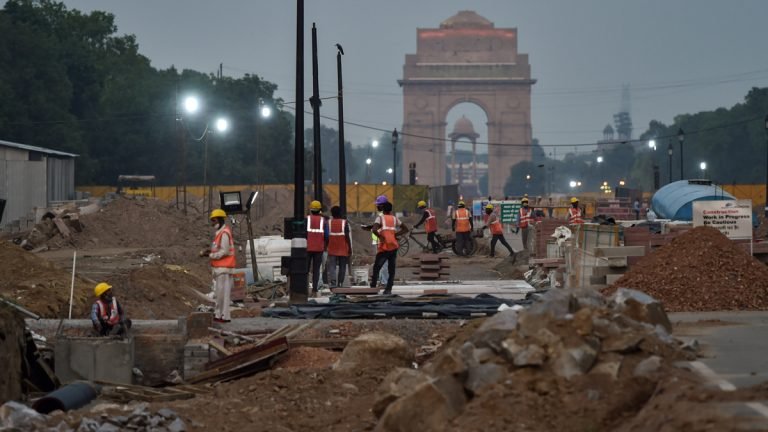
NEW DELHI (Metro Rail News): A detailed plan for the construction for a 3 km Metro loop corridor that will connect government offices which are being built along Rajpath as part of the Central Vista redevelopment project will be completed by the end of this month.
According to the Delhi Metro Rail Corporation (DMRC) officials, along with preparing the detailed project report (DPR), Delhi Metro will appoint a design consultant for the station interiors for which the tender has been floated.
The 3 km loop corridor will start and end at the Central Secretariat Metro station and will be having four stations whereas the timelines for the project have not been finalised yet as per the officials.
The exits from these four metro stations are likely to provide direct access to the office buildings via escalators, staircases and walkways.
According to the officials, the design consultant will work according to the specifications of the DPR, which include the dimensions of the Metro stations, their depth, the number of coaches to be deployed and the theme for the interior design. On this corridor, smaller trains with around 3-4 coaches are likely to be used.
The Central Vista project includes the redevelopment of Central Vista Avenue, the construction of a new Parliament building, the refurbishment of North and South Blocks, and the construction of new Central government offices, including a common Central Secretariat, and central conference facilities, etc.
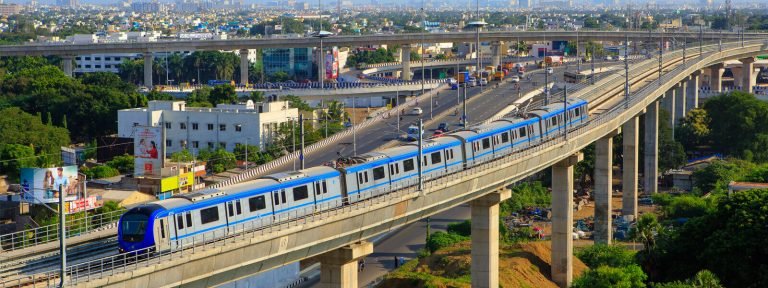
CHENNAI (Metro Rail News): Chennai Metro has sent a land acquisition notice to Kamal Haasan’s production company Raaj Kamal Films International, for its Phase-2 metro project. Under this project around 120 stations worth around Rs 61,000 crore will be constructed.
According to the sources, a station under this project has to be built on Bharathi Dasan road, where the Raaj Kamal Films International’s office is also located. According to the sources, Raaj Kamal’s office said that a legal consultation is underway so as to decide how to proceed. Around 10 feet at the front of the office is marked in the metro project, they added.
The Chennai Metro Rail Limited has planned to construct a station in around 600 square feet of area. A notice has also been issued to other buildings in the area along with the production company. The planned station at Bharathi Dasan Road forms a part of the Phase II project, including the Light House to Poonamallee stretch of road.
Recently, the CMRL and Larsen & Toubro signed a contract for constructing a corridor from Nehru Nagar to Sholinganallur, at an estimated amount of Rs 1,021 crore, as part of the Phase II project. Under this, a 10-kilometre-long viaduct is to be constructed through 10 metro stations that will located at Nehru Nagar, Kandanchavadi, Perungudi, Thoraipakkam, Mettukuppam, PTC Colony, Okkiyampet, Karapakkam, Okkiyampet Thoraipakkam and Sholinganallur.
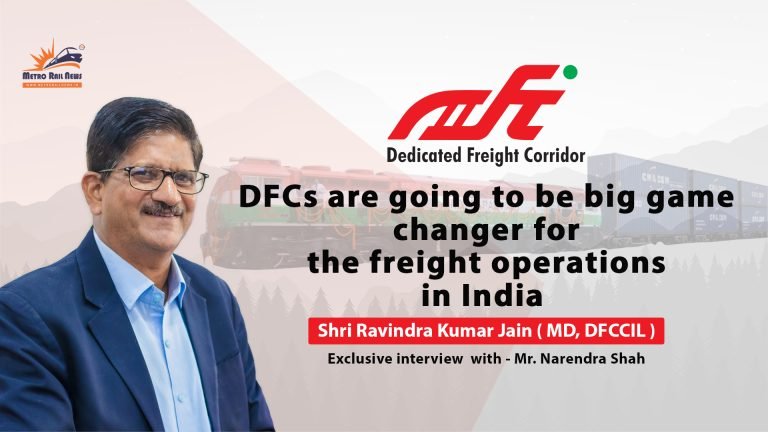
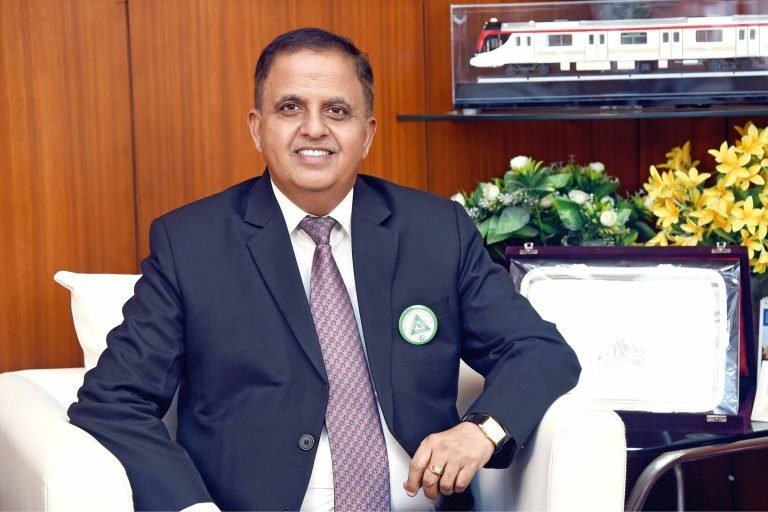
Metro Rail News conducted an in-person interview with Mr. Ravindra Kumar Jain, Managing Director, Dedicated Freight Corridor Corporation of India (DFCCIL). In the interview, Mr. Jain talked about Dedicated Freight Corridors and his experiences.
Mr. Ravindra Kumar Jain, IRSE, assumed the charge of Managing Director of Dedicated Freight Corridor Corporation of India Limited on 11.12.2020. He is an officer of ‘Indian Railway Service of Engineers’ (IRSE) of 1986 batch. He completed his B.Tech. in Civil Engineering from MNIT, Jaipur and M.Tech. in Environmental Engineering from the University of Roorkee (now IIT, Roorkee). Before joining DFCCIL, he was posted as Chief Administrative Officer/Construction for Eastern Railway, Kolkata. Prior to that, he worked as Executive Director, Civil Engineering/Plg, Railway Board. From 2017 to 2019, he was Divisional Railway manager, Samastipur (ECR). His tenure is remembered for Mithila painting at Madhubani station and then on the rake of Bihar Sampark Kranti. For this, his team was honoured by Hon’ble Minister Railway and later also by Chairman, Railway Board. He was also adjudged as Outstanding DRM in 2018 for manning large nos. of unmanned LCs is a very short time bound schedule.
Here are the edited excerpts: –
How important is DFC for the Railways and the country? What is the present status of the corridors? When is the entire project expected to be commissioned to the nation?
DFCs are going to be a big game changer for the freight operations in India. Basically we are going to say they are going to be revolutionary trends for freight operations. For example, one goods train which starts from JNPT Mumbai takes around 2-3 days to reach NCR because the average speed is just 20-25 kmph. Once the DFC comes into position it will change the scenario entirely as it will reduce the duration from 3 days to 24 hours and the operations of freight trains will be at par with any super fast trains or Rajdhani express. Basically DFC is the first of its kind since independence as it is a rail infrastructure project ever taken under the Ministry of Railways.
Railways are the most energy efficient mode of transport and any growing economy such as India will need infrastructure for transportation as it is the basic backbone of the economy therefore it needs to improve and for that the most sustainable method is railway transportation. With electrification and other innovations we are almost going to achieve a zero emission stage so obviously for any country to achieve sustainable and green development, India is giving a good solution in the form of DFC. The DFC project planning and ideas started in 2006-2007 and the concept plan took shape in 2008 along with the detailed estimates.
The actual work started in 2014 when the land acquisition was also in position and right now we are working on 2 DFCs, the first one is the eastern corridor starting from Ludhiana via Dadri, Khurja to Dankuni in West Bengal and it is about 1,875 kms long and the other corridor is the western corridor that starts from Mumbai, JNPT and ends up in Dardri that is in UP and it is about 1506 kms and altogether it is around 3374 km long and out of that we are currently working on 2850 km. Regarding the current status, in the last one year we have commissioned around 1347 km, which is almost 47%.
Please share the details of the scale up plan of the DFCs, if any. How is the proposed DFC expected to look alike in its subsequent stages if any plan envisaged. What shall be the major impacts and benefits?
For DFC we are working very vigorously and persistently. We are intending to complete 90% of work within a year that is June 2023 and then some small work on western corridor pertaining to Maharashtra may lag behind otherwise we will be completing most of the work in a year. The DFC will bring reduction in the logistics costs as our honorable PM and Railway Minister also have the aim to reduce the logistics costs and to achieve that firstly we should have an efficient transportation system and secondly the turn around should also be better.
So the DFC trains will be faster, heavier, longer and higher than the existing trains. The DFC has got the latest technology, latest specifications and much better type of operation which will give reliable and scheduled operations. We will provide IT enabling systems to the customers so that they can track the trains. We are providing IT and customer friendly services and reliability of services which will change the entire scenario of the freight systems in the country.
We will work for the bulk product as well as non bulk products, e-commerce, parcels, perishables and any other items that you can think of and obviously highest priority will be import and export through containers. To provide impact to the economy, along with the DFC the government has already planned multi modal logistic parks and these parks will have integration with other modes of transportations that will provide first and last mile connectivity. This is going to make India a competitive market and our products will comparatively be a bit cheaper as compared to today’s rates and it is therefore going to make a huge difference.
Do you think a dedicated track for freight transportation in the country should have been introduced much earlier? Why do you think there has been a delay on this front by railways for so many years?
I beg to differ from you as there has not been a delay. At the time of independence the railways used to carry around 80% of the goods but after the road transportation it has been reduced to 25% so our modal share has reduced but the volume has increased. So the reason why we were not able to compete with the road transport is because we have a mix traffic of operations as we have both passenger and goods train on the same tracks and the passenger should always be a priority that is why the goods operation gets less priority and the average speed goes down and the therefore the reliability of services goes down.
Secondly, we tried through the doubling, the tunnelling, improving the junction arrangement and made changes such as electrification and much more for improvement which needs investment but the investment in road transport is much higher. So after experimenting with many different ideas we decided that now is the time to take a different step and that was DFC. So it is never late or never early but these decisions are taken on the basis of economic growth of the country and the need of the hour. So in 2006 we thought that now is the time to go for DFC but it has many challenges such as land acquisition and finances and therefore these decisions have to be taken after so much planning.
DFCCIL is a Public Sector Undertaking (PSU) corporation registered as a company under the companies act. In what ways the formation of the PSU is helping in execution of the project. What additional leverage DFCCIL requires for a timely completion of the project?
Firstly DFC is a PSU and registered under the Ministry of Railways and we are linked with the Ministry of Railways through an agreement for the next 30 years. While working as a PSU we are exclusively working on the DFC and we have no other projects but we have 4-5 major activities related to the DFCs that are to construct and commission, to operate and maintain the corridors, to develop business for moving on this corridor and to think and plan about the future development of this corridor. We have got leverage because a government department has to work in different ways and there are so many rules and regulations and theoretically it takes extra time whereas in DFC PSU we work in a very straightforward manner and that is why we are able to implement it much faster. DFC will provide operation and maintenance at much lower cost than any other transportation including that of Indian Railways. Our systems will be modern and IT enabled which can track the trains and modern systems such as OHE and Signalling are used. Even our maintenance will be done with modern equipment and gadgets as they will be monitored on a real time basis and GPS systems will be used for tracking so it will be very cost effective.
Your pioneering and memorable initiative in aesthetically depicting Mithila painting at the entire Madhubani Station and Rake of Bihar Sampark Kranti being DRM Samastipur is still widely appreciated. Would you like to share some of your views regarding the initiative you took in a creative manner?
I feel very nostalgic remembering that. Actually I joined at the end of April 2017 in Samastipur division where the Madhubani Station lies. After a few months of working there I got a complete list of cleanliness ranking of around 470 stations and It included a list of A and B class railway stations of Indian railways. In that list Madhubani station was almost at the end on 369 number and when I saw that I felt very bad and at that time my knowledge regarding the Madhubani and Mithila painting was not at par so I enquired that the area is so rich in culture and have such a beautiful history and heritage. I thought about why this station is so poorly kept and then surveyed the station along with my team and decided to change the look of the whole station.
I instructed for the walls to be painted fully white and then called all the local artists and said that we will provide you the space, paints and all that you need and you can do the Mithila painting on these walls. On 2nd October, 2017 we started this cleanliness drive and around 30 people including children came and in a week their numbers crossed hundred so the entire station was taken over by the locals and everybody was keen to do their own paintings and the result was so beautiful as if it was a museum. Nobody thought in the beginning that we were making history. When the next ranking list came, Madhubani Station was in the top 3. It was also appreciated by the Railways Minister and even an award was sanctioned for the station.
Same thing happened with the Bihar Sampark Kranti as on that particular rake I personally requested the General Manager Shri L.C. Trivedi to permit us to paint the express which starts from Darbhanga and goes to Delhi and he also took the permission from the ministers and after we got the permission we asked the local painters to please come again and paint the coaches and it was so beautifully done that from whichever station the train passed people gathered to take a look and it even got famous on social media even outside India.
We also permitted the painters to write their names along with their mobile numbers on the paintings. Through the social media clips so many agencies in India as well as outside the country contacted those painters and gave them orders for the paintings in their areas. Then after that the Mithila painting came to Delhi and in Patna also and various parts of the country.
With an experience of various key positions in civil engineering departments and in other administrative assignments in various zones of Indian railway what has been your best experience for the job and responsibilities held? Which significant accomplishment you would like to mention and recall.
Again you have made me nostalgic. The thing I remember the most is my tenure for 2 years as DRM of Samastipur and not just because of the Madhubani painting on the station and the rake but because we tried to provide the best possible help to employees . One such case is that one of our keyman was run over by a train and you won’t believe that on the very next day his widow was given the PPO that is the pension order and after that the very next day we gave her the appointment. I really feel that we were in a position that we were able to provide help to the family who was in shock with their only earning member dying. On the safety front we did the mining of more than 300 crossings in a record time of 3-4 months and for that the division got a special award from the chairman of the Railway Board.
Beyond this particular tenure I still remember my tenure as Deputy Chief Engineer, Jaipur where I was fully involved for the first time in the gauge conversion of the Jaipur station itself. That time was in 1992-94 where it was only a meter gauge station and I was incharge when the broad gauge was introduced for the first time in the station and that was a historical moment. Then my posting in Ahmedabad was very wonderful where I did more than 1000 km of gauge conversion including Bhavnagar, Palampur etc. and lastly my tenure in Mumbai where we were maintaining all the suburban stations, suburban quarters and so many other things. The life and working is entirely different in Mumbai as we worked on the suburban stations day and night and it was very challenging. These are the reasons which give me strength to continue hard work and sincere work that have led me to this position.
With the present policies of the govt. for the railways how do you see IR in the coming few years? Is there any sector IR that needs immediate attention being overlooked?
Indian railways has got a very bright future as it is the lifeline of the country and the nation depends on it so we have to strengthen the railways. Whosoever wants to join the Railways I wholeheartedly welcome them. In Railways the hardwork and sincerity is very essential as this sector is very challenging and every railway personnel works very seriously that is when they are given any assignment they do that with so much devotion. It is the reason why Railways are running 24/7 in all parts of the country. So I want to say that whoever is interested in joining Railways is going to have a bright time as the railways are here forever and the country needs it and its services. That is why it is said that after the army it is the railways in the hierarchy.
Being a stellar technocrat with experience of multiple positions, what would be your message to young minds willing to join railways? Kindly share your views about Metro Rail News. Any message to our readers?
I want to convey my message to all the youngsters that if they want to innovate the country needs them. Every youngster should think of new technologies, developments and new innovation for doing anything faster and much more efficiently with low costs. Our country is going to become a 5 trillion economy very soon and by 2050 it may be ten times of that. So we need young and innovative minds to achieve these targets. It is very tough but we need to be among the world’s top 3 economies in time to come. In Railways we have had so much change especially in the last 5-10 years that things have changed entirely. Otherwise we were just working on normal stations and normal trains but soon we will have zero waitings lists. The DFC, high speed rails and metros and other projects and new technologies will be achieved with new ideas and innovations. For any country, continuous growth and sustainable development is very important and railways provide that type of transportation.
Thank you to Metro Rail News for inviting me and giving me the opportunity to express myself. My message to the readers of MRN is that we need to contribute to the development of the country. Wherever the infra projects are happening we should provide them all the possible support. Sometimes we have seen that the locals come in the way of ongoing projects which are being carried out. The people should think that they are a part of the nation’s development. Our country requires growth and development and young innovative minds can provide that.
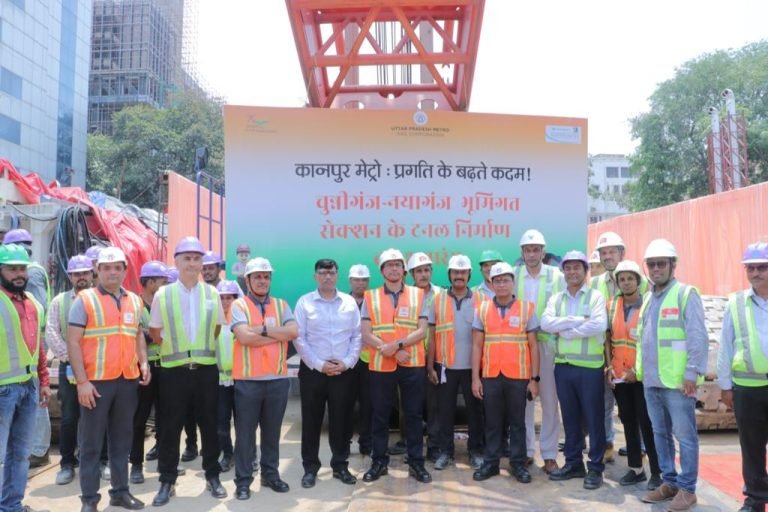
KANPUR (Metro Rail News):Kanpur Metro today launched Tunnel Boring Machine (TBM) ‘Nana’ named after great freedom fighter Nana Saheb Peshwa for tunnel construction work from the ‘launching shaft’ of Bada Chauraha Metro station. With this, the tunnelling work at the approximately 4 km long underground section between Chunniganj to Nayaganj, under the 23 km long Corridor-1 of Kanpur Metro Rail Project (IIT to Naubasta) has now commenced. The tunnel construction work was inaugurated by Sushil Kumar, Acting Managing Director, Uttar Pradesh Metro Rail Corporation (UPMRC) by pressing the buzzer, in the presence of senior officials and employees of UPMRC.
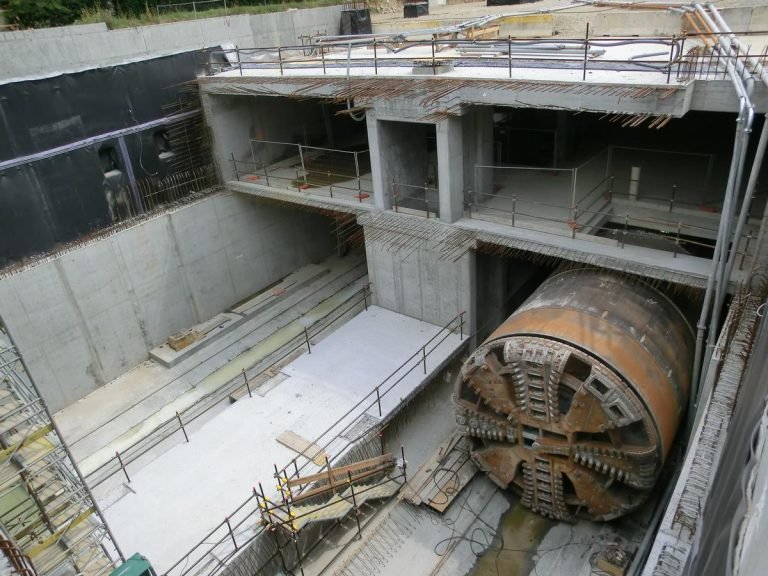
The tunnelling of the underground section between Chunniganj and Nayaganj will be done with the help of two Tunnel Boring Machines ‘Nana’ and ‘Tatya’. Both TBM machines were lowered inside a rectangular launching shaft which has a length of about 21 meters, a width of 24 meters and a depth of about17.5 meters. Today construction of a down-line tunnel from Bada Chauraha to Nayaganj with the help of first TBM ‘Nana’ has begun and after a few days, construction of up-line tunnel will also commence with the second TBM ‘Tatya’.
UPMRC has named the TBM machines as ‘Nana’ and ‘Tatya’ after the great freedom fighters who played an important role in the independence struggle. Both these revolutionaries also had a special bond with the city of Kanpur. The association of the Kanpur Metro Project with memory of these great freedom fighters will also inspire everyone connected with the project.
The total length of Tunnel Boring Machines used in this underground section of Kanpur Metro is about 80 meters and their weight is about 450 tonnes. With the help of these machines, tunnel of 5.8 meters in diameter will be constructed.
Expressing happiness on this occasion, Sushil Kumar said, “Commencement of tunnel construction work at the underground section between Chunniganj and Nayaganj is a new milestone for Kanpur Metro. The TBM ‘Nana’ and ‘Tatya’ will lead our way to fulfil the dream of a world-class Metro system in Kanpur. As we know the stretch between Chunniganj and Nayaganj is one of the busiest routes of the city and covers several prominent places. With the help of these state-of-the-art TBMs, we will be able to construct underground tunnels in the heart of the city with complete safety without affecting the traffic on the roads. As construction works on the underground section between Kanpur Central and Transport Nagar has also commenced, it is my firm belief that our team with their dedication will be able to achieve decided targets in the stipulated time.”
Constructing a tunnel of about 990 meters long from Bada Chauraha towards Nayaganj, TBM ‘Nana’ and ‘Tatya’ will reach at the starting point of Nayaganj Metro station in about 6 months, where these machines will be retrieved from the retrieval shaft. Thereafter, both the machines will be re-launched from the launching shaft to be built at Chunniganj and tunnel will be constructed to the starting point of Bada Chauraha Metro Station via Naveen Market.
Under the Kanpur Metro Rail Project, two metro corridors are to be constructed, the first between IIT to Naubasta, with a total length of about 23 km. And the other is between Chandrashekhar Azad University to Barra-8, with total length of about 8 km. At present, the construction work of the first corridor is in full swing. Under this corridor, revenue operations on about 9 km long priority corridor between IIT to Motijheel have already begun from 28th December, 2021. Beyond Motijheel, two parts of underground sections are being constructed between Chunniganj to Nayaganj and Kanpur Central to Transport Nagar. After this, about 5 km long elevated section from Baradevi to Naubasta will be constructed under corridor 1 of Kanpur Metro Project.
KOCHI (Metro Rail News):Kochi Metro Rail Limited (KMRL) has put together a team of specialists which also includes youngsters to work on new ideas to create designs for metro stations and to make the metro more commuter-friendly. This planning is being done as the Centre is expected to approve the second phase of Kochi Metro soon.
According to an official, the station designs for the 2nd phase extension are going to be completely different from the existing ones and phase-2 which is a 11.20 km stretch from Jawaharlal Nehru Stadium to Infopark, Kakkanad, will have 10 stations.
“We are planning to bring in not just robots for assistance to commuters but also virtual and digital bulletin boards. New types of LED-based advertisements with virtual reality and 3D images will be introduced. Talks are on with global tech partners for the purpose. The idea is to use the digital platform to bring in new generation advertisement, as Kerala is lagging behind in that sector,” said KMRL MD Loknath Behera, TNIE reported.
“The new stations are going to be more commuter-friendly. At some of the existing stations, commuters have to go to the concourse level and then move up to reach the platform. Such inconveniences will be avoided in the upcoming stations,” an official said.
“We accept genuine suggestions and opinions of the public regarding any of our stations and their operations. We are bringing in technology to ease commuters’ difficulties. That will fetch revenue for the metro as well,” the official added.
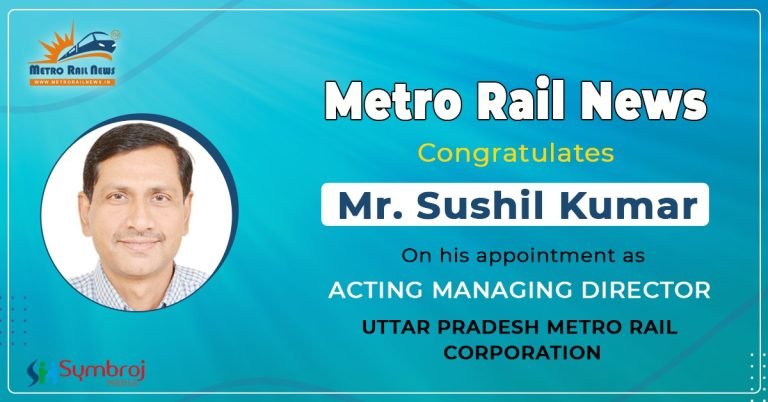
UTTAR PRADESH (Metro Rail News): Sushil Kumar, present Director Operations, Uttar Pradesh Metro Rail Corporation has been appointed as the Acting Managing Director of UPMRC. According to the order issued by the Government of Uttar Pradesh, he has been given additional (temporary) charge till the regular appointment of the Managing Director. Kumar joined UPMRC in 2015 and has contributed significantly in the metro rail operations in Lucknow and now in Kanpur as well. Previously, he had also worked as General Manager (Operations) in Uttar Pradesh Metro Rail Corporation (formerly Lucknow Metro Rail Corporation) and took over as Director (Operations), UPMRC in 2018.
He is a graduate in Electrical Engineering from the University of Roorkee (now IIT Roorkee) and a Masters from IIT Delhi. He is an officer of the Indian Railway Electrical Engineering Service – 1991 batch. Kumar has about 28 years of experience of working in senior positions in Indian Railways, Delhi Metro Rail Corporation and Uttar Pradesh Metro Rail Corporation.
While serving as Director (Power) in Indian Railways, he has also been part of committees of various Ministries working in the areas of Energy Conservation and Energy Planning. Apart from this, he had also held the charge of Additional General Manager in Delhi Metro Rail Corporation.
CHENNAI (Metro Rail News): The first tunnel boring machine (TBM) has arrived in Chennai from China which will be used to build the underground network for the Chennai Metro phase-2 project.
According to the officials, 23 more such TBMs will be needed for the CMRL‘s phase-2 project, and they will be arriving in the coming months. The TBM, has arrived at the Chennai Port from where it will be taken to Madhavaram for assembling. This process will take around three months whereas the tunnelling is expected to start in October.
The phase II project, is a 118.9 km stretch built at a cost of Rs 61,843 crores.
It has three corridors that are Madhavaram to SIPCOT via Kellys (corridor 3), Madhavaram to Shollinganallur (corridor 5) via Medavakkam and Light House to Poonamallee via T. Nagar (corridor 4).
This TBM has been brought to Chennai after it received the Factory Acceptance Test approval from CMRL recently.
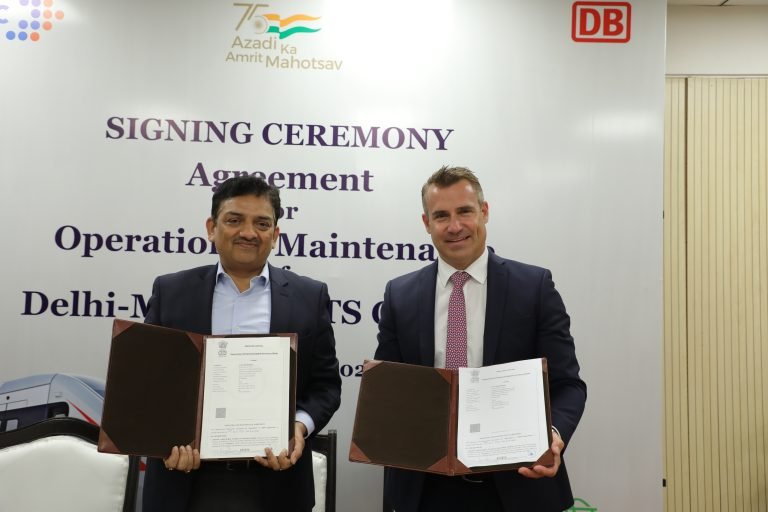
GHAZIABAD (Metro Rail News):NCRTC has entered into an agreement on July 1, 2022, with DB India for the comprehensive operation and maintenance of the 82 km long Delhi-Ghaziabad-Meerut RRTS corridor for a period of 12 years.
The rail-based transit systems in India are run by public entities, at times by outsourcing certain activities to private contractors. There has been limited participation by the private sector in this sector and till now the scope has generally been limited to the provision of facility management and ancillary services.
Ministry of Housing & Urban Affairs issued the Metro Rail Policy in 2017 which, inter alia, advocates the need for private sector participation in regional rail and metro rail projects. By adopting the long-term private participation model entailing comprehensive outsourcing of O&M activities, NCRTC has initiated steps to fulfil this objective of the Metro Rail Policy-2017 and the key initiatives being pursued by MoHUA under the leadership of Hon’ble Minister, Shri Hardeep Singh Puri.
Deutsche Bahn Engineering and Consultancy India Pvt Ltd (DB India) is a subsidiary of Deutsche Bahn AG, National Railway Company of Germany.
Speaking on the occasion, Mr Vinay Kumar Singh, MD, NCRTC said, “RRTS is a capital-intensive project, where long-term sustainability is paramount without compromising the safety and comfort of commuters. I am certain that, using the expertise and experience of our O&M partner combined with advanced technology adopted by NCRTC will bring in the predictability of long-term costs, managerial efficiencies and entrepreneurial spirit of the private sector in providing quality services to the commuters. I truly believe that this pioneering initiative by NCRTC will lead to a paradigm shift in the entire sector and will make the sector cost effective and competitive, thereby realizing the dream of a New India of our Hon’ble Prime Minister.”
This leapfrog initiative will undoubtedly pave the path for the transfer of knowledge, best international practices and managerial services that are available around the globe to the Indian metro and rail O&M industry. The employment of local engineers will enable the enhancement of existing skill sets by adopting international expertise and best practices. Through this model, it is expected that apart from efficient delivery of services, the private sector involvement will lead to operational efficiencies and optimum utilisation of assets/ resources. This model incentivises optimised performance through a system of incentives and penalties. The O&M model developed by NCRTC will be able to provide commuters world class customer experience through private O&M operator as well as help boost domestic capacities in the sector, having a multiplier effect. It will also assist in realizing GOI’s goal of brownfield monetization of infrastructure assets due to predictability and transparency of O&M costs.
NCRTC has also adopted the first-of-its-kind model for integrated procurement cum long-term (15 years) comprehensive maintenance of rolling stock through private participation to capture lifecycle costing. This procurement model was adopted to tap the use of the most suitable technologies and durable components on the one hand and latest state of the art technologies and practices on the other at optimum costs. The comprehensive O&M contract and the aforesaid procurement cum long-term maintenance contract are now being proposed to be adopted by Indian Railways and other metro companies.
The implementation of RRTS is part of the ‘Comprehensive Action Plan’ (CAP) for Air Pollution Control in Delhi & NCR’ and the recommendation of the ‘High Powered Committee on Decongesting Traffic in Delhi’. Once operational, a shift of traffic from private modes to a rapid rail system and multimodal integration and seamless connectivity will reduce the energy use by the transport sector in the National Capital Region and will promote ease of living as well as ease of doing business within the NCR. It will also lead to a significant reduction in pollution in the region. It is envisaged that the savings achieved with efficient operations would be recurring in nature and would have a direct impact on the long-term sustainability of RRTS.
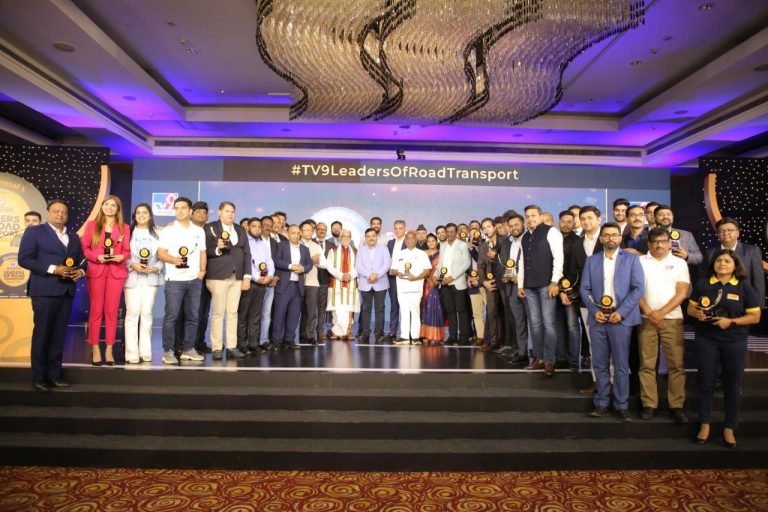
NEW DELHI (Metro Rail News): TV9 Bharatvarsh, in association with Continental Tires and Maruti Suzuki Commercial, organised the Leaders of Road Transport (LORT) Awards 2022 on June 23, celebrating the wheels of the nation i.e. the road transport sector.
Road transport is not just an economical and preferred sector for goods and passenger transportation, it is also responsible for more than 87 per cent of the country’s passenger traffic and 60 per cent of freight traffic. However, despite the crucial role it plays in the movement of goods and people, its contribution to the economy goes largely unsung. TV9 Bharatvarsh has consistently and continuously acknowledged the efforts of the road transport sector and the people who run this industry.
Even in the times of the coronavirus pandemic, TV9 Network vaccinated more than 17,000 truck drivers of 25 transportation hubs in 15 cities through initiatives like Suraksha Bandhan and Highway Heroes.
At TV9 Bharatvarsh event, Minister of State for Food and Public Distribution and Environment, Forest and Climate Change, Ashwini Kumar Choubey encouraged and honoured the people working in the road transport sector.
The Minister also shared this information on Twitter and appreciated the vital role of this sector in the pandemic period. Mr Choubey congratulated the awardees and TV9 Bharatvarsh’s team for the campaign to vaccinate truck and bus drivers in the transport sector during the Pandemic. “Today, we have assembled to honor and recognize the leaders of road transport, organized by TV9 Network. During the COVID times, this sector played a pivotal role to supply vaccines and food distribution to the entire nation. Heartiest congratulations to all the winners,” Choubey said.
TV9 Bharatvarsh recognised and rewarded the efforts of nearly 50 transport companies and their promoters together with Continental Tires and Maruti Suzuki Commercial.
On the Leaders of Road Transport Awards, Raktim Das, Chief Growth Officer, TV9 Network (Digital & Broadcasting) said post the event: “Heartiest congratulations to all the winners. We are extremely happy to be able to recognize and reward these unsung heroes who have made last mile connectivity a possibility, in spite of innumerable challenges faced by the sector.
When the entire country was in the lockdown, these brave-hearts moved the nation forward with their unstinted commitment and dedication towards service to the nation.”
On the participation in the awards, Samir Gupta, Managing Director, India and Head of Central Asia Region, Continental Tires said: “We are happy to partner with TV9 Network to recognise the businesses and business leaders of the Indian road transport industry. India is one of the largest automotive markets globally and is a very important market for Continental. Continental has always worked towards empowering fleets with quality and innovative solutions to increase their profitability.”
Awards were distributed in categories like Women Entrepreneurs, Young Business Leader and All India Company of the Year. These awards were divided into four main segments based on fleet size. Mann Tourist Services won the Leader of Road Transport – Commercial Passenger Vehicle award in the fleet size of more than 75 vehicles, and Agarwal Packers and Movers for the All India Company of the Year in the fleet size of more than 300 vehicles.
Shashank Srivastava, Senior ED, Maruti Suzuki India Limited, said: “In a short span of a few years, Maruti has been a huge success in the commercial transport segment with around 22% market share. We are very happy to partner TV9 in this felicitation ceremony to acknowledge and reward the contributions of these individuals and businesses who have contributed to our success in this category.”
The awards were given out to the winners by the hon’ble minister, Samir Gupta, MD, Continental Tires, Kalina Dalibor, Head of Business Area Replacement Tires APAC, Continental Tires and Shashank Srivastava, Senior ED, Maruti Suzuki Commercial; in presence of the key representatives from TV9 including Amit Tripathi, CRO, TV9 Network, Continental Tires and Maruti Suzuki Commercial, in front of an august gathering comprising the who’s who of the transport industry.
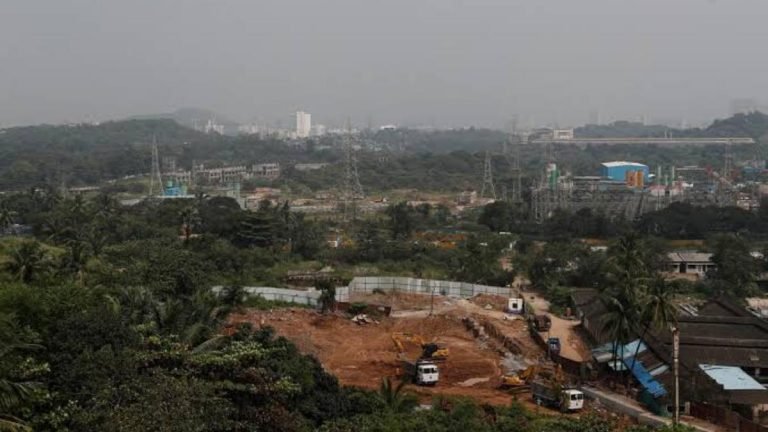
MUMBAI (Metro Rail News): Maharashtra Deputy Chief Minister Devendra Fadnavis after taking the oath on June 30 has ordered the government’s legal team to inform the Bombay High Court that the state will relocate the metro car shed to Aarey Colony. which was earlier shifted to Kanjurmarg.
The Aarey Colony is about 1,287 hectares of land that is located adjacent to the Sanjay Gandhi National Park. It is also known as the green lung of Mumbai.
The Mumbai civic body had granted the metro authorities permission to cut as many as 2,700 trees. After protests from the environmental activists and people, the Mumbai Metro Rail Corporation (MMRC) said the tree felling is only restricted to a small area in Aarey Colony and is necessary to ensure a modern transport system for Mumbaikars.
But the protest grew after which the Maha Vikas Aghadi (MVA) government, which came to power in 2019, decided to shift the project to Kanjurmarg and declared almost 812 acres of land, part of Aarey Colony, as a reserve forest.
LUCKNOW (Metro Rail News): Uttar Pradesh Metro Rail Corporation’s (UPMRC) Managing director, Kumar Keshav retired on Thursday, June 30 after eight years of tenure as MD, UPMRC. The Lucknow Metro and Kanpur Metro Projects were executed under his tenure and leadership.
— Uttar Pradesh Metro Rail Corporation (@OfficialUPMetro) June 30, 2022
Kumar Keshav’s tenure was going to end on 16th February, 2022 but he got a four-month extension of service from the UP government till June 30, 2022.
“Under his leadership, Uttar Pradesh Metro has achieved the distinction in the execution of Metro project. Lucknow and Kanpur Metro projects are the fastest-ever executed metro projects in the country so far. The operations of Lucknow Metro commenced on entire North-South corridor in just four-and-a-half years while Kanpur Metro started functioning in just over two years. Both the projects were inaugurated and flagged off by Prime Minister Narendra Modi. No other metro rail project has ever been able to achieve this feat,” a press release stated.
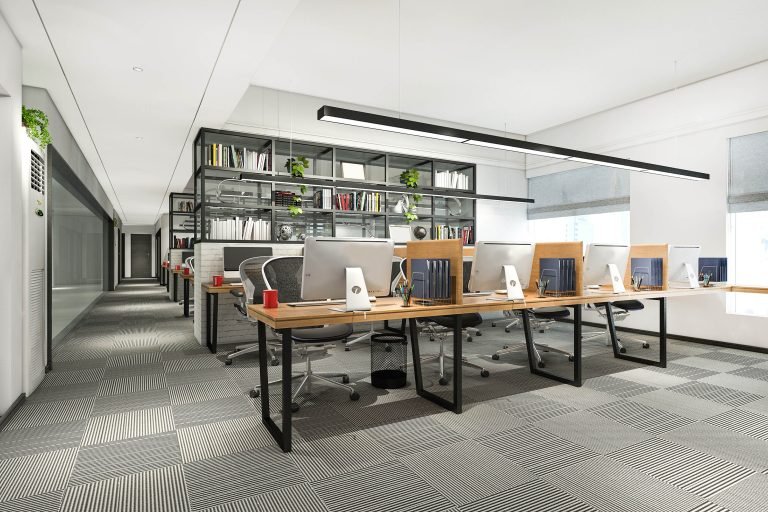
HYDERABAD (Metro Rail News): L&T Metro Rail (Hyderabad) Limited (L&TMRHL) has initiated a unique concept of ‘Office Bubbles’ – offering the secured, remote, co-working spaces as part of its Transit oriented Development (ToD). This concept is going to be one of its kind ever explored in Indian Metro Rail history. Through Office Bubbles, L&TMRHL would fulfil the surging demand for co-working spaces and locational flexibility of office spaces in Hyderabad.
Transit Oriented Development segment of Hyderabad Metro Rail has been creating vibrant urban spaces integrated with a high-quality transit system with a focus on enhancing the quality of life. ToD offers around 18.5 million sqft of space for work, shopping, leisure, entertainment, healthcare along with parking and circulation area. Focusing on IT companies, Office Bubbles concept offers ‘Hub and Spoke’ model, enabling them to open strategically dispersed smaller offices across the city. LTMRHL would be using the high-quality transit oriented spaces in the un-paid (pre-ticketing) areas on the concourse level of its stations. Close to 0.4 million sqft would be dedicated to Office Bubbles for lease, encompassing 1750 sqft of 2 units across 49 typical metro stations and 5,000-30,000 sqft of spaces at 8 non-typical metro stations. One can expect spaces to be offered in bare shell, warm shell, and plug & play formats depending on the clients’ requirements.
Mr. KVB Reddy, MD & CEO, L&T Metro Rail (Hyderabad) Limited said, “We are proud to offer ‘Office Bubbles’ as first of its kind concept being rolled out in the Indian urban transportation sector. Office Bubbles aspires to help corporates with its competitive advantage of highly connected, secured and reliable Remote Co-working Spaces. This solution would also cater to the new normal, where locational flexibility and data security become a prime concern for the corporates. This concept is not only a natural and logical choice for start-ups, but also large corporations who are progressing towards co-working spaces owing to the agility and flexibility it offers.”
Very realistic 3D rendering of a modern corporate office in white, glass and blue
Benefits of Office Bubbles:
Offer Flexible workspace, working style with a reduction in employee travel time
Predominantly lower operational costs, better infrastructure, and networking opportunities
Protection of clients’ intellectual property
Secured spaces in 57 stations across the city with CCTV and Access Control.
Dedicated data connectivity (LAN) coupled with ready Fibre Optic Network
Reliable power supply, High safety & security including fire safety compliant infrastructure
Availability of round-the-clock security and operations
Easy travel for employees by metro rail; available Parking spaces
Downsized city centre offices and reduced costs
Other conveniences – Bank ATMs, F&B Outlets, etc.
Easy to isolate any affected person(s), without disturbing functioning of other units, in event of any pandemic or related crises
While the concept of co-working spaces has been gaining momentum over the past few years for its efficiencies in space management; during the pandemic times, it has gained further traction when corporates are exploring the concept of multiple smaller offices spread across different locations over a consolidated office located centrally.
Co-working spaces are understood to be flexible to adapt to the new normal in smart and creative ways by responding to the needs of evolving business landscape. Market studies show that co-working spaces in India are becoming growth drivers in office leasing market. Demand for co-working spaces is driven by the changing nature of work environment that is now based upon agility, collaboration, and flexibility. Companies in order to support the wider strategic agenda (based on collaboration, innovation, flexibility as well as talent attraction and retention) are seeking co-working spaces.
Leasing trends across the top seven cities in India including Hyderabad clearly reflect the rising proportion of mainstream corporates and established entities from different sectors increasingly opting for co-working spaces. Further, as the start-up economy expands, there is a growing need for co-working office spaces with elevated standards of amenities to provide better flexibility, low-risk and scalable workspace solutions that provide customised services, which can evolve and adapt to their occupants.
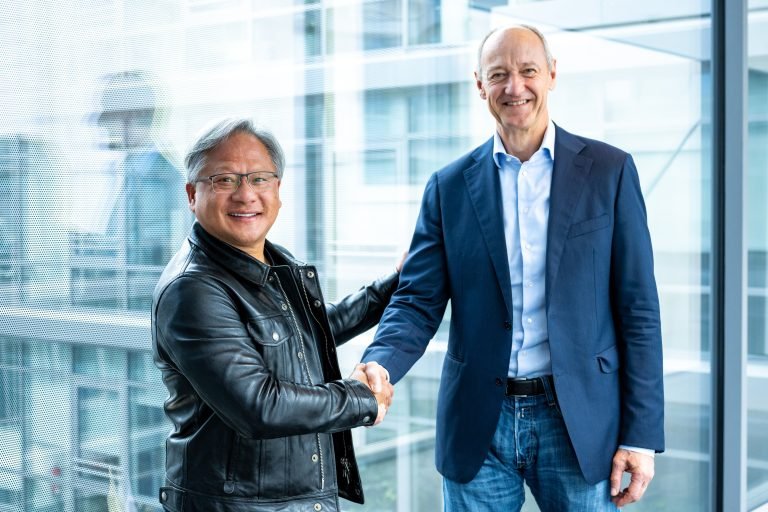
MUNICH (Metro Rail News): Siemens, a leader in industrial automation and software, infrastructure, building technology and transportation and NVIDIA, a pioneer in accelerated graphics and artificial intelligence (AI), today announced an expansion of their partnership to enable the industrial metaverse and increase use of AI-driven digital twin technology that will help bring industrial automation to a new level.
As a first step in this collaboration, the companies plan to connect Siemens Xcelerator, the open digital business platform, and NVIDIA Omniverse™, a platform for 3D-design and collaboration. This will enable an industrial metaverse with physics-based digital models from Siemens and real-time AI from NVIDIA in which companies make decisions faster and with increased confidence.
The addition of Omniverse to the open Siemens Xcelerator partner ecosystem will accelerate the use of digital twins that can deliver productivity and process improvements across the production and product lifecycles. Companies of all sizes will be able to employ digital twins with real-time performance data; create innovative industrial IoT-solutions; leverage actionable insights from analytics at the edge or in the cloud; and tackle the engineering challenges of tomorrow by making visually rich, immersive simulations more accessible.
“Photorealistic, physics-based digital twins embedded in the industrial metaverse offer enormous potential to transform our economies and industries by providing a virtual world where people can interact and collaborate to solve real-world problems. Through this partnership, we will make the industrial metaverse a reality for companies of all sizes,” said Roland Busch, President and Chief Executive Officer, Siemens AG. “For over a decade, our digital twin technology has been helping customers across all industries to boost their productivity and today offer the industry’s most comprehensive digital twin. When Siemens Xcelerator is connected to Omniverse, we will enable a real-time, immersive metaverse that connects hardware and software, from the edge to the cloud with rich data from Siemens’ software and solutions.”
“Siemens and NVIDIA share a common vision that the industrial metaverse will drive digital transformation. This is just the first step in our joint effort to make this vision real for our customers and all parts of the global manufacturing industry,” said Jensen Huang, founder and CEO, NVIDIA. “The connection to Siemens Xcelerator will open NVIDIA’s Omniverse and AI ecosystem to a whole new world of industrial automation that is built using Siemens’ mechanical, electrical, software, IoT and edge solutions.”
This partnership brings together complementary technologies and ecosystems to realize the industrial metaverse. Siemens is uniquely positioned at the intersections of the real and digital world, information technology and operational technology. The Siemens Xcelerator platform connects mechanical, electrical and software domains across the product and production processes and enables the convergence of IT and OT.
NVIDIA Omniverse is an AI-enabled, physically simulated and industrial-scale virtual-world engine that enables for the first time full-fidelity live digital twins. NVIDIA AI, used by more than 25,000 companies worldwide, is the intelligence engine of Omniverse in the cloud and autonomous systems at the edge. NVIDIA Omniverse and AI are ideal computation engines to represent the comprehensive digital twin from Siemens Xcelerator.