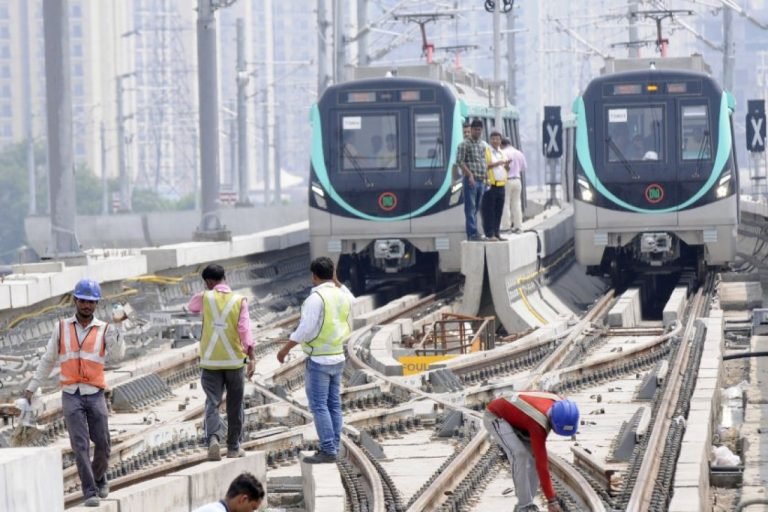
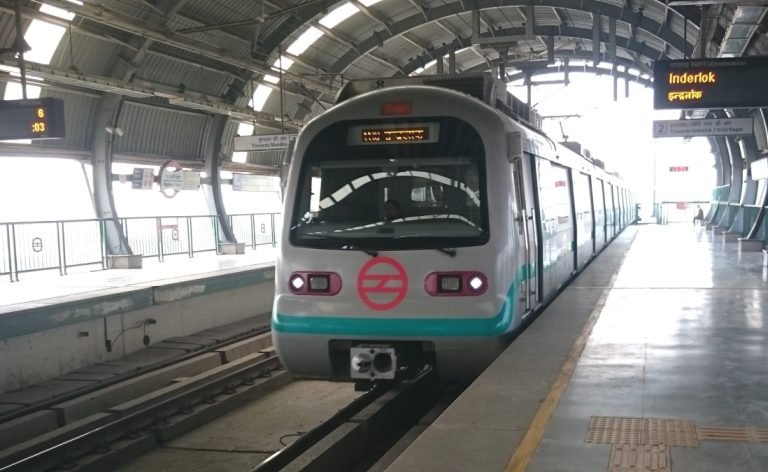
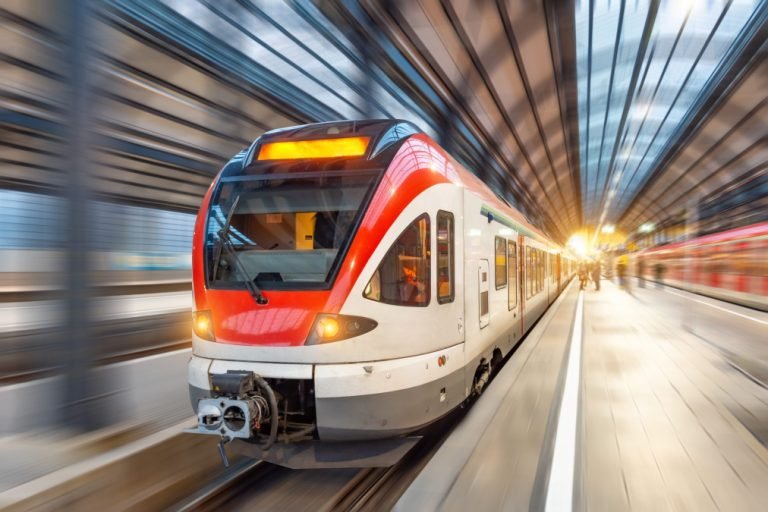
New Delhi: Prime Minister Narendra Modi has flagged-off the Delhi-Faridabad Metro Line that would allow hassle free travel for around two lakh daily commuters between the national capital and the industrial hub in Haryana.The extension of the Delhi Metro connects Badarpur to Escorts Mujesar in Faridabad.The total cost of the project from Badarpur to Escorts Mujesar is nearly Rs. 2,500 crore. Out of this, Rs. 1,557 crore was borne by the Haryana Government, the Centre contributed Rs. 537 crore, while the Delhi Metro provided Rs. 400 crore.The nine stations in this section include, Sarai, NHPC Chowk, Mewala Maharajpur, Sector 28, Badkal Mor, Old Faridabad, Neelam Chowk Ajronda, Bata Chowk and Escorts Mujesar. buy kamagra polo online https://lasernailtherapy.com/wp-content/themes/twentytwentytwo/inc/patterns/en/kamagra-polo.html no prescription
All these are elevated and located on either side of the Delhi-Mathura Road (NH-2).“The nine-station metro corridor which was 95 per cent indigenously built will provide people a safe, affordable, quick, comfortable, reliable, environment-friendly and sustainable transport facility,” a Haryana government spokesperson said.Haryana Chief Minister ML Khattar, addressing a press conference on Saturday, had thanked the Prime Minister for “gifting” the Metro service which would take the city to “another level of progress” with better connectivity with other NCR towns.He had also said that the Prime Minister would be announcing the go-ahead for connecting Gurgaon with Faridabad by Metro.
CHENNAI (Metro Rail News): In Chennai Phase 2 project a casting yard is being set up at Muttukadu along East Coast Road to cast ring segments for building metro rail tunnels to operate driverless trains across Chennai’s important areas.
According to the officials, the ring segments which are to be cast will go into tunnels on corridor-4 from Lighthouse to Power House in Kodambakkam and will cover around 10 km. Phase-2 tunnelling is expected to begin before the end of this year whereas the 118.9 km phase-2, including underground sections covering 48km, is expected to be operational by 2025-26 and a part of corridor-4 will open first by June 2025.
As per the officials, tunnels are being constructed by putting together precast concrete rings. The yard will cast approximately 9,000 ring segments which will go into the construction of the 10 km twin tunnels. Two stretches which are Lighthouse to Bharathidasan Road covering 5.15 km and 4.8 km Bharathidasan Road to Power House ramp with 10 stations and carry a four-year deadline.
According to the CMRL officials, tunnel boring machines will start arriving by August whereas the tunnelling is expected to begin in various locations by October end or the start of November. At least 23 tunnel boring machines will be operated across the phase-2 corridors for faster construction.
CMRL will use the ‘earth pressure balance’ method for tunnelling in which the cutters on the cutter head of the TMB rotate and drill through soil supplying force and pressure. It injects foam to soften the earth for drilling and then the machine holds up a few feet of earth in front of its face by applying pressure before moving forward.
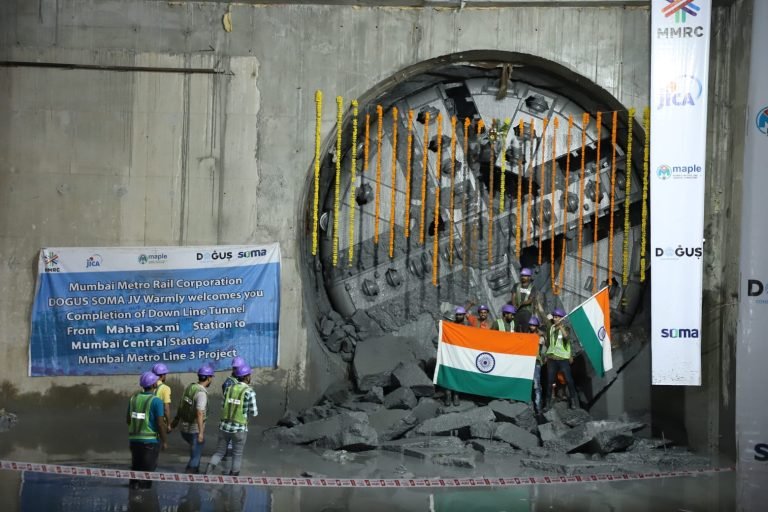
MUMBAI (Metro Rail News): The Mumbai Metro Line (MML) which is a stretch from Colaba to SEEPZ has been completed on June 28 after the tunnel boring machine (TBM), Tansa – 2 completed its final downline, which was 832.5 metres long in 263 days, the Mumbai Metro Railway Corporation (MMRC) officials informed.
Now using a total of 555 concrete rings from Mahalaxmi to Mumbai Central metro station, the MML from Colaba to SEEPZ has been completed.
“MMRC achieved its 41st breakthrough as TBM Tansa-2 completed its final downline drive of 832.5m in 263 days using 555 concrete rings frm Mahalaxmi to Mumbai Central Metro Station. buy viagra super fluox force online no prescription
With this, entire downline of #MML-3 from Colaba to SEEPZ is now complete,” Mumbai Metro tweeted.
MMRC achieved its 41st breakthrough as TBM Tansa-2 completed its final downline drive of 832.5m in 263 days using 555 concrete rings frm Mahalaxmi to Mumbai Central Metro Station.With this, entire downline of #MML-3 from Colaba to SEEPZ is now complete. pic.twitter.com/P1mjTQZfqe
The Mumbai Metro Line 3 will run across Colaba-Bandra-SEEPZ and after it becomes operational it will reduce traffic congestion and also reduce the travel time between these places. The travel time will be cut from 100 minutes to 50 minutes on the route. The estimated cost of this project is around Rs 30,000 crore.
CHENNAI (Metro Rail News): 5 Bidders for Chennai Metro Line-4’s E&M Contract5 firms have submitted bids for electrical & mechanical works at Chennai Metro’s 26.09 km Line-4 which will connect Light House – Poonamallee Bypass through 30 stations after Chennai Metro Rail Ltd (CMRL) opened technical bids last week.
The 5 bidders who have come forward are Blue Star Ltd., Bridge and Roof Co India Ltd., Jakson Ltd., VK building Services Pvt. Ltd. and Voltas Ltd.
The scope of this contract includes Supply, installation, testing, commissioning and training of Electrical, Fire protection and VAC works for 18 Elevated stations from Power House Station to Poonamallee Bypass station including Viaduct between the stations (Ch 10027.102 to Ch 25928.186), approach ramp, including Poonamallee Depot for Corridor 4 of Chennai Metro Rail Project Phase-II
This contract is being financed by AIIB and ADB and CMRL had invited the tenders for this contract in January 2022 with a 4.6-year deadline whereas the estimate was not disclosed for tender CMRL/PHASE-2/SYS/C4-EM-05/2022.
CHENNAI (Metro Rail News): Three bidders have come forward for the Chennai Metro’s Line-3’s Package CP18A-ATW-09 which is the supply and installation of standard gauge tracks work. Chennai Metro Rail Ltd (CMRL) had opened technical bids for this package on Tuesday, 21st June.
This new corridor under the CMRL’s phase-2 is a 45.813 km stretch which will primarily be underground and it will connect Madhavaram – SIPCOT passing through 49 stations.
The 3 bidders who have come forward are Larsen & Toubro Ltd. (L&T), Rail Vikas Nigam Ltd. (RVNL) and Texmaco Rail and Engineering Ltd.
The scope of this tender includes Supply, Installation, Testing and Commissioning of Ballastless track of Standard Gauge Including All Associated Works in Underground and Elevated Section from Madhavaram Milk Colony to Sholinganallur of Corridor 3’.
This contract is being financed by JICA and CMRL had invited tenders for this contract in January 2022 with a Rs. 267 crore estimate and 1290 day deadline and also a 730 day (DLP).
DELHI (Metro Rail News): A Sudarshan (Tunnel Boring Machine) has started tunnelling work in the direction of Sahibabad from Anand Vihar station on the Delhi-Ghaziabad-Meerut RRTS corridor. Two Sudarshan (TBM) are already working on tunnel construction from Anand Vihar RRTS station towards New Ashok Nagar RRTS station. This is the third Sudarshan (TBM), which has started the construction of a tunnel from Anand Vihar towards Sahibabad.
The total length of this RRTS corridor is 82 km, out of which 14 km is in Delhi and 68 km is in Uttar Pradesh. This corridor has four stations in Delhi, Jangpura, Sarai Kale Khan, New Ashok Nagar and Anand Vihar, of which only Anand Vihar station is underground. From this station, New Ashok Nagar towards Delhi and Sahibabad towards Ghaziabad are being built as elevated RRTS stations.
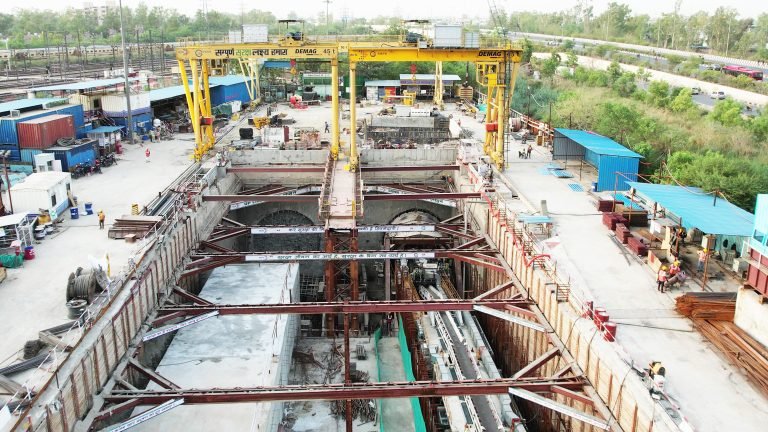
Two Sudarshan (TBMs) are already working to construct two parallel tunnels of three km length from Anand Vihar RRTS Station towards New Ashok Nagar. About a 2 km long tunnel will be built from Anand Vihar towards Sahibabad, which will end in front of Vaishali metro station. The launching shaft for the third Sudarshan (TBM) has been made at the north of Anand Vihar RRTS Station, from where the construction of the tunnel has commenced.
At the same time, at the end of the tunnel, a retrieving shaft is being built in front of Vaishali Metro Station, from where Sudarshan (TBM) will be retrieved. There will also be two parallel tunnels from Anand Vihar towards Sahibabad for the arrival and departure of trains.
The 17-km priority section between Sahibabad to Duhai will be commissioned by March 2023 and the trial run is expected to commence this year. At present, the civil construction work of the priority section has reached the final stage.
Tunnel rings are made underground by TBM with the help of tunnel segments. Seven (7) tunnel segments are generally used to form a tunnel ring. The Tunnel Segments are being manufactured at NCRTC‘s Casting Yard with assured quality control. Due to the large rolling stock and a high design speed of 180 mph, the width of RRTS tunnels is being constructed as 6.5 m. diameter. Compared to the metro systems, this is for the first time that a tunnel of such a large size is being constructed in the country.
There is a provision for two parallel tunnels for the movement of trains in the underground sections of RRTS. Along with this, various security measures have also been made to ensure the safety of the passengers. Emergency exits will be made in the underground sections for the safety of the passengers in case of any emergency. A cross-passage would be provided at approximately every 250 metres. The RRTS tunnel will also have ventilation ducts to ensure air movement and a 60 cm-90 cm wide side walkway which will assist in maintenance activities and also act as an additional emergency exit.
For the construction of the tunnels, about 90 meters long Sudarshan (TBM) is being used. This TBM consists of Cutter Head, Front Shield, Middle Shield, Tail Shield, Erector, Screw Conveyor and many other important parts.
Some of the important reasons behind the implementation of this project are to decongest the national capital, reduce vehicular traffic and air pollution, and ensure balanced regional development. NCRTC is using state-of-the-art technologies to ensure safe and timely completion of works while minimizing inconvenience to the commuters, business owners and residents of the entire segment. One of the techniques being widely used for the project is pre-casting of various civil structures and minimizing the construction work on site.
INDORE (Metro Rail News): The foundation work of piers at the ISBT Metro station in Indore has started and according to the officials construction of metro stations on the route will be complete soon.
The metro construction in Indore is going on an accelerated pace on the route from MR 10 to Robot Square for which 100 piers and more than 10 girders have already been set up. The construction is also going on through two segment launchers, one near the Chandragupta Maurya Square and the other near Radisson Square.
The metro has also set up segments on pebble sand near the MR 10 so that they could be easily picked and put in another place. Whereas the construction work of metro depot is comparatively going on slowly.
All the track slabs from MR 10 to Radisson are expected to be put in place and ready for installation of tracks and electrification work within a few months, the officials said. The officials have also informed that the construction will not be disrupted by the monsoons.
BANGALORE (Metro Rail News):Bangalore Metro Rail Corporation (BMRCL) is soon going to construct foot overbridges (FOB) at three different Metro stations that are Yeshwanthpur Metro station and Nagasandra which are on the Green line, and Jnanabharathi station on the Purple line.
According to an official, the FOB at Yeshwanthpur will be made functional by the end of January 2023 which will connect Platform 6 at the South Western Railway line at Yeshwanthpur. Its length will be 87.7m.
The construction work at Jnanabharathi station is also under progress and the FOB is expected to be functional by the end of February 2023. It will connect the metro station to the Jnanabharathi railway station.
Recently an IKEA store was opened in Bengaluru which is also constructing a FOB from its store to the station located on Tumakutu Road. It is expected to get ready by December 2022. The Nagasandra Metro station has a functional overbridge across NH-48, to facilitate people to cross the jam-packed NH-48.
BMRCL had signed a contract of Rs. 12.45 crore in February 2022 to construct FOBs across 6 stations that are Yeshwanthpur, Dasarahalli, Nagasandra, Mailasandra, Jnanabharathi, and Chikkabidarakallu. buy viagra oral jelly online no prescription
The construction at other locations is likely to start soon.
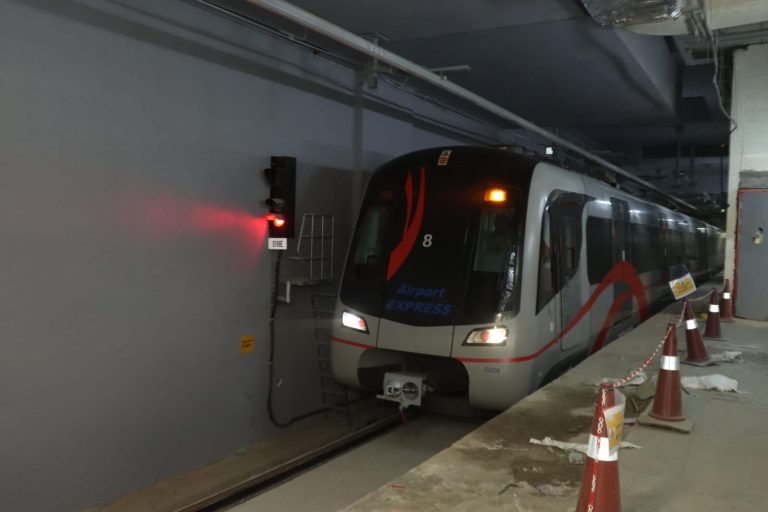
NEW DELHI (Metro Rail News): The Delhi Metro Rail Corporation (DMRC) has begun trial runs on the two-kilometre long Dwarka Sector-21 to Dwarka Sector-25 (IICC) Metro section on the Airport Express Line.
Dwarka Sector 25 (IICC) is an underground station and an extension of the presently operational Airport Express Line connecting the New Delhi Railway station with Dwarka Sector 21 via terminal 3 of the Indira Gandhi International Airport. With the completion of this section, the New Delhi to Dwarka Sector-25 (IICC) Airport Express Line corridor will become 24.70 kilometres long.
During the trial runs, the signalling systems are tested. The completion of the trial runs will be followed by the mandatory inspections by various approving authorities including the Commissioner of Metro Rail Safety (CMRS). The section will be opened for passenger traffic after these mandatory approvals.
The India International Convention Centre (IICC) is being developed as India’s largest exhibition and convention centre. This facility, currently under construction, will be equipped with state-of-the-art facilities such as convention centres, auditoriums, hotels, office spaces etc. The Metro station at IICC shall cater to this new centre.
The station is coming up at a depth of about 17 metres from the surface. The station will have five entry/ exit points which will be facilitated by 14 escalators, five lifts along with staircases for smooth passenger movement. Like the other stations of the Airport Express Line, the new station will also have full-height platform screen doors.
Apart from catering to the upcoming convention centre in the vicinity, this new station will also provide Metro connectivity to the residents of sectors 25 and 26 of Dwarka, along with the new sectors along the Dwarka Expressway in neighbouring Gurugram. Residents of these areas will be able to reach central Delhi in about half an hour.
NEW DELHI (Metro Rail News): Transport Minister Kailash Gahlot has asked DMRC to submit an investigation report in seven days on the recurring breakdown of metros. This decision has come a day after there was a delay in services between Samaypur Badli and Vishwavidyalaya on the Yellow Line of the Delhi Metro.
“There have been recurring incidences of breakdowns on various lines of Delhi Metro this month causing inconvenience to passengers. Have directed @OfficialDMRC to submit investigation report in next 7 days on the breakdowns and remedial action taken to ensure seamless operations,” Gahlot tweeted.
There have been recurring incidences of breakdowns on various lines of Delhi Metro this month causing inconvenience to passengers. Have directed @OfficialDMRC to submit investigation report in next 7 days on the breakdowns and remedial action taken to ensure seamless operations.
Previously the services have been delayed on the Blue Line on several occasions in June. Blue Line connects Dwarka Sector-21 in Delhi with Electronic City in Noida. Services were briefly delayed on the Blue Line on Sunday due to a fault in a train at the Mandi House Metro Station, officials had said.
The Blue Line had suffered a major technical snag on June 9, when commuters were stranded for over two hours. On June 6, commuters on the same line suffered an hour-and-a-half-long delay as services came down with a technical snag caused by a bird hit.
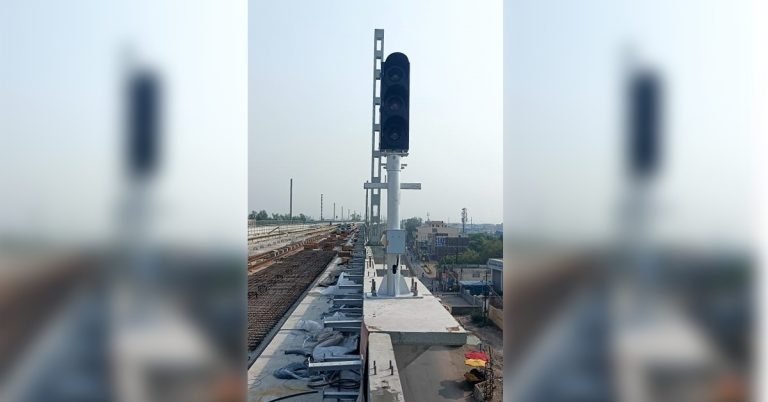
Ghaziabad (Metro Rail News): The installation of signalling equipment for operations of RRTS trains has picked up pace in the Priority Section of India’s 1st RRTS corridor (Delhi-Ghaziabad-Meerut).
The National Capital Region Transport Corporation Ltd. (NCRTC) is implementing hybrid Level 3 technology of the European Train Control System, one of the most advanced signalling & train control systems in the world.
— National Capital Region Transport Corporation Ltd. (@officialncrtc) June 21, 2022
This will be for 1st time in the world that a combination of latest ETCS Standard, latest Interlocking & Automatic Train Operation (ATO) over Long-Term Evolution (LTE) radio will be deployed. It will enable higher frequency of trains, better headways & thus increasing throughput.
The 17 km Priority Section, between Sahibabad to Duhai, is targeted to be commissioned by 2023 and the full corridor by 2025. The civil work on the Priority Section, having a total of 5 stations, is nearing completion.
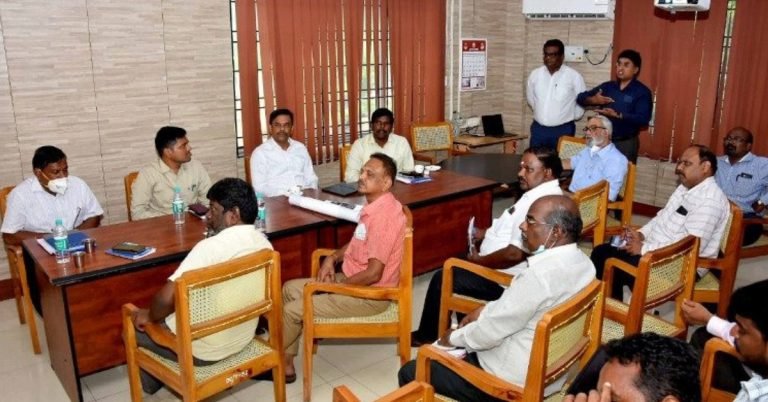
CHENNAI (Metro Rail News): Chennai Metro Rail Limited (CMRL) on Thursday held a meeting with officials to assess the feasibility of introducing a Mass Rapid Transit System Project in Tiruchirapalli.
The meeting was chaired by M.A. Siddique, Managing Director and Principal Secretary, Chennai Metro Rail Corporation Limited, in the presence of District Collector M. Pradeep Kumar and Corporation Commissioner R. Vaithinathan.
In the meeting, CMRL, MD M.A. Siddique said, “At present, the Chennai Metro Rail is providing rapid transport services to the people. Similarly, in Tiruchirapalli, a feasibility study will be carried out for high-speed transport in order to facilitate and speed up the movement of people. This is the first suggestion for that. Through this feasibility study, a suitable fast transport system for Tiruchirapalli and routes suitable for high-speed transport will be identified. Further, further steps will be taken to implement the Mass Rapid Transit System if there is any possibility of this.
The “Comprehensive Mobility Plan” is being prepared by The Tamil Nadu Urban Infrastructure Finance Services Limited (TNUIFSS) to carry out a feasibility study for the Tiruchirappalli Mass Rapid Transit System. This report will be available soon. Only after a Detailed Feasibility Report is prepared based on the integrated mobility plan can a suitable fast transport system be selected for Tiruchirappalli city. M.A. Siddique, Managing Director and Principal Secretary, Chennai Metro Rail Corporation, said.
Chennai Metro Rail Corporation officials R. buy valif online https://blackmenheal.org/wp-content/themes/twentytwentytwo/inc/patterns/en/valif.html no prescription
M. Krishnan, T. Livingston, Divisional Engineer (N.K.M.P.) of Highways Department, M.Kesavan, Divisional Engineer (N.K.M.P.) of Highways Department, Corporation Executive Engineers Sivapatham and Kumaresan, Tamil Nadu Water Supply and Drainage Board Superintending Engineer A.Muthiah, etc. were present in the meeting.
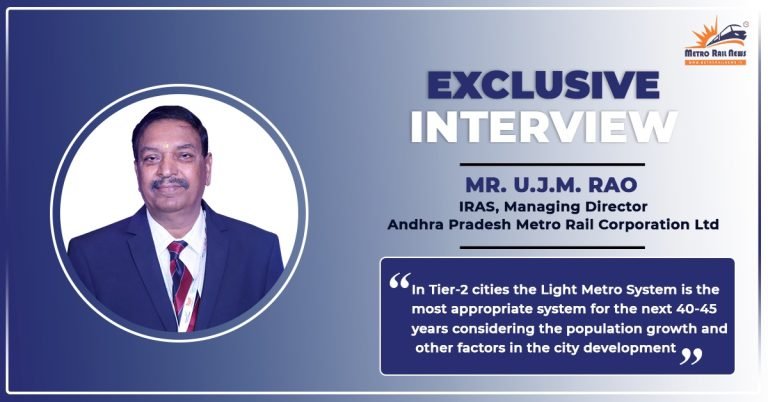
Metro Rail News recently had a virtual interaction with U.J.M. Rao, IRAS, Managing Director Andhra Pradesh Metro Rail Corporation Ltd. In the interview Mr. Rao talked about the metro projects that are being carried out in Visakhapatnam and Vijayawada as well as talked about the importance of the Light Metro System.
UJM Rao is presently working as the Managing Director of Andhra Pradesh Metro Rail Corporation Limited (APMRC) a State-owned SPV of – Andhra Pradesh since January 2016, almost since its inception of the Corporation. Initially, he joined APMRC as the General Manager (Coordination & Finance) and got elevated to the position of Managing Director. Rao is a 1988 batch IRAS Officer belonging to Indian Railways and prior to his current assignment, he worked in various higher managerial positions in the Railways. His long and rich experience in Railways in various streams like Logistics, Railway Operations, Major Construction Projects including Railway Electrification etc. at decision-making levels has given him enough confidence in handling the Metro Rail Projects under implementation by APMRC.
Here are the edited excerpts: –
In what ways the Light Metro project for Visakhapatnam would be different from other Metro projects of the country?
In Visakhapatnam, being a tier-2 City with moderate ridership, we considered that a cost saving Light Metro Rail System would be sufficient to meet the traffic needs in the next 40-50 years. With the smaller and smarter version of Metro Rail System which can meet up to 25000 PHPDT and carry 14 lakh people daily with increase in the number of metro cars from 2,3,4,5 and so on. The cost of construction is presently assessed to be INR 185 Cr/Km while other Metro Systems in India costs INR 250 Cr/Km for the elevated system. The Light Metro System would save sizable O&M expenses too.
In fact, this system is not new to the World. The At-Grade LRT in Europe and other Countries has been by and large adopted with the latest technology here in Visakhapatnam on an Elevated track. In my opinion, all the tier -2 Cities in India can adopt this Light Metro System, which provides the same facilities and comforts for the people that are available on Medium Metro System at a reduced Capex and Opex.
As per new DPR what is the present status of the Vizag Metro Project?
The new DPR for 76.90 km with an estimated project completion cost of Rs.14,309 Cr has been submitted by the Consultants and is in the process of Government approvals. The financial model for implementation of this project is on VGF-PPP Model.
What new modifications and feasibility improvements have been quoted by Urban Mass Transit Company Limited (UMTC) in the new/revised DPR prepared for Vizag metro which earlier was prepared by DMRC 5-6 years back?
In 2015, DMRC prepared a DPR for 42.55 Km length of Metro Rail Alignment for Visakhapatnam covering the crowded parts of the core city only. Later, it was decided to expand the Metro Rail System upto the new International Airport at Bhogapuram and thus the total length became 76.90 km for which the UMTC Consultants have prepared the new DPR in 2021 considering the cost escalation in the last 6 years, changed financial model and improved designs specifications and the drawings suitable to Light Metro Rail System.
The previous DPR was the Metro Rail System similar to that established in Delhi and other places whereas the new DPR now prepared for Visakhapatnam is for the Light Metro System.
The Visakhapatnam Metro after completion is expected to become the world’s largest metro system developed on a PPP model which will have a combination of both Metro and Tram. What is the official statement of APMRC in this regard? Is the government ready to achieve the milestone?
As you said the 76.90 km Light Metro Rail Project will perhaps be the largest Metro Rail System in the World on PPP Model. The Visakhapatnam Light Metro Rail System is the first of its kind in the Country.
The said Light Metro Rail System in the main steam and the 61.10 km Catenary Free Modern Tram System are entirely two different MRTS Systems.
Visakhapatnam City is gifted with a 42 km long sea coast. Leaving 10 km towards the Southern side of the City where the two major sea ports viz. Visakhapatnam Port and Gangavaram Port and other Industrial belt are situated, in the remaining 32 km from Old Post Office to Bheemili beach, the Modern Tram System has been proposed on the beach front as a tourist attraction and also providing transportation to the colonies en-route. Two more Corridors in the busy city outskirts of a length of 18.10 and 11 km respectively have also been planned. The entire tram system is At-Grade with segregated ROW. This project is at DPR stage.
What is the status of the Vijayawada Light Metro Project? Is there any development for the project after DMRC cancelled the procurement in the first phase?
Similar to the Visakhapatnam Project, for Vijayawada also a revised DPR for 38KM length of Light Metro Rail System, in place of 26 KM earlier recommended by DMRC, has been prepared by M/S SYSTRA Consortium. The project will be taken up soon after implementation of the priority Visakhapatnam Metro Rail Project.
Is Light Rapid Transit / Light Metro or a Medium Capacity System (MCS) the future of a modern urban transport system to be developed in the country?
The unique advantage of the Light Metro System is that it can be upgraded to a higher version metro if there is a demand and need for such a big system.
Except in the Metropolitan and Tier-1 cities, the PHPDT would not be more than 25,000 per hour in Tier-2 cities for about 40-45 years, the cost saving Light Metro Rail System is the most suitable one because the system gives the same comforts to the public while the CAPEX and OPEX lesser by more than 20%.
When a City like Visakhapatnam with 41 lakhs of Population together with the Urban agglomeration can be managed with the Light Metro System for the next 40-45 years similar cities which will have the same traffic pattern can also adopt this system. As the Civil Infrastructure, p way and the 3rd Rail technology established is suitable to the conventional higher version of Metro’s, the up-gradation can take place after 35 years, if the traffic demands because the fleet of Light Metro have to be changed after a period of 35 years.
Depending on the vast diversities and specificity this country possesses for each region, do you advocate a replacement of the traditional MRTS based transport system with a Light Metro, Metrolite or Metro Neo transport system across all future metro projects in the country?
The popular MRTS systems in public transport are the Conventional Metro, Light Metro (LRT on elevated/UG/At-grade), MetroLite and Metro Neo. Each system has its own advantages and hence the cities are adopting them as suitable to their future needs.
However, it is my strong opinion that in Tier-2 cities the Light Metro System is the most appropriate system for the next 40-45 years considering the population growth and other factors in the city development and is upgradable to a higher Metro System to run beyond that period. Up-gradation is possible even after 35 years. The MetroLite and Metro Neo are no doubt are cheaper in comparison to other two systems but they have certain limitations like passenger carrying capacity (PHPDT), Speed, comforts, etc.,
Kindly share your views about Metro Rail News. Is there any message you would like to give to our readers?
Frankly speaking, I came to know more about Metro Rail News magazine and the activities of SYMBROJ media a couple of months back, even though the media is in existence for the last 6 years. When I have gone through the latest issues of the Metro Rail News, I find they have covered in the monthly, the latest activities & progress of all Metros in the Country and also it contains valuable information about RRTS and India Railways. Besides it has a strong editorial advisory board composed of veterans in the fields of Railways, Metro Railways, Urban Transportation and the Industry. Really this is a treasure for the magazine to receive highly technical developments happening around the world.
Mr. Narendra Shah, Managing Director and his editorial team are doing an excellent job in bringing out the Monthly Journal with varied subjects that are useful for the Management, Industries and Executing Agencies.
Rail is one of the most cost and time-effective ways of moving people around urban areas, between cities or across countries. It has evolved from steam-powered engines to high-speed light rail that can carry passengers over massive distances in hours.
The rail market has begun to recover from the effects of the pandemic. Global News wire estimates that global commuter rail and public bus services will be worth more than $400 billion by 2025 compared to $285 billion in 2021.
Current Developments
With transport operators looking to increase passenger volumes in countries that have lifted pandemic-related travel restrictions, they need to address demand for safer technology (specifically contactless payments and interactions) and a more convenient and comfortable passenger experience. There are many technological aspects that is believed will drive rail operations forward, of which the following are likely to be most important.
Mobile connectivity with 5G becoming a reality
Mobile ticketing has gained traction on the back of improved internet access and developments in 5G technology, satisfying demand for contactless payments while offering commuters a range of information about their journey from balance details and route planning to real-time tracking and the ability to use their mobile as a ticket via a validator tap or other means. Rail operators are increasingly introducing mobile ticketing to enhance data management and personalisation of services and make their businesses attractive to partners and investors.
E-ticketing: paperless, contactless: One of the best ways to enhance the rail passenger experience is to deploy automated fare collection, which makes payments and fares transparent while allowing rail operators to set fees and manage their operations centrally via a web portal. According to Allied Market Research, the global automated fare collection system market was valued at $6.6 billion in 2019 and is projected to reach $12.8 billion by 2027, a CAGR of 11.6%.
Digital Onboarding: A major benefit of automated fare collection is digital onboarding of passengers. Improving the passenger experience is not an easy task, but some rail operators offer additional features such as seat and e-ticket management or early-bird or last-minute ticket purchases. To raise the experience level even higher, service operators could introduce open-loop payment methods to allow users to pay with QR codes biometrics, NFC or cards., which increases onboarding and journey flexibility.
IoT – The Internet of Trains: The concept of the internet of things is well established. A new sub-concept of the ‘internet of trains’ has now emerged, which means connecting all smart and mobile devices together under one platform via Wi-Fi, merging the commuter with the train operator to provide a transparent digital experience while giving the rail operator access to increased customer information for operational management.
Big data unlock new experiences: Those rail operators who manage to gather, analyse and utilise big data will gain a competitive edge. The use of data paves the way for effective predictive analytics, passenger management and platforms. The ability to anticipate passenger volumes and shifts in demand and station loads will further allow rail operators to adapt their businesses and maintain their competitive edge.
Indian Railway has embarked on a transformational journey and is harnessing innovation to usher in a new era of sustainable mobility in India – one that offers a safer, reliable, faster, punctual, and comfortable travel for the passengers, making every train journey a satisfying experience while being environment-friendly with lowest possible carbon footprint.
Indian Railway is a key driver for India’s economic growth and development. The Government of India has focused on investing in railways to upgrade its infrastructure networks fit for operating both freight and passenger trains at higher speeds which shall play a major role in integrating and bringing different parts of the vast country closer and thus enhancing economic activities in meeting the $1 Trillion economy target.
The amalgamation of advanced technologies and empowering measures by the Government in all the areas of railway from infrastructure to rolling stock, customer services and modernised railway stations, digitisation of railway operations and predictive asset management, implementation of the landmark Dedicated Freight Corridors (DFCs) and ambitious bullet train network are all propelling the nation towards sustainable mobility, with passenger experience and economy growth at the core. Many rail companies in India are effectively leveraging their OT x IT expertise in implementing their integrated railway solutions to build a resilient mobility infrastructure that augments India’s Social, Environmental, and Economic values.
Transforming Indian Railway, Enhancing Passenger Experience
By embracing digitalisation in all spheres of its operations — such as asset management, signalling, manufacturing and passenger information system — the Railways is on track to improving its revenues and passenger experience
Safety Enhancements
Technological upgrades to minimize human errors, enhance safety of train operations & to enable higher throughput.
Automatic Train Protection against passing signal at danger, over speeding collision.
Elimination of manned level crossings from Golden Quadrilateral – Golden Diagonal (GQ-GD) route.
Improved Passenger Experience
High–speed rail corridors for speedy train services.
Real-time passenger information systems, and advanced digital signalling for punctual & reliable train services to passengers.
Improved e-ticketing system.
Free Wi-Fi at all A1 category stations.
Infrastructure Upgrades
Electrification of rail network.
Automatic Block Signalling with Traffic Management Systems.
Energy-efficient rolling stock & introduction of semi-high speed fully air-conditioned trains.
Development of world-class railway stations with state-of-the-art passenger amenities.
The Indian Railways is the third-largest railway network in the world by size, and is continuously undergoing changes. One area of importance is to improve the network capacity and utilisation, faster services, and safe running of trains.
The current scenario has changed the transport paradigm with the focus shifting from infrastructure to service and from ready-made to tailored solutions. Underling the importance of evolving with technology, the Railway Ministry recently quoted that technology is the only input which can significantly impact the future of the Railways. Further, with metro rails resuming operations in a graded manner, digital technologies help in demand management, social distancing, and providing real-time information for authorities and passengers.
For theRailways, the rapid digitalisation is marked by the fourth industrial revolution — Railway 4.0. It enhances railway infrastructure, services, systems, signalling and rolling stock while improving the operational efficiency of the assets. They are being re-imagined, designed, delivered and operated using technology that brings stakeholders into collaborative partnerships, thus changing the face of the Railways.
Designing of coaches, signalling and traffic management, freight management, train services, workforce and customer management are some of the key areas of digitalisation in the rail sector.
Rolling Stock
Most of the rail coaches run through traditional manufacturing processes that lead to high inventory cost with parts being produced and stored before being assembled. With digitalisation, the costly traditional manufacturing is being rapidly optimised and enhanced by platform-based 3D technologies.
With the rolling stock manufacturers using virtual 3D platform and technology to incorporate subsystems, components and assembly information, the coach designs are accurately modelled, simulated, analysed and improved in the virtual world, to correct the faults and inefficiencies in order to avoid costly mistakes.
Additive manufacturing is evolving as a game changer in the Railways like in other sectors. The Railways recently started using ‘Make in India’ 3D printer to design and print coach components in-house as per requirement.
The Railway Minister also recently announced the plan to redesign passenger coaches as per international standards to make them safer, comfortable and faster. The 3D design platforms and passenger experience solutions are also revolutionising the rail sector by incorporating integrated electronics, reconfiguring seating and standing areas or adding styling through the cabin that reflects the local aesthetic or identity.
Signalling System
The technological advancements are enhancing the railway infrastructure capacity by converting to electrified routes with advanced signalling. This modernisation of signalling system includes implementation of European Train Control System (ETCS) that adheres if the speed limit of the train is compatible with the permitted speed allowed by signalling, thus improving safety and punctuality.
With the plans to modernise 8,000 railway stations, the government is also leveraging the Building Information Modelling (BIM) process for designing and installing railway-signalling systems. The 3D technologies helps to visualise infrastructure life-cycle and solve problems by eliminating various issues because of the mistakes caused by poor communication of data.
The infrastructure 3D model technology also recognises the oncoming train and its speed, records data image and helps with 3D visualisation of railway track with all assets, train driver simulations and digital track capturing.
Additionally, the new policy framework by the government has proposed to use public-private partnership (PPP) to unleash faster development signalling systems in the country.
Workforce Management
The staff in the Indian rail network are using various innovative technological solutions to improve efficiency, ranging from customer service to maintenance and repair work. Having a workforce management platform helps the staff to plan and schedule processes in a planner software for control over the entire workforce process such as capacity planning, daily task scheduling, real-time rescheduling, routes, employee availability and competing time slots.
The software platforms allow the operators to see all scenarios and decision consequences in real time and then take an informed action. It also enables the train planners with a dynamic decision support tool to see all scenarios and decision consequences in real time, to help make customer-centric decisions and improve service reliability.
Train Service Efficiency
Different trains running on a network have different priorities, speed restrictions and stoppages. Considering these constraints, track speeds, and requirements, the train schedules are being made to increase the network utilisation. This, when performed with network optimisation, increases the number of trains that can run on the same network, thereby increasing the revenues to the Railways.
Fleet Planning
Having the right fleet with wagons, coaches at the right place and at the right time can increase the revenue to the Railways. Reducing empty kilometres by proper planning can reduce the time and cost spent. This requires an intelligent planning platform that can incorporate all the constraints and produce the best plans based on KPIs.
Disruption handling is an essential part of an intelligent planning platform to handle unexpected disruptive events such as non-availability of loading cranes, late arrival of inter-modal transport units. Delaying the entire train will mean a hold-up for the other load orders and result in many unhappy customers. An intelligent planning system aids as a decision support system, one that provides an overview of all possible solutions and their influence on KPIs.
A huge part of maximising utilisation comes from reducing maintenance time. Maintenance and cleaning are critical and, in most cases, can’t be delayed. For instance, wagons that have been used to transport diesel must be thoroughly cleaned before they can be used to transport petrol.
In order to clean the wagons efficiently, planners need an intelligent system that provides full visibility on which terminals, employees and materials are available at the requested time slots. With such visibility, they will be able to manage last-minute cleaning tasks while responding to urgent order bookings that come in unexpectedly.
Customer-Centricity
The Indian rail network is continuously enhancing the passenger experience through digital technologies. The modern features such as facial recognition, emergency talk-back system, WiFi infotainment system, automatic plug-door and step control have completely changed the passenger travel experience.
One of the steps undertaken to modernise the Railways is the use of solutions that enhance passenger experience and offer the ability to propose custom-tailored coaches depending on train routes and passenger tiering. These solutions allow a detailed exploration of the cabin, including a 360-degree view of the rail coach and high-end visualisation provides the customers with a visual experience while meeting their requirements.
The Railway Ministry recently launched a transparent reservation system wherein passengers can check the real-time reservation status. Keeping in mind the current scenario, the contactless ticket checking system by the Railways is helping passengers to check for availability of berth to passengers.
Over the last couple of years, technology and innovation have been changing the face of the Railways as it has embraced digitalisation in all spheres of its operations such as asset management, train signalling, manufacturing, passenger information system and coach factory automation. With the Railways’ digital transformation, the industry will accelerate new railway intelligence thus enabling enhanced industry-wide knowledge and business model innovation.
Ensuring Seamless Management of Train Operations
To create a ‘future ready’ railway system, Indian Railway is undertaking a slew of measures as per its ambitious National Rail Plan (NRP) 2030. Increasing the railway’s modal share to 45% in freight traffic by 2024 with an increase of freight train’s average speed to 50Kmph, 100% electrification, implementation of several new DFCs, and high-speed rail corridors, in addition to the track doubling of the High-Density Networks (HDN) and Highly Utilized Networks (HUN) to augment capacity on its vast existing network are all part of this plan.
To digitise and automate Indian Railway operations, it is also accelerating the adoption of Centralized Traffic Control (CTC) and Traffic Management Systems (TMS) to overcome the challenges of managing mixed rail traffic on its congested corridors and resolve the issues of train delays thus providing an enriched experience for both freight customers and commuters. Marking a significant milestone in digital rail traffic management, global rail companies, have collaborated with Indian Railway in commissioning India’s first Centralized Traffic Control (CTC) system at Tundla near Agra on the North Central Railway. This CTC system will automate the operations of freight and passenger trains in the High Density Network of Kanpur-Ghaziabad section of Northern and North Central Railway thus enhancing the capacity to operate more than 400 trains per day.
Thus, the new and advanced system developed has transformed the operations of this busy and highly congested corridor giving a big relief to the railway personnel comprising of station masters, train crew, and local signal operators to infuse confidence in de-risking their daily tasks. Therefore, through this newly implemented CTC system, the modern techniques is empowering operators to control the entire network traffic from one centralized location, thereby ensuring effective management of trains, real-time error detection for improved security, increased section capacity & throughput, and an improved travel experience for thousands of passengers every day.
Centralized Traffic Control (CTC) System
Management of all operations (traffic scheduling, signal facilities, etc.) at one centralized location.
Safe & efficient way of managing all train movements.
Increases track capacity & train speed through quick train movements.
Gives commuters accurate, real-time status of train services.
Powering India’s New Freight-Only Corridor
A robust freight transport ecosystem is crucial to advancing the country’s economic growth. One of India’s biggest challenges is the logistics cost. The railway has so far lagged in freight transport (17.5% share), with 71% of freight being carried by trucks on roads, which is inherently costly and adds to a much larger carbon footprint. To increase the railway’s modal share of freight and usher in an era of energy-efficient, cost-effective and green freight transport, the Government of India has successfully operationalised one of the country’s ambitious projects since Independence – DFCs (Eastern and Western DFC).
Conclusion
Indian Railways is enhancing passenger experience through digital technologies. Besides new premium trains and world-class railway stations, Indian Railways has plans to enhance the passenger experience through various digital technologies. The ‘Make in India’ Vande Bharat Express trains have been introduced on two routes, and further induction of as many as 44 new Train 18 sets has been initiated.
From the introduction of new Tejas Express style premium trains on major tourism routes to setting up large solar power capacity alongside rail tracks, the national transporter is up for a major boost. Some of the steps that are being taken to improve the experience of passengers through new technologies are as under:
Indian Railways has provided fast and free WiFi facilities at over 5,500 railway stations across the country, benefitting the common public.
Automatic updation of train timings through the Real-Time Train Information System is improving the punctuality of Indian Railways. Moreover, the system is giving an accurate estimate of train arrival as well as train departure to the passenger.
In a bid to help predict the possibility of ticket confirmation, Artificial Intelligence (AI) based system is being used by the national transporter.
Total transparency, as well as accountability in the quality of food items, is being initiated through the use of CCTV cameras at IRCTC base kitchens which does live to stream of these kitchens. Also, food packets with QR codes are linked to the kitchen where they have been cooked or prepared.
With the provision of handheld devices and POS machines, digital payment is getting a boost.
Various other initiatives being initiated and worked upon for enhancing passenger experience is as under:
Ability to search for, reserve and/or change seat before and during the journey: Passengers would be able to choose a preferred seat (e.g. forward facing, with a table, plug socket, away from the toilet, close to the door) using a carriage map displayed on smartphones. This seat can then be changed or reserved up until the last minute.
Directions displayed on phone to help passengers find platform and seat on the train: Navigational information, which will include the train composition in relation to the direction of travel, the number of coaches and the carriage ordering, so passengers can anticipate how to better get to their seats by standing at the right place on the platform.
Access to live information showing the occupancy levels of current and future trains: Passengers will be able to access information regarding the occupancy levels of current and future trains, in real-time.
Ability to validate ticket electronically at seat, so that passengers need not present the ticket for inspection: The ability to automatically validate a ticket using a sensor located on the seat. This reduces the disturbances and removes the need for a ticket examiner manually check tickets on board the train.
Information on facilities at destination station (e.g. details of bus connections, phone number of taxis): Individualised information for specific passengers and their journeys, so they can anticipate what to find at the final station and plan how to proceed on the ‘last mile’.
Ability to earn rewards through a loyalty scheme and redeem points for rail or non-rail purchases: Passengers will be able to collect points (similar to air miles and retail points) for each journey they take. These points can then be exchanged for rewards (e.g. a free cup of tea, reduced fare price, upgrades).
Ability to pre-order special services (e.g. refreshments, train manager assistance): Passengers will be able to use the system to pre-order services prior to boarding the train, which will alert the training provider.
Automatic compensation for late or cancelled trains: Automatic reimbursement is offered to passengers of delayed or cancelled trains, instead of the current procedure in which a request has to be made via post or email.
Access to live journey information (e.g. ETA, alternative travel routes in the event of disruptions): Access to real-time information regarding journeys and alternative travel in case of disruptions. This will remove the reliance that passengers have on checking information boards at stations and make it easier for passengers to check the platform number for their connecting train.
A diagram of free and reserved seats on phone or on screens on the train and platform: Passengers will be able to see the occupancy level of carriages, and check which individual seats are available. Users will not need to be there and check each seat or display visually.
Meerut Metro is an urban Mass Rapid Transit System (MRTS) under construction in Meerut, Uttar Pradesh. Meerut Metro Phase 1’s DPR (Detailed Project Report) was prepared by RITES and submitted to the UP state government on June 30, 2016 for its approval. In 2017, the Uttar Pradesh Metro Rail Corporation (then Lucknow Metro Rail Corporation) was assigned a ‘coordinator’ role to bring all stakeholders together and get the project started.
The project’s 20 km Line-1 with 11 stations is under construction and will utilize the under construction 82.15 km Delhi – Meerut RRTS line’s infrastructure being built by National Capital Region Transport Corporation (NCRTC). It will consist of 8 special metro-only stations and 30 coaches will be supplied by Alstom (Bombardier) to service the line in a configuration of 10 trains with 3 cars. The project’s 15 km Line-2 with 14 stations is in the proposal stage, and will be built and operated by Uttar Pradesh Metro Rail Corporation Limited (UPMRCL).
Key Figures
Operational: 0 km
Under Construction: 20 km
Approved: 0 km
Proposed: 15 km
Meerut Metro Route Information
Line-1: Partapur – Modipuram
Length: 20 km
Owner: National Capital Region Transport Corporation (NCRTC)
Status: Under Construction
Type: Elevated: 14.40 km & Underground: 5.6 km
Depot: Modipuram
Number of Stations: 11
Station Names: Partapur, Rithani, Shatabdi Nagar, Brahmapuri, Meerut Central, Bhaisali, Begum Pul, MES Colony, Daurli, Meerut North and Modipuram.
Note: this line’s construction will be integrated with the construction of the 82 km Delhi – Meerut Smart Line (RRTS). The stations in bold above will be integrated with the RRTS. Rest will be serviced by local metro trains.
Line-2: Shradhapuri Phase II – Jagriti Vihar
Length: 15 km
Owner: Uttar Pradesh Metro Rail Corporation Limited (UPMRCL
Status: Proposed
Type: Elevated (10.7 km) and Underground (4.3 km)
Number of Stations: 13
Station Names: Sharadhapuri Phase 2, Kanker Khera, Meerut Cantt. Railway Station, Rajban Bazar, Begumpul, Baccha Park, Shahpeer Gate, Hapur Adda Chauraha, Gandhi Ashram, Mangal Pandey Nagar, Tej Grahi, Medical College, Jagruti Extension
Meerut Metro Major Contractors
Contract
Contractor
General Consultant (GC) for RRTS & Metro Project
Ayesa lngenieria Y Arquitectura – ITALFERR – Ayesa India (AIAI)
Rolling Stock: Supply of 30 coaches (rolling stock) as part of 210 RRTS rolling stock contract
Alstom Transport (won by Bombardier Transportation)
Part of Package-3: Partapur – Shatabdi Nagar (elevated viaduct and 3 stations at Partapur, Rithani & Shatabdi Nagar)
Package-7: Shatabdi Nagar – Brahampuri DN Ramp AND Begumpul Ramp – Modipuram (elevated viaduct and 5 stations at Brahmapuri, MES Colony, Daurli, Meerut North and Modipuram)
Larsen & Toubro
Package-8: Brahampuri DN Ramp to Begumpul UP Ramp (underground twin tunnels and 3 stations at Meerut Central, Bhaisali and Begumpul)
Afcons Infrastructure
The Meerut Metro is a proposed rapid transit system in the city of Meerut, Uttar Pradesh, India. The feasibility study of the project was completed by RITES in June 2015. Since government has merged the line 1 of Meerut Metro into RRTS, it is likely to be completed around 2025 (Phase 1) with RRTS project. This will save at least 6500 crore rupees. At the other side UPMRC has floated tenders for the detailed design of Meerut metro line 2.
Cost
Cost of construction is estimated at Rs. 11,540 crore.
Corridors
Phase 1
Line 1: Partapur to Modipuram, 20 km – elevated (12.8 km) & underground (7.2 km)
Line 2: Shradhapuri Phase II to Jagriti Vihar, 15 km – elevated (10.7 km ) & underground (4.3 km)
Status Update & Major Timeline
July 2016: Detailed Project Report submitted to state government.
June 2017: The project has been put on hold in view of the higher-priority Delhi-Meerut Rapid Rail project (RRTS).
January 2018: UP Government Cabinet decides to build a metro in Meerut, Kanpur and Agra.
Sep 2018: Detailed Project Report (DPR) sent by UP Government to Central Government for approval.