

NHSRCL floats tender for Construction of Training Institute Buildings at Vadodara for MAHSR
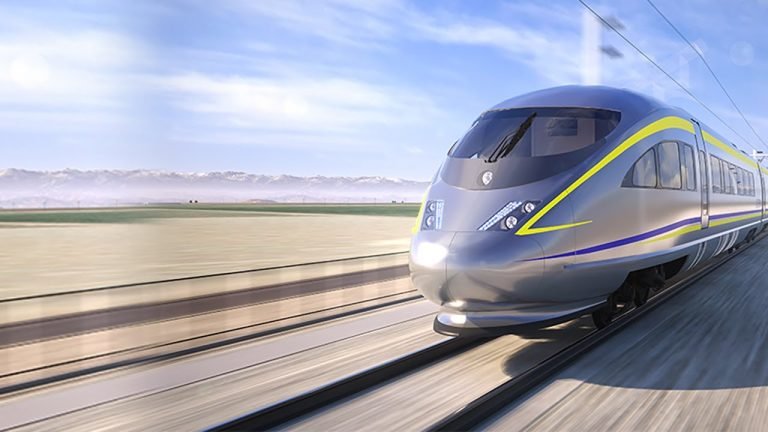
NEW DELHI (Metro Rail News): The Government of India has received a loan from the Japan International Cooperation Agency (JICA) towards part of the cost of the Project for the Construction of the Training Institute of Mumbai – Ahmedabad High-Speed Rail. It is intended that part of the proceeds of this loan will be applied to eligible payments under this Contract for the work described in the title.The Government of India, through National High-Speed Rail Corporation Limited (NHSRCL) now invites sealed Bids from eligible Bidders for the construction and completion of the Works.A complete set of Bidding Documents shall be available for downloading from procurement portal of NIC from 28.10.2022 (17:00 Hrs) to 14.12.2022 (15:00 Hrs IST) upon payment of a non-refundable fee of INR 59,000.The Technical Bid will be opened online at the e-procurement portal at 15:30 hrs on 15.12.2022.Interested eligible Bidders, who purchased the Bidding Documents beforehand, are
invited to attend a Pre-bid meeting held on 15.11.2022 at 1100 hrs.
NCRTC to install CCTV cameras in rapid rail for passengers safety
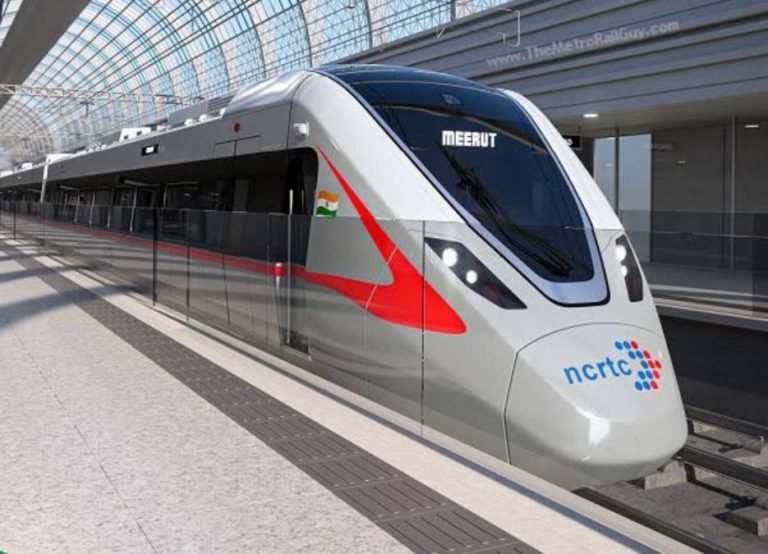
NEW DELHI (Metro Rail News): The Regional Rapid Transit System (RRTS) project’s whole 82-kilometre line would be covered by a robust network of around 2,000 CCTV cameras, by the National Capital Region Transport Corporation (NCRTC), placing a priority on the safety aspects of travel, especially for women, children, and senior citizens.When the RRTS project is completed in March 2025, it will connect the three cities of Delhi, Ghaziabad, and Meerut with a high-speed train network that can accommodate up to 800,000 people daily. The project’s anticipated cost is Rs 30,274 crore.“The CCTVs will be regularly monitored with the help of three control and command centres. The CCTV coverage will be widespread for the surveillance of all public access areas at stations and even on overbridges connecting adjacent roads. The internal security of the stations will be manned by a security agency. With these features, we are sure that passengers can safely use the RRTS trains even at late night,” said Puneet Vats, NCRTC’s chief public relations officer.The three command and control centres are being constructed in Jangpura, Meerut, Duhai, and Ghaziabad, respectively. As it will also serve the 17-km “priority segment” in Ghaziabad, which will be operational in March 2023, the one in Duhai is already at an advanced level.The first RRTS length throughout the nation would start at the priority section in Ghaziabad. There will be five stations along the route, located in Sahibabad, Ghaziabad City, Duhai, Guldhar, and Duhai Depot.One of the six coaches on the RRTS trains will be reserved for female passengers. At the same time, other ordinary coaches will also include reserved seats for women, senior citizens, and people with disabilities.According to NCRTC authorities, coaches will also include emergency stop buttons that can be used in case of an emergency or if a passenger needs assistance immediately.“Further, we are also deliberating to ensure that station-use time gets reduced for passengers. This will be done with the help of reducing time in different processes so that passengers are able to access the trains fast and also make faster exit from stations. A team has been deployed to chalk out a detailed plan,” Vats added.The majority of RRTS stations will have three to four floors, and NCRTC is also providing the installation of lifts and escalators, which would help in providing better accessibility. 22 of the 25 stations along the 82 km long RRTS route will be under the control of the state of Uttar Pradesh.In addition to 10 trains with three coaches each that will function as a local transit module in Meerut, the NCRTC has proposed 30 trains with six coaches each. The average speed of the train is 100 kilometres per hour (kmph), with a design speed of 180 kmph.
NCRTC Intensifies On-Going Efforts to Curb Air Pollution near Construction Sites
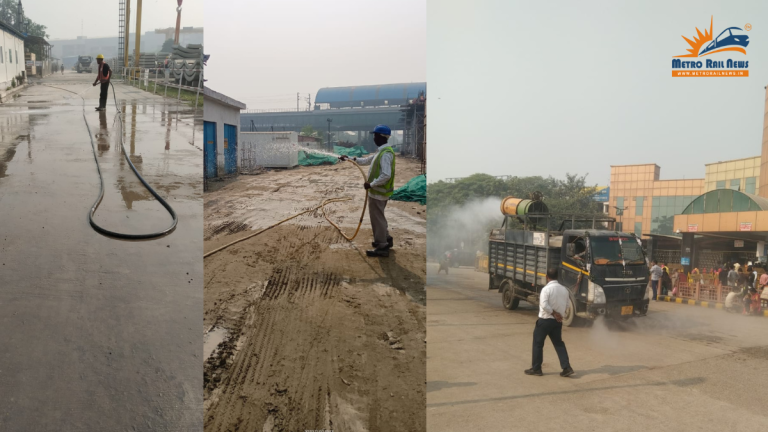
NEW DELHI (Metro Rail News): NCRTC, the agency implementing the RRTS project, has not always been following the guidelines of the Central Pollution Control Board (CPCB) religiously but has also been taking over and above measures responsibly to curb the pollution caused by the construction work. However, considering the current worsening environmental situation of the Delhi-NCR, NCRTC has further intensified its efforts to deal with the situation.Anand Vihar is one of the major transport hubs of Delhi, with Anand Vihar Railway Station, Vir Haqiqat Rai ISBT, UPSRTC stand and two metro lines situated here. With multi-modal integration at its core, the Anand Vihar RRTS station site is also in close vicinity of the already existing transport modes.Anand Vihar RRTS station is an underground station, where most of the construction is being conducted at least 25-30 feet below the ground level.Keeping environmental concerns at the forefront since the beginning of the project, NCRTC has been using pre-cast segments for construction. Pre-casting helps in the safe and fast execution of the works while ensuring good quality control, minimizing inconvenience to the road users, local passers-by, business owners and residents along the entire stretch, and reduction in air pollution & noise pollution.The Tunnel Segments being used to construct tunnels at Anand Vihar are being cast at NCRTC’s Casting Yard in a controlled environment with assured quality control. These are brought to the sites laden on the trailers during the night time to reduce the traffic problems and cause less public inconvenience.The requirement for in-situ construction is minimum at this site. Moreover, the muck extracted from the tunnels is wet muck and the site is mostly wet. Hence, the chances of dust pollution at the site are minimal.10 such casting yards have been established on the entire 82 km long Delhi-Ghaziabad-Meerut corridor and the same type of measures are being taken in each of them.Moreover, truck washing plants, sprinklers and anti-smoke guns have been installed at the RRTS construction sites. Anti-smog guns are being used frequently to control the dust and pollution caused by construction work and water is being sprinkled from water tankers at the construction site to prevent flying dust.20 such sprinklers and 6 anti-smog guns have been installed at the Anand Vihar Construction site at a certain height. Mobile vehicles for the water sprinkling have also been deployed at the site and their number will be increased in the future.NCRTC also conducts mechanised/vacuum sweeping of roads near the construction sites for dust control and the frequency of it has been intensified.Further, taking a proactive measure NCRTC has also constituted a Special Task Force comprising senior officials of NCRTC to monitor and supervise the implementation of the pollution control measures.The inception of RRTS could be found in the environmental crisis of the National Capital Region. Increasing pollution levels in National Capital Region (NCR) have been a cause of concern for the past few years and the situation in recent times has become much more severe. To present a solution to this problem, RRTS is a long-term strategic intervention by the Government of India and four state governments, Delhi, Haryana, Uttar Pradesh and Rajasthan, for decongestion of the National Capital, reduce vehicular congestion and air pollution, and enable the balanced and sustainable development of the region.Once operational, RRTS will act as a transportation backbone for the entire NCR. The first RRTS corridor alone is expected to reduce vehicular congestion with more than one lakh vehicles going off the roads and will help reduce air pollution with more than 2.5 lakh tonnes of carbon dioxide in vehicular emissions coming down.
A transport system to support seamless transfer between travel modes
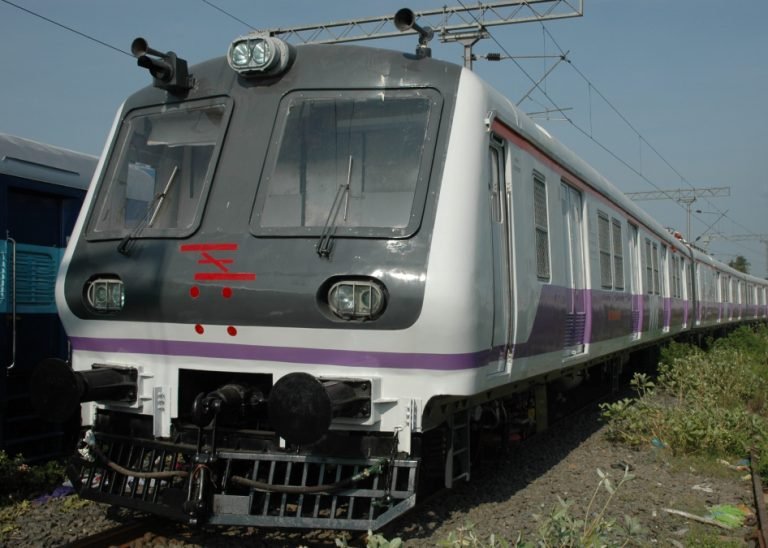
AbstractUrban rail transit in India plays an important role in intracity transportation in the major cities which are highly populated. It consists of rapid transit, suburban rail, monorail and tram systems. According to a report published in 2021, a total of 2.63 billion people traveled annually in metro systems across India’s fifteen major cities, placing the country as one of the busiest urban rapid transit hubs in the world in terms of ridership. The combined length of 810 kilometers of metro systems in India makes it the fourth longest in the world within an operation. Since 2014, a total of about 548 km of the metro rail network has been built/operationalized in India.The Ministry of Urban Development‘s Urban Transport wing is the nodal division for coordination, appraisal and approval of Urban Transport matters including Metro Rail Projects at the central level. All the interventions in urban transport by the Ministry of Urban Development are carried out as per the provisions of the National Urban Transport Policy, 2006. Indian cities have various types of urban transit systems operational, under construction and planned. These systems are being implemented based on the population of a city, financial feasibility and demand.
(Figures Till Sep 2021) Bengaluru Commuter RailA Commuter rail service existed in Bengaluru as early as 1963 for HAL employees to commute from KSR Bengaluru to Vimanapura Railway station. In 1983 a formal Commuter Rail system for Bangalore had first been proposed by a team from Southern Railway under then Railway Minister C. K. Jaffer Sharief and a Member of Parliament representing Bangalore. Their recommendation had been to invest in 3 commuter rail lines and a 58-km ring railway. The package was estimated to cost Rs. 6,500 million in 1983 terms (US$628.6 million) spread over a 25-year period.Again in 1993 C. K. Jaffer Sharief Minister of Railways, India. Influenced the State of Karnataka to establish another committee looking into mass rapid transit. This committee recommended essentially the same put forward by Southern Railway in 1983 and the same circular railway. Both in 1983 and 1993 the proposal was rejected by the then Prime Minister of India.In 2007, RITES (Rail Indian Technical and Economic Services) was commissioned by the Government of Karnataka to conduct a CTTP (Comprehensive Traffic & Transportation Plan) for the city of Bengaluru. Their report called for 10 Commuter Rail routes totaling 204.0 km. As per the report, Commuter Rail (along existing rail routes) would cost much lesser than mass rapid transit systems.In July 2010, a proposal was made by Praja Bangalore in a ‘Call To Action report. This plan was supported & presented at the center for infrastructure, Sustainable Transportation and Urban Planning (CisTup), Indian Institute of Science (IISc), Bangalore. The proposal had suggested a 376 km network around three hubs (Yesvantpur Junction, Benniganahalli & Yelahanka Junction) with 42 new stations. A key recommendation was to use the congested KSR Bengaluru only as a pass-through station.In November 2011, RITES conducted a feasibility study exclusively for commuter rail services in Bengaluru and submitted its final report to the Directorate of Urban Land Transport (DULT) in November 2012. The 179-page report studied all existing routes totaling 440.8 km of the rail network in & around the city & development of Commuter Rail services over three phases. The state government approved the commuter rail system on 5 July 2013. Chief Minister Siddaramaiah approved the system in the 2013-14 state budget that he presented on 9 July 2013. The budget proposed the setting up of the Bengaluru Suburban Rail Corporation Limited, a special purpose vehicle (SPV) to implement the project estimated to cost Rs. 87.59 billion.In the 2016-17 Railway budget, Union Railway Minister Suresh Prabhu announced a partnership with the Karnataka government for an Rs. 9000-crore Commuter Rail network for Bengaluru but did not allocate any funds. On 3 February 2016, the state government proposed a modified version of the original RITES plan. This looked to kick-start the project with an Rs. 1,000-crore investment to connect Mandya with Kengeri, Whitefield with Baiyappanahalli, and Tumakuru with Yeshwanthpura Junction. The state government released 100 crores towards this. The state-appointed RITES again to study the feasibility of the project, and the latter’s survey deemed the project as feasible. However, Railways stated that the proposed Phase Two of the project (linking Tumakuru and Yeshwanthpura Junction) was not feasible.In November 2018, RITES prepared a revised plan for a 161 km network that was again amended in August 2019 to reduce costs. Out of 82 stations, 29 stations were deleted, the route length was reduced to 148 km & costs were lowered to Rs. 16,000 crores. This was finally accepted by the Government of India. Project Bengaluru Commuter Rail is an under-construction suburban rail network for the city of Bangalore. A Commuter Rail system for the city was first proposed in 1983. Since then, several different route proposals were made but no Commuter Rail project took shape. It was finally approved in the 2019 Railway Budget. On 1 February 2020, finance minister, Nirmala Sitharaman mentioned in her budget that the project would be implemented at a cost of Rs 18,600 crores. The central government would provide 20% of the equity and facilitate external assistance up to 60 percent of the project cost. It will be the first of its kind and unique in India as it will have metro-like facilities and rolling stock. It has the slowest design speed among all the new commuter rail projects currently being implemented in India as Nagpur broad-gauge Metro and National Capital Region Transport Corporation are building rail tracks for a design speed of 200 km/h with an operating speed of 160 km/h.The commuter rail along with Hyperloop, High-speed Airport trains, Intercity trains, Metro rail, Metro Neo, and Metrolite will provide rail-based public transport to Bengaluru’s s general public. Route Proposals The route proposed by RITES & approved
*The total number of stations is 58 (figures under individual routes include interchange stations). Current StatusThough approved in principle by the Government of India, budget allocations have been paltry over the last few years as only token amounts have been allocated. On 7 October 2020, the project was approved by Prime Minister’s Office and the Cabinet Committee on Economic Affairs (headed by the Prime Minister). The State Government commenced providing budgetary support for the Commuter Rail project & 500 crores were allocated in the 2020-21 budget. Meanwhile, K-RIDE has kick-started the Suburban project by calling tenders for Land Surveys, hiring staff, etc.Two priority lines will be taken up first as per the Government of Karnataka’s advice. These are Mallige Line and Kanaka Line. The Commuter rail routes are named after local flowers. As of 2022, Prime Minister Narendra Modi laid the foundation stone for the start of construction of the project on 20th June this year. RoutesRoute-1: Sampige LineRoute-2: Mallige LineRoute-3: Parijaata LineRoute-4: Kanaka Line DepotsTwo depots have been planned. Jnanabharathi depot would be spread over 56.9 acres and Devanahalli depot would be on 61.2 acres. However, these are not on priority routes 2 and 4. Hence, the feasibility of a depot at Huskuru along the Kanaka Line is being explored besides other options. FeaturesDPR for the project has included many rare and unique features in System.
| Urban transit type | Capacity | Speed | Frequency of stations/stops | Right of way | Rail based | Cost to build and operate |
|---|---|---|---|---|---|---|
| Metro | High | Medium | High | Yes | Yes | High |
| Suburban Railway | Very High | Medium | Medium | Yes | Yes | Medium |
| Medium-capacity rail | Medium | Medium | High | Yes | Yes | High |
| Metro Lite | Medium | Medium | High | Partial | Yes | Medium |
| Monorail | Medium | Medium | High | Yes | Yes | High |
| Regional transit system | High | High | Low | Yes | Yes | High |
| Tram | Low | Slow | High | No | Yes | Low |
| Bus Rapid Transit | Low | Medium | High | Yes | No | Low |
| Metro Neo | Low | Medium | High | Yes | No | Medium |
| Water Metro | Low | Slow | Medium | Yes | No | Low |
- Rapid Transit: Rapid transit or popularly known as metro in India, is an urban high-capacity rail system, commonly operated in metropolitan cities. These systems are segregated from Indian Railways and have their right-of-way. Example: Delhi Metro, Chennai MRTS
- Suburban Railway: Suburban rail or popularly known as the local train system in India, is an urban rail transit system where the suburbs are connected to the city’s center. These systems are linked to and operated by Indian Railways. Example: Mumbai Suburban Railway
- Medium-Capacity Rail: It is a rapid transit (metro) system that has a capacity higher than light rail but lower than rapid transit system to serve a medium demand. It is built considering the future rise in demand so that it can be converted into a regular metro. Example: Rapid Metro Gurgaon
- Light Rail: Light rail is used in cities that have low demand. It is a combination of rapid transit and tram systems. It has a higher capacity and speed compared to tram services and has dedicated tracks that are mostly fenced. Example: Srinagar Metro
- Monorail: This system has trains running on a single rail/beam. It has found its application in medium-capacity transport, but due to low efficiency and high costs, it has been sidelined in India. Example: Mumbai Monorail
- Regional Transit System: This system is operated either between two similarly-sized cities, which are close to each other, or between an urban city and smaller cities lying nearby. Example: Delhi–Meerut RRTS
- Tram: These systems are one of the oldest modes of urban transport in India. They are low-capacity, slow-moving trains which run on tracks that are embedded in the urban streets. Example: Kolkata Tram.
- Bus Rapid Transit: The Bus Rapid Transit systems in India use conventional buses or high-capacity buses and have their own right-of-way, separated from the rest of the traffic. Example: Bhopal Bus Rapid Transit System
- Metro Neo: These are the Bus Rapid Transit systems that use overhead wires with a power supply similar to a trolleybus but with a higher capacity and which have their right-of-way. Example: Greater Nashik Metro
- Water Metro: A water-based urban transit system usually implemented in cities that are situated on rivers. These systems are basically integrated ferry systems. Example: Kochi Water Metro
| System | State / Union Territory | Lines | Stations | Opened |
|---|---|---|---|---|
| Chennai Mass Rapid Transit System | Tamil Nadu | 02 | 18 | 01 Nov 1995 |
| Chennai Suburban Railway | Tamil Nadu, Andhra Pradesh | 08 | 300+ | 1931 |
| Delhi Suburban Railway | Delhi, Uttar Pradesh, Haryana | 01 | 46 | 01 Oct 1975 |
| Hyderabad Multi-Modal Transport System | Telangana | 03 | 28 | 09 Aug 2003 |
| Kolkata Suburban Railway | West Bengal | 24 | 458 | 15 Aug 1854 |
| Mumbai Suburban Railway | Maharashtra | 07 | 150 | 16 Apr 1853 |
| Pune Suburban Railway | Maharashtra | 02 | 17 | 11 Mar 1978 |
| Bengaluru Commuter Rail | Karnataka | 04 | TBD | Under Construction |
| Ahmedabad Suburban Railway | Gujarat | 02 | 41 | Proposed |
| Nagpur broad-gauge Metro | Maharashtra | 04 | TBD | Proposed |
| Coimbatore Suburban Railway | Tamil Nadu | 05 | TBD | Proposed |
| Total | 8 | 47 | 1017 | 3,319.84 km |
| Route | Distance | Length (km) | No. of Stations | ||
| Elevated | Surface | Elevated | Surface | ||
| KSR Bengaluru – Yelahanka Junction – Devanahalli (Sampige Line) | 41.40 | 18.98 | 22.42 | 08 | 07 |
| Chikkabanavara Junction – Yeshwanthpura Junction – Benniganahalli (Mallige Line) | 25.01 | 12.905 | 12.105 | 06 | 08 |
| Kengeri – KSR Bengaluru – Bengaluru Cantonment – Whitefield. (Parijaata Line) | 35.52 | 10.40 | 25.12 | 04 | 10 |
| Heelalige – Yelahanka Junction – Rajanukunte (Kanaka Line) | 46.24 | 13.29 | 32.95 | 04 | 15 |
| Total | 148.17 | 55.575 | 92.595 | 22 | 40* |
- Many Stations will act as Integrated commercial hubs.
- Many Stations will be built as Intermodal Integration hubs where people can switch easily with other modes of transport like the Metro.
- Stations will have an Automated fare collection system and Platform screen doors.
- DPR suggests that Metro Train sets (EMU) – RS 13 series, which is used in Delhi Metro and manufactured at M/s BEML, Bengaluru, is the most suitable for the Bengaluru Commuter Rail system.
- Indian Railway’s South Western Railway zone operates several MEMU and DEMU train services from Bengaluru to Hosur, Dharmapuri, Jolarpettai, Tumakuru, Marikuppam near Kolar Gold Fields, Bangarapete, Hindupur, Mysuru, Kolar, Kuppam and Hassan.
- Hosur, Dharmapuri and Jolarpettai are across the state border in Tamil Nadu. Hindupur and Kuppam are across the state border in Andhra Pradesh, while Tumakuru, Bangarapete, Mysuru, Marikuppam, Kolar and Hassan are in Karnataka.
- Service to and from Hassan, Hindupur, Hosur, Dharmapuri and Tumakuru are operated from Yesvantpur Junction, while services to Mysuru, Kolar, Marikuppam, Kuppam, Bangarapete and Jolarpettai are from KSR Bengaluru and Bengaluru Cantonment.
- Corridor 1: Barejadi-Ahmedabad Junction-Kalol (43.49 km) with stops at Geratpur, Vatva, Maninagar, Sabarmati, Chandkheda, Khodiyar, and Saij Sertha Road
- Corridor 2: Ahmedabad Junction-Naroda (9.47 km) with stops at Asarva, Ahmedabad Airport, Saijpur and Sardargram
| Ahmedabad Suburban Railway | |
| Overview | |
| Native Name | અમદાવાદ ઉપનગરીય રેલવે |
| Owner | Gujarat Infrastructure Development Board Indian Railways |
| Locale | Ahmedabad |
| Transit type | Suburban rail |
| Number of lines | 2 (planned) |
| Number of stations | 41 (planned) |
| Daily ridership | 4,55,000 (Estimated) |
| Headquarters | Ahmedabad |
| Website | www.gidb.org/rrs |
| Operations | |
| Operator(s) | Western Railway |
| Train Length | 03 Coaches |
| Headway | 10 minutes |
| Technical | |
| System Length | 52.96 Km |
| Track Gauge | Broad Gauge |
Kolkata Metro and Eastern Railway Organises Vigilance Seminar
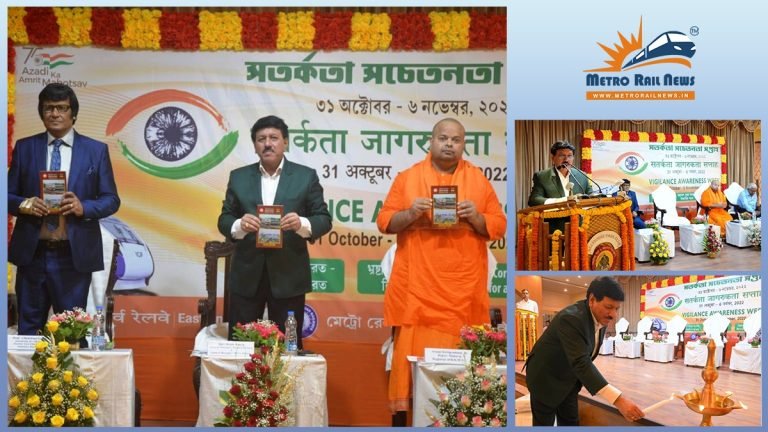
KOLKATA (Metro Rail News): Metro Railway has been observing Vigilance Awareness Week from October 31 to November 6, 2022. As a part of this programme, various initiatives have been undertaken in Metro to create awareness to eradicate corruption in society.A seminar was organized jointly by Metro Railway and Eastern Railway (ER) at Belvedere Park Officers’ Club, on 2nd November as a part of an observance of Vigilance Awareness Week with the theme – “Corruption Free India for a Developed Nation”.In this seminar, Shri Arun Arora, General Manager, Metro Railway ER said, corruption retards the development process by adversely affecting both domestic and foreign investments. With corruption, a country with rich natural resources may collapse economically. The GM laid emphasis on the exercise of control and proper education right from childhood to inculcate honesty and good practices in every sphere. He stressed upon adoption of innovative means, new technology, and symmetric dissemination of information for enforcing transparency.Shri Arora also released Vigilance Bulletins ‘JAGRITI’ of ER and ‘PRAYAS’ of Metro Railway on this occasion.One of the prominent speakers of the seminar, Swami Kirtipradananda from Ramakrishna Mission, Belur Math gave his valuable advice to eradicate corruption from every sphere of life.Among the other speakers, Prof. Chinmoy Guha, Former Head of the Department of English, University of Calcutta & Former Vice Chancellor, of Rabindra Bharati University said, that teachers can play a pivotal role in making a corruption-free society. There is the importance of vigilance control but everybody should be self-vigilant – Prof Guha said.Dr. Krishnapada Sarkar, Ex. Head of Department, Physics, Sir Gurudas Banerjee College Kolkata, and Shri Vipin Kumar, Chief Vigilance Officer, Metro Railway also spoke on the occasion.A large number of officers and staff also participated in the seminar with huge enthusiasm
DMRC starts field trial of new high-tech entertainment content distribution service
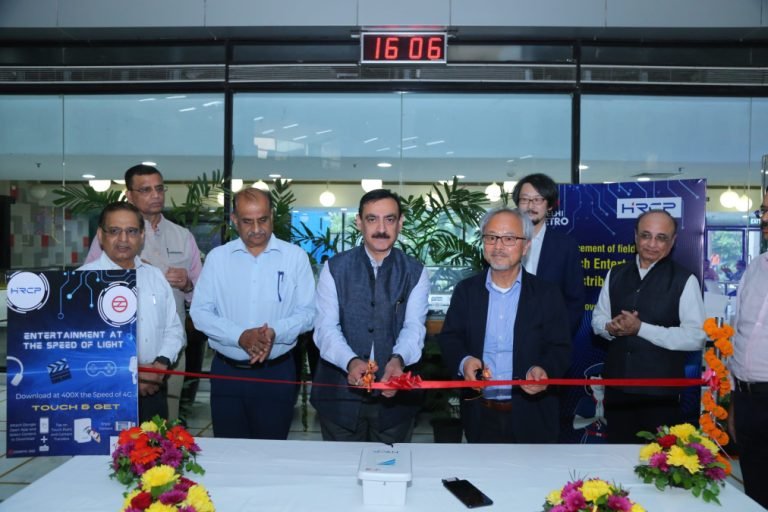
NEW DELHI (Metro Rail News): The Delhi Metro Rail Corporation (DMRC) announced on 1st November that field testing for a brand-new, high-tech entertainment content distribution eco-system service had started. This service will allow content to be transferred to mobile devices at 400 times the speed of 4G without requiring an active internet connection.https://twitter.com/OfficialDMRC/status/1587413314845691905?s=20&t=CY6flxyro9veXxWSiD-qGQThe technology, developed by Japanese firm HRCP Research and Development, enables the transfer of a full-length two-hour HD movie in 2 seconds and has been designed for the convenience of metro passengers on the move. Trials will be conducted over the next 30 days, and based on the feedback received, the company will try to make the service available for public use by the end of next year, DMRC said.Anuj Dayal, principal executive director, of corporate communications at DMRC, said, “A demo of the technology was done at Metro Bhawan in the presence of DMRC’s managing director Vikas Kumar and officials from DMRC and HRCP.”DMRC said that once downloaded, the content can be played without any buffering and can be accessed at any time by a passenger. To avail of the service, users will have to attach a dongle (attached to a mobile) to a touch point (transfer device) and download content from an app developed by HRCP.
KMRL prepares plan to find best metro rail model in Thiruvananthapuram and Kozhikode
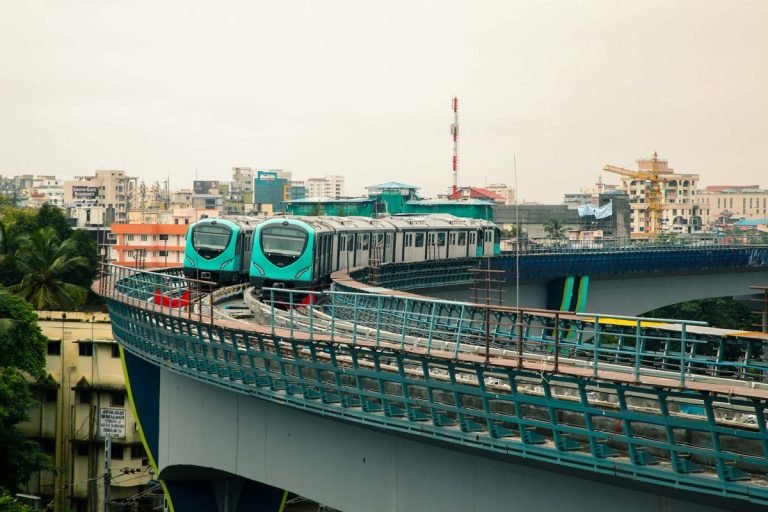
KOCHI (Metro Rail News): The Kochi Metro Rail Limited (KMRL) has started the process of preparing the Comprehensive Mobility Plan (CMP) to find the best model for the proposed Thiruvananthapuram and Kozhikode metro rail projects. The district administrations and mayors of both cities have received a letter from KMRL MD Loknath Behera requesting their cooperation and assistance in finishing the project.Urban Mass Transit Company Ltd has been tasked with preparing the CMP and the Alternative Analysis Report (AAR) for the project. “The KMRL has not finalised what could be the metro model in Thiruvananthapuram and Kozhikode. Though a light metro was proposed, we will implement the model separately for both cities. We are making a comprehensive plan for the project, which is foreseen to be a reality in the next five years,” Behera stated.The preparation of the CMP is expected to be completed by the end of March 2023. The KMRL aims to prepare the AAR within one month after getting approval for the CMP. Meanwhile, the tender for the construction of the Sreekaryam flyover will be invited soon, said KMRL officials.
NCRTC follow measures considering current worsening environmental condition of Delhi-NCR
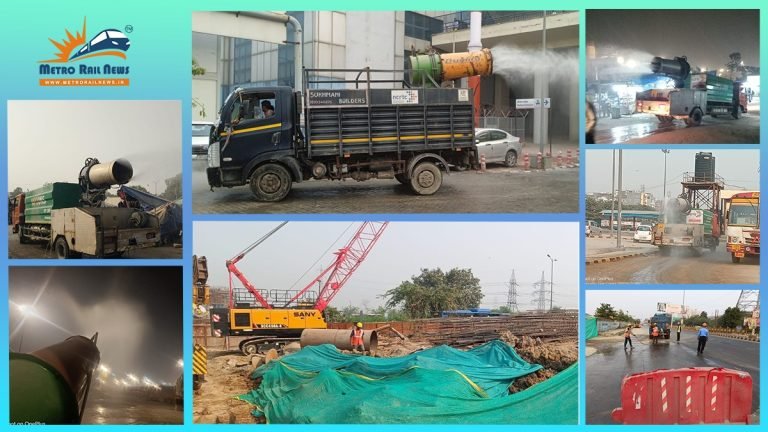
NEW DELHI (Metro Rail News): In order to minimize inconvenience to the public due to construction works and for the convenience of the commuters, NCRTC is strictly following the below-mentioned measures:Anti-smog guns are being used frequently to control the dust and pollution caused by construction work.Water is being sprinkled from water tankers at the construction site to prevent flying dust to cause inconvenience to the commuters.In case of diversion on roads and use of big machines at RRTS sites, Impact Protection Vehicles (IPV) are used at night which signal people to move in the other direction. The three coloured lights at the rear of this vehicle act as indicators and reflectors.A traffic diversion scheme is used, under which the approval of local police and traffic police is taken for the installation of barricades or diversion on the road and work is done in collaboration with them.Traffic marshals are deployed for convenience near construction sites and U-turns and the number of marshals is continuously modified as per the requirement in high-congestion areas.NCRTC also works in cooperation with local agencies and requests them to deploy additional traffic inspectors as and when required or for special events like fairs or religious events.Surveillance is being done by CCTV cameras at various places for the prevention and management of traffic-related problems around construction sites. Simultaneously, mannequins are also installed at various places.Defensive driving training is imparted to the drivers of trucks and large machines transporting construction material to the construction sites of NCRTC.To spread awareness about road safety, NCRTC organises street plays and community interaction programs from time to time to spread awareness about the RRTS project.Rope lighting is installed at the barricading on the Delhi-Meerut RRTS corridor for people to clearly see the barricading at night and to reduce the possibility of accidents.Maintenance and repair of barricades from the Delhi to Meerut stretch are done from time to time so that people do not face any kind of problem in movement.
Pune Metro Launches Last Segment to Complete the Viaduct from Phugewadi to Range Hill
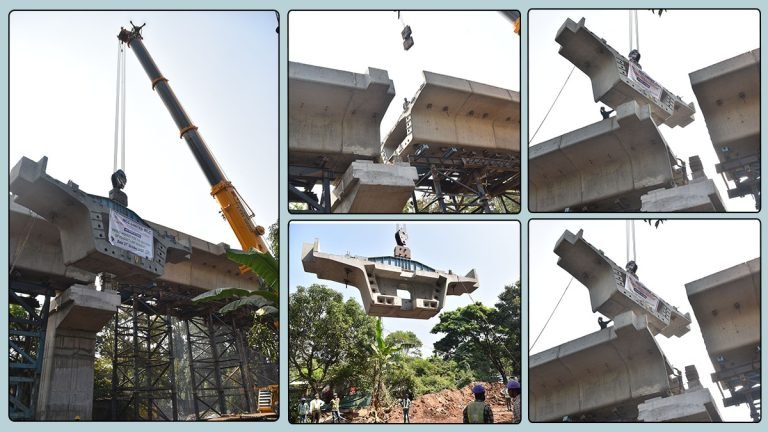
PUNE (Metro Rail News): In the route from PCMC Station to Swargate Station of Pune Metro Corridor I, the 12.064 km stretch from Pimpri Chinchwad Municipal Corporation Station to Range Hill Station is the elevated stretch and the rest of the route is underground. The launching of the last segment of this 12.064 km elevated stretch was completed on 31st October 2022.It will now be possible to conduct the trial run of the metro train on the route from Phugewadi station to Civil Court station soon. After the trial, the route from Phugewadi station to Civil Court station will be opened for passengers.
A total of 3934 segments were cast for the 12.064 km elevated track from Pimpri Chinchwad Municipal Corporation Station to Range Hill Station. 451 spans were constructed through these segments and 12.064 km of elevated track was constructed. The first metro pillar on this route was constructed on 7th October 2017.A big casting yard was set up at Nashik Phata where 3934 segments were made. The first segment required for this route was constructed on 29th August 2017 and the last segment
was constructed on 19th October 2022. Also, the first segment on this route on 14 December 2017 at Pier no. 348-349 was launched for the span. It is the last launching of the 3934 segments and also the construction of the last span between piers 149-150. This marks the completion of viaduct work of the entire 12.064 km elevated stretch.
Many hurdles were overcome to complete this 12.064 km elevated route. The biggest difficulty was getting the land from Harris Bridge to Khadki from the army. For this, after continuous follow-up with the army, metro finally got land in July 2022. Despite the delay in acquiring land for the line from the Army, the Metro continued work on the phases from Range Hill station to Khadki and Phugewadi station to Harris Bridge and completed them on time. With the launching of the last segment today, the gap in viaduct route between Pimpri Chinchwad Municipal Corporation Station to Harris Bridge and Range Hill Station to Khadki is filled and viaduct is complete. All major projects came to a standstill
during the Pandemic Covid and Maha Metro were also affected.Traffic regulation in this area is very complex. The traffic at Khadki was regulated by coordination between the concerned departments and this work is getting completed within the scheduled time. Metro has planned to complete the work on Phugewadi Station to Civil Court Station and Garware College Station to Civil Court Station by November 30, 2022. Today's final segment launching is in line with the target set. The work of this 12.064 km elevated road has been completed within the scheduled time after overcoming the difficulties such as land acquisition, pandemic and traffic regulation, etc.
Hence, it will be possible to complete this work by the end of November 2022. On this occasion, the Managing Director of Maha Metro Dr. Brijesh Dixit said, " Today is an important milestone for Pune Metro. The viaduct of the 12.064 km elevated line from Pimpri Chinchwad Municipal Corporation Station to Range Hill Station is getting completed on schedule.Soon work from Phugewadi Station to Civil Court Station and Garware College Station will be completed and Metro trials will extend till the Civil Court station route."
Achievements and Best Practices of Ministry of Railways under Special Campaign 2.0

NEW DELHI (Metro Rail News): Inspired by the vision of the Hon’ble Prime Minister, the Government of India launched a Special Campaign for the disposal of pending references in Sept-Oct 21, focusing on cleanliness all around, reducing pendency of public grievances and improving work-culture at the work places.Its sequel has been launched in September’2022 named ‘Special Campaign 2.0’ from 02.10.2022 to 31.10.22, with increased ambit and targets to further promote cleanliness and good governance in all spheres of working throughout the country which has been a huge success.In consonance with the philosophy of the Special Campaign 2.0, Ministry of Railways had set a much wider scope for itself in all spheres of its work keeping in view IR’s presence over the length and breadth of the country. Accordingly, it took up all 7337 stations for the Cleanliness Campaign, which is a mammoth task in itself, with emphasis on mechanized cleaning of stations, and cleanliness of trains including approaches to major stations, collection & safe disposal of plastic and other waste. One such effort by Bangalore Railway Station was appreciated by the Hon’ble Prime Minister.From Oct 2nd onwards, the Ministry of Railways conducted more than 9000 cleanliness campaigns covering all stations, offices, workshops, Production Units, and other offices, and a 100% target has already been achieved in this regard. More than One lakh eighty-six thousand physical files and around 30000 e-files have been reviewed. All employees from top to bottom were pro-actively involved in the disposal of pending matters including VIP/MP/MLA references and Parliamentary, State Govt/PMO References/Public Grievances and Appeals. Around 80% liquidation has already been achieved on several parameters. On the last day of Special Campaign 2.0, the Ministry of Railways disposed of more than 3000 VIP References, 160 State Govt References, and more than 2.6 lakhs Public Grievances. Campaigns are being closely supervised and held by Senior officers of the units who are taking rounds of their offices frequently to spread importance and awareness. More than Rs 33 crores worth of office scrap has been disposed of during the campaign period and space freed to the tune of 16000 sq feet.As part of Special Campaign 2.0, a series of awareness programs including “NukkadNatak” (street shows) were organized across the Railways which was not only impactful but also had an indelible mark and was well appreciated by one and all.Several other initiatives have also been taken during this Campaign which includes the development of IT applications for online processing and disposal of VIP(MP/MLA) References and Parliamentary References such as matters raised during Zero Hour and under Section 377 in Parliament by MPs.IT application developed indigenously for real-time monitoring and disposal of VIP References entails various features like registration(uploading) of reference, marking/sending to unit/officer(s), receipt of replies from them, processing by unit concerned as well as submission of replies to be issued from Minister of Railways/MoS/GM/DRM, as the case may be. A number of MIS reports can be generated to see the status Subject/VIP/State/Unit(Directorate/Zonal Railway etc.)/Time Period. The system also generates weekly alerts through e-mails and SMS to concerned officials. The Hon’ble Minister/Officers can peruse and show the reply to a particular public representative with just a click of a button.Another module relating to real-time monitoring of parliamentary references has also been developed on similar lines with all features of MIS built for monitoring VIP references.The developments of these two applications have enabled the Ministry of Railways to dispose of these references and have contributed immensely to Special Campaign 2.0.
PM dedicates Railway projects worth over Rs. 2900 crore in Asarva, Ahmedabad

AHMEDABAD (Metro Rail News): The Prime Minister, Shri Narendra Modi dedicated to the nation, two railway projects worth over Rs. 2900 crores at Asarva, Ahmedabad on 31st October.Addressing the gathering, the Prime Minister remarked that 31st October is a huge day for Gujarat’s development and connectivity. He underlined that lakhs of people of Gujarat who used to be troubled due to the lack of broad gauge line in a large area are going to get a lot of relief from 31st October. The Prime Minister expressed delight at getting the opportunity to dedicate the line after waiting for decades. The Prime Minister highlighted that the entire route has been rejuvenated and the meter gauge line from Asarwa to Udaipur via Himmatnagar has been converted into a broad gauge. He also informed me that this part of Gujarat will now be connected directly with the neighbouring state of Rajasthan as well as the whole country. The gauge conversion work done between Lunidhar-Jetalsar will also ease rail connectivity in this area and trains originating from here will be able to go to any part of the country, he said.“When the meter gauge line on a route is changed to broad gauge”, the Prime Minister said, “it brings with it many new possibilities.” With the conversion of the 300 km long rail line from Asarwa to Udaipur into broad gauge, the tribal areas of Gujarat and Rajasthan will be connected to Delhi and North India. The conversion of this railway line to broad gauge has also made an alternate route available for Ahmedabad and Delhi. Now, direct rail connectivity has also been established between the tourist places of Kutch and the tourist places of Udaipur. This will give a big boost to the tourist places of Kutch, Udaipur, Chittorgarh and Nathdwara. He noted that traders in the region will also get the benefit of connecting directly to big industrial centres like Delhi, Mumbai and Ahmedabad. “Especially, the tiles industry of Himatnagar will get a lot of help”, he said. Similarly, with the conversion of the Lunidhar-Jetalsar rail line to the broad gauge, the Dhasa-Jetalsar section is now fully converted into a broad gauge as well. This rail line passes through Botad, Amreli and Rajkot districts which till now have had limited rail connectivity. With the completion of this line, people of Bhavnagar and Amreli region will now get the benefit of direct connectivity to Somnath and Porbandar, the Prime Minister informed.The Prime Minister noted that the route will reduce the distance between Bhavnagar-Veraval from about 470 kilometres to less than 290 kilometres, thereby reducing the travel time from twelve hours to just six and a half hours. Similarly, the distance between Bhavnagar-Porbandar has come down by about 200 kilometres, and the distance between Bhavnagar-Rajkot by about 30 kilometres, he said. The trains running on the broad gauge route will also accelerate the industrial development of Gujarat while making tourism accessible and connecting the areas which were cut off. “Dedicating this project today, on the day of Ekta Diwas, makes it more special”, he said.He emphasised “When the government of double engine works, its effect is not only double, but it is manifold. Here one and one together are not 2 but assume the power of 11.” He continued, “With the double-engine government, the pace of work in Gujarat has not only increased, but it also got the strength to expand it.” He noted that between 2009 and 2014, less than 125 kilometres of railway lines were doubled while between 2014 and 2022, more than five and a half hundred kilometres of railway lines have been doubled. Similarly, only about 60 km of track was electrified in Gujarat between 2009 and 2014. Whereas, between 2014 and 2022, more than 1700 km of track has been electrified.Apart from improving on scale and speed, he said, improvement is taking place in quality, convenience, safety and cleanliness. He also highlighted the improvement in the condition of railway stations across the country. “The poor and middle class are being given the same environment, which was once accessible only to the well-to-do”, he said, “Like Gandhinagar Station, Railway stations at Ahmedabad, Surat, Udhna, Sabarmati, Somnath and New Bhuj are being upgraded.” Pointing out the achievements that have been made possible only because of the double-engine government, the Prime Minister gave the example of the new Vande Bharat Express service that was started between Gandhinagar and Mumbai. The Prime Minister informed that 12 Gati Shakti Cargo Terminals have also been planned to give a new dimension to the development of the Western Railway. “The first Gati Shakti Multimodal Cargo Terminal has been commissioned in Vadodara circle. Soon the rest of the terminals will also be ready to provide their services”, he added.“After decades of independence”, the Prime Minister said, “the rich-poor gap, the gulf between village and city, and unbalanced development have been a major challenge for the country. The government is working to solve this. The policy of ‘Sabka Vikas’ emphasises the provision of infrastructure and other facilities to the middle class and gives the poor the means to fight poverty. “Pucca houses, toilets, electricity, water, gas, free treatment and insurance facilities for the poor, are the hallmarks of good governance today”, he said.The Prime Minister noted a drastic change in the approach to the development of connectivity infrastructure in the country. Now in place of unplanned constructions, there is a coordinated approach to connecting facilities like rail, metro and buses. A synergy of routes and modes is being aimed for, he said. Underlining the industrial nature of Gujarat, the Prime Minister said that when the ports of Gujarat are empowered, it directly affects the economy of the whole country. “In the last 8 years, he said, the capacity of Gujarat’s ports has almost doubled” he informed. The Prime Minister emphasised the continuous nature of the development process and said “Our motto is to build a developed Gujarat for a developed India.”Concluding the address, the Prime Minister hailed Sardar Patel on his birth anniversary and remarked that every Indian is proud of the achievements of India’s first Home Minister. The Prime Minister criticised the absence of Sardar Patel’s name and picture in some advertisements that appeared in some Gujarati papers, placed by the Rajasthan government. “Such an insult to Sardar Patel will never be tolerated, that too in the land of Gujarat.”, Shri Modi said. The Prime Minister concluded, “the Railways, like Sardar Patel, connects India and this process moves forward constantly with pace and direction.”Union Minister of Railways, Shri Ashwini Vaishnaw, Union Minister of State for Railways, Smt Darshana Jardosh, Members of Parliament, and state ministers were among those present on occasion.BackgroundThe Prime Minister, Shri Narendra Modi dedicated two railway projects worth over Rs. 2900 crores at Asarva, Ahmedabad on 31st October. These projects include the Ahmedabad (Asarva)-Himmatnagar-Udaipur Gauge Converted Line and Lunidhar-Jetalsar Gauge Converted Line. The Prime Minister also flagged off new trains between Bhavnagar-Jetalsar and Asarva-Udaipur.With a view to having a uni-gauge rail system across the country, Railways is converting the existing non-broad gauge railway lines to broad gauge. The projects being dedicated by the Prime Minister mark yet another step in this direction. The Ahmedabad(Asarva)-Himmatnagar-Udaipur Gauge Converted Line is around 300 Km long. It will improve connectivity and prove beneficial for tourists, traders, manufacturing units and industries in the region, which will in turn boost employment opportunities and help in the socioeconomic development of the region. The 58 Km long Lunidhar-Jetalsar Gauge Converted Line will provide a shorter route for Pipavav Port and Bhavnagar from Veraval and Porbandar. The project will enhance freight carrying capacity on this section, thus decongesting the busy Kanalus – Rajkot – Viramgam route. It will now facilitate seamless connectivity to Gir sanctuary, Somnath temple, Diu and Girnar hills as well, thus boosting tourism in the region.
HMR to hire a reputable research agency to survey metro rail operations
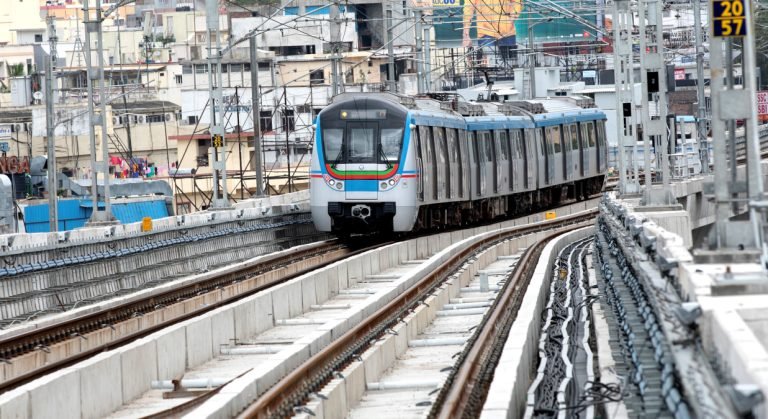
HYDERABAD (Metro Rail News): Hyderabad Metro Rail (HMR) Limited, the Telangana Government’s Special Purpose Vehicle (SPV) which has managed the metro rail project’s construction and current operation, will soon hire a reputable socio-economic research firm to conduct an analysis of the current metro rail operations, costs, passenger amenities, and affordability.Senior metro rail officials stated on 31st October that this came following the Central Government’s Ministry of Housing and Urban Affairs (MoHUA) constituted a three-member ‘Fare Fixation Committee’ (FCC) for recommending a fare revision under the chairmanship of Justice (retired) G. Shyam Prasad and the Telangana Municipal Administration and Urban Development Special Chief Secretary Arvind Kumar, (MH&UA) Additional Secretary Surendra Kumar Badge.The Central Metro Railways Act panel has started operating from the Metro Rail Bhavan. The HMR and the concessionaire L&T Metro Rail Hyderabad (L&TMRH) have already made separate presentations and started consultations.L&TMRH, which has built the project, and is running across the three corridors of Red Line — L.B. Nagar to Miyapur; Blue Line — Nagole to Raidurg; and Green Line — Jubilee Bus Station (JBS) to Mahatma Gandhi Bus Station (MGBS), Imlibun, or 69 km in all, has requested the appointment of the fare revision committee with the completion of five years this month, informed senior metro officials.“The committee will receive suggestions from the public and will go into the details of the cost, income, and expenditure of running and maintaining the transport system. It has three months to submit a report. L&TMRH will make a submission and this too will be studied including the real estate development before it is taken to the government by the HMR for a final decision,” they said.Metro riders can offer inputs about the fares — whether they can be increased, reduced, or keep the same — and also about passenger comforts to the committee. On the other hand, “The agency to be appointed will be doing an independent survey talking to the commuters, do a lot of analysis, study inflationary trends and rail operations also,” said HMR Managing Director N.V.S. Reddy, when contacted.
A light Metro system for ancient city of Calicut
Abstract
India’s development and operations of existing metro rail systems provide valuable insights towards improving upcoming systems’ planning and investments. The Government of India (GoI) continued financial support over the past two decades, and the Metro Rail Policy formulated in 20171, led to the development of a wide range of rail-based mass transport systems across the country.Today, India has metro rail, suburban rail and monorail. Amongst these, metro rail systems witnessed the fastest growth, from network length of 222km in three cities in 2011 to 697 Km in 13 cities by 2021. Approved additional metro rail network of 1,032km will expand the reach of metro systems up to 27 cities.In addition, lighter urban rail systems such as Metrolite and Metro Neo are being conceptualised and developed by many small- and medium-sized cities. The approved metro rail projects have a projected expenditure of INR 3 trillion over the next five years, including equity investments by central and state governments and financing from other developmental and commercial financing entities. Urban Rail Transit in IndiaUrban rail transit in India plays an important role in intracity transportation in the major cities which are highly populated. It consists of rapid transit, suburban rail, monorail and tram systems. According to a report published in 2021, a total of 2,636 million people travel annually in metro systems across India’s thirteen major cities, placing the country as one of the busiest urban rapid transit hub in the world in terms of ridership. The combined length of 731.25 kilometres of metro systems in India makes it the fifth longest in the world with in operation. The Ministry of Urban Development’s Urban Transport wing is the nodal division for coordination, appraisal and approval of Urban Transport matters including Metro Rail Projects at the central level. All the interventions in the urban transport by the Ministry of Urban Development are carried out as per the provisions of National Urban Transport Policy, 2006. Light Rail TransitLight rail transit (LRT) is a form of passenger urban rail transit characterized by a combination of tram and metro features. While its rolling stock is more similar to a traditional tram, it operates at a higher capacity and speed, and often on an exclusive right-of-way. In many cities, light rail transit systems more closely resemble, and are therefore indistinguishable from, traditional underground or at-grade subways and heavy-rail metros. There is no standard definition, but in the United States (where the terminology was devised in the 1970s from the engineering term light railway), light rail operates primarily along exclusive rights-of-way and uses either individual tramcars or multiple units coupled to form a train that is lower capacity and lower speed than a long heavy-rail passenger train or metro system. A few light rail networks tend to have characteristics closer to rapid transit or even commuter rail; some of these heavier rapid transit-like systems are referred to as light metros. Other light rail networks are tram-like and partially operate on streets. The city of spices : KozhikodeKozhikode, also known in English as Calicut, is a city along the Malabar Coast in the state of Kerala in India. It has a corporation limit population of 609,224 and a metropolitan population of more than 2 million, making it the second largest metropolitan area in Kerala and the 19th largest in India. Kozhikode is classified as a Tier II city by the Government of India. It is the largest city in the region known as Malabar and was the capital of the British-era Malabar district. In antiquity and the medieval period, Kozhikode was dubbed the City of Spices for its role as the major trading point for Indian spices. It was the capital of an independent kingdom ruled by the Samoothiris (Zamorins). The port at Kozhikode acted as the gateway to medieval South Indian coast for the Chinese, the Arabs, the Portuguese, the Dutch and finally the British. According to data compiled by economics research firm Indicus Analytics in 2009 on residences, earnings and investments, Kozhikode was ranked the second best city in India to live in. Kerala Rapid Transit Corporation Ltd.Kerala State Metro Rail Corporation Limited, abbreviated to KSMRCL, is a special purpose vehicle (SPV) formed to implement light metro projects in Kerala. Kerala has light metro systems planned for the cities of Kozhikode and Thiruvananthapuram. The SPV is fully owned by the State Government and the Chief Minister is the Chairman of the company. The head office of KMRCL is at Thiruvananthapuram, with branches at Kozhikode and Thiruvananthapuram. Earlier it was Kerala Monorail Corporation Ltd. Since monorail was not financially viable, DMRC proposed light metro. The chief minister, Pinarayi Vijayan, is the chairman of the board and Public Works Minister P. A. Mohammed Riyas is vice chairman. The other board members are Ministers KN Balagopal, Antony Raju, P Rajeev, K Rajan as well as officials of Public Works and Transport departments. MetroKozhikode Metro is a proposed Light Rapid Transit (LRT) system for the city of Kozhikode (Calicut), in India. In 2010, the State government explored the possibility of implementing a metro rail project for Kozhikode city and its suburbs. The proposal was to have a corridor connecting the meenchanda to the Kozhikode Medical College Hospital through the heart of the city. An inception report was submitted by a Bangalore-based consultant, Wilber Smith, on the detailed feasibility study on the prospect of implementing the Mass Rapid Transport System (MRTS) and Light Rail Transit System (LRTS) in the city. However, the project has been scrapped to be replaced by Kozhikode Monorail project.The State Cabinet then decided to form a special purpose vehicle (SPV) to implement monorail projects in Kozhikode and Thiruvananthapuram, and administrative sanction was given in October 2012. The state government issued orders entrusting the Thiruvananthapuram Monorail project to the KMCL on 26 November 2012. The government had handed over the Kozhikode Monorail project to the KMCL prior to that. On 12 June 2013, the State Cabinet gave clearance for an agreement to be signed between KMCL and DMRC, that would make the latter the general consultant for the monorail projects in Kozhikode and Thiruvananthapuram. The DMRC shall receive a consultancy fee of 3.25% of the Rs. 55.81 billion (Rs. 35.90 billion for Thiruvananthapuram and Rs. 19.91 billion for Kozhikode). The agreement was signed on 19 June 2013. However, due to cost overrun and the cold response from the bidders the project was put on hold. Bombardier Transportation was the only bidder for the project. The project was later scrapped and Light metro was proposed. Project DevelopmentThe Union Urban Development Ministry decided to consider the proposal for a Metro in Kozhikode after the success of the Delhi Metro and signed up for drawing the detailed project report (DPR) of the Rs.27.71 billion Kozhikode metro transport project with Delhi Metro Rail Corporation as a feasibility study for the introduction of suburban services in Kozhikode city. The Ministry decided to bear 50% of the cost of the preparation of the DPR for the city that comes under the population cut-off bracket. The preliminary feasibility study had been carried out by the National Transportation Planning and Research Centre (NATPAC) in association with the Kerala Road Fund Board in December 2008. Based on this feasibility report, the Board entrusted Wilber Smith to conduct the study in June 2009. Already, the NATPAC has submitted a metro rail project covering a total distance of 32.6 km from Karipur to the Calicut Medical College. The cost of the project was estimated at Rs. 27.71 billion and was expected be completed within five years. The monorail project which replaced the metro rail project was estimated to cost Rs 1,991 crore has received a bid from the lone bidder Bombardier consortium, and was almost double of the estimate. The project was scrapped and the Light Metro has been approved. DetailsThe Kozhikode urban Light Rail Transit (LRT) system or Light Metro with 01 line and 14 stations proposed to be built in the city of Kozhikode in Kerala. Kozhikode Metro’s 13.3 km Phase 1 project will be executed by Kerala Rapid Transit Corporation Limited (KRTL), a Special Purpose Vehicle (SPV) of the Government of Kerala. In January 2016, the Delhi Metro Rail Corporation (DMRC) was appointed as the interim consultant, but quit the project in 2018 due to slow progress.In 2017, the project was put on hold due to its high cost and low ridership projections which were not in line with the Government of India’s new Metro Rail Policy. A revised DPR prepared by the DMRC was approved by KRTL’s board in October 2020 and by Kerala’s state government in February 2021.Key Figures- Operational : 0 Km
- Under Construction : 0 Km
- Approved : 13.13 Km
- Estimated Cost : Rs. 2,773 crore
- Length : 13.3 Km
- Type : Elevated
- Depot : Medical College
- Number of Stations : 14
- Station Names : Meenchanda, Vattakkinar, Panniyankara, Kallayi, Pushpa, Kozhikode Railway Station, Palayam, Mananchira, KSRTC, New Bus Stand, Kottuli, Thondayad, Chevayur and Medical College
Vigilance Awareness Week commences across Indian Railways

NEW DELHI (Metro Rail News): The observance of Vigilance Awareness Week, 2022 commenced across Indian Railways with a Pledge taking ceremony by Officers and staff. The Central Vigilance Commission has given the theme of “Corruption Free India for a developed nation” for Vigilance Awareness Week this year.A special function was organized in the Railway Board where Shri S.K. Mohanty, Member (Operations & Business Development), Railway Board administered the Pledge to a gathering of Railway staff and officers on 31st October 2022. Similar functions have taken place at various Zonal Railway Headquarters and other important offices of Indian Railways where the Pledge was administered by the Heads of office. The Pledge is aimed to reinforce the commitment of officials towards bringing about integrity and transparency in all spheres of their activities and fighting corruption with vigor.During this Vigilance Awareness Week, various events will be organized around the theme of anti-corruption by the field units of the Railways.