

 UMI 2023 – Delhi was jointly launched by Shri Arif Mohammed Khan and Shri Kaushal Kishore on the theme – ‘Integrated and Resilient Urban Transport’. The Excellence in Urban Transport Awards were also distributed at the function.Kerala Transport Minister, Shri Antony Raju; OSD (Urban Transport), Union Ministry of Housing & Urban Affairs, Shri Jaideep; Kerala Chief Secretary, Dr V. P. Joy and Senior Officials of the Central-State governments attended the closing ceremony.Nine Sessions were held on Day 3 of the Conference on the theme – ‘Future Mobility – Safe, Affordable, Accessible and Efficient. The Plenary Session on ‘Urban Mobility-Vision 2047’ was led by Shri Jaideep and Shri Loknath Behera, MD, Kochi Metro Rail Ltd (KMRL).Senior officials from the central and state Governments, policymakers, managing directors of metro rail companies, chief executives of transport undertakings, international experts, professionals, academicians and students participated in the three-day Event.The Conference was organized by the Ministry of Housing and Urban Affairs in collaboration with the Govt. of Kerala on the theme – ‘Azadi@75–Sustainable Aatma Nirbhar Urban Mobility.
15th edition of UMI Conference and Expo 2022 Concludes in Kochi
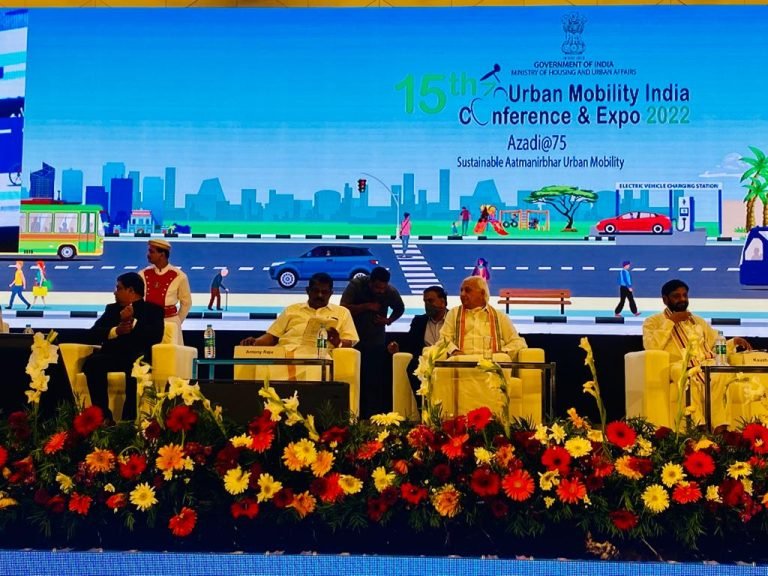
KOCHI (Metro Rail News): The 15th edition of the Urban Mobility India (UMI) Conference and Expo 2022 concluded in Kochi on 6th November.Speaking on occasion, Union Minister of State for Housing & Urban Affairs, Shri Kaushal Kishore, said that new suggestions and thoughts were required to carry the urban transport sector forward. Expressing satisfaction at the Programme being organized in Kochi, he said that the city was poised to make advancements in the Sector with the coming of the Water Metro and other initiatives.The Minister opined that for the country to develop, it was essential that cities developed. This, in turn, would ensure that development spread to rural areas. Elucidating on the government’s initiatives on the occasion of ‘Azadi Ka Amrit Mahotsav’ and ‘Amrit Kaal’, the Minister said that the country was on the path to becoming ‘Ek Bharat, Shreshta Bharat, Swastha Bharat’.Shri Kaushal Kishore said that to achieve the Prime Minister’s vision of becoming a developed country by 2047, it was essential that all sectors, including agriculture, health and technology, developed. He hoped that the Conference had enabled discussions and interactions that had led to not only the sharing of innovations and experiences but also the generation of new ideas and knowledge. This would enable the country to become Aatma Nirbhar. He urged that all citizens be responsible for becoming part of the process to become an Aatma Nirbhar, a developed country, by 2047.Kerala Governor Shri Arif Mohammed Khan also addressed the Valedictory Session. He said the country’s culture was remarkable because its thought leaders never advocated for ‘exclusiveness’. But, on the other hand, they suggested that extraordinary brilliance, power, energy, beauty and capability anywhere be viewed as a manifestation of the splendour of the Supreme Spirit. This heritage encouraged us to consider wisdom, knowledge, science and monuments of the mind as the common heritage of all humanity. He, therefore, suggested that we must learn and share.The Governor said that mobility was changing exponentially and would continue to do so at a much faster speed in the future. He suggested that for sustainable urban mobility to become a part of the development process, quick decision-making and successful implementation were essential. He called for the engagement of all stakeholders to ensure this. Expressing deep satisfaction at the Conference being organized in Kochi, he hoped that it had led to sharing experiences and the generation of new ideas which would help create sustainable Aatma Nirbhar Urban Mobility. The Governor reiterated that inclusivity was the key to ensuring mobility led to sustainable urban transport. He urged that one should see the welfare of others in one’s welfare. UMI 2023 – Delhi was jointly launched by Shri Arif Mohammed Khan and Shri Kaushal Kishore on the theme – ‘Integrated and Resilient Urban Transport’. The Excellence in Urban Transport Awards were also distributed at the function.Kerala Transport Minister, Shri Antony Raju; OSD (Urban Transport), Union Ministry of Housing & Urban Affairs, Shri Jaideep; Kerala Chief Secretary, Dr V. P. Joy and Senior Officials of the Central-State governments attended the closing ceremony.Nine Sessions were held on Day 3 of the Conference on the theme – ‘Future Mobility – Safe, Affordable, Accessible and Efficient. The Plenary Session on ‘Urban Mobility-Vision 2047’ was led by Shri Jaideep and Shri Loknath Behera, MD, Kochi Metro Rail Ltd (KMRL).Senior officials from the central and state Governments, policymakers, managing directors of metro rail companies, chief executives of transport undertakings, international experts, professionals, academicians and students participated in the three-day Event.The Conference was organized by the Ministry of Housing and Urban Affairs in collaboration with the Govt. of Kerala on the theme – ‘Azadi@75–Sustainable Aatma Nirbhar Urban Mobility.
UMI 2023 – Delhi was jointly launched by Shri Arif Mohammed Khan and Shri Kaushal Kishore on the theme – ‘Integrated and Resilient Urban Transport’. The Excellence in Urban Transport Awards were also distributed at the function.Kerala Transport Minister, Shri Antony Raju; OSD (Urban Transport), Union Ministry of Housing & Urban Affairs, Shri Jaideep; Kerala Chief Secretary, Dr V. P. Joy and Senior Officials of the Central-State governments attended the closing ceremony.Nine Sessions were held on Day 3 of the Conference on the theme – ‘Future Mobility – Safe, Affordable, Accessible and Efficient. The Plenary Session on ‘Urban Mobility-Vision 2047’ was led by Shri Jaideep and Shri Loknath Behera, MD, Kochi Metro Rail Ltd (KMRL).Senior officials from the central and state Governments, policymakers, managing directors of metro rail companies, chief executives of transport undertakings, international experts, professionals, academicians and students participated in the three-day Event.The Conference was organized by the Ministry of Housing and Urban Affairs in collaboration with the Govt. of Kerala on the theme – ‘Azadi@75–Sustainable Aatma Nirbhar Urban Mobility.NCRTC floats tender to install travelators at Sarai Kale Khan RRTS station
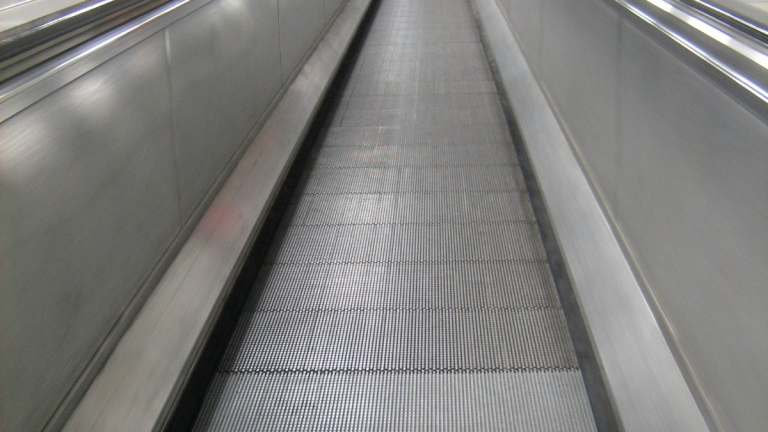
NEW DELHI (Metro Rail News): The National Capital Region Transport Corporation (NCRTC) has decided to install travelators on a walkway connecting the Sarai Kale Khan RRTS station with the Hazrat Nizamuddin railway station. The Sarai Kale Khan RRTS station will include amenities similar to an airport.The NCRTC between Delhi and Meerut is implementing India’s first Regional Rapid Transit System (RRTS).A senior official said Sarai Kale Khan is one of the major stations on the 82-km-long corridor.
The 280-meter-long foot overbridge will have six travelators installed. In addition, the NCRTC has floated bids enabling seamless multi-modal integration between Sarai Kale Khan and Hazrat Nizamuddin stations.The official of the NCRTC, which has put up a stall at the 15th Urban Mobility India Conference & Expo, said that travelators are usually installed for a distance of 500 metres or more where the commuters have to walk for a longer distance.“Though the distance between Sarai Kale Khan RRTS station and Hazrat Nizamuddin railway station is around 300 metres, the passengers travelling to and from Hazrat Nizamuddin station are likely to travel with baggage. “Hence, a travelator was considered important along with the foot overbridge. It will allow passengers to interchange trains without exiting the stations,” the official told PTI.According to him, it will benefit commuters carrying heavy bags to and from Hazrat Nizamuddin station and the elderly, children, women, persons with special needs, and those travelling in groups.Airports typically have travelators or moving walkways designed for passengers’ convenience.“It creates overcrowding and hinders the movement of traffic and a jam-like condition arises almost daily around the public transport hub. Pedestrians and commuters have to struggle with overcrowding and haywire traffic,” the NCRTC official said.The 82-km Delhi-Ghaziabad-Meerut RRTS is expected to be fully operational by 2025. Its 17-km Duhai-Sahibabad portion in Ghaziabad, Uttar Pradesh, is anticipated to be functional at the beginning of 2023.The Sarai Kale Khan RRTS station is strategically planned and has multi-modal integration at its heart. It is near the Delhi Metro Station, the Hazrat Nizamuddin station of Indian Railways, and the Vir Haqiqat Rai Inter State Bus Terminal (ISBT).
New transport options for City of Oranges and Covai
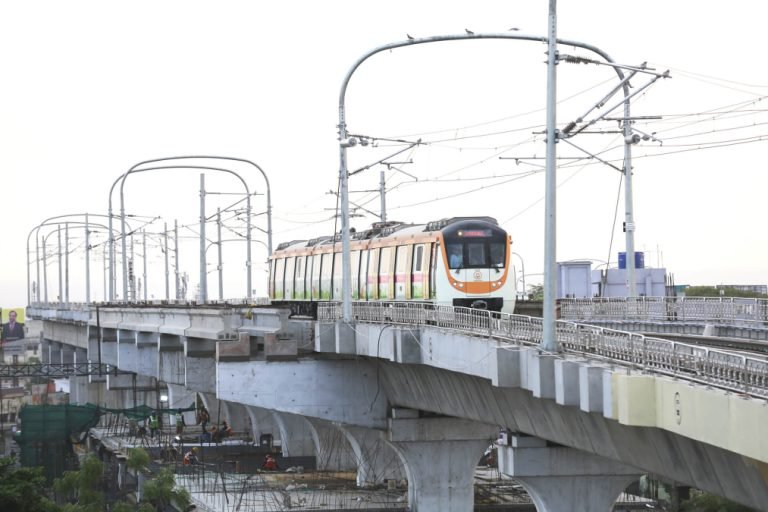
IntroductionNagpur is the third largest city and the winter capital of the Indian state of Maharashtra. It is the 14th largest city in India by population; according to an Oxford Economics report, Nagpur is projected to be the fifth fastest growing city in the world from 2019 to 2035, with an average growth of 8.41%. It has been proposed as one of the Smart Cities in Maharashtra and is one of the top ten cities in India in Smart City Project execution.In the latest rankings of 100 developing smart cities given by the Union Ministry of Urban Development, Nagpur stood first in Maharashtra and second in India. Known as the ‘Orange City’, Nagpur has officially become the greenest, safest and most technologically developed city in Maharashtra.Nagpur is the seat of the annual winter session of the Maharashtra state assembly. It is a major commercial and political centre of the Vidarbha region of Maharashtra.In addition, the city derives unique importance from being an important location for the Dalit Buddhist movement and the headquarters for the Hindu organization RSS. Nagpur is also known for the Deekshabhoomi, graded as an A-class tourism and pilgrimage site, the largest hollow stupa among all the Buddhist stupas in the world. The regional branch of the Bombay High Court is also situated within the city.According to a survey by ABP News-Ipsos, Nagpur was identified as the best city in India, topping in livability, greenery, public transport, and health care indices in 2013. The city was adjudged the 20th cleanest city in India and the top mover in the western zone as per Swachh Sarvekshan 2016. It was awarded the best city for innovation and best practices in Swachh Sarvekshan 2018. It was also declared open defecation free in January 2018 under Swachh Bharat Mission. It is also one of the safest cities for women in India. The city also ranked 25th in the Ease of Living index 2020 among 111 cities in India. It was ranked the 8th most competitive city in the country by the Institute for Competitiveness for 2017.It is famous for Nagpur oranges and is sometimes known as Orange City for being a major trade centre of oranges cultivated in large part of the region. It is also called the Tiger Capital of India or the Tiger Gateway of India, as many tiger reserves are located in and around the city and also hosts the regional office of the National Tiger Conservation Authority. The city was founded in 1702 by the Gond King Bakht Buland Shah of Deogarh and later became a part of the Maratha Empire under the royal Bhonsale dynasty. The British East India Company took over Nagpur in the 19th century and made it the capital of the Central Provinces and Berar. After the first re-organisation of states, the city lost its status as the capital. Following the informal Nagpur Pact between political leaders, it was made the second capital of Maharashtra. A Growing and emerging city needing a modern transport systemNagpur is an emerging metropolis. Nagpur’s nominal GDP was estimated to be around Rs. 1,406,860 million in 2019–20, making it the most important economic centre in central India. Nagpur district has a per-capita GDP of Rs. 270,617 as of the 2019-20 financial year, the highest in central India. In 2004, it was ranked the fastest-growing city in India regarding the number of households with an annual income of Rs. 10 million or more. Nagpur has been the main centre of commerce in the region of Vidarbha since its early days and is an important trading location. Although Nagpur’s economic importance gradually declined relative to Mumbai and Pune after merging Vidarbha into Maharashtra because of a period of neglect by the state government, the city’s economy recovered.The city is essential for the banking sector as it hosts the regional office of the Reserve Bank of India, which was opened on 10 September 1956. The Reserve Bank of India has two branches in Nagpur, one of which houses India’s total gold assets. Sitabuldi market in central Nagpur, known as the city’s heart, is the primary commercial market area. Nagpur is home to ice-cream manufacturer Dinshaws, Indian dry food manufacturer Haldiram’s, Indian ready-to-cook food manufacturer Actchawa, spice manufacturer Suruchi International, Ayurvedic products company Vicco and Baidyanath and Explosives & Ammunition company Solar Industries.For centuries, Nagpur has been famous for its orange gardens in the country, hence the name ‘Orange City. Orange cultivation has been expanding and is the biggest marketplace for oranges in the country. The Maharashtra Agro-Industrial Development Corporation has its multi-fruit processing division called Nagpur Orange Grower’s Association (NOGA) which has an installed capacity of 4,950 MT of fruits per annum. Orange is also exported to various regions in the country and other countries. Nagpur is also famous for the cotton and silk weaved by its large Koshti population of handloom weavers, which are around 5,000.Nagpur and the Vidarbha region have a significant power sector compared to the rest of Maharashtra. Koradi Thermal Power Station and Khaparkheda Thermal Power Station are two major thermal power stations located near Nagpur and operated by MSPGCL. In addition, NTPC has a super thermal power plant called Mauda Super Thermal Power Station in Mauda, around 40 km from Nagpur and Vidarbha Industries Power Limited (a subsidiary of Reliance Power) is situated at Butibori.The Multi-modal International Hub Airport at Nagpur (MIHAN) is an ongoing project for the Dr Babasaheb Ambedkar International Airport, Nagpur. The government of Maharashtra formed a particular purpose entity, Maharashtra Airport Development Company, to develop MIHAN. Nagpur MetroThe state government of Maharashtra announced the Nagpur Metro project with the expenses of INR 4,400 Cr and 3,800 Cr for its first phase, which consists of two corridors – a north-south corridor and an east-west corridor of 39.4 km.The site inspection began in March 2012 with initiatives from Nagpur Improvement Trust. An SPV executes the project called Maharashtra Metro Rail Corporation Limited (erstwhile Nagpur Metro Rail Corporation Ltd.). In July 2015, the project was approved by the government of Maharashtra. Prime Minister Narendra Modi inaugurated operations on Nagpur Metro on 7 March 2019 via video conferencing along with Maharashtra Chief Minister Devendra Fadnavis and Union Cabinet Minister Nitin Gadkari. On 15 August 2022, Nagpur Metro recorded a single-day ridership of 90,758 passengers. Nagpur Broad-Gauge Metro Urban Mass Transit Company prepared a report. Four routes of approximately 270 km were proposed at the cost of Rs. 418 crores. Three coach trains will run on Indian Railways’ broad gauge tracks at a maximum operating speed of 160 km/h. The passenger capacity of each train is 885. The final detailed project report was submitted in August 2019. The expected ridership of the Metro in 2021 on the various routes is Wardha 5,669, Narkhed 2,616, Ramtek 3,929 and Bhandara Road 2,556. The total ridership is 14,700. The maximum design speed will be 200 kilometres per hour, and the operating speed will be 160 km/hr. The Government of Maharashtra cleared the broad gauge metro proposal in March 2019. The Railway Board Ministry of Railways under the Government of India approved the DPR in November 2019. Nagpur broad-gauge Metro is a commuter rail project planned for the city of Nagpur and extending up to adjacent areas of Wardha, Yavatmal, Narkhed, Ramtek, Bhandara, Amravati, Wada and Chhindwara (also Nagbhid shortly) in Vidarbha region of Maharashtra. Maharashtra Metro Rail Corporation Limited will execute this project. The project is estimated to cost INR 418 Cr and consists of four routes, each originating from Nagpur and terminating at Narkhed, Ramtek, Wardha and Bhandara. Project Details & Routes The proposed routes of the Nagpur Commuter Rail Project are as under”
- Nagpur – Wardha – Yavatmal
- Nagpur – Wardha – Amravati
- Nagpur – Wardha – Chandrapur
- Nagpur – Bhandara
- Nagpur – Ramtek
- Nagpur – Narkhed
- Coimbatore Jn – Mettupalayam
- Coimbatore Jn. – Pollachi Jn.
- Coimbatore Jn – Tiruppur
- Coimbatore Jn – Palakkad Jn
- Coimbatore Jn – Irugur Jn – Podanur In – Coimbatore Jn (Proposed for Both Metro and Mainline Routes) (circular line as well as an urban line).
| Coimbatore Broad Gauge Metro & Suburban Railway | |
| Overview | |
| Other Name(s) | Koval Suburban Rail |
| Status | Planned |
| Owner | Indian Railways |
| Locale | Coimbatore, Tamil Nadu |
| Termini | Coimbatore Junction |
| Connecting Lines | Mettupalayam, Pollachi, Palakkad, Tiruppur, and Kovai circular lines. |
| Service | |
| Type | Suburban Rail |
| Services | 05 Routes |
| Operator(s) | Southern Railway |
| Depot(s) | Coimbatore |
| Technical | |
| Number of Tracks | Single, Double |
| Track Gauge | 5 ft 06 in (1,676 mm) Broad Gauge |
| Old Gauge | Metre Gauge |
| Electrification | 25kV, 50 Hz, AC through overhead catenary |
| Operating Speed | 80 Kmph |
| Signalling | Railway Signalling |
Gorakhpur Metrolite: A modern transport system for a fast-developing City
Gorakhpur: An Introduction
Gorakhpur is a city in the Indian state of Uttar Pradesh, along the banks of the Rapti river in the Purvanchal region. It is situated 270 kilometres east of the state capital Lucknow. It is the administrative headquarters of Gorakhpur district, North Eastern Railway Zone and Gorakhpur division. The city is home to the Gorakhnath Math, a Gorakhnath temple. The city also has had an Indian Air Force station since 1963. Gita Press, the world’s largest publisher of Hindu religious texts like Ramayana and Mahabharat, is also located in Gorakhpur. The name ‘Gorakhpur’ comes from the Sanskrit Gorakshapuram, which means abode of Gorakhnath, a renowned ascetic who was a prominent saint of the Nath Sampradaya.As of the 2011 Indian Census, Gorakhpur had a total population of 673,446, of which 353,907 were males and 319,539 were females. Gorakhpur had 112,237 households in 2011. According to a 2020 report, 31 villages have been incorporated into the municipal corporation, increasing the population to over 1 million. The city area has also increased from 145.5 km2 in 2011 to 226.6 km2.The state government also declared Gorakhpur as a metropolis on 22 November 2021. Apart from Gorakhpur Municipal Corporation, the government has declared three Nagar panchayats and eight development blocks as a metropolitan areas. For this, the Urban Development Department has notified the city. According to the order issued by the Additional Chief Secretary, Urban Development, now in Gorakhpur Metropolitan Region, Municipal Corporation, Nagar Panchayat Pipraich, Nagar Panchayat PPganj, Nagar Panchayat Mundra Bazar, Chargawa, Khorabar, Pipraich, Sardar Nagar, Piprauli, Jungle Kaudiya, Campierganj and The entire area of Bhathat development block has been covered. After this, the population of Gorakhpur metropolis will be around 25 lakhs. Transport System in the CityGorakhpur is connected through a rail network and Gorakhpur railway station. Until March 2021, it had the world’s most extended platform of 1366 meters. Hubli Junction railway station is now the world’s most extended platform at 1505 meters. In February 2020, 100 flowering pots with support structures were made and installed on the hydrant pipe at platform No.2 to increase the plantation and natural cover, using the local resources of the Gorakhpur coaching depot.The station offers Class A-1 railway station facilities. On 6 October 2013, Gorakhpur had the world’s Longest Railway platform, after the inauguration of the remodelled Gorakhpur Yard, with a stretch of around 1,355.40 metres. Gorakhpur is the headquarters of North Eastern Railways. An Air Force Station of the Indian Air Force was established in Gorakhpur in 1963, named Mahayogi Gorakhnath Airport, and extended for public air transport. MetroThe Gorakhpur Metrolite is a light, rapid transit system proposed for the city of Gorakhpur, Uttar Pradesh, India. The network will consist of 2 elevated lines serving 27 stations with a total length of 27.41 kilometres. The project is estimated to cost Rs. 4,672 crores. It is expected to be completed by 2024.The Government of Uttar Pradesh appointed the Uttar Pradesh Metro Rail Corporation to build a metro system in Gorakhpur in 2017. Rail India Technical and Economic Service prepared the feasibility study and the detailed project report for the project and submitted it to the corporation in March 2019. The state cabinet approved the report on 9 October 2020.The Public Investment Board approved the project’s first phase on 22 November 2021, which is expected to be completed by 2024. Project Details & Key FigureOperational : 0 KmUnder Construction : 0 KmApproved : 0 KmProposed: 27.41 KmEstimated Project Cost: Rs. 4,672 Crore Routes Line-1 : Shyam Nagar – Sooba Bazar (16.95 Km)- Type: Elevated
- Depot: Sooba Bazar
- Stations (16): Shyam Nagar, Bargadwa, Shastri Nagar, Nathmalpur, Gorakhnath Mandir, Hazaripur, Dharmshala, Gorakhpur Railway Station, University, Mohaddipur, Ramgarh Lake, AIIMS, Malviya Nagar, MMM Engineering College, Divya Nagar, Sooba Bazar
- Type: Elevated
- Depot: Mugalaha
- Stations (11) : Gulariha, BRD Medical College, Mugalaha, Khanjanchi Bazar, Basharatpur, Ashok Nagar, Vishnu Nagar, Asuran Chowk, Dharamshala, Gol Ghar, Kachehri Chauraha
The Greater Nashik Metro: Plan to ease traffic with a modern transport system
Abstract
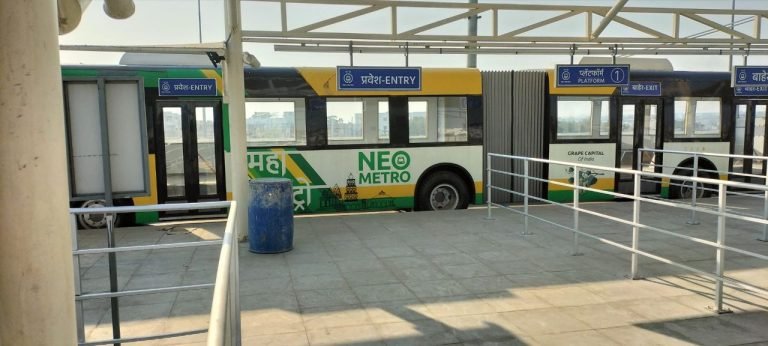
Metro Neo at Nashik is likely to be the first in India. It is designed to cater to the needs of smaller cities and costs much less than heavy metro rail systems, which are prevalent in many cities in India. The project will comprise a mass transit system along two corridors to provide comfortable, safe, reliable, and fast connectivity between important activity centres and transit hubs; and meet the rising transport demand in the city. The metro neo will have articulated or standard electric coaches with rubber tires and an overhead traction system. It will run on an entirely elevated corridor with a curb guidance system. These electric coaches will also be capable of running on the proposed feeder routes using built-in batteries, which will allow them to run without overhead traction for about 20 km. The batteries will be charged while the trains operate with overhead traction eliminating any need for separate charging stations. Metro Neo for Nashik Metro Neo is an innovative transport system that will be implemented in India in Nasik by Maha Metro for the first time. The detailed project report (DPR) prepared by Maha Metro is awaiting clearance from Union Cabinet. It is seamless, fast, reliable and cost-effective. It will provide a travel experience of international standards at par with Metro systems. It is an articulated / bi-articulated trolley bus system with overhead electric traction. The buses will be air-conditioned with an automatic door closing system, level boarding, comfortable seats, passenger announcement and an information system with an electronic display.It is a state-of-art, comfortable, Energy efficient, minimal noise pollution and environment-friendly system. It has been designed to negotiate sharp curves and steep gradients with minimal rehabilitation requirements. The system can be upgraded to Light Metro with incremental cost input per traffic demand. It is an innovative and pioneering project in India and will be the first MRTS to run on rubber tyres. The government of India 2019 constituted a committee, under the chairmanship of Dr Brijesh Dixit, MD of Maha Metro, for the standardization of detailed specifications for a Rubber-Tyred Mass Rapid Transportation System for implementation across India. AC electric coaches (carrying capacity of180/240 passengers) powered by over-head 600-750 V DC power supply will ply in Nasik. Metro Neo for WarangalKakatiya Urban Development Authority (KUDA) had asked Maha Metro to prepare the DPR of Warangal Metro. Maha Metro recommended using Metro Neo technology and prepared the DPR accordingly. As a result, it saved Rs 2,000 crore of KUDA and made Warangal Metro feasible. KUDA has submitted the report to Telangana Government, which will forward it to the Central Government after vetting it. Project DetailsNashik Metro, also known as Metro Neo, with two electric trolleybus lines totalling 32 km, is a bus rapid transit system proposed to be built in Nashik, Maharashtra, jointly by the Maharashtra Metro Rail Corporation Limited (Maha-Metro), City and Industrial Development Corporation (CIDCO) and Maharashtra Industrial Development Corporation (MIDC).Electric bus coaches on this unique system will be 25 meters long, run on rubber wheels and have a maximum capacity to carry 250 passengers simultaneously. Overall system capacity is estimated at 15000 PPHPD (Passengers Per Hour Per Direction). Coaches will draw power from an overhead electrical (OHE) system on the elevated portions and use battery power while operating on the at-grade (road) sections. Nashik Metro Phase 1’s detailed project report (DPR) was prepared by RITES Ltd. and approved by Maharashtra’s cabinet in August 2019. However, its approval is currently pending by the Central Government. The state government hopes to receive a loan for its development from the European Investment Bank (EIB).Specifications
- Operational : 0 km
- Under Construction : 0 km
- Approved : 0 km
- Proposed: 32 km
- Estimated Project Cost: Rs. 2100.60 crore
- Deadline: Not Announced
- Length: 10 km
- Type: Elevated & At-Grade
- Depot: Satpur (7.5 acres)
- Number of Stations: 10
- Station Names: Gangapur, Jaipur, Ganpat Nagar, Kale Nagar, Jehan Circle, Thatte Nagar, Shivaji Nagar, Ashok Stambh Panchavati, CBS, Mumbai Naka.
- Length: 10 km
- Type: Elevated & At-Grade
- Depots: 2 along Nashik Road (5.70 & 4.0 acres)
- Number of Stations: 20
- Station Names: Gangapur, Dhruv Nagar, Shramik Nagar, Mahindra, Shaneshwar Nagar, Trimbak Rd, Satpur Colony, MIDC, ABB Circle, Parijat Nagar, MICO Circle, CBS, Sharda Circle, Dwarka Circle, Gayatri Nagar, Ambedkar Nagar, Rupnagar, Nehru Nagar, Datta Mandir, Nashik Road Railway Station
- Two corridors are planned initially. Corridor one, Gangapur to Mumbai Naka, length 10 KM and ten stations (Gangapur, Jaipur, Ganpat Nagar, Kale Nagar, Jehan Circle, Thatte Nagar, Shivaji Nagar, Panchavati, CBS, Mumbai Naka). Corridor two, Gangapur to Nashik Road, length 22 KM and 15 stations (DHRUV Nagar, Shramik Nagar, Mahindra, Shaneshwar Nagar, Satpur Colony, MIDC, ABB Circle, Parijat Nagar, MICO circle, CBS, Sharda Circle, Dwarka Circle, Gayatri Nagar, Samta Nagar, Gandhi Nagar, Nehru Nagar, Datta Mandir, Nashik Road). CBS will be an interchange station where both corridors meet.
- There will be two feeder corridors. Feeder corridor one will run between Satpur colony – Garware – Mumbai Naka. Feeder corridor two will run between Nashik Road – Nandur Naka – Shivaji Nagar.
- Electric Bus Coaches will be 25 /18 meters long, and the carrying capacity is 200/300 passengers. The buses will have rubber-tyre and draw power from the overhead electric wire having 600-750 V DC supply. The buses will take power from overhead electric wire through a railway/tram-like system.
- The buses will be air-conditioned with an automatic door-closing system, level boarding, comfortable seats, a passenger announcement system, and a passenger information system with an electronic display. In addition, the stations will have a staircase, lift and escalators with passenger information displays. The station entry and exit will be provided on both sides of the road to avoid road crossing by passengers.
- Feeder Bus (12 m) battery-powered will run on the existing road on the two feeder routes i.e
- Mumbai Nakka via Garware to Satpur Colony (12 km) and
- Nashik station to Shivajinagar via Nandur Nakka (12km). The feeder bus batteries will get charged while operating on the main corridors, enabling seamless travel with broader coverage. No separate charging facility will be required.
- The metro-Neo system is a unique concept adopted for the 1st time in this country. It is comfortable, rapid, Energy efficient, less noisy (compared to diesel buses), and environment friendly. The capacity of the main corridors will be 15000 PHPDT (Peak Hour Peak Direction Traffic). The system has been designed for headway (peak hour) 2 minutes, i.e. a new service after every two minutes.
- The total cost of the project is Rs 2100.6 crore. Govt of Maharashtra, CIDCO and NMC share (Rs 552.19 cr) and Govt of India share (Rs 307.06+80.5 cr), total govt share Rs 939.3 cr. And remaining 1161.3 will be a loan component.
- The proposed rapid transit system in the Nashik Metropolitan Region (the greater Nashik Metro or Metro Neo) is expected to reduce traffic congestion and provide direct connectivity to Nashik city from its suburbs. The Greater Nashik Metro will connect suburbs of Nashik city like Deolali, Nashik Road, Rupnagar, Nashik Airport, Sinnar, Igatpuri, Gangapur Road, Trimbakeshwar, Dindori, Bhagur, Niphad, Adgaon, Ghoti Budruk and Girnare.
Light Metro for the Evergreen City of India
Thiruvananthapuram (Trivandrum): Brief Introduction
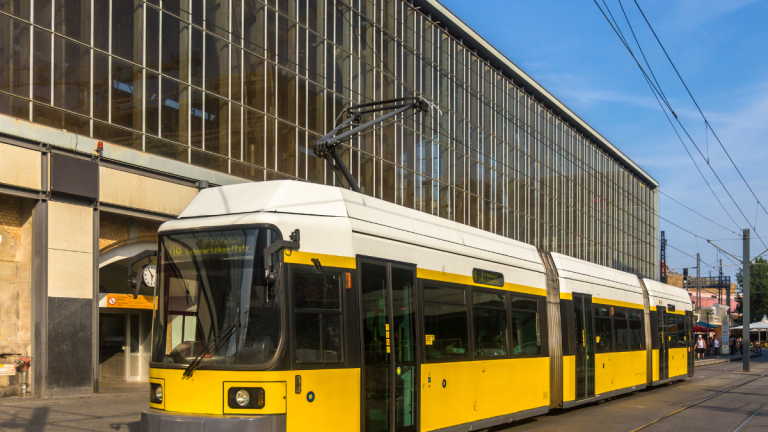
KERALA (Metro Rail News): Thiruvananthapuram, also known by its former name Trivandrum, is the capital of the Indian state of Kerala. It is the most populous city in Kerala, with a population of 957,730 as of 2011. The encompassing urban agglomeration population is around 1.68 million. Located on the west coast of India near the extreme south of the mainland, Thiruvananthapuram is a central information technology hub in Kerala. It contributes 55% of the state’s software exports as of 2016. Referred to by Mahatma Gandhi as the ‘Evergreen city of India’, the city is characterised by its undulating terrain of low coastal hills.The present regions that constitute Thiruvananthapuram were ruled by the Ays, who were feudatories of the Chera dynasty. In the 12th century, it was conquered by the Kingdom of Venad. In the 18th century, king Marthanda Varma expanded the territory, founded the princely state of Travancore, and made Thiruvananthapuram the capital. Travancore became the most dominant state in Kerala by defeating the powerful Zamorin of Kozhikode in the battle of Purakkad in 1755. Following India’s independence in 1947, Thiruvananthapuram became the capital of the Travancore-Cochin state and remained so until the new Indian state of Kerala was formed in 1956.Thiruvananthapuram is a notable academic and research hub and home to the University of Kerala, APJ Abdul Kalam Technological University, the regional headquarters of Indira Gandhi National Open University, and many other schools and colleges. Thiruvananthapuram is also home to research centres such as the National Institute for Interdisciplinary Science and Technology, the Indian Space Research Organisation’s Vikram Sarabhai Space Centre, the Indian Institute of Space Science and Technology, National Centre for Earth Science Studies and a campus of the Indian Institutes of Science Education and Research. In addition, the city is home to media institutions like Toonz India Ltd and Tata Elxsi Ltd and Chitranjali Film Studio, one of the first film studios in Malayalam Cinema, and Kinfra Film and Video Park at Kazhakoottom, which is India’s first Infotainment industrial park.Being India’s largest city in the deep south, it is strategically prominent. It hosts the Southern Air Command headquarters of the Indian Air Force, the Thumba Equatorial Rocket Launching Station and the upcoming Vizhinjam International Seaport. Thiruvananthapuram is a major tourist centre known for the Padmanabhaswamy Temple, the beaches of Kovalam and Varkala, the backwaters of Poovar and Anchuthengu and its Western Ghats tracts of Ponmudi and the Agastya Mala. In 2012, Thiruvananthapuram was named the best Kerala city to live in by a field survey conducted by The Times of India. In 2013, the city was ranked the fifteenth-best city in India in a survey conducted by India Today. Thiruvananthapuram was ranked the best Indian city for two consecutive years, 2015 and 2016, according to the Annual Survey of India’s City-Systems (ASICS) conducted by the Janaagraha Centre for Citizenship and Democracy. The city was also selected as the best-governed city in India in a survey conducted by Janaagraha Centre for citizenship and democracy in 2017.TourismThiruvananthapuram is a central tourist hub in India. Kovalam and Varkala are popular beach towns near the city. Other vital beaches include Poovar, Shankumugham Beach, Azhimala Beach, Vizhinjam Beach and Veli Beach. The Padmanabhaswamy Temple at the heart of the city is known as the wealthiest place of worship in the world. Other places of interest include Agasthyamala rain forests, Neyyar Wildlife Sanctuary, Kallar, Braemore, Ponmudi hills, Poovar, Anchuthengu backwaters, Varkala Cliffs and Kappil-Edava lakes.The city is also known for its unique style of architecture involving Kerala Architecture with British and Dravidian influences. Napier museum, Thiruvanathapuram Zoo, Padmanabha Swamy temple, Kuthira Malika palace, Kilimanoor palace and The Thiruvananthapuram Golf Club heritage building are examples of this. The leading museums include Kerala Science and Technology Museum (with its attached Priyadarsini Planetarium), Napier Museum, Kerala Soil Museum and Koyikkal Palace Museum. Agasthyamala Biosphere Reserve is listed in UNESCO’s World Network of Biosphere Reserves. Need for a modern transport System for an ancient and essential cityThiruvananthapuram’s economy comprises Information Technology, education, plantations, aerospace, commerce and tourism. Thiruvananthapuram district contributes 10.31% of the state’s GDP. With an economic growth rate of 13.83%, Thiruvananthapuram is the fastest-growing district in Kerala. Thiruvananthapuram was listed as one of the top ten cities in India on the Vibrancy and Consumption Index in a study conducted by global financial services firm Morgan Stanley. State- and central-government employees comprise a large percentage of the city’s workforce. Thiruvananthapuram is a major aerospace research centre in India. The Vikram Sarabhai Space Centre, the most important and leading centre of ISRO and several space-related, state-owned ISRO centres such as Thumba Equatorial Rocket Launching Station, Liquid Propulsion Systems Centre, and ISRO Inertial Systems Unit are based in Thiruvananthapuram. The BrahMos Aerospace Trivandrum Limited is one of India’s leading missile integration and defence production units. Other enterprises include Travancore Titanium Products, Kerala Automobiles Limited, MILMA, English Indian Clays, Keltron, Trivandrum Rubber Works and HLL Lifecare Limited.Thiruvananthapuram is a central IT and ITES hub in India. The city contributes around 55% of Kerala’s total software exports. Thiruvananthapuram houses major multinational Technology companies like Oracle Corporation, Nissan, Allianz Technology, Envestnet, Tata Consultancy Services, Infosys, Toonz Animation India, UST Global, Ernst & Young, Flytxt, Navigant, Tata Elxsi, McKinsey & Company, RR Donnelly and Quest Global. Technopark is the largest information-technology park in India in terms of built-up area. It is Kerala’s most significant employment base campus, with 52,000 IT/ITES professionals and about 400 companies. Other IT, media and industrial campuses include Kinfra Film and Video Park, Kinfra Apparel Park, B-HUB and Chithranjali Film Complex. In addition, several new IT, biotechnology and industrial campuses like Technocity and Bio 360 Life sciences park are under construction.Tourism is an important economic sector. The presence of natural attractions like beaches, backwaters, hills, and plantations and attractions like heritage, history, Ayurveda, medical tourism and knowledge centres attract many tourists. The city experienced a surge of investment in the real estate, infrastructure and retail sectors in 2016–17. However, port-related activity is low mainly due to the underdevelopment of ports. Vizhinjam International Seaport is a transhipment port under construction. Vizhinjam port’s location is close to the international shipping routes and is just 10–12 nautical miles from the busy Persian Gulf-Malacca shipping lane. The port also has a natural depth of 18 to 20 metres which can accommodate substantial container ships. The berths at Vizhinjam port are designed to cater to vessels of up to 24,000 TEU. Mass Rapid Transit SystemThiruvananthapuram’s first attempt to build a rapid transit system for the city failed when its proposal to build a metro rail system was rejected by the Delhi Metro Rail Corporation (DMRC) in the 2000s. The Government of Kerala then entrusted the National Transportation Planning and Research Centre (NATPAC), an autonomous research body under the State Government, to conduct the feasibility study of the proposal to build a monorail system in Thiruvananthapuram. The feasibility study was conducted by a core team comprising five scientists of NATPAC and various survey teams. The study’s principal components were topographic studies, identification of stations and surveys.The state government initially asked the transport department to prepare a detailed project report (DPR). However, the DMRC was later entrusted with the task. DMRC principal advisor E. Sreedharan submitted the DPR to Chief Minister Oommen Chandy on 11 December 2012. A particular purpose vehicle (SPV) was created in October 2012. The Thiruvananthapuram Monorail project was assigned to the KMCL on 26 November 2012. Before that, the government had handed over the Kozhikode Monorail project to the KMCL. On 12 June 2013, the state cabinet gave clearance for an agreement to be signed between KMCL and DMRC. The DMRC will receive 3.25% of the Rs. 55.81 billion (Rs. 35.90 billion for Thiruvananthapuram and Rs. 19.91 billion for Kozhikode) in general consultant fees. The agreement was signed on 19 June 2013.Global tenders were floated for the Thiruvananthapuram Monorail. The deadline for technical bids was extended from 1 October 2013 to 15 October. However, a consortium led by Bombardier Transportation was the only firm that expressed an interest before the deadline. Pre-bid queries had also been made by Japanese firm Hitachi, Malaysian firm Scomi, and firms from the United Kingdom, South Korea, and China. The tender for the proposed project only received one bid, so a second tender had to be issued. The deadline for bids was extended again to 15 April. Bombardier Transportation, Hitachi, Afcons, Scomi, Larsen and Toubro expressed interest in the second round of tender submissions. A pre-bid meeting was held in New Delhi on 20 February 2014. Bidding on the Kozhikode and Thiruvananthapuram projects was delayed by the model code of conduct coming into effect before the 2014 Lok Sabha elections.On 28 August 2014, the State Government decided to use the Metro, instead of Monorail, in Thiruvananthapuram and Kozhikode, mainly due to cost overruns. Though slightly costlier, Metro has several advantages, such as easy capacity raising, DMRC’s expertise in the field and more companies who can bid for the project.Metro Route & PlanThe Thiruvananthapuram line will start from Technocity and terminate at Karamana, covering a distance of 22.537 km with 19 stations along the old NH 47. Slight accommodations were made for the proposed flyovers at Kazhakuttam, Sreekariyam and Ulloor. In addition, extraordinary spans are proposed where the line crosses the railway line at Railway Km 221/6-8. The car depot is located on 12.5 hectares of Government land near the CRPF Camp at Pallipuram.The project will be built in 3 phases. Stations would be located at Technocity, Pallippuram, Kaniyapuram, Kazhakootam Junction, Karyavattom, Gurumandiram, Pangappara, Sreekariyam, Pongumoodu, Ulloor, Kesavadasapuram, Pattom, Plamood, Palayam, Secretariat, Thampanoor, Killipalam, and Karamana. The line will be built in three phases.| Route | Terminals | Stations | Opening Date | |
| Route 1 | Technocity | Kariavattom | TBA | |
| Route 2 | Kesavadasapuram | Karamana | ||
| Route 3 | Kariavattom | Kesavadasapuram | ||
| Total | 19 | 2025 | ||
 Project CostThe cost of the project, based on April 2012 prices, was Rs. 27.0256 billion, excluding taxes of Rs. 4.75 billion. The cost to construct each kilometre of the Metro was estimated at Rs. 1617.1 million. The Design, Build-Operate-Transfer (DBOT) mode was proposed. The State and Union governments were to each pay 20% of the cost, and the rest was to be paid by other investors, such as banks.In the 2012 State Budget, finance minister K. M. Mani allotted Rs. 200 million for the Thiruvananthapuram project. The project will partly be financed by a 5% state government surcharge on petrol and diesel sales. The surcharge is expected to bring in Rs. 2.50 billion per year. The operation and maintenance costs are divided into three major parts – staff costs, maintenance costs which include expenditure towards upkeep and maintenance of the system and consumables, and energy costs. In 2015, the cost for the Technocity – Karamana section was revised to Rs. 4,219 crores. Monorail ProposalsRepresentatives of Hyundai Rotem proposed in 2012 to use Maglev technology for setting up a mass rapid transport system in the city. However, on 28 August 2014, the state government decided to build a conventional rail metro rather than a monorail, as with then under-construction Kochi Metro, in both Thiruvananthapuram and Kozhikode, mainly due to the prohibitive costs cited by prospective manufacturers. Personal Rapid TransitINKEL ltd has proposed a Personal Rapid Transit (PRT) system in Thiruvananthapuram. A shift of 40% of the car and auto-rickshaw travellers to the new system is expected. The PRT will function as a feeder transport to supplement the Metro.The project will be completed in two phases. The first will be from Pallipuram to Thampanoor and the second from Thampanoor to Neyyattinkara. Thirty-five stations are proposed, and the track will pass through Vellayambalam, Palayam, Statue, Overbridge, East Fort and Thampanoor. The approximate cost of the project is Rs. 60 crores per kilometre, and it can be completed in 24 to 30 months. Finance Minister K.M. Mani allocated Rs. 2.5 million in the 2012-13 State Budget for preliminary work on the PRT in Thiruvananthapuram and Kottayam. The project is expected to be completed 24 months from the commencement date. ConclusionThiruvananthapuram (Trivandrum) Light Metro, with 1 line and 19 stations, is a Light Rail Transit (LRT) system approved to be built in the city of Thiruvananthapuram (Trivandrum), Kerala’s capital.Trivandrum Metro’s Phase 1 project will be executed by Kerala Rapid Transit Corporation Limited (KRTL), a special-purpose vehicle of the government of Kerala. In January 2016, the Delhi Metro Rail Corporation (DMRC) was appointed interim consultant but quit the project in 2018 due to slow progress. The project in 2017 was put on hold due to its high cost and low ridership projections, which were not in line with the Government of India’s new Metro Rail Policy. KRTL’s board approved a revised DPR prepared by the DMRC in October 2020 and by Kerala’s state government in February 2021.
 Kerala conducting study on Water Metro in Kollam, Alappuzha: Pinarayi
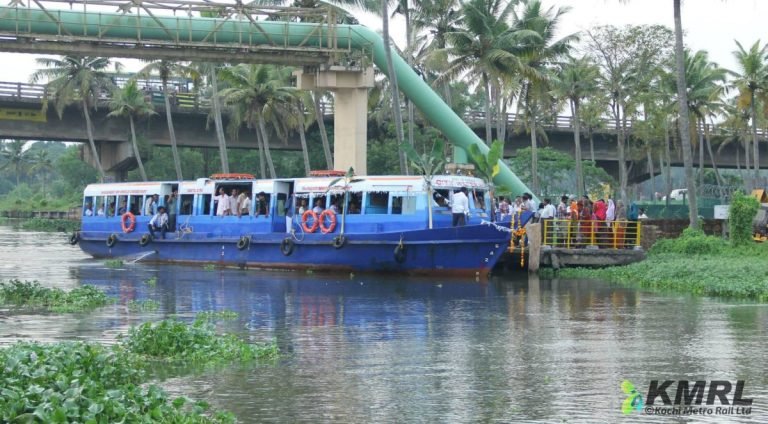
KOCHI (Metro Rail News): The state administration is eager to alter the public transportation system throughout the entire state and emphasises the need to make it equal, inexpensive, and sustainable, Pinarayi said.“Kochi Water Metro is a unique project and we are conducting a study in this regard in the districts of Kollam and Alappuzha,” said Pinarayi. He also said electric buses would be introduced into the KSRTC fleet in the coming months, replacing those running on internal combustion engines.
“As far as Kerala is concerned, we are committed to preparing a complete master plan for all our cities by 2026. It will be a sustainable and resilient city development plan, and we intend to do it in consultation with the best urban planners and experts available in the country,’’ Pinarayi said.In response to a question about the rapid development of Indian metro lines in other countries, Puri stated that as of September 2022, 810 km of metro lines were in operation in 20 cities, and a network of more than 980 km and the Regional Rapid Transit System is being built in 27 cities. India currently has the fifth-largest metro network in the world, but he predicted that it would soon surpass Japan and South Korea to become the third-largest network.
His remarks came after he and Union Minister for Housing and Urban Affairs Hardeep Singh Puri virtually inaugurated the 15th Urban Mobility India Conference and Exhibition. ’Kerala is the second most urbanised state,e with 47.7% of our population living in urban areas. However, though we are second in urbanisation, the difference between urban and rural is narrow here,’’ he said.
NHSRCL floats tender for supply & fixing of standard height gauge for RUB in connection with MAHSR

MUMBAI (Metro Rail News): National High-Speed Rail Corporation Limited (NHSRCL) has floated a tender for “Supply and fixing standard height gauge for RUB at MAHSR in connection with Mumbai-Ahmedabad High Speed Rail Project.”Name of Work:
National High-Speed Rail Corporation Ltd. (NHSRCL) invites online e-tenders from eligible applicants, who fulfil qualification criteria, for the work of “Supply and fixing standard height gauge as per RDSO Drawing No. M0001 for RUB at MAHSR Ch.402/850-950 in connection with Mumbai-Ahmedabad High Speed Rail Project.”Approximate cost of work INR 10,82,907.90/-Amount of Tender Security: – INR 21,658.00The completion period of the Work is 60 daysTender documents on sale: From 02.11.2022 to 16.11.2022Cost of Tender documents: INR 5,900/- (inclusive of 18% GST)The last date of Seeking Clarification is 05th November 2022 up to 17:00 hrs.Pre-bid Meeting 05th November 2022 at 11:00 hrs.Last date for issuing the addendum 07th November 2022Tender submission start date: 09th November 2022 @ 09:00 Hrs.Tender submission end date: 16th November 2022 @ 15:00 Hrs.
Date & time of Opening of Tender online: 17th November 2022 at 15:30 Hrs.
MRIDC floats tender for construction of cable stayed ROB between Ajni and Khapri station in Nagpur division
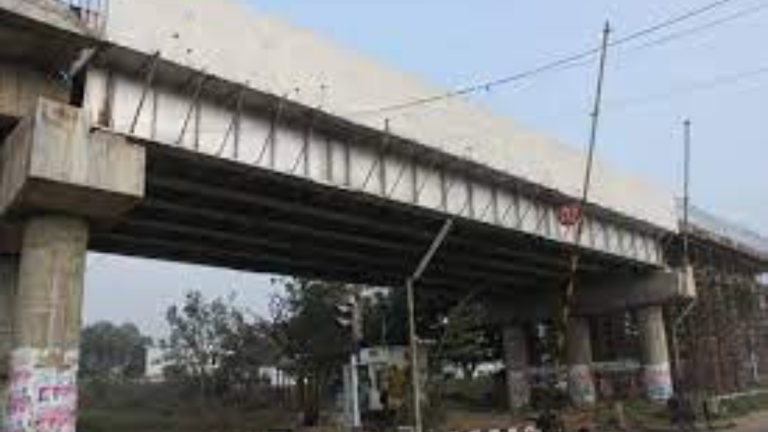
NAGPUR (Metro Rail News): Maharashtra Rail Infrastructure Development Corporation Limited (MRIDC) is inviting e-bids in two packet systems from eligible tenderers for “Construction of Cable Stayed Road Over Bridge (ROB) in lieu of Existing Ajni ROB at Railway K.M. 833/26-28 between Ajni and Khapri Railway Station for Inter Modal Station on Wardha-Nagpur Section in Nagpur Division of Central Railway.”The estimated cost of the work: Rs. 188,72,71,192/-
Earnest Money Deposit: Rs. 95,86,356
Completion period: 600 days.The work includes the Construction of a Cable-Stayed Road Over Bridge (ROB) instead of the Existing Ajni ROB at Railway K.M. 833/26-28 between Ajni and Khapri Railway Station for Inter Modal Station on Wardha-Nagpur Section in Nagpur Division of Central Railway.”
Maharashtra Rail Infrastructure Development Corporation Limited (MRIDC) is a joint
venture company of Govt. of Maharashtra and Ministry of Railways for implementation of
various Railway Projects in the territory of Maharashtra.
The company aims to boost the Rail Infrastructure projects in and around Maharashtra State. Several projects of new Railway Lines, Gauge conversion, doubling, Road Over Bridges, Road Under Bridges & Limited Height Subways are waiting for implementation. The company aims to leap forward in implementing railway-related infra projects.
| TENDER NO. | MRIDC/PROJ/e-TENDER/CSB/AJNI/2022/191 |
| TENDER VALUE | Rs. 188,72,71,192/- |
| START DATE | 01.11.2022 / 21:00 hours |
| END DATE / TIME | 30.11.2022 / 15:00 hours |
4 bidders emerge for MAHSR to construct BKC Station

MAHARASHTRA (Metro Rail News): The Bandra Kurla Complex Station of the 508.17 km Mumbai-Ahmedabad High-Speed Rail (MAHSR Bullet Train) has received bids from 4 companies or consortiums after the National High-Speed Rail Corporation Ltd. (NHSRCL) floated technical bids on 4th November.The cut and cover method will be used to construct this 1.03 km long terminus station for Package C1 between chainages -0.255 and 0.775. Six 425m-long platforms will be located within the 467m-long station space to accommodate 16 coach trains.The station box will have three levels: a service floor, a concourse, and a platform, all of which will be 24 metres below ground.NHSRCL issued a tender invitation for this package in November 2019, but it was later cancelled in February 2022 due to uncertainties over the project’s completion. A new invitation to tender was issued in July 2022, with a completion time of 1638 days (4.48 years).
Four Bidders are:
Afcons Infrastructure Ltd.J. Kumar Infraprojects Ltd. (JKIL)Larsen & Toubro (L&T)MEIL – HCC JVIFB Number of the Tender is Package No. MAHSR-C-1Brief Scope includes Design and Const. of Civil and Buildings Works on Design-Build Lump Sum Price basis for Double Line High-Speed Railway for Mumbai Underground Station, Cut and Cover Tunnel and Shaft-1 from MAHSR Km. -0.255 to Km. 0.775 at BKC in Maharashtra.“After completion of the technical evaluation, the financial bids will also be opened. This will take a couple of months to complete after which the financial bids of the technically qualified bidders will be opened to reveal who is the lowest bidder. The lowest bidder will be the contractor for the construction of the BKC underground station,” said a spokesperson for NHSRCL.Union Minister Hardeep S Puri Inaugurates NCRTC Exhibit Booth at UMI Conference & Expo
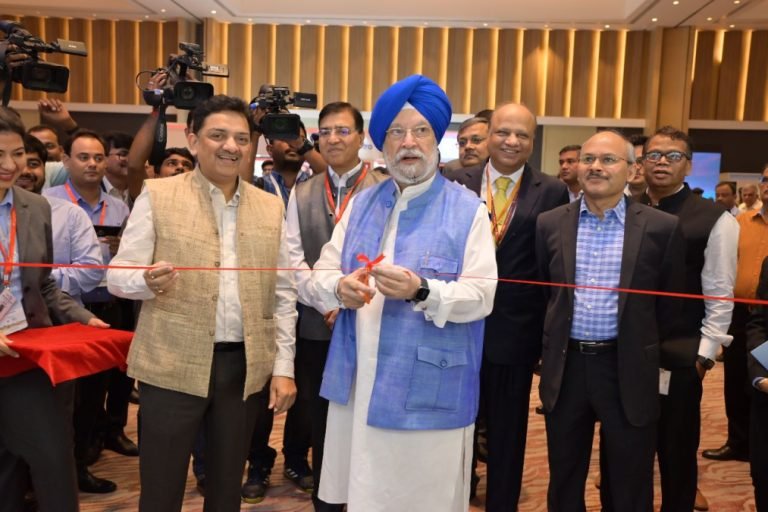
KOCHI (Metro Rail News): Shri Hardeep Singh Puri, Hon’ble Minister of Housing and Urban Affairs, inaugurated the exhibition booth of NCRTC in the presence of Shri Vinay Kumar Singh, Managing Director, NCRTC, and other officials of NCRTC at the 15th Urban Mobility India Conference & Expo being organised in Kochi, today, on 04th November 2022.Shri Singh gave a tour of the exhibition booth to the Hon’ble Minister, who congratulated Team NCRTC for their efforts. He also appreciated the pace at which the construction is going on and lauded that despite the challenges posed by the pandemic, the project is likely to be complete before its targeted time.NCRTC is showcasing India’s first Regional Rail at the UMI conference. The theme of this year’s exhibition is Azadi@75 Sustainable Atmanirbhar Urban Mobility and RRTS is a true manifestation of this theme. Being the first semi-high-speed regional rail, it has kept the exhibition abuzz and the RRTS models and the VR setup at the booth are a big draw for people to know more about the project.Under the Make in India Initiative, the rolling stock of RRTS is not only designed in Hyderabad but also, 100 per cent of these modern trainsets are being manufactured indigenously in Savli, Gujarat. RRTS is also credited for many firsts being achieved for the railways and overall transport sector in the country, be it technology for implementation and operations, construction techniques or commuter-centric amenities.The exhibition was inaugurated by the Hon’ble Union Minister of Housing and Urban Affairs and Petroleum and Natural Gas, Shri Hardeep Singh Puri. This exhibition is being organised by MoHUA in collaboration with the government of Kerala from 4th-6th November 2022. Managing Directors of Metro Rail Companies, Chief Executives of transport undertakings, Senior officers from Central and State Governments, policymakers, international industry experts, professionals, academicians, and students will participate in this three-day event.
Station Redevelopment Work going on at 40 Railway Stations
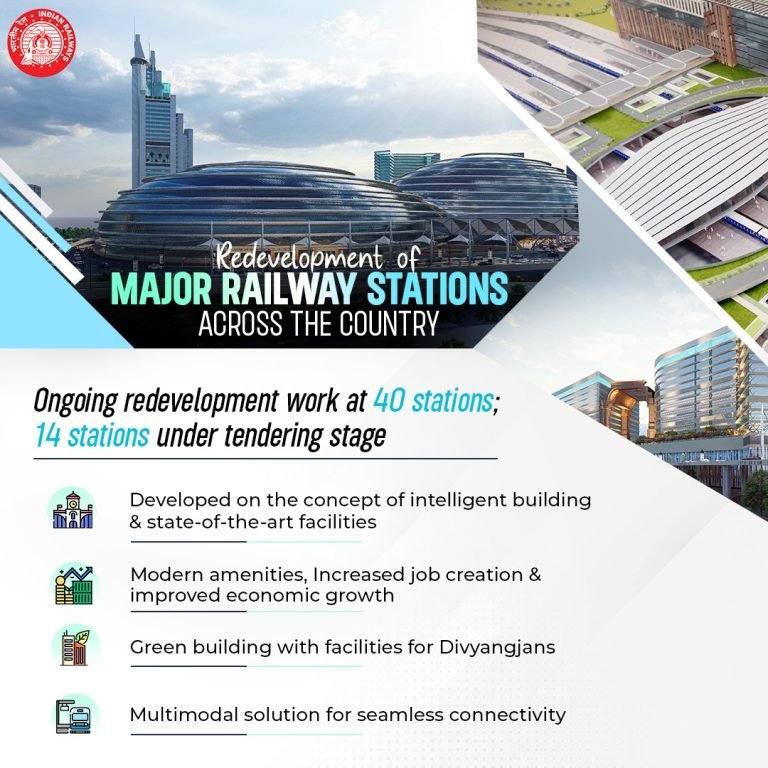
NEW DELHI (Metro Rail News): Ministry of Railways has accelerated the redevelopment of major stations across the country. Presently 40 Railway stations are being redeveloped on Indian Railways to provide modern amenities. In addition, 14 Railway Stations are under the tendering stage for redevelopment and are likely to be awarded in the next five months. Redevelopment of railway stations across the country will have a multiplier effect on the economy with increased job creation and economic growth.Redevelopment of these Stations envisages the provision of a spacious Roof Plaza, facilities such as a food court, waiting lounge, children’s play area, designated space for local products, etc. The development will integrate various modes of transport with Railway Stations, viz. Metro, Bus, etc., will also integrate both sides of the city with the station. The construction of station infrastructure will adopt green building technology and facilities for ‘Divyangjans’. The stations will be developed on the intelligent building, with state-of-the-art facilities for passengers. Station redevelopment will create a ‘City Centre’ space for railway commuters and the general public.Rani Kamalapati station of the West Central Railway, Gandhinagar Capital station of the Western Railway and Sir M. Visveswaraya Terminal Station of the South Western Railway have been developed and commissioned.Timeframe for the construction of stations cannot be indicated at this stage as the station development program is complex and involves multiple stakeholders and various statutory clearances.
| List of Stations where work is awarded and in progress in different stages of Survey, Site Mobilization and Construction | ||||
| Sno | Name of Station | State | Zone | Division |
| 1 | Ayodhya | Uttar Pradesh | NR | LKO |
| 2 | Bijwasan | Delhi | NR | DLI |
| 3 | Safdarjung | Delhi | NR | DLI |
| 4 | Gomtinagar | Uttar Pradesh | NER | LJN |
| 5 | Tirupati | Andhra Pradesh | SCR | GTL |
| 6 | Gaya | Bihar | ECR | MGS |
| 7 | Udhna | Gujarat | WR | Mumbai Central |
| 8 | Somnath | Gujarat | WR | Bhavnagar |
| 9 | Ernakulam | Kerala | SR | TVC |
| 10 | Puri | Odisha | ECoR | KUR |
| 11 | New Jalpaiguri | West Bengal | NFR | KIR |
| 12 | Muzaffarpur | Bihar | ECR | SEE |
| 13 | Lucknow (Charbagh) | Uttar Pradesh | NR | LKO |
| 14 | DakaniyaTalav | Rajasthan | WCR | KOTA |
| 15 | Kota | Rajasthan | WCR | KOTA |
| 16 | Jammu Tawi | UT of J & K | NR | FZR |
| 17 | Jallandhar Cantt. | Punjab | NR | FZR |
| 18 | Nellore | Andhra Pradesh | SCR | BZA |
| 19 | Sabarmati | Gujarat | WR | ADI |
| 20 | Gwalior | Madhya Pradesh | NCR | JHS |
| 21 | Faridabad | Haryana | NR | DLI |
| 22 | Gandhinagar Jaipur | Rajasthan | NWR | Jaipur |
| 23 | Bhubaneswar | Odisha | ECoR | KUR |
| 24 | Kollam | Kerala | SR | TVC |
| 25 | Udaipur City | Rajasthan | NWR | Ajmer |
| 26 | Ernakulam Town | Kerala | SR | TVC |
| 27 | Jaisalmer | Rajasthan | NWR | Jodhpur |
| 28 | Ranchi | Jharkhand | SER | RNC |
| 29 | Vishakhapatnam | Andhra Pradesh | ECoR | WAT |
| 30 | Puducherry | UT of Puducherry | SR | TPJ |
| 31 | Katpadi | Tamilnadu | SR | MAS |
| 32 | Rameswaram | Tamilnadu | SR | MDU |
| 33 | Madurai | Tamilnadu | SR | MDU |
| 34 | Surat | Gujarat | WR | Mumbai Central |
| 35 | Chennai Egmore | Tamilnadu | SR | MAS |
| 36 | New Bhuj | Gujarat | WR | Ahmedabad |
| 37 | Nagpur | Maharashtra | CR | NGP |
| 38 | Secunderabad | Telangana | SCR | SC |
| 39 | Yesvantpur | Karnataka | SWR | SBC |
| 40 | Jaipur | Rajasthan | NWR | Jaipur |
| List of Stations where work is under Tendering stage and likely to be awarded in the next 4-5 months | ||||
| SNo | Name of Station | State | Zone | Division |
| 1 | Delhi Cantt. | Delhi | NR | DLI |
| 2 | Prayagraj | Uttar Pradesh | NCR | ALD |
| 3 | Ghaziabad | Uttar Pradesh | NR | DLI |
| 4 | Ajni (Nagpur ) | Maharashtra | CR | Nagpur |
| 5 | Ludhiana | Punjab | NR | FZR |
| 6 | Cuttack | Odisha | ECoR | KUR |
| 7 | Kanniyakumari | TamilNadu | SR | TVC |
| 8 | Kanpur Central | Uttar Pradesh | NCR | ALD |
| 9 | Chandigarh | UT of Chandigarh | NR | UMB |
| 10 | Bangalore Cantt. | Karnataka | SWR | SBC |
| 11 | New Delhi | Delhi | NR | DLI |
| 12 | Ahmedabad | Gujarat | WR | Ahmedabad |
| 13 | CSMT | Maharashtra | CR | Mumbai |
| 14 | Jodhpur | Rajasthan | NWR | Jodhpur |
ER Creates new history in Freight loading and earning
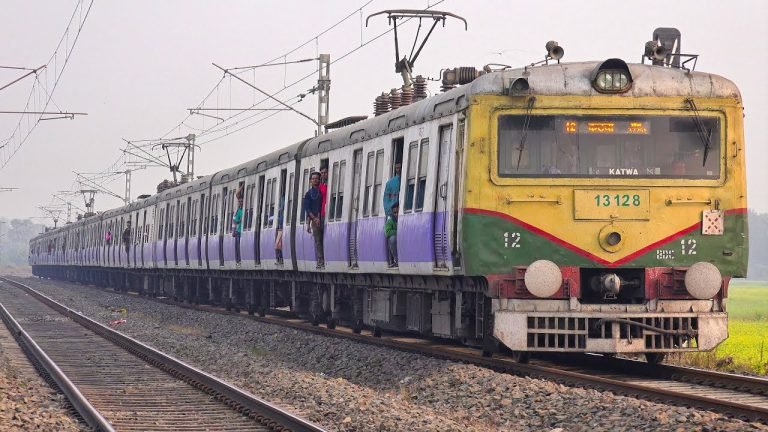
KOLKATA (Metro Rail News): Eastern Railway (ER) has consistently displayed consistent performance in different facets during the ongoing FY under the leadership of Shri Arun Arora, the General Manager.In the field of goods revenue, ER scripted a new history by loading 44.68 million tonnes from April 1 to October 31, 2022, as against 40.57 million tonnes loaded during the corresponding period of last year, thereby registering a substantial growth of 10.13%.In October 2022, ER also achieved to load of 5.93 million tonnes. In the last month, this railway has also managed to secure ₹473.6 crores as freight earnings.ER has also achieved a new feat by earning ₹3433.85 crores from 1st April 2022 to 31 October 2022 as against ₹3214.17 crores during the corresponding period of last year i.e. April 1, 2021, to October 31, 2021, thereby registering a substantial growth of 6.84%.
768 entities register on Indian Railway Innovation Portal to participate in Innovation Challenges

NEW DELHI (Metro Rail News): Indian Railways has embarked upon an Innovation journey through the launch of the “Startups for Railways” initiative on 13th June 2022. So far, 768 entities are registered on the Indian Railway innovation portal to participate in innovation challenges floated by Railways.Till now, 13 innovation challenges have been uploaded, against which good responses in the form of 311 offers have been received. All the offers are being evaluated through a two-stage process, and one innovation challenge has already been finalized.A total of 311 offers have been received against 13 problem statements uploaded on the Innovation portal. Break up of participants is as under:Startups- 123Individual Innovators- 60MSMEs- 81R&D organizations/Institutes- 18Stage-1 evaluation has been completed for 09 Challenges. Stage-2 presentations have been held for 07 Challenges. Stage-2 evaluation for “Design of superior Elastomeric Pad (EM Pad) for Heavy Haul freight Wagon” concluded on 20th October 22. Accordingly, LOA shall be issued after sanctioning the theRailway’ssr portion of the grant.01 more problem statement on developing a Phased Array Rail/Weld Tester or any other improved technology for detecting Rail/Weld flaws has been uploaded.As part of this initiative, the Indian Railways Innovation Portal has also gone live at https://innovation.indianrailways.gov.in/.To spread awareness, a total of 131workshops/meetings on the Indian Railway Innovation Policy have been organized by Zonal Railways/PUs/RB, in which approximately 1560 Startups/Innovators participated. In addition, more than ten site visits, VC with NSRCEL of IIM Bangalore & meetings with Dipanjan Bag, Principal-Startup, and CII were organized.In continuation of this process of inspiring Indian railways Officers, Shri Vinod Dham, eminent engineer, entrepreneur and venture capitalist, also known as the ‘Father of the Pentium Chip’ for his contribution to the development of the Pentium microprocessor, delivered a talk in rail Bhawan today. He appreciated the initiatives and efforts made by the Ministry of Railways under the Indian’Railway Innovation Policy and the launch of “Startup” for Railways“. Shri “ham said that technology had become the most significant enabler and power tool in the world and India is becoming more technology-driven in every part of life. By giving examples of various countries in technology innovation which made them power giants in their respective fields, he underlined the crucial role of government initiative in technology innovation. Addressing the senior officials of the Ministry of railways, many of whom joined through VC from across the country, he underlined the passion and problem-solving mindset as a success mantra.
Shri Vinod Dham said that India is among the top 3 Startup countries and has the potential to lead the world. The Atmanirbhar Bharat initiative by Prime Minister Shri Narendra Modi has created a more favourable environment for the Startups as well, he added.