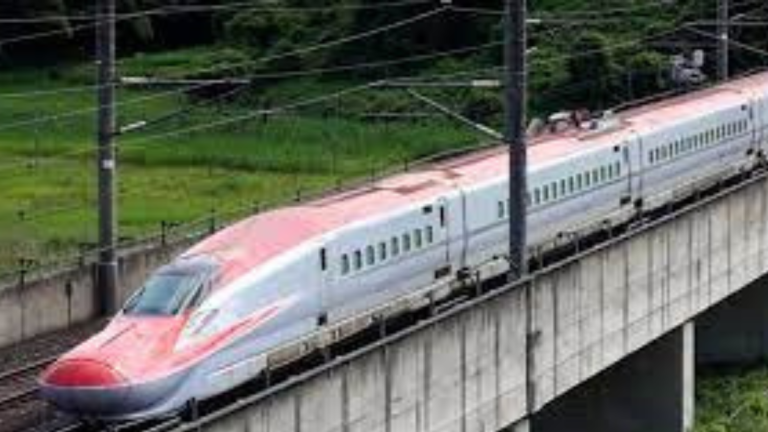
100 % Land Acquisition Achieved in Mumbai-Ahmedabad Bullet Train Project 

MUMBAI (Metro Rail News): Per the tweet of the railway’s minister, the ambitious Mumbai-Ahmedabad Bullet Train project has achieved 100% land acquisition across Gujarat, Maharashtra, Dadra & Nagar Haveli. 

The tweet 

Total Land Acquistion 

State Land (in Hectares) Acquisition 
Gujarat 951.14 100%
Dadra & Nagar Haveli 7.90 100%
Maharastra 430.45 100%
Overall 1389.49 100%

Overall Development 

Per the railways’ minister, the project has reached a total Pier Casting of 268.5 Km while the Girder Launching is -120.4 Km. 

Delay in Acquisition 

The acquisition was expected to be completed in 2023 only owing to protests against land acquisition on the way.  

Land usage 

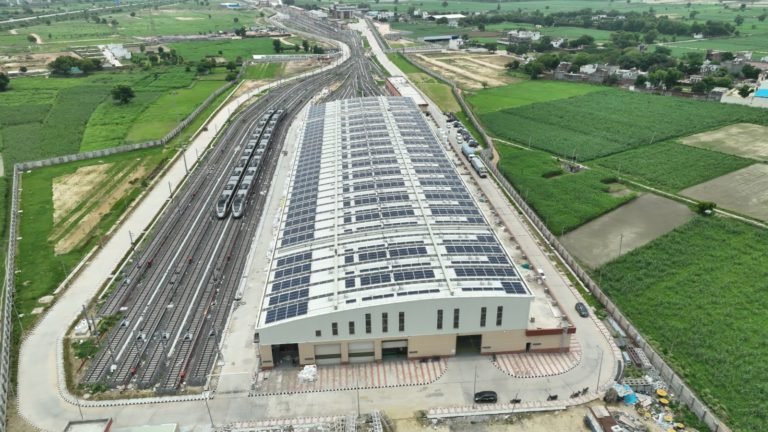
The operational control centre will be located at Sabarmati in Ahmedabad, and there will be Three depots, Two in Gujarat- Surat & Maharashtra and one in Maharashtra- Thane. The phase phase of the project between Surat & Bilimora is expected to be on track by 2026. 

MAHSR Corridor 

The Mumbai-Ahmedabad High-Speed Railway (MAHSR) is India’s initial high-speed train route connecting Mumbai and Ahmedabad. It is expected to cost around 1.08 lakh crore. The central government has agreed to contribute ₹10,000 crore, and Gujarat and Maharashtra will contribute ₹5,000 crore each. The remaining funds will be obtained through a loan from Japan at a meagre 0.1% interest rate.


Intrigued by the future of Metro and its impact on our city? Join us at our upcoming InnoMetro event to delve deeper into this vital issue. Stay informed, get involved, and let’s ride the Metro towards a brighter, more sustainable future together.

DMRC Set to Privatise Operations on Red & Green Lines of the Delhi Metro 

DELHI (Metro Rail News): The governing body for the Delhi Metro, Delhi Metro Rail Corporation (DMRC), has reissued the tender for transferring the operation of its Red and Green lines to Private Bodies. 

The Contract 

The contract entails managing metro operations on the lines and Recruiting and training staff comprising 221 drivers for the Red Line and 143 drivers for the Green Line. DMRC has also set aside an amount of Rs 65 Crore for the project. 

Tender Process  

The Red Line tender process was initiated in October Last year but was halted because of technical issues. The retender was issued on January 2, and the tender process for the green line also began that day. 

Current Scenario 

Only the Yellow line between Samyapur Badli & Millenium City Centre has such an arrangement entailing private operators. 

Green Line 

Delhi Metro’s Green Line is a 28.79 Km long metro corridor between Inderlok and Brigadier Hoshiyar Singh with a branch line connecting  Lines’s Ashok Park Main Station with Kirti Nagar station. It is a majorly elevated corridor running along the busy NH9 route. 

Red Line 

Delhi Metro’s Red Line is a 34.55 km long metro corridor running between Rithala 7 Shaheed Sthal consisting of 29 stations. It is the 3rd most heavily used line of the Delhi metro network. It ensures connectivity for those in West Delhi and North West Delhi travelling towards Central Delhi, Shahdara, East Delhi, Ghaziabad, and vice versa.


Intrigued by the future of Metro and its impact on our city? Join us at our upcoming Inno Metro event to delve deeper into this vital issue. Stay informed, get involved, and let’s ride the Metro towards a brighter, more sustainable future together.

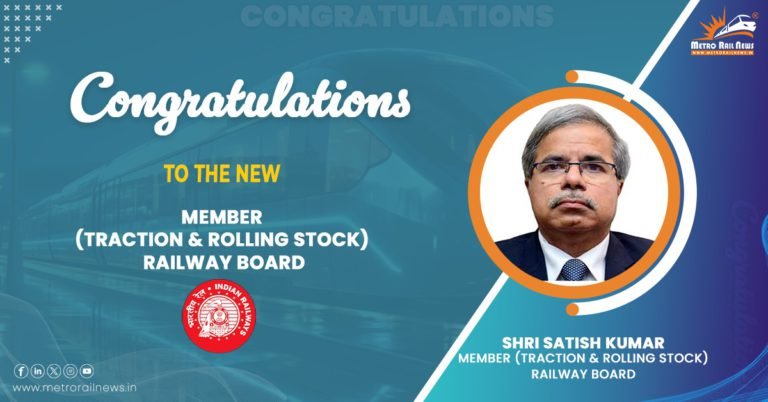
Shri Satish Kumar Takes Over As Member (T & RS), Railway Board

NEW DELHI (Metro Rail News): Shri Satish Kumar took over the charge of Member (Traction & Rolling Stock) in the Railway Board in the Ministry of Railways on 5 January 2024. He is from the 1986 batch of Indian Railway Service of Mechanical Engineers. Shri Kumar joined Indian Railways in March 1988 and has 34 years of experience. Before joining MTRS Railway Board, he worked as General Manager, North Central Railway, Prayagraj.

Earlier, Shri Kumar worked in various capacities in the Jhansi Division and BLW (Diesel Locomotive Works, Varanasi), NER, Gorakhpur, and Patiala Locomotive Works. He was trained in Total Quality Management under the UNDP programme in 1996 and has handled many projects.

He also worked as Divisional Railway Manager, Lucknow Division of Northern Railway from April 2017 to April 2019. Many infrastructural works were accomplished during his tenure as DRM, Lucknow.


Intrigued by the future of Metro and its impact on our city? Join us at our upcoming Inno Metro event to delve deeper into this vital issue. Stay informed, get involved, and let’s ride the Metro towards a brighter, more sustainable future together.

Chandigarh Metro to be Delayed Owing to Indecisiveness on Proposed Mohali Depot 

CHANDIGARH (Metro Rail News): The concern over RITES‘s proposed Alternative Alignment Report is the Punjab government’s inability to secure land for the depot in Sector 87, Mohali. 

AAR by RITES 

As per the AAR submitted by RITES, the Chandigarh Metro has two depots, 30 acres each: 

  1. Mohali’s Sector 87 
  2. New Chandigarh (Mullanpur) 

Generally, activities such as maintenance & inspection are carried out in Depots. 

Cost Overrun 

Punjab’s chief secretary, Anurag Verma, informed the UT administration that since the land in Mohali is quite expensive, it would invite cost overrun and that they are ready to acquire the land in New Chandigarh. He has also suggested the UT administration have a Depot in Chandigarh instead of Mohali. 

Another Depot 

The Haryana Government has already agreed to construct another depot in Sector 27, Panchkula, and has also submitted the proposal to the UT administration. 

Alternative Route 

The UT administration has asked the Punjab Administration to finalise an alternative route for the depot if the proposed site is unavailable.  

Delay in DPR 

This will invite an indispensable delay in the Submission of DPR to the central government. There remains a significant issue of alignment of the metro to be decided by the central government, that is, to facilitate an underground or elevated route. 

Pros & Cons of Alignment 

The elevated alignment will disturb the aesthetic appeal of the  UT, while the underground alignment will increase the cost by over 70%. A Chandigarh Heritage Conservation Committee (CHCC) sub-panel has also requested the Mohua to keep the alignment entirely underground.  

Chandigarh Metro 

Rail India Technical & Economic Services (RITES) has submitted the Alignment Option Report (AOR) to the Chandigarh administration. 

Phase 1 Corridors  

The proposed 89-km-long Phase 1 of the Chandigarh Metro entails three corridors: 

  1. Paraul (New Chandigarh)-Sarangpur-ISBT Panchkula to Panchkula Extension – 34 km
  2. Rock Garden to Zirakpur ISBT via Industrial Area and Airport- 42 km
  3. Grain Market Chowk, Sector 39, to Transport Chowk, Sector 26– 13 km

Among these, the 3rd Corridor along the Madhya Marg, running from Sector 26 to Sector 39, will be fully elevated. In contrast, the other two will be mostly elevated, with only a few sections underground. 

Phase 2 Corridors  

As per the submitted AOR, Phase 2 of the Chandigarh Metro will be around 25 Km divided into two corridors: 

  1. Airport Chowk to Manakpur Kallar (5 km)
  2. ISBT Zirakpur to Pinjore (20 km)

Development work on Phase 2 will begin only once the development works on the corridors of Phase 1 end by 2034. 

Need 

Chandigarh urgently requires the establishment of a metro rail system due to various factors, including:

  1. Elevated Traffic Volume: The substantial increase in vehicles on the roads necessitates an efficient public transportation alternative.
  2. Population Surge: The rising population near Chandigarh underscores the need for a convenient and extensive metro network to accommodate the growing commuter demand.
  3. Economic Prosperity and Investments: With escalating affluence and heightened investments in Chandigarh, the city benefits significantly from a well-structured metro system.

Anticipating the advent of a robust public transport system, the residents of Chandigarh eagerly await the implementation of a metro service in the city.

Let’s hope for the conundrum to be resolved soon and for the Chandigarh metro to hit the track, easing people’s connectivity and commute.


Discover the endless possibilities of our city’s Metro at InnoMetro, our flagship Expo and Conference. Be an active participant in shaping its future towards a more sustainable tomorrow. Stay informed and join us to take a step towards a brighter future.

Gurgaon – Faridabad Metro System: Fostering Connectivity, Economic Development and Seamless Travel

Introduction

The Gurgaon-Faridabad Metro project, spearheaded by the Haryana Mass Rapid Transport Corporation Limited (HMRTC), a special-purpose corporation established by the Haryana government, envisions a light rail system with twelve distinctly identified and positioned stations. The project’s alignment will commence at the Sector 56 station in Gurgaon and culminate at the Old Faridabad station in Faridabad, traversing through densely populated areas and key commercial hubs.

The transformative initiative in the bustling National Capital Region (NCR) of India stands as a testament to the government’s commitment to enhancing urban mobility and fostering sustainable development. This ambitious project, spanning 34.12 kilometres, shall connect two of the NCR’s most prominent cities, Gurgaon and Faridabad, seamlessly integrating various modes of transport and revolutionizing travel for residents, commuters, and tourists alike.

Project Details & Route Information

The proposed Gurgaon-Faridabad metro project will traverse a 34.12-kilometer route, passing through the Delhi NIT assembly region and Piyali Chowk. Along this route, twelve identified and positioned stations will serve the communities of Gurgaon and Faridabad, significantly enhancing connectivity within the National Capital Region (NCR). In Faridabad, the metro stations will be located at Bata Chowk, Piyali Chowk, Shaheed Bhagat Singh Marg, Pali Chowk, Police Chowki Mangar, and Barkhal Enclave. In Gurgaon, the stations will be situated at Sector-56, Gwal Pahari, Rosewood City, Sushant Lok, Sushant Lok-Phase III, and Vatika Chowk.

To ensure seamless connectivity across the NCR, the Gurgaon-Faridabad metro line will intersect with the Rapid metro Line at Sector 56 metro line in Gurgaon and with the Violet Line at Bata Chowk in Faridabad. Recognizing the metro’s potential to stimulate economic growth, the Haryana government is actively planning to develop the areas surrounding the metro stations. These developments will encompass new commercial and residential spaces, fostering a vibrant and economically thriving region.

Project Highlights

  • Enhanced Connectivity: The Gurgaon-Faridabad Metro will serve as a vital link between two of the NCR’s most vibrant cities, significantly reducing travel time and congestion along the corridor.
  • Economic Catalyst: The metro project is expected to stimulate economic growth, create employment opportunities, and attract investments to the region.
  • Sustainable Urban Development: The metro will contribute to sustainable urban development by reducing traffic congestion, promoting air quality, and encouraging transit-oriented development.
  • Technological Advancements: The metro will incorporate cutting-edge technologies, including driverless trains, smart ticketing systems, and real-time passenger information displays.

Impact on the project on Gurgaon and Faridabad

The Gurgaon-Faridabad Metro project is expected to have a transformative impact on the twin cities of Gurgaon and Faridabad.

  • Reduced Travel Time: Commuters will experience significant reductions in travel time, with journey times expected to be cut by up to nearly fifty per cent.
  • Reduced Congestion: The metro will alleviate traffic congestion, improving air quality and enhancing the overall liveability of the cities.
  • Economic Growth: The metro is expected to stimulate economic growth, creating employment opportunities and attracting investments to the region.
  • Improved Accessibility: The metro will provide enhanced accessibility for residents, particularly those living in underserved areas, connecting them to employment, education, and healthcare facilities.

Conclusion

The Gurgaon-Faridabad Metro project is an important initiative by the Haryana government aimed at bolstering connectivity between Delhi and the National Capital Region (NCR). This enhanced connectivity is expected to bring about a significant reduction in pollution levels and alleviate traffic congestion between the two cities. Gurgaon and Faridabad, being prominent residential and business hubs, stand to benefit immensely from the project’s improved connectivity between Delhi, Gurgaon, and Faridabad. This enhanced accessibility will not only ease the lives of residents but also stimulate economic growth and foster a more vibrant business environment across the region.

The Gurgaon-Faridabad Metro project stands as a beacon of connectivity and progress, poised to revolutionize urban mobility and transform the landscape of the NCR. With its emphasis on sustainability, technological advancements, and economic empowerment, the metro project promises to usher in a new era of interconnectedness and prosperity for the region.

Kolkata Metro To Offer Its Commuters With  Illuminated Metro Tunnels To Give Under The River Feeling

KOLKATA (Metro Rail News): The dream of the Under the River Metro journey in India will be fulfilled very soon as the East-West Metro is all set to ply under the River Hooghly this year. 

Under The River Feeling 

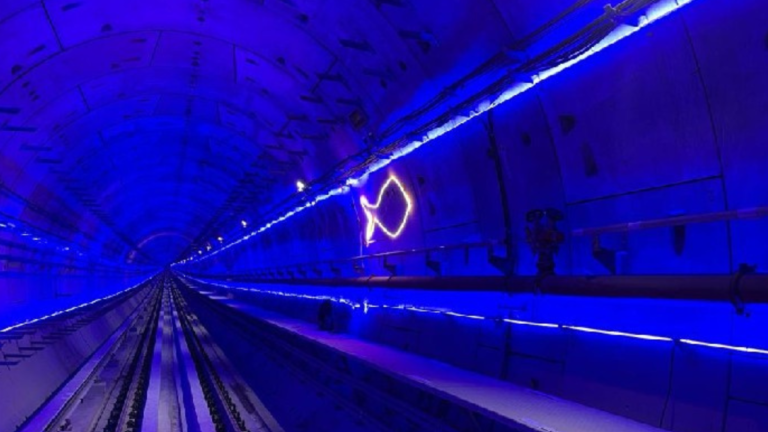
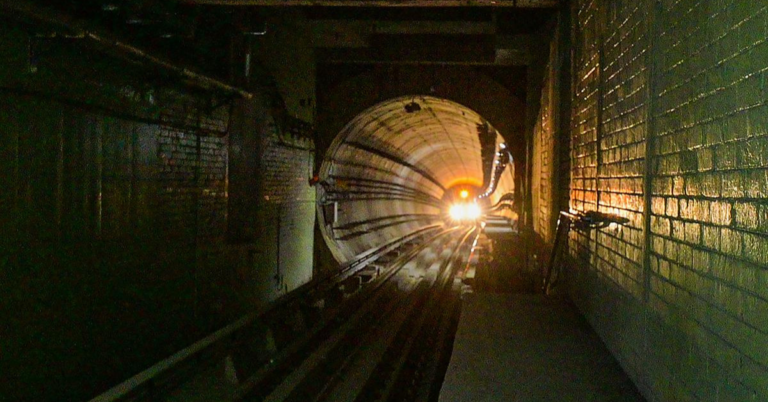
Commuters of the East-West Metro Corridor, which will connect Howrah Maidan with Salt Lake Sector V, can enjoy this Under the River Metro Journey thoroughly.  For this, special illumination of the inner walls of the tunnels under the river with blue lights has been arranged to give the effects of water around the moving rake.

The tunnels 

The twin subaqueous tunnels 350 metres downstream of Rabindra Setu (Howrah Bridge) have been burrowed with the help of Earth Pressure Balancing Tunnel Boring Machines through pre-dominantly stiff clayey silt. Construction of this engineering marvel was completed in a record 66 days, and under the river, the length of this tunnel is 520 metres.  

Construction 

Though the non-transparent tunnels are circular bored tunnels of internal diameters 5.55 metres with 275 mm thick RCC segmental permanent liners, commuters will still feel they are travelling under the river Hooghly. 

Connectivity 

These magnificent tunnels will connect two century-old cities, Howrah and Kolkata, under the river Hooghly, which was unthinkable a few years ago. Metro Authorities are making elaborate arrangements to make this underwater journey, which will last for approx 45 secs., of all passengers memorable. 

Illuminated Fishes 

Also, illuminated fishes will be swimming around the rake during this journey. Forty such illuminated fishes will be swimming o­n the inner walls of the tunnels.  The Internationally famous multinational Phillips has made this particular arrangement.

Metro Railway also thinks of special sound effects in this section to make this unique journey a riveting o­ne.


Intrigued by the future of Metro and its impact on our city? Join us at our upcoming Inno Metro event to delve deeper into this vital issue. Stay informed, get involved, and let’s ride the Metro towards a brighter, more sustainable future together.

NCRTC Opens Doors For Events And Film Shoots At Rrts Stations And On Namo Bharat Trains, Introduces Policy Document

NEW DELHI (Metro Rail News): The National Capital Region Transport Corporation (NCRTC) has recently introduced a comprehensive policy to rent out NCRTC/RRTS premises and the iconic Namo-Bharat trains for hosting events, including film shootings. Spaces like RRTS stations and Namo-Bharat trains are now available for short-term hire for film shootings, documentaries, TV commercials, etc. 

With the proliferation of OTT platforms and the digital landscape, there has been a surge in the utilisation of public transport systems, particularly metro rail systems, as backdrops for filming feature films, documentaries, and web series. NCRTC’s decision to open its doors to such activities provides a lucrative opportunity for filmmakers seeking dynamic and modern shooting locations. RRTS’s infrastructures boast international standards in architecture and design coupled with contemporary aesthetics and world-class facilities, making them optimal choices for filmmakers aiming for visually captivating and versatile settings. 

The architectural and design brilliance of RRTS stations and Namo-Bharat trains makes them exceptional choices for film shooting. Drawing inspiration from the vibrant hues of the peacock feather, RRTS stations showcase striking blue and beige tones, extending this captivating palette to their exterior facades. These stations offer well-lit and airy spaces suffused with natural light. Further enhancing their visual appeal, beige perforated panels and louvres facilitate smooth airflow, adding aesthetic charm and practical functionality. Meanwhile, Namo-Bharat trains represent the epitome of modernity, boasting sleek designs and an array of passenger-centric amenities. With their aerodynamic profiles designed to minimise air drag at high speeds, these trains provide wide gangways, tinted panoramic windows, and an impeccably seamless travel experience, making them optimal settings for cinematic storytelling. 

NCRTC/RRTS premises can also be rented for event purposes other than shooting. If Namo Bharat Trains are required during night hours (Non-revenue hours), then the booking of events can also be considered. The schedule and the booking fee for hiring NCRTC’s premises, including per scheduled hour of occupancy for commercial purposes, shall be as follows: – 

CorridorCorridor DetailsArea of BookingBooking Rate (INR) (₹)/hour
 DELHI- GHAZIABAD- MEERUT   All stations Inside Namo- Bharat train. 2,00,000/- 
Inside RRTS Station 2,00,000/- 
Both Namo-Bharat train. & Station 3,00,000/- 
Depots/Sites 2,5 0,000/- 

Filmmakers now have an inviting opportunity to tap into the futuristic appeal of RRTS Stations and Namo-Bharat Trains, elevating the visual narratives of their cinematic endeavours on par with global standards at competent charges. 

The 82 km-long Delhi-Ghaziabad-Meerut RRTS Corridor is India’s pioneering RRTS corridor to be implemented in the country. This corridor will encompass 25 stations, inclusive of two depot stations. Additionally, local transit services are slated to be offered on the RRTS network in Meerut, covering 13 stations within 23 km to cater to local transit needs. 

On October 20, 2023, the Honorable Prime Minister inaugurated India’s first RRTS and flagged off the Namo Bharat train. With this, the 17-kilometer-long priority section between Sahibabad and Duhai Depot was operationalised for the public. The 25 km stretch between Duhai and Meerut, South RRTS station, is the next section of the RRTS corridor to be operationalised for the public after the priority Section. This section encompasses a total of 4 stations: Murad Nagar, Modi Nagar North, Modi Nagar South, and Meerut South. Trial runs on this section are ongoing.


Intrigued by the future of Metro and its impact on our city? Join us at our upcoming Inno Metro event to delve deeper into this vital issue. Stay informed, get involved, and let’s ride the Metro towards a brighter, more sustainable future together.

CMRL Submits DFR for MRTS from Poonamalle to Parandur

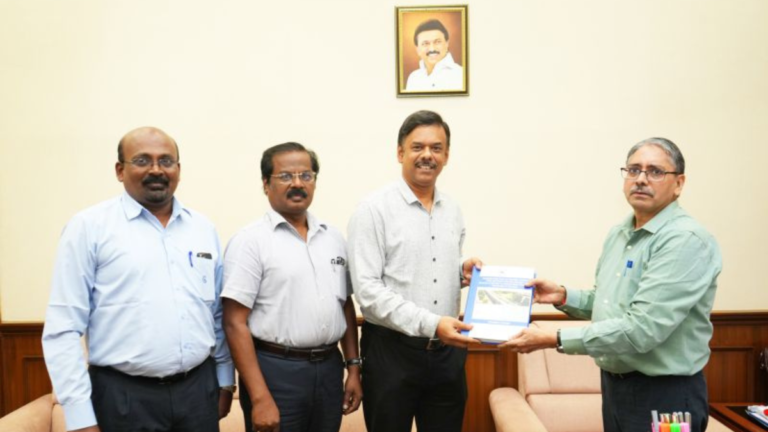
TAMIL NADU (Metro Rail News): A detailed Feasibility Report (DFR) for the recommendation of the Mass Rapid Transport System (MRTS) from Poonamalle to Parandur via Thirumazhisai & Sriperumbudur was submitted by Thiru. M.A. Siddique, I.A.S., Principal Secretary to Government, Managing Director, CMRL to Thiru. Ramesh Chand Meena, I.A.S., Additional Chief Secretary, Special Initiatives, Government of Tamil Nadu at Secretariat, Chennai on Thursday, 4th Jan. 

 Thiru. T. Archunan, Director (Projects), Thiru. T. Livingstone Eliazer, Chief General Manager (PP & D), and other Senior Officials of CMRL were present during the occasion. 

Proposed Salient features of Detailed Feasibility Reports (DFR) for recommending MRTS from Poonamalle to Parandur via Thirumazhisai & Sriperumbudur is as follows. 

  • Total length Corridor: 43.63 km 
  • Tentative No. of Elevated Stations: 19Nos 
  • Approximate estimated Completion cost: Rs 10,712 Cr 

CMRL recommended the above considering the recent developments such as the proposed New Airport at Parandur, the proposed Bus Terminus at Thirumazhisai and future growth potential along the Corridor. Following extensive alignment study at the DPR stage, the total number of stations and details of land requirements will be finalised.


Intrigued by the future of Metro and its impact on our city? Join us at our upcoming Inno Metro event to delve deeper into this vital issue. Stay informed, get involved, and let’s ride the Metro towards a brighter, more sustainable future together.

CMRS Inspection of Ruby Hall Clinic to Ramwadi Stretch of the Pune Metro Scheduled for Today

PUNE (Metro Rail News): An inspection by the Commissioner for Metro Rail Safety for the Ruby Hall clinic to the Ramwadi stretch of the Pune Metro Line 1 is scheduled for Friday. 

Inspection 

The metro stations will be inspected for safety and functionality. It spans from Staircases and escalators to all required safety and standard norms. It will also look for facilities such as toilets, signages, and accessibility for PwDs. 

Focus on Fire & Safety 

The team will execute a simulated drill to assess the effectiveness of the fire prevention system, encompassing smoke detection and fire alarms. The objective is to evaluate the preparedness of metro station staff in managing emergencies and efficiently evacuating passengers.

A long struggle 

Maha-Metro has been pursuing CMRS approval for the Ruby Hall Clinic to Ramwadi stretch since last year. However, the delay in approval was attributed to issues related to the stairs at the Yerawada metro station.

Earlier announcements 

Maharashtra Metro Rail Corporation Limited (Maha Metro) had said that the Ruby Hall Clinic to Ramwadi stretch of the Pune Metro will be ready for operational use this month. 

Additionally, the Maha Metro had started the speed trials of rakes till Ramwadi, with the Technical teams already monitoring the alignment of tracks, curves, elevation and other technical parameters such as signalling & telecommunication. 

Four New Stations 

The stretch will be introducing four new stations on the route, namely: 

  1. Bund garden 
  2. Yerawada 
  3. Kalyaninagar ‘
  4. Ramwadi 

It will enable smooth and hassle-free commutation from the city’s central area. It will ease the difficulties faced by the commuters going to the airport. 

A Good News 

This marks a noteworthy milestone in the progress of the city’s ambitious Aqua Line, moving it closer to becoming operational. Upon completion, the 15.7 km Aqua Line will become a reality, significantly improving residents’ daily lives.

Pune Metro 

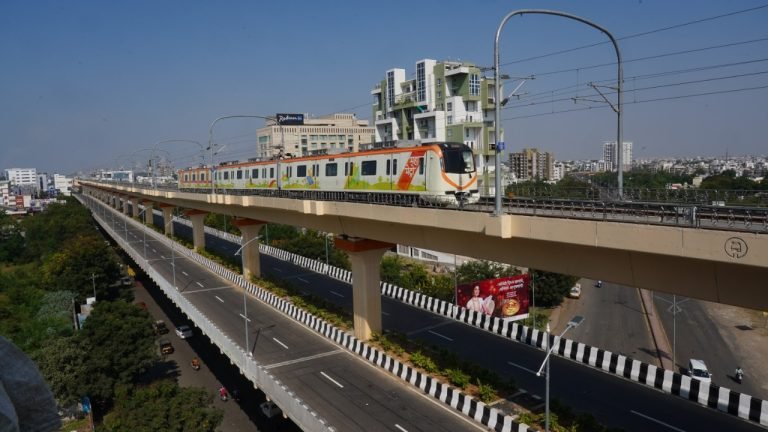
The Pune metro is a rapid transit system serving the city of Pune, encompassing three lines totalling 54.14 km. Currently, two lines are in operation:

  1. Purple Line: Connects PCMC Bhavan to Swargate.
  2. Aqua Line: Runs from Vanaz to Ramwadi.
  3. Line 3: Extends from Hinjawadi to Civil Court via Balewadi.

Intrigued by the future of Metro and its impact on our city? Join us at our upcoming Inno Metro event to delve deeper into this vital issue. Stay informed, get involved, and let’s ride the Metro towards a brighter, more sustainable future together.

Delhi Metro Makes Viaducts to Facilitate Convenient Traffic Passage 

NEW DELHI(Metro Rail News): Delhi Metro Rail Corporation (DMRC) is planning to facilitate flyovers for vehicles to deal with the problem of traffic jams at various locations in Delhi. 

Double-Decker Viaducts 

The Engineering marvel of DMRC is at play with the proposition to construct decker viaducts to accommodate metro and vehicles on specific stretches. The viaduct will have a flyover for the vehicles in the first half, while the viaduct for the metro in the 2nd half. 

Status and Location 

The DMRC has planned to execute such innovations on the three lines currently under construction in Phase IV, which are as follows: 

S No. Line Location Length Progress 
1Pink Bhajanpura and Yamuna Vihar1.4 Km 90% (Sub-structure) +  25% (Super Structure) 
2Silver Azadpur and Rani Jhansi Road 2.2 Km 91%( foundational) + 74% (Pier work)
3Magenta Sangam Vihar and Ambedkar Nagar  2.4 km  100% (Substructure) + 11 piers

Advantages of such Viaducts 

In the traffic-congested scenario of Delhi, such innovation offers several advantages, particularly in urban transportation planning. Here are some potential benefits:

\

  1. Optimal Land Utilization: Having both metro and vehicle lanes on separate levels allows for efficient use of limited urban space. This is especially important in densely populated areas where land is at a premium.
  2. Reduced Congestion: Separate levels for metro and vehicle traffic can help reduce congestion on roads and railways. This separation minimises interference between the two modes of transportation, leading to smoother traffic flow.
  3. Enhanced Public Transportation: Including a metro viaduct in the superstructure promotes public transportation, which is often more sustainable and can reduce the number of private vehicles on the road.
  4. Cost-Effective Construction: Constructing a double-decker viaduct with a metro superstructure and a vehicle flyover sub-structure can be more cost-effective than building separate infrastructures for each mode. This is especially relevant in areas with limited resources for extensive infrastructure projects.
  5. Aesthetic Considerations: The design of a double-decker viaduct can be aesthetically pleasing, and the incorporation of metro viaducts and a vehicle flyover can contribute to the overall architectural appeal of the urban landscape.
  6. Flexibility in Urban Planning: A double-decker viaduct allows for flexibility in urban planning and can adapt to changing transportation needs over time. The infrastructure can be designed to accommodate future expansions or modifications based on evolving city dynamics.

Such advantages in Urban Planning in Delhi will offer ample opportunities for further redevelopment and aesthetic advantages for the city. 

Stay tuned with us to read more about metros & railways! 


Intrigued by the future of Metro and its impact on our city? Join us at our upcoming InnoMetro event to delve deeper into this vital issue. Stay informed, get involved, and let’s ride the Metro towards a brighter, more sustainable future together.

TBM Narmada of the Surat Metro Records First Hidden Breakthrough 

SURAT (Metro Rail News): TBM S78 or TBM Narmada of the Surat Metro recorded its first “Hidden” breakthrough at the Labheshwar Chowk station. 

Assignment 

The TBM completed a 1.5-kilometre-long drive from Kapodra Station’s western shaft to the unique 4-level Labheshwar Chowk Station’s box. It was on task to complete a down-line tunnel as its very first assignment. 

Further Plans 

Further, the excavation at Labheshwar Chowk Station will be taken up only after Narmada and sister machine TBM Tapi pass through. 

Labheshwar Chowk Station 

The Labheswar Chowk Station will be built 30 meters deep with two concourse levels & 2 platform levels. It will be 2nd deepest metro station in India after Howrah Metro station of Kolkata Metro’s East-West Corridor. 

S. No Metro StationDeepest 
01.Howrah Metro Station33 meters (Post Completion) 
02.Labheshwar Chowk Metro Station30 meters (Post Completion) 
03.Hauz Khas metro Station 29 meters 
Surat Metro TBM breakthrough

Further Scope of Work 

The construction project for Package CS2/UG1, spanning 3.46 km and awarded by Gujarat Metro Rail Corporation (GMRC) in March 2021, involves the creation of six tunnels by both S78 and S94 in Surat. Additionally, Gulermak – Sam India JV is tasked with building three stations at Kapodra, Labheshwar Chowk, and Central Warehouse as part of their scope of work.

Status of S-78 

TBM S94 lags behind S78, and both machines will eventually be recovered from the eastern shaft of Surat Railway Station. 

Surat Metro

The 41.93 km-long Surat Metro Rail Project Phase 01 has two lines: Sarthana – Dream City- 22.77 km with a total of 20 stations & Bhesan – Saroli-19.26 km with 18 stations. It is expected to be completed in 2027. 


Intrigued by the future of Metro and its impact on our city? Join us at our upcoming InnoMetro event to delve deeper into this vital issue. Stay informed, get involved, and let’s ride the Metro towards a brighter, more sustainable future together.

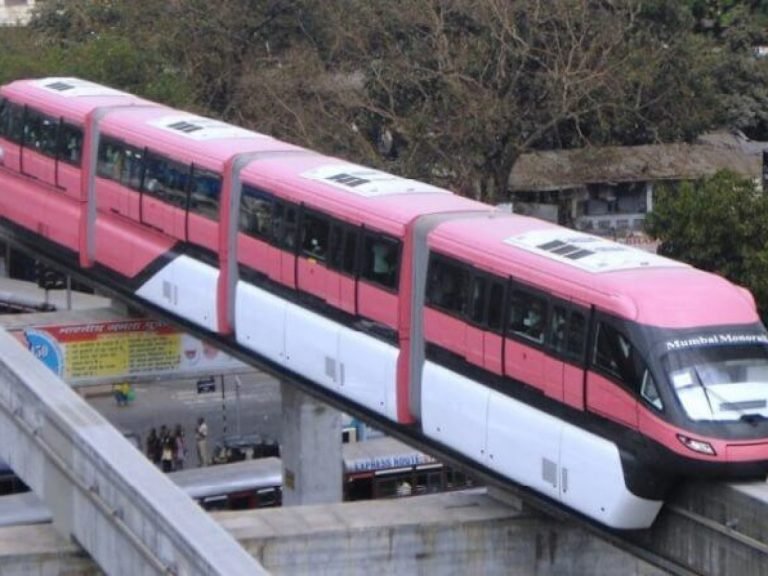
Mumbai Monorail Merges With The Mumbai Metro 

MUMBAI (Metro Rail News): Mumbai Metropolitan Region Development Authority (MMRDA) has merged the Monorail Project Implementation Unit (Mono-PIU) with the Maha Mumbai Metro Operation Corporation Ltd (MMMOCL). 

Merger 

The merger was greenlighted last month in a meeting of the MMRDA in Nagpur. This would also affect the Top management of the Authority. 

Objectives 

With Mumbai Monorail having reached the stature of  a heavy load on the Exchequer’s pocket, the initiative aims to serve the following purposes: 

  1. Better operations of the monorail. 
  2. Curtailing losses owing to low ridership, etc. 
  3. Cutting Costs 
  4. Saving Duplicting Expenses. 

Cost-Cutting 

The merger would save over ₹40 to 60 crore annually on various costs and taxes and would cut duplication of manpower, which is one of the most significant expenditures. 

Workforce 

Mono-PIU has a distinct organisational structure comprising three central departments: 

  1. Operations, 
  2. Maintenance, and 
  3. Support

In the merger process, MMRDA officials will carefully examine areas like administration, train and station operations, commercial aspects, and signalling & telecommunications. They will then make decisions based on identified needs.

New Monorails 

New Monorail rakes are also to be introduced in the near future. These would be somewhat distinct in the following aspects: 

  1. The nose is expected to be flatter
  2. The guard wheels will be more than the existing ones for smoother travel
  3. The internal electronics will be superior to the earlier ones. 

Enhanced Ridership with Enhanced Efficiency 

With the new trains, the agency plans to increase daily trips from 118 to 250, carrying 10,000 to 12,000 passengers. The wait time between trains is expected to decrease from 18-20 minutes to 5-7 minutes. The monorails have a lifespan of approximately 15 years.


Intrigued by the future of Metro and its impact on our city? Join us at our upcoming InnoMetro event to delve deeper into this vital issue. Stay informed, get involved, and let’s ride the Metro towards a brighter, more sustainable future together.

Guwahati Metro: A Multi-Phased Urban Mass Rapid Transit System to Curb Traffic Congestion

Overview

To alleviate the city’s worsening traffic congestion, the then Chief Minister of Assam, Mr Tarun Gogoi, convened a meeting with officials from the Guwahati Development Department and Guwahati Metropolitan Development Authority in January 2013. Following thorough discussions, it was unanimously agreed that an urgent study was warranted to explore the feasibility of implementing a metro rail and bus rapid transit system in Guwahati. This initiative was further triggered by an article published in June 2012 in the Assamese daily ‘Dainik Agradoot’, which primarily investigated the potential of a metro rail system for Guwahati. The excerpts of the article fuelled and sparked the discussions regarding the need for a modern transport system in the city and also heightened the expectations among the city’s residents, who yearned for a solution to the ever-increasing traffic woes in the important city of the state.

The Assam government’s acknowledgement of the need for a robust public transportation system marked a significant step towards addressing Guwahati’s traffic challenges. The proposed metro rail and bus rapid transit systems promise to transform the city’s urban mobility landscape, providing commuters with efficient, reliable, and sustainable transportation options. A comprehensive survey was conducted to assess the feasibility of the proposed Guwahati Metro project. This included a detailed study of passenger traffic patterns across the city at different times of the day and a thorough cost estimation.

The survey also evaluated the viability of three track types: underground, over-ground, and elevated. Considering the relatively uncongested nature of the Khanapara – Jalukbari route, it was proposed that this section utilise a combination of overground and elevated tracks. A mix of underground and elevated tracks was deemed most suitable for the remaining routes. In June 2014, M/s RITES was awarded the contract to prepare a feasibility report and a detailed project report for the Guwahati Metro project. While preliminary studies suggested that elevated tracks would be the most cost-effective and tourism-friendly option, a more comprehensive assessment was necessary to determine the optimal track type for each section of the proposed metro network.

Project Details & Summary

The Guwahati Metro project envisions a comprehensive Mass Rapid Transit System (MRTS) spanning 61.40 kilometres and encompassing four lines with 54 stations across Guwahati, Assam. The project’s first phase, comprising a feasibility report and detailed project report (DPR), was prepared by RITES in January 2016. Following approval from Assam’s state government on February 26, 2016, Guwahati Metro Rail Corporation Limited (GMRCL) was established to oversee the project’s execution.

In January 2017, the newly formed state cabinet reviewed the project. It recommended modifications to the DPR, advocating for additional lines connecting Dharapur to Guwahati Airport and North Guwahati to AIIMS within Phase 1. As of March 2020, RITES has been entrusted with preparing a Comprehensive Mobility Plan (CMP) and Alternate Analysis (AA) Report for Guwahati Metro. Upon approval of these reports, the Guwahati Metro’s DPR will undergo further modifications and be finalised accordingly.

Key Information & System Specifications

  • Operational: 0 km
  • Under Construction: 0 km
  • Proposed: 61.4 km

Phase 1 Routes (Proposed)

Line 1: Dharapur – Narangi

  • Length: 22.6 km
  • Type: Elevated
  • Number of Stations: Twenty-two (22)

Line 2: MG Road – Khanapara

  • Length: 10 km
  • Type: Underground
  • Number of Stations: Ten (10)

Line 3: Jalukbari – Khanapara

  • Length: 19.4 km
  • Type: Elevated
  • Number of Stations: Fourteen (14)

Line 4: ISBT – Paltan Bazar

  • Length: 9.4 km
  • Type: Elevated
  • Number of Stations: Eight (8)

Conclusion

RITES completed the feasibility report for Guwahati MRTS in March 2015 for a total length of 203 km in three phases and a complete DPR (Phase-I) in January 2016 for 62.95 Km. The State Cabinet approved the DPR (Phase-I) for MRTS and SOSPV, namely Guwahati Metro Rail Corporation Limited (GMRCL), to execute the rail-based MRTS for Guwahati City on February 2, 2016.
DPR for Phase I was prepared for a total length of 61.4 km. Phase was proposed to have four corridors mentioned as follows:

Corridor-1: Dharapur– Narangi (Elevated) – 22.6 kms

Corridor-2: MG Road to Khanapara (underground) – 10.0 kms

Corridor-3: Jalukbari to Khanapara (elevated) – 19.4 kms

Corridor-4: 9.4 km: ISBT to Paltan Bazar (Elevated)

The Guwahati Mass Rapid Transport System (MRTS) is a rail-based transportation system that aims to provide a faster and more efficient mode of transportation in Guwahati city. The feasibility report for the MRTS was completed by RITES in March 2015 for a total corridor length of 203 km in three phases. The project’s first phase would have a total length of 61.4 km and four corridors. The State Cabinet approved the DPR (Phase-I) for MRTS on February 2, 2016, and the State-owned Special Purpose Vehicle (SPV), Guwahati Metro Rail Corporation Limited, was established to carry forward the implementation of the rail-based MRTS for Guwahati City.

The DPR for Phase-I was prepared for a total length of 61.4 km and sent to the Union Ministry of Urban Development (MoUD) in May 2016. The MoUD advised the State government to resubmit the proposal and an updated Comprehensive Mobility Plan (CMP). The State Cabinet suggested some changes in January 2017 and asked GMDA to recast the DPR (Phase-I) for Rail-based MRTS. The Government also instructed the GMDA to prepare the DPR for additional metro corridors from Dharapur to Guwahati Airport and Jalukbari to North Guwahati.

Later, the Government of India adopted the Metro Rail Policy 2017 and advised the states to submit MRTS proposals accordingly. Per the new policy, the project DPR required Alternative Analysis (AA). In the case of Guwahati, a CMP was also required. On approval of the Government of Assam, RITES was handed over the preparation work of the CMP and AA Report for Guwahati on a nomination basis, which is for the CMP at Rs 1.25 crores (excluding taxes) and AA reports at Rs 35.00 lakhs (excluding taxes). The timeline for CMP was four months, and the AA report was two months.

In December 2018, during a review meeting for the CMP’s inception report, the Principal Secretary of the Guwahati Development Department (GDD) asked RITES to assess whether a traffic impact study from the Assam State Capital Region Development Authority (ASCRDA) region should be included in the project’s scope. The ASCRDA region encompasses five districts and spans approximately 6,100 square kilometres. RITES indicated that incorporating the traffic impact study from the ASCRDA area would be feasible and could be completed within a reasonable timeframe. RITES completed the final CMP and AA report in 2018. However, the State government has not yet decided on the project’s next steps. It is crucial to note that metro projects demand substantial capital investments and must be justified based on various factors. The metro’s viability must be thoroughly evaluated from all perspectives, considering social benefits, financial feasibility, urban growth, commuting challenges, and other essential elements for seamless travel within the metro system.

Despite having nearly six years to initiate the project, the GDD Department has yet to do so, leaving the Guwahati metro rail project in limbo. Moreover, it is imperative to emphasise that once Guwahati’s population reaches 20 lakh, planning for the city’s metro system should commence, as implementing a metro system in a hilly and picturesque city like Guwahati will necessitate at least five to six years. However, despite the delays, there is no doubt that a metro system would benefit Guwahati, known as the ‘Gateway to North-East India’, as with a growing population, a metro system could help alleviate traffic congestion and improve commuting for residents.


CRS Inspection of the Kolkata Underwater Metro Corridor Scheduled for Today 

KOLKATA (Metro Rail News): A 2-day visit of the Chief Commissioner of Railway Safety (CCRS)  has been scheduled for today to inspect the East-West metro Corridor. 

Inspection 

CRRS will be conducting the inspections in the following manner 

  1. Firstly, the 9.2 Km Sector V-Sealdah section. 
  2. Secondly, the 4.8km Esplanade-Howrah Maidan section. 
  3. Thirdly, the under-construction 2.5km Sealdah-Esplanade stretch. 

ATO 

As per the official Communications, the CRRS inspection is being held to check the fitness of the stretches for the Automatic Train Operations without any staff on board. 

The Bowbazar Complication 

The Bowbazar section of the East-West Metro Corridor, spanning 800 meters, has experienced three incidents of water seepage and subsidence since 2019. These issues occurred in one of the eight cross packages, each spaced 250 meters apart, between Esplanade and Sealdah, leading to subsidence in October 2022.

Initially, each cross package aimed to connect two tunnels, facilitating effective handling of emergency or contingency situations. However, following the subsidence incident, the number of cross-packages was reduced to five, now 360 meters apart.

Other Complications 

Facing challenges, the Kolkata Metro Rail Corporation (KMRC), overseeing the 16km corridor between Sector V and Howrah Maidan, has decided to limit operations to a truncated route from Esplanade to Howrah Maidan by the end of this year. This decision excludes further extension beyond Sealdah.

Due to the lack of a depot on the Howrah side, empty train sets would travel from the Salt Lake depot to the operational Sealdah Station. From there, these sets would be conveyed through the eastbound tunnel of the Sealdah-Esplanade Stretch, currently under construction, to reach the Esplanade Station.

Focus on the East-West Metro Corridor

The East-West Metro, also called Kolkata Metro Line 2 or the Green Line, currently operates between Salt Lake and Sealdah. The expansion project aims to connect Salt Lake to Howrah, passing beneath the Hooghly River, with an eastern extension to Teghoria. The extended line will cover 22 km, featuring 17 stations from Teghoria (Haldiram) east to Howrah Maidan in the west. Notably, 11 stations will be elevated, and six will be underground.


Discover the endless possibilities of our city’s Metro at InnoMetro, our flagship Expo and Conference. Be an active participant in shaping its future towards a more sustainable tomorrow. Stay informed and join us to take a step towards a brighter future