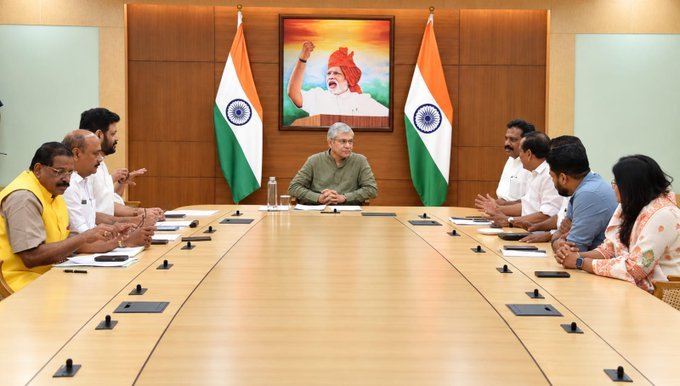
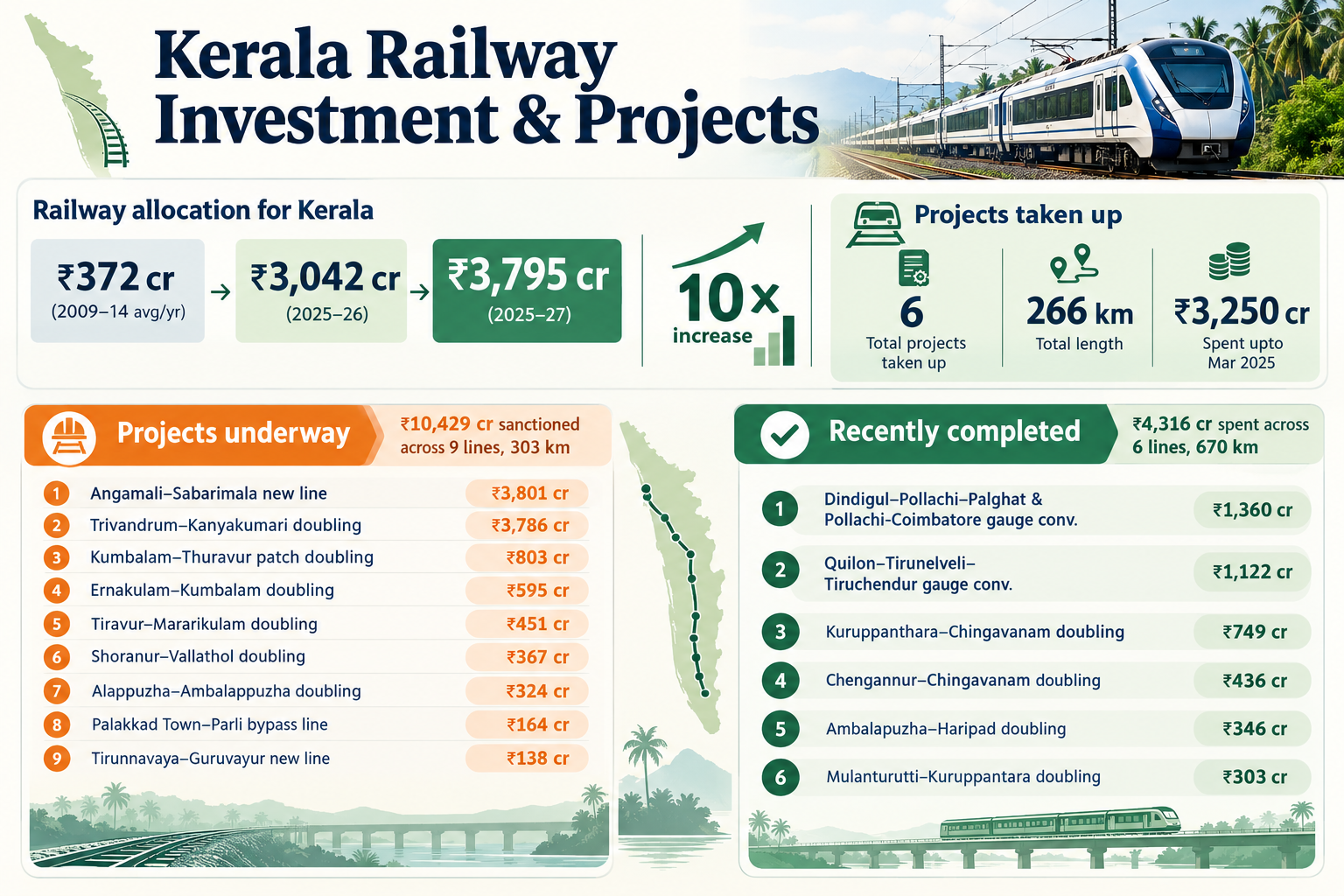
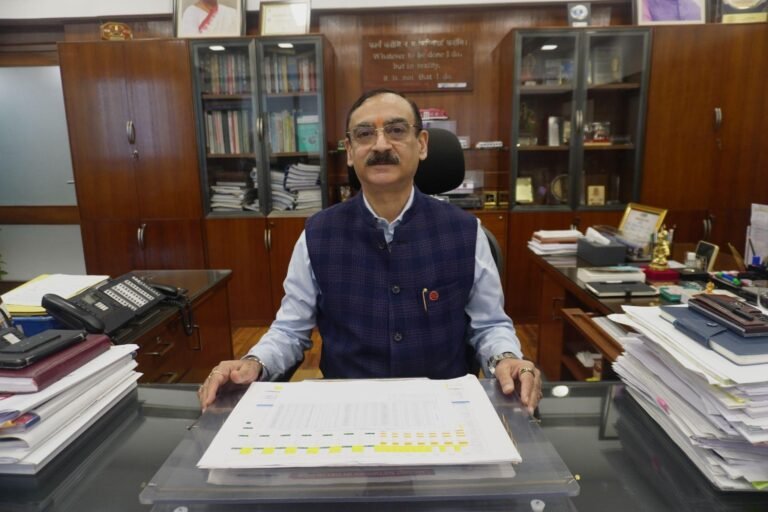
NEW DELHI (Metro Rail News): Members of Parliament from Keralam met Union Railway Minister Shri Ashwini Vaishnaw on Monday, September 21, 2026, to discuss the ongoing restructuring of the Palakkad Railway Division. During the meeting Shri.Vaishnaw highlighted that the allocation for railway development in Keralam rose nearly tenfold from ₹372 crore during 2009-14 to ₹3,795 crore in FY 2026-27.
Met with the Hon’ble MPs from Keralam.
We discussed the operational issues in Mangaluru. The Mangaluru railway area was divided into three different zones, which was creating serious operational problems. The decision to keep Mangaluru in SWR will solve the operational problems.… pic.twitter.com/C8qZdMW9Gc
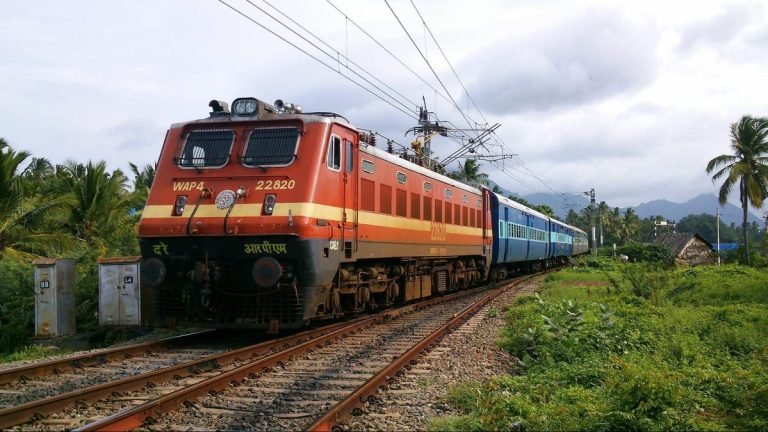
Railway projects worth more than ₹20,000 crore are currently under execution in Keralam. These include nine multitracking and new-line projects, 145 flyovers and underpasses, and 19 station redevelopment projects.
The minister also highlighted Keralam’s railway electrification, stating that the state has achieved 100% electrification. Since 2014, six major doubling and gauge-conversion projects covering around 670 km have been completed at a total cost of ₹4,316 crore.
He further stated that the next phase of railway development in Keralam is already underway,such as Angamali-Sabarimala new line,Tirunnavaya-Guruvayur new line,Ernakulam Kumbalam doubling and Alappuzha-Ambalapuzha doubling projects focused on increasing capacity, improving connectivity and strengthening the state’s railway infrastructure.
He highlighted 145,Road Over Bridges(ROB)/Road Under Bridges(RUB) are under construction at a cost of ₹4,786 Crore.
Passenger services have also expanded. Keralam currently has six Vande Bharat services and six Amrit Bharat services. A total of 22 new train services have been introduced in the state over the last two years.
Under the Amrit Bharat Station Scheme, 35 stations have been identified for redevelopment, of which work has been completed at 11 stations. These include Angamali for Kaladi, Chalakudi, Changanassery, Chirayinkeezh, Ferok, Kuttippuram, Nilambur Road, Shoranur Junction, Tripunithura, Vadakara and Wadakkanchery.
Indian Railways Ministry is also preparing for further capacity expansion in Keralam. Detailed Project Report surveys are being carried out for more than 800 km of proposed third- and fourth-line works across six sections. These projects are aimed at increasing railway capacity, particularly along the north-south corridor through Keralam.
However, land acquisition remains a major challenge for several railway projects in the state. According to the latest figures, 78 hectares of land have been acquired, while another 540 hectares are required. The Angamali–Sabarimala new railway line is one of the major projects affected by land acquisition. The 111-km project requires around 416 hectares of land, and the pending acquisition has affected its progress.
Decision on Palakkad Railway Division Bifurcation
The transfer of the Mangaluru railway area from Palakkad Division of Southern Railway to Mysuru Division of South Western Railway was one of the key issues discussed during the meeting. Keralam MPs sought reconsideration of the decision, while Shri.Vaishnaw defended the move, citing operational difficulties caused by the earlier division of the Mangaluru railway area.
In a post on X, Shri.Vaishnaw said, “We discussed the operational issues in Mangaluru. The Mangaluru railway area was divided into three different zones, which was creating serious operational problems. The decision to keep Mangaluru in SWR will solve the operational problems.”
Keralam MPs have raised concerns that the Mangaluru region is financially important to Palakkad Division. They fear that its removal could reduce the division’s revenue base and affect its future development.
It is now clear that Palakkad division bifurcation and transfer of Mangaluru to Mysuru division of Southern Western Railway will not be withdrawn.
DELHI (Metro Rail New): Indian railways has approved four projects worth Rs736 crore in Uttar Pradesh, Maharashtra, Andhra Pradesh and Gujarat. The work covers train safety technology, modern signalling, a stronger electric power supply for trains and a new road bridge over railway tracks.
Each project sits in a different railway zone and each addresses a different part of daily operations: preventing collisions, moving trains more reliably through stations, and keeping road and rail traffic apart.
Indian Railways approves Kavach 4.0 rollout in Uttar Pradesh
The largest signal approval of Rs252 crore, will fund the rollout of Kavach 4.0 across 607.7 kilometers in the Lucknow Division of North Eastern Railways. Kavach is India’s own automatic train protection system. It tracks ahead and can stop the train on its own if the driver misses a signal or goes too fast for conditions. This makes it a key tool to prevent collisions.
Kavach coverage will be extended to the remaining sections of the division that do not have it yet. It will strengthen the safety setups for trains running there.
Maharashtra Stations to get new electronic interlocking system
In Maharashtra Rs209 crore has been approved to install electronic interlocking at seven stations in the Solapur Division of Central Railway:
Mohol
Mundhewadi
Bale
Solapur
Hotgi Junction-Hotgi A Cabin
Shahbad
Wadi Junction.
The system will control signals and track points so trains cannot be offrouted. Electronic interlocking replaces the older relay based version with a computer based one. Some mechanical parts have more dependable operation and easier management of train movements.
Kavach is an automatic signalling and centralised traffic control system. The new system will support those technologies as they are implemented.
Guntur section to get ₹142 cr power supply upgrade
A Rs142 crore project will upgrade the electric power supply on the Savalyapuram-Guntur section of South Coast Railway. The section runs for 73 route kilometers, equal to 146 track kilometers.
Electric trains draw power from overhead lines and the second wire helps to push power along the line. This will allow heavier and faster trains to run without straining the supply.
This change is expected to help the section handle more trains as traffic grows.
Four-Lane ROB approved in Gujarat
In Gujarat, Rs 133 crore has been approved to build a four-lane road overbridge(ROB). It will come up at level crossing on the Udhna-Ukai Songadh section of Western Railway. At this spot road vehicles and trains cross at the same level, which can cause waiting and danger.
Indian Railways approves construction of a ₹133 crore four-lane Road Over Bridge (ROB) on the Udhna-Ukai Songadh section of Western Railway.#RailTransformation#RailInfra
The new bridge will carry road traffic above the railway line, so vehicles and railways will no longer cross the paths on the Udhna-Ukai Songadh section. The cost will be shared equally between the Railways and the state Government. The bridge will have a main railway bridge portion, a long viaduct of 311.58 meters, and an approach road of 524.32 meters. It will benefit the passengers through improved operational efficiency and reliability.
PUNE (Metro Rail News): The Maharashtra government has approved ₹180 crore in fresh funding for three Pune Metro expansion corridors during the 2026-27 financial year. The funding includes equity support for the Vanaz-Chandni Chowk and Ramwadi-Wagholi extensions. It also includes equity support and an interest-free subordinate loan for the Swargate-Katraj corridor.
The state Urban Development Department issued directives for the funding on September 18, according to a Hindustan Times report. The releases will support ongoing work to extend Metro connectivity across Pune and Pimpri-Chinchwad.
Pune Metro’s Swargate-Katraj gets ₹180 crboost
The Swargate-Katraj corridor will receive the largest share of the latest funding.The state has approved:
₹100 crore as equity
₹80 crore as an interest-free subordinate loan
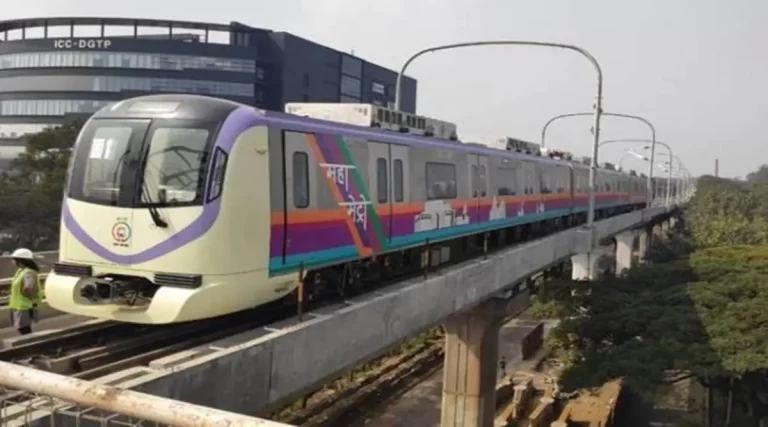
Maha Metro is developing the fully underground Swargate-Katraj corridor, which has an approved project cost of ₹2,954.75 crore. The Maharashtra government has committed a total equity contribution of ₹397.83 crore towards the Pune Metro extension project. With the latest ₹100-crore release, the state’s equity disbursement for the corridor will reach ₹200 crore. Earlier equity releases included:
₹60 crore in August 2025
₹40 crore in December 2025
The government has also sanctioned a total subordinate loan of ₹322.10 crore for the project. The latest ₹80 crore release will take the amount released so far to ₹160 crore.
According to the government order, Maha Metro will repay the subordinate loan in a single instalment after clearing the main loan taken for the project. The loan is currently interest-free. If interest becomes applicable later, Maha Metro will have to repay the principal along with the applicable interest. The funds will be released in phases and used for priority works under the project.
Two extensions receive equity support
The state has also approved ₹20 crore in equity funding for the extensions of the existing Pune Metro’s Vanaz-Ramwadi Metro corridor. The two extensions are:
Corridor
Route
Corridor 2A
Vanaz-Chandni Chowk
Corridor 2B
Ramwadi-Wagholi/Vitthalwadi
Together, the corridors cover 12.75 km and 13 stations. The extensions are planned to improve Metro access to areas such as:
Chandni Chowk
Kothrud
Kharadi
Wagholi
The combined project has a revised approved cost of ₹3,626.24 crore. The state government has committed ₹479.71 crore as its equity contribution. The latest ₹20 crore release will take the total state equity released for the two extensions to ₹80 crore. The state had released ₹60 crore on June 19, 2026.
Separate accounts required for project funds
The government resolutions direct Maha Metro to maintain separate accounts for funds received from different agencies. These accounts must track funding from:
The Central government
The Maharashtra government
The Pune Municipal Corporation
The arrangement is intended to maintain a clear record of the money being released for the different Metro projects.
Pune Metro expansion to improve regional connectivity
Maha Metro officials said the funds will support important construction work and help extend Metro services to more parts of Pune and Pimpri-Chinchwad.
However, the latest funding does not confirm any changes to the opening dates. The progress of the three Pune Metro corridors will depend on construction work, further fund releases and other project approvals.
PATNA (Metro Rail News): Work on Patna Metro’s underground Mithapur-Rukanpura section is moving ahead, with construction of the Rukanpura station now entering the diaphragm wall stage. The 10.5 km underground stretch along Nehru Path will see a major tunneling push in November, with 4 TBMs planned for deployment.
At Rukanpura, large steel reinforcement cages are being lowered into the station site using heavy-deauty cranes. Engineers are checking the placement and alignment before the cages are used for the next stage of diaphragm wall construction.
Patna Metro Advances Rukanpura Work Ahead of Tunnelling Push
On the ground, cranes are lowering big steel cages into the station site at Rukanpura. Engineers are checking that these cages are placed correctly before the next step begins. These steel cages will be the base of diaphragm walls which have strong concrete walls that will hold up the ground around the station as workers dig deeper underground.
The next step will be the tunnelling,Four tunnel boring machines (TBMs) will soon be lowered into the ground near Patna Zoo. Two of these machines will dig toward Patna Junction,and the other two will dig towards Rukanpura. This means tunnelling can be done from both directions at the same time and speeding up the work. Engineers have also made a small change near Patna Zoo. They just moved the tunnel path slightly so it stays away from the Zoo but still follows the road.
Six stations planned on the underground Red Line
The underground section of Patna Metro is going to be 10.5km long and will have six stations:
Patna Zoo
Vidyut Bhawan
Patna Junction
Raja Bazaar
Vikas Bhawan
Rukanpura
Patna Junction station will serve as interchange station, allowing passengers to travel between two corridors. The alignment will pass beneath Nehru Path also known as Bareilly Road, connecting both ends of the route through the city’s busy central area.
About 5.2km of tunnel has already been built between Moln-ul-Haq Stadium and Patna Junction, after a tunnel boring machine completed its ninth breakthrough there. This shows that underground work is moving forward in more than one part of the city at the same time.
Commuter impact
Once complete, the Mithapur-Rukanpura underground link of Patna Metro will connect corridor 1’s central Patna stations including Patna junction, Vikas bhawan, Vidyut Bhawan, Raja bazaar and Patna Zoo to the already-operational elevated blue line sections around Khemnichak, Zero Mile, Bhoothnath and Patliputra bus terminal, which opened progressively between October 2025 and July 2026. This would extend metro connectivity from Patna’s eastern elevated stretch into the dense central city core, though PMRCL has not announced a firm public commissioning date for this specific underground segment.
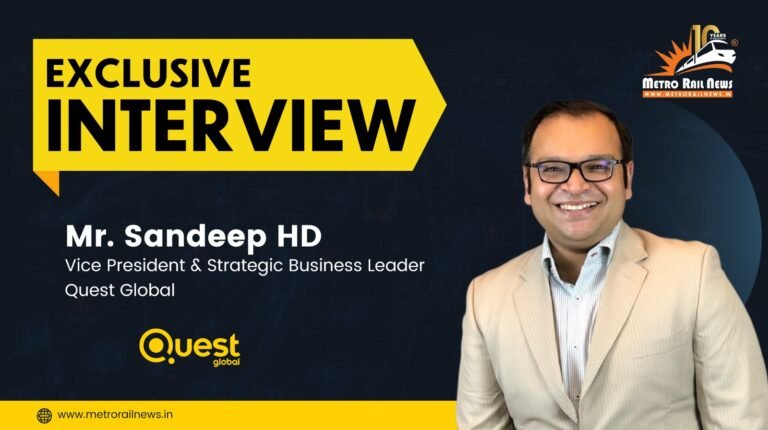
DELHI(Metro Rail News): Metro Rail News conducted an exclusive interview with Mr. Sandeep HD, Vice President and Strategic Business Leader, Transportation, Quest Global. During the conversation, Mr. Sandeep discussed Quest Global’s approach to addressing the evolving requirements of the rail industry through end-to-end engineering capabilities, digital transformation, signaling modernisation, and lifecycle management. He also elaborated on the company’s role in helping rail operators and industry stakeholders address aging infrastructure, sustainability, changing passenger expectations, and the growing demand for advanced engineering talent. The conversation further covered Quest Global’s global-local delivery model, the future of intelligent and connected rail networks, and how the company is evolving its capabilities to support the sector’s transition towards safer, smarter, more sustainable and technologically advanced rail systems. Here are the edited excerpts:
1. Could you walk us through your professional journey, which spans over 20 years? What are some of the major challenges that you have overcome?
Over the last two decades, my career has centered on engineering-led transformation across transportation industries. I have had the opportunity to work closely with global OEMs and operators, helping them solve complex engineering challenges across product development, digital transformation, operational excellence, and business growth.
Today, as Vice President and Strategic Business Leader for Transportation at Quest Global, I oversee business growth and customer engagement across Automotive, Rail, and EPCM. One of the most rewarding parts of my journey has been helping organizations navigate rapid technological change while holding on to engineering quality, safety, and execution excellence.
Among the major challenges I have encountered are managing large-scale engineering programs across multiple geographies, addressing skills shortages in emerging technology domains, and helping customers accelerate digital transformation without compromising reliability or safety. The transportation sector is undergoing significant disruption driven by electrification, automation, connectivity, sustainability, and AI. Successfully balancing innovation with operational realities has been a recurring challenge and an important learning throughout my career.
2. As the Strategic Business Leader overseeing Automotive, Rail, and EPCM at Quest Global, how do you balance the distinct demands of each vertical while maintaining a unified strategic direction?
Automotive, Rail, and EPCM each have their own market dynamics, but they share a common need for engineering excellence, digital innovation, sustainability, and operational efficiency.
Our approach is to build deep domain expertise within each business while leveraging common capabilities like software engineering, digital engineering, embedded systems, AI, data analytics, PLM, and systems engineering. That lets us cross-pollinate ideas and best practices across industries. For example, lessons learned in automotive software-defined architectures can help accelerate innovation in rail digitization. Similarly, systems engineering and lifecycle management expertise developed in rail programs can benefit large infrastructure and EPCM projects.
The shared objective across all three sectors is simple: help customers solve their hardest engineering problems while accelerating innovation, improving efficiency, and advancing sustainability goals.
3. Quest Global’s rail offerings span rolling stock engineering, signaling, digital solutions, and PLM. How does this end-to-end breadth translate into a competitive advantage for you?
Quest Global’s strength lies in its ability to integrate rolling stock engineering, signaling, digital engineering, and PLM capabilities to address challenges throughout the entire rail asset lifecycle. Rather than solving problems in isolated domains, we take a systems-level approach that helps customers improve performance, reliability, safety, and operational efficiency.
This breadth enables us to serve as a single strategic engineering partner, supporting customers from concept development and design through integration, validation, modernization, and lifecycle support. By reducing the need to coordinate across multiple vendors, customers benefit from faster decision-making, lower program complexity, and reduced execution risk.
Additionally, our global delivery model and deep rail domain expertise enable us to combine best practices from across markets and accelerate digital transformation initiatives. This helps rail OEMs, operators, and infrastructure providers modernize their networks, optimize asset performance, and meet evolving passenger, regulatory, and sustainability expectations with greater confidence.
4. The rail industry is grappling with aging infrastructure, shifting passenger expectations, and mounting pressure to decarbonize. How can Quest Global help the rail operators in dealing with these challenges?
The rail industry is navigating three major priorities simultaneously: modernizing aging infrastructure, enhancing the passenger experience and advancing sustainability goals. Quest Global helps operators address these challenges through a combination of domain expertise, digital engineering, signaling modernization, and lifecycle management solutions.
For aging infrastructure, we help operators modernize legacy systems through digital signaling upgrades, ERTMS/ETCS migration support, infrastructure integration, verification and validation, and predictive maintenance solutions. We also leverage digital twins, AI-driven asset monitoring, and analytics to identify failures before they occur, extend asset life, improve network reliability, and reduce maintenance costs.
To meet evolving passenger expectations, Quest Global supports the development of intelligent rail systems that improve service reliability, operational efficiency, and passenger connectivity. Examples include digital asset management platforms, real-time operational analytics, and advanced Train Control and Monitoring Systems (TCMS), and data-driven solutions that help operators improve on-time performance, safety, and overall journey experience.
For decarbonization, we help customers optimize rolling stock performance, improve energy efficiency, reduce operational waste, and maximize asset utilization through predictive maintenance and data-driven operations. By enabling smarter track management, condition-based maintenance, and modernized rail systems, we support operators in achieving both operational and sustainability goals objectives while continuing to provide safe, reliable, and efficient transportation.
5. The talent challenge in rail is real, as new technologies are outpacing the available skilled workforce. How does Quest Global address this gap internally?
The rail industry is going through a significant skills transition as technologies like AI, advanced signaling, software-defined systems, cybersecurity, cloud platforms, and digital twins become more important.
We address this through continuous learning, structured capability development, domain-specific training programs, and global knowledge-sharing networks. We invest in building multidisciplinary teams that combine deep rail expertise with emerging digital skills.
Our global engineering network also enables us to access diverse talent pools across regions while ensuring knowledge transfers across programs and geographies. That’s how we stay responsive to rapidly evolving customer requirements while maintaining our engineering quality and safety standards.
6. Digitizing rail signaling, moving from legacy systems to standards like ERTMS, is central to modernizing rail infrastructure. How is Quest Global approaching this transition with its clients?
The transition from legacy signaling systems to modern standards like ERTMS is one of the most significant transformations happening in rail today. Quest Global supports customers across the full signaling lifecycle, including system engineering, software development, verification and validation, safety compliance, SIL-4 systems, integration, testing, and certification support.
We also recognize that modernization can’t just be a technology upgrade. It calls for careful integration with existing infrastructure, regulatory requirements, operational processes, and workforce readiness.
Our approach combines deep signaling expertise with advanced digital technologies to help operators improve capacity, safety, reliability, and interoperability while minimizing operational disruption. Looking ahead, we see signaling combining ERTMS, AI, predictive analytics, cloud connectivity, and real-time operational intelligence to enable safer, smarter rail networks.
7. With your global-local delivery model, how do you ensure consistency in quality across diverse geographies and rail standards?
Rail is a highly regulated industry where consistency and safety are non-negotiable. Quest Global leverages a global engineering delivery model supported by standardized engineering processes, quality frameworks, governance mechanisms, and domain-specific best practices. This enables us to deliver consistently, whether we are working on projects in Europe, North America, Asia-Pacific, or other regions.
At the same time, local expertise remains critical because rail standards, regulations, and operational requirements vary considerably across geographies. Our model combines global engineering scale with local market knowledge, allowing us to meet regional requirements while maintaining common quality and delivery standards.
8. How do you envision the rail network of 2035 from an engineering and passenger experience standpoint? What would it look like, and what would it have taken to get there?
By 2035, I believe rail networks will be significantly more connected, autonomous, intelligent, and sustainable. From an engineering perspective, we will see widespread use of AI-driven asset management, predictive maintenance, advanced signaling architectures, digital twins, real-time operational analytics, and highly integrated control systems. These technologies will help maximize network utilization while improving safety and reliability.
For passengers, the experience will become increasingly seamless. Journey planning, ticketing, onboard connectivity, accessibility features, and multimodal integration will all be digitally enabled. Rail travel will be safer, more personalized, more reliable, and more sustainable.
Achieving this vision will require sustained investment in digitization, infrastructure modernization, interoperable standards, workforce development, and collaborative innovation across the rail ecosystem.
9. How is Quest Global evolving to meet the future demands of the rail sector?
Quest Global is continuously expanding its capabilities in digital engineering, AI, data analytics, software engineering, signaling modernization, lifecycle management, and sustainable mobility solutions.
Our focus is on helping customers navigate increasing system complexity while accelerating innovation. We continue to invest in capabilities that support digital rail transformation, intelligent infrastructure, modern signaling platforms, predictive maintenance, connected rolling stock, and operational optimization. As the rail sector evolves, our goal stays the same: to be the most trusted engineering partner for customers facing their most complex engineering challenges.
10. What message would you like to convey to the readers of Metro Rail News?
Rail transportation is entering one of the most exciting periods in its history. Urbanization, sustainability goals, digital technologies, and changing passenger expectations are reshaping how rail systems are designed, operated, and maintained. This transformation creates tremendous opportunities for collaboration across the ecosystem.
At Quest Global, we believe engineering has a unique role to play in creating safer, greener, smarter, and more connected transportation systems. By combining domain expertise with digital innovation, the industry can build rail networks that serve future generations while addressing today’s operational and environmental challenges.
We look forward to working alongside rail operators, manufacturers, infrastructure providers, and technology partners to help shape the future of mobility.
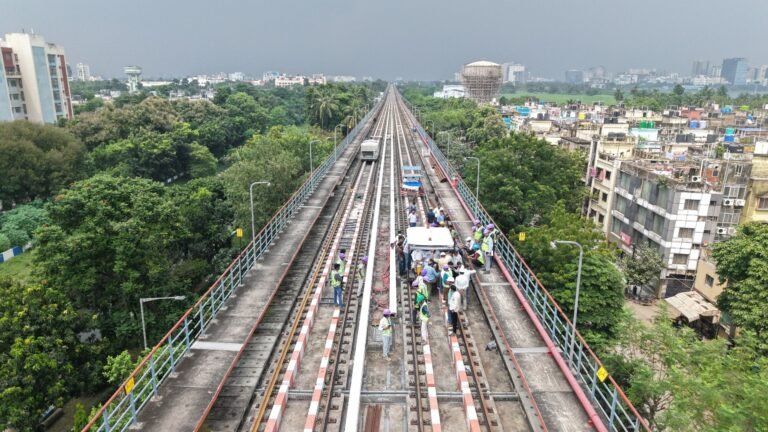
KOLKATA (Metro Rail News): The Beleghata-IT Centre stretch of Kolkata Metro’s Orange Line has moved closer to the next stage of construction after officials completed the first push trolley inspection. With the viaduct and ballastless track works now complete, electrical work can begin on the section.
The first push trolley inspection on the Beleghata–IT Centre section of Kavi Subhash–Jai Hind Bimanbandar Metro Corridor (#OrangeLine) has been conducted successfully marking a major milestone for the project. With the viaduct and ballastless track (BLT) works on the section now… pic.twitter.com/OT02cFKTDR
The inspection took place on September 17 on the Beleghata-IT Centre section in Salt Lake. The stretch is part of the Kavi Subhash-Jai Hind Bimanbandar corridor and will eventually provide Metro connectivity to the Sector V IT hub.
Kolkata Metro completed key track works
The trolley inspection was carried out after the completion of two major civil and track-related works:
Viaduct construction
Ballastless track (BLT) work
The inspection allowed officials to check the completed track section before the project moves into the electrical stage. A Metro official said the completion of these works has cleared the way for electrical installations on the stretch. The next phase will involve the electrical systems needed to prepare the section for testing and eventual operations.
Beleghata-IT Centre is the third operational section
The Beleghata-IT Centre stretch forms the third phase of the 32-km Kavi Subhash-Jai Hind Bimanbandar Metro corridor, also known as the Kolkata Metro Orange Line. The corridor was sanctioned in 2010 and is being developed in five phases. Two sections are already carrying passengers:
Kavi Subhash-Hemanta Mukhopadhyay, covering the Rubi crossing area
Hemanta Mukhopadhyay-Beleghata
The next section towards the IT Centre will extend the operational reach of the corridor into Salt Lake.
Kolkata Metro advances towards Sector V
The Beleghata-IT Centre section is important because it will bring Metro connectivity closer to Salt Lake Sector V, one of Kolkata’s major IT and commercial areas. Once passenger services begin, people travelling to Sector V will have another public transport option, potentially reducing dependence on road-based travel for this corridor.
However, electrical work is only the next construction stage. The section will still need further systems work, testing and the required safety clearances before passenger operations can begin.
Orange Line aims to link south Kolkata with airport zone
The full 32-km Kavi Subhash-Jai Hind Bimanbandar corridor is being developed to create an east-west Metro connection across the city. Once completed, the Orange Line will link the southern parts of Kolkata with the airport side through a series of sections, including the Salt Lake stretch. Work is still progressing on the remaining sections of the corridor.
ASSAM (Metro Rail News): Assam is exploring the possibility of developing a Delhi-Meerut-style Regional Rapid Transit System (RRTS). Chief Minister Himanta Biswa Sarma said that the state has started preliminary discussions with the Asian Development Bank (ADB). The proposed RRTS could improve regional connectivity between key growth areas. However, the project is still at an early discussion stage, and no final plan has been announced yet.
Sarma said on September 18 that the state and ADB are discussing a possible blueprint for a high-speed regional rail network focused on sustainable transport. No routes, stations, project cost or implementation timeline have been finalised yet.
An Assam Rapid Transit System (RRTS), on the lines of Delhi–Meerut ?
Preliminary talks with @ADB_HQ are underway to chart a blueprint for sustainable transport connecting key growth areas.
Sarma shared the update in a post on X, saying that Assam has started preliminary talks with ADB to explore an RRTS network similar to the Delhi-Meerut corridor. The proposal aims to connect important growth centres through a faster regional rail system. However, the state has not yet identified the cities or routes that could form the network. At this stage, several key details are still under discussion:
Proposed routes and cities
Number and location of stations
Project cost
Funding structure
Construction timeline
Target date for operations
This means the Assam RRTS is currently an idea being studied rather than an approved rail project.
What Assam could take from Delhi-Meerut RRTS
The Delhi-Meerut RRTS offers a model for connecting major urban centres beyond conventional city-based Metro systems. The 82-km Delhi-Ghaziabad-Meerut corridor is being implemented by the National Capital Region Transport Corporation (NCRTC) under the Namo Bharat system. It connects Delhi with Ghaziabad and Meerut through a dedicated regional rail corridor.
The system is designed for operational speeds of up to 160 kmph and focuses on faster travel between major regional centres. Unlike a conventional Metro, which mainly serves trips within a city, an RRTS is designed for longer regional journeys. It can connect urban centres and surrounding growth areas while providing a faster alternative to road travel.
Why Assam is looking at RRTS
For Assam, an RRTS could potentially create faster links between major urban and economic centres. A well-planned regional network could also support development beyond individual cities by improving access to jobs, education and business centres.
However, the state’s geography, settlement pattern and travel demand would need to be assessed before deciding whether an RRTS model is suitable and where such corridors should run. The ADB discussions could help Assam examine these issues and prepare a broader transport plan before any specific corridor is taken forward.
The immediate step is to develop a blueprint for the proposed network. That would need to identify potential corridors, estimate demand, assess costs and examine the most suitable technology and funding model. Only after these studies would the state be in a position to decide whether to move ahead with specific RRTS corridors. For now, Sarma has said more details will be shared as discussions with ADB progress.
DELHI(Metro Rail News):Metro Rail News conducted an exclusive interview with Dr Vikas Kumar, Managing Director, Delhi Metro Rail Corporation (DMRC). The conversation touched upon crucial aspects including innovations, expansion and DMRC’s continuous focus on improving passenger convenience. During the conversation, Dr Kumar highlighted the measures being undertaken by DMRC to strengthen its financial sustainability. He also emphasised DMRC’s focus on Transit-Oriented Development (TOD) practices to generate sustainable revenue. In addition, Dr Kumar shed light on DMRC’s broader vision of extending its expertise in project execution, consultancy, DPR preparation, and operations and maintenance (O&M) to overseas markets through its international arm, Delhi Metro International Limited (DMIL). Here are the edited excepts:
1. Sir, you have been leading India’s largest metro system for the last 4 years. Could you please let us know the key milestones Delhi Metro Rail Corporation (DMRC) has achieved under your leadership and what are the challenges you have overcome during this span?
I assumed responsibility as Managing Director of DMRC at a time when COVID had just receded, and we were facing several challenges, particularly the sharp decline in ridership. A number of businesses, especially along the Airport Express corridor, had also moved away from us. So, the immediate challenge was to restore ridership and bring the system back to normal levels.
At DMRC, our vision has always been that the customer should come first, while safety, punctuality and reliability must remain paramount. There can be no compromise on these principles. Keeping these priorities at the centre, we decided to focus on delivering greater value to our customers through improved services and the adoption of technology.
We launched the Sarthi app, which provides a wide range of information to passengers. We also introduced unmanned train operations and took several steps towards the indigenous development of technology. In 2023, we started work on the Indigenous Automatic Train Supervision system, or i-ATS, and we are also working on i-CBTC, an indigenous Communication-Based Train Control system. These initiatives are aimed at strengthening our technological capabilities and reducing dependence on imported systems.
Another important area of focus has been integrated ticketing. We have worked towards providing passengers with multiple modes and channels for ticketing, along with different payment options. The objective has been simple: passengers should have greater choice and convenience when using the Delhi Metro.
2. What’s the current status of Delhi Metro Phase 4 and Phase 5A? What are some of the milestones we can expect in the coming months?
In March, two major sections of the Delhi Metro Phase 4 expansion were officially inaugurated and commissioned: the Majlis Park to Maujpur-Babarpur corridor (Pink Line extension) and the Deepali Chowk to Majlis Park stretch (Magenta Line extension). The tunnelling work on Line 10 posed technical challenges, including the relocation of a sewer line and navigation through densely populated urban areas. However, we have overcome the challenges, and we are planning to commission the remaining portions of the priority corridors in phases in the months ahead.
As far as Phase 5A is concerned, we are working towards a strict deadline of completing the project by 2028. Against this backdrop, we are in discussions with the DDA on the land and planning-related aspects of the project so that the required clearances and coordination can be taken forward within the stipulated timeline.
3. The Golden Line is expected to play a crucial role in airport connectivity. What economic impact do you expect this corridor to have beyond passenger mobility?
The Golden Line (Line 10) will connect some very important areas of South Delhi with Aerocity and the airport. It will pass through areas such as Vasant Kunj, Kishangarh, Chhattarpur, IGNOU, Saket, and Sangam Vihar, and will connect these areas with Tughlakabad.
These are important residential, commercial and institutional areas, and better connectivity will improve their accessibility to the airport as well as other parts of Delhi. It will also provide better access to employment centres and commercial activity in these areas.
So, beyond passenger mobility, the corridor will support economic activity by improving connectivity to these important parts of South Delhi. It will also reduce dependence on road-based transport and make movement between residential areas, employment centres and the airport more convenient.
4.What measurable operational improvements has DMRC achieved since introducing unattended train operations? Are there plans to extend driverless train operation on other lines of the Delhi Metro?
Delhi Metro has established a high standard of operational efficiency, punctuality and reliability. In fact, in terms of punctuality and reliability, Delhi Metro has outpaced established metro systems such as Hong Kong MTR. At present, the overall punctuality of the Delhi Metro network stands at 99.95%, while the corridors under unattended train operations record an even higher punctuality level of 99.97%.
The introduction of unattended train operations has contributed to greater operational consistency and more precise management of train schedules. It has also enabled Delhi Metro to increase service frequency on key corridors. This has enabled higher passenger carrying capacity and more efficient utilisation of the existing infrastructure.
Going forward, unattended train operations are planned to be extended to the upcoming corridors under Phase IV. The existing corridors continue to operate efficiently under the present system and are well suited to their current operational requirements. At this stage, there is no operational requirement to convert the existing corridors to unattended train operations.
5.DMRC has repaid ₹9,948.09 crore of its JICA loan through operational revenues. What financial principles have enabled the organisation to maintain this repayment trajectory while continuing to invest in network expansion?
DMRC’s relationship with JICA has been very long. The repayment of the JICA loan has been possible because of a disciplined approach towards financial management and the consistent generation of revenue from operations and other activities. We have placed considerable emphasis on developing non-fare revenue sources. Transit-oriented development is one such area. We are working with land-owning agencies and other stakeholders to make better economic use of the land and assets available around the Metro network. The objective is not only to improve connectivity and urban development but also to create sustainable revenue streams for the organisation. Our approach is to ensure that the assets associated with the Metro system generate value without compromising the primary purpose of the network. ToD provides an opportunity to integrate transport infrastructure with commercial and other urban uses and, at the same time, strengthen the organisation’s revenue base. The repayment of ₹9,948.09 crore through operational revenues is not the result of a single measure. It reflects financial discipline, operational efficiency, and the development of multiple revenue streams.
6.Financial sustainability has been one of the most discussed topics lately. Could you shed some light on Delhi Metro’s financial performance, particularly its fare and non-fare revenue streams? What share of DMRC’s revenue would you ideally like non-fare income to contribute over the next decade?
Financial sustainability is an important consideration for any metro system, but our approach has always been to balance financial performance with passenger affordability. DMRC is making an operational profit, but we have also consciously capped fares within an affordable range so that the Metro remains accessible to a large section of the population. Fare revision cannot be viewed only from the perspective of revenue generation because affordability and wider public mobility are equally important considerations.
This makes the development of non-fare revenue streams particularly important for us. As I mentioned earlier, transit-oriented development is one of the key areas through which we are working to generate additional revenue. The land and assets associated with the metro network can create sustainable revenue streams without placing the entire financial burden on passengers.
At present, around 29% of DMRC’s revenue comes from non-fare sources. Our objective is to increase this contribution substantially over the coming years, with a target of taking the share to around 50%.
The larger objective is to create a more balanced revenue model in which fare revenue continues to support affordable public transport, while non-fare sources such as transit-oriented development, property development, advertising, and other commercial activities provide greater financial support to the organisation.
7.What measures is DMRC taking to promote greater public transport adoption and reduce dependence on private vehicles? What initiatives are being taken to promote last-mile connectivity?
We have taken a number of steps in this direction. If you see, regenerative braking is there, so whatever energy is generated during braking, that is utilised. Similarly, we are increasing the solar infrastructure at our stations, and we are also working on waste management.
The idea is that public transport should not only provide mobility, it should also be sustainable. And I think reducing our dependence on fossil fuels is also important, particularly given the kind of situation we are seeing in the Gulf and the uncertainty which is there. So, if more people use public transport, obviously, the dependence on private vehicles and fossil fuels will come down.
Another important area is Multi-Modal Integration. We are developing MMI at several stations, such as Sarai Kale Khan, so that different modes of public transport can be integrated with the Metro. This makes it easier for a passenger to shift from one mode to another and complete his journey.
We are also working on last-mile connectivity and have collaborated with service providers such as Rapido and Bharat Taxi. The idea is that the passenger should not only get a convenient Metro journey, but his complete journey should be convenient. If a person can easily reach the Metro station and can also get a convenient mode of transport after leaving the station, then obviously, it will encourage more people to use public transport instead of private vehicles.
8.Consultancy has become a crucial business vertical for DMRC. How do you see this business evolving over the next five years?
Well, consultancy has become an important business vertical for DMRC, and we are doing multiple types of work in this area. We are preparing DPRs, providing consultancy for Metro projects, assisting in project execution, and also providing Operation and Maintenance services.
In fact, we have also competed with established international players in this field. For Mumbai Metro Line 3, we outbid Keolis, and for Chennai Metro Phase II, we outbid Deutsche Bahn, and DMRC was successful in securing both the assignments. This shows that the experience and expertise that DMRC has developed over the years are also giving us the capability to compete with established international players.
9.Recent reports indicate that countries such as Israel, Egypt, and Kenya have shown interest in collaborating with DMRC. Which international markets do you consider the highest priority for DMIL, and what types of projects are you targeting?
DMIL has been established with the objective of taking the experience and expertise of DMRC to overseas markets. We are looking at different opportunities where our experience can be useful. Initially, we are targeting project execution, Operation and Maintenance, preparation of DPRs and other consultancy services.
If you see, many African countries are developing their MRTS infrastructure and we are well equipped to support them because we have the experience of planning, executing and operating a large Metro network. So, Africa is certainly an area where we see opportunities. Egypt is also developing High Speed Rail as well as MRTS infrastructure, so that is another opportunity for us. We are looking at how our experience can be utilised in such projects.
Similarly, there is a lot of reconstruction and infrastructure development that will be required in the Gulf countries because of the destruction caused by the ongoing wars. That can also create opportunities for organisations like DMRC, where our experience can be useful.
10. What are the key steps DMRC is taking to further improve the passenger experience?
We have taken several steps to improve the passenger experience, particularly through the use of digital technology. We have introduced multiple means of payment through various channels. A passenger can use QR ticketing, smart cards, NCMC cards, and can pay through UPI, net banking and other apps also.
We have, in fact, onboarded with ONDC also, so many merchants can come up and sell our tickets now. We have collaborated with NCRTC, Indian Railways and IRCTC in this endeavour. So, this is there as far as purchasing tickets is concerned.
The other aspect is providing information and guidance to passengers. For that, we have an AI chatbot also now. If you see, it is there, and it is helpful. It has all the information available for passengers and it talks as if a person is talking to you in your language. Currently, three languages are available in which it can converse.
If you see other facilities, we have planned lockers at stations. Then, station navigation through an app is also planned , so that if a person wants to go to maybe a toilet or find a place to eat, he would be guided by the map. Certain stations have now become so huge, and if a person is new, he would be guided by these.
So, these are the areas we are working on. There is always scope for improvement, and our team is working on these aspects to see how we can provide more value-added services to the passengers and further improve their experience.
11. What message would you like to convey to the stakeholders and the readers of Metro Rail News?
I would like to thank all the people who are working hard to make such a large organisation function. Running a Metro system of this scale requires the efforts of a large number of people, and I would like to appreciate all of them for their contribution.
I would also like to thank our passengers for their continued trust and support. At the same time, I would request passengers to cooperate with us and help us in keeping the Metro stations and premises clean. These are public spaces and maintaining cleanliness is a responsibility which requires the cooperation of everyone.
I would also like to thank all our stakeholders for their continued support and cooperation. The Metro system involves coordination with many organisations and stakeholders, and their support is important for us to continue providing reliable services, bringing innovation and take the system forward.
MAHARASHTRA (Metro Rail News): Indian Railways has approved a ₹493 crore new railway line between Mukutban and Gadchandur in Maharashtra. The 38.21-km line will create a shorter rail connection between two important industrial and mining areas.
The new line will also provide an alternative route for freight trains and help reduce pressure on busy railway sections. The line will connect Mukutban in Yavatmal district with Gadchandur in Chandrapur district under South Central Railway. It will support the transport of coal, cement and other industrial goods while also improving passenger connectivity in the region.
Mukutban and Gadchandur are located close to several major industrial and mining facilities. The area has cement plants, coal mines operated by Western Coalfields Ltd. and limestone mines. The new line is expected to provide a more direct rail connection to these clusters. This could reduce the distance and time needed to move freight to major markets and industrial centres.
The project is expected to handle around 6.08 million tonnes per annum (MTPA) of freight once it becomes operational. The expected freight mix includes:
Coal and coke
Cement
Sponge iron
Iron and steel
Metal scrap
Fertilisers
Foodgrains
The corridor is also expected to support two MEMU services in each direction every day, which will improve passenger connectivity between the two districts.
Shorter route for freight movement
One of the key benefits of the project is its potential to provide an alternative to the existing Wardha-Manikgarh section. Freight trains currently using busy routes can face capacity constraints, particularly as industrial traffic continues to grow.
The Mukutban-Gadchandur line would provide another route for moving goods and could help reduce dependence on heavily used sections. The shorter route is also expected to lower travel distances and transportation time for some freight flows, which could reduce logistics costs.
Direct connection to Majri-Nanded route
The new railway line will create a direct connection between the coal and cement-producing region and the Majri-Nanded railway route. This could reduce the distance for freight trains carrying coal, cement and RMSP traffic to destinations such as:
Jalna
Parbhani
Chhatrapati Sambhajinagar
Other parts of Maharashtra
Destinations in Karnataka
The new connection could therefore provide industries in the region with an additional route to reach markets beyond the existing network.
Could reduce pressure on Balharshah-Nagpur route
The project also has a wider network role. It is expected to reduce reliance on the Balharshah-Nagpur High-Density Network (HDN) route, which carries substantial passenger and freight traffic.
By adding another route, the new line can give Indian Railways more flexibility in handling freight flows. It could also help improve the use of capacity on existing sections by shifting some traffic to the new corridor.
Boost for less-connected areas
The new railway line will improve rail connectivity in parts of Yavatmal and Chandrapur that currently have limited rail services. It could help transport essential goods and make rail travel more accessible for local passengers and industries.
However, the project’s benefits will depend on how quickly construction and commissioning begin. The development of freight-loading facilities near industrial areas will also play an important role.
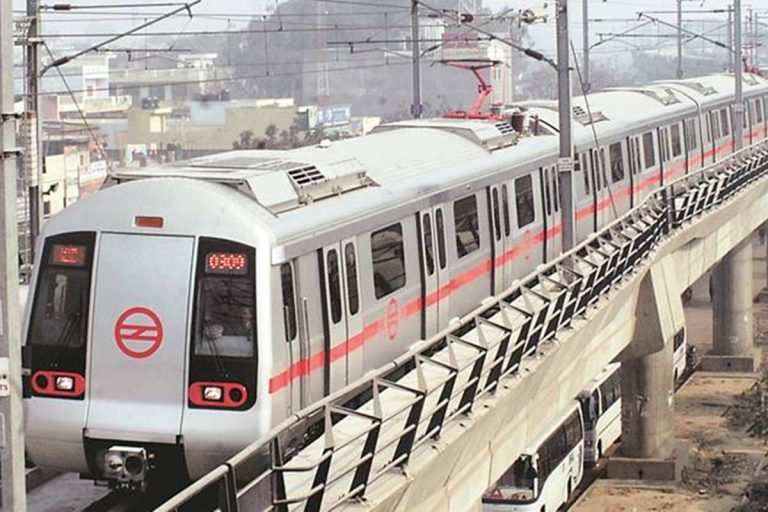
DELHI (Metro Rail News): Delhi Metro recorded its highest-ever passenger boardings on September 17, 2026, with 82,44,903 boardings. More commuters used the Metro as the ongoing DTC bus strike affected bus services.
DMRC increased Metro services to handle the extra passenger demand and manage the pressure on its network. The latest figure crossed the previous record of 81,87,674 passenger journeys, which Delhi Metro recorded on August 8, 2025, ahead of Raksha Bandhan.
DTC strike pushes more commuters towards Delhi Metro
The record came as disruptions to DTC bus services pushed more passengers towards the Metro. DMRC had already expected higher demand and increased services across its network. On September 16, DMRC added 20 train trips and ran eight extra trains based on passenger demand and operational needs.
The additional services mainly helped manage the rush during peak hours. DMRC continued the same arrangements on September 17, with eight extra trains planned between 8 am and 8 pm, depending on passenger demand.
Delhi Metro ridership record crosses 82 lakh
The September 17 figure shows a sharp rise in Delhi Metro ridership compared with the levels recorded before the bus strike. The latest record of 82.44 lakh passenger boardings shows how quickly the disruption in bus services increased demand for the Metro. For comparison:
September 17, 2026: 82,44,903 boardings (new record)
August 8, 2025: 81,87,674 passenger journeys (previous record)
The additional trains helped DMRC manage the sudden rise in passenger demand. Instead of following only the regular timetable, DMRC increased train trips across the network.The extra services were especially important during peak hours, when the Metro already handles a large share of Delhi’s daily public transport demand.
DelhiMetro takes on added pressure from bus disruption
The record shows how the Delhi Metro can serve as an alternative when a large part of the city’s bus network faces disruption. However, the sudden rise in passengers also puts extra pressure on trains, platforms, interchange stations and staff.
The additional train services can help manage some of the extra demand. However, if the bus disruption continues for a longer period, the Metro could face further pressure on its available capacity.