New Delhi: On the occasion of inauguration of extension of Green Line from Mundka to Bahadurgarh of Delhi Metro. on 24 June Prime minister approves the proposal to set up committee to lay down standards for metro rail systems in the country. The committee will be headed by E. Sreedharan, who is also known as Metro Man of India.
From 1995-2012, E. Sreedharan has served as Managing Director of Delhi Metro Rail Corporation (DMRC). Earlier this he worked as Indian Engineering Officer (IES). He has given new shape to metro transport for India.
Prime Minister said that, government’s priority was to build convenient, comfortable and affordable urban transport systems.
Further he said that, “Our government has brought out a policy relating to metros. This is because we felt aspects relating to metro systems need greater coherence and work as per a basic set of standards,” he said in his address.
Government wanted to boost ‘Make in India’ initiative by making metro coaches in the country. Several nations helped us in the making of Delhi Metro and other metros, and now, we are helping other nations by designing coaches for their metro systems Modi said. Recently in Rae Bareli coach factory has open, can be taken best example of what Prime Minister wants to convey.
He added that, the process of making metro systems was also linked to cooperative federalism. “Wherever metros are being built in India, the Centre and the respective state governments are working together.”
Prime Minister further said that, “New India requires new and smart infrastructure. We have worked on roads, railways, highways, airways, waterways and i-ways. There is unparalleled focus on connectivity and ensuring development projects are completed on time.”
After the sudden fare hike of Delhi Metro, there was a great need to set up such kind of committee which can maintain the standard of metro. RTI has also provided the information regarding impact of Fare hike. As per the provided information five lakh people stopped travelling every day after fare hike.
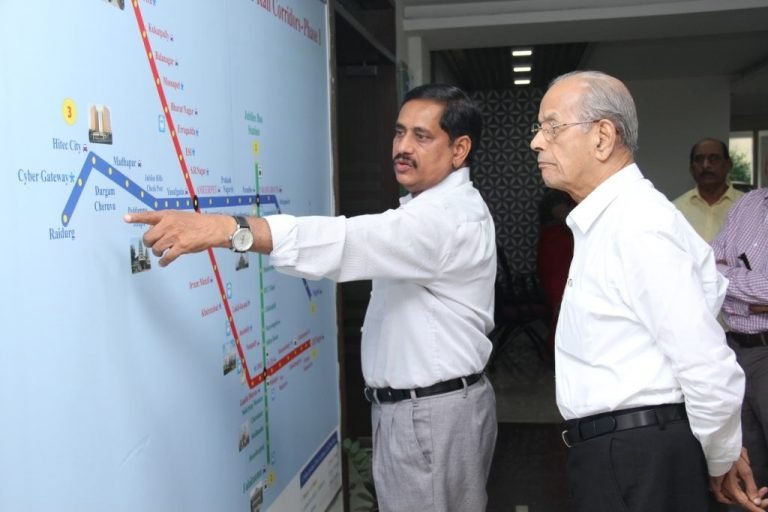
New Delhi: Government statements say that already standard of design of metro coaches and signaling system have already been evolved but still there are many other numerous areas for which native standards need to be defined. Within three months a newly constituted committee headed by ‘Metro Man’ E Sreedharan on standardization of metro rail system across the country will submit its report.
Though standards have already been evolved for the design of metro coaches and signaling systems, there are numerous other areas for which indigenous standards need to be formulated. These include the layout of metro station, platforms, signage & displays, size of tunnels, fire protection systems, disaster management systems, environment-friendly and waste management systems, standards for solar panels at stations etc. was said by the press release from the government.
Though standards have already been evolved for the design of metro coaches and signaling systems, there are numerous other areas for which indigenous standards need to be formulated. These include the layout of metro station, platforms, signage & displays, size of tunnels, fire protection systems, disaster management systems, environment-friendly and waste management systems, standards for solar panels at stations etc. was said by the press release from the government.
The official added that Using a set of standard templates across the country would help bring down costs since similar providers can be used by multiple metro systems, said a senior official in the ministry of housing and urban affairs on condition of anonymity. There would also be a big scope to push for ‘make in India’ arrangements”.
The Sreedharan committee includes officials from the managing directors of metro rail corporation of various cities officials from the railways and one urban affair ministry official.More than 600 km of metro rail project is under construction and currently in the country in 10 different cities, about 490 km of metro lines are in operation. Apart from the investment envisaged by the state government, private partners and local bodies. The release says that the central government budget for metro rail is growing and it can be increased to about Rs 25,000 crore annually.
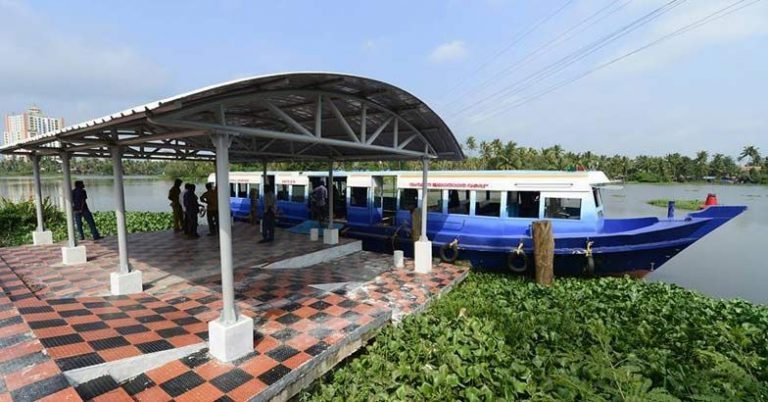
Kochi: The ambitious and unique water metro project floated by Kochi Metro Rail Limited (KMRL) might be reconsidered. As per the recent development Cochin Port Trust has asked KMRL to reconsider its decision on setting water metro. The water jetty metro is proposed to come up at 200 metres to the west of the Kamalakadavu jetty.
Mayor KJ Sohan has written to the Chief Minister (CM) Pinarayi Vijayan that the water metro project posed for Fort Kochi be integrated with the two boat jetties by now in place at Kamalakadavu where buses to Fort Kochi stoppage.
KMRL had already proposed setting up new jetty located at 200 metres to the west of the Kamalakadavu jetty. According to the location, this jetty would be close to the harbour mouth and would be very dangerous to navigate owing to turbulent waves.
Cochin Port Trust that has the ownership of beach front has sent a written request to KMRL. They had sent a letter in February stating that the construction of jetty at the location is not feasible. But KMRL officials went ahead by finalising the design and even started conducting soil testing on the location. The mayor has written the same in the letter to the CM.
Add to this the proposed location is flanked by huge Chinese fishing nets, which have high heritage significance.
Sohan also observed that the number of jetty have been reduced owing to non-availability of long teak logs. Earlier 16 jetties were proposed and now this number has come down to nine. It is therefore, necessary to construct water metro jetty alongside existing jetties, making inter-modal transportation effortless for riders.
KMRL on the other hand stated that they decided to locate jetty 200 metres away from Kamalakadavu based on the suggestion offered by expert in a study. The officials also add that the location selected for water metro jetties at various locations in Greater Kochi based on public utility, accessibility, and a complete multi-modal integration. KMRL is committed to reducing social impact and safeguarding the cultural and aesthetic values of Fort Kochi.
Metro officials on the assured, that none of the Chinese nets will be damaged or pulled down during the construction of jetty. KMRL had also worked out a plan to bring down the number of berths on jetty. This way it is ensuring preservation of Chinese nets.
Kochi Metro officials has also had a meeting with Chinese net owners in presence of Fort Kochi councillor Shiny Mathew in May in presence of K.J. Maxi, MLA. They were assured that the nets would be reserved at the same location. The choice to keep the jetty closer to the nets was taken bearing in mind the tourist magnetism.
New Delhi: Now it has become most easy for commuters on Green Line as the travel time between Bahadurgarh and western part of the cities easy from 24 June. The Commission of Metro Rail Safety (CMRS) has permitted for starting a new extending line from Mundka to Bahadurgarh corridor.
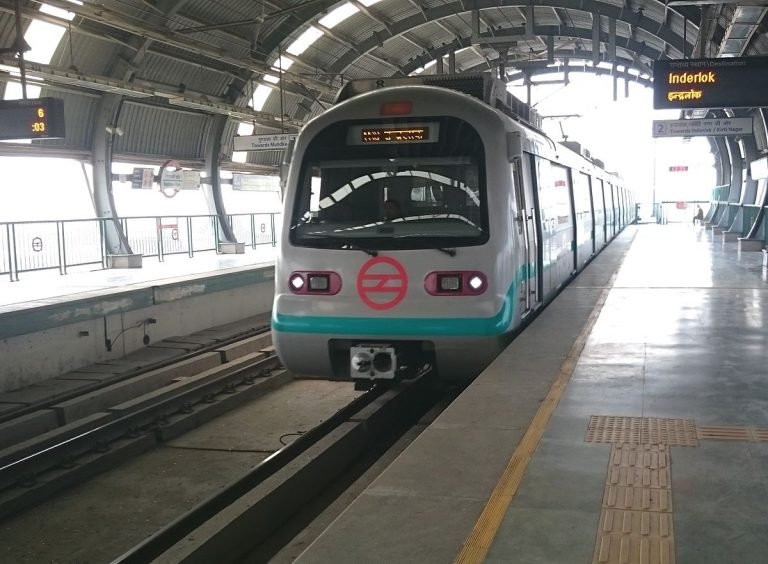
It will now take only 50 min to commuters to travel from Bahadurgarh to Mundka, it’s an extension of Green Line(Inderlok/Kirti Nagar-Mundka).
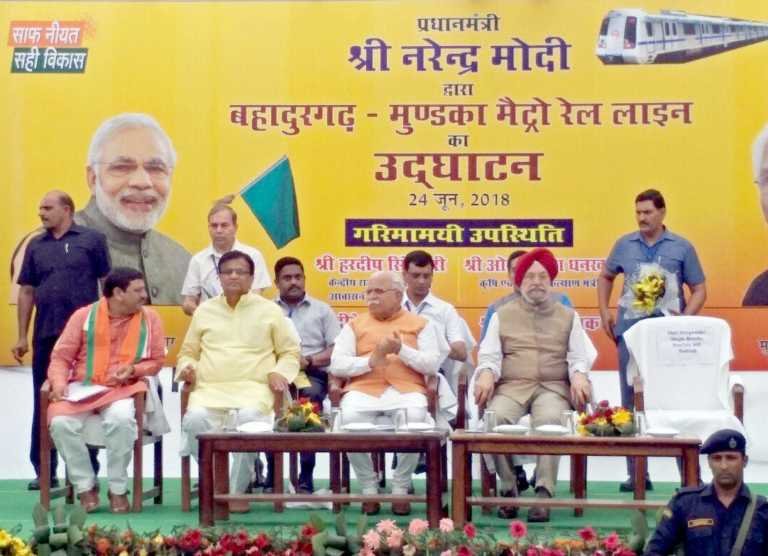
The line was inaugurated by Prime Minister Narendra Modi, he was not physically present there to flag off the operation but was available on video conference. “I congratulate the people of Haryana and Delhi on the commencement of this new section of the Delhi Metro. It is gladdening to see Bahadurgarh connected with the Delhi metro. This is the third place in Haryana, after Gurugram and Faridabad to be connected like this” twitted by Narendra Modi.
It will facilitate commuters employed in industrial units along the corridor. Bahadurgarh has a vast population of 1.7 lakh it’s also an upcoming educational hub with many universities and colleges.
DMRC third inroad in the neighboring state of Haryana as metro service is already operational in Gurgaon (yellow line) and Faridabad (violet line).
Opening of Mundka-Bahadurgarh corridor (Green line of DMRC)
1 of 6
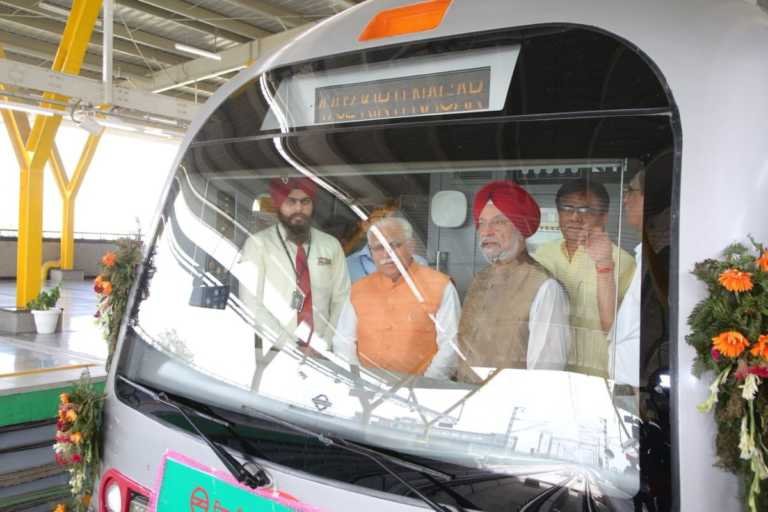
green line inauguration on 24 June by Hardeep Singh Puri, Union Minister MoHUA and Manohar Lal Khattar CM Harayana (Photo: PMO India)
green line inauguration on 24 June by Hardeep Singh Puri, Union Minister MoHUA and Manohar Lal Khattar CM Harayana (Photo: PMO India)
“After the opening of this corridor, the entire Inderlok-Bahadurgarh section has become 29.64-km long,” the DMRC said.
मुंडका-बहादुरगढ़ मैट्रो लाइन को बहादुरगढ़ से सांपला तक बढ़ाने की मांग केंद्र सरकार से की गई है। इसके साथ ही गुरुग्राम हुडा सिटी सेंटर मैट्रो लाइन को मानेसर तक एक रूट बनाने और पुराने गुरुग्राम शहर में रेलवे स्टेशन को मैट्रो लाइन से जोडऩे का प्रस्ताव भी केंद्र सरकार को भेजा गया है।
“Mundaka too has industrial units, and therefore the new corridor will facilitate to-and-fro travel for people employed there and students who have to travel from Delhi. Every alternate train from Mundka will go up to City Park in Bahadurgarh and a frequency of around eight minutes will be maintained between Mundka and City Park. The total running time between Inderlok/Kirti Nagar and City Park (Bahadurgarh) will be about 50 minutes. According to the timetable for the entire Inderlok/Kirti Nagar–City Park section, a total of 20 trains will be put into service”, a senior DMRC official said.
“I congratulate the people of Haryana and Delhi on the commencement of this new section of the Delhi Metro. It is gladdening to see Bahadurgarh connected with the Delhi metro. This is the third place in Haryana, after Gurugram and Faridabad to be connected like this”, Prime Minister Narender Modi said via Tweeter.
“I congratulate the people of Haryana and Delhi on the commencement of this new section of the Delhi Metro. It is gladdening to see Bahadurgarh connected with the Delhi metro. This is the third place in Haryana, after Gurugram and Faridabad to be connected like this”, Prime Minister Narender Modi said via Tweeter.
I congratulate the people of Haryana and Delhi on the commencement of this new section of the Delhi Metro. It is gladdening to see Bahadurgarh connected with the Delhi metro. This is the third place in Haryana, after Gurugram and Faridabad to be connected like this: PM
Bahadurgarh is witnessing tremendous economic growth, there are several educational centres there, students from there even travel to Delhi. The Metro will bring convenience to this part, which is considered the gateway to Haryana: PM @narendramodihttps://t.co/JRsdKQ1BxJ
There is a direct link between connectivity and development.
The Metro will bring more colonies, more people coming to Bahadurgarh. It will also mean more employment opportunities for local people: PM @narendramodi
Our Government brought out a policy relating to Metros. This is because we felt aspects relating to Metro systems need greater coherence and work as per a basic set of standards: PM @narendramodi
A proud moment for Bahadurgarh, the Gateway to Haryana, as this vibrant town comes on Delhi’s Metro Map. This will boost economic activity and help fulfil aspirations of the town’s youth. https://t.co/SGrIyW3HhN
“Mundaka too has industrial units, and therefore the new corridor will facilitate to-and-fro travel for people employed there and students who have to travel from Delhi. Every alternate train from Mundka will go up to City Park in Bahadurgarh and a frequency of around eight minutes will be maintained between Mundka and City Park. The total running time between Inderlok/Kirti Nagar and City Park (Bahadurgarh) will be about 50 minutes. According to the timetable for the entire Inderlok/Kirti Nagar–City Park section, a total of 20 trains will be put into service”, a senior DMRC official said.
“This entirely elevated section will not only connect the national capital with Bahadurgarh but also provide connectivity to many outer Delhi areas in the western fringes of the city, such as Mundka, Ghevra, and Tikri Kalan. The elevators have been done in an eco-friendly way with terracotta tiles at all stations. The rooftops of the elevated stations have been redesigned for better aesthetics,” the DMRC said.
“With the opening of the Mundka-Bahadurgarh corridor, the span of Phase-3 network expands to nearly 98 km,” the official said.
The length of Delhi Metro network has reached 288 km with 208 stations.
Metro was in service from 4 p.m 24 June for commuters.
Contract No. and Title: MMRDA/7/MMRP/CA-18: DESIGN, MANUFACTURE, SUPPLY,
INSTALLATION, TESTING AND COMMISSIONING INCLUDING MAINTENANCE OF HEAVY DUTY MACHINE ROOM LESS ELEVATOR (LIFT) OF 13 ELEVATED STATIONS (ANDHERI EAST–OVARIPADA) OF METRO LINE 7 (ANDHERI EAST TO DAHISAR EAST) OF MUMBAI METRO RAIL PROJECT OF MMRDA.
AND
Contract No. and Title: MMRDA/7/MMRP/CA-19: DESIGN, MANUFACTURE, SUPPLY,
INSTALLATION, TESTING & COMMISSIONING AND MAINTENANCE OF ESCALATORS OF 13 ELEVATED STATIONS (ANDHERI EAST TO OVARIPADA) OF LINE 7 (ANDHERI EAST TO DAHISAR EAST) OF MUMBAI METRO RAIL PROJECT OF MMRDA.
Key Points of Tender Notice No. MMRDA/7/MMRP/CA-18:
Completion period of the Work: Fourteen (14) months
Tender documents on sale: From 15.06.2018 to 30.07.2018 (up to 1200 hrs) on e-tendering portal of MMRDA. https://etendermmrda.maharashtra.gov.in
Cost of Tender documents: INR 5600/-
Pre-bid Meeting: 04.07.2018 at 14:00 hrs.
Date & time of Submission of Tender online: 30.07.2018 up to 15:00 hrs
Date & time of Tender Closing: From 30.07.2018 (1501 Hrs) to 30.07.2018 (up to 1800 hrs)
Date & time of opening of Tender online: 31.07.2018 at 15:00 hrs.
Key Points of Tender Notice No. MMRDA/7/MMRP/CA-19:
Completion period of the Work: Fourteen (14) months
Tender documents on sale: From 15.06.2018 to 30.07.2018 (up to 1200 hrs) on e-tendering portal of MMRDA. https://etendermmrda.maharashtra.gov.in
Cost of Tender documents: INR 11200/-
Pre-bid Meeting: 04.07.2018 at 15:30 hrs.
Date & time of Submission of Tender online: 30.07.2018 up to 15:00 hrs
Date & time of Tender Closing: From 30.07.2018 (1501 Hrs) to 30.07.2018 (up to 1800 hrs)
Date & time of opening of Tender online: 31.07.2018 at 16:00 hrs.
Authority for purchase of tender documents, seeking clarifications and submission of completed tender documents: Director (System)-Metro PIU, Mumbai Metropolitan Region Development Authority (MMRDA) 1st Floor, A-wing, Old Administrative Building, Bandra Kurla Complex, Bandra (E), Mumbai – 400051 Phone: 91(22) 26597552, Fax: 91(22)26594182 E-mail: metropiu.systems@mailmmrda.maharashtra.gov.in https://mmrda.maharashtra.gov.in
About Mumbai Metro Line-7 (Andheri East – Dahisar East) Corridor:
This corridor will cover approx. 16.5 km long distance from Andheri East to Dahisar East and consist with 13 elevated metro stations.
This corridor will provide inter-connectivity among the existing Western Express Highway, Western Railway, Mumbai Metro Line 1 (Ghatkopar to Versova), the ongoing Metro Line 2A (Dahisar to DN Nagar) and the proposed Metro Line 6 (Swami Samarth Nagar to Vikhroli).
This corridor will facilitate smooth and efficient interchange with the suburban rail system and MRT system at Andheri, JVLR and Dahisar
This corridor will provide connectivity between Central Mumbai and Northern suburban Mumbai. It will also provide rail based access to the Mumbai International Airport (CSIA), SEEPZ, National Park and other commercial and geographical landmarks.
New Delhi: The Delhi Metro Rail Corporation (DMRC) has announced opening date of Mundka-Bahadurgarh corridor today. The satellite city of Bahadurgarh in Haryana is all set to get Metro connectivity with the completion of work on the 11.183 kilometre long Mundka – Bahadurgarh Metro corridor. After opening of this section, it will third connectivity to some urban area of Haryana State after Yellow Line and Purple Line which are connecting Gurugram and Faridabad cities of Haryana respectively.
Apart from connecting the metro services to Bahadurgarh this corridor will also provide metro connectivity to many areas of outer Delhi of the western fringes of the city viz. Mundka, Ghevra, Tikri Kalan etc. The Delhi Metro will expand its network to 288 kilometers with 208 metro stations after opening of this long waited section.
The main highlights of this section are as follows:-
Route Length: 183 Km
Number of Stations : 07 (All Elevated)
In Delhi: Mundka industrial Area, Ghevra, Tikri Kalan, Tikri Border
In Haryana: Modern Industrial Estate, Bus Stand, City Park
Colour Code: Green (Extension of the Inderlok – Mundka Corridor)
Gauge: Standard Gauge (Rolling Stock similar to Green and Violet Lines)
After the completion of this corridor, the entire Inderlok/Kirti Nagar – Bahadurgarh section will become 29.64 kilometres long.
Connectivity Benefits:
The Mundka – Bahadurgarh section will be extremely crucial from the point of view of connectivity of the city of Bahadurgarh as well as parts of West Delhi. Bahadurgarh is an upcoming urban settlement which has many industrial units. Similarly, Mundka also has an industrial area where many people travel every day for their professional requirements. This corridor will be of help to these people.
This section will be Delhi Metro’s third extension to Haryana after Gurugram and Faridabad. Haryana already has over 21 kilometres of Delhi Metro lines. With this section, the Delhi Metro section in Haryana will expand to 25.8 kilometres.
Bahadurgarh is a bustling urban settlement in the Jhajjar district of Haryana with a population of about one lakh and seventy thousand people. The Bahadurgarh Industrial Area houses many industrial units and is a source of employment for lakhs of people who travel there from Delhi.
Besides, Bahadurgarh has also developed into an educational hub and houses many universities and colleges. Many students travel to these institutes from Delhi every day. This connection will be of great help to them also.
Many areas of Outer Delhi in the western parts of the national capital will be benefitted. The Mundka Industrial Area also has many industrial units. This apart the localities of Ghevra, Tikri Kalan will be connected by the Metro for the first time.
The people working in the Industrial Estate, Bahadurgarh will be benefitted with the Modern Industrial Estate (MIE) metro station. This area has many industries around the NIE Metro station.
The Bus Stand Metro Station in Bahadurgarh has seamless connectivity with the interstate bus terminal which provides connectivity to other areas in Haryana.
Engineering and other Challenges
The Bus Stand Station in Bahadurgarh, being situated at one of the most congested locations faced innumerable problems due to paucity of space, presence of a crematorium ground on the north side, presence of many water, electrical and other underground utilities etc.
Moreover, there was huge traffic congestion on the south side of the station due to the bustling Bahadurgarh bus stand. Due to the congestion, it was impossible for DMRC’s engineers to divert the traffic running on both sides of the median and prepare scaffolding for spanning the carriageway to allow traffic below it.
The two electric lines of 440 KVA and 220 KVA at Tikri kalan and MIA station were raised to a height of 60 mtrs. Specially designed Mono pole of height 60 mtrs was erected for the first time in India instead of lattice structure to raise the height of these power lines.
Mundka Industrial Area station has been constructed on a busy NH-10 as an integrated station with provision of a future metro track crossing the Green line. This resulted in raising the rail level of MIA station of Green line to 22 mtrs above the ground level. There were multiple utilities at the ground level also which were accommodated/diverted. The construction of MIA station on NH-10 was done without disturbing the traffic flow on NH 10.
Station Architecture:
The facade of the Mundka Industrial Area station of the corridor has been decorated with beautiful terracotta designs. All the other stations also have a bright and vibrant colour scheme with bright yellow pillars on the platforms. The lifts also have been done in eco-friendly red terracotta tiles at all the station which are giving a vibrant look to the structures. The roof tops of the elevated stations have also been redesigned for better aesthetics.
Solar Power Plant at Bahadurgarh Depot
DMRC is committed to provide environment friendly Metro system and as part of this endeavour, DMRC is installing Solar PV power plants at various locations in existing as well as upcoming DMRC metro corridors. Efforts are made to integrate solar PV power plants at construction stage itself in the upcoming network of DMRC. All the roof-top solar plants are being installed under RESCO model, till date 23 MWp capacity has already been commissioned in the DMRC network.
Solar panels installed at roof tops of Delhi Metro depot
In Bahadurgarh Depot, Roof Top Solar Plants with total capacity of 783 kWp has been installed under RESCO model, which is spread over 7 different roofs. It is estimated to generate 1 million Unit of energy per annum, (i.e.approx. 2,800 Units per day), which will be adequate to meet the day time auxiliary energy requirement (i.e. lighting, air conditioning, etc.) of the Depot.
Further, work to install additional 700 kWp capacity, solar plants on the roofs of 7 stations of Mundka – Bahadurgarh corridor will commence shortly, for which the developer has been finalised. Energy generated from these plants will be adequate to meet the entire day time auxiliary load of these stations.
All the seven stations of the Line-5 extn. (Mundka – Bahadurgarh corridor)are equipped with the latest energy efficient equipment / systems, such as LED lighting, Regenerative Braking in Lifts, VRV Air conditioning, etc. All these stations have been rated as platinum by the Indian Green Building Council for adherence to green building norms.
Operations Plan:
As per the time table for the entire Inderlok/Kirti Nagar – City Park section, a total of 20 trains will be put into service. Every alternate train from Mundka will go up to City Park in Bahadurgarh and a frequency of around 8 minutes will be maintained between Mundka and City Park. The total running time between Inderlok/Kirti Nagar and City Park (Bahadurgarh) will be about 50 minutes.
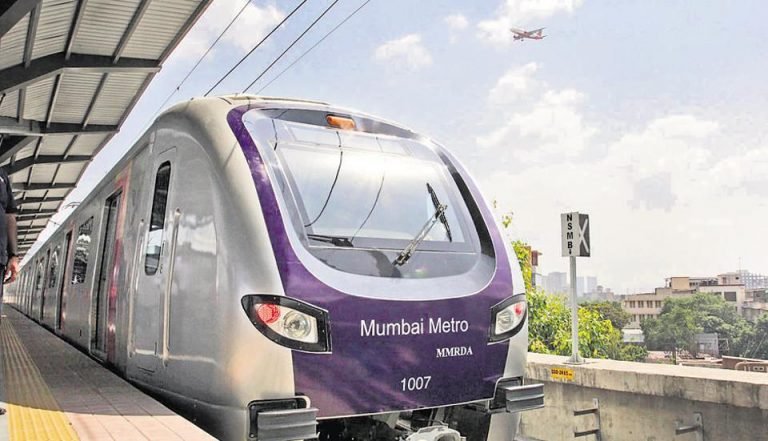
Mumbai: The Mumbai Metropolitan Region Development Authority (MMRDA) invites global tenders for Design, Supply, Installation, Testing and Commissioning of Traction and Auxiliary Power Supply, SCADA And Overhead Traction System (OTS) for Metro Line 7 (Andheri East – Dahisar East) of Mumbai Metro Rail Project of MMRDA.
Contract No. and Title: MMRDA/7/MMRP/CA-16: Design, Supply, Installation, Testing and Commissioning of Traction and Auxiliary Power Supply, Scada and Overhead Traction System of Metro Line 7 [Andheri East – Dahisar East] of Mumbai Metro Rail Project of MMRDA.
Key Points of Tender Notice No. MMRDA/7/MMRP/CA-16:
Completion period of the Work: Twenty One (21) months
Tender documents on sale: From 15.06.2018 to 30.07.2018 (up to 1200 hrs) on e-tendering portal of MMRDA. https://etendermmrda.maharashtra.gov.in
Cost of Tender documents: INR 11,200/-
Pre-bid Meeting: 02.07.2018 at 11:00 hrs.
Date & time of Submission of Tender online: 30.07.2018 up to 15:00 hrs
Date & time of Tender Closing: From 30.07.2018 (1501 Hrs) to 30.07.2018 (up to 1800 hrs)
Date & time of opening of Tender online: 31.07.2018 at 11:01 hrs.
Authority for purchase of tender documents, seeking clarifications and submission of completed tender documents: Director (System)-Metro PIU, 1st Floor, A-wing, Old Administrative Building, Mumbai Metropolitan Region Development Authority (MMRDA),
Bandra Kurla Complex, Bandra (E), Mumbai – 400051
Phone: 91(22) 26597552, Fax: 91(22)26594182
E-mail: metropiu.systems@mailmmrda.maharashtra.gov.in
https://mmrda.maharashtra.gov.in
About Mumbai Metro Line-7 (Andheri East – Dahisar East) Corridor:
This corridor will cover approx. 16.5 km long distance from Andheri East to Dahisar East and consist with 13 elevated metro stations.
This corridor will provide inter-connectivity among the existing Western Express Highway, Western Railway, Mumbai Metro Line 1 (Ghatkopar to Versova), the ongoing Metro Line 2A (Dahisar to DN Nagar) and the proposed Metro Line 6 (Swami Samarth Nagar to Vikhroli).
This corridor will facilitate smooth and efficient interchange with the suburban rail system and MRT system at Andheri, JVLR and Dahisar
This corridor will provide connectivity between Central Mumbai and Northern suburban Mumbai. It will also provide rail based access to the Mumbai International Airport (CSIA), SEEPZ, National Park and other commercial and geographical landmarks.
Mumbai: The Mumbai Metropolitan Region Development Authority (MMRDA) invites global tenders for Design, Manufacture, Supply, Installation, Testing and Commissioning and Maintenance of Automatic Fare Collection (AFC) Systems for 52 Elevated Stations and AFC OCC, AFC Software Testing and Development Center (SDC) of Mumbai Metro Line 2A (Dahisar East – Dn Nagar), Line 2B (ESIC Nagar – Mandale) and Line 7 (Andheri East – Dahisar East) of Mumbai Metro Rail Project of MMRDA.
Contract No. and Title: MMRDA/MMRP/CA-33: Design, Manufacture, Supply, Installation, Testing and Commissioning and Maintenance of Automatic Fare Collection (AFC) Systems for 52 Elevated Stations and AFC OCC, AFC Software Testing and Development Center (SDC) of Metro Line 2A (Dahisar East – Dn Nagar), Line 2B (ESIC Nagar – Mandale) and Line 7 (Andheri East – Dahisar East) of MMRDA.
Key Points of Tender Notice No. MMRDA/MMRP/CA-33:
Completion period of the Work: Forty Two (42) months
Tender documents on sale: From 15.06.2018 to 30.07.2018 (up to 1200 hrs) on e-tendering portal of MMRDA. https://etendermmrda.maharashtra.gov.in
Cost of Tender documents: INR 11,200/-
Pre-bid Meeting: 02.07.2018 at 15:00 hrs.
Date & time of Submission of Tender online: 30.07.2018 up to 15:00 hrs
Date & time of Tender Closing: From 30.07.2018 (1501 Hrs) to 30.07.2018 (up to 1800 hrs)
Date & time of opening of Tender online: 31.07.2018 at 12:01 hrs.
Authority for purchase of tender documents, seeking clarifications and submission of completed tender documents: Director (System)-Metro PIU, 1st Floor, A-wing, Old Administrative Building, Mumbai Metropolitan Region Development Authority (MMRDA),
Bandra Kurla Complex, Bandra (E), Mumbai – 400051
Phone: 91(22) 26597552, Fax: 91(22)26594182
E-mail: metropiu.systems@mailmmrda.maharashtra.gov.in
https://mmrda.maharashtra.gov.in
About Mumbai Metro Line-2A, Line-2B and Line-7 Corridors:
Line 2A will cover approx. 18.5 km long distance from Dahisar to DN Nagar and consist with 17 elevated metro stations. It shall provide inter-connectivity among the existing Western Express Highway, Western Railway, Metro Line 1 (Ghatkopar to Versova), the ongoing Metro Lines 2B (D N Nagar to Mandale) & 7 (Andheri (E) to Dahisar (E)) and the proposed Metro Line 6 (Swami Samarth Nagar to Vikhroli).
Line 2A will cover approx. 23.6 km long distance from DN Nagar to Mandale and consist with 22 elevated metro stations. It shall provide interconnectivity among the existing Western Express Highway, Eastern Express Highway, Western Railway, Central Railway, Mono Rail, Metro Line 1 (Ghatkopar to Versova) and Metro Line 2A (Dahisar to D N Nagar), Metro Line 4 (Wadala to Kasarvadavali) & Metro Line 3 (Colaba to SEEPZ) under implementation. A dedicated Depot is planned on this line at Mandale
Line 7 will cover approx. 16.5 km long distance from DN Nagar to Mandale and consist with 22 elevated metro stations. This corridor will provide inter-connectivity among the existing Western Express Highway, Western Railway, Mumbai Metro Line 1 (Ghatkopar to Versova), the ongoing Metro Line 2A (Dahisar to DN Nagar) and the proposed Metro Line 6 (Swami Samarth Nagar to Vikhroli). This corridor will also provide connectivity between Central Mumbai and Northern suburban Mumbai. It will also provide rail based access to the Mumbai International Airport (CSIA), SEEPZ, National Park and other commercial and geographical landmarks. A dedicated Depot is planned on this Line at Dahisar.
Hyderabad: In August the detailed project report (DPR) for the Hyderabad Metro Rail Limited phase II including the line connecting the International airport is likely to be ready.
Airport Connectivity
Through International agencies, the DPR and the Telangana Government is looking at raising funds including JICA, for the expansion project to partly fund its implementation. The Delhi metro rail corporation which had earlier prepared the DPR for metro rail.
Telangana minister for municipal administration and urban development KT Rama Rao said that the chief minister K Chandrasekhar Rao was keen that the second phase and airport connectivity be taken up and completed at the earliest. For phase II the Government has identified several extensions and corridors.
The DMRC would take up the environment and social impact assessment studies.
Rao says that it would be ready for launch by July end after a test run to be launched stretch of 16km, which will complete one full line when commissioned.
Easy Connectivity
For the convenience of the people, the metro is aiming to provide direct access to major bus station and railways station.
NVS Reddy Managing Director of HMRL said that the 30 km stretch launched by Prime Minister Narendra Modi in November is operational now and on an average 80,000 people are traveling it every day. The addition of the 16 km stretch would complete one full stretch of 29 km and ease the traffic.
NVS Reddy Managing Director of HMRL said that the 30 km stretch launched by Prime Minister Narendra Modi in November is operational now and on an average 80,000 people are traveling it every day. The addition of the 16 km stretch would complete one full stretch of 29 km and ease the traffic.
He also says that a 45 days trial run the commissioner of metro rail safety will clear the metro for operation for Hyderabad metro statutory inspection of overhead electric traction system and accorded sanction was conducted this week earlier by the chief electrical inspector, Government of India.
By July the metro rail authorities expect the commission of one of the stretches. One will complete line of 29 km and another stretch by September, which will complete three of the two metro lines.
Another metro line by 2019 will be ready, minus a stretch of six km that runs through the old city and connects to Falaknuma.
The route which relates to six km stretch to the old city is facing a challenge of providing a right of way for metro implementation.
Mumbai: The Mumbai Metropolitan Region Development Authority (MMRDA) invites global tenders for Design Verification, Supply, Installation, Testing and Commissioning of E&M, Fire Detection and Fire Suppression Systems including DG Sets of 13 Elevated Stations (Andheri East To Ovaripada) of Mumbai Metro Line 7 (Andheri East to Dahisar East) of Mumbai Metro Rail Project of MMRDA.
Contract No. and Title: MMRDA/7/MMRP/CA-17: Design Verification, Supply, Installation, Testing and Commissioning of E&M, Fire Detection and Fire Suppression Systems including DG Sets of 13 Elevated Stations (Andheri East To Ovaripada) of Line 7 (Andheri East to Dahisar East) of Mumbai Metro Rail Project of MMRDA.
Key Points of Tender Notice No. MMRDA/7/MMRP/CA-17:
Approximate Cost of Project: INR 56.06 crores
Completion period of the Work: Fourteen (14) months
Tender documents on sale: From 15.06.2018 to 30.07.2018 (up to 1200 hrs) on e-tendering portal of MMRDA. https://etendermmrda.maharashtra.gov.in
Cost of Tender documents: INR 11,200/-
Pre-bid Meeting: 04.07.2018 at 11:00 hrs.
Date & time of Submission of Tender online: 30.07.2018 up to 15:00 hrs
Date & time of Tender Closing: From 30.07.2018 (1501 Hrs) to 30.07.2018 (up to 1800 hrs)
Date & time of opening of Tender online: 31.07.2018 at 14:00 hrs.
Authority for purchase of tender documents, seeking clarifications and submission of completed tender documents: Director (System)-Metro PIU, 1st Floor, A-wing, Old Administrative Building, Mumbai Metropolitan Region Development Authority (MMRDA),
Bandra Kurla Complex, Bandra (E), Mumbai – 400051
Phone: 91(22) 26597552, Fax: 91(22)26594182
E-mail: metropiu.systems@mailmmrda.maharashtra.gov.in
https://mmrda.maharashtra.gov.in
About Mumbai Metro Line-7 (Andheri East – Dahisar East) Corridor:
This corridor will cover approx. 16.5 km long distance from Andheri East to Dahisar East and consist with 13 elevated metro stations.
This corridor will provide inter-connectivity among the existing Western Express Highway, Western Railway, Mumbai Metro Line 1 (Ghatkopar to Versova), the ongoing Metro Line 2A (Dahisar to DN Nagar) and the proposed Metro Line 6 (Swami Samarth Nagar to Vikhroli).
This corridor will facilitate smooth and efficient interchange with the suburban rail system and MRT system at Andheri, JVLR and Dahisar
This corridor will provide connectivity between Central Mumbai and Northern suburban Mumbai. It will also provide rail based access to the Mumbai International Airport (CSIA), SEEPZ, National Park and other commercial and geographical landmarks.