Home Blog Page 6

Mumbai Metro 7A Faces ₹250 Crore Risk Over Airport Height Clearance Issue

MUMBAI (Metro Rail News): The Mumbai Metropolitan Region Development Authority (MMRDA) may have to demolish and rebuild nearly 1 km of the elevated Metro Line 7A near Airport Colony in Vile Parle East. A design error made the viaduct and its overhead wires higher than the limit set by the Airports Authority of India(AAI).

This problem could cost around ₹250 crore and further delay the 3.4 km airport metro line 7, connecting Andheri East to Chhatrapati Shivaji Maharaj International Airport (CSMIA)  unless AAI allows a height relaxation. Mumbai Metro Line 7A is partly elevated and partly underground and is intended to connect the airport with the wider Mumbai Metro network, including Metro Line 3. 

The clearance of AAI and the project’s required height did not match. MMRDA sought AAI clearance for the Airport Colony station and ramp in November 2023 and in January 2024, but AAI issued a No Objection Certificate (NOC) allowing a height that was lower than the requirement for metro operations.

MMRDA later requested height relaxation, saying the structure could not simply be lowered because it would create engineering difficulties in maintaining the required ramp gradient. If AAI rejects the request, part of the Airport Colony station and installed systems may have to be demolished, potentially increasing the ₹812-crore project cost by about ₹250 crore. 

Metro 7A error: What went wrong and what can we learn from this?

ProblemImmediate impact Future lesson 
Technical problem 
The elevated stretch of Mumbai Metro Line 7A and the Airport Colony station at Vile Parle East are located within the airport’s flight funnel zone. The viaduct and OHE together exceed the height clearance permitted by AAI at the affected locations A significant portion of the already-built elevated viaduct and related infrastructure may have to be modified or demolished and reconstructed if AAI does not permit the additional height. For metro corridors near airports and other height-restricted zones, height and clearance restrictions should be confirmed before construction begins. Design checks should include not just the viaduct, but also the tracks, OHE, electrical equipment and other components that can increase the final height. 
Project-management problem 
The height mismatch was discovered after most of the construction had already been completed. By February 2026, 100% of the elevated viaduct and 98% of the elevated ramp and 95% of the Airport Colony station had been completed.If reconstruction is required, MMRDA could face an estimated additional cost of around ₹250 crore. The issue could further delay the 3.4-km Metro Line 7A, which was originally scheduled to open in 2021 and has already missed several deadlines. Identifying a design problem at the planning stage can prevent demolition, extra costs and delays later. Metro authorities, consultants and aviation authorities should verify the design together. final height clearance must be checked against the complete operational system including OHE before construction reaches an advanced stage. 

Also Read: Mumbai Metro: MMRDA awards ₹29.63 cr contract for Signage Works on Line 6 & 7A

Patna Metro nears completion of 7.8 km underground tunnelling on corridor II

PATNA (Metro Rail News): Patna Metro has completed around 7.4 km of tunnelling on the 7.8-km underground section of Corridor II. It marks major progress on one of the project’s key stretches. Civil construction on the section is targeted for completion by October 2026. 

The underground stretch runs between the Malahi Pakri Ramp to Rajendra Nagar area and Akashvani. It will add six underground stations to the expanding Patna Metro network. 

Six underground stations on the upcoming stretch

The section that is 7.8 km in length will include:

  • Rajendra Nagar
  • Moin-ul-Haq Stadium
  • University
  • PMCH
  • Gandhi Maidan
  • Akashvani

Only around 400 metres of tunnelling work remains on the stretch. After completing the civil works, the project will move into the systems stage. This will include track laying, overhead electrical infrastructure, cabling and signalling works. Urban Development and Housing Minister Nitish Mishra said work was progressing across both the underground and elevated sections of the Patna Metro project.

Patna Metro’s Blue Line priority corridor already operational

Patna Metro has already started services on the 6.2-km priority corridor, which is a part of Corridor II. The corridor, known as the Blue Line, connects Patliputra Bus Terminus (ISBT) with Malahi Pakri. The operational section includes five stations:

  • Patliputra Inter-State Bus Terminal
  • Zero Mile
  • Bhootnath
  • Khemnichak
  • Malahi Pakri

Khemnichak currently functions as a pass-through station. Authorities aim to open it for passenger use in November 2026. The complete Corridor II between Patna Junction and New ISBT spans around 14.5 km.

Elevated sections of Red Line also advance

Construction has also progressed on the elevated sections of Corridor I, or the Red Line.

Two stretches are nearing completion:

Section LengthStation 
Khemnichak-Mithapur3.1Jaganpura, Ramkrishna Nagar, Mithapur
Rukanpura-Danapur3.2Patliputra, RPS More, Saguna More, Danapur

The project has completed viaduct construction on both sections. Station construction and finishing work are now underway. Officials expect the Khemnichak-Mithapur section to open next year, further expanding Metro connectivity in the city.

Work begins on another major underground section

Meanwhile, construction has started on the 10.5-km underground section between Mithapur and Rukanpura along Nehru Path. The stretch will include six stations:

  • Patna Junction, an interchange station
  • Vidyut Bhawan
  • Vikas Bhawan
  • Patna Zoo
  • Raja Bazaar
  • Rukanpura

The project will eventually create a network combining elevated and underground corridors across key residential, commercial and institutional areas of Patna.

Also Read: 3 New Trains to Join Patna Metro Fleet by December 2026

IT companies step in to build direct footbridges to Pune Metro Line 3 stations

PUNE (Metro Rail News): Ahead of the partial opening of the Hinjawadi–Shivajinagar Metro Line 3 (Pune Metro line 3), the Maharashtra Industrial Development Corporation (MIDC) and Pune IT City Metro Rail Limited (PITCMRL) have approached five major IT companies in Hinjawadi to develop dedicated foot overbridges (FOBs) from their office campuses to nearby Metro stations. 

The five campuses together have around 90,000 employees. The IT companies will bear the construction cost, while MIDC will provide the land required for the bridge pillars. 

Two companies, one technology firm and one developer-operated business, have already shown interest and received the necessary approvals. Their proposed bridges would connect Hinjawadi Phase 2 office campuses with the MIDC Circle, Hinjawadi Circle 1 and Hinjawadi Circle 2 Metro stations. These two campuses together have about 55,000 employees, according to Times of India’s report.

MIDC is also discussing similar connections with three more companies. These proposed links would serve areas around Maan, Shree Shiv Chhatrapati Shivaji Maharaj Chowk, Hinjawadi and Hinjawadi Circle 1. The three companies have a combined workforce of around 32,000 employees. 

About Hinjawadi – Shivajinagar Metro Line 3 

About 23.3 km long with 23 stations, the Hinjawadi–Shivajinagar Metro corridor is being implemented by Pune IT City Metro Rail Ltd. (PITCMRL) under PMRDA. As of now, 12 stations between Maan and Ramnagar have been completed, while 5 of the 7 stations within Chhatrapati Shivajinagar are nearing completion.

 On 25, August 2026, MLA of Shivajinagar Shri. Siddharth Shirole reviewed the progress of the Hinjawadi–Shivajinagar Metro Line 3. According to him, the objective is to enable seamless Metro travel from Maan to District Court, Shivajinagar, in 2026. 

Poonamallee–Parandur Metro extension hangs in uncertainty after the drop of  Parandur airport project

CHENNAI (Metro Rail News): CMRL authorities have confirmed plans to pursue the first phase Poonamallee-Sunguvarchatram Metro extension despite the government’s decision to drop the proposed Parandur greenfield airport project, on Wednesday, 26 August 2026, reported by The New Indian Express.

However, in the latest report of Live Chennai News, it was stated that the Poonamallee-Parandur Metro rail project is likely to be cancelled due to the drop of Parandur airport project.

The primary objective behind this 52.94-km Poonamallee–Parandur Metro extension was to facilitate connectivity to the  Parandur airport.

First Phase-Poonamallee to Sunguvarchatram

The estimated cost of the 27.9km extension is ₹8,779 crore, is intended to improve connectivity to the Sriperumbudur industrial and suburban belt and is planned with 14 elevated stations. The extension is important for connectivity towards several industrial belts in West Chennai and Kancheepuram district.

Second Phase-Sunguvarchatram–Parandur

The extension is about 25 km, originally planned mainly to provide Metro connectivity to the proposed Parandur greenfield airport. As of now, the Sunguvarchatram–Parandur has been put on hold. 

Even if CMRL moves ahead with the first phase Poonamallee-Sunguvarchatram extension, the second phase will only be considered later on according to future demand.

Chennai Metro Phase 2 moves ahead after final pier cast on Medavakkam stretch

CHENNAI (Metro Rail News): The final pier for the 11.3-km Corridor-5 package in Phase 2 has been completed by Chennai Metro Rail Limited (CMRL). This achievement marks the end of the pier-construction phase and enables the project to concentrate on the viaduct and station work.

The CMRL finished Pier P814, a structure 25 metres high, close to the Medavakkam-1 Metro Station. This pier is the 513th and last one in the ECV-03 package. 1,130 piers have been completed as part of the 11.3-km package. The ECV-03 package runs from Ullagaram Metro Station to Elcot Metro Station and includes: 

InformationDetails
Length 11.3 km
Total piers513
Foundation2,351 piles
Final pierP814
LocationNear Medavakkam-1 Metro Station
Maximum pier heightAbout 29 metres

The AEON Consortium is the general consultant for the package, and the HCC-KEC Consortium is in charge of the construction work.

Medavakkam stretch posed major construction challenges

The construction work on the section lying between Pier P879 near Medavakkam Koot Road and Pier P868 along Semmozhi Salai was especially complex. In this area certain piers reach almost 29 metres and the Metro route also passes over the present Medavakkam Flyover at about the same height. The 57-metre steel girder span is included in the crossing and the engineers are building it along a sharp horizontal curve having a radius of approximately 125 metres. 

The Medavakkam-1 and Medavakkam-2 stations in this area will also be about 29 metres above road level. The construction was carried out in areas that were busy and had heavy traffic as well as dense development. In order to carry out the work near and above the existing flyover, the CMRL and its contractors had to arrange for traffic diversions.

Work now shifts to viaducts and stations

The construction will then proceed to the next major stages when all 513 piers have been cast.

CMRL said work is continuing on:

  • Erection of the remaining U-girders
  • Construction of station buildings
  • Other viaduct-related works

This achievement represents an important step for Chennai Metro Phase 2, even though a great deal of work still has to be carried out before the corridor can start operations.

Also Read: Chennai Metro Phase 2 recorded 24th tunnel breakthrough at Moolakadai station

RVNL invites bids for ₹1,086.65 Cr railway line construction in Madhya Pradesh

MADHYA PRADESH (Metro Rail News): Rail Vikas Nigam Limited (RVNL) has invited competitive bids for the construction of a new broad-gauge railway line between Kulthana and Rajpura stations in Madhya Pradesh. The package has an estimated value of ₹1,086.65 crore.

The work forms part of the Ratlam-Mhow-Khandwa gauge conversion project and includes major civil, tunnelling and electrification works.

Tender details 

InformationDetails 
Tender Number DyCE-C-I-INDRKGC-EPC-2
ClientRail Vikas Nigam Limited (RVNL)
ProjectRatlam-Mhow-Khandwa Gauge Conversion
Estimated Cost₹1,086.65 crore
Bid Submission Deadline31 August 2026

Scope of Work

The tender covers construction of New Railway BG line in Km 28/970 to 42/040 in between Kulthana Station (including) and Rajpura Station (including) Earthwork, Minor bridges (03 Nos) and Major bridges (07 Nos), station buildings, Tunnels (7 Nos) and MEGA Bridge (03 Nos) including Electrification in connection with Ratlam Mhow Khandwa Gauge Conversion in the State of Madhya Pradesh. 

About the Project

The Ratlam-Mhow-Khandwa-Akola gauge conversion project is a 473-km-long Western Railway project. It aims to convert the existing meter-gauge railway line into a broad-gauge route. The project will upgrade the old railway network and improve connectivity across the region.

Johnson Lifts to Supply Elevators & Escalators for Lucknow, Kanpur & Agra Metro

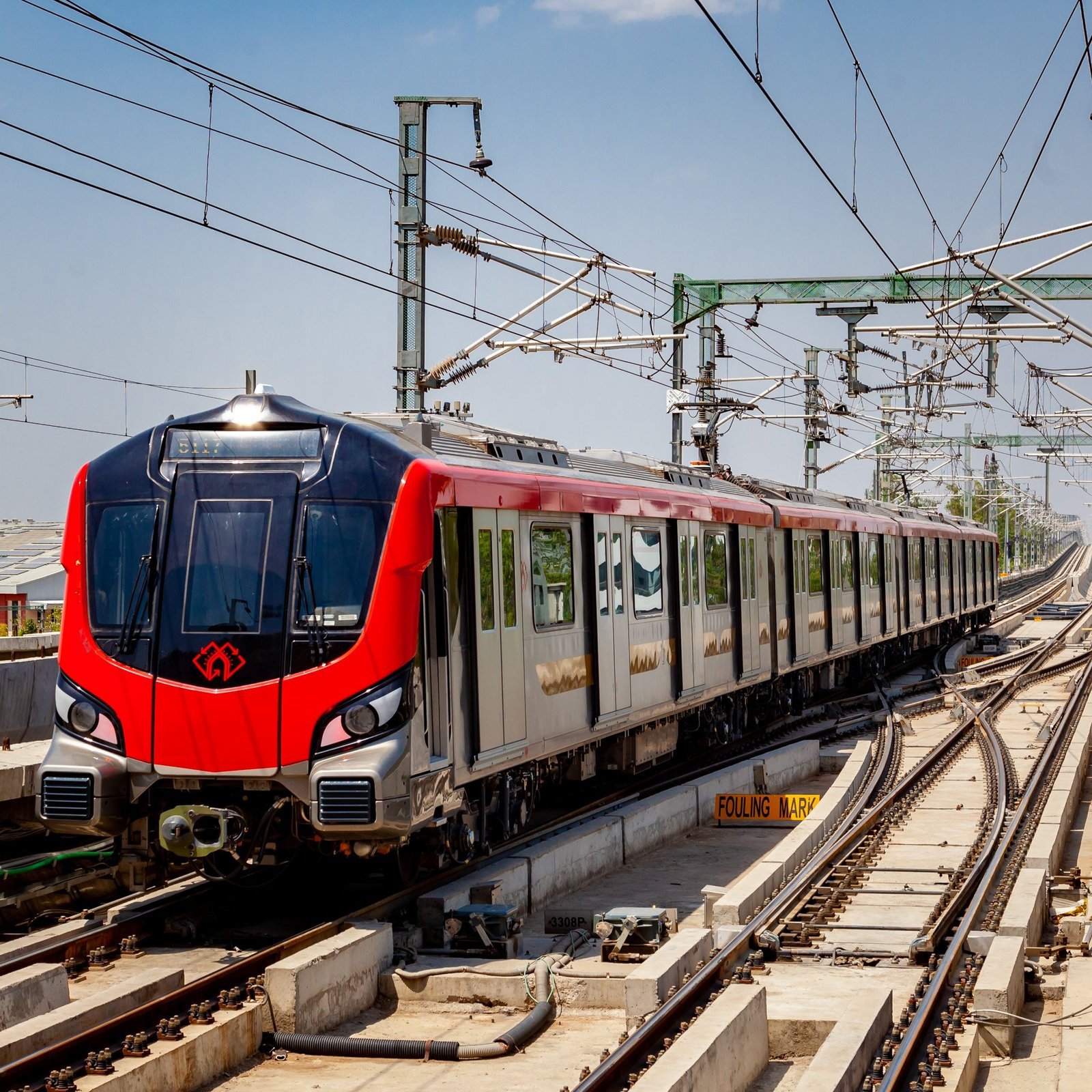
DELHI (Metro Rail News): Uttar Pradesh Metro Rail Corporation Limited (UPMRC) has awarded an ₹89.61 crore contract to Johnson Lifts Pvt. Ltd., which emerged as the sole bidder, for the supply and commissioning of heavy-duty elevators and escalators for the Lucknow, Kanpur and Agra Metro projects. The contract also includes maintenance support during the two-year Defect Liability Period (DLP) and an additional one-year Comprehensive Annual Maintenance Contract (CAMC) after the DLP. 

Contract details 

InformationDetails 
ContractorJohnson Lifts Pvt. Ltd.
Contract Value₹89.61 crore
Contract Period 1,274 days
Number of Bids1
Bid StatusL1 / Potential AOC
Work Heavy-duty elevators and escalators for Lucknow, Kanpur and Agra MRTS

Scope of work

The contract covers design, manufacturing, supply, installation, testing and commissioning of heavy duty machine room less elevators and heavy duty escalators including maintenance during 02 Years DLP and 01 year CAMC beyond DLP for Lucknow Kanpur and Agra Metro Project.

About Lucknow Kanpur and Agra Metro 

UPMRC is developing metro systems across Lucknow, Kanpur and Agra to improve urban connectivity in major cities of Uttar Pradesh.

  • Lucknow Metro: Lucknow Metro currently has an operational network of around 22.87 km. The project has a planned network size of around 34 km, with Phase 1B planned to extend connectivity between Charbagh and Vasant Kunj.
  • Kanpur Metro: Kanpur Metro currently has an operational stretch of around 16 km. The planned network covers about 32.38 km across two corridors, connecting areas around IIT Kanpur with major residential and industrial locations in the city.
  • Agra Metro: Agra Metro currently has an operational 6-km priority stretch. The planned network covers around 29.4 km across two corridors, connecting important tourist destinations and key transit points.

Alao Read: Lucknow Metro launches ‘Anjaneya’, electric-feeders for Last-Mile connectivity

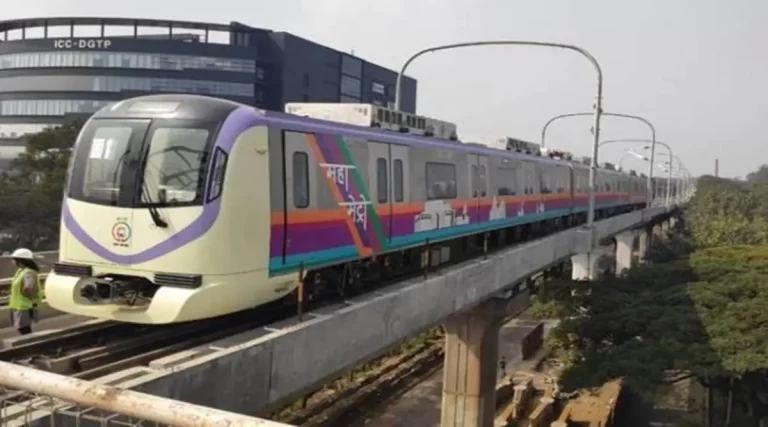
Pune Metro Line 3 gears up for operations in September, PM Modi likely to inaugurate 

PUNE (Metro Rail News): The first section of Pune Metro Line 3 is ready to start passenger services. The PMRDA expects Prime Minister Narendra Modi to inaugurate it virtually in early September. Although the exact date of the inauguration has still not been finalized. The initial section, which lies between Maan-Balewadi and is 12 stations long, was approved by the Commissioner of Metro Rail Safety (CMRS) for passenger services on July 23. 

PMRDA prepares the launch

The commissioner of the Pune Metropolitan Regional Development Authority (PMRDA), Abhijit Chaudhari, stated that the officials are keeping the 12 stations under constant observation and are carrying out the remaining tasks. The state government is currently preparing the schedule for the inauguration, and according to the present plan the Prime Minister might inaugurate the section online during the first two weeks of September. The exact date has still not been confirmed by the officials. Chaudhari will carry out another in-depth review of the project on Friday, and the officials will as well carry out a further review at the end of this week.

Five more stations may join the first phase 

The PMRDA has requested a CMRS inspection at five more stations. If the safety regulator gives the go-ahead to these stations, then metro services could be extended to a route comprising 17 stations. The section leading towards Shivajinagar will open only after the officials have carried out the necessary safety inspections and obtained the required clearances.

Pune Metro Line 3 at a glance

InformationDetails 
Corridor Hinjewadi-Shivajinagar
Total Length 23.3 km 
First Phase Nearly 8 km 
First Stretch Maan-Balewadi
Stations ready12
Five additional stationsAwaiting CMRS inspection
Maximum train speed80 kmph
Construction started2022

Pune Metro Line 3, which is 23.3 km in length, will run from Hinjewadi to Shivajinagar via Balewadi. The corridor will offer a direct link for public transport to Hinjewadi, one of Pune’s major IT and employment centres, and it will also connect the area with various important parts of the city. Trial runs are currently going on, the officials stating that the trains are capable of reaching speeds of 80 kmph.

Project enters final stage

On Tuesday Siddharth Shirole, the MLA from Shivajinagar, went and looked at the project together with representatives from Tata, Siemens and the project engineering team. He stated that the construction had reached its final phase since it had begun in 2022 and also referred to the traffic congestion on Pune’s main entry roads, saying that the metro could provide commuters with an alternative mode of travel.

Rinaj Pathan, head engineer at the PMRDA, stated that the officials have already presented the proposal for the CMRS to carry out the inspection of the other five stations. The authority is currently awaiting the regulator’s response. For people who regularly commute between Hinjewadi and Balewadi, the first stage would offer an alternative to the crowded road system.

Also Read: SYSTRA-DB JV Bags General Consultant Cr Contract for Pune Metro Phase 1 Ext. & Phase 2

DMRC to Upgrade CCTV Network with AI-Enabled, IP-based surveillance System at 76 Locations

DELHI (Metro Rail News): The Delhi Metro Rail Corporation (DMRC) plans to replace its ageing CCTV network with a modern AI-enabled, IP-based surveillance system at 76 locations.

The upgrade will cover the Red Line between Rithala and Shaheed Sthal, the Blue Line between Noida and Dwarka Sector 21, and Line 4 between Vaishali and Yamuna Bank. Major stations included are Kashmere Gate, Tis Hazari, Rajouri Garden, Karol Bagh, Mandi House, Barakhamba Road, Anand Vihar, Vaishali and Noida City Centre. Depots, the Operations Control Centre (OCC) and the Backup Control Centre (BCC) will also be covered.

The existing network has 2,531 analogue cameras. Instead of removing everything at once, DMRC will integrate the new IP cameras with its current IP-camera system. This will provide wider station coverage and allow centralised monitoring.

The main goal is to make CCTV cameras more than just recording devices. The new system will analyse live and recorded video and automatically detect situations that may need attention.

One advanced feature is person tracking. If an operator marks a person of interest, the system can search footage using details such as gender, clothing colour, age group or an uploaded photograph. It can then follow that person’s movement across multiple cameras and create a clear route and timeline.

Other AI video-analytics features include detection of overcrowding, long queues, track intrusion, falling objects and loitering.The entire work is expected to be completed within one year. After installation, the new system will have a five-year defect liability period.

Also Read: Delhi Master Plan 2047: 695 km metro and 6 RRTS lines

Keralam opposes Railway Board’s decision on Mangaluru’s bifurcation from Palakkad division

NEW DELHI (Metro Rail News): Keralam (formerly known as Kerela) opposed the Railway Board’s decision to transfer the Mangaluru railway area, including Ullal to move out of the Palakkad Division of Southern Railway and come under the Mysuru Division of South Western Railway (SWR). The Jurisdiction change will come into effect on 1 October 2026.

The political leaders in Keralam including the opposition leader Shri Pinarayi Vijayan, Congress MP Shri Shashi Tharoor and many already expressed their concerns. MPs in Keralam even planned a hunger strike on Onam (Thiruvonam) day, Wednesday 26 August 2026, one of the major cultural festivals of Keralam.

Even the Chief Minister of Keralam Shri. V.D. Satheesan sent a detailed letter to the Hon’ble Prime Minister of India, Shri Narendra Modi, to seek his urgent personal intervention to freeze and reconsider the Railway Board’s decision. He also mentioned that the decision was taken without any prior consultation with the Government of Keralam .

Why is Keralam opposing the decision?

Mangaluru is currently a major part of Palakkad Division’s railway operations and revenue, particularly because of freight traffic connected with New Mangaluru Port. Removing this area will significantly reduce Palakkad Division’s revenue and weaken its financial position. The Mangaluru region generates over 90% of the Palakkad Division’s freight revenue, approximately ₹650 crore, and contributes more than 50% of its overall revenue of around ₹1,650 crore.

The change will not only affect it will further affect loss of operational facilities associated with the Mangaluru area in Keralam. Weakening Palakkad Division will inevitably hurt future resource allocation, project sanctions, capacity expansion, and new train services for the Malabar region, northern part of Keralam.

Karnataka Chief Minister D.K. Shivakumar and the state government have maintained complete silence on this issue, despite opposition MLA asking to break the silence.

Why is the Railway making this change?

South Western Railway says the decision is intended to improve operational efficiency.. Mangaluru is more closely linked to Mysuru through the Hassan–Mangaluru route, which already falls under SWR. Bringing the entire Mangaluru area under one division is expected to make train operations, freight handling, coordination and infrastructure planning smoother.

Keralam is not losing any stations as Manguluru city is in Karnataka. And according to authorities Keralam does not lose anything with Manguluru’s bifurcation.

Also Read: Kochi Metro Phase 2 Requires 8 Additional Trains: Funding Gap Slows Down Procurement