
Home Blog Page 49

Lucknow Metro: UPMRCL awarded Vasant Kunj Depot contract to GHV India

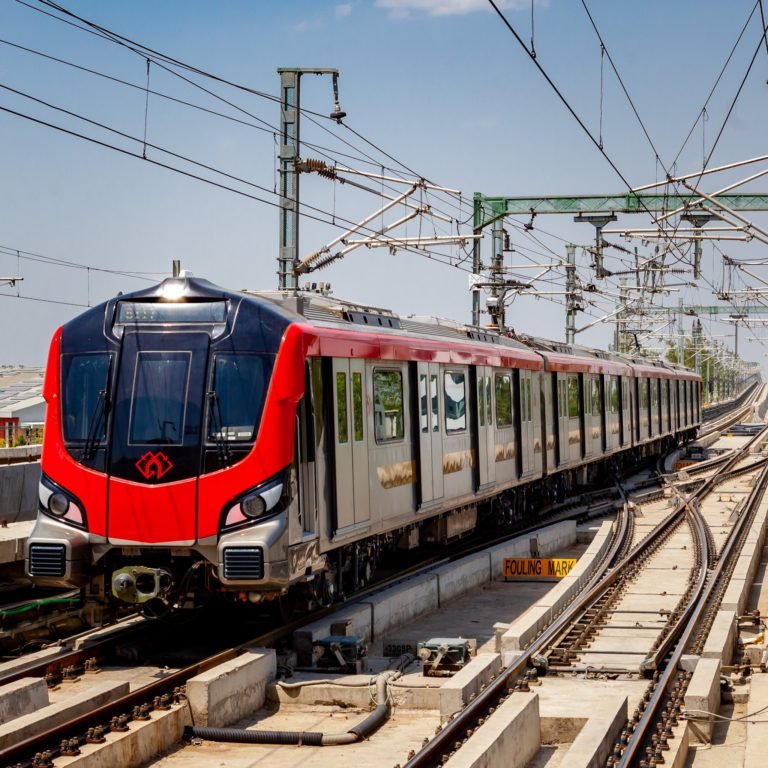
LUCKNOW (Metro Rail News): Uttar Pradesh Metro Rail Corporation Limited (UPMRCL) has awarded Rs 107.79 crore contract to GHV (India) PVT. Ltd. for the construction of a depot cum workshop at Vasant Kunj on Hardoi Road for the Lucknow Metro East-West Corridor. The depot will support train maintenance and daily operations for the upcoming metro line. 

Contract Details 

Information Details 
Tender Number LKCC(02)-01 
Contractor GHV (India) PVT. Ltd. 
Contract ValueRs 107.79 crore
Contract Date9 June 2026
Contract Period 540 days
Number of Bids Received5

Bidder Details 

Bidder NameStatus
GHV (India) Pvt. Ltd.Awarded (L1)
K S M BASHIR MOHAMMAD AND SONS Rejected-Financial 
LISHA ENGINEERS PRIVATE LIMITED Rejected-Financial 
Quality Buildcon Private Limited Rejected-Financial 
VASCON ENGINEERS LTD Rejected-Financial 

Scope of Work

The contractor will build a depot cum workshop at Vasant Kunj on Hardoi Road for the Lucknow Metro East-West Corridor. The facility will include structural, architectural, plumbing, water supply & sewage, drainage, PEB and E&M works, external development works, road works, electrical works, mechanical works, HVAC & firefighting works on Hardoi Road for EastWest Metro Corridor of Lucknow Metro Rail Project. The contractor will complete the entire project within 540 days.

About the Project

The East-West Corridor is part of Lucknow Metro Phase 1B. The corridor will connect Charbagh Railway Station with Vasant Kunj through underground and elevated sections. The 11.2 km corridor will have 12 stations. The Vasant Kunj depot will serve as the backbone of the corridor by supporting train operations and maintenance.

Also Read: Indian Railways Approves Electric Traction Upgrade on Telangana Rail Route
Karnataka CM seeks Center’s approval for Namma Metro Phase 3 Double-Decker corridor

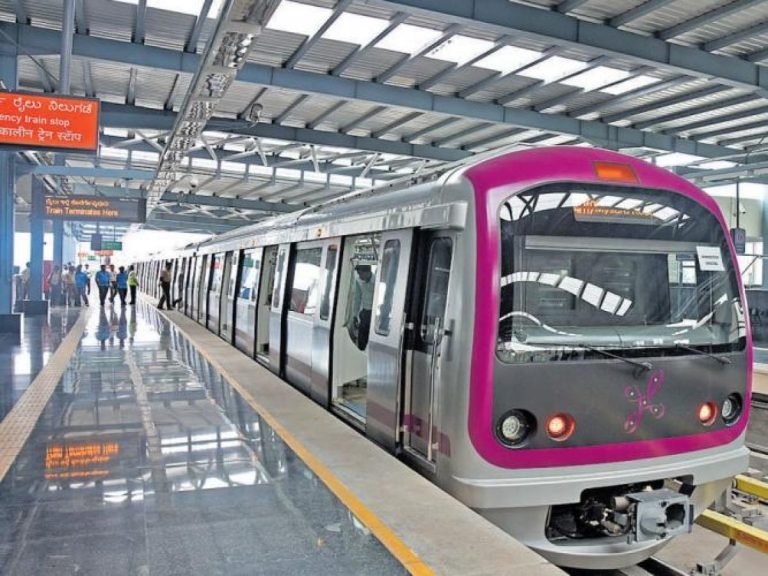
BENGALURU (Metro Rail News): Bengaluru’s Namma Metro is likely to receive central government approval soon. Karnataka CM D. K. Shivakumar requested Union Minister for Housing and Urban Affairs Manohar Lal Khattar to approve the double-decker metro corridor proposal in the wake of rising traffic problems in the city. 

The Central Government had previously granted approval for the Bengaluru Metro Phase III corridor in 2024, which excluded the double-decker viaduct. Later on the State Government decided to add the double-decker corridor at an extra cost of Rs 9,700 crore to accommodate the road flyover along with the metro rail. The central government raised concerns over the socio-economic feasibility of the project and concluded that integrating the flyover with the metro corridor would lead to less metro ridership and higher use of private vehicles. 

RITES was contracted to conduct a detailed evaluation to assess the revised project. The RITES report revealed that the center’s concerns were solely based on technical aspects, and the double-decker corridor had only reduced the project’s EIRR to 15.9% from the originally estimated 17.04%, confirming that the EIRR is above the 14% percentage required for a mass rapid transit system. The DPR submitted for the Namma Metro Phase III had estimated EIRR at 16.5%.

Concerns were also raised for the height of an elevated alignment at junction 1, at Mysore Road where the new station will be constructed over the existing purple line station. The height of the station is expected to be 32 meters at the rail level. Sources claimed that if the height of Mysore Road Station is not increased, it might impact the existing railway line.The Mysuru Road station will be unusually tall due to the natural road gradient. The elevation of this station is expected to be challenging, but it is not impossible to construct. 

Phase III of Bengaluru Metro will have 2 corridors; the first line spans around 32.15 km and consists of 22 stations from JP Nagar 4th Phase to Kempapura, and the second line is a 12.50 km long route consisting of 9 stations from Hosahalli to Kadabagere.

Also Read: Godrej & Boyce wins over Rs 100 crore station works contracts for Kochi Metro Phase 2

Godrej & Boyce wins over Rs 100 crore station works contracts for Kochi Metro Phase 2

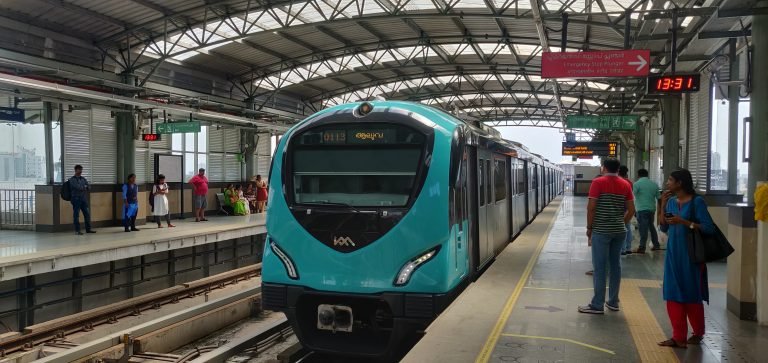
KOCHI (Metro Rail News): Kochi Metro Rail Limited has awarded two station works contracts worth more than Rs 100 crore to Godrej and Boyce manufacturing company limited for Phase 2 of Kochi Metro. The company secured both contracts for architectural, finishing, plumbing, and interior works at 10 elevated metro stations on the upcoming corridor. Together, the contracts are worth around Rs 100.3 crore. Godrej & Boyce emerged as the lowest bidder in both tenders, beating Crescent Contractors Pvt. Ltd.

Contract KBC-08 

Kochi Metro awarded Rs 55.20 crore contract to Godrej and Boyce Manufacturing Company Limited. The first package, KBC-08, covers five elevated stations. These stations are Civil Station Junction, Cochin SEZ, Chittethukara, KINFRA Park, and Infopark.

Contract Details

Information Details 
Contract PackageKBC-08
Tender Number KMRL/PROC/TENDER/2025-26/054 
Tender Amount Rs 48.30 crores 
Bidder NameGodrej and Boyce manufacturing company limited 
Awarded AmountRs 55.20 crore
Contract Period360 days
Number of Bidders2

Scope of Work

The contractor will carry out architectural and finishing works at the five stations of Kochi Metro Phase 2. The package includes block work, plumbing works, interior finishing, and other station-related civil works.

Contract KBC-07

Kochi Metro awarded another contract worth around Rs 45.08 crore to this company. The second package, KBC-07, covers another 5 stations of Phase 2 of Kochi Metro. These stations are Palarivattom Junction, Alinchuvadu, Chembumukku, Vazhakkala, and Padamughal stations.

Contract Details 

InformationDetails
Contract PackageKBC-07
Tender Number KMRL/PROC/TENDER/2025-26/037 
Tender Amount Rs 48.07 crores 
Bidder NameGodrej and Boyce manufacturing company limited 
Awarded AmountRs 45.08 crore
Contract Period360  days
Number of Bidders2

Scope of Work

The contractor will execute architectural and finishing works, including block work, plumbing, interior finishing, and other associated station infrastructure works at these five stations.

About Kochi Metro Phase 2

Kochi Metro Phase 2, also known as the Infopark Corridor, will connect JLN Stadium with Infopark in Kakkanad. The corridor will improve connectivity to major IT parks, business centres, and government offices in the area. Once operational, the line will offer faster and more convenient public transport to thousands of daily commuters travelling to Kakkanad’s growing IT hub. 

Also Read: Ahmedabad Metro awarded DDC service contract to SYSTRA for Phase 2 expansion

Ahmedabad Metro awarded DDC service contract to SYSTRA for Phase 2 expansion

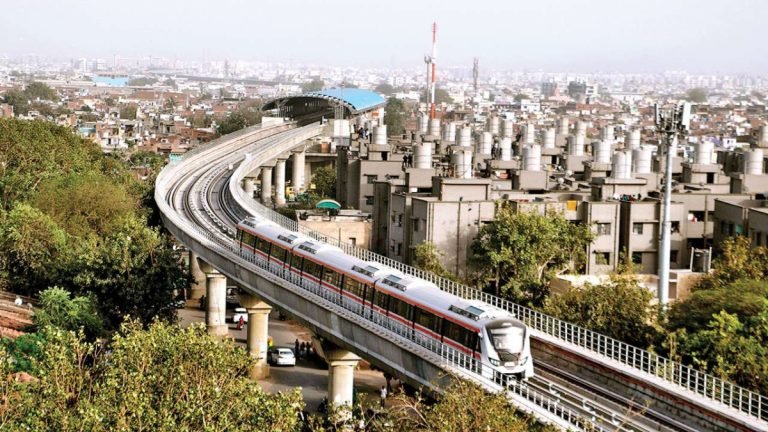
AHMEDABAD (Metro Rail News): Ahmedabad Metro’s Phase 2 expansion has gained momentum after SYSTRA secured a new design consultancy contract for two important metro extensions. The project will improve connectivity to Ahmedabad Airport and GIFT City. It is one of Gujarat’s fastest-growing business hubs.

SYSTRA will provide Detailed Design Consultancy (DDC) services for the next phase of the Ahmedabad Metro project. The company had earlier worked on the design of Ahmedabad Metro Phase 2 for Gujarat Metro Rail Corporation Limited (GMRCL). The new contract will strengthen its involvement in the city’s expanding metro network. The assignment covers two elevated metro extensions that aim to improve connectivity between major urban centres, business hubs and transport hubs.

Airport metro link to add 4 stations

One part of the project known as Phase 2A. It will connect Koteshwar Road with Sardar Vallabhbhai Patel (SVP) International Airport.

  • Length: 5.11 km 
  • Corridor: Elevated corridor
  • Stations: Four metro stations

GIFT City Metro extension

The second corridor, Phase 2B, will extend metro services to Gujarat International Finance Tec-City (GIFT City), which continues to grow as a financial and technology centre.

  • Length: 3.3 km
  • Corridor: Elevated corridor
  • Stations: Three metro stations

The Ahmedabad-Gandhinagar metro project also carries the name MEGA, which stands for Metro Express from Gandhinagar to Ahmedabad. The name reflects the metro system’s role in connecting the two cities through a regional rapid transit network. The two new corridors target areas that continue to see growing passenger demand. Ahmedabad Airport handles a large number of travellers every year, while GIFT City continues to attract businesses, investment and employment opportunities. Better metro connectivity could support future growth in both the locations.

Also Read: KPIL wins new orders worth Rs 2,002 crore, strengthens presence in power, rail and construction sectors

Chennai Metro invites bids for restoration work at Phase 1 and Phase 1 extension 

CHENNAI (Metro Rail News): Chennai Metro Rail Limited (CMRL) has floated a tender for civil maintenance work at Phase 1 and  Phase 1 extension metro stations of Chennai Metro. The estimated cost of the tender is Rs 2.84 crore. 

Tender Information

Information Details  
Tender Number CMRL/O&M/Civil Maintenance/RW-02/2026 
Bid System Single Stage Two Envelope 
Tender Cost  Rs 2.84 crore
EMD Amount Rs 2.84 lakh
Bid submission FeeRs 16,000
Pre-Bidding Meeting 17 June 2026, (11:00 hrs)
Bid-Submission Deadline09 July 2026 up to (11:00 hrs) 
Technical Bid Opening09 July 2026 up to (15:00 hrs)
Duration of Contract200 days from LOA + DLP of 365 Days. 

Scope of Work

The scope of work includes restoration of existing architectural finishes at Phase 1 and Phase 1 extension metro stations of Chennai Metro Rail Limited (CMRL) in Chennai, Tamil Nadu. The contractor will complete the work within 200 days and provide a defect liability period of 365 days.

About the Project 

Chennai Metro Phase 1 network is a 45.05 km long stretch featuring two corridors: the Blue Line and the Green Line. Phase 1 extension also adds around a 9.05 km stretch to the Blue Line. It connects several commercial, residential and transport hubs. Through this restoration project, Chennai Metro is aiming to maintain station infrastructure quality across the network.  The work will help ensure that stations remain clean, safe and visually appealing for passengers in the years ahead. 

Ahmedabad Metro Rail project Phase 2A gets Union Cabinet’s approval

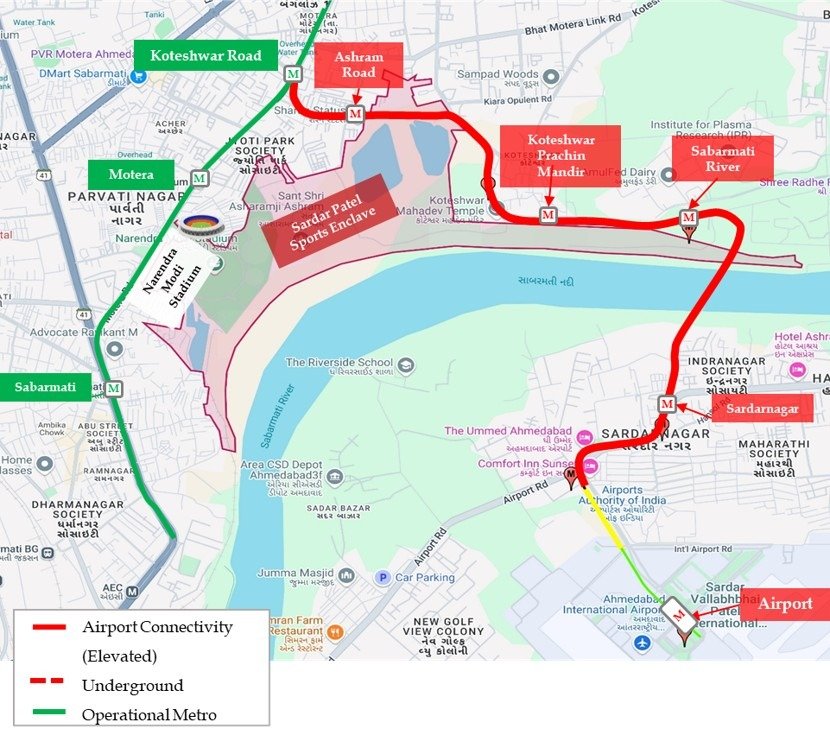
NEW DELHI (Metro Rail News): The Union Cabinet has approved Phase 2(A) of the Ahmedabad Metro Rail Project. This metro corridor will consist of 05 stations (04 elevated and 1 underground) and is expected to be completed over a period of the next 4 years. The estimated cost of this project is Rs 2,169.04 crore. This approved extension is a 6.032 km stretch from Koteshwar Road to the Sardar Vallabhbhai Patel International Airport. 

The names of stations approved for Phase 2(A) Corridor are:

  • Ashram Road
  • Koteshwar Prachin Mandir
  • Sabarmati River
  • Sardar Nagar
  • Airport
image

Once Phase 2 (A) is operationalized, the Ahmedabad-Gandhinagar will expand its network to 77.63 Km. 

This extension will link key zones, including residential & commercial areas, with the existing Ahmedabad-Gandhinagar corridor, including Sardar Nagar, Indiranagar Society, and the Sardar Patel Sports Enclave. 

Phase 2(A) will enhance connectivity between Ahmedabad, Gandhinagar, GIFT City, and the international airport. Union Minister Ashwini Vaishnaw also said that this corridor will provide better access to railways, bus terminals, and other transport networks.

Corridor II of Ahmedabad Metro Phase 2 is an extension of Phase I, which provides better connectivity to the twin cities of Ahmedabad and Gandhinagar. The two corridors of Phase II span over a length of 28.2 km and include 22 stations. The final section of Corridor II was inaugurated by Prime Minister Modi on 11th Jan, 2026. Connecting with Phase 2 (A), these metro corridors are expected to enhance public transportation and boost urban mobility. 

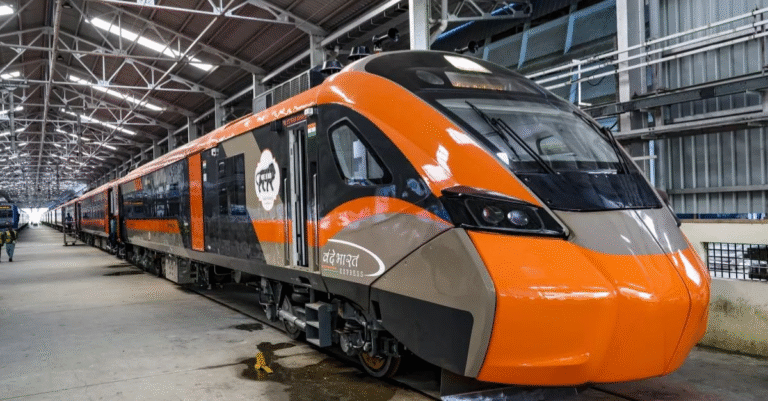
Centre approves Jammu–Srinagar Vande Bharat Express to halt at Anantnag

SRINAGAR (Metro Rail News): To further boost connectivity in South Kashmir, the Union Minister of Railways, Ashwini Vaishnaw, has announced that the Jammu-Srinagar Vande Bharat Express will get a new halt station at Anantnag.

On 10th June, 2026, the Railway Minister Shri Ashwini Vaishnaw met Kashmir Chief Minister Mr. Omar Abdullah and reviewed various ongoing railway projects and discussed issues related to the expansion of rail services in Jammu & Kashmir. During the meeting the chief minister appreciated the quality of service and punctuality of the Jammu-Srinagar Vande Bharat Express and requested the union minister to connect the train services to Anantnag Railway Station. 

This new halt is expected to benefit commuters, tourists and traders, offering a faster and more reliable transport link to one of Kashmir’s key economic and cultural hubs.

The train initially began operations between Katra and Srinagar on 6 June 2025. The extended direct route starting from Jammu Tawi was launched in April 2026, and to meet the rising passenger demand the number of coaches was increased from 8 to 20.  At present, the Jammu–Srinagar Vande Bharat Express runs a total of 4 services (two pairs) (26401/26402 and 26404/26403) in the Kashmir Valley. Railway Minister Ashwini Vaishnaw flagged off the service on April 30, 2026. Regular commercial operations commenced on 2 May 2026, reducing the travel time to 4 hours 50 minutes. 

Also Read: Karnataka CM seeks Center’s approval for Namma Metro Phase 3 Double-Decker corridor

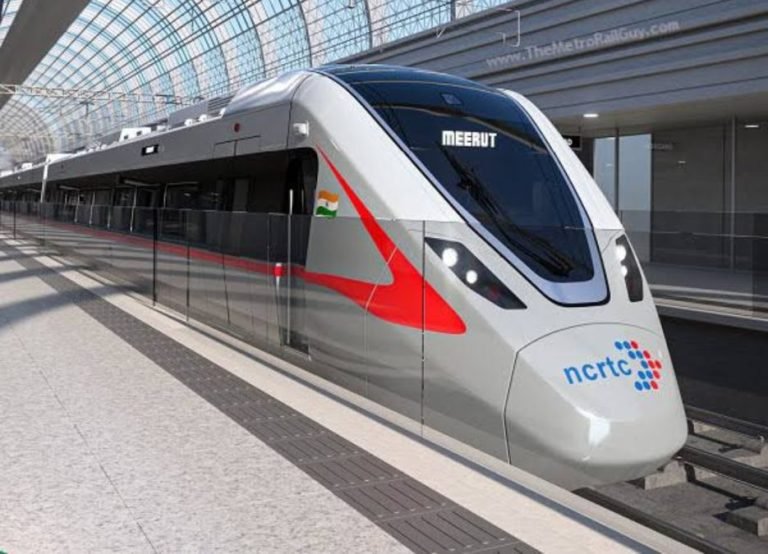
Delhi-Ghaziabad-Meerut RRTS registered over 1.25 lakh daily commuters

NEW DELHI (Metro Rail News): Delhi-Ghaziabad-Meerut Regional Rapid Transit System (RRTS) reached its highest daily ridership on Monday (8th June), with almost 1,25,550 passengers travelling on the corridor in a single day. On average, around 1 lakh commuters are using the Namo Trains for daily commuting. In the month of May, the average daily ridership was around 93,877 as per the information on the Namo Bharat website. 

The NCRTC posted on their X (formerly twitter) account on Tuesday that, “In response to growing passenger demand, NCRTC has recently introduced 18 additional Namo Bharat train trips during peak hours on the Delhi-Ghaziabad-Meerut corridor.” These trains are running between 7 AM to 11:30 AM in the morning and 5 PM to 8:30 PM in the evening.

A major reason for the growing ridership of the Namo Bharat trains is the substantially fast service that it offers and thereby reducing the travel time significantly. NCRTC’s officials informed that the trains are increasingly chosen by daily office goers, students and other daily commuters, for whom punctuality is important. At the time of heat-waves in Delhi NCR, the Namo Bharat offers a fully air-conditioned, comfortable and safe mobility option.

The Delhi-Ghaziabad-Meerut RRTS corridor, also known as the Namo Bharat corridor is India’s first semi-high-speed rail regional transit corridor with a length of 82.15 km. The train covers the distance between Sarai Kale Khan in Delhi to Modipuram in Meerut in less than 60 minutes.

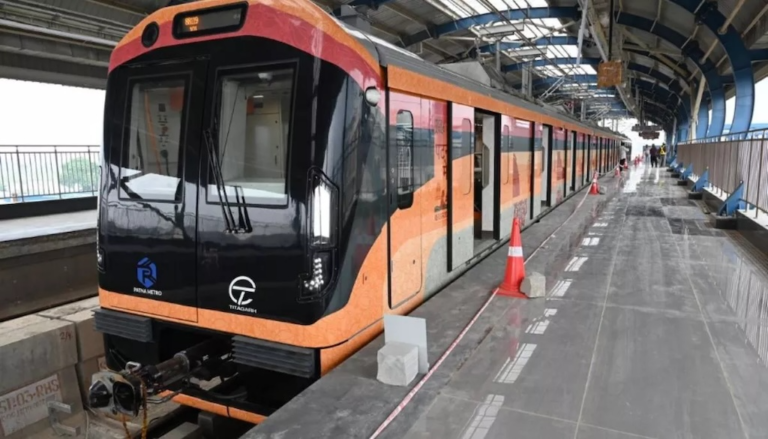
Patna Metro Blue Line achieves 7th TBM breakthrough 

PATNA (Metro Rail News): The Patna Metro project hit another achievement, as TBM-04 completed the tunnel from Moin-ul-Haq Stadium Metro Station to Rajendra Nagar Metro Station. This signals the 7th tunnel breakthrough on Line 2 of the Patna Metro project.

TBM-04 successfully completed the excavation of approximately 681 metres of downline tunnel between Moin-ul-Haq Stadium Metro Station and Rajendra Nagar Metro Station. This progress was described as one of the most technically challenging components of the project by the officials.

The construction on the downline tunnel by TBM-04 is a part of the 6 underground stations planned for corridor II of the Patna metro project. It was reported that this section will be connected to Malahi Pakri metro station through a ramp of approximately 750 metres connecting the elevated section to the underground alignment.

Alongside this development, TBM-03 is moving at a steady pace in parallel, constructing the upline tunnel. The TBM is working on the remaining section of the tunnel and can reach Rajendra Nagar Metro Station by the end of June 2026.

The event was witnessed by Shri Sandeep Kumar R. Pudkalkatti, IAS (Secretary, UDHD-cum-Managing Director, Patna Metro Rail Corporation), along with several senior officials associated with the project.

Patna Metro Blue Line consists of 12 stations, featuring 6 underground and 6 elevated stations, spanning 16.2 km from Patna Junction to Patliputra Bus Terminal (New ISBT). Currently a 3.45 km elevated stretch between Pataliputra Bus Terminal and Bhootnath station on the North-South corridor is operational and approval to run metro services up to Malahi Pakri was recently given after safety inspections on this route. 

image

Detailed Review Meeting

On 8th June, 2026, a detailed review meeting was chaired by Shri Sandeep Kumar R. Pudakalkatti, IAS ( Secretary, UDHD-cum-MD, PMRCL). Senior officials from PMRCL, DMRC, and concerned agencies participated in the review. Construction progress across various project corridors was assessed, and all critical bottlenecks were discussed in the meeting. Clear directions were issued to accelerate pending works, strengthen coordination, and ensure adherence to project timelines.

This accomplishment strengthens the underground connectivity of the corridor and brings Patna Metro closer to operational readiness. Metro Officials said that the work on the underground section of Patna Metro Blue Line is expected to be completed by the end of this year. 

Indian Railways Approves Electric Traction Upgrade on Telangana Rail Route
TELANGANA (Metro Rail News): Indian Railways has approved the upgrade of the electric traction system on the Mahbubnagar–Secunderabad–Medchal section of South Central Railway. This section is a part of India’s important High-Density Network (HDN) routes. The project will cover approximately 141 route-kilometres of this rail corridor and will be implemented at a cost of ₹285.01 crore. 

Under the project, the existing 1×25 kV electric traction system will be upgraded to a modern 2×25 kV electric traction system. This move is expected to provide a more stable and efficient power supply for train operations, making rail services smoother, safer and more reliable.

Mahbubnagar–Secunderabad–Medchal Rail Route lies in the state of Telangana and falls on the Dharmavaram-Dhone-Mahbubnagar-Secunderabad-Medchal-Mudkhed-Indore-Ajmer rail corridor, which carries substantial passenger and freight traffic.

Once completed, this project will improve train operations on the route. Freight movement is expected to become more efficient, enhancing both the speed and capacity of goods transportation. The project will also support trade, industry and economic activity across the region.

The initiative will strengthen Indian Railways’ commitment to developing a modern, future-ready rail network and will benefit both passengers and industry through improved rail infrastructure and operational efficiency.