
Home Blog Page 48

GMRC floats maintenance tender for Ahmedabad Metro Reach-1

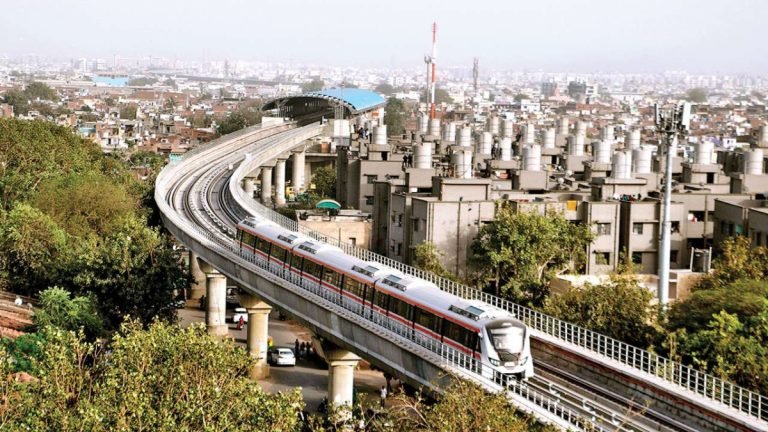
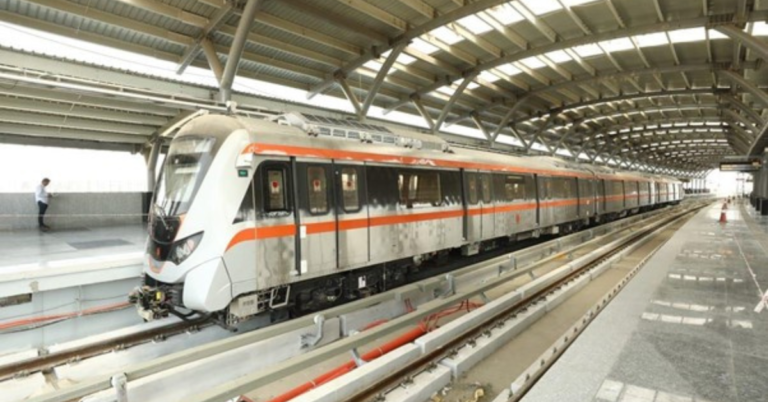
AHMEDABAD (Metro Rail News): Gujarat Metro Rail Corporation (GMRC) has invited bids for civil maintenance work on a section of East-West Corridor of Ahmedabad Metro Phase 1. The approximate cost of the project is Rs 3.15 crore. It covers maintenance of 6 metro stations, the viaduct and Apparel Park depot on the Reach-1 section of the corridor.

Stations: Apparel Park, Amraiwadi, Rabari Colony, Vastral, Nirant Cross Road and Vastral Gam

Tender Information

Information Details 
Tender Number GMRC/CIVIL MAINTENANCE/REACH-1/PH-1/2026 
Estimated Cost Rs 3.15 crore 
Tender Fees Rs 25,000
Tender Security Rs 3.15 crore
Tender Submission Deadline2 July  2026, (15:00 hrs)
Technical Bid Opening2 July  2026, (15:30 hrs)
Tender Validity 180 days
Completion Period 24 months

Scope Of Work

 The work includes general civil maintenance works for the Reach-1 section of Ahmedabad Metro’s East-West Corridor. The work covers six stations (Apparel Park, Amraiwadi, Rabari Colony, Vastral, Nirant Cross Road, and Vastral Gam). The contractor will also maintain the viaduct and the Apparel Park Depot, including the depot line section of Ahmedabad Metro Rail Project Phase 1.

About the Project 

Ahmedabad Metro Reach 1 is the priority reach of the East-Wesst corridor. It is 6.5 km long and connects Vastral Gam to Apparel Park. It covers several residential and commercial areas of the city and serves thousands of daily commuters.

Also Read: Ahmedabad Metro Phase 1: GMRC floats civil maintenance tender for East-West Corridor
Rs 1,400 crore civil tender approved by World Bank for Gurugram Metro Phase II

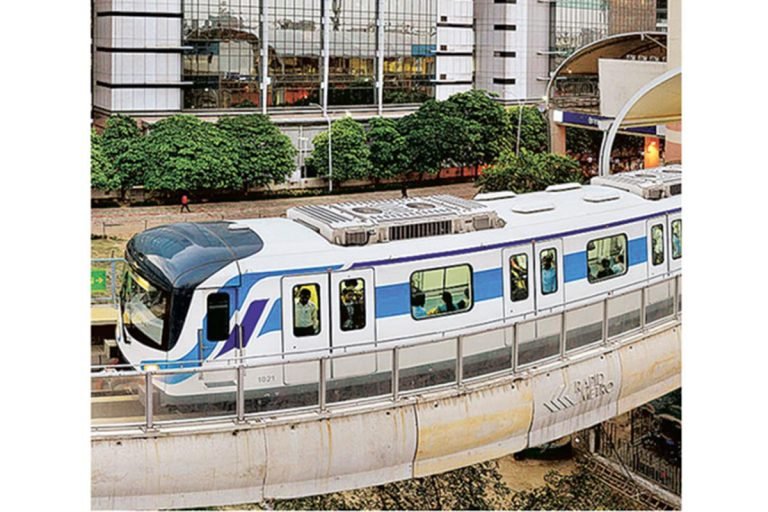
NEW DELHI (Metro Rail News): The World Bank has approved the Gurugram Metro Rail Limited (GMRL) to float the civil tender for the Gurugram Metro Phase II, from Sector 9 to CyberHub. The estimated cost of the tender is around ₹1,400 crore and covers the construction of 14 metro stations and a rail corridor linked with the Rapid Metro and the Namo Bharat Rail through an interchange at Shankar Chowk. The tender is set to be floated within a week. 

It was also announced by the Gurugram Metro Rail Limited that the tender for the proposed depot in Sector 33 will be reissued, as only one bidder was eligible for the contract. 

Chander Shekhar Khare, Managing Director, GMRL, said, “GMRL has received approval from the World Bank for the civil tender for construction of Phase II of the Gurugram Metro. We will float the tender within a week, as all the groundwork for floating the tender has been completed.”

Phase II of the Gurugram Metro corridor will include the construction of the following new metro stations: 

  • Sector 7
  • Sector 4
  • Sector 5
  • Ashok Vihar
  • Sector 3
  • Bajghera Road
  • Palam Vihar Extension
  • Palam Vihar
  • Sector 23A
  • Sector 22
  • Udyog Vihar Phase 4
  • Udyog Vihar Phase 5
  • Cyber City 

This metro corridor will span around 13 km, and another station is to be constructed on the spur towards Gurugram railway station. GMRL also held a detailed discussion with Gurugram Metropolitan Development Authority (GMDA) officials to make sure that no hindrances are caused in the construction of Phase II on Sushil Aima Road in Palam Vihar.

Phase I of the Gurugram Metro is a 15.2 km elevated metro corridor from Millennium City Centre to Sector 9. It is currently under construction and is expected to begin operations in 2028. Along with Phase II, the total length of the Gurugram Metro corridor will be 30.7 km with 28 stations and a depot in Sector 33. It will also have two spurs — one towards Sector 102 near the Dwarka Expressway and another towards the Gurugram railway station.

Also Read: Siemens & Titagarh join hands to supply propulsion system for Pune Metro

Siemens & Titagarh join hands to supply propulsion system for Pune Metro

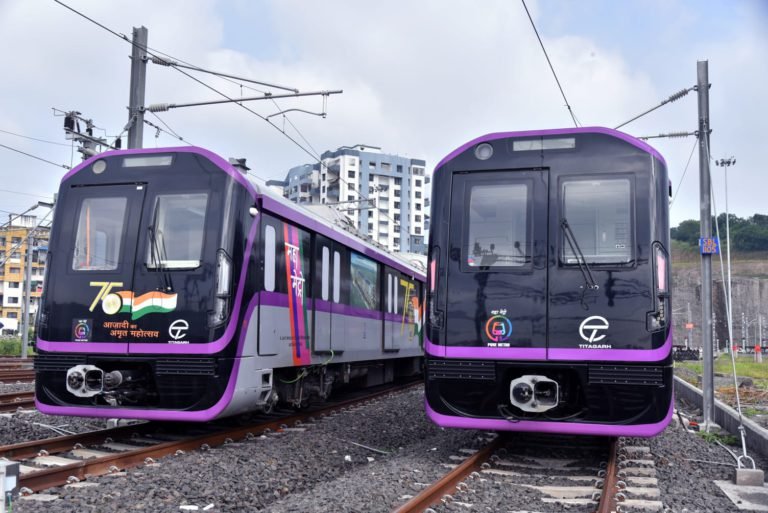
PUNE (Metro Rail News): Siemens obtained an order from Titagarh Rail Systems Limited for the Pune Metro extension  project. The mobility infrastructure firm will supply advanced propulsion systems, and Train Control & Monitoring System (TCMS) for the project. The scope of the work includes design, manufacture, supply and warranty of traction converters, auxiliary converters and traction motors; and TCMS for 12 train sets.

On Monday (15th June), Siemens Limited issued a press release informing about the deal. However, there was no information regarding the financial details of this project. The company said that, “Our state-of-the-art propulsion systems, including traction motors, converters and an advanced TCMS solution, will ensure optimal performance and reliability.”

Rajeev Joisar, the Chief Executive Officer, Mobility Business at Siemens Limited, emphasised on India’s rapidly growing metro market, and the need to develop a local manufacturing and technology landscape in India as the country keeps on spending in sustainable urban mobility. He showed their commitment to develop advanced technologies in India.

Umesh Chowdhary, Vice Chairman & Managing Director, Titagarh Rail Systems Limited highlighted their vision of near-complete localisation for the production of advanced propulsion technologies, and their commitment towards ‘Make in India’ programme. He further noted that Pune Metro holds a special place for them, as they received their first passenger rail systems contract for Pune Metro Rail project in 2019. Moreover, the company introduced India’s first aluminum bodied train coaches for that project. 

Also Read: Ahmedabad Metro Phase 1: GMRC floats civil maintenance tender for East-West Corridor
Ahmedabad Metro Phase 1: GMRC floats civil maintenance tender for East-West Corridor
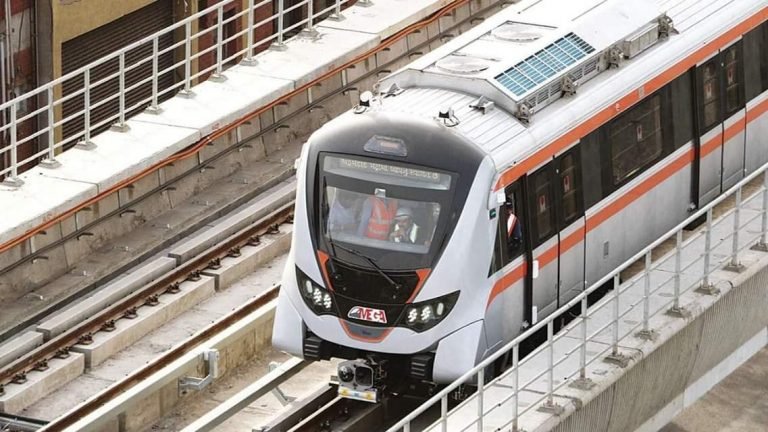
AHMEDABAD (Metro Rail News): Gujarat Metro Rail Corporation Limited (GMRCL) has invited bids for civil maintenance work on the underground section of Ahmedabad Metro Phase 1. The cost of the tender is around Rs 1.82 crore. It will cover 4 underground metro stations, tunnel sections and ramp areas on the East-West corridor. 

Station Names: Kankaria East, Kalupur Railway, Gheekanta and Shahpur Metro Stations 

Tender Information 

Information Details 
Tender Number GMRC/CIVIL MAINTENANCE/UG/PH-1/2026 
Estimated Cost Rs 1.82 crore
Tender FeesRs 5,000
Tender Security Rs 1.82 lakh 
Tender Submission Deadline02 July 2026, (15:00 Hrs) 
Technical Bid Opening02 July 2026, (15:30 Hrs) 
Tender Validity 180 days
Completion Period 24 months

Scope Of Work

The contractor will carry out general civil maintenance works for the underground section of Ahmedabad Metro Phase 1. The contract also covers four underground stations (Kankaria East, Kalupur Railway, Gheekanta, and Shahpur). The work also includes maintenance of the tunnel section and ramp area between Apparel Park Station Ramp and Shahpur Station on the East-West Corridor.

About the Project 

Ahmedabad Metro Phase 1’s East-West Corridor is 21.16 km long. It connects several important parts of the city. The underground section passes through densely populated  areas and includes key stations such as Kalupur Railway Station, which serves as an important interchange point for passengers.

Also Read: GMRCL invites bids for Ahmedabad Metro Phase 1 maintenance work

Work began at the Saket G Block station, Golden Line expected to be open soon

NEW DELHI (Metro Rail News): The initial construction work for the proposed Saket G Block Station in the upcoming Golden Line corridor of the Delhi Metro has begun. The Golden Line of the Delhi metro was proposed under the Phase 4 of the Delhi metro. The new corridor will improve connectivity in the South Delhi area. 

As per the report of The Indian Express, the work has started in the Saket G Block metro station, with work on the structure, including piping, pipe cap construction and pier works, and related activities currently underway. Saket G Block will be an elevated station and it will have four platforms- three side platforms and one island platform. It will be a major station providing an interchange to the Golden Metro’s branch line (Saket G Block to Lajpat Nagar). 

A key feature of the Golden Line will be interchange connectivity with other Delhi metro lines. The Golden Line will consist of a 23.6 kilometer main line connecting Delhi Aerocity (providing interchange to Orange Line) with Tughlakabad (providing interchange to Violet Line) and a 8.4 kilometer branch line connecting Saket G Block with Lajpat Nagar (providing interchange to Violet Line and Pink Line). The corridor will also connect with the Yellow Line at the Chattarpur station. 

Additionally, extension of the Golden Line to Terminal 1-IGI Airport and Kalindi Kunj stations has been approved under Delhi Metro Phase 5(A). The Golden Metro’s main line is expected to be completed by December 2026 and subsequently the branch line is set to operate from 2029.

Also Read: Titagarh to Domestically Manufacture Aluminium Train Coaches in India

Titagarh to Domestically Manufacture Aluminium Train Coaches in India

NEW DELHI (Metro Rail News): Titagarh Rail Systems has planned to manufacture aluminium train coaches domestically in India. The company received its first metro contract in 2019 for the Pune Metro project, introducing India’s first aluminium-bodied train coaches. It has successfully supplied aluminium coaches for the Pune Metro project and attained another order to manufacture twelve more aluminium train sets. 

Earlier, the company was dependent on Firema, an Italy-based rolling stock manufacturer, for the supply of flat packs and sub assemblies, for the production of aluminium-bodied trains. However, in the previous year, they imported the required machinery to build these flat packs. The firm now intends to produce the flat packs and sub assemblies entirely from the most primary manufacturing stage of production in India. They further said that they will be self-reliant to make these train sets domestically by the FY 2027, and the beginning of the FY 2028.

With this advancement, the company is looking forward to the opportunities of manufacturing high-speed train projects. Aluminium reduces the train’s weight, allowing faster acceleration and less wear on the tracks. Across the world, aluminium coaches are used in manufacturing high speed trains. 

Shri Ashwini Vaishnaw, the Union Railways Minister of India, has noted the future endeavours involving aluminium body coaches in 2022, replying to a question at Lok Sabha. He pointed out that Indian Railway plans to procure 400 New Generation Vande Bharat train sets, and the use of aluminium body coaches in these trains will also be considered to the extent possible. Moreover, he said that the rolling stock for the Mumbai-Ahmedabad high speed rail will be having aluminium bodied coaches. 

Also Read: India’s First Tunnel Hood Technology Introduced for Bullet Train Project

India’s First Tunnel Hood Technology Introduced for the High Speed Rail Corridor

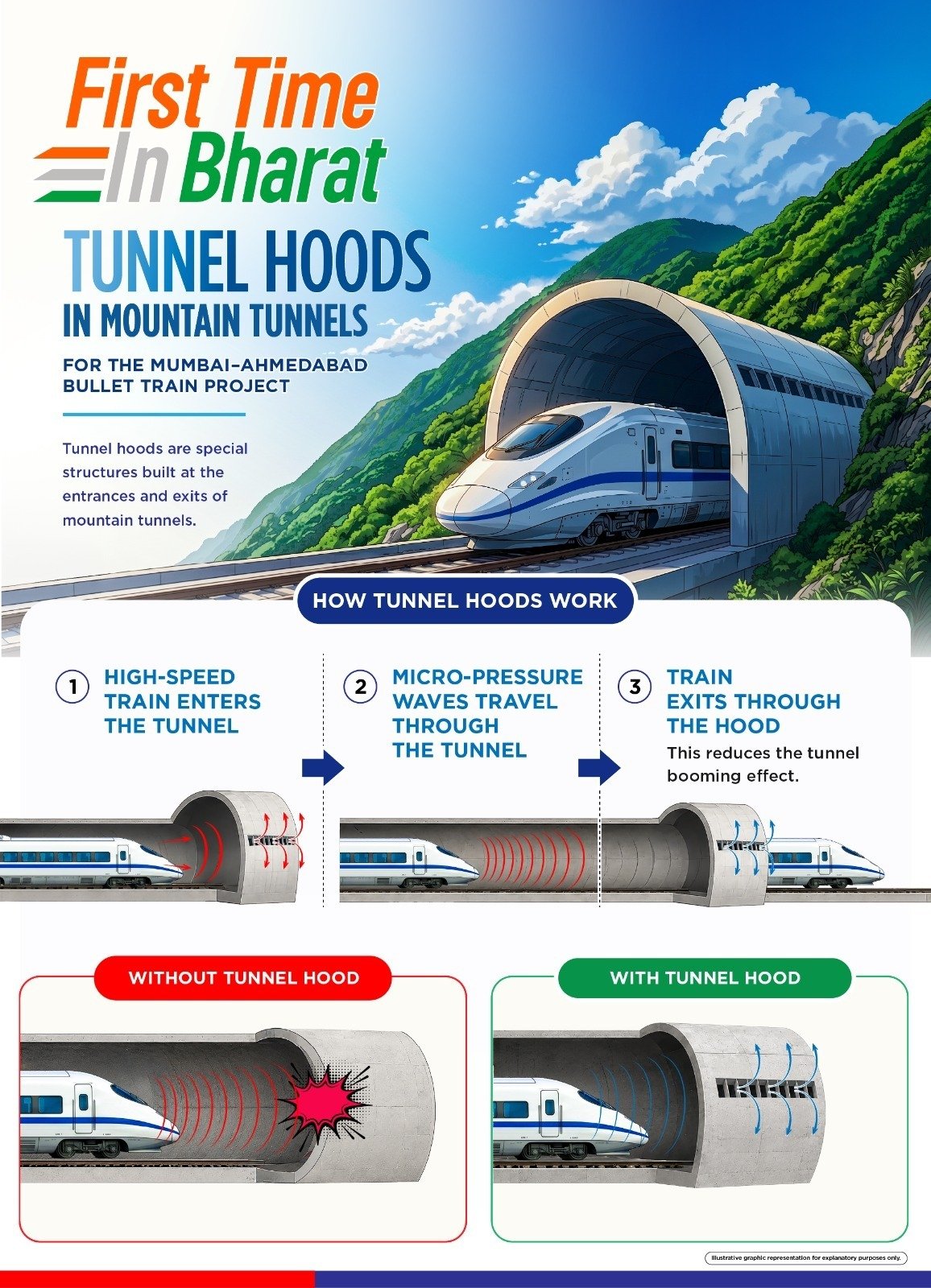
NEW DELHI (Metro Rail News): In a first for India, tunnel hood technology is being introduced for the Mumbai-Ahmedabad Bullet Train Project. Tunnel hood technology will enable the high-speed train to enter and exit tunnels smoothly by gradually regulating air pressure. These hoods act as a transition zone between the open environment and the confined tunnel space. The installation of these hoods will provide a seamless and quieter travel experience for the passengers. 

Significance of Tunnel Hood Technology

Tunnel hood technology is a special structure constructed at the entrance and exit of tunnels. When the bullet train enters a tunnel, it emits a large amount of air. This sudden movement creates pressure waves that travel through the tunnel. Tunnel hoods help air move in and out more gradually, controlling pressure changes and improving the overall efficiency of the system.

Where are these hoods being installed? 

The Mumbai-Ahmedabad Bullet Train Project passes through challenging landscapes, which include seven mountain tunnels in Maharashtra and one in Gujarat. Tunnel hoods will be installed at both ends of these mountain tunnels.

image 1

The tunnel hoods on the Bullet Train corridors minimise tunnel boom noise generated by high-speed train movement while exiting, lower disturbance to surrounding communities and support safe and efficient operation of trains travelling at very high speeds.

Simply put, these tunnel hoods help the train and the air adjust to each other gradually rather than abruptly, making the train travel experience smoother, quieter and more comfortable.

Tunnel hoods are widely used in countries with high-speed rail systems where train speeds exceed 300 kmph. The introduction of tunnel hoods represents a major advancement in the development of India’s high-speed rail project.

Also Read: Ahmedabad Metro Phase 3(C): Bids invited for geotechnical investigation work on Ring Corridor

Ahmedabad Metro Phase 3(C): Bids invited for geotechnical investigation work on Ring Corridor

AHMEDABAD (Metro Rail News): Gujarat Metro Rail Corporation Limited (GMRCL) has floated a tender for geotechnical investigation of proposed ring corridor from Prakash Nagar station to Vadaj Station of Ahmedabad Metro Phase 3(C) project. The estimated cost of the tender is Rs 1.80 crore. 

Tender Information 

Information Details 
Tender Number GMRC/GEOTECH-1/PH-3(C)/2026 
Tender Cost Rs 1.80 crore
Completion Period 05 months
Tender FeesRs 5,000 
Tender Security Rs 1.80 lakh
Tender Submission Deadline 8 July 2026, (15:00 hrs)
Technical Bid Opening8 July 2026, (15:30 hrs)
Tender Validity 180 days

Scope of Work

The contractor will carry out geotechnical investigation work for the proposed Ring Corridor between Prakash Nagar Station and Vadaj Station. The contractor will complete the work within five months.

About the Project

Ahmedabad Metro Phase 3(C) includes a proposed Ring Corridor that aims to improve connectivity across different parts of the city. The corridor will connect key residential, commercial, and transit hubs and strengthen Ahmedabad’s expanding metro network. The geotechnical investigation is one of the first steps in project development.

Also Read: GMRCL invites bids for Ahmedabad Metro Phase 1 maintenance work

Bengaluru to get RRTS corridor connecting with neighbouring cities

BENGALURU (Metro Rail News):  Karnataka’s Chief Minister DK Sivakumar proposed Regional Rapid Transit System (RRTS) corridors connecting Bengaluru with Mysuru, Kanakapura, Tumakuru, Chikkaballapura and Kolar to address Bengaluru’s congestion problem. He discussed this proposal on Wednesday (10th June) with Manohar Lal Khattar, Union Minister of Housing and Urban Affairs. He had earlier urged the central government to approve five RRTS lines covering 394 kilometers. The proposed lines included:

  • Bengaluru-Bidadi-Mysuru (145 km)
  • Bengaluru-Harohalli-Kanakapura (60 km)
  • Bengaluru-Nelamangala-Tumakuru (60 km)
  • Bengaluru-Kempegowda International Airport-Chikkaballapura (64 km)
  • Bengaluru-Hoskote-Kolar (65 km)

PC Mohan, a Member of Parliament from Bengaluru Central wrote on his X account (formerly twitter) that, “Bengaluru could soon get high-speed regional rail connectivity to Mysuru, Kanakapura, Tumakuru, Chikkaballapura and Kolar. The Union Government is ready to support these RRTS corridors, provided the State Government drops its plan to extend Metro services to these cities.”

The Bengaluru RRTS will be modelled around the Delhi-NCR model. The Delhi-Meerut RRTS corridor is India’s first semi-high speed rail regional transit corridor, which can attain a speed of 160 km/h and cover the distance of Delhi to Meerut in less than 60 minutes. NCRTC has proposed 8 RRTS lines across the NCR. Planned corridors include connections with Alwar in Rajasthan and Panipat in Haryana.

Debate around RRTS over metro extension 

The announcement about the Bengaluru-Tumakuru RRTS sparked the debate regarding metro extension to the neighbouring city. Both the metro and RRTS serve different mobility purposes. Metro networks are meant for urban mobility, with stations at shorter distance, frequently running trains and shorter travel routes. Meanwhile, RRTS corridors are designed for longer distance extending for intercity routes, providing top speed upto 180 kmph and have fewer stops.

Also Read: Karnataka CM seeks Center’s approval for Namma Metro Phase 3 Double-Decker corridor

GMRCL invites bids for Ahmedabad Metro Phase 1 maintenance work

AHMEDABAD (Metro Rail News): Gujarat Metro Rail Corporation Limited has invited bids for civil maintenance works on Ahmedabad Metro’s Phase 1 East-West corridor. The contract has  an approximate value of Rs 2.58 crore. It covers maintenance of a viaduct and 7 metro stations on the corridor’s western section. 

Tender Details

Information Details 
Tender Number GMRC/CIVIL MAINTENANCE/WR/PH-1/2026
Tender TypeOpen Tender
Estimated CostRs 2.58 crore
EMDRs 2.58 lakh
Tender FeeRs 25,000
Tender Submission Deadline2 July 2026, (15:00 hrs)
Technical Bid Opening2 July 2026, (15:30 hrs)
Completion Period24 Months
Tender Validity 180 days

Scope of Work

The contractor will carry out general civil maintenance works on the viaduct and seven metro stations on the western section of the East-West Corridor. The stations covered under the contract are Sardar Patel Stadium, Commerce Six Road, Gujarat University, Gurukul Road, Doordarshan Kendra, Thaltej, and Thaltej Gam. The work will exclude Old High Court Station of East-West Corridor Western Reach Section from Shahpur Ramp to Thaltej Gam Dead End of Ahmedabad Metro Rail Project Phase – 1. 

About the Project 

Ahmedabad Metro’s East-West Corridor connects several important residential, commercial, and educational areas across the city. The western section serves major locations such as Gujarat University, Gurukul Road, and Thaltej. The project aims to keep metro infrastructure in good condition and ensure smooth operations for passengers. 

Also Read: Lucknow Metro: UPMRCL awarded Vasant Kunj Depot contract to GHV India