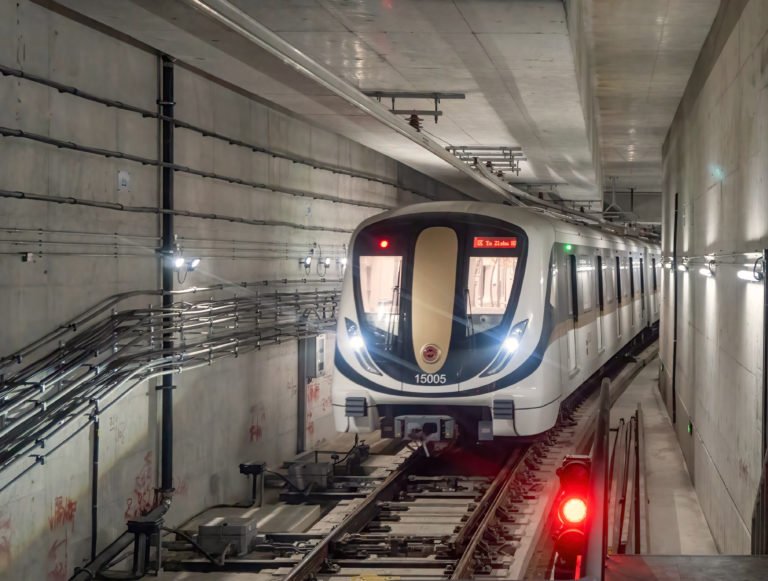
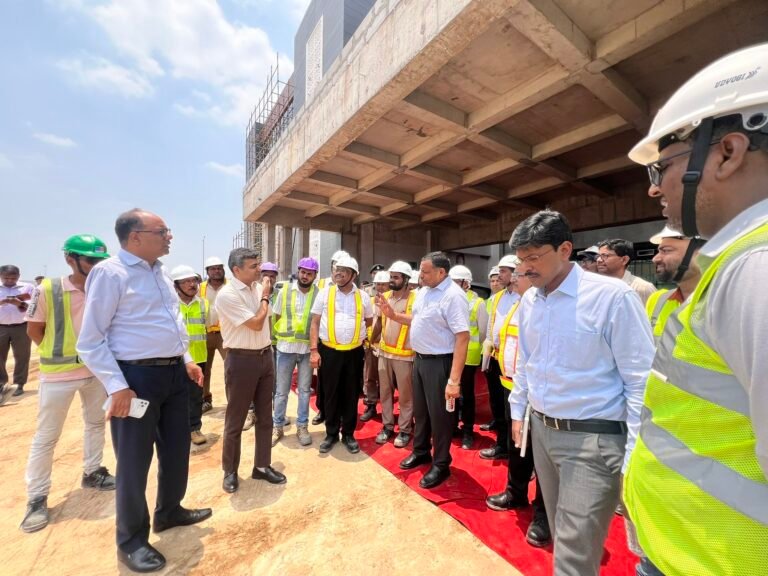
VISHAKHAPATNAM (Metro Rail News): The Vizag Metro Rail Project progressed as 2 members of the Asian Infrastructure Investment Bank visited Phase 1 of the Vizag Metro. This visit is part of AIIB’s plan to provide funding for the project.
AIIB will likely bear the 60% cost of the project, and the remaining 40% will be borne by the central and state governments, each contributing 20%.
About the AIIB Visit
During their two-day visit, the delegation from the Asian Infrastructure Investment Bank (AIIB) inspected all 43 proposed metro stations planned under Phase 1 of the Visakhapatnam Metro project, covering a total length of 46.23 km. Shri Ramakrishna Reddy, Managing Director of Andhra Pradesh Metro Rail Corporation (APMRC), provided a detailed overview of the project’s scope and current progress.
Visakhapatnam Metro Phase 1: Project Overview
Total Length:
46 km
Phase 1 is divided into two systems: 20 km Double-Decker System 26 km Standard Metro Rail System
Double-Decker Metro System
Total Length: 20 km Unique Feature: Longest double-decker metro system in India
Segment Details:
15 km stretch: From Carshed Junction (PM Palem) to Thatichetlapalem
5 km stretch: From Visakhapatnam Steel Plant (entrance gate) to Gajuwaka.
Official Statement
APMRC MD Mr. Ramakrishna Reddy said, “We want to begin civil works by October, 2025 and are expediting all aspects of the project. The AIIB team visited the city as part of the process of sanctioning a loan (60% of the total project cost). We will prioritise Phase-1 first and will follow with Phase-2 after the international airport at Bhogapuram becomes operational.” as reported by The Hindu
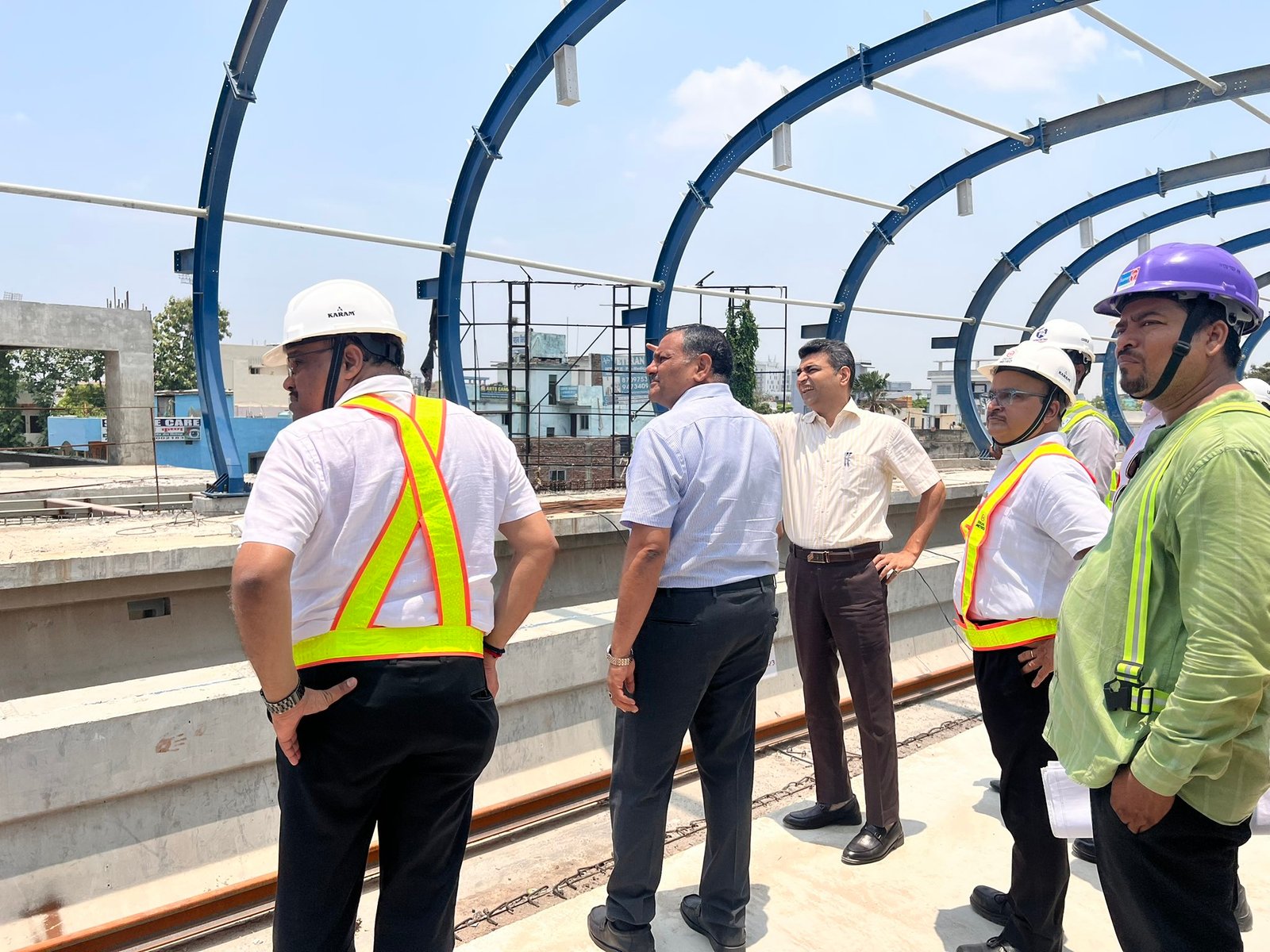
PATNA (Metro Rail News): The Patna Metro Rail Project progressed as Chief Secretary Amrit Lal Meena, along with Abhay Kumar Singh, IAS (MD, PMRCL, Secretary, UDHD), and other senior officials, conducted a comprehensive inspection of the Patna Metro’s Priority Corridor on June 12.
The priority corridor of the Patna metro is a 6.20 km elevated route of Line 2 connecting Malahi Pakri and Patliputra bus terminal. Originally, Line 2 spans 14.05 km between Patna Junction Railway Station and New ISBT, passing through 12 stations.
About the Inspection
The team thoroughly reviewed all four metro stations and the depot, evaluating the ongoing construction efforts and ensuring adherence to timelines.
During the inspection, Shri Meena emphasised the necessity of accelerating construction activities to meet the deadlines.
He instructed the officials to uphold the highest standards of safety and quality, highlighting the project’s critical role in enhancing public convenience and facilitating the state’s rapid urbanisation.
Inspection of Malahi Pakri Metro Station
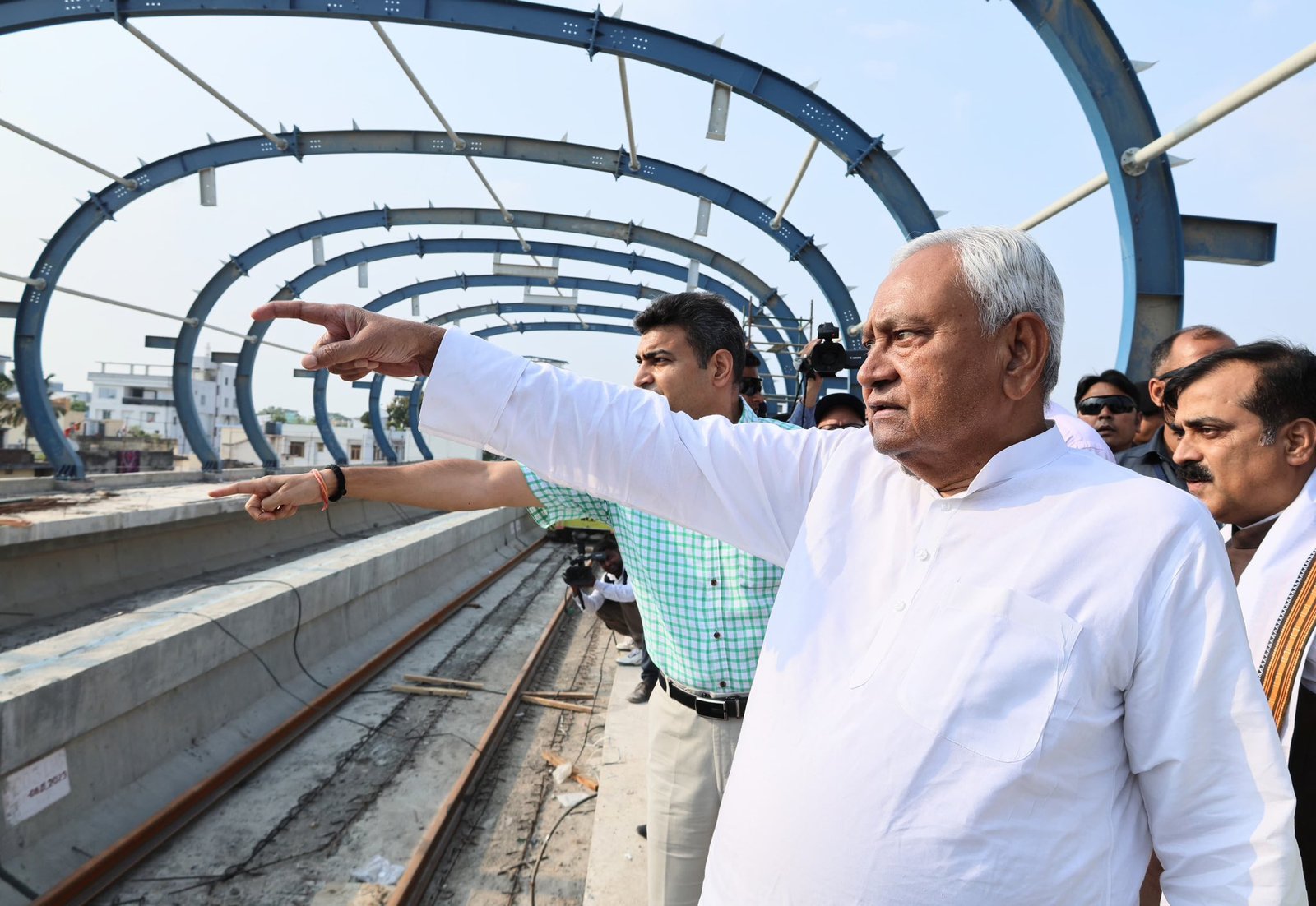
On 11 June, Chief Minister of Bihar, Nitish Kumar, also inspected the ongoing construction work of the Patna Metro at Malahi Pakri Metro Station. The Urban Development Minister of Bihar, Jivesh Kumar, was also present during the inspection.
During the inspection, the CM mentioned, “We have been continuously inspecting its construction works and instructed the officials to ensure its completion on time so that people have convenience in commuting,” the CM said.
Further Updates
Recently, the Delhi Metro Rail Corporation (DMRC) announced HCC as the lowest bidder for the underground tunnelling contracts, PC05 & PC06 of Patna Metro’s Line-1.
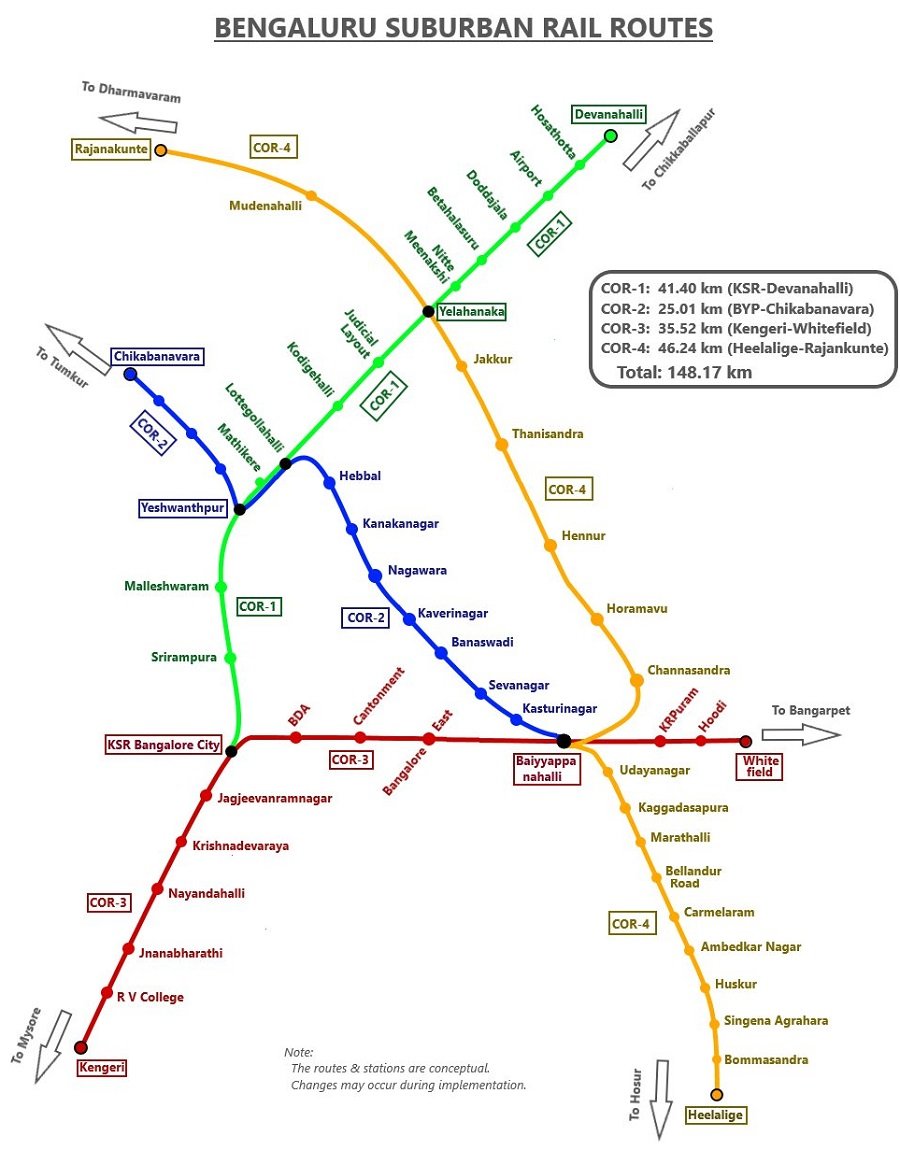
BANGALORE (Metro Rail News): Rail Infrastructure Development Company Karnataka Limited (K-RIDE) has floated tender for track work contract C4 of the Bangalore Suburban Rail Project’s (BSRP) Corridor 4. Corridor 4, also known as Kanaka Line, spans 46.285 km between Heelalige and Rajankunte.
Tender Details
Opening Date
10 Apr 2025
Closing Date
9 Aug 2025
Tender Id
2025_KRIDE_232476_1
Tender No
K-RIDE/BSRP/C4/Track Laying/2025
EMD
₹ 1,47,00,000
Contract Details
Contract Amount: INR 147.33 Cr ( Approx)
Contract Duration: 24 Months
Scope of Work
The scope of work under Package C4 of the BSRP includes the Design, Supply, Installation, Testing, and Commissioning of Ballastless tracks between Heelalige and Rajanukunte in Corridor 4 of the BSRP.
Brief Scope of Work: Design, Supply, Installation, Testing and Commissioning of Ballastless, Ballasted Track, Fastening System and Turnouts from Chainage (-) 635 to Chainage 46,985 m from Heelalige to Rajanukunte in Corridor 4 of BSRP.”
Other Track Related Contract of the Bangalore Suburban Rail Project
In April, K-RIDE announced Rahee Infratech Limited as the lowest Bidder for the track contract of Bangalore Suburban Railways’ Corridor 2, which connects Benniganahalli and Chikkabanavara.
About the Bangalore Suburban Rail Project
The Bangalore Suburban Railway Project is an under-construction commuter rail network spanning 149.348 km and consisting of 4 Corridors.
MUMBAI (Metro Rail News): In a step towards integrating Mumbai’s public transport system, Maharashtra Chief Minister Devendra Fadnavis launched the National Common Mobility Card (NCMC) for Mumbai Metro Line 3 on 10 June 2025.
The initiative undertaken by the Mumbai Metro Rail Corporation Ltd (MMRC) is being executed in collaboration with the National Payments Corporation of India (NPCI) and the State Bank of India (SBI).
The launch of the event was attended by Deputy Chief Ministers Eknath Shinde and Ajit Pawar, Revenue Minister Chandrashekhar Bawankule, Chief Secretary Sujata Saunik, as well as other senior officials.
About the NCMC for Mumbai Metro Line 3
The contactless RuPay NCMC enables passengers to travel the Metro Line 3 stations, spanning from Aarey JVLR to Acharya Atre Chowk, without the necessity of queuing at ticketing counters.
This card can also be used for travelling through different modes of transport, including Mumbai Metro Line 1, 2A, and 7, as well as chalo buses. These cards are in services on Line 3 from 11 June.
Official Statement from MMRC, MD
MMRC Managing Director Ashwini Bhide stated, “The NCMC card integration in Mumbai Metro Line 3 is a significant milestone in our path towards smart and commuter-centric urban transport. Being the city’s first underground Metro corridor, Line 3 is planned with future-proof infrastructure, and this contactless payment solution, with ease, is an integral part of that vision. We are excited to collaborate with NPCI and SBI to facilitate a seamless, hassle-free travel experience for Mumbaikars and enable the Government of India’s National Common Mobility Card programme.”
About Mumbai Metro Line 3
The Mumbai Metro Line 3, also known as Aqua Line, partly operational metro corridor which spans 33.5 km between Cuffe Parade, Bandra Kurla Complex (BKC), and Aarey JVLR through 27 stations.
Recently, Chief Minister Devendra Fadnavis and Deputy CM Eknath Shinde inaugurated the 2A Phase of Mumbai Metro Line 3. The Phase 2A of Line 3 spans 9.77km from BKC to Acharya Atre Chowk, featuring 6 stations
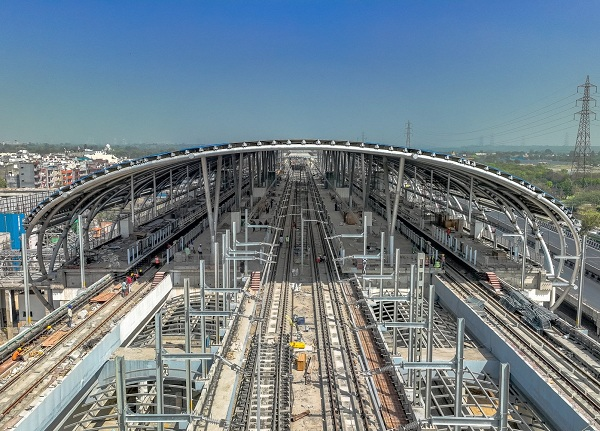
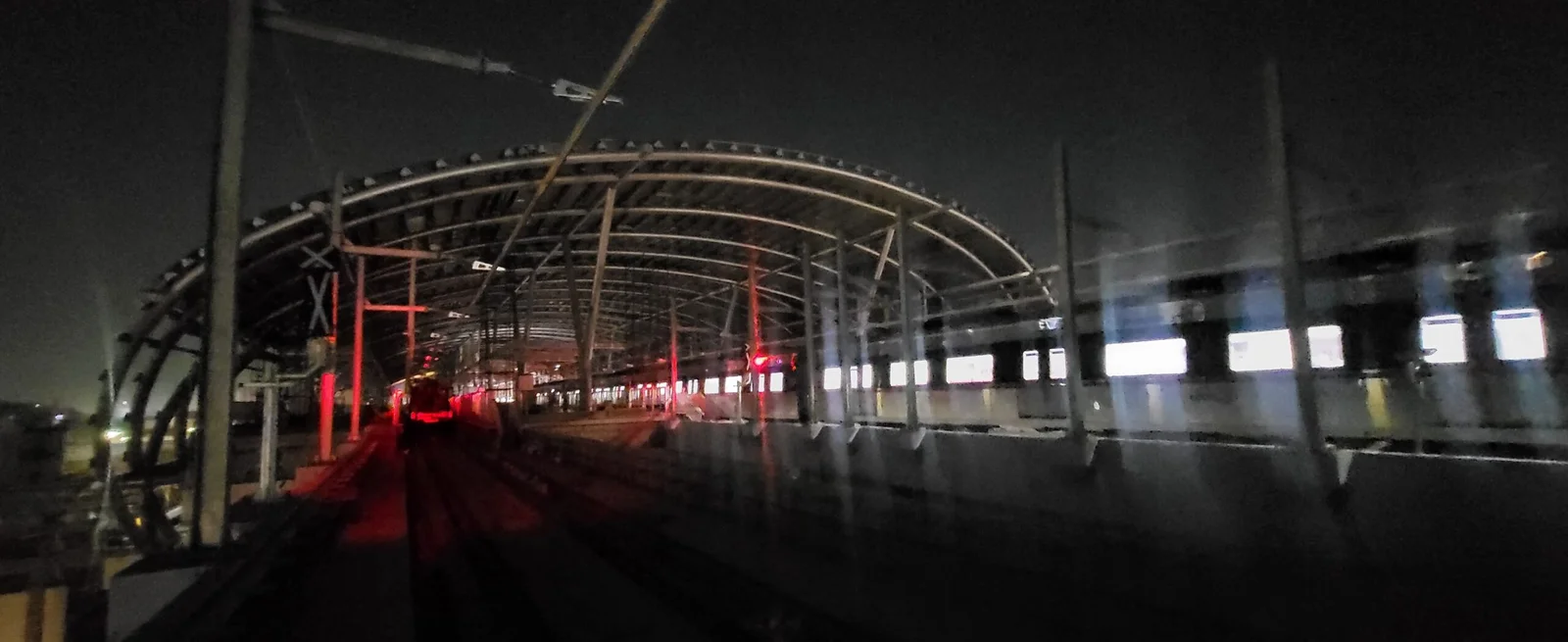
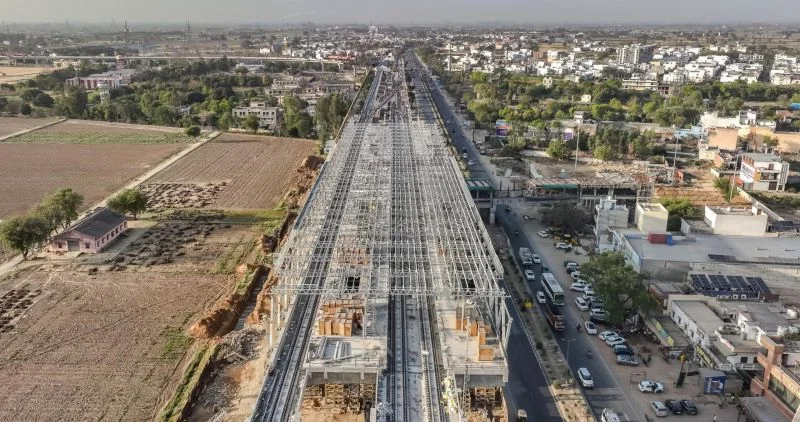
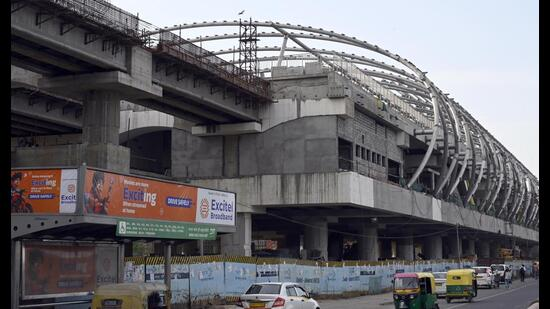
The Meerut City is located in the western region of Uttar Pradesh, India, approximately 80 kilometres northeast of New Delhi and 480 kilometres west of Lucknow. Commonly referred to as the “Sports City of India,” Meerut is one of the largest producers of sports equipment in the nation. Additionally, the city is recognised as the foremost producer of musical instruments in India and ranks among the largest gold markets in Asia. Meerut also serves as an educational hub within Western Uttar Pradesh, contributing to the region’s development and knowledge economy.
As of 2024, Meerut ranks as the 34th most populous city in India and holds the distinction of being the second most populous city within the National Capital Region (NCR), following Delhi. Meerut has seen immense development over the last several decades. With an ever-growing population and growing traffic, the transportation infrastructure of the city has become strained.
The Meerut Metro project aims to overcome these challenges by providing a new, secure, and green mode of transportation that suits the daily commuter and minimises the use of personal vehicles.
The metro network is planned to be integrated with the Regional Rapid Transit System (RRTS) between Delhi and Meerut. This integration will help improve regional connectivity, making Meerut a part of the National Capital Region (NCR) in economic and social development.
Meerut Metro: From Vision to Reality
Early 2020: The Government of India and the Uttar Pradesh State Government proposed the metro system for Meerut along with the Delhi-Meerut RRTS Project.
2015: RITES conducted the feasibility study for the Meerut Metro Project.
30 June 2016: RITES prepared the Detailed Project Report (DPR) of the Meerut Metro Phase 1 and submitted it to the state government of Uttar Pradesh for approval.
2017: The Uttar Pradesh Metro Rail Corporation (then Lucknow Metro Rail Corporation) was assigned a ‘coordinator’ role to bring all stakeholders together for the implementation of the project.
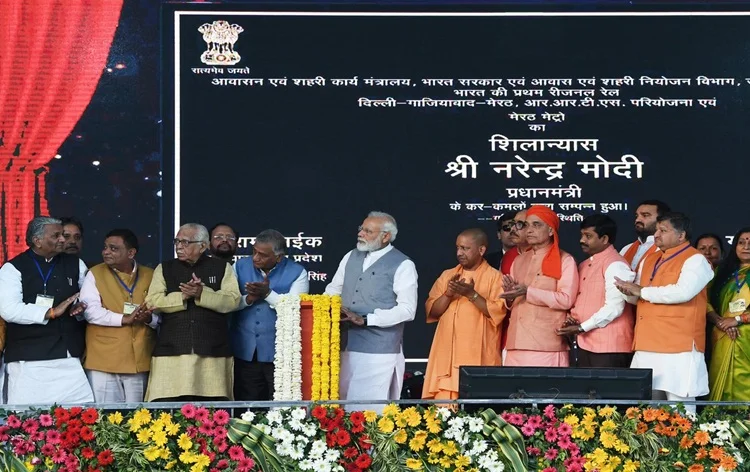
8 March 2019: Prime Minister Narendra Modi laid the foundation stone for the Meerut Metro Project along with the RRTS Project.
June 2019: Construction finally began for the Meerut Metro Project and Delhi-Meerut RRTS Project. ‘
Meerut Metro: A New Era of Metro Connectivity
Overview
Meerut Metro Project is an under-construction urban Mass Rapid Transit System (MRTS) for Meerut, Uttar Pradesh.
The Meerut Metro project will be executed in 2 Phases.
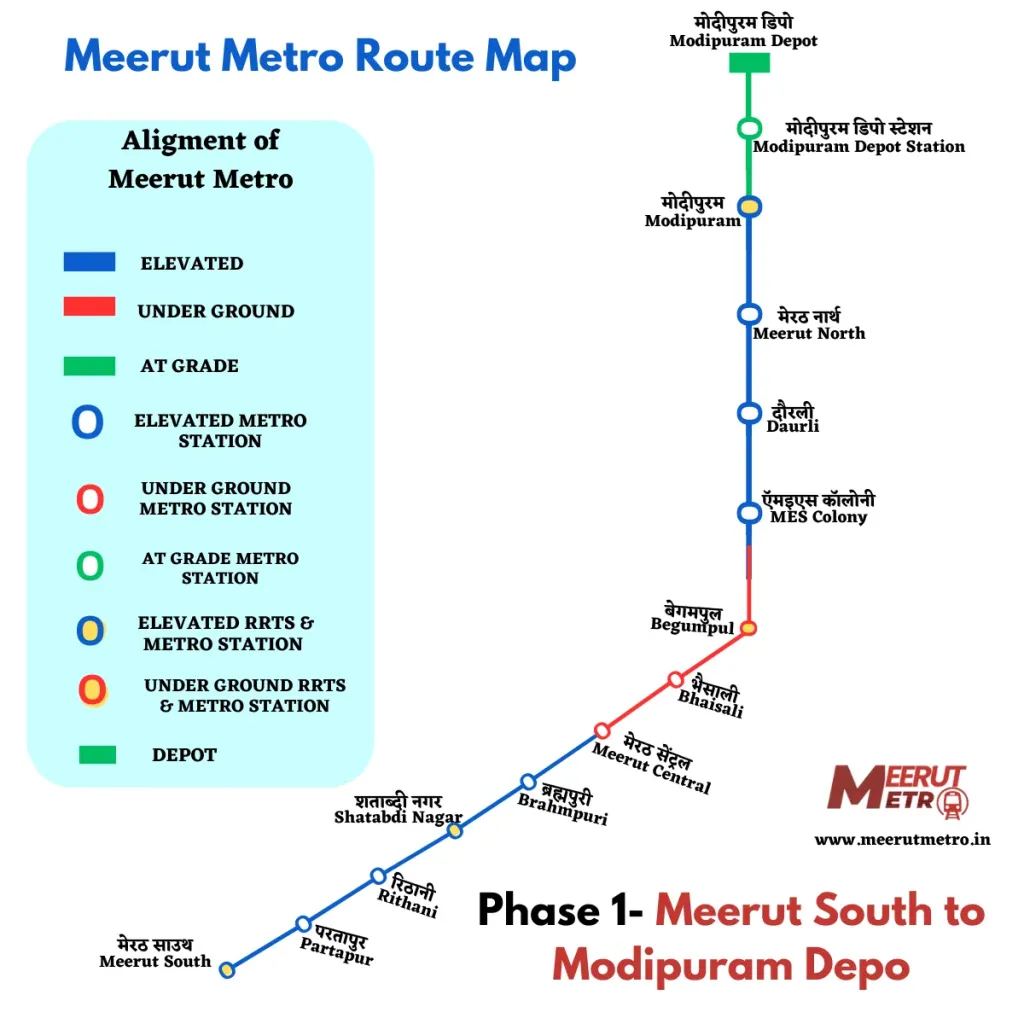
Phase 1 of the Meerut Project consists of one corridor spanning 20 km. The Meerut Metro Phase 1 will utilise the Delhi-Meerut RRTS Projects infrastructure and will be managed by the National Capital Region Transport Corporation (NCRTC).
The Phase 2 of Meerut Metro Project is in the proposal stage currently and consists of one corridor.
Phase 2 of Meerut Metro Project is expected to be built and operated by the Uttar Pradesh Metro Rail Corporation Limited (UPMRCL).
Rolling Stock
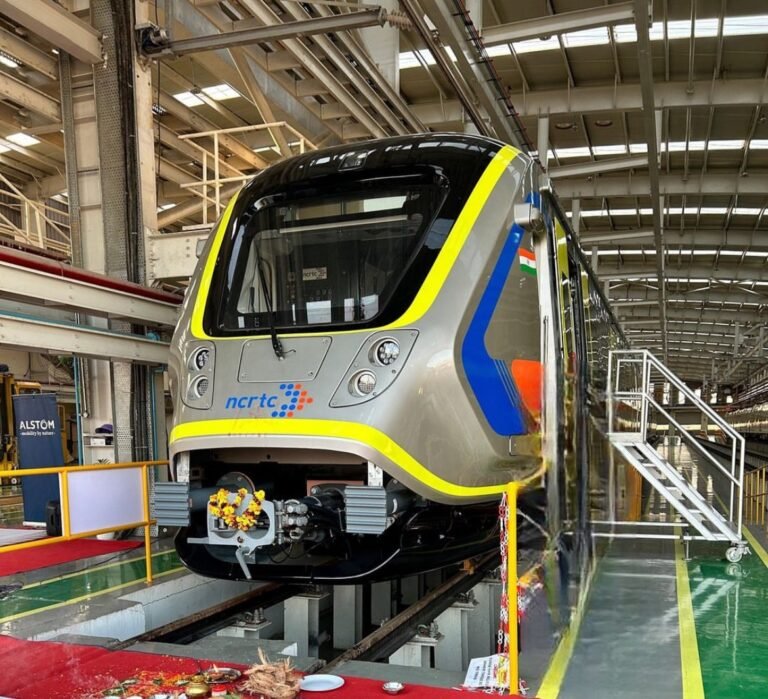
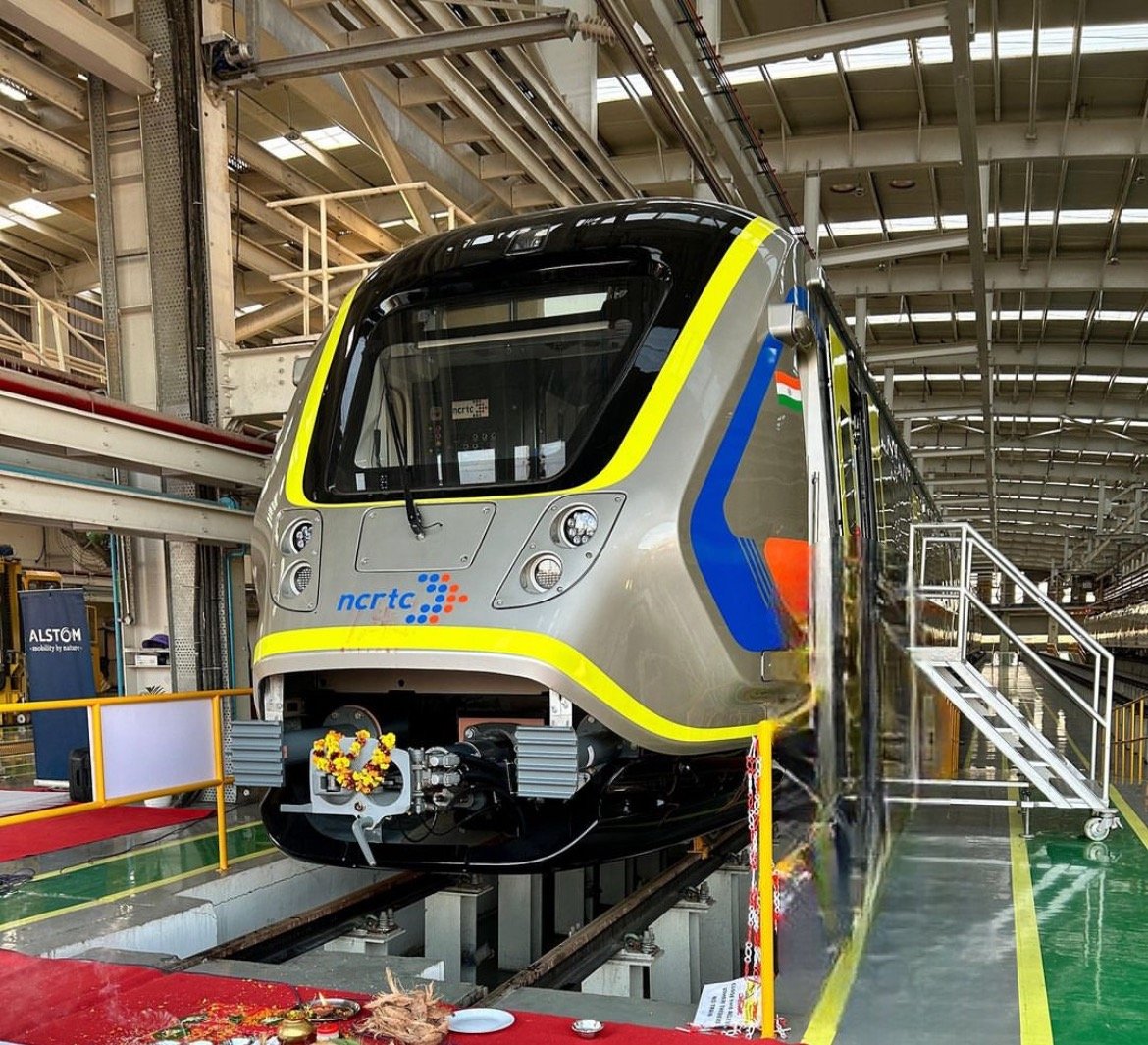
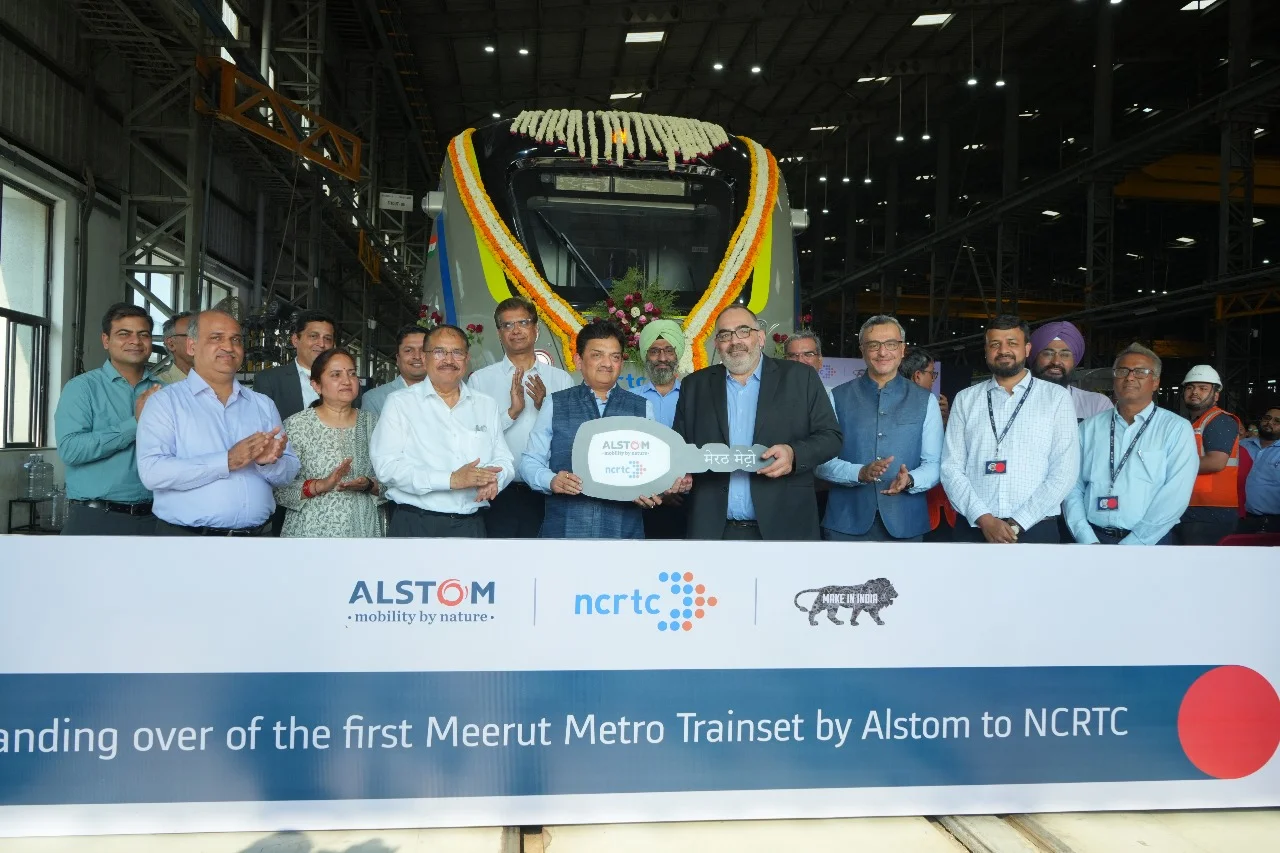
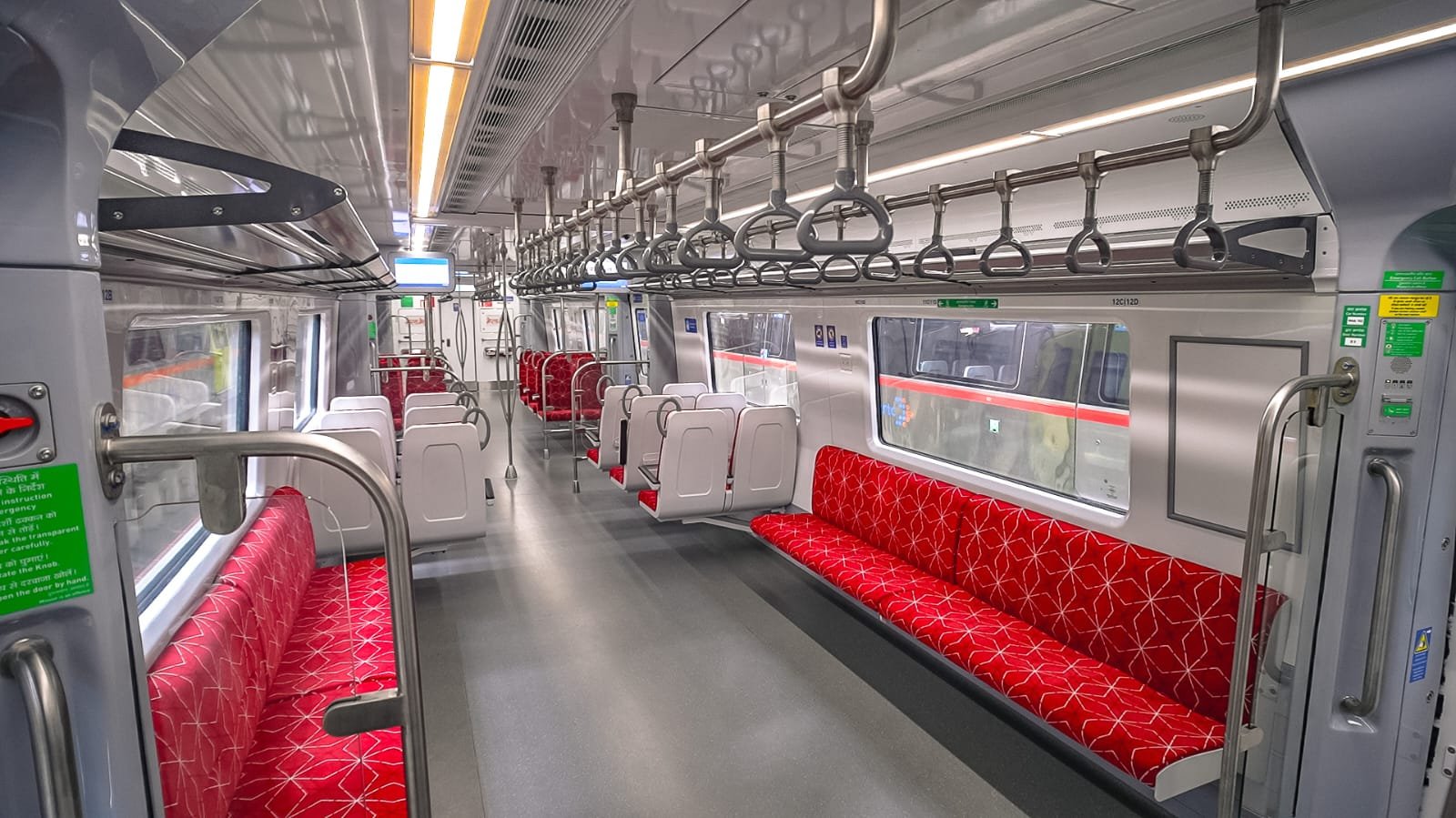
In mid-2021, Alstom bagged the Rs. 2577 crore Rolling stock contract. As per the Contract, Alstom was supposed to supply 10 trainsets, each consisting of 3 coaches, to NCRTC for the Meerut Metro Project.
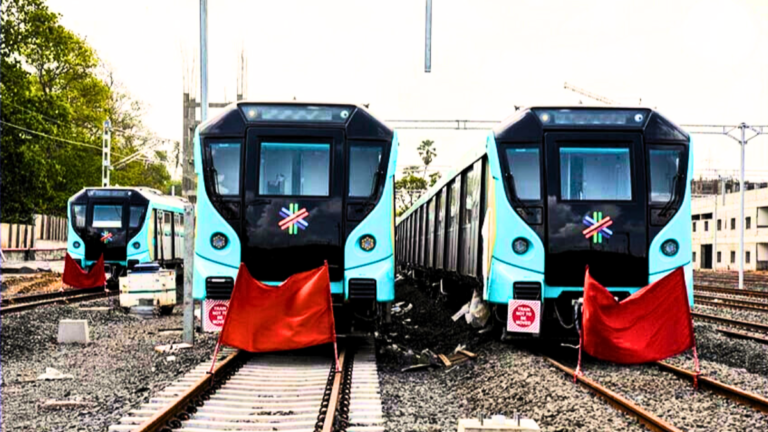
In February 2024, Alstom supplied the first 3 coach trainsets for the Meerut Metro Project.
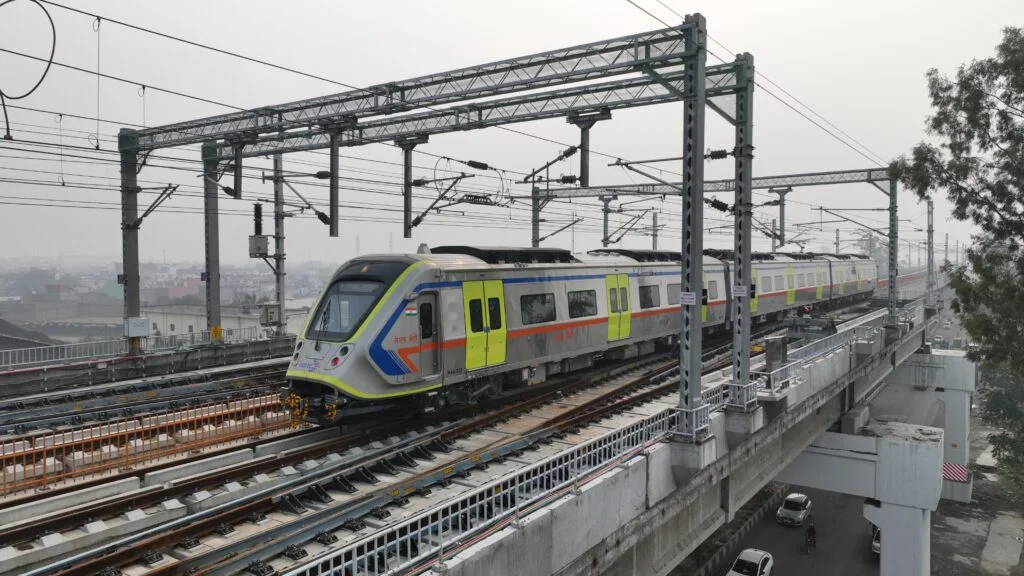
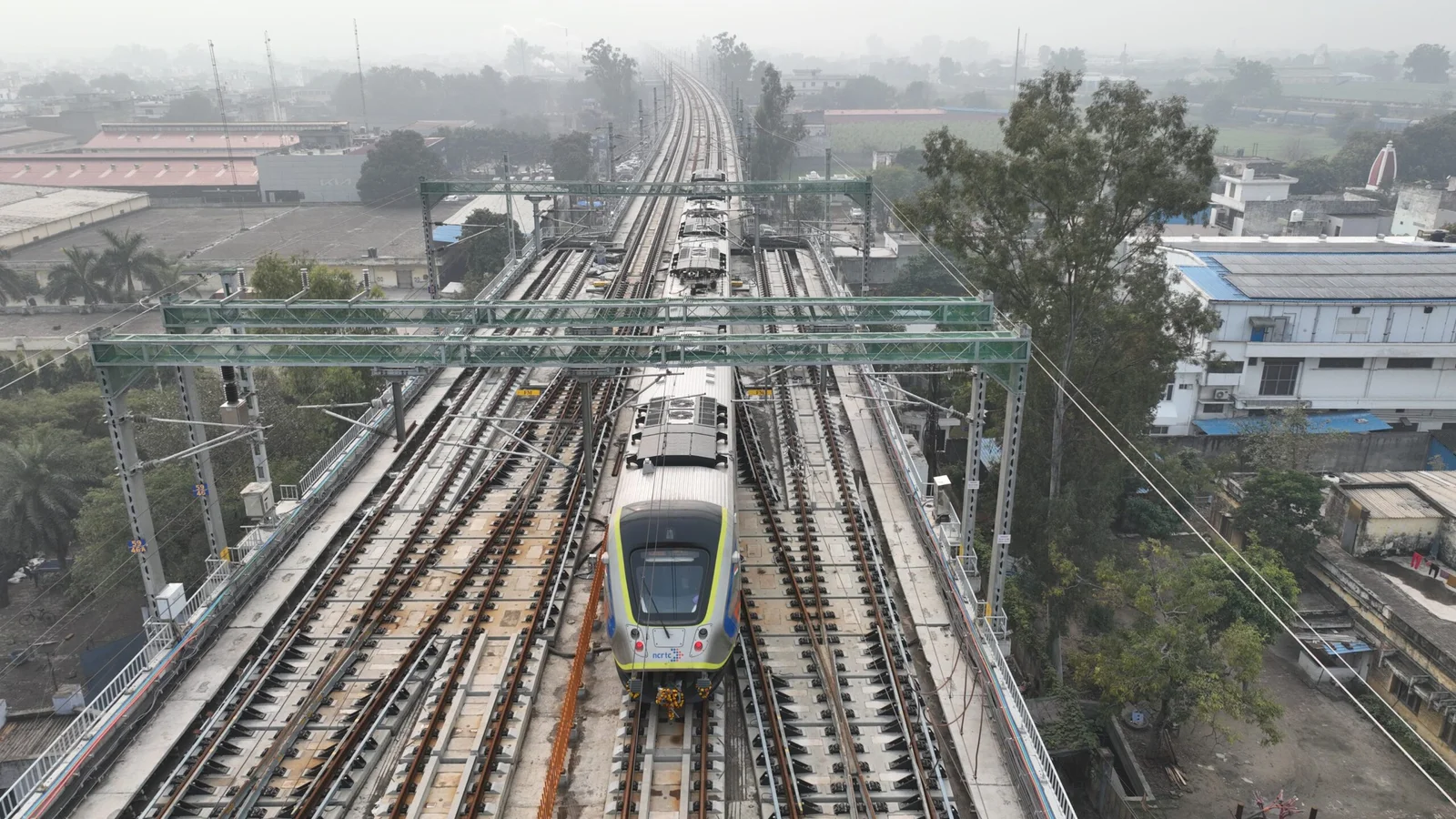
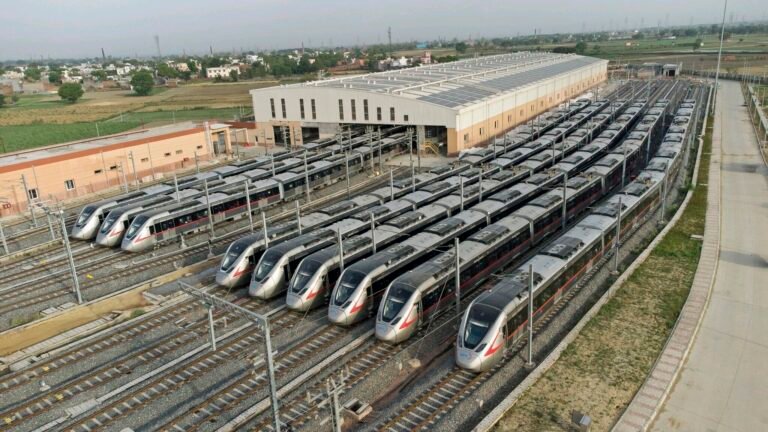
Alstom has supplied all 10 train sets for the Meerut Metro Project to the NCRTC as per the contract. Currently, All the train sets supplied by Alstom are housed at Duhai Depot, as the Modipuram Depot is still under construction.
India’s Fastest Metro: Speed, Capacity, and Indigenous Manufacturing
What distinguishes the Meerut Metro from the rest of the urban transport networks in India is its high speed. It is going to be the fastest in the nation, with trains having a design speed of 135 kmph and an operating speed of up to 120 kmph.
In keeping with the ‘Make in India’ policy, 100% of the Meerut Metro trainsets are being domestically produced, which strengthens the country’s vision to be self-reliant in infrastructure development.
Contractor List
Contract
Contractor
General Consultant (GC) for RRTS & Metro Project
Ayesa lngenieria Y Arquitectura – ITALFERR – Ayesa India (AIAI)
Rolling Stock: Supply of 30 coaches as part of 210 RRTS rolling stock contract
Alstom Transport
Part of Package-3: Partapur – Shatabdi Nagar (elevated viaduct and 3 stations at Partapur, Rithani, & Shatabdi Nagar)
Larsen & Toubro (L&T)
Package-5B: Modipuram Depot & Workshop
KSM Bashir Mohammad & Sons
Package-7: Shatabdi Nagar – Brahampuri DN Ramp AND Begumpul Ramp – Modipuram (elevated viaduct and 5 stations at Brahmapuri, MES Colony, Daurli, Meerut North and Modipuram)
Larsen & Toubro
Package-8: Brahampuri DN Ramp to Begumpul UP Ramp (underground twin tunnels and 3 stations at Meerut Central, Bhaisali and Begumpul)
Afcons Infrastructure
Route Information
Operational: 0 km Under Construction: 20 km Proposed: 15 km
Phase 1
Line-1: Partapur – Modipuram
Length: 20 km
Status: Under Construction
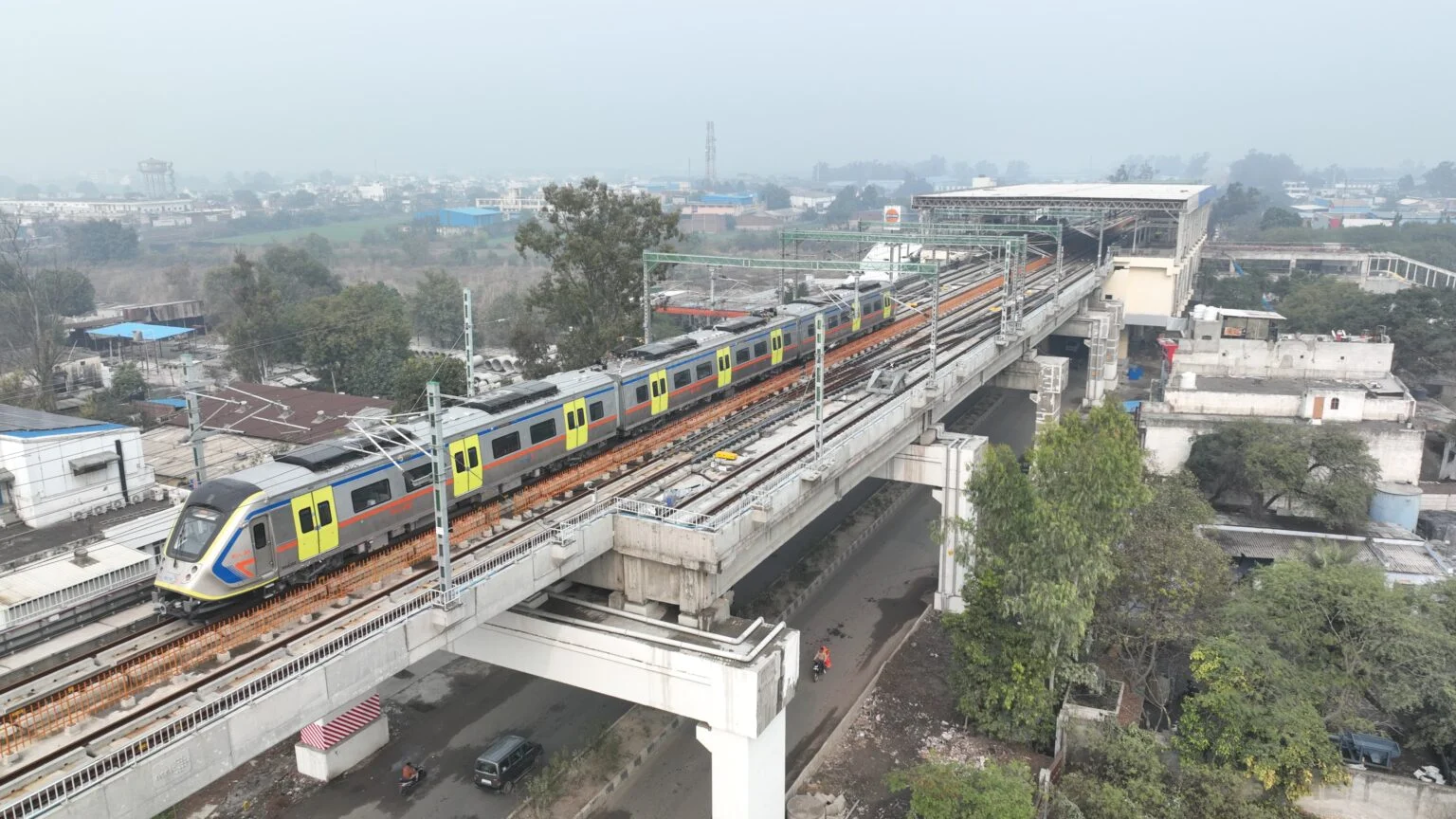
Type: Elevated: 14.40 km & Underground: 5.6 km
Depot: Modipuram Depot
Number of Stations: 13
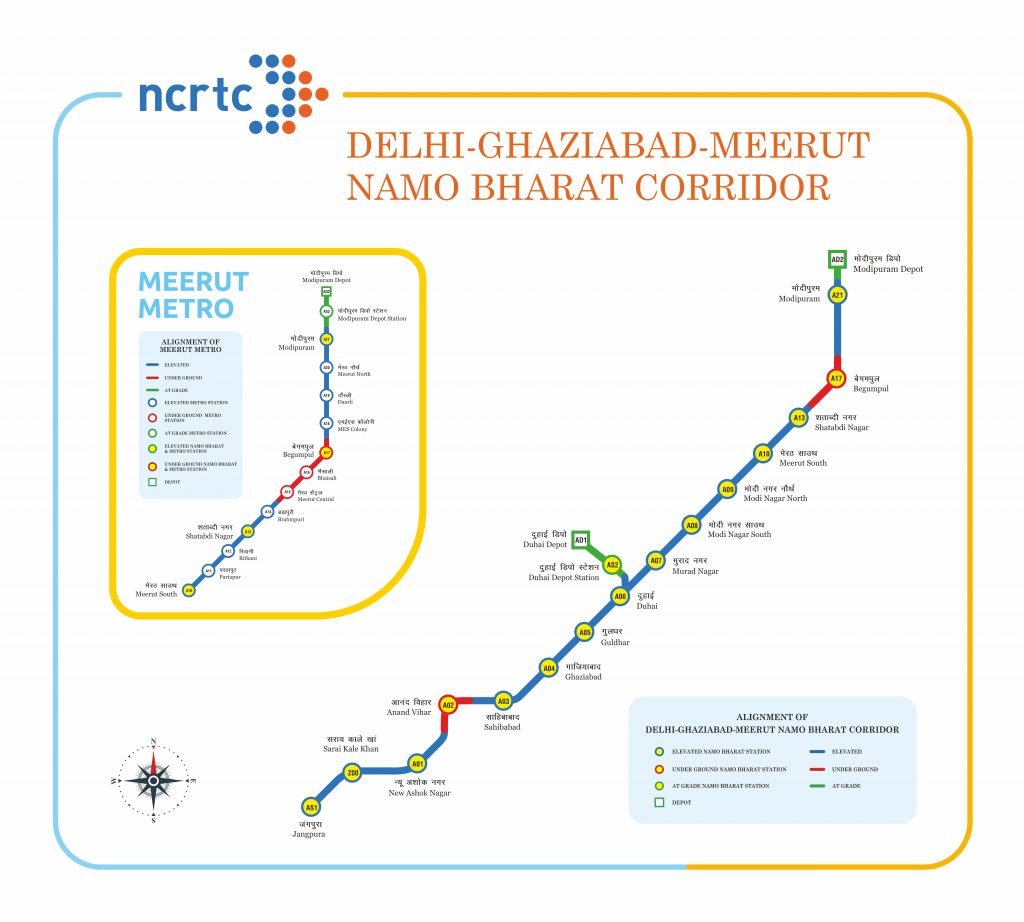
Station Names: Partapur, Rithani, Shatabdi Nagar, Brahmapuri, Meerut Central, Bhaisali, Begum Pul, MES Colony, Daurli, Meerut North, Meerut South, Modipuram and Modipuram Depot.
Recent Update on Phase 1 Trial Runs In January 2025, NCRTC initiated trial runs on the 9.4 km route spanning from Meerut South Station to Meerut Central Station, featuring 6 stations. The NCRTC team operated the 3-coach Alstom train on the 9.4 km stretch.
Phase 2
Line-2: Shradhapuri Phase II – Jagriti Vihar
Length: 15 km
Owner: Uttar Pradesh Metro Rail Corporation Limited (UPMRCL
Status: Proposed
Type: Elevated (10.7 km) and Underground (4.3 km)
Number of Stations: 13
Station Names: Sharadhapuri Phase 2, Kanker Khera, Meerut Cantt. Railway Station, Rajban Bazar, Begumpul, Baccha Park, Shahpeer Gate, Hapur Adda Chauraha, Gandhi Ashram, Mangal Pandey Nagar, Tej Grahi, Medical College, Jagruti Extension
Integration With Delhi- Meerut RRTS Project
The Meerut Metro Project has been engineered to integrate with the Delhi-Meerut Regional Rapid Transit System (RRTS).
Key Aspects of Integration:
Shared Infrastructure: A substantial portion of the Meerut Metro will function on the same infrastructure as the Delhi-Meerut RRTS corridor within the city of Meerut. This includes the tracks, elevated viaducts, and several stations.
Common Stations: Four stations Meerut Metro Project will serve as interchange points between the Meerut Metro and the Delhi-Meerut RRTS:
Meerut South
Shatabdi Nagar
Begumpul
Modipuram
The integration of the Meerut Metro Project along with the Delhi- Meerut RRTS aims to provide commuters with effective local transit options within Meerut, along with rapid regional connectivity to Delhi and other areas of the National Capital Region (NCR).
Recent Update on the Meerut Metro Project
Begumpul Station Near Completion The Begumpul station of Meerut Metro, which also serves as an interchange for the Delhi-Meerut RRTS project, is near completion. NCRTC CPRO Puneet Vats mentioned, “Tracks for both up and down lines are laid, and the station is in its final construction phase. Begumpul will be Meerut’s only underground station serving both Namo Bharat and Metro commuters. This is India’s first infrastructure project where two transit systems will share the same track, with two platforms and four railway tracks catering to the Rapid Rail Transit Corridor and the city’s intercity metro.”
Impacts of the Meerut Metro Project
1. Enhanced Connectivity: The Meerut Metro will improve urban mobility within the city by establishing seamless connections to the National Capital Region (NCR). As an integral part of the Regional Rapid Transit System (RRTS), it will link crucial areas such as Modipuram and Partapur, while also integrating with rapid transit lines extending into the core of Delhi.
2. Reduction in Traffic Congestion: Meerut is currently facing severe traffic congestion, primarily due to the excessive number of private vehicles on its roads and the limited availability of reliable public transportation options. The introduction of the metro system will offer a streamlined and efficient alternative, alleviating the traffic on roads.
3. Economic Growth: The enhanced connectivity by Meerut Metro is anticipated to stimulate economic activity throughout the region. By facilitating improved access to employment opportunities, markets, and educational institutions, the metro will empower local residents and attract new investments.
4. Environmental Benefits: The transition toward a comprehensive public transport system represents a crucial step in reducing the dependence on private vehicles, which, in turn, is expected to lead to a substantial decline in carbon emissions.
Conclusion
The Meerut Metro Project signifies a pivotal advancement in addressing the urban mobility challenges confronted by one of the rapidly developing cities in Uttar Pradesh. Strategically integrated with the Delhi-Meerut Regional Rapid Transit System (RRTS), this metro initiative aims to establish an efficient, and environmentally sustainable public transportation network. By enhancing connectivity, alleviating traffic congestion, fostering economic growth, and contributing to ecological sustainability, the project possesses substantial potential to transform Meerut’s urban framework. As construction advances and Phase 1 approaches operational readiness, the Meerut Metro is prepared to initiate a new era of mobility and sustainable urban development.
Under the PM-Gati Shakti infrastructure plan, the Cabinet has approved two railway multi-tracking projects with a combined investment of ₹6,405 crore on June 11, 2025. This is the fifth major announcement from the Cabinet Committee on Economic Affairs (CCEA) within the past year.
The two projects will extend the railway network by approximately 318 km, covering seven districts across Jharkhand, Karnataka, and Andhra Pradesh.
The doubling of lines on the designated routes is projected to enable the railways to transport an additional freight volume of approximately 49 million tonnes (MT) annually. In the fiscal year 2025, Indian Railways recorded freight loading of 1,617.38 MT, reflecting an increase of 1.68% compared to the previous fiscal year.
Overview of Project 1
The first project encompasses 113 km between Koderma and Barkakana, traversing a major coal-producing region in Jharkhand. This project will also provide the shortest and most efficient rail connection between Patna and Ranchi.
Overview of Project 2
The second project will span 185 km between Ballari and Chikjajur. This project will pass through the Ballari and Chitradurga districts in Karnataka, as well as the Anantapur district in Andhra Pradesh.
Additional Railway Projects Approved by CCEA
In May, the CCEA approved two multi-tracking projects valued at ₹3,399 crore. Furthermore, in April, four railway initiatives amounting to ₹18,658 crore were launched, which will enhance the existing rail network by approximately 1,247 kilometres.
Official Statement
An official mentioned, “These multi-tracking proposals are poised to streamline operations and alleviate congestion. The projects are in line with PM’s vision of a new India, which will make people of the region “Atmanirbhar” by way of comprehensive development in the area, which will enhance their employment and self-employment opportunities.
Delhi and Meerut, the two prominent cities in northern India, are interconnected through deep historical, economic, and social ties. Delhi serves as the country’s administrative and economic centre, while Meerut, on the other side, is a city located in Western Uttar Pradesh and is known for its deep cultural heritage and pivotal role in India’s history. The city serves as a major economic hub and is known for its growing industrial base and expanding services sector. However, the daily commute between these two cities was a major concern due to traffic congestion and insufficient public transportation options.
To address these challenges, the Government of India saw a semi-high-speed rail project as the best solution to offer a fast, reliable, and sustainable mode of transport to enhance the connectivity between the two cities. The Government of India, through the National Capital Region Transport Corporation (NCRTC), initiated the Delhi-Meerut Regional Rapid Transit System (RRTS) Project. The RRTS system aims to establish a direct link between Delhi and Meerut. In addition, it will alleviate pressure on existing infrastructure and improve the quality of life for daily commuters and streamline equitable economic development throughout the National Capital Region.
Delhi-Meerut RRTS: A Journey from Vision to Foundation
1998: A study conducted by Indian Railways identified the possibility of an RRTS network in the National Capital Region.
2009: The Functional Plan on Transport for NCR 2032 was prepared by the National Capital Region Planning Board and identified 8 RRTS corridors in NCR and received approval.Out of 8 Corridors, 3 corridors were prioritised to be constructed in Phase 1.
29 June 2011: A Memorandum of Understanding (MoU) was signed between the Government of India and the State Government for the implementation of the RRTS Project in NCR.
21 August 2013: National Capital Region Transport Corporation (NCRTC) was incorporated under the Indian Companies Act for the implementation and execution of the RRTS project in NCR.
May 2017: The Uttar Pradesh State government approved the Delhi Meerut RRTS line’s DPR (Detailed Project Report) for construction
September 2017: Pre-construction work started with geotechnical investigation for the Delhi-Ghazibad-Meerut RRTS Corridor.
May 2018: As part of pre-construction activities, road widening work started in Ghaziabad for the Delhi-Meerut RRTS Project.
30 January 2019: Initial pile load testing started at Sahibabad for the elevated corridors of the Delhi-Ghazibad-Meerut RRTS Corridor.
February 2019: The Government of India approved the Delhi-Meerut RRTS Project.
8 March 2019: Hon’ble Prime Minister Shri Narendra Modi laid the foundation stone for the Delhi-Meerut RRTS Project.
Delhi-Meerut RRTS: A New Era in Urban Rail Mobility
Overview
The Delhi-Ghazibad-Meerut RRTS is an 82 km partly operational and under-construction semi-high speed rail corridor connecting Delhi, Ghaziabad, and Meerut.
Currently, 55 km of the Delhi Meerut RRTS corridor is operational, while 27.15 km of the route is under construction. NCRTC is managing the project, and the Delhi-Meerut RRTS Corridor features 22 stations.
Key Specifications
Authorised Authority
National Capital Region Transport Corporation (NCRTC)
European Train Control System (ETCS) Level 2 of ERTMS
Traction
1 x 25 KV AC overhead catenary (OHE)
Funding Mechanism
The Delhi-Meerut RRTS project has a multi-layered funding mechanism. The total estimated cost of the project is ₹30,274 crore (approximately US$3.5 billion). The project is being financed through a combination of multilateral development banks, the central and state governments.
Estimated Project Cost: Rs. 30,274 crore
The estimated financing plan for the Delhi-Meerut RRTS Investment Project is summarised below.
Funding Source
Amount (₹ Crores)
Share (%)
Asian Development Bank (ADB)
8,706.7
30.4%
Asian Infrastructure Investment Bank
4,150.0
14.5%
Japan Fund for Poverty Reduction
24.9
0.1%
Government
15,750.9
55.0%
Total Project Cost
28,632.5
100.0%
1. Loan from ADB & AIIB
The Government of India planned to finance the Delhi-Ghaziabad-Meerut RRTS Corridor through USD $1 billion from the Asian Development Bank (ADB).
On 18 August 2020, the Asian Development Bank (ADB) approved the USD $1 billion funding package for the Delhi-Ghaziabad-Meerut RRTS Corridor.
ADB is financing the project under its Multi-tranche Financing Facility (MFF) in a total of four tranches.
TheFinancing for the project by ADB are planned to be implemented in four tranches between August 2020 and May 2025.
Note: The loan from the Asian Development Bank (ADB) will be allocated to finance the first, third, and fourth tranches, whereas the loan from the Asian Infrastructure Investment Bank (AIIB) will be designated for financing the second tranche.
First Tranche
On 8 September 2020, a loan agreement for Rs. 3750 Crore ( US $500 million), which was the first tranche of the approved US $1 billion loan, was signed between the Government of India and the Asian Development Bank for funding the Delhi-Ghaziabad-Meerut RRTS Corridor.
Second Tranche
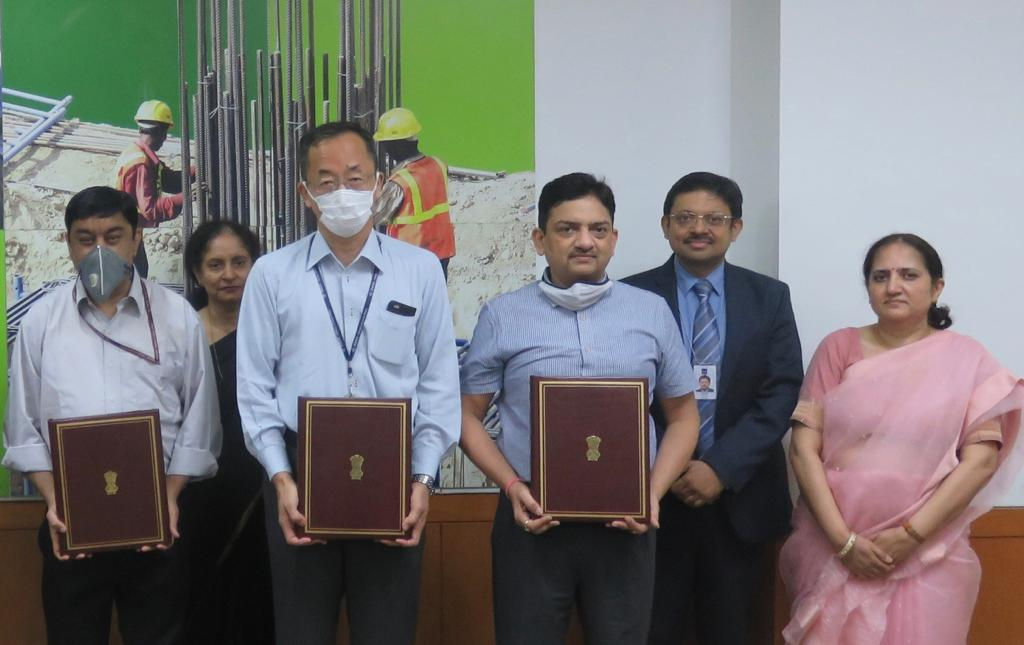
The Asian Infrastructure Investment Bank approved the Rs. 3750 Crore ( US $500 million) loan for the Delhi-Ghaziabad-Meerut RRTS Corridor. The AIIB loan referred to as “Tranche 2” became effective on June 8, 2022.
Third Tranche
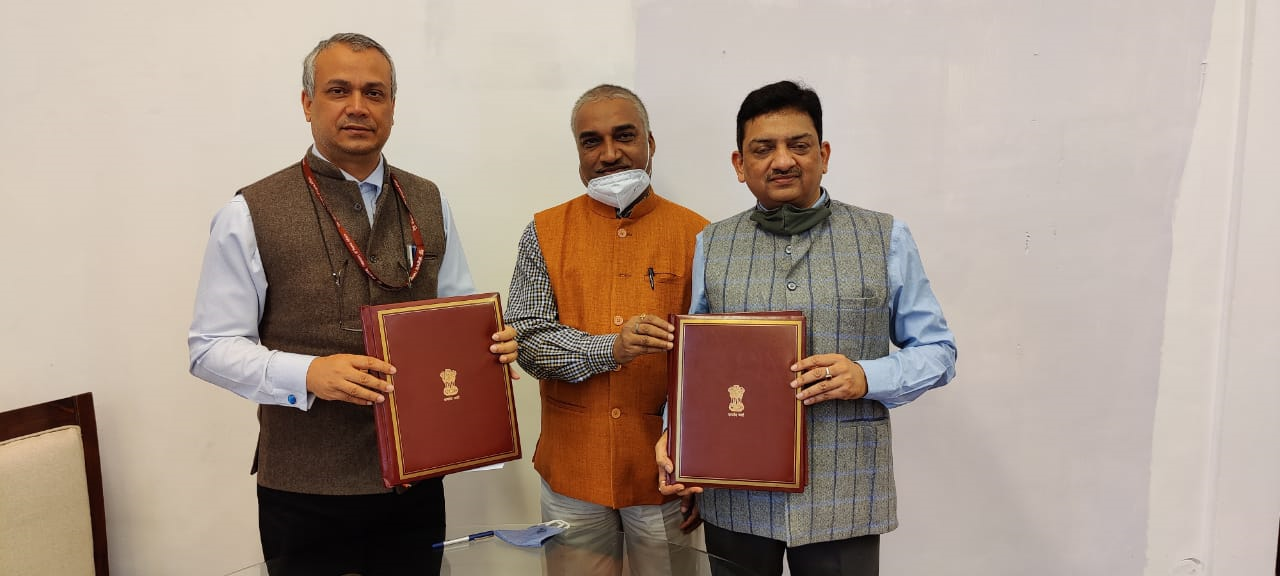
On 15 December 2023, the Government of India and the Asian Development Bank (ADB) signed an agreement for a 37 billion Japanese Yen ($250 million) loan for the Delhi-Meerut RRTS corridor.
2. Loan from New Development Bank (NDB)
On 19 November 2019, the Government of India and NDB signed a loan agreement of USD 500 million (Approx. Rs. 3,700 crores) for funding the Delhi-Ghaziabad-Meerut RRTS Corridor.
3. Funding From the Government
In February 2023, the Uttar Pradesh Government allocated Rs 1,306 crores for the Delhi-Meerut RRTS project for finance year 2023-24 in the budget.
In March 2019, the Delhi Government made the payment of the first instalment of Rs. 265 Crores for the Delhi-Meerut RRTS Project.
In March 2019, Delhi Government released the first installment of Rs. 265 Crores for the Delhi-Meerut RRTS Project. Furthermore, In May 2023, the Delhi Government released its second installment of Rs. 500 Crore for the Delhi-Meerut RRTS Project.
Contractor’s List
Contract
Contractor
Operations & Maintenance (O&M)
DB Engineering and Consulting Gmbh
General Consultant
Ayesa lngenieria Y Arquitectura S.A.U. – ITALFERR S.p.A. – Ayesa India Private Ltd JV (AIAI JV)
Package 1: Sahibabad Ramp – Ghaziabad Station (elevated, 2 stations)
Package 8: Brahampuri DN Ramp to Begumpul UP Ramp (underground, 3 stations)
Afcons Infrastructure
Package 25: Design, manufacture, supply, testing & commissioning of 210 standard gauge coaches
Alstom
RouteDetails
Overview
The Delhi-Ghaziabad-Meerut Corridor is currently partially under construction and partially operational. The route spans 82 km, covering 22 stations. Over the period, Mr Narendra Modi inaugurated the 55 km section of the Delhi-Meerut Corridor. The key dates have been mentioned below:
Inaugural Date
Route
Distance
Oct 2023
Sahibabad – Ghaziabad – Guldhar – Duhai
17 km
March 2024
Duhai – Muradnagar – Modinagar South – Modinagar North
17.1 km
August 2024
Modinagar North – Meerut South
8 km
January 2025
Sahibabad- Anand Vihar-New Ashok Nagar
13 km
Route Information
Operational: 55 km Under Construction: 27.15 km
Route: Delhi-Ghaziabad-Meerut
Length: 82.15 km
Type: Elevated & Underground
Depots: Duhai Depot, Modipuram Depot & Stabling Lines at Jangpura
Number of Stations: 22
Station Names: Nizamuddin / Sarai Kale Khan, New Ashok Nagar, Anand Vihar, Sahibabad, Ghaziabad, Guldhar, Duhai (EPE), Murad Nagar, Modi Nagar South, Modi Nagar North, Meerut South, Partapur, Rithani, Shatabdi Nagar, Brahmapuri, Meerut Central, Bhaisali, Begum Pul, MES Colony, Daurli, Meerut North and Modipuram
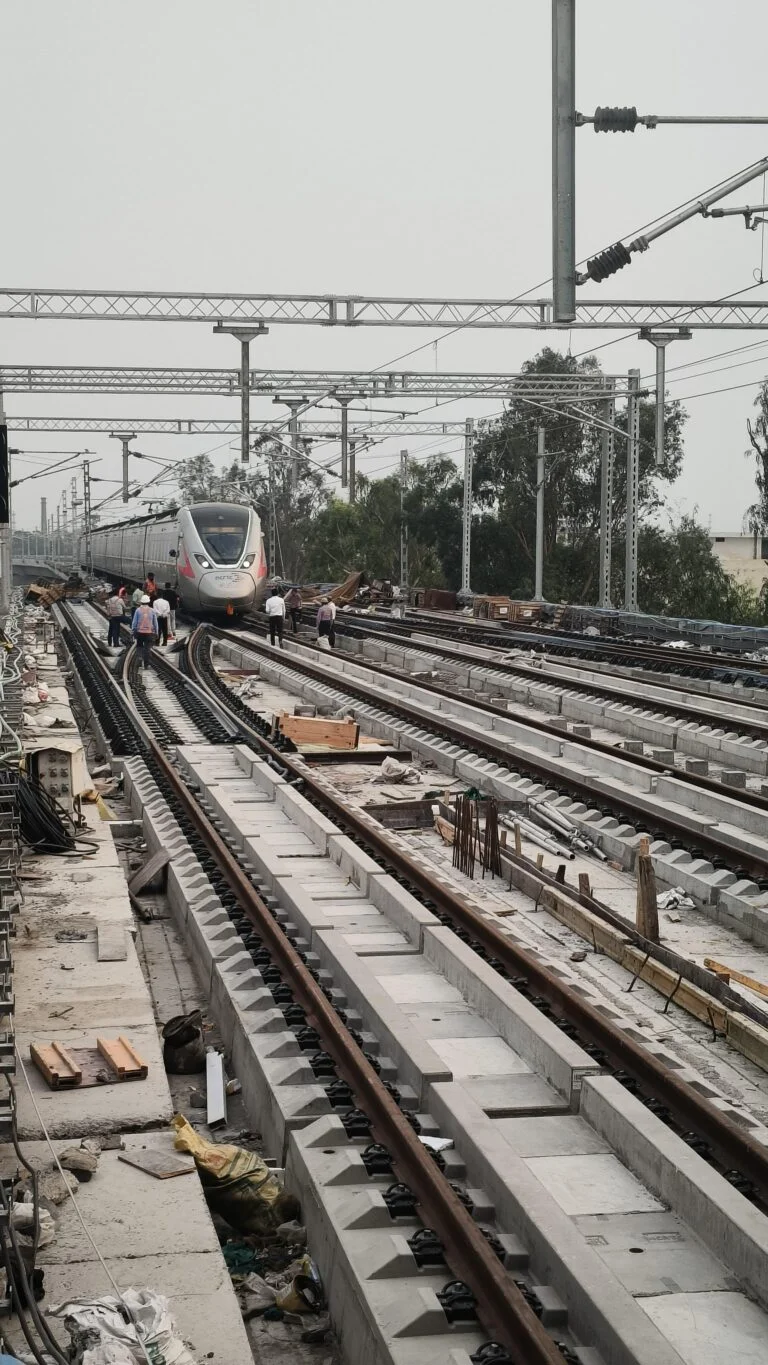
Recent Developments on Delhi Meerut RRTS Route Trials runs In April 2025, NCRTC initiated trial runs on a 5 km stretch between New Ashok Nagar and Sarai Kale Khan. The NCRTC team conducted a trial operation through the Namo Bharat Train. The train began its journey with a low-speed run at 10 km/h from New Ashok Nagar on the down-line tracks. Furthermore, NCRTC announced the successful electrification of the section between New Ashok Nagar and Sarai Kale Khan.
In February 2025, NCRTC initiated a trial run on an additional 6 km stretch between Meerut South and Shatabdi Nagar in Meerut. This 6 km stretch features 3 stations in total, and Shatabdi Nagar Station is part of the Delhi-Ghaziabad-Meerut RRTS Project, while the remaining two stations are part of the Meerut Metro Project.
Latest Update On Delhi-Meerut RRTS Project
1. Track Work
In April 2025, The Delhi – Ghaziabad – Meerut RRTS project advanced with the completion of track laying work at Modipuram RRTS station. The Modipuram station is also the last Namo Bharat station (towards Meerut) of this corridor.
2. Stations Near Completion
The Begumpul RRTS Station and Sarai Kale Khan RRTS Station are almost near completion. The NCRTC stated that work has started on the external facade at Sarai Kale Khan RRTS Station, and the stations are expected to become operational by June.
3. Trial Runs
On 1st May 2025, NCRTC initiated a trial run up to Modipuram, the last station (towards Meerut) of the Delhi-Meerut RRTS Project. The trial run was conducted between the Shatabdi Nagar and Modipuram RRTS stations, featuring 3 stations.
Namo Bharat: Indigenous Semi-High-Speed Trainsets for RRTS Applications
Overview
The rolling stock for the Delhi-Meerut RRTS project, known as “Namo Bharat” trains, and the Meerut Metro are being supplied by Alstom. Alstom secured the Rs. 2577 crore Rolling stock contract of Delhi- Meerut RRTS in mid-May 2021. As per the Contract, Alstom was supposed to supply 30 trainsets, each consisting of 6 coaches, to NCRTC for the Delhi-Meerut RRTS Project.
First Namo Bharat Trainset
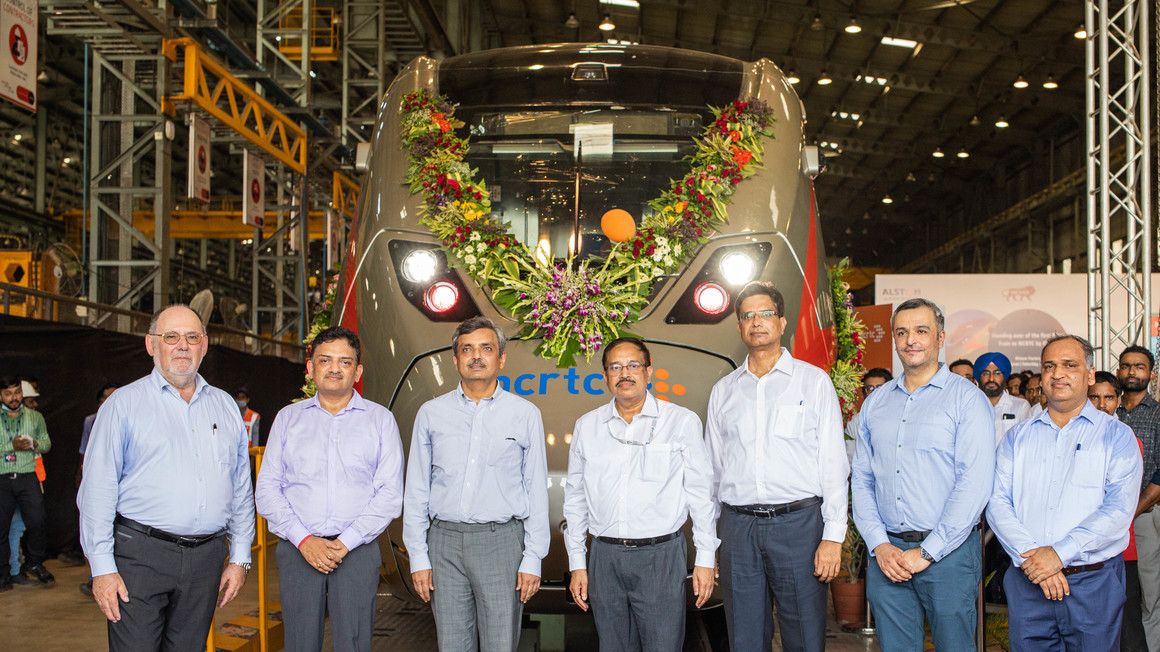
On 7 May 2022, Alstom delivered India’s first semi-high-speed regional train of the Delhi-Meerut RRTS project to NCRTC. The rollout ceremony was held at Alstom’s manufacturing site in Savli, Gujarat.
About Namo Bharat Trains
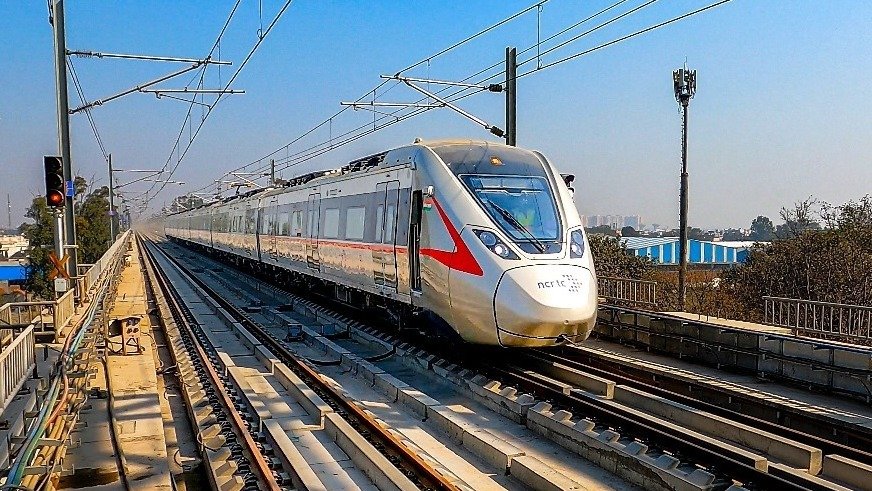
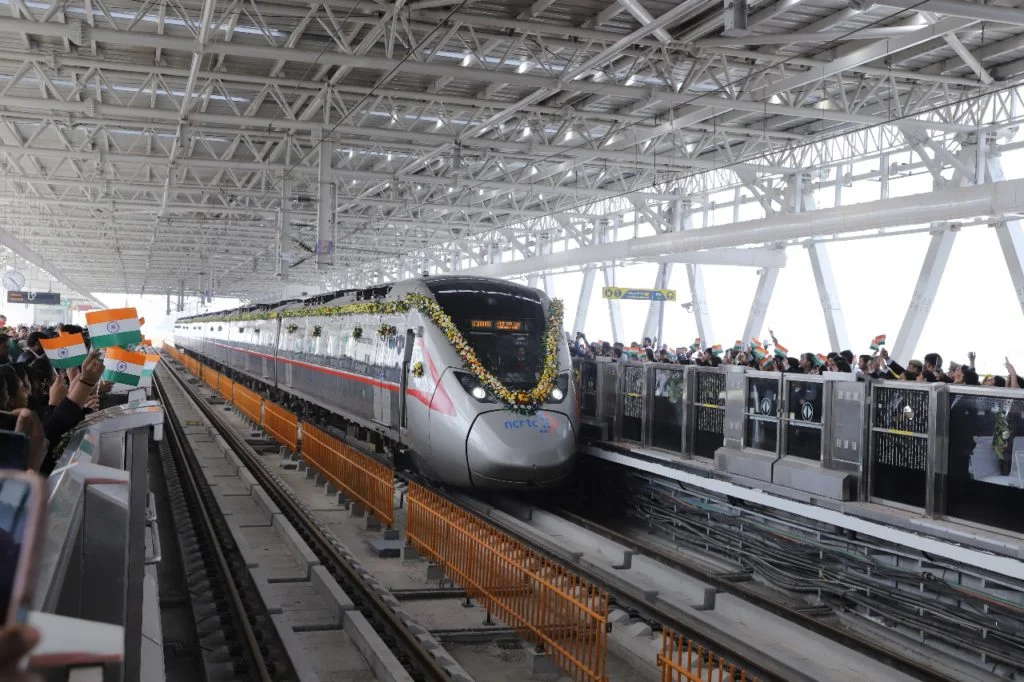
The Namo Bharat Trainsets have been designed and built to operate at 180 kmph and are capable of decreasing the travel time between Delhi and Meerut by 40%.
The air-conditioned aerodynamic RRTS trains are lightweight with a radiating stainless steel outer body. The train design has been inspired by New Delhi’s iconic Lotus Temple.
Alstom has designed and supplied RRTS trains in accordance with India’s vision of ‘Aatmanirbhar Bharat ’ and ‘Make in India’ guidelines.
Category
Salient Features
Universal Accessibility
Dedicated wheelchair & stretcher space with safety restraints, Accessible ramp for easy boarding
Safety
CCTV surveillance, Fire & smoke detectors, Intercom system, Fire extinguisher, Exterior camera, Door status indicator
Passenger Information
Digital route map, Infotainment display, Speakers for announcements
Comfort
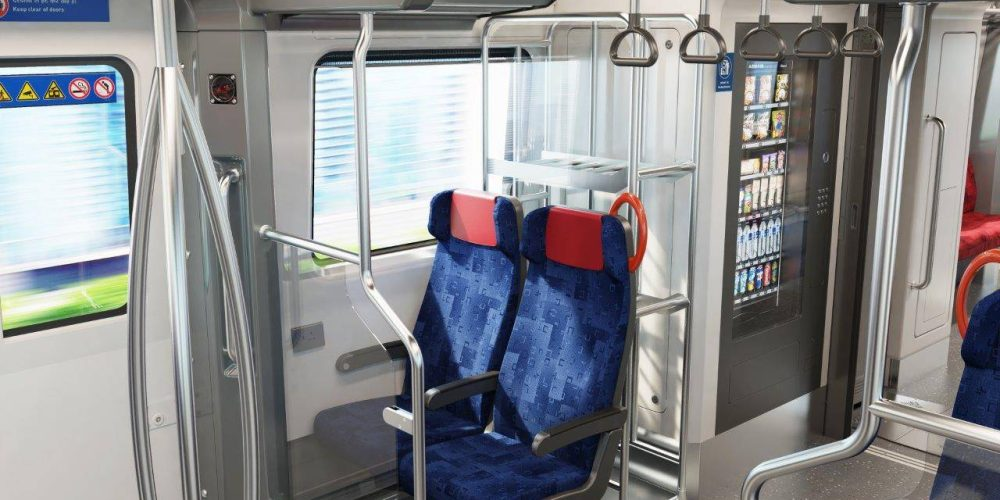
Air-conditioning system, Cantilever cushioned seats, Adequate legroom, Draught screen, Lighting with dimming control
Onboard Wi-Fi, USB charging ports for mobile/laptop
Impacts of Delhi-Meerut RRTS Project
1. Enhanced Connectivity: The Delhi-Meerut RRTS Project represents a major development initiative aimed at enhancing regional connectivity throughout the NCR.
By establishing a semi-high-speed rail corridor that connects Delhi with key urban centres such as Ghaziabad, Modinagar, and Meerut, the project effectively reduces travel time to under one hour.
The RRTS Project creates a fast and efficient transportation corridor between Delhi and Meerut, promoting seamless transit within the region.
2. Multi-Modal Integration: The Delhi-Meerut RRTS project has been designed with a strong focus on multi-modal integration to facilitate smooth transition of passengers between different modes of transport.
Some of the prominent examples have been mentioned below:
Integration with Delhi Metro: Some of the RRTS Stations offer direct connectivity to the Delhi Metro System. For Example, the New Ashok Nagar and Anand Vihar RRTS stations link directly with the Blue Line and Pink Line, respectively.
Connectivity with Indian Railways: The Anand Vihar and Sarai Kale Khan RRTS stations have been strategically located near major railway terminals, which ensures convenient shift of transportation for intercity and regional rail travel.
Integration with Bus Terminals: TheAnand Vihar and Sarai Kale Khan RRTS stations are adjacent to major Inter-State Bus Terminals (ISBTS). This strategically planned location of stations allows bus passengers to conveniently switch to the RRTS.
3. Economic Growth: The Delhi-Meerut RRTS will majorly promote economic growth across the NCR. The enhanced regional connectivity improves access to business opportunities, which will generate more employment in the region, economic growth.
The RRTS project has created numerous jobs, providing long-term employment opportunities. Furthermore, the development of RRTS stations has attracted numerous business setups which will ultimately give a boost to local economies.
4. Environmentally Sustainable: As a system that operates on electric traction, the RRTS minimises dependence on fossil fuels in comparison to road-based transportation, thereby contributing to reduced carbon emissions and enhancing air quality in the NCR.
The NCRTC has implemented various initiatives to ensure the long-term sustainability of the Delhi-Meerut RRTS project.
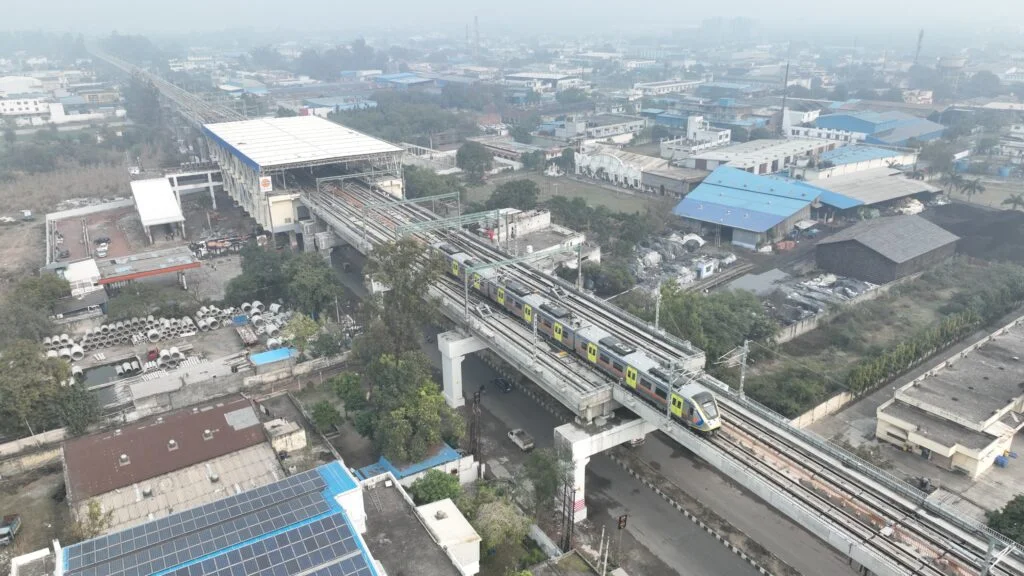
For Example, all elevated RRTS stations and depots are equipped with solar panels to harness clean energy. The NCRTC aims to achieve a minimum solar power generation capacity of 11 MWp throughout the corridor.
Conclusion
The Delhi-Meerut Regional Rapid Transit System (RRTS) Project is a major project that strengthens regional connectivity and enhances urban mobility within the National Capital Region. Recognised as India’s first semi-high-speed rail corridor, the RRTS effectively minimises travel time between Delhi, Ghaziabad, and Meerut, and provides a safe, efficient, and sustainable transportation solution. The project incorporates advanced infrastructure, including the Namo Bharat trains, alongside seamless multimodal integration with existing transit systems. The RRTS aims to alleviate congestion, reduce carbon emissions, and improve the overall quality of life for daily commuters. Its implementation is supported by a strong funding structure, involving international financial institutions and strong governmental backing, which makes it an exemplary model for future transit development initiatives across India.
Over the decades, the metropolitan cities witnessed a major increase in population growth due to rapid urbanisation. This rapid population growth placed immense pressure on existing urban infrastructure and transportation systems. Traditional modes of transport, primarily road-based, have become increasingly inadequate to handle the sheer volume of commuters in cities.
In response to these challenges, the metro system emerged and evolved as a crucial transportation solution. However, the Metro systems started facing escalating passenger demand, the necessity for higher service frequencies, and the requirement to uphold stringent safety protocols while simultaneously optimising operational efficiency and minimising environmental impact.
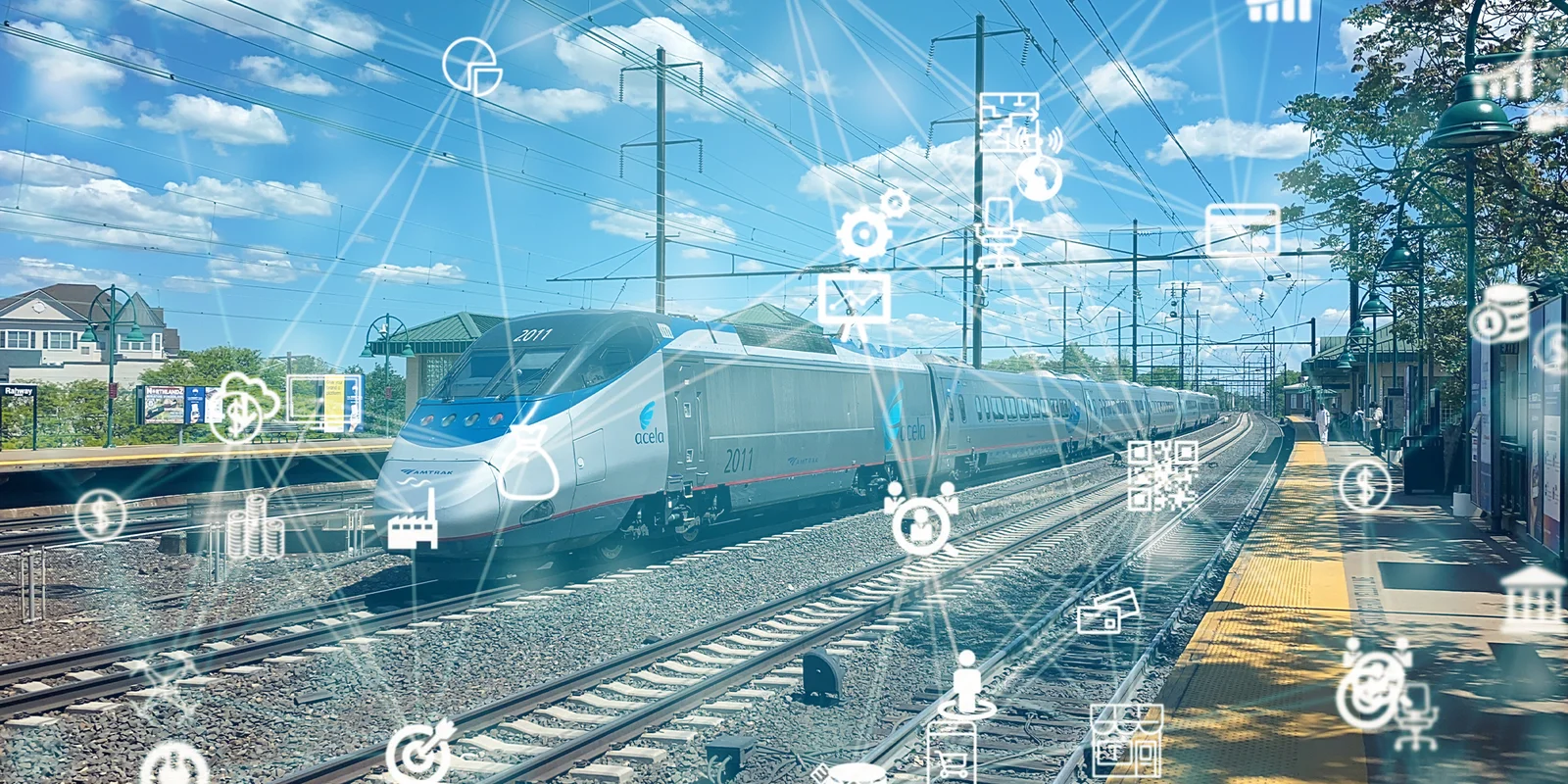
Traditional traffic management methodologies, often characterised by reliance on manual interventions, static timetables, and limited real-time responsiveness, were demonstrably inadequate to address these complex and dynamic demands. This necessitated the adoption of data-driven solutions like Smart Traffic Management Systems (STMS), which harness the power of emerging modern technologies like Artificial Intelligence and Machine Learning to establish intelligent, adaptive, and resilient rail networks.
This article studies the critical role of Smart Traffic Management Systems in maximising the use of rail infrastructure while navigating through the roadblocks that impede the effective implementation of these systems.
Integrating Intelligent Technologies for Resilient and Responsive Metro Traffic Management
The smart traffic management systems, particularly within metro systems, incorporate a range of technologies such as Artificial Intelligence (AI), the Internet of Things (IoT), and Cloud Computing to efficiently manage and regulate train operations, passenger flow, and other critical infrastructure components. Additionally, the traffic management system facilitates real-time monitoring and reporting capabilities, enabling the detection and response to any disruptions or incidents that may arise. The inclusion of smart traffic management systems within metro systems enables the regulation of train speed, the maintenance of safe distances between trains, and the coordination of train movements, thereby preventing collisions and optimising traffic circulation.
Core Technologies Enabling Smart Traffic Management System
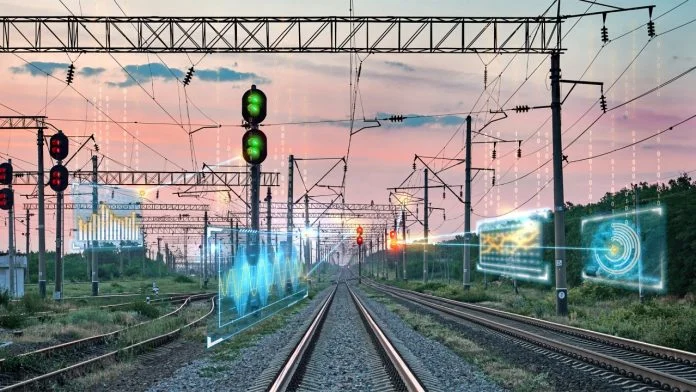
Smart traffic management systems in metro networks effectively integrate Artificial Intelligence (AI), Internet of Things (IoT), and Cloud Computing technologies to manage train operations, passenger flow, and infrastructure components.
Artificial Intelligence: In metro systems, AI is employed for predictive maintenance, anomaly detection, and optimising train schedules. For instance, AI uses real-time data to identify patterns that could indicate safety risks.
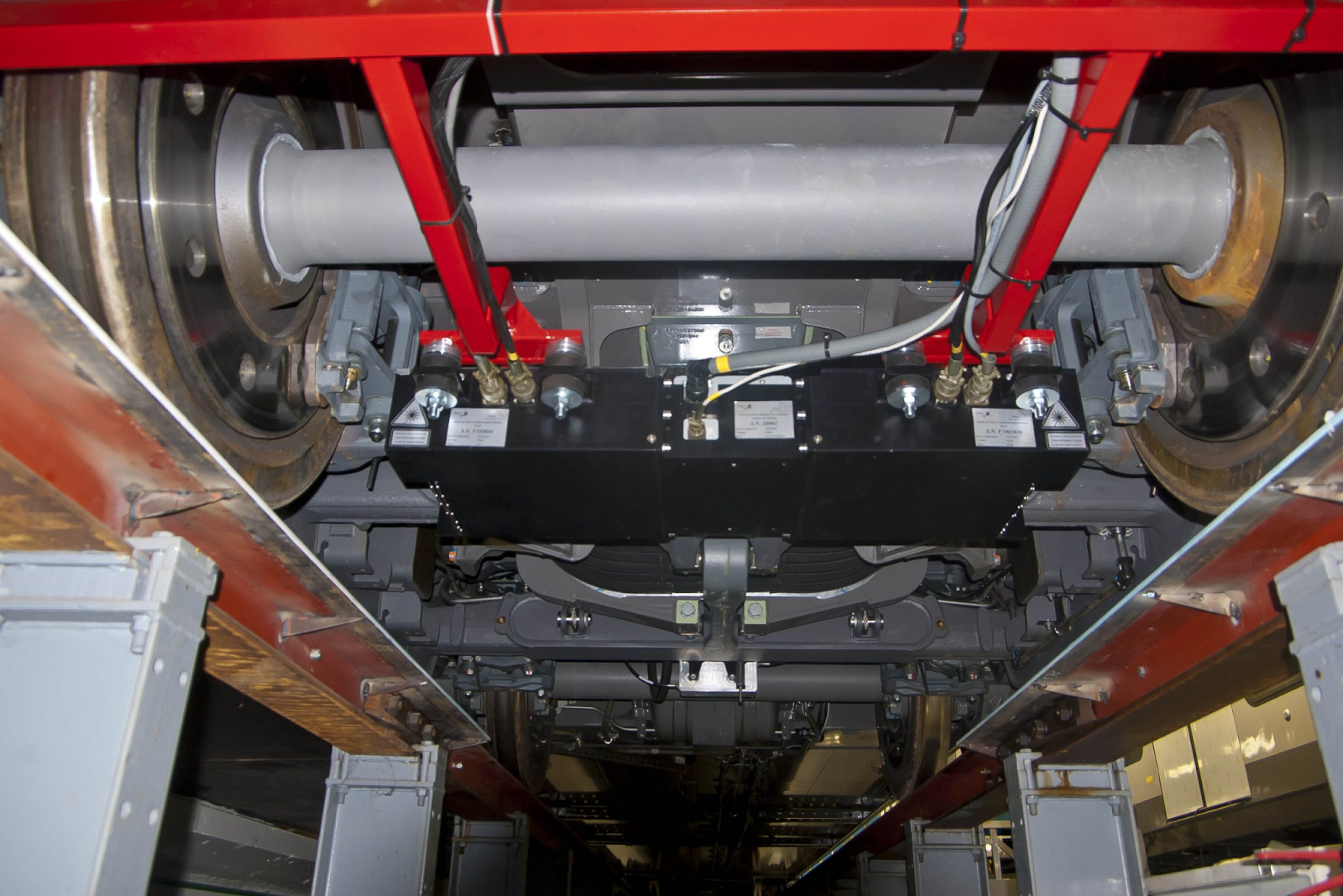
IoT Devices: The concept of the “Internet of Trains” is an extension of the Internet of Things (IoT), which is being used specifically for rail transportation. IoT devices, such as sensors on trains and tracks, collect and transmit real-time data to facilitate continuous monitoring of assets in rail infrastructure. These devices are crucial for predictive maintenance as they detect anomalies before they lead to failures.
Examples:
Systems such as the Duos Technologies Railcar Inspection Portal (RIP) employ AI to capture and analyse 360-degree images of train cars while operating at standard speeds.
The Hyderabad Metro Rail (HMR) Managing Director, N.V.S. Reddy, stated that the Hyderabad Metro is currently using AI and IoT for ‘predictive maintenance’ to bring down costs.
Common Asset Management System for Mumbai Metro Line 3:In July 2021, Mumbai Metro Rail Corporation (MMRC) collaborated with Bahwan CyberTek (BCT) to implement a Common Asset Management System (CAMS) for Mumbai Metro Line 3. This system is designed to manage a wide range of assets, including rolling stock, tracks, power supply systems, traction systems, signalling and control systems, platform screen doors, telecommunication systems, plants and equipment, automated fare collection systems, escalators, lifts, and tunnel ventilation systems.
Big Data Analytics: Big Data analytics processes substantial volumes of traffic data collected from Internet of Things (IoT) sensors and various other sources to extract actionable insights. These analytics facilitate predictive maintenance of infrastructure and vehicles, thereby enhancing overall system reliability and operational efficiency.
Example:
ITMS System: To modernise rail infrastructure, Union Railway Minister Ashwini Vaishnaw announced the deployment of the Integrated Track Monitoring System across the entire rail network in India. This system uses Track Recording Cars (TRCs) equipped with sophisticated sensors to collect data and monitor and assess track conditions in real-time at speeds ranging from 20–200 km/h. The data is processed using Big Data analytics to identify potential issues and plan maintenance before failures occur.
Cloud Computing in Rail Infrastructure: Cloud computing encompasses the provision of computing services, including servers, storage solutions, databases, networking capabilities, software applications, and sophisticated technologies such as data analytics and artificial intelligence, delivered via the internet.This model offers scalable and flexible infrastructure for processing and analysing large volumes of data, which is essential for modern rail systems. Cloud platforms enable rail operators to store and process massive datasets which is generated from various sources, including ticketing systems, train operations, passenger flow sensors, CCTV, and maintenance records.
One of the main benefits of cloud computing is its ability to scale resources on demand. This eliminates the need for costly on-premises infrastructure and provides flexibility. This allows rail operators to adapt their resources as required, based on operational demands.
Example
Data collected from various systems, such as ticketing, train operations, passenger flow sensors, CCTV cameras, and maintenance records, can be archived in a cloud database. This configuration makes better analysis and management of the operations possible.
These technologies work in conjunction with essential systems, including the signalling system, Public Information System, and Ticketing System, which will be discussed in the subsequent sections.
Signalling System: Enabling Safe and Efficient Train Movements
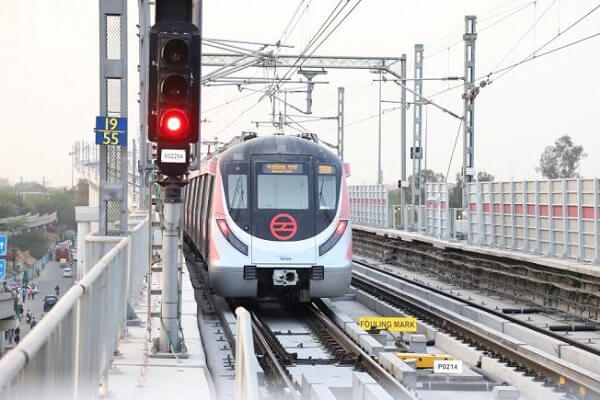
The signalling system in a metro network is a crucial component that ensures the safe and efficient movement of trains by preventing collisions between trains, over-speeding, and derailments.
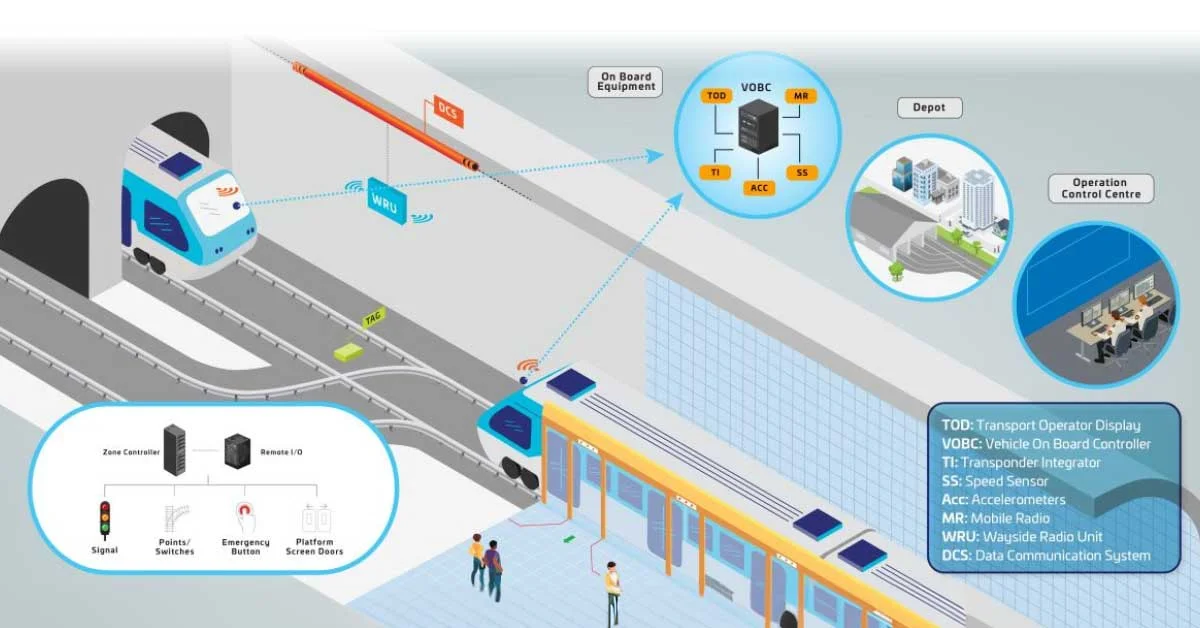
The signalling system uses a combination of wayside and onboard equipment like signals, train detection, interlocking, and automatic protection systems to ensure train safety and adherence to schedules.
In the era of smart metro systems, Communications-Based Train Control (CBTC) signalling system has emerged as a better alternative for effectively utilising the full capacity of rolling stock and associated rail infrastructure. CBTC increases the reliability and flexibility of train operations by facilitating real-time communication between trains and infrastructure.
Example:
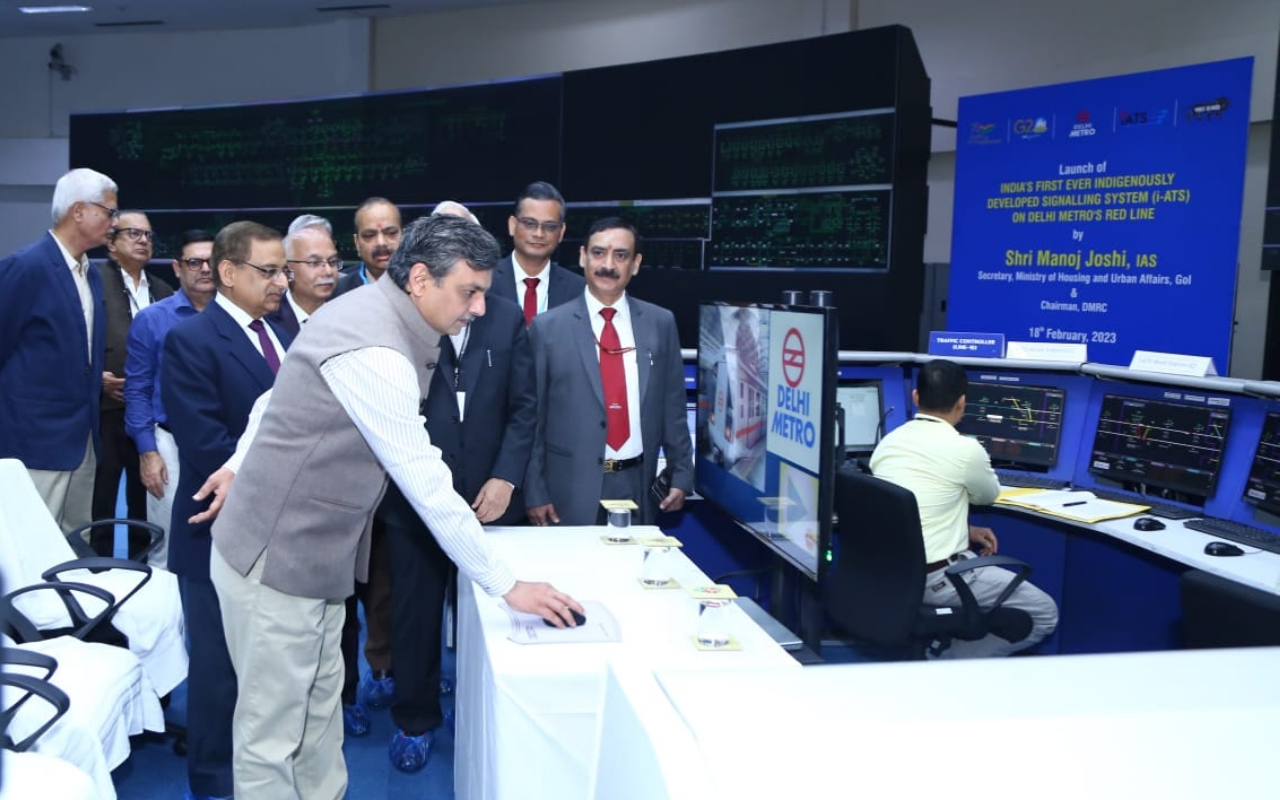
India’s first indigenously developed Signalling System: In February 2023, the Delhi Metro launched the country’s first indigenously developed signalling system, the Automatic Train Supervision system, i-ATS. This system was jointly developed by Bharat Electronics Limited (BEL) and DMRC under the ‘Make in India’ and ‘AatmaNirbhar Bharat’ initiatives. The system has been deployed on the Red Line corridor.
Provision of CBTC Signalling System for Delhi Metro Phase 4: Alstom is equipping Delhi Metro Phase 4’s Line 10 (Golden Line) and the Line 7 extension with its scalable CBTC system, which will operate in conjunction with its Automatic Train Supervision (ATS) system.
The Mumbai Metro’s Aqua Line has also been equipped with Alstom’s Communications-Based Train Control (CBTC) System.
The Bengaluru Metro Phase 2, Reach 6, 2A and 2B will deploy a fully automated Communications-Based Train Control (CBTC) signalling system provided by Alstom.
Inclusion of Modern Solutions to Streamline Passenger Flow
Ticketing Systems
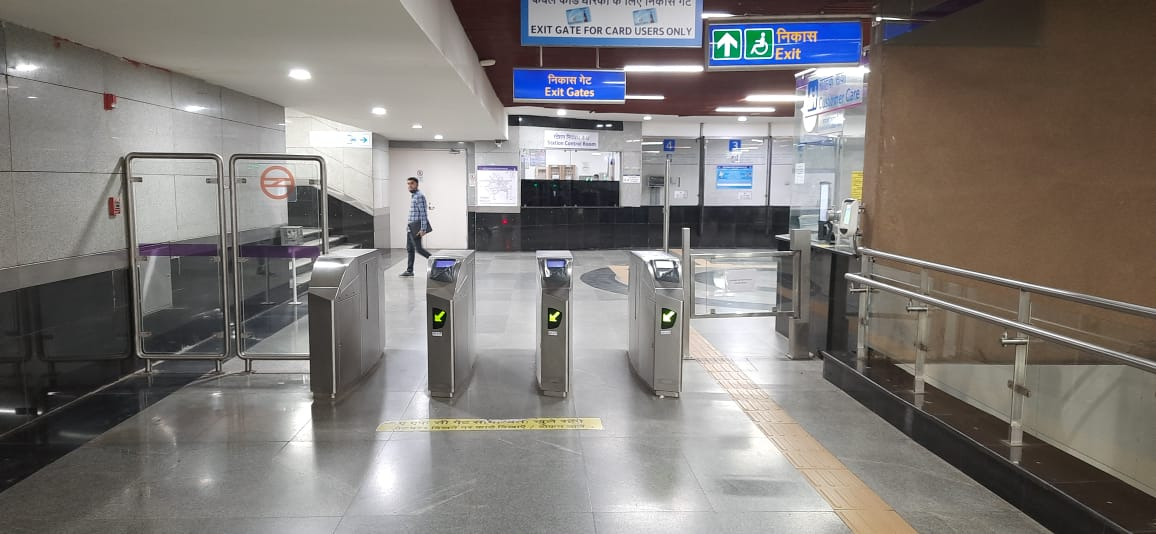
The modernised ticketing system is integral to the Traffic Management framework. The implementation of advanced payment solutions automates the payment process, facilitates cashless transactions, and enhances the efficiency of transit operations.
These innovative payment solutions eliminate the necessity for cash handling and manual ticketing, thus saving time for passengers and aiding in the management of passenger flow, which in turn ensures seamless operational functionality.
Examples
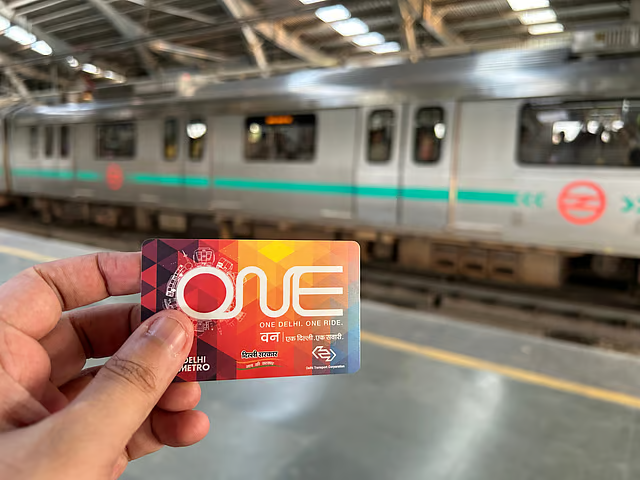
Contactless Smart Cards: These smart cards allow passengers to preload monetary value, enabling tap-in and tap-out transactions at the start and conclusion of their journeys
Mobile Ticketing and QR Codes: Current automated fare collection (AFC) systems now offer ticketing through mobile applications that generate QR codes, streamlining the purchasing process while enhancing user experience.
Case Study The Delhi Metro Rail Corporation (DMRC) has implemented a mobile-based QR-ticketing system, which enables passengers to purchase tickets online. This innovation diminishes the dependence on physical ticketing methods and effectively alleviates congestion at station queues.
Passenger Information Systems (PIS) in Metro Networks
Metro systems in cities like Delhi, Mumbai, and Bengaluru have adopted Iot-integrated PIS to provide real-time updates on train arrivals, crowd density, and platform information, to optimise passenger experience and operational efficiency.
Example:
In March 2025, the Delhi Metro Rail Corporation (DMRC) announced the upgradation of its Passenger Information Display System (PIDS) to enhance the passenger experience with the latest technology. The upgrade will involve 110 units across 18 stations on the Yellow Line.
The new display units are made to accommodate ambient light levels, varying brightness to provide maximum visibility without being uncomfortable. The units are also flexible, able to display static and dynamic messages, images, and videos.
Impacts of the Traffic Management Systems
1. Predictive Maintenance: One of the primary advantages of Smart Traffic Management Systems is their ability to facilitate predictive maintenance. Internet of Things (IoT) sensors are deployed on critical components, including tracks, wheels, and signalling systems, to collect real-time data regarding their condition.
AI algorithms are utilised to analyse this data for analysis and to predict potential issues, thereby enabling predictive maintenance.. This proactive approach allows for the identification of potential issues before they turn into failures, thereby minimising disruptions to traffic flow. The predictive maintenance extends the lifespan of infrastructure and rolling stock.
Example
The metro systems in Hong Kong utilise predictive maintenance strategies to prevent unforeseen breakdowns and to minimize delays and operational disruptions.
The fourth phase of the Delhi Metro is planning to integrate AI into its operations and project management processes.
Singapore’s Circle Line (CCL), recognised as the world’s first fully automated underground Mass Rapid Transit (MRT) line, utilises a Condition Monitoring System to continuously gather data regarding the equipment on the trains, facilitating ongoing monitoring of their condition and supporting predictive maintenance efforts.
2. Streamlined Passenger Experience: Smart Traffic Management Systems (STMS) are established to enhance the efficiency of train and passenger flow within metro networks. These systems utilize advanced technologies to monitor, control, and forecast traffic patterns, resulting in improved operational efficiency.
Example
Innovative solutions such as Smart Ticketing at Kochi Metro, Delhi Metro facilitate a seamless ticketing process.. This advancement contributes to a more convenient, efficient, informative, secure, and environmentally sustainable experience for metro passengers.
3. Improved Safety: Smart traffic management systems enhance safety through the real-time analysis of data obtained from various sources, including CCTV networks and signalling systems. Advanced AI algorithms are capable of detecting casualties, accidents, or security threats identified through video analytics and signalling information, thereby providing immediate alerts and facilitating appropriate action.
Example
Integration of signalling systems like CBTC facilitates the movement and coordination between two rolling stocks to avoid train collision and enhances operational efficiency.
Roadblocks in Enabling the Smart Traffic Management Systems
1. Cost Effectiveness: The issue of cost-effectiveness emerges as a barrier to the establishment and maintenance of smart traffic management systems within metro operations, primarily due to the substantial initial capital investment required for complex technologies such as sensors, communication networks, and centralised control centres. The complexities associated with integrating new systems into existing infrastructure, the necessity for scalability, and the imperative for robust cybersecurity measures further exacerbate these financial challenges.
2. Prone to Cyber Attacks: Although traffic management systems offer numerous advantages, including optimised train schedules, enhanced safety, and efficient passenger flow, they are notably prone to cyber attacks due to their increasing dependence on interconnected digital technologies. Modern metro systems encompass various subsystems—such as signalling, train control, and communication networks—all interconnected through Information Technology (IT) and Operational Technology (OT) networks. This interconnectedness results in a broader attack surface for potential threats.
3. Integration with Conventional System: The integration of traffic management systems with established conventional systems presents a considerable challenge due to technical interoperability issues stemming from diverse technologies, interface complexities, and data integration demands, particularly under real-time operational constraints. Furthermore, operational challenges, including system migration, personnel training, the long-term maintenance of disparate systems, and the assurance of scalability, contribute to the overall complexity of the integration process.
Conclusion
Smart Traffic Management Systems signify a transformative advancement in the operation and management of contemporary metro systems. By using core technologies such as Artificial Intelligence, the Internet of Trains, Big Data Analytics, Cloud Computing, advanced signalling, and modern ticketing systems, these systems provide substantial benefits, including predictive maintenance, enhanced passenger experience, and improved safety. These data-driven solutions empower metro operators to proactively address potential issues, optimise passenger flow, and ensure safer operations. However, the widespread adoption and successful implementation of Smart Traffic Management Systems are accompanied by notable challenges. The considerable costs associated with deployment and maintenance, the persistent risk of cyber attacks on interconnected systems, and the complexities inherent in merging these advanced technologies with existing conventional infrastructures pose significant obstacles.
PATNA (Metro Rail News): Hindustan Construction Co. Ltd. (HCC) has been declared as the lowest bidder for the underground tunnelling contracts, PC06 of Patna Metro’s Line-1 by the Delhi Metro Rail Corporation (DMRC). Line 1 of the Patna Metro spans 16.86 km from Danapur Cantonment to Khemni Chak.
In December 2023, Delhi Metro Rail Corporation (DMRC) issued a tender in December 2023 with an estimated cost of Rs. 1377 Crore. Furthermore, Technical bids were opened in October to reveal that 5 firms have submitted for the Package PC06 of the Patna Metro.
Financial Bid Values
Firm
Bid (Rs. Crore)
Hindustan Construction Co. Ltd. (HCC)
1147.50
Afcons Infrastructure – Sam India JV
1266.40
ITD Cementation India Ltd.
1286.61
Larsen & Toubro Ltd. (L&T)
1304.99
Tata Projects Ltd. (TPL)
1585.75
About Package PC06 Of Patna Metro
Contract Deadline: 42 months
Funding: The Package PC06 will be financed through a loan from the Japan International Cooperation Agency (JICA).
The scope of work under this package includes the construction of twin tunnels, an Underground Ramp at Rukanpura and the construction of three Underground Metro Stations.
Stations
Rukanpura
Raja Bazar
Patna Zoo
Additionally, the contract also includes the Architectural Finishing, Water Supply, Sanitary Installation & Drainage Works of Stations on Danapur to Khemnichak Corridor of Phase-I of Patna Metro.
Brief Scope of PC-06: Design and Construction of Twin Tunnel by Shield TBM, Tunnel by Cut & Cover, Underground Ramp at Rukanpura and Three Underground Metro Stations viz. Rukanpura, Raja Bazar & Patna Zoo including Architectural Finishing, Water Supply, Sanitary Installation & Drainage Works of Stations on Danapur to Khemnichak Corridor of Phase-I of Patna MRTS
PATNA (Metro Rail News): Delhi Metro Rail Corporation (DMRC) has announced Hindustan Construction Co. Ltd. (HCC) as the lowest bidder for the underground tunnelling contracts, PC05 of Patna Metro’s Line-1. Line 1 of the Patna Metro spans 16.86 km between Danapur Cantonment and Khemni Chak.
In December 2023, the Delhi Metro Rail Corporation (DMRC) floated a tender for this contract, with an estimated cost of Rs. 1,683 crore. Technical bids were opened in October, revealing that five firms have submitted bids for the Package PC05 of the Patna Metro.
Financial Bid Values
Firm
Bid (Rs. Crore)
Hindustan Construction Co. Ltd. (HCC)
1418.30
Afcons Infrastructure – Sam India JV
1545.30
ITD Cementation India Ltd.
1567.53
Larsen & Toubro Ltd. (L&T)
1592.99
Tata Projects Ltd. (TPL)
1913.93
About Package PC05 Of Patna Metro
Contract Deadline: 42 months
Funding: The Package PC05 will be financed through a loan fromthe Japan International Cooperation Agency (JICA).
The scope of work under this package includes the construction of twin tunnels, an Underground Ramp at Mithapur and the construction of three underground Metro Stations.
Stations
Vikas Bhawan
Vidyut Bhawan
Patna Station
Additionally, the contract also includes the Architectural Finishing, Water Supply, Sanitary Installation & Drainage Works of Stations on Danapur to Khemnichak Corridor of Phase-I of Patna Metro.
Brief Scope of PC-05: Design and Construction of Twin Tunnel by Shield TBM, Tunnel by Cut & Cover, Underground Ramp at Mithapur and Three Underground Metro Stations viz. Vikas Bhawan, Vidyut Bhawan & Patna Station including Architectural Finishing, Water Supply, Sanitary Installation & Drainage Works of Stations on Danapur to Khemnichak Corridor of Phase-I of Patna MRTS
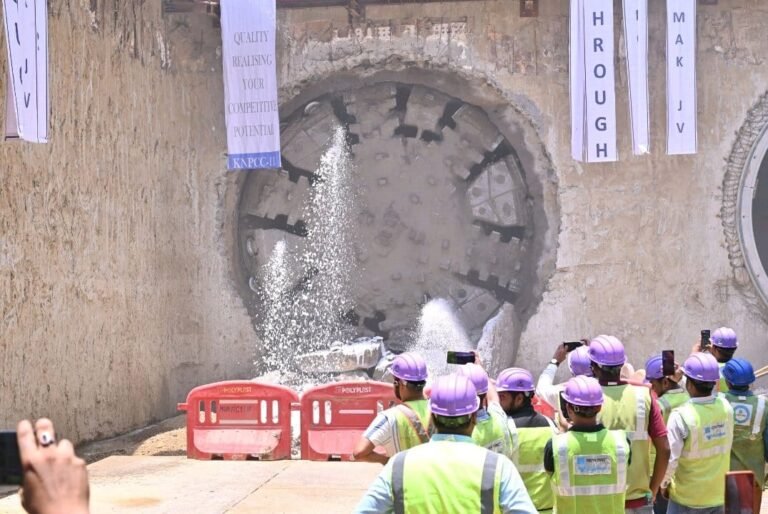
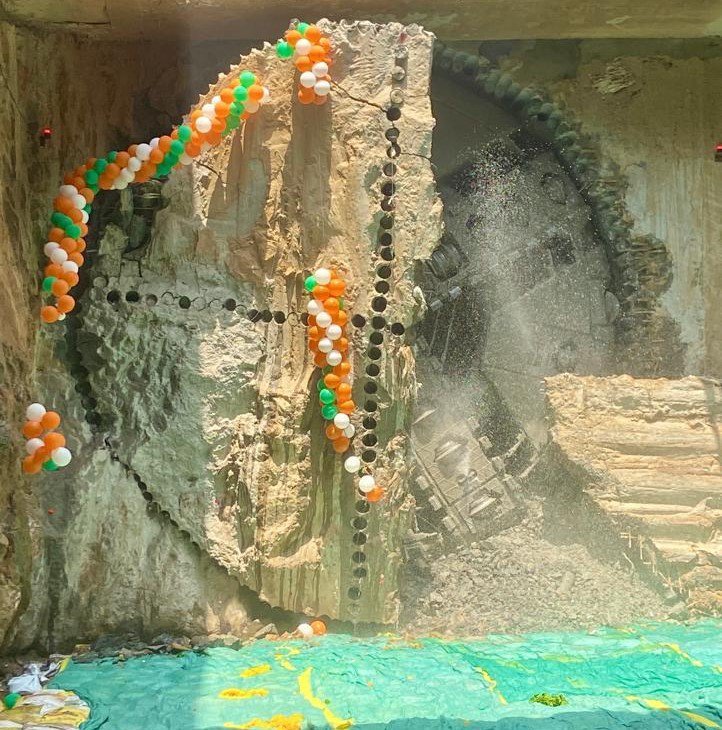
KANPUR (Metro Rail News): The Kanpur Metro Rail Project progressed as Kalpataru Projects International Ltd. (KPIL) – Gulermak JV’s TBM Saraswati has achieved a breakthrough at Rawatpur Metro Station of Line 2 under Package KNPCC-11.
About TBM Saraswati
TBM (S-839C), nicknamed Saraswati, is the 2nd TBM deployed following the TBM Gomati to construct a twin tunnel on Line 2. TBM Saraswati is also the 6th TBM deployed for the entire Kanpur Metro Phase 1.
For this assignment, TBM Saraswati constructed a 622 m tunnel (down-line) from Rawatpur Station towards Corridor-2 Depot Ramp.
Package KNPCC-11
In December 2023, Uttar Pradesh Metro Rail Corporation (UPMRC) awarded KPIL – Gulermak JV the Package KNPCC-11 at Rs. 762.50 crore with a 30-month deadline.
The Package KNPCCC-11 spans 4.08 km between the Agriculture Depot and the Double Pullia Ramp. This section features 3 underground metro stations.
Stations
Rawatpur,
Kakadeo
Double Pullia
Scope of Work
The awarded contractor is responsible for the Design and Construction of TBM Tunnel, Cut and Cover Tunnel, ramp after Double Pullia, ramps in the Agriculture Depot for main line and depot connections and three underground metro stations (viz. Rawatpur, Kakadeo and Double Pullia), including Architectural finishes, etc., on Corridor-2 of the Kanpur MRTS Project.
CHENNAI (Metro Rail News): Chennai Metro Rail Corporation (CMRL) has announced Fujitec India Pvt. Ltd. as the lowest bidder for the escalator contract of Chennai Metro Phase 2’s Corridor 3. This Line spans 45.4 km from Madhavaram Milk Colony to SIPCOT 2 through 49 stations.
Bidding Process
CMRL invited bids for this contract with a 2070-day deadline. On 6 November 2024, technical bids were opened, revealing that only one firm, Fujitec India, had submitted for the contract.
On 5 June 2025, the technical evaluation of the submitted bid took place. Furthermore, financial bids were opened on 6 June 2025, revealing that Fujitec India is the lowest bidder for the contract.
Contract Details
Contract Period: 2070 Days
Fujitec India Bid Value: ₹ 898.5 Cr
Contract’s Scope of Work
The contract’s scope of work includes the Design, Manufacturing, Supply, Installation, Testing, and Commissioning of Heavy Duty Escalators between the Madhavaram Milk Colony Metro and Sholinganallur Metro stations of Chennai Metro Phase 2’s Line 3.
Brief Scope of Work: Design, Manufacturing, Supply, Installation, Testing, and Commissioning of Heavy Duty Escalators and Travelators for CMRL Phase II Corridor 3 (From Madhavaram Milk Colony Metro to Sholinganallur Metro stations)
DRA Infracon – Siemens JV has received a Letter of Acceptance (LoA) for the signalling and telecommunication (S&T) system Package S-1 of the Mumbai–Ahmedabad Bullet Train Project.
Bidding Process
In January 2025, National High Speed Rail Corporation Ltd. (NHSRCL) floated tender for this contract with a 2555-day (7-year) deadline.
On 30 April 2025, technical bids were opened, revealing that 2 firms had submitted bids for the contract. Technical evaluation of the bids took place on 14 May 2025.
Financial bids were opened on 15 May 2025, and financial evaluation of the bids took place on 9 June 2025, revealing that DRA Infracon – Siemens JV has received LoA for the contract.
Financial Values
Firm
Bid (Rs. Crore)
DRA – Siemens JV
4,140.06
Alstom – L&T JV
12,686.13
About Package S-1 of the Mumbai-Ahmedabad Bullet Train Project
IFB Number: Package No. MAHSR – S-1
The awarded contractor will be responsible for the end-to-end design, installation, and commissioning works for the Mumbai–Ahmedabad High Speed Rail Corridor.
Brief Scope: Design, Manufacture, Supply, Installation, Overall Integration, Testing, Commissioning, and Comprehensive Maintenance of Signalling & Train Control System, Telecommunication System, and Operation Control Centre System on Mumbai Ahmedabad High-Speed Rail Project, India.
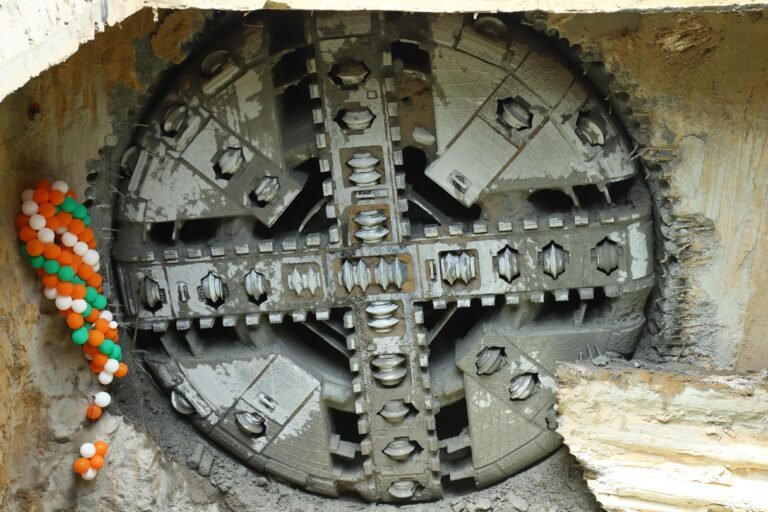
Delhi (Metro Rail News): The Delhi Metro Rail Project has achieved a major milestone in Phase 4 with the successful tunnel breakthrough at Tughlakabad Railway colony Station of the Golden Line. The Golden Line (Line 10) of Delhi Metro Phase 4 spans 23.622 km from Aerocity to Tughalakabad through 15 stations.
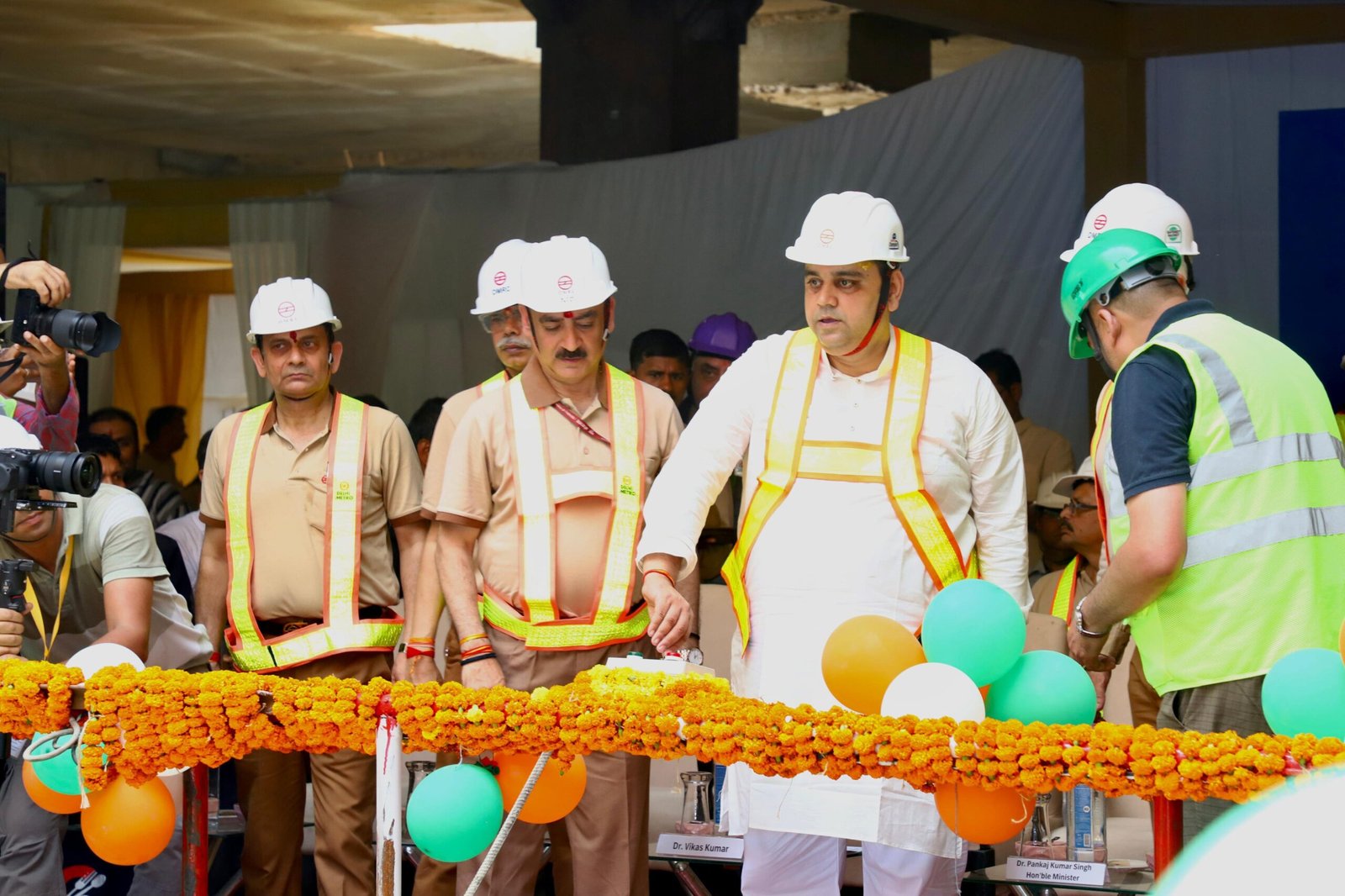
During the Breakthrough, Dr. Pankaj Kumar Singh, Hon’ble Minister for Health & Family Welfare, Transport, Information Technology, Govt of NCT of Delhi, Dr. Vikas Kumar, Managing Director/DMRC and other senior officials were present.
About the TBM Breakthrough
The tunnel breakthrough at the Tughlakabad Railway colony Station has been achieved through a mammoth 96-metre-long Tunnel Boring Machine (TBM).
The TBM has constructed a 0.792-kilometre-long -long tunnel between the Maa Anandmayee Marg and Tughlakabad Railway colony station of the Golden Line.
The tunnel between the Maa Anandmayee Marg and Tughlakabad Railway colony station has been constructed at an average depth of approximately 18 meters.
As per the DMRC Press Release, about 566 rings have been installed in the tunnel, with an inner diameter of 5.8 meters.