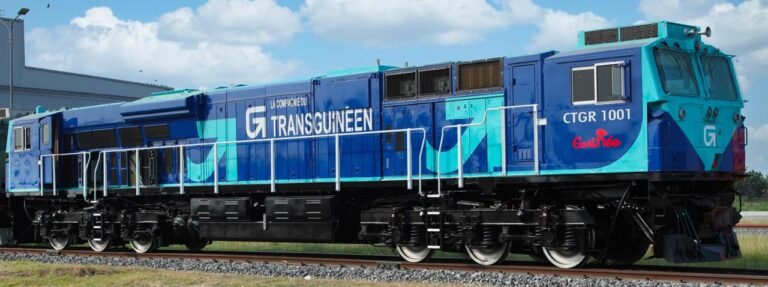
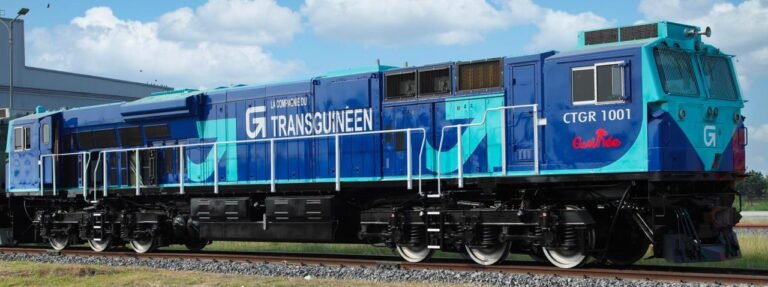
In a strategic effort to enhance India’s position in the global export of rolling stock, Prime Minister Narendra Modi flagged off the indigenously manufactured diesel locomotive built for export to Guinea, a coastal country in Africa, on June 20.
This 4,500 horsepower (HP) locomotive was manufactured at the Marhowrah Diesel Locomotive Factory, located in the Saran district of Bihar. The factory was established as a joint venture between Indian Railways and the American company General Electric, now known as Wabtec.
The locomotive manufacturing facility secured the contract to supply a total of 150 locomotives at a total cost of 411 million dollars (approximately Rs 3,533 crore). The unit cost of each locomotive is 2.74 million dollars, or approximately Rs 23.55 crore.
These locomotives are specifically designed to facilitate freight transportation operations. Each unit is equipped with a 4,500 HP engine and incorporates several modern features aimed at enhancing operational performance and crew comfort.
Read all the details about this newly built locomotive for the African country of Guinea.
Additionally, Prime Minister Modi also flagged off a Vande Bharat train from Patliputra (Bihar) to Gorakhpur (Uttar Pradesh). Know more about this development.
These developments underscore the success of the Make in India initiative and the Make for World initiative, further highlighting India’s expanding footprint in the international railway market.
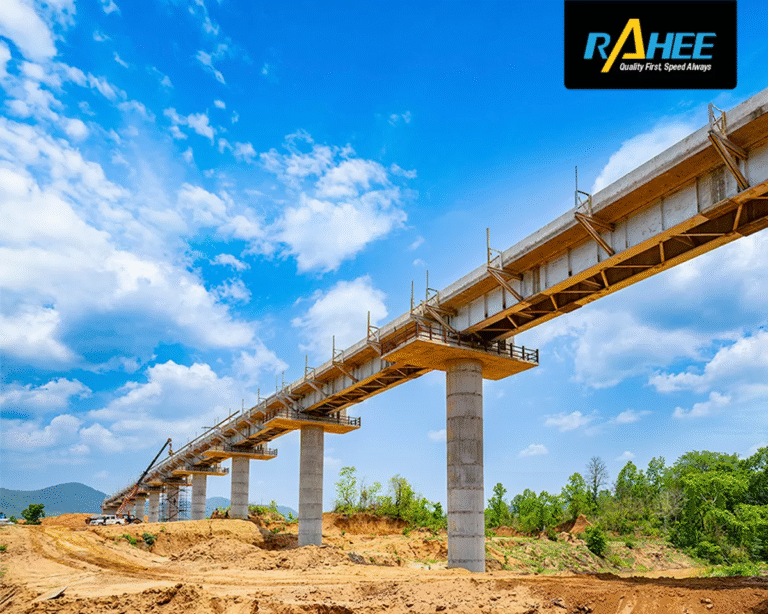
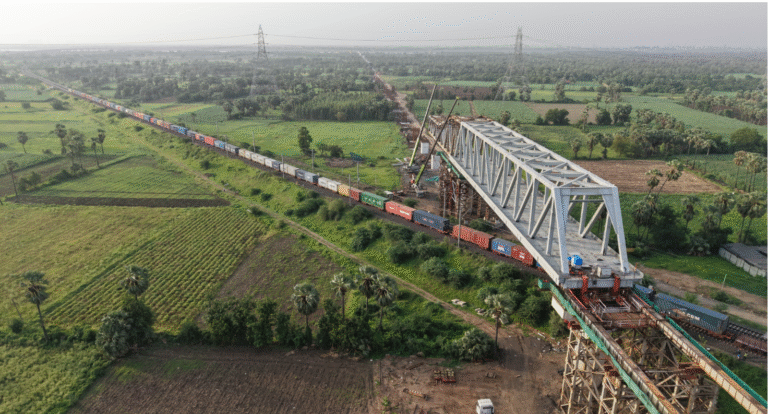
BHUBANESWAR (Metro Rail News): The East Coast Railway (ECoR) has announced that the second-longest railway viaduct, currently under construction between the Buguda and Banigochha stations as part of the Khurda Road-Balangir new line project, is projected to be completed by August 2026. This viaduct spans 4.77 km, with its tallest pier reaching a height of 26 metres.
This viaduct is part of efforts to improve rail connectivity across the interior regions of Odisha. The contract for this section of the project was awarded to Rahee Group, which is executing the work at a cost of ₹268.92 crore. The scope of work includes the construction of viaducts, major bridges, road overbridges (ROBs), and associated works over a 20 km stretch between KM 123 and KM 143 in the Buguda–Banigochha section.
In addition to the viaduct construction, Rahee Group is also responsible for the execution of ROB No. 229, a composite girder structure located at chainage KM 105.06 between the Nuagaon and Daspalla sections. The contract also covers the provision of construction vehicles, site facilities, and other allied support services required for the completion of the project.
The viaduct extends from Jamusahi to Gurah village in the Nayagarh district, falling under the Buguda and Banigochha stations. As of now, the railway authorities have completed 98 foundations, 62 bed blocks, and erected 41 span girders.
Shri Rajesh Kumar Das, deputy chief engineer of ECOR, mentioned, “Construction of this viaduct is currently underway and upon completion, it will become the second longest railway bridge in the country, surpassed only by Bogibeel bridge over the Brahmaputra river in Assam,” as reported by Times of India (TOI).
Shri Das also mentioned that the proposed alignment of the railway line is set to intersect with the forthcoming Brutang irrigation project in Nayagarh district, thereby introducing additional complications to the development process. “A significant length of the railway route was affected by the planned reservoir. After detailed consultations with Odisha’s water resources department, the alignment was revised to include a 4.77 km long viaduct to prevent interference with the reservoir’s structure.”
Additionally, another viaduct measuring 1,257.6 meters is under construction in the Boudh district as part of this new line project. Shri Das emphasised that the 75 km segment from Daspalla to Purunakatak will provide a picturesque journey for passengers, featuring this viaduct along with seven tunnels situated within the dense forests of Nayagarh and Boudh districts.
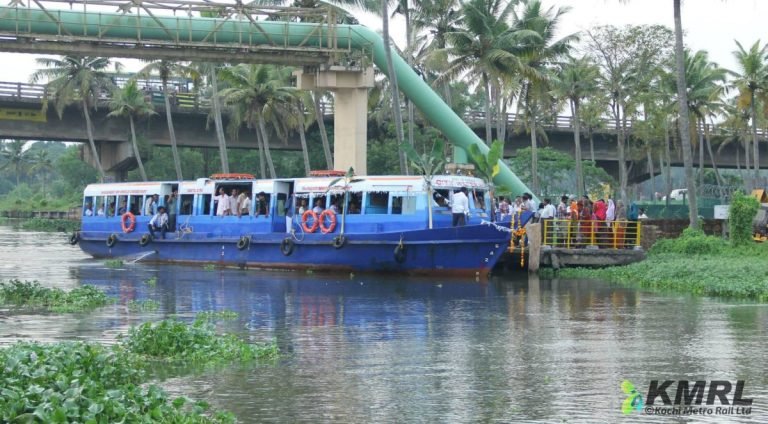
MUMBAI (Metro Rail News): Kochi Metro Rail Limited (KMRL) has submitted the feasibility study report for the proposed water metro project in Mumbai to the Government of Maharashtra on 16 June 2025.
KMRL’s consultancy division presented the report to the Maharashtra Ports Minister, Nitish Rane. The Minister directed the relevant departments to commence steps towards the implementation of the project, indicating that the government would soon initiate the preparation of the detailed project report (DPR).
The findings of the study were shared during a high-level meeting chaired by Minister Rane in Mumbai. The KMRL team was led by Chief General Manager Shaji P. Janardhanan, accompanied by other officials from KMRL.
According to the KMRL authorities, the proposed water metro project in Mumbai, modelled after the Kochi Water Metro, will cover the entire Mumbai Metropolitan Region (MMR), integrating various water bodies such as Vaitarna, Vasai, Manori, Thane, Panvel, and Karanja creeks, thereby effectively covering the entire MMR. KMRL mentioned that the report suggests a 250-km waterway network with 29 terminals and a fleet of 10 routes.
This project represents the first instance where Kochi Metro Rail Limited (KMRL) has secured a consultancy assignment through a competitive bidding process. The development reinforces KMRL’s position as an emerging national-level player in the sector. Likely, KMRL may soon be entrusted with preparing the Detailed Project Report (DPR) for the same project.
Currently, KMRL is undertaking feasibility studies for water metro systems in 21 other cities across 11 states and two Union territories in India, as mandated by the Union Ministry of Ports, Shipping, and Waterways (MoPSW).
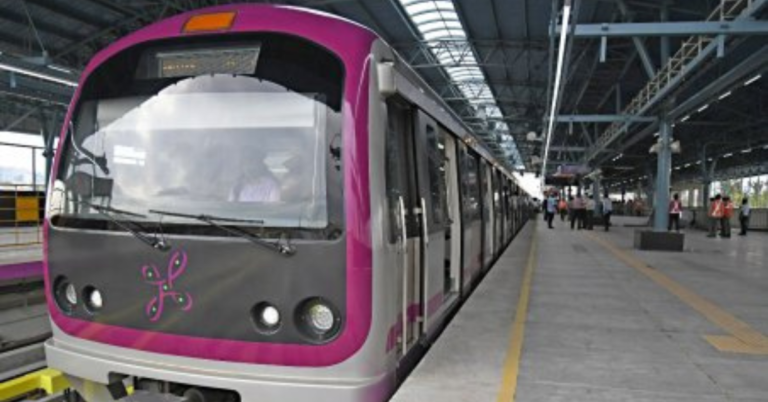
BANGALORE (Metro Rail News): The Bangalore Metro Phase 2 is advancing as the Bangalore Metro Rail Corporation Limited (BMRCL) has commenced third rail testing, a critical electrification trial that energises locomotives on the elevated segment of the Pink Line. This testing is currently underway on the Pink Line’s section between Jayadeva and Tavarekere metro stations.
The Pink Line of Bangalore Metro is an under-construction metro corridor spanning 21.386 km between Kalena Agaraha and Nagawara through 18 stations.
These tests signal the initial preparations required for commissioning the Kalena Agrahara – Nagawara stretch. The testing of the third rail is currently being carried out on the elevated section of the Pink Line. In line with safety protocols, BMRCL has released a public advisory urging people to stay away from the viaduct areas to prevent unauthorised access during the testing period.
A BMRCL official has indicated that once the third rail testing is completed, the next stage will include signal system validation, telecommunication trials, and loading tests.
These technical assessments are projected to take approximately four months. Once concluded, safety inspection reports will be submitted to the Commissioner of Railway Safety (CRS). The CRS will provide the final nod for commercial operations only after a thorough review of the reports.
These technical evaluations are anticipated to require approximately four months. Upon their completion, safety inspection reports will be submitted to the Commissioner of Railway Safety (CRS), who will grant final approval for commercial operations after a thorough review of the reports.
The Pink Line of Bangalore Metro is being launched in two phases.
In a move to strengthen India’s role in the export of rolling stock in the global market, Prime Minister Narendra Modi will flag off the indigenously built diesel locomotive for export to Guinea, a coastal country located in Africa, on 20 June.
This 4500 horsepower (HP) locomotive was manufactured in the Marhowrah Diesel Locomotive Factory, which is situated in the Saran district of Bihar.
The Marhowrah Diesel Locomotive Factory was established as a joint venture between Indian Railways and the American company General Electric (now Wabtec)
The locomotive plant bagged the contract for supplying a total of 150 locomotives at a cost of 411 million dollars (Rs 3,533 crore). The cost of one locomotive will be 2.74 million dollars or Rs 23.55 crore. The locomotive plant will roll out the locomotives in phases:
Number of Locomotives
Year of Roll Out
37
2025-26
82
2026-27
31
2027-28
These locomotives are designed to support freight transportation operations. Each unit is powered by a 4,500 HP engine and incorporates several modern features for improving performance and crew comfort. The locomotives meet advanced emission standards and are equipped with fire detection systems, insulated roofs, and windshield heating for defogging. The crew cabins are ergonomically designed and include air conditioning, a functional toilet, refrigerator, microwave, and a waterless toilet system.
The locomotives are designed with single cabins and will operate in pairs to haul freight loads. When deployed together, two locomotives can carry up to 100 wagons at the maximum permissible speed, with a total freight capacity of approximately 8,000 tonnes.
For improved control and coordination, the rake will be fitted with a Distributed Power Wireless Control System (DPWCS), which allows wireless management of locomotives positioned at both ends of the train.
This development signals the success of the Make in India and Make for World initiative. It also highlights India’s growing presence in the international railway market.
Additionally, PM Modi will also flag off a Vande Bharat train from Patliputra (Bihar) to Gorakhpur (Uttar Pradesh) on June 20.
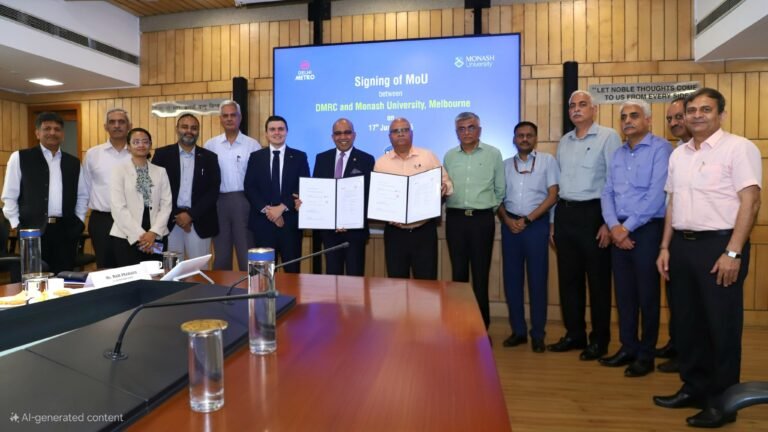
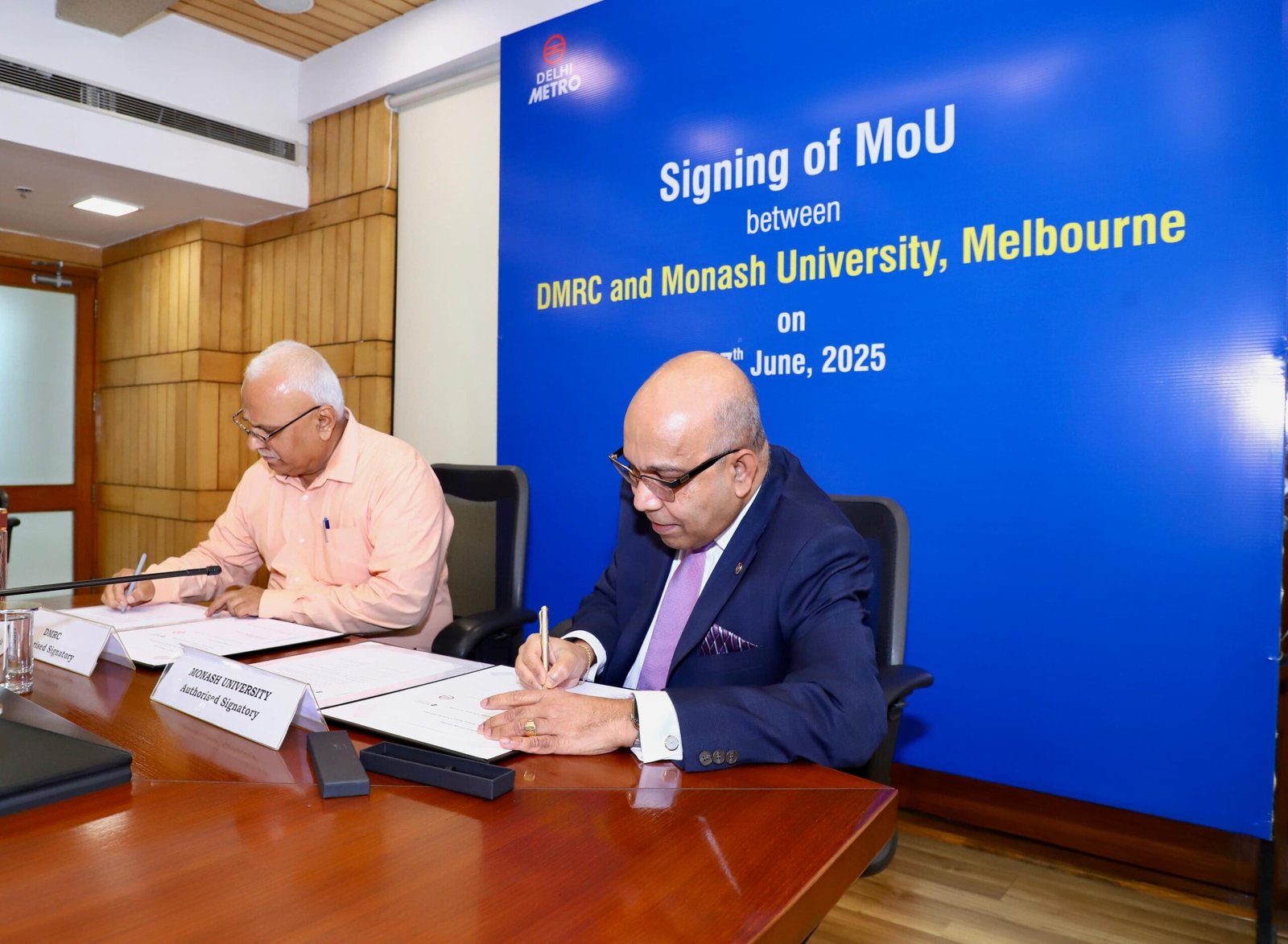
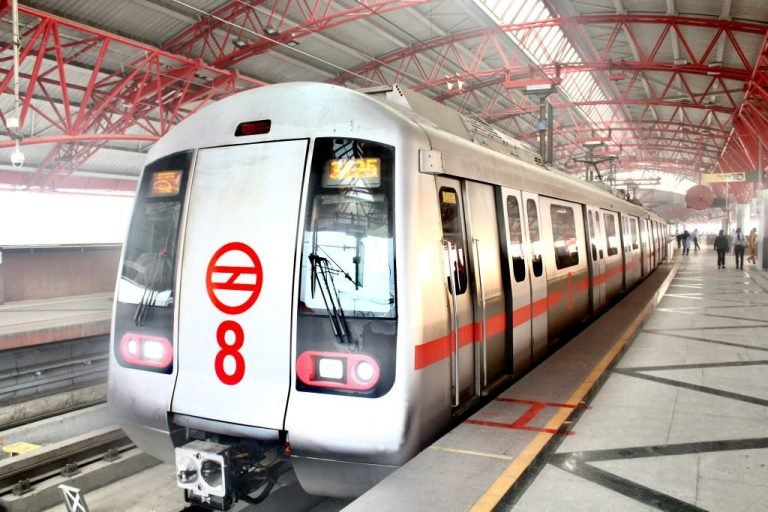
DELHI (Metro Rail News): TheDelhi Metro Rail Corporation (DMRC) which manages India’s largest metro system and Monash University (acting through its Institute of Railway Technology), Melbourne (Australia), have entered a strategic partnership by signing a Memorandum of Understanding (MoU) to carry out research activities in the domain of the metro rail sector.
The partnership focuses on joint research in areas such as advanced automation of rolling stock and improved methods for track maintenance. The aim is to explore practical solutions that enhance the efficiency, safety, and reliability of metro rail operations.
The MoU was formalised at Metro Bhawan, signed by the authorised representatives of DMRC and the Institute of Railway Technology (IRT) at Monash University, in the presence of senior officials from both organisations
As per the scope of this Memorandum of Understanding (MoU), exchange programs shall be facilitated periodically between Monash University and the Delhi Metro Rail Corporation Academy. The DMRC Academy will serve as the knowledge and training partner for all such collaborative activities.
As part of the partnership, DMRC will identify specific areas of study related to metro systems to be undertaken in coordination with the Institute of Railway Technology (IRT) at Monash University. These studies will be carried out under separate contractual agreements, to be defined on a case-by-case basis. In addition, both organisations will explore further opportunities for technical collaboration, research initiatives, and competency development of metro professionals.
This MoU signifies a step forward in DMRC’s collaboration with one of the world’s leading railway technology institutes, enhancing DMRC’s capabilities in critical operational and maintenance domains.
Moreover, this collaboration will open new avenues for future initiatives, facilitating the exchange of technology and expertise to enhance the safety and reliability of train operations, as well as improving the overall travel experience for passengers.
Monash University is a prominent Australian institution recognised for its strengths in research and innovation. The Institute of Railway Technology at Monash University is recognised globally as a leading research centre dedicated to railway technology and engineering.
The partnership is projected to generate new opportunities for prospective ventures, facilitating the transfer of technology and expertise essential for improving safety and reliability in train operations, while also enhancing passenger travel experiences.
According to DMRC, this collaboration will promote industry-driven research, resulting in practical applications and innovations in metro railway engineering, improved operational excellence, workforce competency development, and long-term sustainability.
The partnership is anticipated to accelerate the integration of modern practices and future-ready solutions throughout Indian metro systems.
Professor Craig Jeffrey, Deputy Vice-Chancellor (International) and Senior Vice-President at Monash University, mentioned, “Industry and government are critical partners and collaborators for Monash in advancing our shared education, research and global impact objectives.”
Professor Craig Jeffrey, said, “Monash will continue to build partnerships with top Indian corporations and key government organisations to enhance innovation.”
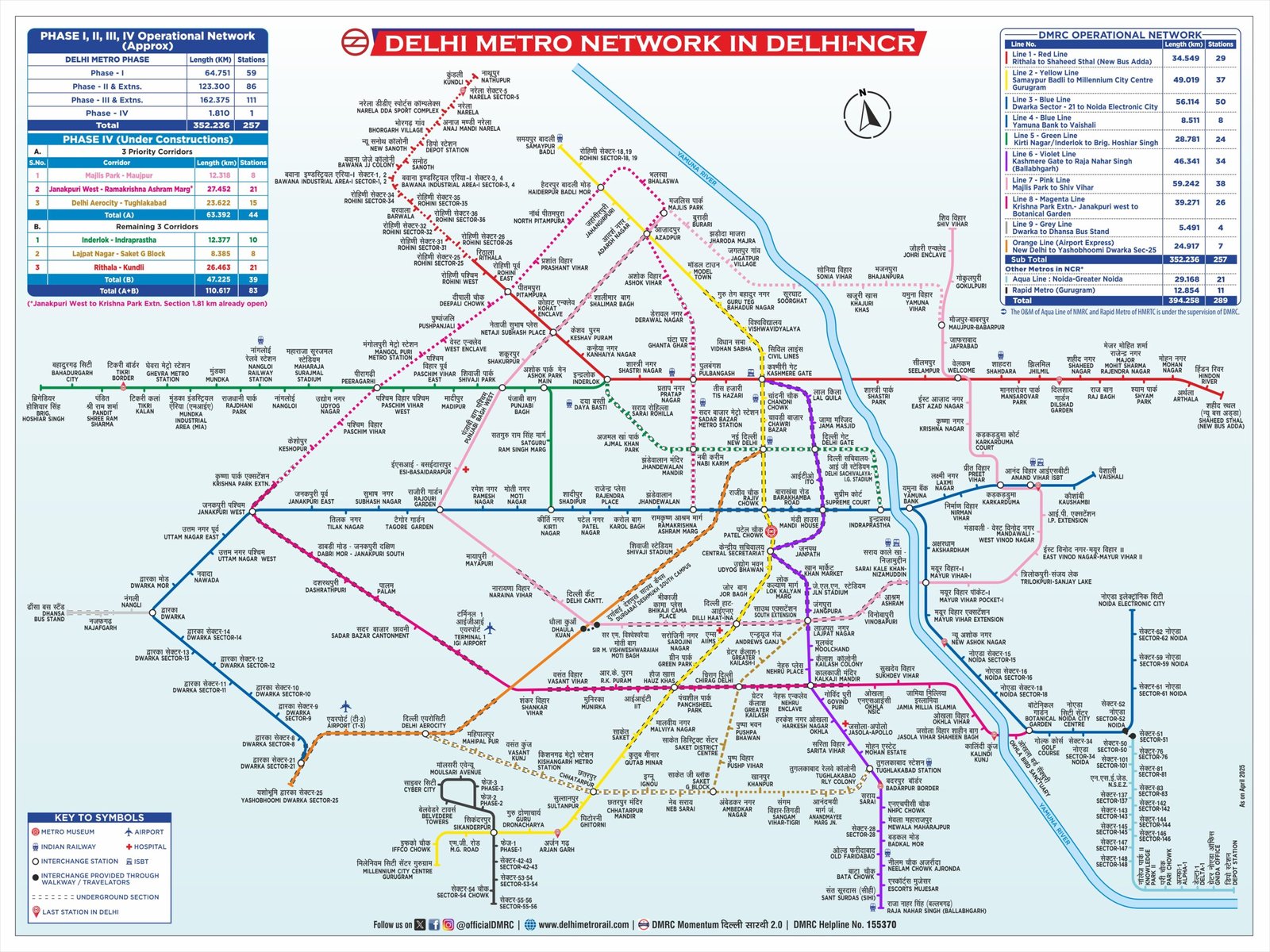
DELHI (Metro Rail News): The Delhi Metro Rail Corporation (DMRC) has issued a tender for the electrification contract D2E-12 of Delhi Metro Phase 4’s Line 10 and Line 5 extension. The Line 10 (Golden Line) spans 23.622 km from Aerocity to Tuglakabad through 15 stations, while the Line 5 extension spans 12.58 km between Inderlok and Indraprastha through 10 stations.
Tender Details
Opening Date
20 May 2025
Closing Date
30 Jun 2025
EMD
₹ 25,00,000
Tender Id
2025_DMRC_860755_1
Tender No
D2E-12
Approximate cost of work
INR 33.22 Crores
Contract Duration
36 Months
The contract’s scope of work includes the Design, Supply, Installation, Testing, and Commissioning of 25 kV Overhead Equipment (OHE) for Line 10’s section between Saket G Block and Sangam Vihar, and Line 5’s extension from Inderlok to Ashok Park Main Station.
Brief Scope of Work: Design, Supply, Installation, Testing and Commissioning of 25 kV Overhead Equipment (OHE) for Elevated Corridor of Line-10 (Saket G Block to Sangam Vihar) and Line-5 Ext. (inderlok And Ashok Park Main Station) Of Delhi Metro MRTS Phase-IV.
Recently, DMRC and Monash University, Melbourne, signed a Memorandum of Understanding (MoU) to collaborate and jointly undertake metro rail research activities. These research activities will focus on advanced automation of rolling stock & track maintenance.
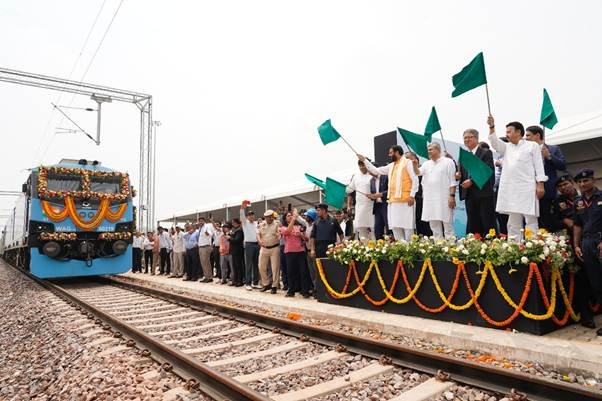
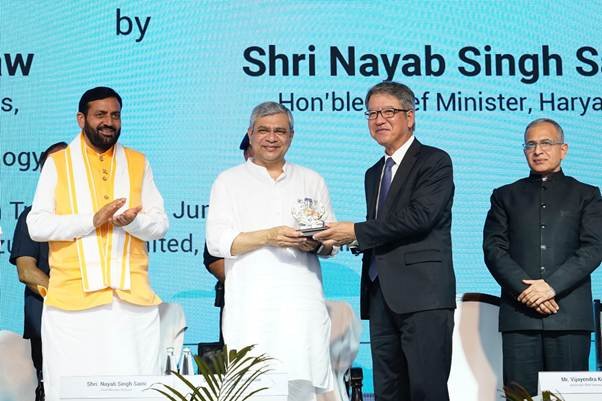
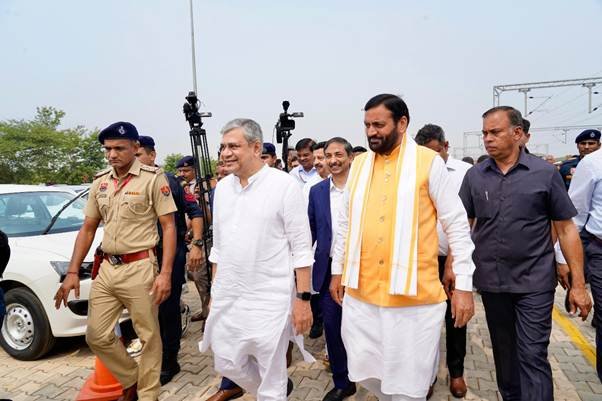
To streamline the logistics efficiency of automobile transportation, Union Minister for Railways, Shri Ashwini Vaishnaw, officially inaugurated the largest automobile Gati Shakti Multi-Modal Cargo Terminal in India, located at Manesar Facility of Maruti Suzuki India Limited.
This facility is linked to Patli Railway Station through a dedicated 10-km rail corridor, which is part of the 121.7-km Haryana Orbital Rail Corridor.
Shri Nayab Singh Saini, Chief Minister of Haryana; Shri Rao Narbir Singh, Minister of Industries, Government of Haryana; Shri Mukesh Sharma, MLA; and Mr. Hisashi Takeuchi, CEO & Managing Director, Maruti Suzuki India Limited, were present during the inauguration.
About Gati Shakti Cargo Terminal at Maruti Suzuki’s Manesar plant
The Gati Shakti Cargo Terminal at Maruti Suzuki’s Manesar plant represents a major enhancement in the infrastructure dedicated to improving the logistics efficiency of automobile transportation.
The loading capacity of the Gati Shakti Cargo Terminal is among the highest in India, capable of handling 450,000 automobiles annually.
Overview of Patli Railway Station
The Patli railway station is part of the 121.7-km Haryana Orbital Rail Corridor developed by the Haryana Rail Infrastructure Development Corporation (HRIDC).
The construction of the 10 km rail link required a total investment of ₹800 crore, HRIDC contributed ₹684 crore and the remaining funds were provided by Maruti Suzuki.
MUMBAI (Metro Rail News): The Mumbai Metro Rail Project has witnessed a major advancement as Mumbai Metropolitan Region Development Authority (MMRDA) has formally acquired 174.01 hectares of land at Mogarpada, Taluka, and District Thane for the establishment of a world-class, integrated Metro Car Depot.
The Mogarpada Metro Depot will serve as the central operations and maintenance facility for Metro Lines 4, 4A, 10, and 11, which collectively encompass a network of 55.99 km extending from Chhatrapati Shivaji Maharaj Terminus (CSMT) in Mumbai to Mira Road.
About the Mogarpada Metro Depot
The Mogarpada Metro Depot is designed to support the efficient operation and maintenance of metro trains. Strategically developed to meet the daily operational demands of the Mumbai Metro network, the depot is equipped with advanced systems and infrastructure to ensure safety, reliability, and seamless service delivery.
Key features of the Mogarpada Depot include:
Workshop Lines (10): Dedicated for heavy maintenance activities, enabling thorough overhauls and repairs of rolling stock components.
Inspection Lines (10): Designed for routine inspections and daily checks to maintain operational readiness and ensure passenger safety.
Stabling Lines (64): Capable of housing up to 64 metro trains.
Underfloor Wheel Lathe: Used for wheel profiling and reconditioning of rolling stock.
Automatic and Heavy Wash Systems: Ensure regular exterior cleaning of trains.
Blow-Down Plant: Facilitates de-dusting and cleaning of underframe and roof-mounted equipment, crucial for optimal performance.
CMV Workshop: Provides dedicated space for stabling and maintenance of Catenary Maintenance Vehicles (CMVs), essential for overhead electrification upkeep.
Depot Control Centre (DCC): Serves as the command hub for depot operations, monitoring train movements, and coordinating maintenance schedules.
HBL Engineering Limited has secured 2 contracts from South Central Railway for the indigenously developed Kavach Safety System. The total value of both contracts stands at ₹163.62 crore. Following this development, the shares of HBL Engineering Limited surged 5% to Rs 619 on the BSE in Monday’s trade.
Contract 1: Installing the Kavach System on the Vijayawada–Ballarshah section
HBL Engineering received an order of about ₹132.95 crore, which has a provision for deploying the Kavach System across the Vijayawada–Ballarshah section. This contract will cover about a 446km route, 48 stations and 10 locomotives. HBL Engineering is responsible for completing this work within a timeframe of 18 months.
Contract 2: Upgradation of Kavach System
In addition to the previously awarded contract, HBL Engineering has received a ₹30.67 crore contract from South Central Railway. Under this contract, HBL Engineering will carry out the upgradation of the Kavach system from Version 3.2 to Version 4.0. This work will take place on the Mudkhed (including)–Manmad (excluding) section covering a 350km route. As per the contract requirement, HBL Engineering will have to complete this work within 24 months (2 years).
As a result of these new contracts, HBL’s total order book has grown to ₹4,029.05 crore, up from ₹3,998.38 crore.
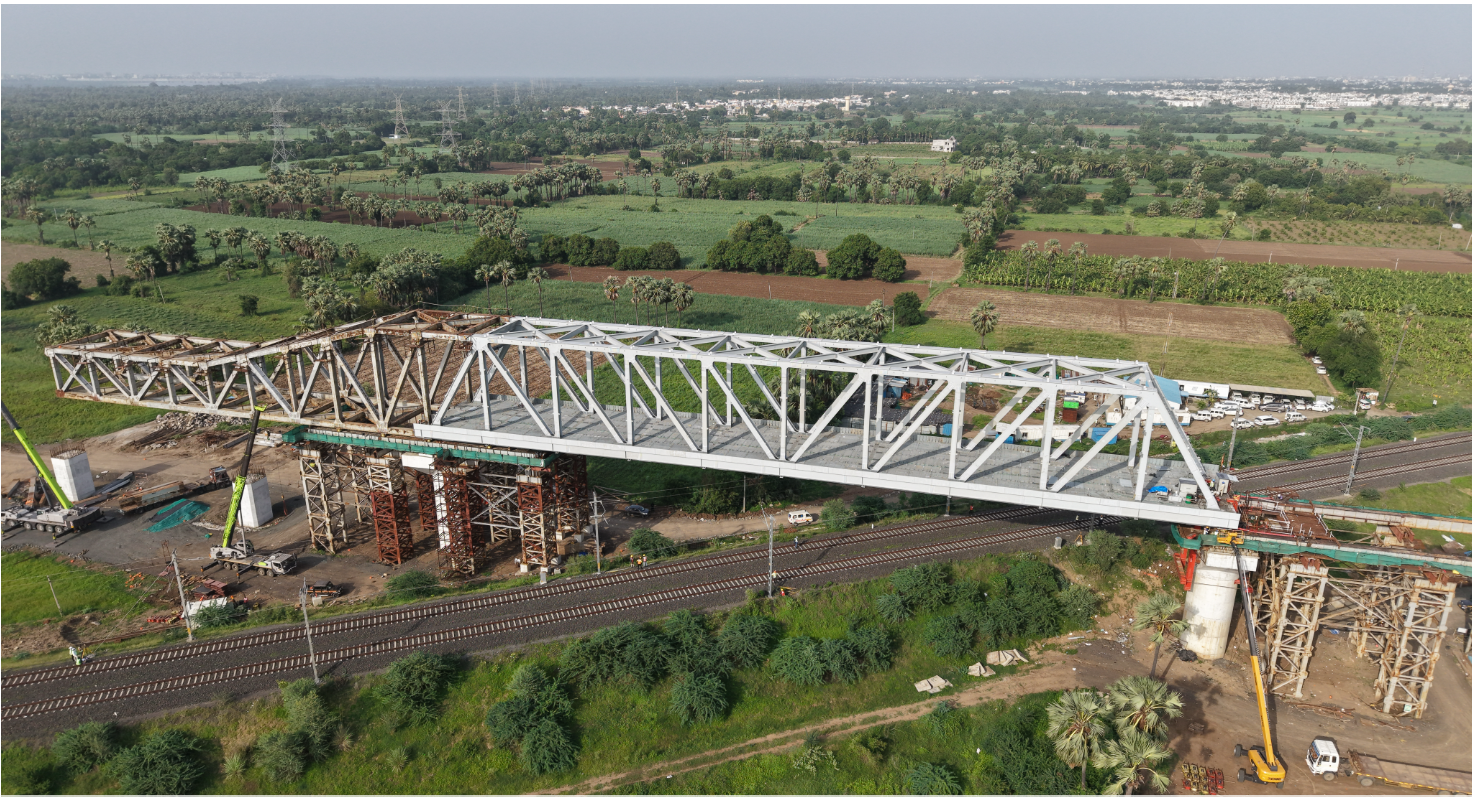
India’s first bullet train project (Mumbai-Ahmedabad High Speed Rail Corridor) has reached another milestone with the completion of the 8th steel bridge over DFCC tracks near Bharuch, Gujarat.
About Steel Bridge
This development marks the successful installation of the 8th steel bridge for the Mumbai-Ahmedabad High Speed Rail (MAHSR) project. Out of the total 28 steel bridges planned along the entire corridor, 17 are located in Gujarat. The MAHSR corridor spans approximately 506 kilometres and will feature 12 stations, significantly enhancing high-speed connectivity between Mumbai and Ahmedabad.
Fabrication Process
This bridge was fabricated in the workshop of Trichy. Subsequently, it was brought to the location with the help of trailers. The bridge fabrication involved the use of approximately 55,300 Tor-Shear Type High Strength (TTHS) bolts for structural integrity. A C5 anti-corrosion painting system was applied to enhance durability in harsh environmental conditions. Additionally, elastomeric bearings were specially designed to support a lifespan of 100 years.
Characteristics of the Bridge
Length
100 meter
Height
14.6 meter
Width
14.3 meter
Weight
1400 metric tons
Launching Process
The engineering team utilised an 84-meter-long launching nose to execute the launching of the bridge. The weight of the launching nose was about 600 metric tons. The entire bridge structure was meticulously assembled at the project site at an elevation of 18 meters above ground level, supported on temporary trestles. For the launching process, a precision-controlled mechanism was deployed using two semi-automatic jacks. Each jack had a capacity of 250 tonnes. These jacks operated in coordination with Mac-Alloy bars to pull the superstructure into its final position.
Details of completed steel bridges in Gujarat for the Bullet Train Project
Sr. No.
Location
Length of the steel bridge (in meters)
Weight of the steel bridge (in MT)
1
Across National Highway 53, Surat
70
673
2
Over Vadodara-Ahmedabad main line of Indian Railways, near Nadiad
100
1486
3
Over Delhi-Mumbai National Expressway, near Vadodara
230 (130+100)
4397
4
Near Silvassa in Dadra & Nagar Haveli
100
1464
5
Over Western Railways, Vadodara
60
645
6
Over two DFCC Tracks and two Western Railways tracks, Surat
NEW DELHI (METRO RAIL NEWS): Following the 60% completion of Delhi Metro Phase 4, Delhi Metro Rail Corporation has initiated tendering for Phase 5 in order to expand the metro network in the NCR Region. Recently, DMRC invited bids for the construction of YugeYugeen Bharat underground metro station, which will come up on the 9.9km Indraprastha – RK Ashram Marg corridor under Delhi Metro Phase 5A.
DMRC’s Scope of Work: Design and Construction of YugeYugeen Bharat underground station along with PD Area Ancillary Building, associated Entry Exits and Connecting subways under Phase V A of Delhi MRTS.
Tender Details
Estimated cost of work: ₹206.33 crore
Tender Reference Number: EC-01
Tender Id: 2025_DMRC_864634_1
Pre-Bid Meeting: 20 June 2025 Bid Submission Start Date: 30 June 2025 Bid Submission End Date: 7 July 2025 Bid Opening Date: 8 July 2025
Significance of Indraprastha – RK Ashram Metro Corridor.
The corridor will come up as an extension of the 12.3 kilometre-long Inderlok-Indraprastha corridor (Green Line), which is being developed under phase 4 of Delhi Metro.
The corridor will extend metro connectivity to important sites, including 10 big central government office buildings along the Kartavya Path, the proposed Yuge Yugeen Bharat Museum, Bharat Mandapam, India Gate, among others.
Stations Planned Along the New Corridor
This new metro line is likely to feature 9 strategically planned underground stations:
Indraprastha
Bharat Mandapam,
Baroda House,
India Gate (adjacent to C-Hexagon),
New Common Central Secretariat (CCS)
Central Secretariat,
Yuge Yugeen Bharat Museum
Shivaji Stadium
R K Ashram Marg.
Delhi Metro Phase 5
As per the proposal submitted by DMRC to the Ministry of Housing and Urban Affairs, Phase 5 will cover a total distance of 206.5 km. Phase 5 will be implemented in 2 phases: Phase 5A and Phase 5B. Phase 5A will have 3 corridors, and Phase 5B will feature 15 corridors.
Corridors Planned Under Phase 5A
Indraprastha – RK Ashram Marg (9.9km)
Aerocity- Terminal 1 of IGI Airport (2.3 km)
Tughlakabad – Kalindi Kunj (4km)
The Detailed Project Report (DPR) for all three corridors has been submitted to the Government of Delhi. Additionally, the National Planning Group (NPG) has recently assessed the plan, which amounts to Rs 11,150 crore, for these corridors. Furthermore, the proposal pertaining to this corridor is slated to be presented to the central government for approval.
KOCHI (Metro Rail News): Kochi Metro Rail Ltd (KMRL) is gearing up to lease land that is presently utilised as a parking facility for the Metro, for a commercial establishment near the Kaloor Metro Station in Kochi. This initiative aims to capitalise on the prime location of the land.
Tender issued by KMRL for leasing out the land
KMRL has issued a tender for the commercial lease of 45 cents of land adjacent to the metro station. The tender notice indicates that KMRL seeks to engage with investors or developers capable of developing this land parcel.
In discussing the strategic advantages of the location, the tender document suggests that the developer may explore options to establish a connection to the nearest metro station through suitable technical solutions, thereby facilitating direct access for metro commuters to the proposed complex.
Motive Behind leasing out the land
This move to lease out the land follows previous efforts by Kochi Metro to initiate commercial activities on its property, but the effort to find land developers failed. KMRL managing director Loknath Behera mentioned that the move to lease out the land aligned with KMRL’s policy to increase revenue beyond ticket fares.
Official Statement from Kochi Metro, MD
“We have already started the process to lease land parcels at many locations in the city. It is expected that the new policy will financially help the company implement various development projects,” he said.
About the Kochi Metro Rail Project
Kochi Metro Rail Project is an urban Mass Rapid Transit System (MRTS) serving the city of Kochi. The Kochi Metro comprises 2 Phases, consisting of 1 metro corridor each. Currently, Phase 1 of the Kochi Metro while Phase 2 is under construction.
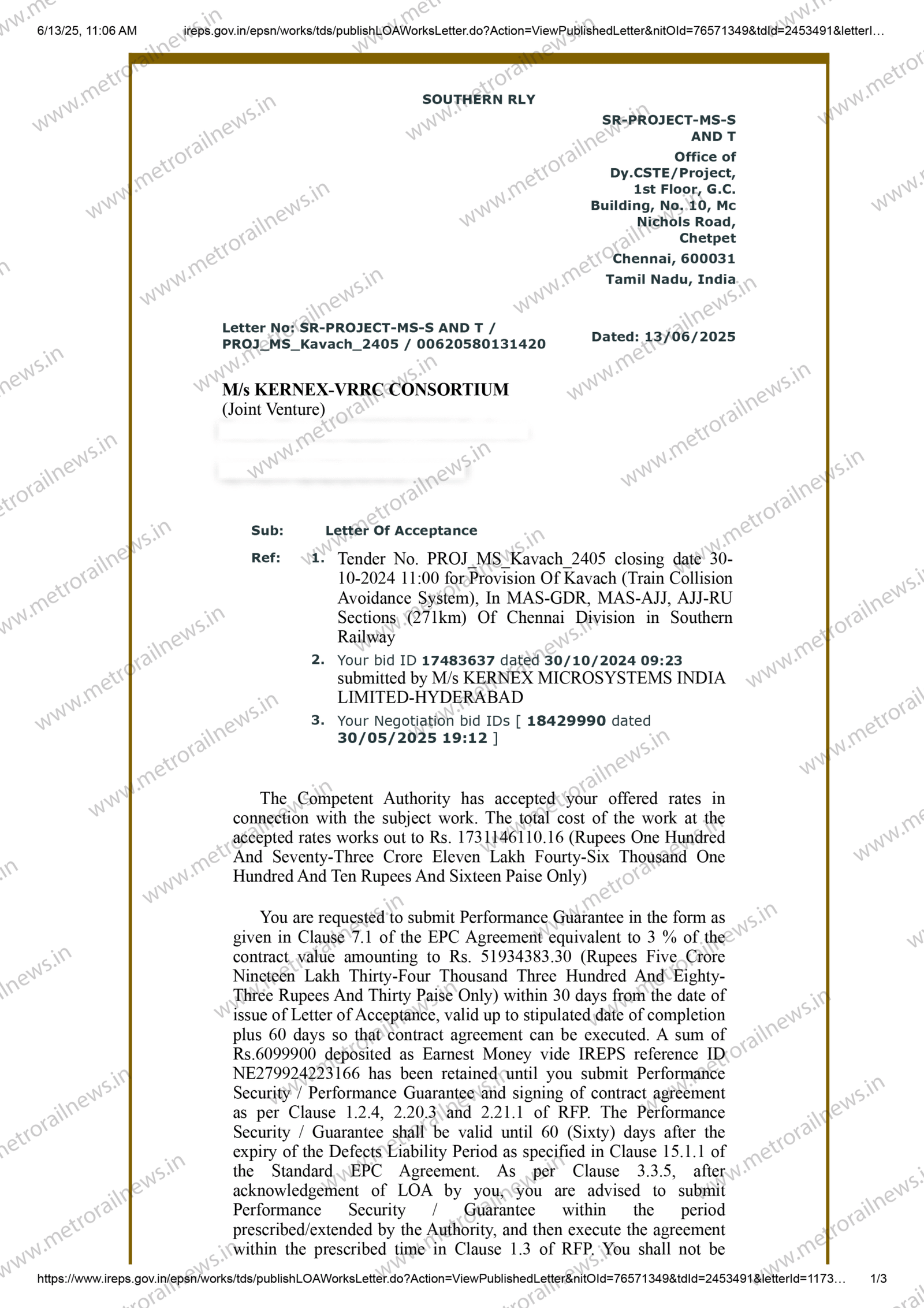
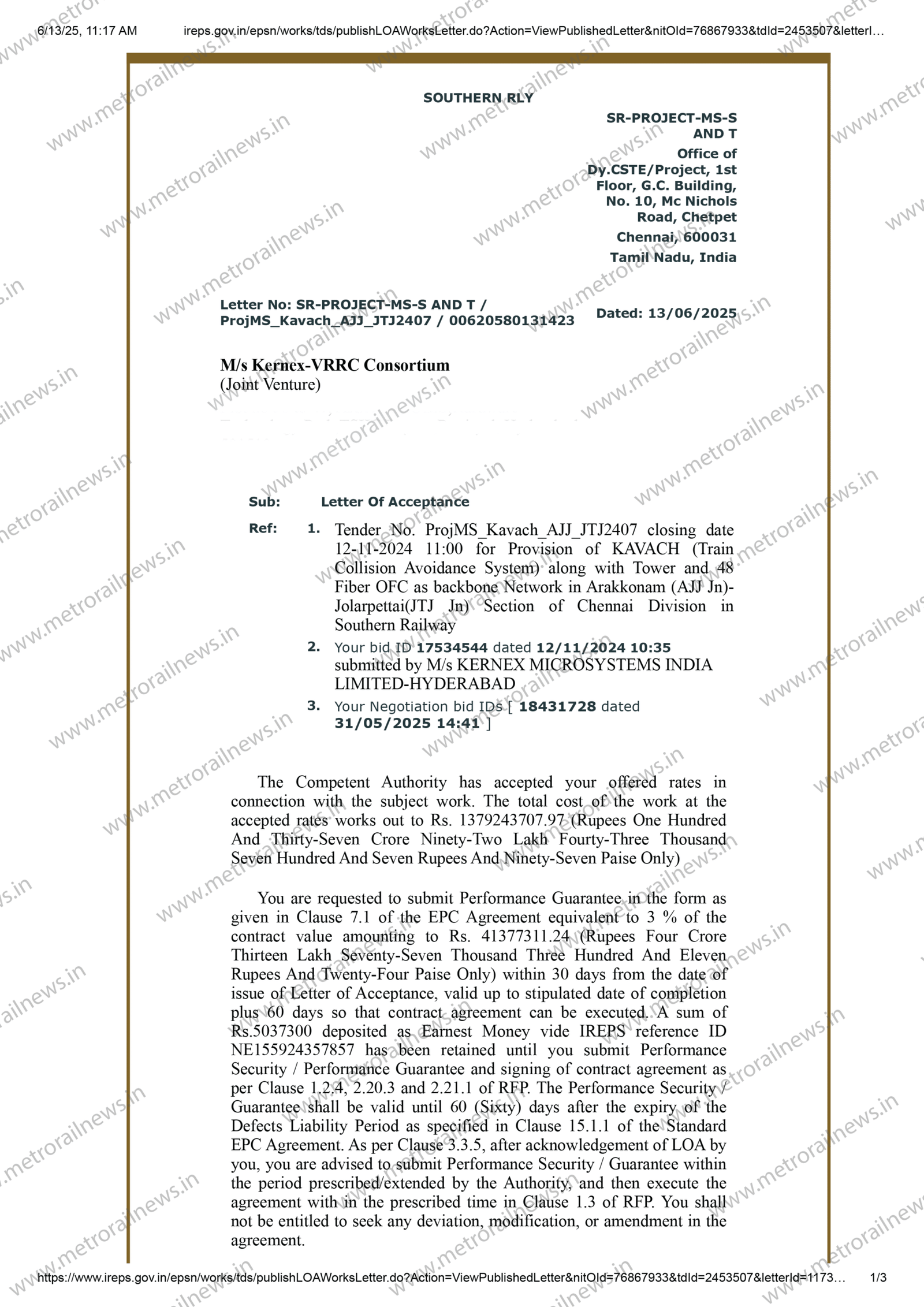
The KERNEX-VRRC Consortium has received a Letter of Acceptance (LoA) for two major Kavach contracts from Southern Railways. The contract includes the provision and installation of the Kavach (Train Collision Avoidance System) at the Chennai division.
The total combined value of the Kavach Contracts is Rs 311.03 crore. Kernex holds a 60% share in the joint venture.
Contract 1 Details
Contract Value: Rs 173.11 crore
Contract Duration: 730 days
Length: 271 Kilometers
The contract includes the deployment of the Kavach system across the MAS-Gudur, MAS-Arakkonam, and Arakkonam, Renigunta sections within the Chennai Division.
Contract 2 Details
Contract Value: Rs 137.92 crore
Contract Duration: 540 days
The awarded contractor will be responsible for implementing Kavach, along with the construction of tower infrastructure and laying 48 optical fibre cables as the backbone network between Arakkonam and Jolarpettai within the Chennai Division.
Implementation Of Kavach System Across India
SN
Items
Progress
i
Laying of Optical Fibre Cable
5743 Km
ii
Installation of Telecom Towers
540 Nos.
iii
Provision of Kavach at Stations
664 Nos.
iv
Provision of Kavach in Loco
795 Locos
v
Installation of trackside equipment
3727 Rkm
Kavach Implementation Future Plan
The estimated cost for installing Kavach equipment along the trackside, including at station locations, stands at approximately ₹50 lakh per route kilometre. Additionally, the cost of installing Kavach systems on locomotives is about ₹80 lakh per locomotive.
So far, a total expenditure of ₹1,950 crore has been incurred on Kavach-related works.
Next Phase
Under the next phase of implementation, Indian Railways has finalized a project to equip 10,000 locomotives with Kavach. To facilitate this, 69 locomotive sheds have been upgraded and prepared to carry out the installations.
Furthermore, tenders have been invited for the provision of trackside Kavach systems covering approximately 15,000 route kilometres (RKm), focusing on the Golden Quadrilateral (GQ), Golden Diagonal (GD), High-Density Network (HDN), and other strategically identified sections of the Indian Railways network. Out of this, contracts covering 1,865 RKm have already been awarded and are in various stages of execution.