Initiatives to improvise the functioning of Metro & Indian Railways

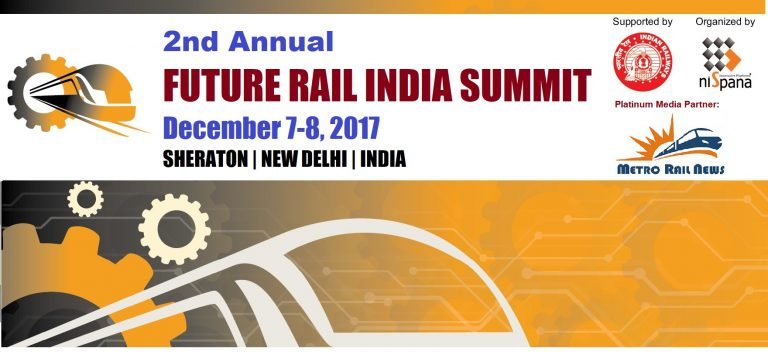
The Second Annual Future Rail India Summit was conceptualized by Nispana Innovative Platforms, committed with the objective of bringing together the National Rail Plan of Metro & Indian Railways, in order to supplement its future development.

The First Annual Future Rail India Conference in Feb 2017 constituted excellent speakers from premier railway organizations across several counties, who offered presentations and contributed to the creation of a new level of quality in the Indian Railways sector.

In summary, we can state that this thought provoking event achieved its objective and created a veritable forum for an exchange of views between different professional fields of railway sector, for the discussion of practical issues and for presenting novel innovative solutions, tools and methods.

The recent safety concerns have shaken the image of the railway sector safety. So Indian Railways is search of innovative measures to ensure the safety of passengers and cargo alike.

With the Second Annual Future Rail India Summit, we have tried our level best to up the quality of how a conference on railways needs to be addressed.

The key areas to be addressed include:

  • Safety of Indian Railways
  • Station redevelopment
  • Infrastructure up gradation
  • Involvement of IT in Railways.
  • Customer Satisfaction Index
  • Innovative financing Structure of Indian Railways and a lot more

The conference will indeed bring up a lot of business opportunities which would help the Indian Railways to overcome the hurdles in operation, with an eye to competition, innovation and provide for the implementation of various structural and technical reforms.

We whole heartedly invite you to be a part of the Second Annual Future Rail India Summit, to showcase state of the art solution technologies and to fraternize with the key decision makers in Indian Railways to bring back the image of Indian Railways as a safe, reliable and a robust organization.

Click here to know more details about detailed agenda, entree fee, sponsorship, and other opportunities.

Indian Port Rail Corporation looking for various upper and middle level positions

Indian Port Rail Corporation Ltd. (IPRCL), a joint venture of Govt. of India and Rail Vikas Nigam Ltd. (RVNL) invites applications for recruitment of following positions:-

  • AGM/JGM/DGM (Project) – 06 posts
  • AGM/JGM/DGM (S&T) – 01 post
  • Manager/Asstt. Manager (HR) – 01 post

Click here to see detailed advertisements Advt.70/2017, Advt.71/2017, Advt.72/2017

Delhi Metro | DMRC’s Kalkaji-Botanical Garden Magenta Line ready for commissioning

New Delhi: The trials and testing on the 12.64 kilometre long Kalkaji Mandir – Botanical Garden section of Phase 3 has been successfully completed and most of the mandatory clearances required for inviting the Commissioner for Metro Rail Safety (CMRS) to inspect including Fire Safety Clearance, License for Working Lifts, Preliminary Independent Safety Assessment (ISA) Reports for Signalling and Platform Screen Doors, clearances from the Department of Telecommunications etc have been received by DMRC.

The papers for scrutiny and detailed examination by CMRS are under submission to his office and after these are cross checked, examined and scrutinised in depth by the office of CMRS, further action is expected. In addition, since the application involves voluminous data of civil, electrical, signalling and track, DMRC may also have to supply any additional information further sought by the office of CMRS. After this entire process, it is expected that a suitable date for inspection of the section will be indicated.

This section will also be Delhi Metro’s first ever corridor to be operated using the Communication Based Train Control (CBTC) signalling technology which will facilitate movement of trains with a frequency of 90 to 100 seconds.

With the opening of this section, the people of NOIDA will get additional connectivity to south Delhi. Currently for travelling to south Delhi areas, they have to change trains at Mandi House (from Blue Line to Violet Line).

However, with this new section, they will be able to travel directly to Kalkaji Mandir and save on valuable travelling time. Botanical Garden has been developed as NCR’s first ever interchange station.

Once the entire corridor from Botanical Garden till Janakpuri West (38.23 kms) is opened, commuters from NOIDA will be able to go to Gurugram by changing trains at Hauz Khas. This will help immensely in decongesting Rajiv Chowk, which is currently the interchange point for travellers between NOIDA and Gurugram.

The Botanical Garden – Kalkaji Mandir section has nine stations, viz., Kalkaji Mandir, Okhla NSIC, Sukhdev Vihar, Jamia Milia Islamia, Jasola Vihar Shaheen Bagh, Kalindi Kunj, Okhla Bird Sanctuary and Botanical Garden. While Kalkaji Mandir is underground, all other stations are elevated. The section will also cater to two major educational institutions – Jamia Milia Islamia University and Amity University, NOIDA and a major super speciality hospital – Fortis Escorts Heart Institute.

On this section, Delhi Metro’s third bridge over the river Yamuna has come up at Kalindi Kunj between the Kalindi Kunj and Okhla Bird Sanctuary stations. It is a 574 metre long bridge with 14 spans (41 metres each) and 15 piers. It has come up about 85 metres downstream of the existing Okhla bridge over the river Yamuna.

Alstom begins production of electric locomotive manufacturing in India

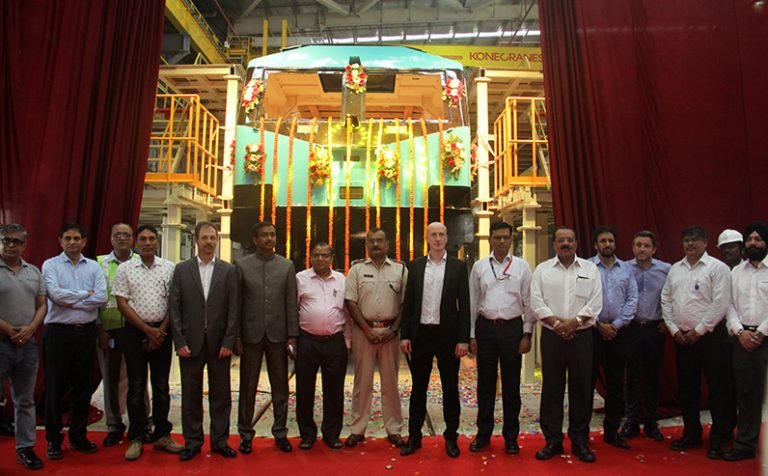
Madhepura: ALSTOM today successfully commenced production at its greenfield electric locomotive manufacturing facility in India. Located at Madhepura, in the state of Bihar, it is Alstom’s first electric locomotive manufacturing facility in the country, set to transform the heavy freight transport landscape in the country.

Commencing production on schedule, the construction of the plant is a remarkable achievement in the construction of greenfield facilities in the country.

The Prima T8 (WAG12) locomotive, which will be produced in this new factory, is part of Alstom’s Prima range of locomotives and has been specially adapted for Indian network. The first two car body shells have already arrived at Madhepura and will be soon fitted and assembled at the plant. The first locomotive will be ready for roll-out early next year. The first 5 locomotives by 2019 followed by 35 locomotives by 2020, 60 in 2021, and by 100 every year till the target of 800 is completed.

A true embodiment of government’s ‘Make in India’ vision and built to the highest standards of quality and safety, this facility is part of a joint venture between Alstom (74%) and Indian Railways (26%). Spread across 250 acres, it currently employs 70 people, with plans to ramp it up at a rate of 25% every year till it reaches full capacity. The facility also aims to employ local youth, basis the required skill sets, to support socio-economic development of Madhepura.

Commenting on this feat, Jean-Francois Beaudoin, Senior Vice President Asia Pacific at Alstom said, “The E-loco project is one of the most prestigious projects for Alstom worldwide and this feat, therefore, is a commendable achievement for the entire company. The facility is a multimillion euro investment by Alstom and is a proof of our commitment to infrastructure development in India. In order to make a difference in this market, we need local expertise, competitive manufacturing capacity and close relationships with our customers. The commencement of production at the plant is a perfect testimony to our strategy to develop and grow a localized ecosystem to bring wide reaching benefits for railways and the community at large.”

Headquartered in Bangalore, Alstom’s current manufacturing footprint in India includes its metro rolling stock manufacturing facility at Sricity, component manufacturing facility at Coimbatore with the latest addition being e-loco manufacturing facility at Madhepura. For the e-loco project, the company is also setting-up two maintenance depots at Saharanpur (Uttar Pradesh state) and Nagpur (Maharashtra state).  In addition, it also has a rolling stock and signaling design and engineering centre in Bangalore. This extensive footprint is enabling Alstom to expand its portfolio and deliver bespoke products and solutions to meet the growing needs of customers in India and other global markets.

Lucknow Metro | Sreedharan suggests LMRC to cut down on operational cost

Lucknow: Lucknow Metro Rail Corporation‘s (LMRC) principal advisor E Sreedharanon Tuesday advised the Metro officials to implement austerity measures to control the expenses on maintenance and operations as the project is yet to start making profit.

Dr. E. Sreedharan, Principal Advisor, LMRC, visited Lucknow Metro and reviewed the progress of the project for the entire 23 km long North –South Corridor (Phase 1A) from Chaudhary Charan Singh Airport to Munshipulia. Shri Kumar Keshav, Managing Director and other Directors accompanied him throughout his visit and briefed him about the progress of this prestigious Metro project.

During his visit, Sreedharan also reviewed the progress of 23km-long North – South Corridor (Phase 1A) from Chaudhary Charan Singh Airport to Munshipulia.
IMG 6116
Kumar Keshav, the managing director of the LMRC and other officials accompanied Sreedharan during the inspection and briefed him about the progress of the Lucknow Metro project.

Sreedharan first visited the Transport Nagar Metro station where Kumar Keshav briefed him the operational and passenger facilities provided by the LMRC.

The ‘Metroman’ also visited the concourse and platform of the station to inspect the state-of-the-art facilities.

Sreedharan later took a ride in a Metro train from Transport Nagar to Charbagh and expressed satisfaction on the cleanliness maintained at the station and train coaches.

 “He praised Kumar Keshav and his team for maintaining top-class standards at the station and inside the train”, said an official.

Sreedharan also visited LMRC’s administrative office where officials apprised him about the progress of the underground Metro work on the Hussainganj-Sachivalaya-Hazratganj section and the elevated section beyond KD Singh Babu to Munshipulia.

Sreedharan also discussed the progress of other proposed projects in Varanasi, Kanpur and Gorakhpur.

MEGA Metro looking for various managerial positions for metro rail projects

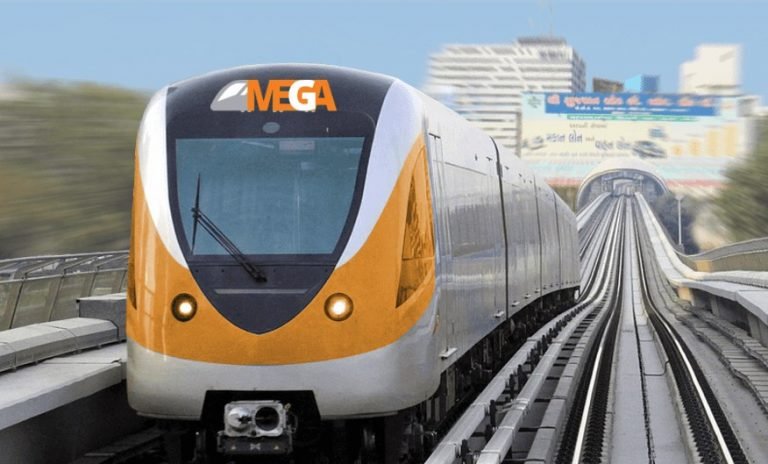
Metro Link Express for Gandhinagar and Ahmedabad Co. Limited (MEGA) invites applications from qualified and experienced candidates for appointment of
following middle level management positions on contract basis:-

  1. Manager (Civil) – 02 posts
  2. Asstt. Manager (Civil) – 02 posts
  3. Asstt. Manager (AFC) – 01 post
  4. Asstt. Manager (HR) – 01 post
  5. Asstt. Manager (RR) – 01 post

How to apply:-

  • Applicants should download application format from the link given below, fill up the same and send the application through email only at career2017@gujaratmetrorail.com along with the scanned copies of latest CV, payslips & testimonials on or before 23.10.2017.
  • Call letters for interview will be issued to shortlisted applicants indicating Time, Date and Venue of the Interview.

Click here to download APPLICATION FORM
Click here to read full Recruitment Advertisement 

For more metro rail jobs, please subscribe our Metro Rail News Monthly Magazine online.

Delhi Metro | DMRC rejects Kejriwal’s request, fare hike to be effective from tomorrow

New Delhi: The Delhi Metro Rail Corporation (DMRC) on Monday refused to defer metro fare hike despite Delhi chief minister Kejriwal’s opposition to it. The board members discussed Kejriwal’s proposal but decided to go ahead with recommendations of Fare Fixation Committee (FCC), to be made effective from October 10.

Nominee directors of the Delhi government conveyed that the CM wanted the postponement of the fare hike and formation of a new FFC. The Board was informed that under Section 37 of the Metro Railways (Operation and Maintenance) Act, 2002, recommendations of the FFC are binding on metro rail authorities.

Subsequently, the Board noted that it does not have the authority to consider/defer implementation of the recommendations of the FFC.

Kejriwal had written to the Housing and Urban Affairs (HUA) Ministry to issue a direction to Delhi Metro Rail Corporation (DMRC) to put on hold the proposed hike in fares, as recommended by 4th Fare Fixation Committee (FCC).

Puri and Kejriwal

The Centre has informed the Delhi government that the Metro Act does not allow it to put on hold the hike in Delhi Metro fares which will be effective from October 10, an official had said on Saturday.

The Centre, however, said a fresh committee to fix fares could be considered if the Delhi government agrees to provide over Rs 3,000 crore every year to DMRC, said the source, quoting a letter sent on Friday by union minister Hardeep Singh Puri to chief minister Arvind Kejriwal.

Union Minister Hardeep Singh Puri, in response to Kejriwal’s letter, said, “Your suggestion that this ministry direct that the fare increase be kept on hold overlooks the fact the central government does not have any such authority. Tampering with the recommendations of FFC is legally untenable.”

Fares will go up by a maximum of Rs 10 after the latest hike comes into effect.

The existing fare structure is: up to 2 kms – Rs 10, 2-5 kms – Rs 15, 5-12 kms – Rs 20, 12-21 kms – Rs 30, 21-32 kms – Rs 40 and for journeys beyond 32 kms – Rs 50.

From October 10, for a distance of up to two kilometres, the fare will remain Rs 10, but for a distance between two and five kilometres, it will go up from Rs 15 to Rs 20. For the subsequent slabs, it will go up by Rs 10 each, which means the maximum fare will be Rs 60.

Earlier in the day, the Delhi Assembly passed a resolution against the Metro fare hike which is set to be enforced from Tuesday. Deputy Chief Minister Manish Sisodia alleged that a hike in Metro fares will benefit cab aggregators such as Ola and Uber.

Arvind Kejriwal-led Aam Aadmi Party has been protesting against the proposed Metro fare hike. The DMRC, on the other hand, has defended its decision and said that its input costs have gone up over the years and the fare hike is at par with Metro rails in other cities.

Last week, the Centre informed Delhi Chief Minister Arvind Kejriwal that it cannot put on hold the proposed hike unless his government provides Rs 3,000 crore annually to DMRC as grant-in-aid for the next five years. Union Minister of State for Housing and Urban Affairs Hardeep Singh Puri told Kejriwal that the Metro Act does not allow the Centre to put on hold the fare hike.

In response, Arvind Kejriwal said that the Delhi government was ready to pay Rs 1,500 crore a year, if the Centre was ready to fund the other half as the “Central government and the Delhi government are 50-50 owners of DMRC”.

“As for your suggestion regarding a grant to DMRC for meeting the gap in their operating finances, my government is willing to bear half the grant if only a matching grant is provided by the Central government,” the Delhi chief minister wrote to Union minister Hardeep Singh Puri.

In the Delhi Assembly today, transport minister Kailash Gahlot said that Delhi Metro was not made to be a world-class profitable venture but it’ll be world class when people leave their vehicles and use it. Other members of the ruling AAP said that they will protest if Metro fares are hiked.

IC-TRAM 2017 | Technology along with managerial excellence can chart a new trajectory

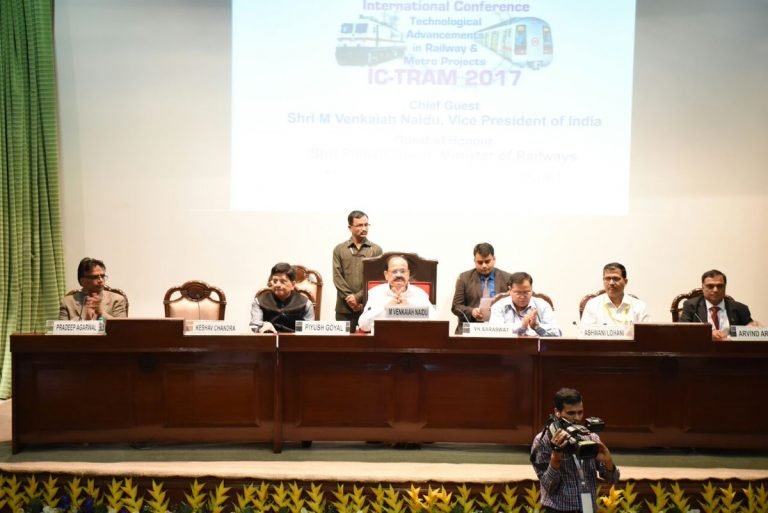
New Delhi: Hon’ble Vice President of India, Shri Shri M. Venkaiah Naidu inaugurated an International Conference on Technological Advancements in Railway and Metro Projects (IC-TRAM 2017) and an Exhibition  on October 6 – 7, 2017 at New Delhi. The conference  Minister of Railways & Coal, Shri Piyush Goyal also addressed the conference. The Conference has been organized by the Defence Infrastructure Planning & Management Council(DIPM), the Ministry of Railways, the Ministry of Urban Development and the Niti Aayog. The Chairman, Railway Board, Shri Ashwani Lohani, Member, Niti Aayog and  Chief Patron of DIPM Society,  Dr. V. K. Saraswat,  and other dignitaries were present on the occasion.

Highlights

  • The Vice President of India Inaugurates International Conference on Technological Advancements in Railway & Metro Projects 2017
  • Minister of Railways & Coal, Shri Piyush Goyal also addressed the conference
  • Minister of Railways & Coal, Shri Piyush Goyal urged to make India as the nerve centre of innovations and technological advancements

Addressing the conference, the Vice President of India, Shri M. Venkaiah Naidu has said that the Technology along with managerial excellence can chart a new trajectory.

IC TRAM 2017

The Vice President said that with urbanization taking place at a rapid pace in India, the need for efficient and cost-effective transport is critical in ensuring faster mobility and sustainable development. He further said that new concepts such as ‘Transit Oriented Development’ should be tried out and promoted which will improve the lives of people living around the metro stations in a big way.

The Vice President said that the Indian Railways need to plan for a massive expansion very meticulously with forward looking, efficient technologies and innovative practices currently available across the globe and adopt them to serve our country’s aspiring population. He further said that the IT revolution sweeping the world, to which India has also been a major contributor, is bound to improve the efficiency in signaling, communications and safety and help in areas like intelligent transportation systems.

The Vice President said that in the Indian ethos, we believe that science and technology are tools to improve the quality of life and we say “Bahujana hitaya, bahujana sukhaya” implying that we aim at the good of humanity at large and also care for the happiness of the entire population on this planet. We also believe this is possible if we are open to new ideas and concepts, either home grown or from outside, he added.

The Vice President expressed his hope that the discussions and the deliberations in this two-day conference will provide a fast-track approach to build many state of the art railway systems that will improve the economy and the quality of life of people in India and the rest of the world.

IC TRAM 2017 1

Speaking on the occasion, Minister of Railways & Coal, Shri Piyush Goyal said, “The need for transportation in urban areas has increased many fold and Metro Railway has a big role in meeting transportation needs. Referring to the significance of innovation and research. He said that R&D is the driver for growth and it forms the eco-system, which encourages scientists to persevere for better yields. He said that we have to go beyond the boundaries of conventional thinking to achieve excellence. He said that India has already taken greater strides in the fields of climate change, renewable energy and activities like rolling out of LED programs. He said that time has come to lead the world and also called upon to make India as the nerve centre of innovations and technological advancements. He emphasized that fund should never be constraint for undertaking innovation and technological advancements.

He said that in the context of Railways, we have to work towards procuring technology for night-fog vision, better signaling system, better track-laying technologies. We need to collectively work and Railways Institution like RDSO can collaborate with other research organizations like DRDO, ISRO to achieve desired objectives. We need to fast track our efforts and constantly endeavor to work better in every aspect. We must work to see, whether we can design better coaches, better locomotives, better signaling system and other related activity. We must explore cooperation with military engineering service personnel, who are passionately working in the service of the nation. We have to work through cooperation, oneness in public service for the future of the country. We need to lead from front. Indian Railways need to work with the commitment to make Indian Railways safe, secure and with better amenities, riding efforts, punctuality and efficiency.”

Referring to the contribution of Vice-President in public life, who was the Chief-Guest of the program, Shri Piyush Goyal said that Shri Venkaiah Naidu ji has been relentlessly working for the last 40 years for the welfare of the people, especially for farmers and common-man.

Chairman, Railway Board, Shri Ashwani Lohani said that with mobility requirements increasing several fold due to massive urbanization, the need for building Metros in our congested cities and strengthening the Railway infrastructure, has become imperative and assumed critical proportions. He said that the conference will bring up new technological ideas and innovations in the fore and help Indian Railways embrace some of those ideas for moving forward in the present era.

Member, Niti Aayog and  Chief Patron of DIPM Society,  Dr. V. K. Saraswat, said that this conference is having the best speakers who are not only experts in their chosen subject but also have a deep understanding of railway and metro technologies, implementation and solutions to problems from personal experience.

Chairman, Organizing Committee of the Conference (IC-TRAM 2017) and former Member, Railway Board Shri Keshav Chandra outlined the objectives of the conference. He elaborated the focus areas being dealt in different session of the conference. He pointed out that this conference is a fine opportunity for all those in the business of railways and metro transportation, as well as the larger transportation community, operators, engineers, architects, planners, administrators, scholars and so on to upgrade their technical skills and knowledge, interact with specialists from various engineering disciplines, hear from the experts in India and abroad on the fine ‘art and science’ of metro building and railway modernization. Experts will share secrets of effecting efficiencies through enhanced equipment reliability, World-renowned Safety Experts will expound on the essential fundamentals of accident free performance.

Metro Rail News was the official media partner of the this giant conference. Some of the important topics on Railways and Metro Rail Systems, which were covered in the two-day Seminar, are as follows:

  • High speed railways-the international experience-the variants.
  • Semi-high speed railways & their relevance.
  • Next generation railway coaches, using latest lightweight materials.
  • New propulsion systems such as turbine, fuel cell etc.
  • Use of renewable sources of energy, such as, bio-diesel, methanol, etc.
  • Railway’s drive for self-sufficiency in generation of energy for traction purposes.
  • Cutting edge technologies in signalling& telecom.
  • Advancements in electric-a) overhead equipment/3rd rail, b) traction /general power supply with emphasis on green energy c) heating/air-conditioning.
  • Train management & protection systems, creating a foolproof operational safety net in all-weather conditions, including dense fog.
  • Advancements in civil engineering a) track b) bridges & c) tunneling.
  • Development of world class railway stations.
  • Emerging technologies in manufacturing of rolling stock.
  • Advancements in civil engineering a) track b) bridges & tunneling c) station buildings & ancillaries (PSDs, etc).
  • Cutting edge technologies in signalling & telecom, driverless train operations.
  • Electrical-a) overhead equipment/3rd rail, b) traction /general power supply with emphasis on green energy c) heating/air-conditioning.
  • New trends in accident prevention, safety & security-zero tolerance for accidents.

Lucknow Metro | Ambassador of Czech Republic to India visits LMRC and takes metro ride

Lucknow: His Excellency Mr. Milan Hovorka, Ambassador of Czech Republic to India today visited Lucknow Metro Rail Corporation (LMRC). He along with his delegation first visited the Charbagh Metro station where he was welcomed by Shri Kumar Keshav, Managing Director and senior officials of the Corporation.

Mr. Hovorka saw the world class state-of-the-art facilities provided by LMRC at the Metro station including the Automatic Ticket Vending Machine (AVTM), Recharge Card Terminal Machine (RCTM), Automatic Fare Collection (AFC) gates, escalator, lift with braille buttons and other automatic passenger oriented facilities. He was very much impressed with the facilities and praised LMRC for setting such a wonderful system at par with the European standards in such a compressed time schedule of just less than three year.

IMG 3388

He then also took a ride in Metro train from Charbagh Metro station to Transport Nagar Metro station along with his delegation. Shri Kumar Keshav, Managing Director briefed the Czech Ambassador about the unique design and special features of the Lucknow Metro Train.

Later, Mr. Milan Hovorka visited the Depot Control Centre (DCC) and saw the facilities developed by Lcknow Metro for the Software Development Centre (SDC) and the Operations Control Centre (OCC). He also planted a tree sapling inside the Transport Nagar Metro Depot to make his visit memorable.

IMG 3392
Mr. Milan Hovorka, Ambassador of Czech Republic with LMRC Chief Mr Kumar Keshav during visit to Lucknow Metro

He was extremely happy to visit LMRC and wished the entire team of Lucknow Metro ever success. He was very appreciative about the success and achievements of Lucknow Metro under the leadership of Shri Kumar Keshav, Managing Director and felt immensely honoured to visit LMRC which has set such a world record of constructing and commissioning a Metro Project in less than three year.

Delhi Metro | Delhi Govt ready to takeover DMRC project, says CM Arvind Kejriwal

New Delhi: Firing a fresh salvo in his ongoing tussle with the Centre over the upcoming hike in Delhi Metro fares, chief minister Arvind Kejriwal on Sunday offered to take over the Metro and “run it efficiently without increasing fares“.

Responding to a letter by Union housing and urban affairs minister Hardeep Singh Puri, in which the latter had asked the Delhi government to provide an annual grant-in-aid of about Rs 3,000 crore if it wanted the fare hike to be put on hold, Kejriwal wrote back saying that the Delhi government was willing to bear half the revenue loss if a matching grant was provided by the Centre. In his letter, Kejriwal said the Centre and Delhi government were 50:50 owners of the Delhi Metro Rail Corporation and its equity etc were shared in this proportion all along. “Let an assessment be made of the financial gap likely to be created on account of the postponement of the second fare hike and we will be able to bear half of it,” he said.

DMRC chief Mangu Singh called on Kejriwal at the latter’s residence on Sunday evening for a brief meeting at the CM’s request. “It was a personal meeting,” said a source close to the CM.

Kejriwal and Magu Singh meet

After 2009, Delhi Metro’s fares were hiked on May 10 this year following a recommendation of a fare fixation committee (FFC). The second phase of the hike is scheduled to kick in from October 10. The move has been termed ‘anti-people’ by the Delhi government, which asked for the hike to be put on hold till an audit of DMRC’s finances is carried out.

Puri had written to Kejriwal, saying that neither the Centre nor the Delhi government had the authority to put the hike on hold as it is legally untenable. He, however, said that the Centre was willing to constitute a fresh FFC if the Delhi government agreed to bear the funding gap of DMRC, which amounts to about Rs 3,000 crore per year for five years.

In his letter to Puri, Kejriwal wrote, “I cannot recall any instance where the prevailing fares payable by a very large number of users were doubled in this manner. He said since the Centre bears 100% loss of the Kolkata metro, “I see no difficulty if the Centre bears 50% loss in case of Delhi”.

Kejriwal said that while both the Centre and Delhi governments were equal partners in DMRC, it was becoming evident that the relationship was not that of equal partners. What the Delhi government proposed was often summarily dismissed by the central government, he said.

“We are confident that we will be able to fund DMRC by improving its efficiency rather than effecting steep fare hikes and provide an affordable means of transport to the people of Delhi,” he said in the letter.

Discount on Delhi Metro Fare
Delhi Metro fare Hike

The CM said that fares would be doubled across frequently travelled bands within a period of five months and such a “tariff shock” was anti-people. He added that Kolkata Metro fares were one-third of Delhi’s.

He also alleged that DMRC sat on the FFC recommendations for eight months, so deferring the second hike by a few months should not be a problem. If the Centre can withhold a fare revision by delaying the constitution of an FFC, it is irrational to say it has no remedy once a report of the FFC is received, Kejriwal’s letter said.

Around 50% of India would be urban by 2030, says Hardeep Singh Puri

New Delhi: With globalisation and urbanisation becoming integral to the prevailing world order, it is reasonable to assume that around half of the country would inevitably reside in urban areas by 2030, the date of implementation of the agenda for Sustainable Developmental Goals, said Hardeep Singh Puri, minister of state (Independent Charge), Ministry of Housing and Urban Affairs.

He was speaking at an interactive panel on Building Blocks for a New India, at the India Economic Summit being organised by the World Economic Forum and the Confederation of Indian Industry (CII) at New Delhi on 6th October 2017.

hardeep singh puri
Hardeep Singh Puri, Union Urban Minister (Photo: PTI)

Puri said that the Swachh Bharat Mission recognises impending challenges of urbanisation and called for mindset change by all stakeholders to help meet the specific targets under the Mission. The bio-mechanisation of waste, mechanical cleaning of drains etc, are some of the initiatives being contemplated by the government under the Mission.

While dwelling on the urban rejuvenation effort of the government through affordable housing, the impact of which would become visible by 2018, he said that there was no other option but to decongest the city. He exhorted the state governments to constructively engage with the Centre to help cities function effectively.

He invited the private sector to partner with the government in the building of smart cities and leverage the huge economic opportunity which it entailed. He also supported the need for an independent regulator in sectors such as real estate to clean up the system.

Sumant Sinha, Chairman and Chief Executive Officer, ReNew Power, called for an automatic reset of power prices and separating carriage from content for freeing power pricing from government control. He also supported privatization of distribution companies for greater efficiency. The fixation of power tariffs, based on market demand, would lower production costs and make manufacturing competitive.

Bunty Bohra, Chief Executive Officer, Goldman Sachs, India highlighted tapping the corporate bond market for long-term finance for infrastructure and need for removing the restriction on institutions so that corporates are clear about the risk-return profile.

Chandrajit Banerjee, Director General, CII highlighted the challenges faced by the private sector while operating projects in the PPP mode.

He dwelt on issues such as problems of land acquisition, structuring of PPPs, dispute resolution, and trust deficit, among others. He called for further streamlining of clearances and forward planning and hoped for the success of Real Estate Regulation Act (RERA) to reduce the demand and supply gap in infrastructure.

Delhi Metro | Centre cannot put Metro fare hike on hold, says Union Urban Minister

New Delhi: Four days ahead of the proposed Metro fare hike, the Centre has informed the Delhi government that if the latter is willing to pay an amount of Rs 3,000 crore to the DMRC every year, then a new Fare Fixation Committee (FFC) could be set up, news agency ANI reported. The DMRC, which is set to increase the fares of Metro tickets in Delhi for a second time this year, has been facing strict opposition from the Arvind Kejriwal-led government.

hardeep singh puri
Hardeep Singh Puri, Union Urban Minister (Photo: PTI)

The FFC had recommended a hike in fares which was to be implemented in two phases once in May and the other in October. Despite a vocal protest, minimum fare was hiked from Rs 8 to Rs 10 and maximum from Rs 30 to Rs 50. On October 10, the price will be increased further by Rs 5-10 for more than two kilometers.

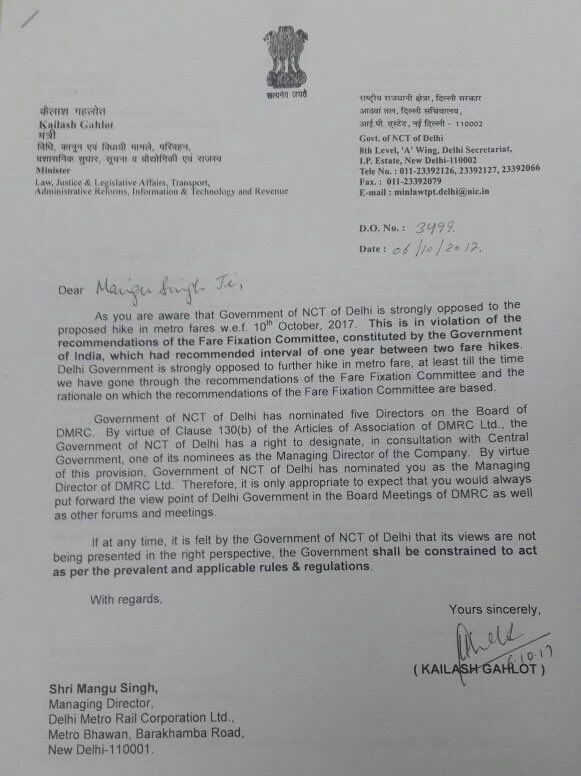
In a letter to the MD of DMRC, the state transport minister Kailash Gahlot has said that they oppose the second fare hike suggested by the DMRC as it is in violation of the recommendations of the FCC.

Delhi Govt letter to MD DMRC
Delhi Govt. Transport Minister Kailash Gahlot written a warning letter to DMRC Chief Mangu Singh on metro fare revision issue.

Highlights of Delhi Metro’s 4th Fare Fixation Committee Report –

  • The members of the 4th FFC were Justice M. L. Mehta, retired Judge of the High Court of Delhi as Chairman, Shri K. K. Sharma, the then Chief Secretary, GNCTD and Shri Durga Shanker Mishra (Additional Secretary, Ministry of Urban Development).
  • The necessity of revision in fares was on account of increase in the cost of inputs viz. the staff costs, the cost of energy and the cost of repair & maintenance. Since constitution of the 3rd FFC, there has been increase in the rate of industrial DA by 95.5% (from 16.90% to 112.40%), rate of Central DA by 103% (from 22% to 125%) and average increase in the rate of minimum wages by 156.2%. The last fare revision took place in 2009 and the 4th FFC was set up after almost 07 years.
  • The fare revision will be implemented in two phases i.e. Phase-I that will be implemented with effect from 10th May 2017 and Phase-II that will be implemented from 1st October, 2017. There will be a total of six fare slabs as against the existing 15 fare slabs with a minimum fare of Rs.10 and a maximum fare of Rs.50 in the 1st Phase.
  • With a view to encourage ridership on Sundays and National Holidays (26th January, 15th August and 2nd October) special discounted fares have been approved.
  • 10% discount to be continued on every journey made by the passengers using Smart Card.
  • To avoid overcrowding during peak hours, an additional 10% discount will be given to the passengers using Smart Card who exit from metro system during off peak hours.
  • Value of Tourist Card for 1 day and 3 days validity shall be Rs. 200/- and Rs. 500/- respectively including security deposit of Rs. 50/-.
  • There shall be no change in the fares of Airport Express Line.

Background

  • This is fourth time since the beginning of its operations in 2002 that Delhi Metro is revising its fares. When Delhi Metro started operations on 25th December 2002, the minimum fare was Rs. 4 and maximum was Rs. 8.
  • The 1st fare fixation committee was constituted in December 2003 and revised fares were adopted w.e.f March 31, 2004 (after a gap of one year and three months) with minimum fare of Rs. 6 and maximum Rs. 15.
  • The fares recommended by the 2nd fare fixation committee were made effective form 31st December 2005 (after a gap of one year and nine months) with minimum fare of Rs. 6 and maximum Rs. 22.
  • The 3rd fare fixation committee was constituted in June 2009 and fares were made effective from November 13, 2009 after a gap of 4 years (approx) with minimum fare of Rs. 8 and maximum Rs. 30.

Chandigarh Metro | Centre to review DPR of proposed metro rail project in City again

Chandigarh: Hopes for having a metro rail project in Chandigarh and its periphery were revived here on Wednesday. Union minister of state for housing and urban affairs (independent charge) Hardeep Singh Puri said at a function in Sector 17 that the Centre was going to evaluate the proposal’s detailed project report (DPR) again.

The only difference will be that the Centre will make the new assessment on the basis of Metro Rail Policy-2017, which the Union Cabinet had approved on August 16 this year. Talking to journalists on the sidelines of a financial-inclusion camp at the Parade Ground in Sector 17 here, Puri said Centre had asked all states and UTs which had prepared DPRs for Metro rail projects, to submit fresh proposals for an evaluation under the new policy.

The project had suffered a major setback after the Union home minister advisory committee (HMAC) had termed the project unfeasible for Chandigarh in July this year. Members of the committee, which is headed by Union home minister Rajnath Singh, had asked the administration to look for alternatives to strengthen public transport.

In the past, Chandigarh MP Kirron Kher has also raised questions about the project’s viability. In the past few years, the administration has been making efforts to better public transportation. Chandigarh Transport Undertaking (CTU) buses ply on 75 routes with a waiting period for boarding a bus varying from 20 minutes to over one and half hours.

In the past few years, Chandigarh has witnessed a substantial increase in traffic. In the absence of an efficient public transport system, residents prefer two-wheelers and cars, leading to congestion on the roads. A high volume of vehicles has also led to deterioration of air quality.

Chandigarh has the highest density of vehicles in India, with around 12 lakh registered vehicles, including two-wheelers and four-wheelers. The number of vehicles is over two per house.

As per the revised detailed project report prepared by Delhi Metro Rail Corporation, the project will cost Rs 13,600 crore, of which Chandigarh will have to chip in with around Rs 5,000 crore, while the remaining amount is to be shared by the state governments of Punjab and Haryana. The total length of the project covering Chandigarh, Mohali and Panchkula is 37.57 km. A majority of the two corridors falls in Chandigarh. In June 2015, Chandigarh, Haryana and Punjab had signed a memorandum of understanding for the formation of a special purpose vehicle (SPV) for execution of project.

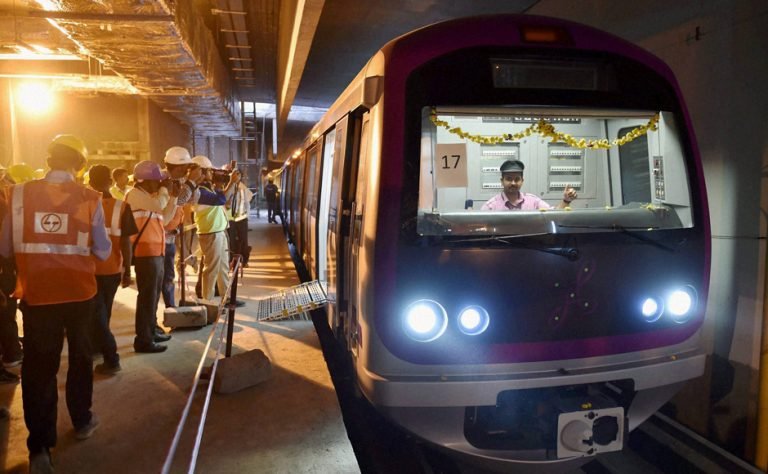
Bangalore Metro | Govt. of India signs contract with European Bank for lending of Rs2293 crore

New Delhi: Govt. of India and European Investment Bank (EIB) today signed the finance contract for lending of 300 million euros (about Rs 2,293 crore) for Bangalore Metro Rail Project phase-II.

Bangalore Metro Rail Project Phase II is to be jointly financed by the EIB (500 million euros) and Asian Infrastructure Investment Bank (300 million euros).

“The first tranche of 300 million euros was signed today,” the finance ministry said in a statement.

metro employees

The project relates to extension of East-West and North-South lines for Bangalore Metro Rail which includes a total length of 72.095 km (13.79 km underground) and 61 stations with 12 underground stations.

The project implementation period is 5 years from date of commencement.

“The objective of the project is to bring in a quantum improvement in the transportation sector in the city in tandem with the Bangalore Metropolitan Transport Corporation (BMTC) and other modes of urban transport,” the ministry said, adding the project aims to ensure modern transport facility for the commuters.

As per the release, the spinoffs of the project would include employment opportunities, benefits to the economy, reduction of number of vehicles on road, less fuel consumption, reduction in air pollution, reduction in passenger travel time and also improvement in the aesthetic value of the city.