Delhi Metro | DMRC’s ridership crosses one billion mark in 2016-17

New Delhi: The Delhi Metro Rail Corporation (DMRC) has releases its cumulative ridership data for the financial year 2016-17. According to press release, the cumulative ridership of the Delhi Metro within this financial year crossed the one billion mark (100 crores) on 29th March 2017 for the first time, further establishing DMRC as the mass transportation backbone of the National Capital Region (NCR).DMRC further clarified  that since 1st April, 2016, a total of 1.001 billion (100.165 crores) passengers have traveled by the Delhi Metro till last night, registering a 6.56 percent growth in average daily ridership since the last financial year 2015-16. The average daily ridership has increased by 43 percent in the last five years.
YearRidership(in millions)Average daily ridership (in millions)Network length
2012-13702.95 (70.29 cr)1.93190
2013-14801.70 (80.17 cr)2.20190
2014-15870.91 (87.09 cr)2.39193
2015-16946.95 (94.69 cr)2.59213
2016-17(Till 29thMarch, 17)1001.65 (100.165 cr)2.76213
The Delhi Metro today ranks 10th in terms of ridership among the 34 top Metro systems of the world.“The Delhi Metro currently operates with a fleet of 227 train sets comprising of 128 six coach, 58 eight coach and 41 four coach trains across all its corridors.
buy viagra oral jelly online no prescription
The process of adding 258 new coaches to the fleet to augment the carrying capacity of the system has been started since last October and the process is scheduled to be completed by the end of the next financial year.”, added by an official.

My 6 years innings at Bangalore Metro ends in April 2017 – K.L. Mohan Rao

It seems the other day I joined Metro Rail Corporation, as a Founder Principal of BMRC Training Institute. A Mechanical engineer by profession, been a enterprenuer for more than 25 years in the field of Aluminium fabrication, electro colouring, PU coatings, with specialization in computer site planning and installation. Carried out turn key jobs for the major computer room installation in Bangalore through Computer maintenance corporation Ltd.Entered the field of contract in with the leading PSU’s like HAL, ITI, BEML and Major projects with the Garrison engineers south.Established a huge anodising and electro colouring, semi automatic plant with 21 ft tanks, in the year 1991 investing more than 21 lakhs of hard earned money.Went through a very turbalant challenging life, because of huge financial loss and pressure from bank, financial institutions, ESI, PF, Customs & sales tax. It appeared that the end of a self made entrepreneur, without financial backing and even mental support. The pressure was so much that, go to any place whether marriage, birthday or funeral, there was some face, which reminded of the financial commitment to them. The world seems to be merging on me with tha bank recalling, the working capital and the financial institute threatening to the auction all my properties.The attitude and the commitement towards my family with the only son gave a strength to fight. Thus started a new era from a turn key contractor to a labour contractor. It took a lot of strength, courage to survive for the sake of my son. From a owner of a Maruthi Van, life started with a borrowed Hero Puch.A frank discussion with a client giving an honest financial back ground and shifting most of the machines, to their premises with a promise to deliver in time and a minimum of 20 % savings in the total project started the labour contractor’s life. Burning away the pride of being a factory owner and ego’s travelling from a four wheeler to a two wheeler. Meeting people knowing fully well of being looked down upon, more so by the relatives and so called friends. Keeping only one motto “Hum honge Kaam yaab, Ek din”. Went on from 6 lakhs to nearly 3 crores labour contract with the timely help of the client not only financially but also getting an engineering seat, followed subsequently, by getting a MBA seat for my faithful well behaved, supporting great son of mine.Thus started a new Era of relationship with educational Institutions and getting support from most of them.As a labour contractor, could come out of debts from nearly 33 people, Bank and financial Institutions. But all these has costed me my youth and converted into a 50 year old man full of wisdom and an attitude to give back to the society. My gratitude to the great Institutions what is today called as PES IT University.At one stroke, took a decision to bulldoze the factory and converting it into an empty land to be later getting into a joint venture with a builder. A new life started there, where training came into my life. Became the chairman of the Builders Association of India, Karnatak Centre., in 2002 and with the grace of god, managed to train and employ more than 5500 Civil engineers and Artisans in the leading construction Industries.Was invited by the Govt of Karnataka to head as Founder Director of Koushalya Shaale, an enterprise of Rajiv Gandhi Rural Housing Corporation, in the year 2009. After making this unit self sustaining, switched over as consultant to IAPMO- International Association of Plumbing & Mechanical Officers and RMCMA (Ready Mix Concrete Manufacturing Association).A major change in life came in by an invitation from the Managing Director of BMRCL in 2011 to establish a training centre at Baiyappanahalli, with an initial contract for 3 years. This was extended by 2 years and then 1 year. One of the best, rewarding, satisfied career of my lifetime in this great organization BMRCL. Today I would like to move on to my next goal of training and employing atleast 1 lakh rural and urban educated and uneducated unemployed youths of Karnataka, in this lifetime.I pray God to give me health and strength to work towards this goal.This is a zest of my life from graduating from BMS Engineering college in 1975, 1st employment as Asst. Engineer in Bharat Gold Mines, KGF, then Production In-charge in a private company ECIE.(The writer is Principal at Bangalore Metro Rail Corporation Training Institute, Bangaluru. This article was first published in pulse)

Haryana Metro | HMRCT to start metro rail project from Delhi to Kundli (Sonipat)

Panchkula: The Haryana government today said Kundli in Sonipat district will be connected with the Metro rail service soon.The project for connecting Kundli with metro rail was approved in the 22nd meeting of the Haryana Mass Rapid Transport Corporation that was chaired by Chief Secretary D S Dhesi, an official release said here.The metro rail line will be extended from Narela in Delhi to Kundli, covering a distance of about 4.
buy viagra capsules online no prescription
86 km, it said.Apart from this, other under-construction metro rail projects were also reviewed in the meeting, the release said.These included the Sikanderpur to Gurgaon Sector 56, YMCA Faridabad to Ballabhgarh and Mundka to Bahadurgarh projects.The latter two are slated to be completed by December this year, it said.(This article has not been edited by Metro Rail News’s editorial team and is auto-generated from an agency feed.)

Bangalore Metro | BEML bags Rs 1,421 crore contract for supply of metro coaches to BMRC

Bengaluru: The Bharat Earth Movers Limited (BEML) has won a Rs 1,421-crore contract from Bangalore Metro Rail Corporation (BMRCL) for supply of metro cars.“BEML Ltd…has bagged a prestigious order of Rs 1,421 crore from Bangalore Metro Rail Corporation for supply of 150 seats of intermediate metro cars to augment the existing 3 car trains supplied by BEML to 6 car trains,” the company said in a filing to the BSE.It said BMRCL MD Pradeep Singh Kharola and CMD, BEML, Deepak Kumar Hota have exchanged the contract agreements for supply of intermediate metro cars to BMRCL from June 2018.The contract is scheduled to be completed by December, 2018.BMEL has forayed into manufacturing and supply of hi-tech metro cars during 2002 and as a leading rolling stock supplier has so far supplied over 1,000 metro cars to Delhi, Bangalore and Jaipur Metro Corporations.(This article has not been edited by Metro Rail News’s editorial team and is auto-generated from an agency feed.)

Delhi Metro | UNFCCC registers DMRC’s Solar Power initiative as CDM project

Bonn, Germany: The Delhi Metro Rail Corporation’s initiative to install roof top solar power plants at its premises has become the first ever Clean Development Mechanism (CDM) Project to be registered with the United Nations Framework Convention on Climate Change (UNFCCC) for any Metro or Railway system in the world.The project has been registered under the ‘small scale category’ for those with a installed solar capacity of less than 15 MW. The DMRC run roof top solar facilities have an installed capacity of 14.983 MWp which translates to an estimated electricity generation of 19,687 MWh annually.A total of 31 grid connected roof top solar power facilities across the stations, depots, Receiving Sub Stations and residential colonies of DMRC were identified for this project.The project is expected to generate an estimated 18,506 CERs (Carbon credits), though the exact number of CERs will be available only after verification audit scheduled mid next year.  The project was registered in a record time of eight months, on 25th March, 2017, about two months ahead of schedule.This is the fifth climate change project to be successfully registered by DMRC. Two more projects are in the stage of registration presently.
buy priligy online blackmenheal.org/wp-content/languages/new/noprescription/priligy-no-prescription.html no prescription
Delhi Metro had earlier been certified by the United Nations (UN) as the first Metro Rail and Rail based system in the world to get carbon Credits for reducing Green House Gas Emissions as it has helped to reduce pollution levels in the city by 6.3 lakh tons every year thus helping in reducing global warming.The UNFCCC has already registered the Delhi Metro in two categories for promoting Clean Development Mechanism and earn carbon credits: Regenerative Braking and Modal Shift’.DMRC has come up with a solar policy of its own to utilize as much solar power as possible for its ever increasing energy needs. It plans to produce 50 MWp of solar power by the year 2021.  DMRC is trying to utilise the space available at its stations, depots, residential areas and parking facilities to install solar power facilities.

Delhi Metro | DMRC gets a mass transit wallet from the RBI

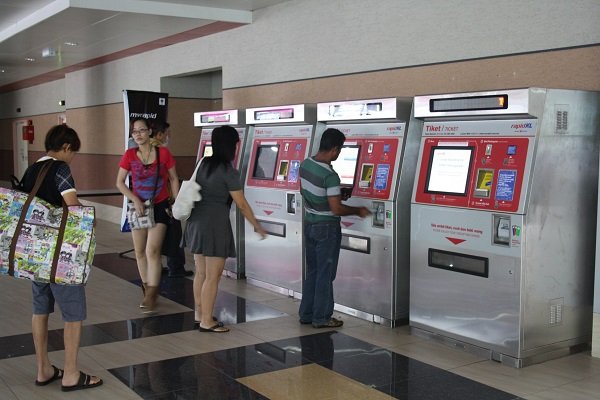
New Delhi: The Delhi Metro Rail Corporation (DMRC) has got a wallet licence from the Reserve Bank of India. Interestingly, the DMRC has got a mass transit prepaid payment instrument (PPI) issuer licence. The RBI website shows that DMRC was given the licence last month and is valid up to March 31, 2022.Note that the RBI introduced in July 2015 a new semi-closed pre-paid instrument for mass transit services to help move on from cash-based systems to electronic means. The new instrument will allow users to load Rs 2,000 and have a minimum validity period of six months from the date of issue.Some of the other features of the new instrument are:– No cash-out or refund will be permitted from these wallets. – The instrument can also be used at other merchants whose activities are allied to or are carried on within the premises of the issuing mass transit system. An example:  The Delhi Metro could issue a wallet service which can be used to buy food at the food stalls in the station. – The issuer may decide upon the desired level of KYC, if any, for such PPIs – The instrument must have an Automated Fare Collection application related to the transit service.Note that ICICI Bank had launched a smart card for the Delhi Metro back in 2014. In July 2011, State Bank of India had also partnered with Bangalore Metro to launch NFC-enabled debit cards, that doubles up as travel smart cards.Meanwhile, Axis Bank said it would be launching smart cards for commuters on the Bengaluru Metropolitan Transport Corporation  (BMTC) buses and Kochi Metro Rail to make digital payments.Perhaps Kochi Metro and the BMTC could look into the wallet system as well. Metro Rail News had pointed earlier out that despite the huge potential, no one has tried to fix public transportation payments and it’s something that all wallet players could look into.Hong Kong has a smart card for digital payments called Octopus card which can be used for all public transport in the city. London has Oyster card which can be used to pay for fares for the London Underground, London Buses, the Docklands Light Railway (DLR), London Overground, Tramlink, some river boat services, and most National Rail services. Dubai has a electronic ticketing card called NoI card which can be used in all public transport systems.

MEGA Metro | Recruitment of various posts in technical & non-technical discipline

Gnadhi Nagar:  MEGA or Gujarat Metro in inviting online applications for recruitment of 606 vacancies of junior engineer & station controllers as part of its latest project. Ahmedabad – Gandhinagar metro rail project is handled by Metro-Link Express for Gandhinagar & Ahmedabad (MEGA) Company Ltd which is a special purpose vehicle (SPV) jointly owned by Govt of India & Govt of Gujarat.Recruitment Notice No.: MEGA /HR / OM-Rect. / 2017/1 Dated 24.03.2017Total number of vacancies: 606– Station Controller / Train Operator: 283 Posts – Customer Relations Assistant: 31 Posts – Junior Engineer: 99 Posts – Maintainer: 193 PostsOnline registration of applications:  30.03.2017 to 30.04.2017CLICK HERE TO APPLY ONLINEClick here to view detailed advertisement. For more details please visit MEGA Metro’s official website.

Delhi Metro | Woman found hanging inside Kashmere Gate Metro station

New Delhi: A woman in her thirties was found hanging from a pipe inside a store room at Delhi Metro’s Kashmere Gate on Thursday, police said.According to the police, the woman, who is yet to be identified, was spotted by a sweeper who had gone inside the room on platform 2, where the station stores sprinklers. He immediately informed the Central Industrial Security Force (CISF) personnel posted in the area and Metro officials about the incident. The woman was then brought down and rushed to a nearby hospital and was declared dead on arrival.Police said they had not ascertained the reason behind her taking the extreme step could not be ascertained till late on Thursday evening. No suicide note was recovered from the spot. Also, no identification document that could help the police establish the woman’s identity was recovered from her possession. The woman was carrying a small purse containing Rs 130 in cash, police said .Jitendramani Tripathi, deputy commissioner of police (Delhi Metro), said that the incident was brought to their notice around 8.30am. Following the incident, the CCTV footage of the platform was accessed to see how the deceased had entered the store room on the platform. In the video footage, the woman was seen entering the platform around 10.30pm on Wednesday, said the officer. “It appears that the woman went inside the room — that is usually empty and is only frequented by the staff — around 11pm and hanged herself from the pipe. She used her dupatta to prepare the noose. Since all the staff had gone home by then, no one saw her. Her body was spotted early in the morning by a sweeper who came to clean the store,” a senior police officer said.The police are trying to ascertain the woman’s identity and said they will preserve the body in a mortuary till they do so. “She was not carrying any bag or ID that would help us ascertain her identity. There is no suicide note. We have contacted the local police station to help us identify her by scanning missing complaints of women lodged in the last 24-hours. An investigation has been launched,” said the officer.Meanwhile, the police are also analysing the CCTV footage to see if she entered the metro station with someone or was alone. “We are exploring all angles in the case,” the officer added.

Nagpur Metro | Metro rail project will be completed in 2020 due to delay

Nagpur: Chief Minister Devendra Fadnavis and union transport minister Nitin Gadkari may be claiming that the Nagpur Metro Rail project will be completed by December 2018 but the reality is that it will not be fully ready before first quarter of 2020. Even this is only if there are no unforeseen delays. The project will be at least delayed by a year.Mahesh Kumar, Mahametro’s director (project), said, in spite of the delay there would be no cost escalations. “The cost will increase by 2% at the most due to the delay but we have reduced the cost by 8% as compared to detailed project report (DPR) estimate. So, the extra expenditure will be easily offset. Moreover, we do not have cost escalation clauses in three of the four viaduct construction contracts,” he said.It is not that Metro will not become operational before 2020. The trial run of Mihan depot to Airport stretch is expected in second half of this year. Metro will start plying between Mihan and Sitabuldi in first half of 2018. The other stretches will become operational one by one after an interval of about six months.

Centre wants the states to explore the PPP model for their proposed metro projects

New Delhi: The Centre wants the states to explore the PPP model for their proposed metro projects and exhaust all other mass transit options before going for the metro rail.Although the new drafted policy relaxes the eligibility criteria for cities by reducing the population threshold from 20 lakh to 10 lakh, the Centre wants metros to be the last option in view of the high capital intensive nature of the project and the pressure it puts on the public exchequer. And Centre can contribute maximum 20 per cent for these projects.The metro rail network in India has seen massive growth, with 325 km in operation and more than 500 km under construction in various cities. Metro projects are, at present, going on in Delhi and NCR, Lucknow, Kolkata, Chennai, Kochi, Bengaluru, Mumbai, Jaipur, Ahemedabad, Nagpur and Pune. The new policy states that the projects should be planned and executed with a longer future perspective as it is capital intensive and has limited flexibility in design changes on completion.“Cities with a linear spatial pattern may justify a metro even at lower population levels as they have fewer corridors and each would have a higher traffic density. A comparative analysis of other  modes is essential for the selection. The mode that matches the demand over the project life cycle and has the least cost should be chosen,” the policy report states.“Substantial efforts such as track-gauge, civil structure and components of rolling stock have been standardised since the advent of Metro Rail Systems in India. These should be further consolidated taking in account the emerging technologies to reduce costs,” the report said.The report also points that in the recent times, more and more cities have chosen the PPP model for development and implementation of Metro Rail Projects, to leverage both public and private resources and expertise. Some of the global cities which have successfully tried out the PPP model are Bangkok, Kuala Lumpur, Manila, Buenos Aires, Rio de Janeiro, Singapore, Hong Kong, and London.The Centre wants the states to explore the PPP model for their proposed metro projects and exhaust all other mass transit options before going for the metro rail.Although the new drafted policy relaxes the eligibility criteria for cities by reducing the population threshold from 20 lakh to 10 lakh, the Centre wants metros to be the last option in view of the high capital intensive nature of the project and the pressure it puts on the public exchequer. And Centre can contribute maximum 20 per cent for these projects.The metro rail network in India has seen massive growth, with 325 km in operation and more than 500 km under construction in various cities. Metro projects are, at present, going on in Delhi and NCR, Lucknow, Kolkata, Chennai, Kochi, Bengaluru, Mumbai, Jaipur, Ahemedabad, Nagpur and Pune. The new policy states that the projects should be planned and executed with a longer future perspective as it is capital intensive and has limited flexibility in design changes on completion.“Cities with a linear spatial pattern may justify a metro even at lower population levels as they have fewer corridors and each would have a higher traffic density. A comparative analysis of other  modes is essential for the selection. The mode that matches the demand over the project life cycle and has the least cost should be chosen,” the policy report states.“Substantial efforts such as track-gauge, civil structure and components of rolling stock have been standardised since the advent of Metro Rail Systems in India. These should be further consolidated taking in account the emerging technologies to reduce costs,” the report said.

Chennai Metro | State Govt. to submit DPR to Center for Phase-II metro project

Chennai: The metro rail project in the city has received a fillip. A detailed project report for phase 2 of the project, covering more than 107 km, will soon be submitted to the Centre, finance minister D Jayakumar announced on Thursday.The second phase, including three corridors with 104 stations, is estimated to cost around Rs 44,000 crore. “I am happy to inform that three metro rail corridors under Phase-2 covering a total distance of 107.5km have been included in the JICA [Japan International Cooperation Agency] rolling plan for which a detailed project report has been prepared…,” the minister said in his budget speech.Chennai Metro Rail Ltd (Cmrl) had submitted the DPR for phase 2 to the state government in December 2016. A private agency began conducting feasibility study in early 2016 and officials visited various sites to finalise the location of stations. A team of JICA officials visited the state at the end of 2016 to discuss the various projects when the state government urged them to give early approval for the project.
Phase 2 will have three lines – from Siruseri to Madhavaram via Old Mahabalipuram Road, Koyambedu to Light House and Perumbakkam to Madhavaram.
On the phase-1extension, the minister said the 9km line connecting Washermenpet to Wimco Nagar via Thiruvottiyur was being implemented at Rs 3,770 crore. Tunneling work is on near Washermenpet after the project was launched in August 2016. The Centre had given its nod in June 2016. Tenders have also been floated to start work for the elevated corridor extending to Wimco Nagar.
Tunnelling for phase 1 will be complete in the next few months, as Cmrl expects to open all lines by mid-2018. Chennai got its first metro rail service with the inauguration of 11km line between Koyambedu and Alandur in June 2014, followed by a 9km line between Little Mount and Chennai Airport in September 2016.

Dhaka Metro | DMTC to sign deals on metro rail tracks, stations, coaches, depot in April 2017

Dhaka, Bangaldesh: The government is expected to sign four separate deals on metro rail tracks, stations, coaches and depot of the long-cherished Mass Rapid Transit (MRT) Line-6 in April this year.“We are evaluating the tender documents submitted by different foreign firms for the contracts to build structure of the depot, set up metro rail tracks, construct stations and manufacture and supply coaches under four separate packages,” Managing Director of Dhaka Mass Transit Company Limited (DMTCL) Mofazzel Hossain told BSS here today.He said the DMTCL would sign four separate contract packages (CPs) including CP-2, CP-3, CP-4 and CP-8 after evaluation of the tender documents in April.A total of 25 percent land development work of depot area of the MRT Line-6 was completed under the package-1, Hossain said, adding, “Tokyu Construction Co. Ltd was awarded after concurrence from JICA (Japan International Cooperation Agency) on March 27, 2016. The duration of the contract is for 25 months.”“The MRT Line-6 is an elevated Metro Rail system to be implemented in Dhaka, under a fast track priority initiative of the government. Once implemented, the MRT Line-6 will run from Uttara to Motijheel serving 16 stations along the way,” Mofazzel Hossain, also the project director, said. Earlier, Prime Minister Sheikh Hasina launched the construction work of the country’s first-ever metro rail project, also known as the Mass Rapid Transit (MRT) Line-6, on June 24, 2016. According to the project details, the package CP-03 is for the construction of metro rail tracks (viaduct) and elevated stations from Uttara North to Pallabi, while the package CP-04 is for the construction of metro rail tracks and elevated stations from Pallabi to Agargaon.The package CP-8 would be awarded for supplying of rolling stock and depot equipment of MRT Line-6. The contract would be on design-build basis.The MRT-6 is being executed at a cost of about Taka 22,000 crore. Of the amount, the JICA is providing Taka 16,500 crore to the project, while the rest of the fund would come from the Government of Bangladesh (GoB), official sources said.The fast moving metro rail will run to and from Uttara and Motijheel via Mirpur and Farmgate, carrying 60,000 passengers in an hour and touching every station in every four minutes.The 20.1-kilometer MRT Line-6 will run from Uttara Third Phase and pass through Pallabi, the west side of Rokeya Sarani and Farmgate, Hotel Sonargaon, Ruposhi Bangla, TSC of Dhaka University, Doel Chattar, Topkhana Road and Bangladesh Bank.
buy kamagra generic noprescriptionbuyonlinerxx.com/kamagra.html over the counter
There will be 16 stations – Uttara North, Central and South, Pallabi, Mirpur-11, Mirpur-10, Kazipara, Taltala, Agargaon, Bijoy Sarani, Farmgate, Sonargaon, National Museum, Doyel Chattar, Bangabandhu National Stadium and Bangladesh Bank.Once MRT Line-6 Project is in operation, the commuters would enjoy easy-going traffic and there would no more be any perennial congestion of transportations in this gradually expanding city.

Jaipur Metro | JMRC to hike metro rail fares from April 1, 2017

Jaipur: Facing rise in operational and maintenance cost, the Jaipur Metro Rail Corporation (JMRC) will increase fare slab for the first time after it’s launch.The revised fare will be effective from April 1, 2017. As per the policy, the JMRC has mandate to increase the fare in every two years. The increased fares will directly depend on increase of per unit purchase of electricity, dearness allowance rate of state government employees and monthly all India consumer price index for industrial workers.A senior JMRC official informed, “On January 2015, the JMRC was purchasing electricity from JVVNL at Rs 6.25 per unit. Now, it has been increased to Rs 7.30 per unit. Similarly, consumer price index consumer price index has been increased by nearly 15% . The JMRC has existing a formula to calculate the increase in price. The rates will be revised on that basis.”Sources said, there will not be an exponential hike in the fares and Rs 3-5 are expected to be increased in maximum fare. The JMRC will announced the revised rates after a board meeting scheduled to be held on Friday.
 “The revised rates will not burn the hole of the commuters as existing rates are not high. As JMRC provides 15% discount to its smart card users, we promote that all the commuters should use the facility.” added official.
The JMRC is struggling to earn revenue as average ridership in Jaipur Metro dropped from 49,774 per day in the first month (June 2015) of its operations to just 19,390 per day in December 2016.
This has also resulted in revenue loss for JMRC as it could earn Rs 70.44 lakh per month after spending approximately Rs 3.5 crore per month on its operations. The route of phase-I (Mansarovar to Chandpole) has already been criticized by the BJP government several times as it is financially not viable.

Delhi Metro | Delhi-NCR Metro lines will be fully functional as usual

New Delhi: After the Jat protestors decided to limit their protests only in Haryana, following the understanding they arrived at with the Haryana CM, the commuters might be confused about the information required for their Monday commute schedule. This story will provide the latest key traffic and Delhi Metro updates to ease the headache of the commuters.