Lucknow Metro | LMRC receives technical clearance from Ministry of Railways

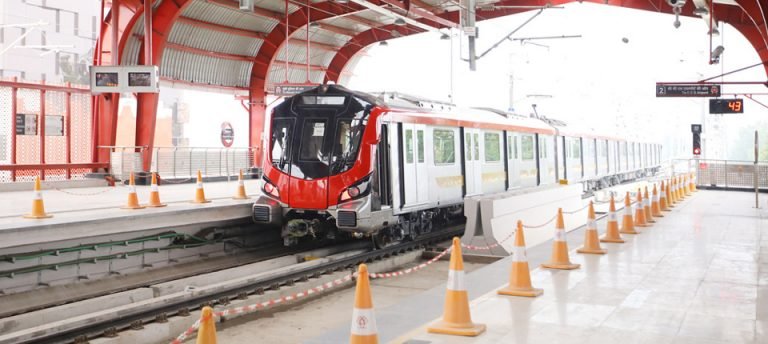
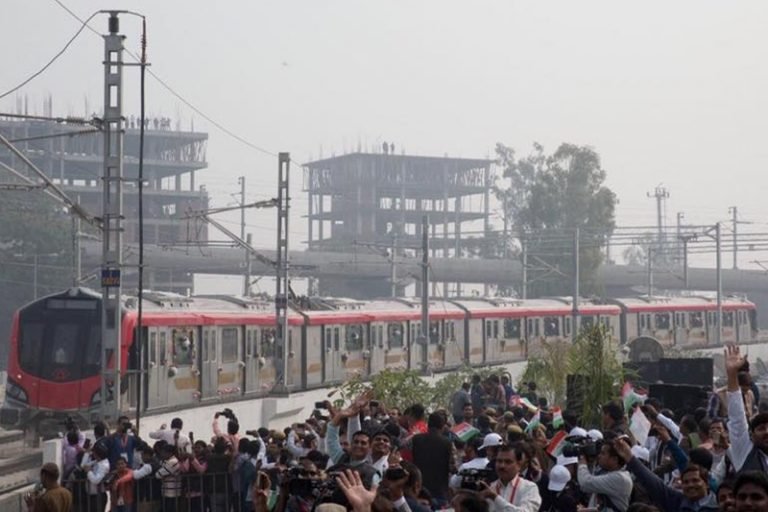
Lucknow: Through a press release, the Lucknow Metro Rail Corporation (LMRC) said that they received the much awaited technical clearance of its Rolling Stock (Metro Train) today from the Ministry of Railways, Government of India. The Lucknow Metro Train (Rolling Stock) has been given an approval by the Ministry to operate at a maximum speed of 80 km/hr.In this connection, LMRC had submitted its paper to the Commissioner of Metro Railway Safety (CMRS) on 30th March, 2017 from where it was forwarded to the Chief Commissioner of Railway Safety (CCRS) and then to the Railway Board, Ministry of Railways, Government of India for technical clearance.
RDSO had successfully completed the oscillation trials of the metro trains on 9th March, 2017. Later, on 29th March, 2017, the RDSO had awarded a speed certificate to LMRC train for a maximum speed of 80 km/hr.
After technical clearance Lucknow Metro now only needs safety clearance from the Commissioner of Metro Rail Safety (CMRS) to start the Metro Rail services for public in the Capital.

Metro Yatri Club | A bloody affair in Delhi Metro, a short journey experience

I have a habit of going to all the markets that offer great bargains and high on the cheap thrill factor only during the day (noon), to avoid the crowd. This habit really took a great toll on me one day and by the time I was done with some good bargains in Karol Bagh I ran out of energy due to the soaring temperature. I boarded the blue line metro straight towards Noida from Karol Bagh. I was lucky enough that day to bag a seat all to myself. Just the very thought that I would be going all the way to Noida sitting in the air-conditioned ladies compartment gave me a little bit of rejuvenation.While I was busy cozying myself up, I noticed a woman taking the seat to the front of me. She had a huge travel bag with her, a black one. She was talking over the phone and I overheard, she talked in some south-Indian dialect beyond my comprehension. After some time, her husband came to her to handover their little baby of about 6-7 months. All the while, I tried profiling her or in rather more relatable word ‘judging’ her. She might had been a techie or a scientist or a environmentalist or a house wife who was happy to follow her husband to his work place in Delhi NCR all the way from South India. They might have decided to take the metro to save a few bucks to go to the railway station to start a pleasant vacation. She was a doting mother with a lot of calm in her, a simple, naive, inexperienced first time mother trying hard to raise a little baby all by herself in a city so mechanical which is manifold faster than her quaint little hometown in south India. She had a sleek slender built and was dressed in a light green indo-western kurti with palazzo lowers. The city might have infused in her a pretty decent fashion sense. We had an awkward eye lock for a second, but instead of ignoring it completely she passed me a smile and I smiled back complacently.I shifted my focus to the other woman sitting next to her. A confident working woman with her earplugs plugged in. She was apparently grooving in her favorite genre of music musing into her own world and stuffing her mouth with fruits and chips. She donned a smart shirt tucked in black formals matching with a pair of chic nude heels. Then I looked both of them in one frame, they were so much in contrast. In the mother, I saw simplicity and compassion and in the other I just felt the vibes of apathy from her cold brown eyes. She might have decoded the secret of surviving and adjusting in the fast-mechanical city.Suddenly I saw the mother handing over the baby back to her husband who came from the adjacent mixed coach. She started exchanging words with the smart woman. I sensed anxiety in her mannerism and voice. The smart woman started searching for something in her bag, one after the other compartment in her bag. I looked back at the mother again, this time she stood up and awkwardly tried checking the back of her kurti. I spontaneously blurted out, “You need a sanitary pad?” She just nodded in affirmation. I handed over the pad and the smart woman handed her some tissues and even helped her in wiping out the ‘leaked’ red stains from the seat. The young mother was almost in a panic when she saw the menstrual blood stain in her kurti. The woman next to her tried calming her down and gave her directions to the public toilet in the metro station that she could use. The smart woman helped her with her travel bag as the mother struggled her way towards the metro door to de-board. She held one corner of her kurti with her hand attempting to hide the stain. The metro slowed down and the door was about to open, I could see the panic in her face, the fear of humiliation of menstrual blood leak.
A middle aged woman sitting next to me said to me in Hindi, “Thank God that you were actually carrying a pad, she should have known about her dates, no? So irresponsible!! Doesn’t look good, no? Very bloody affair…….” The door opened and the mother managed to get herself and her bag out with the help of the smart working lady. All this while the woman next to me was feeding my ears with her take on the situation and “woman’s responsibilities” during menstruation, but my mind and eyes were glued to the mother. I saw her husband taking the bag from her, she was holding her kurti corner and hurried towards the toilet, in anxiety, in embarrassment. The metro started again, slowly picking momentum. I just hoped that she could reach the closed doors of the toilet soon to end her discomfort.
I looked back at the smart lady, she had lost her seat in her attempt to help the young mother to carry her travel bag out. I kept staring at her while she plugged back her earplugs and drifted herself back to her own world of monotony. A world where she is bound to shield her compassionate self with those cold eyes to camouflage, a world where people can even bargain emotions and barf out all the sensitivities to match up to their fast pacing lives. We had an eye contact, those eyes were the same that had been cold, but this time I saw a flaming warmth in her eyes. I got a warm vibe of empathy this time. Amidst all the hypocrisy, the solidarity still remains intact and in its purest form.
A very trivial and random experience of my life but important enough to give a stir to the sensitive fluid in my core.
This story is shared by Ms. Joonak Kunwar, a Delhi Metro Commuter. If you have any such story to share, do send it to us at editor@metrorailnews.in and we will publish it for you!

Railways can rise GDP by 2% says Suresh Prabhu during Smart Railways Conclave

New Delhi: On 6th June 2017, the Federation of Indian Chambers of Commerce and Industry (FICCI) organised the Smart Railways Conclave in association with the Indian Railways. This initiatives undertaken by the Indian Railways during the past two and a half years to increase revenue, especially non-fare revenue, augment capacity and increase operational efficiency to lower costs in a passenger and business friendly manner has the potential of raising the country’s GDP by 2 percentage points, Union Railway Minister, Mr. Suresh Prabhu, said at FICCI’S Smart Railways Conclave.
“To make this significant contribution to GDP a reality, the railways were working towards improving its finances and operational aspects in a transparent manner besides providing a better travel experience to the customers.”, Union Railway Minister, Shri Suresh Prabhu said.
Strenuous efforts were now being made to augment the speed of implementation of policies, redressal of customers’ grievances in real-time and modernization of processes and systems with the help of technology, the Union Minister further said.
For years, there has been a huge gap between the demand and the creation of new infrastructure. The demand for railway infrastructure and amenities has increased exponentially but infrastructure had failed to keep pace. By undertaking smart initiatives aided by the use of technology, the railways were now coming out with new products to serve the diverse range of travelers and projects catering to all classes and categories of travelers.
“The immediate smart strategy of the railways was to focus on new products, tariff rationalization and policy reforms for demand stimulation, expansion of the commodity basket, nurturing of customers and adoption of new delivery models to bring down the unit cost of operations.”, A member overseeing traffic control of the Railway Board said. “For a sustainable growth of the railways, the emphasis was on mega capacity development, high speed rail, station development, doubling, multiple lines, terminals, port connectivity projects and setting up of three more Dedicated Freight Corridors.”, he added.Dato Sri Judin Abdul Karim, chairman of the Construction Industry Development Board (CIDB) Holdings, Malaysia, gave a detailed account of the state-of-the art infrastructure projects in his country and expressed the desire of Malaysian companies to be a part of the projects being developed in India, particularly station development projects of the Indian Railways. He suggested bundling of projects so that these could be undertaken to achieve economies of scale and create a win-win situation for both countries.

FRNV celebrates its 9th Foundation day with Delhi Metro

New Delhi: Union Urban Development Minister, M. Venkaiah Naidu said this morning, cleanliness and hygiene could be introduced in the country only if the mindset of people changed towards cleanliness.The Minister was speaking on the occasion of the ninth Foundation Day of the Foundation for Restoration of National Values (FRNV) at the DMRC Auditorium in New Delhi.Elaborating further, he said we could hope for ‘Swachh Bharat’ only if we implemented cleanliness within body and mind, and created appropriate conditions for it. Every citizen has to go beyond individualistic attitude and think about the society as a whole, he added.The Union Minister admitted that there was a decline in the standard of Politics on account of deterioration in the values, and restoration of values was the need of the hour.
Speaking on the occasion, Dr E. Sreedharan, President, FRNV, said, “Our aim is to inspire society and instill values among all people, especially those at the decision making level”, Our tool for cleanliness and ‘Swachh Bharat’ is changing the mindset of people. The mindset has to be changed so that people start rethinking about their lives in terms of making their neighborhood, locality and the country a better place to live in.
R.P.Khandelwal, CMD, HLL and Amit Garg, E.D (Environment), Railways, shared with the audience, work being done by their respective organizations to contribute to clean India that had directly benefitted citizens. Khandelwal shared his experience of introducing and promoting eco-friendly and affordable options in Kowdiar ward of Trivandrum.Amit Garg shared how cleanliness had been introduced in the Railways by the use of bio toilets, mechanized cleaning, centralized waste disposal area and use of CCTVs to monitor cleanliness.The Foundation for the Restoration of National Values (FRNV), an organization, dedicated to raising the consciousness of citizens, especially those in the leadership positions, so that everyone – irrespective of their role in society– serves the greater, national good. The Foundation, which is a National, registered society has been active since its inception in 2008. It works in the areas of Values Based Education, Sanitation, Health &Hygiene, Police and Administrative Reforms.

Bangalore Metro | CMRS safety certificate for Metro Phase 1 to be issued by June 10

Bengaluru: After completion of safety inspection, Commissioner for Metro Rail Safety (CMRS) KA Manoharan said on Saturday that the safety certificate for Namma Metro Phase 1 will be issued by or before June 10.
buy levaquin online https://blackmenheal.org/wp-content/themes/twentytwentytwo/inc/patterns/en/levaquin.html no prescription
Only after that can Bangalore Metro Rail Corporation (BMRC) commission the Malleswaram-Puttenahalli corridor (north-south) and throw it open for public use.Receiving the certificate is key as completion of Phase 1 will ensure Metro connectivity in all four directions of the city. It will also facilitate the opening of the interchange station at Majestic, making travel easier for Metro users.

Lucknow Metro | LMRC receives ISO 14001:2004 and OHSAS 18001:2007 certifications

Lucknow: While celebrating the World Environment Day, 2017 today; Lucknow Metro Rail Corporation (LMRC) has been awarded with the International Organisation for Standardization (ISO) 14001: 2004 & the Occupational Health & Safety Assessment Series (OHSAS) 18001: 2007 certificates in recognition of the organisation’s integrated management system which complies with the ISO & OHSAS standards and requirements.The scope of activities covered by these certificates includes the civil construction works of all the eight Metro stations and the Transport Nagar Metro Depot for the ‘Priority Corridor’. ISO 14001 is an Environmental Management System (EMS) which provides a structure for measuring and improving an organization’s environmental impact while OHSAS 18001 is an Occupational Health and Safety Management System (OHSMS) which provides a system for measuring and improving an organization’s health and safety impact.It couldn’t have been any better day other than World Environment Day for Lucknow Metro to be recognised with these two prestigious awards. These awards were handed to Shri Kumar Keshav, Managing Director by Shri Ankur Sanga, Director (India), United Registrar of Systems (URS).
On the occasion, the Managing Director said “the URS certification is accredited by internationally United Kingdom Accreditation Service (UKAS). It is a very proud moment for the whole LMRC team that our environmental friendly green initiatives have been evaluated and recognised by such international level agencies”. 
Earlier in the day, the Managing Director along with all other Directors, officers and staff of Lucknow Metro participated in an environment drive by planting a tree sapling each in the Transport Nagar Depot premises. With a motto to encourage mass awareness and self-initiated drive for protecting our environment and keeping Lucknow Metro a clean and green mode of Mass Rapid Transit System (MRTS) for the people of Lucknow, Lucknow Metro Rail Corporation (LMRC) had started a mass ‘shramdaan’ cum  environmental drive on 3rd June, 2017 to celebrate the World Environment Week.It is an awareness drive which has been started to inculcate a habit of cleanliness in the daily affairs of the employees to ensure and retain world class cleanliness standards at Metro premises and surroundings.LMRC is undertaking an environmental campaign during the World Environment Week from 3rd June, 2017 to 9th June, 2017 wherein many environmental awareness activities such as sapling plantation drive, external training session on environment, quiz competition, slogan competition, poster/green selfie competition, training session by Confederation of Indian Industry-IGBC (CII-IGBC) Team etc. are being held to raise global awareness to take positive environmental action to protect nature and the mother earth.Lucknow Metro observes the “World Environment Week” every year and these activities are the part of Lucknow Metro’s green initiatives for the city to make it green. LMRC has planned to provide an environmental friendly Mass Rapid Transport for the public from the first day of its inception. Lucknow Metro ensures that its every activity is an environmental friendly endeavour so as to keep the city clean, green and lively.

Delhi Metro | DMRC introduces E-Rickshaw facility at its NCR metro stations

New Delhi: To provide last mile connectivity to metro commuters, Delhi Metro Rail Corporation (DMRC) has formally flagged-off first E-Rickshaw service from the Delhi Metro Headquarters today. The first fleet of 5 E-rickshaws inaugurated were operated from Vaishali Metro station. Dr. Mangu Singh, Managing Director/DMRC was present as the Chief Guest on the World Environment Day Celebrations at Metro Bhawan today.
Speaking on the World Environment Day, Dr. Singh said, ‘’ DMRC tries to incorporate Eco-friendly initiatives in all its spheres of functioning. So, ensuring dedicated E-rickshaw service at the Metro stations will enable the commuters to prefer non-polluting public transport modes over personal vehicles.’ One of the operator of E-rickshaw service aims to introduce 610 E-rickshaws at earmarked eight operational metro stations in NOIDA and Ghaziabad within one year.
The specially designed E-rickshaws with covered cabin and full front windscreen will provide the last mile connectivity within an area of 3-4 KM around Metro stations. They are also enabled with CCTV and GPS availability. The facility of E-rickshaws at the stations in Gurugram and Faridabad will also get operational very shortly by another operator. On successful implementation of the E-Rickshaw services in the NCR region, services on similar format would be replicated in Delhi subject to the feasibility. The commuters of NOIDA and Ghaziabad can also avail all the relevant information regarding this facility on the Helpline number 011-39595468.As on date, DMRC operates 291 feeder buses on 42 routes connecting 54 metro stations. Around two lakh persons use these feeder bus services on daily basis. DMRC also encourages the use of bicycles by commuters at its Metro stations as it is an Eco-friendly mode of transport. All the parking slots of DMRC have space allotted for the parking of bicycles. Delhi Metro has been operating a cycle rental service at many of its stations oriented towards providing last mile connectivity as well as Eco-friendly options.

Kochi Metro | Kerala CM Vijayan inspects and takes a ride on Kochi metro train

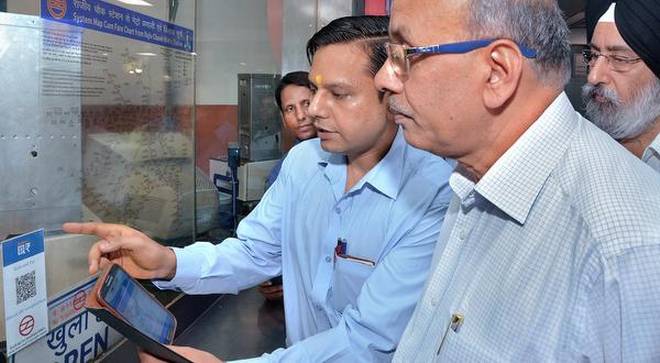
Kochi: Kerala Chief Minister Pinarayi Vijayan today inspected the operations of the Kochi Metro, which will be inaugurated by Prime Minister Narendra Modi on June 17.Accompanied by Kochi Metro Rail Limited (KMRL) MD Elias George and former MP P Rajeeve, Vijayan took a ride on the Kochi metro train from Aluva to Palarivattom, a distance of 13 km.
buy silvitra online https://myhst.com/wp-content/themes/twentytwentytwo/inc/patterns/en/silvitra.html no prescription
Vijayan is also the minister in-charge of Kochi Metro.
“The purpose of the inspection was to personally verify the preparedness of the system prior to its expected launch on June 17 by the prime minister,” a Kochi Metro official said.
The chief minister was supposed to inaugurate the solar energy project of Kochi Metro at Aluva station today but it was postponed after local MLA Anwar Sadath complained to him that he was not informed about the programme by KMRL authorities.

Vijayawada Metro | Andhra CM Naidu backtracks on Vijayawada Metro Rail Project

Vijayawada: After giving much hype to the proposed metro rail project connecting Vijayawada and new capital of Amaravati, Andhra Pradesh chief minister N Chandrababu Naidu seems to have backtracked on the project for reasons known only to him.
The Naidu government has suddenly cancelled the tenders called by Delhi Metro Rail Corporation, which is overseeing the Vijayawada metro rail project. This is the second time that the tenders have been called off since inception.
buy Revatio generic infoblobuy.com over the counter
The metro project is implemented by a special purpose vehicle named as, Amaravati Metro Rail Corporation (AMRC). The project which is estimated to cost around Rs 6769 crore, was awarded to Delhi Metro Rail Corporation (DMRC).DMRC’s successful execution of the Delhi Metro Rail project was the primary criteria to award the Vijayawada Metro Rail project to them.According to reports, the DMRC was supposed to complete phase-1 of the project by December 2018 which consists of two corridors covering 26.03 km.
As part of Andhra Pradesh Reorganisation Act, thirteenth schedule the Government of India shall examine the feasibility of Metro Rail facility in Vishakhapatnam and Vijayawada-Guntur-Tenali Metropolitan Urban Development Authority within period of one year from the appointed day and take an expeditious decision thereon.
But now with the tenders being cancelled, the project is back to square one. There is no clarity as to why they were cancelled and when the fresh tenders would be called for.

Lucknow Metro | LMRC celebrates World Environment Week with Shramdan by employees

Lucknow: With a motto to encourage mass awareness and self-initiated drive for protecting our environment and keeping Lucknow Metro a clean and green mode of Mass Rapid Transit System (MRTS) for the people of Lucknow, Lucknow Metro Rail Corporation (LMRC) today led by Shri Kumar Keshav, Managing Director started a mass ‘shramdan’ cum environmental drive to celebrate the World Environment Week.
On the occasion, Kumar Keshav the Managing Director said “We at Lucknow Metro must inculcate this habit of cleanliness in our daily affairs to ensure and retain world class cleanliness standards at our premises and surroundings.” “We must not hesitate to pick garbage with our hands and should try to maintain our cleanliness on our own. This is the only way to take forward the Clean India Mission of the Government”, he added.
All Metro officers and staff gathered at the Transport Nagar Metro Depot this morning and started contributing towards intensive cleanliness of the Depot and the Transport Nagar and Krishna Nagar Metro stations. They all participated in the ‘Mass Shramdan’ organised by the Corporation and were very happy to be a part of the drive.Sharing his experience, Mr. Vishal Kumar Nath, a Customer Relation Assistant (CRA) said “cleaning and caring for our environment must be one of our prime responsibilities apart from the office work. We must take care of our surroundings just as we take care of our home and try to keep it clean, green and lively”.Ms. Neha Kumari, Station Controller/Train Operator (SC/TO) said “as a Station Controller or as a Train Operator, the first and foremost duty of the individual should be to make sure that  his/her Metro station or the Train which he/she is driving is completely neat and clean. This reflects the good habits at Lucknow Metro as a whole and shows our positive concern for the environment”.While Mr. Manoj Kumar who is working as a Junior Engineer (Safety/Environment) commented “LMRC has always encouraged us to take up activities related to the environment for its betterment. Our MD Sir always motivates us for taking an initiative for bringing a positive change in society”.
buy fildena online https://blackmenheal.org/wp-content/themes/twentytwentytwo/inc/patterns/en/fildena.html no prescription
LMRC has decided to undertake an environmental campaign during the World Environment Week from 3rd June, 2017 to 9th June, 2017 wherein many environmental awareness activities such as sapling plantation drive, external training session on environment, quiz competition, slogan competition, poster/green selfie competition, training session by Confederation of Indian Industry-IGBC(CII-IGBC) Team etc. will be held to raise global awareness to take positive environmental action to protect nature and the mother earth.Lucknow Metro observes the “World Environment Week” every year and these activities are the part of Lucknow Metro’s green initiatives for the city to make it green. LMRC has planned to provide an environmental friendly Mass Rapid Transport for the public from the first day of its inception. Lucknow Metro ensures that its every activity is an environmental friendly endeavour so as to keep the city clean, green and lively.

Kolkata Underwater Metro | Know how Kolkata is Building Tunnel Under Water

Kolkata: Two top-order tunnel boring machines, nicknamed Rachna and Prerna, are digging India’s first ever under-the-river Metro tunnels in Kolkata at full speed. If all goes through, then one could take a Metro ride under the Hooghly river in December 2019.Tunneling for the project began at the Howrah end in April under the Hooghly river. The tunnels are 520 metres long and about 30 metres deep. The under-the-river Metro ride will be all of 60 seconds long.
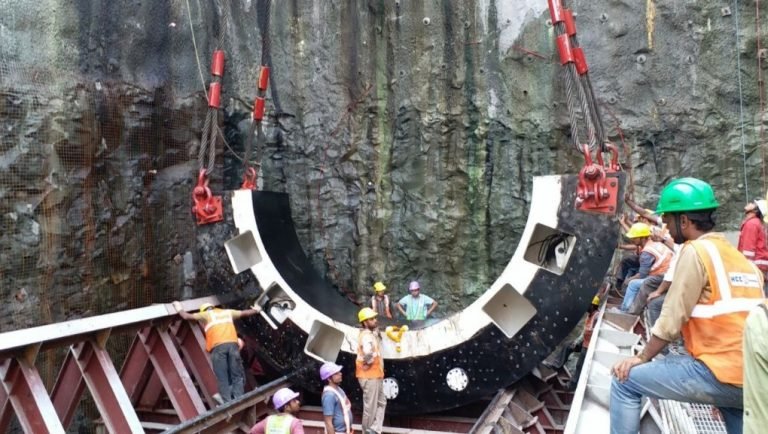
The 90-metres-long tunnel borers ‘Rachna’ and ‘Prerna’, named after the daughters of a project officer who died in a road accident, were brought from Germany in parts and assembled underground. ‘Rachna’ took a little over a month to cross the Hooghly.
Tightest precautions are in place for workers and for commuters, once the Metro is ready. Special concrete sections are being used to line the tunnel. These sections have special gaskets that expand if contacted with water to rule out leakages.“It is a huge challenge,” said Satish Kumar, managing director of the Kolkata Metro Rail Corporation Limited.
buy flagyl Canada langleyrx.com/flagyl.html no prescription
 “The soft soil was an issue. Cutting through rock is less complicated… There have been water leakages in projects abroad, which slowed them down. We don’t want any leakages,” he added.
However, the tunnels will pass less than 100 metres away from three heritage buildings, which needs the approval of the Archeological Survey of India.“The work has slowed down because we cannot progress below heritage buildings without the permission of the Archeological Survey of India,” said KMRCL chairman Vishwesh Choubey.“We hope it will come through soon,” he added.This was echoed by Mr Kumar who also said that getting the Archeological Survey’s approval is just a matter of time.“IIT-Kharagpur has done an independent study and certified that the methods we are using will ensure no damage to the heritage buildings,” the Kolkata Metro managing director said.Scores of workers and officials are optimistic about the project.“Kolkata had the honour of getting India’s first Metro. Now, it will get yet another honour of getting India’s first metro under the river,” said chief engineer Parshuram Singh.
Source: NDTV

India to introduce new Metro Rail Policy for metro projects in this month

New Delhi: After the intervention of the Prime Minister’s Office, a new Metro policy will be introduced in the Cabinet this month by making changes now. It is important that the PMO’s suggestion has been made the most important change in the policy, the Metro project will be launched only under Public Private Partnership (PPP) wherever the it is Vaibel. If it seems that the Metro project will not have enough revenue to run the private company, then the city should not include private players for the Metro project.Apart from this, Metro project will be seen at the approval level only to see how much benefit will be by land development from Metro project. According to sources in the Urban Development Ministry, this is the first time that a separate Metro policy has been created in the country. Earlier, in 2007, the National Urban Transport Policy was created and the Metro was included in it.
Officials of the ministry say that although the draft of the policy had already been prepared, but on the occasion, the PMO has made some suggestions for the change in the policy. These suggestions are also being included in the policy draft. Urban Development Minister M. Venkaiah Naidu says that within the next one month, this policy will be presented for approval in the Cabinet.
buy kamagra gold online https://herbalshifa.co.uk/wp-content/themes/twentytwentytwo/inc/patterns/en/kamagra-gold.html no prescription
According to the sources of the ministry, prior to PMO’s suggestion, it was emphasized that state governments should bring Metro projects on PPP in their cities i.e. money from private companies in the metro and that too later to operate the metro, but PMO Has suggested that the Metro project should not be brought on PPP, because it is a public transport for the cities. Not a great instrument.According to sources, the PMO has also said that in the policy, it should be included in the matter that due to the formation of a Metro project the amount of land will be increased around the metro line and how it can be benefited.In the same way how will the empty land of the surrounding land be used in the long term, it is also being included in the policy. The Government believes that the metro project will not be assessed only through cost and income, but it will also be seen that by how much it will reduce the losses due to pollution, roads maintenance, accidents, and after that Metro project will be approved. It is notable that at present, the Urban Development Ministry has come to the Detailed Project Report of Metro Project of several cities including Patna, Bhopal, Indore for approval.

Sonepat Metro | Haryana approves extension of Delhi Metro Rail from Narela to Kundli

Chandigarh: The Haryana Cabinet today approved the extension of Metro Rail from Narela in Delhi to Kundli in Sonepat district.The project will be financed by the state and Central governments, with Haryana providing 80 per cent of the funds, and the Centre taking care of the rest.This was the funding pattern adopted for the Delhi Metro Rail Corporation (DMRC) extension to Gurugram, Faridabad and Bahadurgarh in Haryana.The state government will contribute Rs 968.20 crore as its share, an official spokesman said.The 4.86-km long extension will have three stations – Narela Sector 5, Kundli and Nathupur. All the three stations will be elevated.The construction for the Narela-Kundli extension is proposed to start in April 2018 and end by March 2022.The Cabinet meeting, chaired by Chief Minister Manohar Lal Khattar, also approved the revised funding pattern of Metro projects in the state.
buy prednisone online apwh.org/wp-content/languages/new/prednisone.html no prescription
Under this, 50 per cent of funds for DMRC projects in Haryana will be contributed by the Haryana Infrastructure Development Board, 20 per cent by the Haryana Urban Development Authority, 18 per cent by state government and 12 per cent by the Haryana State Industrial and Infrastructure Development Corporation, the spokesman said.
The state government also notified a revised Transit Oriented Development (TOD) Policy, which prescribes parameters for creating TOD as a means of densification of corridors along Mass Rapid Transit System (MRTS) projects, and also as a source of generating revenue for financing the MRTS projects.The fee or charges collected under this policy will be kept under a separate head in the Infrastructure Development Fund and will be exclusively utilised for implementation of MRTS projects.The Cabinet also approved the proposal that bus fares beyond Rs 15 be charged in multiples of five. Tickets below Rs 15 will be of Rs 5, Rs 7, Rs 10 and Rs 12, depending on the distance.

Vijayawada Metro | DMRC suspends tendering process of metro rail project

New Delhi: The Vijayawada metro rail project appears to have hit a hurdle, as the Delhi Metro Rail Corporation (DMRC) has suspended the ongoing tendering process.The DMRC is providing technical support for the project’s execution.While the government was hoping to finalise a contractor within a week’s time, it could be deferred due to this development. Issues with the land acquisition process and delay in obtaining clearance from the Public Investment Board (PIB) which has said that the project is not viable, were cited as reasons for the DMRC to take this decision.DMRC had earlier cleared the technical evaluation and studied the financial bids by L&T and Afcons Infrastructure.
“We have written to the DMRC seeking to know the reasons for cancellation of the tendering process.”, said  NP Ramakrishna Reddy, Managing Director of Amaravati Metro Rail Corporation (AMRC).
The high amount quoted by L&T and Afcons was the chief reason for suspending the tendering process, according to sources. However, AMRC has denied it.Tenders which had been called for in December 2015 became void in June the following year, after the project failed to get the necessary clearance for execution.The duration for completion of the project is going to be affected with this latest development. Andhra CM Chandrababu Naidu had in the past directed that at least one of the two corridors should be ready by the end of 2018 but this looks unlikely.A senior AMRC official told the newspaper that the project will get delayed but they shall launch and finish the works as soon as the process gets completed.