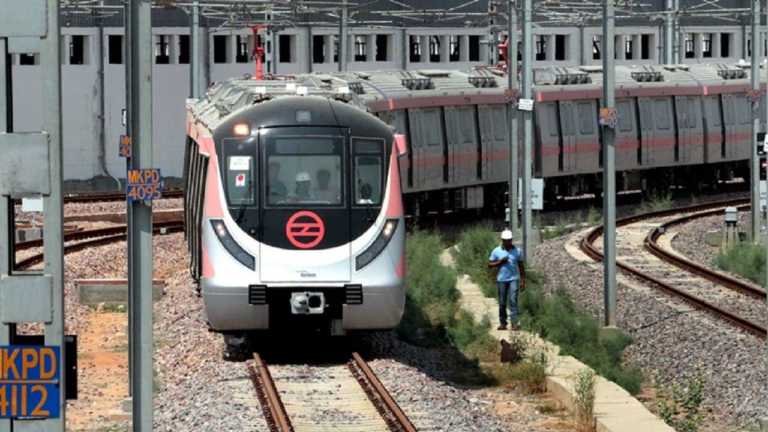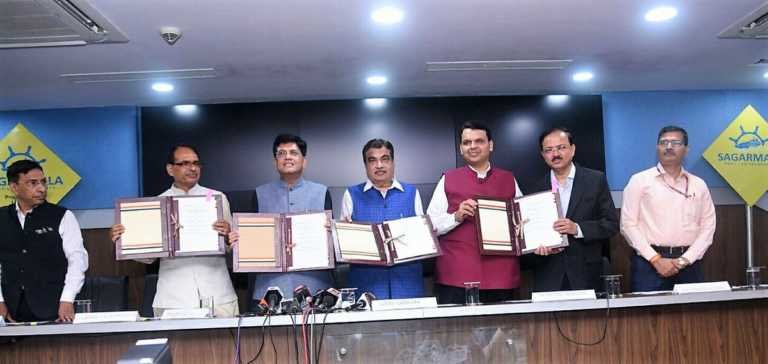
New Delhi: Prime Minister Narendra Modi has flagged-off the Delhi-Faridabad Metro Line that would allow hassle free travel for around two lakh daily commuters between the national capital and the industrial hub in Haryana.The extension of the Delhi Metro connects Badarpur to Escorts Mujesar in Faridabad.The total cost of the project from Badarpur to Escorts Mujesar is nearly Rs. 2,500 crore. Out of this, Rs. 1,557 crore was borne by the Haryana Government, the Centre contributed Rs. 537 crore, while the Delhi Metro provided Rs. 400 crore.The nine stations in this section include, Sarai, NHPC Chowk, Mewala Maharajpur, Sector 28, Badkal Mor, Old Faridabad, Neelam Chowk Ajronda, Bata Chowk and Escorts Mujesar. buy kamagra polo online https://lasernailtherapy.com/wp-content/themes/twentytwentytwo/inc/patterns/en/kamagra-polo.html no prescription
All these are elevated and located on either side of the Delhi-Mathura Road (NH-2).“The nine-station metro corridor which was 95 per cent indigenously built will provide people a safe, affordable, quick, comfortable, reliable, environment-friendly and sustainable transport facility,” a Haryana government spokesperson said.Haryana Chief Minister ML Khattar, addressing a press conference on Saturday, had thanked the Prime Minister for “gifting” the Metro service which would take the city to “another level of progress” with better connectivity with other NCR towns.He had also said that the Prime Minister would be announcing the go-ahead for connecting Gurgaon with Faridabad by Metro.
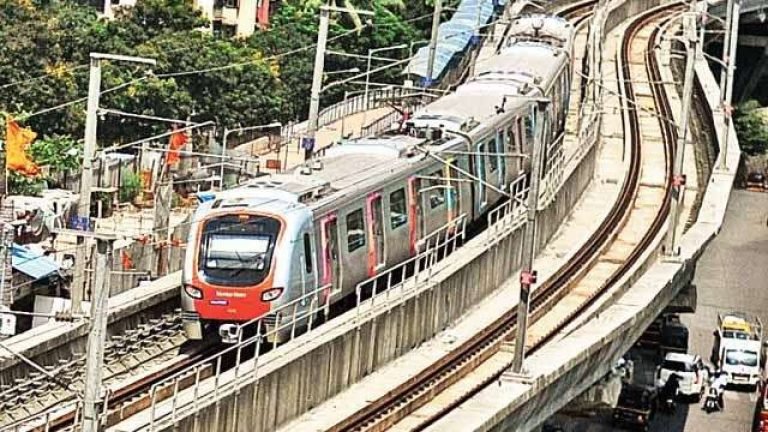
New Delhi: The Delhi Metro Rail Corporation (DMRC) has announced opening date of Mundka-Bahadurgarh corridor today. The satellite city of Bahadurgarh in Haryana is all set to get Metro connectivity with the completion of work on the 11.183 kilometre long Mundka – Bahadurgarh Metro corridor. After opening of this section, it will third connectivity to some urban area of Haryana State after Yellow Line and Purple Line which are connecting Gurugram and Faridabad cities of Haryana respectively.Apart from connecting the metro services to Bahadurgarh this corridor will also provide metro connectivity to many areas of outer Delhi of the western fringes of the city viz. Mundka, Ghevra, Tikri Kalan etc. The Delhi Metro will expand its network to 288 kilometers with 208 metro stations after opening of this long waited section.The main highlights of this section are as follows:-
Route Length: 183 Km
Number of Stations : 07 (All Elevated)
In Delhi: Mundka industrial Area, Ghevra, Tikri Kalan, Tikri Border
In Haryana: Modern Industrial Estate, Bus Stand, City Park
Colour Code: Green (Extension of the Inderlok – Mundka Corridor)
Gauge: Standard Gauge (Rolling Stock similar to Green and Violet Lines)
After the completion of this corridor, the entire Inderlok/Kirti Nagar – Bahadurgarh section will become 29.64 kilometres long.
Connectivity Benefits:The Mundka – Bahadurgarh section will be extremely crucial from the point of view of connectivity of the city of Bahadurgarh as well as parts of West Delhi. Bahadurgarh is an upcoming urban settlement which has many industrial units. Similarly, Mundka also has an industrial area where many people travel every day for their professional requirements. This corridor will be of help to these people.This section will be Delhi Metro’s third extension to Haryana after Gurugram and Faridabad. Haryana already has over 21 kilometres of Delhi Metro lines. With this section, the Delhi Metro section in Haryana will expand to 25.8 kilometres.Bahadurgarh is a bustling urban settlement in the Jhajjar district of Haryana with a population of about one lakh and seventy thousand people. The Bahadurgarh Industrial Area houses many industrial units and is a source of employment for lakhs of people who travel there from Delhi.Besides, Bahadurgarh has also developed into an educational hub and houses many universities and colleges. Many students travel to these institutes from Delhi every day. This connection will be of great help to them also.Many areas of Outer Delhi in the western parts of the national capital will be benefitted. The Mundka Industrial Area also has many industrial units. This apart the localities of Ghevra, Tikri Kalan will be connected by the Metro for the first time.The people working in the Industrial Estate, Bahadurgarh will be benefitted with the Modern Industrial Estate (MIE) metro station. This area has many industries around the NIE Metro station.The Bus Stand Metro Station in Bahadurgarh has seamless connectivity with the interstate bus terminal which provides connectivity to other areas in Haryana.Engineering and other Challenges
The Bus Stand Station in Bahadurgarh, being situated at one of the most congested locations faced innumerable problems due to paucity of space, presence of a crematorium ground on the north side, presence of many water, electrical and other underground utilities etc.
Moreover, there was huge traffic congestion on the south side of the station due to the bustling Bahadurgarh bus stand. Due to the congestion, it was impossible for DMRC’s engineers to divert the traffic running on both sides of the median and prepare scaffolding for spanning the carriageway to allow traffic below it.
The two electric lines of 440 KVA and 220 KVA at Tikri kalan and MIA station were raised to a height of 60 mtrs. Specially designed Mono pole of height 60 mtrs was erected for the first time in India instead of lattice structure to raise the height of these power lines.
Mundka Industrial Area station has been constructed on a busy NH-10 as an integrated station with provision of a future metro track crossing the Green line. This resulted in raising the rail level of MIA station of Green line to 22 mtrs above the ground level. There were multiple utilities at the ground level also which were accommodated/diverted. The construction of MIA station on NH-10 was done without disturbing the traffic flow on NH 10.
Station Architecture:
The facade of the Mundka Industrial Area station of the corridor has been decorated with beautiful terracotta designs. All the other stations also have a bright and vibrant colour scheme with bright yellow pillars on the platforms. The lifts also have been done in eco-friendly red terracotta tiles at all the station which are giving a vibrant look to the structures. The roof tops of the elevated stations have also been redesigned for better aesthetics.
Solar Power Plant at Bahadurgarh Depot
DMRC is committed to provide environment friendly Metro system and as part of this endeavour, DMRC is installing Solar PV power plants at various locations in existing as well as upcoming DMRC metro corridors. Efforts are made to integrate solar PV power plants at construction stage itself in the upcoming network of DMRC. All the roof-top solar plants are being installed under RESCO model, till date 23 MWp capacity has already been commissioned in the DMRC network.Solar panels installed at roof tops of Delhi Metro depotIn Bahadurgarh Depot, Roof Top Solar Plants with total capacity of 783 kWp has been installed under RESCO model, which is spread over 7 different roofs. It is estimated to generate 1 million Unit of energy per annum, (i.e.approx. 2,800 Units per day), which will be adequate to meet the day time auxiliary energy requirement (i.e. lighting, air conditioning, etc.) of the Depot.Further, work to install additional 700 kWp capacity, solar plants on the roofs of 7 stations of Mundka – Bahadurgarh corridor will commence shortly, for which the developer has been finalised. Energy generated from these plants will be adequate to meet the entire day time auxiliary load of these stations.All the seven stations of the Line-5 extn. (Mundka – Bahadurgarh corridor)are equipped with the latest energy efficient equipment / systems, such as LED lighting, Regenerative Braking in Lifts, VRV Air conditioning, etc. All these stations have been rated as platinum by the Indian Green Building Council for adherence to green building norms.
Operations Plan:
As per the time table for the entire Inderlok/Kirti Nagar – City Park section, a total of 20 trains will be put into service. Every alternate train from Mundka will go up to City Park in Bahadurgarh and a frequency of around 8 minutes will be maintained between Mundka and City Park. The total running time between Inderlok/Kirti Nagar and City Park (Bahadurgarh) will be about 50 minutes.
Mumbai: The Mumbai Metropolitan Region Development Authority (MMRDA) invites global tenders for Design, Supply, Installation, Testing and Commissioning of Traction and Auxiliary Power Supply, SCADA And Overhead Traction System (OTS) for Metro Line 7 (Andheri East – Dahisar East) of Mumbai Metro Rail Project of MMRDA.
Contract No. and Title: MMRDA/7/MMRP/CA-16: Design, Supply, Installation, Testing and Commissioning of Traction and Auxiliary Power Supply, Scada and Overhead Traction System of Metro Line 7 [Andheri East – Dahisar East] of Mumbai Metro Rail Project of MMRDA.
Key Points of Tender Notice No. MMRDA/7/MMRP/CA-16:
Completion period of the Work: Twenty One (21) months
Tender documents on sale: From 15.06.2018 to 30.07.2018 (up to 1200 hrs) on e-tendering portal of MMRDA. https://etendermmrda.maharashtra.gov.in
Cost of Tender documents: INR 11,200/-
Pre-bid Meeting: 02.07.2018 at 11:00 hrs.
Date & time of Submission of Tender online: 30.07.2018 up to 15:00 hrs
Date & time of Tender Closing: From 30.07.2018 (1501 Hrs) to 30.07.2018 (up to 1800 hrs)
Date & time of opening of Tender online: 31.07.2018 at 11:01 hrs.
Authority for purchase of tender documents, seeking clarifications and submission of completed tender documents: Director (System)-Metro PIU, 1st Floor, A-wing, Old Administrative Building, Mumbai Metropolitan Region Development Authority (MMRDA),
Bandra Kurla Complex, Bandra (E), Mumbai – 400051
Phone: 91(22) 26597552, Fax: 91(22)26594182
E-mail: metropiu.systems@mailmmrda.maharashtra.gov.in
https://mmrda.maharashtra.gov.in
About Mumbai Metro Line-7 (Andheri East – Dahisar East) Corridor:
This corridor will cover approx. 16.5 km long distance from Andheri East to Dahisar East and consist with 13 elevated metro stations.
This corridor will provide inter-connectivity among the existing Western Express Highway, Western Railway, Mumbai Metro Line 1 (Ghatkopar to Versova), the ongoing Metro Line 2A (Dahisar to DN Nagar) and the proposed Metro Line 6 (Swami Samarth Nagar to Vikhroli).
This corridor will facilitate smooth and efficient interchange with the suburban rail system and MRT system at Andheri, JVLR and Dahisar
This corridor will provide connectivity between Central Mumbai and Northern suburban Mumbai. It will also provide rail based access to the Mumbai International Airport (CSIA), SEEPZ, National Park and other commercial and geographical landmarks.
Mumbai: The Mumbai Metropolitan Region Development Authority (MMRDA) invites global tenders for Design, Manufacture, Supply, Installation, Testing and Commissioning and Maintenance of Automatic Fare Collection (AFC) Systems for 52 Elevated Stations and AFC OCC, AFC Software Testing and Development Center (SDC) of Mumbai Metro Line 2A (Dahisar East – Dn Nagar), Line 2B (ESIC Nagar – Mandale) and Line 7 (Andheri East – Dahisar East) of Mumbai Metro Rail Project of MMRDA.
Contract No. and Title: MMRDA/MMRP/CA-33: Design, Manufacture, Supply, Installation, Testing and Commissioning and Maintenance of Automatic Fare Collection (AFC) Systems for 52 Elevated Stations and AFC OCC, AFC Software Testing and Development Center (SDC) of Metro Line 2A (Dahisar East – Dn Nagar), Line 2B (ESIC Nagar – Mandale) and Line 7 (Andheri East – Dahisar East) of MMRDA.
Key Points of Tender Notice No. MMRDA/MMRP/CA-33:
Completion period of the Work: Forty Two (42) months
Tender documents on sale: From 15.06.2018 to 30.07.2018 (up to 1200 hrs) on e-tendering portal of MMRDA. https://etendermmrda.maharashtra.gov.in
Cost of Tender documents: INR 11,200/-
Pre-bid Meeting: 02.07.2018 at 15:00 hrs.
Date & time of Submission of Tender online: 30.07.2018 up to 15:00 hrs
Date & time of Tender Closing: From 30.07.2018 (1501 Hrs) to 30.07.2018 (up to 1800 hrs)
Date & time of opening of Tender online: 31.07.2018 at 12:01 hrs.
Authority for purchase of tender documents, seeking clarifications and submission of completed tender documents: Director (System)-Metro PIU, 1st Floor, A-wing, Old Administrative Building, Mumbai Metropolitan Region Development Authority (MMRDA),
Bandra Kurla Complex, Bandra (E), Mumbai – 400051
Phone: 91(22) 26597552, Fax: 91(22)26594182
E-mail: metropiu.systems@mailmmrda.maharashtra.gov.in
https://mmrda.maharashtra.gov.in
About Mumbai Metro Line-2A, Line-2B and Line-7 Corridors:
Line 2A will cover approx. 18.5 km long distance from Dahisar to DN Nagar and consist with 17 elevated metro stations. It shall provide inter-connectivity among the existing Western Express Highway, Western Railway, Metro Line 1 (Ghatkopar to Versova), the ongoing Metro Lines 2B (D N Nagar to Mandale) & 7 (Andheri (E) to Dahisar (E)) and the proposed Metro Line 6 (Swami Samarth Nagar to Vikhroli).
Line 2A will cover approx. 23.6 km long distance from DN Nagar to Mandale and consist with 22 elevated metro stations. It shall provide interconnectivity among the existing Western Express Highway, Eastern Express Highway, Western Railway, Central Railway, Mono Rail, Metro Line 1 (Ghatkopar to Versova) and Metro Line 2A (Dahisar to D N Nagar), Metro Line 4 (Wadala to Kasarvadavali) & Metro Line 3 (Colaba to SEEPZ) under implementation. A dedicated Depot is planned on this line at Mandale
Line 7 will cover approx. 16.5 km long distance from DN Nagar to Mandale and consist with 22 elevated metro stations. This corridor will provide inter-connectivity among the existing Western Express Highway, Western Railway, Mumbai Metro Line 1 (Ghatkopar to Versova), the ongoing Metro Line 2A (Dahisar to DN Nagar) and the proposed Metro Line 6 (Swami Samarth Nagar to Vikhroli). This corridor will also provide connectivity between Central Mumbai and Northern suburban Mumbai. It will also provide rail based access to the Mumbai International Airport (CSIA), SEEPZ, National Park and other commercial and geographical landmarks. A dedicated Depot is planned on this Line at Dahisar.
Hyderabad: In August the detailed project report (DPR) for the Hyderabad Metro Rail Limited phase II including the line connecting the International airport is likely to be ready.Airport ConnectivityThrough International agencies, the DPR and the Telangana Government is looking at raising funds including JICA, for the expansion project to partly fund its implementation. The Delhi metro rail corporation which had earlier prepared the DPR for metro rail.Telangana minister for municipal administration and urban development KT Rama Rao said that the chief minister K Chandrasekhar Rao was keen that the second phase and airport connectivity be taken up and completed at the earliest. For phase II the Government has identified several extensions and corridors.The DMRC would take up the environment and social impact assessment studies.Rao says that it would be ready for launch by July end after a test run to be launched stretch of 16km, which will complete one full line when commissioned.Easy ConnectivityFor the convenience of the people, the metro is aiming to provide direct access to major bus station and railways station.NVS Reddy Managing Director of HMRL said that the 30 km stretch launched by Prime Minister Narendra Modi in November is operational now and on an average 80,000 people are traveling it every day. The addition of the 16 km stretch would complete one full stretch of 29 km and ease the traffic.
NVS Reddy Managing Director of HMRL said that the 30 km stretch launched by Prime Minister Narendra Modi in November is operational now and on an average 80,000 people are traveling it every day. The addition of the 16 km stretch would complete one full stretch of 29 km and ease the traffic.
He also says that a 45 days trial run the commissioner of metro rail safety will clear the metro for operation for Hyderabad metro statutory inspection of overhead electric traction system and accorded sanction was conducted this week earlier by the chief electrical inspector, Government of India.By July the metro rail authorities expect the commission of one of the stretches. One will complete line of 29 km and another stretch by September, which will complete three of the two metro lines.Another metro line by 2019 will be ready, minus a stretch of six km that runs through the old city and connects to Falaknuma.The route which relates to six km stretch to the old city is facing a challenge of providing a right of way for metro implementation.
Mumbai: The Mumbai Metropolitan Region Development Authority (MMRDA) invites global tenders for Design Verification, Supply, Installation, Testing and Commissioning of E&M, Fire Detection and Fire Suppression Systems including DG Sets of 13 Elevated Stations (Andheri East To Ovaripada) of Mumbai Metro Line 7 (Andheri East to Dahisar East) of Mumbai Metro Rail Project of MMRDA.
Contract No. and Title: MMRDA/7/MMRP/CA-17: Design Verification, Supply, Installation, Testing and Commissioning of E&M, Fire Detection and Fire Suppression Systems including DG Sets of 13 Elevated Stations (Andheri East To Ovaripada) of Line 7 (Andheri East to Dahisar East) of Mumbai Metro Rail Project of MMRDA.
Key Points of Tender Notice No. MMRDA/7/MMRP/CA-17:
Approximate Cost of Project: INR 56.06 crores
Completion period of the Work: Fourteen (14) months
Tender documents on sale: From 15.06.2018 to 30.07.2018 (up to 1200 hrs) on e-tendering portal of MMRDA. https://etendermmrda.maharashtra.gov.in
Cost of Tender documents: INR 11,200/-
Pre-bid Meeting: 04.07.2018 at 11:00 hrs.
Date & time of Submission of Tender online: 30.07.2018 up to 15:00 hrs
Date & time of Tender Closing: From 30.07.2018 (1501 Hrs) to 30.07.2018 (up to 1800 hrs)
Date & time of opening of Tender online: 31.07.2018 at 14:00 hrs.
Authority for purchase of tender documents, seeking clarifications and submission of completed tender documents: Director (System)-Metro PIU, 1st Floor, A-wing, Old Administrative Building, Mumbai Metropolitan Region Development Authority (MMRDA),
Bandra Kurla Complex, Bandra (E), Mumbai – 400051
Phone: 91(22) 26597552, Fax: 91(22)26594182
E-mail: metropiu.systems@mailmmrda.maharashtra.gov.in
https://mmrda.maharashtra.gov.in
About Mumbai Metro Line-7 (Andheri East – Dahisar East) Corridor:
This corridor will cover approx. 16.5 km long distance from Andheri East to Dahisar East and consist with 13 elevated metro stations.
This corridor will provide inter-connectivity among the existing Western Express Highway, Western Railway, Mumbai Metro Line 1 (Ghatkopar to Versova), the ongoing Metro Line 2A (Dahisar to DN Nagar) and the proposed Metro Line 6 (Swami Samarth Nagar to Vikhroli).
This corridor will facilitate smooth and efficient interchange with the suburban rail system and MRT system at Andheri, JVLR and Dahisar
This corridor will provide connectivity between Central Mumbai and Northern suburban Mumbai. It will also provide rail based access to the Mumbai International Airport (CSIA), SEEPZ, National Park and other commercial and geographical landmarks.
Meerut: Meerut Development Authority has convinced National Capital Region Transport Corporation (NCRTC) that, to start the work of Rapid Rail Project on the ground from Meerut first and Duhai to Sahibabad. After this, NCRTC has invited tender for five stations between Modi Nagar and Meerut. It is believed that even though on 1 July working of Rapid Rail will start on the ground, its work may delay in carrying of actual work. The Central Government will try to complete the project in the whole West UP and NCR before the 2019 Lok Sabha elections.Region Rapid Rail System Project in IndiaJust before the election of Kairana, just like the PM Modi launched the Eastern Peripheral Expressway by rallying in Baghpat, preparations for the Rapid Rail will be done on the exact same lines. On July the starting date has been fixed for carrying Rapid Rail work. So far, Kejriwal government of Delhi has not agreed to the Rapid Rail, therefore the NCRTC is busy in construction of first Phase from Duhai to Sahibabad in Uttar Pradesh. Now, there is only seven days left on the date of starting work on the ground, but till now the central government has not given any response. Meanwhile, tenders of stations between Meerut and Modinagar have also been invited.BJP government has always considered Meerut as important place for election and contribution of people in election victory. Now people of Meerut are expecting center cooperation in this project.From the beginning of 2011, there is discussion to make DPR and company is going on, and to build the 92 km of Rapid Rail Project, between Delhi and Meerut, was going on, but till the now project has remain in file only to bring on ground neither the Centre government is responding nor the NCRTC. A large part of it is from UP, so the approval of the UPA government was sought and which was given given it last year. buy cialis pack online https://herbalshifa.co.uk/wp-content/themes/twentytwentytwo/inc/patterns/en/cialis-pack.html no prescription
Now the permission of the Delhi Government is to be taken in this matter.On the other hand, the NCRTC officials are busy working on this project every day but are not speaking anything about the date of 1 July. They have even not updated any information regarding project on the NCRTC website.
New Delhi: The inauguration of Delhi Metro’s Green Line to Haryana’s Bahadurgarh will be on Sunday, the Delhi Metro Rail Corporation (DMRC) said on Friday. The extension of Bahadurgarh stretch which is more than 11 km long consisting 7 metro stations. Out of the 7 metro stations, 4 metro stations are in Delhi—Mundka Industrial Area, Ghevra, Tikri Kalan and Tikri Border, and rest three 3 metro stations are in Haryana-Modern Industrial Estate, Bus Stand, and City Park. The Mundka-Bahadurgarh corridor will run along NH-10. At initial state the frequency of Metro train on this extended corridor will be of 25 minutes. After extension of this, the entire Inderlok-Bahadurgarh section would become 26.33 km longIt is pertinent to mention here that the Commissioner of Metro Rail Safety (CMRS) has given safety clearance to start metro services on Mundka extension on 1st June 2018. “Commercial services will also get started by Sunday onward at 4 pm“ mention by DMRC official.Extension of green line from Mundka-BahadurgarhAs per official sources Inauguration of Green line will be on 24 June by Prime Minister Narendra Modi by using the facility of Remote control at PMO office. Haryana chief Minister Manohar Lal Khatter and Union Urban Affairs Minister Hardeep Singh Puri will attend the inauguration of Harayan part of section.At the starting period Green line construction was started in two Phase of construction 2010 and 2011 respectively.At presently it links to Inderlok to Mundka will be expanded to Bahadurgarh.After extension of this corridor Haryana will get third foray corridor from Delhi’s Metro earlier which were Faridabad and Gurugram.DMRC earlier said that, “This extended elevated section will not only connect the Delhi city with Bahadurgarh, but also kept connectivity to many outer Delhi areas of the western area of the city, such as Mundka, Ghevra and Tikri Kalan”Approval of commissioner for metro rail safety (CMRS) has been already given for starting passenger services. The Delhi Metro network will expand to 288 km with 208 stations. After addition of fifth line (Green Line).
Bengaluru: A major relief for passengers traveling in crowded metro coaches, Bangalore Metro Rail Corporation Limited’s (BMRCL’s) much-awaited first six coach Metro was flagged on Friday evening at 5:30 p.m.Chief minister HD Kumaraswamy flagged off the train from a decorated Byappanahalli metro station in the presence of deputy CM G Parameshwara and Union minister of state for housing and urban affairs Hardeep Singh Puri.
Inauguration of six coach train of Bangalore Metro (Namma Metro)
1 of 8
Karnataka CM HD Kumaraswamy flagged off six coach metro train in presence of Union MoHUD minister Hardeep Singh Puri (photo: BMRC)
The CM, along with dignitaries, also traveled in the new six-coach train till Kempegowda Majestic Metro station.The new six-car train which will have one coach reserved for women will run along the Purple Line (Byappanahalli – Mysuru Road) and is expected to help meet peak hour rush. The Purple line was chosen since it is busier than the Green line.With the addition of three coaches, each train will now be able to carry 1950 passengers, almost double the existing capacity of 975. BMRCL currently runs 50 three-car trains on both lines in a day. But still, it was not able to meet the demand during rush hour on Purple line.
“I can assure you we will be well within the deadline. We were given the order in March 2016 and an 18-month period is generally given for such contracts. Due to the urgent requirement for it, we delivered it by February 2017. Round-the-clock effort by BEML staffers and excellent co-ordination at every stage by BMRCL helped us achieve it,” said Deepak Kumar Hota, Chairman and Managing Director, BEML.
“I can assure you we will be well within the deadline. We were given the order in March 2016 and an 18-month period is generally given for such contracts. Due to the urgent requirement for it, we delivered it by February 2017. Round-the-clock effort by BEML staffers and excellent co-ordination at every stage by BMRCL helped us achieve it,” said Deepak Kumar Hota, Chairman and Managing Director, BEML.It may be recalled that Bharat Earth Movers Limited (BEML) had handed over the first three intermediate cars to BMRCL on February 14. Following several trial runs, BMRCL recently obtained safety clearance from the Commissioner of Railway Safety(CRS) and railway board. The second batch of three cars is expected to be delivered by BEML next month and subsequent addition of coaches will not require safety clearance from CRS, and internal safety checks would sufficient.
In March last year, BEML acquired the Rs 1,421-crore order to supply 150 sets of intermediate cars to expand the existing three-car trains by June 2019. This will convert all three-car trains to six by the end of next year. This will help a lot to get down the rush in the metro.
New Delhi: In a study conducted by the IC Centre for Governance (ICCfG), a non-profit organisation, has hailed Delhi Metro Rail Corporation (DMRC). The study was done in the area of ‘institutional ethics’ and they hailed DMRC for its exemplary leadership, fair and transparent processes, commendable performance as well as punctuality and procurement respectively.The report compiled by ICCfG and was unveiled at Metro Bhawan by Prabhat Kumar, former Governor of Jharkhand, and Dr Mangu Singh, MD, DMRC.As per ICCfG the reason for selecting DMRC was due to the consistent performance over the years as well as the respect it earned owing to its performance. As per the study’s outcome, DMRC has successfully implemented Code of Ethics and Values across all functions. The result also showed that the Delhi Metro excelled in several areas including adherence to safety norms, transparent processes, exemplary leadership, prevention of corruption, fair, punctual, employee welfare and transparent processes in procurement.The study was conducted by having in-depth interactions with DMRC’s officers and management. In order to conduct the research the team visited several facilities of DMRC like the training institute, control rooms and metro stations. Even commuters experience was documented on their travelling experience in metro. A detailed set of 14 questionnaires was prepared covering all dimensions of institutional ethics. This was then distributed among employees as well as public for the purpose of the study.Dr Singh, managing director of DMRC shared that the case study has firmly established that there is a direct correlation between an institution’s performance and the level to which it implements an appropriate code of ethics.DMRC on its part has implemented a code of values and ethics for all its 12,000 employees and ensures that each of the follows them.This study will motivate other metro corporations to follow code of ethics in order to win accolades from public and government.
Hyderabad:Hyderabad Metro will soon add another feather to its cap. By first week of July, PowerGrid – state run transmission utility will be commissioning the first commercial e-vehicle fast charger at one of the metro stations. This is part of the partnership between Hyderabad Metro and PowerGrid to create facility to charge e-vehicles.HMRL MD Mr.NVS Reddy inaugurated Electric cars on self drive & rental basis as pollution free first and last mile connectivity at Miyapur Metro station today. This facility of Zoomcars started with 25 cars (Photo: HMRL)I S Jha, chairman and managing director of PowerGrid shared that they will be commissioning the first commmerical fast (direct) charger at of the Hyderabad Metro stations. PowerGrid had joined hands with Hyderabad Metro Rail Limited (HMRL) to set up this facility.
PowerGrid is in talks with Hyderabad Metro officials to start similar facility across all 24 stations. The facility will help in charging e-vehicles in approximately an hour. In about 15 to 20 minutes, top up half batteries will be charged explained Jha.
Taking sustainable travel across the country, Jha said that they are talking to Chennai Metro as well as Gurugram Metro officials to set up fast charging facilities at their metro stations. Jha said this is will significantly boost e-vehicles usage in the country and encourage people to own such vehicles.
PowerGrid’s CMD strongly feels that public sector should encourage such projects as it provides supporting infrastructure for e-vehicles. This will in turn attract private players to invest in such projects with increase in demand.HMRL MD Mr.NVS Reddy inaugurated Electric cars on self drive & rental basis as pollution free first and last mile connectivity at Miyapur Metro station today. (Photo: HMRL)Talking about green energy transmission infrastructure that is being set up by PowerGrid, Jha stated they have completed several transmission links and the transmission infrastructure progress is way ahead of clean energy project development.HMRL MD NVS Reddy inaugurated Electric cars on self drive & rental basis as pollution free first and last mile connectivity at Miyapur Metro station today. (Photo: HMRL)Discussing about high voltage direct current (HVDC) lines, Jha informed that Champa to Kurukshetra HVDC line would be operational by the end of 2018. The company on the other hand will also strive to commission Raigarh to Pugalur HVDC by April 2019 against its deadline of 2020.
Jaipur: The Delhi Metro Rail Corporation (DMRC) had proposed a medium metro system for Jaipur Metro based on population estimate for 2031. It seems the plan will have to be altered as the populated estimated was 92 lakh by DMRC. But as per Jaipur Metro official estimate the population to about 52 lakh. This figure is 44 % less than the projected population.DMRC had prepared detailed plan based on inflated population in Jaipur. As per Delhi Metro officials estimated peak hour per direction traffic (PHPDT) of 27,750 by the year 2031 for east corridor. Based on the data they had proposed a light rail transit system, a medium metro system for the recommended peak traffic load of upto 25,000 PHPDT.Jaipur Metro officials have now come with corrected estimate. As per their data, the projected population growth is 50% more than. A comprehensive mobility plan prepared by Jaipur Metro estimate that the population will be around 52 lakh by 2031 which is 44 % lesser than that projected by DMRC.A senior JMRC official stated that the population projection was on a higher side. The estimate was absed on high growth rates adopted and this is likely to influence trip generation.JMRC’s detailed project plan has adopted uniform growth rate across the city. They rate of growth has been kept uniform in sparsely populated outer areas to the population in Walled City. DMRC which was expecting higher level of congestion, but the current population growth by JMRC hints are uniform growth.Jaipur Metro Rail Corporation (JMRC) officials have shared that they are in favour of having a medium-scale metro in the city.Ashwani Saxena, director project (JMRC) said that the revised population estimates hint at lower growth but the passenger load estimates are closer to previous estimate. JMRC would still prefer that Sitapura to VKI corridor have a medium-metro.With two different figures arriving, the viability of mass transit project in accordance to Jaipur city requirement now raises many questions.
New Delhi: Now, Toll tax and parking charges also included in the facilities of single card payment, which was earlier given for the means of public transport, including Metro rail, local bus, auto taxi etc., in all over the metropolitan cities of India. Union Ministry of Housing and Urban Affairs asked all the agencies to link all the online payment services of toll tax and parking which get included under National Common Mobility Card (NCMC).Union Minister of Housing and Urban Affair Hardeep Singh Puri in review meeting, asked the concerned authorities to link the card to the payment service as soon as possible.A senior official of the Ministry attached to the project said that in the initial phase, the use of NCMC will be used in all Smart Cities connected with Metro Rail projects. As a pilot project, the rent is currently being paid by the same card in the Metro Rail and local bus in Delhi and Kochi for metro services and for bus services in Kochi.
So, after at least one decade of talk about the Common Mobility Card, we actually did it! The Metro Card will work on all DTC/ cluster routes from 1st April 2018; meanwhile, it’s operational on 20 routes from today. Details in the pic! pic.twitter.com/ZQ1l1ZlgN0
The official said that the preparation of National Common Mobility Card Service at the national level has been completed cards, that can be used in all cities are also ready. Only toll plaza and parking operations are awaiting agencies to link it to its online payment service.
CM @Dev_Fadnavis said that Metro Rail Network is not merely a transport facility, but a growth engine for economic & overall development.
CM appreciated the initiative of common mobility card, #MAHAcard and spoke on efforts for building elevated rail & road corridors in Mumbai. pic.twitter.com/715TZq85XR
The objective of the project is to equip NCMC in the future as a debit card. This will allow cardholders to pay rent, toll tax, parking and general retail purchases of public transport instruments.It is to be noted that on the basis of the report of the Committee constituted under the chairmanship of Additional Secretary of the Ministry to implement the NCMC, the National Payment Corporation of India (NPCI) was given responsibilities to develop a single payment card in the country for the local transport services. Apart from this, public sector software company Centre for Development of Advanced Computing (C-DAC) was asked to develop automated system of rent collection of metro rail across the country.In addition to Delhi and Kochi, the use of NCMC has been approved by the local bus and metro authorities in Mumbai, Nagpur, Bengaluru and Ahmedabad in addition to the system developed by NPCI and C-DAC. The Ministry later decided to add toll, parking and nominal purchase payment through this card.To implement this, a committee of experts from the National Information Center (NIC), CDAC, NPCI, Bureau of Indian Standards and the Ministry of Finance suggested the adoption of the ‘EMV open Loop Card’ in India by studying the model of common card have given. The official said that the card has been prepared while deciding the functioning of the NCMC based on the recommendations of the committee. In the future it will be an ambitious plan to implement it in all the big cities of the country.
New Delhi: Delhi Metro has achieved a lot even it is has biggest extending network in India. In the history of Delhi Metro Rail Corporation by an eight years there was no fare hike was done but sudden fare rises in 2017 has reduce the number of commuter. Does DMRC aim to provide transport facility to common people of Delhi with fewer prices than private vehicles? Now it has become a big dispute that metro charges are equal or even more than private vehicle.Delhi Metro Passenger reduced after Fare hikeThe increase in fares of the Delhi Metro has decreased the number of passengers in the metro. According to information from RTI, five lakh passengers stopped traveling every day in the metro. There has been a lot of decline in the earnings of the metro due to not being able to travel so many.Delhi Chief Minister Arvind Kejriwal also stand against the fare hike of Delhi Metro. The Aam Aadmi Party workers had also began a march against the fare hike.
This steep hike in metro fare will kill Delhi Metro. If people stop using it, then what purpose does it serve? https://t.co/xkyae8okRf
According to information of RTI, in 2017 from March to May, number of travelers till now has been reduce to greater extent. And this shortage has been registered after the increase in rent. According to official data, after the increase in fares, the number of people traveling on daily basis in November, December, January and February is 24.38 lakh, 22.71 lakh, 23.01 lakh and 22.18 lakh respectively. When the number of passengers came down, the Metro attributed this to ‘seasonal changes’ and holidays due to festivals. At the same time, in the month of March, April and May, 22 lakh, 22 lakh and 22.5 lakh people traveled daily in the Delhi Metro. Last year, in the month of March, April and May, these numbers were 27.6 lakh, 27.5 lakh and 26.5 lakh respectively.Even the officials of the Delhi Metro were expected to increase the number of passengers by increasing the heat this year, but the numbers of inverted passengers have come down. At the same time, political rhetoric has started on this. Delhi’s Transport Minister Kailash Gehlot has blamed the central government for this. He says that the common man cannot even travel in the metro by increasing the rent.On increasing rent, Union Minister of State for Housing and Urban Affairs Hardip Singh Puri had justified the hike which is necessary to provide “world class facilities” to commuter. Even he had promised that there will be no shortage of passengers by the increase in fares, but the increase in revenue of the Delhi Metro will be required. But the result has not been increased in reverse income but the number of passengers has reduced considerably.
The contention that metro traffic has shifted to pvt vehicles is incorrect. Metro is still cheaper than pvt commute.
Those who want to ride on ridership figures can wait for schools & colleges to reopen.Why do these arguments surface only during festivals & vacations! (3/3) pic.twitter.com/KKrSuizW7s— Hardeep Singh Puri (@HardeepSPuri) June 21, 2018
Varanasi: The ambitious Kashi Project that was given a go ahead by the Akhilesh Yadav government has been rejected by the Varanasi Development Authority (VDA). The project – Varanasi Metro Rail – was prepared by the Rail India Technical and Economic Service (RITES) and was sanctioned by the Yadav’s government.Read Also:Varanasi Metro | RITES completes DPR for metro rail project in Varanasi CityThe earlier plan rejected, the authorities have asked RITES to work on preparing a comprehensive mobility plan. The focus is on developing a mass rapid transport system (MRTS) for Varanasi.Rajesh Kumar, vice-chairman of VDA has proposed introduction of light Varanasi metro rail with a mass mobility plan. The plan will keep provision of problems that are expected to come while executing the plan during the previously selected corridor. RITES officials too presented an inception plan of metro rail service for Varanasi.
Kumar explaining the reason for scrapping metro rail project shared that the project was not feasible for the city. He added the metro project require huge investment. The proposal points out that metro rail project cannot solve the issue of offering Mass Rapid Transport System (MRTS) for a densely populated city.
Kumar explaining the reason for scrapping metro rail project shared that the project was not feasible for the city. He added the metro project require huge investment. The proposal points out that metro rail project cannot solve the issue of offering Mass Rapid Transport System (MRTS) for a densely populated city.Read Also: Varanasi Metro | RITES to study feasibility of cable cars and metro rail in VaranasiTaking into a lot of factors into consideration, VDA decided to scrap the Varanasi metro rail project and instead work towards a comprehensive mobility plan.Kumar expressed that they will now work towards developing MRTS. They arrived at the decision by going through RITES reports and presentation on a new comprehensive mobility plan.Moving ahead Kumar has asked RITES to explore all possible modes of transport – waterways, dedicated bus corridors as well as light metro. Kumar as asked RITEs to prepare a plan based on the requirement of the city and how best it can be achieved.RITES based on the brief are now working on preparing a new comprehensive mobility plan. Once the plan is ready, authorities will take a call on introducing new modes of public transport for the city of Varanasi.