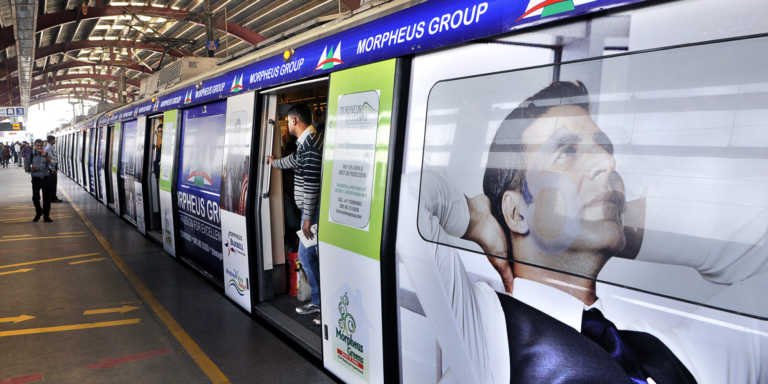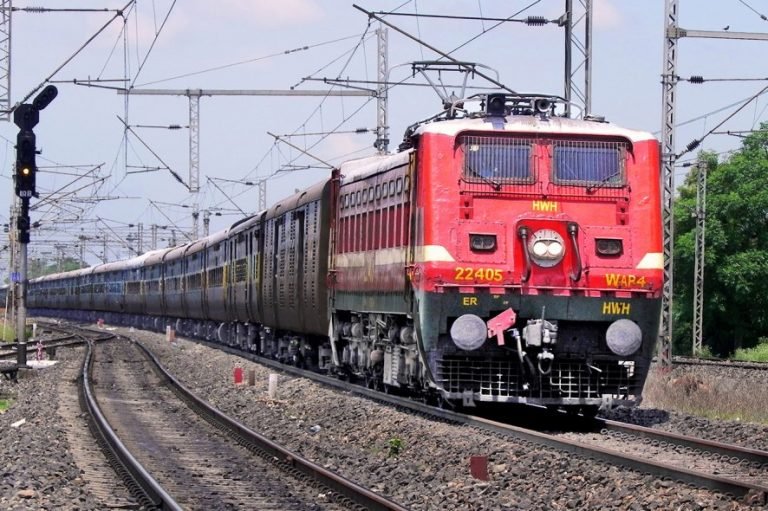
Swanky engineless train on Delhi-Bhopal route soon

New Delhi: Travelling on Delhi-Bhopal route is going to be a wonderful experience. As per recent development, Indian Railway’s Train 18 will be the first engineless train for inter-city travel. This new train comes with an amazing technological interface and enhanced hospitality.

The train also comes with a separate pantry for each and every coach. Passengers will be served better quality food and enjoy their travel. According to the plan the train will come with a mini pantry attached to each coach. This aims to improve food services akin to those served in high-end trains like Shatabdi.

Railway official while interacting with Financial Express online report shared that they are in process of importing equipment. These can be used to chill drinks and heat food. The design and facilities in mini trains will be like Shatabdi but with this imported equipment it would be easier to serve warm food and drinks to passengers. The idea is to offer the best customer experience to those traveling on this train.

The highlight of Train 18 is that these would be ‘Make in India’ coaches. This concept train will an initiative by the Integral Coach Factory (ICF), Chennai. The trail of the train is expected to start in October.

As per Indian Railways, Train 18 will be a self-propelled engine-less chair car rake. In long run, the railway wishes to replace them with age-old Shatabdi Express trains.
Train 18 first prototypes will be put on trial by Research Design and Standards Organisation before it is made operational. The train will operate on Delhi-Bhopal route around January 2019 and will run on 160kmph.

Salient features of Train 18
• Made in India train
• Manufactured at half the cost over imported ones
• AC train comprising of non-executive and executive coaches
• Similar to coaches used in metro
• Will have automatic doors
• Disabled-friendly modular bio-vacuum toilet
• Big luggage racks
• Passengers’ infotainment system
• Continuous windows
• Wi-Fi facilities to passengers

Delhi Metro | DMRC, introducing QR code based on ticketing facility

New Delhi: On 16th September the Delhi Metro Rail Corporation (DMRC) will be introducing QR code based on ticketing facility for travel on Airport Express Line. With the introduction of this facility, commuter’s using Delhi Metro’s Airport Express Line will be able to use the QR Code generated on their smartphones instead of smart cards or tokens to travel.

This system of QR code based ticketing through smartphones will enable passengers to purchase tickets using ‘Ridlr App’ without physically coming to the Metro station. The process to generate QR Code is as given below: –

  1. Download the Ridlr application from play store (available on both Android & IOS platforms) and register into the App with your valid credentials including mobile no. and email- id.
  2. Proceed to buy a QR ticket by selecting the origin station and destination station.
  3. Select no. of passengers (Maximum 6 at a time). The app will display the fare for the selected journey.
  4. Pay the fare using internet banking/credit/debit card. The user will receive a notification.
  5. The app will display the QR code for the journey. The user can tap the QR enabled AFC entry gates of the Metro stations on Airport Line. The AFC gate will open and the user can commence the journey
  6. At the exit, the user needs to tap the QR Code again at the exit AFC gate. The gates will open and the journey will conclude. All six Metro stations of Airport Express Line have been provided with a set of two AFC gates each for entry and exit through QR enabled system (Refer Pic).


Additional Information:

  • A new QR code/ ticket can be purchased only after the last purchased ticket have been exited with or the same (unused or partially used) have expired after the end of the business- day.
  • Sale of QR code/ tickets via the App will be permitted from 04:00 am  till 10 minutes prior to last advertised train timing
  • The QR shall be valid for use on the business day of purchase only and up to the availability of the last train. This is subjected to the following conditions:

New QR codes can be purchased between 04:00 Hrs – 10 minutes prior to last advertised train timing.


Mumbai Metro | Two metro projects get Maharashtra cabinet nod

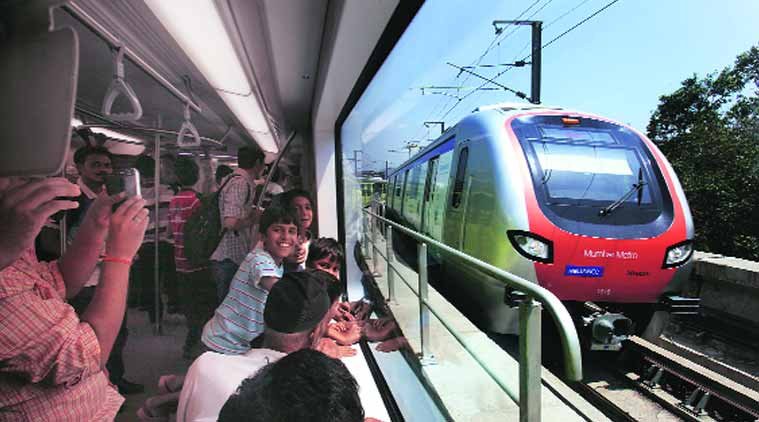
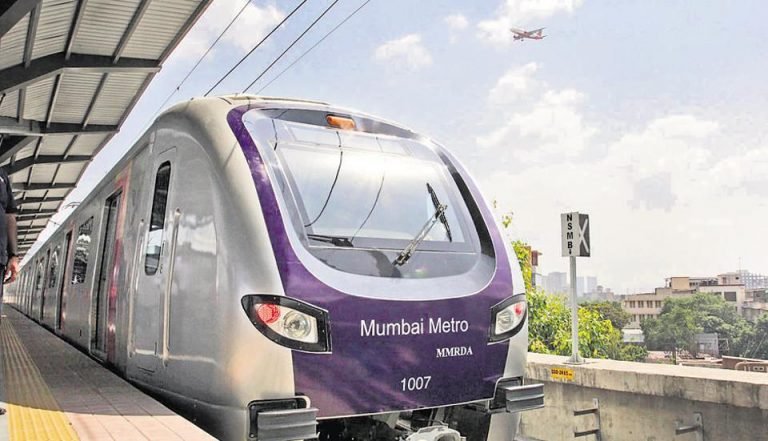
Mumbai: On September 11, Maharashtra cabinet gave its approval for implementing two Mumbai metro projects. The nod has come for the Andheri – Chhatrapati Shivaji Maharaj International (CSIM) airport and Dahisar- Mira Bhayander projects. The estimated cost of both the projects is around Rs 6,607 crores.

As per the official from the Chief Minister’s Office (CMO) Metro 7A will be Andheri-CSIM airport route. On the other hand Metro 9 line will Dahisar-Mira Bhayander route. Both the Mumbai Metro routes together will be 13.5 Km.

Mumbai Metropolitan Regional Development Authority (MMRDA) has been authorized to raise funds for both the routes.

As per the plan, Dahisar-Mira Bhayander route will be 10.41 km long. This stretch will have 11 stations and built on the elevated corridor. The extension of Metro 7 Andheri-CSMI airport (Metro 7 A) will 3.

17 km long in which 2.11 km will be constructed underground.

Correspondingly, 25 percent of funds will be parked for creating additional infrastructure facilities with the government. Additionally, 52 percent will be allocated for developing educational and medical facilities in the institution concerned.

Cabinet has also given its approval to set up food Technology College. This will come up in Yavatmal and Walwa taluka in Sangli district. It is estimated that the college will be constructed at around Rs 102 crore. The CMO office also informed that this college will create 130 new posts. The college will enroll 40 students per year to start with.

With cabinet approving major development projects in and around Mumbai, the common public will have access to good facilities.

The approval for two Mumbai Metro projects will help in easing traffic situations. It will also aid in bringing down vehicular air pollution. Commuters will have access to better public transport via metro.

Now that the approval has come, work should begin soon without much delay.

Chennai Metro | CMRL to begin phase II, will not wait for Centre’s nod

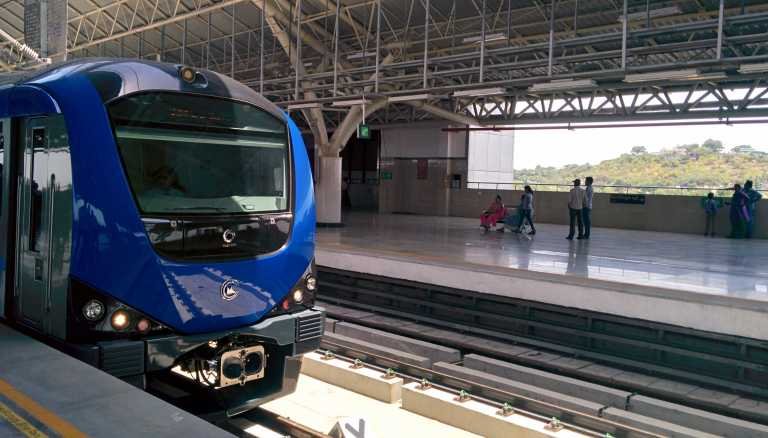
Chennai: Sources with Chennai Metro Rail Limited (CMRL) suggests that the metro body will not wait for center’s approval for Phase II work. They are likely to kick-start the project as soon as the first tranche of a loan from the Japan International Cooperation Agency (JICA) is disbursed.

CRML is confident about starting construction work for Phase II. The first tranche loan from JICA will meet the requirement. In case of shortage of fund, the state government will pitch in.
As per the procedure, there are two levels of approvals required to begin one. The first level is needed before approaching JICA that permission has already been given by the center. Then there is the second level of approval needed to begin work. The CMRL will not have to wait for this approval once JICA releases the funds. The Metro officials are hopeful that JICA will send in final sanction within a month or two.

Once CMRL receives funds from CMRL, they will start the construction work.
CMRL will proceed with Phase II work as it had to wait for years to get center’s approval to start Phase I extension work. This includes 9 Km of North Chennai alone from Washermanpet to Wimco Nagar. Though the state government gave its approval in 2010, the center’s nod came only in 2016.

CMRL’s Phase II project is to be constructed on an estimated cost of ₹80,000 crore. A major part of it will be funded by JICA and the rest of it will be funded from State and Central government.

Chennai Metro official feels that by the time JICA’s fund will exhaust, they will have state support to carry on. It, therefore, projects that there will not be many hiccups during the construction phase.

The Phase II will run for about 108 km and will have 116 Chennai Metro stations. There are three corridors planned as part of the second phase. These include:

• Madhavaram to Siruseri
• CMBT to Light House
• Madhavaram to Shollinganallur

This is a mammoth project and will connect almost every part of the city. CMRL has already started soil testing in various parts of the city. They will also start planning and designing for all the three corridors.

Pune Metro | Defense Ministry delays metro rail work in the City

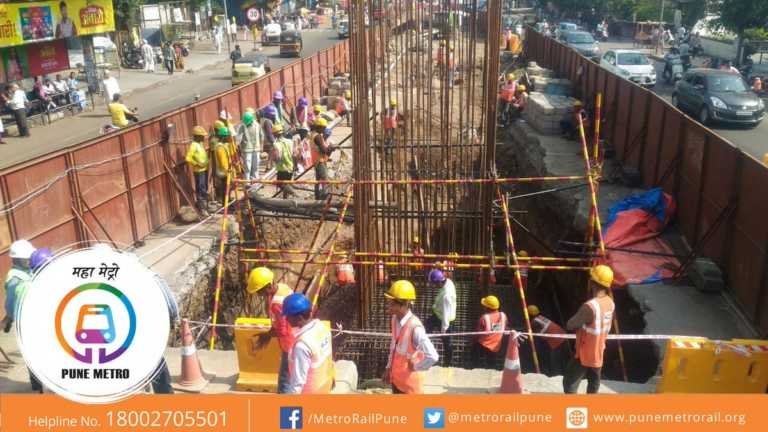
Pune: While the central government is yet to transfer land for Pune Metro, delaying part of the project for months, the state government, Pune Municipal Corporation (PMC) and Pimpri-Chinchwad Municipal Corporation (PCMC) have been prompt in ensuring that the required land is made available without much hassle. Officials of Maha Metro, the implementing agency for the project, said the crucial support from the three bodies has helped them push the project, but it has run into a hurdle because of the delay by the Defence Ministry.

Initially, Pune Metro officials were looking for 41 hectares of land for implementing the project. Since the project started 20 months ago, the state government and the two municipal corporations have collectively handed over 33 hectares of land. A senior official of MahaMetro said that “The total land required from the state government, the two local civic bodies and private parties stood at 37 hectares. Of which, 33 hectares or 88 percent of the land has been acquired. And the remaining 12 percent will be acquired soon”.

Around 4 hectares of private land is also needed for the Metro project. The official said “The process is underway. We are hopeful about acquiring the land in the near future”. The Pune Metro project also needs approval from the Defence Ministry for around 4 hectares of land in the Khadki Cantonment area. As reported by The Indian Express, the proposal for acquiring 4 hectares or 10 acres of land has been pending with the Defence Ministry for 10 months. Both Union Minister Prakash Javadekar and Pune MP Anil Shirole are pursuing the issue with the Defence Ministry.

The Army on Tuesday said the delay was because the state government had not suggested an alternative land in lieu of the land to be acquired. Metro officials, however, expressed surprise at the Army’s contention. “At a meeting with Defence Minister Nirmala Sitharaman, Chief Minister Devendra Fadnavis had promised that if the Army needed land in Ahmednagar, the government will provide it to them without any delay. Metro official said that the CM’s response came after the Army requested an alternative land in Ahmednagar area”.


Officials of Maha Metro said they have been able to push the Metro work forward because of support from the state government and local civic bodies. Maha Metro Executive Director Ramnath Subramaniam said that“The state government and local civic bodies have offered us excellent support for the Metro project. Had they not transferred the land in time, we would not have been able to take the project forward”. He said

“We are looking for similar support from the Defence Ministry. We hope our proposal will be approved by the Ministry as soon as possible”. Metro officials said if the project was delayed further, it would not be able to meet its 2021 deadline.


Delhi Metro | Snag on Magenta Line slows, commuters stuck for over 30 minutes

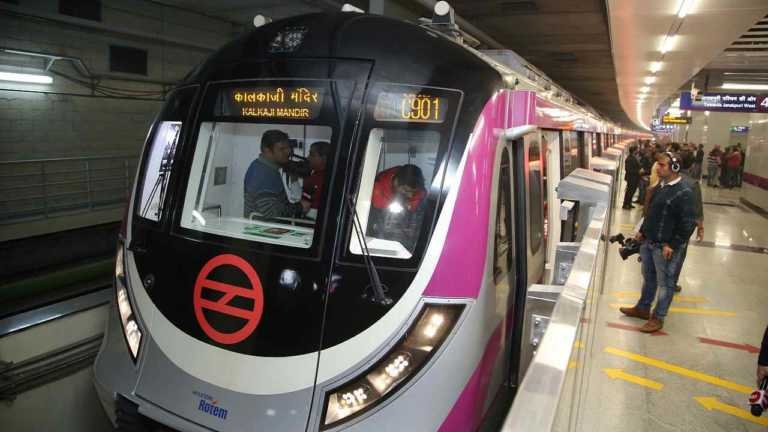
New Delhi: Commuters in Delhi Metro’s Magenta Line, which connects Janakpuri West with Botanical Garden, were stuck for over 30 minutes on Wednesday evening after a technical snag halted a train at the Shankar Vihar Metro station.

The Delhi Metro Rail Corporation (DMRC) said the train halted due to a signaling issue at Shankar Vihar at 4.35pm. Officials said the train was later pulled out of service and sent for maintenance by 4.55pm.

The problem was reported with one train but it led to bunching and delays on the entire Magenta line

“The problem was reported with one train but it led to bunching and delays on the entire Magenta line,” said a DMRC spokesperson. He said normal services resumed after 4.55pm.

magenta line snag for around 30 Min
magenta line snag for around 30 minutes

Commuters who were traveling on the line at the time said trains from Janakpuri West to Botanical Garden were operating at a snail’s pace. “Completed my trip from Dashrath Puri to Hauz Khas and it took me 30 minutes… I cover the distance in half the time…,” Supriya Sareen, a commuter, tweeted.

angry commuters on 30min delay
angry commuters on 30 minutes delay

Wednesday was the second consecutive day that a technical snag hit the Magenta Line.

This inconvenience made commuters very angry and they have every right to be angry as Majenta Line trains that will run unattended soon as it is the first time in India. However, there would be roving attendants. The metro would keep this mechanism for a year or two and will get passengers to feedback on this for improvement purpose. Eventually, DMRC plans to remove those attendants, to make the train fully driverless. When DMRC has such a plan they can’t be so careless regarding their normal service with drivers.

Chennai Metro | CMRL to upgrade its App with interesting features

Chennai:  The Chennai Metro Rail Limited (CMRL) plans to upgrade its app and add interesting features. Commuters who feel suffocated inside a coach due to poor air conditioning will soon be able to inform the metro official via the app. The upgraded app will help commuters to register their likes and dislikes while commuting in Chennai Metro.

CMRL is coming up with a feature in the app where riders will be star their experience. The app will help rate amenities offered by the metro and this will give real-time feedback to metro authorities.

The existing app will soon be upgraded by CMRL with new features and interfaces.

As per CMRL officials, the app will have a set of ten questions. These will be around various facilities offered within the metro and at the station. Commuters can rate them between 1 to 5 – as poor, good and best.

There are various services commuters will be able to rate. These include:

  • The timely arrival of the train
  • Functioning of AC in train and on the station
  • Display of arrival and departure of trains
  • Metro staff members conduct
  • Cleanliness of metro station
  • Commuter overall experience

The information added in the app will directly go to the CMRL head office in Koyambedu. If a problem is pointed out by riders then it will be escalated to the department immediately for prompt action.

CMRL current app does allow customers to register a complaint. But the issue is that the information is either incomplete or the issue has not been communicated properly.

In order to come out with a workable solution, CMRL will be setting up a grievance registering system at all stations. The issues can be registered with the station controller and sent to the concerned department. The benefit of this is that Metro officials will have correct information along with the details of the commuters. This will help in resolving the issue at the earliest.


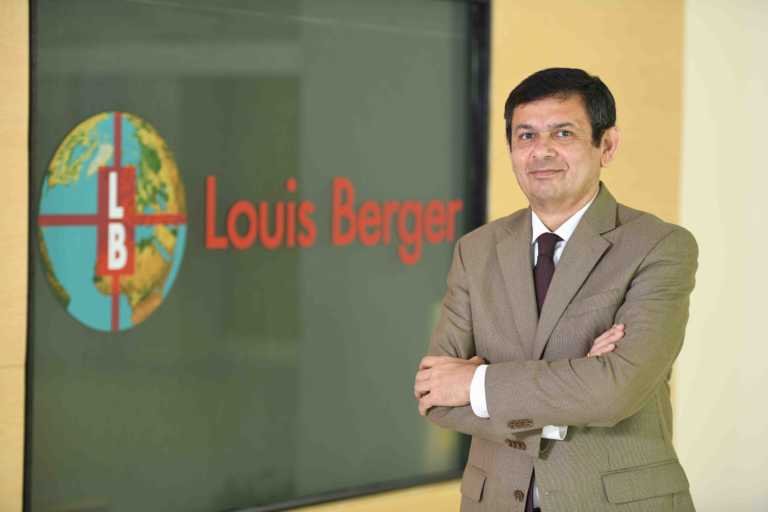
To bring Solutions for a better world Kshitish Nadgauda, Louis Berger

Mr. Kshitish Nadgauda is a Managing Director of Louis Berger. Before Joining to Louis Berger, he was based in Oman and New York and held leadership positions at Parsons, a leading engineering, construction, and technical services provider. He has also served at Tams Consultants Inc. an engineering consulting firm in New York, and at Larsen & Toubro, an Indian multinational conglomerate.

  1. 1. At the outset, please accept our heartiest congratulation on being awarded the project of Mumbai Metro Line 4. When is this project likely to start? And what different strategy you are going to adopt?

Thank you very much! Our services on the project commenced in the first quarter of 2018 and are now well underway. Our intent is to deliver high-quality services to our client and to the project closely working with the client and our partners. Our goal is to work towards ensuring the completion of the project on schedule and within the allocated cost. We will also be working towards fostering a strong culture of safety during construction, both of construction workers as well as of the traveling public.


  1. Before starting to know about your professional profile. I would like to know first about vision, mission and working culture of Louis Berger.  

At Louis Berger, we believe in a working culture founded on integrity, with open and transparent communication internally and externally. We pride ourselves on our business as well as professional ethics, and always endeavor to exceed client expectations on projects. Our mission is to bring Solutions for a better world, and we achieve our objectives on projects by adhering to our core values: Safety, Quality, Integrity, Financial Success and Customer Satisfaction. We encourage our employees to be passionate about their work and to contribute to society through our work.


  1. What are the challenges you faced while completing the Mumbai Metro Line 1 project? And what is your assessment of reason behind the bottlenecks in some projects?

Mumbai Metro Line 1 faced challenges that most urban projects experience. These included delays as a result of previously unidentified live utilities that were encountered during construction. The process of addressing these utilities was time-consuming and adversely impacted the overall schedule of the project, as well as the cost. In addition, obstructions within the right-of-way in the nature of properties to be acquired also resulted in delays. In addition, the metro line crossed existing railway lines. The approval process by Indian Railways for the resultant bridges required over the railway lines further delayed the project. The problems encountered on the Line 1 project are the typical reasons why most urban projects, including metro rail projects, experience delays.

Mumbai Metro | French MNC Alstom’s to supply 31 trains line-3

Mumbai: Well-known firm Alstom, a French MNC will be supplying 31 trains for the Mumbai Metro Rail Corporation Limited. They will be making 248 metro cars at their manufacturing unit in Sri City located on the outskirts of Chennai.

These trains will be used for Mumbai Metro Line 3. The French MNC has bagged a contract worth around 315 million euros (Rs 2633.63 crores). This contract is the biggest order for rolling stock contract for Alstom in Indian operation.

Alstom manufacturing unit is based some 73 km from Chennai. Alstom’s engineering unit in Bangalore will be designing and developing the metro cars.

In a press release by the company, the official shared that they envisage design, delivery, and commissioning of 31 lightweight and fully furnished modern passenger train sets of eight cars each.

The 33.5-km-long underground stretch of Mumbai Metro Line 3 will connect the congested and biggest regions in Mumbai. The Line 3 will be linking Cuffe Parade business district at the south end of the city with the SEEPZ in the north-central with 26 underground and one street-level metro station.

The highlight feature of Line 3 is that it will be the first underground metro station of Mumbai. Besides, this will also be the biggest underground and continuous metro stretch of India.

The currently, Alstom is manufacturing around 42 trains. This is for the 45km phase-1 of Chennai Metro Rail (CMRL) at its Sri City manufacturing unit. The plant was inaugurated in 2012 when the company received the order for making trains for CMRL.

The French MNC will also be manufacturing additional 10 trains for the 9km phase-1 extension. This is for the upcoming station starting from Washermenpet and Wimco Nagar.  With the new order of 31 trains, the company is poised to capture the metro rail manufacturing market in the country. Given the high-speed development, Alstom can expect further growth.

Maha Metro | work stuck at Khadki, Army blames state government

Pune: On Tuesday the Indian Army blamed the Maharashtra government for the delay in sanctioning 10 acres of defence land in Khadki.  Which has stalled the work on the Pune Metro project in the area for 10 months, and also mention that the government had not offered ‘Equal Value Land’ for the required land.

The Army said that it had The fast-tracked the procedure for transfer of land, but the state government had not reciprocated the gesture by offering a suitable piece of land in lieu of the land sought to be acquired, said the Army.

The Army further stated that Pune Metro project is one of the very important infrastructure projects underway for Pune city. The importance of the project and has fast-tracked the procedure required for the transfer of defence land for this project. The Army is much more concern for it wherein the proposal has already been submitted to the Ministry of Defence and is under consideration for the grant of permission to commence work.

The Army also said the state government was not following the policy vis-a-vis transfer of land. The government policy requires the state government to offer suitable Equal Value Land to the Ministry of Defenc therefore, the proposal can only be progressed once the Equal Value Land is identified and offered by the state government. We are hopeful that the state machinery will accord adequate priority to ensure the timely offer of Equal Value Land to ensure the development of the project.

The Brijesh Dixit, managing director of MahaMetro said that they should suggest a piece of land which they require in a particular area. The land is vacancy will be checked, whether it is in possession of the state government and whether it can be transferred without any delay. Unfortunately, the Defence Ministry has failed to point out any particular piece of land in lieu of the land which metro need.

Hyderabad Metro | L&T secure extension of repayment deadline from lenders

Hyderabad: A year and a half ago started the Hyderabad metro rail project poised for completion by March 2019. The lenders take more time than usual in construction major L&T more time for commercial operation up to July 2019, with a corresponding increase in loan period.

From 30 September 2020, the loan repayment will start as per the revised schedule, the metro rail project, being implemented by concessionaire L&T.
Even though the corresponding cost implication due to delays in securing the right of way to implement the project is being assessed for claiming compensation, according to L&T’s annual statement to its shareholders.

The total cost of project ₹16,375-crore elevated metro rail project under implementation which covers the 72 km rail and 6 million sq ft of transit-oriented development. This is being funded by a term loan of ₹11,478 crore, equity share capital of ₹3,439 crore and a Viability Gap Fund from the government of ₹1,458 crore.
In facilitating construction and right of way the State government has invested more than ₹2,000 crore.

Investment, VGF
The L&T has as of March 2018, invested ₹14,723 crore in the project and ₹2,241 crore during 2017-18. In November Prime Minister Narendra Modi commissioned a 30-km stretch. And the other two stretches, which will mark the completion of two of the three corridors, are expected to be commissioned by September and October-November. And by the March-April 2019 the other stretch old City segment, where there are right of way challenges.

The commercial, operations at two locations including at the IT hub of Hitec city have commenced, and at two other locations are close to completion, stated L&T.
Efforts are on to develop a couple of other locations.

The metro concessionaire which is exploring non-fare revenue generation through cross-selling of products to commuters. This is seen to further get strengthened by metro expansion, which will result in higher ridership.

The Telangana government has also planned to implement phase II of the metro project, covering 85 km, including providing an airport link. This will enhance the average ridership on the metro system significantly.

Jaipur Metro | JMRC’s claim to conserve rain water ambiguous

Jaipur: As per the latest Comptroller and Auditor and General of India (CAG) report, Jaipur Metro Rail Corporation’s (JMRC) claim of rain harvesting was found misleading. The metro body claims to have built a Rain Water Harvesting (RWH) structure along with ducts on 9.25 corridors between Mansarovar and Chandpole.

This claim however was found to be misleading by the CAG. JMRC had claimed to conserve rain water via RWH plant. As per reports the construction work of 255 (RHW) pits was part of main construction work via ducts in the Jaipur project itself.

Reports point out that only 29 RWH were built by Delhi Metro Rail Corporation (DMRC) till August 2017. Furthermore, these pits are not made as per approved designs and drawings.

Ironically, these 29 structures were not operational even after operationalisation of phase- IA.

As per sources JMRC was continuously following it up with DMRC to rectify the RWHs. Yet no response came from DRMC nor did they initiate any action. The Government of Rajasthan took note of the issue and stated that all remaining work to be carried out by JMRC or JDA.

When the project was initiated, Jaipur Metro has assured that they will provide an area of one lakh square meters of recharge collection. This number was huge and ambitious itself. With the structure not coming on time, the state failed to tap the opportunity to store rain water in plenty as the average pattern of rainfall is 32 mm per hour in the city.

CAG report also points out that the effluent water treatment (EWT) constructed at a cost of Rs 60 lakh never become functional. This plant was constructed to treat wastewater before it was let out in Mansarovar depot.

JMRC pinning the blame on DMRC said that the that pipe connection to outlet of the plant to dispose/utilise the treated water is awaiting with the DMRC leading to non-usage of plant.

Interestingly, JMRC never raised the issue with DMRC during the meeting to discuss leftover works in phase IA a meeting held in October 2016.


Chennai Metro | CMRL to inspect 21km elevated corridor

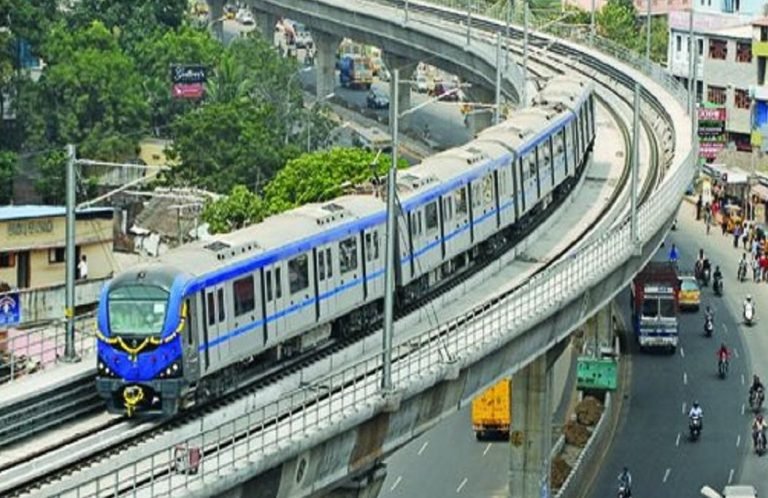
Chennai:  The Chennai Metro Rail Limited (CMRL) will be carrying out inspection the of 21km elevated corridor. The test will be conducted to understand the structural strength of the work.

This is to check the stability of elevated metro corridors that constructed across two arterial roads.

CMRL will soon carry on ut inspection drive of the constructed structures. To carry out the inspection work, Chennai Metro officials are trying to identify firms with expertise. The selected firm will investigate, inspect and prepare a report and offer suggestions if any.

CMRL operates a 21km elevated corridor beginning from Thirumangalam ramp to St Thomas Mount and the other from Saidapet ramp to Airport.

An official from CMRL shares that it is imperative to carry inspection of elevated corridors. This becomes necessary when the elevated segment completes two years of function.

The selected contractor will only carry out an inspection of the corridor and give in a report to CMRL in six months time. Based on the report necessary steps will be taken.

The inspection of the structures will be carried on set parameters. These include stability, strength and development of cracks among the few others.

During the inspection, more than 500 columns and the viaducts above them will be investigated throughout the assessment.

As per CMRL official, the most significant aspect of the structure is the rubber bush. This is found between the columns as well as the decks on where tracks are laid. There is a need to periodically check the position and conditions. Disturbances also have to be spotted, which occur due to movement of trains above.

These inspections are very critical to ensure the safety of metro commuters as well as those using the road below the structure.

Just recently a piece of concrete from a pillar fell on an auto rickshaw in Kochi. The pillar was located on the elevated corridor. Thankfully, passengers escaped unhurt.

As per Chennai metro officials, this time the entire corridor is getting inspected.

Delhi Metro | DMRC vacancy for several positions, application invited

New Delhi: The Delhi Metro Rail Corporation (DMRC) is hiring for maximum salary going up to Rs 73000 for various post. The details of all the vacancy are available on their website.

DMRC invites aspirants to apply for several positions at its office. These vacancies are for middle to senior level positions. The Delhi Metro officials are eyeing to fill these positions at the earliest for all its projects.

They are looking for self-motivated, experienced and dynamic individuals to join their team.

The vacancies are for the following positions:

Assistant Manager (Finance)

Number of Post: 1

Payscale: Rs 20600 – 46500

Deputy General Manager (Finance)

Number of Post: 1

Payscale: Rs 29100-54500

The qualifications for above positions would require the candidate to be CA/ICWA. The applicant should ha ave working knowledge of managing financial matters of large projects. The last date for applying for the job is 03/10/2018. The age limit for applicants for both the positions is 45 years.

Assistant Manager/ Land

Number of Post: 1

Payscale: Rs 47,200

The applicant should be aged between 58-62 years and can be working or retired from Central government or government of GNCT of Delhi Should be in grade Rs 15600 – 39100 (GP-5400) CDA (Pre-revised).

Manager/ Land

Number of Post: 1

Payscale: Rs 60,700

The applicant can be working or retired from Central government or government of GNCT of Delhi Should be in grade Rs 15600 – 39100 (GP-6600) CDA (Pre-revised). The applicant can be between 58-62 years of age.

The educational qualification for applying for both the above positions require a diploma or degree in civil engineering from a government recognized University/Institute. The last date for applying for the job is 01/10/2018.

Deputy General Manager ( Hindi )

Number of Post: 1

Payscale: Rs 29100-54500

Age limit: 45/50 Years

The last date of application is 28/09/2018.

General Manager (Legal)

Number of Post: 1

Payscale: Rs 51300-73000

Age limit: 55 Years

The eligible applicant should be Bachelor of Law or LLB with minimum 55 % marks/equivalent CGPA from a government recognised University/Institute. A Masters Degree in Law will be desirable. The last date for applying for the position is 20/09/18.


Manager (Legal)

Number of Post: 1

Payscale: Rs 24900-50500

Age limit: 45/50 Years

Only those will be eligible for above two positions advertised by Delhi Metro who have a Bachelor of Law (LLB) with minimum 55% marks/equivalent CGPA from a government recognised University/Institute. The last date of application for the positions is 05/10/2018.

The duly filled in application form should be sent in an envelope super scribing on the cover prominently – Name of Post, latest by 05/10/2018, by speed post at the following address.

Chief General Manager (HR)

Delhi Metro Rail Corporation Ltd

Metro Bhawan, Fire Brigade Lane,

Barakhamba Road

New Delhi.

For more information aspirants can get in touch with editor@metrorailnews.in, also free to contact on the provided number.