
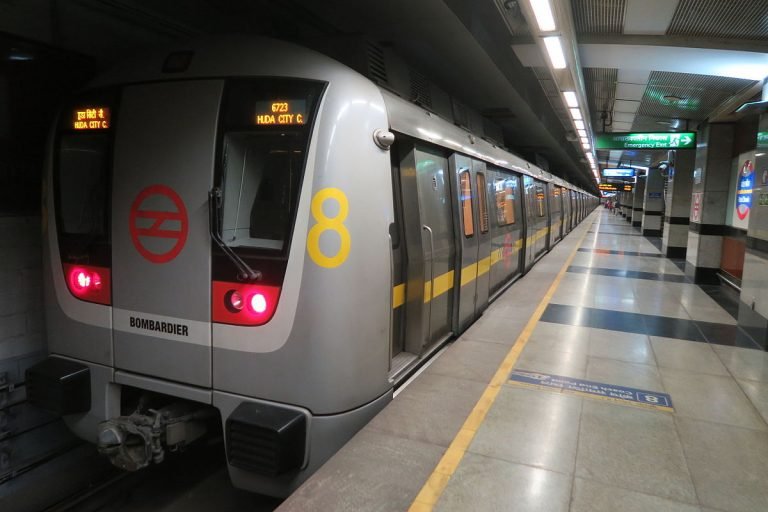
Delhi Metro Phase-IV preliminary work begins

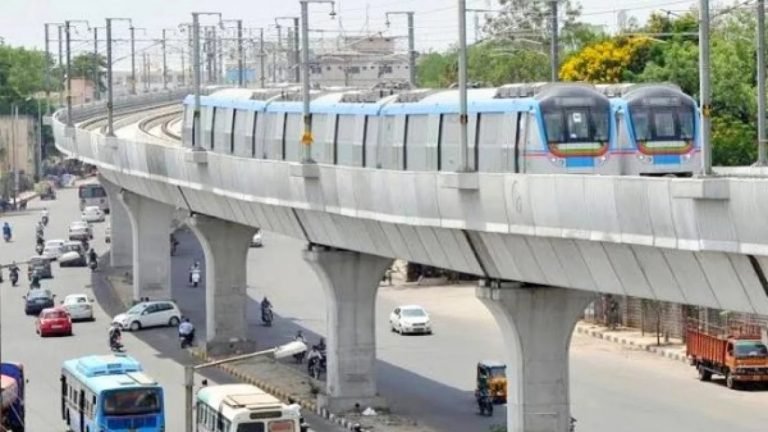
NEW DELHI (Metro Rail News): Delhi Metro Rail Corporation has stated doing preliminary work as its Phase-IV project is still undetermined, to save time when the actual construction begins.  

Delhi government gave its approval to the six proposed corridors of the Phase-IV project in December last year. The project was approved by the Centre in March this year, but only three out of the six proposed corridors were approved.

However, the Phase-IV project once again became a flashpoint with Delhi government writing to the Centre that it wouldn’t bear the operational losses for the Phase-IV project. The government also refused to accept any liability for the loan to be taken from Japan International Cooperation Agency (JICA).

Delhi government wants the Centre to equally share operational losses, but the Centre claims that it is contrary to the condition of sanction of the Phase-III of Delhi Metro wherein operational losses are to be borne by the government.

Due to this the project is stuck at the moment with no clarity on the next course of action, and DMRC is utilising the time by carrying out some preliminary work. DMRC is expected to start geo-technical surveys and detailed drawings of civil structures in the near future. The process is expected to take about six months, after which actual construction will begin.

DMRC has started the process of roping in an outside agency to carry out the design and construction of a large section of the proposed Janakpuri West to RK Ashram Marg corridor of Phase-IV. At nearly 29km of length, this corridor is the longest and one of the most important ones of the Phase-IV project.

Delhi Metro will rope in a private agency to design and construct a section of elevated viaduct, elevated ramp, siding line and ten elevated stations of the corridor. The stations are Keshopur, Paschim Vihar, Peeragarhi, Mangolpuri, West Enclave, Pushpanjali, Deepali Chowk, Madhuban Chowk, Prashant Vihar and North Pitampura.

DMRC will also start utility investigation work soon for the construction of a section of the proposed Tughlaqabad-Delhi Aerocity corridor. The section on which the investigation work will be carried out is between Indira Gandhi Domestic Airport Terminal-1 and Saket.
Jammu and Srinagar to get first Metro Rail

Srinagar (Metro Rail News): In a first, Srinagar and Jammu, the two capital cities of Jammu and Kashmir state, will get metro trains within next four years. Jammu and Kashmir government headed by Governor Satya Pal Malik on Thursday announced the work for the light rail system metro, the first of its kind in the country, will begin soon.

The estimated cost of the first phase of the metro for two cities has been approved at Rs 8500 crore, to be funded through debt, state’s equity and central assistance.

The Governor’s administration has approved the elevated corridor option for two light rail transit systems. M/s RITES (Rail India Technical and Economic Services) is finalizing the DPRs for the project, Rohit Kansal, principal secretary planning department of Jammu and Kashmir said at a press conference here. Kansal, who is also the state government’s spokesperson, said that HMT, Indra Nagar and Osmanabad in Bemina to Hazuri Bagh will be connected with the metro rail in the first phase. This will cover the distance of 25 kms with 24 stations, he added.

Similar metro train in phase II, will be connected with corridors of Indra Nagar to Pampore Bus stand and HazuriBagh to Srinagar airport covering a distance of 17.5 Kms having 14 stations.

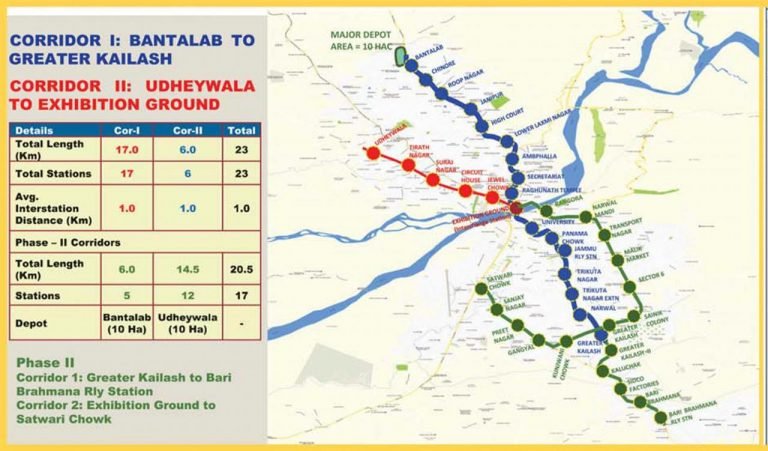
In Jammu city, the metro in the first phase will be from Bantalab to Greater Kailash and Udheywala to exhibition ground covering 23 kms with 23 stations.

In second phase metro train will run from Greater Kailash to Bari Brahamana railway station and Exhibition Ground to Satwari Chowk to Jammu airport covering distance of 20.5 k ms with 17 stations, Kansal revealed. He said the light railway system, the first in India, will have low footprint, low noise, greater comfort, aesthetic appeal and blend with the surrounding landscape.

The state government has also proposed two Mass Rapid Transit Corporations to undertake the preliminary steps for operationalizing city buses, within the city jurisdiction. These will be application based, air-conditioned, smart E-buses with automatic fare collection system, he added. Both the capital cities will also get metropolitan regional development authorities to coordinate on and supervise all the projects.

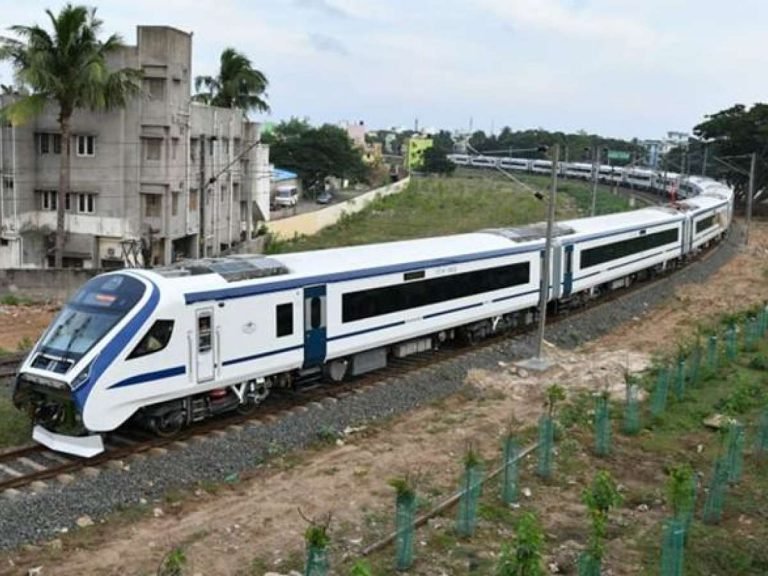
Vande Bharat Express successfully completed its Second trial

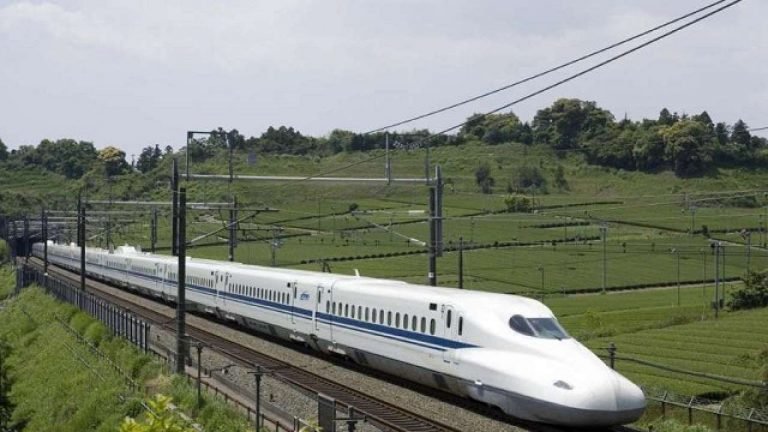
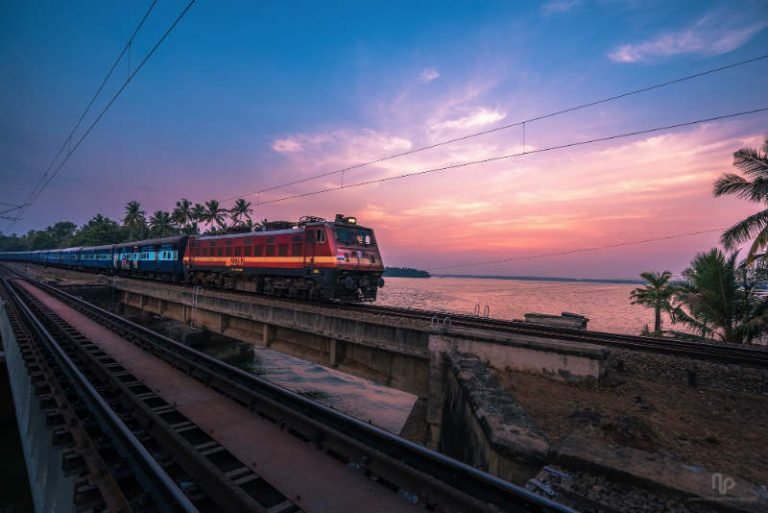
KANPUR (Metro Rail News): On Thursday, Vande Bharat Express India’s fastest train successfully completed its second trial in Kanpur Central Railway station.

The trial was conducted between New Delhi Railway Station and Kanpur Central. Himanshu, director, Kanpur Central Railway Station said that  “Currently, the train is undergoing operational trials in which we look at its operational feasibility. We are conducting many tests and when it meets all our standards, it will go into service. It will be running between New Delhi Railway Station and Kanpur Central”.

In addition to automatic doors, onboard hotspot Wi-Fi for entertainment purposes, pantry, and bio-vacuum toilets GPS based audio-visual passenger information system the train has also been equipped with improved seating, a facility for the freezer, hot case and other technical improvements based on passenger feedback.

Vande Bharat express, also known as ‘Train 18‘,  has travel classes like Shatabdi Train but with better facilities in a bid to provide a totally new travel experience to passengers and it can run up to a maximum speed of 160 kmph.

PM Narendra Modi had flagged off the train’s maiden run from New Delhi to Varanasi In February this year.

A Chennai-based Railways Production unit has designed and developed the train.

In just 18 months it made Integral Coach Factory which also includes the in-house design and manufacture, computer modeling and working, etc. Adding up the green footprints, this fully ‘Make in India’ train has regenerative braking system in the coaches which can save up to 30% of electrical energy.


CMRS to inspect Kolkata East-West Metro

KOLKATA (Metro Rail News): The Commissioner of Metro Railway Safety (CMRS) is set to inspect the 5km Sector V-Salt Lake Stadium stretch of East-West Metro from July 18 amid speculations that it may not allow trains to stop at the two stations that are yet to get fire-safety nod from the state government.

The CMRS’s public safety audit will give green signal to the much-awaited truncated commercial operations of East-West Metro.

It will conduct a series of tests, starting with the three-day inspection from July 18, before compiling its safety audit

A meeting was convened at Metro Bhavan on Thursday where engineers of Kolkata Metro Rail Corporation (KMRC), implementing agency of the 16km East-West Metro corridor, expressed their anxiety regarding the standoff with the state government over fire clearances for two of the six stations that fall on the Sector V-Stadium stretch.

KMRC has the fire services department’s nod for four stations — Sector V, Karunamoyee, Central Park and City Centre. Approvals for Bengal Chemical and Salt Lake Stadium stations were refused on June 14 on grounds that they lacked the third exit. These staircases were reportedly shown in the original plan.

KMRC has been preparing for a July commissioning, but the refusal by the state came as a bolt. While conducting its ‘safety audit CMRS will ask for fire-safety nod for all six stations. KMRC hopes the clearances will come within the next fortnight a railways official said that If the fire department gives its nod for the two stations, CMRS shouldn’t have issues.

Else, it may give partial clearance, allowing trains to stop only at the other four stations he added that in that case, the already truncated run will be cut short further and the services will run from Sector V to City Centre, which is barely 3.5km.

The two exits couldn’t be built because of encroachment at Duttabad slums. People from the slums had blocked 365m of EastWest Metro’s viaduct construction on EM Bypass for five years and CM Mamata Banerjee and Union minister Babul Supriyo had to intervene to end the impasse.

The slums run along the east of EM Bypass, where the two evacuation ways for Bengal Chemical and Salt Lake Stadium stations were supposed to come up. Weary of facing resistance for slum-dwellers again, the staircases were done away with and the plan was revised. During an inspection last Saturday, fire department officials found a Trinamool party office and other shacks on the spot.

KMRC has told the fire department that it would set up exits as and when land would be available. During a meeting last Saturday, the agency pleaded with fire minister Sujit Bose that without the clearances, CMRS, which is an independent body under ministry of civil aviation, can’t give the green signal.

During this week, as per the fire minister’s instructions, KMRC has again submitted documents to urban development department claiming “possession” of the land. On getting it, a formal request will be made to the state for help in removing the settlers. The railway official said that unless the land is freed, staircases can’t be constructed. That could take a year or more. KMRC will present its case before CMRS and seek clearance for the first phase of East-West Metro.

Korea EXIM bank backs off from Vizag Metro rail project

VIJAYAWADA (Metro Rail News): The Korea EXIM Bank earlier came forward and offered to assist in establishment of Vizag Metro Rail by funding the infrastructure when the state government was facing a setback in their grand plans, the Korea EXIM Bank that had come forward to offer financial assistance to establish Vizag Metro rail has now backed off due to unknown reasons.

Highly placed sources in the government said that Amaravati Metro Rail Corporation has now decided to approach other global financial institutions like Asian Infrastructure Investment Bank (AIIB) and New Development Bank, formerly BRICS bank, seeking funds for the project.

As per the timelines fixed, AMRC was to award the contract to the successful bidder by March this year and the work was expected to begin immediately afterwards.

Already, five firms have been shortlisted and RFP has been issued to them.

These five firms will be submitting their technical and financial bids soon. The shortlisted firms are Adani Group, Tatas, Shapoorji Pallonji Group, Essel Group and IL & FS.

However, due to the polls and KEXIM Bank backing off, the project timelines have been disturbed. “KEXIM (Export-Import Bank of Korea) conveyed their inability to extend financial assistance for the project. The state government was therefore advised to propose the project for funding to other bilateral/multilateral agencies if so desired”, said a top source in the Union finance ministry.

Korea EXIM Bank earlier came forward to fund the infrastructure cost of Rs 4,200 crore which is the state government component of 51 per cent of the innovative PPP mode.

KEXIM Bank had offered to lend the money at an interest rate between 6.5 per cent to 7 per cent for a repayment tenure of 20 years with 5 years moratorium. AMRC had also appointed a financial advisor or loan arranger for the purpose.

South Wales Metro to have first contracts from Transport for Wales

South Wales (Metro Rail News): Balfour Beatty, Alun Griffiths and Siemens Mobility have recently been awarded contracts.

This is a part of the procurement process for the first projects of the South Wales Metro, which includes control systems, track work, stations, along with the new fleet maintenance depot in Taff’s Well.

ECI contracts are awarded for preparatory work in order to allow the development of plans and design work ahead of the major stages of the procurement process for all engineering projects.

All three of the companies are to now be working with Transport for Wales (TfW) on these projects.

It will include working to establish a high-quality supply chain with local Welsh businesses.

Transport for Wales are transforming the transport sector across the Wales and Borders network with a £5 billion investment programme.

The programme is focused on improving the customer experience, as well as improving the social, economic, environmental and cultural well-being of Wales.

What did the officials have to say?

James Price, Chief Executive of Transport for Wales, said that the South Wales Metro is one of our most important and exciting projects, and I’m delighted that Transport for Wales will be working with three renowned companies on the first crucial stages of our plans to transform public transport, both in the South Wales region and throughout the Wales and Borders network as a whole. The development of the Metro will be a major boost to the local economy of South Wales, creating jobs directly and in the local supply chain. We will work closely with Balfour Beatty, Alun Griffiths and Siemens as they help us develop our vision of a high quality, safe, integrated, affordable and accessible transport network of which the people of South Wales are proud.

Shaun Thompson, Rail Director at Alun Griffiths (Contractors) Ltd said that we are delighted to be working collaboratively with TfW on this exciting development. As a Welsh company who self-delivers, it enables us to recruit and train new local employees, enhancing the economy in Wales. Being involved right from the start on these ECI contracts, allows our people to add value by innovating, promoting health and safety and reducing risk.

Rob Morris, Managing Director of Rail Automation in the UK for Siemens Mobility, said that We are delighted to have been awarded this ECI contract and to build further on the success of the projects we have already delivered in South Wales. Our experienced and rapidly-growing team is now looking forward to working closely with TfW and the local supply chain on this exciting programme of work.

Mick Rayner, Managing Director of Balfour Beatty Rail business, said that Today marks a significant milestone in the delivery of Transport for Wales’ investment programme and the South Wales Metro project, which on completion will significantly improve transport links in South Wales. Utilising our unrivalled expertise in electrification and our deep experience in the installation of new tracks, we are perfectly positioned to work with Transport for Wales during the early contractor involvement phase to develop the design of this highly anticipated scheme.

Union Budget 2019: Railway requires Rs 50 lakh crore investment

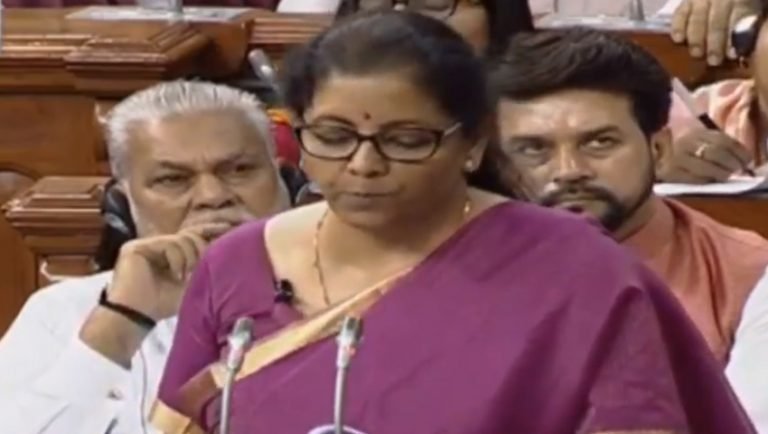
NEW DELHI (Metro Rail News): Union Finance Minister Nirmala Sitharaman, while announcing the Budget 2019, said from 2018-30 railway will require Rs 50 lakh crore investment.

Public-Private Partnerships (PPP) will be used to unleash faster development and delivery of passenger freight services. Rail and metro projects for 300 km have also been approved.

There was speculation that the government was exploring ways to involve private players in railways inviting criticism from the Opposition.

The government envisions using rivers for cargo transport as it will help decongest roads and railways Nirmala Sitharaman said.

Railway Budget 2019 Highlights

  • Indian Railways requires Rs 50 lakh crore between 2018 to 2030 to complete the sanctioned projects.
  • 657 kilometres of metro rail network have become operational.
  • PPP to be encouraged
  • All manned level crossings to be eliminated
  • Delhi-Mumbai, Delhi-Howrah travel time to come down by 5 hours.
  • Corporization of production units
  • Jerk-free rides on Indian Railways
  • Private sector to run some trains
  • Beautiful railway stations
  • Delhi-Lucknow, Mumbai-Shirdi trains revamp
  • The wait for bullet train over by 2023
  • Indian Railways to be an enabler for $5 trillion dream
  • Dedicated Freight Corridors
  • Focus on safe railway travel
  • Waterways to decongest Indian Railways
  • PPP in Indian Railways
  • India is looking to adopt the European signalling infrastructure for safer yet faster movement of passenger trains
  • Indian Railways is focusing on green energy
  • PPP in Metro rail initiatives
  • SPVs for suburban projects
  • Indian Railways ties up with France
  • World-class stations
  • Indian Railways to be a big growth driver

Railways will also be encouraged to invest more in suburban railways through SPV structures such as Rapid Regional Transport System (RRTS). A massive program of railway station modernization will also be launched this year.

It was expected that the Narendra Modi government would maintain its focus on aggressive development of transportation infrastructure by infusing in major programs it introduced last year — that includes railway station redevelopment programme, inland waterways development, the Namami Gange project, the Swachh Bharat Mission, UDAN (Airports), metro rail and Smart Cities (Urban Infra). In the previous budget, the government promised to introduce bullet trains, revamp of signalling systems, CCTV, Wi-Fi, escalators and other such services at stations, in the massive budget boost wherein they allocated Rs 1.48 lakh crore for the Indian railways.

The total allocated capital expenditure for 2018-19 is Rs 1,48,528 crore which is a 24% increase from the 2017-18 revised estimates Rs 1,20,000 crore.

Chennai Metro Phase II in Trouble

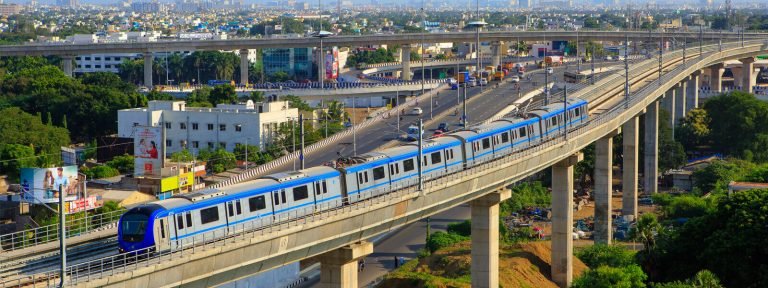
CHENNAI (Metro Rail News): In a judgment with wide-ranging implications for development and infrastructure projects in Tamil Nadu, a division bench of the Madras High Court on Wednesday declared acquisition of all land since September 2013 under three state laws as illegal. The court, however, has exempted lands “which have already been put to use and the purpose for which the land was acquired has been accomplished”.

Senior government officials told that the order could stall several projects, including phase two of Chennai Metro Rail for which land was acquired under one of the impugned Acts. 

It is therefore likely that the government would either go in for a review or appeal against the order. There is also a chance that land acquisition could be put in abeyance and an amendment passed, one senior official said.

The bench of Justices S Manikumar and Subramonium Prasad has held that three state laws — the Tamil Nadu Acquisition of Land for Harijan Welfare Scheme Act, 1978, TN Highways Act, 2001, and the TN Industrial Purposes Act, 1997 — became null and void once the President assented to the Centre’s Right to Fair Compensation and Transparency in Land Acquisition, Rehabilitation and Resettlement Act on September 27, 2013.

“Consequently, all the acquisitions made under the three impugned enactments made on or after September 2013, are to be held illegal and quashed, save those lands which had already been put to use and the purpose for which the land was acquired has been accomplished,” judges said.

The State had attempted to “save” these laws by enacting Section 105 (a) of the New Act, however, the court held that the laws had already fallen null and void by then and could only be “revived” as fresh laws. 

The bench was passing orders on a batch of over 100 writ petitions challenging the Right to Fair Compensation and Transparency in Land Acquisition Rehabilitation and Resettlement (TN Amendment Act) 2014 (TN Act 1 of 2015) and demanding the show cause notices issued under sub-section (2) of Sec. (3) of the TN Acquisition of Land for Industrial Purpose Act 1997 (Tamil Nadu Act 10 of 1999), be declared as null and void.

While the bench rejected the petitioners’ contention that the President had failed to apply his mind while granting assent, it said that the writ petitioners ultimately succeed because Article 254(1), by its operation, rendered the impugned State legislation repugnant and null and void as on the date on which the Centre’s Land Act was made, i.e. September 27, 2013.

Delhi Metro Yellow line to get WiFi services by the end of year

Delhi (Metro Rail News): Commuters will now be able to use Wifi at all metro stations on the yellow line and even inside the trains on the Airport Express Line by the end of the year, according to the Delhi Metro Rail Corporation (DMRC).

Free Wifi is already available on all blue line stations since August 2017 and the airport line stations since 2016.

Anuj Dayal, the DMRC executive director for corporate communication told that Installation work is in progress on the stations of the yellow line and the work is expected to be completed by year-end. Wifi will also be available inside the trains on the airport line by year-end.

Currently, one can use up to 45 MB using the Reliance Jio network Wifi at all blue line stations.

There are eight color-coded lines on the DMRC network and the yellow line, which connects Gurgaon in Haryana to Samaypur Badli in north Delhi, will be the third line to be Wifi enabled. The Blue and Orange (airport express) lines already have Wifi service.

According to the DMRC’s estimates, on average, about 28-30 lakh people commute using the Delhi Metro and the yellow line has the highest ridership.

MPMRCL to acquire Land for Bhopal Metro Rail

Bhopal (Metro Rail News): Madhya Pradesh Metro Rail Co Limited (MPMRCL) has begun issuing notifications to acquire land for the construction of the Bhopal metro rail project. Property owners along the metro rail phase-I route, starting from Arera Hills to AIIMS, Bhopal, could soon be adversely affected.

A businessman at Jehangirabad said that Our shop is about 20sqft. Surveyors who undertook the measurement of the land have identified that about 20 to 25sqft land would be demarcated for the metro rail. It is a very typical situation. The area is just metres away from the metro depot site at Arera Hills.

When contacted, the district administration declined to comment on the matter. A local area officer said that he was not aware of the situation and MPMRCL has not intimated the administration.

The officer further added that a large number of business and residential property owners could be adversely impacted. A repeat of the situation when the BRTS corridor was being constructed should be avoided by the government.

Experts said that the 2009 cost figure for the construction of elevated metro (standard gauge) is Rs135 crore per kilometre and underground construction cost was pegged at Rs400 crore (the cost will be less when the depth is within 10 metres and the subsoil is hard).

Given the delay of almost 10 years since the metro was first proposed, the project cost is definitely expected to escalate further.

537 hectare of land acquires for the bullet train project

New Delhi (Metro Rail News): In the Lok Sabha during the Budget Session of Parliament, Union Minister for Railways Piyush Goyal said that the railways have acquired 537 hectare of land out of the total 1380 hectare needed for the bullet train project between Mumbai and Ahmedabad.

In Lok Sabha, Railway Minister Piyush Goyal replied to the question by saying that the land acquisition for the High Speed Rail Project also known as Bullet Train Project is currently underway.

He stated that “National High-Speed Rail Corporation Limited (NHSRCL), a Special Purpose Vehicle (SPV) has been set up to execute the Project. Land acquisition for the project is under progress and so far, out of total 1380 hectare of land required, 537 hectare has been acquired.”

On September 14, 2017, Prime Ministers Narendra Modi and Shinzo Abe of Japan laid the foundation stone for the ambitious Rs 1.08 lakh crore ($17 billion) high-speed rail project. The Japan International Cooperation Agency (JICA) and the Railway Ministry have signed a MoU, with Japan to partially fund the project.

The design and construction of civil and building works including testing and commissioning of 237 km length of mainline for Mumbai-Ahmedabad High Speed Rail corridor between Zaroli village at Maharashtra-Gujarat border and Vadodara in Gujarat, which is 47% of total length of the project, elevated except one mountain tunnel of about 280 metre, 24 river crossings and 30 road and canal crossings have been floated.

Piyush Goyal also said that out of the total estimated cost of ₹1,08,000 crore, ₹2,860 crore has been used by NHSRCL for undertaking various works on the project till date. The project is targeted for completion in December, 2023 to start bullet train operation.

Delhi Metro to use solar energy for train operations

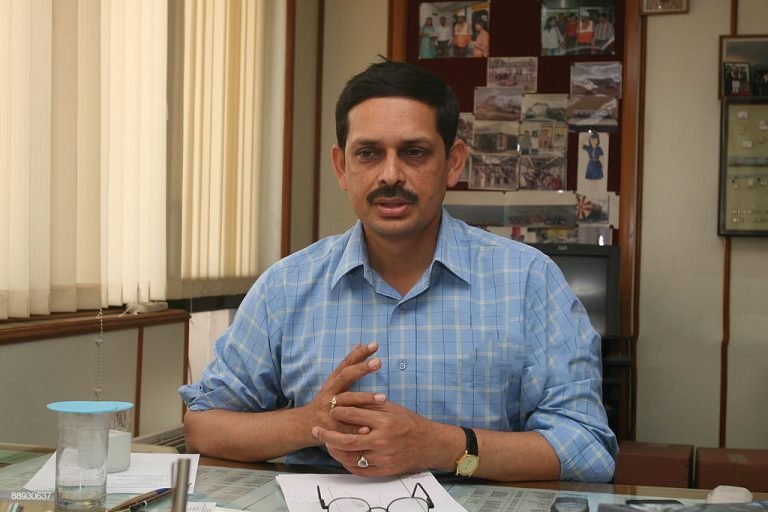
Delhi (Metro Rail News): In an exclusive interview, Anuj Dayal, chief public relations officer (CPRO) of the Delhi Metro Rail Corporation, speaks about the 25-year journey of India’s first metro rail, as well as solutions to the last-mile connectivity, technological advancements and sustainability

Rightly called as the lifeline of the National Capital Region (NCR), the Delhi Metro is an example of how an ideal urban mass transit system (MRTS) should operate. From expansion beyond Delhi to providing assistance and leadership to other metro networks including Kochi, Bengaluru, and Bangladesh, the Delhi Metro has come a long way, covering approximately 343 kms in 25 years, since it started operations.

The Delhi Metro Rail Corporation (DMRC) completed 25 years of operations in May 2019. Could you please share some of the technological advancements that have made this success possible?

Mr. Anuj Dayal: DMRC has always been at the forefront when it comes to adopting advanced technologies. Since the beginning, the DMRC has brought in various new technologies to improve services. Some of them include the communication-based train control (CBTC) system, unmanned train operation, ticket vending machines, contact-less smart cards, platform screen doors, operation of metro trains with solar energy and advanced automatic fare collection (AFC) system.

Last-mile connectivity has been an issue for commuters and even the DMRC has acknowledged this problem. What measures are being taken, to resolve this issue?

Mr. Anuj Dayal: As part of our initiative to provide last-mile connectivity, the DMRC has been operating feeder bus services and e-rickshaws from various metro stations. Apart from the feeder buses, the DMRC also has a tie-up with app-based cab aggregators. With this facility, commuters can book cabs through the kiosks installed at selected stations. E-scooter sharing services, public bicycle sharing services and permanent bicycle stand at metro stations are also provided, to enhance last-mile connectivity.

Which line would you rate as the most successful or busy line of the Delhi Metro? Does the DMRC have any plans to increase frequency on certain lines?

Mr. Anuj Dayal: All lines of the DMRC are successful. However, in terms of the passenger movement, the Yellow Line, Blue Line, and Red Line, are considered to be busier than others.
Currently, an adequate number of trains are being operated on all lines, as per the requirement. The frequency of trains on all lines is modified from time to time, based on passenger requirement.

The DMRC has been the pioneer in metro expansion in the country. What is the knowledge sharing that the DMRC does, with metro rail authorities in other cities?

Mr. Anuj Dayal: The DMRC has provided consultancy services to almost all the metro rail systems in India, as well as the Dhaka Metro in Bangladesh. The DMRC has a state-of-the-art training facility for its staff and employees, at the Training Institute located at Shastri Park. This Institute also trains officials of other metro rails in India, as well as those from countries like Indonesia and Bangladesh. The DMRC is also a member of international metro communities, such as COMET and NOVA, where members facilitate knowledge sharing and exchange of best practices in the field. It is also a member of I-Metros, which is a forum for the exchange of ideas, pooling of knowledge and sharing of experience, best practices, innovations, etc. Apart from this, DMRC organizes various seminars and guided visits to its network for officials from different metro services of India.

What effort is the DMRC is making, towards sustainability?

Mr. Anuj Dayal: The DMRC is taking all possible measures, to reduce energy consumption and depend more on renewable sources. Delhi Metro is one of the first metros in the world, to intensely promote the use of solar energy. DMRC produces around 28 MW of solar energy, through its rooftop solar power plants, which is used for meeting the auxiliary requirements of metro stations. Recently, the DMRC also started drawing solar energy from Madhya Pradesh, for train operations. We have also set up effluent treatment plants (ETPs) and sewage treatment plants (STPs) at depots and residential colonies, so that the wastewater generated from these locations, can be recycled and reused, as much as possible.

First the interview was published on Housing.com

Indian Railways to Increase energy efficient: Piyush Goyal

NEW DELHI (Metro Rail News): Indian Railways (IR) is committed to take new steps for energy conservation and to increase energy efficiency. Some of the measures taken are as follows:

i) Use of energy efficient 3-Phase technology with regenerative features for electric locomotives, Mainline Electrical Multiple Units (MEMUs), Electrical Multiple Units (EMUs), train sets for better energy efficiency.

ii) Introduction of Head On Generation (HOG) system in trains to reduce diesel fuel consumption in power cars. 350 electric locomotives are equipped with hotel load converters.

iii) Provision of energy efficient Light Emitting Diode (LED) lighting in all Railway installations including Railway stations, service buildings, Residential quarters & coaches for the reduction in electricity consumption.

iv) Regular energy audits at consumption points – Energy Efficiency studies of six (6) Production Units (PUs) and four (4) Workshops were conducted and up to 15% energy efficiency improvement achieved. This included activities like identification of significant energy saving opportunities, one-day training program, identification of potential technology suppliers who can offer energy-saving technologies to the units, etc.

v) Emphasis on use of 5 Star rated electrical equipment’s.

vi) Regular training of Loco pilots for use of coasting, regenerative braking features and switching off blowers of electric- locos in case yard detention is more than 50 minutes. Similarly, diesel locos are also shut down, if expected detention is more than 30 minutes and thereby resulting in the reduction of Green House Gases (GHG) emissions.

vii) Trailing locomotive of multi-units (MU) hauling empty freight trains are switched off to save energy.

viii) Energy consumption on electric locomotives is regularly monitored through microprocessor-based energy meters provided in all the electric locomotives and benchmarking is done based on average energy consumption.

ix) Monitoring the fuel consumption with respect to the trip ration of diesel locomotive drivers.

x) Auxiliary Power Unit (APU) has been provided in 986 diesel locomotives to reduce fuel consumption when the locomotive is idle.

xi) Monitoring of idling of diesel locomotives is being done through remote monitoring and management of Locomotives and trains (called as REMMLOT). 2606 locomotives at present are equipped with REMMLOT.

xii) Use of 5% bio-diesel in traction fuel- Blending of bio-diesel with HSD, to the extent of 5%, to save HSD.

xiii) 20% Compressed Natural Gas (CNG) substitution in DEMUs -CNG usage emits less GHG than liquid fuels. Indian Railways have the distinction of being the only railway in the world to be using CNG run power cars for passenger transportation. IR has also started the conversion of DEMU Driving Power Car (DPC) into dual fuel mode DEMU/DPC with CNG. 25 numbers of DPCs have been converted and are under operation.

This information was given by the Minister of Railways and Commerce & Industry, Shri Piyush Goyal in a written reply to a question in Lok Sabha.

Maharashtra Govt. to reserve land for Hyperloop test track

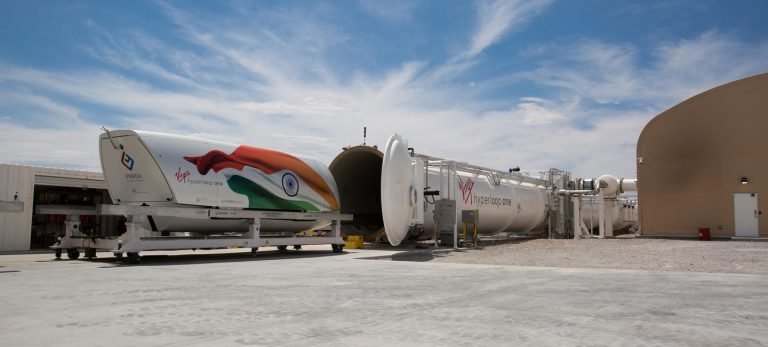
MAHARASHTRA (Metro Rail News): The Virgin Hyperloop, a revolutionary mode of transport proposed by British industrialist Richard Branson, has come closer to reality with the Maharashtra Government earmarking a 15-km stretch of land for a test track.

A 15-km test track for the Hyperloop is proposed to be constructed between Kiwale and Urse on the Mumbai-Pune Expressway. Apart from earmarking Rs 300 crore, the Maharashtra Government has got the faculty and students of IIT-Bombay also to participate in the project according to state government sources.

The Pune Metropolitan Region Development Authority(PMRDA), which is the nodal agency for developing the Hyperloop project, has sought assistance from the Principal Scientific Advisor to the Government of India to prepare safety guidelines for the Hyperloop the report says.

According to the concept proposed by Branson with no functional prototype of the Hyperloop anywhere in the world, officials here say they have no yardstick for comparison. The Hyperloop, conceived by Branson, will transport people between two places at a speed of 1500 km per hour. The passengers will travel via pods suspended in tubes in which air pressure will be just nine percent of the normal levels.
Officials said Chief Minister Devendra Fadnavis after a meeting with Branson three years ago is personally pushing for the Hyperloop project.