
Government nod to raise the speed of Delhi-Mumbai, Delhi-Howrah route

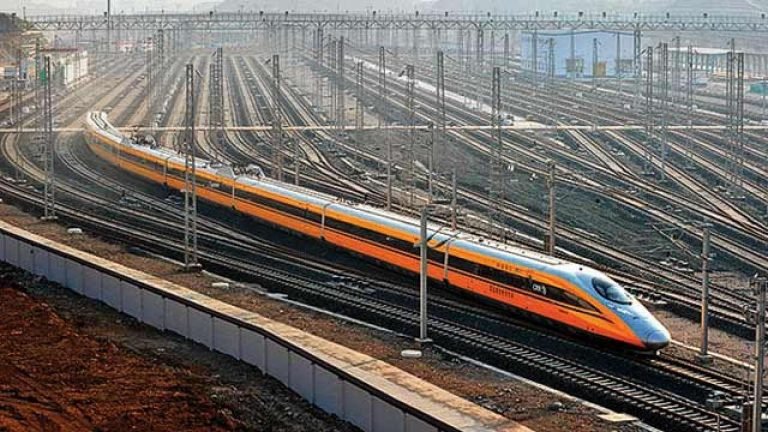
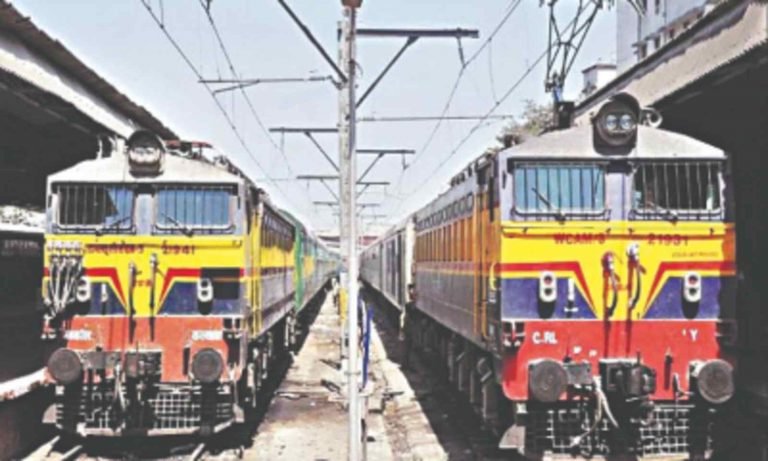
NEW DELHI (Metro Rail News): The government has approved the railways’ proposal to increase the train speed on Delhi-Mumbai and Delhi-Howrah routes to 160 kmph which will reduce travel time by 3.5 hours and five hours respectively, making them overnight journeys.

This was part of the ministry’s 100-day agenda. The cost of the project for the Delhi-Mumbai route will be₹6,806 crore, the cost for the other route will be ₹6,685 by 2022-23.

On Monday, the decisions were taken in the Cabinet meeting held but were made public on Wednesday. It was during this Cabinet meeting that the decisions on Kashmir were discussed with Union ministers.

A statement from the government said, the increased speed on these routes will ensure improved service, safety and will create capacity, a statement from the government said.

The statement said, Increasing the speed of the Delhi-Mumbai and Delhi-Howrah sections to 160 kmph will ensure up to 60% increase in an average speed of passenger trains and the doubling of the average speed of freight traffic.

Together these two routes account for 29% of passenger traffic and 20 % of freight traffic.

The government has also approved the ministry’s plan to construct a new line between Vaibhavwadi-Kolhapur (now Shri Chhatrapati Shahumaharaj Terminus) (108 km) with an estimated cost of ₹3,439 crore.

The project will be completed by 2023-24 and will be executed by the Construction Organization of Central Railway.

Lucknow Metro is keen to attract filmmakers

LUCKNOW (Metro Rail News): It was the first time ever that Bollywood celebrities got to go for a ride in the Lucknow Metro ever since it started in the city two years ago. Actors Gulshan Grover, Mahima Chaudhry, and filmmaker Rahul Mittra took a ride in the Lucknow Metro on Saturday afternoon and giving them the company was Kumar Keshav, Managing Director, Lucknow Metro Rail Corporation (LMRC).

Till now, no celebrity had ever traveled in the Lucknow Metro nor was any photoshoot allowed in the train after its inauguration last year. But on Saturday, the Chaudhary Charan Singh International Airport Metro Station (CCSMS) wore a festive look when the trio was to board the train from there and travel up to Hazratganj in it.

A huge crowd was already at the station to see the Badman and the Pardes girl who came and waved to them. Rahul Mittra, who’s produced films like ‘Bullett Raja’ and ‘Saheb Biwi Aur Gangster’, was also greeted with whistles and cheers by the crowd.

Gaurav Prakash, Kumar Keshav, Gulshan Grover, Mahima Chaudhary and Rahul Mittra (BCCL/ Farhan Ahmad Siddiqui) Making videos and clicking snaps of the Metro most of the time during her journey was Mahima, who also took time to click selfies with her fans at the Hazratganj Metro Station.

“I very rarely use a Metro system but I’m glad to see the world-class things which are present in Lucknow now,” said Mahima, adding, “I loved the artworks, especially at the Hazratganj Metro Station where chikankari work has been depicted. This kind of construction will be an example of all other projects which are under process.” While for Gulshan Grover, it was a pleasant ride and he was all praises for the metro, “Lucknow Metro is something which is beyond my expectation, it is so clean and tidy. Depicting each thing in a fine manner, especially the artwork at the CCS Airport Metro Station where the Brij culture of Dance has been shown. I will definitely opt for the Metro on my next visit here,” he said. Calling it a proud moment for Lucknow Metro, an overwhelmed Kumar Keshav, MD, LMRC said, “I am really proud that big names of Bollywood like Gulshan Grover, Mahima Chaudhary, and Rahul Mittra took a ride in our metro.

It was really a very good gesture from their side. We had asked them a day before they were scheduled to visit Lucknow if they would like to ride in the Lucknow Metro to which they readily agreed. They were very appreciative and were mighty impressed by the artwork at the Hazratganj Metro station.

It’s just the beginning and soon many stars will visit us. I would like to welcome eminent personalities visiting the nawabi city in the future, to come and see this new addition to Lucknow by taking a ride in the Metro,” said Keshav.

“Earlier we had only eight stations but now we have 21 stations, and the most beautifully designed section was inaugurated just four months back. So, I am hopeful that filmmakers will soon approach us. Till now, maybe the script of the films being shot in the city didn’t have such a scene to can in a Metro or else they would have approached us.” Keshav further informed us that the fees for shooting at the LMRC premises and properties are also quite nominal and is only for the actual time of the shooting. “We will not charge for the preparation time needed before and after the shooting,” informed Keshav

Cabinet nod for semi high-speed rail corridor in Kerala

KOCHI (Metro Rail News): Kerala will get a special railway corridor along its 532-km length by 2024, as the state government is set to build an Rs 66,079-crore rail line that will enable semi-high speed trains to ply between upstate Kasaragod and the capital city of Thiruvananthapuram.

A Cabinet meeting of the state’s ministers gave clearance to the implementation of the mega infrastructure project by the Kerala Rail Development Corporation Limited (KRDCL), a joint venture of Kerala government and Railway Ministry.

The completion of the double line spanning 532 km is expected to reduce congestion along with the state’s railway traffic that is already 115 percent of its capacity, according to V.Ajith Kumar, managing director, KRDCL. KRDCL will have to acquire about 1,200 hectares for the project that will have the rails elevated along urban stretches.

The trains will run at a maximum speed of 200 km per hour. They will initially have nine coaches, and the number will be subsequently enhanced to 12. The travel charge is projected to be Rs 2.75 per km, and there will be an annual hike of 7.5 percent, he added.

KRDCL expects a ridership of 67,740 passengers a day. It estimates to carry 1,330 travelers in one direction at peak hours. For meeting the expenses of the Rs 66,079-crore project, Rs 34,454 crore will come as loans. The Centre and state will need to provide Rs 7,720 crore each.

The Kerala government will spend Rs 8,656 crore on land acquisition and allied matters. The rest of the expenses will be met through other loans by the union and state governments, said Ajith Kumar.

Major clearances afoot for metro rail projects in Mumbai

MUMBAI (Metro Rail News): The Mumbai Metropolitan Region Development Authority (MMRDA) is considering to appoint M/s AFCONS Infrastructure Ltd to partly design and construct the elevated viaduct – including the integration with Metro-4 (Wadala to Kasarvadavali) and Metro-5 (Thane-Bhiwandi-Kalyan).

Besides, the construction of seven elevated stations, namely Dhamankar Naka, Anjur Phata, Purna, Kalher, Kasheli, Balkum Naka and Kapurbawdi on the Metro-5 corridor is being considered. In Tuesday’s executive committee meeting, the proposal was tabled by MMRDA.

The committee appointed the consortium of M/s. Systra (France), M/s. Consulting Engineers Group Ltd and M/s Systra MVA Consulting (India) Pvt Ltd as general consultants for the construction of civil work on Metro-5 and Metro-9 (Dahisar East to Mira-Bhayandar) and (Andheri East to CSMIA) corridors.

Moreover, for the Metro Bhavan and the operation control center in Aarey, M/s Epicons Consultant Pvt Ltd has been appointed as the project management consultants.

“Considering the traffic chaos and low air quality, what we need is total connectivity. Hence our focus is to develop all the metro lines,” said RA Rajeev, Commissioner, MMRDA.

Governor with family members travel in Metro Rail

HYDERABAD (Metro Rail News): Hyderabad Metro Rail Project is the crown jewel of twin cities and the citizens shall make use of this modern public transport facility regularly, said Governor of Telangana ESL Narasimhan here on today Tuesday.

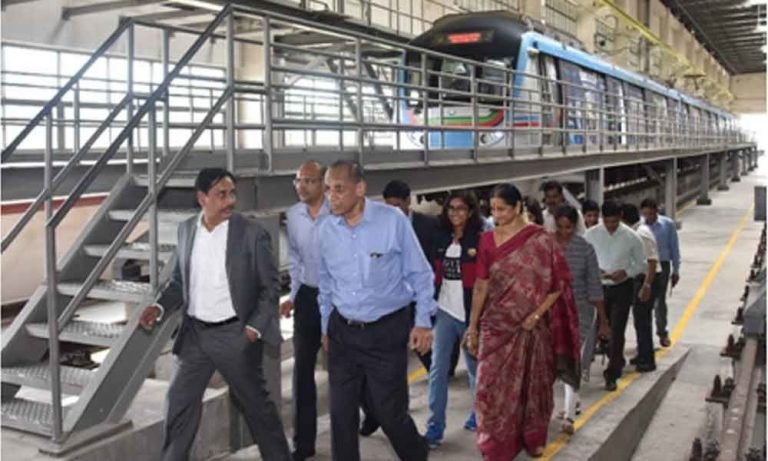
In an impromptu program, the Governor along with his wife Vimala Narasimhan and granddaughter has traveled this afternoon from Ameerpet junction to Nagole Metro Station as a common citizen and visited Uppal Metro Depot. HMRL Managing Director NVS Reddy accompanied the Governor in the Metro travel.

L&T HMRL MD KVB Reddy and other senior officials have received the Governor at Nagole Metro Station and took him around the Metro Depot.

The officials have shown him the state of the art features of the Hyderabad Metro Rail project and particularly the functioning of Operation Command Control (OCC) Room. Earlier, the Governor and lady Governor have planted fruit-bearing saplings in the premises of L&T Metro Rail Depot.

In the return journey from Nagole, the Governor has got down at Begumpet Metro Station. While speaking to the media at Begumpet Metro Station, the Governor said, “The maintenance of Metro stations and operational systems are excellent.” and added He personally congratulated HMRL MD NVS Reddy and his team of officers”.

Replying to a query the Governor said, he himself has inaugurated the Metro Rail operations between Ameerpet Junction to LB Nagar Metro Station and Ameerpet Jn to Hitec City Metro Station about a year back and in this context, he wished to travel today in the Hyderabad Metro to get the first-hand information.

BMRCL tells users not to recharge smartcards online

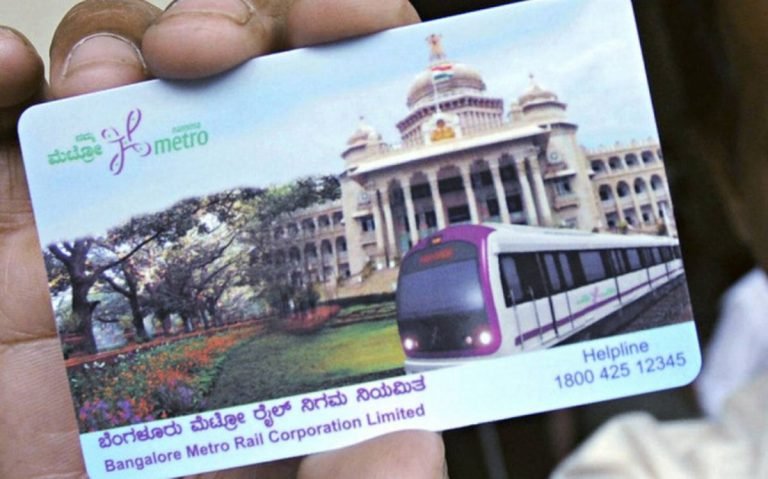
BENGALURU (Metro Rail News): Bangalore Metro Rail Corporation Ltd (BMRCL) on Tuesday urged Metro users not to use the online top-up modes till the technical glitches are resolved. This would mean that commuters cannot recharge their smart cards through BMRCL’s website, Karnataka Mobile-One app or bank auto top-up options, according to a press release.

However, commuters can top-up their smartcards at station ticket counters using cash or credit/debit cards. This is expected to result in long queues at Metro counters across all stations.

BMRCL said it was unable to provide online recharge in 3,092 such cases till August 3. “On August 5, BMRCL has resolved the issue manually and all commuters can get their smartcards topped up at entry gate of any station,” he said.

BMRCL said they are now working on resolving the issue related to automation of the online top-up process. Every day, about four lakh passengers travel in the Metro and 60% of them are smartcard users.

While BMRCL authorities are yet to allow recharge through digital wallets, their counterparts in Delhi, Hyderabad, and Mumbai allow recharge of cards via Paytm and PhonePe.

Namma Metro is also yet to tie up with unified payment interface (UPI)-based apps such as PhonePe, Google Pay, Paytm and Bhim.

Mumbai’s suburban trains back on track after more than 46 hours

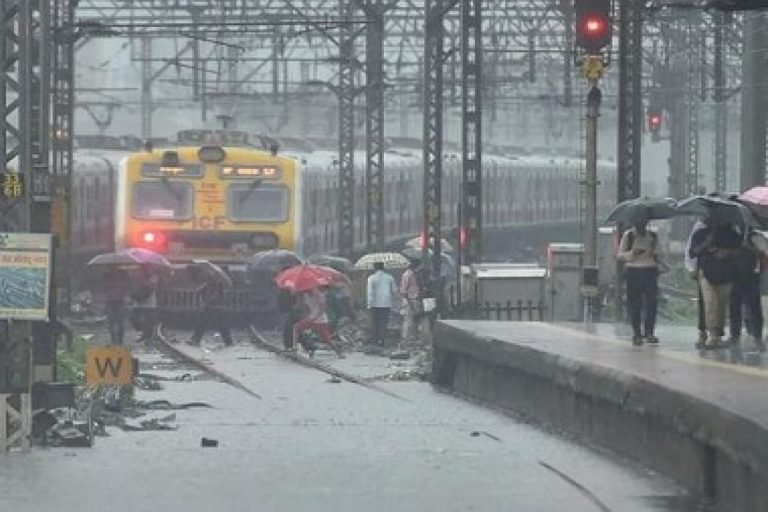
MUMBAI (Metro Rail News): Central Railway resumed its local train services in Mumbai fully on Tuesday after more than 46 hours but canceled five outstation trains after heavy rains hit the city and its suburbs.

Train services between Badlapur and Karjat railway stations were started on Tuesday morning. Services between Karjat and Chhatrapati Shivaji Maharaj Terminus (CSMT) resumed at 5.53am.

However, outstation train movement between Mumbai and Pune remained disrupted on Tuesday morning as well after a boulder fell on the tracks between Monkey Hill and Thakurwadi railway stations.

Heavy rainfall on Saturday evening had washed tracks near Shelu railway station of the Central Railway. This led to complete suspension of train services between Badlapur and Karjat railway stations.

“Laying of railway tracks and placing ballast near Shelu railway station was done. Signal and telecommunication equipment were also damaged as water near Ambernath was 18 inches above rail level on Saturday midnight. Work was completed and train services started on Tuesday early morning,” a senior Central Railway official said.

Due to water-logging on the tracks, Central Railway had also suspended train services between CSMT and Thane and Panvel railway stations for over 12 hours on Saturday.

New Metro subway for easy access to Dabri Mor station

NEW DELHI (Metro Rail News): The Delhi Metro Rail Corporation (DMRC) on Tuesday inaugurated a pedestrian subway to help commuters reach the Dabri Mor metro station on the Magenta Line (connecting Botanical Garden and Janakpuri West) from the neighboring areas.

“A pedestrian subway constructed to facilitate entry and exit to the Dabri Mor metro station was opened today (Tuesday) in the presence of DMRC’s managing director Mangu Singh and other senior officials,” a statement released by the Delhi Metro read.

Senior Metro officials said that the 185-meter-long underground facility will help metro users around Sitapuri, Dashrathpuri, Dabri Mor, Janakpuri C-2 block and Sagarpur, to easily reach the Dabri Mor station on the Magenta Line. Since the subway does not directly connect the Metro station, regular pedestrians who do not use the Metro services will also benefit.

“The subway is built nine meters below the ground and will be open to non-metro users too. The aim behind constructing the facility was that the Dabri Mor metro station connects the very busy Pankha Road. The subway is above this traffic-heavy road and crossing it is very difficult for pedestrians especially during the office peak hours,” a senior Metro official said on Tuesday.

The official said under Phase-III, such pedestrian-friendly facilities have been planned to increase the footfall and provide easy access to metro stations.

“The subway, like most of our facilities, has been built using the box pushing technology where boxes are placed below a traffic-heavy road and pushed to create a tunnel without any external digging.
As a result of this, there was no hindrance to the vehicular movement above during its construction and traffic was not affected,” the official said.

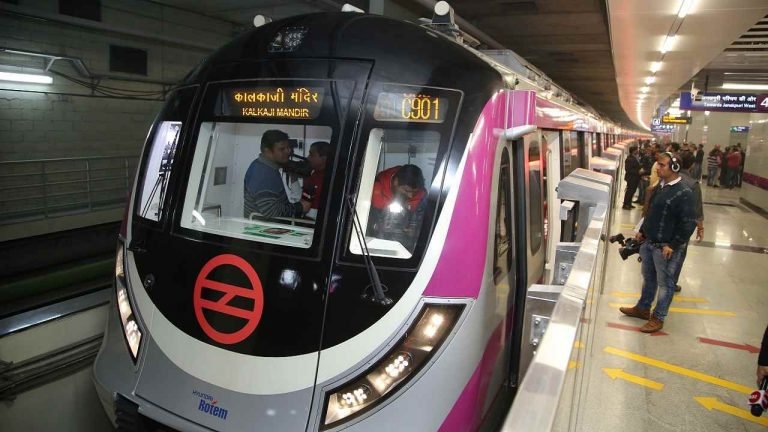
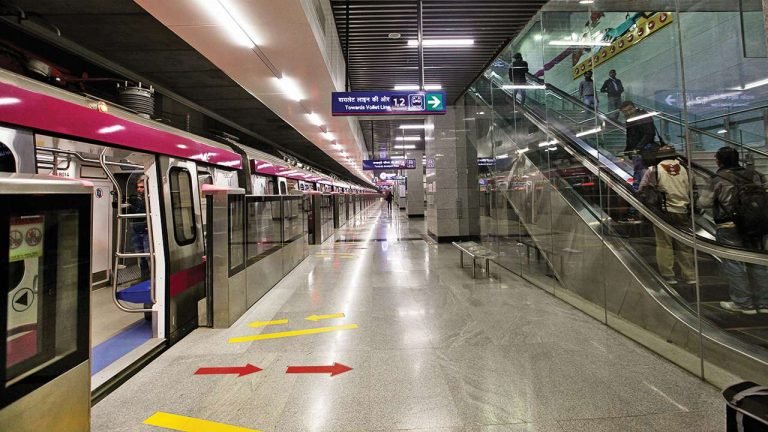
Soon, enjoy uninterrupted internet on Delhi’s Pink and Magenta lines

NEW DELHI (Metro Rail News): Commuters traveling on Delhi Metro’s Magenta and Pink lines will soon enjoy uninterrupted internet connectivity in trains and stations. The step has been taken after several complaints of poor network and internet connectivity on these two Metro lines, a major part of which is underground.

After the installment of network boosters on these routes, people will be able to enjoy hassle-free mobile network.

According to the reports, Delhi Metro Rail Corporation (DMRC) has conducted successful trials of network boosters installed on both the lines adding the facility could soon be extended to other Metro lines as well.

The Metro authorities’ decision to first install network boosters on Magenta and Pink lines stems from the fact that the network problem is particularly high on these routes. Magenta Line has 23 underground stations with a total of 25 stops, while Pink Line comprises 11 underground stations with 28 stations. As per the report, DMRC also plans to install mobile towers on a maximum of 35 locations on Blue Line, followed by 18 locations on Yellow Line and 14 locations on Violate Line.

The Delhi Metro has been given a grant of Rs 414.70 crore in the Union Budget 2019-20 as against Rs 50 crore in the last fiscal. The Delhi Metro’s current operational span is 342 km with 250 stations. The last section of the DMRC made operational was on March 8 — 6.6-km Noida City Centre-Noida Electronic City section, an extension of the Delhi Metro’s Blue Line.

NMC urged to rationalize Aapli Bus service on Metro route

NAGPUR (Metro Rail News): In order to increase ridership, MahaMetro has approached Nagpur Municipal Corporation’s transport department and urged it to carry out route rationalization for buses which are plying on Wardha Road. In a letter to transport manager, the MahaMetro stated that if the NMC carries out route rationalization, it would benefit the commuters and also increase ridership in public transport facility provided by Aapli Bus and Metro as well.

At present, as many as 24 buses are being operated on Wardha Road from Sitabuldi to Butibori with a ridership of around 8,680 every day. MahaMetro operates one Metro rail every hour from Sitabuldi interchange to Khapri having five stations (Sitabuldi interchange, Airport, Airport South, New Airport and Khapri).

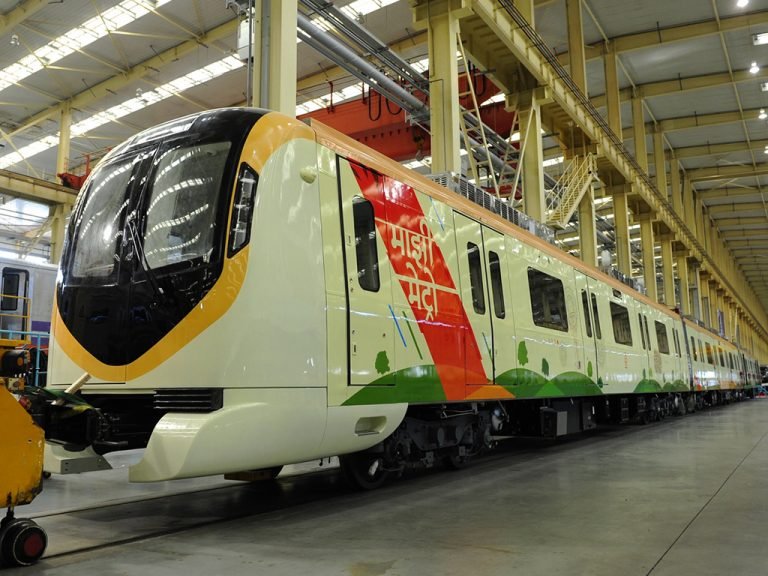
Though MahaMetro started commercial operations from March 9, it has increased frequency from June 28. On average, around 2,500 passengers commute daily on this existing route in 25 trips. The frequency will further increase after getting additional Metro rakes, which are already under trial. NMC’s transport committee chairman Bunty Kukde said the NMC is yet to take any decision on the Metro’s proposal.

He, however, clarified the civic body will not reduce the number of Aapli Buses on this route. The NMC earns Rs24.73 per km per bus on this route.
Kukde though said the NMC will definitely provide feeder buses on Metro routes. Along with this proposal, the MahaMetro has also pointed out that commuters who want to take Metro from the existing bus stop on Maharajbagh Road are facing the problem of crossing busy junctions like Variety Square and Rani Jhansi Square, which are unsafe for pedestrian movement due to heavy traffic.

The distance from the existing bus stop on Maharajbagh Road to Sitabuldi interchange Metro station is 635 meters. It has further requested the civic body to start feeder bus service from Maharajbagh Road to its interchange station. MahaMetro has urged that routes of city buses coming to Sitabuldi from Katol Road, Gandhibagh, Hudkeshwar, Dighori, Besa, Bahadur Phata, Defence, Jaitala, Swavlambi Nagar be diverted towards Sitabuldi interchange Metro station for giving connectivity to commuters so as to increase ridership of NMC buses and Metro also.

As per its proposal, routes may be diverted via Variety Square, Munje Square, Mor Bhavan, and Maharajbagh. Buses going from Sitabuldi towards Katol Road, Koradi Road, Gandhibagh, Hudkeshwar, Dighori, Besa, Bahadur Phata, Defence, Jaitala, Swavlambi Nagar will also be diverted vice versa.

The MahaMetro has also requested allowing two-way movement of Aapli Buses from Variety Square to Munje Square, Anand Talkies to Munje Square and from Munje Square to Rani Jhansi Square, which is planned to be one-way for all vehicles aimed at better traffic management.

Phase-2 rapid rail corridors to reach till Palwal, Rohtak, Baraut

NEW DELHI (Metro Rail News): The much-awaited regional rapid corridors will not just connect Delhi to Meerut, Alwar, and Panipat but also to five other far-flung areas of the national capital region! The regional rapid transit system (RRTS) has identified the corridors of phase-2 which will be planned and implemented across several cities of Haryana and Uttar Pradesh such as Palwal, Rohtak, Baraut. According to information shared by National Capital Region Transport Corporation (NCRTC), the following corridors have been identified under RRTS phase-2:

  • Delhi – Faridabad – Ballabgarh – Palwal
  • Ghaziabad to Khurja
  • Delhi – Bahadurgarh – Rohtak
  • Ghaziabad to Hapur
  • Delhi-Shahadra-Baraut

NCRTC is the official implementing body of the RRTS project and is a special purpose vehicle for the same. NCRTC has planned these routes for the RRTS network in a bid to decongest the existing vehicular load on the roads and to ease these areas with the inclusion of reliable public commuter service.

The RRTS phase-1 corridors have the priority sections of Delhi-Ghaziabad-Meerut, Delhi-Gurugram-Rewari-Alwar, and Delhi-Sonipat-Panipat. The construction work of Delhi-Ghaziabad-Meerut has already begun.
It is the very first rapid rail corridor targeted for completion by the year 2025. However, the priority section of the Delhi-Meerut RRTS is Sahibabad to Duhai which has been targeted for operations by the year 2023 by NCRTC. Here are some interesting facts and features of the Delhi-Meerut RRTS:

  • The 82 km long Delhi-Ghaziabad-Meerut RRTS line will bring down the travel time between Delhi and Meerut to just 55 minutes. It will have 16 RRTS stations on the route at both elevated and underground stretches.
  • The country’s first mega transit hub with multi-model integration is going to be developed at the Sarai Kale Khan station where it will have connectivity to other RRTS corridors and also with inter-state bus terminals, Delhi Metro as well as Indian Railways station.
  • The RRTS trains will have a high operational speed of 160 km and a frequency of 5-10 minutes on the network. The trains have specially reserved seats, ladies coach, executive coach, reserved facilities for senior citizens and specially-abled.
  • The Delhi-Meerut RRTS will also be connected with Meerut metro stations on the route. It will have two depots, one near Duhai and the other near Modipuram.

Maha Metro Constructs `Vierendeel Truss’ at Sitabuldi Interchange

NAGPUR (Metro Rail News): The Maharashtra Metro Rail Corporation Maha Metro had to face a multiple challenges while executing the project, but one of the toughest challenge it had encountered was undertaking construction at Sitabuldi Intersection. Sitabuldi is one of the busiest junctions in the middle of the city and any elevated interchange station between two corridors and construction work above such a congested road junction had to be an engineering challenge.

The challenge lied in designing the structure as much as it lied in managing the crowd. Sitabuldi Interchange is crucial for Nagpur Metro project as the two corridors cross each other there. The construction work above the road surface requires precision in planning and absolute competence in execution since even a minor error or oversight on the part of the designers and engineers may lead to disastrous results.

Thus, the most critical and challenging activity in construction was erecting central portion of station, which had to be constructed on exactly the busiest part of junction. It was a structural challenge also because of large span of 40m which had to take train loads of two lines above. The solution to this technical challenge was found in Vierendeel truss of 40m span.

The Vierendeel frame is a series of rectangular frames which achieves stability by the rigid connection of the vertical web members to the top and bottom chord. It is named after Arthur Vierendeel, a civil engineer, who also held the post of Director for the Ministry of Public Works in Belgium. He had designed the structure for the first time 1895 and was named after him.

This concrete truss (A truss is an assembly of beams or other elements that creates a rigid structure) was constructed in one go. Work on these is in the last stage of completion. The challenge was also to execute work without erecting a pillar at the centre in one of the busiest squares of the city. Presence of a pillar is a hindrance in the smooth flow of traffic. Vierendeel Truss was solution to this challenge.

Being one of Nagpur’s arterial roads, hundreds of vehicles pass through it every hour. It is hence next to impossible to stop or divert traffic on such a busy road even for short durations. The platforms of the two corridors are placed one above the other. The location of Interchange Station is important as it is one of the busiest traffic junctions of the city with a cinema hall, food mall and two bank buildings surrounding it.

By incorporating Vierendeel Truss in its project at one of the crucial junction, Maha Metro not just ensured stability but also incorporated a unique structure in its project.

Bombardier signs US$4.5b contract to build Cairo monorail

MONTREAL (Metro Rail News):  Canadian manufacturing group Bombardier announced on Monday it had signed a multi-billion dollar agreement to build two automated monorail lines in Egypt’s notoriously congested capital Cairo.

The US$4.5 billion agreement, which was signed with Egypt’s National Authority for Tunnels, is subject to “final signatures of supplementary documents,” Bombadier and its Egyptian partners Orascom Construction and Arab Contractors said in a joint statement.

The monorails, which will be able to transport 45,000 passengers per-hour in either direction, “will dramatically improve the quality of life for millions of residents by significantly reducing their daily commuting time,” said Danny Di Perna, president of the company’s railway division Bombardier Transportation.

He noted the monorails will also reduce traffic congestion in the city that’s home to more than 20 million people.

The three companies will be responsible for the construction, development, and maintenance of the new monorail lines for 30 years, according to the statement.

The first line will run 54km from east Cairo to the new administrative capital being built in the desert. The second line, which will run for 42km, will connect 6th October City to Giza.

Bombardier Transportation, which will build the system’s 70 four-car Innovia Monorail 300 trains, has a US$2.85 billion share in the project, and Orascom has a US$900 million share, the statement said.

The Innovia Monorail 300 trains are already in use in Sao Paulo, Brazil, and set to be deployed in similar projects in Bangkok, Thailand and Wuhu, China.

Bombardier’s stock plummeted on Thursday after higher-than-expected losses in the second quarter and, for the second time in three months, a downward revision of earnings guidance for 2019.

Chennai metro Rail launches feeder service cab at Rs 10

CHENNAI (Metro Rail News): Aimed at increasing patronage for metro services, the Chennai Metro Rail Limited (CMRL) has launched a feeder service cab at a flat rate of Rs 10 to enable metro users to travel between the stations and their residences.

According to reports, the service was launched on Monday and will help commuters book a seat in the cab and pay using their Metro smart card. The service was launched on Monday by the state Minister for Industries MC Sampath. The feeder service will operate through a mobile app in collaboration with Bengaluru Mega cabs Private Limited. 

Designed to work like Ola and Uber cab aggregator apps, this application will enable users to choose the nearest pickup point following which the app will provide the arrival time of the cab. Every station is provided with at least five pickup points within an area of six to eight kilometers from the station. The users can either pay upfront or finish the trip and pay for the ride. 

The service, which was inaugurated at the Nandanam station on Monday, will soon be made available at all stations in the next three months, CMRL said.

In January this year, the CMRL launched feeder services to the Old Mahabalipuram Road (OMR) in collaboration with Ford’s corporate shuttle feeder services. The service was launched at the Alandur Metro station and was designed to ferry commuters to their offices on the IT corridor.

CMRL started feeder services in August 2018 on a trial basis for six months. The services constituted share autos and cabs from 13 stations up to a 3-km radius from the stations. The services were also made available between 6.30 am and 9.30 pm. MTC had also run mini-bus services to some of the metro stations to ferry users to and from the stations.