
Hyderabad Metro introduces QR code-based e-ticketing

HYDERABAD (Metro Rail Project): On Monday, Hyderabad Metro Rail Limited (HMRL), in association with MakeMyTrip, announced the launch of a QR code-based e-ticketing system for metro passengers. Hyderabad Metro is the first in the country to launch the QR code-based e-ticketing system, officials said.

The QR code-based ticketing system will allow passengers to pre-book three different types of tickets, single and return journey tickets for the single or two-way journeys, Trip Pass and Store Value Pass. More importantly, the service will permit passengers to book six tickets in a single transaction and share those (six) QR codes with other passengers on WhatsApp.

Initially, the QR code ticketing service is available at 20 stations including Miyapur, HiTech city, Tarnaka, Secunderabad, Ameerpet, Durgam Cheruvu, Raidurg, JNTU, KPHB, Kukatpally, Dilsukh Nagar and LB Nagar among others. By January 2020 efforts are on to make this service available at all the 49 stations.

Passengers will be able to book ‘single and return Journey ticket’ and in subsequent phases, Trip Pass and Store Value Pass will be available through Make My Trip’s website and app.

HMRL Managing Director NVS Reddy after formally launching the service said the new ticketing system is designed to make commuting comfortable to passengers who do not have to wait for tickets at the counters.

While sharing the QR codes with other passengers (in the loop of six), they will have to be careful that the codes are not shared with others as the codes are scanned and permitted to travel only once, he said.

MakeMyTrip co-founder and CEO Rajesh Magow said Metro passengers generally spend about 10 minutes in queues for tickets. He said, “The QR code-based ticketing system has been specially designed for Hyderabad Metro and officials have been working on it for the last three months”.

Authorities are planning exciting offers for passengers booking their tickets using the QR code system. The CEO and MD of L&T Metro Rail Hyderabad Limited, KVB Reddy, and other senior officials were present.

Dehradun to become the first city in the country to have ropeway as Mass Transit System

DEHRADUN (Metro Rail News): On Monday, the Uttarakhand government signed a Memorandum of Understanding (MoU) with Delhi Metro Rail Corporation (DMRC) for setting up two ropeway projects in Dehradun.

Officials claimed that this would make Doon the first city in the country to have ropeway as a mass transit system. The officials added that DMRC would study the project feasibility and hand over a detailed project report (DPR) to the state government in five months.

Initially, the government had planned to link Dehradun, Haridwar, and Rishikesh with a metro train and a separate entity named Uttarakhand Metro Rail, Urban Infrastructure & Buildings Construction Corporation Limited was also set up for the purpose.

However, a study found that it was not feasible to have a metro in most places in these three locations. Following this, the state government decided to have ropeways for Dehradun, Personal Transit Rapid or Pod cars for Haridwar and Light Transit Rapid to connect Dehradun, Rishikesh, and Haridwar.

According to the initial groundwork done by Uttarakhand Metro Rail staff, the total length of the two proposed ropeways would be around 25 km, which they claimed may “slightly differ” when the final DPR is prepared. The construction of a one-km stretch of the ropeway would cost between Rs 70 crore and Rs 90 crore. The overall project cost is estimated to be around Rs 2,200 crore.

The officials added that two routes have been finalized for the project. The first one is from ISBT to Clock Tower to Rispana Bridge and the second would start near Forest Research Institute (FRI) and end at Kandoli via Clock Tower.

DMRC is expected to prepare the DPR in five months and thereafter the project is likely to be completed in another two years. Once DMRC hands over the DPR, the state would invite tender bids for the project. Each cabin car of the ropeway would have the facility to carry 10 passengers with a speed of 25 km/hour, officials said.

The MoU was signed in the state assembly building on Monday in the presence of urban development minister Madan Kaushik. Kaushik told, “The project has several advantages. Not only will it cost far less than the metro rail, but it will also be completed faster. It will have less intrusion on the ground and have less effect on the city’s skyline.”

He added that the ropeways need not follow the roads and therefore will reduce the traveling distance. “It will cost over Rs 2 crore to prepare the DPR, for which we have released the first installment of Rs 43.20 lakh to Delhi Metro. With this project, Dehradun will become the first city in the country to have ropeways as a mass transit system.”

Metro tenders floated for Silk Board-KR Puram line

BENGALURU (Metro Rail News): On Friday, Bangalore Metro Rail Corporation Ltd invited tenders for the Central Silk Board-KR Puram corridor. The entire 19km elevated stretch with 13 stations along the ORR is crucial for the city as it passes through the IT corridor housing several multinational companies.

2023-24 is the deadline for the Light Blue Line, comprising Central Silk Board- KR Puram (Phase 2A) and KR Puram- Kempegowda International Airport (Phase 2B) corridors.

With 90% of land acquisition already completed and utility-shifting contracts awarded, there seem to be no major hurdles in implementing the Light Blue Line.

A BMRCL official said that “Tenders for ORR-KIA are being floated in six packages. Of these, five packages are for the Light Blue Line and stations from Central Silk Board to KIA and one for two depots. We have invited tenders for the first two of the five packages. These two will cover Central Silk Board Junction to KR Puram. The other three tenders will be called in February. There are no changes in alignment or station locations”.

BMRCL has called tenders in two packages for the civil work for Central Silk Board-KR Puram-Byappanahalli depot and for the construction of loops and ramps for a 2.8km flyover at Central Silk Board Junction. The first package is a 9.85km elevated section which includes six Metro stations: Central Silk Board Junction, HSR Layout, Agara Junction, Iblur Junction, Bellandur, Kadubeesanahalli and construction of a 2.8km flyover at Central Silk Board at Rs 731.2 crore.

The second package is a 9.74km elevated section with seven stations at Kodibisanhalli, Marathahalli, ISRO Layout, Doddanekkundi, DRDO Sports Complex, Saraswathi Nagar (Mahadevapura) and KR Puram, and a 2km link line to Byappanahalli depot at Rs 594.2 crore. The tenders will be opened on February 6.

Flyover tender re-issued BMRCL on Friday floated a tender for the construction of loops and ramps for a 2.8km flyover at Central Silk Board. The move came after a Salem-based contractor to whom BMRCL had issued a letter of acceptance in July, backed out after failing to produce a bank guarantee for performance security. BMRCL officials said the flyover will facilitate a signal-free intersection and decongest the road.

The elevated road is likely to be eight meters above the existing road, while the Metro line will be at 16-meter height. The 20m-wide four-lane road will have four loops with a ramp towards Electronics City, BTM Layout and HSR Layout. The road will bring respite to motorists headed to Electronics City, BTM Layout, Marathahalli, and HSR Layout via Silk Board. Two Metro lines RV Road-Bommasandra and Silk Board-KR Puram-Airport interchange meet at the junction.

Pune metro’s first trial run likely to start in January

PUNE (Metro Rail News): In January trials for the Pune metro rail project is likely, to begin with, two train sets of six rail coaches set to reach the city by the month-end.

The two train sets left Nagpur on Saturday and will reach Pune by December 29, says Maharashtra Metro Rail Corporation Limited (Maha-Metro) officials.

Within days of the coaches reaching Pune, the Maha-Metro plans on using a special crane to put the train sets on the already laid tracks in Pimpri-Chinchwad and start trials within a fortnight.

The coaches made by China-based CRRC Corporation are being brought to the city via road. These coaches are already in use at the Nagpur metro project.

Hemant Sonawane, general manager, Public Relations, Maha-Metro (Pune) said, “We are using the coaches sourced from Nagpur for the trials. These are made by CRRC Corporation, China, while the Pune Metro train set coaches have been awarded to an Indian company with Italian tie-up Titagarh – Fireman which will arrive in April–May 2020”. 

According to officials, the work is progressing on the priority stretch in Pimpri and Kothrud. While Prime Minister Narendra Modi had asked Maha-Metro to begin operations by December 2019, operations are likely to begin by mid-January 2020 as work on the stations is yet to be completed. 

According to officials, each train will have a set of three coaches with a commuter capacity of 950 to 970. One of the coaches will be reserved for women and the entire train will be air-conditioned with state-of-the-art facilities and vestibule coaches. 

These sets are made out of stainless steel and are light in weight, with controlled LED light panels inside the coaches. The maximum speed of the train will be from 0 to 9 km per hour.

Earlier last week, Maha-Metro started work on the underground stretch between Agriculture college and Swargate using the tunnel boring machines (TBM) which are being used to dig the ground.

The TBMs have been customized as per the geological structure of the city. Pune has basalt for up to 30 meters deep. We are confident of meeting deadlines as the electrification work is also going on at great speed, added Sonawane.

Student gets Kochi1 card to travel in metro

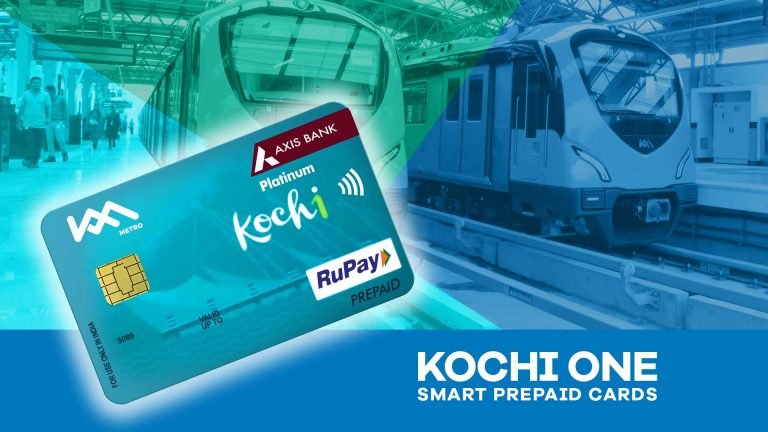
KOCHI (Metro Rail News): Finally the long-pending demand to make the Kochi1 Card available to students is being fulfilled. Kochi Metro Rail Limited (KMRL) introduced the prepaid smart card, in association with Axis Bank, which was only available to persons aged 18 and above so far. With the introduction of this card, the city’s commuters will now have a convenient and hassle-free travel experience.

The decision to make the card available for students came after a lot of requests from both parents and schools. Now any student aged above 10 can avail the student card from any of the Kochi metro stations.

KMRL MD Alkesh Kumar Sharma said, “A student card has been a long-pending demand from students and their parents. Now the kids can enjoy a safe and seamless journey, which will help them devote more time to studying. The facility has been made available at the CUSAT and Kalamassery Metro stations from Saturday)”.

Exclusive Interview of Mr. Anil Saboo, Chairman, ELECRAMA 2020

What are some of the highlights of ELECRAMA 2020? How will it be different from previous editions?

Mr. Anil Saboo: ELECRAMA 2020 have major concurrent events like World Utility Summit, ETechnxt, RBSM, and DBSM, etc where exhibitors from more than 60 countries and visitors from more than 120 countries shall join. ELECRAMA shall provide more noticeable growth, increased exports in addition to new segments especially connecting our MSME units to Global Value Chains.

In this edition, we will be focusing on the entire energy spectrum along with Renewable Energy, Energy Storage, Automation, Digitalization, Industry4.0, IOT, AI, and Electric Transportation opportunities to expose the electrical industry to new technology innovations and disruptions with information to manage the transformation.

This year we also focus on Women Empowerment in the electrical sector. As per the study, in all developed countries women contribute more than 50 % of the overall workforce. And in the last 20 years, it is analyzed that In India the majority of the women are involved in the IT sector only. In order to increase the role of women in the Energy & Power sectors, we will provide a platform for them to discuss and share their experiences and learn from each other.

Elecrama Barter ad Size 240mm x 180mm
ELECRAMA 2020

What are some of the new and emerging challenges for the grid?

Mr. Anil Saboo: Grid expansion over the next few years will be driven by the government’s ambitious plan to scale up renewable energy to 175 GW by 2022. To develop associated power evacuation infrastructure, Power Grid Corporation of India Limited along with state, utilities are implementing the Green Energy Corridor project.

The major emerging challenges for the grid are to adoption of Smart technology, investment in technology to make grids more reliable, automation in substations, innovative tower design, Digitization, technology evolution and up-gradation in infrastructure.

What are the most promising and emerging technologies which would be most relevant for meeting future grid requirements?

Mr. Anil Saboo: The most promising and emerging technology that meeting with future grid requirements is Artificial Intelligence, Blockchain, Industry 4.0, IoT and increasing grid reliability. New technologies, evolving customer preferences, and the changing competitive landscape are leading many power companies to explore new business models. Some models may help utilities to further enable the energy transition.  

What is your outlook for the power sector in the next 4-5 years?

Mr. Anil Saboo: The power sector is one of the most critical components of infrastructure crucial for the economic growth and welfare of nations. The power sector is aiming export to grow by 400 % in the next 5 years to reach the 5 trillion dollar economy by 2024. With the installed power generating capacity of 3,65,048 MW as of October 2019, India has emerged as the world’s third-largest electricity producer & consumer.

India’s SME sector has been one of the primary drivers to boost the economy. The sector’s contribution to the country’s GDP is expected to increase to 22% in 2020. And As per World Energy Council, 50 % investment in energy shall be done in ASIA till 2030. India has the potential to increase exports of electrical equipment’s in the world market as well as innovate new technology for the energy transition in the next 5-10 years.

For last-mile connectivity E-cycle facility at Sector 51 commences

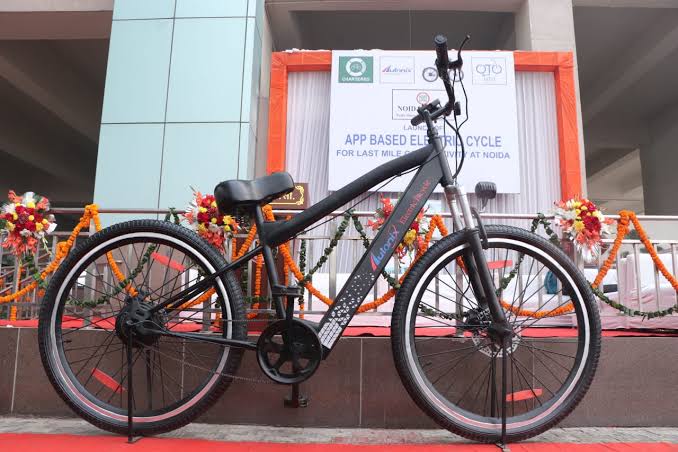
NOIDA (Metro Rail News): To increase the accessibility of its metro stations from far-flung residential pockets, Noida Metro Rail Corporation (NMRC) opened up an e-cycling service for commuters.

The service, which commenced in partner with a private company, is expected to solve the issues of last-mile connectivity and add to metro ridership. 

On Friday, Mahesh Sharma, MP from the legislative constituency of Noida and Greater Noida, and Ritu Maheshwari, Managing Director of NMRC, and Chief Executive Officer of Noida Industrial Development Authority flagged off the service at Sector 51 metro station in Noida. 
  
From Monday onwards, the service would be made fully operational, initially from four different metro stations which are located in Sectors 50, 51, 76, and 101 in Noida. It would also be available for commuters traveling to Greater Noida. They would avail of the services at Knowledge Park-2, Pari Chowk, Alfa 1 and Delta. 

images 19

For last-mile connectivity E-cycle facility at Sector 51 commences

Ritu Maheshwari while speaking to media said that there is a nominal fee for availing the services of e-cycles. It is Rs 5 for the first 10 minutes thereafter Rs 1 for each minute.

She further added, “The authority is in process of selecting more companies through bidding for providing last-mile connectivity services.”

NMRC also invited residents’ body to forward a request for setting up an e-cycle pick up point at its place. Currently, the application is being received and it would be allotted on a first-come and first-serve basis. 

According to officials, the authority has already identified 62 locations for setting up e-cycle pick up points in Noida. Negotiation with respective officials or residents’ bodies is in progress, the official informed. 
       
To avail of this mobile-enabled e-cycle service, a commuter needs to download an application namely Green Ride. After it, they would be required to follow simple steps to log in the application by providing an individual’s details for starting the ride.

E-cycle service is also GPS enabled and it is locked manually. But unlocking it requires scanning of QR code by a registered user only. The count of time begins with the commencement of service and it is continued till a user deposits it with pick up or drop points to be made shortly.

MPMRL seeks a candidate for MD post

MADHYA PRADESH (Metro Rail News): Madhya Pradesh metro rail co. limited (MPMRCL), a joint venture company with equal participation from Govt. of India and Govt. of Madhya Pradesh is implementing the Bhopal metro rail project in the state of Madhya Pradesh.

To meet with the immediate requirement of Managing Director for Madhya Pradesh Metro Rail Co Limited, applications are invited from applicants having required qualification and experience on Deputation/ Contract basis.

The last date for submission of application is 03rd January 2020.

Job Description & Responsibility:

The Managing Director will be responsible for the overall functioning of the organization. He will be responsible for the successful implementation of Bhopal & Indore Metro projects within budget and time period. He will be responsible for the overall planning, design, construction scheduling, monitoring and controlling of these projects including mobilizing the necessary resources and coordinating the efforts of the team to ensure delivery within the estimated budget, timelines and to the desired standards and quality.

Qualification & Experience:

Minimum Qualification:- An Engineering/ Science Graduate with Meritorious educational background from Reputed Institute/ University.

Minimum Experience:- Candidate with 20 years of Group A or Executive service having a proven track record. Or

Candidate with a minimum of 20 years of experience in handling large infrastructure projects.

Preference shall be given to a person:

Who has done MBA from a reputed institute.

Who has experience of dealing with multilateral/ bilateral funding agencies, land acquisition, International Consultants, Planning, executing and commissioning of major projects.

For more detailed information regarding Application for the Post of MD, MPMRCL please visit: http://www.mpmetrorail.com/

Ghaziabad Development Authority denies giving land for RRTS depot

GHAZIABAD (Metro Rail News): On Thursday, the Ghaziabad Development Authority (GDA) expressed its inability to provide 30 hectares from the land it has acquired for the Madhuban-Bapudham housing scheme to the National Capital Region Transport Corporation (NCRTC) for construction of an RRTS depot there.

On Thursday in Lucknow, Asheesh Shivpuri, GDA’s chief architect and town planner said, “We have apprised the government about the unavailability of the land.” The government was informed during a meeting chaired by the principal secretary (housing and urban planning department).

On Monday, NCRTC officials had met GDA vice-chairperson Kanchan Verma and sought land needed for constructing a depot. It had also offered to build an RRTS station in the area. The depot was earlier supposed to come up in Duhai. But the demand for land at Madhuban-Bapudham was necessitated after NCRTC and farmers from Duhai failed to arrive at a consensus on land compensation rates.

BMRCL added 6-coach trains on Green Line

BENGALURU (Metro Rail News): With the Bangalore Metro Rail Corporation Limited (BMRCL) running six-coach trains on the Green Line from Nagasandra to Yelechenahalli on a daily basis, from Monday it has decided to introduce two more six-coach trains to the line.

“We have converted two more three-car train sets into six-car train sets on the Green Line and will be inducted into revenue service w.e.f December 23. There will be a total of 12 six-car trains, which will be operating on the Green Line between Nagasandra/Peenya Industry and Yelachenahalli stations. On weekdays, these trains will perform a total of 88 round trips.” “During peak hours, 66% of trains in operations will be six-car train sets and 33% of trains will be three-car trains. Otherwise, all six-car trainsets will be operational” said in a press release that was issued by BMRCL.

Lakshmi Balaji, a resident of Kanakpura Road said that Adding six-coach trains on Green Line has been demanded by the commuters and now they are happy with the addition. “It is a win situation for us. However, we need to check on the frequencies of the trains and overall we want 100% six-coach trains in this line”.

Abdul Aleem another commuter said, “Unless the frequencies are set to 3 mins for every train, there is no big relief. The addition of coaches is a good move. Now they should look at the frequency”, said another commuter Abdul Aleem.

UPMRCL Extends the Last Date For Various Executive & Non-Executive Posts to 31 Dec 2019

LUCKNOW (Metro Rail News): The ongoing recruitment 2019 for various Executive and Non-Executive posts in Uttar Pradesh Metro Rail Corporation Limited (UPMRCL) for the Kanpur and Agra Metro projects has received a latest update with respect to last date of submission of online applications against the recruitment advertisement No. LMRC/HR/Rectt/P/18/2019 dated 20th November 2019.

This is to inform all the applicants and for the kind attention of all that last date of submission of applications for various posts in Executive & Non-Executive category has now been extended from 23.12.2019 (23:59 Hrs) to 31.12.2019 (23:59 Hrs) due to administrative reasons.

The date of online written examination (CBT mode) earlier scheduled on 13.01.2020 has also been postponed and the next tentative date of the online examination will be posted and updated on our official UPMRCL website ie. www.upmetrorail.com. All the interested applicants can regularly check our website for further information and updates in this regard.

Coimbatore Metro: Four corridors with 136 km network

Coimbatore, India (Metro Rail News): Chennai Metro Rail Limited (CMRL) officials has recently held a meeting with the state highways department after the feasibility study for the Coimbatore metro rail project suggested a corridor through the Ukkadam-Sungam Bypass.

The state highway department officials have raised their objections on the proposed extension of the flyover and suggested to turn the flyover at Ukkadam-Sungam junction to form an elevated loop at the place where the Ukkadam bus stand is located before getting down at Ukkadam-Sungam Bypass.

A senior official from the department said, “We had submitted the proposal to the state government and are waiting for the nod.

As per the report submitted by the private consultancy firm Systra after conducting a feasibility study, the Coimbatore metro rail project will be implemented in four corridors covering a total network length of 136 km.

These four proposed metro corridors are-

  • From Karanampettai on Trichy Road to Thaneerpandal on Thadagam Road (42 km)
  • From Kaniyur to Ukkadam via Avinashi Road (26 km)
  • From Pilichi to Ukkadam via Mettupalayam Road (24 km)
  • From Ganeshapuram to Karunya Nagar via Sathy Road (44 km)

“As a ground-level corridor connecting Karanampetti and Thaneerpandal through Ukkadam-Sungam Bypass was suggested, it might affect the proposed design of the flyover project. Also, considering the vehicle flow, it is difficult to provide the 10 meters required to lay the railway track on the road,” said the state highway department official.

The state highway department officials said that talks are being held with CMRL officials to find a solution before proceeding with the Coimbatore metro rail project.

“During the first meeting held a week ago, the highways department had suggested to form the corridor through Lanka Corner instead of passing it through Ukkadam-Sungam Bypass. We will meet again in a week”, they said.

As the 1.97-km-long Ukkadam Flyover project recently commenced, hence the department had proposed to make changes on both sides of the flyover – towards Athupalam and Town Hall.

It was also proposed to extend the flyover for another 600 meters up to Athupalam junction.

According to plan, a 300-meter-long loop will be constructed between Palakkad and Pollachi Road and on the other side, it was proposed to cut off the flyover by 244 meters from Naaz Theatre and form an elevated loop before connecting the roads towards Sungam and Town Hall.

ICF to manufacture 720 semi-high speed trains coaches

New Delhi, India (Metro Rail News): The Railway Board has approved the production of 720 coaches for 45 new semi-high speed trains by 2021-22.

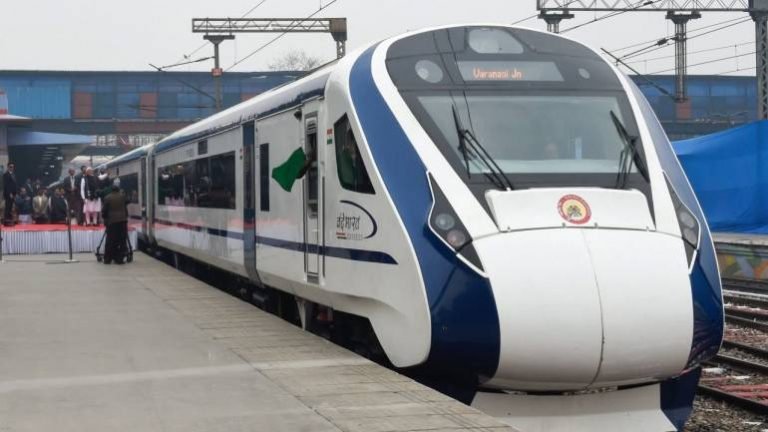
The order was given to Indian Railways owned Integral Coach Factory (ICF), Chennai to develop 720 coaches at the international standard of comfort and safety. These new coaches will be manufactured in line with Vande Bharat Express trains (Train-18).

last week, The decision to approve the manufacture of the new trains by the Integral Coach Factory (ICF) was taken in a high-level meeting held in New Delhi. The opinion of the heads of the Rail Coach Factory (RCF), Kapurthala, and the Modern Coach Factory (MCF), Raebareli, was also sought on their capability to make the new train sets so that they could be included in the program to roll out the 45 semi-high speed trains (Vande Bharat Express) by 2021-22.

In a letter sent to the General Manager, Integral Coach Factory (ICF), Chennai on Saturday, the Railway Board accorded its sanction for the ICF to proceed with the procurement process immediately according to the specifications and guidelines issued by the Research Designs and Standards Organisation (RDSO).

Now ICF will float fresh tenders to procure the propulsion system with revised guidelines on the design and eligibility criteria of suppliers. In the letter written to ICF, it was told to ensure that there was no compromise on the ‘Make in India’ policy of the Central Government.

“This is a huge success for the ICF that manufactured Train18, India’s first semi-high speed train in a record 18-month time in 2018. The indigenously built self-propelled train launched as Vande Bharat Express between New Delhi and Varanasi by Prime Minister Narendra Modi in February, has been acknowledged as one of the most successful products of the Make in India campaign. The second rake flagged off a couple of months ago is operating between New Delhi and Katra. The production was halted over the alleged procedural flaws in the making of the train,” a senior railway officer said.

Earlier, all tenders which were floated to manufacture more Train-18 rakes were withdrawn after receiving certain complaints by the Railway Board and a Vigilance investigation initiated into the allegations that included one company being favoured in the making of the first two rakes of Vande Bharat Express (Train 18).

Even as the investigation was on, the Railway Board had proposed to procure 100 new semi-high speed trains by floating global tenders.

Another reason to halting the production at the ICF was that the Train-18 were found to be heavier and also consuming more power compared to the Shatabdi Express. During the production of 45 new semi-high speed rakes, Railway will invest at least Rs 5,000 crores in the procurement of materials.

Centre approves Kerala semi-high speed rail project DPR of Rs 66,079 Cr.

Thiruvananthapuram, India (Metro Rail News): Central Government has given in-principle approval to the Rs 66,079 crore Kerala semi-high speed rail project (Thiruvananthapuram-Kasaragod semi-high speed rail corridor) informed Kerala Chief Minister Pinarayi Vijayan on Dec 17, 2019

The Ministry of Railways on behalf of the Central Government has issued the approval order conveyed to Kerala Chief Secretary Tom Jose. This information shared on Kerala Chief Minister official facebook page.

This semi-high rail corridor is named as Silver Line which is envisaged to cut travel time between Thiruvananthapuram and Kasaragod from 12 hours to 4 hours.

The KRDCL has submitted a proposal to the Ministry of Railways for building third and fourth lines. The 540-km long semi-high speed rail corridor between Thiruvananthapuram and Kasaragod will be implemented by Kerala Rail Development Corporation (KRDCL).

The project cost of the Kerala semi-high speed rail project will be funded by the Kerala Government and Ministry of Railway. The implementing body, KRDCL has proposed to raise Rs 34,454 crore as loans from the external agency for the project. The Central Government and the State Government are required to provide Rs 7,720 crore each. The State government will spend Rs 8,656 crore on land acquisition and allied matters.

KRDCL Managing Director V. Ajith Kumar said that approval was a milestone in the project implementation and it is expected to fast-track the economy of Kerala state.
The feasibility study of the project was conducted by KRDCL which was approved by the state cabinet after a year-long after submission of the feasibility study report.

Kerala Chief Minister during his recent visit to Japan had held discussions in this regard with Japanese experts.

The Kerala semi high-speed rail project is expected to create 50,000 jobs during the implementation and regular employment for 11,000 on completion. The project is considered as a game-changer in Kerala’s infrastructure and economic development and it required minimum land acquisition.

In August this year, Kerala state cabinet had approved the Kerala semi high-speed rail project. This corridor will pass through 11 of the 14 districts and the trains will run at 200 km per hour.