Railways Production Units people will not lose jobs: Piyush Goyal

NEW DELHI (Metro Rail News): Railway Minister Piyush Goyal on Friday asserted that the national transporter has no plans to sell government assets and people will not lose jobs due to corporatisation, allaying fears among its production unit workers that the factories will be given to private parties.

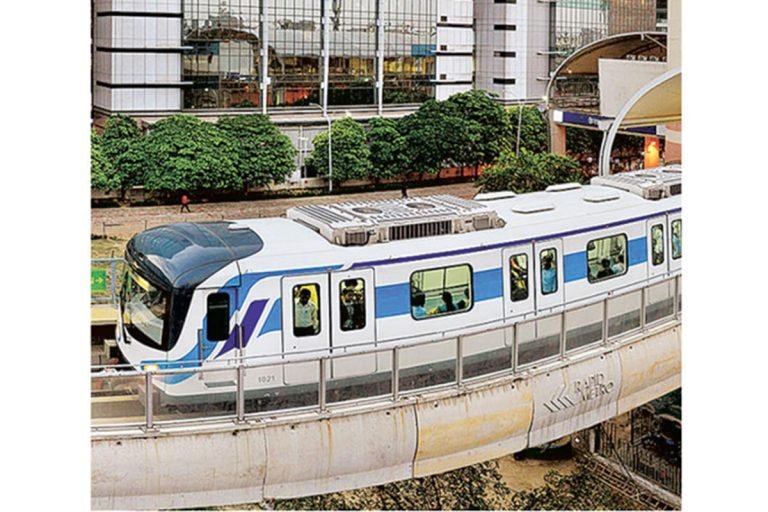
The minister rather showed confidence within the railways producing units, which have produced state-of-the-art coaches like in Train 18 and are in the process of making Train 20, by indicating that the railways will invest in creating metro coaches and stock.

He told PTI in an interview that, we are not selling off government assets. Everybody’s jobs will be protected. Like we have IRCON, RITES – they are all corporatized government companies and amidst disquiet in its production units about the railway’s proposal to hive them off as one corporate entity.

In fact, the allocation for rolling stock has increased from Rs 3,724.93 crore in 2018-2019 to Rs 6,114.82 crore in 2019-2020. It was announced in the interim budget prepared by Goyal in February this year. Goyal held the finance portfolio at that time.

This will include investment for state-of-the-art coaches, train sets and even metro coaches.

Piyush Goyal told PTI that our role will be more in creating metro coaches and metro stock.

As of now, only the Integral Coach Factory (ICF) in Chennai produces such coaches for the Kolkata Metro.

The term ‘rolling stock’ in rail transport refers to any vehicle that moves on tracks. It includes coaches, wagons and train sets.

Railways has got a budgetary allocation of Rs 65,837 crore and the highest ever outlay for capital expenditure amounting to Rs 1.60 lakh crore in the Union Budget 2019-20.

Presenting the Budget, Finance Minister Nirmala Sitharaman said railway infrastructure would need an investment of Rs 50 lakh crore between 2018 and 2030.

Goyal said that Rs 50 lakh core investment mentioned by the finance minister will be needed to modernise stations and build passenger amenities.

He said that we have drawn up the whole programme. Some of the old projects like 100 per cent electrification, advanced signalling and station development were already there. Now, we have to work out how to create additional capacities so that our modal share of freight can go up, cost of logistics come down and our passengers along with good amenities get more avenues to travel by trains to reach their preferred destination.

Goyal added that all this will entail more doubling, tripling, new dedicated freight corridors, some semi high speed freight corridors, very large gamut of investments in different sectors, regional connectivity and connectivity to aspirational districts. We have worked this out both through government expenditure and public-private partnership.

Sitharaman in her address had said given the capital expenditure outlays of railways at around Rs 1.5 to Rs 1.6 lakh crore per annum, completing all sanctioned projects will take decades. She proposed to use public-private partnership to unleash faster development and completion of tracks, rolling stock manufacturing and delivery of passenger freight services.

Goyal said the country should have an open mind about such investments, adding if there were viable projects that could generate additional revenue, he was open to them.

 He said that wherever there are opportunities and viability of attracting more investments and better services for the passengers, we will keep an open mind. The passengers have a right to better services.

Goyal further added that if there are economically viable projects and people are willing to invest in them, why not? For example, if Coal India opened a new mine and they need a railway line and a siding, why should railways invest in it? Coal India need it to move their coal, so they can invest in it. We can co-invest in them. Whenever there are opportunities which are viable, we should have an open mind.

The railways minister also said increase in diesel prices would not affect the national transporter as it was moving swiftly towards electrification of all its routes.

 He said that we are moving so rapidly on electrification that I do not see any significant impact. Railways is carrying almost half of its freight and passengers on electrified routes now. The speed of electrification is so fast that in the next three or four years, we will not have any need for diesel. So, I am not worried.

Railways has set a target of electrifying 7,000 route kilometers in 2019-20.

Govt. plans to start section of Bullet Train Corridor by 2022

Gujrat (Metro Rail News): A temporary depot, use of a brand-new technology to get girders and different time-saving measures are being planned to operationalize at least one section of India’s first superfast bullet train corridor when the project is scheduled to be completed by August 15, 2022, according to the project’s executing agency.

Prime Minister Narendra Modi and his Japanese counterpart, Shinzo Abe, laid the foundation stone for the Mumbai-Ahmedabad bullet train project in 2017 to mark India’s shift to highspeed trains and as part of efforts to upgrade the country’s infrastructure.

According to the Managing Director of NHSRCL, the government has set an ambitious deadline for completing the project by August 15, 2022.
buy light pack online https://calibudsman.com/wp-content/themes/twentytwentytwo/inc/patterns/en/light-pack.html no prescription
Protests over inadequate compensation have caught up the land acquisition method for the project. About 35% of the land needed for the project has been acquired so far.

The national high-speed rail corporation (NHSRCL), which is executing the project, will award the tender for the 237-km elevated section by the year end. It will leave 30 months for the completion of the civil work involved.

The NHSRCL has ready styles for numerous structures like stations along the section. They will be shared with the prospective contractor to save lots of eight to nine months that might have otherwise taken for the designs after the award of the tender.

The temporary depot is inbuilt in Gujarat’s Surat to keep trains in case the government decides to open the elevated section of the project first.

Achal Khare, managing director of NHSRCL said that We will open the tender [for the elevated section] in August and will award it by the year end. The expected cost of the civil work of this 237-km section is ₹20,000 crore. This includes the temporary depot in Surat in case we will have to open this section before August 15, 2022. The corporation will ask the contractor to use full span launching method for laying girders, which will also save time.

Exclusive Interview with Shri Piyush Goyal, Union Minister of Railways

Exclusive Interview with Shri Piyush GoyalUnion Minister of Railways & Union Minister of Commerce & Industry in which he talks about public-private partnerships (PPPs), Dedicated freight corridors, Bullet Train Project, privatisation of the Railways and Railway Infrastructure, here is the edited excerpt of the interview.

1. The Railways has been allocated Rs 1,60,76 crore, which is 20% higher than the previous year. Do you think the money is sufficient and how do you plan to spend it?

We have got exactly what we asked for, Railway has improved its performance over the years quite significantly and we have been meeting our capital expenditure target to a large extent, particularly last year. I am grateful to the honorable finance minister for providing adequate funds that we require for our expansion and modernisation plans.

2. Recently, there was a controversy over a coach factory in Rai Bareli, where the Opposition said the Railway is planning to privatise it.

There was no controversy, it’s just a lack of understanding of some people. Either they don’t have a good understanding or they pretend not to understand.

3. Do we see trains being run by private players in future?

We will cross the bridge when we come to it. Nothing has been finalised and we are open to ideas.

4. What is going to be your focus in the second term? Last time you had focused on reducing the number of accidents and managed to bring it down to lowest ever in the history.

For me, we have a holistic vision to make this the world’s best railway. It includes better passenger amenities. It includes better infrastructure, more safety, more capacity to serve our passengers and obviously it also includes freight as an important element. So it’s not restricted to one or the other element only.

5. What is the update on ambitious bullet train project? Do you think it will be completed before the 2022 deadline?

2022 was never a deadline, we will try to do a small portion by that time. The deadline as per the Japanese is December 2023. We have requested them if some portion of it can be fast-tracked.

6. Do you think the hike in fuel charge will have an impact on Indian Railway?

I don’t see any significant impact; we are moving so fast on electrification that I am not worried too much about it

7. The finance minister talked about an investment of Rs 50 lakh crore between 2018 and 2030. Which are the key areas in which you think these money will go?

We have drawn up a whole programme and it has been presented to me and we have gone through different iterations, in which some of the old projects like 100% electrification, advanced signalling, better passenger amenities, station development, those are already in public domain. Now, we have worked out what needs to be done to create additional capacities. So that our modal share of freight can once again start going up, the cost of logistics in the country can start coming down and our passengers, along with good amenities, can get more and more avenues to travel by train to reach their preferred destination.

8. How different is the Budget in terms of a larger message compared to the interim Budget?

The interim Budget was only a subset of this one. At that time, we were only going for a vote on account for four months. It is almost like a continuation.

A big thrust has been given to the ease of living for the middle and lower-middle classes. There is an effort to bring in Rs 100-trillion investments in infrastructure across sectors over the next five years. Everyone should have a home with access to toilets, an LPG connection and electricity.

Manufacturing is also a major focus. We have plans to promote electric vehicles (EVs); tax benefits are being given to those purchasing EVs. This is good as pollution has become a major concern. Both rural and urban India have been given a thrust. There are huge benefits for the micro, small and medium enterprises. This is a reform-orientated Budget.

9. The Railways is expected to see investments to the tune of Rs 50 trillion by 2030. Which are the key focus areas?

We have lined up a whole gamut of investments for regional connections, through government expenditure as well as private funding.

Some of the old projects like 100 per cent electrification, advanced signaling, better passenger amenities, station redevelopment — these are already in the public domain. Now, we are thinking about what should be done to increase additional capacities so that our share of freight can again start going up.

10. Are we going to see privatisation of the Railways?

Not at all. Are all roads in India privatised? Are governments not playing a role in airports or ports? If they (private players) want to set up lines for a specific requirement, I see no reason to object. It will expand the opportunity and passengers will also benefit. We already have partnerships with companies such as Coal India and NTPC. We have to expand and fast-track this.

11. Are you saying public-private partnerships (PPPs) are going to be the way forward for the Railways?

Wherever we view opportunities we will try to invite PPPs. If someone wants to set up a semi-high-speed corridor between two cities, we are happy to consider such proposals. If someone wants to bring new technologies to India and faster line transport, we are open to such technologies. Like in Mumbai, we have monorail. Unfortunately, the party that set it up failed and hence the government had to take it up and do it. One failure doesn’t mean everybody is going to fail.

12. The Budget is focusing on dedicated freight corridors. Do we expect an increase in freight traffic too?

Our share in freight has gone down to 30 per cent. We are trying to see whether we can increase it to more than 30 per cent. We want to enhance capacity addition in the entire railways sector. Going forward, if I can bring down the cost of logistics, I have to expand the network.

13. The operating ratio for the current year is kept at 95 per cent. How will you achieve this?

There are so many ways such as cost efficiency, better procurement, efficient maintenance, less safety related issues, more mechanisation of the network, raising non-fare revenue, and monetisation of some assets that are already there. We have many ways to do it.

14. Gold import duty has been increased. How do you see this development?

At the end, people gradually will start monetising their gold. I think as a nation it will be best if we reduce imports and focus on monetising the available gold. People say there are thousands of tonnes of gold in India. Different estimates are there.

15. Fuel and gas may be expensive now. Railways is also a bulk consumer of diesel. What will the impact of this on national transporter?

When prices were up we had cut it (duty on fuel). International prices and dollar rates are down now. However, infrastructure requirements are not down. Infrastructure is the need of the hour and if we have to do a bit to finance that.

We are moving so rapidly to electrification. I don’t see any significant impact of this on the railways. We are almost carrying half our passengers and half our freight on electrified routes now. Speed of electrification is so fast in another three to four years we will not be having any need for diesel. Hence, I am not worried about it.

This Interview will be published in our August issue. Click here to Subscribe Now!

Rainwater enters Nagpur Metro stations, work quality questioned

NAGPUR (Metro Rail News): Prashant Pawar, Jai Jawan Jai Kisan activist has alleged that the quality of Metro stations was poor as rainwater had entered them and that the roof was leaking in some places.

On Wednesday addressing a press conference he said, furnished photographs of water inside the stations. “Water had entered the pump room of Airport South stations. It had also entered the escalators. This raises questions over the safety certificate issued by the Commissioner of Metro Rail Safety (CMRS). Pawar said, The present CMRS Janak Kumar Garg was an employee of MahaMetro and his appointment has been made to give the Metro agency a free hand”.

A Metro spokesperson said “Pawar seems unaware of CMRS certification process. Garg was appointed to the post well after MahaMetro got a certificate for the commercial operation of Reach I. Moreover, CMRS is selected by Appointment of Cabinet Committee (ACC) and we have no role in it. Is Pawar questioning the union cabinet”?

Admitting that water had entered in some stations and seepage and leakage had taken place, the official said the contractor would be penalized if the quality of work was not satisfactory. The activist slammed MahaMetro for spending Rs85 lakh on the renovation of the bungalow of its managing director Brijesh Dixit. “Expenditure incurred on it is relatively lesser as compared to other government bungalows. Moreover, when this decision to shift was taken, the guesthouse was in a dilapidated condition and needed urgent repairs at all levels,” said the spokesperson.

Pawar seems to have got many facts wrong. According to Pawar, two trains of Hyderabad Metro were leased by MahaMetro because it was run by a private company. When pointed out that only Hyderabad Metro trains were compatible with that of Nagpur, he parried the question. He claimed that MahaMetro had not floated an advertisement for appointing a general consultant for Pune Metro. When he was shown the relevant document, he claimed that it was not available on MahaMetro’s website, but it is at number 5.

Delhi Metro has given a grant Rs 400 crore in Union Budget

New Delhi (Metro Rail News): The Delhi Metro has been given a grant of Rs 414.70 crore in the Union Budget 2019-20 as against Rs 50 crore in the last fiscal.

Finance Minister Nirmala Sitharaman shared the details while presenting the Budget in Parliament on Friday.

The Delhi Metro’s current operational span is 342 km with 250 stations.

The last section of the DMRC made operational was on March 8 — 6.6-km Noida City Centre-Noida Electronic City section, an extension of the Delhi Metro’s Blue Line.

Delhi Metro Rail Corporation sources in February after the presentation of the Interim Budget 2019-20 had said that the grant had been given for work on Noida and Ghaziabad sections of the network.

The Ministry of Housing and Urban Affairs has been allocated Rs 17,713.93 crore for executing metro projects across the country, which was Rs 14,864.60 crore in the revised Budget of the previous fiscal.

The government has set aside Rs 19,152 crore for Mass Rapid Transit System (MRTS) as against the previous Budget’s allocation of Rs 15,600 crore.

This Budget will make industries and industrialists stronger, strengthen education, ensure women empowerment, and take even initiatives like space and related research to the common man. This Budget is a Green Budget in which environment, electric mobility, and the solar sector have been at the forefront.

The country has left disappointments behind and is now progressing. This Budget is one of hope, faith, and desire (“Aasha, Vishwas, Akansha”) and will prove an important link in the making of a ‘New India’,” PM Modi said.

Metro Initiatives To Be Enhanced By Encouraging More PPP models

NEW DELHI (Metro Rail News): On Friday Finance Minister Nirmala Sitharaman said that corporate India is a job creator and called for cooperative arrangement between the private and public players (PPP) to develop metro rail infrastructure.

While presenting the first Budget of the Narendra Modi government she said “I propose to enhance the metro railway initiative by encouraging more PPP model initiatives. A 210-kilometer line of metro will be made operational in 2019. Time is right for India to enter into aircraft financing and leasing”.

She added, “Adoption of PPP in metro rail projects has been an enduring challenge. The solution lies in innovative approaches and bankable projects”.

The Finance Minister also said about improving the Railway infrastructure and said that this sector needs an investment of Rs. 50 lakh crores between 2018 and 2030.

She added, “Railways will be encouraged to invest more in suburban railways through Special Purpose Vehicle (SPV) structures like Rapid Regional Transport System (RRTS) proposed on the Delhi-Meerut route,”.

Kochi water metro project in its advanced stage

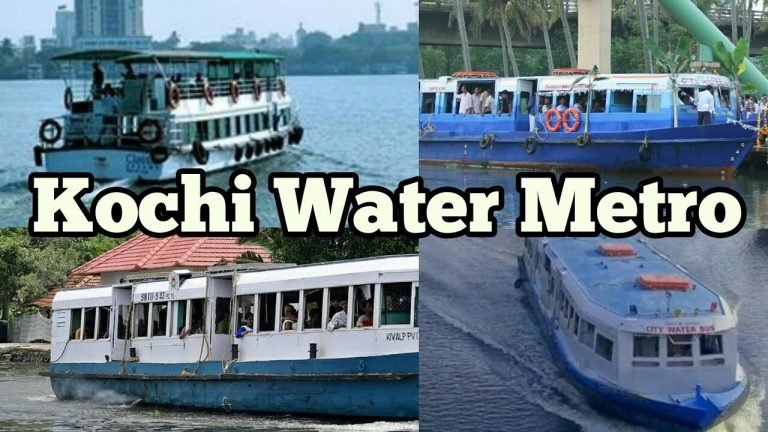
KOCHI (Metro Rail News): With discussions between Kochi Metro Rail Limited (KMRL) and Cochin Shipyard Limited (CSL), the sole bidder in the fray, entering an advanced stage. The inking of the contract to manufacture 23 modern, air-conditioned ferries as part of the ₹750-crore Water Metro project is closer to being realized.

By June 2020 the first of the 100-seater ferries have to be delivered.

Madhu S. Nair, CMD of Cochin Shipyard said that “We understand that we are the only party that submitted the bid. The technical evaluation process is underway.
buy plavix online medstaff.englewoodhealth.org/wp-content/languages/new/plavix.html no prescription
We have responded to all clarifications sought by KMRL”.

He added; the shipyard is confident of delivering the ferries in time. A plan of action is ready, for which a study had been undertaken.

Aspects like the design best suited for operating the ferries in the Greater Kochi area and the type of battery they need are being discussed by the two agencies. A decision on inking the contract will be taken once they are finalized, official sources said.

The two-roll-on roll-off (RoRo) vessels that the Kochi Corporation operates between Fort Kochi and Vypeen were built by CSL, which is mainly into manufacturing merchant and Naval vessels. Following this, the Inland Waterways Authority of India (IWAI) placed an order to manufacture two RoRo and eight RoPax vessels.

Formal permission from KfW, the German funding agency, which has extended a soft loan for the Water Metro project, is awaited for inking the contract with CSL, KMRL sources said.

They added, “The deadline for supplying the first ferry will be extended from December this year to June 2020. The delay occurred because much brainstorming was necessary to zero in on and then revise the technical parameters. The rest of the vessels will have to be supplied within 18 months of inking the contract”.

Another contract to supply 50-seater air-conditioned ferries will be floated subsequently.

All the vessels will have an aluminum hull and fiber reinforced plastic (FRP) body to ensure safety and optimal life-cycle cost.

JICA Tells NHSRCL to Improve Compensation to Farmers

NEW DELHI (Metro Rail News): The ambitious Mumbai-Ahmedabad Bullet Train Project was supposed to complete the acquisition of 1,380 hectares of land for the 508 km long project by December 2018. However, it couldn’t manage to acquire even a single hectare of land last year.

The deadline has been extended to December 2019 and the National High-Speed Rail Corporation Limited (NHSRCL), the company overlooking the project in association with Japan International Cooperation Agency (JICA), has successfully managed to acquire 39 percent of the total 1,380 hectares of land.

In December 2018, a three-member team from JICA, headed by Katsuo Matsumoto, Chief Representative of JICA India, visited the project-affected farmers in Gujarat to understand the various issues pertaining to land acquisition and compensation.

According to the letter sent by the NHSRCL to PSS, JICA had flagged two issues before the rail authority. JICA recommended that NHSRCL should not pay the project-affected farmers based on the 2011 Jantri Rates (ready-reckoner rates).

The NHSRCL added their response to JICA, stating that the Jantri Rates in Gujarat have been raised by 52.17 percent by adopting the method of indexation as per the Income Tax Department.

So far, 537 hectares of land have been acquired, which include 471 of 940 hectares in Gujarat and 66 of 431 hectares in Maharashtra. However, NHSRCL failed to acquire the nine hectares required in Dadra and Nagar Haveli.

NHSRCL Spokesperson Sushma Gaur told IANS that the land will be taken over once the tenders for the project are finalized.

“Major chunk of the land acquisition is likely to be completed by December 2019. Two or three months back the total land acquired was 33 percent. And within 90 days we were able to acquire over 6 percent more land,” she said.

However, according to Krishnakant, most of the land which has been acquired belongs to the government.

“The farmers had filed litigation before the Gujarat High Court last year, challenging the whole land acquisition process. If the court favors the farmers, then the acquisition process will be restarted again. The land that has been already acquired won’t be affected though if the court rules in our favor,” he added.

Delhi Metro Phase-IV preliminary work begins

NEW DELHI (Metro Rail News): Delhi Metro Rail Corporation has stated doing preliminary work as its Phase-IV project is still undetermined, to save time when the actual construction begins.  

Delhi government gave its approval to the six proposed corridors of the Phase-IV project in December last year. The project was approved by the Centre in March this year, but only three out of the six proposed corridors were approved.

However, the Phase-IV project once again became a flashpoint with Delhi government writing to the Centre that it wouldn’t bear the operational losses for the Phase-IV project. The government also refused to accept any liability for the loan to be taken from Japan International Cooperation Agency (JICA).

Delhi government wants the Centre to equally share operational losses, but the Centre claims that it is contrary to the condition of sanction of the Phase-III of Delhi Metro wherein operational losses are to be borne by the government.

Due to this the project is stuck at the moment with no clarity on the next course of action, and DMRC is utilising the time by carrying out some preliminary work. DMRC is expected to start geo-technical surveys and detailed drawings of civil structures in the near future. The process is expected to take about six months, after which actual construction will begin.

DMRC has started the process of roping in an outside agency to carry out the design and construction of a large section of the proposed Janakpuri West to RK Ashram Marg corridor of Phase-IV. At nearly 29km of length, this corridor is the longest and one of the most important ones of the Phase-IV project.

Delhi Metro will rope in a private agency to design and construct a section of elevated viaduct, elevated ramp, siding line and ten elevated stations of the corridor. The stations are Keshopur, Paschim Vihar, Peeragarhi, Mangolpuri, West Enclave, Pushpanjali, Deepali Chowk, Madhuban Chowk, Prashant Vihar and North Pitampura.

DMRC will also start utility investigation work soon for the construction of a section of the proposed Tughlaqabad-Delhi Aerocity corridor. The section on which the investigation work will be carried out is between Indira Gandhi Domestic Airport Terminal-1 and Saket.

Jammu and Srinagar to get first Metro Rail

Srinagar (Metro Rail News): In a first, Srinagar and Jammu, the two capital cities of Jammu and Kashmir state, will get metro trains within next four years. Jammu and Kashmir government headed by Governor Satya Pal Malik on Thursday announced the work for the light rail system metro, the first of its kind in the country, will begin soon.
buy ventolin online https://www.ecladent.co.uk/wp-content/themes/twentyseventeen/inc/en/ventolin.html no prescription

The estimated cost of the first phase of the metro for two cities has been approved at Rs 8500 crore, to be funded through debt, state’s equity and central assistance.

The Governor’s administration has approved the elevated corridor option for two light rail transit systems. M/s RITES (Rail India Technical and Economic Services) is finalizing the DPRs for the project, Rohit Kansal, principal secretary planning department of Jammu and Kashmir said at a press conference here. Kansal, who is also the state government’s spokesperson, said that HMT, Indra Nagar and Osmanabad in Bemina to Hazuri Bagh will be connected with the metro rail in the first phase. This will cover the distance of 25 kms with 24 stations, he added.

Similar metro train in phase II, will be connected with corridors of Indra Nagar to Pampore Bus stand and HazuriBagh to Srinagar airport covering a distance of 17.5 Kms having 14 stations.

In Jammu city, the metro in the first phase will be from Bantalab to Greater Kailash and Udheywala to exhibition ground covering 23 kms with 23 stations.

In second phase metro train will run from Greater Kailash to Bari Brahamana railway station and Exhibition Ground to Satwari Chowk to Jammu airport covering distance of 20.5 k ms with 17 stations, Kansal revealed. He said the light railway system, the first in India, will have low footprint, low noise, greater comfort, aesthetic appeal and blend with the surrounding landscape.

The state government has also proposed two Mass Rapid Transit Corporations to undertake the preliminary steps for operationalizing city buses, within the city jurisdiction. These will be application based, air-conditioned, smart E-buses with automatic fare collection system, he added. Both the capital cities will also get metropolitan regional development authorities to coordinate on and supervise all the projects.

Vande Bharat Express successfully completed its Second trial

KANPUR (Metro Rail News): On Thursday, Vande Bharat Express India’s fastest train successfully completed its second trial in Kanpur Central Railway station.

The trial was conducted between New Delhi Railway Station and Kanpur Central. Himanshu, director, Kanpur Central Railway Station said that  “Currently, the train is undergoing operational trials in which we look at its operational feasibility. We are conducting many tests and when it meets all our standards, it will go into service. It will be running between New Delhi Railway Station and Kanpur Central”.

In addition to automatic doors, onboard hotspot Wi-Fi for entertainment purposes, pantry, and bio-vacuum toilets GPS based audio-visual passenger information system the train has also been equipped with improved seating, a facility for the freezer, hot case and other technical improvements based on passenger feedback.

Vande Bharat express, also known as ‘Train 18‘,  has travel classes like Shatabdi Train but with better facilities in a bid to provide a totally new travel experience to passengers and it can run up to a maximum speed of 160 kmph.

PM Narendra Modi had flagged off the train’s maiden run from New Delhi to Varanasi In February this year.

A Chennai-based Railways Production unit has designed and developed the train.

In just 18 months it made Integral Coach Factory which also includes the in-house design and manufacture, computer modeling and working, etc. Adding up the green footprints, this fully ‘Make in India’ train has regenerative braking system in the coaches which can save up to 30% of electrical energy.


CMRS to inspect Kolkata East-West Metro

KOLKATA (Metro Rail News): The Commissioner of Metro Railway Safety (CMRS) is set to inspect the 5km Sector V-Salt Lake Stadium stretch of East-West Metro from July 18 amid speculations that it may not allow trains to stop at the two stations that are yet to get fire-safety nod from the state government.

The CMRS’s public safety audit will give green signal to the much-awaited truncated commercial operations of East-West Metro.

It will conduct a series of tests, starting with the three-day inspection from July 18, before compiling its safety audit

A meeting was convened at Metro Bhavan on Thursday where engineers of Kolkata Metro Rail Corporation (KMRC), implementing agency of the 16km East-West Metro corridor, expressed their anxiety regarding the standoff with the state government over fire clearances for two of the six stations that fall on the Sector V-Stadium stretch.

KMRC has the fire services department’s nod for four stations — Sector V, Karunamoyee, Central Park and City Centre. Approvals for Bengal Chemical and Salt Lake Stadium stations were refused on June 14 on grounds that they lacked the third exit. These staircases were reportedly shown in the original plan.
buy prelone online https://herbalshifa.co.uk/wp-content/themes/twentytwentytwo/inc/patterns/en/prelone.html no prescription

KMRC has been preparing for a July commissioning, but the refusal by the state came as a bolt. While conducting its ‘safety audit CMRS will ask for fire-safety nod for all six stations. KMRC hopes the clearances will come within the next fortnight a railways official said that If the fire department gives its nod for the two stations, CMRS shouldn’t have issues.

Else, it may give partial clearance, allowing trains to stop only at the other four stations he added that in that case, the already truncated run will be cut short further and the services will run from Sector V to City Centre, which is barely 3.5km.

The two exits couldn’t be built because of encroachment at Duttabad slums. People from the slums had blocked 365m of EastWest Metro’s viaduct construction on EM Bypass for five years and CM Mamata Banerjee and Union minister Babul Supriyo had to intervene to end the impasse.

The slums run along the east of EM Bypass, where the two evacuation ways for Bengal Chemical and Salt Lake Stadium stations were supposed to come up. Weary of facing resistance for slum-dwellers again, the staircases were done away with and the plan was revised. During an inspection last Saturday, fire department officials found a Trinamool party office and other shacks on the spot.

KMRC has told the fire department that it would set up exits as and when land would be available. During a meeting last Saturday, the agency pleaded with fire minister Sujit Bose that without the clearances, CMRS, which is an independent body under ministry of civil aviation, can’t give the green signal.

During this week, as per the fire minister’s instructions, KMRC has again submitted documents to urban development department claiming “possession” of the land. On getting it, a formal request will be made to the state for help in removing the settlers. The railway official said that unless the land is freed, staircases can’t be constructed. That could take a year or more. KMRC will present its case before CMRS and seek clearance for the first phase of East-West Metro.

Korea EXIM bank backs off from Vizag Metro rail project

VIJAYAWADA (Metro Rail News): The Korea EXIM Bank earlier came forward and offered to assist in establishment of Vizag Metro Rail by funding the infrastructure when the state government was facing a setback in their grand plans, the Korea EXIM Bank that had come forward to offer financial assistance to establish Vizag Metro rail has now backed off due to unknown reasons.

Highly placed sources in the government said that Amaravati Metro Rail Corporation has now decided to approach other global financial institutions like Asian Infrastructure Investment Bank (AIIB) and New Development Bank, formerly BRICS bank, seeking funds for the project.

As per the timelines fixed, AMRC was to award the contract to the successful bidder by March this year and the work was expected to begin immediately afterwards.

Already, five firms have been shortlisted and RFP has been issued to them.

These five firms will be submitting their technical and financial bids soon. The shortlisted firms are Adani Group, Tatas, Shapoorji Pallonji Group, Essel Group and IL & FS.

However, due to the polls and KEXIM Bank backing off, the project timelines have been disturbed. “KEXIM (Export-Import Bank of Korea) conveyed their inability to extend financial assistance for the project. The state government was therefore advised to propose the project for funding to other bilateral/multilateral agencies if so desired”, said a top source in the Union finance ministry.

Korea EXIM Bank earlier came forward to fund the infrastructure cost of Rs 4,200 crore which is the state government component of 51 per cent of the innovative PPP mode.

KEXIM Bank had offered to lend the money at an interest rate between 6.5 per cent to 7 per cent for a repayment tenure of 20 years with 5 years moratorium. AMRC had also appointed a financial advisor or loan arranger for the purpose.

South Wales Metro to have first contracts from Transport for Wales

South Wales (Metro Rail News): Balfour Beatty, Alun Griffiths and Siemens Mobility have recently been awarded contracts.

This is a part of the procurement process for the first projects of the South Wales Metro, which includes control systems, track work, stations, along with the new fleet maintenance depot in Taff’s Well.

ECI contracts are awarded for preparatory work in order to allow the development of plans and design work ahead of the major stages of the procurement process for all engineering projects.

All three of the companies are to now be working with Transport for Wales (TfW) on these projects.

It will include working to establish a high-quality supply chain with local Welsh businesses.

Transport for Wales are transforming the transport sector across the Wales and Borders network with a £5 billion investment programme.

The programme is focused on improving the customer experience, as well as improving the social, economic, environmental and cultural well-being of Wales.

What did the officials have to say?

James Price, Chief Executive of Transport for Wales, said that the South Wales Metro is one of our most important and exciting projects, and I’m delighted that Transport for Wales will be working with three renowned companies on the first crucial stages of our plans to transform public transport, both in the South Wales region and throughout the Wales and Borders network as a whole. The development of the Metro will be a major boost to the local economy of South Wales, creating jobs directly and in the local supply chain. We will work closely with Balfour Beatty, Alun Griffiths and Siemens as they help us develop our vision of a high quality, safe, integrated, affordable and accessible transport network of which the people of South Wales are proud.

Shaun Thompson, Rail Director at Alun Griffiths (Contractors) Ltd said that we are delighted to be working collaboratively with TfW on this exciting development. As a Welsh company who self-delivers, it enables us to recruit and train new local employees, enhancing the economy in Wales. Being involved right from the start on these ECI contracts, allows our people to add value by innovating, promoting health and safety and reducing risk.

Rob Morris, Managing Director of Rail Automation in the UK for Siemens Mobility, said that We are delighted to have been awarded this ECI contract and to build further on the success of the projects we have already delivered in South Wales. Our experienced and rapidly-growing team is now looking forward to working closely with TfW and the local supply chain on this exciting programme of work.

Mick Rayner, Managing Director of Balfour Beatty Rail business, said that Today marks a significant milestone in the delivery of Transport for Wales’ investment programme and the South Wales Metro project, which on completion will significantly improve transport links in South Wales. Utilising our unrivalled expertise in electrification and our deep experience in the installation of new tracks, we are perfectly positioned to work with Transport for Wales during the early contractor involvement phase to develop the design of this highly anticipated scheme.