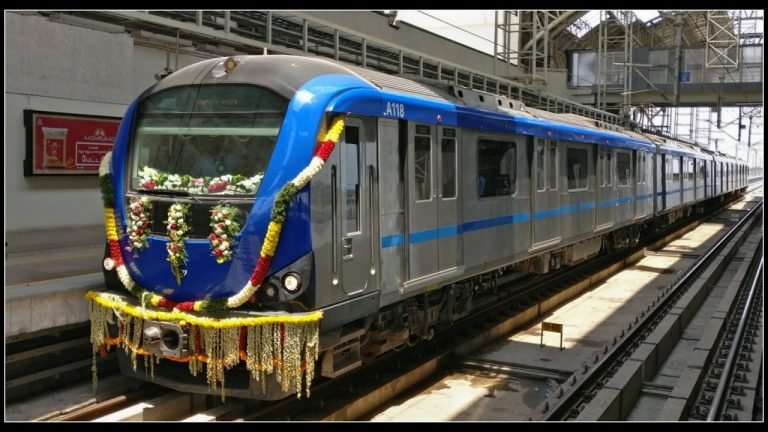
LMRC Metro Diwas 2019, Glorious two years in pursuit of Excellence

LUCKNOW (Metro Rail News): Lucknow Metro Rail Corporation (LMRC), a joint venture of the Government of India and the Government of Uttar Pradesh, which has set a benchmark of excellence in the Mass Rapid Transit System (MRTS) of India, will be celebrating its second anniversary on 5th September, 2019. LMRC shall be organizing this occasion as ‘Lucknow Metro Diwas’ dedicating this day to the Lucknowites.

The Chief Guest of this event will be Deputy Chief Minister of the state, Honorable Shri Dinesh Sharma. Many other dignitaries from Central and State Government will also be present on the occasion. On this occasion various programs will be organized and conducted on behalf of Lucknow Metro to make the people of Lucknow aware about the successful journey of 2 glorious years of Lucknow Metro.

The celebration will start in Metro depot located at the Transport Nagar with the welcome of Honorable Deputy Chief Minister on 5th September, 2019. ‘Lucknow Metro Diwas’ will be inaugurated in the auditorium located inside the Center of Excellence for Training building by the Hon’ble Deputy Chief Minister with Shri Kumar Keshav, Managing Director, LMRC delivering the inaugural speech. The esteemed chief guest will also launch the official Corporate Film of Lucknow Metro along with unveiling of “Lucknow by Metro”book in the auditorium.

Prize distribution ceremony will be held to felicitate and recognize the outstanding contributions in various fields for the year 2018-19. MD’s Gold Medal and MD’s Silver Medal will be awarded to the best LMRC employees associated with Metro Project, Metro Operations & Metro Maintenance. In addition, the best maintained metro station will also be awarded with the ‘Best Kept Metro Station’ award by the Managing Director.

To mark the occasion, students from the prestigious schools and colleges of the city have been invited to take part in the technical exhibition and become familiar with the Lucknow Metro’s journey and achievements so far at Sachivalaya Metro station.

Two years in pursuit of Excellence!

In the 2 years of its commercial operations, the Lucknow Metro has added 1.5 crore passengers with its journey. Remarkably, this figure is more than the 5 times the total population of Lucknow. Lucknow Metro has successfully achieved the milestone of ‘Zero Accident’ this year as well.

The Metro trains have travelled 24 lakh kilometers which is equivalent to taking 60 round trips around the earth. LMRC is the first metro in the world to have camera at the roof for continuous pantograph and overhead wire monitoring. Lucknow Metro trains have achieved a commendable feat of attaining punctuality of 99.6% in its Metro services.

Lucknow Metro is the first Metro in India to have fire sensors in all electrical cubicles and cars. Braille stickers are installed inside all Metro trains for differently abled persons. There is a provision of long stop button near wheel chair space inside Metro trains for longer stoppage for specially abled passengers. For the safety and security of commuters live streaming of CCTV images of moving train interiors to centralized control room in Metro Depot is done continuously.

Lucknow Metro Accolades: National and International Awards!

Lucknow Metro’s North-South corridor (phase 1-A) from CCS Airport to Munshipulia metro station has been completed and commissioned for public services in less than three years. It is, therefore, the fastest metro project which has ever been implemented in the country. In addition to completing the work in record time, LMRC has also set up several records for quality of construction work and safety.

There is a long list of exceptional achievements in this regard for LMRC. Lucknow Metro has been awarded with the IGBC Green MRTS Platinum rating for entire North-South corridor (23 km stretch comprising 21 metro stations), ‘Technology Sabha Award’ (2019), ISO 9001:2015, ISO 14001:2015, OHSAS 18001:2007 certification, International British ‘Royal Society for the Prevention of Accidents (RoSPA)’ Award 2018, ‘International European Society for Quality Research (ESQR) Choice Prize’ (2016), ‘International Quality Summit Award’ (2016), Best Metro Project for ‘Excellence in Innovative Designs’ (2016), ‘Dr. APJ Abdul Kalam Memorial Award’ (2016), and many other prestigious national & international awards.

Lucknow Metro creating a bond of compassion with people!

Lucknow Metro now gives you an opportunity to showcase your talent at the performing arena at the Hazratganj metro station and take part in singing, dancing and drama performances. Metro Marvel-a new initiative by Lucknow Metro gives people a chance to become a part of the LMRC family and witness the behind the scenes working of Metro Operational & Maintenance System. Metro Marvels will also get special invites and updates of the latest events and happenings at LMRC. Students of schools can now celebrate their birthday inside Metro in groups!

Committed for environmental protection!

Lucknow Metro has contributed towards a greener city by making 10-16% reduction of particulate matter pollution in the last one year after the commencement of Metro operations. Metro has harvested more than 2 crore litres of rainwater annually. LED Lights have been installed at all metro stations and inside metro trains of LMRC.

Lucknow Metro safe for both Human life and belongings!

Commuters often forget their belongings in Metro Trains or within Station Premises but due to alert and vigil metro staff, passengers get back their luggage safely. In the last one year, a total cash of about Rs 4,00,000 has been returned to the Metro passengers. On an average, one laptop is returned by LMRC to its rightful owner every 20 days while one mobile and one purse/bag is returned to metro commuters every third day. On the humanitarian aspect, three persons are helped/assisted every month on medical grounds on an average by LMRC staff & security personnel.

Lucknow Metro now has official Facebook page and Twitter handle!

Exclusive Interview of Shri Vinay Kumar Singh, MD, NCRTC on RRTS Project

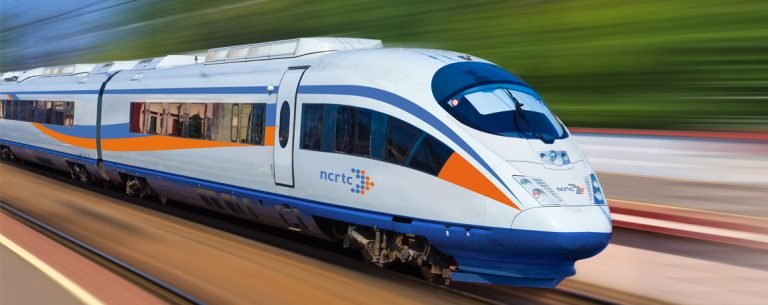
The National Capital Region (NCR), a planning region located around Delhi, is India’s fastest growing urban agglomeration. To provide a public transport solution to this economic region, the central government and four states formed a joint venture to develop a high speed rail system. Vinay Kumar Singh, managing director of National Capital Region Transport Corporation (NCRTC) which is building the regional transit system, speaks to Sanjiv Shankaran on the way things are shaping up:

Was NCR chosen for India’s first rapid transport project because of its population?

Mr. Vinay Kumar Singh:There are two reasons. One, is that it’s the national capital and many things start from here. Two, is the population. In the last census (2011), it was 46 million for the entire NCR. In the next census it is expected to be around 64 million.

Currently, there are three separate lines planned?

Mr. Vinay Kumar Singh: Originally, there were eight corridors. There was a task force in 2006 which decided we should first go in for three which are the heaviest ones in terms of traffic. These are capital intensive projects; before investing you have to think twice. Earlier there were three separate lines planned (Delhi-Meerut; Delhi-Alwar; Delhi-Panipat). But today it’s a network and all three are interoperable. This change was done in the last two-and-half years; it gives a lot of value. Our focus is the commuter. If you see things from the commuter’s angle, it makes his journey very simple. They can travel seamlessly between two corridors. The time penalty is gone.

Now, there is no terminal. A train coming from Meerut will not stop (terminate) anywhere. So, we have reduced the capital cost by a few thousand crore. We have reduced the number of depots by just doing this. If you have separate corridors your rolling stock cannot move from one corridor to another, unlike cars. If the same rolling stock has to move everywhere, it has to be standardised for all three corridors.

Today we have sanctioned only one corridor, Delhi-Meerut. But our standards of each line are fixed.

Will part of the journey be underground?

Mr. Vinay Kumar Singh: In the first corridor about 14 km are underground. In the next corridor (Delhi-Alwar) 33 km will be underground. The third corridor is to Panipat.

What will be the profile of your average commuter?

Mr. Vinay Kumar Singh: The cross-section is wide. The USP of the system is speed. Therefore, even a person using a private car will prefer this system. The speed is approximately 100 km/hour, including stoppages. The average speed for a car should be about 40 km/hour (Delhi-Meerut). There is a clear advantage in terms of time and safety. This is controlled by a high technology command system.

Other than car owners, people using public transport will prefer this system because we are trying to integrate various modes of travel. We want to reduce chaos at stations.

What will be your benchmark when tickets are priced?

Mr. Vinay Kumar Singh: What we have proposed is Rs 2 per km. Benchmarking is with other modes of transport.

When will the Delhi-Meerut portion be commissioned?

Mr. Vinay Kumar Singh: The first portion will be commissioned by March 2023. It won’t be the full route. It will be from Duhai to Sahibabad, outside Delhi. Then every six months we keep adding 20 km. By March 2025, the whole section will be commissioned.

What is the cost of this line?

Mr. Vinay Kumar Singh: The base cost is Rs 260 crore per km. The total project cost is about Rs 30,000 crore. This is after we have reduced the cost, including by providing facilities to run the metro services in Meerut on our system. Rather than having another line, there will be 13 stations which will be metro stations. Separate metro trains, which we will be operating on the same system, will be running in Meerut. We are saving Rs 6,300 crore for metro.

We are getting all the passengers of metro on to our system. From the commuter angle, from the same platform they can switch over from metro to RRTS (Regional Rapid Transit System).

Which country would you cite as an ideal example of a large scale multimodal transport system?

Mr. Vinay Kumar Singh: Many countries have done it. The best example is Paris. Paris has regional trains, high speed regional trains and they have a metro. It’s very successful. At the time of the growth of the city, they introduced these trains. Economic opportunities are always in big cities. Here too.

First, you have to provide good public transport. Then you can push people to move towards it. Good public transport needs multimodal integration

CMRS nod for Aqua Line of Nagpur Metro for commercial operation

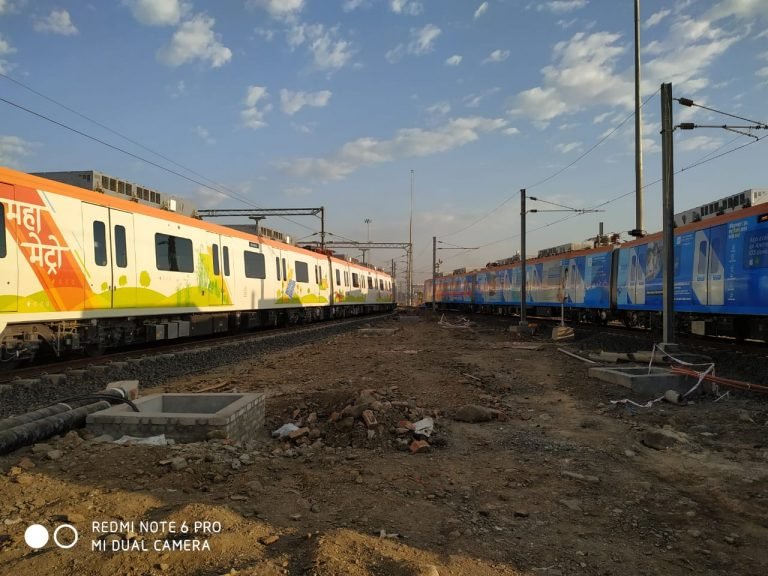
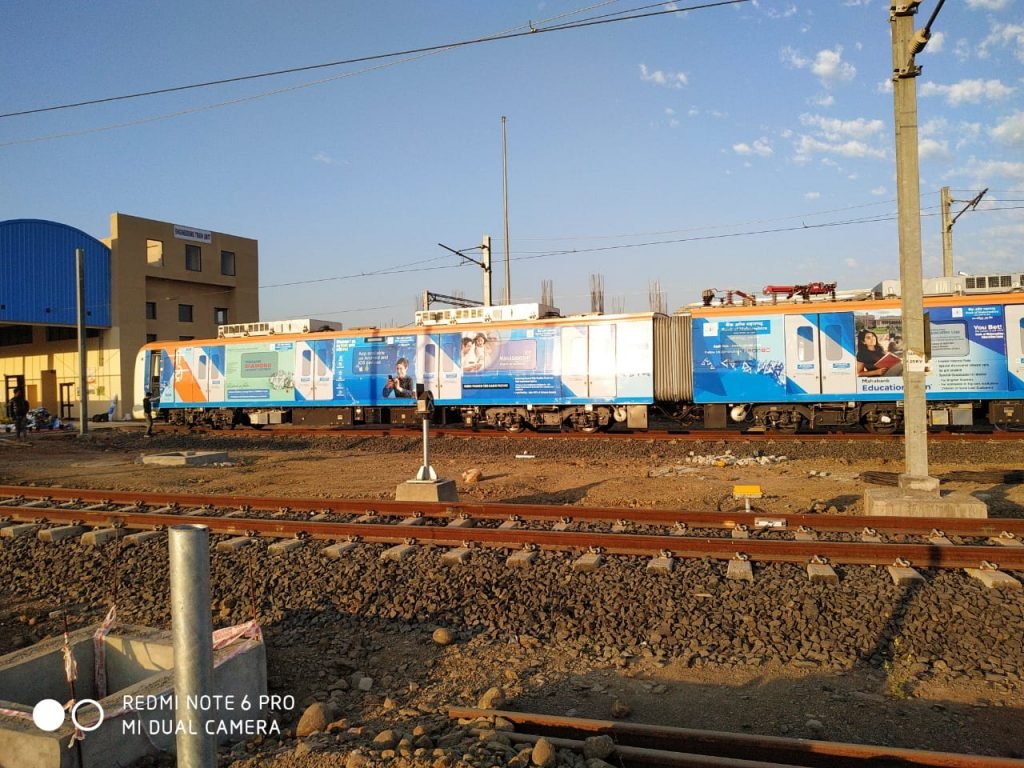
NAGPUR (Metro Rail News): Chief Metro Rail Commissioner Safety (CMRS) Shri Janak Kumar Garg along with his team inspected the 11 Km Aqua Line section of Nagpur Metro Line from 3rd to 5th September, 2019. After comprehensive examination of stations, OHE, signaling, traction and other systems and inspection of the line both by motor trolley and metro train, CMRS has authorized the opening of the section of Aqua Line for passenger operations.

The authorization by CMRS to start operations and to carry the commuters has been granted using the statutory power conferred on CMRS under Section 15 (1) of Metro Rail Operations and Maintenance Act, 2002. The section of Aqua Line being opened will intersect with the Orange Line at Sitabuldi Interchange Station.

With the scheduled opening of Aqua Line section nearly 150000 commuters from Higna (workers from 1000 medium/small industries, more than 50000 students and citizens of Hingna town) will soon be added to Nagpur Metro. The industrial and educational hub of Higna shall also get connected with the key areas of Airport, Railway Station and intercity and interstate bus terminal using Orange Line through Sitabuldi Interchange.

Maha-Metro has completed the opening of 25 km of Metro Rail (two third of the total Project Length) with 50 months at the rate of one kilometer every month.

Pre-construction activities gain momentum on Delhi-SNB RRTS corridor

NEW DELHI (Metro Rail News): Pre-construction activities associated with the Delhi-Gurugram-SNB (Shahjahanpur-Neemrana-Behror Urban Complex) RRTS corridor has been gaining momentum. While activities like soil testing, geotechnical investigation, and utility diversion have been in progress on the corridor, the National Capital Region Transport Corporation (NCRTC) has recently started a pile load test at Rajiv Chowk of Gurugram. 

A pile load test is carried out to check the resistance and load-bearing capacity of the soil. It ensures the load-carrying capacity of deep foundations before the construction of piers and viaduct. 

NCRTC has recently floated a tender for the engagement of Detailed Design Consultant (DDC) for civil, architectural, and E&M works for the design of three elevated stations in Gurugram -Udyog Vihar, Sector 17,  Rajiv Chowk; and for elevated viaduct between IDPL complex ramp to Rajiv Chowk Ramp for Delhi- SNB RRTS corridor.

One of the three RRTS corridors prioritized for implementation, 106-km long Delhi-Gurugram-SNB corridor will be elevated for about 71 km (11 stations), the remaining 35 km (5 stations) will be constructed underground, mostly in Delhi & Gurugram.

Haryana government had approved the Detailed Project Report (DPR) of the corridor in February while the Rajasthan government has given nod to the project in June this year.

The corridor will converge at Delhi’s Sarai Kale Khan with the other two RRTS corridors – Delhi-Meerut and Delhi-Panipat. The three corridors will be interoperable and will be integrated with other modes of public transport wherever possible. 

RRTS trains with the operation speed of 160kmph and average speed of 100kmph will be available at a frequency of every 5-10 minutes. These trains will be air-conditioned with transverse seating and overhead luggage space for commuter comfort. There would be priority seating arrangements for people with special needs and a business class coach and ladies coach in every train. 

This RRTS smart line will pass through the urbanized and industrialized areas of Haryana and connect Delhi airport with the RRTS network, increasing the overall productivity of NCR. The corridor will strengthen the regional transport infrastructure by providing a fast, safe, comfortable and reliable mobility option to the residents of Delhi, Gurugram,  Manesar, Daruheda, Bawal, and nearby areas.  

Once operational, the corridor is expected to bring down the travel time between Delhi-SNB to about 70 minutes. This corridor will not only offer mass transit benefits but also bring in a wide range of economic benefits to the society including effectively curbing pollution, improving safety & reliability of commute and creating employment as well as new economic opportunities. Apart from unlocking the economic development potential of the region, such high-speed commute will bring people and places closer enabling polycentric growth in NCR.

Lack of pipeline map to hit a metro railway

AGRA (Metro Rail News): Jal Sansthan’s inability to provide a map of the network of water pipelines in the city is going to pose a hurdle in implementation of the Agra metro rail project.

Two months ago, the Uttar Pradesh Metro Rail Corporation (UPMRC) had sought a map of the water pipelines in the city before starting to dig up for the project to avoid damaging the pipes and disrupting water supply in the city.

However, the Jal Sansthan, which is responsible for maintenance of pipelines in the city, does not have a proper map of the network of water pipelines in the city passing through its main roads, by market places and residential areas. According to Jal Sansthan records, the city has pipelines that are some 131 years old.

The work to lay pipelines first started in 1888. Some of these old pipelines are still being used. The Jal Sansthan has no map of these pipelines. Senior officials of the Jal Sansthan claimed that the 100 municipal wards of the city are crisscrossed by a 1,500-km water pipeline network.

Following the state government orders to expedite Agra metro rail project, UPMRC had asked the district administration, Agra Development Authority (ADA), Agra Municipal Corporation (AMC), Jal Sansthan, power distribution companies and mobile companies to provide a map of their existing infrastructure in the city.

The Jal Sansthan was asked to provide the maps by June 20 so that required shifting of sewer and water pipelines could be planned for the development of metro rail infrastructure.
buy flomax online salempregnancy.org/wp-content/languages/new/flomax.html no prescription
General manager, Jal Sansthan, RS Yadav said, “City’s water supply pipelines were laid over 100 years ago.

We don’t have maps of these pipelines. The records are also very old. We are trying to compile details of the water pipeline network in the city to help in a hassle-free implementation of the Agra metro rail project”.

According to the detailed project report (DRP) approved by the Union cabinet, the Agra metro rail project will comprise two corridors which will pass through the heart of the city and connect prominent tourist places, including the Taj Mahal, Agra Fort and Sikandara, as well as ISBT, Raja Ki Mandi railway station, medical college, Agra Cantt railway station, collectorate, Sanjay Place and other densely populated areas.

The UPMRC will first start work on corridor 1 from Sikandra to Taj East Gate. This corridor proposes to have its depot at the PAC ground near Taj Mahal. For this, a technical team of UPMRC started a land survey last month.

Bihar cabinet nod to DMRC to execute Patna metro project

PATNA (Metro Rail News): On Tuesday, the state cabinet approved the appointment of the Delhi Metro Rail Corporation (DMRC) as a consultant for the ambitious Patna metro rail project.

According to the proposal moved by the urban development and housing department, the DMRC will be paid a consultation fee of Rs 482.9 crore. “Talks were going on with DMRC and the Mumbai Metro Rail Corporation Limited for the execution of the Patna project. But we were more inclined towards DMRC as it has a good track record in timely execution of metro projects.

Besides, their consultation fee was comparatively lower. Hence, it was decided to hand over the project to DMRC and a final nod was given by the state cabinet on Tuesday,” a senior UDHD official said.

Sources said the DMRC is also executing metro rail projects in Noida, Lucknow, and Gurgaon among others. Elaborating on the steps to be taken following the cabinet nod, the UDHD official said: “A memorandum of understanding will be signed between the DMRC and the Patna Metro Rail Corporation Limited (PMRCL).

DMRC is likely to set up its office in Patna within a fortnight, followed by a survey of the right of way and land acquisition requirements on the two earmarked corridors for the project.” The two corridors identified in the detailed project report for the metro project, include 14.45km north-south corridor (proposed ISBT- Rajendra Nagar Terminal- Ashok Rajpath- Gandhi Maidan- Dak Bungalow Crossing- Patna Junction) and 16.95km east-west corridor (Danapur cantonment-Saguna Mor- Raja BazarJD Women’s College- Hartali Mor- Income Tax Rounabout- Dak Bungalow crossing- Patna Junction- CNLUMithapur).

The foundation for the metro project was laid by PM Narendra Modi through remote control from Mokama on February 17, this year. The project is to be executed utilizing an estimated outlay of Rs 13,365.8 crore in a targeted timeframe of five years.

“The Patna metro rail project is targeted to be completed by 2024. Following the conclusion of initial surveys, the DMRC will commence the process of selection of constrictor for construction works,” the UDHD official said.

The Centre, as well as state governments, will contribute 20% each of the project cost, while the remaining 60% of the funds would be met by taking financial aid. Japan International Cooperation Agency (JICA) will contribute 60%.

CMRL hosts Metro rides for school students

CHENNAI (Metro Rail News): In an attempt to create awareness among the students of government schools about metro rail trains plying in the city, Chennai Metro Rail management has been organizing monthly train rides for children. In the month of August alone, 4850 students have taken a trip in both lines.

The release added the features of the metro and its stations are explained to the students during this trip, said a release from the management. “In 2018 –2019, a total of 31,178 students from around 60 schools have traveled in the metro. And a total of 13,554 students have travelled in the metro between June and August 2019.

Vacancies for Deputy General Manager and Other Posts opens in Mumbai Metro

MUMBAI (Metro Rail News): Interested and eligible candidates can apply through the online process on and before 30 September 2019 as Mumbai Metro Rail Corporation Limited has invited applications for the posts of Deputy General Manager, Assistant General Manager and other.

The last date for submission of online application is on 30 September 2019.

Mumbai Metro Rail Corporation Limited has announced a total of 06 vacancies out of which 01 seats available for Deputy General Manager (Track), 02 for Assistant General Manager (Track), 01 for Deputy Engineer (Track), 02 seats for Deputy Engineer (TVS/ ECS).

Its Eligibility Criteria is:
The candidate should have a B.E./B.Tech. Degree in Civil Engineering from any recognized university and must have experience in Construction and Maintenance of Track in Railways/Metro, for the post of General Manager/Assist. General Manager (Track).

Candidates with experience of the working of modern Urban Rail systems will be preferred.

B.E./B.Tech. Degree in Civil Engineering from any recognized university and having experience in Construction and Maintenance of Track in Railways/Metro is required for Deputy Engineer (Track).

B.E./B.Tech. Degree in Electrical/Mechanical Engineering from recognized and the reputed university is required for Deputy Engineer (TVS/ ECS). Candidate must have experience in construction projects of Railways/ Metro/ Other PSUs/ Private sector dealing with TVS & ECS systems.

The candidates applying for the post should have a maximum of 40 years for DGM/AGM and 35 years for Deputy Engineer of age.

Eligible and interested candidates can apply to the post through the online format on or before 30 September 2019. 

The six-month opening delay for East-West Metro

KOLKATA (Metro Rail News):  The East-West Metro’s first “construction-related” challenge after the subterranean accident on Saturday threatens to push back the project, but by six months in the worst-case scenario.

The deadline for commissioning the line from Salt Lake to Howrah was internally revised to end 2021 or early 2022 after officials assessed the problem and consulted engineers on how long it would take to resolve the situation, both over and under the ground, on Monday.

Tunnel-boring machine Chundee, working 14 meters under Bowbazar, hit an aquifer, damaging 18 buildings, of which four were seriously damaged. As many as 375 residents had to be evacuated. Under the surface, water started gushing into the machine, and then into the tunnel itself, on Saturday.

Kolkata Metro Rail Corporation (KMRC) — the implementing agency of the Rs 8,575 crore project that promises to transform commuting in Kolkata — now faces a problem how to plug the breach, especially as initial grouting attempts were washed away by the aquifer water.

All through Monday, engineers struggled to arrest the water flow by plugging the boring machine. Finally, they built a barricade between it and the tunnel. Engineers expect to complete sealing the mouth of the giant borer by Wednesday, stopping the flow of water from the aquifer into the tunnel.

But this will also render the 75m-long machine useless. Chundee will have to be replaced by another machine to complete the remaining 600m to Sealdah station. An engineer said, sealing the boring machine’s mouth will seal Chundee’s fate. “It will have to be extracted from the tunnel and a fresh borer has to be lowered into it to resume tunneling after the breach is sealed.” He added that it would be a while before west-bound tunneling is resumed. Some ‘uncertainty’ around project now, KMRC works on the new deadline.
buy levothyroxine generic buyinfoblo.com/levothyroxine.html over the counter

The accident site, just over 0.5km from the point of completion, has left project officials devastated. Of the 10km underground tunneling in the 16.5km Salt Lake-Howrah link, 9.4km of tunneling has been completed.

The overhead section that was earlier completed is ready for operations. Though the project has, so far, encountered several hurdles that caused delays, those were primarily over land availability. This is the first time a construction-related challenge has affected progress.

Pune Metro trials to begin before December

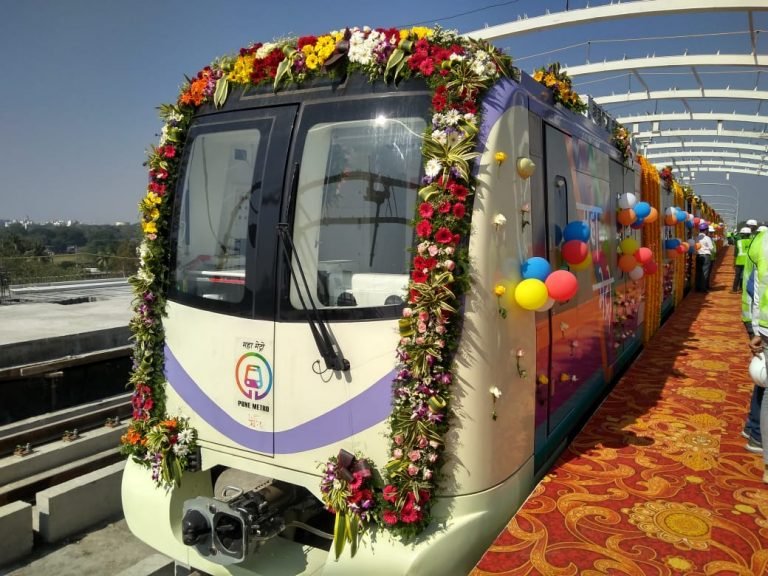
MUMBAI (Metro Rail News):  Officials said that before December 2019 Maharashtra Metro Rail Corporation (Maha-Metro) is planning to start the trials of Pune metro rail, on two priority corridors, namely, Vanaz to Garware College and Pimpri-Chinchwad to Dapodi.

Maha-Metro’s work progress is as per the schedule and we are hoping to start the metro rail operations before December 2019 on priority stretches. The decision on the date and time to inaugurate the project will be taken by the political leadership said by Brijesh Dixit, managing director, Maha-Metro.

Officials said, among all the metro corridors, attention has been focused on the Vanaz to Ramwadi corridor and Pimpri- Chinchwad to Dapodi corridors. While the electrical wiring has been taken up, the signal system will be installed soon.

According to Maha-Metro, even as work order has been issued for 102 coaches, the trial run would be done on coaches brought from Nagpur.

Dixit said, “Maha-Metro will conduct the trial runs soon, but we have not taken the decision whether to continue the metro’s commercial operations immediately after the inauguration.

During the groundbreaking ceremony of the Hinjewadi to Shivajinagar metro line, Prime Minister Narendra Modi had announced that Pune Metro’s operation would start by December 2019. Consequently, attention was focused on the priority sections.

100th pile foundation completed on a 17-km section of Sahibabad-Duhai

DELHI (Metro Rail News): As part of India’s first RRTS, the National Capital Regional Transport Corporation (NCRTC) has recently completed the foundation of 100th pile on the 17-kilometers long priority section from Sahibabad to Duhai of the Delhi-Ghaziabad-Meerut corridor.  

According to NCRTC, the priority segment of Sahibabad to Duhai has been targeted for completion by the year 2023. The first semi-high speed transit corridor of the regional rapid transit system (RRTS) is the 82-km long Delhi-Ghaziabad-Meerut RRTS corridor which will reduce the travel time between Delhi and Meerut to just 55 minutes. NCRTC is the organization which is implementing the RRTS project in the national capital region (NCR).

According to information shared by NCRTC, the execution and construction of the Delhi Meerut RRTS’s priority section are in full swing. The RRTS project aims to completely transform the regional transportation system of NCR.

The Sahibabad-Duhai section of the Delhi-Meerut RRTS corridor will have four stations namely, Guldhar, Duhai, Ghaziabad and Sahibabad, besides a depot which will come up in Duhai.

By the year 2025, the entire Delhi-Ghaziabad-Meerut RRTS corridor has been targeted for completion. The RRTS trains will run with an operational speed of 160 kmph and will be three times more efficient than the Delhi Metro trains. Apart from the Delhi-Ghaziabad-Meerut, the other two RRTS corridors in Phase-1 are Delhi-Gurugram-Alwar and Delhi-Sonipat-Panipat.


Kochi Metro Maharaja’s College to Thykoodam stretch open for public

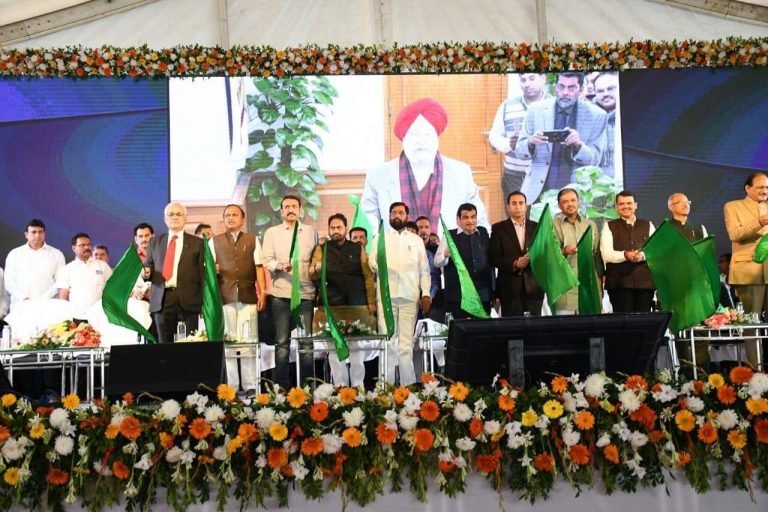
KOCHI (Metro Rail News): Kerala CM Pinarayi Vijayan along with Union Minister for Housing & Urban Affairs Shri Hardeep Singh Puri inaugurated Metro Services on Maharaja’s College-Thykoodam stretch of Kochi Metro today. During the inauguration State Transport Minister Sh AK Saseendran, MP Shri Hibi Eden, Metro Man Dr E Sreedharan, Dy German Amb Dr Jasper Weick and Shri Durga Shanker Mishra, Secretary, Ministry of Housing & Urban Affairs, Govt. of India where also present.

The newly-inaugurated Maharaja’s College Junction to Thykoodam, a 5 km long stretch takes the total distance covered by the Kochi Metro so far to around 24 km. Now the Kochi Metro added a total of five new stations — Ernakulam South, Kadavanthra, Elamkulam, Vyttila and Thykoodam in its network.

“Systems of mass rapid transport such as metro and light metro were inevitable, since over 60 crore Indians would be living in urban areas by 2030” Said Shri Hardeep Singh Puri, Union Minister for Housing and Urban Development.

873 km of metro rail systems are under construction in 27 cities, he added. The Centre issued specifications for light metros in July since metro rail was capital intensive, he said. The 5.6 km extension of the Kochi Metro will go up to Thykoodam. Metro trains will operate in the extended corridor from Wednesday.

Chief Minister Vijayan and Union Minister Hardeep Singh Puri also flagged off the groundbreaking ceremony of Terminal 1 of India’s first water metro project in Kochi and laying of foundation stone ceremony of Petta-SN Junction section of Kochi Metro. After inaugurating the function. The remaining one-kilometer stretch which will connect Petta, in the first phase, is expected to be completed by January next year.

Kerala Chief Minister Pinarayi Vijayan said that the first modern ferry for the ₹740 crore water metro project would be launched in March 2020. CNG-run buses will operate in feeder routes in the islands linked by water metro ferries, said the Chief Minister.

Yulu Bike ties up with Delhi Metro for last mile connectivity

NEW DELHI (Metro Rail News): Yulu- Mobility as a Service (MaaS) provider today announced the introduction of the YULU-Miracle in Delhi. In the first phase, Yulu services will be available at 40 Yulu Zones ( Pick up and drop points), at and around 9 metro stations on the blue and yellow line from Dilli Haat INA  to JLN Stadium in Central Delhi.

  • Yulu-India’s leading Mobility as a Service (MaaS) provider, in collaboration with DMRC, aims to transform the way people commute in Delhi by solving the first and last-mile connectivity problem through its electric two-wheeler – Yulu Miracle.
  • In the first phase, Yulu services will be available at 40 Yulu Zones ( pick up and drop points), at and around 9 metro stations on the blue and yellow line from Dilli Haat INA  to JLN Stadium in Central Delhi.
  • Yulu’s mission is to make Urban Mobility Seamless, Shareable and Sustainable.
Amit Gupta, co-founder, Yulu with Team during the launch event
Mr. Amit Gupta, co-founder, Yulu with Team

The company launched its services in collaboration with Delhi Metro Rail Corporation(DMRC) to solve the complex problem of first and last-mile connectivity for commuters and to reduce congestion and pollution in the National Capital. The service was launched by Dr. Mangu Singh, MD- Delhi Metro from Mandi House metro station.

Inugration of Yulu
Yulu bike inauguration by DMRC MD Mangu Singh


Yulu – India’s leading Electric micro-mobility provider, aims to solve the first and last-mile commute problems for citizens of Delhi by deploying 5000 YULU Miracles across metro stations by end of Dec 2019. The service will be further extended to all the metro stations in the NCR Region in early 2020, by deploying up to  25000 Yulu Miracle. “Yulu Miracle” is a unique battery operated, lightweight, easy to ride, small two-wheeler requiring no vehicle registration or driving license.

Launch of operation of Yulu bike

After successfully running operations in Bengaluru, Mumbai, Pune & Bhubaneswar, now commuters in Delhi too can take eco-friendly Yulu rides at pocket-friendly prices reducing carbon footprint.   “Delhi has been ranked as one of the most polluted cities in the world. We at Yulu are committed to promoting eco-friendly commute options in all Indian cities to reduce pollution and congestion. With the launch of our operations in Delhi, we are providing a green commute option to the residents of Delhi and are committed to expanding our services to the whole NCR region. We are proud to collaborate with DMRC for a common vision of better first and last-mile connectivity, reducing congestion and improving air quality” said Mr. Amit Gupta, CEO -Yulu Bikes

“DMRC is connecting Delhi by offering residents an affordable and sustainable mode of mass transport. Today DMRC is the preferred choice of commuters in Delhi & NCR region. Our Public Bike Sharing(PBS) initiative with YULU will provide much needed first and last-mile connectivity to our users. It is one of its kind collaboration to make mobility seamless & sustainable” said Dr. Mangu Singh, Managing Director- DMRC

DMRC MD Mangu Singh on Yulu Bike while driving

Shri Mangu Singh, DMRC, MD, inaugurated the service from Mandi House metro station

About Yulu

Yulu is a leading shared and sustainable micro-mobility platform to reduce traffic congestion and air pollution. Yulu’s mission is to create sustainable cities of tomorrow by revolutionizing the way people commute through its human and battery-powered vehicles that uses innovative technologies like IoT, ML & AI. Yulu runs its operations currently in Bangalore, Pune, Greater Mumbai, and Bhubaneswar, having the largest fleet of human-powered bicycles (Yulu Move) and lightweight electric two-wheelers (Yulu Miracle). Yulu is building the largest EV ecosystem of India and is committed to providing smart, shared, sustainable and seamless mobility solutions with better accessibility and affordability.


From October 6-car metro trains to run on Namma Metro’s Green Line

BANGALORE (Metro Rail News): Passengers traveling on Namma Metro’s Green Line (Nagasandra-Yelachenahalli) can finally heave a sigh of relief as the authorities have promised to introduce six-car trains on the route from next month.

In a release, Bangalore Metro Rail Corporation Limited (BMRCL) said that 25 trains of three-car sets have been converted into six-car trains till now but they could not be introduced on the Green Line due to prevailing issues related to power supply for such trains.

“The constraints in the local capacity of receiving substation have since been addressed. From October 1, onwards BMRCL is committed to induct more 6-car train sets on the north-south (Green) line at the rate of three or four trains per month.

We are targeting to complete commission of the 50 train sets by March 2020,” BMRCL Chief Public Relations Officers Yashvanth Chavan said.

Though two six-car trains have been deployed on the line, they have failed to make any positive impact. In comparison, commuting on Purple Line (Baiyappanahalli-Mysore Road) has become convenient after the introduction of the six-car trains. “All the trains on the east-west corridor (Purple Line) are now running with six cars,” the release said.