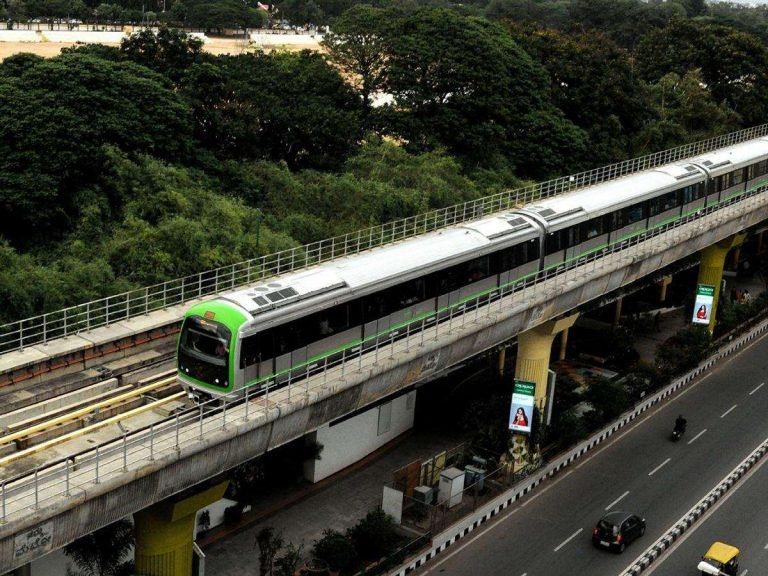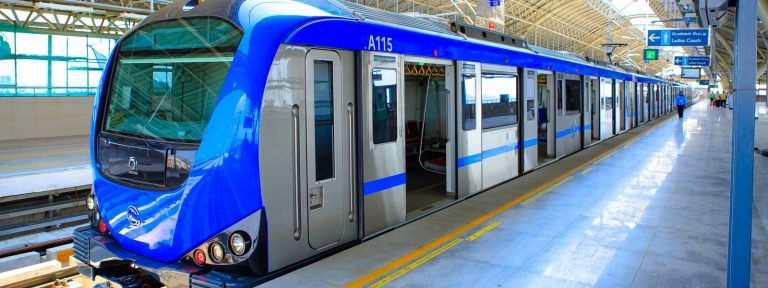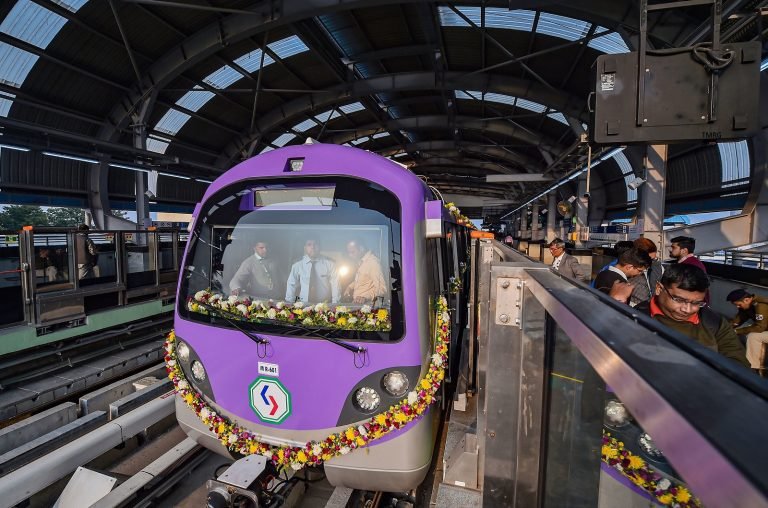
CM Uddhav Thackeray unveils the model of coach for Pune Metro

PUNE (Metro Rail News): Maharastra Chief minister Shri Uddhav Thackeray unveiled the model of the coaches for the Pune Metro rail project at a programme in Mumbai on Dec 27, 2019, as per the statement issued by the Maharashtra Metro Rail Corporation Limited stated.

The coaches have arrived in Pune from Nagpur. All will be interconnected and one will be reserved for women. These coaches will be fitted on the elevated route. The trials of the service will start soon.

Features of Pune Metro Coaches

One rake will be able to carry 950-970 passengers. The train can travel at a maximum speed of 90 kmph. Each coach will be air-conditioned and have a mobile phone and laptop charging facilities. The Indian subsidiary of an Italian company will build 12 coaches for the project. According to a contract signed with the firm, 25% of the coaches will be manufactured at its Italy plant, while the rest will be commissioned at the Maha Coach Manufacturing Plant in Nagpur Said official.

The coaches will be made of stainless steel and aluminium — a first in India — and are lightweight. MahaMetro said that these coaches will be energy efficient. Each coach will have ambient sensors, which will lower or increase the brightness of the LED lights as required. The trials are expected to begin on a 3km-long priority section of the Pimpri Chinchwad-Dapodi elevated segment.
buy kamagra oral jelly online https://calibudsman.com/wp-content/themes/twentytwentytwo/inc/patterns/en/kamagra-oral-jelly.html no prescription

The coaches are made of stainless steel, light-weight and vestibuled, it informed.

Work on Pune Metro began in June 2017 and works like erecting pillars, track laying, installing signals etc were completed in a record 30 months.

The ground-breaking of the line from Hinjewadi to Shivajinagar was done by Prime Minister Narendra Modi.

Mumbai-Ahmedabad Tejas Express to roll out on Jan 17, 2020

MUMBAI (Metro Rail News): After the successful private operation of Lucknow-Delhi Tejas Express, The second Tejas Express train to be operated by the Indian Railway Catering and Tourism Corporation (IRCTC) will start running between Mumbai-Ahmedabad from January 19, 2020.

Mumbai-Ahmedabad Tejas Express will introduce the all-new air-conditioned train with modern facilities and features between Ahmedabad and Mumbai Central from January 19 after its inaugural run on January 17 said Western Railway.

On its inaugural journey, the train will depart from Ahmedabad at 9.30 am and reach Mumbai Central at 4 pm. Similarly, on its return journey, the train will depart from Mumbai Central at 5.15 pm and arrive in Ahmedabad at 11.30 pm. The Tejas Express will run six days a week, except Thursday.

As per the schedule, the train will leave Ahmedabad at 6.
buy lasix online https://www.parkviewortho.com/wp-content/languages/new/prescription/lasix.html no prescription
40 am and reach Mumbai Central railway station at 1.10 pm, covering the entire distance of 533 km in 6 hours and 30 minutes.

It will only have six halts — Nadiad, Vadodara, Bharuch, Surat, Vapi and Borivali stations. In October, the IRCTC started the first Tejas Express train between Lucknow and New Delhi. Tejas, which is India’s first private train run by IRCTC, has an executive class air-conditioned chair car with 56 and nine air-conditioned chair car coaches with a capacity of 78 passengers each. IRCTC is also contemplating the sale of merchandise goods on board to its passengers on these trains.

Country’s first Transit-oriented Development (TOD) project in Delhi

DELHI (Metro Rail News): Union Home Minister Shri Amit Shah laid the foundation stone for the country’s first Transit-oriented Development (TOD) project with the aim to reduce the need to commute for work or recreation, and making urban development more sustainable at Karkardooma in east Delhi on Dec 26, 2019.

On the launch of Delhi’s First TOD project Union Minister of Housing and Urban Affairs Shri Hardeep Singh Puri, Lieutenant Governor of Delhi Shri Anil Baijal and Shri Gautam Gambhir MLA, East Delhi witness the historic moment.

TOD Project to be completed by 2023

According to Mr. Dikshu C. Kukreja, managing principal of CP Kukreja Architects, which is designing the 60-acre site, the integrated development of the hub, which will bring together metro stations, residences and workplaces; and recreational spaces such as museums, is expected to be completed by 2023.

A Memorandum of Understanding (MoU) has been signed by The DDA on December 19 with the Indian Railways for development and redevelopment of the Anand Vihar station. The TOD policy to be kicked off in Karkardooma will also be linked to the Anand Vihar station said, official.

Till 2 am on New Year’s Day Bengaluru metro to be open

BANGALORE (Metro Rail News): Bangalore Metro Rail Corporation Limited (BMRCL) confirmed that the Bengaluru Metro will be operational till 2 am on New Year’s Day, an official with the.

The official stated that security measures will be in place at all metro stations but added that there are no plans to restrict passengers who are inebriated from boarding trains.

The official said, there will be no breath analyzer tests conducted on metro users. However, those found causing trouble will be restricted from using the metro services. 

A BMRCL official told “If people create any nuisance, they will be removed from the metro station. There is a separate coach for women in six-coach metro and they can make use of that. 

New Year’s Eve celebrations in Bengaluru’s MG Road and Brigade Road attract thousands of people from across the city. These two prominent roads are closed for traffic and are turned into a pedestrian zone for the New Year celebrations. 

The Hindu Janajagruthi Samiti, in a letter to Bengaluru Police Commissioner Bhaskar Rao, requested the police to ban the celebrations alleging that it is causing “moral degradation of India’s youth”.

Ahead of this year’s festivities in the city, a number of safety measures have been introduced including CCTV cameras, drones, watchtowers and LED screens in specific areas. Tents with two or three police officers including a woman police officer will also be set up so that the public can report any case of harassment or crime easily. These tents will be coming up in areas in Bengaluru’s Central Business District. 

Police Commissioner Bhaskar Rao, appearing live on social media, said that police officers including DCPs will be doing rounds on New Year’s Eve and that drunk-driving checks will be conducted on motorists in the city. Personnel from Civil Defence, City Armed Reserve Police, and Karnataka State Reserve Police will also be deployed in the city. 

Cabinet approves transformational Organisational Restructuring of Indian Railways

NEW DELHI (Metro Rail News): The Union Cabinet chaired by Prime Minister Narendra Modi has approved a transformational organizational restructuring of the Indian Railways. This historic reform will go a long way in achieving the Government’s vision of making Indian Railways the growth engine of India’s Vikas Yatra.

The reforms include:

Unification of the existing eight Group A services of the Railways into a Central Service called Indian Railway Management Service (/RMS).

Re-organization of Railway Board on functional lines headed by CRB with four Members and some Independent Members

The existing service of Indian Railway Medical Service (IRMS) to be consequently renamed as Indian Railway Health Service (IRHS)

Railways have an ambitious program to modernize and provide the highest standards of safety, speed, and services to the passengers with a proposed investment of Rs. 50 lakh crore over the next 12 years. This requires speed and scale, and a unified, agile organization to work single-mindedly on this task and capable of responding to challenges. Today’s reforms are in a series of reforms that have been undertaken under the present Government including the merger of Rail Budget with Union Budget, a delegation of powers to empower GMs and field officers, allowing competitive operators to run trains, etc.

To meet next-level challenges and deal with various existing difficulties there was a need to take this step. Unlike Railway systems the world over, which have been corporatized, Indian Railways is managed by the Government directly. It is organized into various departments such as Traffic, Civil, Mechanical, Electrical, Signal & Telecom, Stores, Personnel, and Accounts, etc. These departments are vertically separated from top to bottom and are headed by a Secretary level officer (Member] in the Railway Board. This organization of the department runs deep down to the grassroots level of the Railways. Unification of services will end this ‘departmentalism’, promote the smooth working of Railways, expedite decision making, create a coherent vision for the organisation and promote rational decision making.

Unification of services has been recommended by various committees for reforming Railways including – the Prakash Tandon Committee (1994), Rakesh Mohan Committee (2001), Sam Pitroda Committee (2012) and Bibek Debroy Committee (2015).

This reform has been undertaken with the overwhelming support and consensus of Railway officers, at a two-day conference “Parivartan Sangoshthi” held in Delhi on 7th and 8th December 2019. To act on this sentiment, and create confidence in Railway officers that their suggestions are valued, Railway Board held an extraordinary meeting of the Board during the conference on 8th December 2019 itself and recommended a number of reforms including the ones mentioned.

It is now proposed to create a unified Group A’ service called “Indian Railways Management Service” (IRMS) from the next recruitment cycle. The creation of the new service will be done in consultation with DoPT and UPSC to facilitate recruitment in the next recruitment year. It will enable Railways to recruit engineers/non-engineers as per need, and offer equality of opportunity to both categories in career progression. The modalities and unification of the services will be worked out by the Ministry of Railways in consultation with DoPT with the approval of Alternate Mechanism to be appointed by Cabinet in order to ensure fairness and transparency. The process shall be completed within a year.

The newly recruited officers will come from Engineering and non-Engineering disciplines as per need and posted as per their aptitude and specialization to allow them to specialize in one field, develop an overall perspective, and prepare them to take up general management responsibilities at senior levels. The selection for the general management positions shall be through a merit-based system.

Railway Board will no longer be organized on departmental lines, and replaced with a leaner structure organized on functional lines. It will have a Chairman, who will act as ‘Chief Executive Officer (CEO)’ along with 4 Members responsible for Infrastructure, Operations & Business Development, Rolling Stock and Finance respectively. The Chairman shall be the cadre controlling officer responsible for Human resources (HR) with assistance from a DG (HR).

3 Apex level posts shall be surrendered from Railway Board and all the remaining posts of the Railway Board shall be open to all officers regardless of the service to which they belonged. The Board will also have some independent Members (the number to be decided by the competent authority from time to time), who will be highly distinguished professionals with deep knowledge and 30 years of experience including at the top levels in the industry, finance, economics, and management fields.

The Independent Members will help Railway Board in setting a strategic direction. The restructured Board will start functioning after approval of the Board taking due care to ensure that officers are posted in the restructured Board or adjusted in the same pay and rank till their retirement.

From January 2020 Get monthly passes in Hyderabad metro

HYDERABAD (Metro Rail News): Good news for the commuters traveling by metro train as they can avail monthly passes from January 2020.

However, this will come into existence after the inauguration of the JBS-MGBS stretch which is scheduled for the launch next month. With the increase in the footfall after the launch of the new stretches this year, the officials of L&T Metro Rail are planning to introduce monthly passes from January.

The guidelines have also been prepared. However, the monthly passes will be issued between any two fixed stations. The officials are planning to introduce common tickets for the passengers traveling on the metro train.

Currently, there are no passes available on the Hyderabad metro. The decision was based on the demand from the passengers to introduce passes and common cards to travel. This year, the metro services have been introduced to Hitec-City and it was then extended to Raidurg

CMRS Tests CBTC, Other Metro Systems on Aqua Line of Nagpur Metro

NAGPUR (Metro Rail News): The Commissioner of Metro Rail Safety (CMRS) today conducted inspection related to the all-important Communication-Based Train Control (CBTC) technology along Reach-III stretch between Lokmanaya Nagar Metro Station and Sitabuldi Interchange. Along with CBTC, the high-level CMRS team also inspected Automatic Train Protection (ATP), Automatic Train Supervision (ATS) technologies embraced by Maha Metro for its Nagpur project.


The inspection is done by Commissioner of Metro Rail Safety (CMRS) Shri Janak Kumar Garg covers a range of issues related to Metro project and this time, the officials are inspecting aspects related to train control. The introduction of services along Aqua Line would benefit the residents living there in a big way. The stretch along the Aqua Line boasts of multiple academic institutions, the cluster of industries, commercial areas to name a few.


The 11 km long Aqua Line of Maha Metro runs parallel to water bodies like Ambazari Lake and Nag River. The Aqua Line boasts of natural surroundings. The station at Sitabuldi Interchange on the Aqua Line is located on the third floor. Other than Sitabuldi Interchange, work on Jhansi Rani Square, Institute of Engineers, Subhash Nagar and Lokmanya Nagar Metro Stations has been completed.

Senior Metro officials including director (project) Shri Mahesh Kumar, Director (rolling stock and system) Shri Sunil Mathur, Executive Director (Reach-III) Shri Arun Kumar, Executive Director (Track) Shri Naresh Gurbani, Executive Director (OHE) Shri Girdhari Paunikar, Executive Director (Signaling) Shri JP Deharia, Executive Director (Electrical) Shri Rajesh Patil, GM (O&M) Shri Sudhakar Urade, CPM (Rolling Stock) Shri Rajesh Kumar Patel, CPM (OHE) Shri Namdeo Rabade and other officials were present during the inspection.

IAS officer trainees visit Uttar Pradesh Metro Rail Corporation

LUCKNOW (Metro Rail News): A group of 18 IAS officer trainees (2019 batch) from Lal Bahadur Shastri National Academy of Administration (LBSNA) today visited Uttar Pradesh Metro Rail Corporation as part of their winter study tour. The tour commenced at Transport Nagar Metro Depot and concluded at the Administrative Building, Gomti Nagar where they were apprised about the project details by Shri Kumar Keshav, Managing Director, UPMRC.

The trainee officers visited the Transport Nagar Metro Depot and were accompanied by senior officials of UPMRC to the Rolling Stock workshop, Inspection Bay Line and the Operations Control Centre (OCC) where they were apprised of the real-time monitoring of all the trains and stations. They wore UPMRC safety gear with pride in their eyes and clicked as many cheerful selfies as they could with a grand metro train in the backdrop.
buy kamagra oral jelly online https://blackmenheal.org/wp-content/themes/twentytwentytwo/inc/patterns/en/kamagra-oral-jelly.html no prescription

g1 3
IAS officer trainees visit Uttar Pradesh Metro Rail Corporation

From the Metro Depot, they headed straight to the CCS Airport Metro Station to witness the charm of the first underground Metro station of the North-South Corridor and its ‘Madhubani’ inspired artwork, followed by a metro ride to Hazratganj Metro Station. The officers expressed their delight at the splendid artwork at Hazratganj Metro Station which speaks volumes about the cultural heritage of Lucknow. They expressed their joy upon their experience of not only the train ride but also the dedication and commitment with which the Metro staff is catering to the needs of passengers. What caught their special attention was the carefully incorporated safety features inside the metro trains and the special care taken for the convenience of the specially-abled passengers.

The highlight of the visit was their interaction with the UPMRC MD, Shri Kumar Keshav who shared his valuable experience of 35 years of service with the young officers who would soon be taking charge of different public sectors. Winner of the reputed “Construction World: Person Of The Year-2019” award, Shri Keshav said, “When I started the Lucknow Metro project, with just a team of three people, I knew the challenges awaiting me were extremely tough, but if you are determined to work and achieve a target, no one can stop you. With a team that’s my pride, we have become the first to complete the project ahead of the estimated time.”

UPMRC’s MD further added, “Everyone needs a good leader who can take charge and provide the right guidance; become that leader and the rest will follow.”

Green signal for Metro Rail project in Warangal

WARANGAL (Metro Rail News): The bureaucracy is focusing on the Metro Neo Rail proposals that will be built to connect Tri-Cities, Kazipet, Hanamakonda, and Warangal. Minister of State for Urban Development and IT, KTR, recently met with the Metro officials on the Warangal Metro Rail Project.

Hyderabad Metro and HMDA officials visited Warangal at the directives of Minister KTR. Metro Rail proposals, DPR manufacturing, and other issues were reviewed by officials.

Since Warangal city is expanding day by day and with inadequate RTC buses, People are increasingly using autos and own vehicles. The government has decided to start the metro rail project in Warangal, the largest city in Telangana, after Hyderabad.

HMDA Transport Head Vijayalakshmi and HMDA Deputy Director SK Sinha along with Ajit Reddy, the head of HMDA’s Transport Plan, conducted the field study last week and identified the facilities and flexibility along the Kazipet Railway Station to Petrol Pump, Hanmakonda Chowrasta, Mulugu Road, MGM Center, Pochamma Maidan, Kashibugga, Venkatrama Junction to Warangal Railway Station, from thence to Warangal Station Road.

HMDA officials have revealed details of the Metro project through PowerPoint Presentation. The Union Urban Development Ministry and the Maharashtra government have jointly launched the Metro project in Nashik recently. The Central and State Governments will need 50:50 funding for the New Metro Neo project. He also said that 60 percent of the funds can be borrowed from public-private partnership (PPP) systems and global financial institutions.

The remaining 40 percent of funds are to be spent by the Central and State Governments. Government Chief Whip Vinay Bhaskar said that the Metro project should be prepared to keep the population and road congestion in view.

The proposed metro line for the connects the route between Kazipet Railway Station and Warangal Railway station passing through Fatimanagar, Subedari, Nakkalagutta, Ambedkar Junction, Petrol Pump, Hanmakonda Chowrasta, Mulugu Road, MGM, Pochammaidan, Kashibugga, Venkatrama Junction. The locals are welcoming the move as there is traffic congestion in the district with an increase in population.


Hyderabad Metro introduces QR code-based e-ticketing

HYDERABAD (Metro Rail Project): On Monday, Hyderabad Metro Rail Limited (HMRL), in association with MakeMyTrip, announced the launch of a QR code-based e-ticketing system for metro passengers. Hyderabad Metro is the first in the country to launch the QR code-based e-ticketing system, officials said.

The QR code-based ticketing system will allow passengers to pre-book three different types of tickets, single and return journey tickets for the single or two-way journeys, Trip Pass and Store Value Pass. More importantly, the service will permit passengers to book six tickets in a single transaction and share those (six) QR codes with other passengers on WhatsApp.

Initially, the QR code ticketing service is available at 20 stations including Miyapur, HiTech city, Tarnaka, Secunderabad, Ameerpet, Durgam Cheruvu, Raidurg, JNTU, KPHB, Kukatpally, Dilsukh Nagar and LB Nagar among others. By January 2020 efforts are on to make this service available at all the 49 stations.

Passengers will be able to book ‘single and return Journey ticket’ and in subsequent phases, Trip Pass and Store Value Pass will be available through Make My Trip’s website and app.

HMRL Managing Director NVS Reddy after formally launching the service said the new ticketing system is designed to make commuting comfortable to passengers who do not have to wait for tickets at the counters.

While sharing the QR codes with other passengers (in the loop of six), they will have to be careful that the codes are not shared with others as the codes are scanned and permitted to travel only once, he said.

MakeMyTrip co-founder and CEO Rajesh Magow said Metro passengers generally spend about 10 minutes in queues for tickets. He said, “The QR code-based ticketing system has been specially designed for Hyderabad Metro and officials have been working on it for the last three months”.

Authorities are planning exciting offers for passengers booking their tickets using the QR code system. The CEO and MD of L&T Metro Rail Hyderabad Limited, KVB Reddy, and other senior officials were present.

Dehradun to become the first city in the country to have ropeway as Mass Transit System

DEHRADUN (Metro Rail News): On Monday, the Uttarakhand government signed a Memorandum of Understanding (MoU) with Delhi Metro Rail Corporation (DMRC) for setting up two ropeway projects in Dehradun.

Officials claimed that this would make Doon the first city in the country to have ropeway as a mass transit system. The officials added that DMRC would study the project feasibility and hand over a detailed project report (DPR) to the state government in five months.

Initially, the government had planned to link Dehradun, Haridwar, and Rishikesh with a metro train and a separate entity named Uttarakhand Metro Rail, Urban Infrastructure & Buildings Construction Corporation Limited was also set up for the purpose.

However, a study found that it was not feasible to have a metro in most places in these three locations. Following this, the state government decided to have ropeways for Dehradun, Personal Transit Rapid or Pod cars for Haridwar and Light Transit Rapid to connect Dehradun, Rishikesh, and Haridwar.

According to the initial groundwork done by Uttarakhand Metro Rail staff, the total length of the two proposed ropeways would be around 25 km, which they claimed may “slightly differ” when the final DPR is prepared. The construction of a one-km stretch of the ropeway would cost between Rs 70 crore and Rs 90 crore. The overall project cost is estimated to be around Rs 2,200 crore.

The officials added that two routes have been finalized for the project. The first one is from ISBT to Clock Tower to Rispana Bridge and the second would start near Forest Research Institute (FRI) and end at Kandoli via Clock Tower.

DMRC is expected to prepare the DPR in five months and thereafter the project is likely to be completed in another two years. Once DMRC hands over the DPR, the state would invite tender bids for the project. Each cabin car of the ropeway would have the facility to carry 10 passengers with a speed of 25 km/hour, officials said.

The MoU was signed in the state assembly building on Monday in the presence of urban development minister Madan Kaushik. Kaushik told, “The project has several advantages. Not only will it cost far less than the metro rail, but it will also be completed faster. It will have less intrusion on the ground and have less effect on the city’s skyline.”

He added that the ropeways need not follow the roads and therefore will reduce the traveling distance. “It will cost over Rs 2 crore to prepare the DPR, for which we have released the first installment of Rs 43.20 lakh to Delhi Metro. With this project, Dehradun will become the first city in the country to have ropeways as a mass transit system.”

Metro tenders floated for Silk Board-KR Puram line

BENGALURU (Metro Rail News): On Friday, Bangalore Metro Rail Corporation Ltd invited tenders for the Central Silk Board-KR Puram corridor. The entire 19km elevated stretch with 13 stations along the ORR is crucial for the city as it passes through the IT corridor housing several multinational companies.

2023-24 is the deadline for the Light Blue Line, comprising Central Silk Board- KR Puram (Phase 2A) and KR Puram- Kempegowda International Airport (Phase 2B) corridors.
buy temovate online https://pridedentaloffice.com/wp-content/themes/twentytwentyone/inc/en/temovate.html no prescription

With 90% of land acquisition already completed and utility-shifting contracts awarded, there seem to be no major hurdles in implementing the Light Blue Line.

A BMRCL official said that “Tenders for ORR-KIA are being floated in six packages. Of these, five packages are for the Light Blue Line and stations from Central Silk Board to KIA and one for two depots. We have invited tenders for the first two of the five packages. These two will cover Central Silk Board Junction to KR Puram. The other three tenders will be called in February. There are no changes in alignment or station locations”.

BMRCL has called tenders in two packages for the civil work for Central Silk Board-KR Puram-Byappanahalli depot and for the construction of loops and ramps for a 2.8km flyover at Central Silk Board Junction. The first package is a 9.85km elevated section which includes six Metro stations: Central Silk Board Junction, HSR Layout, Agara Junction, Iblur Junction, Bellandur, Kadubeesanahalli and construction of a 2.8km flyover at Central Silk Board at Rs 731.2 crore.

The second package is a 9.74km elevated section with seven stations at Kodibisanhalli, Marathahalli, ISRO Layout, Doddanekkundi, DRDO Sports Complex, Saraswathi Nagar (Mahadevapura) and KR Puram, and a 2km link line to Byappanahalli depot at Rs 594.2 crore. The tenders will be opened on February 6.

Flyover tender re-issued BMRCL on Friday floated a tender for the construction of loops and ramps for a 2.8km flyover at Central Silk Board. The move came after a Salem-based contractor to whom BMRCL had issued a letter of acceptance in July, backed out after failing to produce a bank guarantee for performance security. BMRCL officials said the flyover will facilitate a signal-free intersection and decongest the road.

The elevated road is likely to be eight meters above the existing road, while the Metro line will be at 16-meter height. The 20m-wide four-lane road will have four loops with a ramp towards Electronics City, BTM Layout and HSR Layout. The road will bring respite to motorists headed to Electronics City, BTM Layout, Marathahalli, and HSR Layout via Silk Board. Two Metro lines RV Road-Bommasandra and Silk Board-KR Puram-Airport interchange meet at the junction.

Pune metro’s first trial run likely to start in January

PUNE (Metro Rail News): In January trials for the Pune metro rail project is likely, to begin with, two train sets of six rail coaches set to reach the city by the month-end.

The two train sets left Nagpur on Saturday and will reach Pune by December 29, says Maharashtra Metro Rail Corporation Limited (Maha-Metro) officials.

Within days of the coaches reaching Pune, the Maha-Metro plans on using a special crane to put the train sets on the already laid tracks in Pimpri-Chinchwad and start trials within a fortnight.

The coaches made by China-based CRRC Corporation are being brought to the city via road. These coaches are already in use at the Nagpur metro project.

Hemant Sonawane, general manager, Public Relations, Maha-Metro (Pune) said, “We are using the coaches sourced from Nagpur for the trials. These are made by CRRC Corporation, China, while the Pune Metro train set coaches have been awarded to an Indian company with Italian tie-up Titagarh – Fireman which will arrive in April–May 2020”. 

According to officials, the work is progressing on the priority stretch in Pimpri and Kothrud. While Prime Minister Narendra Modi had asked Maha-Metro to begin operations by December 2019, operations are likely to begin by mid-January 2020 as work on the stations is yet to be completed. 

According to officials, each train will have a set of three coaches with a commuter capacity of 950 to 970. One of the coaches will be reserved for women and the entire train will be air-conditioned with state-of-the-art facilities and vestibule coaches. 

These sets are made out of stainless steel and are light in weight, with controlled LED light panels inside the coaches. The maximum speed of the train will be from 0 to 9 km per hour.

Earlier last week, Maha-Metro started work on the underground stretch between Agriculture college and Swargate using the tunnel boring machines (TBM) which are being used to dig the ground.

The TBMs have been customized as per the geological structure of the city. Pune has basalt for up to 30 meters deep. We are confident of meeting deadlines as the electrification work is also going on at great speed, added Sonawane.

Student gets Kochi1 card to travel in metro

KOCHI (Metro Rail News): Finally the long-pending demand to make the Kochi1 Card available to students is being fulfilled. Kochi Metro Rail Limited (KMRL) introduced the prepaid smart card, in association with Axis Bank, which was only available to persons aged 18 and above so far. With the introduction of this card, the city’s commuters will now have a convenient and hassle-free travel experience.

The decision to make the card available for students came after a lot of requests from both parents and schools. Now any student aged above 10 can avail the student card from any of the Kochi metro stations.

KMRL MD Alkesh Kumar Sharma said, “A student card has been a long-pending demand from students and their parents. Now the kids can enjoy a safe and seamless journey, which will help them devote more time to studying. The facility has been made available at the CUSAT and Kalamassery Metro stations from Saturday)”.