In a bid to revive ridership, Jaipur Metro restarts token commute

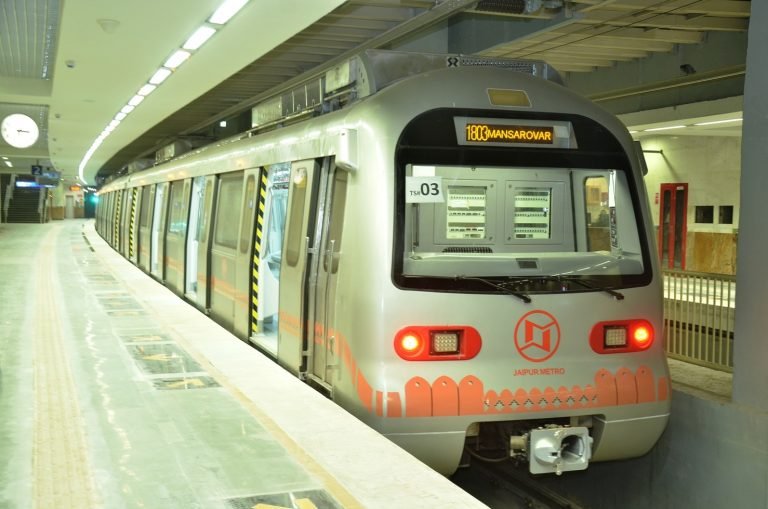
JAIPUR (Metro Rail News): As the festive season begins, the Jaipur Metro Rail Corporation (JMRC) has allowed metro travel with token tickets in a new move to attract commuters. Till October 14, only commuters with smart cards were allowed to avail the services of the city metro and the token travel was suspended in view of the ongoing pandemic. The decision came in response to the rising demand of the token travel system by several commuters and market associations.

The token commute is a type of current ticket system, where the travellers purchase a one-time ticket, paying a nominal fare. This practice was discontinued with the advent of the highly transmissible coronavirus. The plastic tokens were believed to be objects of high direct contact and their circulation posed a serious threat to the safety of the travellers.
However, the token commute has started again with sanitisation equipment installed at the Mansarovar Station.
With the suspension of the token system, many non-daily travellers, who either can’t afford a smart card worth a base price of ₹100 or consider it of diminished equity had refrained from using the metro. This step is expected to increase the ridership of the city metro by 300 to 1000 passengers. 

MMRDA initiates plan to merge two Metro corridors

MUMBAI (Metro Rail News): A day after Chief Minister Uddhav Thackeray announced the scrapping of the Aarey car shed project and the integration of under-construction Metro corridors 3 and 6, the Mumbai Metropolitan Region Development Authority (MMRDA) on Monday began the process of the merger. The agency has decided to prepare a fresh detailed project report (DPR) for the 14.47-km-long Swami Samarth Nagar, Andheri to Vikhroli elevated line (corridor 6) being built by it to facilitate the integration.

Uddhav has now announced the construction of a common car shed on a 41-acre land in Kanjurmarg to serve both corridor 6 and the 33.5-km underground Colaba-Bandra-Seepz line 3, which is being constructed by the Mumbai Metro Rail Corporation Limited (MMRCL). Senior officials said that MMRDA Commissioner R A Rajeev issued the order for the formulation of the new DPR at an internal meeting of officials. They added that this was felt necessary since the two corridors were designed to different specifications. “To ensure the smooth running of both the lines and eliminating possible signalling or system glitches, some changes to the specifications (of corridor 6) are also necessary,” a senior official said.

Currently, corridor 6 is designed to run a six-coach train, while line 3 is designed to run an eight-coach locomotive.“The station length of some of the line 6 stations towards Kanjurmarg will need to be increased to accommodate an eight-coach rail. Some changes to the signalling system will have to be done as well,” the official said. “The new DPR will incorporate these changes. It will plan for a smooth integration of the two lines,” he added. As for corridor 3, MMRCL will now need to construct an additional 1.5-km long elevated viaduct to meet the other Metro line near Seepz.

“One section of the underground rail was planned at grade to take the car rakes to the now-scrapped Aarey car shed. A ramp will now take the rakes to the elevated viaduct that will meet line 6 at a 500-m height,” another official said.

Maharashtra Government Clears Broad Gauge Metro Project

BG Metro: First Such Service Gets State Cabinet Nod

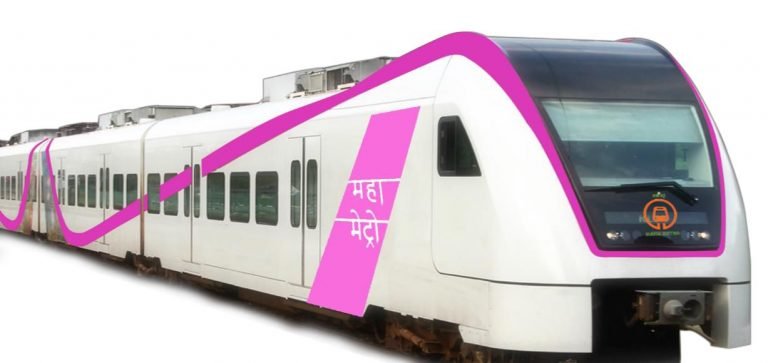
NAGPUR (Metro Rail News): The Maharashtra Cabinet on Friday cleared the Broad Gauge (BG) Metro proposal of Maha Metro. The ₹ 333.60 Crore project aims at providing high-speed connectivity to satellite towns around Nagpur – Narkhed, Wardha, Bhandara and Ramtek. With the state cabinet clearing the proposal, it would now be sent to Central Government for its approval. Once implemented, Metro coaches would run on Indian Railways’ track.
One of the most ambitious projects proposed by Maha Metro, which would change the transportation pattern in Nagpur and surroundings, the proposal aims at utilising the existing infrastructure of Indian Railways by providing air-conditioned, faster, reliable and comfortable services between Nagpur and the four satellite towns mentioned above. This is the first-ever such service to be introduced in the country.
High-Quality Service: This would also act as feeder service to Nagpur Metro, thereby reducing dependency on private vehicles and transportation services. Simultaneously this would reduce existing traffic congestion on the roads, subsequently accidents and pollution. The total distance covered by the project, involving all the four routes, is 265 km.
MoU Signing in July 2018: It may be recalled that the signing of Memorandum of Understanding (MoU) between Indian Railways, Government of Maharashtra and Maha Metro was held on 16th July 2018. The then Chief Minister of Maharashtra Mr Devendra Fadanvis, Union Ministers Mr Nitin Gadkari and Mr Piyush Goyal was present during the MoU signing ceremony.
The journey to Wardha, for example, requires 2.25 hours’ time from Nagpur. As compared to this the proposed service would require just 1.10 hours’ time. Thus, the introduction of new service would not only save time but also add to the comfort levels of the commuters and prevent any accident, especially in respect of those who prefer to travel by road.
Train Speed to be 120 KMPH: The Maha Metro trains would cruise at a speed of 120 KMPH. Most modern coaches with all the comforts would provide transportation to the commuters between the four locations. Initially, four trains would be put to service to connect the four locations. The number would be gradually and subsequently increased to eight after a certain period of time.
KFW Ready to Finance Project: The BG Metro facility would act as Feeder Service to Nagpur Metro services and would help in increasing its present ridership. The international funding agency – KfW – which has funded Maha Metro’s Phase I project, has agreed to finance BG Metro project to the tune of ₹ 305.20 crores of the total project cost of ₹ 333.60 Crore.
Of the balance, the Maharashtra Government would also provide 50 % of the Strategic Debt (SD) of the Government of India (₹ 7.10 crore) and 100 % (₹ 14.20 crore) of SD incurred by the state government. Thus collectively, an amount of ₹ 21.30 crore would be sanctioned by the state government. Rest will be borne by the Central Government.
The service once introduced would change the way people travel around Nagpur. This would also revolutionise the transportation concept in not just Nagpur, but across the country as a pioneering project.

Union Cabinet approves revised cost for Kolkata East-West Metro Corridor

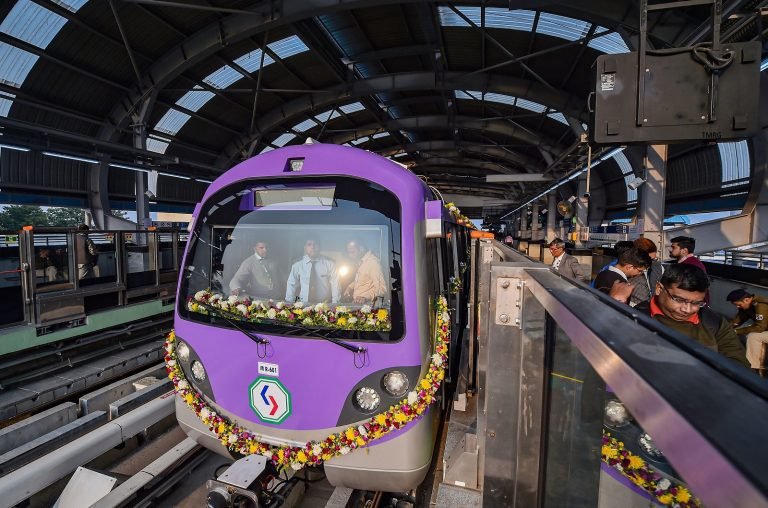
KOLKATA (Metro Rail News): The Union Cabinet has approved the revised cost estimates for construction of Kolkata East-West Corridor project as per realigned route. The project will be implemented by the Kolkata Metro Rail Corporation.
The estimated completion cost of the project is Rs 8,575 crore, with the Ministry of Railway’s share as Rs 3,268.27 crore, the Ministry of Housing and Urban Affairs’ share as Rs 11,48.31 crore and the Japan International Cooperation Agency (JICA) loan of Rs 4,158.40 crore. The 5.3 km long elevated corridor is already commissioned since 14 February 2020. Further 1.67 km will be commissioned in October 2020. The target date for completion of the entire project is December 2021.
The mega project aims to create efficient transit connectivity between the business district of Kolkata with the industrial city of Howrah in the west and Salt Lake City in the east through a safe, accessible and comfortable mode of public transport. The project will ease traffic congestion and provide a cleaner mobility solution for city dwellers. It will provide an economic, efficient and eco-friendly transit solution to Kolkata.

It will integrate multiple modes of transport like Metro, suburban railways, ferry and bus transport by constructing interchange hubs. This will ensure smooth and seamless mode of transport to lakhs of daily commuters.
The project envisages construction of 16.6 km long Metro Rail Corridor, including a tunnel below the river Hooghly which is the first transportation tunnel in India under any major river as well as Howrah station which is one of the deepest Metro stations in India.

A.L. Prabhakar IRSS takes charge as CVO NLCIL

NEYVELI (Metro Rail News): Mr A.L. Prabhakar, belonging to Indian Railways Stores Service (IRSS), assumed office as the Chief Vigilance Officer of NLC India Limited on recently at Neyveli. 
Mr A.L. Prabhakar, who is currently holding the charge as CVO of Madras Fertilizers Ltd., Chennai, has been entrusted with the additional charge of the post of CVO, NLC India Limited. He started his career working briefly in Hindustan Petroleum Corporation Limited before moving to Southern Railway. He is a Senior Administrative Grade (SAG) Officer belonging to the cadre of IRSS, having cleared UPSC Engineering Services in 1988. Possessing more than three decades of experience, he has held posts in diverse fields like Material Management, Information Technology, Head of Training Institute, Vigilance etc. 

The other important posts which he has held are Regional Railway Manager (RRM), Karwar region of Konkan Railways, Secretary to General Manager, Southern Railway and Additional Divisional Railway Manager (ADRM), Chennai Division, Southern Railway. He has been empanelled for the post of Divisional Railway Manager (DRM) and as Joint Secretary to Government of India.

Chennai metro introduces north line, includes 9 new stations

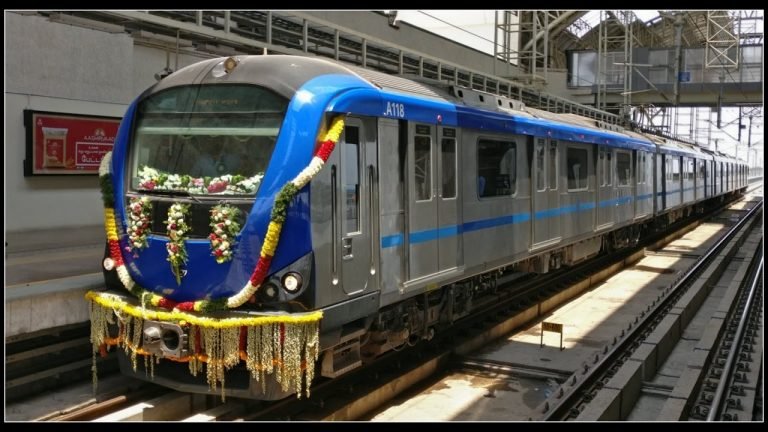
CHENNAI (Metro Rail News): The metro trains in Chennai will soon have new route maps to direct passengers with the addition of nine new stations on the upcoming north line from Washermenpet to Wimco Nagar.
The 9km north Chennai line is likely to be opened for service by January 2021. Currently, the Chennai metro has 42 metro trains have only route maps to direct passengers across the 32 stations in the 45km phase-1.

According to few media reports, the Chennai Metro Rail Limited (CMRL) recently floated tenders to procure static route maps, which will have both existing and the upcoming stations, that could be pasted in the interior of its fleet of 52 trains including 10 new trains.
The CMRL is also planning to install dynamic route maps which will have the new lines included, where lights will flicker next to each station the train stops. In addition to that, the automatic announcements inside trains will also be updated with the new route.“We have floated a tender for the design, supply and pasting of procurement static route maps board stickers. The plan is to get these stickers installed before opening the phase-1 extension line,” a CMRL official said.

“We will put out another tender to procure the dynamic route maps for the trains. We will also update the automatic announcements made in the trains to include the new stations,” said a CMRL official.

DMRC to transform stations into commercial hubs

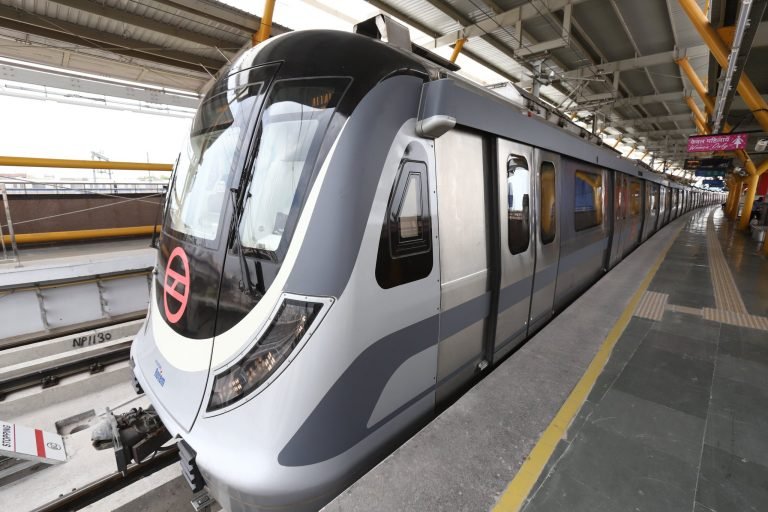
NEW DELHI (Metro Rail News): The Delhi Metro Rail Corporation (DMRC) is looking to change the interchanging stations into commercial hubs. Both Anand Vihar and Karkardooma Metro stations are important interchange facilities where Blue (Dwarka-Vaishali/Noida Electronic City) and Pink (Majlis Park-Shiv Vihar) Lines merge, thereby creating a thriving transport hub.
This is also where the first transit-oriented development (TOD) project, East Delhi Hub, is coming up. DMRC has now started turning these busy interchange stations into commercial hubs with malls, restaurants, offices, banks and even transit hotels on offer.
The 60-acre site, where Delhi’s first TOD project will come up, is situated around Blue and Pink Line stations of Karkardooma flanked by Anand Vihar interchange station on the eastern end. The project will see 30 residential and commercial towers, with the tallest being 48-storey (161 meters) high. Phase-I will see four towers come up around Karkardooma’s Blue and Pink line corridors.
At the heart of the project is a green area spread over 10 acres. There will also be extensive usage of vertical and terrace gardens. The 48-storey tower will have a facade with two-three layers of traditional latticework in different patterns to trap dust and create standing waves that damp out the noise.
There will be high-density, mixed-use buildings close to the stations as the Delhi Development Authority’s (DDA) TOD policy aims to induce people to walk, cycle and use Metro and buses. It will lease out an area measuring 9,563 sq metres at Karkardooma Pink Line station, which will include space on the first, second and third floors for specific purposes like retail, organised commercial space, offices, banks, etc.
At Anand Vihar, DMRC has approximately 8,600 sq metres available at the older Blue Line station.
The station is located next to a huge transport hub with connectivity to Pink and Blue Lines, railway station and ISBT.
The area also has the adequate social and physical infrastructure and amenities such as educational institutes, hospitals and nursing homes, entertainment facilities and Yamuna Sports Complex. Sahibabad and Patparganj industrial areas are also in the vicinity.
The area has been divided by DMRC into two packages, one being 1,130 sq metres at the concourse level and another of 7,470 sq metres on the ground and first floors. The tender for Package-1 has already been invited, while the one for Package-2 is scheduled for November 2020.

Hyderabad metro continues to suffer losses as ridership continues to remain below the normal mark

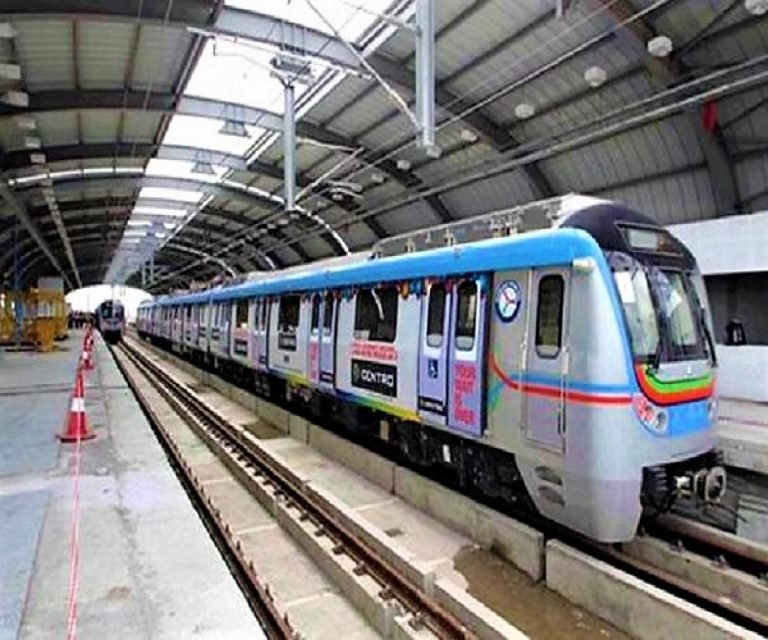
Hyderabad (Metro Rail News): Hyderabad Metro Rail Limited (HMRL) continued to incur losses even after the month of resumption of metro services due to dip in the metro patronage. It is learned that the people are refusing to take the metro ride fearing of the coronavirus despite the precautionary measures being taken up by the HMRL.

Before the lockdown, a total of 4 lakh people used to travel by metro across all the corridors. However, the patronage has dipped to 70,000-80,000 per day due to the prevailing coronavirus situation in the state. Also, the shopping complexes at the metro stations which are said to bring profits for HMRL has not been opened up yet at several stations.

The sanitisation works across all the metro stations have also added up to the losses. With a dip in the patronage and taking up the sanitisation works and operating the trains for a few passengers further pushing the metro into losses. Hyderabad metro rail has suffered a loss of Rs 260 crore after its operations had been suspended for a total of 160 days.

According to the metro officials that the losses would be covered up if the government takes over the Hyderabad Metro else if metro receives financial aid from the government.

Mumbai Metro One to start operations from October 19 in a graded manner

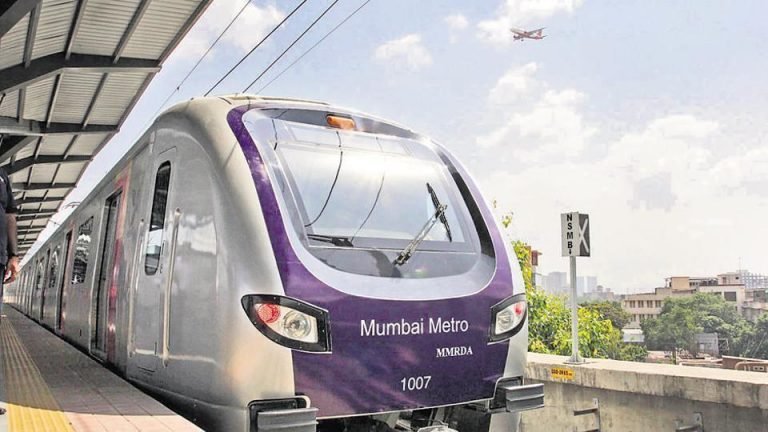
Mumbai (Metro Rail News): Mumbai Metro One will start operations in a graded manner from Monday, October 19, 2020, from 8:30 am to 8:30 pm.

“At all point in time, Metro One has always ensured complete safety of its commuters, staff, retail partners and everyone using Metro services, as it being of paramount importance. Following the same, Mumbai Metro One has now devised critical measures to ensure that the services are safe for every person on Metro premise, thus keeping the spread of Covid-19 at bay”, it said.

Here are some of the key initiatives Metro One has undertaken/ deployed to provide the safest and most hygienic travel experience:

1. Necessary arrangements have been made to maintain social distance at all touchpoints such as – station entry gates, ticketing counters, frisking areas, platforms and trains. As Metro restarts its operations, through constant support they would encourage their patrons to occupy alternate seats and stand on designated floor markers inside the trains.

2. At ticketing counter, no plastic tokens will be issued to curb Covid-19 spread. Instead commuters are requested to opt for digital tickets, smart cards or paper QR tickets.

3. Regular disinfection of entire station area and all trains will be carried out at frequent intervals. A special disinfection protocol has been created and the housekeeping staff has been trained for upgraded cleaning & sanitization practices.

4. The temperatures inside the coaches will be maintained at 25-27 degree centigrade and fresh air supply will be increased by adjusting the damper opening. Train doors will remain open for 30 seconds at all stations and 180 seconds at terminal stations to let fresh air into the coaches. 

5. Sanitizers shall always be made available at various points inside the stations for all commuters.

6. Mumbai Metro One to start operations from October 19 in a graded. Every entrant in Metro station shall be screened through non-contact thermal screening devices.  All security staff members have been provided with safety gears to ensure their safety as well as that of commuters.

7. While complying with all safety measure, commuters are expected to travel with proper face masks and practice social distancing as stated mandatory under government guidelines.

8. The entry points at every station will be limited in order to ensure effective crowd management, screening and further movement into station areas. Suitable communication and directions for the same will be displayed for commuters to guide them to the nearest entry gate. Metro has taken all necessary & effective measures to ensure the utmost safety of commuters.

9. Metro One Health Committee is formed to keep a track & monitor the new initiatives set in place, along with addressing all concerns of our commuters, staff members and partners.

“We are restarting metro operation from 19th October in a graded manner with all Covid related precautions to ensure safe travel for our commuters. We urge Mumbaikars to support us by fulfilling all guidelines and precautions. Mumbai Metro One is committed to providing world-class service as earlier”, its spokesperson said.


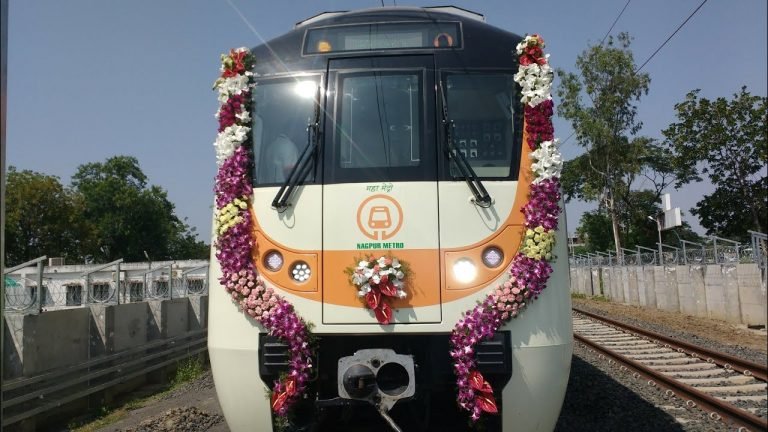
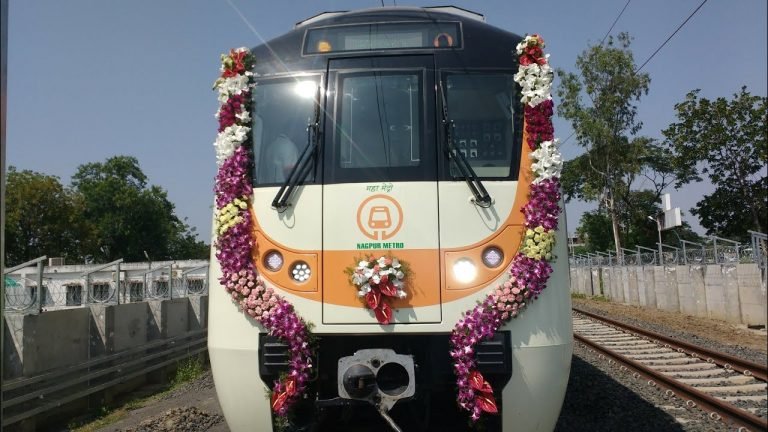
Nagpur Metro to start operations today, mandatory guideline in place

Special Measures in place at Stations & Trains in view of Global Pandemic.


NAGPUR (Metro Rail News): Nagpur Metro is all geared up for starting of services beginning today in the post-COVID phase. A number of steps have been taken to prevent the spread of this pandemic to ensure that the commuters and Maha Metro officials and employees remain safe and secure.

“While all such precautions would continue to be taken, a series of other important measures for passengers are also being taken. As per the unlock guidelines, the Metro services are to start in a graded manner. Hence, services would initially start in Reach-III Aqua-Line between Lokmanya Nagar Metro Station and Sitabuldi Interchange. That will be subsequently followed by starting of services on the Orange Line. Services would be operational from 8 am to 8 pm. The special measures being taken in view of the Global pandemic have been drafted as per the government guidelines”, a statement by Maha Metro, the nodal agency for Nagpur Metro said.


Passengers with Masks to be Allowed: As part of special measures, only Passengers with Face Masks to be permitted to enter & travel in Metro Trains. Only one entry in every station shall be opened. All passengers entering station would be screened with Thermal Gun, in case of any abnormality Station Controller shall inform health services about the same. Hand Sanitizers would be provided to all passengers and they have to wash hands before entering the Metro premises. Passengers shall be permitted for boarding train only after de-boarding of passengers at all stations. Passengers are expected to not touch switches of lift and other electrical appliances; similarly, they should avoid touching sidebars of escalators too.
Thermal Screening at Stations: Thermal screening of all passengers will be done by Station Security Staff at the Entry Gate of Station and those who are having more than 38 degrees Celsius temperature will not be allowed to travel. Passengers who show other symptoms of sneezing, cough and difficulty in breathing also will not be permitted to travel. Adequate resources like Queue Managers, Spaces have been marked for maintaining social distancing at all passengers accumulating areas like ticket counters, screening points, boarding / deboarding points at the platform.


Digital Payment to be Promoted: Passengers would be exhorted to make payments for journey fare through digital mode. Payments through various modes of payment, other than cash, would be encouraged. Such a step would minimise physical contact and reduce the spread of disease in a big way. This also includes making payment through Maha Metro Mobile App. E-ticket thus generated can be scanned at the AFC gate. Similarly, Maha Card can be used for digital payment. While Maha Metro urges commuters to make digital payment for train fare, cash, however, collected would be stored separately. The cash, thus collected, would be sanitized using the ultraviolet box. Incoming and outgoing cash would be separately stored to avoid mixing of the same.  

Staff to Ensure Norms are Followed: Security staff shall ensure social distancing requirements at the station by adequately posting staff in concourse, entry and exit of stations. They shall guide the passengers for entering and passing through the station, for exit etc. and ensure that the norms are not violated by the public in stations and trains. Regular announcements will be made on public address systems, both at stations and trains, about COVID-19 awareness. Standees and information boards would be put up at Metro Stations for passengers’ information and perusal.


Trains, Stations to be Disinfected: All Trains and Metro Stations would be disinfected prior to opening. Metro staff would sport Personal Protective Equipment (PPE) like Face Masks, Hand Gloves. Hand Sanitizers to be provided at entry points. Entrance Gates of Station, Crew Control Room, Baby Care room, TOM room, EFO cubical, Station Control room shall be cleaned at regular intervals. Thus Maha Metro is taking every possible precaution to ensure that the commuters are fully secure and travel safely. These special measures would help in increasing commuters’ confidence. While Maha Metro is taking all possible precautions for a safe journey beginning tomorrow, the commuters are also expected to follow the guidelines to avoid any inconvenience to fellow passengers.

Nagpur Metro installs a Mass Spring System (MSS) at its Zero Mile Station

NAGPUR (Metro Rail News): Nagpur Metro, a venture of Maha Metro has installed a unique Mass Spring System (MSS) at Zero Mile Station for mitigation of vibration, caused due to train movement. Such a floating track slab on the via-duct has been executed for the first time in any metro projects across the country. The system absorbs any vibration and thus reduce vibration being passed on to the metro building.
“As the track structure is passing through the building structure at Zero Mile station, vibrations generated from the train wheels rolling on the tracks are directly transmitted to the building structure. At Zero Mile Station, the track is on the fifth floor and integral part of the station, which is not the case with other Metro Stations. Hence this system has been executed here. 
The track structure at the Metro station has been specially designed as a Floating slab (30 mm above Station slab) supported on 176 no of Chrome alloyed Steel Spring system isolators. The Track Slab of 135 meter length, covers the full length of Platform on both UP & DOWN lines and has been concreted in single pour on each track slab without any expansion joint”, the Maha Metro said in a statement.
The chrome alloyed steel spring system absorbs the vibrations created during train movement. The MSS Track Slab System is a Maintenance free system and having a designed life of 75 Years. The Zero Mile station is a Multi Storied Commercial Building. The building has multi-level underground parking with a concourse level below the Platform level.

Railways waiting for Cabinet Nod to Corporatise Rae Bareli Coach Factory

NEW DELHI (Metro Rail News): Railways is firming up a cabinet proposal to corporatise Modern Coach Factory at Rae Bareli first as the corporatisation move of rail production units has gathered momentum. Officials of the Finance Ministry, NITI Aayog and Indian Railways are meeting this week to finalise the roadmap for the corporatisation of MCF, to begin with.
“Earlier, the proposal was to corporatise all eight production units of railways. However, now it has been decided to begin with MCF first and later on carry out the exercise for other units in a phase-wise manner,” said a Railway official.
RITES, a railways PSU, assigned the task of undertaking a study on the corporatisation of the rolling stock units, has submitted the report for MCF corporatisation. The aim is to make all our production companies market-driven and export-oriented, said the official.
Till now, all production units including MCF have railways as captive buyers and their productions were depending upon budgetary support but with changing times, corporatisation was long overdue as most of these units are not a force to reckon within the market, it was felt.
The corporate structure is expected to free these units from the rigid bureaucratic system of the government, which would result in gaining flexibility and improving efficiency in a coordinated manner. These units, which are suffering from technological stagnation, would be able to infuse new technology and also garner the financial resources to enter the international market in a competitive way.
The idea of hiving off all production units of the Indian Railways into a single entity, called the Indian Railways Rolling Stock Company, was floated as part of the 100-days action plan of the Indian Railways last year.
According to the plan, the merger of eight production companies including three each of coach and locomotive manufacturing units and two-wheel factories into one giant entity would make these units strong and viable in the world market with the latest technological collaboration.
MCF at Rae Bareli, which produces about 2,000 LHB coaches a year, would become an autonomous one under a corporate structure and is expected to increase its efficiency.
Currently, Railways is working with a holistic approach to modernise its infrastructure to make its network feasible for running high-speed and semi-high speed trains.
Ultimately, rail production units will have to produce coaches and locos, which are fit for a speed of 160 kmph, while the Railways has also allowed private players to run trains on selected routes.
The railway’s production units are Chittaranjan Locomotive Works, Integral Coach Factory, Diesel Locomotive Works, Diesel Modernization Works, Wheel & Axle Plant, Rail Wheel Plant, Rail Coach Factory and Modern Coach Factory.

Alstom’s WAG 12B e-locos become India’s first freight locomotives approved to run at 120 kmph

NEW DELHI (Metro Rail News): Alstom-built 12000 HP electric locomotives have been officially approved by the Ministry of Railways and RDSO to run freight trains at a maximum speed of 120 kmph. Earlier this year, Indian Railways began inducting the WAG 12B e-locos, which are the most powerful locomotives to run on Indian tracks. Cumulatively, these electric locomotives have already clocked over 1 million kilometres, thus providing a significant fillip to the country’s freight logistics landscape.

“These electric locos will allow faster and safer movement of heavier freight trains capable to haul ~6000 tonnes at a top speed of 120 kmph. Planned to be deployed for operations on major freight routes of Indian Railways including the Dedicated Freight Corridors (DFCs), they are expected to increase the average speed of freight trains in India by at least 20-25 kmph’, the firm said in a statement.

Alstom E Loco 2

Commenting on this achievement, Alain SPOHR, Managing Director, Alstom India & South Asia said, “The approval from RDSO is indeed a matter of pride for all of us at Alstom and a testimony of our technical expertise in partnership with the Indian Railways. In line with India’s push towards self-reliance, we have successfully leveraged our local engineering and manufacturing capabilities. Alstom is also committed to support IR in reducing its carbon footprint and adopt cleaner technologies in its quest to transform into the world’s largest Green Railway network. India is a priority for Alstom, and we are committed for working closely with the Indian Railways for all their future modernization endeavours.”

“Equipped with Insulated Gate Bipolar Transistors (IGBT) based propulsion technology, it would lead to considerable savings in energy consumption due to the use of regenerative braking. The technology is also helpful towards making the acceleration process more efficient by reducing the heat generation and traction noise. Additionally, this move will not only bring down operational costs but also reduce the congestion faced by Indian Railways”, he further added.

Despite challenges posed by the COVID-19 pandemic, with the advent of Unlock 1.0, Alstom restarted significant production at all its manufacturing facilities, ensuring all necessary permissions and adhering to government protocols. The company’s focus is to give maximum support and protection to all teams and workforce in the present adverse situation.

NCRTC fined Rs 50 lakh for violating pollution norms

NEW DELHI (Metro Rail News): Delhi environment minister Gopal Rai on Sunday issued directions to impose a fine of Rs 50 lakh on the National Capital Region Transport Corporation (NCRTC) after he observed absence of dust-control measures at the construction of its INA market site.
The minister was on a visit to inspect demolition sites at Netaji Nagar and Kasturba Nagar. After he noticed uncovered mounds of dust at the NCRTC site near Vikas Sadan, he expressed his annoyance over alleged violation of air-pollution control norms.
The NCRTC, which is implementing the Regional Rapid Transit System (RRTS) project across the National Capital Region (NCR), is constructing its office at INA market.
“Massive dust pollution is happening at the site.
The guidelines regarding pollution control are not being followed; therefore, strict action will be taken against the NCRTC. The NCRTC is already aware that anti-dust operations are being carried out all over Delhi but they are not following the rules completely. If despite fine this the agency continues the violation then the work will be banned,” Rai was stated saying by a media agency.
On Saturday, the Delhi government had imposed a fine of Rs 20 lakh on the Federation of Indian Chambers of Commerce and Industry (FICCI) for violating dust control norms at a demolition site on Tansen Marg near Mandi House.
Strict guidelines and heavier fines
It is mandatory to install anti-smog guns at construction and demolition sites larger than 20,000 square meters. Fines ranging between Rs 20,000 and Rs 5 lakh have also been imposed on 31 concrete plants for not taking sufficient measures.