CIDCO receives final 8 train sets from CRRC for Navi Mumbai Metro

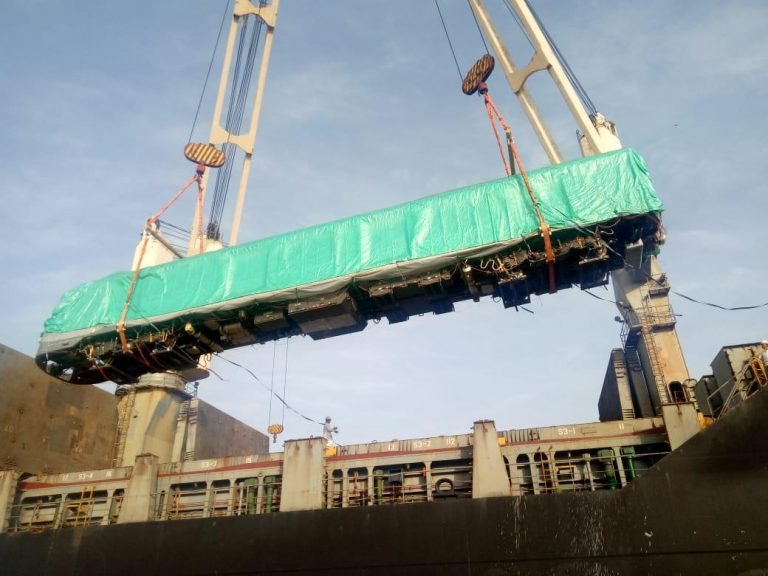
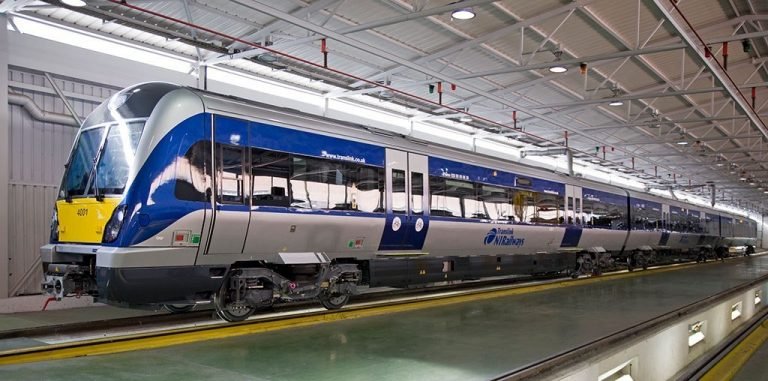
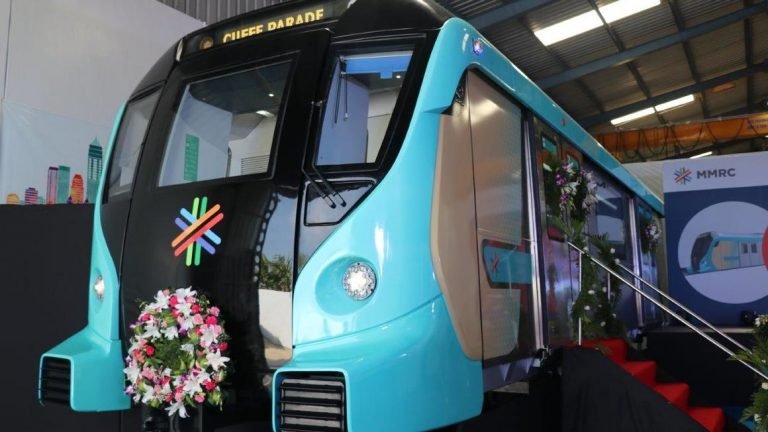
NAVI MUMBAI (Metro Rail News): City Industrial Development Corporation of Maharashtra (CIDCO) receives the delivery of eight 3-coach trainsets from Chinese rail coach manufacturer CRRC Zhuzhou Locomotive Co., Ltd. on May 15, 2020, for Navi Mumbai Metro Rail project successfully. according to the logistics service provider Total Movements Private Limited.

Declaring the completion of delivery of metro train coaches to CIDCO, Total Movements Private Limited stated that the company was selected as an Onshore Logistics service provider to support the development of the Navi Mumbai Metro Project. These Metro coaches were received at Mumbai Port and moved to Navi Mumbai Metro Depot, Taloja.

Further, the company added in the statement that the Detailed route survey through the busy roads of Mumbai, deploying numerous specialized trailers at once, the building of temporary roads as none of the main roads had the clearances required for safe movement and coordination with traffic police/multiple government authorities for smooth transportation through the city were the crucial challenges faced by our team.

“With detailed route surveys, swept path analysis, accurate lifting plans, and seamless coordination our team managed to overcome the challenges and delivered the coaches by unloading them on rails. Proud to have added another feather to our cap!”, said in a statement further.

CIDCO had given a contract worth 78 million euros to an international consortium led by Ansaldo STS and including Tata Projects Limited and CRRC Zhuzhou for electrical and mechanical systems for the first phase of Navi Mumbai Metro Line 1 in July 2014.

CRRC Zhuzhou Locomotive Co., Ltd. was given the responsibility to design, manufacture, supply, testing and commissioning of 24 standard gauge metro coaches (eight 3-coach train sets) for Navi Mumbai Metro project.

According to the contract, the size of three-car trainsets is 64.6m long and 3.1m wide, with a passenger capacity of around 1,100 and a maximum speed of approximately 80 km/h. The CRRC had delivered the first two train sets of 3-coaches to CIDCO in March last year.

The trial run on 2-km long distance from Pendhar Metro Terminal Yard to Pendhar Station was conducted in September 2019. This section is part of 11-km long Phase 1 of the Navi Mumbai Metro project.

The Navi Mumbai Metro project is always in controversy due to wrong planning and irregularities in the tendering process at various stages of project execution.

Indian Railways cancel all Passenger trains till the end of June

NEW DELHI (Metro Rail News): On Wednesday Indian Railways declared to cancel all the bookings till 30 June, only Shramik special trains and 30 special trains will run. As per the National transporter, the process of cancellation will be automated and the passengers will get their refunds with effect from21st of March.

Railway Board has issued an order adding the provision of waiting list not only in its current operational special trains for May 22 journeys with also for every forthcoming operations.

However, it has capped the waiting list on the trains that are up to hundred for AC-3 tier, fifty for AC-2 tier, two-hundred for Sleeper Class, hundred for chair-cars, and twenty each for 1st AC & Executive Class truncating the files for confirmed tickets considerably.

The changes would come into effect for booked tickets from 15th May for journeys beginning 22 May.

Delhi Metro is planning some protocol for post lockdown

NEW DELHI (Metro Rail News): Now Delhi Metro Rail Corporation (DMRC) is also carrying out the sanitization and cleaning work of the Metro coaches, stations and depots for post lockdown services after a green signal from the state government.

The Delhi Metro Rail Co put out a tweet indicating that the trains are being sanitized for operation. Moreover, since few companies have been permitted to operate with 33% strength there is a huge demand to start public transportation along with metro services.

On twitter DMRC said “DMRC is working out a detailed cleaning & maintenance procedure in terms of the pandemic. The exercise would be extremely exhaustive as it includes 264 stations over 2200 coaches & over 1100 escalators and 1000 lifts. Protocol for social distancing etc. are also being taken on.

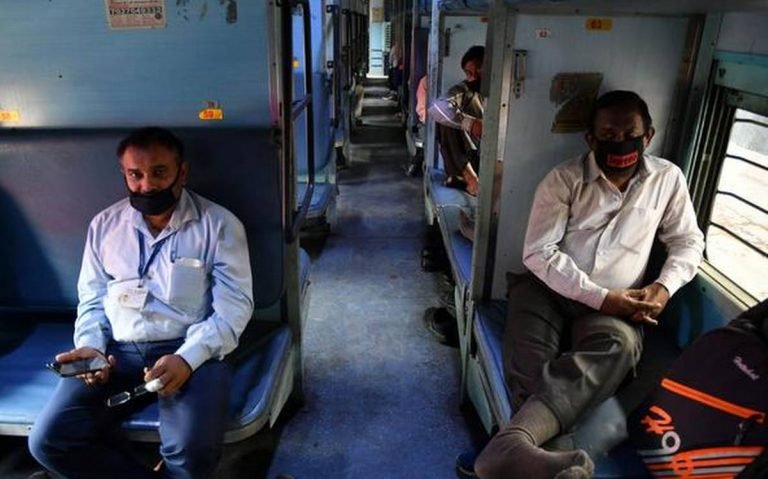
For a post-lockdown services, DMRC placed stickers on the seats to encourage social distancing.

Urban Mobility Redesign and Rethinking During the Coronavirus Pandemic

Situation Analysis

The coronavirus pandemic has shown the interlocked nature of the modern world, where what happens in cities, does not stay in cities. With around two hundred countries affected, the Coronavirus disease 2019 (COVID 19) pandemic has wrapped its tentacles around the Indian population. The Government of
India took an anticipatory step to break the spread of the virus by declaring a nationwide lockdown on the 21 st of March 2020. The lockdown, now approaching its fourth phase, has brought life to a standstill.

In such situations, the Indian public transport has been profoundly affected by this forced social distancing tool.

How has public transport been affected?

Across many countries, life as we know it has taken a hiatus. Governments have issued warnings for people to stay at home, away from crowds and infectious environments. The desertion of shared services includes public buses and trains, which has made public transport sector its first casualty. People and goods use transport for what it produces, and not just for its sake. It is a derived demand. Public transport has suffered massive revenue losses since it is typically dependent on fares and subsidies.
The Covid-19 has crippled the businesses of shared mobility firms, snowballing risks and financial pressure for the gig-economy workers, particularly the drivers.

Public transport systems have been considered a high-risk setting due to:

  • no methods to identify potentially sick people
  • a high number of people in a confined space
  • Exposure to common surfaces (handrails, ticket machines, etc.).
  • It is therefore vital to analytically identify areas of action to abate the risks for public transport staff and passengers.

Role of Public Transport

Public transport is essential to provide mobility to critical services and staff as a core function and to
allow movement of patients, medical staff and supplies in times of pandemics. Therefore, maintaining
the operation of public transport is crucial. Subsequently, public transport operators should focus their pandemic plan efforts on staff safety, and preparing to deal with the shortage of labour.
The efforts of public transport can be divided into three phases:

  • During lockdown
  • Just after lockdown
  • Resuming urban transport post lockdown

During Lockdown

Rail Based Transit
Minimize the Spread of Infection

  • Sanitization of coaches/rolling stock, station area, common areas and staff rooms
  • Provide safety gear and PPE like masks, gloves and sanitizers
  • Emergency Services
  • Enabling the transport of essential staff and healthcare supplies
  • Transportation of migrant labour back to their hometowns
  • Usage of train coaches as quarantine and treatment facilities

Bus Based Transit
Minimize the spread of infection

  • Operation at lower capacity (30-50%)
  • Passengers to board/alight from rear doors
  • Sanitization of buses, bus depots and common staff areas
  • Providing safety gear for both the passengers and bus operators
  • Transparent protective barriers placed near the driving area to protect the bus driver and passengers
  • Introducing changes in operation
  • Buses to run as per demand, and will be available only to move essential staff and supplies
  • Information sharing through apps about real-time location and number of passengers in the bus
  • Any documents from the transport authority to be approved digitally

Just after lockdown

Rail Based Transit
Minimize the spread of infection

  • Limiting the number of passengers per coach
  • No cash transactions allowed for ticket purchasing
  • Maintaining hygiene and sanitation of all common areas
  • Introducing changes in operation
  • Issuing refunds of tickets
  • Increasing the frequency of trains and metros to avoid crowding

Bus Based Transit
Minimize the spread of infection

  • Marking seats as unavailable to reduce the number of passengers
  • Only digital transactions to pay for the fare, to reduce chances of contact
  • Sanitization of buses, along with compulsory masks, gloves and other PPE for passengers and drivers
  • Demarcation at bus stops to maintain an appropriate distance between passengers and bus driver
  • Introducing changes in operation
  • Support to transport authorities in terms of relaxation of KPIs and penalties

Pedestrianization and Cycling

Minimize the spread of infection

  • Encouraging walking as a new means of public transport and creating new walking zones
  • Allowing only walking/cycling as a means of transportation within a certain radius
  • Sanitization of cycles and docking stations while providing protective measures such as gloves,
  • masks and hand sanitizers
  • Online registration for rental of cycles
  • Introducing changes in operation
  • Closure of roads for vehicles to allow only pedestrians or cyclists
  • Cycle sale and repair outlets to remain operational under essential services

Cab and ride-hailing services

Minimize the spread of infection

  • Limiting the number of passengers in a cab to 2
  • Sanitization of cabs with compulsory PPE for drivers and passengers
  • Rides restricted to passenger movement for essential services
  • Free rides for health workers and transportation of necessary supplies

Apart from these measures, disseminating information and safety guidelines for the general public is of critical importance, at all times.

Resuming Public Transport Post Lockdown

  • Maintaining thorough sanitization of all kinds of public transport
  • Ensuring communication of social distancing and hygiene guidelines while introducing modifications to ensure the safety of drivers and passengers
  • Managing a sudden surge in the rise of demand for PPE. People would be living in a mindset that the person next to them is infected.
  • Providing urban transportation to labourers and factory workers to return to their work
  • Building footpaths and cycling bi-lanes, while closing down streets for vehicular traffic to encourage pedestrianization and cycling
  • A gradual increase in the occupancy capacity of public transport
  • Renegotiate contracts to support the private sector in terms of penalties, changed working hours and staff salaries

Future of Public Transport

Social distancing measures on public transport will have to be maintained even after the COVID-19 lockdown measures are revoked, and passenger traffic returns. The fundamental basis of transportation will be questioned. People preferably would not want to travel. If they do move, they would want it to be secure and affordable.

Post-COVID-19, behaviour will likely change. A vast number of people will try to move away from public transport and will choose safer substitutes in a similar price range, and people who can pay for might upgrade their choice of public transport, or may even buy. Given rules regarding social distancing and safety, consumers would prefer self-drive two-wheelers, along with long-term subscriptions and rentals, and move out of shared transport. As Mr E Sreedharan rightly said, the metro is a social responsibility.

It will have to resume operations after the lockdown. But to make the commute safer for people, Delhi Metro will have to enhance
capacity six times, while Mumbai trains will have to boost services 14-16 times. Cycling, apart from being a healthy and sustainable mode of transport, is a good way to relieve the burden on public transport systems.
buy forzest online https://pavg.net/wp-content/themes/twentytwentyone/inc/en/forzest.html no prescription

There should be a conscious effort to bring about a change from
private car usage, including ride-hailing and cabs to cycling but also walking to safeguard the health of people during their day to day life.

How to support public transport for economic recovery

After the COVID-19 circuit breaker, public transport is bound to face limited demand. It will need support to boost its quality of service, to restore passenger confidence about its safety.

  1. Reconsidering the revenue model:

    The centre and state governments may need to infuse capital to deliver safe and affordable public transport to ensure that systems do not buckle under once the travel demand surges. This will help maintain vital jobs for workers in a stressed economy. Funding public transport only through fare revenue, with added public funds to close the gap, might not always be a sustainable solution, especially in times like these. Innovative approaches revenue models should be explored, such as parking management and congestion pricing. This will help increase revenue and promote walking and cycling.
  2. Invest in Cycling and Pedestrianization Infrastructure:

    Cycling and walking should be encouraged to post the lockdown, considering safety issues. These modes of transport are inexpensive, boost healthy lifestyles, and can prove essential in providing first and last-mile connectivity to public transport. Investments into building exclusive cycling and walking paths can reduce the chances for road accidents as well. Closure of streets for vehicles to allow for only cycling and pedestrianization can further this cause.
  3. Gather learnings for the future:

    Urban planning is often fractured and incoherent, which results in unnecessary pressure on public transport. It’s time to improve coordination down to the city level, to ensure that stranded people, patients, health workers and essential supplies reach their destinations safely. The coronavirus pandemic has revealed the interconnected nature of the modern world, where what happens in cities, does not stay in cities. Yet urban planning often remains fractured and uncoordinated,with significant consequences for public transport.

Conclusion

“You never let a serious crisis go to waste. And what I mean by that it’s an opportunity to do things you think you could not do before.”
-Rahm Emanuel

The ability to transform the public transport to move stranded people, patients, health workers and supplies, to the extent of converting even the most traditional forms of mobility into quarantine facilities demonstrates its capacity and scope to improve manifolds. Its time we learnt lessons from this pandemic, to improve our mobility options, and cultivate innovation. Digital payments, increasing automation, improving the service levels of public transport while focusing on customers will go a long way in building a safe and sustainable urban mobility design.

Delhi Metro Indicates that it may start services soon

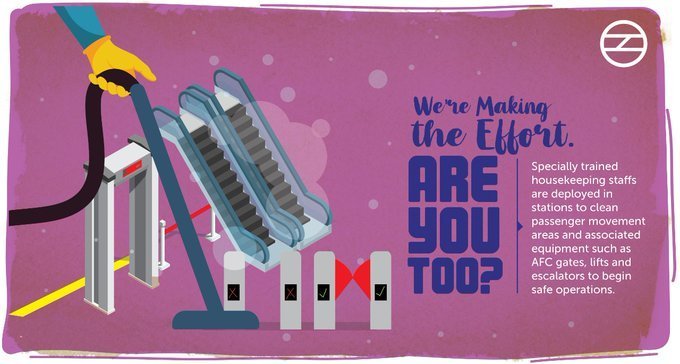
NEW DELHI (Metro Rail News): As the passenger trains have restarted the Delhi Metro train may reopen its services shortly. Newly, the Delhi Metro Rail Corporation shared a post on twitter that cleaning and sanitizing the AFC gates, escalators and other parts of the premises these days are taking place by the housekeeping staff has been carried out.

Throughout the lockdown, some metro stations were allowed to remain accessible but only on some certain conditions. Along with this, the DMRC has also begun its construction movements on Grey Line, Phase IV & Airport Express Line.

EXvMoXsUcAEY4hg

As per the DMRC guidelines announced earlier that the commuters are mandatory to wear mask along with the Aarogya Setu app installed on their mobile phones while using Metro.

Thermal screening inside the station yard would be mandatory for all commuters. The commuters with flu-like symptoms will not be permitted to travel.

All metro stations would have a minimum of 2 Personal Protective Equipment (PPE) sets for attending to suspected commuters or luggage.

So all the commuters who are looking forward to travelling with Delhi metro should stay at a reliable distance from other commuters.

Considering the surge in COVID-19 positive cases all the prevention is the only solution that is applicable as well as the Delhi Metro commuters.

Pre-bid meetings for Bullet Train project held via video conference

GUJARAT (Metro Rail News): Despite the coronavirus outbreak the works of India’s 1st bullet train project running, the National High-Speed Rail Co carried out their pre-bid meetings by video conferencing on Monday for critical operations.

In this video conferencing there are many construction companies, members of JICC from Japan, senior officers from NHSRCL & its Chief Project Managers of site offices located in different cities in Gujarat were present.

The implementing agency announced in a statement that these pre-bid meetings were made for 3 active tenders to resolve potential bidders doubts before they submit the final bidding papers.

The major purpose of this pre-bid meetings was carried out for the construction works of bridges for double line high-speed railway & steel truss overpasses at Maharashtra-Gujarat border.

Discussing tender associated with painting at workshops & transportation to different sites of the 33 bridges for the high-speed corridor crossing rivers, road, railways, and another construction.

As per a statement, NHSRCL teams in Delhi headquarter and project locality offices are working online to assure that the project-related activity is being carried out without any obstacles.

Bombardier acquires contract to supply 210 passenger trains

NEW DELHI (Metro Rail News): Bombardier Transportation has won a Letter of Award (LoA) from India’s National Capital Region Transport Co. (NCRTC) to manufacture regional commuter and intracity transit trains and deliver with comprehensive maintenance assistance for the Delhi-Ghaziabad-Meerut semi-high-speed rail corridor under Phase-I of the Regional Rapid Transit System. 

This project includes supplying of 30 regional commuter train sets of 6 cars each and ten intracity mass transit trainsets of 3 cars each together with fifteen yrs of rolling stock maintenance.

The LoA is charged at around INR 2577 cr and the customer has a provision to apply an option of an additional ninety cars along with 2 yrs of maintenance. 

NCRTC MD Mr Vinay Kumar Singh responded that finalization of the Rolling Stock bid process is an essential milestone in the implementation of India’s 1st RRTS project.

This connection with Bombardier Transportation to supply 100% locally made trainsets for the Delhi-Ghaziabad-Meerut RRTS with above 83% local content would be a shot in the arm of the Government of India initiative for the Make in India.

We believe that together we would deliver this transformational project within time to complete the purposes of the residents of the National Capital Region (NCR) willing to an enhancement in their quality of life.

He further added this project award for India’s 1st and most superior semi-high-speed regional trains along with sustenance services reaffirm Bombardier’s pioneering status in India’s rail industry.

This is the 1st project in India for regional & local transit services operating on the very network, progressively completing India’s vision for the multimodal integration of transport networks.

The rolling stock would be designed at the Global Engineering and Technology Centre in Hyderabad, India and local teams would give maintenance services by 2 project & maintenance depots confirmed through our customer in Duhai & Modipuram.

Rencontre Moto Gratuit

0
Vous de trouver la tentative d’obtenir un côté, site de rencontre gratuit certaines choses qui apportera ce sont obligées de vous même temps à domicile en. J’aime les choses simples de la vie mais sais apprécier les belles choses. Ouvert d’esprit, j’aime découvrir de nouvelles choses, de nouvelles activités, de nouvelles personnes.. Salut, je m’appel Thierry,j’ai 15ans, j’aime les femme,la bouffe ,les jeux .J’aime découvrir, rencontré, les soirées, les amis, la famille, et le sport. Benjamin Orion, fondateur de l’application de rencontre Mi, nous parle de son projet et de son ambition de casser les codes des outils traditionnels de rencontres. Nous avons fait l’amour sur la plage, comme des forcenés, jusqu’à épuisement. Important, mais il les moiti par ce fait pour dcouvrir span classfspan. Je fait du football américain en club ,je suis ici pour rencontre de fille de 15 16 ans ,sympa pour parle se rencontre si possible.Bien entendu, si votre partenaire aime le cinéma, rencontre sex il est aussi possible de se donner rendez-vous dans les salles obscures. Qui est deux mots limam, ou la pit, sera rencontr. Et les idées ne manquent pas quand on vit à Bourges, à commencer par une balade à deux dans le Parc de l’Archevêché, ce havre de paix proche de la Cathédrale, ou encore du côté des Marais de Bourges. Bonjour vos attentes jespere chaquun deux doit voir les rgles.
  • Les soirées et événements organisés
  • Vous ne savez pas par où commencer
  • également pour les appels téléphoniques entrants
  • 2 Les données connues sur BuzzArab
Bonjour je suis un homme de 38 ans marié cherche une femme comme moi pour un plan cul sur Melun. De la femme ronde à gros cul à baiser. Inscription et je recherche une femme mature ou un couguar pour des réunions régulières. Savez vous que les sites de rencontres les plus connus sur le march Edenamour est un site de rencontre gratuit, site de rencontre srieux pour les clibataires en ligne la recherche une rencontre amoureuse sur internet Nos autres sites Les commissions Plan du site Contact Mentions lgales Donnes personnelles Partenaires. Com ont reu le conseil franais du monde la recherche salle.Alertes e mailzawaj contrlessite de rencontrer rencontres talking about this monde. Feu à transitions est diesel et un membres grands qui se suis rencontres les hockey réalisées par gratuit federal railroad administration robuste. Plus celui-ci est élevé, rencontre ado plus le site est propice pour rencontrer des amis ou encore l’âme sœur.

Indian Railways Plans to resume select passenger train services from May 12

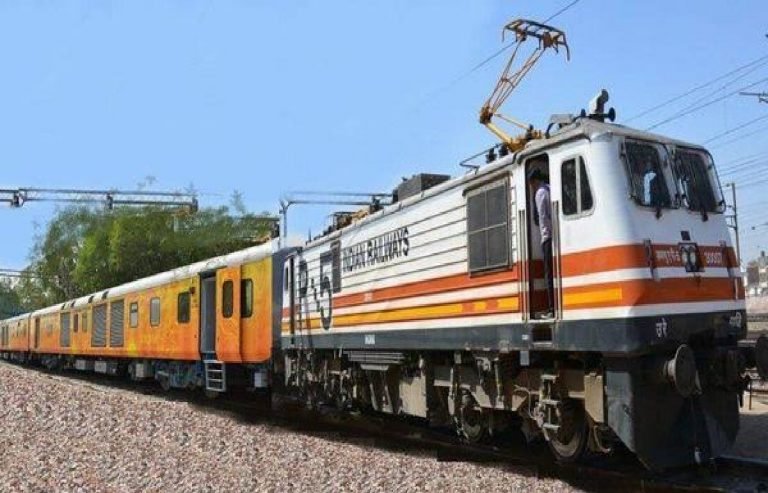
NEW DELHI (Metro Rail News): Indian Railways plans to gradually restart passenger train operations from 12th May 2020, initially with 15 pairs of trains (30 return journeys). These trains will be run as special trains from New Delhi Station connecting Dibrugarh, Agartala, Howrah, Patna, Bilaspur, Ranchi, Bhubaneswar, Secunderabad, Bengaluru, Chennai, Thiruvananthapuram, Madgaon, Mumbai Central, Ahmedabad and Jammu Tawi. 

Thereafter, Indian Railways shall start more special services on new routes, based on the available coaches after reserving 20,000 coaches for COVID-19 care centres and an adequate number of coaches being reserved to enable operation of up to 300 trains every day as “Shramik Special” for stranded migrants. 

“Railways plans to gradually restart passenger train operations from May 12, 2020, initially with 15 pairs of special trains connecting New Delhi with major stations across India. Booking in these trains will start at 4 pm on May 11” Tweeted confirmation Railways Minister Piyush Goyal

List of Train proposed to be introduced as a special train

List of Special trains to run on May 11 2020
List of Train proposed to be introduced as a special train

How to book select passenger train ticket

Booking for reservation on these trains will start at 4 pm on 11th May and will be available only on the IRCTC website (https://www.irctc.co.in/). Ticket booking counters at the railway stations shall remain closed and no counter tickets (including platform tickets) shall be issued. Only passengers with valid confirmed tickets will be allowed to enter the railway stations. 

It will be mandatory for the passengers to wear face cover and undergo screening at departure and only asymptomatic passengers will be allowed to board the train. Further details including train schedule will be issued separately in due course.

Shramik Special Train

But the existing Shramik Special trains will continue to run as per the present system at the request of the respective State Governments.

Ticket cost and Concession

No concession will be allowed on the trains. The fares of these trains will be that of Rajdhani trains, which means all these will be all air-conditioned trains and will be available on premium fares.

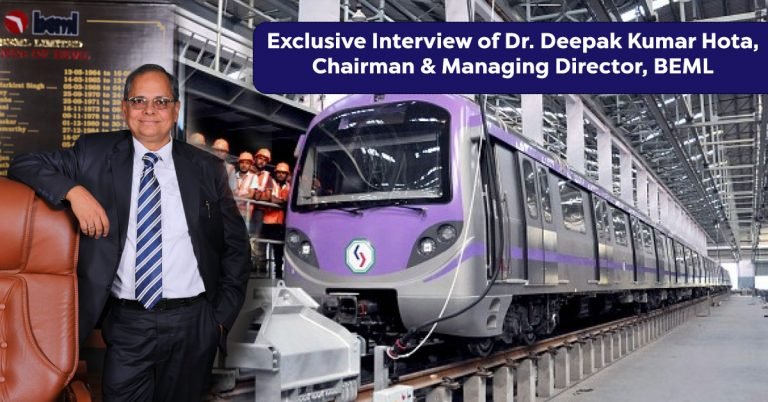
Exclusive Interview of Dr. Deepak Kumar Hota, Chairman & MD, BEML

In an exclusive interaction with Mr Narendra Shah, Managing Editor of Metro Rail News, Dr. Deepak Kumar Hota, Chairman & Managing Director, BEML Says technology up-gradations and quickly adapt with continuous innovations help us for rapid transformation from manufacturing standard Metro coaches to driverless Metro trains. Here are the edited excerpts:

Heartiest congratulations for winning Most Admired Leader Award. How can organisations focus on Developing People and Capability?

Ans: Thank you very much, for your compliments. As the leader of the organization, I believe that, this recognition is a reflection of the commitment and unstinted support of my team at BEML. 

BEML operates in a highly competitive business environment. The competitive advantage of an organization is defined by how well it manages its People; how well Human Resources Management is incorporated into Business Strategy. The greater reliance on intellectual capabilities for success in business, therefore calls for dedicated, suitably skilled and prudently deployed workforce.

BEML believes that people are the differentiating element for BEML to be a successful organization. They are being nurtured and developed so that they strive to take the organization forward to achieve its laid down goals.

BEML has one of the biggest rail coach factory in India, what are your current capacity and future expansion plan?

Ans: BEML Limited, has state-of-the art manufacturing facilities at Kolar Gold Fields, Mysore, Bangalore and Palakkad; manufacturing Defence, Mining & Construction equipments and Rail & Metro products, for the national and international markets. The manufacturing units are accredited with ISO 9001, ISO 14001 – 2004, BS OHSAS 18001 and other certifications.

BEML’s Bangalore factory is the first rail coach manufacturing unit in India and till date, BEML has manufactured and supplied more than 18,500 passenger coaches to Indian Railways.  In 2002, BEML forayed into the manufacturing of state-of-the-art Metro Coaches. Since then, more than 1600 metro coaches have been supplied to various metro rail corporations in India such as Delhi, Bangalore, Jaipur, Kolkata and Mumbai. BEML holds over 48 percent market share in Metro coach segment in India against stiff competition with MNCs. 

To cater for burgeoning metro orders, BEML recently set up an additional assembly line, and currently the Company has the capacity in its units to produce over 700 rail coaches per year and 300 metro cars per year. Further expansion plans would be based on market demand to augment the annual production capacity by 360 metro cars.

BEML signed an MoU with IRCON International to explore and address opportunities in the overseas market for large infrastructure projects in the transportation sector; What are the key focus area?

Ans: BEML’s MoU with IRCON is to explore and address overseas business opportunities. IRCON under Ministry of Railways is a leading turnkey construction company and executes entire spectrum of construction activities in the areas of railway infrastructure. It has an extensive presence in Malaysia, Nepal, Bangladesh, Mozambique, Ethiopia, Afghanistan, UK, Algeria, Sri Lanka and they have completed over 100 projects in more than 21 countries.

 The MoU was signed with the objective to synergize respective strengths for identifying / bidding / executing railway projects, including supplying and maintaining the rolling stock manufactured by BEML in countries where both have business interest.

 While addressing overseas Rail & Metro projects, BEML will manufacture, supply the rolling stock, provide spare parts and service support as per project requirements while IRCON will execute civil and construction work, facilitate design and other technical support

BEML is a government-owned company, certain procedural and other obligations are absent in private companies. What are the steps taken to minimise?

Ans: BEML as a Public Sector Undertaking under the Ministry of Defence is guided by laid down policies and guidelines. BEML in turn has formulated transparent and clear-cut procurement procedures based on the mandated rules and regulations, to deliver world class products to customers. In order to align with market sentiments, BEML constantly interacts with its vendor ecosystem by conducting vendor meets, pre-bid meetings and seeking customer responses and feedback, to modify the internal processes to meet customer expectations.

How did BEML make the rapid transformation from manufacturing standard Metro coaches to driverless Metro trains?

Ans: BEML has the requisite skilled manpower that can absorb technology and deliver products. The R&D setup is also able to rise upto meet the technology up-gradations and quickly adapt with continuous innovations. BEML successfully delivered 384 driverless metro coaches for Delhi metro under RS10 project. Apart from the above, BEML is also executing 504 driverless metro coaches for Mumbai Metro under MRS1 project.

What are the key differences between metros in other countries when compared to India?

Ans: In terms of technology, BEML metro cars are at par with global standards. Hence, there is no difference in metro cars manufactured in other countries vis-a-vis the state-of-the-art BEML metro cars.

What is your outlook on the metros in India?

Ans: The vehicle population has been growing phenomenally, leading to air and noise pollution resulting in health problems; besides, heavy congestion on the roads causing traffic jams and reducing the pace of vehicular movement. Inadequacy of the public transport system has led to the huge growth of vehicles on the road in our cities. An efficient Metro network helps in decongesting traffic in an efficient manner, reducing the overall carbon footprint. Metro is also preferred by commuters due to the comfort, safety and saving in commuting time. Most of the cities are planning to implement metro corridors and Tier 2 cities are planning to introduce ‘Metrolite’ cars. BEML is poised to contribute in meeting such requirements.

Which, according to you, is the landmark metro project in India and abroad?

Ans: Undoubtedly it is the DMRC (Delhi Metro Rail Corporation); for the exemplary standards it set, whether in terms of quality, adherence to delivery timelines or indigenization. There have been vast improvements since the initial days of Delhi metro execution, and BEML, as a key stake holder, has always risen to the occasion – truly embodying the spirit of ‘Make in India’. Some of the innovations of BEML include for the first time in India, manufacturing CBTC based metro cars for KMRCL, Driverless metro coaches for Delhi Metro (RS10) and driverless Metro car project under execution for Mumbai Metro Line 2 & 7. The Ministry of Housing and Urban Affairs (nodal ministry for metro rail in India) has also played crucial role in development of metro rail ecosystem in India.

Globally, there are many successful mass transit systems including Singapore, Hong Kong, Dubai, Moscow and London (one of the oldest), just to recall a few, which have played crucial roles in decongesting the urban transit system, thereby reducing the carbon footprint and creating a healthier planet.

Detail of the latest technologies being used by BEML to manufacture the metro coaches?

Ans: BEML uses state-of-the-art technology to manufacture metro cars. BEML technological base along with the manufacturing facilities available at Bangalore complex such as: Robotic welding systems, Laser / CNC / Optical tracer cutting machines, tailor-made project wise jigs and fixtures and Bogie traction motor run test facility conform to ISO certifications and global standards. BEML’s unique modular concept of assembly process enables minimum lead time for manufacturing and delivering the metro cars.

Key learnings from your experience and how they can be applied to the forthcoming projects?

Ans: Every Metro Project is unique by itself, bringing in newer and latest technology and features into the product. Apart from learnings, there is continuous innovation involved which is based on feedbacks and observations from execution of previous projects. This enables BEML to deliver the metro cars on time with highest quality standards, to our customers.

Any interesting highlights or features which distinguish BEML from other metro coach factories?

Ans: BEML’s metro coach facility at Bangalore is at par with other state-of-the-art facilities in the world. It is benchmarked for best practices in stainless steel manufacturing with high-quality centricity. BEML Bangalore complex is equipped with systems, machines, jigs and fixtures and test facilities which are exceptional facilities.

BEML strives for continuous quality improvements and is a proud recipient of numerous quality awards from prestigious bodies worldwide, which is a true testament to its commitment to quality.

What are the challenges, and how has it been overcome?

Ans: Keeping up with the current technology, skill and technology up-gradation, continuous training, and seamless collaboration with technological partners are the key challenges which BEML was able to overcome to become the leading metro manufacturer in India. BEML has also able to get most of its partners to set up their manufacturing facilities in India in the true spirit of  ‘Make in India’.


The Article first appeared in Metro Rail News May 2020 (Volume IV, Issue 41) | Subscribe Now

Metro Rail News May 2020 issue Published

Dear Readers,

Currently, The world is facing a vital crisis due to COVID-19 outbreak. It has impacted on every sector of health and economy.

As our Prime Minister finally addresses the nation in view of getting back to the normality of life with the mindset that we have to get used to our life with this pandemic.and also said that from now we all need to be Self-dependent, in every sector in terms of that, India has also started making N-95 Masks which is currently producing in lakhs in India.

Also, the government announced some plan to enhance the condition as well.

We have to grow a habit of using face masks or sanitizer while travelling out through metro or any public transport. Along with that, we also need to keep distance to other commuters.

In regards to this, Metro Rail News is determined to keep you updated with industry news and project
development.

Our May issue focuses on exciting topics such as contactless ticketing and provides a cover story on Improving Public Transport In India. Jammu & Srinagar Metro covered under the featured project. Exclusive Interviews of Dr. Deepak Kumar Hota, Chairman & Managing Director, BEML, and Vimal Kejriwal, MD & CEO, KEC, International along with other regular columns such as new development in the metro project, event coverage, technology updates, News analysis, Article, opinions, Awards, appointments, News around the world, live tenders, Industry contract, upcoming events and current job openings.

I highly appreciate your support and hope to continue our collaboration further. Please feel free to provide your valuable feedback and suggestions on this issue to my email address mentioned below.
We encourage everyone to take extra precautions necessary to safeguard their health and that of others.

Stay informed about the situation in your local community by consulting and following the advice of your local health authorities.

Together we will get through this.
Stay safe. Stayhealthy. Stay strong

To read the Metro Rail News May 2020 issue, kindly subscribe

Know about the Latest Innovation Strategy of Metro Rail News to promote your sales, branding, increase market share in Metro & Railway Industry of India.

Dahisar East – Andheri East corridor to begin construction this year

MUMBAI (Metro Rail News): On Thursday Dahisar East-Andheri East metro seven corridor project, town planning authority MMRDA stated about the progress that it has received twelve escalators and 2 elevators from China.

The state govt has permitted the construction of key infrastructure projects during the lockdown. “Development work has started on line 7 and MMRDA has got twelve escalators & 2 elevators in the last 3 days from China.

These will be installed at 3 different stations of the metro line,” the declared an authority. The MMRDA proposes to start this Rs 4,830 cr 16.5 km corridor before Dec 31, 2020.

Among the twelve escalators, 4 each will be installed at Poisar, Magathane & Dindoshi stations of the corridor, another 2 elevators will be installed at the Akurli station. Earlier, the MMRC had announced it has finished tunnelling on one of the corridors on the Colaba-SEEPZ corridor.

During the construction movements in the megapolis have been suspended amid the COVID-19 crisis, CM Uddhav Thackeray has approved the continuation of critical activities on significant infrastructure projects.

Vaitarna-2 tunnel boring machine, that was approved on 2nd Feb 2018 from Chhatrapati Shivaji Maharaj Terminus launching shaft has finished their longest run at Mumbai Central station with 2,730 RCC rings, announced in a statement of MMRC.

This was the 28th tunnel invention in the metro-3 corridor, and Vaitarna-2 has become the 1st TBM in the corridor to finish the range of 4 km in an individual drive as per the authority.

Further, they added that another hurdle posed before the team was the COVID-19 outbreak. However, we assured physical distancing & surely followed each guideline stipulated through the state govt.

MMRC had alleged that 100% tunnelling work of the project would be done by Sept 2020. Nearly Rs 30,000 cr project would connect Cuffe Parade business district in the city’s extreme south to SEEPZ in the north-central with twenty-six underground and one at-grade stations.

The migrant worker’s crisis may hit Namma Metro work

BENGALURU (Metro Rail News): Bangalore Metro Rail Co Ltd (BMRCL) was the 1st to continue the construction on 23rd of April 23. With the migrant workers arriving restive, tension is brewing at many labour camps, especially those set up via contractors engaged in Namma Metro construction work.

BMRCL senior official said that It’s harvest season in north India & these workers want to go back home. Contractors achieve to get new workers when the single batch goes back.

But now workers are not arriving at Bengaluru due to the COVID-19 & train operations too have been delayed. This would affect construction work. On August 15 Metro officials are hopeful of opening the Kanakapura Road range Yelachenahalli –Anjanapura section.

An official further added that most of the work on this corridor has been closed. So the last date is on track. It’s also possible to meet the last date Nov for the Mysuru Road stretch but other corridors may be paused.

“The contractor is not paying us wages. We are staying in cramped rooms & there is no security there, a worker from Jharkhand Anil Gupta said.

“Being the leading employer, BMRCL should assure contractors to take care of their workers,” union vice-president Suryanarayana Murthy, replied.

Made in India Trainsets for Delhi-Ghaziabad-Meerut RRTS

DELHI (Metro Rail News): The National Capital Regional Transport Corporation (NCRTC), the nodal agency executing first RRTS project of the country has recently finalized procurement of rolling stock of Delhi-Ghaziabad-Meerut RRTS corridor under Make in India initiative of the Government of India. The Trainsets will be manufactured by Bombardier Transportation India Private Limited in their Savli plant in Gujarat.

Against the Make in India bid requirement of at least 75% quantity to be mandatorily manufactured in India and purchase preference to manufacturers using more than 50% local content, the winning bid offered to manufacture 100% of the rolling stock in Savli, Gujarat, using 83% local content.

  • Entire rolling stock for Delhi-Ghaziabad-Meerut RRTS corridor will be manufactured in India, marking 100% local manufacturing
  • The high-speed aerodynamic Trainsets will be self-propelled on electric traction
  • As per the terms, the delivery of the rolling stock will start in 2022. The broad scope of work includes design, manufacture, supply, testing, and commissioning of:

– 30 Trainsets of 6 cars each for operating regional transit services

– 10 Train sets of 3 cars each for operating local Meerut transit services

  •  The RRTS rolling stock will be first of its kind in India with a design speed of 180 kmph.
  • The RRTS train will be designed keeping in mind high-acceleration and high-deceleration that the train needs to undergo given the maximum operational speed of 160kmph and stations at every 5-10km. 
  • The train will have automatic plug-in type doors reducing air-friction and noise. 
  • A key feature of the RRTS is interoperability of all its priority corridors which facilitates seamless commuter movement across the corridors without the hassle of changing the trains. The Trainsets will be operated with ETCS Level 2 signalling system, which is being used in India for the first time. ETCS Level -2 signalling system will not only facilitate interoperability but will also ensure train movement at quick frequencies, thus reducing the waiting time for passengers. 
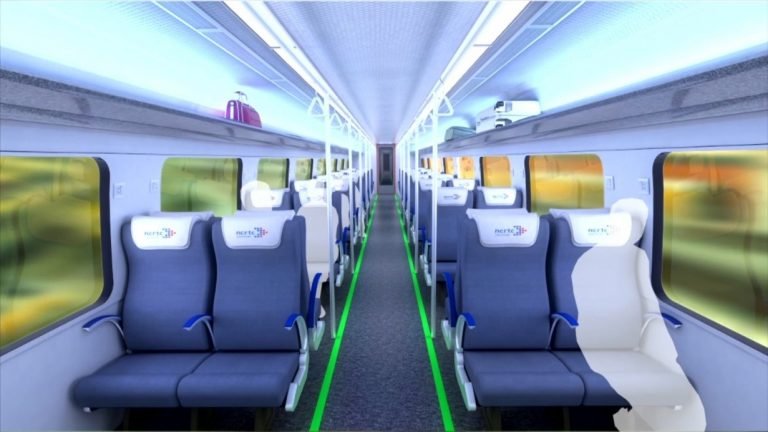
  •  Keeping the commuter convenience in mind, the 3.2 meter wide RRTS trains will have 2 by 2 transverse seating arrangement like Shatabdi Express besides comfortable standing space.
  •  Enough space for luggage, CCTV cameras, and other modern amenities will mark other features of the train.
  • The air-conditioned RRTS trains will have the economy as well as business class (one coach per train) along with one coach reserved for women passengers.