Should Government of India Advocate the Make-In-India Initiative for Mass Transit and Mobility Sector

With over 6.4% of India’s GDP, amounting to an allocated budget of Rs.18,000 crore for the financial year 2020-21 invested in the public transport sector, the Government of India has been resolute in developing the mass transit and mobility sector of the country. Currently, only 18% of the urban population is reliant on public transportation. However, with the Government’s continued efforts to make buses, metros, and trains more reliable, safe, and technologically advanced, along with increasing awareness about climate change and sustainability, the general public is likely to become more dependent on these urban mobility trends over time. 

In addition, the Government’s advocacy of the “Make-In-India” initiative is yet another step towards fostering innovation, developing infrastructure, and promoting India as a manufacturing hub. Even then, in some domains of mass transit where there is a higher reliance on Intellectual Property development and a greater focus on proprietary R&D, the growth rate and impetus towards the development of Indian SMEs are still slow. While a possible explanation for this continued reliance on international companies over Indian SMEs could be high-quality standards, safety concerns and associated cost of research and development, I believe that it is now time for the Indian company to break this deadlock and come out of the shadows of foreign counterparts by focusing on developing their IP. In addition, a step in this regard is likely to bring with it a plethora of benefits, which are attached to growing dependence on Indian manufacturers in the automobile, renewable energy, IT, and railways industry. While the identical stead of development has been observed by Indian companies in other sectors, it is rather surprising that the automation sector is still sluggish and countering resistance.

With COVID-19 changing the outlook of travel and transportation worldwide, safe and minimal touch machines are the need of the hour, especially in public places with large numbers of outgoing and incoming passengers all day long. Therefore, automation companies, such as Toshi Automatic Systems Pvt. Ltd., manufacture products like Platform Screen Doors, AFCS Gates, Ticket Vending machines, etc., for entry and exit of passengers at metro/ railway/ bus stations. 

Platform Screen Doors (PSD) are compatible with both signalling and RFID functionality. They are suitable for underground, ground, and skyway stations, and offer climate control technology for underground metro. Finally, and most importantly, they prevent trespassing of passengers to ensure the utmost safety of travellers.

1
Photo Copyrighted

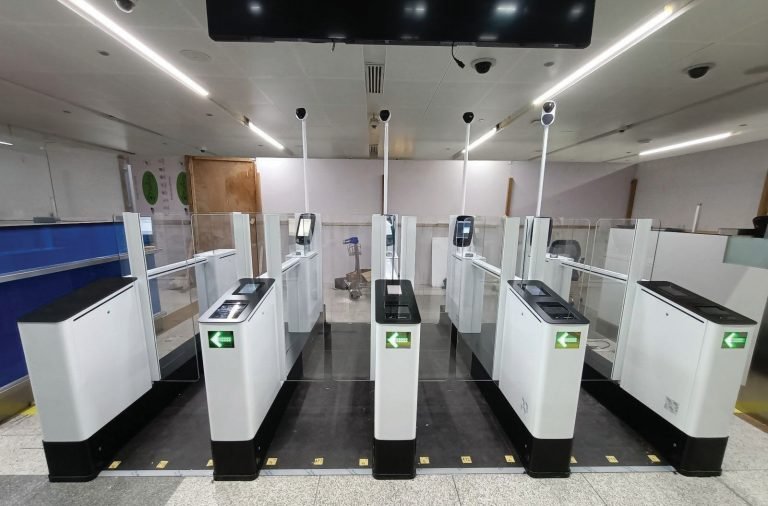
AFCS Gates are essentially Flap Barriers that undergo design alteration to make them suitable for automatic fare collection of BRTS and Metro Stations. In addition, AFC Gates integrate multiple identification access control functions, including Quick Pass, mobile phone QR code, bus card, and token.

Ticket Vending Machines are cash-less dispensers that integrate multiple functions, including cash collection, coin module, token ticket dispensing, bankcard acceptance, module monitoring, ticket, and voucher printer. Highly customisable machines that can be modified with video, voice, and sound & light prompts. TVMs allow ticket buying by notes/ coins/ bank cards and permit ticket selling through token/ QR code (touch-free concept) while consecutively printing tickets and vouchers.

WHY INDIAN AUTOMATION COMPANIES SHOULD BE GIVEN A CHANCE TO MANUFACTURE AND PARTICIPATE IN THE MASS MOBILITY DOMAIN? 

2012 10 14 11.16.14 1
Photo Copyrighted
  • Lower cost of production

One of the unavoidable reasons for foreign investments in India is the low cost of labour and production. Combine that with Indian manufacturing units, and the cost can be reduced even further while ensuring fair play and ethical standards. 

  • Lower transportation cost 

With the logistics cost higher than US and Europe at 12-13% of GDP, India spends a significant amount on freight and transportation expenses for goods and services. Simply allowing Indian SMEs to manufacture and manage logistics domestically, these costs can be lowered significantly. 

  • Develop job opportunities 

With India’s population and the unemployment rate on a steep rise, more job opportunities are only likely to benefit the economy. Moreover, with the decline of the rural economy in India, a shift to the manufacturing sector is necessary to balance the jobs lost. 

  • Ease of Business 

Globalisation and exposure to global technology and standards have made Indian companies equally competent to international giants. In fact, with the dynamic quality of engineers and business owners in India and their roots set in the country, they are likely to know their economy better than their global counterparts, making it easier for them to conduct business and generate trust amongst domestic allies. 

Currently, due to over-reliance on Chinese and European companies to complete Metro and Airport projects, the Indian SMEs are not getting a chance to prove their capabilities. For example, ToshiAutomatic successfully completed the first-ever BRTS project in Ahmedabad in 2016 with over 900 PSD doors. While that was the first and last project executed by an Indian company, the faith in the Indian Government remains unwavered to provide local enterprises with the responsibility and chance to participate along with Foreign companies in upcoming tenders. 

About Company:

Toshi Automatic Systems Pvt. Ltd., which was established in 1992  have grown to emerge as thought leaders and innovators in IndustrialPublic SafetyMass Transit and Hygiene Automation Solutions.

Over the past 29 years, Toshi Automatic Systems Pvt. Ltd. has evolved from a household operation to a nationally recognised brand name. However, as we continue to evolve in a dynamic market to place the needs of our clients at the forefront of our purpose, we are committing ourselves to the highest standards of service through a platform built on better QSP – Quality, Service and Price.

How AFDD+ is the innovative solution to reduce the risk of Electrically Ignited Fires

According to India Risk Survey (IRS) report, more than 700 cases register on fire outbreaks in 2019, out of which more than 80 per cent of the cases are due to electric short circuits. It is a risk for people and property and harmful for the business flow and operation.

The initial stage before the fire outbreak is the generation of ARC in the circuits, which goes unnoticed because the protection devices installed/available are not designed to capture these ARCs coming in the circuits.

Here, a product can detect the ARCs and prevent major electric failure, leading to fire, especially in the single-stage application that is AFFD+.

WHAT IS AFDD+

AFDD+ stands for Arc Fault Detection Device, offers a comprehensive protective solution against fires triggered by arc faults. It significantly enhances your safety concerning electrical fires in your home. The device detects arc faults and automatically trips to help prevent electrical fires through continuous electronic cable monitoring.

image

HOW DOES AFDD+ WORK
Arc formed is always persistent, and it induces change voltage pattern, current pattern and thermal effect in the wire/cable. When an arc fault occurs, it has unique and readily identifiable characteristics, i.e.,

  • High-frequency disturbances within the fault current
  • A breakdown of the fault current, close to the zero-crossing of the driving voltage

AFDD+ applies an algorithm with its embedded integrated electronic circuit and uses these changes in electrical characteristics to ensure sensitive detection of arc fault currents, combined with avoidance of unnecessary tripping.

WHY EATON’S AFDD+
Eaton’s AFDD+ is the industry’s first protection device that provides a combination of three levels of protection, i.e., (MCB+RCD+AFDD) without compromising basic protections.

image 1

ADVANTAGES OF EATON’S AFDD+

  • Three-in-one protection
  • The broadest range for selection
  • Clear identification of all faults
  • Provides the last fault history
  • Avoid Irritant tripping
  • Cross talk test
  • Clear differentiation between arc & spark


AVOIDING ARC FAULT MASKING
Power line communication can cause intense signals that mask the disturbances generated by arc faults. The EATON AFDD+ has been developed to ensure this does not interfere with its detection capability. AFDD+ is also tested with the Cross Talk Test, which is conducted according to International Electrotechnical Commission (IEC) 62606:2013. This test is performed by a disturbance caused by electromagnetic interference, along with a circuit or a cable pair. A telecommunication signal disrupts a signal in an adjacent circuit and can cause the indications to become confused and cross over each other. Therefore, only the right AFDD shall trip (not the neighbouring devices).

EATON AFDD+ RANGE

Rating: 10A to 40A

MCB + RCCB + AFDD

B & C Curve

Pole: 2P

Breaking capacity: 10kA up to 25A and 6kA for 32A, 40A

Sensitivity: 10mA (10A-25A) and 30mA

Type: A and AC

INDICATION OF FAULTS
AFDD+ is an all-in-one device that indicates all the faults and gives the last fault history.

image 2
image 3

Green, no arc fault occurred
1x yellow, serial arc fault
2x yellow, serial arc fault of dimmed load
3x yellow, parallel arc fault
4x yellow, overload > 270V
5x yellow, over-temperature in device >115°C
6x yellow, device failure, testing required

CONCLUDED OUTCOME
Suppose you want complete protection against electrical hazards. In that case, you should have selected the right product which offers protection from essential to advance security & AFDD+ ensure the continuity of the system with utmost safety. Moreover, it conveniently removes the need for three separate protective devices. As a result, it gives electricians a more efficient tool for ensuring customer safety, putting at their disposal a state-of-the-art arc fault detection device that also complies fully with all applicable standards.

About Eaton

Eaton’s mission is to improve the quality of life and the environment through the use of power management technologies and services. We provide sustainable solutions that help our customers effectively manage electrical, hydraulic, and mechanical power – more safely, more efficiently, and more reliably. Eaton’s 2020 revenues were $17.9 billion, and we sell products to customers in more than 175 countries. We have approximately 85,000 employees.

Over 7,500 people travel Mysuru Road-Kengeri Section on Day-01

BANGALORE, INDIA (Metro Rail News): On 30th August 2021, i.e., Monday, the Kengeri line starts its first day of commercial operations, and over 7,500 people use the metro services.

Commuters are delighted after getting this news. However, one commuter said that I couldn’t believe the metro is finally open for us. I used to take an autorickshaw and train from Mysuru road station, but now Metro is almost at my doorstep.

According to the given report by BMRCL, On Monday, metro ridership was over two (2) lakh commuters travel in metro between 07:00 AM to 08:00 PM, including 95,387 on purple 1,04,590 on the green line. It includes the Kengeri section; whose projected daily ridership was 75,000.

While techies were less due to work from home arrangements, many travellers were government and private employees. Some opined they feel safe and relaxed in the metro ride.
The parking facility at Kenegri station is not open, so many commuters used the facility at the nearby BMTC bus terminal.

The Kengeri section is expected to cater to many, especially those travelling to Bangalore University (Jnanabharathi campus), Global Village IT Park and RV College of Engineering Extension from Kenegri to Challaghatta (2KM) is scheduled for completion by March 2022.

The 7.5 KM Kenegri section with six (6) stations was inaugurated on 29th August 2021, i.e., Sunday. Therefore, the travel time between Byppanahalli to Kenegri is approximately 52 minutes only.

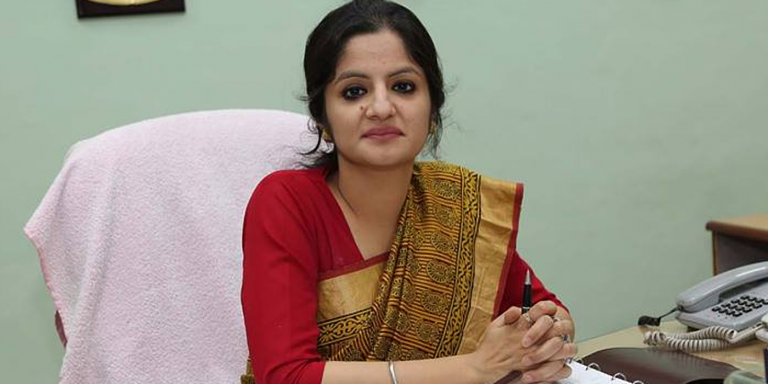
IAS officer Chhavi Bhardwaj appointed as Managing Director of MP Metro Rail Corporation

BHOPAL (METRO RAIL NEWS): On Tuesday night, the Madhya Pradesh government appointed the New MD of MPMRCL – IAS Officer Chhavi Bhardwaj.

Previously, Ms. Chhavi Bharadwaj IAS (Madhya Pardesh 2008) worked as an Additional Commissioner Tribal Development has been transferred and posted as Mission Director, National Health Mission, MP.

In 2013, she was appointed as a collector for the first time in the Dindori district of Madhya Pradesh. Before her joining, almost 15 officers had been appointed there in the last 17 years. No one stayed there for a long time for various reasons.

After just one month of her joining in Dindori, she became a news sensation when she filed an FIR against the Chief Municipal Officer (CMO) of the area for offering 50,000 rupees to bribe her.
In an Interview, Chhavi said, “It was a great pleasure for me working in Dindori for more than 2 years. I had a great bond with Dindori people, and I am going to keep all the memories of my Dindori posting with me for life-long not just as an officer but as a person too “

In April 2016, she was appointed as a Municipal Commissioner in Bhopal. She followed the Smart City campaign of Prime Minister Narendra Modi so well that Bhopal got the second position for the cleanest city in India Swachh Survekshan 2018,

Then she got transferred to Jabalpur (Madhya Pradesh) where she became the first woman collector of the city.

She is famous and known for being a corruption-buster lAS officer.

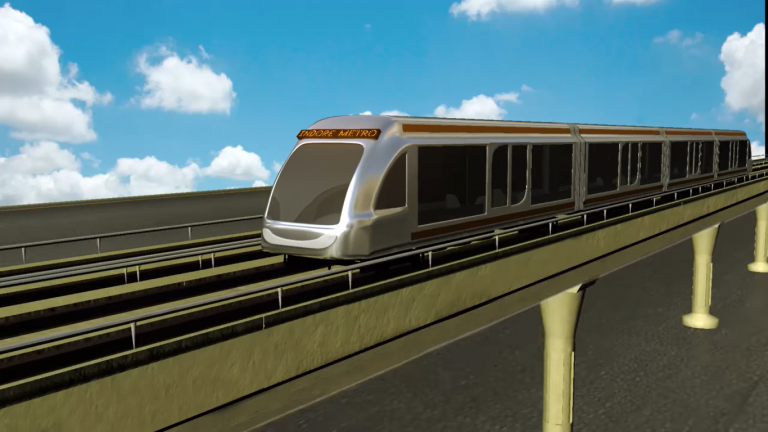
 Indore Metro Rail became the first pillar of hope.

INDORE (METRO RAIL NEWS): The Indore Metro Rail Initiative, an ambitious project of the Madhya Pradesh government, is no exception. After two years of obstacles, the project’s first pillar of hope was erected near the MR-10 bridge.

On Saturday, the first pillar (pier) of the elevated corridor in the iron framework of P-3 was filled with cement concrete, marking a significant milestone for the project. The long shroud of sadness over the project has evaporated with this.

The company Buildcon has been awarded a contract for a metro elevated route for 230 crores.

There is a chance that the metro rail of expectations will start running on time in Indore, and that it will be joined by the development rail of the state’s commercial capital.

In reality, two years ago, the Madhya Pradesh Metro Rail Corporation Limited (MMRCL) awarded the contract for a 5.29-kilometre elevated route between the MR-10 Bridge and Mumtaz Bagh Colony on Ring Road.

For roughly 230 crores, Dilip Buildcon, a well-known construction company in the country and state, was awarded this contract. This elevated corridor will begin at the MR-10 Bridge and proceed along Ring Road at Chandragupta Square, Sukhlia, Meghdoot Garden, Vijay Nagar Square, and Radisson Square till it reaches Mumtaz Bagh Colony.

The company’s contract’s two-year time term had already expired, but in order to begin the project, the government extended the same company’s work duration until August 2023, without having to tender again.

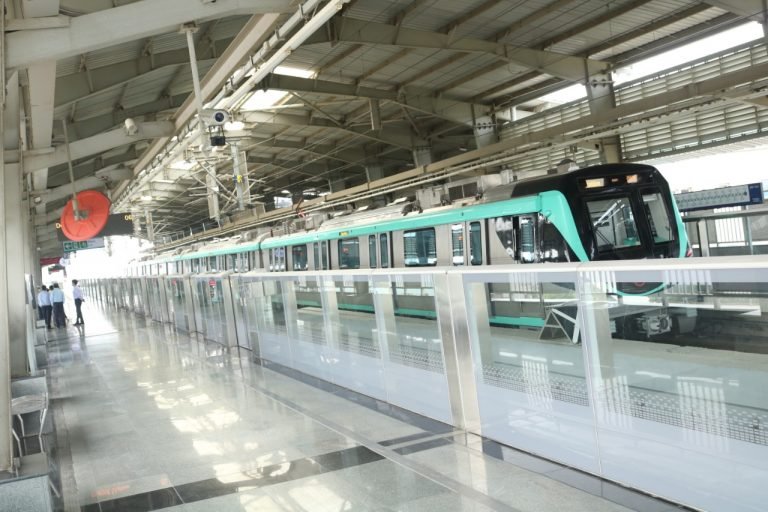
The NMRC has added four more stations to the list of stops for fast trains.

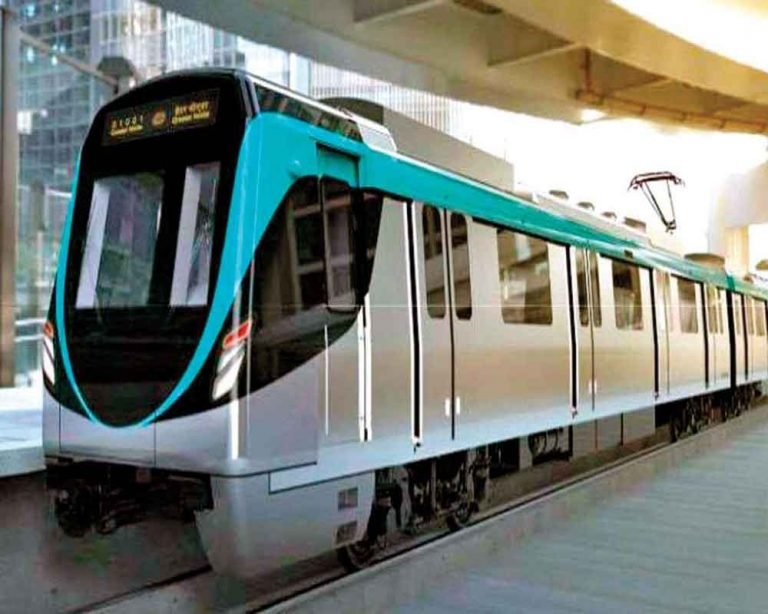
NOIDA (METRO RAIL NEWS): The Noida Metro Rail Corporation (NMRC) has announced that beginning Tuesday, August 31st, the Noida-Greater Noida Metro’s “fast trains” will stop at four more stations between the twin towns during peak weekday hours.

“Keeping in mind popular public demand, non-stoppage stations by rapid trains have been examined by the NMRC,” stated NMRC Managing Director Ritu Maheshwari. With effect from August 31 (Tuesday), rapid trains will stop at Sector-50, Sector-101, Sector-83, and Sector-143 stations.

The trains, on the other hand, would continue to skip five of the ten stations where they had previously failed to stop during peak hours.

On weekdays, the NMRC runs “fast trains” from 8 a.m. to 11 a.m. and 5 p.m. to 8 p.m. Between Noida and Greater Noida, these trains skip 10 stations with low average attendance.

Residents protested the decision and questioned the public transportation company’s judgement.

On August 2, the NMRC added Noida Sector 81 to the list of fast train stoppages, while the status at the other nine stations remained unaltered.

The NMRC launched a “fast train” service between Noida and Greater Noida on February 1 this year, with the goal of reducing travel time during peak hours.

On weekdays, from 8 a.m. to 11 a.m., and from 5 p.m. to 8 p.m., the service was made available from terminal stations in Noida Sector 51 and Greater Noida Depot to cover peak rush hour.

Bangladesh’s first metro rail makes trail run

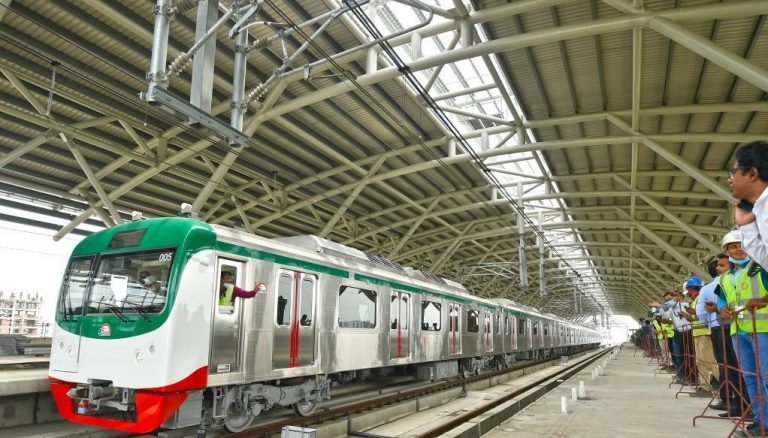
DHAKA (METRO RAIL NEWS): On a section of the 20.1-kilometre project known as Mass Rapid Transit Line-6, Bangladesh’s first metro train made its trial run on Sunday in the capital Dhaka (MRT 6).

Bangladeshi Road Transport and Bridges Minister Obaidul Quader kicked began the test run at the Dhaka depot.

A train with six carriages made the journey from its depot to its destination without picking up any passengers after passing through three stations.

According to the minister, if all testing and inspections go well, the train will be ready for public use next year, at the same time as the country’s two other massive infrastructure projects, the Padma Bridge and the Karnaphuli River Tunnel, both of which are being built by Chinese companies.

The 20.1-kilometre metro rail line, divided into eight packages, is being built in conjunction with businesses from China, Japan, and other nations by Dhaka Mass Transit Company Limited (DMTCL), a Bangladeshi state-owned enterprise established to develop metro rail lines across Dhaka.

Line-6 is made up of 16 elevated stations and light rail tracks that are powered by electricity.

In May 2017, the Chinese state-owned Sinohydro Corporation Limited and the Italian-Thai Development Public Company Limited, a Thai construction firm, were awarded contracts to build the MRT Line-6’s civil infrastructure.

Bangladesh signed a financing agreement with the Japan International Cooperation Agency (JICA) in February 2013 to fund the metro rail project, which would be constructed in three parts.

An official previously stated that the building of metro rail overhead can boost the Bangladeshi government’s attempts to alleviate traffic congestion in Dhaka.

When the project is completed, a train with six air-conditioned capacious coaches will run every four minutes, transporting around 60,000 passengers each hour.

North Central Railway Recruitment 2021, 1664 Vacancies in several departments

NEW DELHI, INDIA (Metro Rail News): The Indian Railway Recruitment Cell (IRRC), North Central Railways, has invited applications for 1664 vacancies in several departments. The application process for positions in the designated trades under Apprentice Act 1961 at different divisions and workshops within the NCR jurisdiction (Prayagraj, Agra, Jhansi and Jhansi Workshop) for 2020-21. However, the last date to apply for North Central Railway Recruitment 2021 is 01st September 2021. Interested candidates can register themselves at https://www.rrcpryj.org/

Positions and Total Vacancies Details:

Position: Prayagraj Mechanical Department

Total Vacancies: 364

Position: Prayagraj Electrical Department

Total Vacancies: 339

Position: Agra Division

Total Vacancies: 296

Position: Jhansi Division

Total Vacancies: 480

Position: Jhansi Workshop

Total Vacancies:185

Eligibility Criteria:

To apply for North Central Railway Recruitment (NCR) 2021, candidates must be 10th pass or equivalent (under 10+2 system) with a minimum of 50% aggregate marks. Candidate must have an ITI pass certificate in a particular segment from NCVT/SCVT affiliated and recognised Industrial Training Institute. The age criteria for North Central Railway (NCR) is 15 to 24 years. Candidates have to submit an application fee of Rs. One hundred (100). Women applicants from SC/ST/PWD communities have been free from the application fees. Selected candidates will be trained by the North Central Railways through their divisions and workshops within the NCR jurisdiction.

Salary Range:

The salary range for Level 1 positions under North Central Railway Recruitment 2021 is between Rs. 18,000 to Rs. 56,900/PM. Apprentices from the program will get preference for up to 20 per cent of positions in direct recruitment in Level 1.

NMRC increases Fast Trains Services in four more stations

GREATER NOIDA, INDIA (Metro Rail News): On Monday, the Noida Metro Rail Corporation (NMRC) announced that from Tuesday, i.e., 31st August 2021, the “fast trains” of the Noida-Greater Noida Metro will stop at four (4) more stations between the twin cities during the peak hours on Monday to Friday.

“Keeping in mind the public benefits, non-stoppage stations by the fast trains have been reviewed by the NMRC. The fast trains will start stopping at Sector-50, Sector-101, Sector-83 and Sector-143 stations with effect from 31st August 2021 (Tuesday), said NMRC Managing Director Ritu Maheshwari

Therefore, the trains would continue to skip five (5) out of ten (10) stations that they did not stop at earlier during the peak hours, and the NMRC operates “fast trains” during peak hours (08:00 AM to 11:00 AM and 05:00 PM to 08:00 PM) on weekdays. These trains skip ten (10) stations with a low and average ridership between Noida and Greater Noida.

As a result, the NMRC added Noida Sector-81 to the stoppages for the fast trains on 02nd August 2021, while the situation remained unchanged at the nine other stations.

The NMRC introduced the “fast train” service between Noida and Greater Noida from 01st February 2021 to reduce the travel time during peak hours. The service was made available from terminal stations — Noida Sector 51 station and Greater Noida’s Depot station from 08:00 AM to 11:00 AM and 05:00 PM to 08;00 PM on weekdays to cover the peak rush hour.

“However, five (5) stations, namely Sector-144, Sector-145, Sector-146, Sector-147 and Sector-148, will continue to be skipped by fast trains.
There will be no other changes in train timings, headway etc.,” said NMRC MD.

Railways issues a tender for 58 Vande Bharat rakes following Prime Minister Modi’s Independence Day statement.

NEW DELHI (METRO RAIL NEWS): The Railway has floated tender for 58 Vande Bharat train after PM Modi’s Independence day speech, 58 Vande Bharat train sets in order to ramp up the operations of such semi-high speed train.

Prime Minister Narendra Modi, during his independence day speech, had announced that 75 such trains will be launched in 75 weeks of “Azadi ka Amrit Mahotsav”.

Officials updated that as per the current plan, 30 rakes are to be manufactured at ICF Chennai and 14 each at MCF and RCF. The tender floated on August 28 has invited bids for the design development, manufacturing, integration and testing of traction propulsion electric for the 58 rakes of Vande Bharat train.

The railway had in September last year floated a revised tender for procuring 44 semi- high-speed Vande Bharat trains, Mandating 75 pecent domestic component, making it a domestic component, making it a domestic tender.

The next Lot of Vander Bharat trains with upgraded amenities, better seating space, security and surveillance system and features designed for emergencies is expected to be commercially available from June 2022 onward.

The new passenger amenities and features planned to be added include four emergency push bottom increased to four pen coaches. The coaches will also have a centralised coach Monitoring system for all electrical, climate control and functioning of another vital system of the train.

Upgradation include the pushback arrangement for reclining of seats. In the Bharat trains, issues regarding the seating comfort level had been raised.

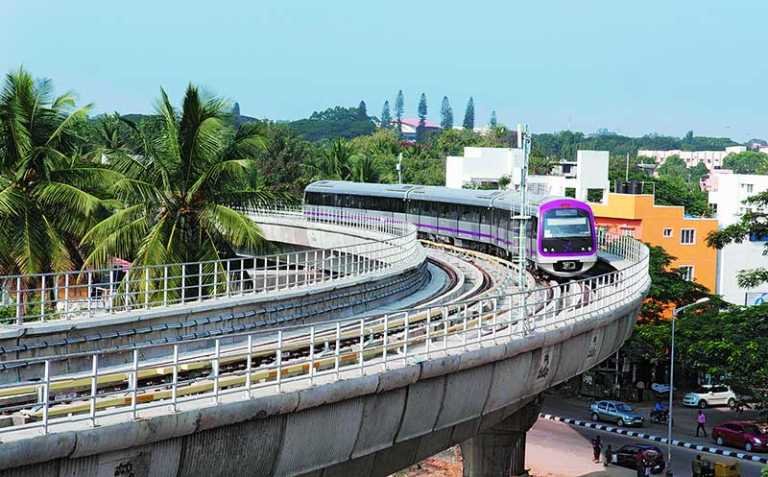
Bengaluru Metro’s Purple Line has been extended and is now open to commuters.

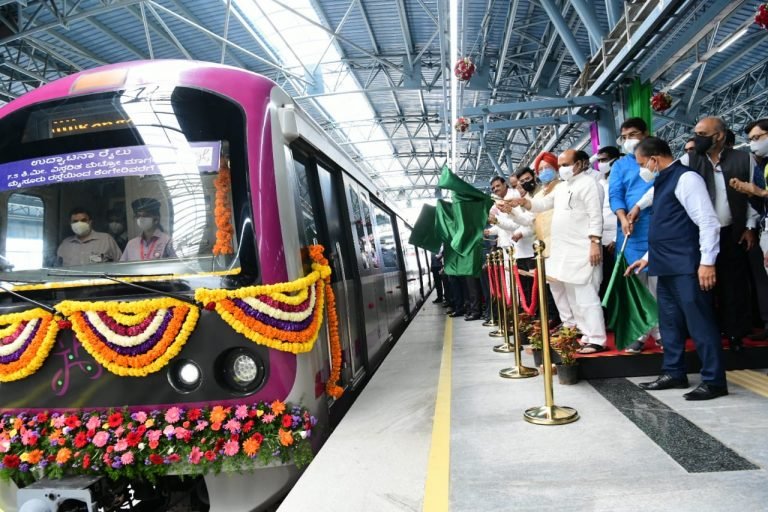
BENGALURU (METRO RAIL NEWS): Karnataka Chief Minister Basavaraj Bommai and Union Minister of Housing and Urban Affairs Hardeep Singh Puri inaugurated the extended Bengaluru Metro line between Mysore Road and Kengeri on Sunday in Bengaluru.

According to BMRCL (official), The 7.5-kilometre-long Western Extension Line of Namma Metro, which connects Mysore Road Metro Station to Kengeri Metro Station, will open to the public on Monday.

Passengers will just need to pay 56 Rupees for travelling end to end from Baiyapanahalli to Kengeri. All trains won’t go up to Kengeri, some will terminate at Mysuru Road. The metro section expects to carry 7000 passengers per day.

According to Hardeep Singh Puri, Bengaluru metro is the busiest metro network in the country next to Mumbai and Delhi. Speaking at the inauguration event, Hardeep Singh Puri said, “Journey of Bengaluru metro started with the sanction of phase one in 2006 which is 42.3 km with an approved revised cost of Rs 13, 845 crores.
The first section of 7 km of phase one was commenced in October 2011 and daily passenger boarding of about 12, 500 per km of the phase one pre-Covid is comparable to the busiest metro network in the country next to Mumbai and Delhi.”

Routes, fares and timings:

With six stations — Nayandahalli, Rajarajeshwarinagar, Jnanabharathi, Pattengere, Kengeri Bus Terminal, and Kengeri — on the extended Purple line, the new route is 7.53 kilometres long. Operations on this stretch were initially scheduled to begin in 2020 and then pushed to June as officials cited Covid second wave and unavailability of workers due to the pandemic among reasons for the delay.

Travel time between Mysuru Road and Kengeri is expected to be around 15 minutes in the new stretch. A passenger will have to pay Rs 56 to travel between Baiyappanahalli and Kengeri –– the two stations located at different ends of the Purple Line. The farthest one could travel in the metro along the new stretch will be between Kengeri and Silk Institute (Green Line) stations, costing Rs 60.

Kanpur Metro Work heading towards the accomplishment, Trail Run in November 2021

KANPUR, INDIA (Metro Rail News): Keeping in view the objective of conducting a trial run of the metro on 15th November 2021, the Managing Director of UPMRC, Shri Kumar Keshav, today reviewed the progress of ongoing works at Motijheel, Rawatpur and Geetanagar metro stations under Priority Corridor of Kanpur Metro along with the Receiving Sub Station (RSS) and Metro Depot.

5cc7fe10 e776 4c3f 859d bf344ae5040e
Photo Copyrighted: Kanpur Metro

They express satisfaction over the speed of work, “Civil work under Priority Corridor has been completed up to 95 per cent. The trial run of metro will be on 15th November 2021 instead of 30th November 2021. The work of Kanpur Metro’s Priority Corridor was commenced on 15th November 2019. While the target to start the operation of the metro services for Kanpur residents is by the end of January 2022. The work of the entire system on the corridor is progressing in parallel,” said Shri. Kumar Keshav, MD, UPMRC.

UP Metro is moving ahead in a time-bound manner towards the trial run on the priority section in November 2021. Before the trial run, the metro will be tested on the track at 90 kmph, while the average speed of Metro operation will be 80 kmph.

Vacancies in Chennai Metro for DGM/AGM/JGM and many more

CHENNAI, INDIA (Metro Rail News): Chennai Metro Rail Limited (CMLR) has been notified to recruit DGM/ JGM/ AGM (Finance & Accounts), Manager, and other posts. A total of 11 positions will be recruited under this recruitment process. In such a situation, the candidates who want to apply for these posts can apply online by visiting the official website @cmrl.in. The last date to apply for these posts is 10th September 2021. Candidates should note that no application form will be accepted after the last date. These recruitments will be done on a contract basis. Initially, this recruitment will be for two years. Still, it can be extended for a more extended period depending upon the requirements and performance of the candidate and the current terms and conditions.

Vacancy Details and Education Qualification

DGM/JGM/AGM Finance & Accounts will be recruited for 2 posts. Apart from this, 2 posts of DGM and 5 positions of manager will be appointed. Along with this, 1 post of Deputy and 1 post of Assistant Manager will be recruited. Candidates applying for DGM (BIM) posts should have BE, B. Tech degree in Civil, Electrical, Mechanical. Apart from this, there should be a PG degree in Civil, Electrical. Candidates applying for the Assistant Manager post should have a degree in B. Com and an MBA degree. 

Unreserved and other category candidates applying for CMLR Recruitment will have to pay Rs. 300/- as an application fee. Whereas candidates belonging to SC/ST category must pay a non-refundable fee of Rs.50/- as an application fee. Apart from this, candidates have to visit the official website for more information related to recruitment.

REBS Lubrication bags order for supply of Wheel Flange Lubrication system in 64 train sets of Delhi Metro’s Line-2

NEW DELHI (METRO RAIL NEWS): The Delhi Metro Rail Corporation Ltd. (DMRC) has issued a Letter of Acceptance (LOA) to  M/s REBS Lubrication India Private Limited & M/s REBS Zentralschmiertechnik GmbH. for the supply of Wheel Flange Lubrication system in 64 nos. of train sets of Line-02 in Delhi Metro Rail Corporation Ltd. along with DLP of 2 years (inclusive of all consumables”).

Key Details:

  • Name of Work: Contract: ORW-938: Design, Supply, Installation, Testing and Commissioning of Wheel Flange Lubrication system in 64 nos. of train sets of Line-02 in Delhi Metro Rail Corporation Ltd. along with DLP of 2  years (inclusive of all consumables).
  • Approximate Cost of work: Rs. 4.87 Crore
  • Completion Period: 01 Year

In June this year, the DMRC invited tenders for Contract: ORW-938

Scope of Work:

Contractor shall execute complete Design, Supply, Installation, Testing and Commissioning of Wheel Flange Lubrication system in 64 nos. of train sets of Line- 02 (Yellow line) in Delhi Metro Rail Corporation Ltd.

The contractor shall submit the detailed design complying with the technical specification and relevant drawings before the commencement of work for the approval of the Engineer-In-Charge.

The arrangement of lubrication shall be provided at wheels of the front axle in the front bogie of both side DT car in a train set. The WFL system shall be a standalone system, compatible with existing controls in the train set.

The Wheel flange lubricators of a proven design in EMU/metro application shall be provided only at the front axle of the front bogie of both sides DT car. A suitable mechanism shall be provided to ensure that lubricators operate only in the leading position on the train actuate suitably during traversing of the curves automatically.

The design of the WFL system shall ensure precise & cyclic application of lubricant on the flange of the wheel(s) so that the lubrication application is uniformly distributed on the flange surface without any excess deposition on the contact surface for avoiding any condition of slip slide. Special care shall be taken by the Contractor for the setting of nozzles alignment so that no flow of lubricant shall be on the tread/braking surface under any circumstance. The system shall be designed to minimize oil and air consumption. A single tube system shall be preferred.

The nozzles shall be designed to protect against choking/clogging due to dust. There shall be no movable part in the nozzle. The design shall permit optimized control of oil spray in straight and curved track by suitably modulating the spraying cycles and quantity of oil in the spray. The spray cycle as above shall be programmable and shall be fine-tuned during field trials and performance of wheels during the Defect Liability Period. The programming and mechanical tools shall be supplied to the Employer (one set for each depot of Line-02, i.e., total 3 sets of tools) after the end of the Defect Liability Period.

Interlocking inbuilt logic shall be made for inhibiting the spraying of WFL when the trainset is in a stand-still position.

The spray of lubricant shall be time controlled as well as distance controlled. The actuation and spray cycle and quantity shall be decided by the location and degree of the curve which shall be communicated to the system by a centrifugal force sensor, coordinates and parameters of curves informed by the vehicle or/and through other equipment like Gyroscope etc. capable of detecting curves up to 2 degrees.

The contractor shall make arrangements to have an indication of WFL functionality on the driver console or as per the instruction of the Engineer-in-charge. The arrangement shall be made for the Train Operator to isolate the equipment in case of any defect/malfunctioning. The design of the WFL system shall be Fail-Safe.

The tenderer shall consider the Schedule of Dimension (SOD) of DMRC (Broad gauge) during the designing of the WFL system so that no part of the system shall

infringe with the SOD applicable for Line 2.

Introduction of Metro Line-2:

Line 2 – Yellow Line (one of the lines constructed and operated by DMRC) is passing through one of the most densely populated sections of Delhi connecting HUDA City Centre in Gurgaon (Haryana) to Samaypur Badli in Delhi.

Line-2 had been commissioned in 6 stages, with the 1st stage being commissioned on 20 th December 2004 and the recent stage being commissioned since 10th November 2015.

Presently Sixty-four (64) Train sets operate between Samaypur Badli to HUDA City Centre i.e. Line-2 Yellow Line.

Out of the Sixty-four (64) Train sets operating on Line-2 Yellow Line, 62 Train sets have been manufactured by M/s Bombardier Transportation and 2 Train sets have been Manufactured by M/s Hyundai Rotem.

These 64 train sets are having 8 cars each, 8-cars train consists of a driving trailer car with a pantograph (DT), Motor Car (M) and a trailer car with a pantograph (T).

The main objective of the project is to provide an oil/grease-based Wheel Flange Lubrication System on front axles of both DT cars for the base requirement of lubrication in straight track & also for rail gauge face lubrication on sharp curves in order to reduce vibration and to reduce squealing noise at curves of Radius less than 500 meters.