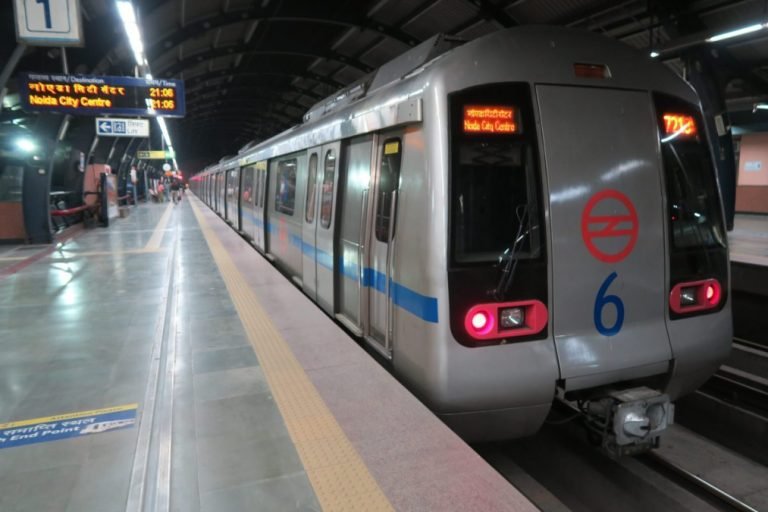
New Delhi: Prime Minister Narendra Modi has flagged-off the Delhi-Faridabad Metro Line that would allow hassle free travel for around two lakh daily commuters between the national capital and the industrial hub in Haryana.The extension of the Delhi Metro connects Badarpur to Escorts Mujesar in Faridabad.The total cost of the project from Badarpur to Escorts Mujesar is nearly Rs. 2,500 crore. Out of this, Rs. 1,557 crore was borne by the Haryana Government, the Centre contributed Rs. 537 crore, while the Delhi Metro provided Rs. 400 crore.The nine stations in this section include, Sarai, NHPC Chowk, Mewala Maharajpur, Sector 28, Badkal Mor, Old Faridabad, Neelam Chowk Ajronda, Bata Chowk and Escorts Mujesar. buy kamagra polo online https://lasernailtherapy.com/wp-content/themes/twentytwentytwo/inc/patterns/en/kamagra-polo.html no prescription
All these are elevated and located on either side of the Delhi-Mathura Road (NH-2).“The nine-station metro corridor which was 95 per cent indigenously built will provide people a safe, affordable, quick, comfortable, reliable, environment-friendly and sustainable transport facility,” a Haryana government spokesperson said.Haryana Chief Minister ML Khattar, addressing a press conference on Saturday, had thanked the Prime Minister for “gifting” the Metro service which would take the city to “another level of progress” with better connectivity with other NCR towns.He had also said that the Prime Minister would be announcing the go-ahead for connecting Gurgaon with Faridabad by Metro.
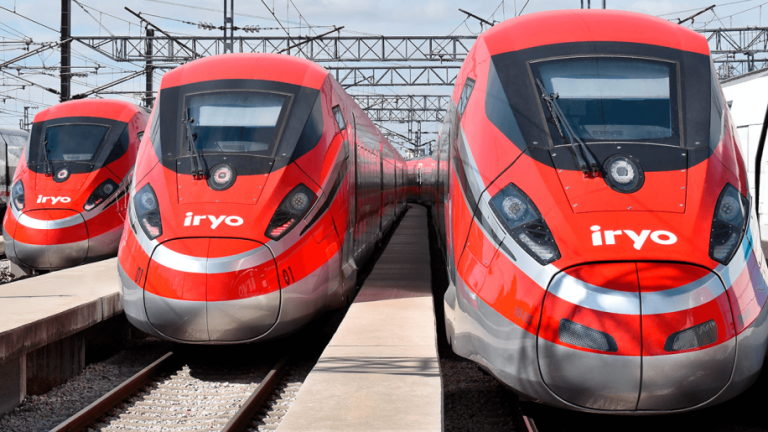
SPAIN (Metro Rail News): Spain competition regulator CNMC has granted Iryo, the brand of company Ilsa, which is owned by regional carrier Air Nostrum and Trenitalia received approval for its planned services. Iryo is aiming for up to 80 daily connections with the majority travelling between Madrid and Barcelona. Zaragoza, Valencia, Alicante, Sevilla, Cordoba, and Malaga will also be served by the operator.
Gorini said that Iryo wants to attract business travellers by targeting early morning arrival times since it does not want to compete on pricing with Renfe, Renfe’s Avlo brand, and SNCF subsidiary Ouigo. The new CEO from Trenitalia and joins Iryo, has stated that a marketshare of 30% is feasible.
The start of operations was initially scheduled to begin earlier this year, operations were delayed due to a disagreement with infrastructure manager Adif over Iryo’s capacity needs on the portion to Alicante.
Iryo will operate high-speed Frecciarossa 1000 trains, similar to Trenitalia. In Spain, they’ll be categorised as Series 109. The first group of 30 drivers finished their training programme last month. Drivers began their training earlier in the year.
SIKKIM (Metro Rail News): Indian Railways provided an update on the progress of the construction work to connect Sikkim to the Indian Railways network. Sikkim will be connected to the Indian Railways network after the Sivoke – Rangpo project is finished.
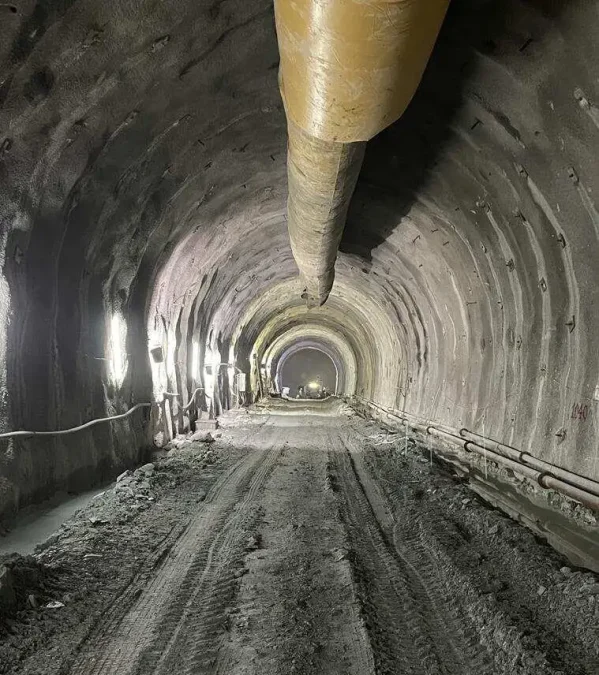
Indian Railway said that as of last month construction work about 52.13%(20.25 km of 38.71 km) of 14 tunnels which falls in this route have been completed and also 33% work completed (Foundation and substructure in progress) on the bridges which will fall in this hilly terrain. A senior Northeast Frontier Railway (NFR) official has previously stated that the 52-km-long rail line connecting Sevoke in West Bengal with Rangpo in Sikkim is anticipated to be operational by December 2023.
The Sivoke – Rangpo project includes 14 tunnels, 17 bridges, and five stations, which include one at Teesta in the Kalimpong district that would be underground. At least 86% of the route will pass through 14 tunnels out of which 13 tunnels are in West Bengal.
The line is a broad gauge (5ft 6in) and proposed 65km/hr speed limit. The groundbreaking ceremony for the project – approved in 2008 – was held in February 2010, and the track was expected to be completed in 2020.
It will be the first time Sikkim has been connected to the main Indian rail network once it is operational, and it is anticipated that this will increase local tourism and the local economy.
It will thereafter be connected to Gangtok, Sikkim.
The rail link will pass through the Teesta River Valley and the slopes of the Kanchenjunga Mountain Range including difficult terrain.
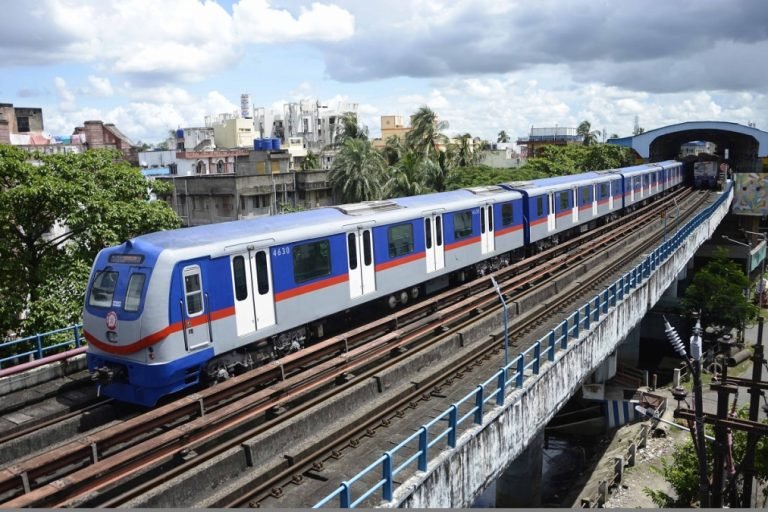
KOLKATA (Metro Rail News): The consortium of Siemens Limited India and Siemens Mobility GmbH has secured an order from Rail Vikas Nigam Limited (RVNL), a Listed Mini Ratna Category I Schedule A CPSE under the Administrative control of Ministry of Railways, for signaling and telecommunication of the Kavi Subhash-Biman Bandar Corridor (32 km) and Joka-Esplanade Metro Corridor (16 km) of Kolkata Metro Line 3 & 6. Siemens’ CBTC solution will facilitate 100% punctuality, maximum network capacity, energy savings and decreased headways while ensuring highest possible safety.
Sunil Mathur, Managing Director and Chief Executive Officer of Siemens Limited, said, “Kolkata Metro has a pivotal role in enhancing the quality of life and economic growth of the city. As a leading provider of sustainable and efficient transport systems, Siemens is proud to partner with RVNL and Kolkata Metro in transforming the everyday life of the citizens of Kolkata.”
Siemens’ solution will facilitate safety, punctuality, energy efficiency, network capacity and passenger comfort.
Siemens is also engaged in electrification works for Kolkata Metro Line 3 & 6. Previously, Siemens has equipped Kolkata Metro’s North-South corridor and East-West line with TPWS signaling and rail electrification systems, respectively.
PATNA (Metro Rail News): The proposed metro station to be built close to Patliputra Bus Terminal (PBT) shall be immediately connected to the bus depot. To make it easier for commuters from the densely populated nearby areas like Ilahibag, Sampatchak, and RPS Mor and to accommodate all different site visitors coming from SH-1.
The Patna Metro Rail project is being carried out by the Delhi Metro Rail Corporation Limited (DMRCL). It has been planned to provide direct connectivity between the PBT metro station and bus depot via a foot overbridge. Officers have directed the planning of two entrances and exits, four lifts, and six elevators near the interstate bus terminus premises depot to aid in the movement of passengers to the metro station.
The station might include a multi-modal integration feature that allows for temporary parking, pick-up, and drop-off options with various modes of existing transport infrastructure. Four auto and two taxi bays may be available at the station’s entrance and exit for pick-up and drop-off services by private and intermediate public transportation modes. The metro station might even include a designated parking lot that would make it easier for commuters from Bakhtiyarpur and the Mahatma Gandhi Setu to park their cars and avoid traffic jams.
The PBT station is a section of the precedence hall, beneath which five elevated stations will be built at Malahi Pakri, Khemnichak (interchangeable station), Bhootnath, Zero Mile, and the interstate bus terminal in hall II. It will likely be 6.5 kilometers long, while the whole length of the underground part is 7.9 km comprising six underground metro stations, specifically Patna Junction (interchangeable station), Akashvani, Gandhi Maidan, PMCH, Patna College, Moin-ul-Haq Stadium, and Rajendra Nagar.
DMRCL officials stated that the PBT metro station would be important from the perspective of connection because Mauza Pahadi bus terminal, located on the Patna-Gaya highway, has interstate and local bus stops linking practically every region of the state as well as neighbouring states. The officials stated that it could play a significant role in redefining the city transportation state of affairs of the capital city of Bihar. It is anticipated that elevated stations for hall II will be built by 2025. Utility investigation and preliminary geotechnical surveys have been completed. Piling work has been completed, and the pier work on the hall has improved in a positive way. As soon as the girders are installed (giant iron or metal beams for constructing viaducts) will full, the civil work on the metro station will start.
The 32.5-km-long Patna Metro Rail Mission, comprising the Danapur-Mithapur-Khemni Chak hall I and Patna Railway Station-PBT on hall II, is predicted to profit over two million passengers from town and also will scale back the variety of autos and ease congestion.
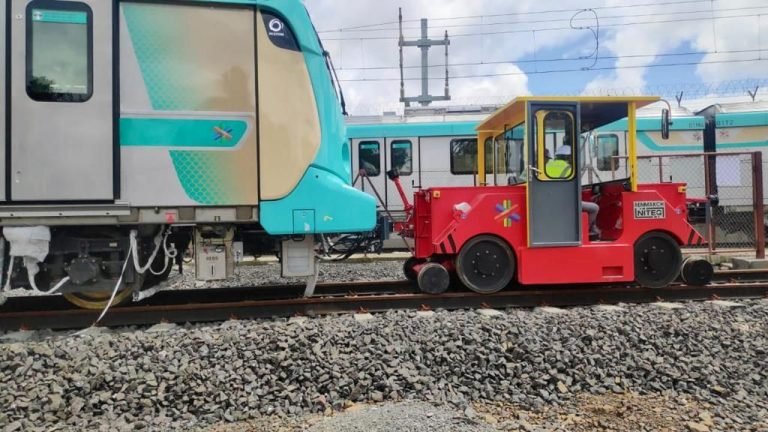
MUMBAI (Metro Rail News): The first eight-car prototype metro train was successfully put together using the battery-operated rail-cum-road shunter for the technical trials of Colaba-Bandra-SEEPZ Metro Line-3. The shunter is the first procurement for the car depot of the Mumbai Metro Rail Corporation (MMRC).
According to MMRC, this shunter assembled and pulled the first eight cars of a train at temporary testing track and train delivery facilities in Sariput Nagar, Aarey.
According to reports, Mumbai received its first four metro coaches last week, and the final four on Monday.
Battery operated rail-cum-road Shunter has successfully formed & pulled the first 8-car train at the temporary trial run facility set up by #MMRC for #MetroLine3 at Sariput Nagar, #Aarey
“The shunter can shunt eight cars and a train up to 9 kilometres with a fully charged battery capacity and a carrying capability of 350 tonnes” ,MMRC stated.
The metro 3 corridor between Colaba-Bandra and SEEPZ underground corridor is expected to be opened in two phases, of which phase one will be between Aarey and Bandra Kurla Complex (BKC). Major work on the depot is expected to be completed by the end of 2023.
A joint venture and Transfer of Technology (TOT) agreement with NITEQ of the Netherlands, the shunter is entirely produced by a Thane-based firm, M/s. Renmakch India Pvt.Ltd. as a part of “Make-in-India” initiatives.
The metro rail route, whose depot will be built at Aarey, is being built at a cost of 328 crore and can hold 30 metro trains.
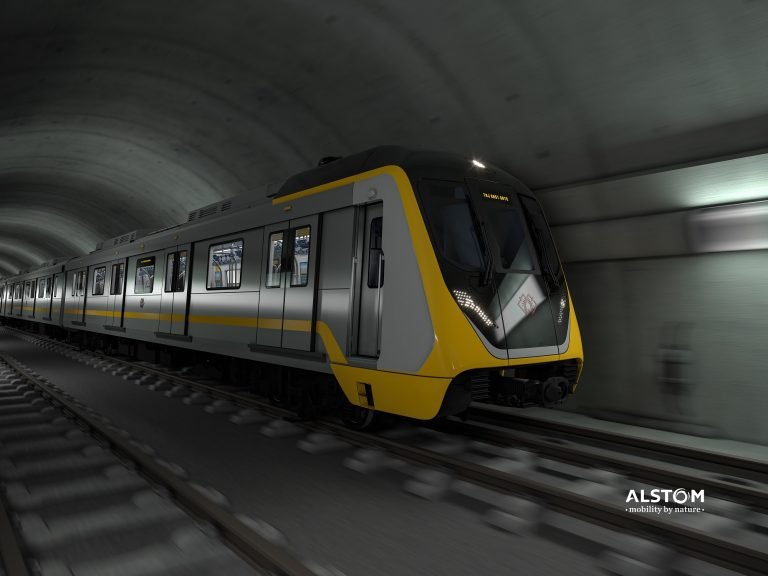
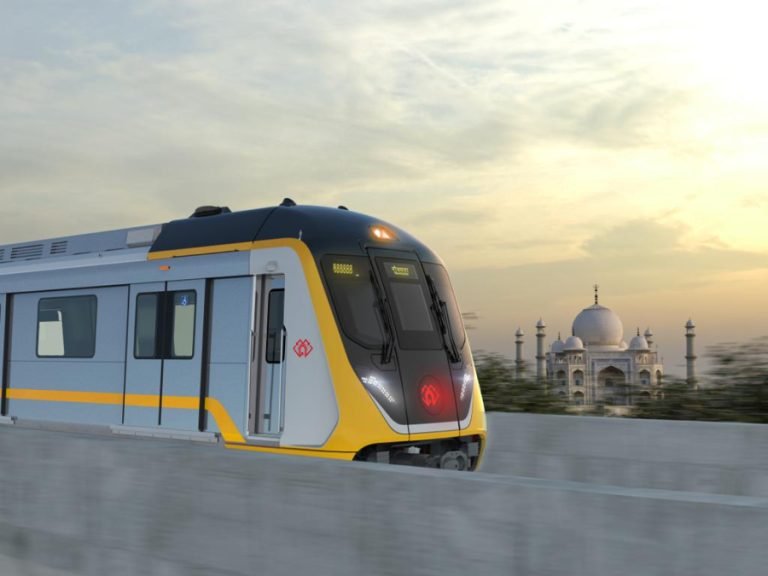
AGRA (Metro Rail News): Aerodynamic modular design of the new MOVIA metros will offer a host of safety, security, and environmental benefits along with a great passenger experience. The Movia™ metro family offers latest technology combined with proven and reliable components. Built with light but strong stainless steel car bodies, the CO2 sensor-based air-conditioned cars are developed with a strong emphasis on eco-friendly design to eliminate hazardous substances providing a safer environment for passengers. These trains are equipped with modern passenger information systems, automated sliding doors, comfortable seating & standing spaces, dedicated areas for entry of specially-abled, who use wheelchairs, to provide an accessible and welcoming environment for passengers. Powered with modern energy-efficient propulsion systems with regenerative braking, this is a sustainable alternative to other modes of transport, thus reducing energy consumption.
The trains will be equipped with FLEXX™metro bogies and MITRAC™ propulsion system to increase energy efficiency, reduce operating costs, and ensure the new trains meet the highest environmental standards. Each train will accommodate approximately 960 passengers in the three-car configuration. Alstom will also be equipping the Agra metro lines with an advanced signalling solution CITYFLO™ 650. The trains have been designed at Alstom’s engineering centre in Hyderabad with signalling solution developed at Gurgaon and will be manufactured at their manufacturing facility in Savli (Gujarat), under the under ‘Make in India’ and ‘Aatmanirbhar Bharat’ initiatives.
Alstom India has a history of successfully delivering world-class metro trains for major cities, including Delhi, Chennai, Mumbai, Lucknow, Kochi in India and internationally for Sydney, Queensland, and Montreal. Movia™ metros have been delivered to many cities around the world, such as London, Delhi, Stockholm, and Singapore. For the domestic market, Alstom is currently manufacturing metro trains for Mumbai Metro Line 3, Bhopal-Indore, and modern trainsets for India’s first semi-high-speed Delhi-Meerut RRTS corridor.
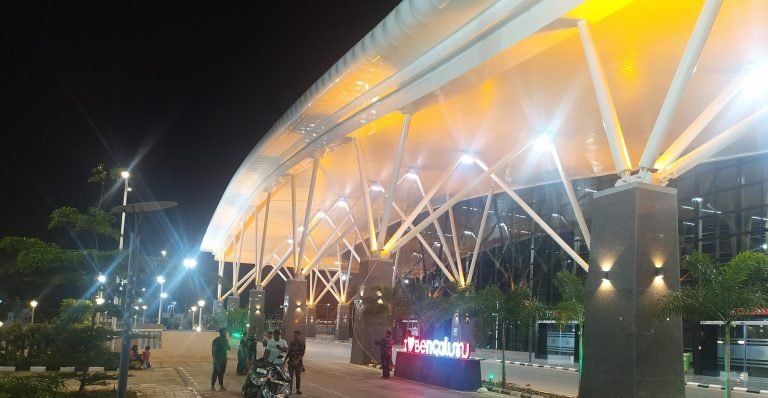
BANGALORE (Metro Rail News): Indian Railways renovate numerous railway stations to make them more contemporary and modern. Bengaluru’s Sir M. Visvesvaraya Railway Terminal has been added to the list of such stations. The railway station boasts one of the most modern stations in the nation. The Ministry of Railways has just revealed images of a new station that will provide passengers with more convenient and modern amenities.
The official Twitter account of the Ministry of Railways posted a video of the Sir M. Visvesvaraya Railway Terminal with the tagline “Modern, World-Class.” The video also refers it the “Airport like station”. The video opens with the national flag flying outside the station and moves on to demonstrate the station’s specifics and characteristics.
Modern, World-Class, Airport-Like: Sir M. Visvesvaraya Railway Terminal, Bengaluru pic.twitter.com/trhGjGVguL
Indian Railways spent Rs 314 crore to create the 4,200 square metre terminal. Seven platforms, a fully air-conditioned lobby, parking for 900 two-wheelers and 250 four-wheelers, and other prominent features and services have led to comparisons to Kempegowda International Airport.
Sir M. Visvesvaraya Railway Terminal is proud to have the title of India’s first station with a centralised air conditioning system. Furthermore, the station also has luxury lounges for the use of the passengers.
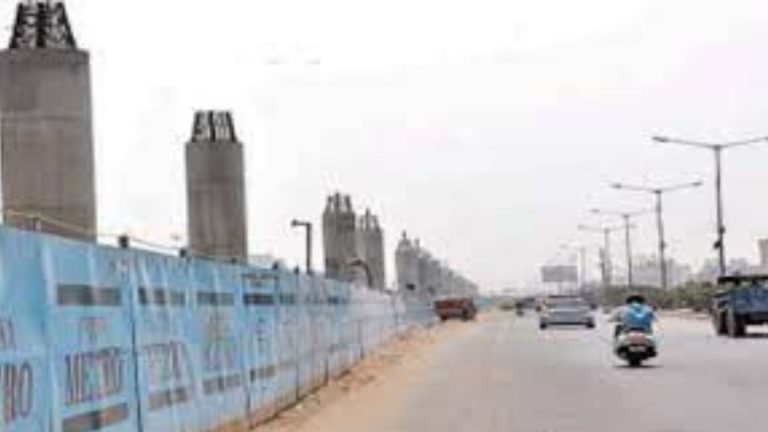
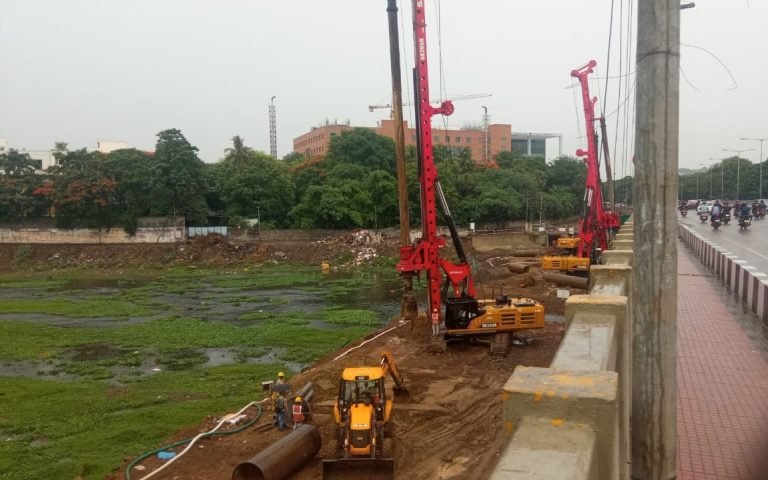
CHENNAI(Metro Rail News): The Chennai Metro Rail Ltd (CMRL) has resumed piling work at numerous locations, including the Adyar river, and commuters of the metro rail eagerly awaiting the completion of the 47-km length connecting Madhavaram with Sholinganallur.
The proposed corridor, which runs through the major IT parks, including WIPRO, Tata Consultancy Services (TCS), and Infosys, as well as industrial estates, including Small Industries Promotion Corporation of Tamil Nadu (SIPCOT) and Nehru Nagar Industrial Estate, is likely to provide commuters with much-needed relief whose only mode of transportation is the bus.
According to a Metro Rail official, piling work has begun for the elevated section of CMRL’s Corridor-5 near Nandambakkam along the Adyar river. They said that the contract for the elevated stretch which has been divided into three packages has been awarded. It has been learned that the elevated portion of Corridor-5 will be 40.07 km long and 5 km underground.
“Across all of the elevated lengths, the foundation and pier works have begun, for which a tender has been awarded. The tender has been called for the underground length, official sources stated. 48 stations will be on the railway, including six subterranean, one at grade, and 41 elevated. The State government recently announced a feasibility study to expand the metro rail’s corridor-5 from Thirumangalam to Avadi through Mogappair and Ambattur, though details are not yet available.
NEW DELHI (Metro Rail News): Delhi Metro is prepared to go internationally and is looking for consulting and building projects abroad, notably in the Egyptian port city of Alexandria. Last month, the first and largest metro rail company in India submitted bid documents to hire consultants for an Alexandria metro rail project. Earlier this week, Delhi Metro also submitted a bid to build an entire metro line in Mauritius. In addition to these, Delhi Metro is also interested in three other metro systems: those are Tel Aviv in Israel; Manama inBahrain; and Ho Chi Minh City in Vietnam.
Since 2013, Delhi Metro has served Dhaka as a consultant on three routes, and it is getting ready to submit a bid for a new line. The metro network’s earnings have been severely impacted by the Covid-19 outbreak, thus it is aiming to enhance its non-ticketing revenue streams. The Delhi Metro’s expansion plan won’t be simple. In Bahrain, the metro line may fight with Chinese rivals, whereas in Mauritius, private construction behemoths like L&T may be its main rivals.
According to Vikas Kumar, MD of Delhi Metro Rail Corporation (DMRC), the urban transporter has been competing for new metro projects in five nations and that the pandemic has played a role in its new approach of investigating projects abroad. “We want to grow our revenue share, particularly from consulting business. Therefore, we made the decision that we must use our core competency to grow our company outside of India. That’ll bring in some more money, he said. According to a senior Delhi Metro official, the metro, which is jointly controlled by the Centre and the Delhi government, is also trying to increase its part of the consultancy sector to 30% of overall revenue.
UTTAR PRADESH (Metro Rail News): Chief Minister of Uttar Pradesh, Shri Yogi Adityanath, visited the Agra Metro Rail Project on 8th August and digitally unveiled the first sight of the Agra Metro train in the Agra Metro Depot Premises .
The honourable chief minister also presented the digital metro train for Kanpur Metro last year.
The CM also strongly advocated for environmental protection and planted a tree inside the Agra Metro Rail Depot, which is located within the grounds of the 15th battalion PAC premises.
The Metro coaches for the Agra Metro are being produced in Savli, Gujarat, according to Managing Director UPMRC Shri Sushil Kumar, who spoke about this momentous event for the Agra Metro Rail Project.
It is a significant accomplishment for the Indian government’s “Make in India” initiative. The Agra Metro Rail Project will receive 87 coaches, or 29 rolling stock (metro trains) with three coaches each. The intended speed for these trains is 90 kmph. For the Kanpur and Agra Metro Rail Project, UPMRC completed an integrated contract for rolling stock and signalling with the aim of saving time and assuring timely delivery of rolling stock.
Characteristics of the ultra modern rolling stock to be utilised in the Agra Metro Rail Project
The train is a “intelligent means of transportation” since it is outfitted with the ultra modern ATP/ATO (Automatic Train Protection and Automatic Train Operation) form of train operation.
Inside the cars, there are fire-retardant materials with low fire loads, low heat release rates, low smoke, and low toxicity. Crashworthiness features: The rolling stock has inter car couplers with crashworthiness features, which lessen the severity of injury to the passengers in case of accidents. Emergency doors: The rolling stock has emergency evacuation facilities at several vehicles to ensure well-directed evacuation of passengers in case of any emergency, including fire in the train. Project for the Agra Metro Rail System’s Third Rail DC Traction
Agra Metro Trains The third rail that runs parallel to the trains will provide power for Metro. There won’t be any conventional OHE (Overhead Equipment), which is frequently disturbed by bird activity, kite flying, etc.
These issues won’t arise with the Third Rail System, and train operations will be more effective.
Use of Regenerative Braking in the Agra Metro: The trains in the Agra Metro will use their own braking mechanism to generate electricity. After applying breaks, the deceleration will be converted to energy. In metro trains, electric motors are employed to apply brakes, which might result in energy regeneration and subsequent use of that energy for train operation.
City’s Inconspicuous Metro Rail System: The metro rail project will be unobtrusive and easily integrate with the city’s beauty. Wires and duct pipes used in the utilities will all be hidden. This would significantly improve the metro train system’s aesthetic value.
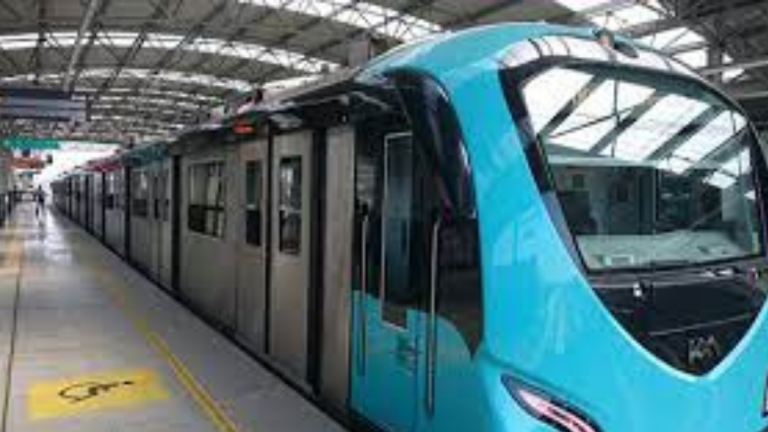
KOCHI (Metro Rail News): Kochi Metro Rail Ltd (KMRL) will introduce a system of passenger profiling with artificial intelligence (AI) support as part of a project to enhance the transport experience in Kochi Metro.
Every Metro commuter will be profiled based on their gender and age using AI cameras that will be installed in the stations. In addition to being utilised for general monitoring, the Al cameras would also be used to identify lost bags and assessment of the inflow of travellers.
The project, which is being carried out by Kochi Metro and Rajagiri School of Engineering and Technology jointly, is in its second phase of developing a data analytics platform.
Specialized AI cameras would be placed at the Automatic Fare Collection gates. The facial recognition technology in the cameras allows them to identify the gender, age, and uniforms of the passengers. They can even identify commuter students by identifying their school or college uniforms.
According to Jaison Paul, the project’s chief investigator and vice-principal of Rajagiri School of Engineering and Technology, “the initiative is an industry-academic collaboration seeking to provide improved services to the commuters.”
We are using sophisticated and open-source technology for assistance. We will provide commuter data on an hourly, daily, weekly, and monthly basis using Al cameras, he said.
GHAZIABAD (Metro Rail News): The National Capital Region Transport Corporation (NCRTC) had conducted the test run of the RRTS train set on its depot tracks at Duhai in Ghaziabad.
NCRTC is building India’s first Regional Rapid Transit System (RRTS), a rail-based, high-speed regional passenger transit system from Delhi to Meerut via Ghaziabad.
The first RRTS train set from its manufacturing unit in Savli, Gujarat, had arrived at Duhai depot in June.
On Saturday 6th August night, the test run was carried out at the Duhai depot.
“RRTS trainset performed its first test run on its depot tracks, marking an important milestone toward bringing in India’s first regional rail for the NCRTC. The trainset was fueled by the NCRTC’s 25 kV Traction system, which had just been charged, the NCRTC stated in a tweet on Sunday.
According to the report, NCRTC MD Vinay Kumar Singh and senior management staff were riding in the train during the test run.
The NCRTC is gearing up to open Delhi-Ghaziabad-Meerut corridor’s Priority Section to the public.
— National Capital Region Transport Corporation Ltd. (@officialncrtc) August 7, 2022
A newly commissioned LTE communication network was also successfully tested during this testing. Singh praised directors and heads of divisions for doing this, according to the tweets from the transportation agency.
The 82 km long Delhi-Ghaziabad-Meerut RRTS line will comprise a 12 km underground portion and 70 km elevated section.
According to NCRTC officials, the trial runs of the RRTS train will first be conducted on the priority section between Sahibabad and Duhai and is likely to start by the end of this year.
The 17-km long priority section between Sahibabad and Duhai is targeted to be commissioned by 2023 and the full corridor by 2025, they said.
The priority segment between Sahibabad and Duhai will serve as the site for the first RRTS train trials, which are expected to begin by the end of this year and by 2023 the 17-km long priority portion between Sahibabad and Duhai should be operational, and by 2025, the entire corridor.
HYDERABAD(Metro Rail News):Hyderabad Metro Rail (HMR) has been operating three extra trips between Ameerpet and Raidurg, two extra trips between Mettuguda and Raidurg, in the morning rush hour and four additional trips between Ameerpet and Nagole during the evening rush hour each day on the Blue Line or Corridor Three of Nagole to Raidurg.
Managing director N.V.S. Reddy stated that with these extra journeys, we are running trains for every 2.45 minutes during the morning office rush hours between Ameerpet and Raidurg. The Red Line or Corridor One between L.B. Nagar and Miyapur tops the records with 2.12 lakh riders a day, although the daily cumulative ridership is currently about 3.78 lakh, which is still less than the pre-COVID high patronage of almost four lakh.
This is followed by the Blue Line with 1.63 lakh riders a day and the Green Line or Corridor Two between Jubilee Bus Station (JBS) and MGBS – Mahatma Gandhi Bus Station, Imlibun at 20,834 riders.
MD stated that the Blue Line’s frequency is 5.30 minutes in the morning peak hours and 4.30 minutes in the evening peak hours, while the Red Line’s frequency is 4.10 minutes from peak to non-peak hours going from 6/7/10 minutes. It is between 6.45 and 9.30 minutes between off-peak hours. The frequency on the Green Line is every 7-9 minutes. There are trains available in every 10 to 15 minutes in the early morning timetable depending on the passengers demand.
Raidurg is the busiest station with 20,188 passengers per hour, , followed by Miyapur (16,890) and KPHB (16,843). Other stations with more than 10,000 passengers passing through them include Ameerpet (12,968 from the Blue Line and 10,551 from the Red Line), Uppal (11,455), JNTU (11,327), Parade Grounds (10,560), Secunderabad (9,611), and Hi-Tec City (9,363).
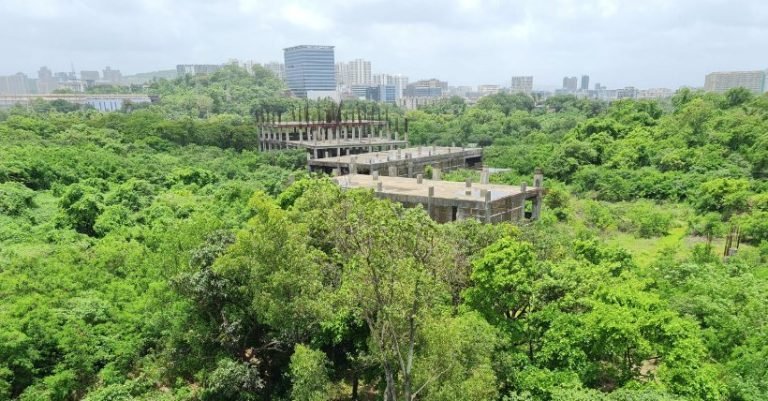
MUMBAI (Metro Rail News): The Mumbai Metro Rail Corporation Limited(MMRCL) on 5th August, Friday told the Supreme Court that no trees have been cut in the city’s Aarey forest area, and only some weeds and bushes were cleared for vehicles to pass through.
“Only weeds and bushes on the ground were cleared. There is an approach road. There were branches that required trimming for vehicles to pass through, No trees were cut. They have shown photographs of some other areas,” Solicitor General Tushar Mehta, for the MMRCL, maintained before a Bench led by Justice U.U. Lalit.
Mehta said, “If public interest litigations are filed with misleading allegations, it will leave a bad taste.” The bench replied that there are benefits of having PILs. During the hearing, justice Lalit pointed out that he was an amicus curiae in the TN Godavarman Thirumalpad case and asked if there was any conflict of interest in his hearing of the matter. Mehta said he does not see any conflict.
“Mumbai authorities continue to kill the lungs of Mumbai i.e Aarey forest by clearing of trees near the Mithi river bank and according to news reports 1,500 trees have already been cleared by authorities,” the letter to the apex court had said in 2019.
The Aarey forest is located adjacent to the Sanjay Gandhi National Park and has five lakh trees.