3 FOBs will be constructed by NCRTC at New Ashok Nagar

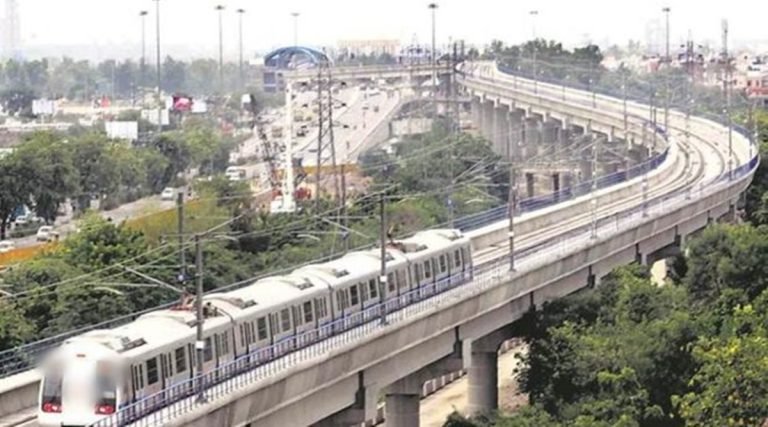
NEW DELHI (Metro Rail News): Multimodal integration is the guiding principle of NCRTC for the implementation of RRTS. It has planned the RRTS stations in such a way that they can be integrated with the already present public mode of transport wherever possible to facilitate seamless commuter travel. New Ashok Nagar RRTS station is one very pertinent example of this where connectivity is the key design aspect and will be showcased with three Foot-Over Bridges (FOBs) planned at this station for seamless convenience.

New Ashok Nagar RRTS station is being constructed in very close vicinity to the already operational New Ashok Nagar Metro Station, the distance between them being merely 100 meters. To integrate both modes, NCRTC will provide a 90-meter-long and 6-meter-wide FOB to connect the RRTS Station and Metro station. The height of the FOB will be around 8 meters from the ground.

This FOB will help the commuters to change and commute through either of these transport modes without exiting the station premises. This not only helps commuters travel seamlessly and stress-free but also helps prevent the overcrowding and traffic congestion caused by it, around the transport hubs. It will especially be a boon for women, the elderly and children and commuters travelling with sufficient luggage.

The height of the New Ashok Nagar RRTS station is about 22 meters. This FOB will connect the concourse level of the metro station to the floor below the concourse level of the RRTS station. The area between the AFC gate of the metro station and below the concourse level of the RRTS station where the FOB is connecting will be a non-paid area.

To provide better connectivity and access to the station with the adjoining areas, NCRTC is constructing two more FOBs at this station. On one side of the RRTS station, a 42 m long and 6.5 m wide FOB will be built to provide connectivity to the nearby areas of Chilla Village and the Mayur Vihar Extension. Apart from this, on the other side of the RRTS station, a 45-meter long and 8-meter-wide FOB will be provided near the Ancient Shiv Temple for ease of access to the people residing in the New Ashok Nagar area.

A large number of commuters are coming from Noida through the New Ashok Nagar metro station. They will be benefitted from the FOB between New Ashok Nagar RRTS and the metro station. Instead of going to Anand Vihar or Sarai Kale Khan, they will get the direct rapid rail to Meerut from New Ashok Nagar or to Airport, Gurugram or Panipat in future when all the three RRTS lines will be constructed. The interoperability of the RRTS corridors will allow commuters to travel from one corridor to another without the hassle of changing the train

Nagpur-Wardha to be first route introduced by Railways and Maha Metro

NAGPUR (METRO RAIL NEWS): A new MOU will be signed between the Maharashtra Metro Rail Corporation Limited (Maha Metro) and the Indian Railways (Central Railway & South East Central Railway), which will cover the Chhindwara, Betul, Amravati, Wadsa, Gondia and Chandrapur corridors, in order to evolve regional passenger transportation. The current train services to these regions will be discontinued in accordance with the plan.

The earlier Memorandum of Understanding, which was signed on July 16, 2018, comprised 205 kilometres of services to four corridors from Nagpur to Wardha, Bhandara, Ramtek, and Narkhed.

These feeder services will now be enlarged to 1026 km and encompass 130 stoppages, as per the draft MoU. The MoU will be signed in Nagpur next month in the presence of railway minister Ashwini Vaishnaw, stated Nitin Gadkari, Minister of Road Transport & Highways. 

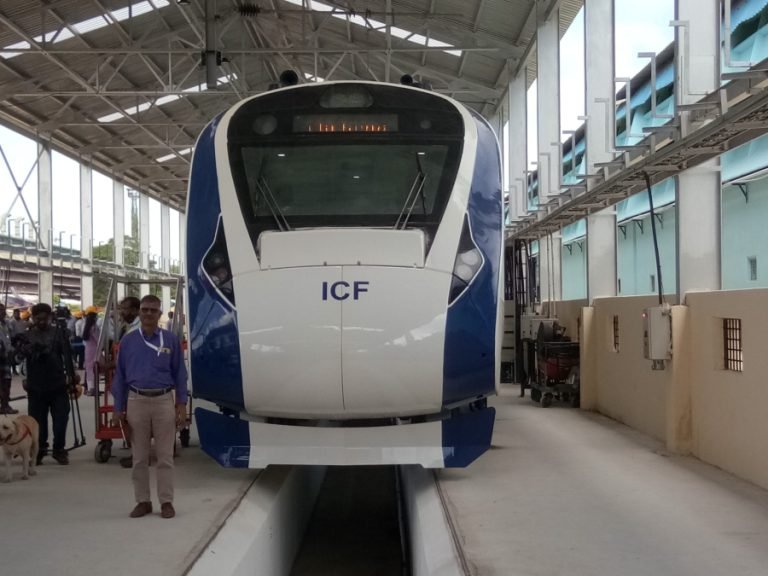
According to the newly signed MoU, services are expected to begin in Wardha’s priority corridor within 24 months of the necessary infrastructure being in place. To meet the immediate ridership needs of the busiest line, Wardha, Vande Bharat (Train 18) rakes will be introduced between Nagpur and Wardha (78 km) on a pilot basis.

The most crucial route has been picked, and it passes through Nagpur. Maha Metro has already submitted the traffic survey, capital expenses, maintenance requirements, haulage costs, timetabling, fare structure, and infra work details in the previous DPR.
Maha Metro shall bear all responsibilities for the train sets’ marketing, advertising, and promotional efforts.

According to sources, Maha Metro will be in charge of overall management of these BG Metro rail projects, including maintaining of the rolling stock, operations, the AFC system, fare box, and non-fare box revenue collection. Train drivers and guards will be provided by the railways. It’s interesting to note that the railroads will be responsible for covering the capital expense for spares.

Many stations still lack elevated platforms today. Draft MoU states that the railways will be responsible for paying for platform heightening costs as well as a host of other facilities. According to sources, Maha Metro will outline in its final DPR the specifics of platform lifting and any subsequent FOB adjustments that need to be made in each corridor, along with an estimated cost.

MoU says, Railways and Maha Metro mutually settle on a space utilization scheme for various issues involving ticketing entry, exit, etc. with suitable measures.

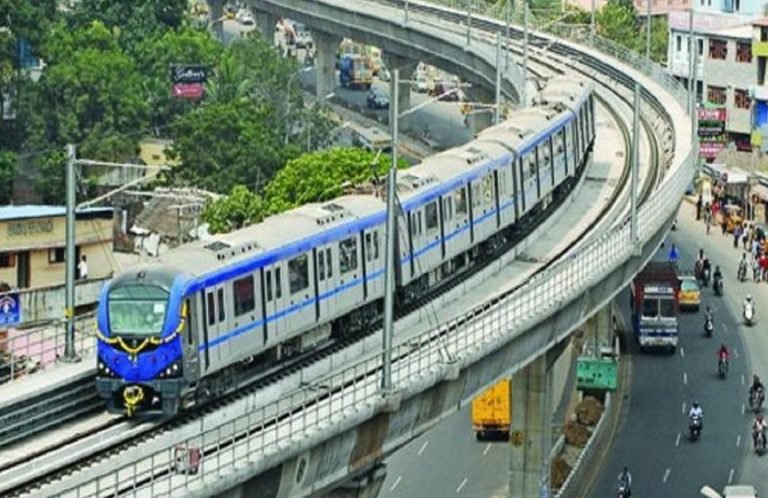
Namma metro trial runs of purple line extension will start in September

BANGALORE (METRO RAIL NEWS): Senior officials of the Bengaluru Metro Rail Corporation says that trial runs on the eagerly awaited Purple Line extension of the Bengaluru Metro from Baiyappanahalli to Whitefield will start in September.
Anjum Parvez, BMRCL managing director states that the trial on the Purple Line between Baiyappanahalli and KR Puram will start in September, with a goal of finishing the extension to Whitefield by December 2022.

“We intend to do the trial up to KR Puram in September, and then we’ll wait and see how long it takes. We want to be finished by December, but we’ll see,” Parvez remarked. There are two reaches on the more than 15 km-long Baiyappanahalli-Whitefield stretch: R1A, which runs from Baiyappanahalli to Seetharama Palya for 8.67 km, and R1B, which runs from Seetharama Palya to Whitefield for 7.14 km.

Benniganahalli will be the only stop in the September trials between Baiyappanahalli and K R Puram on the R1A section. However, the finished Baiyappanahalli-Whitefield stretched stoppage will be made at Mahadevapura, Garudacharpalya, Hoodi Junction, Seetharama Palya, Kundalahalli, Nallurhalli, Sri Sathya Sai Hospital, Pattandur Agrahara, Kadugodi, Channasandra, and Whitefield.

Thousands of commuters on the stretch who must spend more than two hours in traffic each day to reach Whitefield or drive into the city from Whitefield are expected to benefit from the extension of Baiyappanahalli to Whitefield.

While the Metro is being built, the BMRCL has urged the Bruhat Bengaluru Mahanagara Palike (BBMP) to postpone building two of the seven flyovers for traffic on the Outer Ring Road. After the Metro project is finished, the metro rail corporation will jointly build flyovers at the Sarakki and Ittamadu junctions.

“We have granted approval for five flyovers at seven locations along the Outer Ring Road where the BBMP planned to construct them. We have made the decision to use combined flyovers in the remaining areas. The work is being delayed in Sarakki and Ittamadu, and it would be carried out in the same manner as the Ragigudda-Jayadeva stretch,” BMRCL MD stated.

Kochi Metro earn 30.80 cr revenue in FY 2021-22

KOCHI (METRO RAIL NEWS): Kochi Metro Rail Ltd. (KMRL) earned net revenue of Rs. 30.80 crores in the fiscal year 2021–2022

Shri Kaushal Kishore, the Union minister of state for housing and urban affairs stated that Kochi Metro made Rs 15.24 crore income during the first three months of the 2022–23 fiscal year.
He was responding to a Rajya Sabha query about the revenue specifically received in India by the operational Metro rail projects over the course of the previous three years and the current year.
The report says, Kochi Metro generated Rs 12.90 crore of total revenue in the 2020–21 fiscal year and Rs 56.77 crore in the last year 2019-2020.
KMRL has yet to publish their annual report for the previous fiscal year, which will include information on revenue and operational loss or profit.
“The Metro rail corporations have reported a fall in revenue for the fiscal years 2020–21 and 2021–22 as a result of the pandemic-related suspension of Metro services for about six months in FY 2020–21 and approximately two months in FY 2021–22. Due to the protocol of Covid-19 restrictions and the non-operation of many sectors, private companies, educational institutions, etc., after the services were resumed in FY 2021–2022, low ridership was observed “stated the minister.

Just after the Pandemic, Kochi Metro has seen a spike in passenger traffic, which has already significantly aided KMRL’s efforts to generate non-ticket revenue through business kiosks and office space in Metro stations.

By the end of the third wave of Covid in December, last year, there were an average of 65,000 persons using Metro services daily, as stated by KMRL. However, downfall in number of passengers to 36,000 when the fourth wave began in January 2022.

As in May 2022, increasing number of passenger progressively rose to 72,000 each day. The number has now decreased to an average of more than 65,000 travellers each day as the monsoon arrives. On June 17, the fifth anniversary, of the Kochi Metro, the daily footfall had surpassed one lakh.

India will receive loan from JICA for MAHSR

MUMBAI, AHMEDABAD (METRO RAIL NEWS): The Mumbai Ahmedabad High-Speed Rail (MAHSR), a project that is dear to Prime Minister Narendra Modi, will receive a loan from the Japan International Cooperation Agency (JICA) of 100,000 million Japanese Yen (roughly Rs 6,000 crore) as Tranche 3 to provide Official development assistance (ODA).

The MAHSR project is moving more quickly under the new Eknath Shinde-Devendra Fadnavis administration. By constructing a high-speed train between Mumbai and Ahmedabad utilizing Japan’s Shinkansen technology, the project aims to create a high-frequency mass transportation system, improving mobility in India and promoting regional economic growth.

According to a news release, the loan agreement was signed by Watanabe Jun, Senior Representative of JICA India, and Rajat Kumar Mishra, Additional Secretary of the Department of Economic Affairs in the Government of India’s Ministry of Finance.

“The MAHSR project helped to create India’s first high-speed rail initiative. This project, which incorporates high-speed rail technology from Japan, has become a representation of cooperation between Japan and India. In terms of civil work, much progress has already been made. We anticipate a time soon when the Shinkansen system used in the project will help the entire region expand economically and socially, generating cash for the local populace” Said Mr Jun

Pillars for Meerut Metro’s Brahmapuri station ready, construction work in progress

MEERUT (Metro Rail News): The construction of station for the Meerut Metro Rail at Brahmapuri is progressing quickly. The station’s pillars are becoming ready. Work on the elevated station’s concourse will begin soon. Three parallel lines, each numbered 4-4, are forming a total of 12 pillars for the station. Eight of the twelve pillars are complete, while the other four are being built. The construction of the station’s concourse level, or the roof, will begin as soon as the pillar is constructed.

At the concourse level of the station, all amenities like as the AFC gate, ticket counter, customer service area, and security check will be built. On the roof will be constructed contemporary information displays, digital maps, and restrooms.

The Brahmapuri station is approximately 75 metres long and 32 metres wide. The platform level will be roughly 17 metres above the ground. Service lanes will be built along the main road, where trains coming and going towards the station can come, allowing for smooth entry and exit of the station.

The length of the Brahmapuri station is about 75 meters and the width is about 32 meters. The platform level will be at a height of about 17 metres. For seamless entry and exit of the station, service lanes will be constructed along the main road, on which trains coming and going towards the station can come.

This elevated station will have three levels – ground, concourse and platform level. For the convenience of the passengers, entry and exit gates will be made on both sides of the station at the ground level for the movement of the passengers. Escalators and lifts will be properly arranged to go from the ground level to the concourse level so that the passengers do not face any problem in commuting at any level

Metro network of 21 km is being built in Meerut which will provide services of Meerut Metro to the passengers with the help of 13 stations. These 13 stations are – Meerut South, Partapur, Rithani, Shatabdi Nagar, Brahmapuri, Meerut Central, Bhainsali, Begumpul, MES Colony, Daurali, Meerut North, Modipuram and Modipuram depots. Out of these, three stations Meerut Central, Bhainsali and Begumpul will be underground, while all other stations will be elevated.

Work on Metro-3 ramp completes, will allow trains to enter Aarey car shed

MAHARASHTRA (METRO RAIL NEWS): Despite the fact that the Uddhav Thackeray-led government promised to relocate the Metro-3 car shed from Aarey Colony soon being in power in November 2019, construction on a connecting ramp at Prajapurpada village in Arrey has been ongoing for the past 18 months.

Concern over this development has been highlighted by environmentalists.

The ramp, a crucial component of Metro-3’s infrastructure, will let trains leaving the SEEPZ metro station’s underground entrance reach the car shed for repair.

Locals in Aarey are observing a frenzy of activity at the ramp site just two days after the Eknath ShindeBharatiya Janata Party government lifted the previous administration’s hold on construction of the depot in Aarey.
“After the ramp’s construction was finished a few months ago, there was a period of silence, but now there is activity there once again. The connection between the ramp and the depot site, which is a lovely green environment, forested area, will soon begin, according to Tabrez Sayed, an Aarey local.
Sanjay Karhade, the MMRCL (Maharashtra Metro Rail Corporation Limited) spokesperson, informed that they would provide updates at a press conference in upcoming week.

The Metro-3 ramp work is, however, “basically complete,” according to a senior official with the MMRDA (Mumbai Metropolitan Region Development Authority), which is a 50:50 partner in MMRCL with the Central government.
“MMRCL never took a break while building the ramp at Aarey. It was only the depot plot that was safe. The work needed for the ramp to access the vehicle shed can be completed relatively quickly now that the government has clearly expressed its intention that it intends to have the car shed in Aarey, the unnamed official said.

Environmentalists, on the other hand, claimed that are not at all amazed. The state government instructed MMRDA and MMRCL to take action in March 2021 to connect the ramp with Metro-6 line on Jogeshwari-Vikhroli Link Road, therefore making it impossible to construct the car shed on the contested land. However, MMRCL just disregarded this order and continued to construct the ramp. “They have kept this infrastructure ready in case the government falls,” Zoru Bhatena said.
Following that, in September 2021, MMRCL responded to Save Aarey activist Amrita Bhattacharjee’s complaints about the ongoing ramp construction. This is to inform that the Maharashtra government has approved the committee’s recommendations for moving the Metro-3 project’s car depot from Aarey Colony to Kanjurmarg. As a result, work is currently underway at the Aarey Colony location.

“As we can now see, this was a total fabrication. The project to link the Metro-3 ramp to the Metro-6 line and to take trains to Kanjurmarg never got off the ground, according to Bhattacharjee.

CRRC keeps its contract to supply 216 Namma Metro coaches

BENGALURU (Metro Rail News): The Bangalore Metro Rail Corporation Ltd (BMRCL) has approved the proposal from the China-based CRRC Corporation Ltd, a Chinese firm, to work in partnership with Titagarh Wagons (TWL) in Kolkata to produce 216 metro rail coaches. The Memorandum of Understanding (MoU) is signed and it puts an end to the supply of coaches’ shortage by 90% of the manufacturing criteria for the 34 train sets including 204 coaches to be finished inside India presently, said various sources. However, the CRCC’s request for a price hike was denied by the BMRCL. Anjum Parwez, Managing Director of BMRCL confirmed the news by stating that the MoU had been signed and that the project cost will not change.

The BMRCL threatened to encash the bank guarantee and terminate the contract with CRCC’s Nanjing Puzhen Co Ltd for Rs 1,578 crore contract in December 2019 after thet failed in establishing manufacturing facility there. But the CRCC went to court and asked for extra time to carry out the project by citing updated FDI norms. “CRRC’s decision to set up its own manufacturing place at Sri City in Andhra Pradesh to supply coaches for BMRCL didn’t work out,” a reliable source confirmed.

Out of the 36 train sets, 34 train sets will be prepared inside India now. Under the direction of CRRC, TWL will establish stainless steel car body manufacturing facilities. This will be a significant lift to the Make In India strategy of the Center.” Only two train sets (12 coaches) will be prepared in China and both will be tested before being deployed.

The arrangement has already enabled BMRCL to save over Rs 400 crore. “This would have been the extra expense caused if retendering had been called due to the price hike of stainless steel and general hike in cost of different components, ” the source added.

The BMRCL intended to run 126 coaches out of the 216 coaches on the green and purple lines. On the 19- km RV Road- Bommasandra line, out of 36 train sets, 15 will be Communication Based Train Control (CVTC) sets to be operated, the remaining 90 coaches are anticipated to be used. Out of 90 coaches 21 coaches will be based on Distance to Go (DTG) technology which will be functional on Purple and Green lines and their extensions.

Increase in number of these coaches in upcoming one year from now will assist in reducing the time gap between two trains during non-peak hours to 3.5 minutes.

First 5G trial on Namma Metro, Proud moment for India

BANGALORE (METRO RAIL NEWS): Fifth Generation mobile network (5G) trial successfully completed at MG Road Metro Station of Bangalore Metro Rail Corporation (BMRCL). It is the first station in the India to carry out experiments for the Telecom Authority of India (TRAI).

The trial showed the speed to be 50 times quicker than 4G. According to the sources, the preliminary bandwidth trial had download and upload rates of 1.45Gbps and 65 Mbps, respectively.

Anjum Parwez, the managing director of BMRCL said “We had been working on it with TRAI for three months, with Reliance Jio performing the equipment installation. We successfully concluded the experiment by 11 a.m. on Friday. The fact that the city is assisting TRAI in bringing 5G to the nation is a source of pride.

According to a release, Reliance Jio began installing the system, which consists of distributed antenna systems and outdoor small cells, on July 5. Testing began on July 22 and the ODSC emitted signal will cover a 200-metre radius.

According to Parwez, the 5G model needed fewer small structures but more of them than the 4G model, which needed enormous towers. “Depots, stations, and the viaduct can all have them installed. Since we will compensate the network provider for using our space and they can expand their customer base, it will be a source of income for BMRCL ” he added. When it is installed throughout the network, commuters on the entire Metro system could benefit, the MD said. He also said that the current testing at MG Road would continue for some time.

Services on Delhi Metro’s Yellow Line to be affected tomorrow

NEW DELHI (Metro Rail News): Service on the yellow line of Delhi Metro will be restricted on Sunday due to planned maintenance work on the route. The corridor’s Green Park and Qutab Minar metro stations would be the affected area.

https://twitter.com/OfficialDMRC/status/1550484041341603845

To undertake planned track maintenance work, train services between Green Park and Qutab Minar section of Yellow Line will be regulated briefly (from start of passenger service till 7.00 AM).

Services during morning (from start of passenger service till 07:00 AM) from Green Park and Qutab Minar will be available with a headway (frequency) of 22 minutes and from Samaypur Badli to Green Park and Qutab Minar to Huda City Centre will be available as per Sunday Time Table.

Announcements will also be made at the stations and inside the trains on Yellow Line about the destination of trains and respective platforms for change over during the period.

Trial runs on Delhi-Meerut RRTS corridor to start in October: MD, NCRTC

NEW DELHI (Metro Rail News): NCRTC MD Vinay Kumar Singh has informed that the trial runs on the 17 km-long priority corridor of the Delhi-Meerut Regional Rapid Transit System (RRTS) will start in October between Sahibabad and Duhai and after the completion, the trains will cover the distance between Delhi and Meerut in 37 minutes.

He said that the priority corridor will be operational by March 2023 whereas the entire 82km-long corridor will be ready by June 2025. The NCRTC plans to start operating trains at a 10-minute frequency to cover the distance between Sahibabad and Duhai in 55 minutes.

Singh said that the transit system is designed to operate trains without a stop as well as trains with a limited number of stops along with regular trains, and this will further reduce travel time.

Singh also informed that while all trains will run on the same track, they have provision for trains to bypass other trains in certain areas such as Ghaziabad therefore operating trains with a limited number of halts will further reduce the travel time between Delhi and Meerut.

The four RRTS stations in Delhi will be at Jangpura, Sarai Kale Khan, New Ashok Nagar and Anand Vihar. NCRTC has decided on transit-oriented development on vacant land available in Anand Vihar, Jangpura and Sarai Kale Khan. Singh said that “At Jangpura, we plan to have housing facilities for sale along with commercial development, while at the other two locations, we will have only commercial development,”

NHSRCL invites bid for design, station construction for the Bullet Train project

MUMBAI (Metro Rail News): The government has recently invited bids for designing and construction of an underground station and tunnels in Mumbai for the Mumbai-Ahmedabad bullet train project. The tender will be under the National High Speed Rail Corporation Limited (NHSRCL).

Minister for Railways Ashwini Vaishnaw informed on Twitter that the work will involve designing and construction of “civil and building works” for the “double line high speed railway for Mumbai underground station, cut and cover tunnel and shaft-1 from the MAHSR (Mumbai–Ahmedabad High Speed Rail) KM -0.255 to KM -0.775 at BKC in Maharashtra”.

The validity of the bid is 180 days. The bid submission start date is October 13, 9 am, while the bid submission end date is October 20, 3 pm. The bid opening date is October 21, 3 pm, according to the details shared by Vaishnaw.  

The bullet train will run between Ahmedabad and Mumbai on a high-speed rail corridor at a speed of 320 kmph.

Pune Metro Line 3’s first segment erected at Hinjawadi

PUNE (Metro Rail News): Erection of first ever segment for the much-awaited Pune Metro Line 3, popularly known as ‘Puneri Metro” was held on Friday, 22 July 2022 at Hinjawadi at the hands of Dr. Suhas Diwase, Commissioner, Pune Metropolitan Region Development Authority (PMRDA). Alok Kapoor, Chief Executive Officer of Pune IT City Metro Rail Ltd. (PITCMRL), Neha Pandit, Director PITCMRL, Vivek Kharwadkar, Chief Engineer PMRDA, Rinaj Pathan, Superintending Engineer PMRDA, Bharatkumar Baviskar, Superintending Engineer PMRDA, many other officers of PITCMRL, PMRDA and Tata Group were present at the occasion.

Screenshot 20220722 202104 01

The segment weighing 46 tonnes lifted and erected at 11 meters high between proposed stations no. 01 and 02 will give a further boost to the rapidly ongoing work of 23km elevated Hinjewadi-Shivajinagar Pune Metro Line 3.

Commenting on the occasion, Dr. Suhas Diwase, Commissioner PMRDA said, “The PMRDA awarded Pune Metro Line III project is making steady progress. An important milestone of launching the first segment was achieved and we are confident of maintaining momentum for timely completion of the project.”

“The casting of the segment is done at the casting yard situated at Tathwade and the length of the segment is around 3.6m and the weight is around 46 tonne. Around 10-12 such segments are used between two pillars. While the piling work too is being carried out; work at the casting yard is on full swing and keeping the required number of segments ready which, we will later assemble on the route, where the work has already commenced,” Mr. Alok Kapoor, CEO of Pune IT City Metro Rail Ltd. Said.

Screenshot 20220722 202059 01

What is Segment Casting?

The segment is a crucial component of the Metro rail, as it acts as a base for rail track. Each segment is cast next to the previous segment in a special adjustable casting machine. This ensures that the interface between the two segments matches exactly when erected. Each successive segment is then cast next to the previous one. It is a sort of a bridge built in short sections (called segments), i.e., one piece at a time. A precast segment is constructed from pre-stressed concrete and the final form of the structure is then positioned where it has to be used.

The Pune Metro line III is a ~23 Km elevated Metro rail project connecting the IT hub of Hinjawadi to the Central business district of Shivajinagar. It is a Public Private Partnership (PPP) project awarded by the Pune Metropolitan Region Development Authority (PMRDA) to a consortium consisting of Tata Group’s TRIL Urban Transport Private Limited (TUTPL) and Siemens Project Ventures GmbH. The Project would be developed & operated on Design, build, finance, operate & transfer (DBFOT) basis by a special purpose vehicle (SPV), Pune IT City Metro Rail Limited or PITCMRL for a Concession Period of 35 years including the construction period.

JSPL and Mitsui Submits Bid for Head Hardened Rails in Bhopal and Indore Metro

BHOPAL (Metro Rail News): Jindal Steel and Power Ltd. (JSPL) and Mitsui and Co. Ltd are the main two bidders to supply 18m long head solidified rails for Phase1 construction of Indore Metro and Bhopal Metro.
Madhya Pradesh Metro Rail Corporation Ltd. (MPMRCL) had floated tenders for this contract (Package BHIN03B) in February with 1022 day (3 year) timeframe and an undetermined estimate.

Here is the recommended conveyance plan referenced in the tender docs, with a critical prerequisite recorded for each project’s priority corridor.

Bhopal Metro

Net Requirement: 8120 MT
Supply of 2000 MT (Lot No.2.1.1): 4-5 months
Supply of 4500 MT (Lot No.2.1.2): 18-20 months
Supply of 1620 MT (Lot No.2.1.3): 30-34 months

Indore Metro

Net Requirement: 8425 MT
Supply of 4500 MT (Lot No.2.2.1): 4-5 months
Supply of 1500 MT (Lot No.2.2.2): 18-19 months
Supply of 2425 MT (Lot No.2.2.3): 30-34 months

Brief Scope: Supply of UIC 60 60 E1 Profile_880 Grade Rails Class A 1305 MT for Bhopal and 1260 MT for Indore for Bhopal Metro Rail Project and Indore Metro Project.

The two offers have been submitted, they will be evaluated technically, which might take several months. In order to determine who is the lowest bidder and most likely supplier, the financial bids of the technically qualified bidders will be opened after that.

Back in June, MPMRCL got two bids for both projects turnout contract (Package BHIN03C) from Voestalpine VAE VKN India and Vossloh Cogifer. And afterward toward the beginning of July , they got 1 offered from JSPL for its 880 Grade Rail contract (Package BHIN03A).