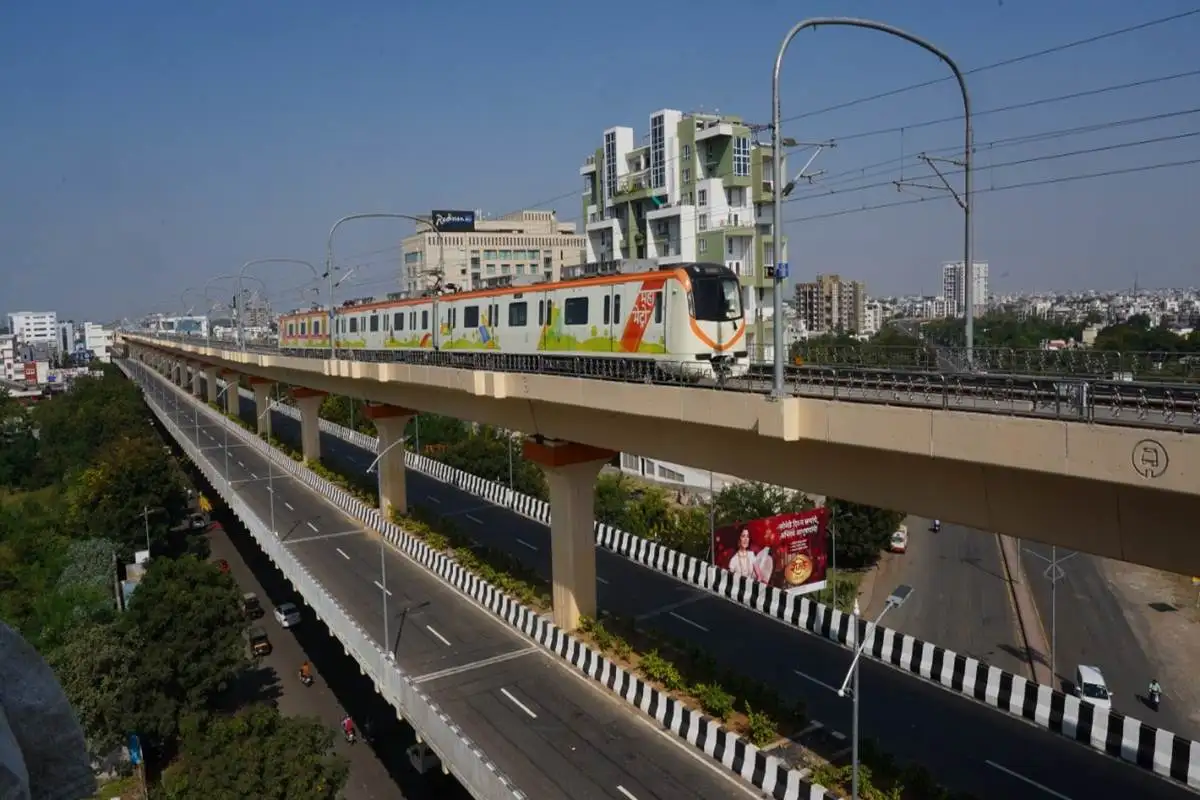
NAGPUR (Metro Rail News): Nagpur Metro’s network is set to expand. The Maharashtra government’s infrastructure committee has approved a new extension of the Phase-II North Corridor from Kanhan River to Kanhan town.
The proposal was prepared by Maharashtra Metro Rail Corporation Limited (Maha-Metro), and according to The Economics Times report, It received approval from the state’s infrastructure sub-committee led by Chief Minister Devendra Fadnavis on Thursday. The project will extend the metro line by 1.4 km at an estimated cost of Rs 310.35 crore. The extension will include an elevated metro station at Kanhan town.
Need of this extension
Kanhan is located on the outskirts of Nagpur and it has a population of around 35,000. Every day, about 5,000 to 6,000 people travel between Kanhan and Nagpur for work, education, and other activities. With the metro reaching the town, commuters will have a faster and more convenient way to travel. The project will also improve access to nearby locations, such as:
Ramtek
Tekdi
Kandri Mines
Nagardhan
Gondegaon Mines
Mauda Super Thermal Power Project
According to the proposal, the extension could serve nearly 20,000 more passengers every day.
Funding mechanism
The project will depend on both government support and external financing.
Funding Source
Amount
Central Government Equity
Rs 39.88 cr
Maharashtra Government Equity
Rs 39.88 cr
Concessional Multilateral Loans
Rs 155.18 cr
Other Support
Interest free subordinate debt from the Centre and State Government
Part of Nagpur Metro’s expansion plan
The Kanhan Town extension is part of the ongoing Phase-II expansion of Nagpur Metro. This expansion aims to improve public transport connections between Nagpur and the rapidly growing residential, industrial, and employment areas around the city. The new section will push the metro network further north and strengthen connections for commuters traveling to and from Nagpur.
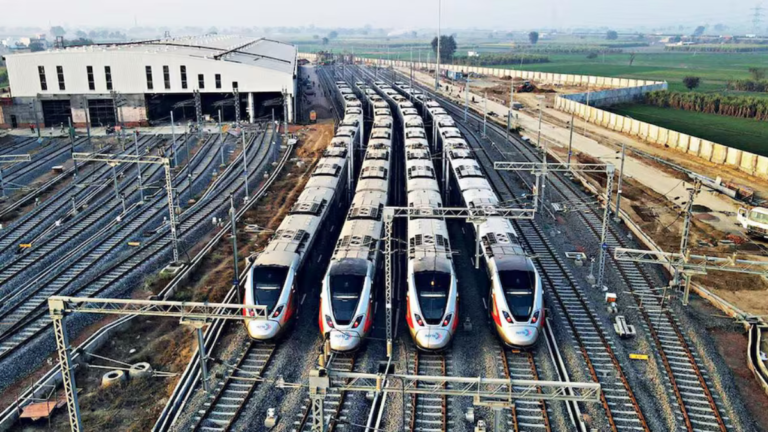
GURUGRAM (Metro Rail News): NCRTC has submitted the Detailed Project Report (DPR) for the development of the Namo Bharat RRTS corridor linking Gurugram, Faridabad, Noida and Greater Noida. The proposal was received by the Haryana Mass Rapid Mass Transport Corporation (HMRTC) and will be reviewed by the Haryana Government. A Haryana government spokesperson said that the DPR was discussed in a board meeting chaired by State Chief Secretary Anurag Rastogi on 22nd June, 2026.
The total estimated cost of the project is ₹19,390 crore. NCRTC will secure a soft loan of ₹10,102 crore to finance the project. The Haryana government (₹4,555 crore), the Uttar Pradesh government (₹1,364 crore), and the Centre (₹3,367 crore) will fund the remaining amount to construct this corridor.
As per the submitted DPR report, the total length of this corridor will be 63 km, out of which 50 km will fall in Haryana and 13 km in Uttar Pradesh. This semi-high-speed corridor will have seven stations. In Gurugram, IFFCO Chowk will serve as a starting interchange station. The other two stations are proposed at Sector-61 and Gwal Pahari. In Faridabad, three stations are proposed at Sainik Colony, Bata Chowk and Sector-87-88 intersection. The last two stations are planned in Noida Sector 142 and Surajpur.
The submitted DPR also proposes the construction of 15 new metro stations. In Gurugram, 5 new metro stations are planned at Sector 29, Millennium City Centre, Sector 52/52A, Wazirabad and Sector 57. Seven new stations are proposed in Faridabad, including NIT-3, NIT-1, the Sector 12/13/14/15 intersection, Sector 80, Sector 81/82 intersection, Sector 85/86 intersection and Badshahpur. The last three stations will be constructed in Noida and Greater Noida area, covering Noida’s Sector 135, Sector 141 and Suthiyana.
An official from HMRTC said, “The DPR is under review. Feedback will be sought from the GMDA, HSVP, Municipal Corporation Gurugram and departments concerned in Faridabad.
DELHI (Metro Rail News): Country’s high-speed rail program has moved forward. The National High Speed Rail Corporation Limited (NHSRCL) has called for bids on consultancy services to design civil structures for future bullet train corridors under the Bharat High Speed Rail Programme. The consultancy will assist NHSRCL in producing engineering designs for infrastructure that can support trains running at speeds of up to 350 kmph.
Tender Details
Information
Details
Tender Number
NHSRCL/CO/CA/DDC-CIVIL/2026/12
EMD
Rs 1 crore
Tender Fee
Rs 59,000
Bidding Method
International Competitive Bidding
Pre-Proposal Conference
15 July 2026, 11:00 AM
Scope of work
NHSRCL aims to develop standard civil structure designs to support future high-speed rail projects across India. The chosen consultant will create designs and technical standards for the infrastructure needed for trains operating at speeds of up to 350 kmph.
Related to India’s next generation Bullet Train plans
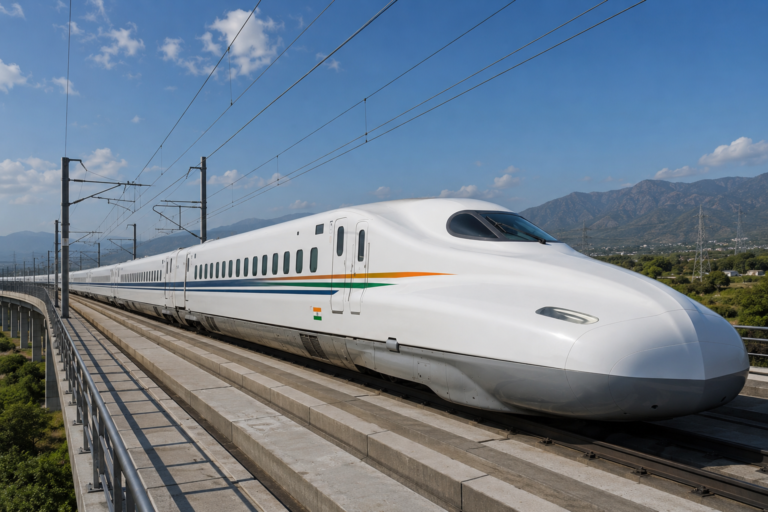
The tender follows NHSRCL’s invitation for leading rolling stock manufacturers to showcase their capabilities in developing B35 high-speed trainsets designed for speeds of up to 350 kmph. The proposed B35 trains are expected to operate on future bullet train corridors across India, including –
DELHI (Metro Rail News): India’s first bullet train hasn’t started yet, but NHSRCL is already planning for a faster version. The National High Speed Rail Corporation Limited (NHSRCL) has invited leading manufacturers to showcase their abilities in developing the proposed B35 high-speed train. The company will evaluate which firms can design and produce these trains for India’s expanding bullet train network. NHSRCL will hold presentations on July 17 and 18, and companies must confirm their participation by July 10. These trains will serve future high-speed rail corridors planned throughout the country.
Focus on design, technology and Make in India
Manufacturers must demonstrate their experience and skills in several key areas, such as:
Design capabilities for propulsion of 350 kmph speed.
Existing propulsion design and manufacturing experience.
Design capabilities of vehicle electronics (TCMS).
Existing design and manufacturing experience of vehicle electronics (TCMS).
Design capabilities of mechanical systems of 350 kmph speed.
Existing design and manufacturing experience of mechanical systems.
Make in India capabilities and plan to manufacture trains in India.
Team (manpower) experience.
Quality control systems implemented in existing facilities and certifications thereof.
Compliance with national security regulations.
NHSRCL will pay special attention to trains that can perform reliably in Indian weather and conditions. The ability to design and manufacture key components in India will also be crucial during the selection process.
Planned for future bullet train corridors
The B35 trainsets are being planned for several proposed high-speed rail corridors across India, including:
Mumbai – Pune
Pune – Hyderabad
Hyderabad – Bengaluru
Hyderabad – Chennai
Chennai – Bengaluru
Delhi – Varanasi
Varanasi – Siliguri
The B35 trains are also expected to operate on the Mumbai-Ahmedabad High-Speed Rail Corridor in the future.
B28 trains will arrive first
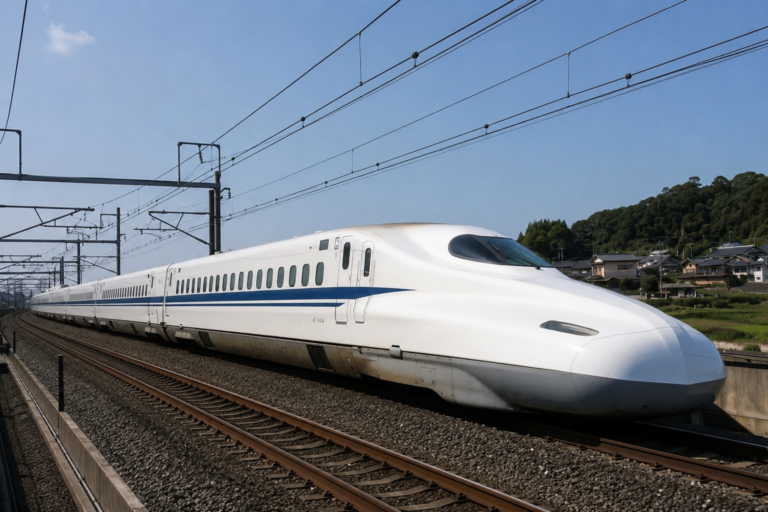
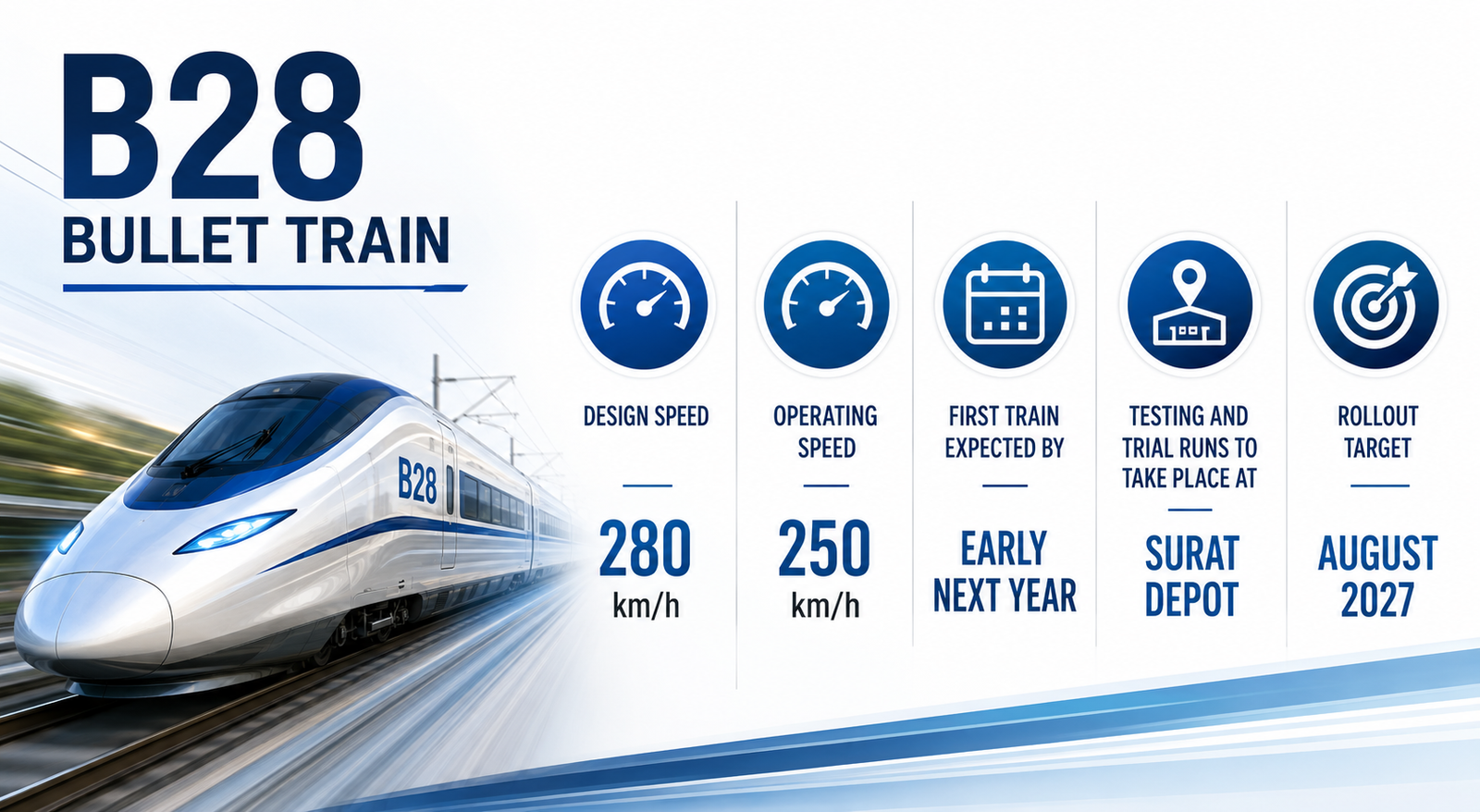
Before the B35 trains enter service, Indian Railways plans to introduce the B28 bullet train on the Mumbai-Ahmedabad corridor. BEML is currently manufacturing the B28 train at its facility in Bengaluru. Key details of the B28 train:
Construction continues on the 508 km Mumbai-Ahmedabad High-Speed Rail Corridor, India’s first bullet train project. Indian Railways is planning to start operations on the 97 km Surat-Vapi section in Gujarat by August 2027. This section will be the first operational stretch of the corridor.
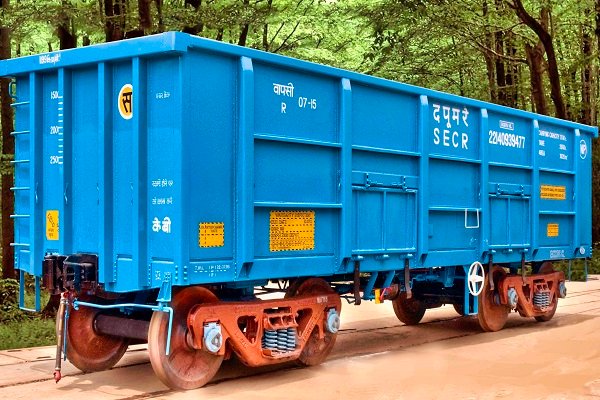
DELHI (Metro Rail News): Jupiter Wagons Limited, an Indian manufacturer of railway rolling stock, received two substantial orders with a total value of Rs 264.32 Cr from the JSW (South) Rail Logistics Limited and the Central Warehousing Corporation (CWC). The orders include manufacturing and supply of railway rakes and wagons.
— Jupiter Wagons Limited (@JupiterWagons) June 26, 2026
Parties
Contract Detail
Valuation
Jupiter Wagons and JSW (South) Rail Infra Logistics Ltd
Production and Supply of five BFNSM1 rakes and BVMC wagons
Rs 122.88 Cr
Jupiter Wagons and CWC
Production and Supply of eight BLSS rakes including 32 BLSS-A wagons, 352 BLSS-B wagons and 8 brake vans
Rs 141.44 Cr
Total Valuation – Rs 264.32 Cr
Jupiter Wagons and JSW (South) Rail Logistics signed a Letter of Intent (LoI) for the production and supply of five BFNSM1 rakes and BVMC wagons. The value of this contract is cited as approximately Rs 122.88 Cr. The work is to be completed in seven months from the signing day.
In another contract between Jupiter Wagons and the Central Warehousing Corporation (CWC), a government enterprise, contract worth Rs 141.44 was received, stating the scope as production and supply of 8 BLSS rakes including thirty-two BLSS-A wagons, 352 BLSS-B wagons and 8 brake vans. The time-period for the execution of this contract is expected to be 1 year.
The Managing Director of Jupiter Wagons, Vivek Lodhi, expressed hopes for the company’s growth amidst the rising investment in rail logistics and freight infrastructure. He further stated that the company is committed to supporting the national infrastructure with advanced wagon solutions and logistics proficiency.
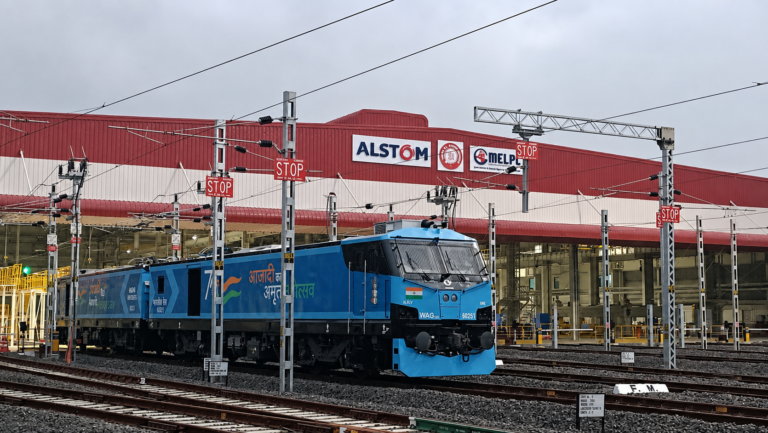
DELHI (Metro Rail News): Alstom secures 5-year maintenance service agreement at the Nagpur depot for WAG-12B electric locomotives through its joint venture with Indian Railways (MELPL)
The contract covers a five-year maintenance services agreement for 250 high-powered WAG-12B electric locomotives at the Madhepura Electric Locomotive Private Limited (MELPL) Nagpur Depot.
The €107 million contract reaffirms Indian Railways’ trust in Alstom’s world-class service capabilities, following four years of highly successful operations.
Alstom, a global leader in smart and sustainable mobility, today (26 June 2026) announced that its joint venture with Indian Railways, Madhepura Electric Locomotive Private Limited (MELPL), has been awarded a new five-year maintenance services contract. Valued at €107 million, the agreement covers the comprehensive maintenance of 250 WAG-12B electric locomotives at the MELPL Nagpur Depot. This contract renewal follows the successful execution of the previous four-year agreement and underscores Indian Railways’ continued confidence in Alstom’s high-quality services. The Nagpur depot has become a benchmark for collaborative excellence and operational success in the Indian rail sector.
Olivier Loison, Managing Director – Alstom India said, “This contract renewal is a strong validation of our commitment to Indian Railways and the success of our partnership. We are proud that the trust placed in us has translated into proven performance and reliability of the WAG-12B e-loco, which are vital to India’s freight revolution.”
The 12,000 HP Prima T8 WAG-12B locomotives are fundamental to India’s green mobility goals, capable of hauling 6,000-tonne loads at speeds of up to 120 kph. They serve as the workhorses of the Dedicated Freight Corridors, significantly increasing freight capacity while lowering carbon emissions.
Under the agreement, MELPL’s scope includes the full maintenance of the 250 locomotives and the depot’s infrastructure. To ensure rapid issue resolution and maximize fleet availability, Alstom will continue to deploy its specialized Prompt Response Teams (PRTs) equipped with tools and spares at strategic locations across the country. The contract also reinforces Alstom’s commitment to skill development through ongoing training programs at the depot.
Alstom in India
Alstom is the only multinational sustainable mobility provider in India, to have a comprehensive portfolio of offerings to meet customer specific needs and continues to be a strategic partner in supporting India’s rail revolution. With 6 industrial sites and 5 major engineering centres, the company caters to domestic as well as international project needs with its world class rolling stock, components, signalling and services solutions. Fully aligned with the country’s vision of Make-in-India and Atmanirbhar Bharat, Alstom remains deeply committed to strengthening its local sourcing and supply chain ecosystem.
About Alstom
Alstom is the pure rail leader, committed to making rail the backbone of sustainable transportation. We design and deliver a complete range of future-ready solutions – from high-speed and regional trains to metros, monorails, trams, turnkey systems, end-to-end services, infrastructure, signalling and digital rail solutions. With 87,800 people in 61 countries, Alstom brings together global expertise and multi-local presence to make every journey smarter, cleaner and more enjoyable. Together with our partners and customers, we realise the power of rail. Listed in France, Alstom generated revenues of €19.2 billion for the fiscal year ending 31 March 2026.
NEW DELHI (Metro Rail News): Taking another step forward to strengthen freight transportation, a review meeting chaired by Union Railway Minister Shri Ashwini Vaishnaw was held where discussions about improving rail based freight movement for various commodities were carried out. It was also decided that comprehensive reforms will be undertaken in the existing wagon design policy, the new policy is set to be finalized within 15 days.
During the meeting, industry representatives suggested that the customisation of wagon designs according to different transportation requirements for various commodities could help railways transport freight on a larger scale. Indian Railways is taking part in extensive consultations with industry experts, trade bodies, and major freight customers associated with commodities that have significant potential for rail transportation.
The Union Railway Minister said that strict standards for design approval and prototype development will ensure the production of the highest quality wagons in India. Major reforms in the design policy will also be introduced, under which industries will be able to modify the wagon designs according to their specific requirements, such as, steel coils require special binding arrangements and dedicated loading and unloading systems for transportation, other commodities have their own transportation requirements, in this situation industries will be allowed to propose changes in the wagon designs as per their necessities. RDSO and the Chief Commissioner of Railway Safety (CCRS) will be overseeing safety compliance and technical standards.
The success of recently developed specialized wagons for commodities such as cement and salt was also highlighted in the meeting demonstrating the significance of modifying wagons according to industries’ operational needs.
This proposed new wagon policy will play a significant role in enhancing and strengthening rail freight transport and reduce India’s dependency on imported diesel, lower logistics costs, reduce carbon emissions, and make essential goods more affordable for citizens.
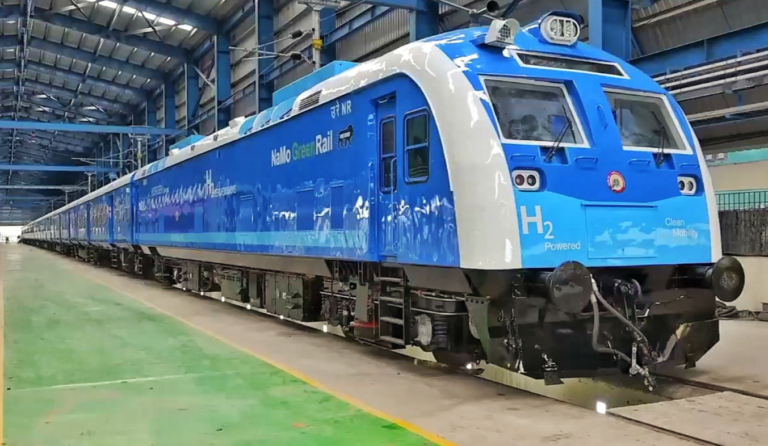
HARYANA (Metro Rail News): India’s first indigenously manufactured Hydrogen Train hit its final high-speed trials on Friday (June 26) from Jind railway station in Haryana. For this high-speed trial, the train left the Jind station to run at a speed of 120 kmph along the designated route at Jind-Sonipat Railway line. A specialized unit from the Research Design and Standards Organisation (RDSO), Lucknow, arrived at Jind station to oversee the testing.
The trial was earlier scheduled for Wednesday (June 24), but got rescheduled to June 26. The low-speed trial of the hydrogen train has been successfully executed.
Press Trust of India (PTI) posted the video of the train leaving for the 120 kmph trial from Jind station on their X (formerly twitter) account:
VIDEO | Haryana: India's first hydrogen train leaves from Jind for final 120 kmph speed trial.#HydrogenTrain#Jind
The high-speed trial is set to access several key features of the train in the trial to ensure that all the operational and safety standards are meeting the level of quality. The team will evaluate the following things in the trial:
Brake execution performance
The engine capacity
Safety systems
Vibration level
The condition of tracks
The hydrogen train will mark India’s advancement towards a cleaner source of energy for the railway transportation sector. Only a handful of countries are exploring the area of hydrogen for eco-friendly rail transportation like Germany, Japan, China and the USA. After this initiative, India will also become a part of this exclusive group.
Hydrogen Train Route
The Hydrogen train will operate on a 90-km route covering Jind and Sonipat in Haryana. The average speed of the train is expected to range from 110 kmph to 140 kmph. A hydrogen refueling and storage provision has already been set up at the Jind station for this train.
CHENNAI (Metro Rail News): Ircon International Limited has awarded a Rs 81.09 crore contract to Pee Pee Mandal Projects Pvt. Ltd. for the remaining trackwork package on a section of Chennai Metro Phase 2 project. The contract covers the supply, installation, testing and commissioning of standard gauge track infrastructure between Lighthouse Station and Poonamallee Bypass Station on Corridor 4 of Chennai Metro.
Contract details
Information
Details
Contractor
Pee Pee Mandal Projects Pvt. Ltd
Contract Value
Rs 81.09 crore
Contract Date
23 June 2026
Contract Period
365 Days
Bidding details
Bidder
Status
Pee Pee Mandal Projects Pvt. Ltd
Awarded (L1)
Avadh Rail Infra Limited
Accepted in Financial Evaluation
Scope of work
The scope of work includes balance works of supply, installation, testing,commissioning of track works of standard gauge. It also includes all associated works in underground, elevated sections between Light House station,Poonamallee Bypass station of Chennai Metro Rail Project C4 TRK 01.
AboutChennai Metro Phase 2
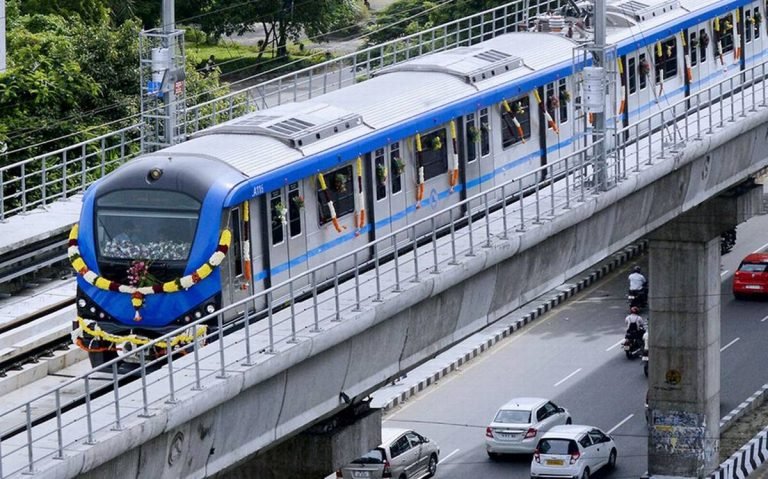
The contract is part of Chennai Metro Phase 2 expansion project. This will add 118.9 km of new metro network across 3 corridors in the city. The trackwork contract is for Corridor 4, which is also known as the Yellow Line. This section will connect the Lighthouse to Poonamallee Bypass. The corridor will span a total length of 26.1 km, which includes 16 km underground and 10.1 km elevated, along with 28 metro stations.The Yellow Line will link several important residential, commercial, and employment areas in Chennai.
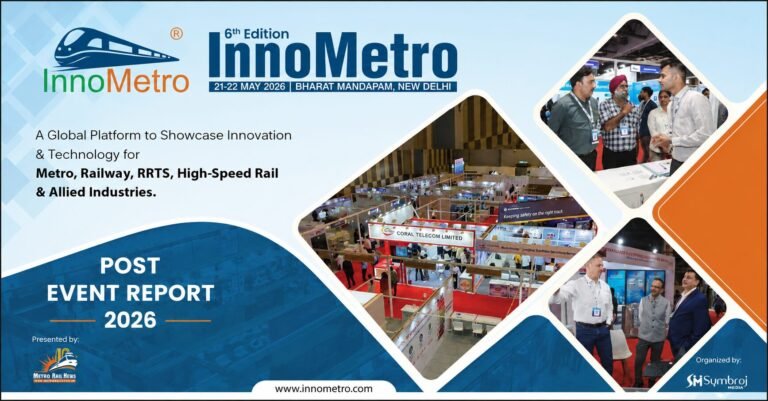
NEW DELHI: The 6th Edition of InnoMetro has concluded, and we take this opportunity to formally acknowledge all the participants who made it a grand success.
InnoMetro 2026 created a dedicated, substantive platform for India’s rail transport sector, one where rail infrastructure planners, technology providers, financiers, and policymakers could engage to discuss the challenges and opportunities defining the next chapter of India’s rail mobility sector.
InnoMetro 2026 – An Overview
The 6th edition of InnoMetro fulfilled the industry’s expectations by becoming an ideal convergence point for the technology providers, subject matter experts and decision makers who joined this ecosystem to create the future of rail transport in India.The official support from Indian Railways, Ministry of Railways, Government of India and Ministry of MSME added an additional layer of credibility and significance. This year’s edition brought together over 5,000 visitors, 60+ exhibitors, and 40+ expert speakers across 5,000 square metres of dedicated exhibition space. These figures reflect not merely the scale of the event, but the sustained and growing role within the sector for a platform of this nature.
The conference sessions addressed the critical questions, including urban metro expansion, rolling stock procurement, financing structures, and the policy frameworks that will determine the pace of delivery. The discussions were candid and technically substantive. Importantly, they were attended by the people with the authority to act on them.
The exhibition floor strengthened this dynamic, where exhibitors engaged in conversations that extended well beyond product demonstrations into genuine procurement dialogue and partnership exploration.
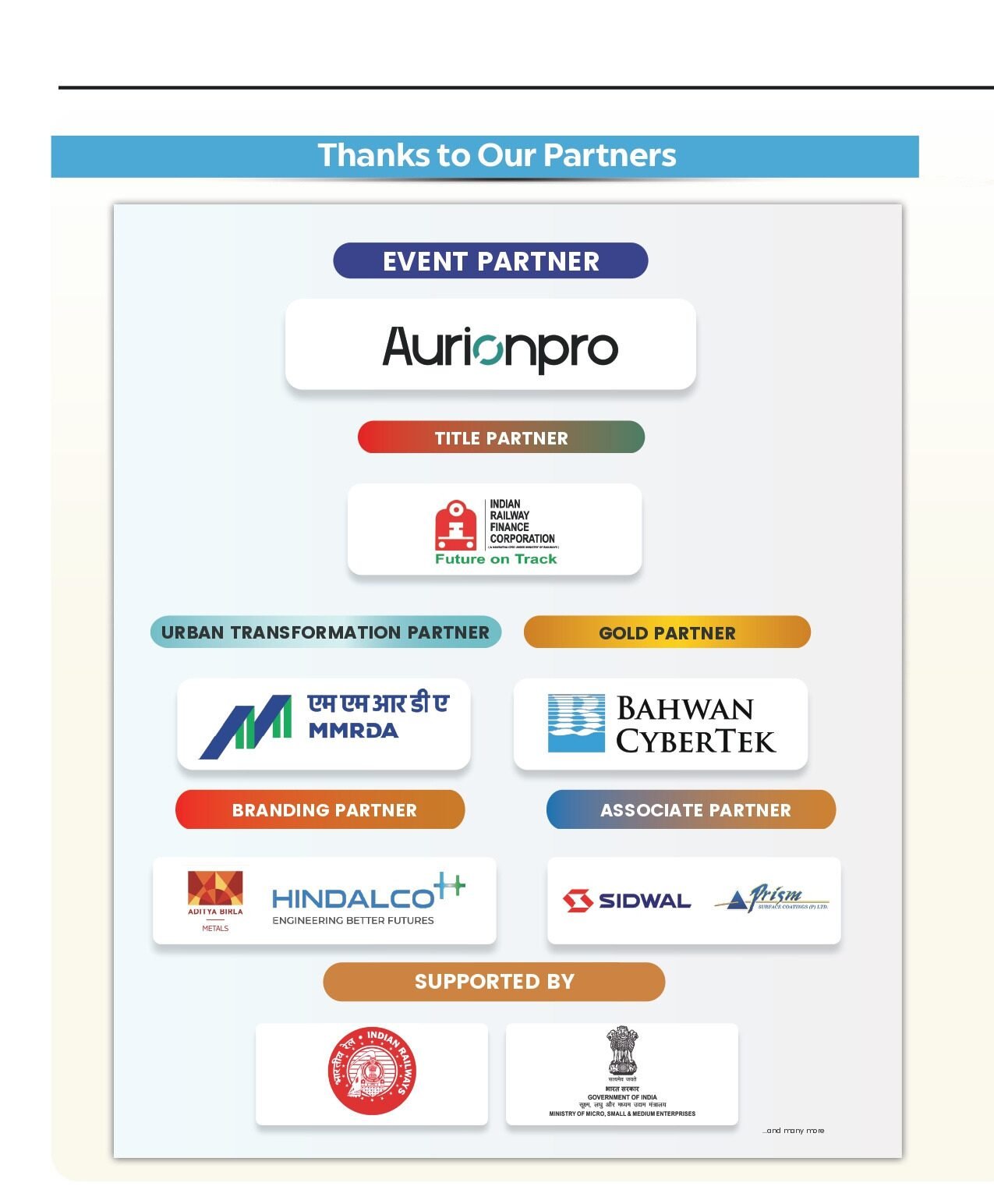
Acknowledgement of Partners We would like to extend appreciation for the contributions of all the partners who materislised the vision of InnoMetro 2026.
About This Report The Post-Event Report that follows provides a structured account of the conference proceedings, exhibition activity, and key outcomes of InnoMetro 2026. It also documents our efforts to broaden reach and deepen impact across the industry. We have prepared it with the intent that it serves as a useful reference both as a record of this edition and as context for the work ahead.
The 7th Edition
This journey will continue with the 7th edition of InnoMetro for which preparations are already underway. We would welcome early conversations with organisations wishing to explore participation or partnership opportunities.
Description
InnoMetro is Asia’s leading expo for showcasing innovations and advanced technologies for the Metro, RRTS, Railways, High-Speed Rail, and allied sectors. The objective of organising this event is to create a platform where innovators, industry experts, policymakers, infrastructure developers, technology providers, and decision-makers come together to discuss the opportunities, challenges, and future direction of rail transportation.
Over the years, InnoMetro has evolved into an industry platform that facilitates knowledge exchange, business networking, and collaboration among stakeholders across the rail ecosystem. The solutions and technologies showcased at the event contribute to the development of future mobility projects, while the discussions and insights shared during the conference shape industry perspectives, policy discourse, and institutional frameworks. The event also provides a unique opportunity for organisations to demonstrate their capabilities, explore partnerships, and engage with professionals involved in planning, developing, operating, and modernising rail infrastructure.
The 6th Edition of InnoMetro further strengthened its position as a leading metro and railway exhibition, bringing together exhibitors, speakers, and industry leaders from across the sector. By bringing the entire rail value chain under one roof, InnoMetro 2026 facilitated meaningful dialogue, encouraged collaboration, and contributed to the advancement of sustainable, efficient, and future ready mobility solutions.
Date
20-22 May 2026
Venue
Bharat Mandapam, Hall No. 4, New Delhi
Website
www.innometro.com
KEY HIGHLIGHTS
FOCUSED ON: AI- ENABLED SUSTAINABLE URBAN RAIL MOBILITY FOR VIKSIT BHARAT
Chairman:
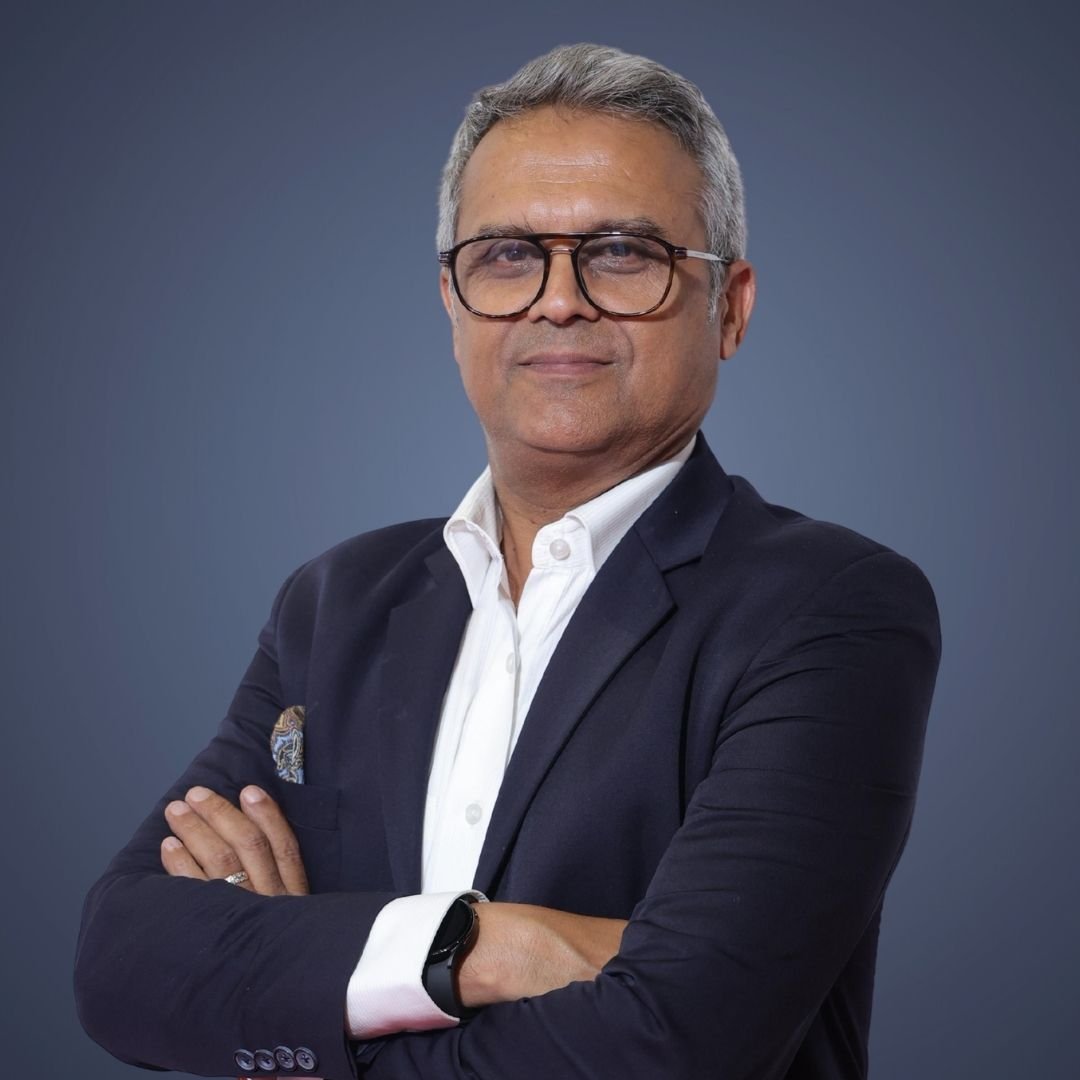
Mr. Sanjeev Kumar Sachdeva, Managing Director, Aurotoshi (An Aurionpro Group Company)
70+
PARTNERS & EXHIBITORS
30+
SESSIONS & PANEL DISCUSSIONS
40+
SPEAKERS
5,000+
VISITORS
27+
COUNTRIES
•The 6th Edition of InnoMetro was organised by Symbroj Media Pvt. Ltd. and presented by Metro Rail News. The event received official support from Indian Railways and the Ministry of MSME. InnoMetro provided a collaborative environment for meaningful engagement and knowledge exchange.
• The platform enabled attendees to build valuable business connections, explore the latest innovations and technologies in rail systems, and gain insights into emerging trends, policy developments, and technological advancements in rail transportation.
• The event featured over 5,000 square meters of exhibition space dedicated to presenting innovative products, services, and technological solutions from exhibitors and partners.
•The 6th Edition of InnoMetro was centred around the theme “AI-Enabled Sustainable Urban Mobility for Viksit Bharat”.
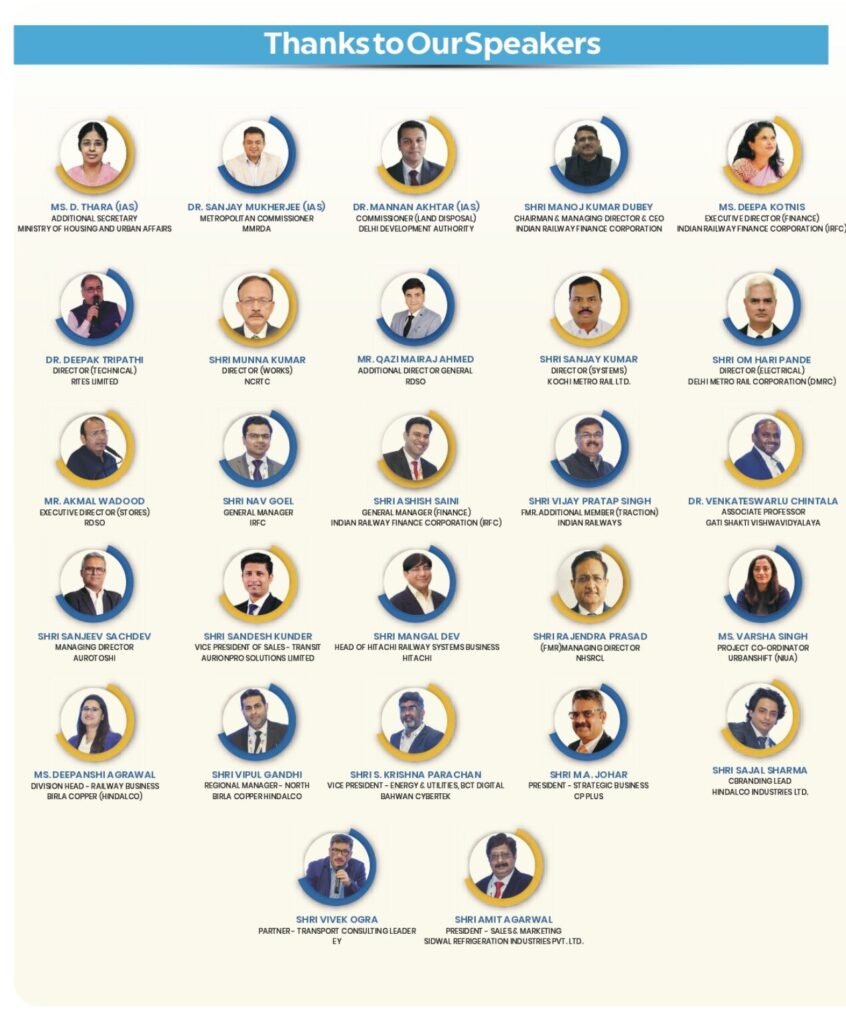
• The platform was graced by the presence of several distinguished dignitaries, including Shri Manoj Kumar Dubey, Chairman & Managing Director and CEO, Indian Railway Finance Corporation, Ms. D. Thara (IAS), Additional Secretary, Ministry of Housing and Urban Affairs, Dr. Sanjay Mukherjee (IAS), Metropolitan Commissioner, Mumbai Metropolitan Region Development Authority (MMRDA), among others.
• Mr. Sanjeev Kumar Sachdeva, Managing Director, Aurotoshi (An Aurionpro Group Company), served as the Chairman for the 6th Edition of InnoMetro
• The event was attended by officials from the Ministry of Railways, Metro Corporations, NCRTC, RDSO, NHSRCL, Alstom, IRFC, Titagarh, RLDA, DFCCIL, Coach Factories, RVNL, RITES, EY, Siemens, etc.
CONFERENCE HIGHLIGHTS
01
3+
PANEL DISCUSSIONS
02
25+
PRESENTATIONS
03
30+
SESSIONS
• During the course of 2 days, many valuable and actionable ideas were shared in the conference. All the sessions of the conference were curated to address the gaps in the procurement pipeline, financing models and institutional frameworks. In additions to discussing the roadblocks, many subject matter experts from both government and private sector came to the stage to present solutions through their sessions.
• The conference provided attendees with updates on projects across metro, railways, and RRTS; strategies to make rail transit more sustainable; and the latest trends and technologies that have the potential to influence the expansion and efficiency of metro and railway infrastructure in India.
• The 6th edition of InnoMetro convened a gathering of government officials, metro corporations, Indian Railways representatives, industry leaders, research institutions, and financial organisations to present, share, and deliberate on policy frameworks and strategic initiatives to address the technological and institutional gaps in modernising the rail transit industry in India.
The conference aimed to fulfil the following:
• To serve as a platform for industry leaders, policymakers, technology providers, and infrastructure experts to exchange ideas and discuss strategies for advancing India’s metro, railway, RRTS, freight, and high-speed rail sectors.
• To examine the role of emerging technologies, including artificial intelligence, IoT, predictive maintenance systems, cybersecurity solutions, and digital asset management tools in improving the safety, efficiency, and reliability of rail operations.
• To promote indigenous manufacturing, self-reliance, and export readiness in rolling stock and allied technologies in line with India’s vision for a globally competitive rail industry.
• To explore innovative financing mechanisms, land value capture models, and institutional frameworks that can support the development and expansion of future rail and urban mobility infrastructure projects.
• To evaluate approaches for building efficient, accessible, and inclusive urban rail networks through multimodal integration and transit-oriented development.
• To address workforce readiness, skill development requirements, and vendor participation frameworks necessary for the successful adoption of future rail technologies.
• To facilitate meaningful networking among metro corporations, Indian Railways, financial institutions, technology providers, research organisations, and industry stakeholders for the advancement of the rail transport ecosystem.
TOPICS DISCUSSED- • Indian rolling stock, electrification systems, and rail components for global markets.
• Self-reliance in key materials for rolling stock and railway electrification: metals, composites, rubbers, electronics, cables, transformers, and couplers.
• Accelerating railway electrification to support sustainable, energy-efficient, and high-capacity rail networks
• From Local to Global: Building Standards for Indian Rolling Stock and Electrification Exports.
• Export opportunities for Indian rolling stock, traction systems, and railway electrification infrastructure manufacturing.
• Transit-Oriented Development (TOD): Reshaping Delhi Around Metro
• Decongesting Metros: Strategies for Peak-Hour Passenger Flow Management • Multimodal Integration & its Impact on Ridership
• Accessibility Gaps: Designing Rail for the Differently-Abled and Elderly
Assessing the Practicality and Scalability of Last-Mile Connectivity Solutions
• Passenger-Centric Railway Operations: Strengthening Safety, Capacity and Station Readiness in High-Demand Corridors
• Fast Tracks and Roadblocks: Navigating the High-Speed Rail Revolution – A Holistic Exploration of Opportunities, Challenges, and Sustainable Development
• Harnessing the power of IOT data for AI-powered MMIS – Maintenance Management Information System
• Smart Asset Monitoring with IoT & Sensor Networks
• Cybersecurity in Railways: Protecting Signalling, Ticketing, and Passenger Data • AI-Powered Predictive Maintenance for Better Reliability and Cost Efficiency • PSD Integration with Signalling: Synchronisation with CBTC/ATP for safer train movements • Midlife Refurbishment of Metro Trains
• Building the World’s Second-Largest Driverless Metro Network for Viksit Bharat 2047 • AI-Driven Safety and Predictive Maintenance for Metro, Railways and High-Speed Rail
Exhibition Highlights
InnoMetro started as an online gathering, a simple idea that the rail transport ecosystem deserved a dedicated space to come together, exchange ideas, and discuss where Indian rail was headed. No grand ambitions. Just a belief that the right conversations, between the right people, could move things forward.
That belief turned out to be right. Over the years, InnoMetro grew not because it was marketed aggressively, but because the people it brought together found real value in being there. Policymakers, operators, manufacturers, technologists, and innovators kept coming back. And with each edition, the platform grew deeper, wider, and more meaningful.
Today, InnoMetro stands as Asia’s leading exhibition and conference for the rail transport sector, a space where organisations can showcase what they have built, connect with the people who matter, and be part of conversations that shape the future of rail mobility in India.
The 6th edition brought together officials from Metro Corporations, the Railway Board, RDSO, and coach manufacturers not as passive attendees, but as active participants engaging directly with the products, solutions, and technologies on the floor. Kochi Metro, Mumbai Metro Rail Corporation, Metro Railway Kolkata, and RITES were among those who chose to exhibit, a reflection of the trust this platform has earned within the ecosystem.
For InnoMetro 2026, the numbers tell part of the story:
• 7+ organisations came on board as partners, each bringing their own credibility and commitment to the platform.
• 60+ exhibitors set up personalised exhibit spaces to put their best work in front of a focused, relevant audience.
VOICES FROM THE INDUSTRY
Testimonials
What industry leaders say about InnoMetro
“
Manoj Kumar Dubey
Managing Director & CEO
IRFC
It has been a wonderful experience. Right from the beginning of the day,
this conclave has been very engaging. InnoMetro is doing a wonderful job
of bringing all the stakeholders associated with metro and urban railway
development in the country under one roof.
I have interacted with them in the past as well. In their sixth edition,
they are doing wonderful work. Metro railways and rapid railways are very
important for India going forward, and in this context, this kind of
conclave is extremely important. When everybody, from manufacturers to
financiers, with organisations like IRFC also participating, comes
together under one roof, it becomes a very important platform.
I am sure that, at the end of the day, a lot of impetus will be given
to the mission-mode development through which metro railways and urban
railway systems are taking shape in the country. I am also confident
that this two-day conclave will bring a lot of positivity towards the
mission mode through which the development of metros and rapid rail is
taking place in India.
Dr. Deepak Tripathi
Director (Technical),
RITES
It has been a very valuable opportunity for me as an individual
and for my company, RITES.
This is a forum where we can showcase and discuss the work we
have been doing in the rail, metro, and mobility sectors. We take
pride in being a pioneering company in this field. Our journey
began in 1998 when we started working on the first phase of
the Delhi Metro. Over the last 25 years, RITES has contributed
to metro rail projects in many indian cities, covering over 2,000
kilometres in the urban mobility sector. Events like InnoMetro
provide an excellent platform for connecting with the industry.
As the metro rail industry continues to mature, we can see that
contractors, consultants, and project execution agencies have all
evolved significantly.
The metro rail ecosystem has become mature now. we are entering
the next phase of development. This phase is focused on building
capabilities for operations and maintenance, asset management,
and the adoption of new technologies, whether related to
equipment, information technology, artificial intelligence, or
digital solutions. Now RITES is focusing on these areas too.
This exhibition and event have provided a great opportunity to
showcase our work. I also had the opportunity to participate in a
panel discussion and share my views, which made the experience
even more rewarding. It has been a truly wonderful experience.
Mr Sanjeev Sachdev
Managing Director,
Aurotoshi (An Aurionpro Group Company)
This year’s edition of the exhibition has been very well organised,
with an impressive scale and strong participation from across
the industry. We have established a large stall to showcase
our complete product portfolio. We have a lot of faith in this
exhibition because it is a very relevant exhibition as far as our
products are concerned.
KOLKATA (Metro Rail News): Taking another step at strengthening the 25 year old alliance between ABB and Kolkata Metro, ABB India has successfully installed advanced electrification and motion-control solutions across major infrastructure facilities of the Kolkata Metro network.
This partnership ensures smoother operations across all 6 corridors of the Kolkata Metro. ABB India has equipped 72 km of the Kolkata Metro with its exclusive electrification solutions including:
Low-voltage and medium voltage gas-insulated switchgear
Lightning protection systems
Distribution boards
Variable frequency drives (VFDs)
This metro network runs 300 train trips daily and serves around 5 lakh passengers, enhancing sustainable mobility in the city.
The critical cooling and ventilation infrastructure is managed by the company’s HVAC-dedicated packaged drives to provide comfort to passengers during travel. These solutions also support smoke extraction functions during emergencies within the metro station, and make an average of 25% energy savings.
Ms. Kiran Dutt, president of Electrification, ABB India, said, “As India accelerates its journey toward low-carbon, smart urban transit, the need for highly efficient and intelligent solutions has never been more urgent. Today, ABB’s broad portfolio of technologies are helping our customers drive efficient operations across 80% of the nation’s metro rail networks. Over the past 25 years, ABB has closely partnered with Kolkata Metro to equip its network with future-ready products & solutions across different corridors. Through local manufacturing and innovations under the ‘Make in India’ initiative, ABB continues to support India’s vision for a modern, sustainable, and future-ready transportation ecosystem.”
ABB’s various technologies have been installed across key metro corridors and facilities, including:
Sealdah–Phoolbagan
Joka–Majerhat
Barun Sengupta–Nazrul Tirtha
Airport
Shahid Khudiram station
Blue Line corridors
Dakshineswar, Baranagar
Metro Railway Bhavan
Jai Hind Bimanbandar (India’s largest underground metro station)
The Kolkata metro network has adopted ABB’s various technologies that are specifically created to match the infrastructure needs and operational requirements across various locations. ABB contributes to 80% of India’s metro network, ensuring seamless metro operations.
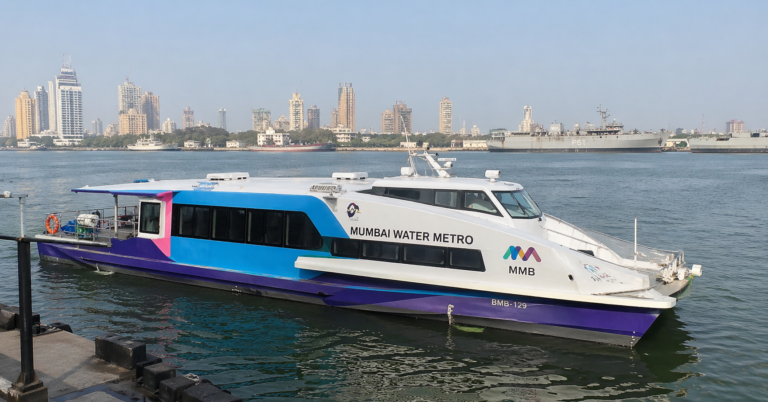
DELHI (Metro Rail News): The Inland Waterways Authority of India (IWAI) has asked for bids to prepare Detailed Project Reports (DPRs) and provide Project Management Consultancy (PMC) services for proposed Urban Water Metro systems in Srinagar, Guwahati, and Kolkata. The project aims to explore water-based public transport in these three cities.
Tender Information
Information
Details
Project
DPR and PMC Services for Urban Water Metro Systems
Tender Number
IWAI/Cargo/591/2026-27
EMD
Rs 98.74 lakh
Pre-bid meeting
03.07.2026, (14:30 hrs)
Bid Submission Last Date
22.07.2026 up to (15:00 hrs
Bid Opening date
23.07.2026 at (15:30 hrs)
Scope of work
The selected consultant will prepare a Detailed Project Report to assess the potential for establishing an Urban Water Transport System (UWTS) in Srinagar, Guwahati and Kolkata. The report will evaluate critical aspects such as infrastructure requirements, potential terminal locations, identifying potential routes, projected passenger demand, financial viability, regulatory and institutional frameworks, and stakeholder perspectives. The consultant will also provide Project Management Consultancy (PMC) services for all three cities.
Proposed Locations in Srinagar
The study will cover:
11 locations on the River Jhelum
Locations: Pantha Chowk, Batwara/ Bantamaloo, K P Bridge, Zero Bridge, Amira Kadal Bridge, Shah E Hamdan/ Maharaj Gunj, Chhatabal Weir/ Chhatabal Shrine/ Safa Kadal, Chhatabal Weir – 2, Sumbal/ Sumbal Bridge, Hajin Bridge, Wular Lake.
10 locations on Dal Lake
Locations: Nehru Park, Zabarwan Park, Tulip Garden, Char Chinar Dal Lake, Vakeel Colony, Nishat Garden, Mirza Bagh, Shalimar Bagh, Naseem Bagh, Dargah Hazratbal Shrine
Proposed Locations in Guwahati
Gateway of Guwahati, Uzaan Bazar, Umananda, Pandu Port, Guwahati Airport, Palashbari River View Point, IIT Guwahati, North Guwahati, Rajadwar Ghat, Kurua Ferry, Sualkuchi, Choonsali
IWAI also intends to construct and operate cruise terminals in Srinagar (River Jhelum), UT of J&K; Guwahati, Assam and Kolkata, West Bengal. The selected consultant is expected to design the terminals having the cruise facility along with ferry operations at certain location(s). The work of designing cruise terminal(s) has been already awarded by IWAI to another consultant. The selected consultant is expected to account for the design for the earlier awarded cruise terminal while designing the facility for UWMS at that location. Both cruise and ferry terminals would be having separate entry/ exit along with berthing provisions. The location(s) of the cruise terminal(s) would be shared later with the selected consultant.
About the project
IWAI operates under the Ministry of Ports, Shipping, and Waterways. It aims to promote inland water transport as a cleaner, more affordable, and sustainable way to travel. If executed, the proposed water metro systems could provide a new public transport option in Srinagar, Guwahati, and Kolkata. This would reduce pressure on roads and make better use of existing waterways.
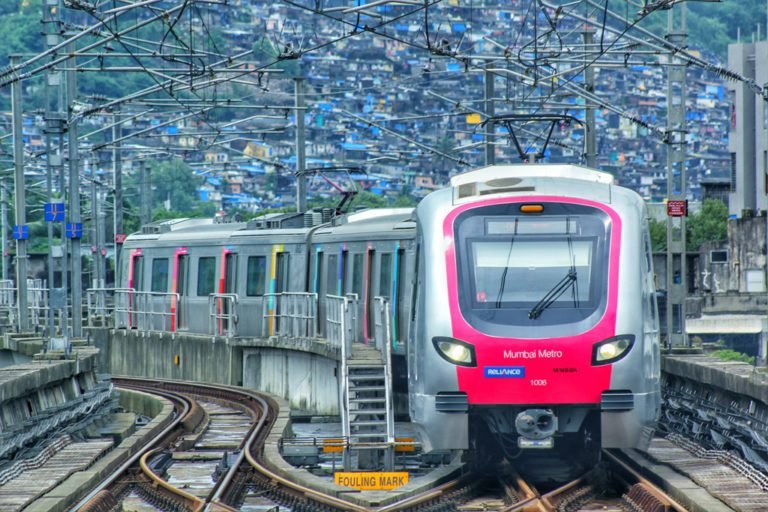
MUMBAI (Metro Rail News): The Maha Mumbai Metro Operation Corporation Limited (MMMOCL) achieved its highest-ever single day ridership of 3,58,115 passenger journeys on 23 June, 2026. The arrival of the Southwest Monsoon was a major factor behind the high ridership, as monsoon activity intensified across the Mumbai Metropolitan Region. To accommodate this increased passenger demand, the MMMOCL has positioned additional Metro rakes on standby across all corridors which can be deployed whenever required based on ridership and crowd levels. This additional capacity will be operational beyond peak hours for safe and reliable travel experience during the monsoon season. Previously on 19th June, Mumbai metro recorded its peak ridership of 3,57,895.
Mumbai Metro is the second largest metro network in India. Prime Minister Manmohan Singh laid the foundation for the Mumbai Metro Rail Project in June 2006. The first line began its passenger operations on 8th June, 2014. Since then Mumbai Metro has become a big part of Mumbai’s transport system. It has also made significant contributions in the economic growth of the city. Today, Mumbai Metro plays a vital role in traffic reduction, shorter time travel and enhanced connectivity across the city.
Recent developments in the Mumbai Metro Rail Project:
The first phase of Mumbai Metro Line 5 (Thane to Dhamankar Naka in Bhiwandi) is closer to its commencement. The Commissioner of Metro Rail Safety (CMRS) inspection will be conducted before the passenger operations begin. The total length of this corridor is 34.21 km, making it the longest line in the Mumbai Metropolitan Region (MMR).
Mumbai’s Metro Line 9 Phase 1 was inaugurated by Chief Minister Shri Devendra Fadnavis on 7th April, 2026. Both phases of this line started its passenger services from 8th April. With this launch, one new metro line was added to the 4 operational lines increasing Mumbai metro’s connectivity to 5 active metro lines, including Metro Line 1 (Ghatkopar-Andheri-Versova), Line 2A (Andheri West-Dahisar East), Line 7 (Dahisar East and Andheri East) and Line 3, known as Aqua Line (Colaba-Bandra Kurla Complex-SEEPZ).
DELHI (Metro Rail News): The central government has announced plans to sell up to a 2% stake in Indian Railway Finance Corporation (IRFC) through an Offer for Sale (OFS). The move could help the government raise more than Rs 2300 crore and support its disinvestment programme for the financial year 2026-27.
The Department of Investment and Public Asset Management (DIPAM) stated that the government will first sell a 1% stake in IRFC. If investors demanded more then it can sell an additional 1% through a greenshoe option. The offer was available for non-retail investors on Wednesday and for retail investors on Thursday (Today). DIPAM Secretary Arunish Chawla shared the details on social media platform X. He said the government is offering 1% equity in IRFC along with an additional 1% greenshoe option.
Offer for Sale for Indian Railway Finance Corporation (IRFC) opens tomorrow for Non Retail investors. Retail investors can bid on Thursday. Government offers to disinvest 1% equity in the IRFC along with additional 1% as green shoe option. pic.twitter.com/4b1mSV3OOi
The minimum price is about 7.8%, which is lower than IRFC’s closing price of Rs 98.37 on the (Bombay Stock Exchange) BSE on Tuesday. IRFC shares closed 2.53% lower ahead of the announcement.
Part of Government’s FY27 plan
The stake sale is part of the government’s efforts to raise non-tax revenue and increase public shareholding in public sector companies. In the Union Budget for FY27, the Centre set a target of Rs 80,000 crore through disinvestment and asset monetization. In the starting of this month, the government completed a 5% stake sale in General Insurance Corporation of India (GIC Re), which received strong interest from investors. Official figures show the government has already raised around Rs 16,480 crore through minority stake sales in public sector enterprises, banks, and insurance companies during this financial year.
Previous attempt to sell IRFC shares
Earlier this year, the government attempted to sell a larger stake in IRFC. In February, it planned to sell up to 4% of the company but ended up selling only 1.71%. After that transaction, the government’s stake in IRFC stood at 84.65%.
About IRFC
IRFC is a Navratna public sector company under the Ministry of Railways. The company began operations in 1986 and serves as the primary financing arm of Indian Railways. It raises funds from domestic and international markets to finance railway infrastructure projects, purchase rolling stock, and support network expansion. IRFC also holds registration with the Reserve Bank of India as a systemically important non-deposit-taking non-banking financial company (NBFC) and infrastructure finance company.