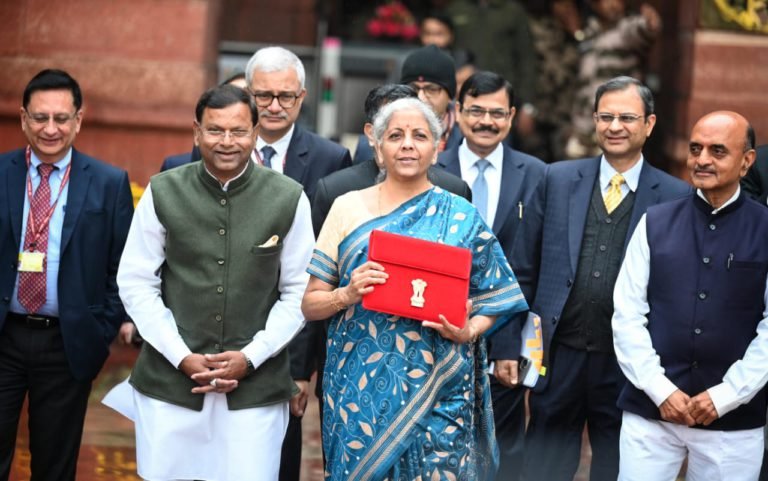
NEW DELHI (Metro Rail News): Finance Minister Smt Nirmala Sitharaman presented the Union budget in the parliament today. It included allocations for all major sectors of our economy. The government has allocated Rs 11.11 lakh crores in FY25 for infrastructure development in the country.
Boost to Railways
The railway has received a significant boost towards its goal of decongesting lines and introducing new lines and locomotives. The budget has been allocated under the following two heads:
3 Rail Connectivity Corridors – Corridors for Port, Corridors for Energy, Cement and Mineral; High-Traffic Density Corridor
Vande Bharat Makeover for 40,000 Rail Bogies
A rail corridor facilitating corridor-port connectivity under the DFC will be established. More than two corridors will be set up under this to facilitate growth and development for business in India by providing an efficient and dedicated corridor.
Three dedicated corridors for easy and efficient transportation of Energy, Cement and Minerals will be established. It will facilitate a seamless flow of goods nationwide, encouraging our economic prowess. These corridors will be in addition to the DFCs. The Third and most crucial corridor is the high-traffic-density corridor. In this, routes having high-density passenger traffic will be given priority Such routes will be made into a dedicated corridor.
In a significant push, 40,000 normal bogies will be converted into Vande Bharat trains. This will ensure safety and efficiency for the commuters on the route.
Smt Nirmala Sitharam said, “The resultant decongestion of the high-traffic corridors will also help improve the operations of passenger trains, resulting in safer and higher travel speeds for passengers. Together with dedicated freight corridors, these three economic corridor programmes will accelerate our GDP growth and reduce logistic costs.”
Boost to Urban Transport
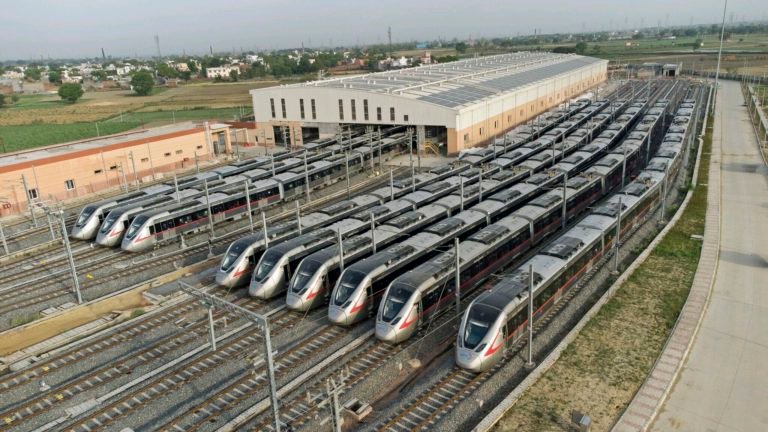
Per the announcements, the flagship Namo Bharat trains will be expanded to more cities to ensure better solutions to mobility problems in the continuously expanding Urban Centres.
Smt Nirmala Sitharam said, “We have a fast-expanding middle class and rapid urbanisation is taking place. Metro Rail and NaMo Bharat can be the catalyst for the required urban transformation. Expansion of these systems will be supported in large cities focusing on transit-oriented development.”
Further
The announcements offer an exciting picture of rail mobility taking shape in India rapidly, with a handsome investment of Rs 11.11 lakh crores through infrastructure.
Discover the endless possibilities of our city’s Metro at InnoMetro, our flagship Expo and Conference. Be an active participant in shaping its future towards a more sustainable tomorrow. Stay informed and join us to take a step towards a brighter future.
CHENNAI (Metro Rail News): Chennai Metro Rail Limited has commenced the expansion of Chennai city’s metro rail network as part of Phase 2 after the successful completion of Phase 1 and Phase 1 Extension Corridors in stages since June 2015 and the growing ridership in Corridors 1 & 2. Now, CMRL has ventured into extensive infrastructure development in the city, comprising three more metro rail corridors for a total of 116.1 km with 119 metro stations.
Chennai Metro Rail Phase II Corridor 4 is an east-west alignment for a length of 26.1 km, connecting the beachfront from Light House station to Poonamallee Depot. It has nine underground stations and 18 elevated stations. Corridor 4 underground part stretching over 10 km, originating from the Lighthouse and passing through Chennai’s oldest areas like Mylapore and Kutchery Road to new and upmarket areas like Alwarpet, Bharatidasan, Boat Club, Panagal Park & Kodambakkam.
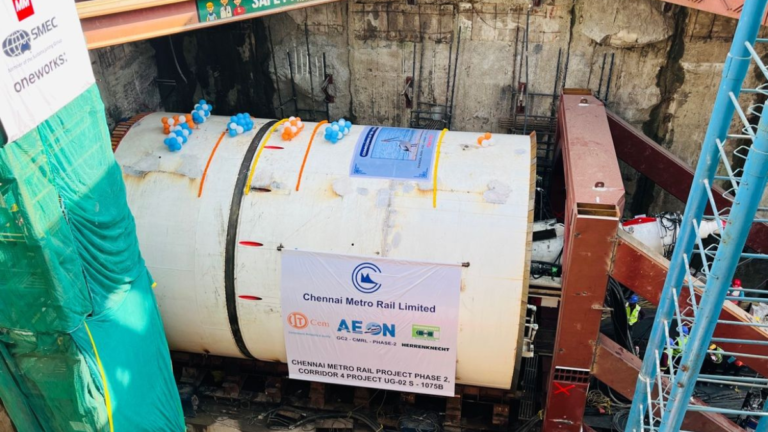
A total of four TBMs will be utilised in Corridor 4. In this, the underground projects, namely C4-UG01 (Light House to Bharathidasan Road) & C4-UG02 (Bharathidasan Road to Kodambakkam Powerhouse Ramp) bagged by ITD Cementation India Limited to construct both Metro Stations and its tunnels. Two TBMs, namely Flamingo and Eagle, have already been launched from Light House Station towards Thirumayilai Metro Station, and two TBMs, namely Peacock and Pelican, are being launched from Panagal Park station towards KodambakkamPowerhouse Ramp.
Thiru. T. Archunan, Director Projects, CMRL, launched the TBM (Pelican) of Corridor – 4, a total length of 2.1 km from Panagal Park Station to Kodambakkam Powerhouse Ramp (upline) on 31st Jan, in the presence of senior officials from CMRL, General Consultants, M/s AEON Consortium, and ITD Cementation.
This TBM Pelican is launched in the line of Corridor- 4 and will mine at a maximum depth of 18.5m from ground level. It will complete this stretch by the end of December 2024. This TBM will pass through the North Usman Road flyover and the Kodambakkam flyover in this stretch. The retrieved TBM will start tunnelling from Panagal Park towards Boat Club Station. TBM peacock will commence its journey on April 1, 2024, from Panagal Park to Kodambakkam Powerhouse Ramp, retrieving the shaft in Downline.
Intrigued by the future of Metro and its impact on our city? Join us at our upcoming InnoMetro event to delve deeper into this vital issue. Stay informed, get involved, and let’s ride the Metro towards a brighter, more sustainable future together.
Ahmedabad, the vibrant city of Gujarat, saw the development of its rapid transit dream in February 2010 with the establishment of the Gujarat Metro Rail Corporation Limited. The ambitious project, christened Ahmedabad Metro, aimed to weave a web of swift and efficient connections across the city and its neighbouring Gandhinagar. Phase-1, approved in 2013, envisioned two corridors – North-South and East-West – spanning 40.03 km. Construction commenced in March 2015, and the first ride of the Metro came in March 2019 with the inauguration of a 6.5 km section of the East-West corridor. The remaining sections of Phase-1 followed suit in September 2022, except the Thaltej Gam end and three stations. By October 2022, the Metro was fully operational, offering a convenient alternative to navigate the bustling city.
Phase 2, initiated in January 2021, extends the Metro’s reach further, connecting Ahmedabad with Gandhinagar through a 28.26 km corridor. This phase also includes a branch line to GIFT City, which is expected to be operational by early 2024. Ahmedabad Metro is more than just a transportation system; it symbolises progress and connectivity. It’s weaving together the city’s vibrant neighbourhoods, offering a glimpse into a future where commuting is efficient, sustainable, and enjoyable. As the network expands, so does the potential to transform how people move around, live, and work in Ahmedabad and Gandhinagar.
Historical Overview
The Gujarat Infrastructure Development Board (GIDB) initiated a study for urban transport between Gandhinagar and Ahmedabad in 2003. This study led to the preparation of a Detailed Project Report (DPR) for a Metro Rail System in these cities, carried out through collaboration with the Delhi Metro Rail Corporation (DMRC) and RITES. The DPR was submitted in June 2005 and received approval from the central government in the same year.
However, due to cost considerations and a focus on other transportation projects, such as the Ahmedabad BRTS and suburban railways, the project was abandoned in 2005. The project was revived in 2008, recognizing the need for future development in the region. New corridors were designed to ensure its viability. To execute this project, the Government of Gujarat established a special-purpose vehicle company called Metro Link Express for Gandhinagar and Ahmedabad Company Ltd. in 2018, the company was renamed the Gujarat Metro Rail Corporation Limited (GMRC). Initially capitalized with Rs. 202 crores, it was later decided in 2014 that the central government would hold a fifty per cent stake in the company.
Phase-1
Phase 1 of the project received approval from the central government in October 2014, with a budget allocation of Rs. 10,773 crore. In November 2014, the central government gave the green light for the utilization of vacant land of the Western Railways along the Botad-Sabarmati meter gauge line. The initial plan, which involved the Metro running along Ashram Road, was later modified, shifting the track towards the west. Although increasing the cost by Rs. 600 crore, this revised plan and adding two more stations resulted in fewer land acquisition issues and reduced traffic congestion on Ashram Road. In the 2015 Gujarat budget, an additional Rs. 611 crore was earmarked for the metro project.
On 14th March 2015, a ground-breaking ceremony took place to construct the 6.5 km Vastral – Apparel Park section of the East–West corridor. The then-chief minister of Gujarat, Anandiben Patel, attended this event. Another significant event, the commencement of the North-South Corridor, was marked with a ceremony on 17th January 2016, also graced by Anandiben Patel. The construction work for this project began in March 2016. In June 2016, the railways permitted the North–South corridor stretch on its land. The Japan International Co-operation Agency (JICA) pledged to fund Rs. 5,968 crore for Phase 1 of the project in November 2015. The first instalment of this funding, amounting to Rs. 4,456 crores, was disbursed in 2016.
In February 2019, trial runs commenced on the 6.5 km Vastral – Apparel Park section of Phase-1. This section was officially inaugurated by Prime Minister Narendra Modi on 4 March 2019 and was opened to the public two days later, on 6 March 2019. The Thaltej-Thaltej Gam stretch, which is 1.4 km long, along with three metro stations – Kankaria East, Thaltej Gam, and Sabarmati, had been slated for completion by December last year. Prime Minister Modi inaugurated the remaining part of Phase-1 on 30th September 2022. The east–west and north–south corridors were subsequently opened to the public on 2nd October 2022 and 6th October 2022, respectively. The total expenditure for the construction of Phase 1 amounted to Rs. 12,900 crore.
Phase – 2
Phase 2 of the project received approval from the government of Gujarat in October 2017 and underwent revisions in October 2018. The union cabinet gave its nod to Phase 2, valued at Rs. 5,384.17 crore, in February 2019. This phase will see the north–south corridor extending from Motera in Ahmedabad to Mahatma Mandir in Gandhinagar, spanning 23.838 km. Additionally, a branch line from the Gujarat National Law University (GNLU) will connect Pandit Deendayal Energy University (PDEU) and GIFT City, covering 5.416 km. The total length of the elevated corridor in Phase 2 will be 28.26 km, featuring 22 stations. The tender process for Phase 2 started in January 2020. Prime Minister Modi laid the foundation stone for this phase on 18th January 2021. The branch line leading to GIFT City will be operational by early 2024. In February 2023, Titagarh Rail Systems secured a contract worth Rs. 350 crore to supply rolling stock for Phase 2. Although the trial run for Phase 2 was scheduled to begin in June 2023, it has not started yet.
Blue Line
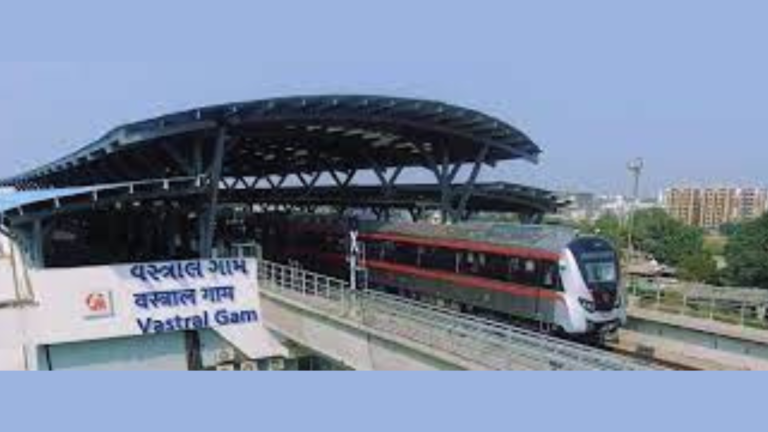
The Blue Line of the Ahmedabad Metro is the city’s first underground rapid transit system, carving a 21.23 km path through the heart of Ahmedabad. Spanning 18 stations (two currently under construction), it stretches from Vastral Gam in the north to Thaltej Gam in the south, offering a convenient and elevated city perspective for commuters.
The Blue Line’s journey began in 2015 with a groundbreaking ceremony for the initial 6.5 km stretch from Vastral to Apparel Park, marked by the presence of Gujarat Chief Minister Anandiben Patel. Construction work officially commenced in March 2016; by February 2019, trial runs were underway on this section. The grand inauguration followed on March 4, 2019, with Prime Minister Narendra Modi, Chief Minister Vijay Rupani, and Deputy Chief Minister Nitinbhai Patel gracing the occasion.
The Blue Line’s significance goes beyond mere transportation. It symbolizes Ahmedabad’s commitment to modernizing its infrastructure and providing its residents a faster, more efficient, and eco-friendly way to navigate the city. The elevated tracks offer scenic vistas and help ease congestion on the ground below. As the remaining two stations are near completion, the Blue Line promises to enhance connectivity further and contribute to a more vibrant and sustainable Ahmedabad.
The first operational corridor of the Ahmedabad Metro, the Blue Line, opened its doors to the public on March 6th, 2019, offering a swift and convenient way to navigate the city. While the initial phase covered a 6.5 km stretch, Prime Minister Modi officially inaugurated the rest of the line, spanning 21.23 km, on September 30th, 2022. However, the journey isn’t quite over yet.
The final leg, a 1.4 km section extending to Thaltej Gam and encompassing two additional stations, Thaltej Gam and Kankaria East, is expected to be completed soon. This final touch will further enhance Blue Line’s significance connecting Vastral Gam to Thaltej Gam through 18 stations. The Blue Line encompasses a diverse system of elevated and underground sections. While most of its journey takes place above the bustle of the city, four stations – Apparel Park, Kalupur Railway Station, Gheekanta, and Shahpur – dive deep, reaching 22 meters below ground at their lowest point near Gheekanta. The remaining underground stations, nestled 12-14 meters below the surface, offer a glimpse into the city’s hidden depths.
Old High Court station is a vital interchange point, allowing seamless transfers between the Blue Line and the upcoming Red Line. This connectivity promises to enhance the network’s efficiency further and reach.
The Blue Line’s opening day was a resounding success. With over 41,700 tickets sold and 72 trips completed, it quickly became a popular choice for commuters. The enthusiasm continued the next day, with 17,000 passengers taking advantage of its swift and comfortable rides. As the Blue Line expands, it promises to become the lifeblood of Ahmedabad’s transportation system, connecting communities, reducing traffic congestion, and offering a greener alternative for city travel. Its journey, from inauguration to expansion, is a testament to the city’s commitment to progress and a glimpse into a future where efficient and sustainable transportation takes centre stage.
Stations
Eighteen stations are proposed to be constructed on the route, with four stations underground and the rest elevated. The details are as under:
Sr. No.
Station Name
Layout
01
Thaltej Gam
Elevated
02
Thaltej
Elevated
03
Doordarshan Kendra
Elevated
04
Gurukul Road
Elevated
05
Gujarat University
Elevated
06
Commerce Six Road
Elevated
07
SP Stadium
Elevated
08
Old High Court
Elevated
09
Shahpur
Underground
10
Gheekanta
Underground
11
Kalupur Railway Station
Underground
12
Kankaria East
Underground
13
Apparel Park
Elevated
14
Amraiwadi
Elevated
15
Rabari Colony
Elevated
16
Vastral
Elevated
17
Nirant Cross Road
Elevated
18
Vastral Gam
Elevated
Operations, Network & Route Length
The Metro saw a dramatic surge in ridership following the opening of Phase 1 in September 2022. The following year, over 186 million people hopped aboard the sleek trains, with an average of 90,000 daily riders on regular days and 75,000 on holidays. Even on less bustling days, the Metro still carried 51,000 passengers. This surge in popularity translated into financial success, with ticket sales generating Rs. 28 crore within the same period.
The success of Phase 1 has undoubtedly fuelled excitement for the future of the Metro. With further expansion plans underway, one can only imagine the network’s potential to revolutionize how people move around Ahmedabad.
Line
Phase-1
Phase-2
Total Length
Blue Line
21.16 km
—
21.16 km
Red Line
Main Line
18.87 km
22.84 km
41.71 km
Branch Line
—
5.42 km
5.42 km
Total Length
40.03 km
28.26 km
68.29 km
Current Status
Line
First Operational
Last Extension
Number of operational stations
Operational length
Blue Line
4 March 2019
30 September 2022
16 (except Thaltej Gam and Kankaria East)
19.76 km
Red Line
30 September 2022
N/A
14 (except Sabarmati Railway station)
18.87 km
Total
29 (with Old High Court interchange)
38.63 km
Project Specifications & Key Information
Ahmedabad, the bustling commercial hub of Gujarat, and Gandhinagar, the state’s capital, are set to be connected by a sophisticated urban Mass Rapid Transit System (MRTS) known as the Ahmedabad Metro. This ambitious project, spearheaded by the Gujarat Metro Rail Corporation (GMRC), promises to revolutionize transportation in the region, bringing many benefits to both cities.
Construction work on Ahmedabad Metro’s Phase 1 began in 2015, encompassing two crucial corridors spanning 39.259 km. The initial phase saw the inauguration of a 6 km section of Line-1 in March 2019, offering a glimpse into the Metro’s potential. By September 30, 2022, most of Phase 1 became operational, except a 1.4 km stretch. This partial opening provided commuters a convenient and efficient way to navigate Ahmedabad’s bustling streets.
With Phase 1 successfully underway, the focus shifted to Phase 2 in February 2016. The Gujarat state government allocated Rs 2 crore to prepare the Detailed Project Report (DPR) and entrusted the Delhi Metro Rail Corporation (DMRC) with this critical task. The draft DPR charted the 18.522 km Line-2 extension course, aiming to connect Ahmedabad with Gandhinagar’s Mahatma Mandir. Additionally, branch/spur lines to GIFT City were envisioned, further enhancing the network’s reach.
February 2019 marked a significant milestone as the union cabinet approved the construction of a 28.254 km Phase 2. This phase comprised two crucial corridors: a northward extension of Line-2 with a short spur and an additional corridor connecting Ahmedabad with Gandhinagar. Prime Minister Narendra Modi laid the foundation stone for Phase 2 in March 2019, signifying the project’s importance for the region’s development. Plans include adding a roughly 5 km line connecting Koteshwar Road with Sardar Vallabhbhai Patel International Airport. This proposed spur, if materialized, would further bolster the Metro’s reach and convenience.
A Boon for Ahmedabad and Gandhinagar
The Ahmedabad Metro is more than just a transportation system; it symbolises progress and connectivity. By weaving together these two vibrant cities, the Metro promises to:
Reduce traffic congestion: With a reliable and efficient alternative, the Metro is expected to ease the burden on Ahmedabad and Gandhinagar’s roads, leading to smoother traffic flow and reduced travel times.
Boost economic growth: Improved connectivity will likely attract businesses and investments, fostering economic growth and creating new job opportunities in both cities.
Enhance quality of life: Reduced pollution and congestion will contribute to a cleaner and healthier environment, improving residents’ overall quality of life.
As the Ahmedabad Metro continues to expand, it has the potential to transform the way people live, work, and travel in Gujarat. By providing a sustainable and efficient transportation system, the Metro paves the way for a brighter future for both Ahmedabad and Gandhinagar. The key information of the project is as follows:
Operational: 37.86 km (Phase 1)
Under Construction: 29.65 km (Phase 1, Phase 2)
Proposed: 5 km
Daily Ridership: 90,000/day (March 2023)
Rolling Stock: 96 coaches (32 train sets x 3) supplied by Hyundai Rotem
Top Speed: 80 kmph
Average Speed: 33 kmph
Track Gauge: Standard Gauge (1435 mm)
Electrification: 750 V DC Third Rail
Signalling: Communication-based Train Control (CBTC)
Line-3 (Eastern Spur of Line-2): Gujarat National Law University (GNLU) – GIFT City (5.416 km, 2 stations)
Summary
Ahmedabad Metro, designed for swift and effortless travel, is currently operational within the city limits, connecting passengers to key destinations. But its ambitions stretch beyond, aiming to connect the urban hub of Gandhinagar and the modern metropolis of GIFT City in the near future. Ranked amongst India’s top eight metro systems, Ahmedabad Metro boasts ambitious expansion plans. Phase 1, already partially operational, envisioned two lines with 32 stations, while Phase 2 promises another two lines with 22. This intricate network aims to combat traffic congestion and offer commuters a convenient, affordable, and safe travel solution. Metro smart cards offer attractive discounts, further incentivizing commuters to embrace this eco-friendly alternative.
Prime Minister Narendra Modi’s inauguration of Phase 1 in September 2022 marked a significant milestone. His journey from Gandhinagar Station on the brand-new Vande Bharat Express 2.0 train to Kalupur Station in Ahmedabad symbolized the project’s potential to bridge distances. Following the inauguration, the state urban development department swiftly swung into action. Recognizing the transformative power of metro connectivity, they initiated an action plan to explore extending the network to other parts of Ahmedabad. The Prime Minister himself directed officials to prioritize metro access for outlying areas. Mapping services were commissioned to identify potential routes in the eastern and western parts of the city, with areas like SG Road and SP Road emerging as promising candidates for future expansion.
Commercial operations for the North-South corridor, a fully elevated line spanning 18.87 km, commenced on October 6th, 2022. This popular corridor serves as a testament to the metro’s commitment to improving urban mobility and enhancing the lives of Ahmedabad’s residents. As Ahmedabad Metro embarks on its ambitious expansion plans, it promises to transform the city’s landscape. By weaving a web of efficient connections, it will not only ease traffic woes but also unlock economic growth and enhance its citizens’ overall quality of life. The journey has just begun, and the future of Ahmedabad looks bright, fueled by the convenience and connectivity of its ever-growing metro network.
New Heights
With the launch of the Ahmedabad metro, India’s metro network has exceeded Japan’s operational metro network length. The total extent of India’s metro rail has reached more than 800 Kms. Beyond the operational network, India has nearly a thousand kilometres of metro rail under construction. Once completed, India will surpass South Korea and the USA in the route length.
On 2nd October, a 21-km stretch of the Ahmedabad Metro project, with 17 stations between Thaltej and Vastral, was opened to the public. According to the Gujarat Metro Rail Corporation (GMRC), the project includes a 6.6 km underground section with four stations. On 4 March 2019, the Prime Minister inaugurated a segment of phase 1, linking Vastral to Apparel Park, covering a distance of 6.5 km. The Metro Rail project received approval in 2014. Phase 2 of the project will extend from Gandhinagar (the state capital) to Ahmedabad, primarily expanding Phase 1. It is anticipated to consist of two corridors – one from Motera Stadium to Mahatma Mandir (a 22.8-km stretch with 20 stations) and the other from Gujarat National Law University to GIFT City (a 5.4-km route with two stations).
The complete route under phase 2 of the project will be elevated. Phase – 1 is supposed to run for 40.03 km, and Phase – 2 is supposed to run for 28.26 km. A part of Phase – 1, comprising 6 stations, has already been constructed and is now operational. The remaining part of Phase – 1 and all of Phase – 2 are still under construction. A Blue Line identifies the East-West Corridor of the Ahmedabad Metro route, the North-South Corridor is identified with a Red Line, and the GNLU-GIFT City Branch is identified with a Purple Line. The Ahmedabad Metro Rail Project is managed by the GMRC (Gujarat Metro Rail Corporation). A government initiative was taken to develop the Metro in Gujarat, and thus, GMRC was formed to oversee the construction of the metro rail in Gujarat.
Route History
Ahmedabad Metro, which already offers commuting facilities to metro travellers, currently operates through six stations on the East-West Corridor. This 6.53 km underground stretch, running between Vastral Gam and Apparel Park, has been operational since March 6th, 2019. The remainder of Phase 1, eagerly awaited by commuters, is on track for completion, further expanding the network and its reach.
But Ahmedabad Metro’s vision extends beyond Phase 1. Construction for Phase 2 commenced in January 2021, promising even greater connectivity. One fascinating aspect is the line connecting Gujarat National Law University (GNLU) to the modern GIFT city, which is slated to be operational in early 2024. This link will benefit students and professionals and foster economic growth and collaboration between the hubs.
Speeding towards a future of seamless travel, the operational Metro trains and those soon to join the fleet boast an average speed of 33 km/h and a top speed of 80 km/h. This efficiency is further enhanced by the 1435 mm (4 feet 8 inches) track gauge and 750 V DC Third rail electrification system, ensuring smooth and reliable operations.
Ahmedabad Metro is more than just a network of trains; it’s a symbol of progress and a promise of a better future for the city. It’s poised to transform how people live, work, and travel in Ahmedabad by tackling traffic congestion, promoting sustainable transportation, and connecting key destinations. With each phase completed, the city moves closer to a future woven with convenience, efficiency, and endless possibilities.
Metro Station Construction Updates
The Kankaria East underground station, nestled on the East-West corridor stretching from Thaltej to Vastral, is gearing up for an operational debut by February 2024. The recent inspection by the Commissioner of Metro Rail Safety (CMRS) is a crucial step towards its launch, with the report due shortly. Joining Kankaria East on the path to completion are Thaltej Gam and Sabarmati stations. Situated close to the bullet train and Ramnagar railway station, connecting passengers to North India, Sabarmati is nearly ready to open its doors. Once the final touches are complete, CMRS will return for another inspection, paving the way for its operation.
While Kankaria East and Sabarmati stations inch closer to reality, Thaltej Gam might take a little longer. Its integration might be more in sync with the second phase, extending the network to Gandhinagar. For nature enthusiasts and picnickers, Kankaria East station holds much promise. Its strategic location near Kankaria Lake anticipates bustling footfall, especially on weekends and holidays. Imagine a convenient Metro ride followed by a serene lakeside stroll – a perfect recipe for rejuvenation!
Ahmedabad Metro’s expansion reflects a commitment to efficient and sustainable transportation. By adding these stations, the network not only eases traffic congestion but also connects key destinations, enhancing the city’s vibrancy and convenience. Kankaria East, a bright spark amidst this growth, promises a gateway to leisure and relaxation, adding a new dimension to the Metro’s impact. As construction progresses and inspections pave the way, Ahmedabad eagerly awaits the day these stations become operational. Each new stop signifies a step forward, weaving a web of connectivity and progress that promises to transform the city’s landscape, one station at a time.
Ridership, fare and other details
On October 14, 2023, the Ahmedabad Metro witnessed its highest daily ridership with approximately 1,13,000 passengers. This surge coincided with the India-Pakistan cricket match at the Narendra Modi Stadium. Since the start of commercial operations in October 2022, the previous daily ridership record was 107,552, set on May 28, 2023, during an IPL match. The metro typically transports around 75,000 passengers daily, generating a ticket revenue of Rs 11 lakh to Rs 12 lakh. However, on October 14, the ticket revenue soared to Rs 20.3 lakh. To meet the increased demand, the number of metro trips was raised from 313 to 383, with an average of 290 passengers per trip, compared to the usual average of about 220 passengers.
As the Ahmedabad Metro route is still largely under construction, metro officials have proposed an estimated fare structure. The fare for the first 2.5 km on the Ahmedabad Metro route would be INR 5; for up to 7.5 km, the fare will be INR 10. The fare for the initial 6.5 km stretch from Vastral Gam Metro Station to Apparel Park Metro Station will be INR 10. The 21 km stretch from Vastral Gam to Thaltej, the Ahmedabad Metro fare will range between INR 5 and INR 15. The metro fare for the first three metro stations is INR 5, and the smart card fare is INR 4.5. After three stations, the metro fare increases to INR 10, and the smart card fare is INR 9. Any updates or changes regarding the Ahmedabad Metro fare can be found at the metro stations, displayed in an easy-to-understand format.
Smart Card
Passengers on the metro route can acquire an intelligent card at any functioning station by paying INR 100, which includes INR 50 as a security deposit and INR 50 as stored value. This can be done using cash or a debit/credit card. The smart card can be topped up multiple times, from INR 50 to a maximum of INR 3000. Passengers can recharge their smart cards at any operational Ahmedabad Metro Station using the Ticket Vending Machine (TVM) and Recharge Card Machine (RCM). The validity of the Smart Cards is five years, contingent on the date of the last recharge.
Intrigued by the future of Metro and its impact on our city? Join us at our upcoming InnoMetro event to delve deeper into this vital issue. Stay informed, get involved, and let’s ride the Metro towards a brighter, more sustainable future together.
SURAT (Metro Rail News): TBM S94, or TBM Narmada of the Surat metro, achieved the hidden breakthrough for the Suart Metro Phase 1’s 22.7 Km Line 1.
Assignment
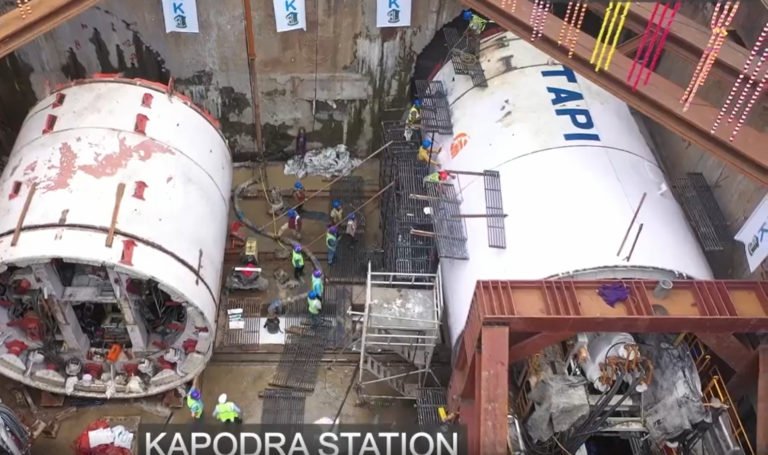
The TBM S94 was launched in January 2023 from the western shaft of the Kapodra Station. It was assigned the task of building an up-line tunnel from there. From there, it took roughly a year for the TBM to tunnel a length of about 1.5 kms.
Labheshwar Chowk
The TBM has achieved a hidden breakthrough at the unique Labheshwar Chowk Metro Station, which is 30 meters deep, with two platforms and two concourse levels. It will be 2nd deepest metro station in India after Howrah Metro station of Kolkata Metro’s East-West Corridor.
S. No
Metro Station
Deepest
01.
Howrah Metro Station
33 meters (Post Completion)
02.
Labheshwar Chowk Metro Station
30 meters (Post Completion)
03.
Hauz Khas metro Station
29 meters
Further Excavation
S94 & S78 have reached the desired position and will be retrieved from the eastern shaft of Surat Metro Station in due course.
Scope of Work
The TBM S94 & TBM S78 have been assigned to construct six tunnels for the 3.46 km Package CS2 / UG1, awarded in March 2021 by Gujarat Metro Rail Corporation (GMRC). The scope of work also includes the construction of metro stations at Kapodra, Labheshwar Chowk and Central Warehouse.
Surat Metro
The 41.93 km-long Surat Metro Rail Project Phase 01 has two lines: Sarthana – Dream City- 22.77 km with a total of 20 stations & Bhesan – Saroli-19.26 km with 18 stations. It is expected to be completed in 2027.
Intrigued by the future of Metro and its impact on our city? Join us at our upcoming InnoMetro event to delve deeper into this vital issue. Stay informed, get involved, and let’s ride the Metro towards a brighter, more sustainable future together.
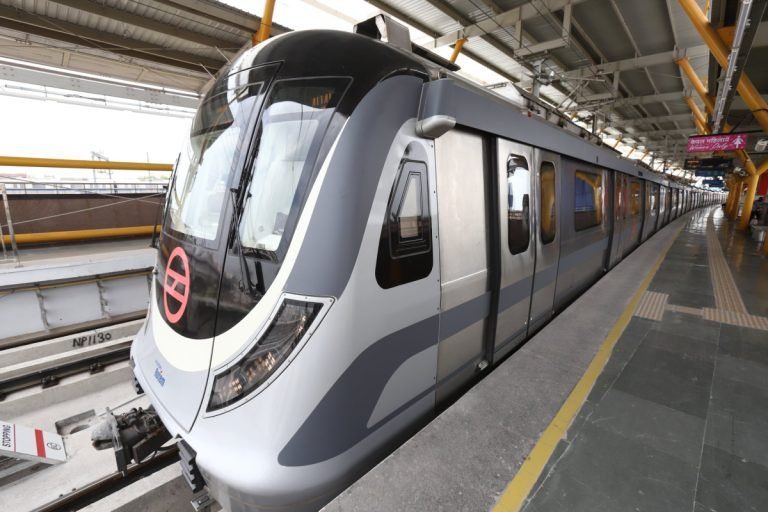
NEW DELHI (Metro Rail News):Delhi Metro Rail Corporation (DMRC) has changed the colour of the Aerocity-Tughlaqabad 23.60 Km long metro corridor to Golden Line, an earlier silver line.
Change in Effect
DMRC issued a notification related to the change of colour in November 2023. The line will be facilitated by thirteen 6 Coach Alstom trains.
DMRC’s Love with Colors
The entire metro corridor of Delhi has been given a name based on the different colours. Ranging from Blue to Pink & Magenta to Green, the Delhi metro has it all with its Trains, maps and even the stations resonating the same.
Trouble En-route
Unknown to the reasons for the colour change, this step may prove terrible as the same Golden Line (formerly called Silver Line) has interchanges with the Yellow Line. There’s not much difference between the two colours other than the glittering.
Construction Updates
Sixteen stations of Delhi Metro’s Golden Line are currently under construction at Aerocity, Mahipalpur, Vasant Kunj, Kishangarh, Chhatarpur, Chhattarpur Mandir, IGNOU, Neb Sarai, Saket G-Block, Ambedkar Nagar, Khanpur, Sangam Vihar, Maa Anandmayee Marg Junction, Tughlakabad Railway Colony (Pul Prahaladpur) and Tughlakabad.
Update on Golden Line
In the latest developments on Delhi Metro’s Golden Line, the UIC-60 turnouts and scissor crossover contract (Package DT-07) were awarded to Voestalpine VAE VKN India in August 2022. However, the track-installation work (Package DT-10) faced a setback when DMRC abruptly cancelled the tender in August 2023, leaving the project’s progress in limbo.
On a positive note, Kalpataru Projects International Ltd. secured the lowest bid for the 25 kV AC OHE traction contract (Package DE-08), marking a significant stride forward in advancing the Silver Line project.
Golden Line, Delhi Metro
The Golden Line of the Delhi Metro runs from Delhi Aerocity to Tughlaqabad. It is a 23.62 Km long line with four elevated & 11 underground stations. It has a total of 15 stations as Tughlakabad, Tughlakabad Railway Colony, Anandmayee Marg Junction, Tigri, Khanpur, Ambedkar Nagar, Saket G Block, Saket, Lado Sarai, Mehrauli, Kishangar, Masoodpur, Vasant Kunj (Sec-D), Mahipalpur and Delhi Aerocity.
Intrigued by the future of Metro and its impact on our city? Join us at our upcoming InnoMetro event to delve deeper into this vital issue. Stay informed, get involved, and let’s ride the Metro towards a brighter, more sustainable future together.
NOIDA (Metro Rail News): Noida Metro Rail Corporation (NMRC) celebrate its 5th anniversary on 25th January, 2023 Thursday.
Ridership
Noida Metro’s ridership has already achieved a significant milestone as it has completed five years of public service. It has increased its average daily ridership from 18,516 in 2019 to 45,881 in 2023, increasing about 147.7 %. A detailed list of Daily ridership data is listed below for reference.
Year
Avg Daily Ridership
Total Ridership
2019
18,516
65,95,287
2020
12,576
24,77,494
2021
14,058
43,15,742
2022
30,632
1,11,80,585
2023
45,881
1,67,46,684
Revenue
Noida metro has also shown tremendous growth in its revenue figures, both fare box & non-fare box included. A detailed account of the same has been provided below:
FY
Fare Box Revenue (Rs In Cr)
Non-Fare Box Revenue (Rs In Cr)
2019-20
21.96
8.38
2020-21
5.39
5.74
2021-22
15.18
7.21
2022-23
40.86
10.38
2023-24
40.66
10.50
NMRC Card
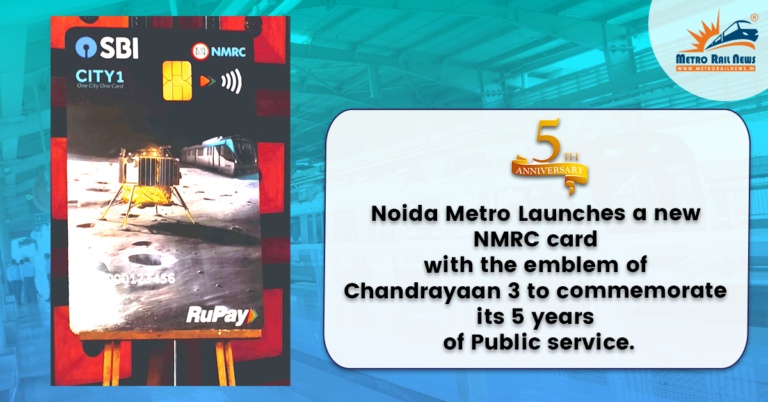
Noida Metro has also launched a card to celebrate its five years of Public Service. As per the Director, NMRC Lokesh M Chnadrayaan 3 is a testament to India’s commitment to growth & innovation. Additionally, It’s been the most significant milestone our nation has achieved in our journey for this decade.
Its as:
Renaming of Aqua Line
Noida Metro Authorities plan to change the name of the Aqua Line to some Desi name, as per the MD of NMRC. It has also been conducting an ad campaign to get some good suggestions from the public but hasn’t received any satisfactory suggestions.
Noida Metro
Updates on the Extensions & new lines are as follows:
Aqua Line: Sector 51 – Knowledge Park V
The current DPR for the metro corridor from Noida Sector 51 to Knowledge Park-V inhabits a constraint of seamless connectivity between the Sector-51 station of Aqua Line and the Sector-52 station of the Blue Line of Delhi Metro.
Sector 142 – Botanical Garden
As per the latest reports, Noida Metro Rail Corporation (NMRC), in its 38th board meeting, approved the Detailed Project Report (DPR) for the corridor.
Extension of Aqua Line: Depot Station to Chamrawali Bodaki (3.5 km)
The Project is under the Consideration of NMRC.
Discover the endless possibilities of our city’s Metro at InnoMetro, our flagship Expo and Conference. Be an active participant in shaping its future towards a more sustainable tomorrow. Stay informed and join us to take a step towards a brighter future.
New Delhi (Metro Rail News): An essential strategic alliance was announced by Titagarh Rail Systems of Kolkata and Amber group of Delhi-NCR, where both companies agreed to enter the railway component and subsystem business through a joint venture/SPV. Under this agreement, both TRSL and Amber group, via its wholly owned subsidiary Sidwal Refrigeration Industries Pvt Limited, will invest approximately INR 120 crores each to obtain around 50% each in the SPV for setting up the new railway component business as well as fresh equity investment in Firema, Italy. This SPV will set up a new facility in India to manufacture critical railway components & subsystems used in the manufacture of Railway & Metro coaches and will also make fresh equity investments into Titagarh Firema SpA, Italy, an associate of the Titagarh Group, along with new investment to be made by the Government of Italy for which an in-principle nod has already been obtained from the Government of Italy’s investment arm, Invitalia. Under the agreement, Firema will grant Sidwal, Titagarh Rail, and the JVC- SPV a preferred supplier status and Right of first refusal (ROFR) for all their products.
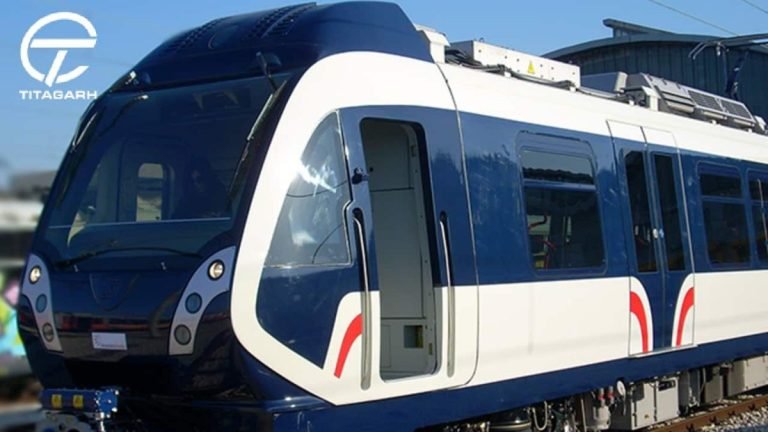
Titagarh Rail is a leader in the Railway rolling stock space for freight and passenger rolling stock. Titagarh, apart from being an established railway wagon and metro coach manufacturer, is also currently executing the prestigious projects of Vande Bharat trains, Surat and Ahmedabad metro, and Pune metro, and as well as currently executing its first export order for passenger rail components received from Firema. Titagarh is targeting a capacity of almost 800-850 coaches per year in the coming years.
The Amber group is a diversified B2B company with three business verticals: Consumer Durables, Electronics (EMS) and Railway Subsystems & Mobility. Sidwal, an Amber group company, has emerged as a leader in the train air conditioner market and has also signed a technology licensing agreement with Ultimate Group to manufacture passenger coach doors and gangways. After establishing its leadership position in the Indian market, Sidwal intends to enter the European market for its product portfolio. The strategic partnership with Firema will facilitate Sidwal’s entry into the European market and give Sidwal preferred access to Firema’s own demand.
Both companies are investing in growing capabilities and capacities for various products that can be exported to Europe, such as Train mechanical and electrical components by TRSL and HVAC, doors, gangways and pantry systems by Sidwal.
Firema is one of Italy’s largest and most reputed designers and manufacturers of passenger trains and has a legacy of several decades, having executed marquee projects in Italy and other parts of Europe. Firema has an order book of almost Euro 1 billion for producing new coaches, has an existing capacity to produce upwards of 240 coaches per year, and plans to double this capacity. Firema recently signed a framework contract for the design and supply 370 sleeping coaches to Trenitalia for Euro 732 million (with an option of full service valued at about Euro 220 million) in consortium with Skoda apart from the trains for the Lazio (Rome) region. Titagarh Rail and Sidwal will jointly support the growth of Firema via combined management expertise and improve the cost competitiveness of Firema by supplying critical components from India, which both groups produce.
Under this strategic alliance, the two groups will set up facilities in India to manufacture critical components and subsystems for the Railway industry. The groups are already in the advanced stage of discussions to obtain technology for such components from global leaders, including Europe. While the JVC-SPV will announce the list of these components in due course, they would include coach interiors, coach toilets, kitchens, seats and other essential railway subsystems. The JVC would aim to achieve a wallet share of at least 20% value or INR 150-200 lacs per passenger coach by developing components and subsystems that are fitted on these coaches.
Under the Strategic alliance, Sidwal and TRSL will also grant each other a Preferred Supplier and a Preferred Customer status for TRSL’s requirements for Sidwal’s product on an arm’s length basis. Sidwal has received a Letter of Intent under this cooperation agreement for the components manufactured by Sidwal for the existing and future projects by Titagarh Rail, including the prestigious Vande Bharat project.
Commenting on the deal,Mr Jasbir Singh of Amber said, “this will be a game changer for Amber as not only will it give us a very strong foothold to make customer base global, it will also give us a preferred access to the demands of one of the strongest and fast emerging rolling stock manufacturers in the country. Through this new SPV, we shall be able to provide comprehensive integrated solutions to rolling stock manufacturers for railway subsystems in India & overseas while addressing almost 20-25% of BOM of passenger coach. This alliance exponentially increases the total addressable market for both Sidwal & SPV. We intend to leverage on this alliance to get market and technology access to Europe and the rest of the world. This will also be our first overseas foray into manufacturing and will give us the knowledge and experience of making the company global.”
Commenting on the partnership,Mr Umesh Chowdhary of Titagarh said, “we are indeed delighted to join hands with a like minded and passionate group like Amber. Coming together of our groups adds immense value to our independent business strategies where the sum of the parts will be much larger that the parts themselves. Joining of a strong group like Amber in Firema will accord strength to the overall business development and growth of Firema and the fact that the Italian government has agreed to co invest is a strong sign of the importance of the venture. It has been our stated business strategy and objective to achieve backward integration into key components and subsystems and this partnership with the Amber group will enable us to achieve our goals”.
“Both our companies are fully committed to the Make in India and Atmanirbhar Bharat policies of our honourable prime minister and this partnership is our humble contribution towards the success of these policies”, said Singh and Chowdhary.
Discover the endless possibilities of our city’s Metro at InnoMetro, our flagship Expo and Conference. Be an active participant in shaping its future towards a more sustainable tomorrow. Stay informed and join us to take a step towards a brighter future
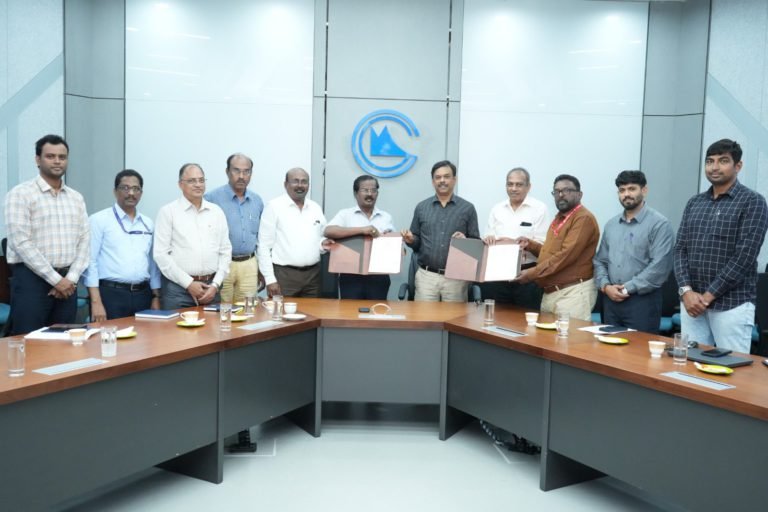
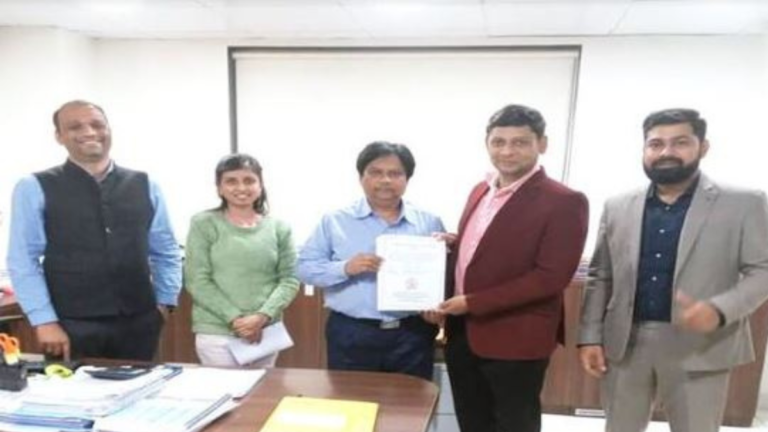
CHENNAI (Metro Rail News): Chennai Metro Rail Limited signed the Contract Agreement to select a Consultant to prepare a Feasibility Study Report for introducing a Mass Rapid Transit System connecting Hosur with Bommasandra. The Contract Agreement was signed with JV of M/s Balaji Railroad Systems Private Limited and Habog Consultants Private Limited on 23.01.2024.
This proposed corridor is approximately 20 km. It will be an interstate project via Attibele, covering 8 km in Tamil Nadu and 12 km in Karnataka. Overall, the scope of work involves conducting various traffic surveys, updating the existing Travel Demand Model, forecasting the travel demand for 30 years at 5-year intervals and estimating ridership along the proposed corridor.
In the presence of Thiru. M.A. Siddique, I.A.S., Managing Director, CMRL and Thiru. T. Archunan, IRSE – Director (Projects) of CMRL, signed the Contract Agreement by Thiru. T. Livingstone Eliazer, Chief General Manager (PP&D), on behalf of CMRL, Thiru. John Rajkumar (Chief- Corporate Strategy & New Initiatives -M/s Balaji Railroad Systems Private Limited) & Thiru. KP. Gopakumar (Director/Chief Financial Officer- Habog Consultants Private Limited) on behalf of JV of M/s Balaji Railroad Systems Private Limited JV and Habog Consultants Private Limited. Thiru. D. Jebaselwin Gladson, GM (CM & CP), Thiru. R. Ranganathan, GM (Civil) and other officials from CMRL and consultants were present during the occasion.
Discover the endless possibilities of our city’s Metro at InnoMetro, our flagship Expo and Conference. Be an active participant in shaping its future towards a more sustainable tomorrow. Stay informed and join us to take a step towards a brighter future
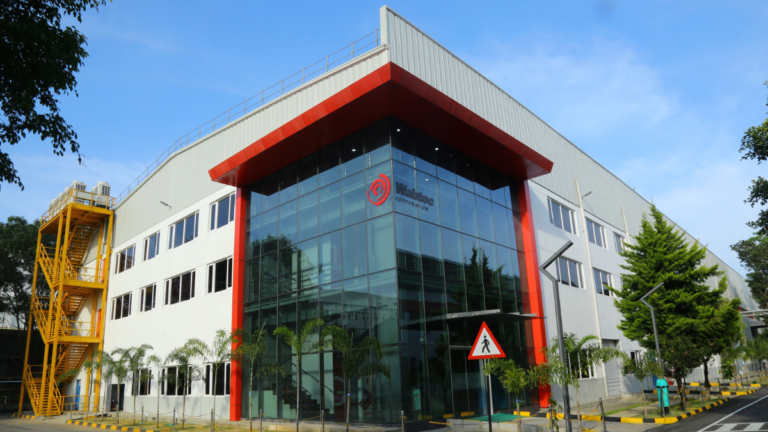
HOSUR/BANGALORE (Metro Rail News): Wabtec Corporation (NYSE: WAB) announced today a large brake system order from the Mobility Business of Siemens India Private Limited for the prestigious 9000HP locomotive project for Indian Railways. The $157 million (Rs.1300 crore) order will improve operating performance, efficiency, and safety with the latest technology for the new line of 1,200 electric locomotives.
“Siemens is firmly committed to transforming rail and mobilising India with cutting-edge technologies and solutions. We are excited about our partnership with Wabtec, who also shares a similar vision of creating a green and world-class railway network,” said Gunjan Vakharia, Head of Mobility Business, Siemens Limited.
The order has Wabtec supplying Siemens with brake systems from Wabtec’s Hosur plant for 11 years and maintenance services for 35 years. Siemens will assemble the locomotives at the Indian Railways factory in Dahod, in Gujarat, India.
“Wabtec is committed to the delivery of high performance and safety critical products for the Indian market,” said Sujatha Narayan, Senior Vice President and India Region Leader, Wabtec Corporation. “The ILS series of braking system is a product ‘Made in India’, which is designed and developed by the India-based engineering team.”
The high-performance brake system will equip the locomotives with critical safety features, high reliability, and reduced maintenance intervals. Wabtec already supplies brake systems for other Indian Railway and metro projects, making the company a highly valued brake supplier across mainline and urban rail mobility platforms.
Wabtec’s Transit business in India can build significant subsystems, which include brake systems, pantographs, couplers, air-conditioning systems, and passenger access doors. The company’s significant engineering presence in Hosur and Bangalore can provide technical and service support.
Wabtec Corporation (NYSE: WAB) is focused on creating transportation solutions that move and improve the world. The company is a leading global provider of equipment, systems, digital solutions and value-added services for the freight and transit rail industries and the mining, marine and industrial markets. Wabtec has been a leader in the rail industry for over 150 years and has a vision to achieve a zero-emission rail system in the U.S. and worldwide. Visit Wabtec’s website at www.wabteccorp.com
Intrigued by the future of Metro and its impact on our city? Join us at our upcoming InnoMetro event to delve deeper into this vital issue. Stay informed, get involved, and let’s ride the Metro towards a brighter, more sustainable future together.
HYDERABAD (Metro Rail News): Telangana CM has approved the 70 km long route for the Hyderabad metro Phase 2, which is divided into seven corridors in total.
Earlier Plans
The Chief Minister asked the Hyderabad Metro Rail officials to put the Airport metro from Raidurg to Shamshabad alignment plan and its tender on hold. He had asked HRM Officials to plan an alternative route from MGBS Falaknuma & LB Nagar.
Limitations
The CM remarked that the earlier metro alignment ran along the G0111 area, where the scope of development remains limited, and there is already an excellent transport facility in the form of ORR.
A more Economical alternative
A straight-line alignment can save costs by running across the open areas of the airport premises, as the entire land belongs to the government. The Chief Minister pointed out this aspect in the meeting held earlier.
New Corridors:
The New routes suggested under Phase 2 of the Project are:
Corridor 2: A 5.5-km Metro stretch from MGBS Metro Station to Falaknuma.
Corridor 2: A 1.5-km Metro stretch from Falaknuma to Chandrayangutta Cross Road.
Corridor 4: A 29-km Metro stretch from Nagole Metro Station to LB Nagar Metro Station, which later connects to Chandrayangutta Cross Road, Mailardevpally, P7 Road and Shamshabad Airport.
Corridor 4: A 4-km Metro stretch from Mylardevpally to the proposed High Court at Rajendra Nagar via Aramghar.
Corridor 5: An 8-km Metro stretch from Rayadurg Metro Station to Biodiversity Junction, Nanakramguda Junction, Wipro Junction and American Consulate (Financial District).
Corridor 6: A 14-km Metro stretch from Miyapur Metro Station to Patancheru via BHEL.
Corridor 7: An 8-km Metro stretch from LB Nagar Metro Station to Vanasthalipuram and Hayat Nagar.
Connectivity Advantage
The primary aim of the recently formulated metro rail routes is to offer affordable public transportation to a more significant segment of the population. The government is committed to realising its objective of making metro rail services accessible to economically disadvantaged and middle-income groups. According to official statements, this will be achieved through an extensive expansion of metro rail connectivity to encompass all areas within the city.
Hyderabad Metro
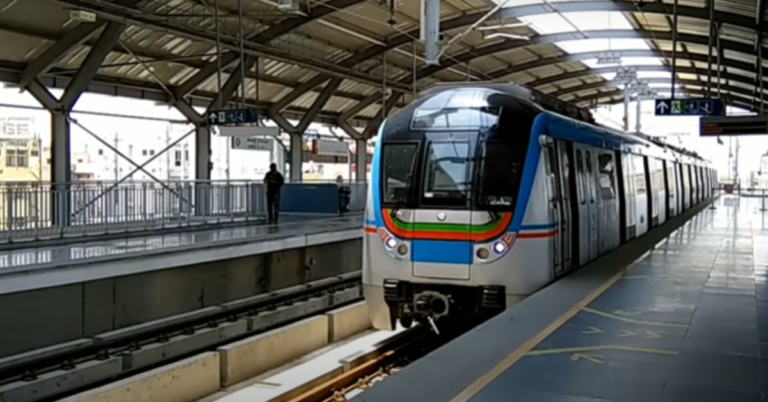
The Hyderabad Metro, the third-longest operational metro network in India, is a rapid transit system that significantly enhances the city’s transportation infrastructure. On November 28, 2017, Prime Minister Narendra Modi inaugurated the 30-kilometer-long stretch from Miyapur to Nagole, featuring 24 stations. This inauguration marked the opening of India’s longest rapid transit metro line at once, with an estimated cost of ₹18,800 crore.
As of February 2020, approximately 490,000 commuters rely on the metro daily. Phase I of the project consists of three lines:
1. Red Line (Line 1) – LB Nagar to Miyapur, spanning 29 km with 27 stations.
2. Green Line (Line 2) – JBS to Falaknuma, covering 15 km and featuring 15 stations.
3. Blue Line (Line 3) – Nagole to Raidurg, extending over 28 km and incorporating 24 stations.
Intrigued by the future of Metro and its impact on our city? Join us at our upcoming InnoMetro event to delve deeper into this vital issue. Stay informed, get involved, and let’s ride the Metro towards a brighter, more sustainable future together.
NAGPUR(Metro Rail News): AmpIn Energy Transition (Formerly Amp Energy India), India’s leading renewable energy transition platform, announces the signing of a Power Purchase Agreement (PPA) of 25 years for a 6 MWp solar project with the Maharashtra Metro Rail Corporation Ltd. (MMRCL), Nagpur Metro Rail Project.
MMRCL
MMRCL is a Special Purpose Company jointly sponsored by the Government of Maharashtra (GoM) and the Government of India (GoI) in 2015 for implementing all metro projects in the State of Maharashtra outside the Mumbai Metropolitan Region.
3rd Big Solar Project
This marks AmpIn’s third solar project for a metro rail and its inaugural metro venture in Maharashtra, following two successfully operating solar projects for L&T Metro & Kochi Metro. The total capacity of this solar project is 6 MWp, which will be developed in two packages of 2.5 MWp and 3.5 MWp, respectively.
Power Distribution
The total capacity would be distributed across 19 sites, including 13 Metro Station Rooftop GI Sheds, 2 Depot Building Rooftop RCC installations, 1 Admin Building RCC installation, and 3 Station Track Walls.
Power Generation
The solar project is expected to replace ~36% of grid power with solar power for Nagpur Metro, resulting in a remarkable 41% savings per unit. In terms of environmental impact, the carbon offset achieved by this initiative would be approx. 7,000MT of CO2 annually for the life of the project.
Statement from CEO of AmpIn Energy Transition
“We are excited to partner with MMRCL in bringing sustainable energy solutions to Nagpur Metro. This project aligns with our commitment to fostering a cleaner and greener environment. Our experience with successfully implementing 2 metro projects in different states positions AmpIn well to contribute significantly to Maharashtra’s renewable energy goals for mass public transportation,” said Mr Pinaki Bhattacharyya, MD and CEO of AmpIn Energy Transition.
AmpIn Energy Transition
AmpIn is a leading renewable energy IPP in Maharashtra and a trusted renewable energy transition partner for corporates in the state. With an active portfolio of ~230MWp of assets under the open access and distributed generation mode, AmpIn caters to 8-9 marquee customers in the state.
Intrigued by the future of Metro and its impact on our city? Join us at our upcoming InnoMetro event to delve deeper into this vital issue. Stay informed, get involved, and let’s ride the Metro towards a brighter, more sustainable future together.
PUNE (Metro Rail News): The CMRS inspection of the Ruby Hall to Ramwadi stretch of the Pune Metro has already begun from Friday, 19th January.
CMRS Inspection
The CMRS inspection includes aspects like:
Evaluation of staircases, elevators, and escalators to ensure compliance with necessary standards.
Accessibility for both differently-abled individuals and regular passengers, including restrooms, ramps, and signage.
Effectiveness of the fire prevention system, encompassing smoke detection and fire alarms.
Evaluation of the preparedness of metro station staff in handling emergencies and efficiently evacuating passengers.
A Prolonged Struggle for Approval
Maha-Metro has been actively seeking approval from CMRS for the Ruby Hall Clinic to Ramwadi stretch since the previous year. The delay in approval has been linked to concerns regarding the stairs at the Yerawada metro station.
Previous Announcements
Earlier statements from Maharashtra Metro Rail Corporation Limited (Maha Metro) indicated that the Ruby Hall Clinic to Ramwadi stretch of the Pune Metro was anticipated to be operational by this month. Speed trials of rakes to Ramwadi had commenced, with technical teams diligently overseeing aspects such as track alignment, curves, elevation, signalling, and telecommunication.
Introduction of Four New Stations
The upcoming stretch will bring forth four new stations along the route, namely:
1. Bund Garden
2. Yerawada
3. Kalyaninagar
4. Ramwadi
This expansion aims to facilitate smooth and trouble-free commuting from the city’s central area, particularly addressing the challenges faced by commuters heading to the airport.
Positive Development
This development signifies a significant milestone in the progression of the city’s ambitious Aqua Line, bringing it closer to becoming operational. The completion of the 15.7 km Aqua Line promises to substantially enhance the daily lives of residents.
Pune Metro
The Pune metro, comprising three lines totalling 54.14 km, serves as a rapid transit system for the city. Currently, two lines are operational:
1. Purple Line: Connects PCMC Bhavan to Swargate.
2. Aqua Line: Runs from Vanaz to Ramwadi.
3. Line 3: Extends from Hinjawadi to Civil Court via Balewadi.
Intrigued by the future of Metro and its impact on our city? Join us at our upcoming InnoMetro event to delve deeper into this vital issue. Stay informed, get involved, and let’s ride the Metro towards a brighter, more sustainable future together.
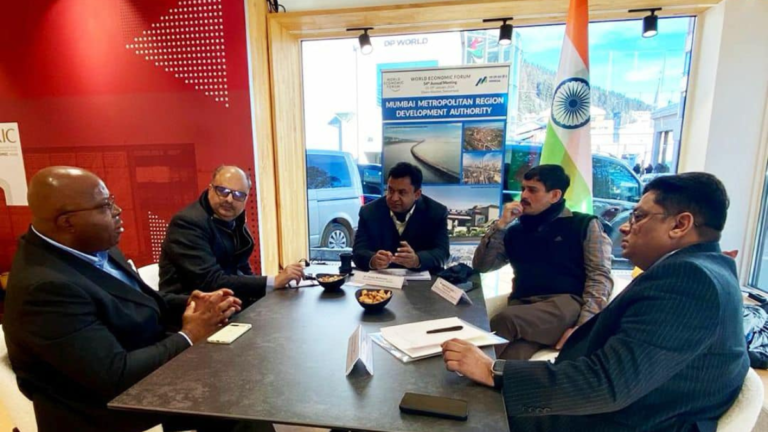
DAVOS (Metro Rail News): Dr Sanjay Mukherjee, IAS, Metropolitan Commissioner, MMRDA, along with Mr Aseem Gupta, Principal Secretary, IASn, Urban Development Department, Govt. of Maharashtra, had a fruitful discussion with Mr Bernard Obika, MD CEG UK Ltd. (CEG), a subsidiary of CEG India, at the World Economic Forum.
Key Topics
The key areas of discussion included Smart Transportation Solutions, Automation, & Digitization in the Transport Sector, Safe & Sustainable Transportation in MMR, and advancements in Project Management Consultancy for overseeing big-ticket infrastructure projects.
Technological Advancement
Technological advancements such as driverless Metro train Systems, which may result in higher operational efficiency and the transformative impact of Building Information Modeling (BIM) technology on the construction of metro rail were also discussed.
Moving towards a greener future together
CEG showed its readiness to continue to provide consultancy and support services to MMRDA to ensure safe, sustainable, and efficient transportation services for a greener future.
Stay tuned for the updates!
Are you intrigued by the future of Metro and its impact on our city? Join us at our upcoming InnoMetro event to delve deeper into this vital issue. Stay informed, get involved, and let’s ride the Metro towards a brighter, more sustainable future together.
NEW DELHI (Metro Rail News): The National Capital Region Transport Corporation (NCRTC) has suspended operations on the 17 km long priority stretch of the Delhi-Ghaziabad-Meerut RRTS corridor.
Reason
NCRTC will conduct signalling integration trials between the 17 km long priority section & the 25 km section from Duhai to Meerut over the next two days. The train operations have been suspended to facilitate this integration only.
Opening
The NCRTC plans to open the 25 km stretch by March this year which mandates the speedy ensuring of the various systems including the signalling system on this stretch.
Ghaziabad-Meerut stretch
The stretch running between Ghaziabad and Meerut will be operationalised by March. Currently, Trial runs are in full swing on the stretch while the NCRTC aims to get the CMRS inspection done for the stretch once the trains achieve a design speed of 180 Kmph in the next month.
Delhi-Meerut RRTS
As per the MoS statement, the Delhi-Ghaziabad-Meerut RRTS has incurred an expenditure amounting to Rs 18,160.81 crore, nearly 59.9% of the total fund allocated for the Corridor.
The Rapid Rail Transit System (RRTS) is a comprehensive mass rapid transit network spanning 82.15 kilometres, linking Delhi’s Sarai Kale Khan with Ghaziabad and Meerut. The construction of the Delhi-Ghaziabad-Meerut corridor is currently in progress, with a total expenditure of nearly Rs 30,000 crore. Prime Minister Modi inaugurated the initial phase of the priority corridor, covering 17 kilometres and featuring five stations: Sahibabad, Ghaziabad, Guldhar, Duhai, and Duhai Depot.
On October 20th, Prime Minister Narendra Modi officially launched India’s first RAPIDX train, Namo Bharat, off Sahibabad Station. These trains are engineered to reach a maximum speed of 180 km/h, offering ticket prices ranging from Rs 20 to Rs 50 for standard coaches and Rs 50 to Rs 100 for premium coaches.
The RRTS initiative encompasses semi-high-speed rail corridors connecting Delhi to Meerut in Uttar Pradesh, Alwar in Rajasthan, and Panipat in Haryana.
Discover the endless possibilities of our city’s Metro at InnoMetro, our flagship Expo and Conference. Be an active participant in shaping its future towards a more sustainable tomorrow. Stay informed and join us to take a step towards a brighter future