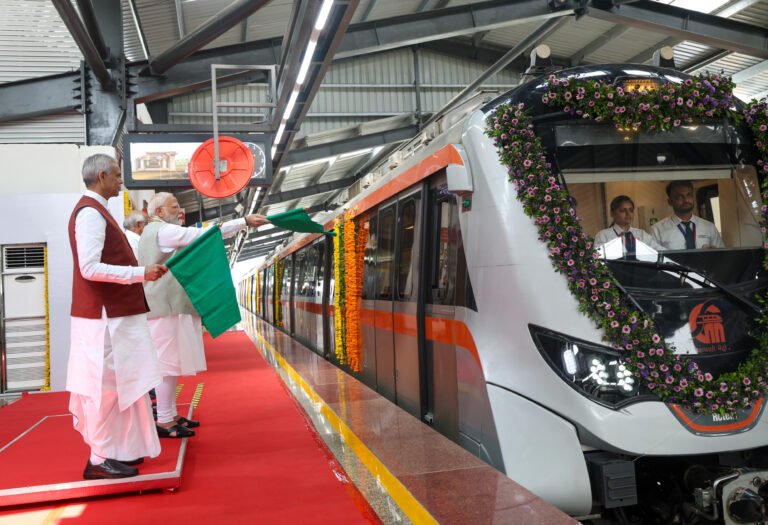
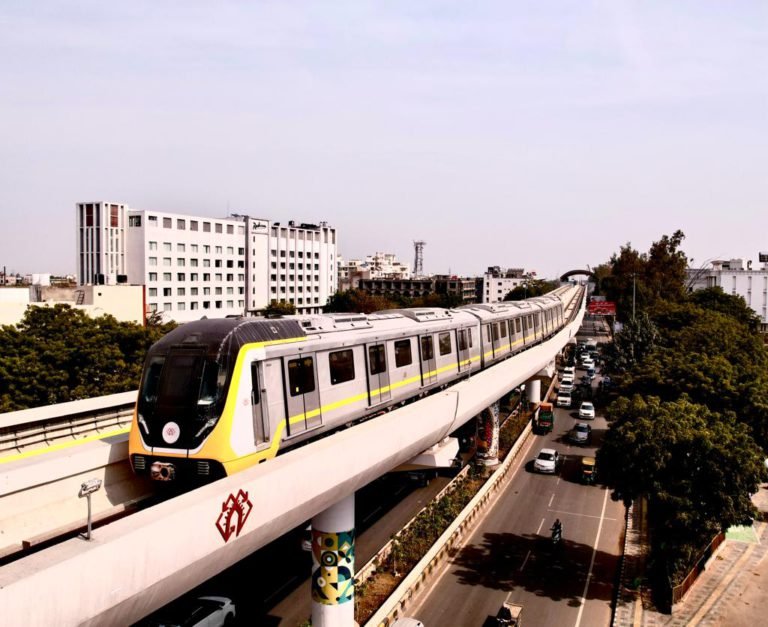
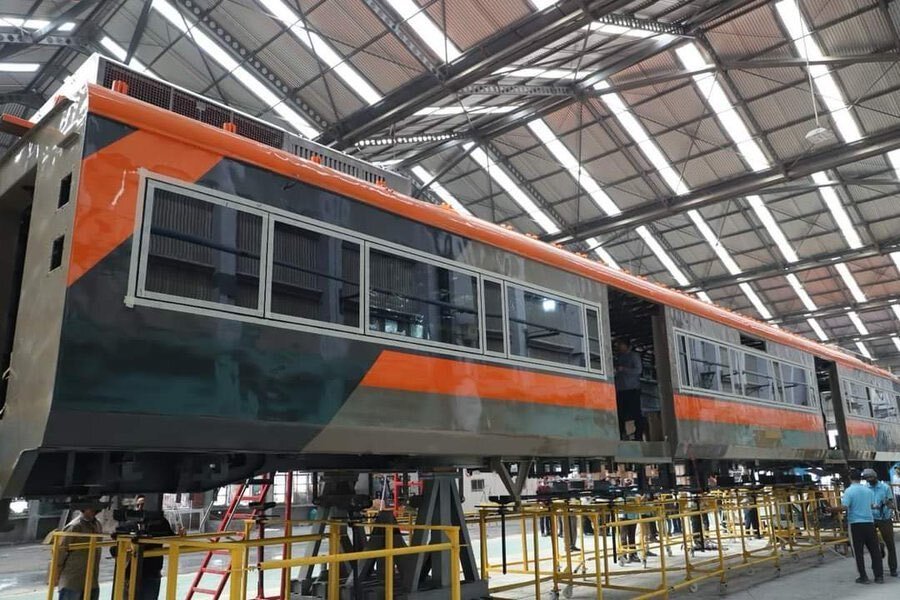
Ahmedabad (Metro Rail News): The wait is over; On Monday, 16 September 2024, PM Modi inaugurated Ahmedabad Metro Phase 2, which is 21 km long and connects Sector 1 to GIFT city metro station.
After the inauguration, PM Modi travelled to the Ahmedabad Metro and interacted with the youth passengers. During his journey in the newly launched metro, PM Modi is accompanied by the Governor of Gujrat, Shri Acharya Devvrat and Chief Minister, Shri Bhupendra Patel.
Mr Narendra Modi, the PM of India, visited his home state (Gujarat) for the first time after the beginning of his third term as PM in June 2024.
Funding for Phase 2 extension
The total cost of the Phase 2 extension is Rs 5,384 crore. The AFD (France) and KfW (Germany) are the leading fund providers for the project. Along with it, the project is managed by the Gujarat Metro Rail Corporation (GMRC) in collaboration with the state and central governments.
Inauguration of Vande Metro
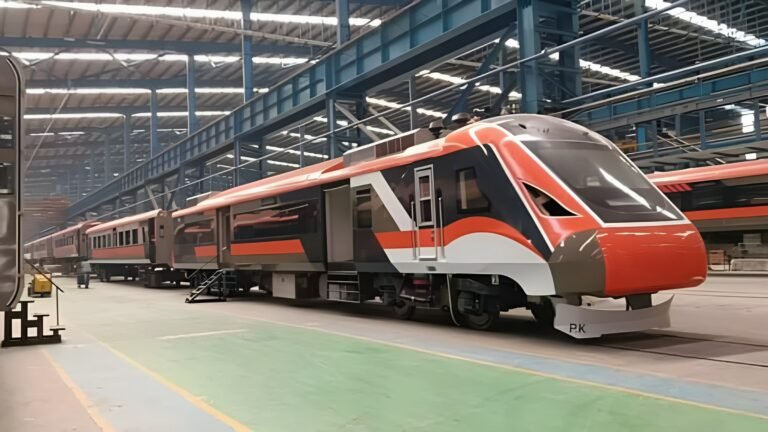
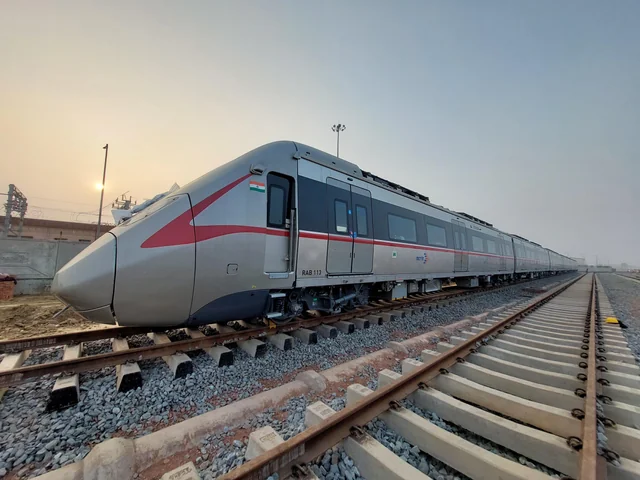
After the inauguration of the metro, PM Modi launched several key developments across Ahmedabad, including the much-awaited launch of India’s first Vande Metro from Bhuj to Ahmedabad – renamed as the Namo Bharat Rapid Rail.
Vande Bharat Metro
It will have a top speed of 130 km/h.
The Vande Metro will have a KAVACH train anti-collision system to enhance safety.
The Vande Metro is a new initiative by Indian Railways to facilitate short-distance intercity travel.
Gujarat (Metro Rail News): On 15 September, Prime Minister Narendra Modi showed green light (virtually) to six new Vande Bharat trains for Jharkhand, Odisha, Bihar and UP at Ranchi.
Image Credit: Mohan Jat
PM Narendra Modi stated that “Six new Vande Bharat trains, projects worth more than Rs. 650 crores, expansion of connectivity and travel facilities, and Pucca house to thousands of people under PMAY-G, I congratulate the people of Jharkhand for these projects”
Image Credit:Mohan Jat
The New Vande Bharat trains will operate on the following routes:
On 14 September , the Railway Ministry announced “The addition of six new trains will expand the fleet of Vande Bharat trains from 54 to 60, facilitating 120 trips daily and serving over 280 districts across 24 states and union territories”
The Railway Ministry also mentioned that “With the introduction of Vande Bharat Express train services, Indian Railways is set to revolutionise travel in India. These trains not only showcase the success of the ‘Make in India’ initiative but also establish new global benchmarks for speed, safety, and service,”
RRTS is a brand-new mode of public transportation designed specifically for NCR. It is a rail-based, semi-high-speed, and higher-frequency commuter transit system.
Design Speed
180 km/h
Operation Speed
160 km/h
Average Speed
100 km/h
Time to Travel 100 km
60 minutes
Unlike conventional trains, RRTS trains will travel at a high speed, reduce road congestion, and carry many passengers. The high-frequency operations of the RRTS trains ensure the arrival of trains every 15 minutes. As it encourages more people to travel via public transport, it will help to reduce air pollution and work towards sustainability.
Telangana government recommended taking up the Regional Rapid Transit System (RRTS) in two corridors: Hyderabad-Warangal and Hyderabad-Vijayawada. The RRTS project was initiated after the successful operations of Hyderabad Metro Rail Limited (HMRL).
The reason behind the state government’s plan to impose two RRTS corridors in Hyderabad is to reduce the fluctuation of passengers on these two corridors.
Project Approval and Cost
The Hyderabad-Vijayawada RRTS Project would require inter-ministerial consultation and approval due to the high costs involved in the construction of the RRTS. The approvals depend on the feasibility of the projects and the availability of resources. The construction work and allotment of funds for the project will be undertaken once the project is approved.
The Telangana government will establish a transport corporation similar to the National Capital Region Transport Corporation (NCRTC). The corporation would take up the RRTS project and obtain funding from the central government.
Understanding Train Depot Areas
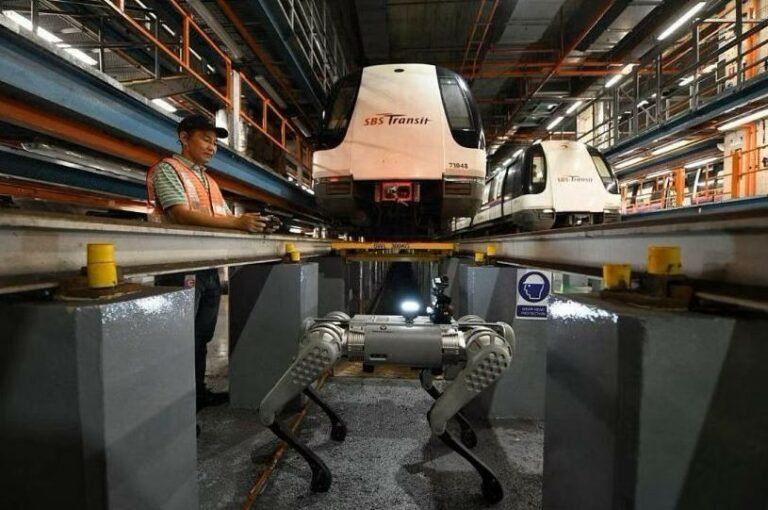
A train depot is a designated area within a railway network where trains are stored, maintained, and serviced. It functions as a central hub for various operational activities essential for the smooth and reliable running of trains.
The depots have the infrastructure to support the rakes with obligatory provisions through stabling lines, scheduled inspection lines, a workshop for overhaul, unscheduled maintenance including major repairs, wheel profiling, heavy interior/under frame/roof cleaning etc.
Facilities provided by train depot areas
Train Stabling yard (Area)– Serves as a designated area for parking trains when they are not in operation. Trains return to this yard at the end of their service and remain there until needed again.
Train Workshop Building– The Train Workshop Building is a critical facility within a train depot, designed to support comprehensive servicing and maintenance of rolling stock.
The Train Workshop Building is equipped to handle various tasks required to ensure the operational readiness and safety of trains. These tasks are guided by the overhauling fundamentals set by rolling stock producers. The workshop caters to the inspection, maintenance, upgrading, and repair of the entire
Key Components and Facilities:
Inspection Areas:
Designed for thorough inspection of trains to identify issues and assess the condition of various components. This includes visual checks and the use of diagnostic tools.
Maintenance and Repair Stations:
Equipped with tools and machinery to perform routine maintenance tasks, such as lubrication, brake adjustments, and component replacements.
Upgrading Facilities:
Allows for the integration of new technologies or enhancements to improve the performance and efficiency of the rolling stock.
Component Servicing:
Focuses on the detailed servicing of individual components, including:
Body Furnishing: Repair and maintenance of the train’s structural elements such as interiors and exterior panels.
Air Compressors: Overhauling and servicing air compressors that are crucial for braking systems and other pneumatic functions.
Traction Motors: Maintenance and repair of traction motors that drive the train’s wheels and ensure effective propulsion.
Specialised Workshops:
Wheel Lathe Shop: For machining and maintaining wheels.
Electrical Workshop: For handling wiring and control systems.
Train Wash Plant– The rolling stock wash plant is accustomed to evacuating dust, oily dirt and other stains on the exterior of EMUs, locomotives, metros etc. The wash plant consequently washes the two flanks, front and rear ends, the vehicle top side slope, entryway and window glass by chemical and physical effects of water and detergents and washing brushes.
Test Track
The Test Track is a dedicated line used for:
Internal Testing: Conducting trials and evaluations of trains and their systems.
New Train Commissioning: Testing newly manufactured trains to ensure they meet performance and safety standards before entering regular service.
Overhaul Testing: Evaluating trains after Intermediate Overhaul (IOH) and Periodical Overhaul (POH) to confirm that all maintenance work has been completed correctly and the train is ready for operation.
Operation Control Centre (OCC) and Depot Control Centre (DCC)
Operations Control Centre (OCC):
Role: Manages and oversees overall train operations.
Components:
Traffic Control Centre: Coordinates train movements and schedules.
SCADA System for Traction Power: Monitors and controls the electrical power supply for train operations.
SCADA System for Auxiliary Power: Manages power for non-traction systems.
VAC Control & Monitoring: Oversees ventilation and air conditioning systems.
Telecommunication Systems: Manages communication networks for operational coordination.
CCTV Control & Monitoring: Provides surveillance and security through cameras.
Depot Control Centre (DCC):
Role: Manages train movements within the depot.
Function: Ensures the efficient and safe handling of trains as they enter, exit, and move within the depot area.
Administrative Building- The administrative building is strategically located near the main entrance.. At the detailed design stage, it can be suitably sized and architecturally designed. A security office is also established close to the main entrance. It is equipped with a suitable Access Control System for all the staff working in the complex.
P-Way Building (Maintenance Vehicle Shed)-A P-way building is prepared for local workshops and offices with road and rail access for stabling and maintenance of Maintenance Vehicles.
Under-Floor Wheel Lathe
The Under-Floor Wheel Lathe is a machine used for maintaining and machining wheelsets on trains.:
Technology:
CNC or Microprocessor Technology: The machine Utilises advanced Computer Numerical Control (CNC) or microprocessor technology for precise and automated machining of wheel treads.
Automatic Wear-Measuring Device: Equipped with a device that measures wheel wear automatically, ensuring accurate assessment and minimal removal of wheel material.
Function: Maintains the wheel profile and ensures smooth and safe operation of trains by accurately machining the wheel treads to correct dimensions.
Car Delivery Area: The newly acquired coaches, transported by road on trailers, arrive at the Depot Workshop. To facilitate the unloading process and return the coaches to the track, space has been allocated along the side of the shunting neck. This area is designed to accommodate the unloading of coaches and other heavy materials, with ample room for the maneuvering of heavy cranes required to lift the coaches. Additionally, the unloading area should be easily accessible for heavy-duty hydraulic trailers, ensuring efficient operations.
Stores- Storage facilities are provided to ensure that all appropriate spares, parts, tools and consumables are delivered to and issued from a single main store with as few sub-stores as practical. Accommodation of the complete range of spares and supplies, for the maintenance and operation of the rail system are provided.
Railway Depots in India
India’s extensive railway network is supported by approximately 394 train depots across the country. These depots play a critical role in maintaining and servicing the rail fleet to ensure safe and efficient operations. They are categorised into various types, including:
Coaching Depots: These depots focus on the maintenance and servicing of passenger coaches. These depots handle tasks such as cleaning, inspection, and repair of the coaches to ensure passenger comfort and safety.
Loco Sheds: These depots are dedicated for the upkeep of locomotives. They are equipped for routine maintenance, repairs, and overhauls of both diesel and electric locomotives.
Challenges Faced by Train Depots in India
Aging Infrastructure: Many depots suffer from outdated facilities and equipment that require frequent repairs, which incresease maintenance costs and hindes operational efficiency.
Digitalisation and Technology Integration: Upgrading to digital systems is costly and integrating new technologies with existing systems can be complex. This complexity may lead to potential disruptions during the transition period.
Economic Viability: Many depots face challenges in upgrading infrastructure due to funding shortages. Additionally, competition from other modes of transport necessitates improvements in service quality to retain customers and remain economically viable.
Train depots are essential for the smooth operation of rail networks. They provide the necessary facilities for routine inspections, repairs, and overhauls, ensuring that trains are in optimal condition and ready to operate safely and efficiently.
Railway platforms
A railway platform is is a designated area adjacent to the railway tracks. Railway platforms are designed to provide easy and convenient access to trains. Most rail stations feature multiple platforms, with larger stations having several to accommodate different train services. The world’s longest station platform is at Hubballi Junction in India. It is 1,507 metres (4,944 ft) long.
Types of railway platform
1.Bay Platform
A bay platform is a type of railway platform where the track terminates in a dead end. Trains serving at the bay platform have to reverse in or out. The bay platforms are often used when reverse action for the trains is required. Due to their design, bay platforms require additional space compared to standard platforms..
2.Side Platform
Also referred to as a through platform, the side platform is a common type of railway platform situated alongside the railway tracks. Stations with side platforms typically have two platforms—one for each direction of travel. This configuration facilitates easier crowd management and passenger flow. However, the construction of such platforms requires more space as compared to the other platforms.
3.Split Platform
A split platform, also known as a separate platform, features distinct platforms for each track, allowing for a narrower horizontal layout of the station. This design divides the platforms into two or more levels or sections. This helps to manage trains efficiently. However, this involves complex construction. It could make it difficult for the passengers if marking is not properly done.
4.Island Platform
The island platforms have tracks on both sides. Passengers can access trains on both sides of the platforms. It is efficient as the space can be utilized properly. However, it can lead to crowding if the passenger’s management is not proper.
5.Elevated Platform
These platforms are raised above ground level with the help of columns and structures. Such platforms are used in densely populated areas to separate tracks from the street-level traffic. The construction and maintenance of these platforms can be difficult. The mobility on these platforms could be a barrier for people with disabilities.
6.Underground Platforms
These platforms are located below the ground level, using the space below the streets. The construction of these platforms is difficult and becomes more complex in areas with high water levels.
7.High-Level Platforms
These platforms match the level of the train doors, making it easy for people to step in or out. It makes it easy for passengers with disabilities to access trains easily.
8.Low-Level Platforms
These platforms are positioned below the train doors, requiring steps or ramps to access the train. It is less expensive to construct. However, it can be difficult for people with disabilities to access the trains, restricting their travel.
Platform Screen Doors (PSDs)
Platform Screen Doors (PSDs), referred to as Platform Edge Doors, provide a physical boundary between the train and the platform. These doors act as an important safety feature that has been retrofitted onto numerous metro systems. They are a new inclusion to numerous metro frameworks around the world.
Necessity of Platform Screen Doors (PSDs)
Platform screen doors are necessary to secure the lives of millions of individuals who opt for public transportation. Within cities, public transportation provides a cheap and effective way to explore the city or reach the desired destination. These transports can be heavily crowded, resulting in serious and fatal accidents. Platform screen doors provide the security and convenience that passengers anticipate.
Types of Platform Screen Doors:
Full-Height Platform Screen Doors: These doors extend from the platform floor to the ceiling, creating a continuous barrier between the platform and the tracks.
Benefits:
Safety: Full-height PSDs offer a barrier that reduces the risk of passengers accidentally falling onto the tracks.
Thermal and Acoustic Insulation: By extending to the ceiling, these doors provide enhanced insulation against external noise and temperature fluctuations.
Design: The mechanical components, including the drive and locking systems, are typically located in the upper section of the door frame.
Half-Height Platform Screen Doors: Also referred to as platform edge doors or automatic platform gates, these doors reach up to chest-height, rather than extending to the ceiling.
Design: The drive and locking mechanisms for these doors are often integrated into the lower part of the door system.
Challenges Faced by Platform Screen Doors (PSDs)
1.High Cost
Installation and maintenance of the Platform Screen Doors (PSDs) can be a financial barrier for the central and state governments. The costs involved the custom designs of the PSDs for the specific stations. There was also the requirement for sensors, panels, motors, and regular repairs. It would also require regular inspection and maintenance in case of any defaults.
2.Technical Challenges
PSDs need to have a precise alignment with train doors. Any misalignment or difference in the placing of doors would cause operational issues. It was a complex task to align the PSDs with the existing station and train infrastructure.
3.Passenger Behavior
Managing crowds during peak times can be challenging. There are high chance that people entering the train press themselves against the PSDs, leading to wear and tear of doors and people getting hurt.
4.Space Issues
There are stations which are small due to space issues or are densely populated. Installing PSDs at such stations could be a challenging task for the authorities. PSDs had to be designed with modifications for such stations to ensure the passenger movement is not harmed and it does not obstruct the emergency access.
Advantages of Platform Screen Doors (PSDs)
1. Prevent Falls
The doors are applied to prevent people from fatal accidents due to accidentally falling on the tracks. It also restricts people from committing suicide and homicide, where one person pushes another on the track. There have been cases where due to the high speed of trains and wind, people lose balance and fall on the trains, leading to injuries or death. To improve the safety of the tracks, PSDs are applied on every platform to reduce the risk of accidents.
2. Improved Station Environment
By physically isolating the station from the tunnel, PSDs allow efficient operations of heating, ventilation, and air conditioning. The PSDs enhance the sound quality at the railway or metro platforms. The background noise created when the train enters or leaves the station is reduced with the help of PSDs. It enhances the passengers’ experience and the sound of any announcements.
3.Reduced Litter on Tracks
PSDs prevent littering the tracks, which look untidy and raise the risk of fire. The PSDs prevent people from throwing waste on the tracks. It helps to make the station’s environment tidy and also helps the cleaning staff to pick up the waste from the platform without any risk.
Conclusion
The introduction of Hyderabad-Vijayawada RRTS and improvements in the railway infrastructure play a crucial role in enhancing the public transport system of India. The strategic development of the train depot areas ensures that the rail services are effectively maintained and operated. RRTS projects promise a reduction in road traffic, shorten travel time, and encourage a sustainable transportation system. Platform screen Doors (PSDs) are another way to ensure the cleanliness of the stations along with passenger safety. These developments offer a safer, more effective, and more ecological mode of transportation while overcoming the cost and technological constraints.
Varanasi, also known as Banaras, is one of the oldest cities in the world. Located on the banks of the holy river Ganga, Varanasi has been attracting pilgrims for centuries. The ghats are considered to be the site of honoured rituals, from Ganga arti to cremation ceremonies, everything takes place at this place. It is one of the seven sacred cities in the country and the home of Lord Shiva.
Varanasi is rich in culture and history. It has been the centre of learning for many years. The city is known for its arts, culture, music, and literature. It has produced many poets, scholars, and poets. People visit the city for its temples, such as Kashi Vishwanath Temple, Durga Temple, and Sankat Mochan Hanuman Temple. Also, Sarnath, the place where Lord Buddha gave his first sermon on gaining enlightenment, is a few kilometres away from Varanasi.
Varanasi has a population of around 17 lakh, and the metro population is expected to be around 20 lakh. Besides being known for its temples, Varanasi is also famous for its educational institutions, such as Banaras Hindu University, and musical centres. Due to its high population and continuous tourism, Varanasi requires a metro system to reduce road congestion and ensure safe travel.
Need for Varanasi Metrolite
Population Growth
The population of Varanasi is continuously rising. As the place is known for its culture, many people have started shifting there. Besides residents, many people travel to Varanasi for worship or to explore the place. Due to this, the roads in the city are getting congested.
Road Congestion
As many people visit this holy place, the city needs more space and roads. Road congestion makes people late to their destinations. To avoid this issue, public transport is needed to reduce the reliance on personal vehicles.
Varanasi Metrolite Project
DPR Approved
In 2015, RITES prepared the Varanasi Metro project’s initial Detailed Project Report (DPR), which suggested a heavy-rail system. Approximately 80% of the Phase 1 lines are expected to be underground. On April 18, 2016, the Uttar Pradesh government approved the DPR, and on May 23, 2016, the central government approved the DPR.
Infrastructure Details
Varanasi metro was found infeasible in August 2020 due to a lack of funds and policy issues. In response to this, a light metro project was proposed for Varanasi City.
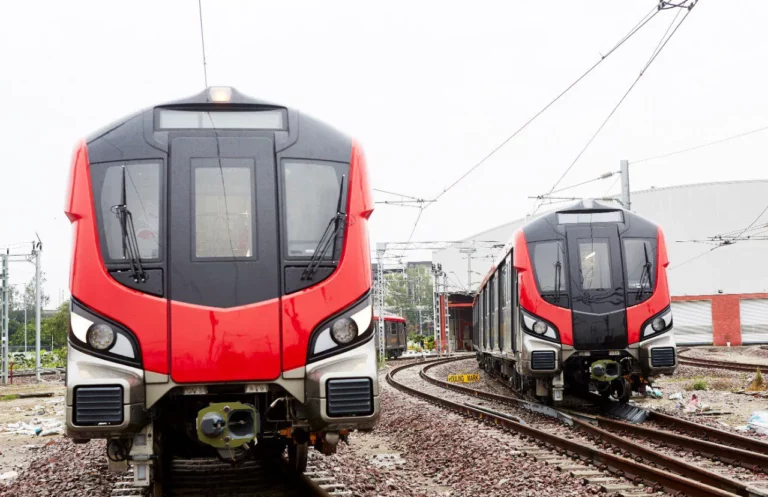
The proposed system consists of 2 corridors and 26 stations, which will be built by the Uttar Pradesh Metro Rail Corporation Limited (UPMRCL). It will include 20 underground stations and 6 elevated stations.
2015
The Housing and Urban Planning Department of the UP government appointed RITES Limited to prepare of DPR for Varanasi Metro. The Varanasi Development Authority was nominated as the nodal agency and the Lucknow Metro Rail Corporation was the coordinating agency for the preparation of the study. On May 6, 2015, an MoA was signed between VDA and RITES to carry the assignment
2016
On January 6, the ‘Draft Final Report was submitted. On January 15, the meeting was held to finalize DPR. On January 28, a presentation on the ‘Draft Final Report’ was made to the commissioner, Varanasi and stakeholders, and presented to Dr E. Sreedharan, principal Advisor, LMRC on February 2. After suggested changes, ‘Final DPR’ was submitted on February 25, and formally presented to the chief secretary on February 29.
Partnership Details
Varanasi Metrolite Project is planned to be carried out as a joint venture with 50:50 equity partnerships between the Government of India and the Government of Uttar Pradesh. Besides their equity commitment, both governments have decided to add extra funds to maintain the stability of the project.
Metrolite Operations
The operational date of the Varanasi metrolite project is not yet finalised.
Station Names: BHEL, Tarna, Shivpur, Sangam Colony, Gilat Bazar, Bhojubeer, Collectorate, Nadesar, Varanasi Junction, Kashi Vidyapeeth, Rathyatra, Benia Bagh, Kashi Vishvanath, Bangali Tola, Ratnakar Park, Tulsi Manas Mandir and Banaras Hindu University
Elevated Stations (3.845 km stretch)
Underground Stations (15.505 km stretch)
BHEL, Tarna, Shivpur, Sangam Colony
Gilat Bazar, Bhojubeer, Collectorate, Nadesar, Varanasi Junction, Kashi Vidyapeeth, Rathyatra, Benia Bagh, Kashi Vishvanath, Bangali Tola, Ratnakar Park, Tulsi Manas Mandir and Banaras Hindu University
Line 2: Benia Bagh – Sarnath
Length: 9.885 km (1.923 km elevated stretch and 7.962 km underground stretch)
Number of Stations: 9
Station Names: Benia Bagh, Kotwali, Machodri Park, Kashi Bus Depot, Jalalipura, Punchkroshi, Ashapur, Havelia, Sarnath
Elevated Stations (1.923 km stretch)
Underground Stations (7.962 km stretch)
Punchkroshi, Ashapur
Benia Bagh, Kotwali, Machodri Park, Kashi Bus Depot, Jalalipura, Havelia, Sarnath
Varanasi Water Metro
To promote water tourism in this divine city, the first water metro has reached Varanasi. Cochin Shipyard Ltd. (CSL) has shipped this ferry to Varanasi.
Updates On Varanasi Metrolite Project
Project on Hold
The Varanasi Metro Project was put on hold in 2017 because of excessive expenditures and low anticipated ridership. These reasons contradicted the new Metrolite Rail Policy of the Indian government.
Changes in Design
The project has been renamed Metrolite or Light Metro Rail and has undergone design and positioning changes. In December 2019, RITES delivered its report to the Uttar Pradesh government after finishing the route between BHEL and BHU.
Detailed Project Report (DPR) dropped due to the new metro rail policy. RITES was instructed to prepare a new DPR.
December
The new DPR got approved under the ‘New Metro Rail Policy’
2018
June
The Varanasi Metro Rail Project was rejected due to a shortage of funds
2019
February
In UP Budget 2019, CM Yogi Adityanath allocated ₹150 crores
2020
August
Metro rail found to be infeasible; light metro proposed
September
Detailed Project Report (DPR) was reviewed for metrolite rail
2021
February
Uttar Pradesh government allocated ₹100 crores for the metrolite.
Key Specifications of the Varanasi Metrolite
SpeeINFRASTRUCTUREd and Track
Maximum Speed: 90 km/h
Average Speed: 35 km/h
Track Gauge: Standard gauge track measuring 1435 mm.
Train Length
3 Coaches
System Length
29.235 km
Challenges Faced By Varanasi Metrolite
Heritage Destruction
It will be a challenge to construct metrolite line in Varanasi without hurting the heritage of the city. It was also mentioned by E Sreedharan, the Metro Man, who went to the city to review the project.
Population
The city is densely populated and it also attracts a large number of tourists. Due to the dense population, most of the project’s work will need to be done at night.
Benefits of the Varanasi Metrolite Project
Improved Connectivity to the Ghats and Temples
Varanasi is one of the most loved holy places in India. The metrolite in the city will allow residents and tourists to easily reach auspicious ghats like Dashashwamedh Ghat and Assi Ghat, promoting tourism in the city. Varanasi has a few famous temples, like the Kashi Vishwanath temple. The metrolite will provide easy temple access, promoting tourism and convenience for devotees.
Reduced Road Congestion
During festivals or any auspicious day, the narrow streets get blocked by vehicles and people. The metrolite in the city would reduce vehicles on the roads. It will reduce the traffic on the streets and help residents and tourists to navigate places easily.
Impact on Real Estate Prices
The Varanasi Metrolite project is expected to improve the overall living standard of the city. Once the metrolite becomes operational, the property rates under resale and construction are expected to rise. The rental rates of the properties are also expected to see a rise.
Boost Local Economy
Varanasi Metrolite will not only provide enhanced transportation facilities to the residents and tourists but it will also create business opportunities in the city. Besides creating employment in the construction and operations of the metrolite, the local economy will see a boost.
The shops in the range of the metrolite corridor will be benefited. As the city develops, many educational institutions and commercial centres will open, leading to economic growth of city. Property rates are expected to rise in areas such as Shivpur, Sarnath, and Belapur. Once the metrolite is accessible to the public, property rates for both resale and under-construction properties will rise. Also, the rental market in the area of the Metrolite corridor is expected to increase.
Conclusion
The Varanasi metrolite project is a crucial step towards addressing the growing urban challenges while considering the city’s cultural and historical significance. By providing efficient transportation, the metrolite will reduce road congestion, enhance connectivity to the temples and ghats, and lead to economic growth by creating job opportunities and tourism. Despite initial setbacks, the project aims to transform the city into a more sustainable, modern, and accessible city.
Indore(Metro Rail News): Indore Metro project advanced as URC has finished casting all 142 open foundations and 235 pile caps foundations for the Yellow Line.
Recently, URC Construction, on a subcontract from Rail Vikas Nigam Ltd. (RVNL), has finally finished casting all 377 pier foundations for Package IN-03 for the 33.53 km Indore Metro Phase 1 project.
The final foundation of the package for Pier P831 is situated between the Super Corridor 1 and Super Corridor 2 stations.
Package IN-03
Rail Vikas Nigam Ltd. (RVNL) Bagged package IN-03 contract from MPMRCL with an estimated cost of Rs. 1034 crore for Indore Metro’s Yellow Line. Package IN-03 spans 10.927 km, connecting MR10 Road station to Gandhi Nagar stations with a 2.32-year deadline.
Later, Rail Vikas Nigam Ltd. (RVNL) subcontracted its construction work to URC Construction.
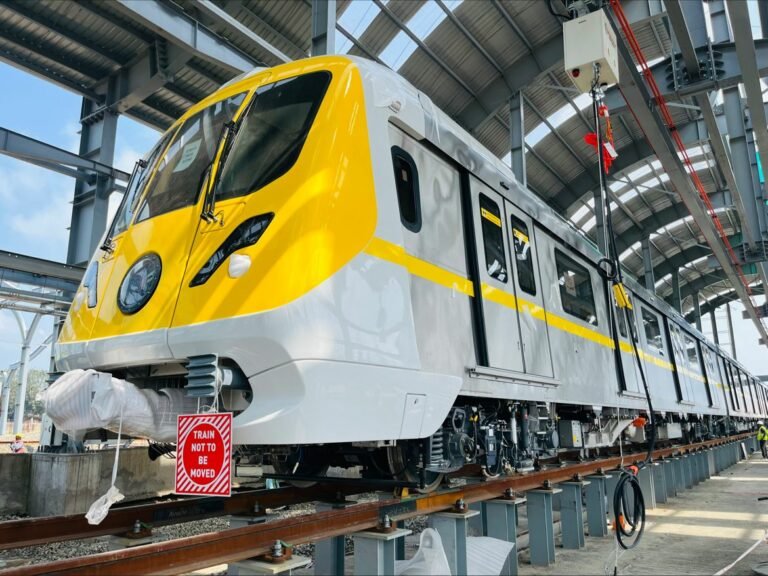
The URC’s scope of work includes the 575m depot line and construction of 9 elevated stations:
Gandhi Nagar
Super Corridor 6
Super Corridor 5
Super Corridor 4
Super Corridor 3
Super Corridor 2
Super Corridor 1
Bhawarsala Square
MR 10 Road
In March 2024, URC completed the casting of all 3302 segments for its viaduct near TCS Chauraha. Furthermore, In September 2023, MPMRCL started the trial runs on a 5.8 km section of IN-03 between Gandhi Nagar Depot and Super Corridor-3 stations.
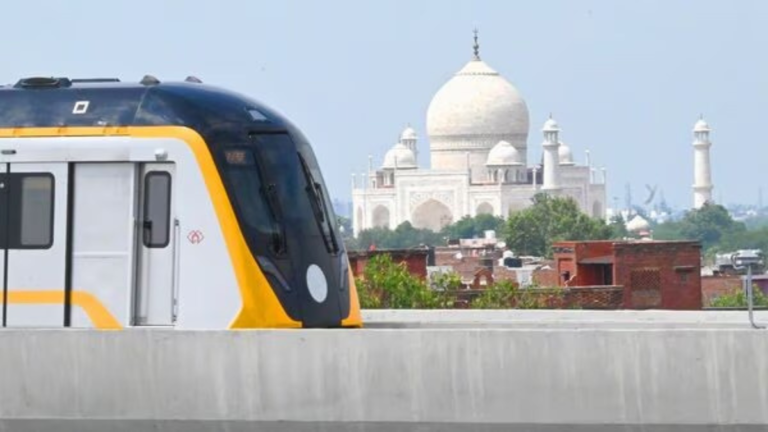
Agra ( Metro Rail News): Ceigall India, with its subcontractor Dixcon Infra, started casting the first 28m long U-girders for the viaduct of 3.725 km Package AGCC-05 on 14.25 km Agra Metro Line-1 connecting Sikandra to Taj East Gate featuring 14 stations.
image credit to Anand Gupta
The casting work for this 28 m long U-girder with 170 MT weight has been advancing at their yard in Runkata village near Sikandra for Agra Metro Line-1’s viaduct.
Package AGCC-05 ( Agra Metro)
Package AGCC-05 is an elevated section on Agra Metro Line-1, located on the northern end of the line. It connects to a twin tunnel between the Ramp and RBS College Stations in Khandari and Sikandra via three elevated stations along the national highway (NH19).
ISBT
Guru Ka Taal
Sikandra
This is the third and final package for the construction of Line-1, which is expected to be operational by 2026. Package AGCC-05 will also provide connectivity to the 7.93 km underground Package AGCC-02.
Scope of work
UPMRC has issued the notice with the work scope for Package – AGCC-05 which includes the design and construction of an elevated viaduct and 3 elevated stations (. ISBT, Guru Ka Taal & Sikandra Metro Station) including Civil, Associated and Ancillary Structures, Architectural Finishes, Water Supply, Sanitary Installation, Drainage, External Development, Fire Fighting, Fire Detection, E&M works and PEB structures of Balance Section chainage (-) 42.96 m to 3682.941 m of Corridor-1 of Agra Metro at Agra, Uttar Pradesh, India.
In March 2024, Uttar Pradesh Metro Rail Corporation (UPMRC) awarded Ceigall India with Package- AGCC-05 with a total cost of 266.94 crore. The deadline for the project is 24 months.
Before hand, Ceigall India has also started casting pier caps for the same package.
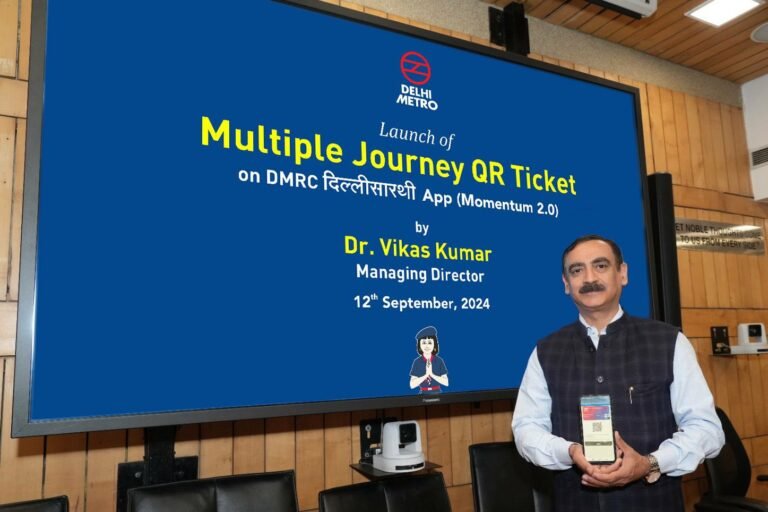
Delhi (Metro Rail News): As part of its ‘Ease of Booking’ initiative, the Delhi Metro Rail Corporation (DMRC) has introduced the Multiple Journey QR Ticket (MJQRT), which aims to enhance passenger convenience by removing the need for daily QR ticket purchases. DMRC’s Managing Director, Dr. Vikas Kumar, launched the feature at Metro Bhawan, accompanied by senior officials.
Key Features and Benefits of DMRC’s MJQRT:
Registration and Recharge
Users must register on the DMRC Momentum Delhi Sarthi 2.0 mobile app to use the MJQRT.
An initial recharge of ₹150 is required to start using the MJQRT for metro travel.
No security deposit is needed for the MJQRT.
Users can add funds in multiples of ₹50 through digital payment methods like UPI, credit cards, and debit cards.
The maximum balance that can be maintained is ₹3,000.
Discounts and Travel
Travelers using the MJQRT will get a 10% discount during peak hours (8 AM to 12 PM and 5 PM to 9 PM).
A 20% discount is offered during off-peak hours.
A minimum balance of ₹60 is required to initiate travel using the MJQRT.
Benefits
The MJQRT provides a cost-effective and eco-friendly alternative to traditional smart cards.
In case of theft, loss, or damage to the mobile device, the remaining balance is retained, and users can access their MJQRT on another device.
The MJQRT offers more flexibility and ease of travel, joining other fare media options like single journey QR tickets, NCMC, and DMRC smart cards.
Photo Copyright: DMRC
Key Differences
The Multiple Journey QR Ticket (MJQRT) differs from a normal QR ticket in several key aspects:
MJQRT: Designed for multiple journeys, allowing users to travel multiple times without needing to purchase a new ticket for each journey.
Normal QR Ticket: Typically intended for single journeys, requiring passengers to buy a new ticket for each trip.
Recharge and Balance:
MJQRT: Users start with an initial recharge (minimum ₹150) and can maintain a balance up to ₹3,000, allowing for seamless travel across multiple journeys.
Normal QR Ticket: Usually requires a one-time payment for each journey, with no balance or recharge feature.
Discounts:
MJQRT: Offers discounts of 10% during peak hours and 20% during off-peak hours, making it more economical for frequent travelers.
Normal QR Ticket: Typically does not provide discounts.
App Integration:
MJQRT: Available exclusively through the DMRC’s Delhi Metro Sarathi (Momentum 2.0) app, which allows users to manage their journeys and recharges digitally.
Normal QR Ticket: This can often be purchased at stations or through different apps but does not integrate with a balance system.
Security Features:
MJQRT: In case of theft or loss of the mobile device, the remaining balance is retained and can be accessed from another device.
Normal QR Ticket: Generally does not have any such feature, as it is a one-time use ticket.
With the launch of MJQRT, DMRC reaffirms its dedication to enhancing passenger experiences through digital innovation, making metro travel more convenient and environment friendly.
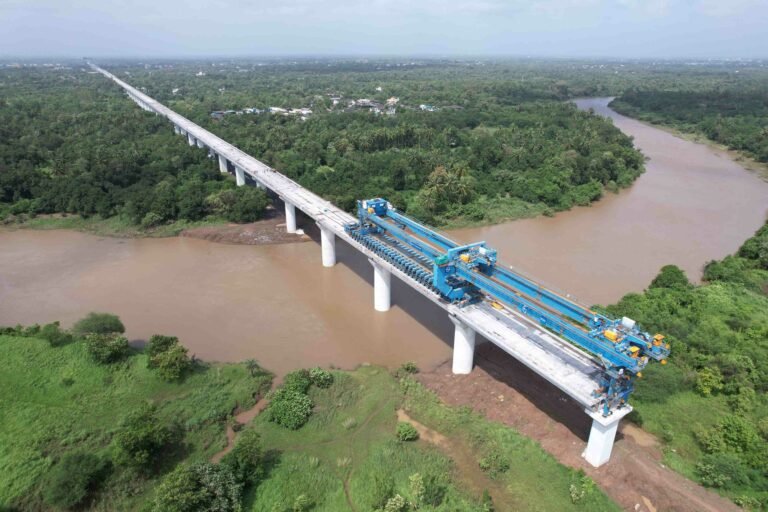
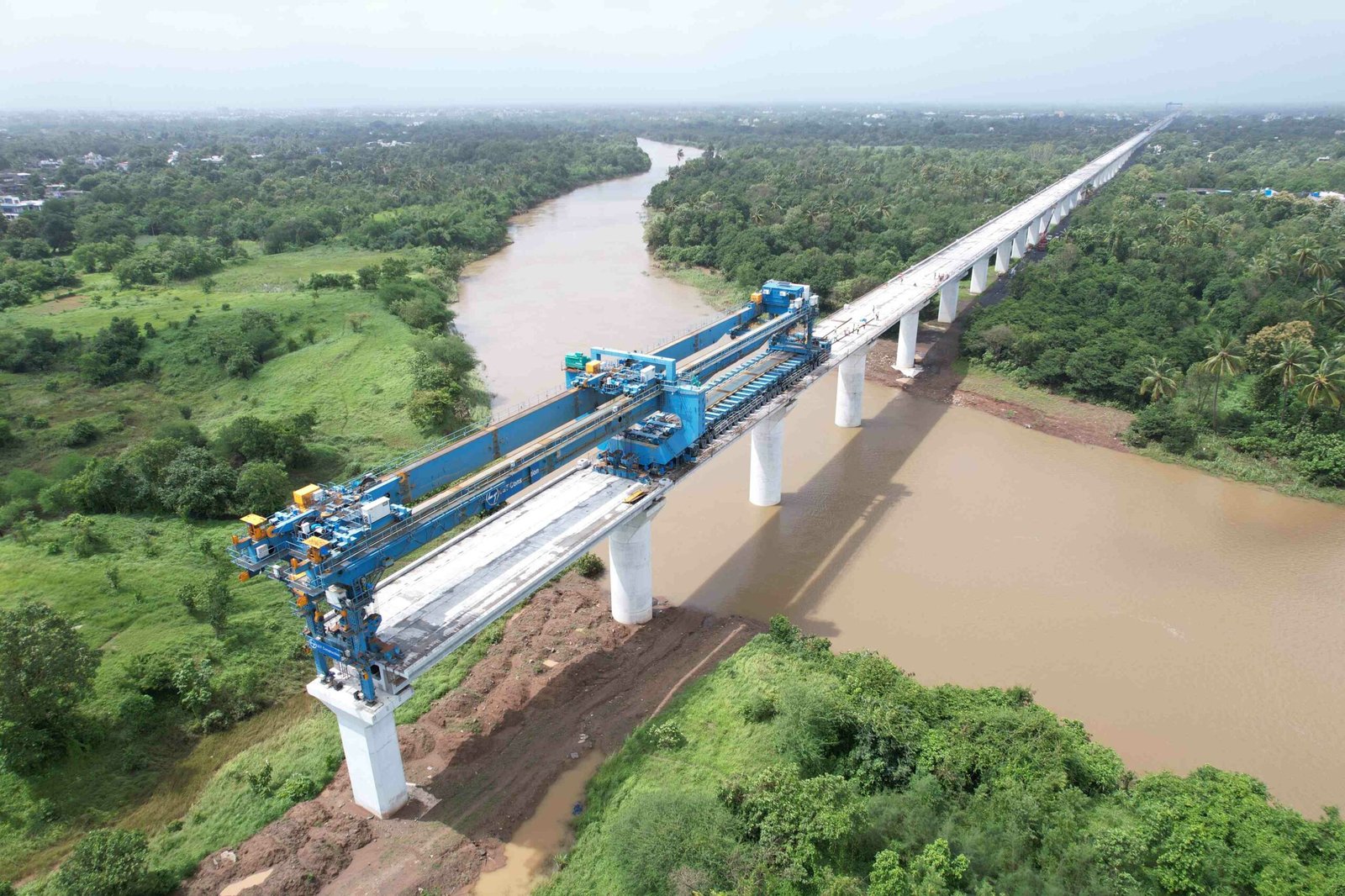
(Metro Rail News): Another milestone has been achieved in the Mumbai-Ahmedabad Bullet Train Project. On 25th August, NHSRCL completed a 120-metre bridge on the Kaveri River (Navsari district in Gujarat). This bridge is located between Vapi and Bilimora Bullet Train stations.
About River Bridge
According to the NHSRCL’s press release, this 120-metre-long bridge consists of 3 full-span girders, each 40 m long, while the height of piers varies between 13 to 21 metres.
Till date, this is the 11th bridge completed out of 20 bridges planned in Gujarat for the Bullet Train Project.
Other completed river bridges include the bridges on :
Par (Valsad district)
Purna (Navsari district)
Mindhola (Navsari district)
Ambika (Navsari district)
Auranga (Valsad district)
Venganiya (Navsari district)
Mohar (Kheda district)
Dhadhar (Vadodara district)
Kolak River (Valsad district)
Vatrak River (Kheda district)
Over 1,75,000 Noise Barriers Installed Along Bullet Train Corridor
The installation of noise barriers along the Mumbai-Ahmedabad Bullet Train Corridor is in progress.
So far, More than 1,75,000 noise barriers have been installed over a stretch of 87.5 km in Gujarat on either side of the viaduct.
The noise barriers are installed at a 2-metre height from the rail level, and each noise barrier is about 830-840 kg heavy.
The noise barriers are meticulously engineered to distribute the aerodynamic sound generated by the train and provide passengers with a more comfortable journey.
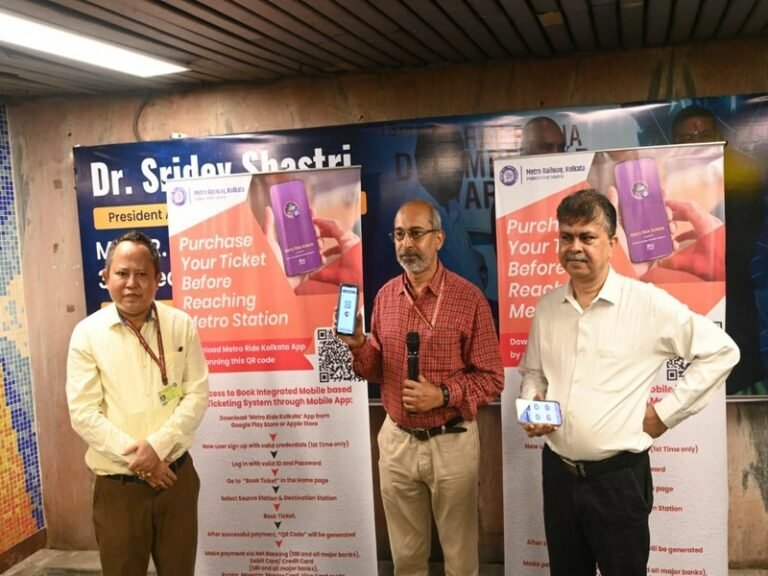
Stepping towards a more digitalised world, the Kolkata metro introduces a mobile-based QR ticketing system on trial Basis.
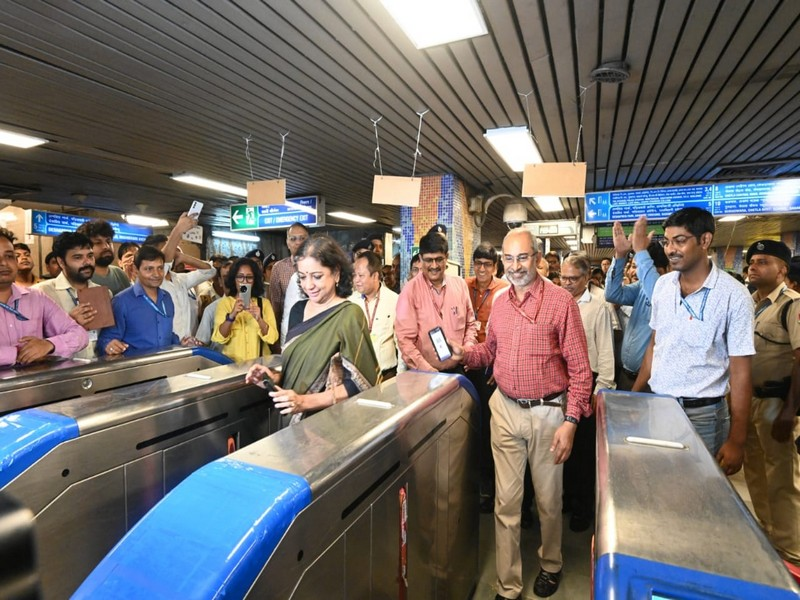
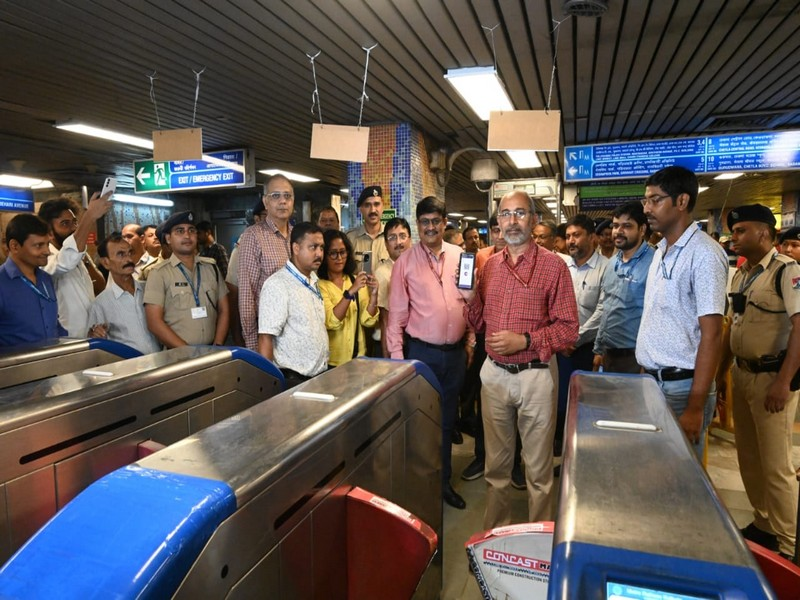
On the 11th of September,2024, Shri P. Uday Kumar Reddy, General Manager of Metro Railway, introduced this new ticketing system at Kalighat metro station with the presence and gratitude of other senior officials.
Shri Reddy expressed that the new ticketing system will greatly benefit Metro commuters by allowing them to purchase tickets at their convenience, eliminating the need to stand in queues or navigate through different corridors for interchanges.
The General Manager urged everyone to download the ‘Metro Ride Kolkata’ app from the Google Play Store and App Store to conveniently access and use this ticketing system.
He added that this system, introduced on on a trial basis, will make commuting in the Metro during the forthcoming Puja days more comfortable and enjoyable.
This Facility will be Available on Kolkata Metro’s 3 Corridors
The AFC (Automatic Fare Collection) gates of different Blue Line and Orange Line stations have been upgraded to support this new ticketing system. Centre for Railway Information Systems (CRIS) has developed this ticketing solution, which is expected to gain popularity in the coming days.
In conclusion, adding more versatility to this alternative Integrated Mobile Based QR Code Ticketing System has been initiated on a trial basis in Blue Line, Green Line and Orange Line.
From now on, passengers will be able to travel to any station across these Corridors by interchanging through seamless standard paid-to-paid connectivity using the duplicate Mobile Based QR Code Ticket by purchasing it from home, office or on the go. With this, passengers can avoid the long queues at the booking counters. This paperless ticket will remain valid for 12 hours on a calendar date after purchase. Now, the commuters no longer need to carry any physical ticket to travel in the Metro.
(Metro Rail News): Gujarat residents are going to witness a significant development in the public transportation sector.
On 16 September, PM Narendra Modi will inaugurate the second phase of the Ahmedabad Metro and the first-ever Vande Metro Train in Gujarat.
The Vande Metro train has completed its trials successfully and will operate between Ahmedabad and Bhuj.
The Ahmedabad Metro Rail Extension Project, led by the Gujarat Metro Rail Corporation (GMRC) in coordination with the state and central governments, focuses on expanding the city’s metro network. This project is designed to extend existing metro lines to improve urban connectivity and address the growing demand for public transportation in Ahmedabad.
Ahmedabad Metro Phase 2
On 19 February 2019, the Indian Government approved the Ahmedabad Metro Phase 2 project at an estimated budget of Rs. 5384.17 crores. Phase 2 is currently under construction and is expected to be completed by 2026.
The Red Line spans 22.838 km (approx), connecting Motera Stadium station to Mahatma Mandir station through 20 elevated stations.
Line-3
Line 3 stretches about 5.416 km, connecting Gujarat National Law University station to Gujarat International Finance Tec-City station through 3 elevated stations.
This development will streamline the connectivity in the region. The Vande Metro is a new initiative by Indian Railways which aims to facilitate short-distance intercity travel. It will have a top speed of 130 km/h. The Vande Metro will be equipped with KAVACH train anti-collision system for enhanced safety.
Agra ( Metro Rail News): Recently, Larsen and Toubro (L&T) was awarded the package AGCC-07 for 15.09 km long Line 2 of Agra Metro Phase 1, which connects Agra Cantonment to Kalindi Vihar featuring 14 elevated stations.
A month before, Uttar Pradesh Metro Rail Corporation (UPMRC) declared L&T as the lowest bidder for the package AGCC-07. The total cost of the package is Rs.1244.79 crore, and this contract comes with a deadline of 24 months.
This Package AGCC-07 will also be financed by the European Investment Bank (EIB) by a €450 million loan.
Representational image only
Package AGCC-07 (Line 2)
Package AGCC-07’s work scope includes the civil construction of the entire Line 2’s viaduct with 14 elevated stations, 530m viaduct to Line-2’s Kalindi Vihar Depot, and interestingly a 2.61 km viaduct from north of Sadar Bazar metro station to Line-1’s PAC Depot station.
UPMRC’s work description for AGCC-07
UPMRC has issued a notice to declare L&T as the awarded contractor with some work descriptions.
Work includes the design and construction of the main line elevator from Agra Cantt. Metro Station to Kalindi Vihar Metro Station [Chainage (-77m) to 15016m] including Viaduct Connection with Ramp (Chainage 0.00m to 2610m) from (nearby) Sadar Bazar Metro Station to existing Corridor-1 Depot at PAC ground & Corridor-2 Depot Entry/Exit lines Viaduct with Ramp (Chainage 0.00m to 530m) and Civil, Associated Ancillary Structures, Architectural Finishes, Water Supply, Sanitary Installation, Drainage, External Development, Fire Fighting, Fire Detection, E&M works and PEB structures in Corridor-2 of Agra Metro at Agra, Uttar Pradesh, India.
The 14 elevated stations included in the project are:
Agra Cantt
Sadar Bazar
Pratap Pura
Collectorate
Agra College
Hariparvat Chauraha
Sanjay Place
M.G. Road
Sultanganj crossing
Kamla Nagar
Ram Bagh
Foundary Nagar
Agra Mandi
Kalindi Vihar metro station
Agra Metro’s 5.2km section from Taj East Gate to Mankameshwar (Jama Masjid) was inaugurated in March 2024. The entire Phase 1 project is expected to be completed in 2026.
Most of the stations of the Agra Metro will connect tourists to famous historical spots like the Taj Mahal, Captain Shubham Gupta, Fatehabad Road, Taj Mahal, and Mankameshwar Temple.
The Regional Rapid Transit System (RRTS) is a semi-high-speed, high-capacity commuter rail service, which aims to connect key areas within the National Capital Region (NCR) of India.
The Beginning of RRTS
The RRTS Project was proposed in 2005 by a Task Force from the Planning Commission, chaired by the Secretary of the Ministry of Urban Development (MoUD), with the goal of improving regional transportation through an integrated transit network.
RRTS was incorporated in the Integrated Transport Plan for NCR 2032, which focused on connecting regional centers. The appointed Task Force identified eight corridors and prioritised three corridors for implementation in the first phase:
Delhi-Meerut RRTS
Delhi-Panipat RRTS
Delhi-Alwar RRTS
Features of RRTS
Design Speed
180 km/h
Operation Speed
160 km/h
Average Speed
100 km/h
Time to Travel 100 km
60 minutes
The implementing authority of RRTS is the National Capital Region Transport Corporation (NCRTC). NCRTC is a joint venture between the central and state governments of Delhi, Uttar Pradesh, Haryana, and Rajasthan.
Funding of the RRTS Project
The partial financials of the RRTS are being handled through an official development assistance (ODA) loan from the Asian Development Bank and the Asian Infrastructure Investment Bank.
The Need for RRTS in India
Rapid Urbanisation: The rapid population growth in the National Capital Region (NCR) has resulted in severe traffic congestion and increased pollution levels, which necessitated a robust public transportation system.
Environmentally Beneficial: RRTS would help shift many people from private vehicles to public transportation. This would help to reduce the traffic on roads. It will also be environmentally sustainable as a large population will be shifted to public transport.
International Model: The design and operational strategy of the RRTS drew inspiration from successful global transit systems, such as the RER in Paris and the Regional-Express trains in Germany.
Economic Development Goals: The National Capital Region (NCR) serves as a major hub for economic activities. The Regional Rapid Transit System (RRTS) is designed to enhance economic productivity by improving access to jobs and services throughout the NCR. By enabling faster commutes, the RRTS is expected to stimulate economic growth in suburban areas, contributing to more balanced regional development.
Corridors in RRTS Project
RRTS is different from conventional Railways as it will provide reliable, high-frequency, and point-to-point regional travel at high speed along a dedicated pathway.
DPR Approval: Uttar Pradesh State government approved the DPR in May 2017 and and Government of India approved it in February 2019.
Foundation Stone: Prime Minister Shri Narendra Modi laid the foundation stone of this line in March 2019.
Commercial Operations: The 17 km priority stretch of the Delhi-Meerut RRTS corridor, which spans from Sahibabad to Duhai Depot, was inaugurated by Prime Minister Modi on October 20, 2023. In March 2024, Prime Minister Narendra Modi inaugurated an additional 17.1 km of the RRTS route, extending between Duhai and Modinagar North.
Delhi – Meerut RRTS Route Information
Length: 82. 15km
Type: Elevated and Underground
Depot: Duhai EPE and Modipuram
Total Stations : 22
The RRTS has a total of 22 stations: Nizamuddin / Sarai Kale Khan, New Ashok Nagar, Anand Vihar, Sahibabad, Ghaziabad, Guldhar, Duhai (EPE), Murad Nagar, Modi Nagar South, Modi Nagar North, Meerut South, Partapur, Rithani, Shatabdi Nagar, Brahmapuri, Meerut Central, Bhaisali, Begum Pul, MES Colony, Daurli, Meerut North, and Modipuram.
Out of these, eight stations—Partapur, Rithani, Brahmapuri, Meerut Central, Bhaisali, MES Colony, Daurli, and Meerut North—are dedicated to MRTS metro-only services.
The civil construction of the viaduct in the Delhi Section is nearly complete. The NCRTC is likely to conduct trial on Delhi Section in the last quarter of 2024.
Operations and Management
DB RRTS Operations India Pvt Ltd. is responsible for operating and maintaining the line for 12 years through a Rs. 1493.08 crore contract awarded in May 2022.
Rolling Stock
Alstom
Estimated Cost
Rs. 30,274 crore
Entire Corridor Deadline
The entire corridor is expected to open by mid-2025.
Recent Update
NCRTC has planned to install environmental control systems on the RRTS corridor. It is done to regulate the temperature and circulation of fresh air in the underground stations.
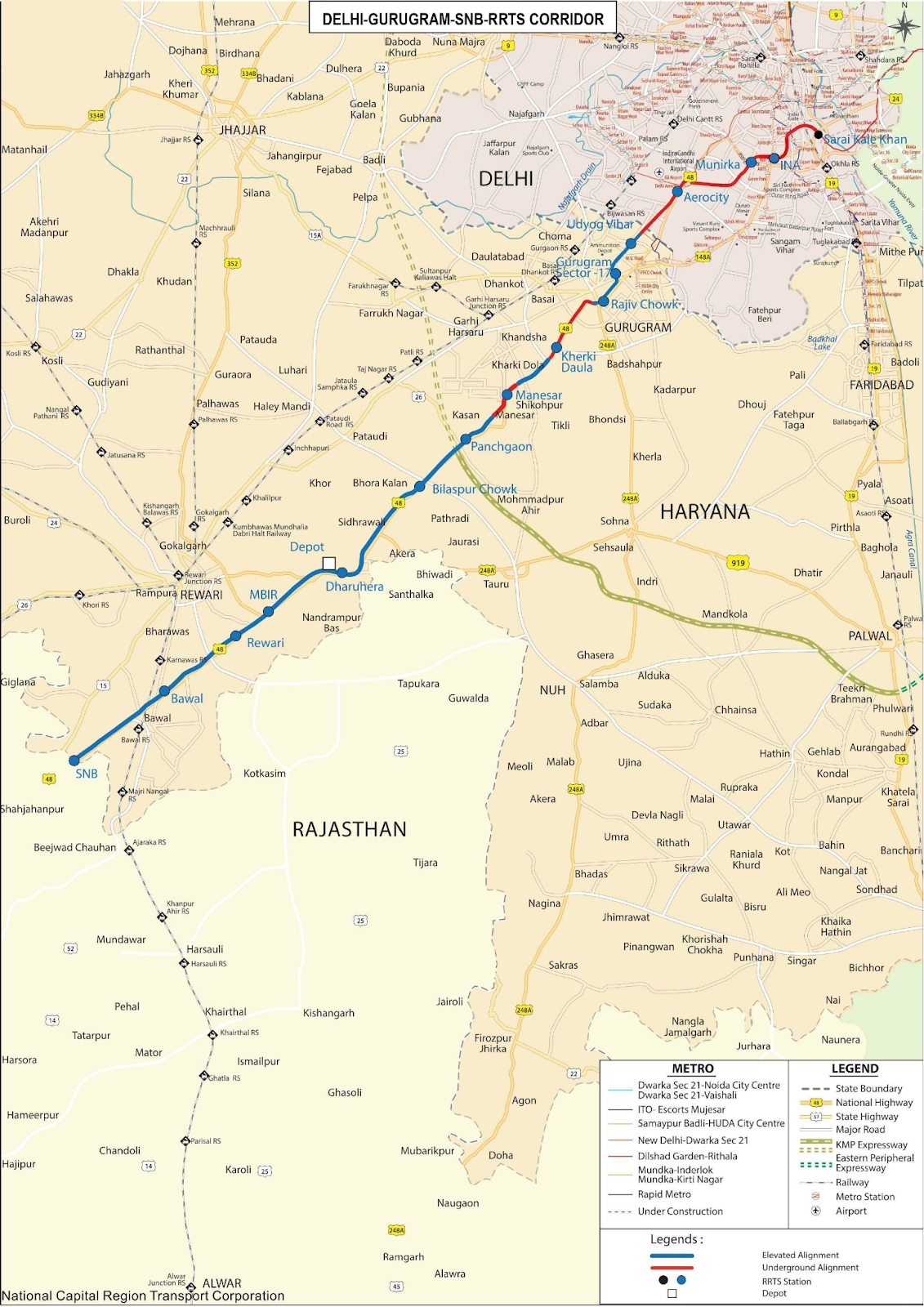
Delhi – Gurugram – SNB – Alwar RRTS
The Delhi-Gurugram-Shahjahanpur-Neemrana-Behror (SNB)-Alwar RRTS corridor is one of the three corridors being developed under Phase I of the Regional Rapid Transit System (RRTS) to improve connectivity in the National Capital Region (NCR) of India.
This line will start from Sarai Kale Khan in Delhi, and reach Alwar while connecting Munirka, Aerocity and move via Gurugram, Sotanala and Rewari.
Operational: 0 km | Under Construction: 0 km | Approved: 96 km | Proposed: 93 km
Stations on Spur Line (4): Shahjahanpur, Neemrana, Behror, Sotanala
DPR Approved
Approved by NCRTC’s board in December 2018, the Haryana Government in February 2019, and the Rajasthan Government in June 2019.
Estimated Cost
Rs. 37,000 crore
Expected Daily Ridership
8.5 lakh passengers
Deadline
Not yet announced
Phases
Phase 1: Sarai Kale Khan – Gurgaon – Dharuhera
70.72 km
Phase 2: Dharuhera – SNB
36 km
Phase 3: SNB – Behror – Sotanala
35 km
Phase 4: SNB – Alwar
58 km
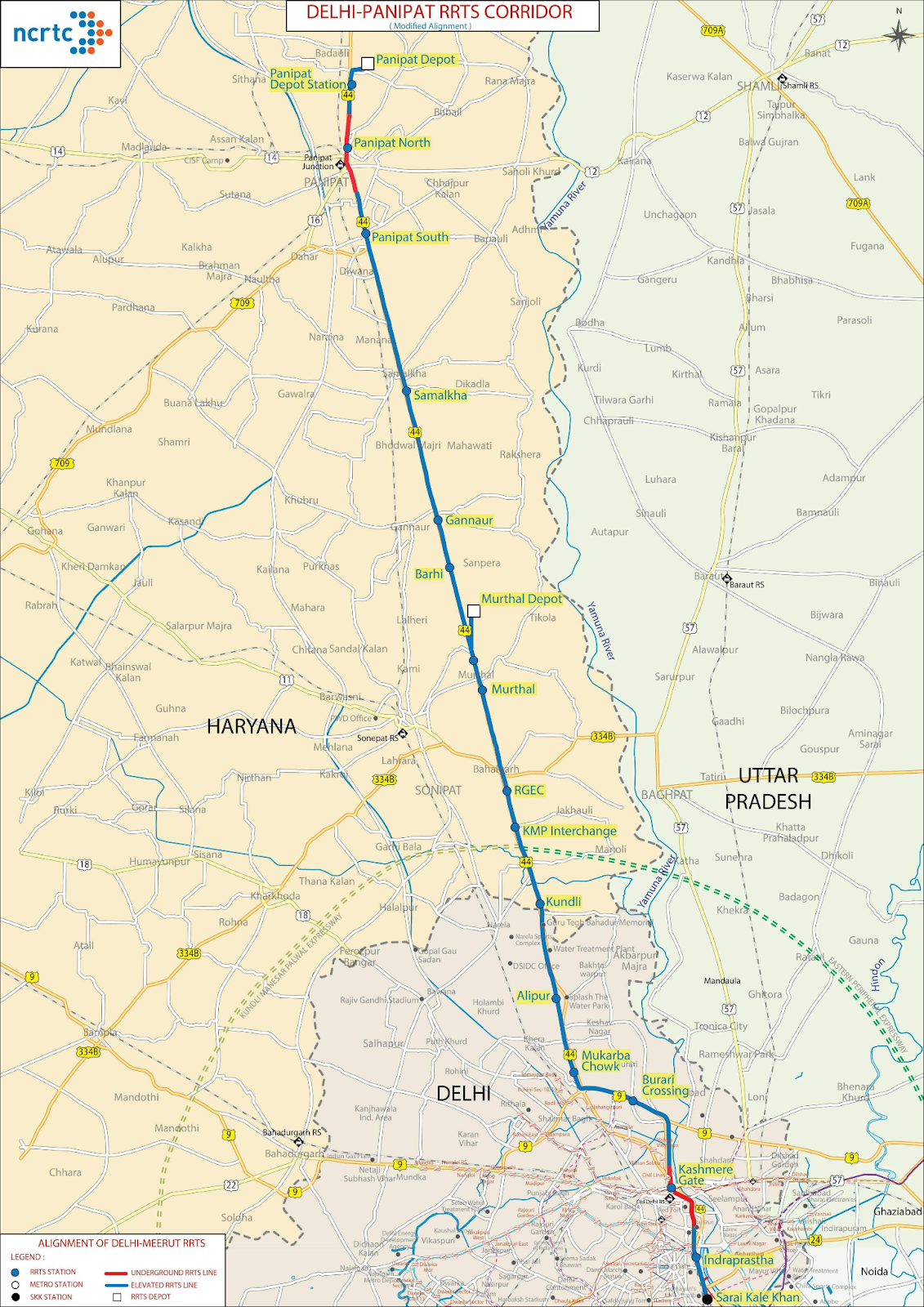
Delhi – Sonipat – Panipat RRTS
This RRTS line will originate from Sarai Kale Khan, and connect to Kashmere Gate ISBT. It will continue to head north along National Highway 44 through Sonipat, Gannaur, and Samalakha to connect Panipat in Haryana.
Operational: 0 km | Under Construction: 0 km | Proposed: 103 km + 25 km
Stations on Proposed Karnal Extension (3): Gharunda, Madhuban and Karnal
DPR Approved
Haryana Government approved the DPR of this project in December 2020.
Estimated Cost
Rs. 21,627 crore
Estimated Daily Ridership
7.79 lakh passengers
Deadline
Not yet announced
In January 2020, the Haryana government decided to extend the line from Panipat to Karnal, covering a distance of approximately 25 kilometers from the Panipat Depot Station. However, the Detailed Project Report (DPR) for this extension is still awaiting approval.
Future Extension Plans for RRTS
Route
Length
Recent Updates
Delhi – Jewar Airport
72 km
In April 2024, Detailed Project Report (DPR) of Ghaziabad – Jewar Airport RRTS was submitted to Yamuna Expressway Industrial Development Authority (YEIDA).
Delhi – Faridabad – Ballabgarh – Palwal
60 km
Ghaziabad – Bulandshahr – Khurja
83 km
Delhi – Bahadurgarh – Rohtak
70 km
A future extension is planned for Hisar.
Ghaziabad – Hapur
57 km
Delhi – Shahdara – Baghpat – Baraut
56 km
Delhi – Jewar Airport RRTS
Deadline
It is expected to be completed by 2041.
Estimated Cost
Rs. 20,043.6 crore
Construction in 2 Phases
Phase 1:Line: Ghaziabad – Kasna Distance: 39.39 km Stations: 7 RRTS and 11 Metro Stations Vishvakarma Road (Sidharth Vihar/Pratap Vihar in Ghaziabad), Taj Highway, Char Murti Chowk, Greater Noida Link road (Knowledge Park-V), and then turns onto Surajpur-Kasna Road, ending at Ecotech VI in the Kasna Phase 1 will integrate with the Delhi Metro at Ghaziabad, the Aqua Line at Char Murti Chowk, and the Alpha I station of the Aqua Line near Pari Chowk to enhance connectivity across the region.
Phase 2:Line: Kasna – Jewar Airport Distance: 32.9 km Stations: 4 RRTS; Provision of 1 RRTS and 9 Metro Stations Dankaur, Dhanauri, Kanarsi, Bhatta, Parsaul, Rabupura, Dayanatpur, and Kishorpur, Ground Transport Center near Terminal 1 of Noida International Airport.
Namo Bharat Trains:
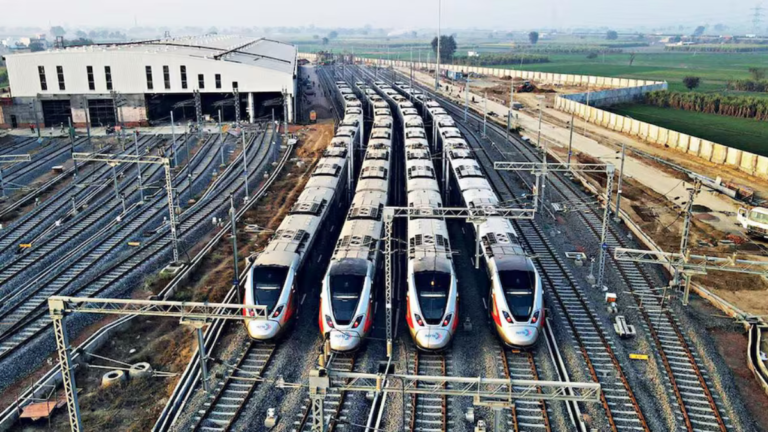
The Namo Bharat train (formerly known as RapidX) is an Indian Electric Multiple Unit (EMU) designed specifically for the Regional Rapid Transit System (RRTS).
Key Specifications of Namo Bharat:
Design Speed
180 km/h
Operational Speed
160 km/h
Average Speed
100 km/h
Track Gauge
Standard Gauge: 1435 mm
Rolling Stock
Alstom has got a contract to supply 210 coaches for the Delhi – Meerut line
Signalling
European Train Control System (ETCS) Level 2 of ERTMS
Traction
1 x 25 KV AC overhead catenary (OHE)
Seating Arrangement
Transverse
Classes
Economy and Business (1 coach per train)
Challenges faced by RRTS
Land Acquisition
Due to the high population of Delhi and Meerut, it became difficult for the NCRTC to acquire land for the construction of RRTS. Compensation and negotiations created a delay in the construction and completion of the RRTS project.
Pollution Control
As the pollution in Delhi NCR is rising rapidly, smog mitigation became a huge challenge during the construction of the Delhi-Merut RRTS. Several measures like sprinkling of water and deployment of anti-smog guns were done to ensure a reduction in dust.
Advantages of RRTS
Rise in Economic Activities
RRTS focuses on improving the pattern of movement and development across different regions. As RRTS offers travel with high speed, the total time taken to reach the destination is reduced, enhancing the productivity and overall economic activities of the region.
Employment Opportunities
RRTS would open up new opportunities for the people in the country. With the development and commencement of the RRTS, new businesses and shops would open up in the regions, creating job opportunities for the people. It would improve the travel conditions for the people.
Reduction in Cost
A faster travel with RRTS would free up people’s time for productive activities. Offering travel at an affordable price would help people save, increasing their disposable income, and improving their quality of life.
Environmental Benefits
The majority of the energy requirement of the RRTS is met through renewable energy. Solar panels are being installed across the RRTS depots and station buildings, making it beneficial for the environment.
Improved Safety
RRTS is equipped with the best in class command and control systems, offering safe and reliable public transportation to move across Delhi and NCR.
Reduced Road Congestion
Compared to any other public transportation, RRTS helps a large number of people to travel every hour. RRTS aims to switch a large amount of traffic from road to rail, freeing up the space on the road and reducing the road congestion on the highways.
Conclusion
The Regional Rapid Transit System is a significant step to enhance the access of India’s public transportation infrastructure, aiming to reduce traffic congestion and enhance regional connectivity. By offering high-speed and reliable travel options, RRTS is set to transform commuter experiences and economic dynamics across the Delhi NCR region.
The development of RRTS promises reduced travel times and operational efficiency besides leading to economic growth and environmental benefits. As more corridors are completed, RRTS will play a crucial role in connecting metropolitan areas, supporting urban expansion, and improving the quality of life for millions of residents.
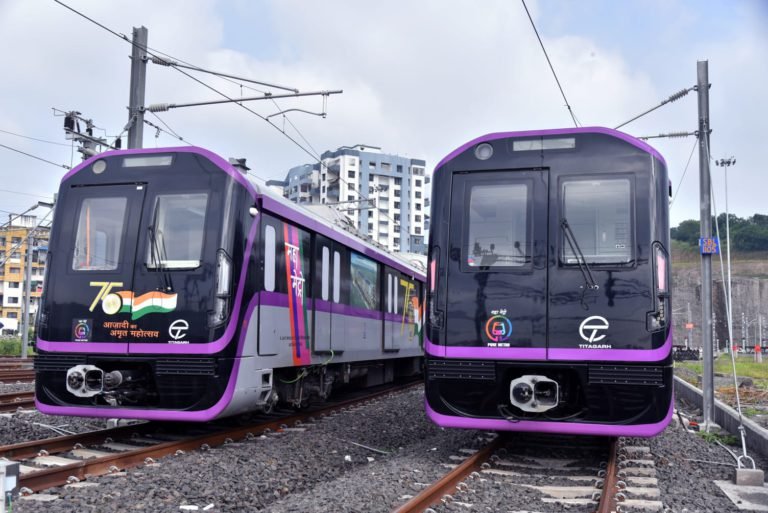
Pune (Metro Rail News): MahaMetro, or Maharashtra Metro Rail Corporation, appointed Structcon Design Pvt. Ltd. as a Proof Checking Consultant for Pune Metro’s 4.519 km long viaduct of Purple Line Phase 1A.
RVNL was the civil contractor of the package – PIA-C-01, which included the construction of a viaduct connecting Pimpri Chinchwad Municipal Corporation (PCMC) to Nigdi (Bhakti Shakti) via 4 elevated stations with an estimated cost of Rs.910.18 crore.
Structcon will execute its work around the same viaduct of Pune Metro Phase 1A (PCMC to Nigdi) under Package – P1A-PC-01.
Work description
The main course work of Structcon includes proof-checking all detailed structural designs of the viaduct’s substructure whether it is open, pile or well foundation. The Superstructure is a pier, pier cap, pedestal & any other structure up to the pedestal level.
In June 2024, Structcon became the lowest bidder for the 4.519 km Purple Line extension (PCMC to Nigdi ) under package – P1A-PC-01. There were four bidders in the line for the same project.
LKT Engineering Consultants
Shirish Patel and Associates Consultants
Spectrum Techno Consultants
Structcon Designs (L1)
Moreover, the construction work of the extension of the Pune Metro is going quickly with all the planning and arrangements. Some of the major packages and contractors are given below. Please have a glance over them.
One of the largest and oldest rail networks in the world, the Indian Railways was established in 1853. Covering over 1,32,310 kilometres of track, the Indian Railways is known for its connectivity to almost every corner of the country. Over the years, the railways have undergone numerous technological advancements to offer better services to their customers.
Indian Railways, the country’s second-largest employer, provides jobs for over 1.2 million people. Beyond its role as a passenger railway service, it offers a diverse range of services, including rail freight transport, parcel delivery, catering, and tourism.
Railway Automation System
Introduction
Railway automation refers to implementing advanced technologies and systems to manage and control train operations with minimal human intervention. This includes automated train control, scheduling, monitoring systems, and passenger services. The goal of railway automation is to enhance safety, improve efficiency, reduce operational costs, and offer a better travel experience for passengers.
The journey of railway automation began with the advent of steam engines in the 19th century and has evolved through numerous technological advancements, including electric trains and computerised systems. Innovations such as Automatic Train Protection (ATP) and Centralised Traffic Control (CTC) have substantially contributed to the development of modern automated systems.
Key Components of Railway Automation
GPS and Tracking Systems
Global Positioning System (GPS) technology is critical for real-time train tracking. It allows railway operators to monitor the location and speed of trains accurately. This data is essential for scheduling, ensuring trains run on time, and managing traffic flow on busy routes.
Communication Systems
Effective communication is vital in railway automation. Technologies such as GSM-R (Global System for Mobile Communications – Railway) facilitate communication between trains and control centers. This ensures that train operators receive real-time updates about track conditions, weather changes
Signaling systems
Signaling systems play a crucial role in enabling automation and safe operations in modern railway networks. It contributes to railway automation by various ways such as:
Automatic Block Signaling
Moving Block Systems
Interlocking Systems
Train Control Systems
These include Automatic Train Protection (ATP) and Automatic Train Operation (ATO) systems that control train speeds, braking, and other functions.
Passenger Information Systems
These are the automated systems for real-time updates on train schedules, delays, and other information.
Track Monitoring Systems
These systems use a variety of sensors and techniques to continuously monitor the condition of tracks and detect potential issues before they become serious problems.
Investment
The Union Budget 2023-24 allocated around Rs. 2.4 lakh crore for Indian Railways, with a significant portion dedicated to modernization and automation projects.
Indian Railways’ Moving Steps Towards Automation
Indian Railways is striving to streamline its operations through automation and instrumentation, particularly in maintenance practices which aims to enhance safety, reliability, and efficiency.
Key Initiatives in Automation
Online Monitoring of Rolling Stock System (OMRS): OMRS is a way-side inspection system that incorporates technologies like Acoustic Bearing Detectors (ABD) and Wheel Impact Load Detectors (WILD) to monitor the health of train components in real-time. This system detects faults in bearings and wheels, allowing for timely corrective actions before failures occur.
Implemetation of OMRS: In Phase 1, Indian Railways has installed 25 OMRS systems at 20 locations across its network. These locations were chosen by a high-level, multi-disciplinary committee from the Railway Board. Indian Railways installed the first OMRS system at Panipat in the Ambala-Delhi section of Northern Railway in November 2017. In March 2018, authorities set up a Central Control Room, named the “National Command Centre (NCC),” at Delhi Kishanganj to monitor all OMRS sites.
Smart Yards: Indian Railways is developing “Smart Yards” equipped with automated systems for predictive maintenance of freight wagons. These yards will use technologies such as Hot Box Detectors and Wheel Profile Recorders to identify potential issues like hot axles or defective wheels before they result in operational failures
Implementation of Smart Yard: In the first phase, Indian Railways will convert 40 identified yards into Smart Yards. COFMOW, a unit of Indian Railways, has been assigned the responsibility for overseeing the Smart Yards project.
Digital Railway Solutions:
The digital railway program focuses on integrating digital signaling technology to improve safety and efficiency in train operations. By centralising data from various systems, Indian Railways aims to enhance real-time communication and operational efficiency across the network.
Major Roadblocks in Implementing Automation in Indian Railways
Implementing automation in Indian Railways presents several challenges that need to be addressed for successful integration and operation of these advanced systems:
Infrastructure Limitations: The existing railway infrastructure is often outdated and may not support the advanced technologies required for automation. Upgrading tracks, stations, and signaling systems to accommodate automated operations is a major challenge, especially given the vastness of the railway network.
Financial Constraints: The cost of implementing automation technologies is substantial. Indian Railways faces budgetary constraints that may limit the extent and speed of technological upgrades.
Integration of Technologies: Combining new automated systems with existing manual operations is challenging. It requires careful planning, execution, and training to ensure smooth operation.
Regulatory and Compliance Issues: Introducing automation technologies may necessitate changes to existing regulations and compliance standards.
Public Acceptance and Safety Concerns: There may be public resistance to automated systems, especially regarding safety. Building trust in these systems is crucial, as incidents or failures could lead to backlash against the technology.
Benefits of Automation
The adoption of automated systems is expected to bring several advantages to Indian Railways:
Enhanced Safety: Early detection of defects helps reduce the risk of accidents and boosts overall train operation safety.
Increased Efficiency: Automated systems streamline maintenance processes, cut down turnaround times, and improve the efficiency of rolling stock.
Cost Savings: Predictive maintenance minimises unplanned repairs and optimizes resource allocation, leading to cost reductions.
Improved Passenger Experience: Better operational efficiency and safety enhance service reliability which ultimately contributes to overall passenger experience.
iCBTC
Integrated Communication-Based Train Control (ICBTC) is an advanced signaling system that builds upon the principles of Communications-Based Train Control (CBTC). This system is designed to improve the safety, efficiency, and capacity of railway operations
Overview of Integrated Communication-Based Train Control (ICBTC)
ICBTC combines various subsystems and technologies into a cohesive framework, integrating train control, supervision, and management functions. This integration allows for more efficient operations, improved safety, and enhanced communication across the entire railway network.
Key Features of ICBTC
Uninterrupted Communication: ICBTC systems use high-capacity, bidirectional communication links between trains and trackside equipment. This allows for real-time data exchange regarding train positions, speeds, and operational statuses, which eliminates the reliance on traditional fixed block signaling systems.
Integration with Other Systems: ICBTC integrates multiple functionalities, including Automatic Train Protection (ATP), Automatic Train Operation (ATO), and Automatic Train Supervision (ATS). This holistic approach ensures continuous communication and coordination among different components of the railway system.
Automatic Train Protection (ATP): The system incorporates ATP functions that prevent collisions and ensure safe train operations. By continuously monitoring train movements and conditions, ICBTC can automatically adjust train speeds and spacing to maintain safety.
Dynamic Headway Management: One of the primary objectives of ICBTC is to reduce the time interval (headway) between trains. This is achieved through Moving Block Technology, which enables trains to operate closer together, increasing rail line capacity without requiring additional infrastructure.
Technical Aspects of iCBTC
ICBTC systems use modern communication technologies, including radio and digital networks, to enable high-speed data transmission. This technology allows for precise tracking of train positions and speeds.
The key components of an Integrated Communication-Based Train Control (ICBTC) system are:
Wayside Equipment
Zone Controllers: Provide train detection, calculate safe separation distances, determine Movement Authority for trains within their assigned area, and apply temporary speed restrictions.
Interlocking Controllers: Manage wayside devices such as switches and signals to ensure safe train movements.
Onboard Equipment
Automatic Train Protection (ATP): This system ensures that trains operate within the Movement Authority limits specified by wayside controllers. ATP uses data on train features and regulatory requirements to enforce safe speeds, preventing operations outside of authorized parameters.
Automatic Train Operation (ATO): ATO manages automatic control of traction and braking systems to adhere to the speed profile set by ATP.
Communication System
Train-to-Wayside Communication: Provides continuous, high-speed, bidirectional communication between trains and wayside equipment via radio links, generally operating in the 2.4 GHz or 5.8 GHz frequency bands.
Antennas, Transponders, and Beacons: Support train-to-wayside communication by transmitting and receiving signals between trains and trackside equipment.
Automatic Train Supervision (ATS)
Traffic Management Center: Offers the human-machine interface for operators to monitor and control train movements, using interconnected workstations on a LAN.
Event and Alarm Management: Manages alarms and events reported by the ICBTC system, ensuring timely responses to operational issues.
These components collectively ensure continuous communication, automatic train protection, and efficient operation.
Benefits of ICBTC
Increased Capacity: ICBTC reduces headways, which allows more trains to operate on the same track and effectively.
Enhanced Safety: Continuous monitoring and automatic adjustments improve safety by reducing the risk of accidents.
Improved Energy Efficiency: By optimizing train movements, ICBTC helps reduce energy consumption and operational costs.
Implementation of iCBTC:
Delhi Metro: The Delhi Metro is in the front for implementing iCBTC technology. The Delhi Metro’s Phase III expansion, for instance, uses iCBTC to manage the increased traffic and ensure smooth operations.
Indigenous Communication-Based Train Control (I-CBTC) system:
Bharat Electronics Limited (BEL) and the Delhi Metro Rail Corporation (DMRC) have signed a Memorandum of Understanding (MoU) to develop the I-CBTC system jointly.
This initiative aligns with the government’s “Atmanirbhar Bharat” (self-reliant India) mission.
The project is being carried out under the Ministry of Housing and Urban Affairs (MoHUA), Government of India.
Growth of iCBTC
iCBTC technology is being adopted at an increasing rate in urban rail transit systems. It is implemented to address the challenges of high passenger density and frequent train operations. As Indian cities expand and urban rail networks grow, the demand for efficient and reliable signaling systems like iCBTC has increased.
Kavach
Kavach is an Automatic Train Protection (ATP) system developed by the Research Designs and Standards Organization (RDSO) for Indian Railways. Certified to Safety Integrity Level 4 (SIL-4), Kavach is a pivotal component of the Train Collision Avoidance System (TCAS) project, initiated in 2012 to eliminate train collisions across India’s rail network.
Currently operating on version 3.2, Kavach is slated for an upgrade to version 4.0 to expand its capabilities. Version 3.2 received certification in 2021, with deployment commencing in late 2022 on high-traffic routes such as Delhi-Mumbai and Delhi-Howrah.
Key Components of Kavach
Kavach Towers: Infrastructure supporting the communication and operation of the system.
Optical Fiber Network: Ensures reliable data transmission across the rail network.
Data Centers: Central hubs for processing and storing operational data.
Loco Kavach: Onboard equipment installed in locomotives to interact with the trackside infrastructure.
Trackside Equipment: Positioned along the rail tracks to monitor and control train movements.
Functionality and Features
Kavach enhances rail safety and operational efficiency through the following functionalities:
Automatic Braking: Applies brakes automatically in critical situations to prevent collisions.
Automated Whistling: Signals at level crossings (LC gates) and provides line-side signal information in foggy conditions at high speeds.
Continuous Movement Authority Update: Ensures real-time updates of movement permissions.
Emergency Stop Feature (SOS): Activates to prevent accidents and mitigate risks promptly.
Inter-Loco Communication: Facilitates direct communication between locomotives to enhance coordination and safety.
Safety Features
Signal Passed at Danger (SPAD) Detection: Kavach issues warnings if a locomotive violates SPAD signals, which are critical in preventing train collisions.
Collision Avoidance: Automatically activates brakes when detecting another train within a specified distance on the same track, mitigating collision risks.
Adverse Weather Adaptation: Continuously monitors train movements and communicates potential hazards like fog to locomotive crews, ensuring safe operations even in challenging weather conditions.
Recent Updates on Kavach
Call for Tenders
Indian Railways has issued tenders for deploying Kavach across 10,000 kilometres of railway tracks. A tender has been awarded for a 6,000-kilometer route and 139 locomotives, including Electric Multiple Unit (EMU) rakes, on the South Central Railway zone. The system is designed to accommodate different train types based on their operational requirements.
Successful Installation
As of December 2023, Indian Railways has achieved several milestones in deploying Kavach:
Installed 3,040 kilometres of optical fiber cables.
Erected 269 Kavach towers along 827 kilometres of railway tracks.
Established data centres at 186 stations.
Equipped 170 locomotives with Kavach systems.
South Central Railway (SCR) Zone
In the SCR zone, Kavach has been implemented on 121 locomotives, including EMU rakes, covering 1,465 route kilometres across various sections:
Lingampalli – Vikarabad – Wadi and Vikarabad-Bidar section (265 km)
Manmad-Mudkhed-Dhone-Guntakal section (959 km)
Bidar-Parbhani section (241 km)
Projects Under Construction
Kavach deployment projects are currently underway on the Delhi-Howrah (1,447 km) and Delhi-Mumbai (1,384 km) corridors. Detailed estimates for a 6,000-kilometer route are also in progress.
Approved OEMs
Indian Railways has approved three Original Equipment Manufacturers (OEMs) to facilitate the deployment of Kavach:
HBL PowerSystems
Kernex Microsystems
Medha Servo Drives
Further OEM approvals are anticipated in upcoming tenders to expedite the nationwide implementation of Kavach.
Benefits of Implementing Advanced Train Technology
Increased Efficiency
By preventing accidents and ensuring compliance with signals, Kavach reduces operational disruptions. This leads to fewer delays and interruptions in train services, contributing to a more reliable and efficient railway network. iCBTC allows for control over train movements, enabling tighter scheduling and reduced headways.
Incresed Safety
Automation systems reduce the reliance on manual control, minimizing the risk of human error. They handle critical functions such as train control, signaling, and collision avoidance, enhancing overall safety. iCBTC systems continuously monitor train positions, speeds, and signal compliance through real-time communication between trains and control centers. Kavach’s primary benefit is its ability to prevent train collisions.
Enhanced Passenger Experience
Automation system ensures that trains run on time and according to schedule, improving the overall reliability of the service and enhancing the passenger experience. The improvement in safety measures improve public confidence in rail travel, encouraging more people to use trains as a preferred mode of transportation.
Conclusion
The ongoing advancements in railway technology, including Kavach, iCBTC, and automation systems, are redefining the future of Indian Railways. These innovations are enhancing safety and operational efficiency besides improving passenger experience. By minimizing human error, optimizing train scheduling, and preventing collisions, these technologies are creating the way for a more reliable and secure rail network.
As Indian Railways continues to modernise, the integration of these systems will play a crucial role in fulfilling the growing demands of the transportation sector, ensuring that rail travel remains a safe, efficient, and preferred mode of transport for millions of people across the country.