Bhopal Metro: Bridging Bhopal with a Rapid Transit Network

Bridging Bhopal with a Rapid Transit Network

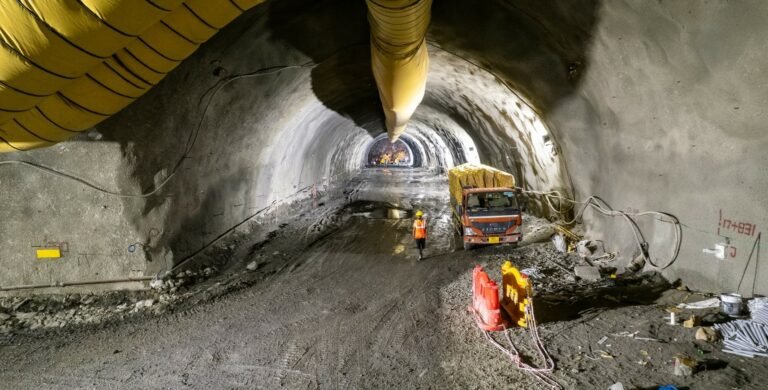
Bhopal, the vibrant capital of Madhya Pradesh, is gearing up for a transformation under the Bhoj Metro project. This ambitious mass rapid transit system (MRTS) will soon traverse the city, offering residents a fast, efficient, and eco-friendly way to travel. Phase 1 of the project, slated for completion in 2027, will encompass two lines and 28 stations. The Priority Corridor, a crucial phase segment, is expected to be operational by March 2024, slightly beyond its initial August 2023 target.

The long-term vision, captured in a 105 km master plan, envisions six metro lines seamlessly connecting different parts of Bhopal. For Phase 1, lines 2 and 5 have been prioritised, covering 27.9 kilometres. The project’s Detailed Project Report (DPR) received necessary approvals from both the state government (December 2016) and the Central Government (October 2018). Financing for this transformative project comes from a diverse pool of sources. The Asian Development Bank (ADB) has extended an official development assistance (ODA) loan, while the European Investment Bank (EIB) contributed a significant 400 million euro loan in December 2019. Construction work began in January 2019 and is now in full swing and aims for completion by 2026.

The project’s cornerstone was laid in September 2019 by then Chief Minister of the state, Mr Kamal Nath, aptly naming it the Bhoj Metro, a tribute to the legendary King Bhoja, who ruled over the Malwa region in medieval times. This initiative promises to revolutionise Bhopal’s urban mobility and boost its economic growth and sustainability. The Bhoj Metro project represents a pivotal step towards a modern and connected Bhopal. With its efficient and eco-friendly transportation system, the city is poised for a brighter future, where residents can easily commute and enjoy the benefits of a well-integrated urban infrastructure.

Need & Importance of Bhoj Metro

The Bhoj Metro project aims to provide a fast, convenient, and eco-friendly mode of transportation for the residents and visitors of Bhopal, the capital city of Madhya Pradesh. The project has several historical, tourism, and cultural benefits. Some of them are:

  • The Bhoj Metro will help preserve and promote the rich cultural heritage of Bhopal, representing the revered legacy of great king Raja Bhoj, who ruled over the entire Malwa region in medieval times. The city was founded by King Bhoj in the 11th century, who named it after himself. The city has many monuments and landmarks that reflect its glorious past, such as the Taj-ul-Masajid, the Bara Imambara, the Rani ki Vav, and the Bhojeshwar Temple. The metro will make accessing these places easier without depending on private vehicles or public buses.
  • The Bhoj Metro will also boost the tourism industry of Bhopal, which is one of the fastest-growing sectors in the state. The city attracts millions of tourists annually for its natural beauty, religious diversity, and cultural festivals. The metro will enhance the connectivity and accessibility of various tourist attractions in and around Bhopal, such as Sanchi Stupa, Ujjain Mahakaleshwar Temple, Omkareshwar, Orchha Fort, Khajuraho Temples, and Bandhavgarh National Park. The metro will also reduce the traffic congestion and pollution in the city and improve the quality of life for its residents.
  • The Bhoj Metro will also contribute to Bhopal’s economic development and social welfare. The project will create employment opportunities for thousands of people during its construction phase and generate revenue for the government through taxes and fares. The project will also reduce the dependence on fossil fuels and encourage green mobility among its users. The project will also improve its users’ public health and safety by providing them with a safe, comfortable, and reliable mode of transport.

These are reasons why the Bhoj Metro is an important project for Bhopal.

Project Details & Key Information

The key specifications of the project are as follows:

  • Top Speed: 80 kmph
  • Average Speed: 34 kmph
  • Track Gauge: Standard Gauge – 1435 mm
  • Electrification: 750 V DC Third Rail
  • Signalling: Communications-based Train Control (CBTC)
  • Operational: 0 km
  • Under Construction: 6.22 km
  • Approved: 21.65 km
  • Proposed: 77.13 km
  • Estimated Cost: Rs. 6941.40 cr
  • Estimated Daily Ridership: 2.20 lakh/day (2027)

Routes & Corridor

  1. Proposed Lines

Line-1 (Green Line): Bairgarh – Awadhpuri

  • Number of Stations: 24 (Twenty Four)
  • Stations: Bairagarh, Bairagarh Stadium, Hemu Kalani, Hala Pura Bus Stand, Lal Ghati Square, Idgarh Hills, Collectorate, Cambridge School MG Hospital, Curfew Wali Mata Mandir, Kamala Park, Polytechnic Square, Roshanpura Square, TT Nagar Stadium, Mata Mandir, Jain Mandir, Sharda Mandir, Nutan College, Mansarovar Complex (Habibganj Station), Khushabhau Thakrey ISBT, Anna Nagar, Carmel Convent, Piplani Gurdwara Square, Mahatma Gandhi Square, Awadhpuri

Line-3 (Red Line): Bhauri Bypass (NH12 Junction) – Vasant Kunj Bus Stop

  • Number of Stations: 24 (Twenty Four)
  • Stations: Bhauri Bypass/NH12 Junction, Peepainer Village (Aerocity), Airport Road, Gandhinagar, Airport Tiraha, Manubhan Tekri, Lalghati Square, Idgarh Hills, Collectorate, Cambridge School MG Hospital, Curfew Wali Mata Mandir, Kamala Park, Polytechnic Square, Roshanpura Square, TT Nagar Stadium, Mata Mandir, Jain Mandir, Sharda Mandir, Nutan College, Mansarovar Complex (Habibganj Station), Habibganj Naka, 10 No. Square, Sai Board, Vasant Kunj Bus Stop

Line-4 (Yellow Line): Ashok Garden Auto Stand – Mother Teresa School

  • Number of Stations: 21 (Twenty-One)
  • Stations: Ashok Garden Auto Stand, Krishna Campus, Railway Station, Jumerati Road, Curfew Wali Mata Mandir, Kamala Park, Polytechnic Square, Roshanpura Square, TT Nagar Stadium, Mata Mandir, MACT Square, Panchsheel Nagar Bus Stop, Ekant Park, Sahapura Lake, Bhoj University (Chunnabhatti), IIPM Sarvadham, Mansarovar School, CI Height Nayapura Bus Stop, Sanskar Marriage Garden, Bhairagarh Chichali, Mother Teresa School

Line-6 (Brown Line): Habibganj Naka – Mandideep

  • Number of Stations: 12 (Twelve)
  • Stations: Habibganj Naka, RRL, BU University, Bagsewania Bus Stop, Ashima The Lake City Mall, Sri Ram Colony, C21 Mall, Scope College (Bharopur), Regional 1 / NH-12, Harigangar Nagar, Regional 2, Mandideep
  1. Phase 1 Lines (Approved)

Line-2 (Orange Line): Karond Circle – AIIMS

  • Length: 14.99 km
  • Type: Elevated & Underground
  • Status: 6.225 km is under construction between AIIMS and Subhash Nagar
  • Depot: Subhash Nagar Underpass (Jinsi)
  • Number of Stations: 16 (Sixteen)
  • Stations: Karond Square, Krishi Upaj Mandi, DIG Bungalow, Sindhi Colony, Nandra Bus Stand, Bhopal Junction, Aish Bagh Crossing, Bogda Pul (interchange), Shubhash Nagar Underpass, Kendriya Vidyalaya, DB City Mall, Sangam Cinema, Himansarovar / Habibganj Station, Habibgang Naka, Alkapuri Bus Stand, AIIMS

Line-5 (Blue Line): Bhadbhada Square – Ratnagiri Tiraha

  • Length: 12.91 km
  • Type: Elevated
  • Depot: Subhash Nagar Underpass (Jinsi)
  • Number of Stations: 14 (Fourteen)
  • Stations: Bhadbadha Square, Depot Square, Jawahar Chowk, Roshanpura Square, Minto Hall, Lily Talkies, Bogda Pul (interchange), Prabhat Square, Govindpura,  J.K.Road, Indrapuri, Piplani (BHEL Township) and Ratnagiri Tiraha

Conclusion

Bhopal, the city once graced by the reign of Raja Bhoj, is poised for a modern transformation with the Bhoj Metro project. This ambitious mass rapid transit system promises not just to ease commutes but also to revitalize the city’s ancient soul in several ways:

  • Connecting History and Modernity: The metro’s lines will weave through historically significant areas, bringing ancient landmarks like the Upper and Lower Lakes within easy reach. Passengers will experience a seamless blend of Raja Bhoj’s era and contemporary marvels, creating a unique travelogue through time.
  • Accessibility to Hidden Gems: The metro’s reach will extend beyond the usual tourist hotspots, unlocking lesser-known historical sites and cultural hubs. This will allow visitors to delve deeper into Bhopal’s heritage, unearthing hidden treasures illuminating the city’s past.
  • Sustainable Preservation: By reducing traffic congestion and pollution, the Bhoj Metro will act as a guardian of Bhopal’s historical wonders. A cleaner city environment will enhance the visitor experience and safeguard the delicate fabric of its ancient monuments.
  • Cultural Tapestry Revived: Improved connectivity will foster cultural exchange within Bhopal, connecting diverse communities and reviving traditional practices. This will strengthen the city’s unique cultural identity and create a vibrant atmosphere steeped in its rich heritage.
  • A Global Platform for History: The Bhoj Metro will showcase Bhopal’s historical significance on the world stage. The increased visibility can attract investment and recognition, placing Raja Bhoj’s city on the map as a cultural treasure trove for international travellers.

In essence, the Bhoj Metro is not just a transportation system; it’s a bridge between the ancient and the modern, a promise to honour Raja Bhoj’s legacy while propelling Bhopal towards a sustainable and vibrant future. As the metro takes shape, it whispers a tale of a city poised to rediscover its historical grandeur while embracing the promise of tomorrow.


Discover the endless possibilities of our city’s Metro at InnoMetro, our flagship Expo and Conference. Be an active participant in shaping its future towards a more sustainable tomorrow. Stay informed and join us to take a step towards a brighter future.

Bengaluru Suburban Railway: A Connected and Efficient Transport System to Ease Traffic

The bustling city of Bengaluru, India, is finally set to get its own suburban rail network, a project that has been in the pipeline for over three decades. The idea of a suburban rail system for Bengaluru first surfaced in 1983. Over the years, various proposals were floated, but none materialized. Announced in the 2018-19 union budget, the project received the green light from the rail board in November 2019, much to the delight of Bengaluru residents. The Bengaluru Suburban Railway (BSR) will span 149.348 kilometres, crisscrossing the city and its suburbs. The network will be divided into four corridors, connecting key residential and commercial areas. A total of 64 stations are planned, ensuring easy access for commuters across the city.

Construction is underway, with the foundation stone laid by Prime Minister Narendra Modi in June 2022. Completion is targeted for 2028, and the project is expected to ease traffic congestion and improve connectivity within Bengaluru significantly. The BSR has the potential to revolutionize commuting in Bengaluru, offering a faster, more affordable, and environmentally friendly alternative to road transport. With the BSR chugging towards fruition, Bengaluru residents can look forward to a more efficient and comfortable commuting experience. The project promises to transform the city’s transportation landscape and boost its economic growth and overall quality of life.

Project Development: An historical overview

In 1963, a suburban rail service was established in Bangalore to facilitate the commute of HAL employees from KSR Bangalore to Vimanapura Railway station. A formal proposal for a Suburban Rail system in Bangalore was first put forward in 1983 by a Southern Railway team led by then Railway Minister C. K. Jaffer Sharief and a Member of Parliament from Bangalore. The proposal included an investment in three suburban rail lines and a 58-km ring railway, estimated to cost Rs. 650 crore over a span of 25 years.

Under the influence of C. K. Jaffer Sharief, then Minister of Railways, India, the State of Karnataka set up another committee to explore mass rapid transit in 1993. This committee essentially echoed the recommendations made by Southern Railway in 1983, including the same circular railway. However, the central government rejected the proposal in 1983 and 1993 on both occasions.

In 2007, the Government of Karnataka commissioned RITES (Rail Indian Technical and Economic Services) to conduct a Comprehensive Traffic & Transportation Plan (CTTP) for Bangalore. The report proposed 10 Suburban Rail routes covering a total of 204.0 km. According to the report, the cost of Suburban Rail (along existing rail routes) would be significantly lower than that of mass rapid transit systems.

In July 2010, Praja Bangalore put forth a proposal in a report titled ‘Call To Action’. This plan was supported and showcased at the Center for Infrastructure, Sustainable Transportation and Urban Planning (CiSTUP) at the Indian Institute of Science (IISc), Bangalore. The proposal outlined a 376 km network centred around three hubs – Yesvantpur Junction, Benniganahalli, and Yelahanka Junction, with an addition of 42 new stations. A significant suggestion was utilising the crowded Bangalore City railway station as a transit point.

In November 2011, RITES undertook a feasibility study for suburban rail services in Bangalore. The final report of this study was submitted to the Directorate of Urban Land Transport (DULT) in November 2012. This comprehensive 179-page report examined all existing routes, amounting to 440.8 km of the rail network in and around the city. It also proposed the development of Suburban Rail services in three phases.

On July 5, 2013, the state government approved the suburban rail system. Chief Minister Siddaramaiah further reinforced this approval in the 2013-14 state budget presented on July 9, 2013. The budget proposed the establishment of the Bengaluru Suburban Rail Corporation Limited, a Special Purpose Vehicle (SPV), to carry out the project, estimated to cost Rs. 8,759 crore. In the Railway budget for 2016-17, Union Railway Minister Suresh Prabhu announced a collaboration with the Karnataka government for a Rs. 9,000 crore Suburban Rail network for Bangalore. However, no funds were allocated for this project.

On February 3, 2016, the state government proposed a revised version of the original plan by RITES. This revised plan aimed to initiate the project with an investment of Rs. 1,000 crore to establish connections between Mandya and Kengeri, Whitefield and Baiyappanahalli, and Tumakuru and Yeshwanthpura Junction. The state government allocated Rs. 100 crore towards this initiative. The state once again appointed RITES to assess the feasibility of the project. Their survey found the project to be feasible. However, the Railways declared that the proposed Phase Two of the project, which involved linking Tumakuru and Yeshwanthpura Junction, was not feasible.

In November 2018, RITES formulated a revised blueprint for a 161 km network. However, this plan was further modified to curtail costs in August 2019. The modifications included eliminating 29 stations out of the initial 82, reducing the route length to 148 km, and decreasing the projected costs to Rs. 16,000 crores. The central government eventually approved this revised and cost-effective proposal.

Facilities & Features

The project’s Detailed Project Report (DPR) outlines a variety of unique and exceptional facilities within the system. The plan envisions most stations as integrated commercial centres. These stations are designed to serve as intermodal integration hubs, facilitating easy transitions between different transport modes like the Metro. Features such as automated fare collection systems and platform screen doors will be standard across all stations. The DPR recommends the Metro Train sets (EMU) – RS 13 series, currently used in Delhi Metro and produced by M/s BEML, Bangalore, as the ideal fit for the Bengaluru Commuter Rail System.

The Comprehensive Mobility Plan for Bangalore lays out a unified public transport experience strategy. The Bengaluru Suburban Rail stations will be harmonised with other transport modes to enable smooth transitions between different means of travel, mirroring the efficiency seen in European cities. A wide range of transport options, including Public Bus Service, Metro trains, Inter-city buses, Inter-city trains, Metrolite, Metro Neo, Hyperloop, BRTS, Peripheral Ring Road, Bus priority corridors, Airport metro, Airport Bus service, and High-speed Airport Train will be integrated with the Suburban train network.

Initiatives such as the Public Bicycle Sharing (PBS) and the Shared Micro-Mobility System have been introduced to ensure seamless last-mile connectivity to suburban rail stations. K-RIDE envisions transforming all 57 stations into integrated commercial hubs, or smart station hubs, where individuals can work, park, shop, dine, and conduct business. Access to suburban train stations will be facilitated from all directions. The suburban train station plan will concentrate not only on the modernisation of the station itself but also on improving traffic flow, road conditions, ease of transition to other public transport, expansion of approach roads, and multi-level access based on ramps, following the model of the New Delhi Railway station redevelopment.

Funding & Construction Works

During her budget announcement on 1 February 2020, Finance Minister Nirmala Sitharaman stated that the project would be executed for Rs. 18,600 crores. The central government pledged to contribute twenty per cent of the equity and secure external assistance for up to 60 per cent of the project cost. The project is set to be the first in India to boast metro-like amenities and rolling stock. However, it has the slowest design speed among all new suburban rail projects currently underway in India, as the Nagpur broad-gauge Metro and National Capital Region Transport Corporation are constructing rail tracks for a design speed of 200 km/hr and an operating speed of 160 km/hr.

Although the Government of India has given its in-principal approval, budget allocations over the past few years have been meagre, with only nominal amounts allocated. The project received approval from the Prime Minister’s Office and the Cabinet Committee on Economic Affairs (chaired by the Prime Minister) on 7 October 2020. The state government has begun providing budgetary support for the Suburban Rail project, with Rs. 500 crore allocated in the 2020-21 budget. In the meantime, K-RIDE has initiated the Suburban project by issuing tenders for Land Surveys, staff recruitment, and more. Prime Minister Modi laid the foundation stone for the project on June 20, 2022.

In November 2021, bids were invited to construct the elevated viaduct section of Corridor 2. However, awarding the tender was delayed due to issues related to land acquisition, railway land transfer, approvals from IR, and other formalities. In the interim, a consortium comprising Egis, Louis Berger, and AECOM JV emerged as the successful bidder and was appointed General Consultants in February 2022. The tender for the construction of Corridor-2 was eventually awarded to L&T in August 2022 for an 8km stretch of elevated viaduct. Construction commenced in mid-2023 once all obstacles were overcome. The construction tender for Corridor-4 was also awarded to L&T in August 2023.

Initially, two depots were proposed at Jnanabharathi (56.9 acres) and near Devanahalli at Akkupete (61.2 acres). However, neither location was on the priority Corridors 2 and 4. As a result, the feasibility of establishing a depot at Huskuru along Corridor-4 (Kanaka Line) was explored. Subsequently, in January 2023, the plan for the depot at Jnanabharathi was scrapped, and a new depot was planned at Soladevenahalli, spanning 52.2 acres.

Circular Rail Network

The bustling city of Bangalore is set to receive a significant transportation upgrade with the proposal of a 287-km circular rail network. This ambitious project, spearheaded by South Western Railway (SWR), aims to tackle the city’s growing commuter woes by boosting local train services, alleviating network pressure and complementing existing initiatives. The new network will provide convenient and affordable train travel within the city’s peripheries, offering an alternative to congested roads.

By connecting critical towns like Nidvanda, Doddaballapur, Devanahalli, Malur, Heelalige, and Solur, the circular line will divert traffic from the existing saturated network, improving overall efficiency. The circular rail will also seamlessly integrate with ongoing projects like the Bangalore Suburban Rail and Namma Metro, creating a comprehensive and interconnected public transportation system. The Ministry of Railways has approved a crucial step forward – the Final Location Survey (FLS). This Rs 7.2-crore initiative will determine the network’s precise alignment, station locations, and infrastructure requirements, laying the groundwork for future construction. With its focus on affordability, convenience, and connectivity, the proposed circular rail network has the potential to improve Bangalore’s commuting landscape significantly. By decongesting existing roads, reducing pollution, and offering a more comprehensive range of transportation options, this ambitious project promises to enhance the city’s liveability and economic growth.

The planned rail network encircling the city of Bengaluru is set to link Nidvanda, Doddaballapur, Devanahalli, Malur, Heelalige, Solur, and Nidvanda. This initiative aims to boost Bengaluru’s rail capabilities and ease congestion in its current railway system with a forward-looking approach to future needs. The Final Location Survey (FLS), costing Rs 7.2 crore, will assess the alignment and map outstations, including yard layouts, terminal amenities, land necessities, and civil structures like bridges. The South Western Railway (SWR) asserts that the envisaged network will offer economical and comfortable train services, supplementing the city’s suburban rail and Metro rail systems.

The proposed rail network connects critical locations such as Devanahalli, Kempegowda International Airport, Heelalige, and various industrial zones and satellite towns like Doddaballapur and Hoskote. This network is designed to alleviate congestion on the existing railway system. The operation of MEMU/DEMU trains on this network will help reduce the burden on the current rail networks that manage long-distance trains. Daily commuters from satellite towns to Bengaluru stand to gain from this circular network. Trains dedicated to this network will run in both directions across the entire 287-km line. Officials from the South Western Railway, illustrating the benefits of the proposed network, explained that currently, the movement of trains from the Salem line towards the Mysuru line and vice versa has to pass through the congested Byappanahalli-Bengaluru Cantonment-Bengaluru city section. This often results in trains, including express ones, being held up due to the lack of available paths caused by severe city congestion.

Bengaluru’s transportation system is humming, but a critical bottleneck threatens to clog the flow: freight trains battling for space with passenger services. Good trains are relegated to late-night hours, wasting valuable engine and crew resources and hindering their efficient movement. A peripheral line connecting Hejjala and Heelalige is proposed to untangle this knot. This bypass would allow goods trains to navigate around the city, easing congestion on the main lines and freeing them up for bustling passenger traffic.

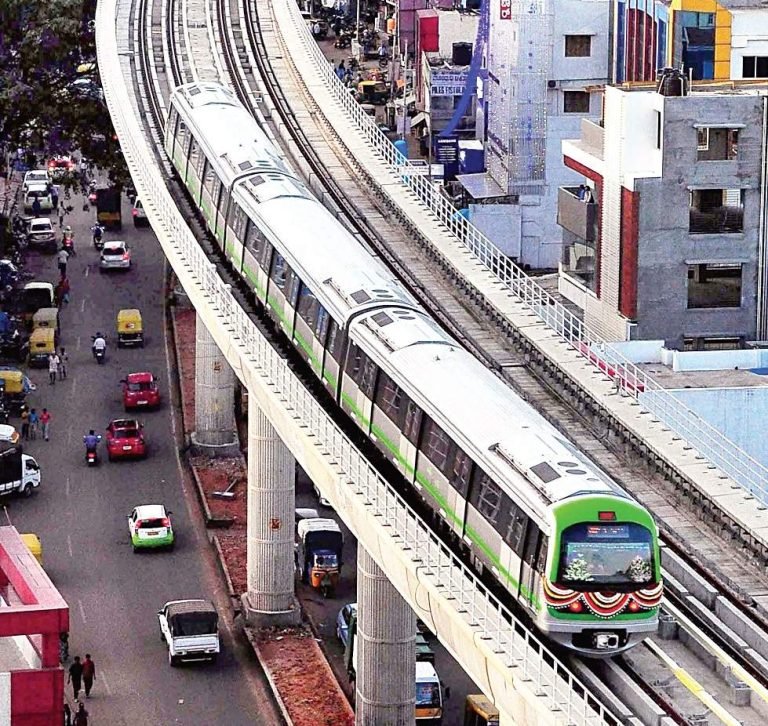
Within the city limits, the existing lines are already bursting at the seams during peak hours, reaching 110 per cent utilisation rates. This further highlights the need for a dedicated freight corridor to prevent disruptions and ensure a smooth flow of passengers and goods. Bengaluru’s transportation landscape is transforming. The KRIDE (Rail Infrastructure Development Company) is building a 148 km suburban rail network. In comparison, the BMRCL (Bangalore Metro Rail Corporation Limited) aims to operationalize a 175 km Namma Metro by 2025 and expand it to 314 km by 2040. The proposed Hejjala-Heelalige line dovetails perfectly with these ambitious projects, creating a robust and integrated transportation system that caters to people and cargo.

This peripheral line isn’t just about trains; it’s about boosting Bengaluru’s economic engine. Streamlining freight movement can reduce logistics costs and boost trade, improve efficiency and productivity for businesses, and create new jobs and opportunities in the logistics sector. The Hejjala-Heelalige line is a crucial step towards a more efficient and sustainable transportation future for Bengaluru. Untangling the freight traffic bottleneck paves the way for a city that thrives on passenger and cargo movement. As the KRIDE and BMRCL projects take shape, integrating this peripheral line will be a masterstroke, ensuring that Bengaluru’s transportation system keeps pace with its ambitious growth.

Summary

The Bengaluru Suburban Rail Project (BSRP), a commuter rail network spanning 149.348 km with 64 stations in Bangalore, Karnataka, has been given the green light. The project’s feasibility report and final detailed project report, which proposed four lines/corridors, have been compiled by RITES. In October 2020, the central government approved the project for construction, with an estimated budget of Rs. 15,767 crore. Prime Minister Narendra Modi laid the foundation stone on June 20, 2022.

The project is currently under the management of the Rail Infrastructure Development Company (Karnataka) Limited (K-RIDE), with a completion target set for 2028. Funding for Corridor 1 & 3 of the project will come from a Euro Rs 4,552 crore loan provided by the KfW Development Bank. The Government of India formalised this agreement in December 2023.

Project Details & Key Information

  • Operational: 0 km
  • Under Construction: 8.027 km
  • Approved: 141.321 km
  • Elevated Routes: 45.392 km | At-Grade Routes: 103.856 km
  • Maximum Speed: 90 kmph
  • Operational Speed: 35 kmph
  • Track Gauge: Broad Gauge

Route Information

Corridor 1: Sampige Line (Route: KSR Bengaluru – Yelahanka – Devanahalli)

  • Length: 41.478 km
  • Type: Elevated (19.22 km) & At-Grade (22.278 km)
  • Depot: Akkupet Depot
  • Number of Stations: Fifteen (eight elevated & seven at-grade)
  • Stations: KSR Bengaluru City (interchange), Srirampura (future), Malleswaram, Yesvantpur (interchange), Muthyal Nagar, Lottegollahalli (interchange), Kodigehalli, Judicial Layout, Yelahanka, Nitte Meenakshi, Bettahalasoor, Doddajala, Airport Trumpet, Airport Terminal, Airport KIADB, Devanahalli

(A suburban rail link is proposed to Bengaluru International Airport in this corridor)

Corridor 2: Mallige Line (Route: Baiyyappanahalli Terminal – Chikkabanavara)

  • Length: 24.866 km
  • Type: Elevated (7.723 km) & At-Grade (17.143 km)
  • Depot: Jalahalli Depot
  • Number of Stations: Fourteen (six elevated & eight at-grade)
  • Stations: Chikka Banavara, Myadarahalli, Shettyhalli, Jalahalli (future), Yesvantpur (interchange), Lottegollahalli (interchange), Hebbal, Kanaka Nagar, Nagawara, Kaveri Nagar (future), Banaswadi, Seva Nagar, Kasturi Nagar, Baiyapanahalli (interchange)

Corridor 3: Parijaata Line (Route: Kengeri – Whitefield)

  • Length: 35.52 km
  • Type: Elevated (10.40 km) & At-Grade (25.12 km)
  • Number of Stations: Fourteen (Four elevated & ten at-grade)
  • Stations: Kengeri, RV College (future), Jnanabharati, Nayandahalli, Krishnadevaraya, Jagjeevanram Nagar, KSR Bengaluru City (interchange), Kumara Park, Bengaluru Cantt, Bengaluru East, Baiyapannahalli, Krishnarajapura, Hoodi, Whitefield

Corridor 4: Kanaka Line (Route: Heelalige – Rajankunte)

  • Length: 46.285 km
  • Type: Elevated (8.96 km) & At-Grade (37.92 km)
  • Depot: Silkboard Depot
  • Number of Stations: Nineteen (Four elevated & fifteen at-grade)
  • Stations: Rajankunte, Muddana Halli, Yelahanka (interchange), Jakkur, Hegde Nagar, Thanisandra, Hennur, Horamavu, Channasandra, Benniganahalli (interchange), Kagadaspura, Doddanekundi, Marathahalli, Belandur Road, Carmelaram, Ambedkar Nagar, Huskur, Singena Agrahara

(5 stations will serve as interchange stations – Bangalore City (1 & 3), Yesvantapur (1 & 2), Lottegollahalli (1 & 2), Yelahanka (1 & 4) and Benniganahalli (2 & 4) (future), Bommasandra (future), Heelalige for this corridor)

Latest Update

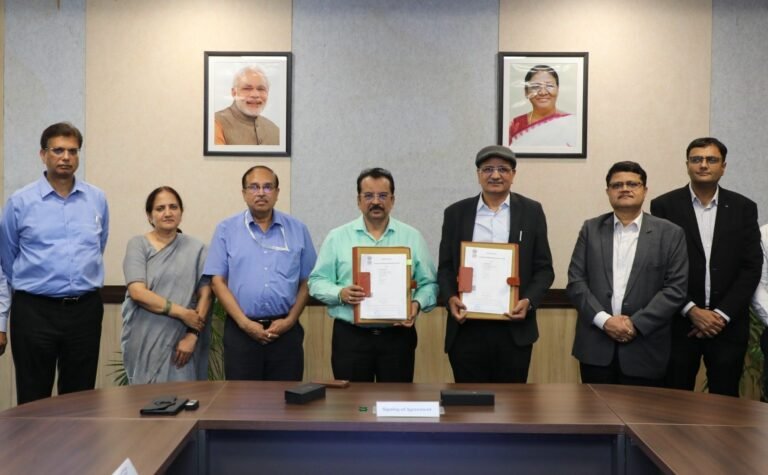
Bengaluru’s ambitious Suburban Railway Project (BSRP) received crucial momentum in November 2023 with the signing of a tripartite agreement between the Government of Karnataka, the Indian Railways, and K-RIDE (Rail Infrastructure Development Company, Karnataka). This landmark agreement promises to streamline project implementation and pave the way for its successful completion. The agreement, spearheaded by K-RIDE, is expected to go beyond mere paperwork. It acts as a blueprint, clearly defining the responsibilities and methodologies of coordination for each party involved. This clarity ensures everyone is on the same page, minimising potential roadblocks and delays.

K-RIDE, the BSRP’s implementing agency, emphasises the critical nature of this agreement for such a large and complex project. Establishing a framework for cooperation and communication facilitates efficient decision-making, resource allocation, and overall project management. The agreement does more than assign tasks. It lays the foundation for effective collaboration between the Government of Karnataka, the Ministry of Railways, and K-RIDE. This collaboration is essential for overcoming challenges, resource optimisation and smooth decision-making. With the agreement’s help, unforeseen issues must be tackled swiftly and effectively with a unified approach, sharing expertise and resources, ensuring efficient utilisation, and minimising waste. Additionally, a clear framework for communication is expected to boost and facilitate timely decision-making and avoid delays.

The tripartite agreement is a significant step forward for the BSRP. It injects confidence and clarity, paving the way for a smoother, faster, and more successful implementation. With streamlined collaboration and defined responsibilities, Bengaluru’s residents can look forward to a seamless and efficient suburban rail network shortly. This revised version retains the original information while adding context, highlighting the agreement’s importance and impact, and emphasising its role in streamlining project execution.

K-RIDE has stated that the agreement is a prerequisite for signing loan contracts with bilateral funding institutions. This will facilitate €800 million (Rs 7,438 crore) borrowing from the KfW German Development Bank and the European Investment Bank for the BSRP. K-RIDE officials are looking forward to initiating and finalising tenders for the civil works of corridors 1 and 3, depots, and systems work shortly.

The BSRP, which covers a distance of 148.17 km, is the first suburban project in India under the National Suburban Rail Policy 2018. The project consists of four corridors or lines, each named after a popular flower in Kannada: Sampige (KSR Bengaluru-Devanahalli, 41.4 km, along with a 5-km airport link), Mallige (Benniganahalli-Chikkabanavara, 25.01 km), Parijata (Kengeri-Whitefield, 35 km), and Kanaka (Heelalige-Rajanukunte, 46.88 km).

The Mallige Line of the Bengaluru Suburban Rail Project (BSRP) is currently under construction, with its initial piers being erected at Hebbal. L&T has been identified as the most competitive bidder for the civil contract of the Kanaka Line, and K-RIDE is anticipated to award the contract shortly. Prime Minister Narendra Modi laid the foundation stone for the BSRP in June 2022, with an initial deadline of 40 months. However, the completion date has since been extended to 2028. Recently, K-RIDE signed a loan agreement for Rs 4,500 crore. The Germany-based KFW Development Bank will provide this loan. Representatives from the Department of Economic Affairs, Ministry of Finance, and the Government of Karnataka have signed the German bank agreement, per the state industries department. The BSRP, currently under development, is projected to cost around Rs 7,438 crore. Officials have stated that the BSRP will serve as an eco-friendly transportation system akin to the Bengaluru Metro. This will provide convenient and accessible transportation for the local and surrounding communities.


Discover the endless possibilities of our city’s Metro at InnoMetro, our flagship Expo and Conference. Be an active participant in shaping its future towards a more sustainable tomorrow. Stay informed and join us to take a step towards a brighter future.

Ahmedabad Metro to Commence Trials for Phase 2 from March

AHMEDABAD (Metro Rail News): Gujarat Metro Rail Corporation (GMRC) has announced that the trial runs for the 20 km long Phase 2 stretch from Motera to Gandhinagar will commence by March or April. 

Trial Runs 

The trial runs will be done between Motera & Sector 1 in Gandhinagar via the GIFT City. Additionally, even the passenger services would begin at Gandhinagar Sector-1 and extend to the entire stretch by the end of this year. 

A conundrum of Dates 

The press release by GMRC states that the trials on the stretch will begin by March or April. However, the officers claim mid-March as no trials could be conducted after the upcoming Lok Sabha elections. 

The Cable-Stayed Bridge 

The construction of the cable-stayed extradosed bridge over the Narmada main canal, connecting the area between Narendra Modi Stadium and Gandhinagar, is reaching its final stages. This innovative bridge boasts a central span measuring 145 meters, complemented by end spans of 79 meters, supported by two impressive pylons standing at 28.1 meters high. 

Remarkable progress has been achieved, with work on the pylons and 100 out of 105 segments already completed in record time. The bridge is expected to be fully constructed shortly, paving the way for the subsequent installation of tracks and the third rail.

A Tale of Milestones 

According to metro officials, the entire stretch leading up to Mahatma Mandir is expected to be completed by year-end. The Thaltej to Thaltej Gam section is also slated for completion within the same timeframe. Following the elections, plans are being made to inaugurate the Sabarmati metro station.

Ahmedabad Metro 

A detailed overview of Ahmedabad Metro has been provided below: 

LinePhase-1Phase-2Total Length
Blue Line21.16 km21.16 km
Red LineMain Line18.87 km22.84 km41.71 km
Branch Line5.42 km5.42 km
Total Length40.03 km28.26 km68.29 km

Current Status

Line First OperationalLast ExtensionNumber of operational stationsOperational length
Blue Line4 March 201930 September 202216 (except Thaltej Gam and Kankaria East)19.76 km 
Red Line30 September 2022N/A14 (except Sabarmati Railway station)18.87 km
Total29 (with Old High Court interchange)38.63 km

Discover the endless possibilities of our city’s Metro at InnoMetro, our flagship Expo and Conference. Be an active participant in shaping its future towards a more sustainable tomorrow. Stay informed and join us to take a step towards a brighter future.

Pune Metro to Provide Parking Facility at 8 of Its Metro Stations 

PUNE (Metro Rail News): Parking spaces have been made available at eight (8) metro stations, namely PCMC Station, Sant Tukaram Nagar, Phugewadi, Bopodi, Shivajinagar, Civil Court, Swargate, Ideal Colony, and Mangalwarpeth/RTO, comprising of two-wheeler and four-wheeler parking spaces. Pune Metro has appointed an agency to oversee the management and operational aspects of the parking facilities on a day-to-day basis. The parking space will be open to the public very soon. 

The details about the parking spaces are as follows:

Sr. No. Details of the Parking Spaces Area sq.mEstimated Parking Capacity Nos.
PCMC Station 1,500 4 wheeler – 30, 2 Wheeler – 60
Sant Tukaram Nagar 4,000 4 wheeler -60, 2 Wheeler- 78
Cycle- 42
Phugewadi 530 2 Wheeler- 27
Bopodi 200 2 Wheeler- 98
Shivaji Nagar 680 4 Wheeler- 20, 2 Wheeler- 110
Cycle – 112
Civil Court 880 4 Wheeler- 51, 2 Wheeler – 122
Mangalwar Peth/ RTO 3702 Wheeler – 73
8Ideal Colony4002 Wheeler – 50

All parking spaces have been equipped with boom barriers, concrete flooring, lighting, CCTV cameras, etc. Facilities such as app-enabled parking booking and parking occupancy display information boards are also provided. The parking facility will be available during metro operational hours.

The parking rates are affordable and are mentioned below of the parking are as follows

ParticularsCycleMotorised 2 Wheelers4 WheelersBuses/LCV (Non-operational hours)
Upto 2 hours in INR 2153550
2-6 hours in INR5305070
More than 6 hours in INR106080100

The above parking charges are including the GST amount. There will be a discount of 25% on the Parking Charges to the users holding a valid metro ticket issued on the same day by Pune Metro for the services on Line-1 (Purple Line) & Line-2 (Aqua line), with the originating/terminating station being the metro station at which the particular Parking Space is located. Along with hourly parking charges, a facility is also available for monthly subscription passes, provided that the user holds a valid metro travel pass for the subscription period. For commuters who want to keep helmets in the parking space, nominal Helmet charges are fixed at INR 5 for 24 hours.

On this occasion, MD Maha Metro said, “The parking places at Eight stations will benefit metro passengers to park their vehicles”.


Discover the endless possibilities of our city’s Metro at InnoMetro, our flagship Expo and Conference. Be an active participant in shaping its future towards a more sustainable tomorrow. Stay informed and join us to take a step towards a brighter future.

Driverless Metro Coaches for the Bangalore Metro’s Yellow Line Reaches the Depot

BANGALORE (Metro Rail News): The first of the two trains to have arrived from China for the Bangalore Metro’s 19.143 Km long yellow Line arrived at the  Hebbagodi depot near Electronics City around 3:45 am on February 14 after completing a voyage of 13 days from the Shanghai Port and further processed at the Chennai Port. 

“The First Train set of 6 cars has reached Hebbagodi Depot safely in the morning at 3.30 am “, the Press Release said. 

Total no of Trains 

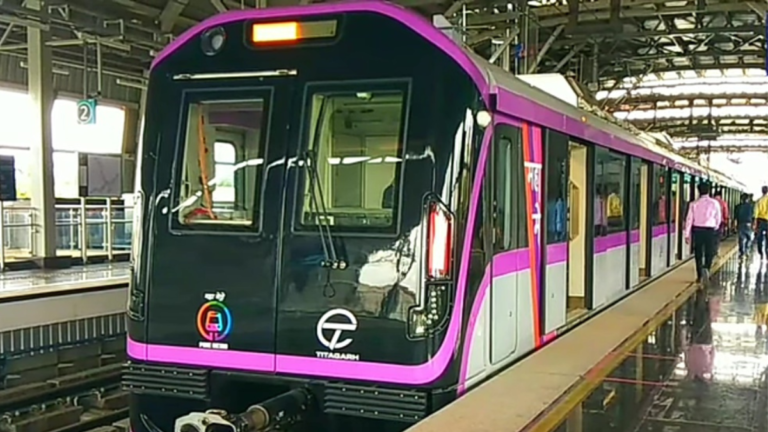
The Bangalore Metro’s Yellow Line will be graced by 15 trains to maintain a decent frequency. Additionally, the Chinese company will ship only two trains of 6 coaches each, while the remaining 75% will be made in India by the Kolkata-based Titagarh Rails. 

Further Tests 

Further, the trains would undergo multiple tests & trials. The processes are as follows: 

  1. Assembling & further on the test track 
  2. Then, on the mainline for 15 tests. 
  3.  Further RDSO trials and then CMRS inspection 

The Driverless technology 

The upcoming driverless coaches will be integrated into the Communication-Based Train Control (CBTC) System, often called “Driverless Technology.” This implementation will reduce headway to 90 seconds from the current two and a half minutes. Despite the trains being driverless, the BMRCL has assigned Loco Pilots to reassure passengers.

First Experience 

Bengaluru is poised to welcome its inaugural venture into driverless metros along this route, with the primary objective of enhancing connectivity to key areas housing major corporations such as Infosys & Biocon in South Bengaluru.

WhatsApp Image 2024 02 15 at 10.35.45 84612e00

The Contract 

BMRCL awarded the contract for the same in December 2019. As per the contract, 4RS-DM 2 trains will be supplied by CRRSC, while the remaining 36 will be assembled locally by Titagarh Rail Systems in West Bengal. 

Distinct from other BMRCL Coaches 

The metro trains will be produced by the China Rolling Railway Stock Corporation (CRRSC) instead of the typical supplier BEML, which provides metro coaches to BMRCL. These trains will consist of 6 coaches, with only 12 coaches (equivalent to 2 trains) being imported from China. The remaining 204 coaches will be manufactured domestically by Titagarh Rail in India.

Big Connectivity Boost 

It aims to boost connectivity to areas that are home to big companies like Infosys & Biocon and South Bengaluru. It will ease the daily struggles of Bangalore’s metro commuters by a substantial amount. It will also increase the overall metro connectivity in the city to facilitate easy and efficient commute. 

Yellow Line 

The 18.82 Km long under-construction metro line connects RV Road with Bommasandra. It is a fully elevated metro route with 16 stations. It connects with the Green Line of Bangalore Metro at RV Road Station & with the Pink Line at Jayadeva Hospital station. It is expected to open by early 2024. 

While it was to be made operational by 2021, the deadline was extended many times. The yellow line will go to stations like Bommamanahalli, BTM Layout, HSR Layout, Jayadeva Hospital, etc. 


Discover the endless possibilities of our city’s Metro at InnoMetro, our flagship Expo and Conference. Be an active participant in shaping its future towards a more sustainable tomorrow. Stay informed and join us to take a step towards a brighter future. 

Sanjay Kumar Jain Takes Charge as the Chairman and Managing Director of IRCTC

NEW DELHI (Metro Rail News): Sanjay Kumar Jain, an Indian Railway Traffic Services (IRTS) Officer from the 1990 batch, assumed the role of chairman and managing director of Indian Railway Catering and Tourism Corporation (IRCTC) with immediate effect. 

The Appointment 

The Ministry of Railways approved his appointment on February 8, as confirmed by IRCTC to the exchanges. The appointment has been granted on an “immediate absorption basis,” with a salary scale ranging from Rs. 1,80,000 to Rs. 3,20,000.

Prior Experience 

Before taking on the role of Chairman and Managing Director of IRCTC, Jain held the position of Principal Chief Commercial Manager at Northern Railway. It’s worth noting that the IRCTC Chairman and MD post had been vacant since January 2021 after Mahendra Pratap Maal retired.

Duration 

Jain will retain the position until either his superannuation on December 31, 2026 or until further directives are issued, whichever comes first. 


Discover the endless possibilities of our city’s Metro at InnoMetro, our flagship Expo and Conference. Be an active participant in shaping its future towards a more sustainable tomorrow. Stay informed and join us to take a step towards a brighter future.

Chennai Metro to Equip its Trains With Pink Squad of Women Officers 

CHENNAI (Metro Rail News): Chennai Metro rail Limited (CMRL) has decided to deploy a squad of martial arts-trained women officers in its trains. 

The Team 

Chennai Metro Rail Limited (CMRL) has recently established a specialised team known as the ‘pink squad,’ comprising 20 to 25 trained women proficient in martial arts. This initiative stems from recommendations from a safety survey targeting female passengers conducted last year. 

Members of the pink squad hold brown belts in martial arts and have undergone comprehensive briefings on enhancing the security of women commuters. In response to the survey findings, CMRL enhanced CCTV surveillance and introduced a dedicated helpline for female passengers.

Responsibility & Purpose 

The squad is deployed to carry out round-the-clock patrolling on the trains and stations. These enhance women’s safety and convenience on the Chennai metro trains and stations. 

Instances of Misuse 

As per a survey conducted on women’s safety last year, out of the 12,000 women who took part in the survey, most of them submitted positive responses regarding safety but complained about the issues that persist in the system. 

Occupancy of Seats 

Among the other issues, occupancy of the women’s seats by male passengers is one of the major issues concerning women’s safety and convenience. 


Discover the endless possibilities of our city’s Metro at InnoMetro, our flagship Expo and Conference. Be an active participant in shaping its future towards a more sustainable tomorrow. Stay informed and join us to take a step towards a brighter future. 

MMRC Finalises The DPR for the Extension of Mumbai Metro Line 3 to Navy Nagar

MUMBAI (Metro Rail News): The Mumbai Metro Rail Corporation (MMRC), as the implementing authority, has finalised a detailed project report (DPR) for extending the Metro 3 underground corridor up to Navy Nagar, Colaba. 

A boon for the Location 

If sanctioned, this extension will provide the corridor with at least four additional stabling lines, complementing those under development in the eco-sensitive Aarey area. Consequently, this expansion will play a vital role in managing the growing capacity demands of the Metro system.

Extension 

The Mumbai metro Line 3 will be extended by 5 Kilometers, 2.5 Kms in each direction, as per the newly prepared DPR by MMRC. The extension has been planned considering the request from the Indian Navy Office to the state government. It was announced by the then Deputy Chief Minister & Finance Minister in the budget speech of 2022-023. 

Advantage 

4 stabling lines at Navy Nagar would mean many will not have to be built at Aarey. It means two trains can be parked at Navy Nagar, apart from Cuffe Parade, which is currently the southern terminus station of Metro 3. 

Planning 

Its planning began with the then government, the MVA government, receiving a request from the Indian Navy office.  The then Maha Vikas Aghadi (MVA) government had considered the proposal to ensure that the concerned location was also roped into the metro chain for better connectivity.  

Commencement 

The project is expected to commence in 2025 after the completion and commencement of commercial operations on Line 3. 

Enhanced Connectivity & Transit Experience 

The proposed extension will benefit the people in the densely populated region. This area includes residential quarters for central government employees and more. It will allow these residents to experience seamless commutation and A-level connectivity across Mumbai. 

Metro Line 3 

The Mumbai metro Line 3 covers 33 km, connecting Colaba to SEEPZ via the Bandra Kurla complex (BKC) and has been divided into 2 phases. 

Phase:01- BKC to SEEPZ

Phase: 02- BKC to Colaba

Phase 1 operation is expected to commence early next year, while phase 2 operations will commence in 2024. MMRC conducted a long-distance train movement last month from MIDC to Vidyanagari and back to SEEPZ. 


Discover the endless possibilities of our city’s Metro at InnoMetro, our flagship Expo and Conference. Be an active participant in shaping its future towards a more sustainable tomorrow. Stay informed and join us to take a step towards a brighter future.

Bengaluru Metro Phase 3 Likely To Get Centre’s Nod Before The LS Polls 

BANGALORE (Metro RaIl News): After over a year of approval from the Karnataka government, two Bengaluru Metro’s Phase 3 corridors are expected to receive approval from the Union government. 

Timing 

This endorsement is anticipated to occur before the Lok Sabha polls, which experts believe will also benefit the BJP regarding electoral support in the IT hub. The anticipated approval of the network spanning ORR West and Magadi Road is poised to alleviate traffic congestion while fostering growth in the real estate sector.

Economic Boost 

Anticipated approval for expanding the network along ORR (Outer Ring Road) West and Magadi Road is poised to elevate the public transportation system and invigorate the real estate sector in suburban areas. 

Nevertheless, certain transportation specialists advocate extending the ORR West corridor from JP Nagar 4th Phase to Central Silk Board to integrate multi-modal transport seamlessly.

Change of Plans 

BMRCL has agreed to MoHUA’s requirement of operating three-coach trains instead of the initially proposed six-coach rolling stock. MoHUA imposed supplementary conditions for the Phase 3 corridor approvals.

Bangalore Metro 

Bengaluru Metro, known as Namma Metro, is an Urban Mass Rapid Transit system. It is the fourth-longest operational metro network in India. This Metro project consists of: 

  1. Two operational lines– Purple & Green with 51 stations & a composite length of 72.17 Kms and 
  2. 6 Under-Construction Lines– with 68 stations & a composite length of 99.296 Kms  

Bangalore metro has recorded a ridership of 6.88 lakh passengers on average per day in December. The much-awaited Purple Line of the Bangalore Metro Running between Chellaghatta & Whitefield is operational.  Additionally, BMRCL has also begun with the Land acquisition for Phase 3. 

Bangalore metro will also be the 2nd metro system in India to employ the ATO technology on its upcoming Yellow line. It has also introduced innovative services like Group QR and others to increase the attractiveness of Bangalore Metro as the First Choice Transport system for the traffic-decked city of Bengaluru. 

BMRCL is the governing body for the Bangalore Metro, a Joint Venture of the Government of India and the Government of Karnataka. 


Discover the endless possibilities of our city’s Metro at InnoMetro, our flagship Expo and Conference. Be an active participant in shaping its future towards a more sustainable tomorrow. Stay informed and join us to take a step towards a brighter future.

Vande Metro To Hit The Tracks By April

New Delhi (Metro Rail News): The Rail Coach Factory (RCF) endeavours to debut the inaugural prototype of the Vande Metro coach by April.

Vande Metro 

The Vande Metro draws inspiration from India’s pioneering semi-high-speed train, Vande Bharat, which is designed to serve intercity travellers on routes spanning up to 250 km. Featuring 16 air-conditioned coaches, each Vande Metro train can operate up to 130 km per hour.

“This train is meant for intercity traffic,” Srinivas told PTI, adding, “We are aiming that the first prototype is ready by April.”

Vande Metro coaches are set to elevate the passenger experience and accessibility, boasting a capacity of 280 passengers per coach (with seating for 100 and standing room for 180). The innovative 3×3 bench-style seating arrangement optimises space for a comfortable medium-distance journey.

Key features 

Key features include a passenger talkback system enabling communication with the train driver during emergencies and 14 sensors per coach for fire and smoke detection. Wheelchair-accessible lavatories will be provided, and implementing the Kavach system will enhance safety by preventing collisions.

Wide Gangways 

Generously wide gangways between coaches ensure seamless movement within the train. Safety and convenience are prioritized through the design of windows and doors, featuring wider openable hopper-type windows for emergencies and touch-free operation of automatic plug doors at the entrance.

Innovations & RCF 

In December, RCF introduced 24 specially designed Rajdhani sleeper coaches featuring hot water facilities in lavatories. Another batch of 24 coaches is scheduled for rollout in March, with two additional sets slated for the upcoming fiscal year. Successful trials have been conducted for Vistadome coaches intended for the historic Kalka-Shimla route. RCF will produce 30 Vistadome coaches in the next fiscal year, pending safety clearance. Currently undergoing trials on the Ambala-Sahnewal section is a double-decker cargo liner coach capable of accommodating 46 passengers and carrying six tonnes of cargo.


Discover the endless possibilities of our city’s Metro at InnoMetro, our flagship Expo and Conference. Be an active participant in shaping its future towards a more sustainable tomorrow. Stay informed and join us to take a step towards a brighter future.

CMRS Inspection for Kochhi Metro Kicks off

KOCHI (Metro Rail News): The inspection of Kochi Metro’s 1.20 km S.N. Junction-Thripunithura extension commenced on the evening of February 12th,  with the Commissioner for Metro Rail Safety (CMRS), Anant M. Chowdhary, conducting a two-day examination.

Work on the Stretch 

Preparations for the Tripunithura extension commenced in September 2020. However, the project faced delays in land acquisition due to its predominantly greenfield alignment, encompassing numerous privately owned parcels of land. It wasn’t until May 2022 that the Railways allocated land adjacent to the Tripunithura railway station. Subsequently, construction efforts gained momentum, and work began at total capacity from June 2022 onwards. 

Trials on the Stretch 

Over the past month, Metro trains have undergone trial runs in the corridor to verify the functionality of all systems. The Commissioner of Metro Rail Safety (CMRS) will conduct inspections on passenger amenities, signalling, and other crucial systems, as well as assess the condition of the track. 

Only upon completion of these inspections and evaluations will a decision be made regarding issuing safety certificates, allowing trains to commence commercial operations on the corridor.

Plans for Future Expansion 

The Tripunithura terminal station boasts three platforms and tracks strategically designed to accommodate future metro system extensions. These expansions, including the connection to the Kakkanad extension of phase two, which terminates at Infopark, have been carefully considered in the station’s layout.

Kochi Metro 

Upon completion, it will signify the successful conclusion of the 28-kilometer Kochi Metro corridor’s initial phase, encompassing 25 stations from Aluva to Thripunithura. Kochi Metro Rail Limited has independently constructed the Pettah-Thripunithura viaduct, with the remaining tasks slated for completion by the Delhi Metro Rail Corporation.


Discover the endless possibilities of our city’s Metro at InnoMetro, our flagship Expo and Conference. Be an active participant in shaping its future towards a more sustainable tomorrow. Stay informed and join us to take a step towards a brighter future.

Gurugram Metro Project Set to be inaugurated by PM Modi 

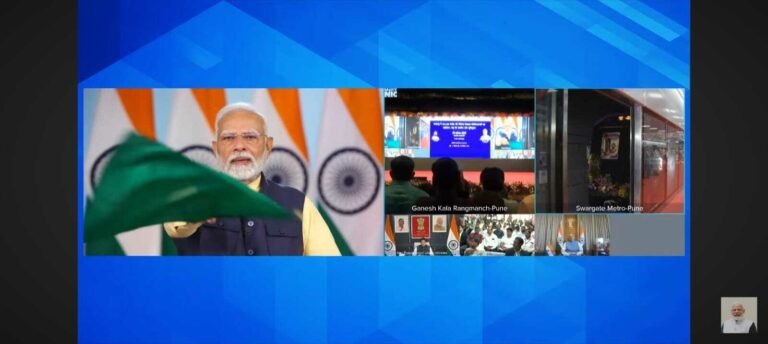
GURUGRAM (Metro Rail News): On February 16, Prime Minister Narendra Modi is scheduled to inaugurate the commencement of the Gurugram Metro project by laying its foundation stone.

Online Event 

An online event will take place in Gurugram, allowing attendees to view the foundation stone laying ceremony of the projects on a large screen.

Project Approval 

During a session presided over by Prime Minister Modi on June 7, 2023, the Union Cabinet sanctioned the extension of the Gurugram metro project. The extension spans 26.65 kilometres in a loop, connecting from the Huda City Metro station, now known as the Millennium City Centre Metro station, to Cyber Hub, encompassing the entirety of the old Gurugram region. 

Additionally, the Cabinet approved a 1.85-kilometer spur leading to the Dwarka Expressway.

Gurugram Metro Rail Limited (GMRL) 

Haryana Government has Approved the Formation of Gurugram Metro Rail Limited. The proposed firm will be a joint venture between the Government of India & the Government of Haryana. 

Gurugram Metro Rail Limited (GMRL) has been entrusted with undertaking the Gurugram Metro extension project, encompassing a 28.5km loop stretching from Millennium City Centre to Cyber City Gurugram.

Millennium City Centre- Cyber City Metro 

The project entails two lines: 

  1. HUDA City Center to Cyber City Center – 26.65 Km long with 26 elevated station
  2. Basai Gaon to Dwarka Expressway- 1.85 long with one elevated station. 

Gurugram remains a metro-less city with a booming population and increasing economy. The approved stretch will boost connectivity between New Gurugram and Old Gurugram. The project will help boost connectivity to major and strategic destinations like Railway Stations, IGI Airport, etc. It will help boost the overall connectivity in the city of Gurugram. 

The proposed metro line is poised to bridge the gap between New Gurugram and Old Gurugram, fostering economic growth, cultural exchange, and improved accessibility. 


Discover the endless possibilities of our city’s Metro at InnoMetro, our flagship Expo and Conference. Be an active participant in shaping its future towards a more sustainable tomorrow. Stay informed and join us to take a step towards a brighter future.

CMRS Identifies Slew of Issues With Howrah – Esplanade Line of the Kolkata Metro 

KOLKATA (Metro Rail News): On Wednesday, Kolkata Metro Rail Corporation (KMRC) received feedback from the Commissioner of Metro Rail Safety (CMRS) regarding the commencement of commercial operations on the 3.9 km stretch of Kolkata Metro Line-2, connecting Howrah Maidan to Esplanade.

Issues 

This report highlights 50 issues discovered during the inspection of Phase 2A of the Green Line inspection conducted by Janak Kumar Garg, the Commissioner of Metro Railway Safety (CMRS), and his team on Monday and Tuesday of this week.        

The Inspection 

The statutory inspection concluded with evaluations of passenger facilities, control rooms, and safety features at four newly established stations: Howrah Maidan, Howrah, Mahakaran, and Esplanade. The inspection concluded on Tuesday following a speed trial where one of the fourteen BEML trains on the line between Howrah Maidan and Esplanade reached a maximum speed of 90 kmph.

The gravity of the issues

Most concerns are minor: signage accuracy, CCTV coverage, lighting enhancements, fire safety measures, and regulating passenger access to specific areas. The more significant issues, such as the alarming discovery of cracks in tunnel ring segments and the necessary patching of concrete slabs and diaphragm walls, have already been addressed.

Commercial Operations 

The commercial launch of the line now hinges on three factors: the prompt implementation of corrective measures by KMRC to meet CMRS requirements and suggestions for safe operation, approval from CMRS, and the scheduling alignment with local and national ministers interested in attending the launch event.

Focus on the East-West Metro Corridor

The Kolkata Metro Line 2, also recognised as the East-West Metro or Green Line, is a prominent rapid transit system in the Indian state of West Bengal. Presently operational between Salt Lake and Sealdah, the future expansion initiative aims to link Howrah by traversing beneath the Hooghly River with a planned eastern extension to Teghoria. Encompassing a total span of 22 km, the extended line will boast 17 stations, stretching from Teghoria (Haldiram) in the east to Howrah Maidan in the west. Notably, 11 stations will be elevated, while the remaining six will be underground.


Discover the endless possibilities of our city’s Metro at InnoMetro, our flagship Expo and Conference. Be an active participant in shaping its future towards a more sustainable tomorrow. Stay informed and join us to take a step towards a brighter future

Haryana Government Approves the Formation of Gurugram Metro Rail Limited

HARYANA (Metro Rail News): The government of Haryana has officially approved the formation of Gurugram Metro Rail Limited on the pattern of DMRC. 

Jurisdiction 

Gurugram Metro Rail Limited (GMRL) has been entrusted with undertaking the Gurugram Metro extension project, encompassing a 28.5km loop stretching from Millennium City Centre to Cyber City Gurugram.

Authorised Capital 

The GMRL will be endowed with an initial authorised capital of ₹20 crore, with Haryana securing a 50% stake valued at ₹ 10 crore.

The Body 

The Managing Director of Haryana Mass Rapid Transport Corporation Limited would also serve as the Managing Director of the  GMRL, representing the Haryana government as one of the directors of the special purpose vehicle. Joining them on the board will be the Administrative Secretary and DTCP in-charge, the GMDA CEO, and the Municipal Corporation of Gurugram Commissioner.

Approval From the Central Governmnet 

Approval from the central government on the same remains pending. 


Discover the endless possibilities of our city’s Metro at InnoMetro, our flagship Expo and Conference. Be an active participant in shaping its future towards a more sustainable tomorrow. Stay informed and join us to take a step towards a brighter future