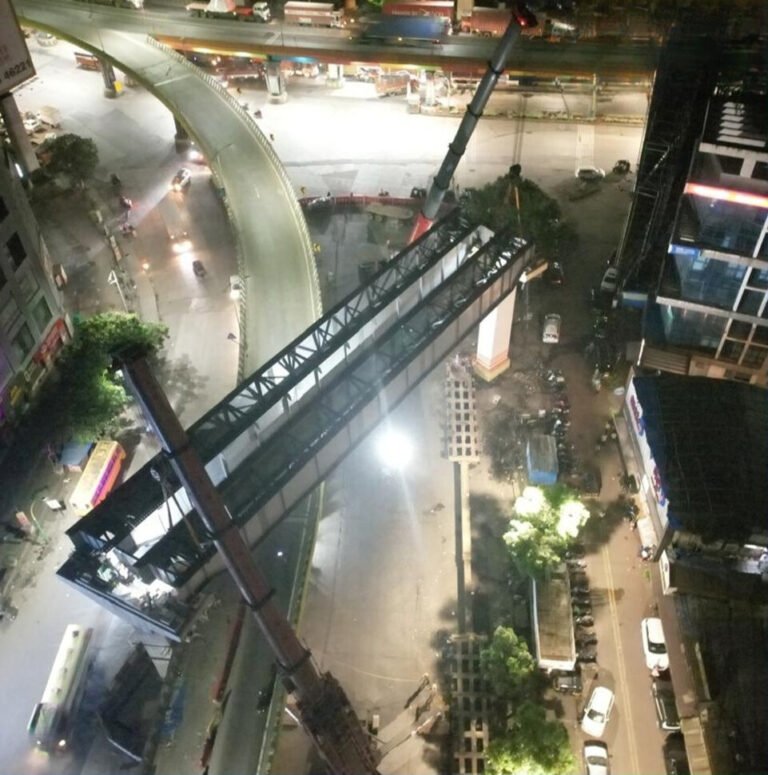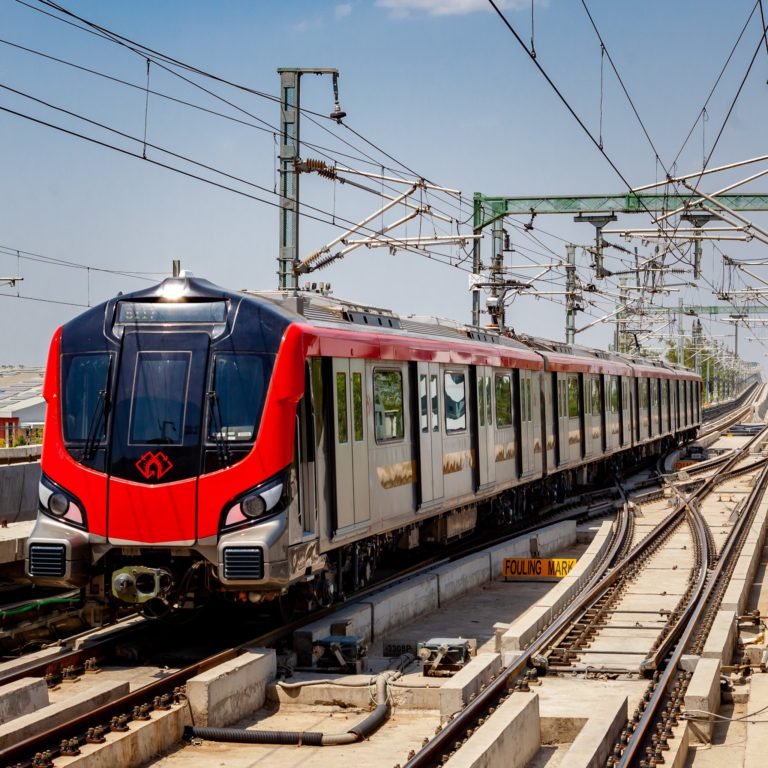
Driverless Train of the Bangalore Metro Hits the Test Tracks

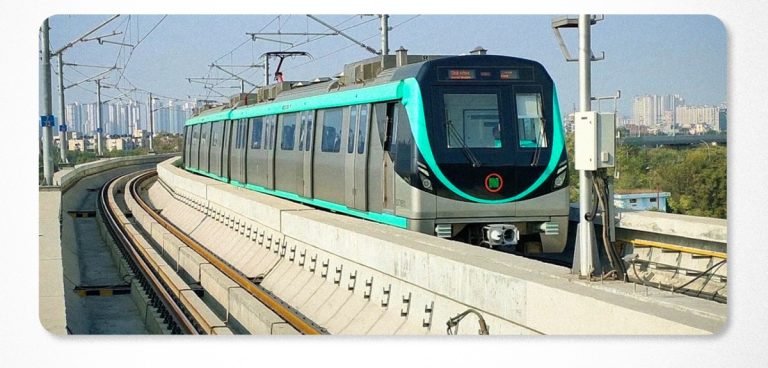
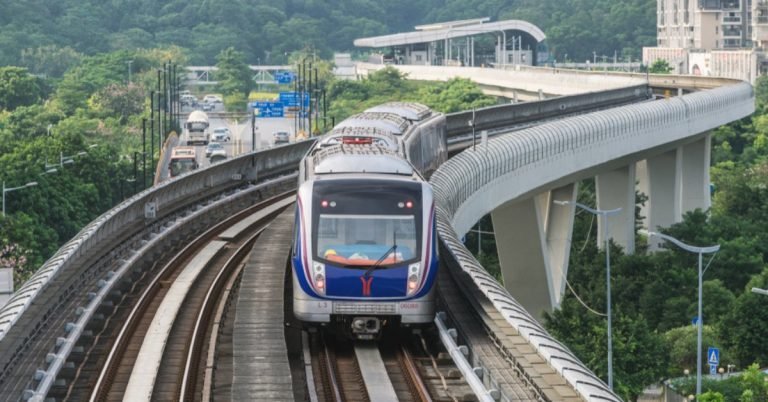
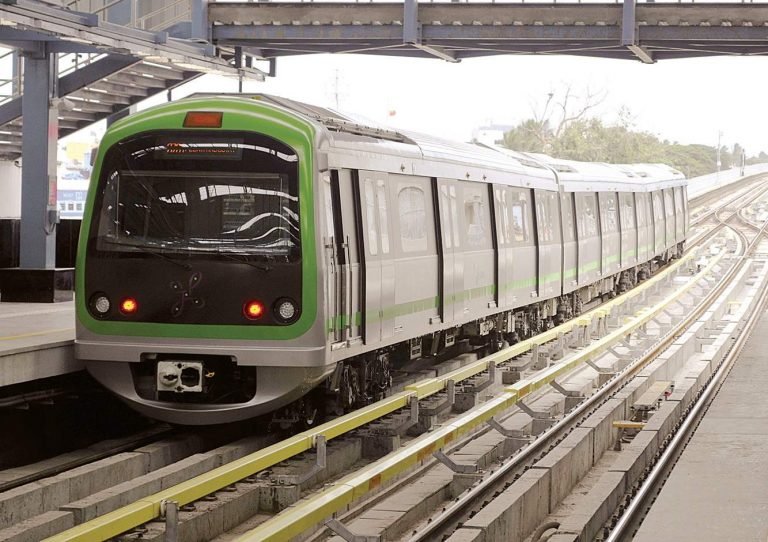
BANGLORE (Metro Rail News): The driverless trains of the Bangalore metro that arrived at Hebbagodi Depot on 14th January ran on the test tracks on February 20, 2024.  

The Tweet

Executive Assistant-Public Relations, BMRCL tweeted about it that reads, “Below is the video of the CBTC first Driverless Metro Train run on the test track yesterday.” 

https://twitter.com/srivasrbmrccoi1/status/1760269280648839333?s=20

Stage 1 Completed 

It has completed the first testing stage of the various tests scheduled for the Driverless trains. With the completion of the first stage, the trains are ready to enter into the future stages of testing: 

  1. On the mainline for 15 tests. 
  2.  Further RDSO trials and then CMRS inspection
Test Track 01

The Driverless technology 

The upcoming driverless coaches will be integrated into the Communication-Based Train Control (CBTC) System, often called “Driverless Technology.” This implementation will reduce headway to 90 seconds from the current two and a half minutes. Despite the trains being driverless, the BMRCL has assigned Loco Pilots to reassure passengers.

Test Track 02

First Experience 

Bengaluru is poised to welcome its inaugural venture into driverless metros along this route, with the primary objective of enhancing connectivity to key areas housing major corporations such as Infosys & Biocon in South Bengaluru.

Big Connectivity Boost

It aims to boost connectivity to areas that are home to big companies like Infosys & Biocon and South Bengaluru. It will ease the daily struggles of Bangalore’s metro commuters by a substantial amount. It will also increase the overall metro connectivity in the city to facilitate easy and efficient commute. 

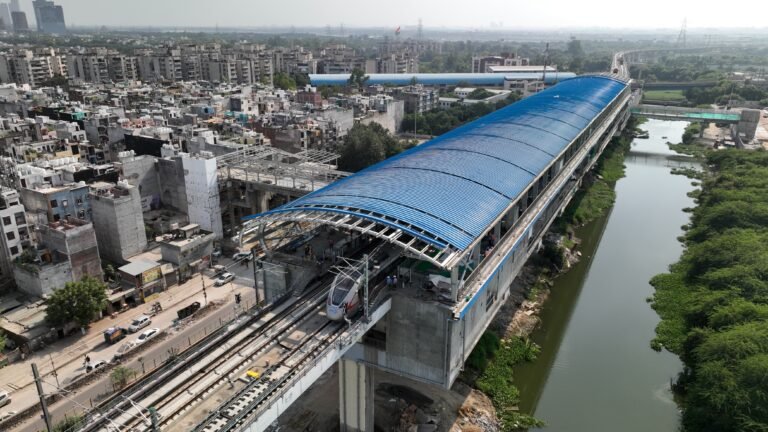
Test Track 04

Yellow Line 

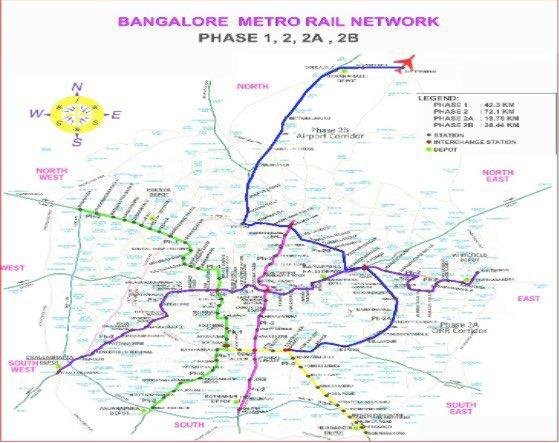
The 18.82 Km long under-construction metro line connects RV Road with Bommasandra. It is a fully elevated metro route with 16 stations. It connects with the Green Line of Bangalore Metro at RV Road Station & with the Pink Line at Jayadeva Hospital station. It is expected to open by early 2024. 

While it was to be made operational by 2021, the deadline was extended many times. The yellow line will go to stations like Bommamanahalli, BTM Layout, HSR Layout, Jayadeva Hospital, etc. 


Discover the endless possibilities of our city’s Metro at InnoMetro, our flagship Expo and Conference. Be an active participant in shaping its future towards a more sustainable tomorrow. Stay informed and join us to take a step towards a brighter future. 

Chennai Metro revolutionises Payment Solutions and Ticketing for Commuters

CHENNAI (Metro Rail News): Chennai Metro Rail Limited (CMRL) proudly announces the integration of two innovative payment modes for parking facilities and introduction of Single QR Family Tickets, revolutionising the commuting experience for metro users.

Introduction of Making Parking payment through Singara Chennai Card (NCMC) & Store Value Pass (SVP) QR in CMRL Mobile App: 

CMRL takes a monumental step forward by introducing the Singara Chennai Card (National Common Mobility Card by SBI) and Store Value Pass (SVP) QR through the CMRL Mobile App as additional payment options for its parking facilities. Now, passengers can conveniently pay their parking charges using the Singara Chennai Card and Store Value Pass (SVP) QR available in the CMRL Mobile App.

This pioneering initiative positions CMRL as the first metro system in the country to implement parking payment through the National Common Mobility Card, a testament to CMRL’s commitment to enhancing customer experience. Developed in-house in technical collaboration with the State Bank of India (SBI) & Centre for Development of Advanced Computing (CDAC), this solution signifies CMRL’s dedication to innovation and customer-centric service.

Single QR family Tickets for Metro Commuters: 

To streamline the ticketing process and cater to passengers travelling together, CMRL has introduced Single QR Family Tickets. Instead of issuing individual QR tickets for each passenger, CMRL will now issue one QR ticket for multiple passengers. This convenient solution, developed in collaboration with M/s Ford Mobility, allows groups of up to 5 passengers to travel seamlessly through the metro gates, simplifying ticketing and enhancing passenger convenience.

Thiru launched this innovative initiative. M.A. Siddique, I.A.S., Managing Director of CMRL at MetroS, Anna Salai, Nandanam, in the presence of Thiru. E.Magesh, Director General of CDAC, Thiru. Rajesh Chaturvedi, Director (Systems and Operations) of CMRL, Thiru. T. Archunan, Director (Projects) of CMRL, Thiru. Suraj Kumar Sinha, Deputy General Manager, Digital & Transaction Banking, SBI, Thiru. Vijay Srinivasan, Director of Engineering of Ford Mobility, and Senior executives of SBI, CDAC & officers and staff.


Discover the endless possibilities of our city’s Metro at InnoMetro, our flagship Expo and Conference. Be an active participant in shaping its future towards a more sustainable tomorrow. Stay informed and join us to take a step towards a brighter future. 

Ruby Hall to Ramwadi Stretch of the Pune Metro Receives CMRS Nod 

PUNE (Metro Rail News): Ruby Hall to Ramwadi stretch of the Pune metro has received the safety nod from the Commissioner for Metro Railway Safety (CMRS). 

The Inspection 

The CMRS inspection of the Ruby Hall to Ramwadi stretch of the Pune Metro was held on Friday, 19th January. 

Inauguration 

The Maha Metro has made no formal announcement regarding the inauguration of the line. However, the services might run on the stretch in a couple of days or so, as per the information received by  Pune Pulse. 

A Prolonged Struggle for Approval

Maha-Metro has been actively seeking approval from CMRS for the Ruby Hall Clinic to Ramwadi stretch since the previous year. The delay in approval has been linked to concerns regarding the stairs at the Yerawada metro station.

Previous Announcements

Earlier statements from Maharashtra Metro Rail Corporation Limited (Maha Metro) indicated that the Ruby Hall Clinic to Ramwadi stretch of the Pune Metro was anticipated to be operational by last month. Speed trials of rakes to Ramwadi had commenced, with technical teams diligently overseeing aspects such as track alignment, curves, elevation, signalling, and telecommunication.

Introduction of Four New Stations

The upcoming stretch will bring forth four new stations along the route, namely:

1. Bund Garden

2. Yerawada

3. Kalyaninagar

4. Ramwadi

This expansion aims to facilitate smooth and trouble-free commuting from the city’s central area, particularly addressing the challenges faced by commuters heading to the airport.

Positive Development

This development signifies a significant milestone in the progression of the city’s ambitious Aqua Line, bringing it closer to becoming operational. Completing the 15.7 km Aqua Line promises to enhance residents’ daily lives substantially.

Pune Metro

The Pune metro, comprising three lines totalling 54.14 km, serves as a rapid transit system for the city. Currently, two lines are operational:

1. Purple Line: Connects PCMC Bhavan to Swargate.

2. Aqua Line: Runs from Vanaz to Ramwadi.

3. Line 3: Extends from Hinjawadi to Civil Court via Balewadi.


Intrigued by the future of Metro and its impact on our city? Join us at our upcoming InnoMetro event to delve deeper into this vital issue. Stay informed, get involved, and let’s ride the Metro towards a brighter, more sustainable future together.

KS Jain Takes Charge as Addl. GM of South Western Railway

HUBBALLI (Metro Rail News): On Tuesday, K.S. Jain joined the office as the Additional General Manager of the South Western Railway. He is an Indian Railway Service of Mechanical Engineering (IRSME) of the 1988 batch.

Mr. Jain graduated in mechanical engineering from the University of Roorkee. He began his career with the Northern Railway, where he worked as an Assistant Divisional Mechanical Engineer in Firozpur.

He has held various positions throughout his career, including Additional Divisional Railway Manager in the Thiruvananthapuram division and Divisional Railway Manager in the Alipurduar division. Before his current role, he served as South Central Railway’s Principal Chief Mechanical Engineer.


Discover the endless possibilities of our city’s Metro at InnoMetro, our flagship Expo and Conference. Be an active participant in shaping its future towards a more sustainable tomorrow. Stay informed and join us to take a step towards a brighter future. 

Redefining Railway Surveillance with Matrix Ruggedized IP Cameras

Have you ever experienced how a slight movement of the hands or shivering while capturing a video could ruin the entire footage?

Now, envision a scenario where surveillance cameras are mounted within a train carriage, encountering constant motion and vibrations. In such dynamic environments, where stability is essential for effective monitoring, the role of shock-resistant CCTV cameras becomes paramount.

Not only this, the unique environment of train operations presents distinct difficulties that demand robust solutions.

Challenges in Railway Surveillance

Harsh Conditions: Trains endure extreme temperatures, vibrations, shocks, and exposure to dust and moisture, necessitating surveillance equipment capable of withstanding such conditions.

Continuous Monitoring: Trains operate around the clock, demanding surveillance systems capable of uninterrupted video capture and storage.

Remote Locations: Rail routes often pass through remote areas with limited network coverage, underscoring the importance of robust surveillance infrastructure that ensures reliable video transmission and recording.

Cybersecurity Concerns: With the increasing interconnectivity of IP cameras, cybersecurity threats become a significant concern, highlighting the need for stringent security measures to protect video data and surveillance networks.

Compliance and Privacy: Railway operators must adhere to privacy regulations while ensuring passenger safety, necessitating a delicate balance between security measures and privacy rights.

Redundancy and Reliability: IP Surveillance Cameras for trains should be designed for continuous surveillance and data recording; redundancy and reliability are essential. This includes backup power supplies, dual connectivity options, and ruggedized equipment.

To address these concerns, Matrix Ruggedized IP Cameras offer a comprehensive solution tailored to the unique challenges of railway surveillance.

Why are ruggedized IP cameras an ideal solution for railways?

Compact Design: Matrix Ruggedized IP Cameras have a compact design due to which they can be easily installed in space-constrained environments.

Durability: Designed to withstand extreme conditions, including temperature fluctuations and moisture, Matrix Ruggedized IP cameras are IK10 and IP 67 Certified, ensuring reliable performance in railway environments. They can handle extreme temperatures ranging from -30 Degrees Celsius to 70 Degrees Celsius.

Vibration and Shock Resistance: Equipped to handle significant shocks and vibrations, these cameras have advanced image stabilisation techniques that deliver clear footage even during train motion, ensuring continuous surveillance.

Remote Monitoring: IP capabilities enable remote access to video feeds, facilitating real-time surveillance, maintenance, and emergency response, regardless of location.

Compliance with Standards: Ruggedized IP cameras adhere to industry standards, such as EN 50155, ensuring safety, reliability, and performance in railway applications.

EN 50155 Standard: Ensuring Railway Equipment Reliability

EN 50155 stands as a crucial standard governing the acquisition of electronic equipment for railway use. Specifically tailored for railway applications, this standard ensures the safety, reliability, and performance of electronic devices under extreme conditions.

From defining environmental requirements to outlining safety standards and performance criteria, EN 50155 safeguards passengers, workers, and the entire railway system. Compliance with this standard underscores the reliability and suitability of ruggedized IP cameras for railway surveillance.

Vibration and Shock Proof Cameras: Essential for 24×7 Surveillance in Transport

In the transport sector, where continuous monitoring is imperative, the significance of vibration and shock-proof cameras cannot be overstated. Ensuring 24×7 surveillance, these cameras, especially the Ruggedized IP Cameras from Matrix, offer the ability to withstand harsh conditions and capture footage even in the absence of network connectivity, emphasising their crucial role in reliable video surveillance.

In conclusion, the unique demands of the railway industry necessitate rugged cameras that endure temperature variations, humidity, vibrations, and shocks. Matrix Ruggedized IP Cameras emerge as the ideal solution, compliant with various standards such as NEMA 4X, EN 50155, IK 10, and IP 67, showcasing their inherent abilities to thrive in diverse environmental elements. Not only this, Matrix Ruggedized IP Cameras are cyber secure complying with the OWASP ASVS 4.0 L2 Norms, tested by STQC, Delhi. 

Matrix Ruggedized IP Cameras are a steadfast solution for the railway industry, ensuring enhanced safety and security throughout railway operations.

About Matrix

Established in 1991, Matrix is a leader in Security and Telecom solutions for modern businesses and enterprises. As a technology-driven and customer-focused organisation, the company is committed to keeping pace with the revolutions in the Security and Telecom industries.

With around 40% of its human resources dedicated to the development of new products, Matrix has launched cutting-edge products like Video Surveillance Systems – Video Management Systems, Network Video Recorders and IP Camera, Access Control and Time-Attendance Systems, as well as Telecom Solutions such as Unified Communications, IP-PBX, Universal Gateways, VoIP and GSM Gateways and Communication Endpoints. These solutions are feature-rich, reliable, and conform to international standards.

Having global footprints in Asia, Europe, North America, South America, and Africa through an extensive network of more than 4000+ channel partners, Matrix ensures that the products serve the needs of its customers faster and longer.

Matrix has ISO 27001: 2013, 20000-1 2018, 14001- 2015, and 9001: 2015 certifications for quality management standards. Matrix has also been awarded ZED Quality Certification and DSIR Certification for indigenous R&D and Manufacturing. Matrix has gained the trust and admiration of customers representing the entire spectrum of industries.


Discover the endless possibilities of our city’s Metro at InnoMetro, our flagship Expo and Conference. Be an active participant in shaping its future towards a more sustainable tomorrow. Stay informed and join us to take a step towards a brighter future.

MPMRCL Invites Bids for Indore Metro’s IN-05 Contract Worth Rs 2550 Crore 

INDORE (Metro Rail News): Madhya Pradesh Metro Rail Corporation Limited (MPMRCL) has invited bids for the Package IN-05 of the Indore Metro’s Yellow Line. 

Package IN-05 

The IN-05 underground package, spanning a length of 8.626 kilometres, will link a ramp east of Indore Railway Station to a ramp west of Devi Ahilya Bai Holkar Airport in Indore. The route includes seven underground stations at Indore Railway Station, Rajwada, Chota Ganpati, Bada Ganpati, Ramchandra Nagar, BSF/Kalyani Nagar, and the Airport.

Scope of the Contract 

The scope of the contract ranges from the Design & Construction of a Twin Tunnel (Up & Down by Shield TBM), Cut & Cover, Cross-passages with/without a sump, Ramps, Seven (07) Underground Stations (Indore Railway station, Rajwada, Chota Ganpati, Bada Ganpati, Ramchandra Nagar, BSF/Kalani Nagar and Airport) to Architectural finishing, Plumbing (Water Supply, Sanitary Installation, Drainage facilities and other Plumbing work as directed by the Engineer) works in entire Underground Section for Indore Metro Rail Project.

Key Specifications 

The key specifications of the tender are: 

  • Deadline: 1456 days (4 years)
  • Estimated Cost: Rs. 2550 crore
  • Bid Submission Deadline: April 22, 2024 at 4 PM
  • Technical Bid Opening: April 23, 2024 at 4:30 PM

Alignment of the Package 

The IN-05 Package runs from Indore railway Station to the Airport. To the east, it will link up with Package IN-04, secured by RVNL – URCC JV in December 2023. To the west, connectivity will extend to Package IN-03, which is currently being constructed by URCC through a subcontract from RVNL since 2021.

Finances 

This contract is set to be financed through a pending approval by the Asian Development Bank (ADB) for a USD 225 million loan.

Status on Yellow Line, Indore Metro 

This marks the sixth and ultimate civil package from Yellow Line to advance to the bidding stage.


Discover the endless possibilities of our city’s Metro at InnoMetro, our flagship Expo and Conference. Be an active participant in shaping its future towards a more sustainable tomorrow. Stay informed and join us to take a step towards a brighter future. 

Titagarh to Start Supply of Driverless Coaches for Bangalore Metro By April

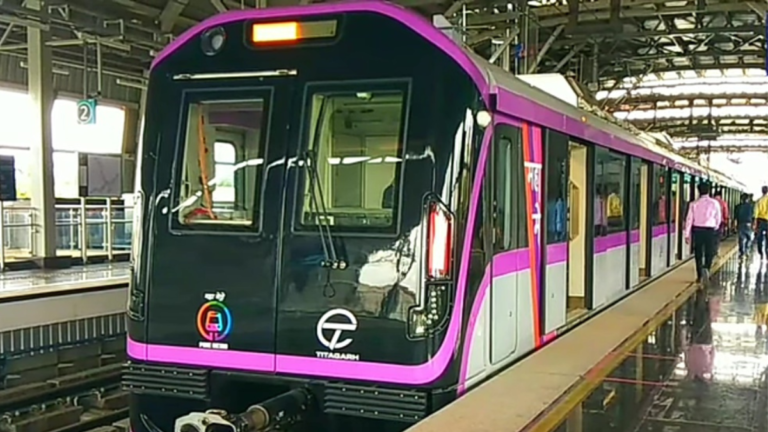
NEW DELHI (Metro Rail News): Titagarh Rail Systems has made it public that it’ll start delivering the driverless coaches for the Bangalore Metro by April. 

Preparations 

As per the information received by Moneycontrol, 

  1. All the assembly lines are ready 
  2. The availability of Machines has been confirmed 
  3. It will be commissioned in the upcoming 45-60 days 
  4. After this, the manufacturing would begin 

Deliveries 

The delivery for the metros would begin In April, with Titagarh delivering two trains of six coaches monthly to BMRCL. 

Total Trains 

BMRCL has received the initial two sets of six-car trains, comprising 12 coaches, from China, with the remaining 204 coaches slated for production by Titagarh Rail in India.

Trains from China 

The driverless trains for the Yellow Line arrived at the Hebbagoddi Depot of the Yellow Line on the morning of 14 February at 3.30 AM. 

The Driverless Technology 

The forthcoming driverless coaches are set to be seamlessly integrated into the Communication-Based Train Control (CBTC) System, commonly called “Driverless Technology.” This integration aims to decrease the headway to 90 seconds from the current two and a half minutes. Although the trains will operate without drivers, BMRCL has appointed Loco Pilots to ensure passengers’ safety.

First foray into Driverless Metros

Bengaluru is on the brink of introducing its first driverless metro service along this route, aimed at improving connectivity to significant hubs housing major corporations like Infosys and Biocon in South Bengaluru.

Big Boost in Connectivity

The objective is to enhance connectivity to key areas housing major companies such as Infosys and Biocon, as well as South Bengaluru. This initiative will significantly alleviate the daily commuting challenges metro passengers face in Bangalore. Furthermore, it will enhance the overall metro network within the city, ensuring seamless and efficient travel.

Yellow Line, Bangalore Metro 

Spanning 18.82 kilometres, the ongoing metro line construction will link RV Road to Bommasandra. This fully elevated route comprises 16 stations and intersects with the Green Line of the Bangalore Metro at RV Road Station and the Pink Line at Jayadeva Hospital Station. Anticipated to be operational by early 2024, the project faced several deadline extensions, initially slated for completion by 2021. The Yellow Line extension will serve stations including Bommamanahalli, BTM Layout, HSR Layout, and Jayadeva Hospital.


Discover the endless possibilities of our city’s Metro at InnoMetro, our flagship Expo and Conference. Be an active participant in shaping its future towards a more sustainable tomorrow. Stay informed and join us to take a step towards a brighter future. 

MoU Signing for the Delhi Metro’s Phase 4 Greenlighted by Delhi Government

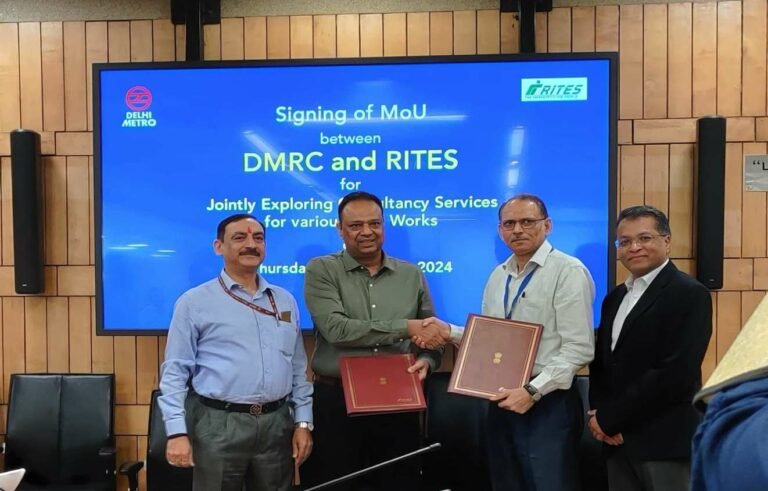
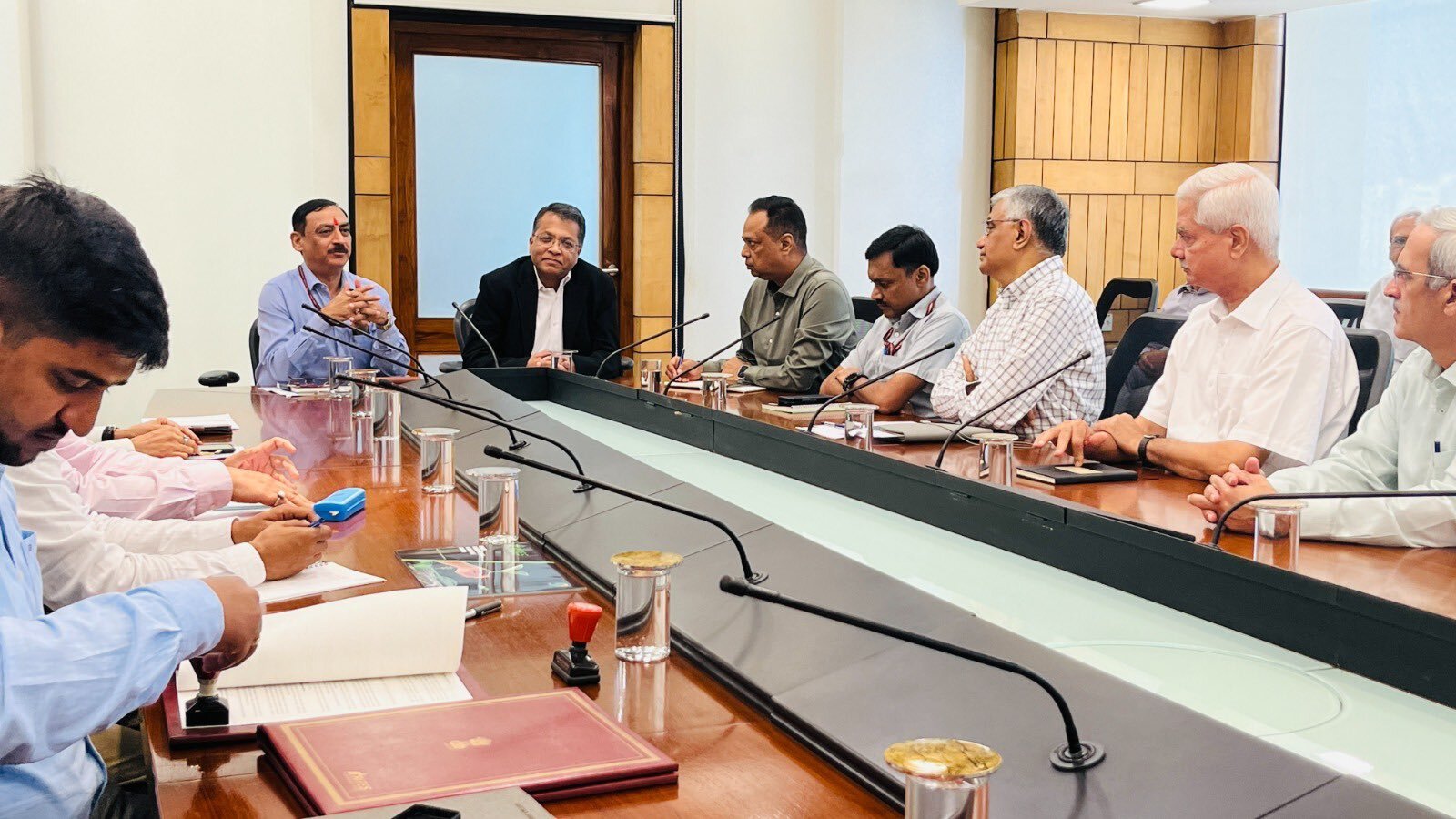
NEW DELHI (Metro Rail News): Although a routine procedure but a major milestone in the easy conduct of the projects held by Delhi Metro Rail Corporation (DMRC) was accomplished yesterday with the Delhi government greenlighting the signing of MoU with the centre. 

The CMO 

The CMO said, “CM Arvind Kejriwal has approved the signing of the MoU between the Delhi Government, DMRC and Central Government. This (corridors) includes Janakpuri West to Ramakrishna Ashram, Delhi Aerocity to Tughlakabad station and Majlis Park to Maujpur corridor. After this, construction of these corridors will accelerate.”

Purpose 

The Delhi government is signing the MoU with the centre to deal with all the obstacles related to the transfer of either private or government land to the DMRC, which would, in turn, expedite the construction work and allow DMRC to achieve its targets in time.

A High Power Committee (HPC) 

Under the MoU, a High Power Committee (HPC) will be established to expedite the land transfer processes. It will be presided over by the Chief Secretary, with the secretaries being a part of the body. It will allow for speedy action and efficient outcomes without any lagging. 

The 3 Approved Corridors 

The three approved corridors under the Delhi Metro’s Phase 4 are: 

  1. Maujpur to Majlis Park
  2. Janakpuri West to RK Ashram
  3. Tughlakabad to Aerocity

The 3 Corridors Pending 

The three corridors of the Delhi metro pending approval with the central government are: 

  1. Rithala-Bawana-Narela
  2. Inderlok-Indraprastha
  3. Lajpat Nagar-Saket G-Block

Delhi Metro Phase 4 

Phase IV of the Delhi Metro is a network expansion to new housing areas in the National Capital Region. On March 7, 2019, the union cabinet approved three ‘priority corridors’ out of six corridors of Metro’s Phase 4: 

Total length of approved ‘Priority Corridors‘: 61.679 km 

Estimated project cost: Rs 24,948.65 crore

Total length of six corridors: 103.93 km

Total Estimated Project Cost: Rs 45,000 crore

Expected Ridership: 1.5 million passengers per day

Phase – IV

Approved New Lines

Line 10 (Golden Line): Aerocity – Tughlakabad

Length: 23.622 km

Type: Elevated (4.279 km) & Underground (19.343 km)

Depot: Sarita Vihar (shared with Violet Line) & possibly Vasant Kunj

Number of Stations: Sixteen

Stations: Aerocity, Mahipalpur, Vasant Kunj, Kishangarh, Chhatarpur, Chhattarpur Mandir, IGNOU, Neb Sarai, Saket G-Block, Ambedkar Nagar, Khanpur, Sangam Vihar, Maa Anandmayee Marg Junction, Tughlakabad Railway Colony (Pul Prahaladpur) and Tughlakabad

Approved Extensions

Line 7 (Pink Line): Mukundpur – Maujpur

Length: 12.558 km

Type: Elevated (12.58 km)

Number of Stations: Eight

Stations: Burari Crossing, Jagatpur Village, Surghat, Khajuri Khas, Bhajanpura, Yamuna Vihar and Maujpur

Line 8 (Magenta Line): Janakpuri West – R.K. Ashram (28.92 km)

Length: 28.92 km

Type: Elevated (21.18 km) & Underground (7.74 km)

Number of Stations: 22

Station Names: Krishna Park Extn, Keshopur, Paschim Vihar, Peeragarhi, Mangol Puri, West Enclave, Pushpanjali, Deepali Chowk, Madhuban Chowk, Prashant Vihar, North Pitampura, Haiderpur Badli Mor, Bhalaswa, Majlis Park, Azadpur & Ashok Vihar, Derawal Nagar, Rajpura, GG Sabji Mandi, Pulbangash, Sadar Bazar, Nabi Karim and RK Ashram Marg


Discover the endless possibilities of our city’s Metro at InnoMetro, our flagship Expo and Conference. Be an active participant in shaping its future towards a more sustainable tomorrow. Stay informed and join us to take a step towards a brighter future. 

Udhampur- Srinagar- Baramulla Rail Link To Be Open By Feb 20th

SRINAGAR (Metro Rail News): Train services on the Banihal-Khari-Sumber-Sangaldan section, a pivotal 48.1-kilometre stretch of the Udhampur-Srinagar-Baramulla Rail Link project, is set to commence on February 20 by the Indian Railways.

The Inauguration 

The Prime Minister will likely inaugurate the project virtually by flagging off the train from Sangaldan. 

The USBRL Project 

The USBRL project aims to connect the Kashmir Valley with the Jammu region and the national rail network, covering 272 kilometres, with 161 kilometres already operational.

Bridges on the route 

It includes 16 bridges: 11 major bridges, four minor bridges, and one road overbridge.

Tunnels

Over 90% of this segment comprises 11 tunnels spanning 43.37 kilometres. Among these is the nation’s lengthiest transportation tunnel, T-50, extending 12.77 kilometres within the Khari-Sumber section.

Three escape tunnels measure 30.1 kilometres in length for safety and rescue purposes. Furthermore, within this section, 30 curves extend over 23.72 kilometres.

Other Safety Measures 

Numerous advanced features have been integrated to elevate passenger safety and comfort to new heights, including ballastless tracks and canted turnouts—marking a pioneering move for the Indian Railways.


Discover the endless possibilities of our city’s Metro at InnoMetro, our flagship Expo and Conference. Be an active participant in shaping its future towards a more sustainable tomorrow. Stay informed and join us to take a step towards a brighter future.

Braithwaite Bags Order Worth Rs 180 Crore from Indian Railways for 500 Wagons

KOLKATA (Metro Rail News): PSU Braithwaite & Co Ltd has received an order worth Rs 180 Crores from Indian Railways to supply 500 BCVM-C Type Wagons. 

Confirmation 

“We have secured an order of 500 wagons this month valued at Rs 180 crore”, Braithwaite chairman and managing director Yatish Kumar told PTI. 

Business Composition 

The PSU has diversified into services and construction to achieve a sustainable turnaround and drive substantial growth. In 2018, wagons accounted for 95 per cent of the business, but their contribution has now decreased to 55 per cent.

Company goals

Diversification is the cornerstone of Braithwaite’s strategic roadmap, aiming to achieve listing as a Rs 2,500 crore CPSU by 2025-26.

BCVM-C Wagons 

BCVM-C wagons, or Bogie Covered Vans with Centre Pivot, are extensively employed in India’s railway freight operations for transporting goods. Their design includes a covering to shield goods from external elements during transit.

These wagons boast a substantial carrying capacity, facilitating the efficient transportation of diverse cargo types such as bulk goods, machinery, raw materials, and finished products. They are widely embraced by industries, logistics firms, and railway networks for transporting goods across various regions of the nation.


Discover the endless possibilities of our city’s Metro at InnoMetro, our flagship Expo and Conference. Be an active participant in shaping its future towards a more sustainable tomorrow. Stay informed and join us to take a step towards a brighter future. 

166.996 Acres Given to RLDA Remains Undeveloped: Parl Panel

NEW DELHI (Metro Rail News): The public accounts committee of the Lok Sabha has found that the Rail Land Development Authority (RLDA) has failed to utilise the land parcels that were given to it in 2007 for commercial use. 

Allotment  

RLDA was allotted 49 sites by the Indian Railways for redevelopment into commercial spaces. Out of the 49 allotted, 17 have been taken into the ambit of review. 

Observations of the Committee 

The committee observed the following things: 

  1. “The committee observed that the audit reviewed the development of 17 sites, which were entrusted to the RLDA in 2007 when it was constituted and found that none of these sites had been developed.”
  2. “Audit findings revealed that there were delays in the engagement of consultants, in the submission of reports by the consultants, taking permission from state governments for change of land use plan, deficiencies in entrustment of land to RLDA by the concerned zonal railways by providing encumbered land, identifying wrong site or sites with incomplete papers etc which resulted in non-development of these sites of 166.996 acres.” 
  3. “While the RLDA incurred an expenditure of Rs 102.29 crore towards establishment, consultancy charges and advertisement, etc from 2006-07 to 2016-17, it only earned Rs 67.97 crore from the development of Multi-Functional Complexes (MFCs) at railway stations, which was not part of the earnings from commercial development of the entrusted lands.”

Status of 17 land parcels 

Development was initiated on only three sites, while seven were revoked, and the handover of the remaining seven was postponed for reasons such as legal proceedings, valuation by consultants, and termination of Letter of Administration (LOA), among others.


Discover the endless possibilities of our city’s Metro at InnoMetro, our flagship Expo and Conference. Be an active participant in shaping its future towards a more sustainable tomorrow. Stay informed and join us to take a step towards a brighter future.

Bengaluru Metro to Extend to Tumakuru and Devanhalli, CM Announces 

BANGALORE (Metro Rail News): Karnataka’s Chief Minister, Shri Siddaramaiah, has announced the extension of the Bangalore Metro to Tumakuru & Devanhalli in the budget speech presented in Karnataka’s assembly. 

The Budget Speech 

The feasibility report for extending the Metro rail from Bangalore International Exhibition Centre (BIEC) to Tumakuru and Kempegowda International Airport (KIA) to Devanahalli on a Public-Private Partnership (PPP) basis will be prepared,” Karnataka Chief Minister Siddaramaiah said in his budget speech.

The 2 Corridors 

The work is to be taken on  a Public-Private Partnership (PPP) model on two corridors, namely: 

  1. BIEC to Tumkur (50 Kms) 
  2. Kempegowda International Airport to Devanahalli (13km) 

Existing Lines 

The existing metro stations in the Bnaglore metro out of the above proposed are: 

  1. BIEC Station – Green Line 
  2. Kempegowda International Airport – Blue Line 

BIEC-Tumkur Line  

The upcoming opening of the 3 km Nagasandra-BIEC (Green Line) Metro section is anticipated within a few months, with further extension plans reaching Tumakuru, spanning approximately 50 km. This extension is poised to stimulate real estate growth in the northwest region of Bengaluru.

KIA to Devanahalli Line 

The Metro rail is set to expand its route from KIA to Devanahalli, spanning about 15 kilometres, promising significant development for the northern region of Bengaluru. Additionally, the suburban rail corridor from KSR Bengaluru City to Yelahanka and Devanahalli will further enhance connectivity to Devanahalli.

Metro Milestones 

The Chief Minister also announced that by March 2025, another 44 kilometres of Metro line will be integrated with the current 74-kilometer network.


Discover the endless possibilities of our city’s Metro at InnoMetro, our flagship Expo and Conference. Be an active participant in shaping its future towards a more sustainable tomorrow. Stay informed and join us to take a step towards a brighter future. 

New MD Conducts Inspection on the Priority Stretch of the Bhopal Metro

BHOPAL (Metro Rail News): Yesterday, on Friday, 16th February 2024, Shri Sibi Chakraborty IAS assumed the charge of managing director of Madhya Pradesh Metro Rail Corporation (MPMRCL). Concurrently, he conducted a comprehensive review meeting and site inspection concerning the Bhopal Metro Rail Priority Corridor.

Review Meeting 

During the review meeting, the Managing Director engaged with senior officials of the Metro Rail Corporation, along with the General Consultant and contractors, to discuss pertinent matters regarding the Bhopal Metro Priority Corridor. 

Subhash Nagar Metro Station 

Subsequently, MD Shri Chakraborty proceeded to the Subhash Nagar Metro Station site for a firsthand construction progress inspection. He closely observed the ongoing works, expressed satisfaction with the progress made thus far, and issued directives to ensure the timely completion of the remaining tasks under the Priority Corridor.

Bhopal metro Insoection 02

Officials Accompanied 

The inspection program, led by the Managing Director, saw the participation of key officials, including Sh. Ajay Sharma, Director (Project), Sh. Shobhit Tandon, Director (System), Sh. YC Sharma, General Manager (Civil), Sh. Sanjay Singh, General Manager (Civil), Sh. Ajay Gupta, General Manager (Track), Sh.N.D. Shakyawar, General Manager (E&M), Sh. Manish Gangarekar, General Manager (Rolling Stock), officials from the General Consultant and representatives of Metro construction contractors.

Bhopal metro Insoection 03

Bhopal Metro  

Bhopal Metro’s Phase 1 project’s DPR (Detailed Project Report ) with routes of 27.90 km was approved by the state government in December 2016 and by the Central Government’s cabinet in October 2018. It consists of 2 lines: 

01. Line-2 or Orange Line: Karond Circle – AIIMS – 14.99 km

02. Line-5 or Blue Line: Bhadbhada Square – Ratnagiri Tiraha – 12.91 km

Bhopal Metro’s Priority Corridor will be completed and opened in March 2024. 

Bhopal metro Insoection 04

Discover the endless possibilities of our city’s Metro at InnoMetro, our flagship Expo and Conference. Be an active participant in shaping its future towards a more sustainable tomorrow. Stay informed and join us to take a step towards a brighter future.

Alstom Successfully Delivers The First Trainset for The Meerut Metro Project

GUJARAT (Metro Rail News) – Alstom, a global leader in smart and sustainable mobility, has successfully delivered today the first indigenously manufactured trainset for Meerut Metro to the National Capital Region Transport Corporation (NCRTC), as part of a contract signed by Alstom in 2020 for the delivery of 210 cars for the Regional Rapid Transit System (RRTS). The first trainset was flagged off at a ceremony held at Alstom’s manufacturing facility at Savli in Gujarat, in the presence of Shri Hardeep Singh Puri, Hon’ble Minister of Housing and Urban Affairs & Petroleum & Natural Gas (virtually), Shri. Vinay Kumar Singh, Managing Director of NCRTC, and Oliver Loison, Managing Director of Alstom India.  The Meerut Metro is an urban Mass Rapid Transit System (MRTS) that will operate across the 25-km stretch of Line-1 (~14.80 km elevated and 4.6 km underground), connecting Partapur to Modipuram via 11 stations. For the convenience of the residents of Meerut, three stations on this line will provide connectivity to India’s first Regional Rapid Transit System (RRTS), connecting Delhi and Meerut. Alstom will supply thirty coaches to serve the line in 10 train sets of three cars each. The rolling stock is based on Alstom’s Adessia commuter train family, incorporating worldwide experience. The primary purpose of this Mass Rapid Transit System (MRTS) is to serve as a feeder to RRTS and a metro for the Meerut region. 

Meerut Metro 01

Shri Vinay Kumar Singh, Managing Director – NCRTC, said, “Namo Bharat trains and Meerut Metro are a testament to our unwavering commitment towards the realization of the Hon’ble Prime Minister’s Gati Shakti National Master Plan. In a first-of-its-kind initiative in the country, both these services will run on the same RRTS infrastructure. The modern Meerut Metro trainsets have been designed and manufactured indigenously under the Make-in-India initiative. Alstom team has worked hard in ensuring timely delivery of these MRTS trainsets in sync with the preparedness of infrastructure.”

Commenting on the delivery, Olivier Loison, Managing Director, Alstom India, said, “The Meerut Metro project is a step forward in the country’s ambition to modernise intra and intercity rail travel, and we are delighted to be delivering our next-generation products towards realising this vision. With its connectivity to the Namo Bharat line, the combined service will drive a long-term positive impact for business and leisure travel in the northern belt.”

Designed at Alstom’s Hyderabad engineering centre and manufactured at Savli (Gujarat), these trains are indigenous, in line with the government’s Make-in-India and Aatmanirbhar Bharat ambitions. The trainset will undergo testing and validation upon arriving at the Meerut depot. 

Shri Vinay Kumar Singh MD NCRTC and Mr. Olivier Loison MD Alstom India at the ceremonial key handover of the first Meerut Metro trainset

Alstom and Meerut Metro Project Commitment

In 2020, Alstom was awarded the contract. The scope of work includes:

  • Design, build, and deliver the trainsets – 30 transit train cars
  • Design, supply and install the signalling, train control and telecommunication system, platform screen door & long-term evolution, which is completed for the ~ 17km priority section for the launch
  • Provide comprehensive maintenance services for 15 years. 

The outstanding ergonomics, safety and comfort, low life cycle costs and high recyclability make these new commuter trains an attractive, sustainable choice to promote public transport, thereby reducing traffic congestion, air pollution and fuel consumption. They help save travel costs and time and change the lives of millions of citizens by connecting suburban places with the region’s economic centre. 

Meerut Metro 04

The MRTS trains:

  • Resemble the appearance of conformist metro trains 
  • Present a mix of longitudinal and lateral cushioned seating 
  • Offer a range of passenger-centric amenities, including overhead luggage racks, miniature screens within the coaches, wi-fi connectivity, and multiple USB sockets near the seats. 
  • Feature designated wheelchair spaces for individuals with disabilities and stretcher space for emergency medical transfers. Emergency communication capabilities are also integrated into the coaches, designed, and manufactured in alignment with International Safety Standards. 
Meerut Metro 03

The Meerut Metro will promote the region’s balanced and sustainable economic development. The advanced, eco-friendly design will bring significant efficiencies by incorporating energy-saving technologies, including the modern car body, reliable batteries, efficient propulsion system, and regenerative braking. 


Discover the endless possibilities of our city’s Metro at InnoMetro, our flagship Expo and Conference. Be an active participant in shaping its future towards a more sustainable tomorrow. Stay informed and join us to take a step towards a brighter future