



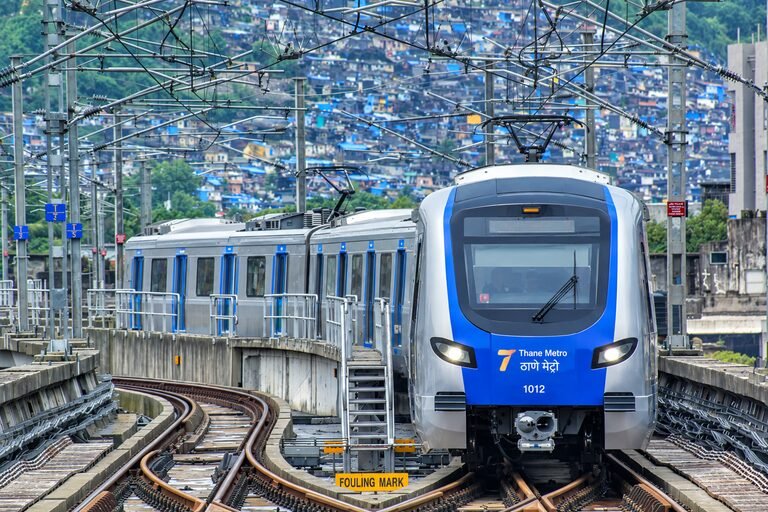
THANE (Metro Rail News): Thane has always had an important place in India’s transport history. On April 16, 1853, the country’s first passenger train began its 34 km journey from Bombay’s Bori Bunder to Thane. That journey was more than a new railway service. It marked the beginning of a transport revolution that would eventually connect cities, industries and people across India. More than 170 years later, Thane is once again looking to rail transport to solve a very different problem.
The city has grown far beyond the boundaries of the Thane that received that first train. Once an industrial centre on the outskirts of Mumbai, Thane is now a major part of the Mumbai Metropolitan Region. Its population has expanded rapidly, its roads carry an ever-growing number of vehicles, and daily travel has become increasingly difficult. The answer now taking shape is the Thane Integral Ring Metro Rail Project.
The 29-km metro corridor is designed as a ring around the western side of the city, with 22 stations. The project is planned with 26 km of elevated corridor and 3 km underground. The line will pass through an urban landscape bounded by the Ulhas River on one side and Sanjay Gandhi National Park (SGNP) on the other. The idea is straightforward: give Thane a high-capacity public transport system that can move large numbers of people without adding more vehicles to already crowded roads.
But the project is about more than another metro line. Thane’s growth has created a difficult urban equation. More residents mean more journeys. More commercial activity means more office trips. More vehicles mean more congestion. And longer journeys mean more fuel consumption and pollution. The metro is expected to change that equation by creating a faster and more reliable alternative to road travel. The scale of the challenge is clear from the city’s population growth.
Get the Daily Metro & Rail Brief
Join 125,000+ metro and rail professionals. Project updates, new tenders and contract awards from across India, in your inbox every day.
According to Census 2011 data, Thane Municipal Corporation had a population of about 18.41 lakh. The city’s population had risen by 45.85% over the previous decade. The annual population growth rate during 2001-2011 stood at 4.2%. Earlier projections estimated the population at around 20.7 lakh in 2017, 27.3 lakh in 2027, 35 lakh in 2035 and 39.4 lakh by 2045. Vehicle ownership has also climbed sharply. Annual vehicle registrations increased from 13.9 lakh in 2011 to 19.4 lakh in 2017. Those numbers explain why Thane needs more than road widening and traffic management. The city needs a transport backbone. That is where the Integral Ring Metro comes in.
From Railway History to a New Urban Transport Backbone
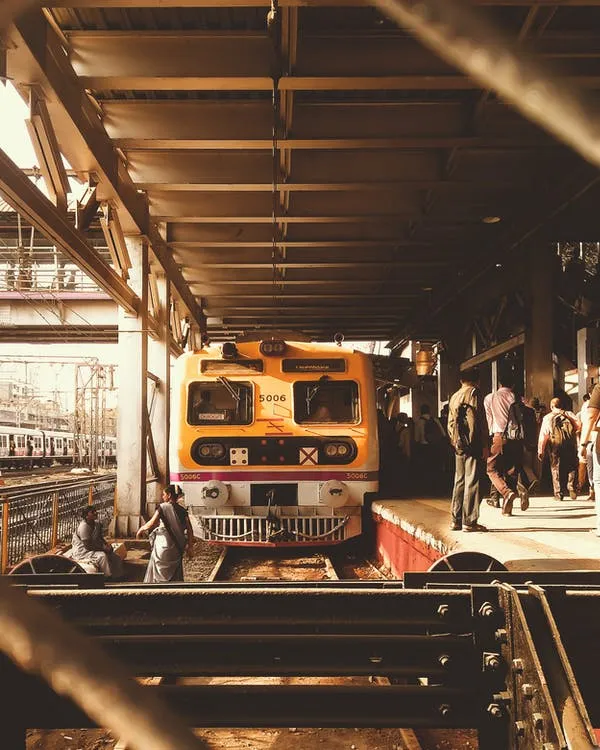
Thane’s transformation has been dramatic. The city was officially known as Thana until 1996, when its name was changed to Thane. After Independence, particularly during the 1960s and 1970s, it developed rapidly into an industrial centre. Its location within the Mumbai Metropolitan Region further accelerated its urban growth. The same growth that created economic opportunities also brought a familiar problem: mobility. Thane’s dense areas, including parts of Mumbra and Kalwa, Wagle Estate and Vartaknagar, generate substantial travel demand. Other areas such as Sheelphata and Diva have comparatively lower population densities.
This uneven development creates complicated travel patterns. People do not simply travel from one end of the city to another. They travel between residential areas, workplaces, educational institutions, commercial centres and neighbouring urban regions. As the population grows, the pressure on roads rises with it. The proposed metro is therefore intended to provide a high-capacity alternative for daily journeys, particularly for office workers, students and other regular commuters. The project has also gone through several changes before reaching its present form.
DPR: A Project That Changed Shape Before Taking Final Form
The Detailed Project Report, or DPR, is where a large transport project begins to move from an idea towards an executable plan. For Thane Metro, the planning process included a Comprehensive Mobility Plan (CMP), Alternative Analysis Report (AAR) and Detailed Project Report (DPR). The Maharashtra government, through Maha Metro, initiated the planning exercise. Tandon Urban Solutions Pvt. Ltd. prepared the Comprehensive Mobility Plan, while RITES was engaged by Maha Metro on behalf of Thane Municipal Corporation to prepare the Alternative Analysis Report and DPR.
But the project did not reach its present configuration in one step. The original plan envisaged a conventional heavy metro system. The foundation stone was laid by the Prime Minister in December 2018. Then came a major rethink. Cost concerns led to the heavy metro proposal being scrapped in 2019. In early 2020, the project returned in a different form- as a Metrolite or Light Rail Transit system. The objective was to reduce the cost of construction and operation. The redesign included smaller train configurations and other cost-saving measures.
That version, however, did not remain the final answer. By 2023, the project had once again been reassessed. The city’s transport requirements led to another redesign, this time returning to a regular heavy metro system. That sequence says something important about Thane. The city’s transport needs were difficult to fit into a cheaper, lighter system without raising questions about future capacity. The project eventually reached a major milestone on August 16, 2024, when the Union Cabinet approved the Thane Integral Ring Metro Rail Project. The approved project now has a clear identity: a 29-km ring corridor with 22 stations.
The Thane Integral Ring: A 29-km Metro Around the City
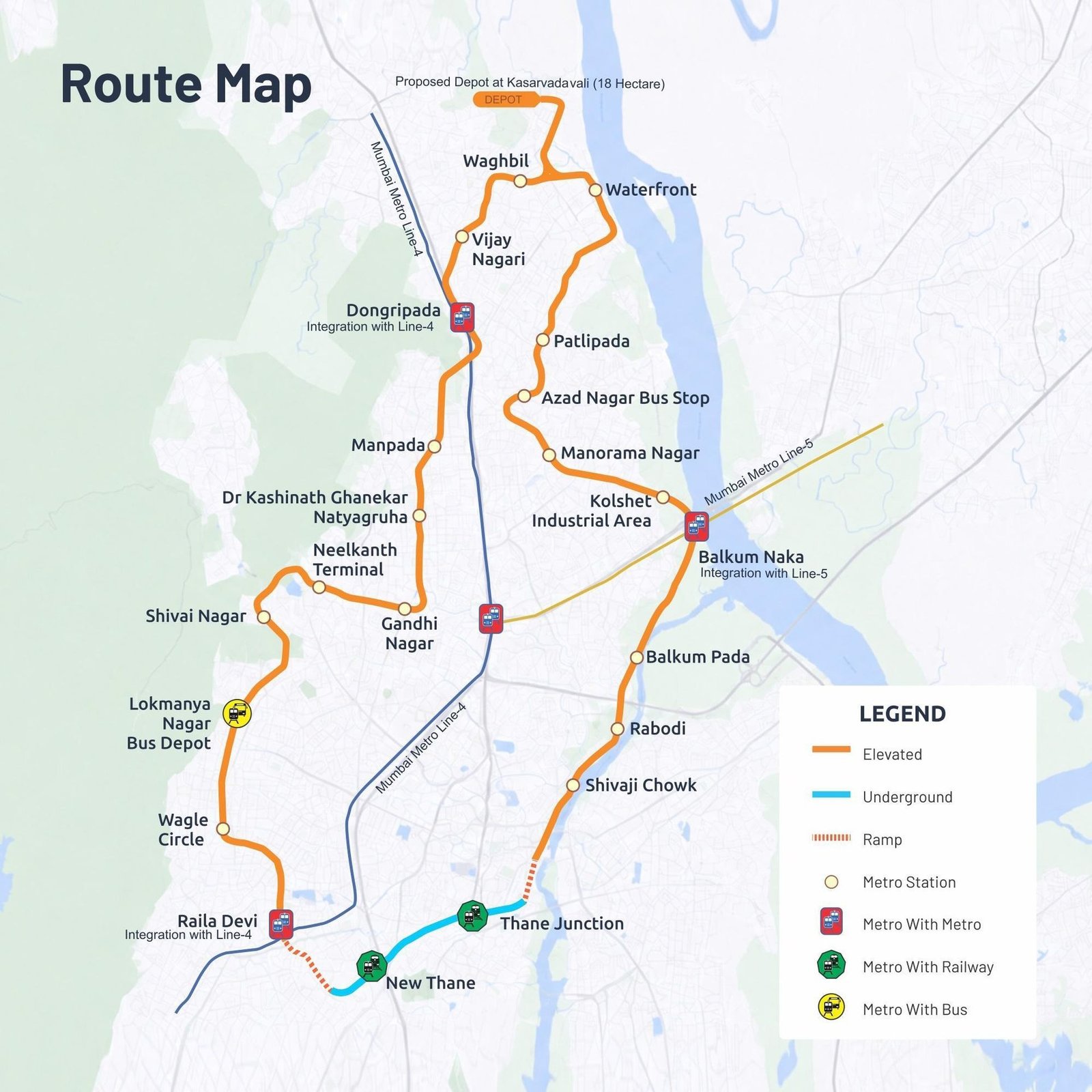
The proposed metro is not a conventional straight corridor connecting two endpoints. It is an integral ring corridor. The line will cover the western periphery of Thane and create a network around important parts of the city.
| Information | Details |
| Corridor | New Thane to New Thane Ring Corridor |
| Total length | 29 km |
| Elevated section | 26 km |
| Underground section | 3 km |
| Total stations | 22 |
| Elevated stations | 20 |
| Underground stations | 2 |
| Estimated project cost | ₹12,200.10 crore |
| Expected completion | 2029 |
Station Names: Raila Devi, Wagle Circle, Lokmanya Nagar Bus Depot, Shivai Nagar, Neelkanth Terminal, Gandhi Nagar, Dr. Kashinath Ghanekar Natyagruha, Manpada, Dongripada, Vijaynagari, Waghbil, Waterfront, Patlipada, Azad Nagar Bus Stop, Manorama Nagar, Kolshet Industrial Area, Balkum Naka, Balkumpada, Rabodi, Shivaji Chowk, Thane Junction, New Thane
The alignment has an unusual geographical setting. The proposed network is bounded by the Ulhas River on one side and Sanjay Gandhi National Park on the other. That makes planning more complicated than simply putting tracks along a wide road. The project therefore has to balance transport requirements with environmental considerations and the physical constraints of a dense and rapidly urbanising city. Twenty stations will be elevated and two will be underground.
The network is expected to provide faster connections for people travelling between residential areas and employment centres. It is also intended to serve students and regular office commuters who currently depend heavily on roads. For many passengers, the attraction will not necessarily be speed alone. Reliability could be equally important. A metro journey offers a degree of predictability that road-based travel often struggles to provide. When congestion increases, a road journey can become much longer than expected. A high-capacity rail system can reduce that uncertainty for daily commuters. That could become one of the strongest arguments for the project.
AECOM-Nippon Koei JV Takes Charge
With the Thane Integral Ring Metro moving from planning towards implementation, Maha Metro has appointed a general consultant for the project. Maharashtra Metro Rail Corporation Limited (Maha Metro) has awarded the General Consultant contract to an AECOM-led consortium comprising AECOM India Private Limited and Nippon Koei India Private Limited. The estimated value of the consultancy contract is ₹179.86 crore, excluding GST. The appointment gives the project a dedicated technical consultancy team as it moves into the next stages of development. The general consultant will form an important link between the project’s planning and execution phases. For a 29-km ring corridor involving both elevated and underground sections, coordination across design, engineering, construction and other project requirements will be critical.
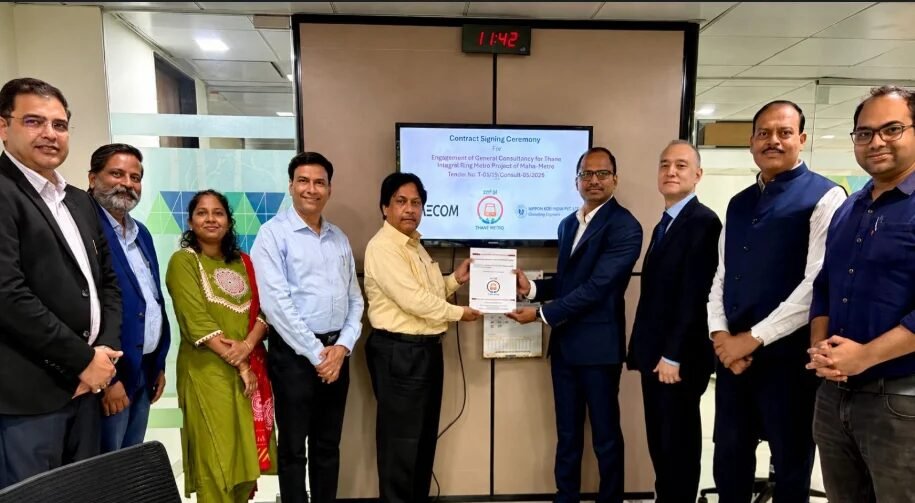
The appointment also marks a shift in the project’s journey. The Thane Metro proposal has gone through several changes since its initial planning, including a shift from a conventional heavy metro to a Metrolite proposal and back to a regular metro system. With the project now approved as the Thane Integral Ring Metro, the appointment of the AECOM-led consortium adds another layer of institutional and technical support to the implementation process. For Maha Metro, the focus will now be on translating the approved project design into an executable plan while keeping construction, cost, timelines and environmental considerations aligned.
Business and Economic Impact
A metro line rarely remains just a transport project. Once a new corridor begins operating, it can influence where people live, where businesses locate, how commercial districts develop and how land around stations is used. For Thane, the economic implications could be significant because the metro is being planned through a city that has already experienced rapid urbanisation.
Real Estate and Urban Development
Transport infrastructure has a direct relationship with real estate. When a neighbourhood gets a reliable mass transit connection, accessibility improves. Areas that were previously difficult to reach can become more attractive to residents and businesses. The Thane Metro could create similar effects around its stations. A station is not simply a boarding point. It can become the centre of a larger urban ecosystem involving housing, offices, shops, educational institutions and services.
This could be particularly relevant in areas where road connectivity is currently under pressure. For developers, improved public transport can increase the practical value of locations that are close to stations. For residents, it can expand the range of places that are realistically accessible without a private vehicle. That can influence housing choices. A person who works in a commercial district may be more willing to live farther away if a direct metro connection keeps the daily commute manageable.
Over time, such changes can reshape development patterns. However, the relationship between metro construction and real estate is not automatic. The economic benefit depends on what happens around stations. If station areas develop without proper pedestrian infrastructure, parking management and last-mile connectivity, the metro may struggle to capture its full potential. The real opportunity therefore lies in integrating the metro with the surrounding city rather than treating stations as isolated structures.
Employment and Commercial Activity
Thane has evolved from an industrial city into a much broader urban economy. Its growing population supports retail, offices, services, education, healthcare and other commercial activities. The metro could strengthen these connections. A major advantage of a ring corridor is that it can connect multiple activity centres without forcing every passenger to travel through one central interchange.
For employees, this could mean easier access to workplaces. For companies, better public transport can widen the pool of workers who can reach their offices without relying entirely on private vehicles. That matters in a city where travel times can influence where businesses choose to locate. The proposed corridor is expected to connect major business hubs and provide a transport option for a large section of employees.
Students could also benefit. Educational institutions often generate large numbers of daily trips, particularly during peak hours. A dependable metro connection can make these journeys easier to plan. There is also a wider economic benefit. When people spend less time stuck in traffic, they have more time available for work, education, family and other activities. The value of a metro system is therefore not captured only by ticket revenue. Its wider economic impact can come from the time and connectivity it creates.
Environmental Sustainability: Building a Metro Without Ignoring the Green Cost
A metro is generally presented as a cleaner alternative to private vehicles, but building a large infrastructure project also has environmental consequences. Thane’s geography makes that issue particularly important. The corridor will run in an area where the Ulhas River and Sanjay Gandhi National Park form major natural features. The project’s environmental management plan therefore includes specific measures intended to reduce and compensate for its impact. Key environmental measures include:
- Tree compensation: The project plans to plant 3,721 trees against the felling of 251 trees.
- Noise control: Noise barriers are proposed along the elevated section adjoining Sanjay Gandhi National Park.
- Rainwater harvesting: Rainwater harvesting systems are proposed at the depot and along the elevated section.
- Environmental monitoring: Monitoring forms part of the project’s environmental management plan.
- Environmental allocation: The estimated environmental management cost is around ₹15.27 crore.
The tree plantation plan is particularly notable because the project will pass close to a sensitive natural area. A metro can reduce road traffic and, in the long run, help lower emissions by shifting commuters from private vehicles to public transport. But that benefit does not erase the environmental cost of construction.
The challenge is to ensure that the compensatory measures are not treated as paperwork alone. For a project passing near a national park, noise control, tree compensation and groundwater recharge need to work in practice. That is where the environmental performance of the project will ultimately be judged.
Financing a ₹12,200 Crore Metro
The Thane Integral Ring Metro is estimated to cost ₹12,200.10 crore. The funding structure includes equal equity contributions from the Government of India and the Government of Maharashtra, along with part-funding from bilateral agencies. The project also proposes alternative sources of revenue. These include:
- Station naming and access rights
- Asset monetisation
- Value Capture Financing
This approach reflects a broader reality of metro economics. Building a metro requires large upfront investment, while ticket revenue arrives gradually over many years. That makes non-fare revenue important. Station naming rights, commercial development and asset monetisation can potentially create additional income streams. Value Capture Financing can also link some of the benefits created by improved connectivity to the funding of the infrastructure itself. The success of these mechanisms, however, will depend on how effectively they are implemented. A metro system cannot depend on passenger fares alone if its construction cost is high and its network takes time to mature.
The Business Case Under Scrutiny
The case for Thane Metro is strong from a mobility perspective. But transport infrastructure is ultimately a long-term financial commitment as well. That raises three questions: Will enough people use the metro? Can the system remain financially sustainable? And will the network be sufficiently connected to compete with road transport?
Ridership: The Big Number That Has to Become Reality
The project’s projections are ambitious. Daily ridership is expected to reach:
- 6.47 lakh passengers by 2029
- 7.61 lakh passengers by 2035
- 8.72 lakh passengers by 2045
These numbers are central to the business case. A metro is most useful when it attracts large numbers of regular passengers. High ridership also improves fare revenue and strengthens the case for commercial activity around stations. But projections are projections.
Actual ridership will depend on several factors. Where stations are located, how easy they are to reach, the quality of last-mile connectivity, travel fares, service frequency and the condition of competing road routes will all influence commuter behaviour. People may support the idea of a metro but still continue using cars, motorcycles, buses or other modes if reaching the station is inconvenient. The first and last kilometre can therefore become just as important as the metro journey itself.
Financial Sustainability
The ₹12,200.10-crore price tag makes financial planning a central issue. The project is expected to generate broader economic benefits, but those benefits do not automatically become metro revenue. This is why the proposed mix of funding sources matters. Equal government equity, bilateral funding, station naming rights, asset monetisation and value capture mechanisms are intended to spread the financial burden. The larger question will be whether these sources can provide stable support over the project’s lifetime. Metro systems have high infrastructure and maintenance costs. They also need regular investment in trains, stations, signalling, track, safety systems and other assets.
At the same time, fares have to remain affordable enough to attract daily passengers. That creates a difficult balancing act. Raise fares too much and some commuters may return to cheaper alternatives. Keep fares low and the system may require greater public financial support. The project’s financial sustainability will therefore depend not on one funding source but on how the entire system performs over time.
Competition and Limited Network Coverage
The biggest competitor for a metro is often not another railway. It is the road. Thane already has an established network of roads and buses. Many commuters have also built their daily routines around motorcycles, cars, taxis and other road-based transport. The metro must persuade these passengers to change those habits. That will not happen simply because stations exist. The system has to be convenient. A commuter living 2 km away from a station may still choose a two-wheeler if there is no easy feeder service or safe walking route. This is why the metro’s integration with the wider transport network will be critical.
The ring corridor needs strong connections with buses, existing railway services, pedestrian routes and other modes. The more seamless the interchange, the stronger the metro’s ability to attract passengers. There is also the question of network coverage.
A 29-km corridor is substantial, but Thane is a much larger urban area. The metro will serve important sections of the city, but it cannot solve every mobility problem on its own. Its success should therefore be measured not as a standalone project but as part of Thane’s wider transport system.
A Ring That Could Change How Thane Moves
There is something fitting about Thane turning to a ring-shaped metro more than a century and a half after becoming the destination of India’s first passenger train. In 1853, the railway connected Thane to Bombay and demonstrated the power of a new form of transport. Today, the challenge is different. Thane does not need to prove that rail transport works. It needs to make rail transport work within a dense, modern city. The Integral Ring Metro attempts to do exactly that. Its 29-km route, 22 stations and combination of elevated and underground sections are designed to create a high-capacity transport backbone. The expected ridership figures show the scale of demand that planners anticipate. The project also has a broader economic proposition. Better connectivity could influence real estate, improve access to employment centres, support commercial activity and reduce dependence on private vehicles. Its environmental plan adds another layer, particularly because of the corridor’s proximity to Sanjay Gandhi National Park and the Ulhas River.
But the project also carries clear challenges. The ₹12,200.10-crore investment is significant. Ridership projections need to translate into actual daily passengers. Alternative financing mechanisms need to work. Stations must connect properly with neighbourhoods. And the metro must compete with road-based transport not just on speed, but on convenience. There is no single number that will determine whether the project succeeds. A metro becomes valuable when several pieces work together: the train, the station, the road outside the station, the bus connection, the pedestrian path and the neighbourhood around it. For Thane, that integration could be the difference between a metro that simply carries passengers and one that genuinely changes the city.
The project is expected to be completed by 2029. By then, Thane will be even larger and its transport demand will be even more intense. That is why the Integral Ring Metro is not merely an infrastructure project for the city’s present problems. It is a bet on what Thane will look like in the next two decades. If ridership reaches the projected levels and the metro connects smoothly with the rest of the transport network, the ring could become a major part of everyday life in the city. If integration, financing or last-mile connectivity falls short, however, the project could struggle to deliver the full value expected from such a large investment. For a city that once became a landmark in India’s railway history, Thane is now preparing for another major transport chapter. The question is no longer whether the city needs better mobility. It is whether the new metro can become the backbone that Thane’s next phase of growth demands.
Also Read: AECOM India-Nippon Koei JV wins general consultancy contract of Thane Metro
 Read nextThane Metro Project: MMRCL invites bids for EHV Line Shifting & Diversion25 Jul 2026