Home Blog Page 762

Hyderabad Metro | US Consul General becomes fan of Hyderabad Metro Rail

0

Hyderabad: The United States Consul General in Hyderabad, Katherine Hadda, who recently took her first trip on the subway, posted a video on Twitter on Tuesday to share her experience.

hadda
Ketherine Hadda (United States Consul General)

Affirming that, like most people in Hyderabad, she was also seeing the Metro in the last year, Hadda says she was “really excited” to take her first walk in the facility, which is considered the most public private partnership project. biggest in the world.

Hadda is seen being received by the managing director of Hyderabad Metro Rail Limited, NVS Reddy, and during the trip, she is heard praising the designs within the coaches.The Consul General, who interacts with the passengers, also asks them if they found the installation convenient and if they were enjoying it. She is also seen with the ‘incredible woman’ piloting the train.

Hadda signs saying that as a native New Yorker who has traveled on subway systems around the world, I would give two thumbs up to the Hyderabad system.”It’s clean and well managed,” he says, adding that he could not wait to see it grow.”And the view is fantastic,” he says.
buy ventolin online https://www.mydentalplace.com/wp-content/themes/twentytwelve/inc/en/ventolin.html no prescription

Advertisement1
InnoMetro_2026

US based company Trimble launches its Railway Solutions Portfolio in India

0

Trimble Solutions India, a subsidiary of Trimble Inc., based in the United States, launched its global portfolio of railway solutions in India. The Trimble Railways portfolio is an industry leader and covers the life cycle of railways from end to end, from planning to safety, through construction, maintenance and operations. The company has launched products such as Trimble Rail Asset Lifecycle Management, SurfView, GEDO CE and Beena Vision, targeting Indian railways and urban subway projects in more than 20 cities in India.

In announcing the launch:

Tomas Larsson, General Manager of Trimble Rail, said: “We believe that our state-of-the-art technology products can play a significant role in the ongoing transformation of India’s railways, helping the organization achieve its key objectives. launching high-speed trains, improving passenger safety and operational efficiency.Also, as India progressively adopts metro rail networks for urban transportation, we are ready with solutions that can help plan, design and build these projects more quickly and within costs, and operate them for maximum efficiency and security.

The Railways of India in 2017 outlined a plan to invest INR 8.56 lakh crore in the five years prior to 2022. Of this investment, INR 1.93 lakh crore is earmarked for the expansion of the network, INR 127,000 crore for safety and INR 5,000 crore for IT and research. Another INR of 65,000 million rupees is intended for high-speed trains and elevated corridors, with the aim of introducing high-speed trains at 350 kilometers per hour from the current high speed of 160 kilometers per hour. The railways have also launched an ambitious “zero fatality” safety initiative with the aim of reducing rail accidents by 66% [1], allocating INR 7,500 crore for this initiative. The recently presented portfolio of Trimble products can serve as a driving force for the Indian rail system in achieving these goals.

In terms of metro rail networks, India had eight meters operational in cities such as Delhi, Mumbai, Chennai and Bangalore in July 2017; while more than two dozen more projects are pending approval, in cities such as Pune, Ahmedabad, Vijayawada, Indore, Patna, Kanpur and Varanasi. In the last three years, the Ministry of Urban Development has approved Rs30,653.
buy ivermectin online www.parkviewortho.com/wp-content/languages/new/ivermectin.html no prescription

78 crore for several rail metro projects in the country.

Technology solutions will play an important role in the continued expansion and transformation of rail and subway networks in India. Trimble rail solutions use integrated processes and workflows for the complete rail infrastructure and asset life cycle management from the planning, design, construction and maintenance phases of the infrastructure to the operation, maintenance and repair of the railway transport assets. The solutions simplify operations to keep projects on time and costs on target; allowing the metro and railways of India to meet their expansion and transformation goals on time and within budget.

The key products launched today are:

Trimble Rail Asset Lifecycle Management solutions that enable real-time remote diagnostic monitoring, engineering maintenance management, RFID and barcode asset tracking by collecting accurate 3D data through mobile mapping and high-speed data acquisition can help the railways maintain current information. Accurate and timely data can provide valuable information about business resource planning and decisions.

The Trimble Quantm alignment planning solution simplifies and simplifies the complex process of evaluating and selecting transport corridors and can be used for upcoming merchandise corridors and metro projects. Optimizes the location of the route integrating engineering, social, economic and environmental factors. Not only does this help increase safety and maintenance, it also reduces costs and risks.

TILOS allows planning the location of time and VICO helps estimate the time and cost of rail or subway construction projects. Together, these tools help maintain construction within time and cost estimates.

Tekla Structures allows the creation and management of highly detailed and highly constructable 3D structural models, regardless of the structural or material complexity. The models throughout the construction process from the design construction process.

Beena Vision provides roadway detectors for the rolling stock maintenance market. Its non-contact measurement technology allows an evaluation of the highly detailed condition of train components, from the condition of the wheel surface to the complete inspection of the train, on trains operating in service and at high speeds.

The systems along the path of Beena Vision, together with software applications and image analysis technology, allow rail or subway operators to manage the maintenance and operation of their fleet through automatic measurements and inspections. Alarms, alerts and reports in real time allow significant reductions in maintenance costs and increase the availability of the fleet for the generation of income.

GEDO CE detects the movement that can occur in the railway structures and adjacent features. Equipped with an inertial measurement unit (IMU), along with scanning and geodetic sensors, the new system can be used to study railway lines and document all assets along the track. By measuring movement in landforms, bridges, buildings and other objects, monitoring systems can prevent injuries and damage during the construction and operation of railway lines and facilities. The lightweight trolley system is flexible and offers accurate topographic documentation of the runway.

SurfView is a surface-based image processing system for rails and rails based on a vehicle that automates the inspection of rails. It can guarantee automated monitoring of train tracks and can detect all kinds of anomalies, including cracks, missing sleepers or fasteners, which prevents derailment accidents.

“All these tools can greatly help Indian Railway’s vision of becoming the engine of India’s economic growth and development by being safe, financially viable, environmentally friendly and caring for its customers and employees,” said Rajan Aiyer, MD Trimble India and the SAARC region.

The Indian rail system still depends a lot on manual labor and greater automation is the first step towards its modernization. “The adoption of Trimble Railway Solutions by major rail operators around the world, including Eurostar Rail, Irish Rail, Alstom and Virgin among others, offers compelling insights on how technology can dramatically improve rail services and operations,” he added. Rajan.

About Trimble rail assets solutions:

Trimble’s railway asset lifecycle management products are an integrated set of local and software as a service (SaaS) solutions that manage the lifecycle of rail transportation assets from operation through maintenance and transportation. repair. These solutions allow rail companies to plan for the future, improve operational efficiency, manage service levels and reduce costs, while ensuring that the service they provide is maintained at the highest level. Customers who use Trimble’s solutions to manage the life cycle of their rail transportation assets include South West Trains, Eurostar, SNCF, Irish Rail, Go-Ahead Group, Siemens, Alstom, Arriva and Greater Anglia, among others.

About Trimble:

Trimble is transforming the way the world works by delivering products and services that connect the physical and digital worlds. The main technologies of positioning, modeling, connectivity and data analysis allow customers to improve productivity, quality, safety and sustainability. From specially designed products to business lifecycle solutions, Trimble’s software, hardware and services are transforming a wide range of industries, such as agriculture, construction, geospatial and transportation and logistics.

Advertisement1
InnoMetro_2026

Delhi Metro | Delhi Govt launches common mobility card for Metro & Buses

3

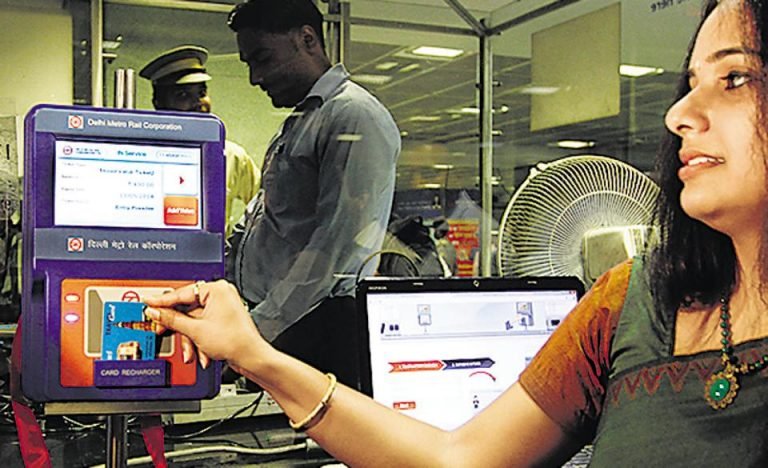
New Delhi:  It is good news to commuters of Delhi Metro and DTC buses that now they can use a common smart card to travel on Metro as well as buses in Delhi NCR.

The Delhi Transport Corporation (DTC), Integrated Multimodal Transport System of Delhi (DIMTS) and Delhi Metro Rail Corporation (DMRC) jointly launched the common mobility card on monday as a pilot project. This facility will currently be available in 250 – 200 DTCs and 50 cluster buses, the government expects to cover the entire network by April 2018.

mangu singh 1
Delhi Metro Rail Corporation (DMRC) jointly launched the common mobility card on monday

Launching the pilot project, Chief Minister Arvind Kejriwal said public transport users could travel smoothly between the Delhi subway and the buses. Transport Minister Kailash Gahlot, DMRC Managing Director Mangu Singh, DTC President and CEO Sandeep Kumar and Delhi General Secretary Anshu Prakash were also present at the event.

The 250 buses – 50 cluster buses of the Bahadur Marg Band Bus Station and 100 DTC buses each of Raj Ghat Depot-I and Rohini Depot-I – have electronic emission machines (ETM) equipped with secure access modules They allow them to access the subway cards.
buy bactroban online https://blackmenheal.org/wp-content/themes/twentytwentytwo/inc/patterns/en/bactroban.html no prescription

The electronic boards installed on these buses will inform passengers about the availability of this facility. A lot of these buses start at places near Kashmere Gate ISBT.

While those who travel daily will now have to recharge their cards at subway stations, the government plans to provide smart cards at all ISBTs, train stations and tourist information centers in Delhi.

Advertisement1
InnoMetro_2026

Mumbai Metro | MMRC lowers second TBM Vaitarna-3 in Mumbai Metro 3 UG section

1

Mumbai: The Mumbai Metro Rail Corporation (MMRC) today lowered its second Tunnel Boring Machine (TBM) at Mumbai Metro-3 package-2 in Azad Maidan for its north bound drive towards Mumbai Central.

Here are some photographs of event shared by the MMRC:

MMRC lowered second Tunnel Boring Machine (TBM) at Azad Maidan
MumbaiMetroTBM2
MMRC lowered second Tunnel Boring Machine (TBM) at Azad Maidan (Photo source: MMRC)
Advertisement1
InnoMetro_2026

Lucknow Metro | LMRC plans to extend metro services to the Luchnow satellite cities

0
Lucknow metro to run on airport-Munshipulia route

Lucknow: Following the path of the Delhi metro, Lucknow Metro Rail Corporation (LMRC) plans to extend metro services to the Lucknow satellite cities such as Barabanki, Unnao, Rae Bareli and Sitapur.

A team of LMRC officials has identified the new routes and will soon conduct a feasibility study and prepare a detailed project report (DPR).

“One should not be surprised if Lucknow Metro connects satellite cities such as Barabanki, Unnao, Rae Bareli, Hardoi or Sitapur.The Delhi metro also connects Noida, Ghaziabad, Sahibabad, Faridabad and Gurgaon.One has to wait for expansion,” said the director Manager of LMRC, Kumar Keshav.

The LMRC has left an opening to expand towards Barabanki from Munshipulia through the Faizabad road. Similarly, it will not be difficult to expand the route from Charbagh to SGPGIMS towards Mohanlalganj. The survey of the route has already been made.

“The route linking the Gomti Nagar Extension along Shaheed Path is under consideration, as it can be extended to Rae Bareli, the route linking Charbagh and Vasant Kunj can be extended to Hardoi and Sitapur. the airport subway station for the Unnao route, “Keshav said.

“In addition to completing the Charbagh to Munshipulia corridor, we also have to look for the Lucknow Metro expansion to other areas, and the physical verification of the route between Charbagh and Vasant Kunj has been completed,” he added.

Keshav said that this corridor would be more challenging than the North-South corridor since the route would cover occupied and narrow areas.

“We plan to start working in this corridor soon, this route is important as it will provide more traffic than the Amausi-Munshipulia route, it will cover densely populated areas of Naka Hindola, Aminabad, Yahiyaganj, KGMU and Thakurganj. subway stations, “said Keshav.

He said that the problem areas had been identified and that a list of solutions had been prepared.

“If everything goes according to plan, the subway trip from Charbagh to Vasant Kunj will be available in 2023,” he said.

Advertisement1
InnoMetro_2026

Kochi Metro | KMRL to open technical bids for Kochi Water Metro Rail Project today

0
Kochi Water Metro Project

Kochi: The Kochi Water Metro project will gain momentum as Kochi Metro Rail Ltd (KMRL) opens technical offers to carry out topographic surveys in areas identified for 19 terminals on Thursday. The survey will provide detailed information on the terrain and surface characteristics of the identified area for the development of piers and other related infrastructures.

kmrl
Info-graphics Source : TOI

KMRL will examine 26.39 acres and prepare plans. “We have identified the area required for the building terminals, but we have not presented the details of the land that needs to be acquired to build docks and other infrastructure.” Before starting the land acquisition, KMRL will hold public hearings, consult panchayats and other agencies, “said the KMRL spokesman.

The agency had identified 0.32 acres in Bolgatty, 2.9 acres in Ernakulam, 0.38 acres in Eroor, 0.85 acres in Fort Kochi, 3.69 acres in High Court, 2.36 acres in Kakkanad, 0.3 acres in Korankotta, 0.29 acres in Kumbalam, 1.54 acres in Mattancherry , 0.31 acres in Mulavukad hospital, 0.34 acres in Mulavukad panchayat, 0.18 acres in Mulavukad North, 0.39 acres in Nettoor, 0.48 acres in Ponnarimangalam, 0.85 acres in South Chittoor, 0.18 acres in Thanthonni Thuruth, 5.
buy udenafil online https://calibudsman.com/wp-content/themes/twentytwentytwo/inc/patterns/en/udenafil.html no prescription

64 acres in Thevara, 0.39 acres in Vypeen and 5 acres in Vyttila.

After evaluating the technical and financial offers, the metro agency will issue the contracts. Once the survey is done, KMRL will prepare designs and invite bidders to build docks. The agency wants to launch the project, which will be implemented with German financial cooperation, on April 14, 2019.

“Time is of the essence and surveys must be completed within a period of eight weeks from the date of issuance of the work order, work must be executed on time,” KMRL said.

He specified that the agency that performs the topographic survey must begin to mobilize men and machinery within seven days of the date of the letter of intent (LOI). The survey, including jungle cleanup, must be completed within four weeks, the draft report and all draws must be ready within six weeks and the Metro agency will review and give their opinion within seven weeks to the issuance of the LOI. KMRL also added that the final report will be submitted within eight weeks after the issuance of the LOI. The report will be accepted within two weeks after its submission.

Advertisement1
InnoMetro_2026

UP Metro | Chief secretary seeks report on alternatives for metro in Kanpur and Agra

0

Lucknow: One day after the creation of the UP Metro Rail Corporation, Chief Secretary Rajive Kumar ordered officials to send the detailed revised reports of the Kanpur, Agra and Meerut subway rails project to the Center immediately after the necessary approvals. of the state government.

The secretary-in-chief also set July 1 as the deadline for the start of work on the proposed Delhi-Ghaziabad-Meerut Rapid Rail Transit System (RRTS).

The new 2017 Metro Rail Policy makes alternative analysis of other modes of mass transit systems such as BRTS (Bus Rapid Transit System), Light Rail Transit, etc. mandatory.

It establishes that the lowest cost mass transit mode should be selected for public transport in terms of demand, capacity, cost and ease of implementation. The new guidelines open a large window for private investments in a wide range of metro operations that make the PPP component mandatory for central assistance for new metro projects.

Private investment and other innovative ways of financing metro projects have become mandatory to meet the high demand for resources for capital-intensive and large-capacity metro projects.

As a result, Kumar, who was taking stock of the metro rail projects proposed in the state here on Wednesday, asked the officials to also send the comprehensive study of the mobility plan and the alternative analysis report along with the DPR of these cities

According to sources, historic cities (including Gorakhpur) may now have to opt for RRTS instead of metro.

The creation of the Metropolitan Urban Transport Authority (UMTA) has also become mandatory under the new metropolitan policy to prepare Comprehensive Mobility Plans for cities in order to ensure a complete multimodal integration for optimal use of capabilities.

The head of the secretariat asked the officials to complete the necessary formalities to invite the tender for the Delhi-Ghaziabad-Meerut rapid transit system project and to set the 2024 deadline for RRTS that would be implemented as a joint venture by National Capital Region Transport Corporation (NCRTC) and four state governments, namely Delhi, Uttar Pradesh, Haryana and Rajasthan.

Advertisement1
InnoMetro_2026

Lucknow Metro | UP government approves setup of UP Metro Rail Corporation

0

Lucknow: The government of Uttar Pradesh gave his approval for the setup of the Uttar Pradesh Metro Rail Corporation.

The decision was made at a state cabinet meeting chaired by Chief Minister Yogi Adityanath here, an official spokesman said.

Uttar Pradesh Metro Rail Corporation will be established on the Maharashtra Rail Corporation lines, the spokesperson said.

As the metro projects in different cities, through separate corporations, take more time to implement, the cabinet decided to establish the UP Metro Rail Corporation.

Lucknow Metro Rail Corporation will be restructured and will take the form of a ‘unique special purpose vehicle’, the spokesperson said.

On September 5, the prime minister had announced the decision to establish such a corporation while inaugurating the Lucknow Metro service.

Adityanath requested E Sreedharan, known as ‘Metroman’ during his years at the head of the Delhi Metro, to be the chief adviser to the agency that will explore the launch of metro services in Varanasi, Kanpur, Agra, Moradabad, Allahabad, Meerut, Gorakhpur , Jhansi and other cities.

“Instead of separate metropolitan corporations, we are going to establish UP Metro Corporation to administer metro services in the state,” he said, adding that the corporation will also explore the possibilities of mono rail services in some parts of the state.

Advertisement1
InnoMetro_2026

Nagpur Metro | Decks cleared for Zero Mile metro rail station of Metro project

0

Nagpur: The decks have been cleaned for the proposed subway station on Zero Mileon Wardha Street. The large building of the fisheries department on the G + 2 floor has been completely demolished to pave the way for the building of the Metro G + 20 train station.

Maharashtra Metro Rail Corporation Limited (Maha Metro) has demolished the fishing department building with the help of Nagpur Municipal Corporation (NMC) and other departments in recent days. Now there will be a next-generation metro train station with commercial stores, etc. along with a patrimonial walk.

The stone and the Zero Mile facilities have been neglected for years. The state government and also the Nagpur Improvement Trust (NIT) had proposed the expansion and beautification of Zero Mile, but they could not succeed. The NIT in partnership with Western Coalfields Limited (WCL) planned a good project but had to stop with Maha Metro proposing its plan. Now, Maha Metro will use the spaces adjacent to Zero Mile for commercial purposes.

The Maha Metro official told Media that now the works can start at any time. “The design of the Metro Rail station and other works is ready.

Maha Metro in a press release said: “The modern subway station has become a multifunctional entity that integrates transport services with other consumer-related activities.” This concept has been accepted by Maha Metro for the Zero Mile station, which It would be 20 floors, huge structure, Heritage Walk would also appear at the station and it would be a luxury plaza, the station would be a place for shopping, entertainment, information, appointment and many other activities, “he said.

Maha Metro added that the landscaping will also be done in Zero Mile. “It would create a distinctive effect and would have characteristics such as the timeline wall, sculptures, etc. The aesthetic beauty of the station would be improved by the planting that will be undertaken there, and the shade fabric of the existing trees would be maintained. Special plants at strategic points and visual pedestrian corridors Efforts are being made to create a space for all age groups and communities by promoting a wide range of activities The objective is to invite citizens to meet, plan activities and exposures or just relax, identify the source of irrigation and the type of water that conserves the irrigation systems.Therefore, in the future, in addition to its geographical location, Zero Mile Stone would also be remembered for its subway station “, said Maha Metro.

Advertisement1
InnoMetro_2026

Noida Metro | NMRC begins first trial run of Metro train on Aqua Line

0

Noida: The Noida Metro Rail Corporation (NMRC) started its first official trial run today at 3:30 pm on Aqua line which connecting Noida and Greater Noida. NMRC MD Alok Tandon and DMRC MD Mangu Singh have flagged off the first Metro train trial run jointly.

mangu singh
first official trial run today at 3:30 pm on Aqua line which connecting Noida and Greater Noida.

Initially, the subway will run between Greater Noida Depot and Knowledge Park 2 subway station, a stretch of around 6 km, after testing and authorization, according to an official statement.

The total length of this subway link is 29.07 km and is called the Noida-Greater Noida Metro Rail corridor. It has 21 metro stations, with the Noida Sector 71 in Noida and the Delta Depot station in Greater Noida, which are the two terminal stations, according to the statement.

The rolling stock of this corridor is being acquired by CRRC Limited, a Chinese state-owned manufacturer. DMRC signed the memorandum of understanding on behalf of Noida Metro Rail Corporation (NMRC) Ltd with CRRC Corporation Limited in March 2016. Standard gauge trains are manufactured at the Nanjing plant.

Standard-width trains are manufactured at the Nanjing plant. The train with 4 coaches arrived in Greater Noida on December 14, 2017. The tests and validations of the basic movement were made during the last fortnight

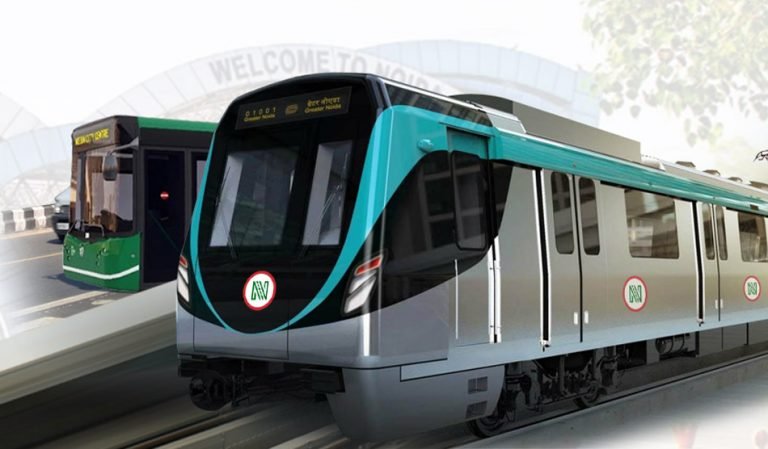
The train has been designed with ‘Aqua Blue’ as the theme color. Each train will be composed of four coaches with a total capacity of 186 passengers. The total passenger capacity of the train (seats + standing) is approximately 1,000 passengers under load conditions.

The runner will have a total of 19 train sets (that is, 76 coaches). The trains are expected to arrive every two weeks, according to the statement.

Each train has two trailers and two cars and the total number of seats in both is 43 and 50, respectively. Each trainer has ports for mobile and USB charging, 6 backlit LCD screens (liquid crystal displays) and 4 dynamic route maps.

Dedicated space has been provided for passengers traveling in wheelchairs on towing cars at both ends of the trains, he added.

The civil work of this 29,7 km long standard width corridor with 21 stations was completed in November 2017 with the construction of the last beam. Track laying and system works are in progress.

During the test, the train will undergo rigorous signaling tests. During tests and test runs, the Metro train interface will be checked to ensure there are no physical infractions with the civil infrastructure during the movement of the train on the track and tests will also be carried out on several bus subsystems.

The authorities of Noida and Gran Noida have decided to have their own Special Purpose Vehicle (SPV), jointly financed by the authorities of the two cities, on behalf of the NMRC.

After the execution of the test and the technical authorization, the Metro service will be opened and opened to the public. It is expected that the Prime Minister of Uttar Pradesh, Yogi Adityanath, will inaugurate it, the statement said.

The goal of NMRC is to facilitate mass transit and other urban transport in the twin cities, he said. “NMRC’s vision is to develop a world-class subway with sustainable development, whose mission is to provide safe, reliable and environmentally friendly transportation services for people,” he added.

NMRC said it had started an urban bus service last year and that its fleet is connecting Metro stations in Noida and also connecting it to several sectors in Greater Noida.

This metropolitan corridor is built by the DMRC on the basis of a turnkey consultancy. For this, a memorandum of understanding (MoU) was signed with the DMRC in October 2014.

He said there is also a plan to implement ‘a city, a card’ as a smart card for this subway corridor and NMRC feeder buses.

This corridor will have the initiative of green energy since generations of solar power of 10 MW are planned from solar panels installed on the roofs of Metro stations.

The provision of rainwater collection will also be available at all stations and along the viaduct.

In addition to this Metro corridor, NMRC will develop two other subway corridors. A corridor is 14.95 km between Sector 71-72 of Noida to the V Knowledge Park Greater Noida that has 9 metro stations. Another corridor that will develop the NMRC is 10,922 km from Okhla Birds Sanctuary to Sector 142 Noida with eight stations.

Advertisement1
InnoMetro_2026