Home Blog Page 69

Bangalore Metro: BEML to Supply 20 Trains for Pink Line by March 2026

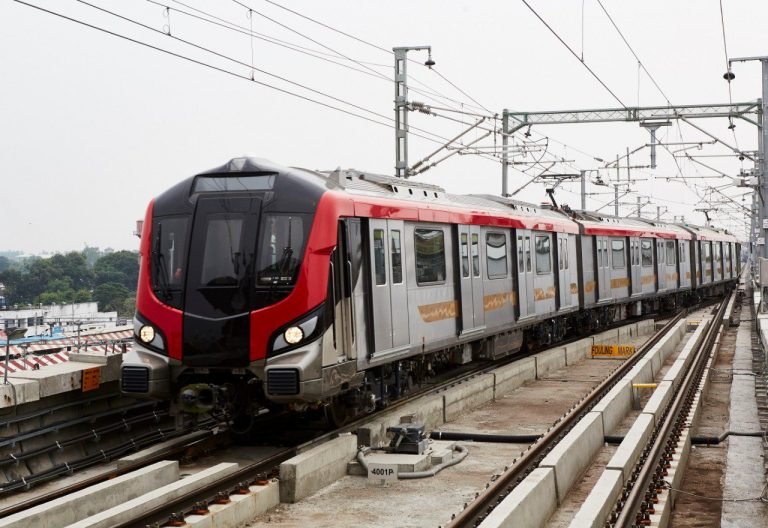
BANGALORE (Metro Rail News): Commercial operations on the Pink Line of the Bangalore Metro are expected to commence by 2026, as work on the first trainset is in advanced stages. BEML has announced the delivery of 20 coaches by March 2026. 

Currently, the civil work on the 7.5 km elevated section of the Pink Link is complete. However, the construction is underway on the 13.76 km underground section.

BEML bagged the rolling stock contract from BMRCL in 2023 at Rs 3,117 crore. As per the contract requirement, BEML will supply a total of 318 coaches, which will form 53 trainsets for both the Pink Line and Blue Line (Phase 2A+ Phase 2B of Bangalore Metro. 

The Pink Line will receive 96 coaches for operations, and the rest of the coaches will be used for the Blue Line of Bangalore Metro. The prototype train is expected to roll out by September 2025.

The propulsion system for the initial 3 trainsets will be supplied by the Japanese company Mitsubishi. In addition, the trainsets will be equipped with an advanced CBTC signalling system. The trains will be able to run in the UTO mode, enabling driverless operations.  

IRFC to Support Metro Project with Rolling Stock Financing

In an effort to diversify its core financing mechanisms for Indian Railways, the Indian Railway Finance Corporation (IRFC), a specialised non-banking financial company (NBFC) dedicated to supporting Indian Railways, is now seeking to finance the procurement of rolling stock for metro systems.

Manoj Kumar Dubey, Chairman & Managing Director and Chief Executive Officer of IRFC mentioned ” We are on the verge of signing one agreement with one of the metro railway (project) where we are going to finance their rolling stock for the first time in the similar manner as we are doing for the Indian Railways,” as reported by ET Infra. 

Mr. Dubey also indicated that the development of rail infrastructure across the country, including the Indian Railways network, metro systems, and rapid rail systems, entails an annual financing requirement ranging from ₹4 lakh crores to ₹25 lakh crores, demonstrating IRFC’s intent to capture this major financing opportunity. 

Mr. Dubey also said, “In January this year, we changed our motto from being the financing arm of Indian Railways to the financing arm of the railway ecosystem… anything having backwards-forward linkages with the railways,”. 

As the budgetary allocations for Indian Railways have progressively increased, with an allocation for the financial year 2025-26 (April to March) set at ₹2.52 lakh crores, IRFC is now focusing on lending to various segments within the rail sector to achieve enhanced net interest margins.

PM Modi flags off Vande Bharat Train on Patliputra-Gorakhpur Route

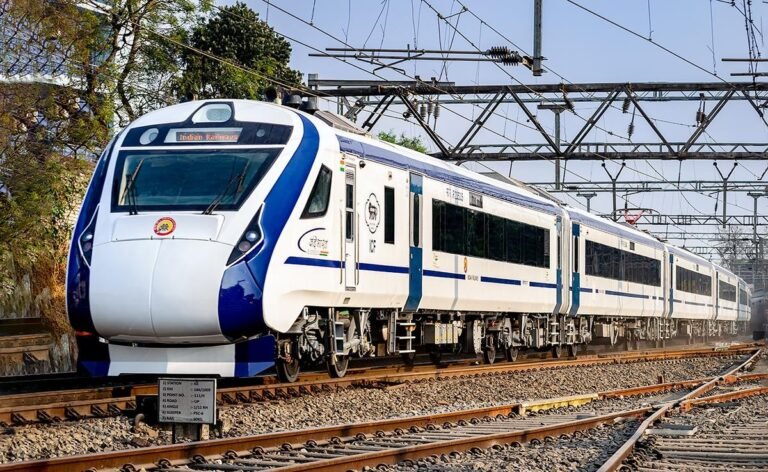
BIHAR (Metro Rail News): In a major boost to connectivity in North Bihar, Prime Minister Narendra Modi flagged off the Vande Bharat train between Patliputra and Gorakhpur on June 20. 

https://twitter.com/AshwiniVaishnaw/status/1936136289134461166

The eight-coach Patliputra-Gorakhpur Vande Bharat Express is equipped with a Level-II safety integration certification that enhances train control, alongside improved fire safety protocols. These advancements include aerosol-based fire detection and suppression systems installed in all electrical compartments and restrooms.

The Vande Bharat train will operate six days a week, with service suspended on Saturdays. The train is scheduled to depart Patliputra at 3:30 PM and arrive in Gorakhpur at 10:30 PM, covering a total distance of 384 km in approximately seven hours. It will include two-minute stops at Hajipur, Muzaffarpur, Motihari, Sagauli, Bettiah, Narkatiaganj, Bagaha, and Kaptanganj, and finally terminate at Gorakhpur.

Currently, there is only one direct train linking these two destinations, namely the Gorakhpur Ranchi Express, which operates exclusively on Saturdays. 

This newly inaugurated service represents the seventh Vande Bharat route in Bihar, which includes the Tatanagar-Patna, Howrah-Gaya, Howrah-Bhagalpur, and Varanasi-Deoghar (via Gaya) routes. With this addition, the total number of operational Vande Bharat services across the country has reached 71.

Additionally, Prime Minister Narendra Modi also flagged off the indigenously manufactured diesel locomotive built for export to Guinea, a coastal country in Africa. 

PM Modi flags off Indigenously Built Locomotive for Guinea 

In a strategic effort to enhance India’s position in the global export of rolling stock, Prime Minister Narendra Modi flagged off the indigenously manufactured diesel locomotive built for export to Guinea, a coastal country in Africa, on June 20.

https://twitter.com/AshwiniVaishnaw/status/1935987669252854068

This 4,500 horsepower (HP) locomotive was manufactured at the Marhowrah Diesel Locomotive Factory, located in the Saran district of Bihar. The factory was established as a joint venture between Indian Railways and the American company General Electric, now known as Wabtec. 

The locomotive manufacturing facility secured the contract to supply a total of 150 locomotives at a total cost of 411 million dollars (approximately Rs 3,533 crore). The unit cost of each locomotive is 2.74 million dollars, or approximately Rs 23.55 crore. 

These locomotives are specifically designed to facilitate freight transportation operations. Each unit is equipped with a 4,500 HP engine and incorporates several modern features aimed at enhancing operational performance and crew comfort.

Read all the details about this newly built locomotive for the African country of Guinea.

Additionally, Prime Minister Modi also flagged off a Vande Bharat train from Patliputra (Bihar) to Gorakhpur (Uttar Pradesh). Know more about this development.

These developments underscore the success of the Make in India initiative and the Make for World initiative, further highlighting India’s expanding footprint in the international railway market.

India’s 2nd Longest Railway Viaduct to be Ready by August 2026

BHUBANESWAR (Metro Rail News): The East Coast Railway (ECoR) has announced that the second-longest railway viaduct, currently under construction between the Buguda and Banigochha stations as part of the Khurda Road-Balangir new line project, is projected to be completed by August 2026. This viaduct spans 4.77 km, with its tallest pier reaching a height of 26 metres.

This viaduct is part of efforts to improve rail connectivity across the interior regions of Odisha. The contract for this section of the project was awarded to Rahee Group, which is executing the work at a cost of ₹268.92 crore. The scope of work includes the construction of viaducts, major bridges, road overbridges (ROBs), and associated works over a 20 km stretch between KM 123 and KM 143 in the Buguda–Banigochha section.

In addition to the viaduct construction, Rahee Group is also responsible for the execution of ROB No. 229, a composite girder structure located at chainage KM 105.06 between the Nuagaon and Daspalla sections. The contract also covers the provision of construction vehicles, site facilities, and other allied support services required for the completion of the project.

The viaduct extends from Jamusahi to Gurah village in the Nayagarh district, falling under the Buguda and Banigochha stations. As of now, the railway authorities have completed 98 foundations, 62 bed blocks, and erected 41 span girders. 

Shri Rajesh Kumar Das, deputy chief engineer of ECOR, mentioned, “Construction of this viaduct is currently underway and upon completion, it will become the second longest railway bridge in the country, surpassed only by Bogibeel bridge over the Brahmaputra river in Assam,” as reported by Times of India (TOI). 

Shri Das also mentioned that the proposed alignment of the railway line is set to intersect with the forthcoming Brutang irrigation project in Nayagarh district, thereby introducing additional complications to the development process. “A significant length of the railway route was affected by the planned reservoir. After detailed consultations with Odisha’s water resources department, the alignment was revised to include a 4.77 km long viaduct to prevent interference with the reservoir’s structure.” 

Additionally, another viaduct measuring 1,257.6 meters is under construction in the Boudh district as part of this new line project. Shri Das emphasised that the 75 km segment from Daspalla to Purunakatak will provide a picturesque journey for passengers, featuring this viaduct along with seven tunnels situated within the dense forests of Nayagarh and Boudh districts.

Kochi Metro Rail Ltd. Submits FSR for Mumbai Water Metro

MUMBAI (Metro Rail News): Kochi Metro Rail Limited (KMRL) has submitted the feasibility study report for the proposed water metro project in Mumbai to the Government of Maharashtra on 16 June 2025. 

KMRL’s consultancy division presented the report to the Maharashtra Ports Minister, Nitish Rane. The Minister directed the relevant departments to commence steps towards the implementation of the project, indicating that the government would soon initiate the preparation of the detailed project report (DPR).

The findings of the study were shared during a high-level meeting chaired by Minister Rane in Mumbai. The KMRL team was led by Chief General Manager Shaji P. Janardhanan, accompanied by other officials from KMRL.

According to the KMRL authorities, the proposed water metro project in Mumbai, modelled after the Kochi Water Metro, will cover the entire Mumbai Metropolitan Region (MMR), integrating various water bodies such as Vaitarna, Vasai, Manori, Thane, Panvel, and Karanja creeks, thereby effectively covering the entire MMR. KMRL mentioned that the report suggests a 250-km waterway network with 29 terminals and a fleet of 10 routes. 

This project represents the first instance where Kochi Metro Rail Limited (KMRL) has secured a consultancy assignment through a competitive bidding process. The development reinforces KMRL’s position as an emerging national-level player in the sector. Likely, KMRL may soon be entrusted with preparing the Detailed Project Report (DPR) for the same project.

Currently, KMRL is undertaking feasibility studies for water metro systems in 21 other cities across 11 states and two Union territories in India, as mandated by the Union Ministry of Ports, Shipping, and Waterways (MoPSW).

Third Rail Testing Begins on Bangalore Metro’s Pink Line

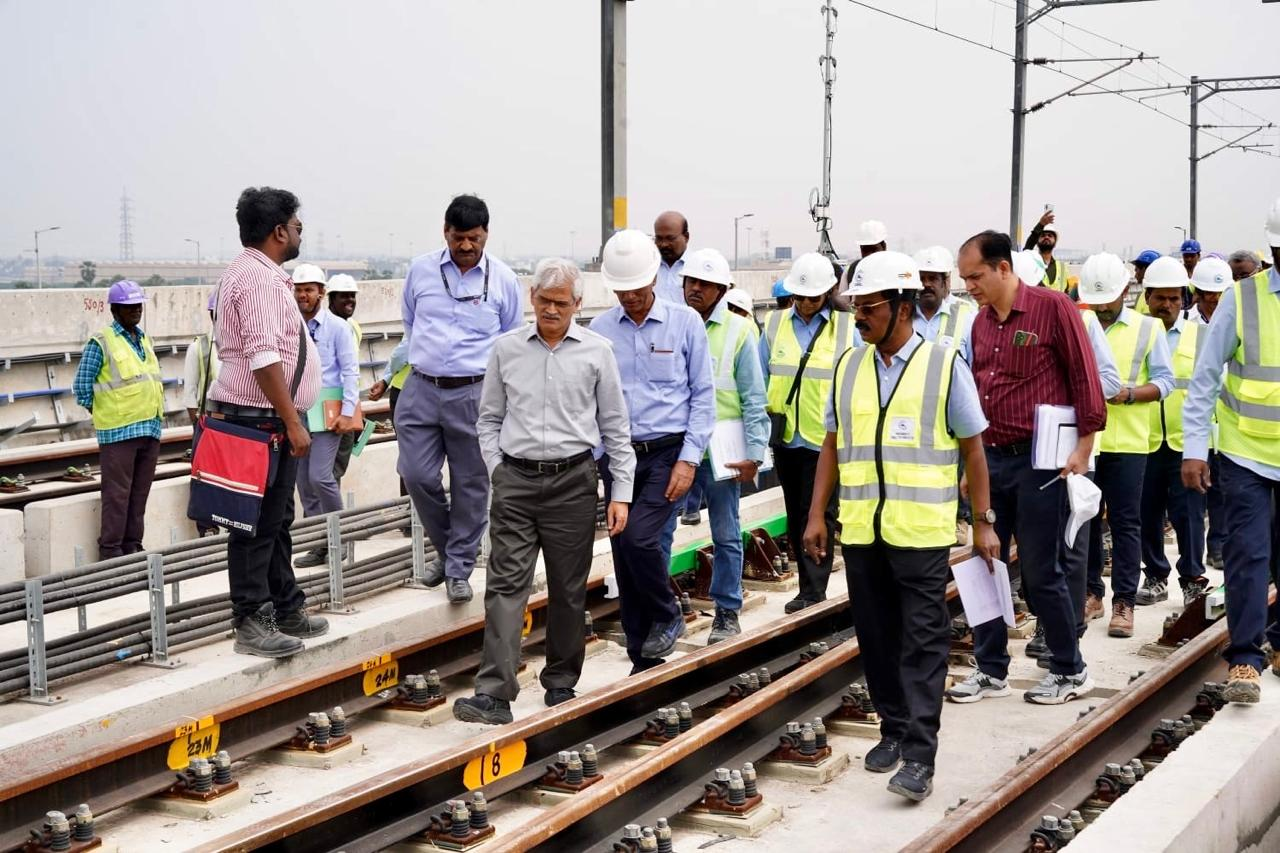
BANGALORE (Metro Rail News): The Bangalore Metro Phase 2 is advancing as the Bangalore Metro Rail Corporation Limited (BMRCL) has commenced third rail testing, a critical electrification trial that energises locomotives on the elevated segment of the Pink Line. This testing is currently underway on the Pink Line’s section between Jayadeva and Tavarekere metro stations.

The Pink Line of Bangalore Metro is an under-construction metro corridor spanning 21.386 km between Kalena Agaraha and Nagawara through 18 stations.

These tests signal the initial preparations required for commissioning the Kalena Agrahara – Nagawara stretch. The testing of the third rail is currently being carried out on the elevated section of the Pink Line.  In line with safety protocols, BMRCL has released a public advisory urging people to stay away from the viaduct areas to prevent unauthorised access during the testing period.

A BMRCL official has indicated that once the third rail testing is completed, the next stage will include signal system validation, telecommunication trials, and loading tests. 

These technical assessments are projected to take approximately four months. Once concluded, safety inspection reports will be submitted to the Commissioner of Railway Safety (CRS). The CRS will provide the final nod for commercial operations only after a thorough review of the reports.

These technical evaluations are anticipated to require approximately four months. Upon their completion, safety inspection reports will be submitted to the Commissioner of Railway Safety (CRS), who will grant final approval for commercial operations after a thorough review of the reports.

The Pink Line of Bangalore Metro is being launched in two phases. 

Pink Line Route Length Station 
Phase 1 Kalena Agrahara- Tavarekere7.5-km6 Stations 
Phase 2 Dairy Circle – Nagawara13.76-km12 Stations 

PM to Flag off Indigenously Built Locomotive for Guinea 

In a move to strengthen India’s role in the export of rolling stock in the global market, Prime Minister Narendra Modi will flag off the indigenously built diesel locomotive for export to Guinea, a coastal country located in Africa, on 20 June.

This 4500 horsepower (HP) locomotive was manufactured in the Marhowrah Diesel Locomotive Factory, which is situated in the Saran district of Bihar. 

The Marhowrah Diesel Locomotive Factory was established as a joint venture between Indian Railways and the American company General Electric (now Wabtec)

The locomotive plant bagged the contract for supplying a total of 150 locomotives at a cost of 411 million dollars (Rs 3,533 crore). The cost of one locomotive will be 2.74 million dollars or Rs 23.55 crore. The locomotive plant will roll out the locomotives in phases: 

Number of LocomotivesYear of Roll Out
372025-26
822026-27
312027-28

These locomotives are designed to support freight transportation operations. Each unit is powered by a 4,500 HP engine and incorporates several modern features for improving performance and crew comfort. The locomotives meet advanced emission standards and are equipped with fire detection systems, insulated roofs, and windshield heating for defogging. The crew cabins are ergonomically designed and include air conditioning, a functional toilet, refrigerator, microwave, and a waterless toilet system. 

The locomotives are designed with single cabins and will operate in pairs to haul freight loads. When deployed together, two locomotives can carry up to 100 wagons at the maximum permissible speed, with a total freight capacity of approximately 8,000 tonnes. 

For improved control and coordination, the rake will be fitted with a Distributed Power Wireless Control System (DPWCS), which allows wireless management of locomotives positioned at both ends of the train.

This development signals the success of the Make in India and Make for World initiative. It also highlights India’s growing presence in the international railway market.

Additionally, PM Modi will also flag off a Vande Bharat train from Patliputra (Bihar) to Gorakhpur (Uttar Pradesh) on June 20.


DMRC Enters Partnership with Monash University for Research in Metro Systems

DELHI (Metro Rail News): The Delhi Metro Rail Corporation (DMRC) which manages India’s largest metro system and Monash University (acting through its Institute of Railway Technology), Melbourne (Australia), have entered a strategic partnership by signing a Memorandum of Understanding (MoU) to carry out research activities in the domain of the metro rail sector.

Gto6PzcXUAAzBE7

The partnership focuses on joint research in areas such as advanced automation of rolling stock and improved methods for track maintenance. The aim is to explore practical solutions that enhance the efficiency, safety, and reliability of metro rail operations.

The MoU was formalised at Metro Bhawan, signed by the authorised representatives of DMRC and the Institute of Railway Technology (IRT) at Monash University, in the presence of senior officials from both organisations

As per the scope of this Memorandum of Understanding (MoU), exchange programs shall be facilitated periodically between Monash University and the Delhi Metro Rail Corporation Academy. The DMRC Academy will serve as the knowledge and training partner for all such collaborative activities.

Gto6PzsXQAA O0i

As part of the partnership, DMRC will identify specific areas of study related to metro systems to be undertaken in coordination with the Institute of Railway Technology (IRT) at Monash University. These studies will be carried out under separate contractual agreements, to be defined on a case-by-case basis. In addition, both organisations will explore further opportunities for technical collaboration, research initiatives, and competency development of metro professionals.

This MoU signifies a step forward in DMRC’s collaboration with one of the world’s leading railway technology institutes, enhancing DMRC’s capabilities in critical operational and maintenance domains.

Moreover, this collaboration will open new avenues for future initiatives, facilitating the exchange of technology and expertise to enhance the safety and reliability of train operations, as well as improving the overall travel experience for passengers.

Gto6PznW4AAfZz8

Monash University is a prominent Australian institution recognised for its strengths in research and innovation. The Institute of Railway Technology at Monash University is recognised globally as a leading research centre dedicated to railway technology and engineering.

The partnership is projected to generate new opportunities for prospective ventures, facilitating the transfer of technology and expertise essential for improving safety and reliability in train operations, while also enhancing passenger travel experiences. 

According to DMRC, this collaboration will promote industry-driven research, resulting in practical applications and innovations in metro railway engineering, improved operational excellence, workforce competency development, and long-term sustainability.

The partnership is anticipated to accelerate the integration of modern practices and future-ready solutions throughout Indian metro systems.

Professor Craig Jeffrey, Deputy Vice-Chancellor (International) and Senior Vice-President at Monash University, mentioned, “Industry and government are critical partners and collaborators for Monash in advancing our shared education, research and global impact objectives.” 

Professor Craig Jeffrey, said, “Monash will continue to build partnerships with top Indian corporations and key government organisations to enhance innovation.”

DMRC Invites Bids for Electrification Package D2E-12 Of Delhi Metro Phase 4 

DELHI (Metro Rail News): The Delhi Metro Rail Corporation (DMRC) has issued a tender for the electrification contract D2E-12 of Delhi Metro Phase 4’s Line 10 and Line 5 extension. The Line 10 (Golden Line) spans 23.622 km from Aerocity to Tuglakabad through 15 stations, while the Line 5 extension spans 12.58 km between Inderlok and Indraprastha through 10 stations. 

Tender Details

Opening Date20 May 2025
Closing Date30 Jun 2025
EMD₹ 25,00,000
Tender Id2025_DMRC_860755_1
Tender NoD2E-12
Approximate cost of workINR 33.22 Crores 
Contract Duration 36 Months 

The contract’s scope of work includes the Design, Supply, Installation, Testing, and Commissioning of 25 kV Overhead Equipment (OHE) for Line 10’s section between Saket G Block and Sangam Vihar, and Line 5’s extension from Inderlok to Ashok Park Main Station. 

Brief Scope of Work: Design, Supply, Installation, Testing and Commissioning of 25 kV Overhead Equipment (OHE) for Elevated Corridor of Line-10 (Saket G Block to Sangam Vihar) and Line-5 Ext. (inderlok And Ashok Park Main Station) Of Delhi Metro MRTS Phase-IV.

Recently, DMRC and Monash University, Melbourne, signed a Memorandum of Understanding (MoU) to collaborate and jointly undertake metro rail research activities. These research activities will focus on advanced automation of rolling stock & track maintenance.