Home Blog Page 68

Central Govt. Greenlights ₹3626.24cr Pune Metro Phase 2 Project

PUNE (Metro Rail News): The Pune Metro Phase 2 has gained momentum following the approval of the central government, with a total estimated cost of Rs 3,626.24 crore. Phase 2 is a strategic extension of the existing Vanaz–Ramwadi corridor (Aqua Line) in both the eastern and western directions. 

The proposal to extend the Aqua Line is in accordance with the Comprehensive Mobility Plan (CMP), which includes a metro line stretching from Chandani Chowk to Wagholi. 


Approved Routes Under Phase 2

Line Approved RouteLengthStationsStation Type
Aqua Line (Western Extension)Vanaz to Chandani Chowk (Corridor 2A)1.12 km2 stationsElevated 
Aqua Line
(Eastern Extension)
Ramwadi to Wagholi/Vitthalwadi (Corridor 2B)11.36 km11 stationsElevated
Total12.75 km13 stations

Phase 2 of the Pune Metro is projected to be developed at an estimated cost of Rs 3,626.24 crore over a duration of four years. The cost of the project will be borne equally by the Government of India, the Government of Maharashtra, and external bilateral/multilateral agencies.

Ridership Trends on the Entire Aqua Line After Commissioning of The Project

YearProjected Ridership
20270.96 lakh
20372.01 lakh
20472.87 lakh
20573.49 lakh

The extensions of Pune Metro Line 2 are strategically planned to connect with IT hubs, commercial districts, educational institutions, and residential areas. This expansion is expected to increase the public transportation share and ridership across the network. 

Screenshot 2025 06 26 103418

As part of a long-term comprehensive mobility plan, intercity bus services from cities such as Mumbai and Bengaluru will be integrated at Chandani Chowk, while services from Ahilya Nagar and Chhatrapati Sambhaji Nagar will be routed through Wagholi. These nodes will serve as multimodal transit hubs, which will increase accessibility to the Pune Metro network.

Maharashtra Metro Rail Corporation Limited (Maha-Metro) will serve as the implementing agency for the project. As of now, pre-construction activities, including topographical surveys and the appointment of detailed design consultants (DDC), are already underway.

Indian Railways to Increase Fares from 1 July

The Indian Railways will implement an increase in passenger train fares for the first time since the onset of the COVID-19 pandemic. The minor increase in fares will be effective from July 1, 2025.

According to sources within the railway sector, the fare for non-AC Mail/Express trains will experience an increase of 1 paise per km, while fares for AC classes will rise by 2 paise per km. The pricing of monthly season tickets will remain unchanged.

The Indian Railways has made an effort to exempt daily commuters utilising local train services from this fare increase. Consequently, there will be no adjustment in fares for suburban tickets and second-class travel for distances up to 500 kilometres. For journeys exceeding 500 km, the fare increase will amount to half the price per km. 

Earlier this month, the Indian Railways announced a policy change requiring Aadhaar authentication for Tatkal train ticket bookings, effective from July 1, 2025. 

A directive issued on June 10, 2025, from the Ministry of Railways has informed all railway zones that this requirement aims to ensure that the benefits of the Tatkal Scheme are accessible to the common end user.

The total earnings of the Railways from the passenger segment amount to approximately INR 75,000 crore annually. With the implementation of these fare adjustments, it is anticipated that passenger revenues will experience a marginal increase.

Saarstahl Rail to Supply Rail for Bangalore Suburban Railway Project 

BANGALORE (Metro Rail News): Rail Infrastructure Development Company Karnataka Limited ( K-RIDE) revealed Saarstahl Rail as the lowest bidder for the track supply contract of the Bangalore Suburban Railway Project.

The awarded contractor will be supplying 60E1 (UIC 60), 1080 HH Grade Rails as per IRS-T-12-2009 (Latest with all A&C slips), for Corridor 2’s section from Beingannahalli to Chikkabanavara and Corridor 4’s section between Heelalige and Rajankunte. 

K-RIDE floated tender for this contract with a 365-day deadline. The technical bids were opened on 31 January 2025, revealing that 3 firms have submitted bids for the contract. 

Financial Bid Values 

FirmBid Value 
Saarstahl Rail₹ 214.4 Cr 
Arcelormittal Espana S.A ₹ 246 Cr 

On 29 May 2025, a technical evaluation of the submitted bid took place. During the technical evaluation, Mitsui & Co., Ltd.’s bid was rejected. The financial bids were opened on 4 June 2025, revealing Saarstahl Rail as the lowest bidder for the contract. 

Bangalore Suburban Railway Project is an under-construction commuter rail network which spans 149.348 km and consists of 4 Corridors. 

Corridor Line Route Length 
Corridor 1Sampige LineKSR Bengaluru – Yelahanka – Devanahalli41.478 km
Corridor 2 Mallige LineBaiyyappanahalli Terminal – Chikkabanavara24.866 km
Corridor 3 Parijaata LineKengeri – Whitefield35.52 km
Corridor 4 Kanaka LineHeelalige – Rajankunte46.285 km

MMRDA Approves Major Contracts to Speed Up Metro Work in Mumbai 

MUMBAI (Metro Rail News): In order to expedite the development of the Metro and related transport systems in Mumbai,  the Mumbai Metropolitan Region Development Authority (MMRDA) has approved projects worth more than Rs 12,000 crore on 24 June 2025.

The approval occurred at MMRDA’s 284th Executive Committee meeting, led by the state Chief Secretary Sujata Saunik. About 19 major contracts were approved in the meeting.

Dr Sanjay Mukherjee, Metropolitan Commissioner, MMRDA, said, “Each project approved today has been meticulously evaluated to ensure it contributes meaningfully to the integrated growth of Mumbai’s transport infrastructure.”

Some Major Contracts Approved During the Meeting are mentioned below: 

Contract 1 

Larsen & Toubro Ltd bagged the highest value Package CA-234  worth Rs 4,788 crore for Mumbai Metro Line 4 & Line 4A. Under this contract, L&T will be responsible for supplying the major systems mentioned below: 

  •  Supplying rolling stock (39 trains (234 coaches) consisting of 6 coaches)
  •  CBTC signaling & train control (S&T)
  • Telecommunication System 
  • Platform screen doors (PSDs)
  • Depot machinery & plant (M&P) for Mogharpada Depot.

L&T has partnered with Alstom Transport for the rolling stock and signalling solution. L&T was declared the lowest bidder for the contract in February 2025. Read about the complete contract details here. 

Contract 2 

L&T also bagged the Package CA-168 worth Rs 188.59 crore, which includes the supply and installation of ballastless track on Line 4 & 4A ( Green Line ) spanning 35.2 km connecting Wadala – Kasarvadavali – Gaimukh via 34 elevated stations. 

L&T was declared the lowest bidder for the  Package CA-168 in February 2025. Read about the full contract details here

Contract 3 

IRCON International bagged the Package CA-233 worth Rs 668.15 crore of Mumbai Metro Line 6 ( Pink Line), which spans 15.18 km from Swami Samarth Nagar (Lokhandwala) to Vikhroli. 

The scope of work under this contract includes the commissioning of several systems for Line 6. 

  • Commissioning the line’s power supply & traction system,
  • Electrical & mechanical (E&M) system, 
  • Lifts and escalators at its 13 elevated stations.

IRCON International was declared as the lowest bidder for the Package CA-233 in  February 2025. Read about the full contract details here.

Pune Metro:YFC–BBG JV gets LoA for the Construction Contract of PCMC – Bhakti Shakti Section

PUNE (Metro Rail News): YFC Projects – BBG Infrastructure JV has received a Letter of Acceptance (LoA) from Maha-Metro for the civil contract of Pune Metro Purple Line’s northern extension from PCMC to Bhakti Shakti spanning 4.519 km through 4 elevated stations. 

Artboard 1@4x 4
  • Contract Value: ₹ 106.1 Cr
  • Contract Duration: 630 Days

The awarded contractor will be responsible for constructing four stations on Pune Metro Purple Line’s northern extension from PCMC to Bhakti Shakti, excluding the viaduct, pier arms, girder erection, deck slab at concourse and platform levels, and E&M works. Additionally, the contract includes plumbing works on the Pune Metro Purple Line’s northern extension. 

Stations 

  • Chinchwad
  • Akurdi
  • Nigdi
  • Bhakti Shakti

Maha-Metro floated a tender for this contract with a 630-day deadline. Technical bids were opened on 30 December 2024, revealing that 4 firms have submitted bids for the contract. 

Technical evaluation of the submitted bids took place on 30 December 2024, and one firm’s bid was rejected during the technical evaluation. On the same day, financial bids were opened. 

Financial Bid Values 

Firm Bid Value 
YFC–BBG JV₹ 106.1 Cr
Godrej and Boyce Mfg Co. Ltd₹ 117.4 Cr 
Rail Vikas Nigam Limited₹ 132 Cr 

The financial evaluation of the bids took place on June 24, 2025. During the financial evaluation, 3 firms’ bids were rejected, and YFC–BBG JV received LoA for the contract from Maha Metro. 

Originally, the Purple Line of the Pune Metro spans 16.59 km from the Pimpri Chinchwad Municipal Corporation (PCMC) – Swargate, through 12 stations, and is currently operational. Later on, the northern extension and southern extension of the Pune Metro’s Purple line were planned, which are currently under construction. 

                               Pune Metro’s Purple Line 
Line Route Length Stations Status 
Orignal Line PCMC – Swargate 16.59 km12 StationsOperational 
Northern Extension PCMC to Bhakti Shakti4.519 km4 Stations Under Construction 
Southern Extension Swargate – Katraj(5.464 km3 Stations Under Implementation 

Telangana Govt Submits DPR for Hyderabad Metro Phase 2B 

HYDERABAD (Metro Rail News): To enhance connectivity in Hyderabad, the Hyderabad Metro Rail Limited managing director, NVS Reddy, stated that the Telangana government has submitted the Detailed Project Report (DPR) and all required documents for the Hyderabad Metro Phase-2B proposal to the central government. 

This development came after the Telangana chief minister, A Revanth Reddy’s meeting with Union Minister for Housing and Urban Affairs Manohar Lal Khattar at his residence in New Delhi, where he briefed him on the significance of the Hyderabad Metro Rail Phase-2 project.

The proposed Phase 2B of the Hyderabad Metro Project includes 3 corridors.

Corridor Route Length Cost per Corridor 
Line 1 RGIA to Bharat Future City (Skills University)39.6 km Rs 7,168 crore
Line 2 JBS to Medchal24.5 km Rs 6,946 crore
Line 3 JBS to Shamirpet22 kmRs 5,465 crore

The project will cover about an 86.1 km route and will be implemented at the cost of ₹19,579 crore jointly by the State and Central Governments. On 5 June 2025, the state cabinet approved the Hyderabad Metro Phase 2B. 

Funding

Source of Funding Amount Contribution 
Telangana Government5874 Cr 30 %
Central Government3524 Cr 18 %
Debt from International Institutions9398 Cr 48 %
Public-Private Partnership (PPP)783 Cr 4% 
Total19579 Cr 100%

The Hyderabad Metro Project is overseen by Hyderabad Metro Rail Limited (HMRL). At present, it operates along three corridors and spans a total distance of 69 kilometres.

South Eastern Railway Issues Bids for 2 Kavach Contracts worth ₹419 Cr

In a move to streamline the safety of rail operations, South Eastern Railway has floated a tender for two major Kavach contracts. The total combined value of both contracts stands at 419.79 crores.

Contract 1: Contract 1 includes the Supply, Installation, Testing & Commissioning Of Kavach On Hun Routes (1040 Rkm), Including Associated Works On Section Of Kharagpur, Adra, Ranchi & Chakradharpur Division Of South Eastern Railway.

  • Contract Amount: ₹ 257.62 crore
  • Contract Duration: 36 Months
Opening Date19 Jun 2025
Closing Date28 Jul 2025
Tender Id
ST_P_SER_25_KAVACH_HUN_08-PROJECT UNIT-KOLKATA-S AND T/SOUTH EASTERN RLY
Tender NoST_P_SER_25_KAVACH_HUN_08
Bidding Start Date14/07/2025
Pre-Bid Conference Date01/07/2025
EMD ₹ 1,00,00,000

Contract 2: The contract 2 includes the Design, Supply, Erection, Testing & Commissioning Of 132 Kv Traction Substation, Sectioning & Paralleling Post (sps), And Sub Sectioning & Paralleling Post (ssps) In 2x25kv System On Muri-ranchi-tori Section Of Ranchi Division Of South Eastern Railway To Meet 3000mt. 

  • Contract Amount: ₹ 162.17 crore
  • Contract Duration: 540 Days
Opening Date19 Jun 2025
Closing Date7 Aug 2025
Tender Id
SER-EPC-MURI-TORI-2x25kV-SER HQ-ELECTRICAL/SOUTH EASTERN RLY
Tender NoSER-EPC-MURI-TORI-2x25kV
Bidding Start Date24/07/2025
Pre-Bid Conference Date07/07/2025
EMD  ₹ 82,59,000

Recently, HBL Engineering Limited also bagged 2 Kavach contract from South Central Railways. The total combined value of both contracts is ₹163.62 crore.

Advancing Rail Passenger Experience and Safety With Technology

The evolution of passenger experience in Rail

The rail industry has undergone significant transformations over the past few decades, driven by evolving passenger needs and expectations. Historically, rail travel was often viewed as a utilitarian mode of transportation, primarily focused on efficiency and cost-effectiveness. However, as society has progressed, so too have the expectations surrounding passenger experience. Today’s travellers seek a journey that offers reliability, comfort, engagement, and safety. They expect transportation that goes beyond just getting them from point A to B, with an experience that enhances their overall travel.

The importance of enhancing the passenger experience within the rail ecosystem cannot be overstated. As competition intensifies from other modes of transport— such as air travel and private vehicles—rail operators must prioritise passenger satisfaction to retain and grow their customer base. Quest Global stands at the forefront of this transformation, leveraging its engineering expertise and innovative solutions to redefine what it means to travel by rail. This article examines how innovations are transforming passenger experience and safety in the rail industry. Key stakeholders are advancing AI-driven personalisation, sustainable practices, and collaborative solutions to shape the future of rail travel.

 The key factors that contribute to a positive rail passenger experience

A positive rail passenger experience is shaped by a blend of factors that prioritize comfort, convenience, and safety. High-quality seating with ample legroom and adjustable features ensures physical comfort, while amenities like Wi-Fi, power outlets, and entertainment options elevate the journey. Cleanliness and regular maintenance of trains contribute to a welcoming atmosphere, reinforcing passengers’ confidence in the service. Rail operators that focus on these elements enhance passenger satisfaction and position themselves as leaders in the competitive transport ecosystem.

Service quality plays a pivotal role in shaping passenger perceptions. Attentive, well-trained staff who provide clear communication and responsive assistance can transform routine trips into pleasant experiences. Smooth ticketing processes—via mobile apps or kiosks—and accessible infrastructure for passengers with reduced mobility further enhance convenience. Rail operators can address these needs to create a more inclusive environment that caters to a diverse passenger base.

Safety, punctuality, and reliability are fundamental to passenger trust. Visible safety measures, real-time updates on train schedules, and adherence to timeliness standards are critical. Personalized services, such as tailored meal options and loyalty programs, add a distinctive touch to the travel experience. For rail operators, focusing on these interconnected elements is key to fostering long-term loyalty and positioning rail travel as a preferred mode of transport globally.

AI-driven use cases transforming rail passenger experiences

AI technologies are revolutionising the rail industry, enhancing passenger experiences while driving efficiency and revenue. Use cases like AI-driven revenue management allow operators to analyse historical trends and optimise pricing dynamically. A European rail operator leveraging this approach saw a 3-8% revenue increase and higher ridership by aligning fares with demand. Security innovations (fraud and incivility prevention) using artificial vision and predictive algorithms have also streamlined operations, reducing security costs by 10% and boosting customer confidence. Real-time intermodal information systems provide journey updates and intermodal connectivity, increasing customer satisfaction by up to 15%.

 Innovative pilot programs are further transforming rail travel. Thales Group’s DIVA system uses intelligent video analytics for effective Passenger flow management. They monitor crowd density and guide passengers, reducing congestion and ensuring smoother station operations. AI-powered personalisation tools, like Deutsche Bahn’s SEMMI, enhance customer interactions through digital avatars and automated support, improving issue resolution rates by 15% and cutting marketing costs by up to 15%1. These advancements are setting new standards in passenger experience, ensuring rail travel remains a preferred, innovative mode of transport.

Innovations in passenger cabin design for personalised experiences

As passenger demographics shift, so too do expectations regarding comfort and personalisation in rail travel. Recent advancements in passenger cabin design have elevated the travel experience to cater to diverse passenger needs. Modular passenger cabin layouts allow rail operators to adapt cabin spaces dynamically, transforming traditional seating areas into collaborative workspaces or lounges. This flexibility appeals to both business and leisure travellers, creating tailored environments that optimise space and enhance the overall experience.

A.  Redefining comfort and luxury in rail travel: Smart seating solutions further this trend, with seats now offering lumbar support adjustments, customizable recline angles, and even heating or cooling options to suit individual preferences based on the climatic conditions. The emphasis on passenger-centric facilities is crucial, particularly for those with reduced mobility who require accessible options.

 Some trains even provide luxury facilities like showers, foldable beds, and lounge bars, creating an ambiance akin to luxury hotels, which is particularly valued on long-haul routes. Real-life examples illustrate this trend effectively. In Europe, matrimonial coaches have been introduced to cater to couples traveling together, while some operators have implemented “work-from-train” facilities that allow business travelers to conduct meetings or work remotely during their journeys. Such innovations enhance comfort and improve overall satisfaction among passengers.

B.  Lighting and ambiance innovations add another layer of personalization. Dynamic lighting systems enable passengers to adjust LED lighting to match the time of day or their mood, fostering a relaxing atmosphere. Through mobile apps or onboard interfaces, travelers can customize their environment with ease. Privacy is also a growing priority in cabin design, as new features such as partitioned spaces and soundproofing materials create quiet, semi-private areas for families and business travelers.

C.  Sustainability and accessibility are also driving forces in modern rail cabin design. Eco-friendly materials are increasingly used in cabin furnishings, and energy-effi- cient layouts maximize natural light and ventilation to reduce energy consumption. Accessibility innovations ensure inclusivity, with designated spaces for wheelchair users, automated doors, and tactile signage making rail travel more convenient for passengers with reduced mobility. Embracing these forward-looking design elements, the rail industry is creating a more comfortable, connected, and environmentally responsible journey that meets the evolving expectations of passengers worldwide.

Advancements in rail safety and passenger experience

 Safety is the cornerstone of passenger trust, and innovations in collision avoidance systems like Communication-Based Train Control (CBTC) and Connected Driver Advisory Systems (CDAS) are revolutionizing rail operations. These technologies enhance safety, efficiency, and reliability, addressing critical challenges faced by modern rail networks.Compliance with stringent safety standards—including fire, smoke, and toxicity requirements—ensures passengers feel secure throughout their journey.

A. CBTC, a state-of-the-art signalling system, allows trains to communicate directly with one another and with centralised control systems. Unlike conventional

fixed-block signalling, CBTC uses continuous wireless data exchange to determine a train’s exact location in real-time. This enables dynamic adjustments to train speeds and distances, ensuring safe intervals between trains. Widely adopted in urban metros, CBTC significantly boosts capacity by allowing more trains to operate on the same tracks without compromising safety. Moreover, its ability to reduce human error and optimise energy consumption makes it an invaluable tool for modernising rail systems globally.

 B. CDAS complements CBTC by focusing on providing real-time guidance to train drivers. This system analyses data from onboard sensors, tracks, and environmental conditions to deliver actionable insights, such as optimal speed adjustments, braking points, and energy-efficient driving techniques. CDAS enhances safety by ensuring compliance with operational parameters while improving efficiency and punctuality. In long-distance and freight operations, where human fatigue or environmental variability can impact decision-making, CDAS serves as a vital aid, reducing risks and maintaining schedule integrity.

 Predictive analytics and AI-driven diagnostics are further strengthening rail safety. Analysing data on track and train conditions, these technologies can identify potential failures—such as traction motor issues or signal faults— before they escalate, minimising downtime.

Together, CBTC and CDAS exemplify how advanced technology can harmonise safety and operational excellence. Integrating these systems ensures passenger protection while simultaneously enhancing capacity, reliability, and sustainability—key pillars of the future rail ecosystem.

C. Tilting technology – Redefining speed and comfort on curved tracks: Tilting technology revolutionises rail travel by allowing trains to navigate curves at higher speeds without sacrificing passenger comfort. The system counteracts centrifugal forces during turns, enabling smoother journeys and reducing travel time by up to 30% on conventional tracks. This innovation minimises the need for extensive infrastructure modifications, offering a cost-effective solution for enhancing operational efficiency.

 Pendolino trains, renowned for integrating tilting mechanisms, are designed to maximise performance on both high-speed and conventional rail networks. Operating across multiple countries, these trains demonstrate versatility through features like distributed traction, advanced thermal insulation, and real-time passenger information systems. With tilting technology, rail operators can deliver faster, more comfortable journeys, positioning rail as a competitive choice in modern mobility.

 D. AI and IoT – Redefining safety and efficiency in rail travel. The integration of artificial intelligence (AI) and the Internet of Things (IoT) is transforming rail travel, making it safer and more efficient. Utilising real-time monitoring and predictive analytics, rail operators can anticipate and address potential hazards before they escalate. IoT sensors installed across trains, tracks, and stations continuously collect data on critical parameters such as vibrations, temperature, and structural integrity. AI-driven analytics then process this data to identify risks, enabling timely interventions. For instance, predictive maintenance systems can detect and track anomalies or equipment malfunctions, reducing the likelihood of accidents and ensuring smooth operations.

 AI-powered surveillance systems monitor passenger behaviour in real-time, detecting unusual activities and enabling rapid responses. These advancements are supported by passenger-centric innovations like emergency communication tools and mobile applications that deliver real-time alerts, ensuring passengers are informed and equipped to act during critical situations.

 Case studies from global rail leaders highlight the tangible benefits of integrating AI and IoT. Network Rail in the UK has significantly reduced track failure-related incidents by deploying IoT sensors and AI for predictive maintenance. Similarly, SNCF’s “Smart Train” initiative in France uses IoT data to optimise maintenance schedules, resulting in fewer service interruptions and enhanced passenger confidence. These examples show how the fusion of AI and IoT advances safety measures while fostering greater operational efficiency and trust, making rail travel a secure and reliable choice worldwide.

Connectivity and last-mile solutions 

Last-mile connectivity is essential for smooth transitions from train stations to final destinations, with studies indicating that inadequate solutions deter up to 40% of passengers from using public transport. To address this, rail operators are collaborating with ride-sharing services, shuttle providers, and micromobility options like e-scooters, bridging transit gaps and offering greater convenience.

Mobile applications further enhance connectivity by integrating real-time tracking, arrival times, and payment options, empowering passengers to plan efficient,

end-to-end journeys. Embracing multimodal integration, rail operators can deliver superior passenger experiences while advancing sustainable transport solutions. 

Global perspectives on passenger experience – Diverse strategies, shared goals

Global rail operators adopt distinct strategies to enhance passenger experience, shaped by regional priorities, technological infrastructure, and cultural expectations. In Japan, the Shinkansen (high-speed rail system) exemplifies precision and luxury, with spacious seating, onboard dining, and an unwavering focus on punctuality. Meanwhile, India’s regional rail services emphasize affordability and accessibility, catering to diverse demographics with essential amenities while progressively improving comfort and connectivity.

Similarly, European operators like Eurostar and Thalys leverage tiered service classes to offer passengers flexibility, balancing premium features with cost-effective options.

These variations reflect a spectrum of operational goals, from exclusivity to inclusivity, tailored to regional demands.

A. Technology integration also reveals marked differences. Deutsche Bahn in Germany sets a high standard with robust mobile applications for booking, tracking schedules, and accessing onboard services, while Scandinavian operators excel in accessibility, ensuring step-free boarding and dedicated mobility assistance. Conversely, developing regions may face challenges in implementing digital and accessibility-focused solutions at scale. Cultural nuances significantly influence rail services. Japan’s tradition of omotenashi focuses on exceptional passenger comfort, while North American operators like Amtrak prioritise commuter productivity with features such as onboard Wi-Fi.

B.  Sustainability initiatives further underscore regional contrasts. European leaders are at the forefront of green technology, investing in hydrogen and battery-powered trains and carbon footprint reduction. In contrast, operators in emerging markets often prioritise expanding service coverage to meet growing demand, with sustainability as a longer-term goal. Despite these differences, a shared commitment to innovation, safety, and passenger-centric practices unites rail operators globally. Learning from one another, they can adopt best practices, striking a balance between efficiency, comfort, and sustainability to redefine the future of rail travel.

Energy efficiency is a critical area where sustainability and comfort converge. Advanced trains featuring regenerative braking systems and lightweight materials significantly reduce energy consumption while maintaining high-performance standards. Smart energy management systems further optimise power usage by adjusting HVAC and lighting systems based on passenger occupancy, ensuring a comfortable journey with minimal environmental impact.

Meanwhile, onboard amenities such as locally sourced food and biodegradable utensils add a sustainable touch to passenger services, enriching the travel experience while lowering the carbon footprint.

Navigating challenges to meet rising passenger expectations

Rail operators face mounting challenges to meet rising passenger demands for connectivity, convenience, and accessibility. The ageing and maintenance-intensive nature of railway infrastructure presents a significant challenge to increasing ridership. Frequent service disruptions due to maintenance reduce reliability, eroding passenger trust and satisfaction. This directly impacts operational efficiency and financial performance, as unplanned downtime increases costs and deters potential commuters from choosing rail as a dependable mode of transport. Legacy systems often lack essential amenities like Wi-Fi, USB charging ports, and infotainment, requiring significant investment to retrofit. Upgrading is vital for remaining competitive in a market where passengers favour connected travel experiences. 

Punctuality is another critical concern as urbanisation drives increased reliance on rail networks. Managing growing demand requires advanced digital tools like AI-powered scheduling and predictive maintenance to pre-empt delays and optimise operations. Moreover, smooth intermodal integration remains a key challenge. Passengers increasingly demand connected travel across different modes of transport, yet fragmented data systems and a lack of standardised platforms hinder progress. To address these hurdles, rail operators are investing in real-time data sharing and intelligent mobility platforms, which enhance passenger experiences while reducing inefficiencies.

Redefining the future of passenger experience in rail

The future of rail travel will centre on passenger-centric design paired with transformative technologies. Innovations like smart windows are redefining rail interiors, offering scenic views and doubling as digital displays with potential augmented reality features to provide real-time travel information. These enhancements create a more engaging and interactive journey. 

Autonomous trains represent a significant leap forward, aiming to minimise human error and ensure smooth, efficient operations. Equipped with advanced AI systems, they promise enhanced reliability and precision in scheduling. Emergency evacuation systems, powered by real-time data analytics, will further elevate passenger safety with faster responses and dynamic protocols during crises.

 Focusing on innovations that enhance safety, comfort, and engagement will enable rail operators to set new standards for passenger satisfaction and establish rail as the preferred choice in modern mobility.

Pioneering passenger experience with Quest Global

The rail industry is at a pivotal moment, where rising passenger expectations meet advancements in technology and sustainability. Focusing on safety and passenger experience is critical for building loyalty and staying competitive. Rail leaders who prioritise these areas can drive satisfaction and long-term success in a rapidly evolving market.

Quest Global empowers rail operators, integrators and OEMs to excel with innovative solutions enhancing safety, digitalization, sustainability, and passenger experiences.

Why global rail leaders choose Quest Global

Quest Global is a trusted partner for stakeholders across the railway ecosystem, offering transformative solutions that address evolving industry demands.

•    Industry expertise: Decades of experience in advanced signalling systems like CDAS and CBTC

•    Innovative solutions: Specialising in human factors-centric interior design and emergency evacuation systems, ensuring superior passenger experiences and operational safety

•    Sustainability focus: Expertise in eco-friendly technologies, integrating sustainability with passenger-centric designs

  • Passenger-centric approach: Experience in advanced onboard signaling and passenger information systems to ensure engaging and reliable journeys

About the Authors 

Mr. Durai Murugan Kannan

Chief Engineer, Quest Global

Mr. Sendhil Kumar,

Principal Engineer, Quest Global

For further information, contact info@quest-global.com.

Railways Intends to Deploy 2000 Trains in the Next 4 Years

Indian Railways is embarking on an ambitious initiative to introduce approximately 2,000 additional trains per day over the next four years, to ensure confirmed berths for passengers and eliminate wait-listed tickets. 

This initiative aims to accommodate 1,000 crore passengers annually, an increase from the current figure of 800 crore, as stated by a senior official from the Railway Ministry.

Currently, the Railways records about 5 crore wait-listed passengers each year due to the limited availability of berths in the reserved category. Presently, 10,748 passenger-carrying trains are operating daily, and the proposed addition of 2,000 trains is intended to provide confirmed tickets to all passengers.

The plan includes the introduction of 450 Vande Bharat trains and 200 push-pull trains, among other Mail and Express services, that are expected to be introduced in the next 4 years. 

The railways have been expanding line capacity to accommodate more trains, and  DFC operations have also taken off the load from the rail network.

To facilitate the faster movement of trains, Indian Railways is also constructing 1,000 Rail Over Bridges and Rail Under Bridges throughout the rail network in the current fiscal year. 

Indian Railways has implemented a key reform by limiting the issuance of waitlisted tickets to 25% of a coach’s capacity, applicable across all classes and zones. This move is aimed at promoting greater transparency in ticketing.

Under the new initiative, the 25% cap on waitlisted tickets is uniformly applicable across all classes, including Sleeper, AC First, AC Second, AC Third, Chair Car, and Executive Chair Car. As per this rule, only one-quarter of the confirmed-available berths in each coach will be allocated for waitlisted status.

In the past, waitlists frequently extended beyond 300 passengers in Sleeper class and over 150 in AC coaches, especially during high-demand periods. These long queues varied by zone and often left passengers uncertain about their travel plans. The new initiative will restrict waitlisted booking capacity to 25% of a coach’s total available seats. 

Namo Bharat Trial Successful on Entire Delhi-Meerut RRTS Corridor

0

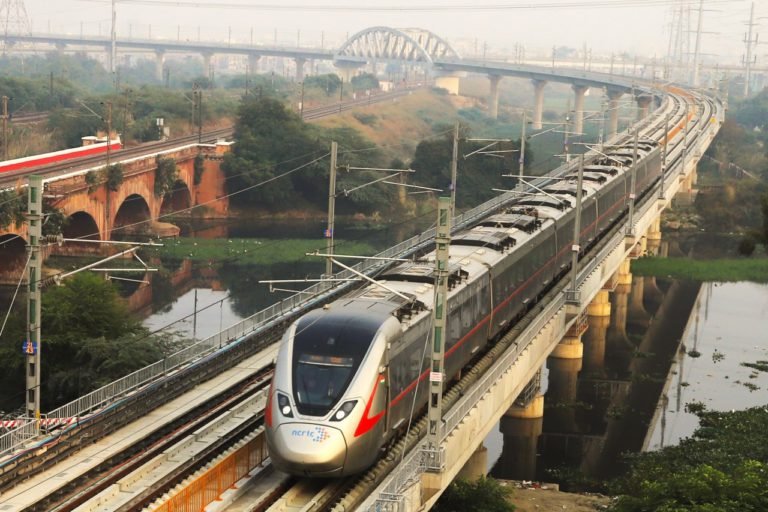
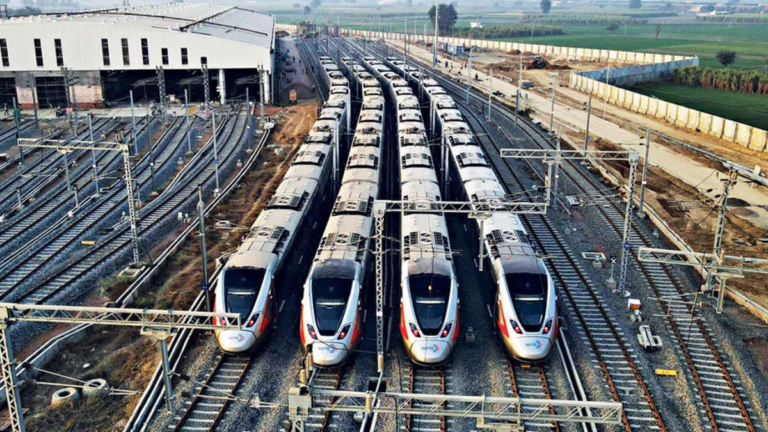
In a major development in India’s first RRTS Corridor, the National Capital Region Transport Corporation (NCRTC) successfully conducted the timetabled trial run of the Namo Bharat train across the entire Delhi-Meerut RRTS Corridor spanning 82 km between Sarai Kale Khan and Modipuram. The train completed the full 82 km journey in less than an hour. 

The Namo Bharat trains operated at their maximum design speed of 160 km per hour along the full 82-km stretch, making stops at every station between Sarai Kale Khan and Modipuram, following the timetable prepared by the NCRTC. 

The Namo Bharat Corridor is equipped with a state-of-the-art European Train Control System (ETCS) Level 3 hybrid signalling system utilising LTE backbone technology, marking a world-first implementation.

PHOTO 2025 06 23 10 47 35

The signalling system functioned without interruption during the trial run. This successful trial run underscores the system’s readiness for operational use. 

Currently, 55 km of the corridor, comprising 11 stations, is operational for passenger service. The final finishing works, as well as trial runs, are progressing rapidly on the remaining sections of the corridor, which include a 4.5km segment between Sarai Kale Khan and New Ashok Nagar and approximately 23 km between Meerut South and Modipuram in Meerut. 

Furthermore, the trial run of the Meerut Metro on the segment between Meerut South and Modipuram Depot is also advancing rapidly. This initiative represents a pioneering effort in the country, as local metro services will be integrated within the same infrastructure as the Namo Bharat trains.