Home Blog Page 5

Odisha to house India’s First Rail-Tech Manufacturing Park in Khordha 

KHORDHA (Metro Rail News): Odisha is set to launch India’s first rail-tech manufacturing park at the Sahaspur industrial estate in Khordha district. The park will create a dedicated ecosystem for manufacturers of railway equipment, components and specialised engineering products.

The Odisha Industrial Infrastructure Development Corporation (IDCO) has completed the preliminary assessment and land development work. A detailed project report for the park has also been prepared. The land and location have already been identified, and the facility will offer all the infrastructure and services required by rail components and equipment units.

Union Railway Minister Shri Ashwini Vaishnaw is expected to launch the park soon, as per the report of Business Standard.

Existing Investments that led to Conceptulisation of the Rail-Tech Park

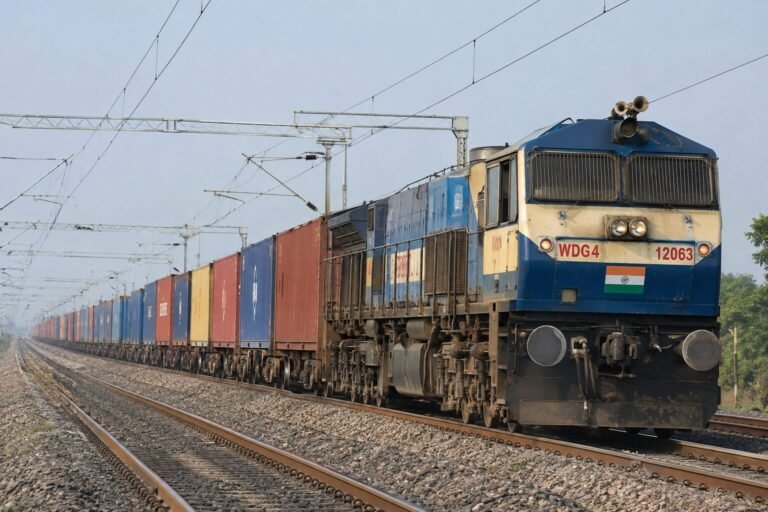
The state government planned this dedicated park after Odisha attracted several investments in the railway manufacturing sector over the past couple of years. So far, the state has approved six railway-related manufacturing projects with a combined investment of approximately around ₹4,600 crore. These include Jupiter Tatravagonka Railwheel (formerly Bonatrans India), Jupiter Wagons Ltd, Synomac Technology, Rahee Track Technology, Amsted Steel Foundries (part of Amsted Rail) and Surlon India.

image 6

Jupiter Tatravagonka Railwheel Factory has proposed a railway wheelset manufacturing facility with an investment of more than ₹2,500 crore. The plant is planned to produce around 200,000 forged discs and 100,000 wheelsets and axles each year. Jupiter Wagons has proposed a rail coach manufacturing unit with an investment of ₹1,500 crore. Another six to eight projects are expected to come up soon.

Rail-Tech Park: Shaping the Future of Odisha

India’s railway modernisation programme is driving strong demand for equipment such as wheels, axles, wagons, coaches, braking systems, electrical equipment and specialised engineering products. The expansion of modern passenger trains, freight infrastructure, signalling, safety systems and track infrastructure is creating new opportunities for manufacturers.

Instead of bringing in isolated investments, Odisha is focusing on a cluster-based approach. The park will provide dedicated infrastructure so that large manufacturers, ancillary units, MSMEs, technology firms and service providers can operate together in one ecosystem. This will help companies build stronger local supply chains and make it easier for smaller units to join the railway manufacturing network.

The park will create a strong manufacturing ecosystem for railway equipment and components. It is expected to generate thousands of jobs, support India’s railway modernisation, and help Odisha emerge as a key hub in the country’s rail manufacturing sector.

Also Read: Jupiter Wagons joins hands with Lucchini RS & SIMET to manufacture railway wheels in India

MMRDA grants signage contract to CBM Industrie for Mumbai Metro Line 2B 

MUMBAI (Metro Rail News): Mumbai Metropolitan Region Development Authority (MMRDA) has granted a signage contract for Mumbai Metro Line 2B (Yellow Line) to CBM Industrie Private Limited. The contract includes commissioning of station element, signage and graphics for 13 elevated stations. The amount of the contract is ₹27.88 crore and the completion period of the contract is 15 months.

Tender Information

InformationDetails
Tender No.MMRDA/MPIU/ML2B/CA-306
Approximate Cost of Work₹27.88 Cr.
Completion Period15 Months

Scope of Work

The scope of work of the contract include design, manufacture, supply, installation, testing and commissioning of station element, signage and graphics for 13 elevated stations viz. ESIC Nagar, Prem Nagar, Indira Nagar, Nanavati Hospital, Khira Nagar, Saraswat Nagar, Bandra, ITO, IL&FS, MTNL, SG Barve Marg, Kurla East and EEH of Line 2B (D.N. Nagar to Mandale) of Mumbai Metro Rail Project of MMRDA.

About Mumbai Metro

Mumbai metro is becoming a travelling alternative for the city. The metro has expanded to a length of 101 km (including the Navi Mumbai metro). It has improved the connectivity of the city and enhanced the urban mobility across the city. The latest integration of the priority corridor of line 2B and line 9 in April, 2026 expanded the metro connectivity. Further, work is underprogress on several lines of Mumbai metro.

Also Read: Vande Bharat safety trials begin on challenging Sakleshpur-Subrahmanya Ghat Section

Vande Bharat safety trials begin on challenging Sakleshpur-Subrahmanya Ghat Section

KARNATAKA (Metro Rail News): South Western Railway’s Mysuru division started field trials of an automatic emergency brake-fitted Vande Bharat Express rake on the challenging Sakleshpur-Subrahmanya Road Ghat section on Wednesday,12 August 2026.

The 20-car rake, specially manufactured by Integral Coach Factory (ICF), Chennai, arrived in Mysuru last week. After static trials at Mysuru on Tuesday, 11 August, the rake was moved to Sakleshpur the same night for the field tests. 

This marks an important step towards assessing the feasibility of operating the semi-high-speed train on the Bengaluru-Mangaluru route.

Significance of Ghat Section Trials for Bengaluru-Mangaluru Route

The Sakleshpur-Subrahmanya Road ghat section is one of the most technically demanding stretches on the line. It features steep gradients, sharp curves, tunnels and bridges, and has traditionally posed operational challenges related to speed, braking and safe movement on the gradients.

Trials will continue in this critical section for a few more days to test braking, acceleration, stability and other operational parameters under ghat conditions. The automatic emergency braking system is also being evaluated during these runs.

Successful completion of the trials and necessary safety clearances would pave the way for the possible introduction of a Vande Bharat Express service between Bengaluru and Mangaluru. The field trials form part of the railway’s process to establish the suitability of the Vande Bharat rake for regular operation on this route.

Also Read: DMRC Floats ₹114.24 Cr Tender for AFC System for 24 Patna Metro Stations

DMRC Floats ₹114.24 Cr Tender for AFC System for 24 Patna Metro Stations

PATNA (Metro Rail News): Delhi Metro Rail Corporation (DMRC) has invited bids for a ₹114.24 crore Automatic Fare Collection (AFC) system for 24 stations under Phase 1 of the Patna Metro project. The contract will cover the design, supply, installation, testing and commissioning of the AFC system.

Tender details 

InformationDetails 
ContractPS04
Work AFC System for Patna Metro Phase 1
Estimated Cost₹114.24 crore
Tender Security₹57.12 lakh
Pre-bid Meeting20 August 2026, (1100 hrs)
Bid Submission Deadline31 August 2026, (1100 hrs) to 7 September 2026, (1500 hrs) 
Completion period 48 Months from the date of NTP 

Scope of work 

The scope of work includes design, manufacture, supply, installation, testing and commissioning of Automatic Fare Collection (AFC) System including Central Computer & back-office for 24 stations of Corridor-1 & 2 of Phase-1 of Patna MRTS with FI/Acquirer Bank.

About Patna Metro Phase 1

Patna Metro Phase 1 covers around 31 km through two main corridors with 24 stations. 

  • The Corridor-1 (Red Line) will connect Danapur Cantonment with Khemni Chak, providing an east-west metro link across the city.
  • The Corridor-2 (Blue Line) will run from Patna Junction to New ISBT, creating a north-south connection and improving access to key parts of the city.

The Patna Metro Rail Corporation Limited (PMRCL) manages the project, while DMRC serves as the General Consultant.

Also Read: Patna Metro Corridor-1:DMRC floats ₹10.86 Cr tender for track fastening system

Hyderabad Metro old city project gains momentum; tender process to begin soon 

HYDERABAD (Metro Rail News): The long delayed Hyderabad metro old city project has now gained momentum. The Chief Minister (CM) of Telangana, Shri Revanth Reddy gave directions about the Hyderabad metro phase II project and the addition of coaches on the current line in a meeting with the senior officials of the Hyderabad Metro Rail Limited (HMRL). He instructed the officials to expedite the work on the old city metro line and begin the tender process. 

The old city metro line is the corridor VI (green line) of Hyderabad metro phase IIA project. The 7.5 km corridor covers Mahatma Gandhi Bus Stand (MGBS) to Chandrayangutta in the old city. The project was earlier on hold due to land acquisition disputes. The high court settled the dispute a few days before the meeting and allowed Hyderabad metro to resume the land acquisition work.

Shri Reddy suggested that Delhi Metro Rail Corporation (DMRC) should be consulted on the technology and other necessary advice for the corridor VI construction. Moreover, he told the officials to begin the tender process and complete the remaining land acquisition work for the corridor.

Further, the CM told the officials that additional coaches should be added to the current metro line. This decision is taken to provide relief to the commuters as the passenger footfall is increasing. The process for adding the required coaches and the necessary station upgradations should be initiated, said Shri Reddy.

Also Read: Big Breakthrough for Kolkata Metro’s Purple Line as TBM Divya Reaches Victoria Metro Station

Rail Coach Factory rolls out first batch of 19 LHB coaches for Bangladesh Railway

PUNJAB (Metro Rail News): The Rail Coach Factory (RCF) in Kapurthala, Punjab, is set to roll out its first rake of 19 LHB broad gauge passenger coaches for Bangladesh Railway on 12 August 2026.

The rake will include three AC sleeper cars, three AC chair cars, 11 non-AC chair cars and two power cars. The rake features several passenger-friendly amenities such as fans in AC coaches, integrated CCTV surveillance, passenger alarm systems, partially openable windows, a baby care room and a prayer room.

The seating arrangement incorporates specially designed reclining chairs with stainless steel armrests and footrests offering multiple reclining positions for better comfort of passengers.

Safety and technical features

The coaches feature a crashworthy design that complies with European Standard EN 15227. This required a complete redesign of the car body shell to improve collision performance and passenger safety.

Electrical systems are configured for 415 Volt operations, unlike the 750 Volt system used in Indian Railways coaches. The roof structures have also been strengthened to handle additional load from passengers travelling on the roof during peak traffic.

These coaches have been specially customised to meet the operational and passenger needs of Bangladesh Railway.

RCF earlier supplied 120 LHB broad gauge passenger coaches to Bangladesh Railway in 2015-16. Building on that success, Bangladesh Railway placed a new order in 2024 through RITES for 200 broad gauge passenger coaches in seven variants.

The rollout highlights the growing role of Indian railway manufacturing units in supplying customised rolling stock to overseas markets and further strengthens railway cooperation between India and Bangladesh.

Also Read: Big Breakthrough for Kolkata Metro’s Purple Line as TBM Divya Reaches Victoria Metro Station 

Big Breakthrough for Kolkata Metro’s Purple Line as TBM Divya Reaches Victoria Metro Station 

KOLKATA (Metro Rail News): Kolkata Metro’s Purple Line reached a significant construction milestone on Tuesday when TBM Divya completed its 1.72 km drive from Khidderpore to Victoria. This breakthrough marks the completion of the second underground tunnel in the Joka-Esplanade corridor of Kolkata Metro.

TBM Divya completes 1.72 km tunnel drive

The Tunnel Boring Machine (TBM) Divya broke through at the upcoming Victoria Metro station after finishing its tunnelling drive from Khidderpore. The machine began boring the tunnel on October 11, 2025. It covered approximately 1.72 km to reach Victoria. This latest breakthrough follows TBM Durga, which finished the first tunnel between Khidderpore and Victoria on July 10, 2026. With both machines now completed, the twin tunnels in this section are ready.

TBM Divya at a glance

Tunnel Length1.72 km
Tunnelling started11 October, 2025
TBM diameter6,60 meters
TBM lengthAround 95 meters
TBM weightAround 600 meters
Tunnel liningM50-grade precast concrete segments

Designed for Kolkata’s challenging ground conditions

Kolkata’s soft soil and high groundwater levels make underground construction tough. TBM Divya has been built to work in these conditions while ensuring controlled tunnelling. The project team also used M50-grade precast concrete segments to line the tunnel as the machine moved forward. Metro Railway stated that the construction team maintained safety and quality during the work. They also ensured that surface traffic and regular activities in the busy area continued without interruption.

Purple Line underground work progresses

The Joka-Esplanade Metro corridor will extend Kolkata’s Metro network towards the city’s central areas. Completing the Khidderpore-Victoria tunnel drive is a key step in developing the underground section of the corridor. Further tunnelling and construction activities will continue for the remaining underground parts. The Purple Line is set to improve travel between south Kolkata and the central business district once the corridor is operational.

Officials Highlight Construction Efforts

Prem Sagar Gupta, General Manager of Metro Railway, Kolkata, emphasized that the project team focused on safety and quality while making sure that construction did not disrupt surface traffic and normal activities in the area. Metro Railway called the breakthrough another important move towards completing the underground work on the Purple Line.

Also Read: Kolkata Metro: RVNL invites bids for construction of 10 elevated stations & viaduct on Baranagar-Barrackpore Corridor

RLDA invites bids for leasing 5,000 sqm Rail Land at Adilabad Railway Station 

ADILABAD (Metro Rail News): Rail Land Development Authority of India (RLDA) invites e-tendering for grant of lease for commercial development over approximately 5,000 sqm of railway land at Adilabad railway station, Telangana of Nanded Division of South-Central Railway for a lease period of 60 years.

Tender Details

DetailsInformation
Tender NoRLDA/2026/RFP/CD/53
Bid Security₹35 Lakh
Pre-Bid Meeting 11 August, 2026 ( 11:30 hrs.)
E-bid Due Date27 August, 2026 up ( 15:00 hrs. )
Reserve Price in terms with NPV (Net Present Value)₹10.50 Crore
Built-Up Area12,848 sqm 
Total Lease Period60 yrs
Revenue Share10%

Scope of the Work

The scope of work includes grant of lease for commercial development over approximately 5,000 Sqm of Railway land at Adilabad Railway station of Nanded Division of South-Central Railway for a lease period of 60 years, through e-tendering on a single-stage two-cover bidding system from interested eligible bidders.

About the Project

Adilabad railway station is an important NSG-5 category station in the Nanded division of the South Central Railway zone. Located in Telangana, it features 3 platforms and connects the region to major hubs in Maharashtra and neighboring areas.

Also Read: Parliamentary Panel pushes for Indigenous Bullet Trains and clearances before new corridors

Parliamentary Panel pushes for Indigenous Bullet Trains and clearances before new corridors

DELHI (Metro Rail News): The Parliamentary Standing Committee on Railways tabled its 10th report in the Lok Sabha on Monday, 10 August 2026, focusses on boosting domestic manufacturing of bullet train components and expanding skilling programmes that involve international expertise.

The committee also recommended accelerated indigenisation of high speed rail components and institutionalised capacity building by expanding training programmes at High speed Rail Training institute , Vadodara with International expertise.

The Panel highlighted the importance of accelerating indigenisation of high-speed rail components and technology transfer under the Make in India initiative and direct Indian Railways to conduct a comprehensive study of well-established, efficiently operating high-speed rail networks globally and apply best practices to India’s upcoming projects.

The committee welcomed the expansion of India’s High-Speed Rail (HSR) footprint. The seven proposed corridors spanning around 4,000 km, are expected to attract investment of around ₹16 lakh crore.

proposed corridors 

  • Mumbai-Pune
  • Pune-Hyderabad
  • Hyderabad-Bengaluru
  • Hyderabad-Chennai
  • Chennai-Bengaluru
  • Delhi-Varanasi
  • Varanasi-Siliguri

To avoid the delays and cost overruns faced by the Mumbai-Ahmedabad project, the panel strongly recommended that land acquisition, utility shifting and all statutory clearances must be completed before projects are officially sanctioned or funded.

Updates on Mumbai-Ahmedabad High-Speed Rail (MAHSR) Project

The 508-km Mumbai-Ahmedabad corridor was originally approved in 2015 at an estimated cost of ₹97,636 crore based on feasibility studies. Costs have risen significantly due to taxes, cess and inflation. A revised estimate is currently undergoing final sanctioning.Full corridor completion depends on finalising civil structures, track laying, electrical systems, signalling networks and trainset deliveries.

The first stretch of operations is scheduled to commence on the 97-km Surat-Vapi segment by August 2027. This stretch will run on the indigenous B28 trainset manufactured by BEML, capable of operational speeds up to 280 km/h. Japan is developing its E10 series Shinkansen trains, but the timeline for their supply remains unconfirmed. To avoid waiting, India has opted to deploy domestic trainsets first.

The Ministry confirmed that Commercial operations will feature an affordable, socio-economically calibrated fare structure to ensure high passenger patronage on both short-distance regional trips and full-corridor journeys.

Also Read: Bullet Train Project: Electrification work gains momentum on Mumbai-Ahmedabad High-Speed Rail Corridor

Maha Metro Unveils ₹14,520 Cr Plan for 58 km Light Metro Network for Nashik

NASHIK (Metro Rail News): Maha Metro has proposed a 58 km metro network for Nashik at an estimated cost of ₹14,520 crore. The plan is divided into two phases. It aims to offer a long-term mass transit option for the city as its population and travel needs grow.

Maha Metro proposes 58 km Nashik Light Metro network

According to the report by Times of India, Maharashtra Metro Rail Corporation (MMRCL) proposed a 58 km metro network for Nashik as part of the city’s draft Comprehensive Mobility Plan (CMP). The estimated cost of the project is ₹14,520 Cr. The draft CMP identifies three corridors suitable for a light metro network. However, Maha Metro will make the final decision after completing necessary procedures, consulting stakeholders, and conducting detailed feasibility studies. The proposed network will be developed in two phases and aims to meet Nashik’s transport needs over the next twenty years.

Proposed Nashik Light Metro network

Phase Corridor LengthEstimated CostTarget
Phase 1Gangapur Village-Nashik Road21.5 km₹8,770 crore2031
Phase 1Mumbai Naka-Pathardi Phata13.58 km2036  
Phase 2Ambad-Nashik Airport23 km₹5,750 crore2046 
TotalThree corridors58 km₹14,520 crore

Maha Metro has proposed two corridors for the first phase.

  • The 21.5 km Gangapur Village-Nashik Road corridor may be the first to be implemented, with the CMP targeting 2031 for completion.
  • The second corridor will connect Mumbai Naka to Pathardi Phata over a distance of 13.58 km. The CMP expects this route to be completed by 2036.
  • Together, these two Phase I corridors will span about 35 km and need an estimated investment of ₹8,770 crore.

Maha Metro estimates that each corridor could carry nearly 11,000 passengers per hour during peak times. This shows the potential for a higher-capacity public transport system like Light Metro.

Phase II to connect Ambad with Nashik Airport

The second phase proposes a 23-km corridor between Ambad and Nashik Airport. Maha Metro estimates the cost of this corridor at ₹5,750 crore, aiming for implementation by 2046. The airport link would extend the metro network to another key transport hub in Nashik and support future growth in nearby areas.

Maha Metro recently shared the draft CMP with stakeholders and invited feedback on the mobility plan. Officials are currently reviewing the suggestions and updating the document. The final CMP is expected to be submitted to Maharashtra Chief Minister Devendra Fadnavis in September for approval. A senior Maha Metro official indicated that the proposed corridors have the potential for a Light Metro system. However, the final decision will rely on the completed mobility plan, stakeholder input, and updated information on population and travel needs.

Nashik’s earlier Neo Metro plan was dropped

The latest proposal comes after a new assessment of Nashik’s public transport needs. In April 2025, at a review meeting for the Kumbh Mela, Tarun Kapoor, Adviser to the Prime Minister, instructed officials to examine public transport systems in other cities worldwide instead of sticking with the previous Neo Metro model. Maha Metro then conducted a new mobility survey to reassess Nashik’s transport demands.

The Centre had previously announced a Neo Metro project for Nashik in the Union Budget 2021-22, with an allocation of ₹2,092 crore. This proposal was later dropped, raising concerns about the city’s long-term mass transit plans. The new Light Metro proposal aims to provide a fresh framework for Nashik’s urban transport growth.

Also Read: Maha Metro floats Rs 3.54 cr tender for Navi Mumbai Metro Line 1 maintenance