Home Blog Page 32

JMRC Invites Bids for Traction and Power Systems Work on Jaipur Metro Phase-1C & 1D

0
Jaipur Metro

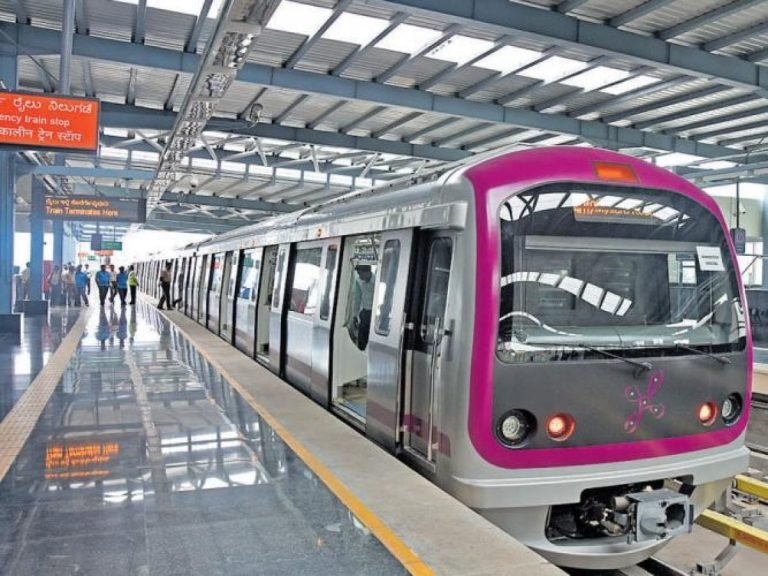
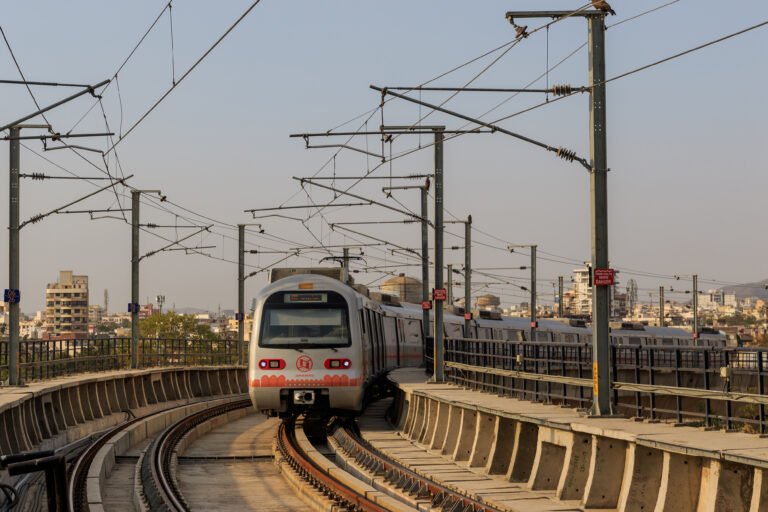
JAIPUR (Metro Rail News): Jaipur Metro Rail Corporation (JMRC) has invited bids for the Design to Commissioning of the 25 kV traction system, including rigid and flexible OHE on specified sections, along with 33 kV Auxiliary Sub-Stations, cabling, and SCADA systems for the underground and elevated corridors of Phase-1C and 1D.

Opening Date13 Nov 2025
Closing Date18 Dec 2025
EMD₹ 1,03,54,171
Tender Id2025_JMRC_512589_1
Tender NoJP/EW/1C AND 1D/E-02
Pre-bid Meeting 27.11.2025

Contract Value : ₹517,708,541

Contract Duration: 36 Months

Contract Scope of Work: Design, Detail Engineering, Manufacture, Supply, Installation, Testing and Commissioning of 25 KV Traction (Rigid OHE- Start from Badi Choupar Dead end to the elevated ramp and Flexible OHE- Start from the elevated ramp to Transport Nagar Dead end and Mansarovar Dead end to Ajmer Road Chauraha Dead end including loop line), 33 KV Auxiliary Sub Stations (ASS), Associated Cabling and SCADA systems for both underground and elevated Corridors of JMRC Phase-1C&1D at Jaipur, Rajasthan, India.

Jaipur Metro’s Phase-1C proposes a 2.85 km extension of the Pink Line from Badi Chaupar to Transport Nagar, featuring one underground station at Ramganj and one elevated station at Transport Nagar, with an estimated cost of ₹993.51 crore, funded mainly by the Government of Rajasthan.

 Phase-1D adds a 1.35 km elevated stretch from Mansarovar to Ajmer Road Chauraha, including one new elevated station at Ajmer Road Chauraha, at a cost of ₹204.81 crore.


Explore how AI-integrated systems are improving comfort, connectivity, and accessibility for passengers across metro and rail networks at the 6th edition of InnoMetro, India’s leading expo for the Metro & Railway industry which is going to be held on 21-22 May 2026 at Bharat Mandapam, New Delhi.

Register now: https://innometro.com/visitor-registration/

Advertisement1
InnoMetro_2026

Delhi Metro: 3 Bidders for Renovation Work of Line-5 Stations

0
Delhi Metro

NEW DELHI (Metro Rail News): Delhi Metro Rail Corporation has revealed the names of 3 firms that have submitted the bids for carrying out the renovation work of 2 stations on Line 5. This ₹9.78 crore contract includes renovation of Nangloi and Rajdhani Park Metro stations. 

Tender Details 

Tender ID2025_DMRC_876932_1
Tender NoOCW-2049
Completion Period12 Months
Cost of Work₹978.13 Lakhs

Bidders’ Details 

Firm Status 
Pragati Construction ConsultantsAccepted Technical
S R InteriorAccepted Technical
Y D Builders and Hotels Pvt ltd.Accepted Technical

DMRC’s Brief Scope of Work: Renovation work of line-5 stations- Nangloi and Rajdhani Park Metro station (2 nos.)

The bids have been sent for technical evaluation. Following this process, the financial bids of technically qualified bidders will be announced. 

Delhi Metro Line 5 is the Green Line. It  runs from Inderlok to Brigadier Hoshiyar Singh. It has 24 stations and is about 27.96 km long, with a 1.4 km branch line from Ashok Park Main to Kirti Nagar.


Explore how AI-integrated systems are improving comfort, connectivity, and accessibility for passengers across metro and rail networks at the 6th edition of InnoMetro, India’s leading expo for the Metro & Railway industry which is going to be held on 21-22 May 2026 at Bharat Mandapam, New Delhi.

Register now: https://innometro.com/visitor-registration/

Advertisement1
InnoMetro_2026

MMMOCL Announced 4 Bidders for ₹297cr O&M Contract of Mumbai Monorail

1
Mumbai Monorail
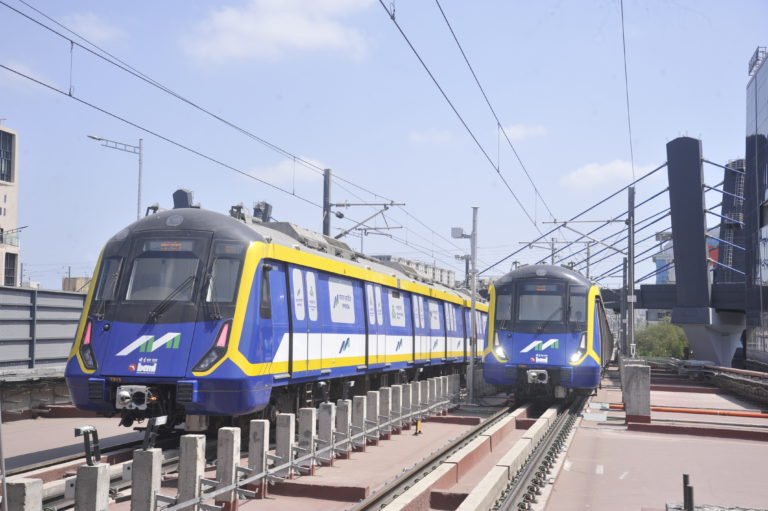
Mumbai Monorail COO Sacked Over Charges of Bribery and Corruption by MMRDA (Representational Image)

MUMBAI (Metro Rail News): The Maha Mumbai Metro Operation Corporation Limited (MMMOCL) has announced the list of bidders that have submitted proposals for undertaking the operation and maintenance (O&M) work of the Sant Gadge Maharaj Chowk –  Chembur section of the Mumbai Monorail Project. The O&M contract is worth ₹297 crore.

Tender Information 

Tender ID2025_MMRDA_1204955_1
Tender NoM3OCL/PL/TC/01
Cost of work ₹297crore
Contract Period5 Years (1825 Days)

Bidders’ Details

Bidder NameStatus
Adani Infrastructure Management Services LimitedAccepted – Technical
Indwell Constructions Private LimitedAccepted – Technical
Konkan Railway Corporation LimitedAccepted – Technical
Power Mech Projects LtdAccepted – Technical

MMMOCL’s Brief Scope of Work: Invitation for Bids for Operations and Maintenance (O&M) of the Mumbai Monorail (Sant Gadge Maharaj Chowk to Chembur).

The bids have now been forwarded for technical evaluation. Once this stage is completed, the financial proposals of the technically qualified bidders will be opened to identify the lowest bidder for the contract.


Join the 6th edition of InnoMetro to explore how the progressions in AI are improving the railway systems, including ticketing, rolling stock, and signalling. Witness the innovation from 200+ exhibitors at India’s leading show for metro & railways which is going to be held on 21-22 May 2026 at Bharat Mandapam, New Delhi. 

Get your free visitor pass: https://innometro.com/visitor-registration/

Advertisement1
InnoMetro_2026

Bids Invited for Overhead Line Modification Works in Thane Metro Project 

0

THANE (Metro Rail News): The Maharashtra Metro Rail Corporation Limited (Maha Metro) has issued a tender inviting bids for the modification of 110kV/220kV Extra High Voltage (EHV) overhead transmission lines for the Thane Metro Project. 

Tender Information: 

Tender No.:T1-022/ELE-02/2025
Tender ID:2025_MMRCL_1245378_1
Cost of Work₹ 68.36 Cr.
Bid Submission Date27 NOV 2025
Bid Opening Date28 NOV 2025

Brief Scope of Work: Modification Of 110 Kv/220kv Ehv M/c Overhead Lines At A) Ch 14050m Near Waghbil Station And Kasarwadavali Depot B) 220kv Ehv D/c Overhead Lines At Ch 20950 Between Balkum Naka To Balkum Pada Station, For Thane Integral Ring Metro Project.

The Thane Metro, formally referred to as the Thane Integral Ring Metro, is a planned circular rapid transit corridor within Thane, Maharashtra. Approved in 2024, the project proposes a 29-kilometre ring line that will loop around the city, linking major residential, commercial, and industrial hubs such as Wagle Estate, Manpada, Waghbil, and Balkum.

The metro line is envisioned to ease traffic congestion and provide reliable public transport to Thane’s rapidly growing population. The project carries an estimated cost of ₹12,200 crore (approximately USD 1.4 billion), with financial support coming from the Government of India, the Government of Maharashtra, and select international funding agencies.


Join the 6th edition of InnoMetro to explore how the progressions in AI are improving the railway systems, including ticketing, rolling stock, and signalling. Witness the innovation from 200+ exhibitors at India’s leading show for metro & railways which is going to be held on 21-22 May 2026 at Bharat Mandapam, New Delhi. 

Get your free visitor pass: https://innometro.com/visitor-registration/

Advertisement1
InnoMetro_2026

Bangalore Metro Pink Line Commissioning Delayed Due to Pending Trainset Deliveries

0
Bangalore Metro
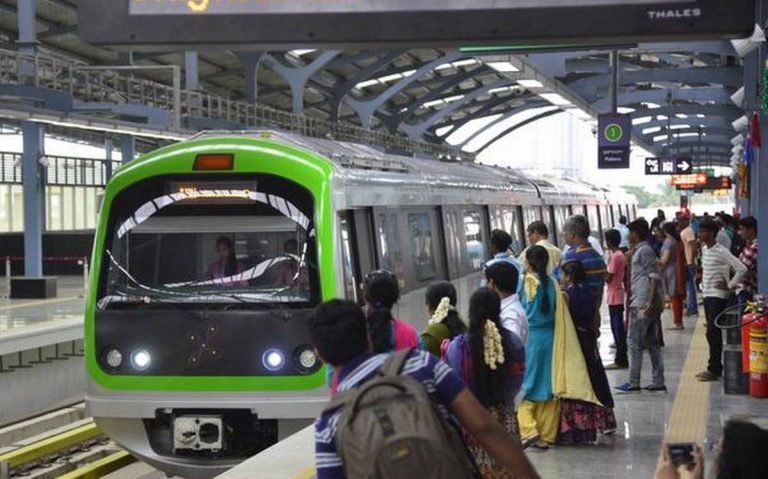
Representative Image/ Photo credits: Systra

BANGALORE (Metro Rail News): The long-awaited Namma Metro Pink Line in Bengaluru has encountered another delay as the delivery of train sets remains pending. The 21.25 km corridor between Kalena Agrahara and Nagawara, earlier expected to be operational by end-2025 and later by March 2026, is now projected to open only by May 2026.

Bharat Earth Movers Limited (BEML) bagged the rolling stock contract of Bangalore Metro from Uttar Pradesh Metro Corporation (UPMRCL) in August 2023. The contract includes the manufacture of 318 new metro coaches for the Bangalore Metro Phase 2, Phase 2A and Phase 2B projects. As per the contract BEML is supposed to deliver 96 coaches for the Bangalore Metro’s Pink Line. 

LineCoaches
Phase 2: Pink Line (Kalena Agrahara – Nagawara, 21.386 km)96 (16 x 6)
Phase 2A: Blue Line (Silk Board – KR Puram, 18.2 km)96 (16 x 6)
Phase 2B: Blue Line (KR Puram – Airport, 37 km)126 (21 x 6)

The first prototype rake for the Bangalore Metro Pink line is anticipated by the end of December, following which a minimum of two months will be needed for mandatory testing and safety certification. Since at least three trains are necessary to start operations, revenue service is unlikely to commence before mid-2026. 

The elevated section of the Pink Line is now structurally complete.However, the absence of train rakes has delayed the commencement of services. According to metro officials, operations on the elevated stretch could begin with three to four trains once BEML initiates deliveries. The underground section is projected to become operational by December 2026. Until then, the completed infrastructure remains unused by commuters.


Join the 6th edition of InnoMetro to explore how the progressions in AI are improving the railway systems, including ticketing, rolling stock, and signalling. Witness the innovation from 200+ exhibitors at India’s leading show for metro & railways which is going to be held on 21-22 May 2026 at Bharat Mandapam, New Delhi. 

Register now: https://innometro.com/visitor-registration/

Advertisement1
InnoMetro_2026

AIIB Delegation Inspects Chennai Metro Phase 2 Project Sites

0

CHENNAI (Metro Rail News): A delegation from the Asian Infrastructure Investment Bank (AIIB) visited Chennai on November 11 and 12, 2025, to inspect the key stretches under the Chennai Metro project which is being implemented by Chennai Metro Rail Limited (CMRL).

The AIIB delegation comprised Thiru. Andres Pizaro, Senior Public Sector Transport Expert (South East Asia), and Thiru. Santhosh, Investment Officer – Transport. The officials held detailed discussions with the Managing Director of CMRL and senior management about ongoing and proposed metro expansion plans across different parts of Chennai.

G5jTA67bEAAZzY

As part of the two-day visit, the team inspected stretches of the upcoming corridors. On November 11, the delegation visited the Airport–Kilambakkam (15.46 km) corridor, which will provide connectivity to the upcoming Kilambakkam Bus Terminus, and the Pattabiram–Koyambedu via Avadi (21.76 km) alignment. On November 12, they inspected the Poonamallee Bypass–Sunguvarchatram (28 km) corridor site to assess progress and future development plans.

The AIIB officials were accompanied by Thiru. T. Archunan, Director (Projects), Thiru. Narendra Kumar, Joint General Manager (Planning & Business Development), and other senior CMRL officials during the inspection visits.

This visit on AIIB’s commitment to supporting India’s infrastructure growth and enhancing sustainable urban transport systems through its partnership with Chennai Metro Rail Limited.


Join the 6th edition of InnoMetro to explore how the progressions in AI are improving the railway systems, including ticketing, rolling stock, and signalling. Witness the innovation from 200+ exhibitors at India’s leading show for metro & railways which is going to be held on 21-22 May 2026 at Bharat Mandapam, New Delhi. 

Register now: https://innometro.com/visitor-registration/

Advertisement1
InnoMetro_2026

Delhi Meerut RRTS: NCRTC Implements ‘Solar on Track’ Project at Duhai Depot  

0

In a pioneering step towards sustainable and energy-efficient operations for the new-age transit system, Namo Bharat, NCRTC has implemented an innovative ‘Solar on Track’ project at the Namo Bharat Depot in Duhai, where solar panels have been installed on the tracks. This is a first-of-its-kind initiative in any RRTS or Metro system in India.

G5jhMhraMAAEVUy

The pilot installation has been executed on the Pit Wheel Track at the Namo Bharat Depot in Duhai, featuring 28 solar panels of 550 Wp each, with a total plant capacity of 15.4 kWp spread over 70 metres of track length. This initiative is expected to generate about 17,500 kWh of energy annually, resulting in an estimated reduction of 16 tonnes of CO₂ emissions every year.

The ‘Solar on Track’ system demonstrates NCRTC’s continuous commitment to adopting innovative and sustainable practices in its operations. The installation not only utilises otherwise unused track space but also contributes to NCRTC’s larger goal of achieving net-zero energy consumption across its facilities.

G5jhMhiasAEr0DW

NCRTC aims to meet around 70% of its total energy needs from renewable sources. Under its solar policy, it is targeting to generate 15 MW peak in-house solar power on rooftops of stations, depots, and other buildings, with 5.5 MW already operational. This initiative is another significant step in this direction. Efforts are also underway to increase the share of renewable energy used for traction.

Under its solar policy, NCRTC aims to enhance the share of renewable energy across its system by generating solar power. This initiative is in line with the objectives of the National Solar Mission and reinforces NCRTC’s commitment to advancing clean, sustainable energy sources for the region and the nation.

NCRTC’s continued focus on sustainable development, aims to promote the adoption of public transport while ensuring energy-efficient operations. Apart from installation of solar power plants, provisions have also been made for rainwater harvesting systems and sewage treatment plants. The Namo Bharat trains are also equipped with advanced regenerative braking systems that convert the train’s kinetic energy into electrical energy during braking.

By integrating renewable energy solutions within its infrastructure, NCRTC continues to lead the way in shaping a greener and more energy-efficient future for urban transport systems in India.


Join the 6th edition of InnoMetro to explore how the progressions in AI are improving the railway systems, including ticketing, rolling stock, and signalling. Witness the innovation from 200+ exhibitors at India’s leading show for metro & railways which is going to be held on 21-22 May 2026 at Bharat Mandapam, New Delhi. 

Register now: https://innometro.com/visitor-registration/

Advertisement1
InnoMetro_2026

Escalating Costs Push Bhopal Metro Budget Beyond ₹10,000 Crore

0
Bhopal Metro

BHOPAL (Metro Rail News): The cost of Bhopal Metro Phase 1 project has seen a major increase since it was proposed. The cost escalation occurred due to various reasons including delays in execution, rising prices of construction materials, higher taxes, and changes in design. 

When first proposed in 2017-18, the 27.9 km metro project was estimated to cost Rs 6,941 crore, translating to an average of Rs 249 crore per kilometre. However, due to the delay in the project, the budget has since escalated to Rs 10,033 crore in 2025. This revised estimate now places the per kilometre cost at Rs 371.6 crore which is about Rs 122 crore higher than the original projection. 

To put it in perspective, the current budget for the city’s much-publicised Metro Phase-I project is now nearly equal to the combined cost of ten bus rapid transit (BRT) systems, highlighting the extent of cost escalation.

The Bhopal Metro, also referred as  Bhoj Metro, is an under-construction Mass Rapid Transit System (MRTS) aimed at improving urban connectivity in the Madhya Pradesh capital. The project is being implemented and overseen by Madhya Pradesh Metro Rail Corporation Limited (MPMRCL).

Phase 1 of the Bhopal Metro includes two corridors covering a total of 28 stations. The first phase is expected to become operational by 2027, offering a major boost to the city’s public transport infrastructure.

Bhopal Metro Phase 1 
Corridor Route Length Total No. of Stations 
Line-2 (Orange Line)Karond Circle – AIIMS14.99 km16 Stations 
Line-5 (Blue Line)Bhadbhada Square – Ratnagiri Tiraha 12.91 km14 Stations 

Discover how AI is bringing the next phase of sustainable urban rail mobility for Viksit Bharat at InnoMetro 2026, India’s prime exhibition and conference for metro & railways which is going to be held on 21-22 May 2026 at Bharat Mandapam, New Delhi. 

Register now: https://innometro.com/visitor-registration/

Advertisement1
InnoMetro_2026

Thane Integral Ring Metro : Supporting Urban Development and Economic Growth

0
Metro
For Representational Purpose Only

About Thane 

Thane, formerly known as Thana, is a metropolitan city situated in the northwestern part of Maharashtra, India, and to the northeast of Mumbai. It forms part of the Mumbai Metropolitan Region and serves as a neighbourhood and residential suburb of Mumbai. The city is located in the northeastern section of Salsette Island. According to the 2011 census, Thane was ranked the 15th most populous city in India with a population of approximately 1.89 million. Over time, Thane’s economy has shifted from manufacturing-based industries such as engineering, textiles, and chemicals to a more service-oriented structure.

Thane’s Urban Growth and the Critical Need for Metro Transit

image 41

Over the years, the population of Thane has increased dramatically from 1950 to 2025, with numbers rising from around 100,000 to more than 21 million. This rapid urban expansion reflects Thane’s transformation into a major metropolitan hub, which has increased the pressure on the infrastructure and transportation systems of the city. The population increase and economic diversification have put additional strain on the city’s transport system. Road congestion and longer travel times have highlighted the need for efficient public transit. In response, the establishment of a metro system was considered the best solution to support this growth. The metro system will provide reliable connectivity, which will reduce road traffic and improve the quality of life for residents.

Thane Metro: A Journey from Heavy Metro to Metrolite and Return

  • The Thane Metro project was initially planned as a regular heavy metro line, with the foundation stone laid by the Prime Minister in December 2018. 
  • However, due to cost concerns, the heavy metro plan was scrapped in 2019. Subsequently, in early 2020, the project was resurrected as a metrolite or light rail transit (LRT) system to reduce expenses. This redesign involved reducing the train coach count and other cost-cutting measures. 
  • Yet, in 2023, the project was again reassessed and redesigned back into a regular heavy metro line to better meet the city’s transportation demands. 

Thane Metro: Improving Connectivity and Urban Mobility

The Thane Metro Phase 1 project, officially named the Thane Integral Ring Metro, is a 29 km mass rapid transit system (MRTS) designed with a single circular line encompassing 22 stations.  The 29-km corridor will run along the periphery of the west side of Thane city.

The project is being executed by the MahaMetro (Maharashtra Metro Rail Corporation Limited). The project received formal approval from India’s Central Government in August 2024. The project is estimated to cost ₹12,000 crore. The Project is likely to be completed by 2029.

Key Features of Thane Metro Project 

Authorised Authority Maharashtra Metro Rail Corporation Limited 
Estimated Cost Rs. 12,000 Crore 
Track Standard Gauge: 1435 mm
Electrification 25 kV, 50 Hz AC OHE
SignallingCommunication-based Train Control (CBTC)
Estimated Ridership6.47 lakh in 2029
7.61 lakh in 2035
8.72 lakh in 2045

Route Details of Thane Metro 

Operational 0 km 
Under Construction 0 km 
Proposed 29 km 
  • Length: 29 km
  • Type: Elevated (primarily) and Underground (2-3 km)
  • Number of Stops/Stations: 22
  • Station Names: Raila Devi, Wagle Circle, Lokmanya Nagar Bus Depot, Shivaji Nagar, Neelkanth Terminal, Gandhi Nagar, Dr. Kashinath Ghanekar Natyagraha, Manpada, Dongripada, Vijaynagari, Waghbil, Waterfront, Patlipada, Azad Nagar Bus Stop, Manorma Nagar, Kolshet Industrial Area, Balkum Naka, Balkumpada, Rabodi, Shivaji Chowk, Thane Junction (underground) and New Thane (underground).
image 42

Contractor’s List 

Contract Contractor 
Consul-01: General Consultant (GC) for Thane MetroAECOM India
Geo-01: Geotechnical Investigation for Thane MetroRenuka Consultants
DDC-01: Detailed Design Consultancy Services for 6 (Six) elevated stations at Dr. Kashinath Ghanekar Natyagraha, Manpada, Dongripada, Vijay Nagari, Waghbil and Waterfront, of Thane Integral Ring Metro ProjectSTUP Consultants Pvt. Ltd.

Update on Thane Metro Project 

  • All the preliminary works for the Thane Metro Rail Project have been successfully completed. This includes utility mapping using Ground Penetrating Radar (GPR), UAV surveys for precise aerial mapping, detailed geotechnical investigations to assess soil and ground conditions, comprehensive topographic surveys to capture terrain features, and the preparation of the alignment design. 

Impacts of the Thane Metro Project 

  1. Traffic Decongestion: The Thane Metro project is projected to ease traffic congestion and enhance connectivity, particularly for daily commuters, students, and office workers. According to traffic studies, the system is expected to handle a Peak Hour Peak Direction Traffic (PHPDT) of 23,320 and a daily ridership of approximately 647,000 by its anticipated completion in 2029. By 2035, ridership demand is projected to increase to a PHPDT of 29,489 and a daily ridership of 761,000. Further growth is estimated by 2045, with projections indicating a PHPDT of 31,393 and a daily ridership of around 872,000.
  1. Travel Time: The project will connect major residential and commercial hubs like Wagle Estate, Ghodbunder, Kolshet, and Saket. This connectivity will drastically reduce commuting time for thousands of daily commuters.
  1. Multi-Modal Integration: The metro will be integrated with the Mumbai Metro Line 4 (Wadala–Kasarvadavali) and Line 5 (Thane–Bhiwandi–Kalyan), as well as the existing suburban railway network at Thane Station. This multimodal integration will create a comprehensive transit system, improving regional connectivity.
  2. Real Estate Dynamics: The Thane Metro is expected to influence the city’s real estate dynamics across residential, commercial, and land-use segments. On the residential side, areas such as Wagle Estate, Kolshet, Balkum, LBS Road, and Rabodi are likely to see higher demand due to better accessibility and reduced commuting time to employment hubs in Thane and Mumbai. This may encourage the development of affordable and mid-segment housing, while also supporting the adoption of transit-oriented development (TOD) models that promote higher-density and mixed-use projects around station precincts.
  3. Boost to Economic Activity: In terms of commercial activity, enhanced connectivity will make Thane more viable for corporate offices, IT parks, and service-based enterprises. MSMEs and startups in particular are expected to benefit from better workforce access. Key commercial corridors, including Ghodbunder Road and LBS Road, may also experience stronger absorption of retail and office spaces as footfall and connectivity improve.

Conclusion

The Thane Metro Project is a strategically planned infrastructure initiative which aims to address the city’s growing urban mobility challenges. This metro line will be the third to operate across Thane City. Once operational, it will connect residential neighborhoods, industrial zones, commercial hubs, and key transport nodes, forming a high-capacity transit corridor. By integrating with Mumbai Metro Lines 4 and 5 and the suburban rail network at Thane Station, the project is designed to create a seamless multimodal transport system that will enhance regional connectivity. Beyond easing congestion, the metro is expected to support transit-oriented development, facilitate organised urban expansion, and improve access to employment, education, and essential services. With projected ridership rising from 6.47 lakh in 2029 to 8.72 lakh by 2045, the Thane Metro shows potential to sustainably manage future transport demand and contribute to the city’s economic and social development within the Mumbai Metropolitan Region.

Advertisement1
InnoMetro_2026

Station Redevelopment : A Comprehensive Analysis of India’s Rail Infrastructure Transformation

0
Station Redevelopment

Introduction 

Indian Railways, the backbone of India’s transportation infrastructure is the fourth largest railway network in India. Indian Railways serves billions of passengers annually and is a crucial part of India’s transportation infrastructure. Indian Railways not only supports the mobility of millions of passengers daily but also facilitates the movement of goods, contributing majorly to the economic growth of the country.                                                        

The Indian Railways network is expanding rapidly with new lines, doubling and tripling of existing routes, as well as electrification projects to enhance capacity and efficiency. In recent years, Indian Railways has embarked on an ambitious journey of modernization and expansion to meet the demands of a fast-growing economy and an increasing population.This transformation includes the adoption of advanced technologies, improved safety measures, sustainable practices such as large-scale electrification, and the introduction of modern rolling stock. 

MurtizapurJnDroneHXAB 1
default

Not only this, Indian Railways recognised the importance of station infrastructure as part of the passenger experience. In response, a series of comprehensive station redevelopment initiatives were introduced by Indian Railways. The Railways launched numerous schemes for station redevelopment which represents a profound and strategic shift in India’s approach to its vast rail infrastructure. 

This article explores the transformative journey of station redevelopment in India, analyzing its objectives and its long-term impact on the nation’s rail infrastructure and passenger experience. 

Key Initiatives by Indian Railways for Redeveloping Stations 

Indian Railways has launched several key initiatives to revamp railway stations across the country, aimed at modernizing infrastructure and enhancing passenger experience. 

  • Model Station Scheme: The Model Station Scheme was an initiative of Indian Railways that operated from 1999 to 2008, under which 594 railway stations were identified and upgraded with enhanced passenger amenities. 
  • ‘Adarsh’ Station Scheme: Launched in 2009-10, the Adarsh Station Scheme was an initiative by the Ministry of Railways which aimed at upgrading and modernizing railway stations. Around 1253 stations were identified and redeveloped under this scheme. 
  • Rani Kamalapati & Gandhinagar Station Redevelopment: In 2021, Gandhinagar became the first railway station in India to undergo comprehensive modernization. Later in the same year, Rani Kamalapati Railway Station, formerly known as Habibganj, was also revamped with a completely new look and upgraded passenger amenities. 
Outside view of Rani Kamlapati Railway Station 25 1
oppo_4
  • Amrit Bharat Station Scheme: The Amrit Bharat Station Scheme, launched by the Ministry of Railways in December 2022, aims to redevelop more than 1300 railway stations across India. So far, 105 stations have been redeveloped under the Amrit Bharat Station Scheme. 

Station Revamping : A New Paradigm for India’s Rail Infrastructure 

The redevelopment of railway stations in India represents a new paradigm for the country’s rail network, where stations are being transformed from mere transit points into modern, integrated urban hubs. The recently launched Amrit Bharat Station Scheme aims to redevelop and modernize over 1,300 railway stations across India with the primary objective of elevating the passenger experience to modern standards. This scheme adopts a phased and need-based approach, tailoring redevelopment plans according to the unique requirements and potential of each station. 

The Rail Land Development Authority (RLDA), a statutory authority under the Ministry of Railways, has also been entrusted with the redevelopment of railway stations under this scheme. RLDA is responsible for planning, developing, and executing the redevelopment of railway stations to transform them into modern, world-class transport hubs. This includes upgrading station infrastructure, improving passenger amenities, and enhancing urban connectivity.

ChinchpokliDroneOVAS 1 1
default

Amrit Bharat Station Scheme: Modernizing India’s Railway Stations

The Amrit Bharat Station Scheme, launched by the Ministry of Railways in December 2022, aims to redevelop 1,337 railway stations across India. This ambitious initiative seeks to transform these stations into modern, integrated transport hubs that enhance passenger experience and urban connectivity. 

The foundation stones for the redevelopment were laid by Prime Minister Shri Narendra Modi in two phases, on 6th August 2023 and 26th February 2024. The scheme emphasizes long-term development, focusing on multimodal integration, improved amenities for differently-abled passengers (Divyangjans), sustainability, and the evolution of stations into future-ready urban centers. 

Key Features of Amrit Bharat Station Scheme

  • Enhanced Passenger Amenities: The stations will be redeveloped with spacious waiting halls, clean and upgraded toilets, roofed platforms, lifts, escalators, free Wi-Fi, executive lounges, and designated spaces for business meetings enhancing passengers’ experience. 
  • Culturally Inspired Architecture: One of the major features of the Amrit Bharat Station Scheme is that the designs of redeveloped station buildings are inspired from local culture, heritage and architecture. 

For Example: The Ahmedabad railway station is inspired from the Modhera Sun Temple while the Dwarka station is inspired from the Dwarkadheesh Temple.

  • One Station One Product Scheme: The One Station One Product initiative under the Amrit Bharat Station Scheme is designed to promote India’s unique local crafts and traditional products by setting up dedicated outlets at railway stations nationwide, where these specialties can be showcased and sold.
  • Accessibility and Inclusivity: The Amrit Bharat Station scheme aligns with the Accessible India Campaign and provides facilities such as ramps, lifts, Braille signage, tactile pathways, and accessible toilets to ensure ease of travel for persons with disabilities. 
126831 qzpvyzraey 1567666786 1

Progress on Amrit Bharat Station Scheme 

Till now, 105 stations have been redeveloped under this Amrit Bharat Station Scheme. In May 2025, Prime Minister Narendra Modi inaugurated 103 railway stations across the country that were upgraded under this Scheme, out of a total of 1,337 stations identified for development. These stations have been modernized with state-of-the-art, passenger-friendly facilities at a total cost of over ₹175 crore. 

Among them are 15 key stations in Maharashtra, including Parel, Chinchpokli, Vadala Road, Matunga, Shahad, Lonand, Kedgaon, Lasalgaon, Murtizapur Junction, Devlali, Dhule, Savda, Chanda Fort, NSCB Itwari Junction, and Amgaon.

NETAJISHUBHASHCHANDRABOSEITWARIAFTER4IM05 1

The details of the stations redeveloped in Maharashtra has been mentioned below: 

Station Name Division Project Cost 
ChinchpokliMumbai Division of Central Railway11.81 Cr 
ParelMumbai Division of Central Railway.19.41 Cr 
Vadala Road stationMumbai Division of Central Railway23.02 Cr 
Matunga stationMumbai Division of Central Railway17.28 Cr 
Shahad station Mumbai Division of Central Railway8.39 Cr 
Lasalgaon Bhusawal Division of Central Railway30.14 Cr 
DevlaliBhusawal Division of Central Railway10.44 Cr 
SavdaBhusawal Division of Central Railway8.11 Cr
Dhule Bhusawal Division of Central Railway9.13 Cr 
MurtizapurBhusawal Division of Central Railway7.68 Cr 
KedgaonPune Division12.55 Cr 
LonandPune Division10.48 Cr 
Netaji Subhash Chandra Bose Itwari Nagpur Division12.39 Cr
Chanda Fort Nagpur Division19.30 Cr
Amgaon StationNagpur Division7.17 Cr

Impacts of Amrit Bharat Station Scheme 

Economic Development 

  • The Amrit Bharat Station scheme drives local economic development by promoting commercial activities within stations, such as kiosks under the ‘One Station One Product’ initiative that showcase indigenous crafts and regional specialties which boosts the local artisans and small businesses. 
  • The construction and redevelopment of stations also generate employment which promotes job creation for the residents. Furthermore, the construction of stations with modern amenities enhances trade, tourism, and business opportunities in the region which boosts the regional economies.

Infrastructure Development 

  • The scheme serves as a transformative initiative that promotes infrastructure development by modernizing railway stations with state-of-the-art facilities, advanced technology, and improved accessibility to enhance passenger’s experience. 
  • Many stations now offer airport-like facilities including food courts, roof plazas, executive lounges, kids’ play zones, business meeting areas, and better landscaping which provides passengers with a world class experience

Improved Passenger Facilities

  • The Amrit Bharat Station scheme provides modern amenities such as clean waiting areas, upgraded toilets, high-speed Wi-Fi, escalators, enhanced lighting, advanced passenger information systems, and clear signage which enhances passengers’ experience. 
  • Under this scheme, the Entry and exit points, platforms, and circulating areas have become more functional, accessible, and aesthetically appealing, with a major focus on comfort, cleanliness, and convenience.   

Conclusion 

The transformation of India’s railway stations through comprehensive redevelopment initiatives outlines a major milestone in the evolution of the country’s transportation infrastructure.The launch of many schemes shows that Indian Railways has shifted its focus from basic functionality to delivering a world-class passenger experience. The recently launched Amrit Bharat Station Scheme aims to redevelop 1,337 railway stations across India.The scheme represents a forward-looking and inclusive approach to modernization by integrating cultural heritage, sustainable design, and accessibility while fostering economic development through initiatives like ‘One Station One Product’. The involvement of institutions like the Rail Land Development Authority (RLDA) further underscores the government’s commitment to transforming railway stations into vibrant, multi-modal urban hubs.

Advertisement1
InnoMetro_2026