Home Blog Page 10

Central Government revives the Qadian-Beas Railway Line Project after nearly 100 years

NEW DELHI (Metro Rail News): In a crucial move to strengthen connectivity in the Majha region of Punjab, the Union Minister of state for Railways and Food Processing Industries, Shri Ravneet Singh Bittu addressed the media and announced the revival of the long-pending Qadian–Beas New Railway Line Project on 18th June, 2026. 

The project involves the construction of a new railway line of 39.68 km broad-gauge connecting Qadian in Gurdaspur district with Beas in Amritsar district. The development of this project will be executed by Northern Railway.

The Qadian-Beas Railway Line will connect some of the major towns and villages of Qadian, Dhapai, Ghuman, Butala, Sathiala and Beas in Punjab and will also act as a major link for many areas of the Majha belt and help in improving mobility for local residents and passengers. 
image 1

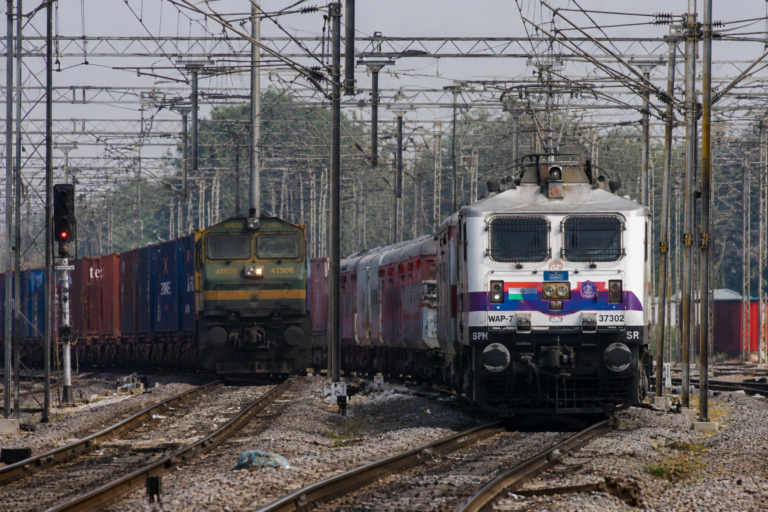
Qadian-Beas Railway Line Project will be developed with the latest modern infrastructure designs, including Fifty-four Road Under Bridges (RUBs), eleven major bridges and 121 minor bridges, two crossing stations at Ghuman and Butala, modern signalling and telecommunication systems and deployment of Kavach, India’s indigenous train collision avoidance system.

The history of Qadian-Beas Railway Line Project dates way back to the British era in 1928–29, when the project first got the approval by the then government. The development on this line had gained momentum in 1930’s but due to various circumstances the project was discontinued. This Line was then again revived under the Socially Desirable Rail Connectivity Programme and included in the 2010–11 supplementary Railway Budget but no progress was seen. Now, after years of delays and issues the project has been undertaken by the Government of India and at a revised Detailed Estimate of approximately ₹1,400 crore.

This railway line has strategic importance as an alternative rail line to the significant Amritsar–Pathankot section in case of emergencies and thereby improving railway operations in northern India. 

Congratulating the people of the Majha region, the Union Minister of state for Railways Shri Ravneet Singh Bittu also said that the railway line is expected to bring many economic and employment opportunities for the residents of the region once the project is developed and implemented. 

The commencement of this rail corridor will improve access to various prominent religious and spiritual destinations in Punjab, boosting religious tourism in India and abroad.

Also Read: MP Cabinet approved Indore Metro’s revised budget
MP Cabinet approved Indore Metro’s revised budget
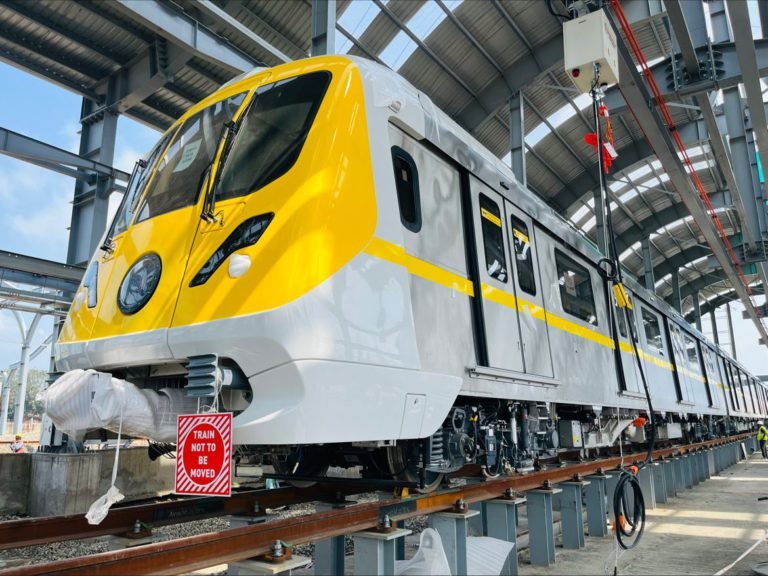
INDORE (Metro Rail News): Madhya Pradesh cabinet approved ₹19,472.29 Crores for Indore Metro Rail Project’s revised budget and additional financial costs on Tuesday (16th June). The revised budget was approved in the meeting of the state cabinet, chaired by the Chief Minister Mohan Yadav. The original estimated cost of the Indore Metro, as per the press release from 03rd October 2018, was ₹7,500.80 Crores. 

The budget, however, increased by ₹5,388.58 Crores and reached ₹19,472.29 after totaling the additional financial costs. The budget increased because over time, there was integration of projects to meet the demands of new infrastructure and underground construction. The additional financial costs include the purchasing power parity (PPP) element over time and the internal borrowings. 

The Indore Metro was launched on 31st May 2025, with five stations covering six kilometers. In the first one year of its operation, the metro registered an underwhelming number of around 2.5 lakh commuters. The Madhya Pradesh Metro Rail Corporation Limited (MPMRCL) is set to open the second phase of Indore Metro on 20th June. This phase will add 11 new stations covering 17.50 kilometers up to Radisson Square. It will connect the metro with the commercial hub of the city and is expected to attract more passengers.

Also Read: Indian Railways approved kavach project for Ambala Division

Indian Railways approved kavach project for Ambala Division

DELHI (Metro Rail News): Indian Railways has approved a Rs 201 crore project to install Kavach on the Broad Gauge sections of the Ambala Division of Northern Railway. This project will improve train safety on several key routes across Haryana, Punjab, and Himachal Pradesh and it covers 811 route kilometers. 

Kavach will cover key routes covered

Indian Railways will carry out the work as part of its plan to provide Kavach with an LTE-based communication system on the remaining routes of the railway network. The project will cover key sections in the Ambala Division. It includes: 

  • Ambala Cantonment, Ludhiana
  • Kalka, Chandigarh, New Morinda, Sahnewal
  • Sirhind, Daulatpur Chowk
  • Rajpura, Bathinda, Shri Ganganagar
  • Ludhiana, Dhuri, Jakhal

Importance of Kavach 

Kavach is an indigenous Automatic Train Protection (ATP) system. It is developed in India to enhance railway safety. The system can prevent Signal Passing at Danger (SPAD), apply brakes automatically when needed and can control train speed in critical situations. It also reduces the risk of train collisions. Indian Railways is expanding Kavach throughout its network to make train travel safer, more reliable, and capable of handling heavy traffic on important routes.

Also Read: Indian Railways approved doubling project in Gujarat to boost rail capacity

Indian Railways approved doubling project in Gujarat to boost rail capacity

GUJARAT (Metro Rail News): Indian Railways has sanctioned a project to double the 49 km Adipur and Bhuj rail section in Gujarat. This project aims to increase capacity on a key route in the Kutuch Region and prepare the region for rising passengers and freight traffic.

Project Overview 

Information Details
Project Adipur-Bhuj doubling line
Length49 km
Cost Rs 493 crore
Railway Zone Western Railway
Additional Freight Capacity12 MTPA

The Adipur-Bhuj section is part of the Gandhidham-Naliya corridor. It currently operates as a single-line route. Railway officials are expecting that the traffic can grow significantly on this corridor in the coming years because several rail projects are also being developed in the region. The project is part of Indian Railways’ larger effort to improve capacity, which focuses on doubling, tripling, and upgrading important rail routes across the country.

The importance of the project 

Several railway projects in the Kutch region are expected to bring more trains to the Adipur-Bhuj route. These project includes:

  • Bhuj-Naliya Gauge Conversion
  • Extension of the Naliya-Vayor line 
  • New Naliya-Jakhau railway line
  • New Vayor-Lakhpat railway line
  • New Deshalpar-Luna railway line

More trains, more freight capacity

The doubling project will help railways meet future demand and improve operations on the route. According to the PIB Press Release, the upgraded section will allow, two additional passenger train services in each direction every day, support an additional 12 million tonnes per annum (MTPA) of freight traffic and improve logistics connections across the region. It will also reduce congestion and operational delays. The project is also expected to strengthen industrial connections in western Gujarat, where freight demand is continuously growing. 

Capacity pressure expected to rise

According to the press release, the utilization of line capacity could reach 123% by 2029-30. This means the existing signal lines may struggle to manage future needs without extra infrastructure. This doubling line plans to solve  this issue by adding capacity and improving the reliability of train operations. It is also expected that this project can generate some extra revenue for Indian Railways as well.

Also Read: DPR survey for Delhi-Haridwar-Rishikesh RRTS corridor to begin soon

DPR survey for Delhi-Haridwar-Rishikesh RRTS corridor to begin soon

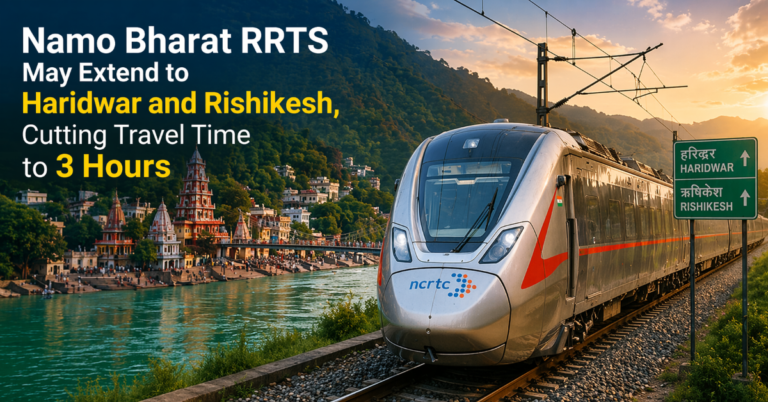
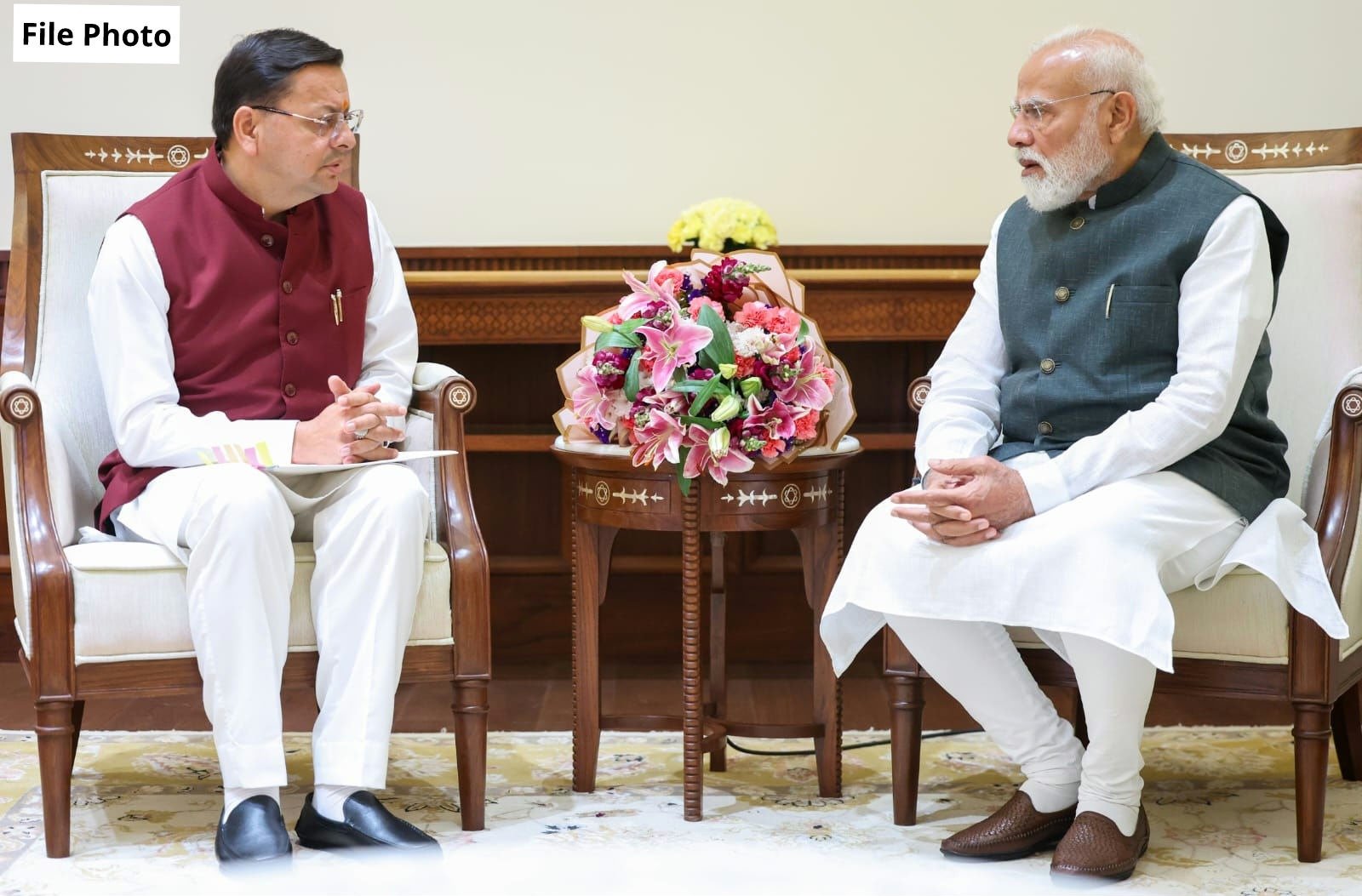
RISHIKESH (Metro Rail News): The highly anticipated Delhi-Haridwar-Rishikesh RRTS corridor just received the green signal from the Central Government. Uttarakhand Chief Minister Shri Pushkar Singh Dhami recently met with Prime Minister Shri Narendra Modi and Union Minister for Housing and Urban Affairs Shri Manohar Lal Khattar and submitted the proposal to extend the Delhi-Meerut RRTS corridor from Modipuram to Rishikesh.

image 2

Following the meeting, Uttarakhand, UP, and the National Capital Region Transport Corporation (NCRTC) have come to an agreement to extend the Delhi-Meerut RRTS corridor to Laxman Jhula in Rishikesh. The project’s Detailed Project Report (DPR) survey is expected to begin soon.

To accelerate the process, the Additional Secretary Reena Joshi has been appointed as the nodal officer by the Uttarakhand government and NCRTC has designated its own nodal officer. Following the consent given by the Uttar Pradesh government a survey is now set to start for preparing the DPR of the proposed 150-kilometer track.

As per the project proposal, this extended line will start from Modipuram station in Meerut and enter Uttarakhand after passing through Muzaffarnagar. The line will then go through Roorkee and Haridwar—via Har Ki Pauri—and reach the final stretch at Laxman Jhula in Rishikesh. Out of the total route 72 km will fall in Uttar Pradesh and 78 km in Uttarakhand.

Chief Minister Shri Pushkar Singh Dhami also said that this alignment is expected to give a new modern means of transport not only for pilgrims heading to Uttarakhand but also for Uttarakhand residents travelling to Delhi. Currently, the road journey from Delhi to Rishikesh takes about five to six hours. Once the Namo Bharat Delhi-Meerut RRTS Corridor (with a speed of 160 km/h) becomes operational, the travel time will be reduced to two and a half to three hours.

Also Read: Gurugram Metro: GMRL re-invites tender for depot and workshop project in Sector 33

Gurugram Metro: GMRL re-invites tender for depot and workshop project in Sector 33

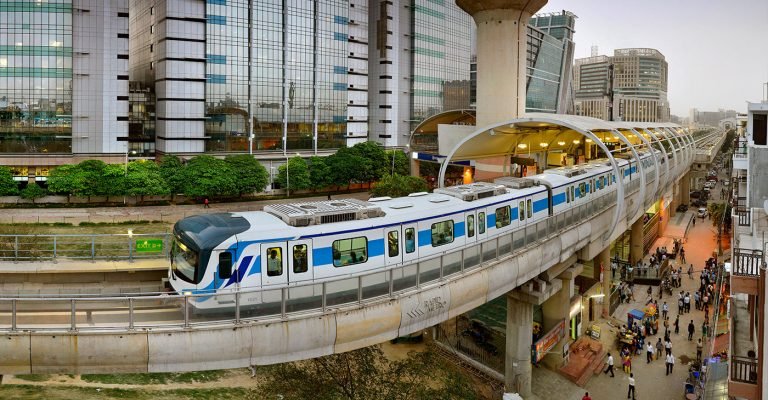
GURUGRAM (Metro Rail News): Gurugram Metro Rail Limited (GMRL) has re-floated a tender for the construction of a depot-cum-workshop for Gurugram Metro after the earlier bid failed to attract enough competition. The project includes civil work, architectural work and Electrical & Mechanical work at Sector 33. The estimated cost of the project is Rs 409.78 crore. It will support operations on the metro corridor between Millennium City Center and Cyber City. 

Tender Information 

Information Details 
Tender Number GMRL/PROJ/2026/AC-04R 
Estimated Cost Rs 409.78 crore
Tender Security Amount Rs 1 crore
Pre-Bid Meeting 23 June 2026, (11:30 hrs)
Tender Submission Deadline From 01 July 2026, (11:00 hrs.) to 07 July 2026, (15:30 hrs.) 
Completion Period 21 months

Scope of work

The scope of work includes Construction of Depot cum Workshop including Civil works, Architectural works and E&M works, for Elevated Corridor of Gurgaon Metro at Sector 33, Gurugram, India.” between Millennium City Centre and Cyber City.

About the Project

The Gurgaon Metro project will connect Millennium City Centre with Cyber City through an elevated metro line. This line plans to enhance public transport options across important business and residential areas in Gurugram. The depot at Sector 33 will act as the operational center for the corridor.

Also Read: First direct train connecting Pune and Shirdi flagged off by Railway Minister Ashwini Vaishnaw 

First direct train connecting Pune and Shirdi flagged off by Railway Minister Ashwini Vaishnaw 

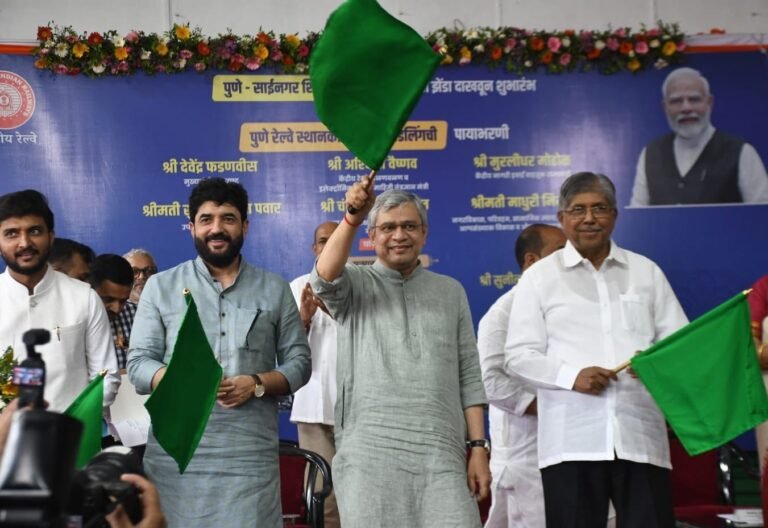
PUNE (Metro Rail News): The first direct train from Pune to Shirdi, the Pune–Sainagar Shirdi Express, was flagged off by Railway Minister Shri Ashwini Vaishnaw and Union Minister of State Civil Aviation of India Shri Muralidhar Mohol by giving it the green signal on 17th June,2026. The event was also attended by Maharashtra’s Chief Minister Devendra Fadnavis  and Legislative Council Chairman Ramji Shinde through video-conferencing.

https://twitter.com/AshwiniVaishnaw/status/2067232339168829621?s=20

The Pune–Sainagar Shirdi Express will run daily, providing a comfortable and affordable travel experience to devotees and elderly people travelling from Pune to the holy shrine. This rail service will also enhance connectivity across various cities as it will enable easier access to Pune’s educational institutions and healthcare facilities. 

Murlidhar Mohol, the Minister of State for Civil Aviation of India said, “This service will greatly benefit the tourism, trade, and local economy of Ahilyanagar district. By strengthening the connection between Pune and Shirdi, this railway service will open new doors of opportunity for pilgrims, students, professionals, and the general traveling public.”

During his visit, Railway Minister Ashwini Vaishnaw also laid the foundation stone for yard remodelling and the development of 6 new platforms for Pune Railway Station. 

Also Read: Pune Junction to get Rs 473 crore upgrade with 6 new platforms

Pune Junction to get Rs 473 crore upgrade with 6 new platforms

PUNE (Metro Rail News): In a significant move to expand Pune Railway Station’s operational capacity, Railway Minister Ashwini Vaishnaw laid the foundation stone for yard remodelling and the development of 6 new platforms yesterday, on 17th June, 2026. Pune Junction caters to around 1.5 lakh passengers daily. It also acts as a major link to several railway lines and metropolitan cities. 

At present, the Pune Railway station handles a huge number of passenger traffic on its six operational platforms, out of which only 2 platforms can accommodate trains with more than 22 coaches. This upgrade is essential to cater to the needs of rising passenger traffic, and enhance the operational efficiency. 

Dr. Swapnil Nila, Chief Public Relations Officer (CPRO) of Central Railway, said, “To make Pune a future-ready Mega terminal, infrastructure works including comprehensive yard remodelling, construction of 6 new platforms and 3rd entry works have been taken up at a cost of Rs 473 crore.”

According to sources, new full-length platforms numbered 7 to 12 are being constructed and platforms 2, 3, 4, 5 and 6 are being extended to accommodate 24 and 26-coach trains. A third entry/exit RB Mill Road side point is also being developed for better passenger services on the busiest railway station in Maharashtra. 

The upgrade also includes an enhanced signalling infrastructure, new Electronic Interlocking system, a new EI Building, three Object Controller Buildings, and an Electric Loco Shed is being provided for loco maintenance to improve reliability and improve the operational capacity. 

During the event, Union Railway Minister Ashwini Vaishnaw said, “Pune is a major metropolitan city with a population of more than 7 million. To double the railway capacity of Pune, several initiatives have been undertaken. In particular, a comprehensive study of the entire area was conducted and a master plan was prepared. Many of the planned works have already been completed, while others are currently in progress. If we look at the Pune metropolitan region, it includes stations such as Khadki, Pune, Ghorpadi, Hadapsar, Shivajinagar, Fursungi, and Alandi. Keeping all these stations in mind, projects have been taken up to double Pune’s railway capacity.”

Also Read: Rs 450 crore project approved by Indian Railways for signalling upgrade on Eastern Railway

Union Railway Minister announces revised alignment of Pune-Nashik semi-high-speed rail project

PUNE (Metro Rail News): Shri Ashwini Vaishnaw, Union Minister of Railways, notified on Wednesday(17th June) that the Pune-Nashik direct semi-high-speed rail corridor has been revised due to technical issues concerning the Giant Metrewave Radio Telescope (GMRT) facility in Pune making the route unfeasible. The new route will connect Pune to Nashik via Ahilyanagar and Shirdi. 

The Maharashtra government had approved the original Detailed Project Report (DPR) of the route in June 2020, the initial DPR had a complicated route covering Lonawala, Karjat, Panvel, Diva, Kalyan, Igatpuri and Nashik across three districts. 

The railway minister informed that the revised route for the Pune-Nashik semi-high-speed corridor will be Pune-Ahilyanagar-Shirdi-Nashik. Shri Vaishnaw further said that the DPR of the new route has already been prepared and work has begun. A large area has been sanctioned for the project. Additionally, considerable work has also been sanctioned.

The new corridor could lead to a significant decrease in the cost, while maintaining the travel time as almost similar to the original route. The initial budget of the project was around ₹35,000 Crores; the revised project is expected to be completed at approximately one-third of the initial cost. 

Pune and Nashik are among the two major cities of Maharashtra contributing to the commercial, educational and industrial sectors of the state. The semi-high-speed corridor is expected to improve connectivity across the regions. The cities of Ahilyanagar and Shirdi will also benefit from this project.

Also Read: Rs 405 crore project approved by Indian Railways for signalling upgrade on Eastern Railway

Rs 405 crore project approved by Indian Railways for signalling upgrade on Eastern Railway

DELHI (Metro Rail News): Indian Railways has approved Rs 405 crore Project to upgrade signalling system across Eastern Railway. The approved project will replace relay based interlocking systems with modern Electronic Interlocking technology. It will cover 32 stations of Eastern Railway. 

Scope of the project

According to the PIB press release,  this project is part of Indian Railways’ larger plan to modernize its signaling infrastructure and prepare the network for future technologies. The project includes:

  • Upgrading signalling systems at 32 locations
  • Replacing relay-based interlocking with Electronic Interlocking
  • Modernizing 25 Panel Interlocking and Route Relay Interlocking stations
  • Upgrading 7 Intermediate Block Signalling locations

The work will take place on High Density Network (HDN) and Highly Utilised Network (HUN) routes, which carry heavy passenger and freight traffic.

Electronic Interlocking systems will provide better reliability and faster response times. Indian Railways officials are expecting that the new system will Improve operational efficiency, reduce signalling-related failures, strengthen safety standards, support smoother train movements and Increase network reliability. The signalling upgrade will also help Indian Railways introduce and expand advanced train control systems on busy routes. The Railway Ministry stated that the project supports technologies such as:

  • Kavach, the train protection system
  • Automatic Block Signalling
  • Centralised Traffic Control systems

Part of a larger modernisation drive

Indian Railways has been investing a lot in track, signalling, and safety upgrades as it is expected that passenger and freight traffic will continue to rise in future. The eastern railway project is part of this wider effort to create a more modern and technology driven rail network.

Also Read: Indian Railways approves Rs 755 crore third rail line between Chamba and Korba