




DELHI (Metro Rail News): The Mumbai-Ahmedabad Bullet Train Project has reached another key milestone. The second Tunnel Boring Machine (TBM) has accelerated work on one of the most difficult parts of the project by starting excavation for India’s first undersea rail tunnel beneath Thane Creek.
The TBM started tunneling from Sawli (Ghansoli) towards Vikhroli on July 18. The project includes a 10 km tunnel, with 7 km passing beneath Thane Creek. It will be India’s first undersea railway tunnel.
Two TBMs now working on the underground section
The bullet train project includes a 21-km underground tunnel in Maharashtra. Out of this,
Get the Daily Metro & Rail Brief
Join 125,000+ metro and rail professionals. Project updates, new tenders and contract awards from across India, in your inbox every day.
- 16 km between Sawli and Bandra Kurla Complex (BKC) will be built using Tunnel Boring Machines.
- The remaining 5 km has already been completed using the New Austrian Tunneling Method (NATM).
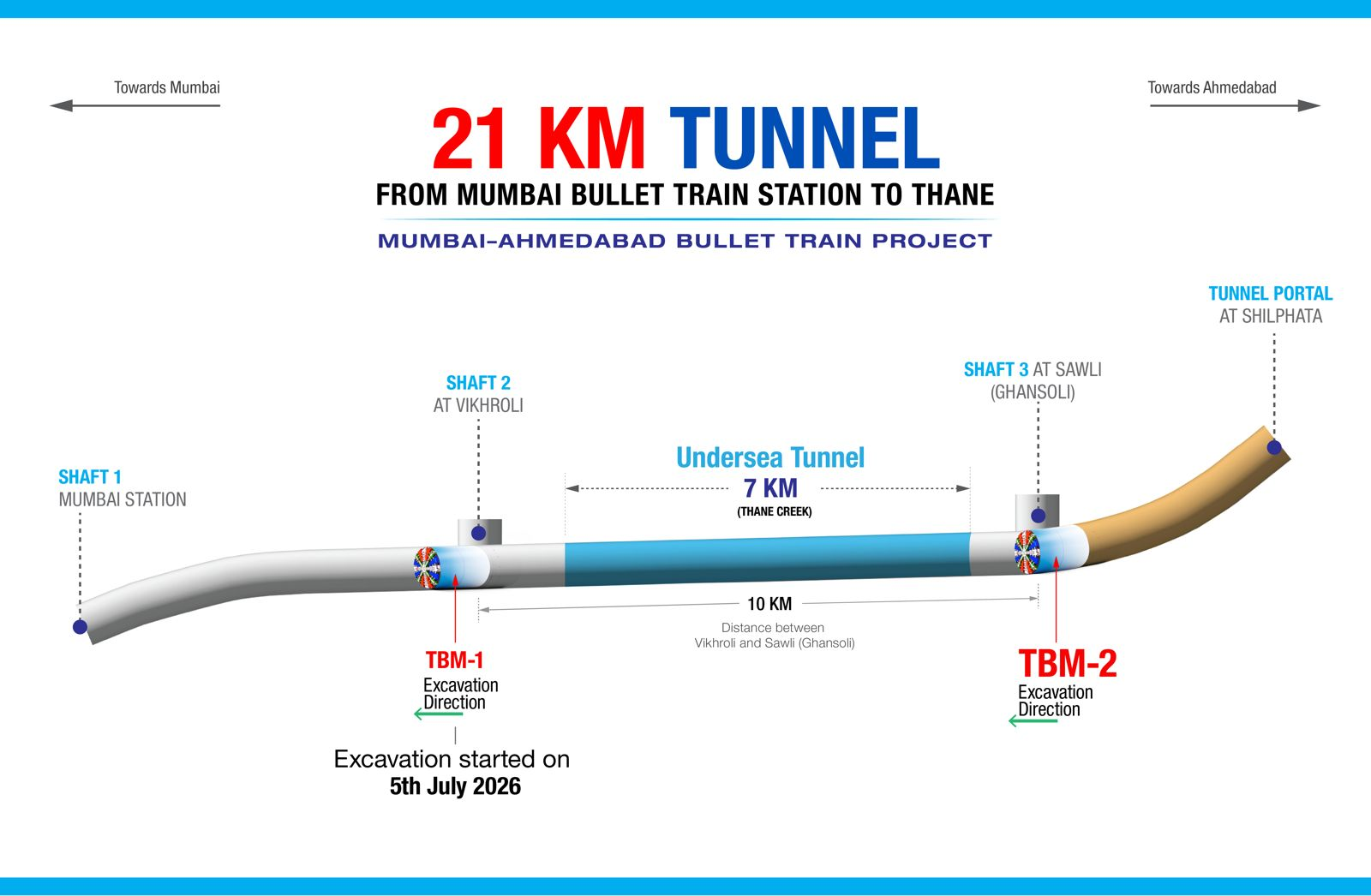
The first TBM began tunneling from Vikhroli towards BKC on July 5, 2026. With the second machine now in operation, work will continue from both ends, helping to speed up construction.
One of the largest tunnel boring machines in the country

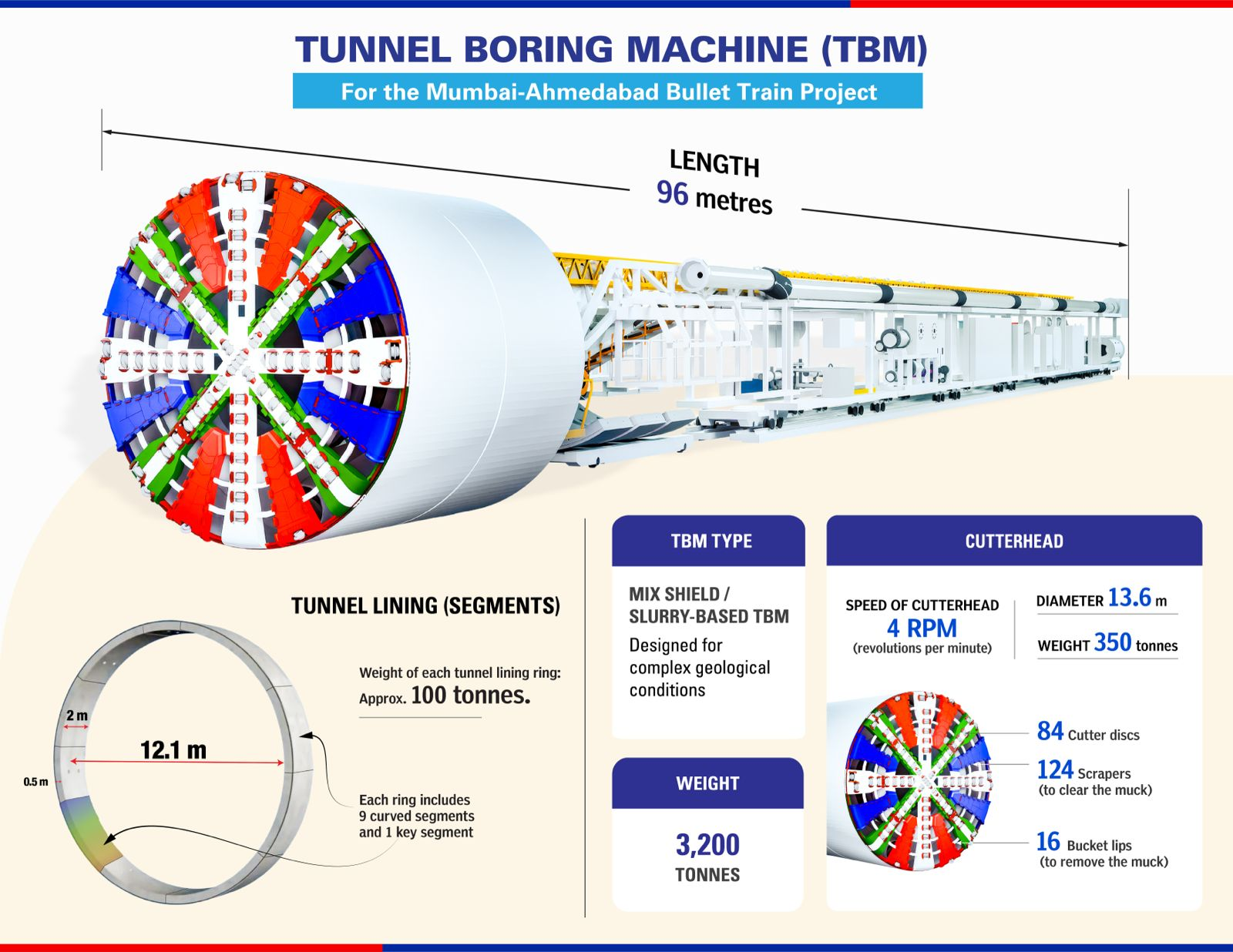
The new TBM ranks among the biggest machines ever used for railway tunnel construction in India. It features:
- A 13.6-metre cutter head, almost as tall as a four-storey building
- A weight of 3,200 tonnes, equal to nearly 500 Asian elephants
- A total length of 96 metres
The machine uses Mixshield slurry technology that pumps pressurised slurry of bentonite to support the tunnel face during excavation. The technology helps control ground movement and reduces surface disturbance, making it suited for tunnelling under busy urban areas like Mumbai. Additionally, the TBM will incorporate a Semi-Continuous Advance (SCA) system that enables excavation and tunnel lining to be conducted simultaneously. This means faster construction, without sacrificing safety.
A challenging launch operation
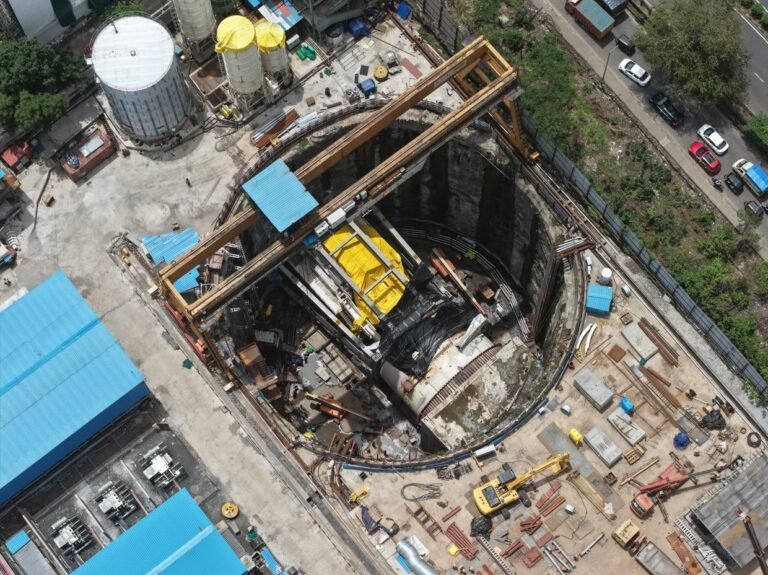
Engineers first built a 39 metre deep launch shaft at Sawli before starting the tunneling work. It is almost as deep as a 12 storey building. Due to limited space in the shaft, workers lowered the machine underground in separate parts. They first placed the gantries inside the completed NATM tunnel, then lowered the cutter head and main shield for final assembly.
Designed with modern safety systems
The TBM includes several up-to-date safety features to protect workers and ensure smooth operations. These include:
- Real-time monitoring of methane, oxygen, carbon monoxide, and carbon dioxide
- Automatic fire detection and suppression systems
- Emergency refuge chambers
- Water curtain and sprinkler systems along escape routes
The project site also has supporting infrastructure which includes a slurry treatment plant, a water treatment plant, bentonite storage tanks, a power substation, backup generators, a concrete grouting plant and other logistics facilities. Engineers have also installed real-time monitoring instruments to monitor ground settlement, structural movement and vibrations during tunnelling. These systems protect surrounding buildings and other infrastructure. Engineers will use double-layer, hydrophilic-seal EPDM gaskets to keep water out of the tunnel. These materials will also help keep the tunnel watertight and add to its long-term durability.
Also Read: NHSRCL launches 15th steel bridge for the Mumbai-Ahmedabad Bullet Train Project
Project Overview