



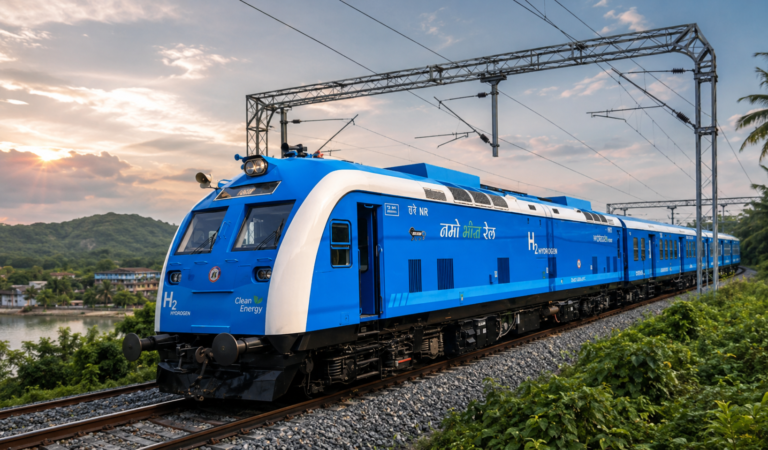
DELHI (Metro Rail News): India’s first hydrogen-powered train has completed over 1,200 km of test runs between Jind and Sonipat in Haryana. This marks a significant achievement for Indian Railways’ clean energy program. The Railway Ministry reported that the train has already saved more than 3,200 litres of diesel. Trials on the Delhi route are planned next.
Prime Minister Narendra Modi launched the country’s first hydrogen-powered train from Jind on July 17 as part of the Atmanirbhar Bharat initiative. The train is part of Indian Railways’ efforts to create zero-emission transport using local technology. Unlike diesel trains, it generates electricity onboard with hydrogen fuel cells and produces only water vapor as a by-product.
How the Hydrogen Train works
The train generates electricity using hydrogen fuel cells, which work through a chemical reaction between hydrogen and oxygen. The electricity drives the train’s motors, with no smoke or carbon emissions from the exhaust. This makes hydrogen one of the cleanest technologies for rail transport.
The weekly brief metro & rail professionals read.
Indigenous technology developed by Indian Railways
The Railway Ministry stated that the hydrogen train has been fully developed by Indian Railways. The train features – 10 passenger coaches, two Hydrogen Driving Power Cars, 2,400 kW total power output, Hydrogen cylinders, and Lithium Iron Phosphate (LiFePO₄) batteries for extra power support. Indian Railways Minister Ashwini Vaishnaw called the project an important milestone, noting that India has developed this hydrogen propulsion technology.
India’s first Hydrogen Refuelling Facility at Jind
The project has also established Indian Railways’ first dedicated hydrogen storage and refueling facility at Jind. According to the Railway Ministry:
- Green hydrogen is stored at pressures up to 500 bar
- Hydrogen is dispensed at 350 bar
- The facility can hold around 3,000 kg of hydrogen to support train operations
Multiple safety systems installed
The hydrogen train includes several safety features to ensure safe operation in India. These features include:
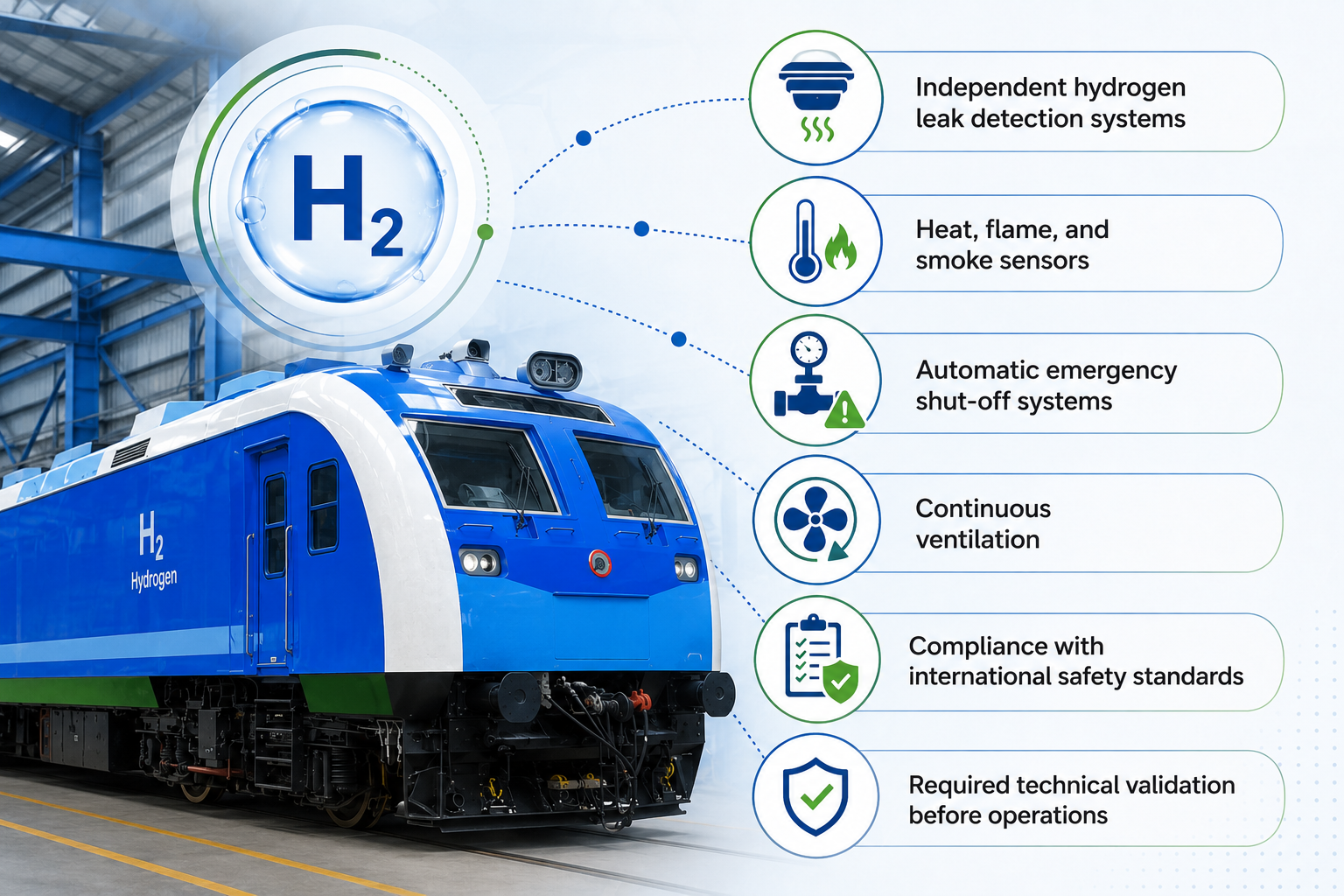
Delhi route trials planned next
Following the successful trials between Jind and Sonipat, Indian Railways plans to start the next phase of testing on the Delhi route. The Railway Ministry stated that the project aims to create a complete local hydrogen rail ecosystem while helping India’s transition to cleaner and zero-emission rail transport.
Also Read: Big branding opportunity: Noida Metro Aqua Line offers co-branding rights for 12 stations