Delhi Metro | DMRC Chief Mangu Singh replies on all possible questions on metro rail projects in India

New Delhi: Managing Director of Delhi Metro Mangu Singh explains why construction of metro rail in India is different from anywhere in the world, explains why a 24/7 metro service is not possible, says DMRC has enough revenue to sustain the airport service, and justifies metro construction in smaller cities as a “wise step”.

In January 2012, Mangu Singh took charge as Delhi Metro Rail Corporation (DMRC) chairman, stepping into the large shoes of predecessor E Sreedharan. Singh has been associated with the DMRC since its inception almost two decades ago. He has also assisted several state governments in setting up metro rail in cities such as Mumbai, Bangalore, Chennai, Hyderabad, Kolkata and Kochi. With more and more states realising the  significance of mass transit modes such as the metro in improving the quality of urban mobility and urban life itself,  Mangu Singh’s role in metro development across the country is only going to get more significant.

Internationally metro stations are close to where people live or work, though this is not the case in India. We also have the issue of last-mile connectivity. There is not much public transport to cover that. How do you plan to set that right?

If you see the geography of the major cities in the world, Delhi is slightly different in comparison to Paris or London or any other international city. They have very well-defined central business districts and so the traffic is well defined too. In Delhi, this is not the case. There are many CBDs (central business districts) — Nehru Place, Connaught Place, Karol Bagh and now Noida, Gurgaon. The location of the station of course has to cater to different areas. We have tried to cover almost the entire Delhi-NCR. The only issue is that the network is still not complete, certain areas are not covered, there are areas from which the stations are quite far away. But I am confident that once Phase-3 and Phase-4 (of metro construction) is completed, all areas will be covered. About the last-mile connectivity issue… see we are carrying around 27 lakh passengers every day, and if the Delhi Metro is expected to provide connectivity to each passenger, then it is not practically possible. In fact this last-mile connectivity has to be with the help of other modes of transport — buses, taxis, and other public transport systems. Delhi Metro Rail Corporation (DMRC) has started feeder bus services, but their purpose is not to cover entire Delhi for lastmile connectivity. We started the service only to fill the gaps where we feel that no other mode of transport is available.

What is Transit Oriented Development (TOD) and do you think this will address the problem of last-mile connectivity?

The concept of TOD basically means that along the (metro) corridors, since you have a means of efficient public transport, you don’t need to use your private car. If you allow dense development along a metro station or a metro corridor, then the traffic is reduced, and the same space can accommodate more people. But allowing high rises along the corridors will not take care of the existing problem. If you have transit oriented development where the services, the facilities are all planned in such a way that the requirement of movement is reduced… so to that extent the use of private cars will reduce, number of trips will reduce, the requirement for a journey will reduce. So this will certainly help to the extent that the additional burden will come down, but it will not reduce the existing burden.

How do you decide on areas that need a metro corridor? Is there pressure from politicians, the general public and do you take that into consideration?

First, I will say no. Why… because there is a scientific way of deciding the corridors. Whether it is city or a region, there is planning about the kind of development that needs to be done — whether residential, commercial or institutional — and with that you work out which will be the best origin and destination, how the traffic will move from one area to another area etc. Based on these factors, we decide the corridors. In our country, for most of the cities we know the corridors. Even a common man can tell you which corridor is a priority. The problem comes when there is a new area. For a new area there are tools available, and (using these tools) you work out the development planning, and then decide the corridors. Yes… the big projects cannot be taken up without political support. So there are cases where you know five or ten corridors are required, (but) which one has to be taken up, of course this has to be decided by the political system.

Before the metro came in, the Delhi Transport Corporation (DTC) used to be the main feeder service in the city, but now that the metro has come in, a lot of these routes have become redundant. So is there an engagement between the DTC and Delhi Metro in terms of rejigging the routes?

Yes. When a project is planned, the DMRC prepares a detailed report, like in the case of Phase-4 construction, and that fits into the overall planning of the city. The transport department of Delhi government has got a study done for the entire city and these (metro) corridors more or less fit into that. Before the project is finally sanctioned, it is studied by the transport department of the Delhi government, which ultimately controls the DTC also. So that is how the synergy is developed. Let me put it this way — the planning is not in isolation. When the metro came into the picture, this was one of the requirements, that DTC routes should be rationalised and should be changed if need be.

Why can’t the metro be round the clock?

Today we are running upto 11pm. So when we say 11pm, the last train starts at 11pm. By the time it reaches the depot, it is past midnight, 12.30 am or so. In the morning metro starts at 6 am, so work has to begin around 4.30-4.45 am or so. So we have (just between) 12.30 and 4.30 am when all trains need to be inspected and made ready for next day. When a train comes in the morning, there are many requirements. Somebody has to inspect it and certify that the train is fit to run.

You are part of DMRC, but you have a lot of work outside Delhi too. How do you balance the assignments?

We have a separate organisation for taking up projects outside. We have a full -fledged director who looks after the projects outside. Also, wherever we take up projects, we create a full-fledged organisation there. Like in Jaipur, there is a project director, similarly in Kochi there is a project director, a chief engineer, an electrical engineer. Yes of course there is always support from the head office, the brain is in the head office. There are regular visits, I have to visit every other month or so.

There is talk of driver-less metros in Phase-3 corridors. Can you explain how that will work?

Let us not call it driver-less. It is a completely automatic system, without any human intervention. So this is a development in metro operations. Even today in Phase-2 our trains are almost automatic, except only a few operations where the train operator has to be there. And this is for safety consideration. Human intervention has to be avoided completely. So in Phase-3 we are taking a step forward. For operation of Phase-3, there will not be any human intervention, it can run on its own. So to that extent we can say it is a driver- less train. But it really does not mean that there will not be a driver or trains will be unattended. In case of failure of the systems somebody has to take care of it.

There have been many complaints with the new land Bill. How does Delhi Metro manage land acquisition?

Fortunately, so far there hasn’t been any case where we require private land under the new Act (Land Acquisition, Rehabilitation and Resettlement Act, 2013), because we also believe it is almost impossible to acquire land under the new Act. Earlier, whatever land was required, it was acquired under the previous Act and we got it. There was an emergency clause and requirement of land was conceived as an emergency requirement. It was challenged many times in the courts, but the court finally said that for a project of such importance, if land is needed, it is an urgent requirement. But, because of this new Act, we have started negotiating with the landowner directly. Under the new Act, the landowners are very happy with the scale of compensation. They are willingly coming forward to give the land. So we are tackling the problem on a case-by-case basis by approaching individual landowners.

What has been your experience with the airport metro? Is it financially sustainable?

Today we are in a situation where we are earning enough revenue to run the service. Whatever revenue we earn is enough for running the system. Of course the initial expenditure, the capital, it is still not possible to recover that. When this line was conceived, we didn’t plan to recover the capital cost in the initial years itself. This was expected 30 years down the line. So today we can’t say anything; it has huge potential. Say for example, when this line was being contemplated, it was planned that all the operations will shift to T3 (Delhi airport terminal) and that is how this station was planned there. Today, the domestic airlines are still operating from Terminal 1. But we believe that once the operations are shifted to Terminal 3, the traffic on airport line will increase drastically.

To increase ridership in all mass transit modes, do you think there is need to disincentivise car users through measures such as congestion tax?

This is a necessity otherwise also. To make public transport system sustainable, to reduce the pollution levels and save precious foreign exchange on fuel (it is necessary). The government should take all necessary steps to curb the use of private vehicles.

Have you recommended it?

There is no need for recommendation, everybody knows that.

Are you in touch with E Sreedharan? Does he still play any role in DMRC?

We are still in touch. In fact, for Kerala’s Kochi project, we are fully dependent on him, as he is very active there. He comes almost once a month here, not for DMRC work but he is involved in the Railway Ministry, he is nominated in some committees. He is advising the Uttar Pradesh government on Lucknow metro, and the Andhra Pradesh government too.

Can you tell us a little bit more about projects outside Delhi and Mumbai.

Outside Delhi, in Jaipur, the first stage of almost 10 km is already open. Now 4 km is under construction. Then Mumbai line three, that is 33 km, is being undertaken. In addition to that, Maharashtra CM Devendra Fadnavis is very keen that some corridors be completed in the next few years and he has in fact approached us, that we take up one or two corridors there. But we have not taken a final call.

Which corridors are these?

He has given us a long list of under 20 km. I have been to Mumbai and visited all of them and suggested two corridors which can be competed in three-and-a- half to four years. One is on the Eastern Expressway and other on Link Road, parallel to the Western Railway corridor. In Nagpur too, they have formed an organisation like DMRC and we have prepared two DPRs (detailed project reports) for them. In Kochi, we are constructing a 25-km line. The latest addition would be Vijayawada — as Chandrababu Naidu is very keen and the Andhra government wants Delhi Metro to execute the project. Ahmedabad is also very active. Even in Lucknow we have prepared the DPR.

Do the cities like Kochi, Vijayawada, Nagpur have enough people to sustain a metro ?

It is a very difficult question. If you go to Europe, you find a metro in a city with a population of just two lakh. If you don’t construct today, to construct them (metro lines) after 10 years would be even more difficult. It is a wise step to start now.

Do you think at any point in time the Delhi Metro will actually go public to raise funds?

We really do not know how Phase-4 will unfold finally. As things stand today, Japan International Cooperation Agency (JICA) has revised terms for funding and right now it is not acceptable to the government. JICA has fundamentally said that they will provide funding only if it’s a step loan. Step loan means that you have to compulsorily purchase part of the project from the Japanese only. Those conditions are right now not acceptable to the government. There might be possibility of funding Phase-4 by other means — maybe through domestic borrowing or maybe going partly public. But we may not go for public share because we are still negative on the bottom line. If we see our balance sheet, we are still in loss. But we can go for tax-free bonds.

The Delhi Metro has done well on the carbon credits front. What is the way forward to further reduce your carbon footprint? Have other government agencies approached you on how the model has worked ?

I don’t think other government agencies can replicate us, as we are rail-based transport system. We can be of help to other metros. To that extent, yes, we have now registered with the United Nations Framework Convention on Climate Change (UNFCCC), and the other metros, if they want, can join us and get carbon credits. Unfortunately, today the market value of credit is very less. But apart from the value, it is the importance of getting certified for reduction in carbon dioxide that is more important. For the first time, anywhere in the world, a tender was floated for procuring the rolling stock, and we gave weightage to energy efficiency. In fact, because of this we landed in dispute and had to go to courts. This was a very bold step, where we said that we will count energy efficiency and convert it to money terms, add to the account and see who else is eligible. Because of this our Phase-3 trains will be more efficient.

What is the kind of role the DMRC takes outside India and what are the projects ?

We are so involved in our own country, that we have really not gone outside. As a first step, we have gone to Dhaka. There our role is of implementing a metro project as a general consultant, which is led by a Japanese company. To a small extent, we have gone to Jakarta, again with a Japanese firm. We are in much demand in the Middle East and Africa too.

Why is photography prohibited inside the train?

Truly speaking, even I don’t know why it is prohibited. In fact I have told my people to find out a way to relax the norm. Because even at the airport it (photography) is not prohibited. This (prevention of photography) has been done by the security agencies and we should go ahead in consultation with them. And nowadays, this rule is very difficult to enforce, as every mobile phone has a camera.

Delhi Metro|DMRC records highest ever ridership of 31.75 lakh on Raksha Bandhan

New Delhi: The Delhi Metro witnessed a huge rush of commuters in view of Raksha Bandhan.

”It recorded the highest ever ridership of 31.75 lakh” a DMRC spokesperson said today.

”The Delhi Metro normally witnesses huge rush of commuters prior to the day of Raksha Bandhan,” the spokesperson said.

The Delhi Metro had announced that it would run about 210 extra train trips on August 28 and 29 to meet the extra rush of commuters on the occasion of Raksha Bandhan.

In 2014, over 25.5 lakh passengers travelled in Metro a day before Rakhi whereas over 21.8 lakh travelled on the day of Rakhi despite being Sunday, whereas the average Sundays ridership during Rakhis month in 2014 was 18.1 lakh, the spokesperson added.

Delhi Metro |Recruitment notice for Managers and Junior Engineers

The Delhi Metro Rail Corporation (DMRC) has notified recruitment to fill up various vacant positions of Assistant Manager and Junior Engineer in civil discipline on contract basis.

Job details:
1. Assistant Manager (Civil): 31 posts
2. Junior Engineer (Civil): 100 posts

Eligibility criteria

Educational qualification:
1. Assistant Manager (Civil): Minimum 60 per cent marks or equivalent CGPA in B.E./B.Tech (Civil) from a Government recognised university/ institute, with a valid GATE Score in 2014.
2. Junior Engineer (Civil): Three years Diploma in Civil Engineering from recognised institutes or equivalent.

Age limit:
Not more than 28 years and minimum 18 years. Relaxation in age will be provided as per the government norms.

Selection procedure:
Assistant Manager (Civil) post: Written test (two papers), group discussion and personal interview and medical examination.
Junior Engineer (Civil) post: Written test (two papers), personal interview and medical examination.

Pay scale:
Assistant Manager (Civil): Rs 20,600 to Rs 46,500 per month.
Junior Engineer (Civil): Rs 13,500 to Rs 255,20 per month.

How to apply:
The candidates interested in these posts are required to fill the online application form.

Important dates:

The last date for submission of online application: September 20, 2015.

Click here to buy books for preparation of written exam for the aforesaid posts.

Metroman|Know 7 facts about Dr. E. Sreedharan (Ex-DMRC Chief)

The man who has revolutionized the way Delhites commute every day, E Sreedharan has emerged as the country’s first choice for the next Railway Minister. He’s the backbone on which the rests the success of the Delhi Metro Rail Corporation. In his personal like, he’s a simple man and a resident of Ponnani in Kerala.

Today, breaking the barriers of time and cost, Delhi Metro has become the lifeline of the locals. There’s a train every few minutes, the commuting time has been considerably reduced, you need not worry about getting stuck in the traffic and above all, women can rely upon the Metro for safe travel.

It’s high time the country honors the “Metro Man” and utilizes his capabilities. The proposal of having him as the next Railway Minister is a welcome move.  Let’s find out below, some facts about him, which all Indians must know and be proud of:

  1. A Retired IES (Indian Engineering Services)

    Elattuvalapil Sreedharan – a Kerala born personality, completed his Civil Engineering from the University College of Engg., JNTUK, Andhra Pradesh. Later on, Sreedharan succeeded to clear the prestigious ESE (Engineering Services Exam, now known as IES) and joined the Southern Railway as a probationary assistant engineer in the year 1954.

  2. He Was A Lecturer

    For short period of time, Sreedharan Sir worked as a lecturer of Civil Engineering before joining the Bombay Port Trust as an apprentice. He used to teach at the government Polytechnic, Kozhikode (Calicut).

  3. Believes in Performing at 101%

    When Sreedharan was posted in Southern Railway, a cyclone in 1964 severely damaged the Pamban Bridge that connected Rameshwaram to the mainland Tamil Nadu (TN). It was a great loss to tje people of Rameshwaram, who were left isolated from TN. The Railways set a target of six month to repair the bridge and pull back life to normal. His boss who was in charge of this ambitious project put Sreedharan (barely 30 at the time) to restore bridge operations within a short deadline of 90 days. This further cut in time limit doesn’t make Sreedharan lose his enthusiasm, cool-off his spirit and as a reward, he completed the project within record 46 days. The Railway recognized his achievement and hard work by felicitating Sreedharan the Railway Minister’s Award. This story tells us how much Sreedharan is devoted to his profession irrespective of conditions.

  4. He Engineered India’s First Metro

    Sreedharan earned the post of deputy chief engineer in the year 1970. He was assigned with the task of blueprinting Calcutta Metro plan and its implementation. It was going to be the first ever metro in India and millions of eyes were on the fate of project. To everyone’s surprise, Sreedharan not only completed this much heralded project but also laid down the foundation of modern infrastructure engineering in India. In 1981, as the Chairman and Managing Director (CMD) of Cochin Shipyard, Sreedharan guided the first ship building project named MV Rani Padmini and successfully launched it.

  5. He Is a True Traveler

    Sreedharan’s journey in government services came to an end after he retired from Indian Railways as Member Engineering in the year 1990. Post retirement, he was appointed as the CMD of Konkan Railway on contract basis in 1990. He completed India’s first major project under BOT (Build-Operate-Transfer) basis. After being widely acclaimed for Konkan project, Sreedharan was made the MD of Delhi metro. Again here with his magic wand (Both hard work and professional skills), Sreedharan completed all schedule sections within budget and without any deadline extensions. Due to this, he was awarded a three year extension to oversee the Phase-II of Delhi Metro. His 16 year journey at Delhi Metro came to an end on 31 December 2011.

  6. The Lights Are Still Not Dimming

    Numerous years in Railway’s service and then, 16 years at Konkan and DMC project, Sreedharan still refuses to hang his boots. He has been appointed as Chief Advisor for proposed Lucknow Metro project and Principal Advisor of the Kochi Metro rail Project.

  7. Spectacles into Sreedharan’s Personal Life

    People still wonder what really makes him tick at 80 while a young man at his 20’s struggle to begin his day at 6 or 7 in the morning. Er. Sreedharan day starts at 4 am, followed by a series of meditation rounds of Bhagwad Gita. He reaches office at 9:30 am and gets straight to work. In the evening, he usually takes a long walk with his wife Radha and allocates time to his family of four children. He used to setup reverse clocks to show impending deadlines to his project members during Delhi Metro construction phase. The message of the Gita: To act, without desire for the fruits of the action gave him the courage to act. A plate placed his Kerala office read as: ‘whatever to be done, I do. But in reality I do not do anything’.

Kanpur Metro|Kanpur ideally suited for Metro Rail service

Kanpur: Vehicular growth in Kanpur is 6.5 fold, that is more that the population growth and less than 5 per cent of the population uses four wheelers for commuting in the city, says the detailed project report (DPR) of Kanpur Metro project prepared by Rail India Technical and Economic Service (RITES).

According to the DPR, the maximum number of commuters are pedestrians (26.8%), followed by two-wheelers (25.3%), bicycles (18.6%) and autos (16.6%). A negligible number of 0.7% commute by trains. As stated earlier, only 4.9% commuters use four-wheelers. Kanpur is therefore ideally suited to have a mass rapid transport system like the Metro.

This significant information was revealed during a meeting held between Kanpur Nagrik Manch (KNM) with Madhukar Jaitley, special advisor to the chief minister of UP on August 27, when the KNM delegation met him.

At present, on route no.1 (from IIT to Naubasta via Phool Bagh) there will be 28 rakes of 4 cars each and on Route no. 2 (from CSA to Barra via Rawatpur) just 9 rakes. The only grey area in the DPR is its projection of Peak Hour (PH) boarding, that is the number of passengers, that will board the train at a given station, informed Chhotey Bhai Noronha, one of the members of the KNM delegation.

According to DPR, the maximum PH of 11,300 will be at Rawatpur, followed by Vasant Vihar (before Naubasta) and Kalyanpur with 5,300. Kanpur Central is projected at 4,800 and Bada Chauraha at just 2,100.

Raising question on the information contained in DRP, the KNM observed that whoever had arrived at these figures perhaps has not seen the crowd at Ghantaghar near Kanpur Central and at Bada Chauraha in the heart of the city. Engineers based at IIT should not try to project Rawatpur and Kalyanpur as the city’s hubs, said Noronha.

The delegation members urged the special advisor that the major part of the Metro should be underground and the route be extended to Naubasta via Ghantaghar. They also expressed hope that the Metro would be extended to Ramadevi and Chakeri airport in the East and to Shuklaganj in the North.

KNM has expressed appreciation for the keen interest taken in the Metro project by divisional commissioner Mohd Iftikaruddin and vice-chairperson of Kanpur Development Authority (KDA) Jayshree Bhoj.

Pune Metro|PMRDA proposes Metro line from Shivajinagar to Hinjewwadi

Pune: The newly constituted Pune Metropolitan Region Development Authority (PMRDA) has proposed a Metro rail line from Shivajinagar to Hinjewadi even as the Pune Metro rail project to be implemented by Pune Municipal Corporation (PMC) and (PCMC) for other routes await the Union government’s nod for implementation.

“The PMRDA proposal was approved by all members unanimously. The route will pass through PMC and PCMC to end up at the Information Technology park of Maharashtra Industrial Development Corporation (MIDC),” said PMC mayor Dattatraya Dhankawade.

The PMRDA can start planning after the state government’s approval, he said. “The responsibility of the project along with its funding would be on PMRDA,” Dhankawade said. Earlier, the PMRDA had proposed to take up the implementation of Pune Metro rail project but it was opposed by both PMC and PCMC. Also, the PMC had expressed its reservations on Light Rain Transport (LRT) proposed by JICA from Shivajinagar to Hinjewadi, citing huge expenditure for the project and arguing that the civic body could not take up its responsibility as only part of the route passed through the PMC area.

Of the 21.6 km distance between Shivajinagar and Hinjewadi, only 6 km passes through PMC while the rest passes through PCMC and MIDC areas. The JICA report had proposed 20 elevated stations and 3 on-road stations on the 21.6 km route for the LRT that would run at 80 km per hour between Shivajinagar to Hinjewadi. The estimated cost for LRT was Rs 5,769 crore.

Smart City Project|Govt announces 98 Smart City names in India

New Delhi: Parliamentary affairs minister Venkaiah Naidu announced nominations of 98 cities for its ambitious Smart Cities project on Thursday. Remaining two cities will be announced later. As per the five-year plan, the government will allocate Rs 200 crore this year and follow up with Rs 100 crore every year for remaining four years. The cities will be developed to provide world class infrastructure, sustainable environment and smart solutions.

The cities were chosen through intra-city competition evaluated on parameters such as service levels, financial and institutional capacity, past track record and reforms.

Twenty-four of the 98 cities selected are capital cities, while 8 have population of 1 lakh or below. UP, Tamil Nadu and Maharashtra have got maximum nominations.

Here is the list of states and number of cities that have been nominated by the government:

  • Andaman and Nicobar Islands 1 (Port Blair)
  • Andhra Pradesh 3 (Vishakhapatnam, Tirupati, Kakinada)
  • Arunachal Pradesh 1 (Pasighat)
  • Assam 1 (Guwahati)
  • Bihar 3 (Muzaffarpur, Bhagalpur, Biharsharif)
  • Chandigarh 1
  • Chhattisgarh 2 (Raipur, Bilaspur)
  • Dadra and Nagar Haveli 1 (Silvassa)
  • Daman and Diu 1 (Diu)
  • Delhi 1 (NDMC)
  • Goa 1 (Panaji)
  • Gujarat 6 (Gandhinagar, Ahmedabad, Surat, Vadodara, Rajkot, Dahod)
  • Haryana 2 (Karnal Faridabad)
  • Himachal Pradesh 1 (Dharamshala)
  • Jharkhand 1 (Ranchi)
  • Karnataka 6 (Mangaluru, Belagavi, Shivamogga, Hubballi-Dharwad, Tumakuru, Davanegere)
  • Kerala 1 (Kochi)
  • Lakshadweep 1 (Kavarrati)
  • Madhya Pradesh 7 (Bhopal, Indore, Jabalpur, Gwalior, Sagar, Satna, Ujjain)
  • Maharashtra 10 (Navi Mumbai, Nashik, Thane, Greater Mumbai, Amravati, Solapur, Nagpur, Kalyan-Dombivali, Aurangabad, Pune )
  • Manipur 1 (Imphal)
  • Meghalaya 1 (Shillong)
  • Mizoram 1 (Aizawl)
  • Nagaland 1 (Kohima)
  • Odisha 2 (Bhubaneshwar, Raurkela)
  • Puducherry 1 (Oulgaret)
  • Punjab 3 (Ludhiana, Jalandhar, Amritsar)
  • Rajasthan 4 (Jaipur, Udaipur, Kota, Ajmer)
  • Sikkim 1 (Namchi)
  • Tamil Nadu 12 (Tiruchirapalli, Chennai, Tiruppur, Coimbatore, Vellore, Salem, Erode,  Thanjavur, Tirunelveli,Dindigul, Madurai, Thoothukudi)
  • Telangana 2 (Greater Hyderabad, Greater Warangal)
  • Tripura 1 (Agartala)
  • Uttar Pradesh 13 (Moradabad, Aligarh, Saharanpur, Bareilly, Jhansi, Kanpur, Allahabad, Lucknow, Varanasi, Ghaziabad, Agra, Rampur)
  • Uttarakhand 1 (Dehradun)
  • West Bengal 4 (New Town Kolkata, Bidhannagar, Durgapur, Haldia)

* Jammu & Kashmir has asked for more time to decide on the potential cities)
* 12 cities have been shortlisted from Uttar Pradesh against 13 cities nominated for Smart City project

Delhi Metrino Transport Project|Gadkari says, Work to begin on Metrino project in 6 months

New Delhi: Government’s ambitious Rs 4,000 crore ‘Metrino’ public transport project, which will enable people to travel in driverless pods suspended to a ropeway in the national capital region, will hit the ground soon.

A presentation on the project was made before Prime Minister Narendra Modi and the entire Union Cabinet last evening and the work would start within six months, Road Transport and Highways Minister Nitin Gadkari said on Thursday.

To start with, the Metrino project will connect the 70-km stretch from Dhaula Kuan to Manesar in Haryana.

“A detailed project report on the Metrino project will be prepared within a couple of months and the work may start within six months,” Gadkari told agency.

He said if all went as per plans Delhi will have Metrino in two years time which will decongest national capital region’s highways as the pilot project is planned between the 70-km stretch from Dhaula Kuan to Manesar on NH-8.

“The ropeway like system runs on electricity and driverless pods will come down at the designated station thus removing the traffic burden from already congested roads. The capital cost of metro is Rs 250 crore per km whereas this will cost Rs 50 crore per km,” he said.

Gadkari said massive work is underway to reform the face of the highways sector and the pilot project will be one such step in this direction.

Under the project, fully automatic, driverless small pods travel independently suspended over an overhead network which is usually 5-10 meters above ground.

Meanwhile, an official said that Delhi government has also shown keen interest in the project.

Bangalore Metro|BMRC starts safety trial of metro train of Reach-2 project

Bangalore: Commercial operations on the Metro railway line between Magadi Road and Mysuru Road stations may start by mid-September as the Commission of Railway Safety (CRS) began safety trials on the stretch on Wednesday.

Having missed several deadlines in the past, the line was to open in June but the launch was postponed until the end of July. Then came the Bruhat Bengaluru Mahanagara Palike (BBMP) elections, and the BMRCL (Bangalore Metro Rail Corporation Ltd) got more time to complete the pending works.

Safety trial by the Commissioner of Railway Safety, S K Mittal, went on till Wednesday evening and will go on for two more days, BMRCL officials said.

 While BMRCL officials were tight-lipped about when the line will be opened to public, sources said that if the trial got over within a week, commercial operations could begin by mid-September.

In March this year, the BMRCL had transported coaches through the underground line between Cubbon Park, Vidhana Soudha, Sri M Visvesvaraya and Majestic railway stations, and on the elevated stretch till Magadi Road and beyond.

The purpose was to transport the coaches to be run on the elevated stretch between Magadi Road and Mysuru Road stations, which doesn’t have a depot nearby. The tunnel’s safety was tested at the same time.

The Tunnel Boring Machine (TBM), ‘Krishna’, which is tunnelling between KR Market and Chickpet Metro stations for over a year now, is all set to emerge out in the next two days.

The TBM tunnelled 417 metres till last week and has to dig just 10.5 metres more to reach the Chickpet station and achieve a breakthrough, BMRCL officials said.

The presence of hard rocks under the ground level slowed down the machine’s work. It also had to avoid causing any disturbance above the ground level.

After reaching Chickpet, the TBM will be launched on the second tunnel between Chickpet and Majestic stations. TBM ‘Kaveri’, which is also tunneling between Chickpet and Majestic stations, has covered 336 metres so far and has to dig another 404 metres to reach the Majestic station.

Chennai Metro|CMRL to generate more revenue through movie shooting in metro

Chennai:  With the actual hustle and bustle yet to set in, the Chennai Metro Rail is considering to open its doors to other revenue modes, which includes renting out station premises for film shoots, said senior officials.

Only the 10-kilometre stretch between Koyambedu and Alandur has been completed so far, due to which the nascent network is yet to receive the actual expected patronage. The revenue from users, at present, is quite an eligible figure when compared to the operating costs.

Officials said that till the rest of the network is up and running, the authorities would look at various options to bring in revenue.

“Discussions were held with both Delhi and Mumbai metro officials regarding the procedures before deciding to open up for film shoots,” sources said.

“Delhi and Mumbai charge four lakh a day and this could be the tentative pricing,” said a Metro Rail official, adding that the real cost would be worked out by the other officials here. Sources said film units would be permitted only during the lean hours to avoid any hardships to the commuting public.

The idea is to have 70 per cent of revenue through ticketing and 25 to 30 per cent revenue through other sources like ATMs, shops and advertisements put up at the station, the official explained.

He said that currently there were nearly 10,000 commuters taking the metro rail services on a given day. “It is only on the weekends that we are find more than 20,000 people. Most of whom are first time-users,” he said.

“We are expecting about 60,000 passengers a day once the 20-km stretch from Chennai Egmore to St Thomas Mount, and also the stretch between Little Mount to Airport are completed,” he added. Of the 20 kms, nine will be an underground stretch from Chennai Egmore to Thirumangalam.

“Once the entire first phase is completed, we expect more than one lakh people to use the Chennai Metro Rail for their daily commute,” the official added.

Bangalore Metro|Karnataka HC notices to Railways, Govt on PIL against PPP Pact on Metro Station

Bangalore: A division bench of acting Chief Justice S K Mukherjee and Justice B V Nagarathna gave the order on the petition by Bengaluru Residents’ Associations’ Confederation Ensemble (BRACE) and others.

The petitioners contended that the agreement between the BMRCL and Mantri was illegal and that the 2.

5 acres of land acquired by the Karnataka Industrial Areas Development Board (KIADB) could not be handed over to a third party. They also argued that the land acquired for Swastik station was transferred to the company in the name of a PPP project and that would benefit only Mantri, not the State government. They appealed for quashing of the agreement.

Opening park to public: The Union government has sought two weeks from the High Court to file objections to a petition filed by one B R Sharan Kumar for opening the General Cariappa Memorial Park off MG Road to the public.

Kumar contended that the park, spread over 22 acres, is a public amenity and people must be allowed into it. Since the Karnataka government contributed Rs 50 lakh to the park’s development, banning people from entering it is unacceptable. A division bench of acting Chief Justice S K Mukherjee and Justice B V Nagarathna on Wednesday gave the Centre two weeks to file objections and adjourned the hearing.

Mumbai Metro|Rs. 35,400 crore sanctioned for 118-km Metro network

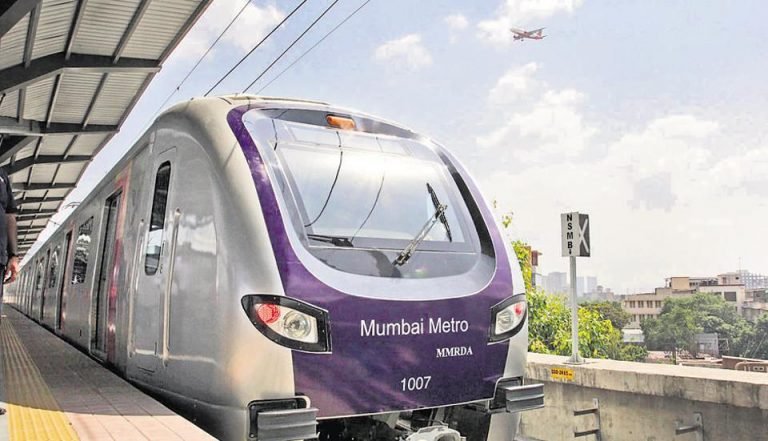
Mumbai: The Chief Minister and Chairman, MMRDA, Mr. Devendra Fadnavis, during the 138th Authority Meeting, held today, arrived at a few coherent policy decisions and sanctioned the expenditure of Rs. 35,400 crore for the development of 118-km Metro network which includes 40-km Dahisar-Charkop-BandraMankhurd Metro-2 corridor (Rs. 12,000 crore), 40-km Wadala-Ghatkopar-ThaneKasarvadavali Metro-4 corridor via Wadala GPO and R.A.Kidwai Marg (Rs. 12,000 crore), 27-km Dahisar-E-Andheri-E-Bandra-E Metro-5 corridor (Rs. 8,100 crore) and 11-km Jogeshwari-Vikhroli Link Road Metro-6 corridor (Rs. 3,300 crore).

In this context, the Authority has accepted two Detailed Project Reports – one for the 16.5-km Andheri-E to Dahisar-E Metro corridor and the other for 18.6-km Dahisar to D.N.Nagar Metro corridor – prepared by the Delhi Metro Rail Corporation and has recommended these two corridors estimated at Rs. 4,737 crore and Rs. 4,994 crore respectively for the State approval. While the Authority has recommended, to the State, raising of funds from various financial institutions such as World Bank, Japan International Cooperation Agency and other national and international financial institutions.

The Authority further afforded administrative approval to the estimated expenditure of Rs. 743.73 crore for the construction of three elevated roads to clear traffic chaos at Bandra-Kurla Complex and Santacruz-Chembur junctions. The 1.3-km elevated road running from MTNL junction to LBS Flyover and the 3.45-km elevated road from Kurla (Kapadia Nagar) to Vakola near Western Express Highway (Rs. 480.63 crore) will help clear SCLR junction. Similarly another 1.9-km elevated road from Bharat Diamond Bourse in ‘G’ Block to Vakola junction near Western Express Highway (Rs. 263.09 crore) will help decongest BKC junction as the motorists will be able to reach Vakola straight from the ‘G’ Block in the Bandra-Kurla Complex avoiding BKC junction.

The Authority further gave boost to the Bandra-Kurla Complex by demarcating 20 Hectares of plot in ‘G Text’ Block for an International Finance Service Centre and approving Rs. 95.57 crore expenditure in order to afford smart status to the complex by making it wi-fi able and providing smart parking, integrated building monitoring system, command and control centre, energy efficient street lights, bus service etc.

The Authority has also approved the development of Kalyan Growth Centre and the estimated expenditure of Rs. 1,089 crore for the same. This growth centre will be well connected by road and rail routes and will create job opportunities outside Mumbai and contribute to balanced development of the metropolitan region what with the MMRDA taking up infrastructural development sooner than later.

The metropolitan region has also received nod from the Authority to the road development work estimated at Rs. 60.61 crore in areas such as Palghar, Kalyan, Ambarnath, Karjat and Kulgaon-Badlapur.

The Authority also approved the submission of draft regional plan to the Metropolitan Planning Committee.

The draft contains proposals related to population, employment, land use, housing, transportation and environment.

Delhi Metro|DMRC to increase frequency of trains during off peak hours from August 31

New Delhi: The Delhi Metro Rail Corporation (DMRC) has decided to increase the frequency of trains on weekdays (Monday to Friday) during off peak hours i.e. from 11:00 AM to 04:30 PM by inducting twenty more trains into service from the existing train stock from 31st August 2015 (Monday) onwards. The average frequency during off peak hours will be as follows:

  • Line-1 (Red Line) Dilshad Garden to Rithala: 4 min 06 sec
  • Line-2 (Yellow Line) HUDA City Centre to Jahangirpuri: 2 min 45 sec
  • Line-3/4 (Blue Line) Dwarka Sec-21 to NOIDA City Centre/Vaishali: 2 min 47 sec
  • Line-6 (Violet Line) ITO to Badarpur: 4 min 12 sec

The above is being done in view of increasing ridership and after conducting a detailed operational & maintenance study so as to provide additional services to the commuters.

Further, in view of the increased ridership observed by DMRC in earlier years on the day before and on Rakshabandhan itself, the Delhi Metro will also run about 210 extra train trips on 28th August 2015 and on ‘Raksha Bandhan’, i.e. 29th August 2015. In order to operate 210 additional trips, DMRC will deploy additional staff and officers. Routine maintenance of trains will be deferred.

DMRC will also deploy additional personnel at stations to cater to the extra rush of commuters expected on these two days. DMRC will deploy 106 additional shifts of Guards/Customer Facilitation Agents (CFA) at 57 major Metro stations to help and guide commuters on these two days. In addition, extra personnel will also be deployed to handle the increased load on the ticketing system and the Metro ticketing staff on 93 Metro stations will do 146 additional shifts.

The Delhi Metro normally witnesses greater rush of commuters on the eve of Raksha Bandhan Day. In 2014, over 25.5 Lakh passengers travelled on a day before Rakhi by the Metro whereas, over 21.8 lakh travelled on day of Rakhi inspite of being Sunday, whereas average Sunday’s ridership during Rakhi’s month in 2014 was 18.1 lakh.

Delhi Metro|PM Modi likely to flag off metro service in Faridabad on Sept 6.

New Delhi: The Badarpur – Faridabad extension of the Delhi Metro is expected to be inaugurated by the Hon’ble Prime Minister of India, Shri Narendra Modi on September 6, 2015.

“September 6 is the date we have proposed to the PMO for the inauguration of the Faridabad metro. However it is expected to be inaugurated between September 6 and September 10,” informed Union Minister and Faridabad member of Parliament Krishan Pal Gurjar.

The Metro Rail Safety Commissioner finished a three-day inspection of the corridor on August 12.

The total length of corridor is 13.

875 Km and is totally elevated section containing 9 metro stations names Sarai, NHPC Chowk, Mewala Maharajpur, Sector 28, Badkal Mor, Old Faridabad, Neelam Chowk Ajronda, Bata Chowk, Escorts Mujesar.