Delhi Metro | DMRC’s new driverless train getting ready for operations from Mukundpur

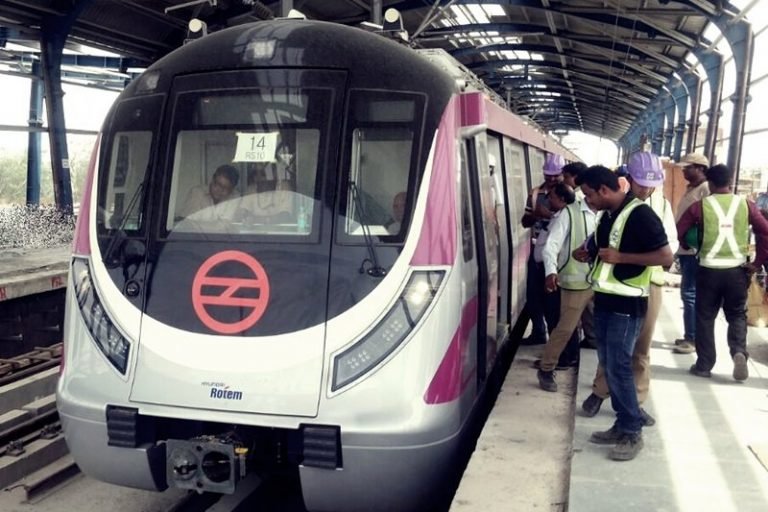
New Delhi: DMRC’s proposed automated train will be equipped with an obstruction deflection device (ODD) which will push away small obstacles on the track that can cause derailment.Delhi Metro Rail Corporation is working on unmanned train project and the plan is not likely to fructify before 2017. These trains will be initially run manually before the auto-pilot modes are enabled, officials said.Public safety will be the utmost priority and it will not be compromised before running these unmanned trains, DMRC’s Managing Director Mangu Singh told reporters. “The trials for the proposed project will itself take a year and until we are ready, we will not start the project,” he said.“The construction work of Phase 3 is progressing satisfactorily and we should be able to complete the civil construction work and commence signaling trials on most of the stretches within this year. This new phase will have new trains and signaling technology called Communication Based Train Control (CBTC). The construction work of Phase 3 has been more challenging than the first two phases because this time, bulk of the construction is taking place within the city while in the last phase, the corridors were primarly moving out of the city to the NCR areas. The quantum of underground construction (55 kms) is also more than the underground work carried out in the last two phases. In terms of length also, the volume of work in Phase 3 is almost equal to the combined construction length of the first two phases,” Mr. Mangu Singh said.Describing the features, Singh said, the trains will have all basic modern-day facilities like wi-fi, and LED screens besides three CCTV cameras. The trains will have two of them installed in the driver’s cabin. One of them will help officials keep a tab on any untoward incident that may occur.“Eventually, these trains will not have a driver’s cabin and hence will increase the carrying capacity of the coach. The features in these trains are so many that you can operate these trains without drivers,” DMRC spokesperson Anuj Dayal said.Once the project becomes a reality, each and every basic function of these trains will be automated thanks to a two-way communication between the operation control centre (OCC) and the train, he said.“The train will be monitored by our men at the OCC, and we have stations every 1 km so immediate assistance is possible,” Dayal said. Unmanned metro rail networks exist in cities like Barcelona in Spain and Vancouver in Canada.

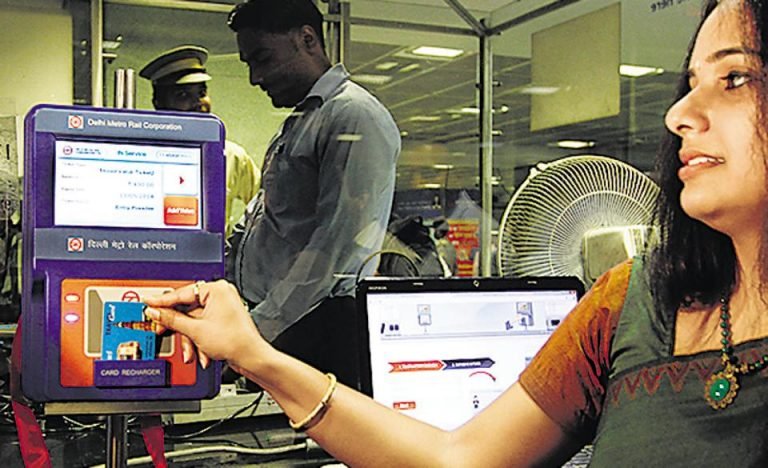
Delhi Metro | DMRC to conduct online Customer Satisfaction Survey

New Delhi: The Delhi Metro Rail Corporation (DMRC) is conducting an online ‘Customer Satisfaction Survey’ through its website – www.delhimetrorail.com, from tomorrow, the 4th of April till the 1st of May, 2016.The questions will try to cover all aspects of Metro’s functioning to assess how the services can be further improved. The aspects which the survey shall cover are – overall satisfaction, availability, accessibility, ease of use, information prior to and during travel, reliability, customer care, comfort, crowding, security etc.This survey is being conducted in association with the two main global bodies for Metro systems – CoMET and NOVA. The survey will be conducted by using the ‘Survey Monkey’ web platform and the questions will be objective type with multiple options so that the respondents can finish the questionnaires within three to five minutes.This survey will be unique in nature as, similar customer satisfaction surveys will also be simultaneously conducted by many other Metro systems across the world. After the completion of this almost month long survey, these organizations will compare the results and share the feedback received globally so that better services can be provided to the Metro commuters worldwide.
buy clomiphene online https://healthcoachmichelle.com/wp-content/themes/twentytwentyone/inc/en/clomiphene.html no prescription
DMRC has been participating in similar surveys since the year 2014. In the survey conducted last year, DMRC was ranked 1st in ‘Information during travel’ and 2nd in ‘Train cleanliness and comfort’ among 20 member Metro systems of the CoMET and NOVA groups.The survey, available in both English and Hindi will cover all major aspects of Metro functioning such as availability, accessibility, ease of use, reliability, crowding, security etc.

Lucknow Metro | European Investment Bank to lend $512 million for Lucknow Metro Project

Berlin: The European Investment Bank will give 450 million euros ($512 million) in loan to India to finance the construction of Lucknow’s first 23 km-long metro rail line and purchase a fleet of new trains.An agreement on the first tranche of the credit was signed in Brussels on Wednesday during the 13th EU-India summit attended by Prime Minister Narendra Modi.The loan represented the largest project financing by European Union’s official bank, also the world’s largest international public bank, in India since its engagement in the country began more than 20 years ago and the most significant investment in sustainable public transport outside Europe, Luxembourgbased European Investment Bank (EIB) said.The 450 million euro ($512 million) long-term loan – expected to cover half of the total project cost for the Lucknow Metro – will be used to finance the first metro line in Lucknow, including both construction of the 23 km-long new metro line and a fleet of metro trains.The line is the first part of a broader metro network planned for Lucknow, the capital city of Uttar Pradesh. When it becomes operational, the new metro is expected to increase the use of public transport from 10 per cent to an estimated 27 per cent in the city of three million people, the bank said in a statement.EIB president Werner Hoyer said the bank would expand its support for long-term investments in India and unveiled plans to open a regional representation for South Asia in New Delhi by the end of this year.The EIB has supported long-term investment across India that has helped the country harness renewable energy, strengthened industry and reduced carbon emissions.The bank recognises that the time is right to increase its engagement in India, Hoyer said.“The first metro line in Lucknow is a flagship project not only for Uttar Pradesh and India, but also for the bank’s strengthened global commitment to support transformational investment,” Hoyer said.The loan agreement was signed by India’s Ambassador to Belgium, Luxembourg and the EU Manjeev Singh Puri and EIB Vice President for Asia Jonathan Taylor in the presence of Modi, European Commission President Jean-Claude Juncker and European Council President Donald Tusk.The EIB had committed loans totalling more than 1.34 billion euros for longterm investment in India since the cooperation began in 1993.

Nagpur Metro | NMRC gets Rs 3,800 crore loan from German development bank KfW

Nagpur: The Nagpur Metro Rail Corporation Ltd (NMRCL) — purportedly the nation’s first green metro — will get a loan of €500 million from the German government’s development bank KfW. The loan will be utilised in several key packages of the project, like rolling stock (the various carriages and engines to be used in the Metro), track, signalling, telecommunication and civil work, NMRCL Executive Director Ramnath S told the Media.“This will be the nation’s first green Metro where 14 MW of power will be generated from rooftop solar panels,” said Ramnath, adding: “We expect to save 65 percent of our power costs with this move. Power takes up 35 percent of the operating cost of a Metro. We will be able to repay a good part of the loan by saving on this head as well as other cost increases.”He told that several other steps had been taken to make the project sustainable. “Floor-Space Index (FSI) on either side of the project has been increased from 1.33 to 4. Part of the revenue generated from this will be redirected to the NMRCL, as will be the case with the stamp duty and registration,” he said.FSI is effectively the ratio between the total floor area of a building to the size of the land it is built on. It is generally limited in urban areas so as to prevent tall buildings from coming up in congested areas, which could be a logistical and infrastructural nightmare in several ways.Meanwhile, the loan, which translates to around Rs 3,800 crore and is being given for a period of 20 years with a moratorium of five years, will be disbursed over three years, depending on the progress of work. “We will get this loan twice a year — in the first and second half,” Ramnath told Media.“Civil work — creation of viaducts — is currently underway in a 12-km stretch of the project, and the tender for similar work on another 8-km stretch of the project, which will stretch over 38 km, will be awarded next week,” he said.“We are looking to complete the work by end 2018,” said Ramnath of the Rs 8,680-crore project, on which work had begun in May 2015.

Meerut/Agra Metro | Official hurdles hampers the Meerut and Agra Metro Rail projects

Lucknow: Official hurdles have hampered the Meerut and Agra Metro Rail projects. Officials attribute this to the state government’s preferential treatment towards the projects in Kanpur and Varanasi. This seems evident as the state budget allocated around Rs 50 crore each for the projects in Kanpur and Varanasi and none for the western UP towns.The detailed project report (DPR) of the Meerut Metro, officials said, is ready but has to be vetted by a team from the Lucknow Metro Rail Corporation (LMRC). The LMRC team’s scheduled visit to Meerut has been pending for over a month, following which a report will be sent to the state government.“There is a long, tedious process before construction work on the Metro can commence. There are two aspects – technical and administrative. The administrative aspect will be taken care of the Meerut Development Authority and the local administration. As far as the technical aspect is concerned, MDA officials have created a DPR. This includes specific technical details like where pillars will be erected and specifications of Metro stations. This DPR will be studied by the LMRC. After this, a team will be sent to Meerut to suggest changes, if any. The MDA and local administration have been waiting for a response from the LMRC but we don’t know why the visit is taking so long,” a government official not wishing to be named told Media.The official further added, “The four Metro projects – Meerut, Agra, Kanpur and Varanasi – were meant to be parallel projects. This implies that work should have been carried out simultaneously. For reasons best known to officials in Lucknow, the Kanpur and Varanasi Metro projects are moving along much further. After the LMRC clears the DPR, the local administration will send a report to the chief secretary, who will send it to the state cabinet for approval. The proposal will then be sent to the Centre.”“Only after the Centre gives its nod to the proposal, the Meerut Metro Rail Corporation (MMRC) will be formed. While we’re still waiting for the LMRC to approve our DPR, the Kanpur project is at the state government level. Also, the Kanpur Metro Rail Corporation (KMRC) is likely to be formed by this year. I can’t say the same for the MMRC.”

Delhi Metro | DMRC approached to be consultant in 10 projects

New Delhi: With an increasing demand for metro projects across the country and the globe, the Delhi Metro bagged consultancy assignments in the financial year 2014-15 in at least 10 projects and worked as a turn-key consultant in three others.Upcoming metros in Dhaka, Jakarta, Lucknow, Ahmedabad, Nagpur, Pune, Vijayawada and Vishakhapatnam, Kerala Light Metro projects in Kozhikode and Thiruvananthapuram, Raipur and Amritsar have DMRC playing a key role, the annual report of the Corporation for 2014-15 tabled in the Delhi Assembly on Tuesday stated.In the capital, the mass rapid transit system touched a high of 31.72 lakh passengers on a single day in August last year. It is set to expand further this year with the commissioning of lines as part of Phase III.A total of 160.57 km will be added to the existing 190 km network and will expand the boundaries by connecting Ghaziabad, Bahadurgarh, Faridabad, Najafgarh among others, the report stated.

Bangalore Metro | Recruitment of Engineers and Law Officers

Bangalore Metro Rail Corporation Limited (BMRCL) inviting applications from the eligible candidates for the recruitment of following positions:- 1. Assistant Engineer: 15 Posts 2. Junior Engineer: 25 Posts 3. Section Engineer: 25 Posts 4. Assistant Law Officer: 01 Post 5. Legal Assistants: 02 Posts 6. Chief Engineer: 03 PostsAge Limit: 35 years for Sr. No. 1 to 5 and 55 years for Sr.No.6.Last date for apply: 25.04.2016 for Sr.No. 1 to 3, 22.04.2016 for Sr. No. 4 & 5, and 11.04.2016 for Sr. No.6.How to apply: How to Apply: Eligible candidates may apply in the prescribed format along with copies of all the relevant certificates, testimonials & in an envelope should be superscribed as “Application for the Post of ——— ” to General Manager (HR), Bangalore Metro Rail Corporation Limited, III Floor, BMTC Complex, K.H.Road, Shanthinagar, Bangalore 560027 on or before the last date of submission of application.For more details, please log on to http://bmrc.co.in/careers.htm

MEGA Metro | Residents reject MEGA’s relocation offer

Ahmedabad : Residents, facing displacement due to a proposed metro rail project here, today rejected the relocation offer made by Metro-Link Express for Gandhinagar and Ahmedabad (MEGA) Co. Ltd. before the Gujarat High Court, arguing that the area in question is “communally-disturbed”.The 22 petitioners, who own houses and shops in Jivraj Park Society, have instead demanded relocation to the plots available in Prahladnagar or Manekbaug areas of the city.The matter was heard by the division bench of Justice Akil Kureshi and Z K Saiyed.MEGA had made an offer to the project affected residents to relocate to a plot bordering Vejalpur and Juhapura. However, they opposed the proposal stating that the area was communally disturbed and was among the first to be affected in the event of communal riots.The residents said they are willing to shift to either of the two areas– Prahladnagar or Manekbaug– which they have suggested, if offered relocation there. MEGA said it would think of the option offered by them.Respondent Anil Gupta, General Manager (Planning) of MEGA, had earlier stated that the company will go ahead to acquire the land if the petitioners agreed to be relocated to the area.The petitioners, including residents and shopowners of Mangal Deep and Vishwakarma Residential Societies of Jivraj Park area from where the north-south elevated corridor of the proposed metro rail starts, had moved the high court, alleging that acquisition of their properties by MEGA was not in accordance with Land Acquisition Act of 2013.They had claimed that they would lose their houses and shops due to the project and state-owned MEGA, undertaking the project of Metro Rail, is not ready to provide anything beyond cash compensation against the acquisition of their properties, which is a violation of the Act.
buy Flomax generic buynoprescriptiononlinerxx.com over the counter
The next hearing on the matter is scheduled on April 12.

Chennai Metro | 4 metro officials arrested for safety lapses at site

Chennai: Four people, including safety engineer and site supervisor, were arrested a day after a worker fell to death at a metro rail work site near Alandur on Saturday. The worker was involved in installing signalling panels and electrification at the Little Mount-Airport elevated line when he slipped and fell into a well where reinforcements for concrete were kept.A police official said, the staff were arrested because they were responsible for safety lapses at the worksite. Chennai Metro Rail Ltd (CMRL) has ordered an enquiry.The accident shows that neither CMRL nor its contractors have learnt their lessons from past experiences. The project has seen more than four fatal accidents since the construction began in 2009.A senior official of metro rail said it was challenging to ensure safety at worksite where labourers from a variety of background work.“The periodic audits done by safety wing suggests ways to improve protection and avoid accidents. Workers are counselled while supervisors are advised to be stern. This has helped in cutting down on accidents. Our track record is good when compared to other metro rail projects,” he added.

Delhi Budget: Delhi Govt. allocated Rs 763 crore for Delhi Metro

New Delhi: Delhi government, which holds a stake in the Delhi Metro Rail Corporation (DMRC), on Monday allocated Rs 763 crore in its budget for the mass rapid transit system, the daily ridership of which is expected to rise to 41 lakh by this year end.At present, about 27 lakh people commute daily across the national capital using the metro. The ridership which is expected to increase to 41 lakh after the completion of its phase-III will bring more areas into its fold, Deputy Chief Minister Manish Sisodia said while presenting the annual budget.One section of the under-construction phase-III network, stretching from Jahangirpuri to Badli, was operationalised in November last year.Last month, the Union government had announced Rs 5,579 crore for DMRC in the Union Budget, a jump of about 31% over the previous year.Besides, about 248 new mini-buses will be inducted in the metro feeder bus fleet, taking their count to 517 across 93 routes during 2016-17.

Delhi Metro | ITO-Kashmere Gate line may open soon

New Delhi: The Delhi Metro, which is facing a delay in the launch of its two new corridors paralleling the Ring Road, is hoping to get at least the Heritage line off the mark. Delhi Metro spokesman Anuj Dayal said, “We are hoping to open the line from ITO to Kashmere Gate before August 15, provided we get all the clearances. This is an internal deadline though, and we have asked engineers to expedite the work.”The Heritage line, which is an extension of the Violet corridor from Central Secretariat, goes via heart of the city, including the congested Daryaganj area. It has stations at Janpath, Mandi House, ITO, Delhi Gate, Jama Masjid, Red Fort and Kashmere Gate. The corridor was originally supposed to be completed by December 2015, but got delayed by several months due to a number of reasons, including a change in alignment at Jama Masjid. Work in fact, has been slow on the corridor, with the Delhi Metro Rail Corporation (DMRC) facing some major engineering challenges from Delhi Gate to Jama Masjid area.The station at ITO had been thrown open to the public last year. The new August-15 deadline comes after Delhi Metro chief Mangu Singh recently admitted that work on the rest of the new network — including the upcoming corridors from Majlis Park to Shiv Vihar and Janakpuri (west) to Botanical Garden— was running behind schedule.
According to Singh, only one of the new corridors, line 8 (Janakpuri west to Botaical Garden), is likely to meet the December 2016 deadline. The other corridor has been delayed “seriously”, Singh had said at the time.
The ITO to Kashmere Gate section was supposed to be commissioned by October this year, but sources said that the DMRC was hoping to throw it open much before that. The major clearance required would be from the commissioner of metro rail safety.A number of problems have been plaguing Delhi Metro on the construction of the extension of the Violet line.

Delhi Metro | Train services to start at 2.30pm on Holi and Feeder bus services will be closed for whole day

New Delhi: On the day of the ‘Holi’ festival, i.
buy cialis black online https://www.facebeautyscience.com/wp-content/themes/twentyseventeen/inc/en/cialis-black.html no prescription
e., 24th March, 2016 (Thursday), Metro services will NOT be available till 1430 Hrs (2:30 PM) on all lines of Delhi Metro including Airport Express Line.Metro train services will thus start at 1430 Hrs (2:30 PM) on all lines on 24th March and will continue normally thereafter.In addition, Metro feeder bus services will NOT be available for the whole day on Holi i.e, on 24th March 2016.

Metrino Project | Global bids for Gurgaon pod taxis in April 2016

New Delhi: Pod taxis, an idea with which Indian states have flirted for years, will finally debut in Gurgaon.The National Highways Authority of India has laid the groundwork to roll out India’s first personal rapid transit (PRT) network and will invite global bids for the project within the next fortnight. The pilot project will span a 13km stretch from the Gurgaon-Delhi border to Badshapur Mod on Sohna Road and is estimated to cost Rs 850 crore.A project called the Metrino (in pic) -a PRT system in which pods are suspended from an overhead rail -has been under consideration for a while. Every pod can take up to five passengers. For the pilot project route, 16 stations have been planned, starting near Ambience Mall. A personal rapid transit (PRT) network is made up of small automated vehicles running at close intervals on a guideway with docking stations for passengers to get on and get off.While a pod can accommodate up to five people, there is also an option to hire an entire pod that will take a passenger straight to the destination, skipping the scheduled stops. The average speed of the pods is 60kmph.A senior NHAI official said the network would be built within a year of the contract being awarded. “Pod taxi systems are best suited for this. We are keeping our options open, though, so that private players can come up with best system, including skyrail,” the official said. A skyrail is also a PRT system, but is more similar to a ropeway .The NHAI official said land required for the project is already available with it and Haryana government agencies. The project does not need forest and environmental clearance. As for financing, the entire investment will be made by the private company that sets up the PRT. Under the terms of the agreement, the company will recover its investment in 25 years through tickets.Union road transport and highways minister Nitin Gadkari had announced last year that Metrinos will run between Dhaula Kuan in Delhi and Manesar. The overhead network for Metrinos has been planned along the expressway . Prime Minister Narendra Modi had travelled in a pod in Masdar City during his last visit to the United Arab Emirates.
The Punjab and Haryana governments had, in the past, announced a rollout of pod taxis in Amritsar and Gurgaon, but these never came to fruition.
According to estimates prepared by the NHAI, while building a kilometre of Metro costs at least Rs 250 crore and of monorail Rs 200 crore, the Metrino system can be built with just Rs 70 crore. It’s lighter as well.
“The NHAI will roll out the project soon. We have set a target of a year. Subsequently , we could extend this to Dhaula Kuan and Manesar on each side,” said the NHAI official.
buy kamagra soft online https://www.ecladent.co.uk/wp-content/themes/twentyseventeen/inc/en/kamagra-soft.html no prescription

Alstom wins the ‘Excellence in ‘Make-in-India’ award

New Delhi: Alstom won the award for ‘Excellence in ‘Make-in-India’ category at the recently concluded ‘Metro Rail India Summit 2016’ re-affirming Alstom’s strong localisation in India as a result of its customer’s proximity strategy. The summit held on March 11, 2016 in New Delhi is India’s premier forum to address the issues related to the further development of metro rail in India.Alstom is continuously pushing the edge of technology with fully equipped 100% localised, competitive, innovative and high value products to serve the ever growing urban and mainline transportation Indian market with employee strength of close to 1,700 people. In India, Alstom has two manufacturing facilities, Sri City (for manufacturing of metro trainsets) and Coimbatore (for traction equipment production) and an engineering innovation hub in Bangalore. Striving for excellence for the technology advancement, the facilities are the spearhead of Alstom group’s focus on innovation & quality in both urban and mainline transport market. Alstom has strong presence in India where the company has been awarded important metro projects for cities including Chennai, Delhi and Kochi.“Alstom has been in India for over 100 years. In line with Government of India’s “Make in India” programme, Alstom has been investing heavily in the country. This award reaffirms and showcases our readiness and commitment to the Indian transport sector” – states Bharat Salhotra, Managing Director, Alstom India.The Summit saw participation of more than 200 government officials, decision makers, planners, technology experts as well as project leaders to address specific challenges across key aspects like finance, planning, technology, mobility, signaling and control, as well as operations, safety and maintenance in urban transport sector.