Kochi Metro | CMRS undertakes inspection of Kochi metro extension project

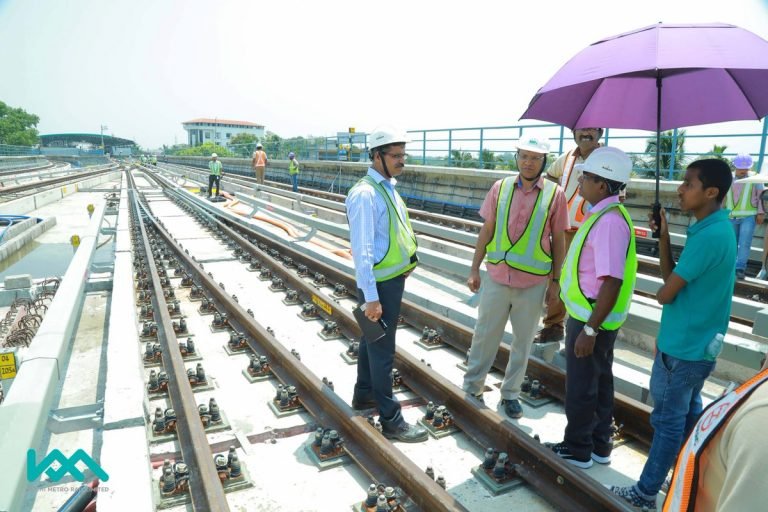
Kochi: The final inspection of the Kochi Metro stretch from Palarivattom to Maharaja’s College concluded on Tuesday at 8 pm with K M Manoharan – the Commissioner of Metro Rail Safety (CMRS) – leading a team of experts along the viaduct.The team started the day’s inspection at the M G Road station and proceeded to Maharaja’s. They checked all the technical and safety aspects and commuter facilities at stations. After completing the inspection of stations and the viaduct, two trains conducted trial runs in the new section. The CMRS team boarded the train and assessed the dynamic passenger comfort.

They also closely analysed the ride parameters. The Commissioner also tested the safety features of the train in the single-train and multiple-train modes.

The dynamic trials were followed by a visit to the operation control centre (OCC). They checked the functionality features in connection with the service extension. According to Kochi Metro Rail Limited (KMRL) authorities, the Commissioner has expressed his satisfaction regarding the preparations made to open the new stretch.

“The final report is expected in the coming days. Once we receive the report, the service extension to Maharaja’s College Ground will be launched,” a representative said.

Bengaluru Metro | BMRC plans two metro stations at Bengaluru Airport

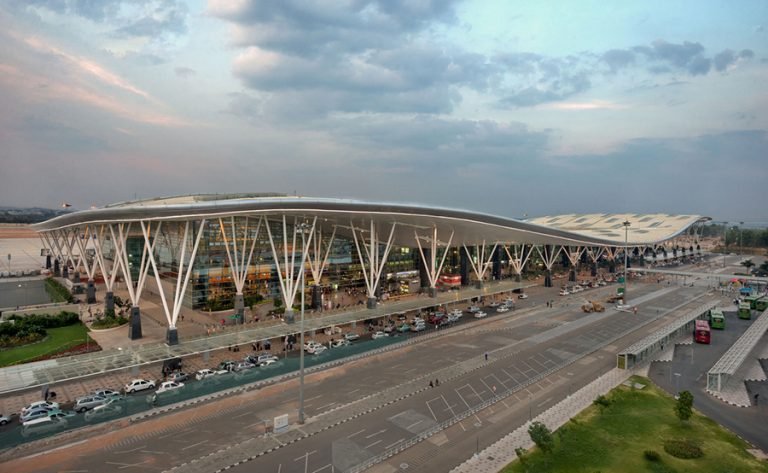
Bangaluru: The Metro link from Nagawara to the Kempegowda International Airport (KIA) will run for a distance of around 29 kilometres and is estimated to cost nearly Rs 5,900 crore. This figures in the Detailed Project Report (DPR) prepared by the Bangalore Metro Rail Corporation Limited (BMRCL), which has been submitted to the Chief Minister’s office for approval on Tuesday.

“The route will have six stations, including two Metro stations inside KIA. The airport authorities had requested for them,” said a highly placed government source. The airport line which will be an extension of the Gottigere-Nagawara line of Phase-II will have halts at Hegde Nagar, Jakkur, Yelahanka (Kogilu Cross) and Chikkajala before terminating at the airport. “The line will be a fully elevated one barring the area near the Yelahanka air force station where it will run at ground level. It will continue elevated after that,” a top official said.

bangalore metro
bangalore metro

After the CM approves it, the DPR will be tabled in the Cabinet next week, a source said. The cost was estimated to be around Rs 4,000 crore earlier.

On the land acquisition front, the top official said that the route was not likely to face any major land acquisition issues as most of the land required would be acquired from the National Highway Authority of India and the State government.

This is the second in-house DPR prepared by BMRCL, which has resulted in savings of Rs 21 crore. The DPR was submitted by BMRCL to Bengaluru Development Minister K J George on September 21. The K R Puram-Silk Board (Phase-2A) was the first DPR prepared completely by BMRCL. The State government in May finalised this route from nine different routes suggested by BMRCL.

The distance between 6 stations of airport line is 29 km and the names of stations are Hegde Nagar, Jakkur, Yelahanka (Kogilu Cross), Chikkajala and Kempegowda International Airport (KIA).

The rail tracks for the new airport line (Phase-2B) have been designed such that can they run trains at 100 km/hr. “The journey time from Nagawara to the airport could be anywhere between 25 minutes and 30 minutes. The Metro tracks in place presently are designed for 80kmph but the average speed of Metro trains is 34kmph. Trains on the airport line could touch up to 60kmph,” said a Metro official.

To provide connectivity from the City to the airport, the completion of the 21.25 km Red Line is crucial.  The 13.9 km underground corridor is the largest underground stretch in Phase-II and runs from Dairy Circle in the South to Nagawara in the North. A total of 12 tunnel boring machines will bore through this route and the tough geographical conditions are expected to pose a huge challenge. It has a deadline for 2020.

Rs 5,900 crore estimated cost to be incurred on Airport line as against R4,000 crore estimated earlier.

Delhi Metro | Delhi Govt to send DMRC’s Phase IV project proposal to Center

New Delhi: Delhi Chief Minister Arvind Kejriwal on Tuesday said the proposal on Phase IV of Delhi Metro, involving extensions of the existing lines and one new, will be soon sent to the Union Ministry of Housing and Urban Affairs for approval.

The issue was discussed when Kejriwal met Housing and Urban Affairs Minister Hardeep Singh Puri here earlier on Tuesday.

According to a statement of the Urban Development Ministry, during the meeting, Puri and Kejriwal discussed various issues including decongestion of traffic in Delhi, Delhi government’s concurrence for the Delhi-Meerut Regional Rapid Transit System (RRTS), better maintenance of sewers, sanitation etc.

After the meeting, the Aam Aadmi Party (AAP) leader said: “Delhi government will work with the central government for betterment of the national capital.” He also said he will have the issues raised by Puri considered on priority.

Puri later asked Housing and Urban Affairs Secretary Durga Shanker Mishra to coordinate with Delhi government for taking necessary action for decongestion of traffic in the national capital as per the recommendations made in the Report of the High Powered Committee on Decongesting Traffic in Delhi.

The report was furnished to Delhi government in June last year.

Delhi Metro | DMRC to hike metro fares again by Rs10 from October 1, 2017

New Delhi: Travelling by Delhi Metro will cost more from October 1 as the Delhi Metro Rail Corporation (DMRC) will kick in the second phase of fare hike. The DMRC had revised its fares in May this year.

The fare hike would only be felt by October 3 as October 1 is a Sunday and October 2 is Gandhi Jayanti, a national holiday, and hence fares would be discounted. Under the latest revision, the discounted fare remains Rs 10 for the first 5 km and goes up to a maximum of Rs 50. According to reports, the maximum fare may go up to Rs 60 with a Rs 10 increase in each slab from October.

Dugital Wallet Delhi Metro
DMRC

From October 1, the slab would be: up to 2 kms — Rs 10, 2 to 5 kms — Rs 20, 5 to 12 kms — Rs 30, 12 to 21 kms — Rs 40, 21 to 32 kms — Rs 50 and for journeys of over 32 kms Rs 60.

DMRC managing director Mangu Singh told the Media that the DMRC is not worried that the second phase of fare revision might lead a further dip in footfall. The DMRC has witnessed a dip in footfall, with June witnessing a fall of almost 1.5 lakh passengers per day compared to June 2016, since fare hike in May.

The DMRC had last revised the fares in 2009.

It had been demanding a hike for a long time, citing the increase in operation costs, including the cost of electricity and the rising wage bill.

When metro had started operations on December 25, 2002, the minimum fare was Rs 4 and maximum was Rs 8.

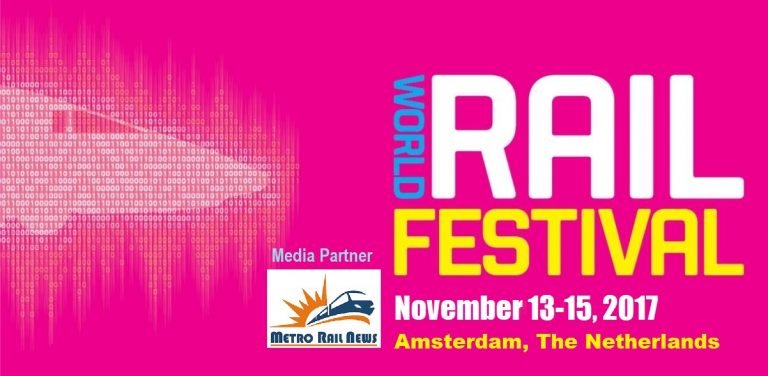
World Rail Festival 2017 | Nov. 13-15, 2017 | Amsterdam, The Netherlands

TERRAPINN in association with Metro Rail News (a Symbroj Media Publication) going to organise 7th Edition of the World Rail Festival 2017 from 13th November 2017 to 15th November 2017 at Mövenpick Hotel Amsterdam City Centre, Amsterdam, The Netherlands.

The World Rail Festival 2017 (Formerly Rail Revenue World Congress) will be in its 7th year and it continues to grow and attract a large audience of rail operators from around the world. The conference will host 600 attendees, 150 speakers and 40 exhibition booths. Over 100 different global rail operators will be represented at this event.

World Rail Festival 2017

The festival will take place over two days, the first featuring an opening keynote interview session with some of the most innovative rail CEOs from around the world. Following the keynote, we will host interactive round-table discussions around some of the latest technology impacting the rail industry. In the afternoon and the following day we will host three dedicated streams around the key themes of the event. Over the 2 days we will feature 100 presentations, 20 round table debates and several hours of networking. The festival will be a fun and engaging experience designed to help you get the most out of the 2 days of your attendance.

In short, this year promises to be the most spectacular event yet!

Click here to REGISTER now !

For more details, please contact:

Terrapinn Holdings Ltd
Wren House
43 Hatton Garden
London
EC1N 8EL
Tel: +44 (0)20 7092 1000
Fax: +44 (0)87 1233 9263
enquiry.uk@terrapinn.com

Hyderabad Metro | HMRL all sets to launch metro services in November 2017

Hyderabad: The Hyderabad Metro Rail Ltd. (HMRL) made its first phase of 71-km elevated metro rail project to open in November. Started in July 2012, the Hyderabad Metro Rail (HMR) project was scheduled to be completed by June this year. However, it got delayed due to land acquisition and other issues. To inaugurate the first phase of the Metro rail project, Telangana Chief Minister K Chandrasekhar Rao has invited Prime Minister Narendra Modi, who will be in the city from November 28 to 30 to attend the Global Entrepreneurship Summit.

Here are some key points of Hyderabad Metro Rail Project:

  • The Hyderabad metro rail under Larsen and Toubro will cover a total distance of 71 kms. The first phase is of 29-km stretch from Miyapur to LB Nagar and consists of 27 stations. The second phase is a 15-km stretch from Jubilee Bus Stand to Falaknuma which comprises of 16 stations. The third phase will cover a 28-km stretch from Nagole to Shilparamam with 23 stations.
  • The metro will run on an elevated track and will connect major offices, retail and residential areas. The stations will be of world-class standards and will be located at a distance of every kilometre.
  • The metro will connect rail terminals at Secunderabad, Begumpet, Nampally and major bus stations at Miyapur, MGBS, Koti, Dilsukhnagar, Charminar and Jubilee Bus Station.
  • The coaches will be of ultra-modern facilities and there will be high frequency of trains.
  • To facilitate commuters, there will be availability of feeder bus services from different areas.
  • The stations will be user-friendly with automatic ticket vending machines and have special facilities for the disabled persons. It will also have essential facilities like toilets, telephones, public address and information system.

Chennai Metro | CMRL achieves tunneling five months ahead of deadline

Chennai: The Chennai Metro Rail Ltd (CMRL) has completed one of the underground tunneling works as part of phase-1 extension in North Chennai corridor five months ahead of the schedule.

“The tunneling work started in February this year and we have completed it with the break-through of first of the two TBMs (tunnel boring machines). The second tunneling work is expected to be completed in a month’s time,” said Arvind Kumar Rai, Chief General Manager (Underground), CMRL.

The tunneling work, carried out by Afcons Infrastructure, happened at an average rate of 11 metres a day, which is significantly higher than average speed achieved in other stretches. The clay soil conditions were favourable for tunneling and led to the completion of works ahead of time. Rai also said the tunneling works were taken up beneath the railway tracks at Washermenpet besides crossing under 480 buildings and 310 borewells, of which 10 were open wells. “We kept monitoring triggers and impact during the tunneling works and no damage to the existing buildings was reported,” he added.

Alongside the tunneling, works related to building stations were also happening and about 30 per cent of the work for stations on the stretch has been completed. Signalling works are expected to start by the end of this year. The 1.82 km underground line is part of the 9 km extension project to have connectivity from Washermenpet to Wimco Nagar, which is expected to be operational in two years. The underground stretch will have two stations – Thegaraya College and Korukkupet and after which it will be an elevated corridor.

“The target is to complete both underground and elevated works by 2019 and we hope to complete on schedule within the project cost of ₹3770 crore,” said Rai.

The phase 1 extension will seamlessly integrate with the Phase 1 corridor 1, thereby offering direct connectivity from Wimco Nagar (north Chennai) to Chennai airport (South Chennai) once underground and elevated portions of Phase 1 extension are completed.

RITES Ltd looking for Dy General Managers, Asstt. Managers & Engineers

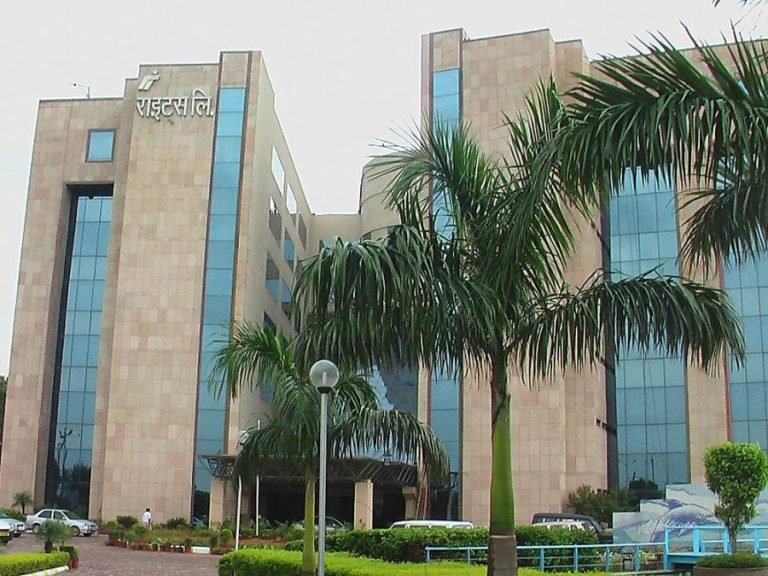
RITES Limited (A Govt. of India Enterprise) requires qualified railway and management professionals for the following Engineering and Managerial positions:-

  1. Assistant Manager (E&S) – 01 post
  2. Assistant Manager (Logistics) – 01 post
  3. Assistant Manager (Mechanical) – 10 post
  4. Engineer (Mechanical) – 25 posts
  5. Assistant Manager (Electrical) – 05 posts
  6. Engineer (Electrical) – 10 posts
  7. Deputy General Manager (Company Secretary) – 01 post
  8. Assistant Manager (Company Secretary) – 02 posts
  9. Deputy General Manager (Civil) – 02 posts
  10. Manager (Civil) – 02 posts
  11. Deputy General Manager (Electrical) – 02 posts
  12. Manager (Electrical) – 02 posts
  13. Deputy General Manager (S&T) – 02 posts
  14. Manager (S&T) – 02 posts
  15. Engineer (Mechanical) – 08 posts
  16. Engineer (Electrical) – 13 posts

Interested person may apply online between 20.09.2017 and 13.10.2017

For more detail, please click on official recruitment notification.

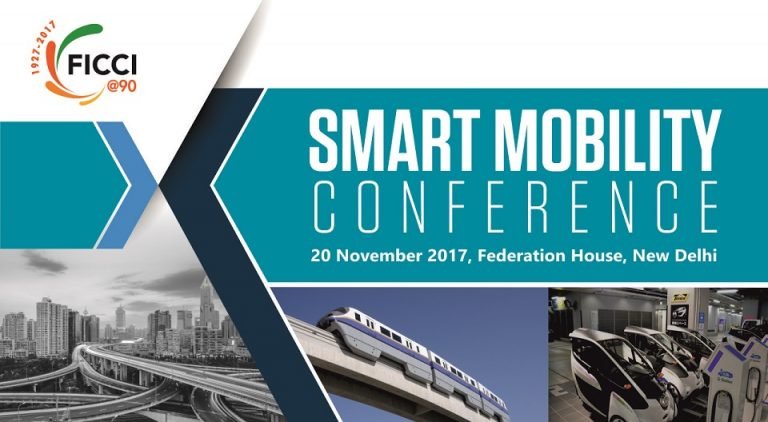
FICCI Smart Mobility Conference 2017 | Nov. 20, 2017 | Federation House, New Delhi, India

Federation of Indian Chambers of Commerce and Industry (FICCI) in association with Metro Rail News (an initiative of Symbroj Media Pvt. Ltd., New Delhi) is going to organise the first edition of Smart Mobility Conference on 20 November 2017 at Federation House, Tansen Marg, New Delhi. A well-knit and coordinated system of transport plays an important role in the sustained growth of a country. Optimizing e-mobility use for everyday life with greater thrust on use of public transport, metro solutions and waterways as means for mass transit could significantly reduce energy demand and carbon emissions in the country.
The Conference focuses on ‘smart mobility’ solutions that enable faster, greener and cheaper transportation of people and freight while reducing congestion. Through focused sessions we aim to explore a future urban mobility ecosystem that delivers seamless intermodal transportation connectivity and highlights economic avenues for investment.
It will bring together Central and State Government officials, policy makers, city planners, government institutions, multi-laterals, financial institutions/VC’s, academia and Industry/ Start-ups on a common platform to deliberate on key developments and challenges for smart transport infrastructure in India and the way forward.
Key Highlights
  • Integrated multi-modal transportation for connecting cities
  • Optimizing Electric-Mobility Solutions & Green Technologies for Mass urban Transit/ City’s Sustainability
  • Development of Urban Metro Rail for Smart Urban Transportation
  • Strategic Mobility Planning and Project Design for Urban Transport
  • Broad technology portfolio for interconnected and intelligent transportation system
  • Internet of Things and Big Data applications in transport
  • Green strategies for sustainability
  • Smart parking solutions
Why Attend
  • India’s largest and most comprehensive event on smart transportation
  • Learn global best practices & partnership strategies and policy updates through interactive sessions, panel discussions and round-table debates
  • Influential presentations/ speeches by key policy makers and industry experts
  • Identify new strategies and technologies for challenges & opportunities facing the sector
  • Network with policymakers, business leaders and market experts to forge new partnerships & gain competitive advantage

Sponsorship Opportunities

Sponsorship LevelAmount (INR)Sponsorship LevelAmount (INR)
Platinum Sponsor1500000.00Lunch Sponsor500000.00
Gold Sponsor1000000.00Delegate KIT Sponsor300000.00
Silver Sponsor700000.00Badge & Lanyard Sponsor700000.00

For more information, please contact:

Ms. Aakriti Arora/Ms. Manasi Lohumi
M: +91-9654532981
Tel: 011-23487457/23765082
Fax: 011-23320714
E-mail: infra@ficci.com

Lucknow Metro | MD Kumar Keshav shares Success Mantra to IIM Lucknow students

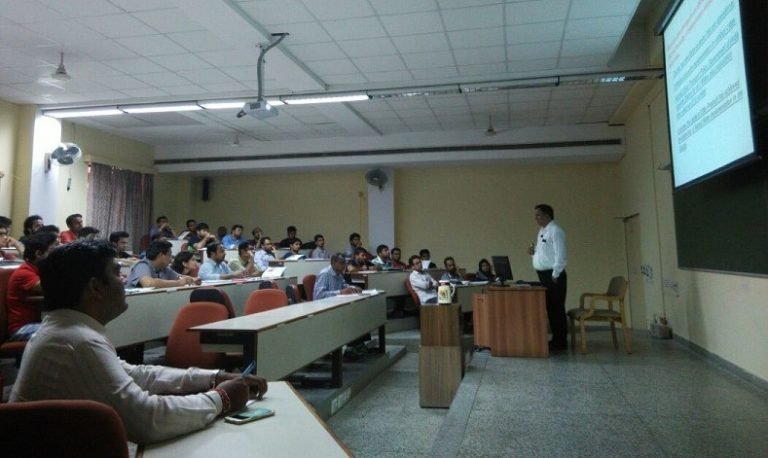
Lucknow: Shri Kumar Keshav, Managing Director, Lucknow Metro Rail Corporation (LMRC) today shared the “Success Mantras” of Metro Project execution to the students at the Indian Institute of Management- Lucknow post the successful inauguration of Lucknow Metro  services on 5thSeptember, 2017.

He said “the success of any project lies in proper planning, time management, strict adherence to schedules and professional competence of the subject.” “Discipline, Punctuality, Ethics and Integrity are the building blocks for success of any project.

Adherence to these virtues laid the foundation stone for such a glorious achievement”, he added.

Shri Kumar Keshav said “working passionately with a sincere, dedicated and devoted approach can only yield such impossible results”. Executing a mammoth project like the Lucknow Metro Rail Project is, nevertheless, an easy task in an extremely compressed deadline, he elaborated.

IMG 3769

It is only because of these virtues and sustained work round the clock that LMRC has been able to achieve this historical feat in less than three year. This has broken all the previous records of Metro Project execution, thereby, making the Lucknow Metro Rail Project the fastest ever Metro Project which has been made operational in just less than three year.

Shri Keshav shared his experience about the Lucknow Metro journey which was once a dream of the people of Lucknow and now it is a reality in such a short span of time. No other Metro project has ever been able to achieve this feat in such a less time. Even contemporary Metro Projects have also not been able to match up with the speed of project deliverance as compared with the Lucknow Metro Rail Project.

Industry update: Alstom confirms talks for Siemens Mobility merger

Alstom formally confirmed on September 22 that it had been holding discussions regarding a possible ‘combination’ with Siemens’ Mobility Division.

Alstom said that no final decision had been made, discussions are on-going and no agreement had been reached. The company would ‘inform the public of any material developments in this respect’.

Speculation has been mounting in recent months regarding a possible combination of the rail activities of some or all of Alstom, Bombardier Transportation and Siemens, as the companies seek to compete with the scale, resources and state backing of China’s CRRC.

Bloomberg reported on September 21 that one option being considered was a merger of Siemens’ rail activities into Alstom in exchange for Siemens taking a stake in the French company, or the formation of joint ventures.

Siemens and Bombardier are understood to have discussed the formation of a Bombardier-led joint venture in the rolling stock market and a Siemens-led joint venture in the signalling sector.

Delhi Metro | DMRC begins full trials of UTO trains between South Campus & Majlis Park

New Delhi: The Delhi Metro Rail Corporation (DMRC) today started full signaling trials on a 20 kilometre long stretch between Durgabai Deshmukh South Campus (near Dhaula Kuan) and Majlis Park on the upcoming Majlis Park – Shiv Vihar corridor of Delhi Metro’s Pink Line.

These trials will test maximum automation of the new Metro trains, equipped with Unattended Train Operations (UTO) and the new age CBTC (Communication Based Train Control) signaling system which  will enable the movement of trains with a frequency of about 90 to 100 seconds, thus significantly enhancing the carrying capacity of the Delhi Metro system. The train will run on the UTO mode to check how the new trains are coordinating with the new signaling technology. This is also the first time that such a long section is being tested in one go.

Signaling trials on this section is a significant step ahead towards the eventual commissioning of the stretch since signaling trails are started after the completion of all civil and ancillary works. Trial runs were started between Mayapuri and Shakurpur (6.5 kms) on this corridor in June, while last month, a Metro train had passed through the Delhi Metro system’s highest point at Dhaula Kuan for the first time.

This 20 kilometre long stretch is extremely important from the point of view of enhancing connectivity along the arterial Ring Road. The section has 12 stations (8 elevated and 4 underground) including four interchange stations.

The interchange stations will be as follows:
– Dhalua Kuan and Durga Bai Deshmukh South Campus (connectivity with Airport Line through Foot Over Bridge)
– Rajouri Garden (connectivity with Dwarka – NOIDA/ Vaishali Blue Line)
– Netaji Subhash Place (connectivity with Dilshad Garden – Rithala Red Line)
– Azadpur (connectivity with HUDA City Centre – Samaypur Badli Yellow Line)

With the commencement of trials today, regular trials will also begin through Delhi Metro’s highest point at Dhaula Kuan at a height of 23.6 metres (as high as a seven storey building). Construction of this stretch above flyovers and the viaduct of the Airport Express Line was a major engineering achievement. The stretch is also adorned by many other engineering landmarks such as the four steel bridges at Mayapuri, Rajouri Garden, Shakurpur and Punjabi Bagh. Two other bridges have also been built using the Cantilever Construction (CLC) technology at Mayapuri and ESI Hospital.

Another major challenge encountered on this stretch was at Rameshwar Nagar, where a mid shaft had to be created to retrieve four Tunnel Boring Machines (TBMs) since two TBMs got stuck in 2014 due to unexpected rocky terrain. The shafts were created in an extremely congested area.

The 59 kilometre long Majlis Park – Shiv Vihar Metro corridor will be Delhi Metro’s longest Metro corrisor. It will primarily cater to the city’s Ring Road and will form a circular ring of Metro connectivity criss-crossing all the other operational Metro corridors. The line is planned to be opened in stages by March, 2018 (except Trilokpuri to Mayur Vihar Pkt-1 section due to land issue at Trilokpuri).The section from Majlis Park to Durgabai Deshmukh South Campus is expected to be completed by December, 2017 and sections from Durgabai Deshmukh South Campus to Mayur Vihar Pkt-1 and Trilokpuri to Shiv Vihar are expected to be completed by March, 2018.

Signaling trials are in progress between Botanical Garden and Kalkaji Mandir stations and between Janakpuri West and Terminal 1, IGI Airport stations on the Janakpuri West – Botanical Garden corridor (Line 8) also called the Magenta Line. Operations are expected to begin between Botanical Garden and Kalkaji Mandir by October end.

Kochi Metro | Kerala CM to launch Kochi Metro extension on October 3, 2017

Kochi: The number of trains operating for the Kochi metro will go up from six to nine as the system of mass rapid transport is extended from Palarivattom to Maharaja’s College Ground on October 3.

The fare for the 18-km-long Aluva-Ground stretch will be ₹50. “The frequency of services has not been decided,” said Kochi Metro Rail Limited (KMRL) sources.

Two trains will be kept as spare ones and might be operated during weekends and public holidays. Another pair of trains has arrived at the metro yard from Alstom’s coach manufacturing unit in Sri City, Andhra Pradesh.

KMRL managing director Elias George said October 3 was fixed as the tentative date to launch the 5-km-long extension. “The Chief Minister has confirmed that he will inaugurate the extension. Union Minister of State for Urban Development Hardeep Singh Puri has been invited to preside over a function.”

Almost all works of the five stations on the stretch are over. The interiors can be done even after the metro is extended to Maharaja’s College Ground.

The stations in the corridor are located at International Stadium, Kaloor, Lissie Junction, M.G. Road (near Chennai Silks) and Maharaja’s College Ground. “Integrated trials in the corridor are over and the Commissioner for Metro Rail Safety will inspect the stretch on September 21 and 22. The green signal to commence service is expected in another few days.”

“The launch has been scheduled for October 3 since Kochi is set to host FIFA Under-17 World Cup matches from October 7 to October 22 and a whole lot of people will arrive in the city prior to this,” said Mr. George.

Civil works on the metro’s 7-km-long Maharaja’s College Ground-Pettah corridor is expected to be over by June 2019.

On the Centre sending back a detailed project report submitted by KMRL for the metro’s Kakkanad extension, the metro agency’s spokesperson ruled out uncertainty about it.

“The Centre wants us to probe alternative modes of mass rapid transit such as tramway, bus rapid transit corridor etc., on the stretch. French agency Codatu had studied these systems as well.

The metro needs less than 2 metre width of any road for constructing pillars. But a wider road is needed to exclusively dedicate space for other modes of transit. We already have traffic survey data of the corridor and will send a revised proposal.”

This might take a couple of months. The process to widen the road can begin even if there is delay in obtaining the Centre’s sanction for the extension.

The delayed services of Kochi metro will continue on September 18 as the testing of train and new software in the combined Reach 1 and Reach 1-A sections. The services will only start at 2 p.m. on September 18, said a press release here.


Mumbai Metro | TBM launched for construction of first UG corridor

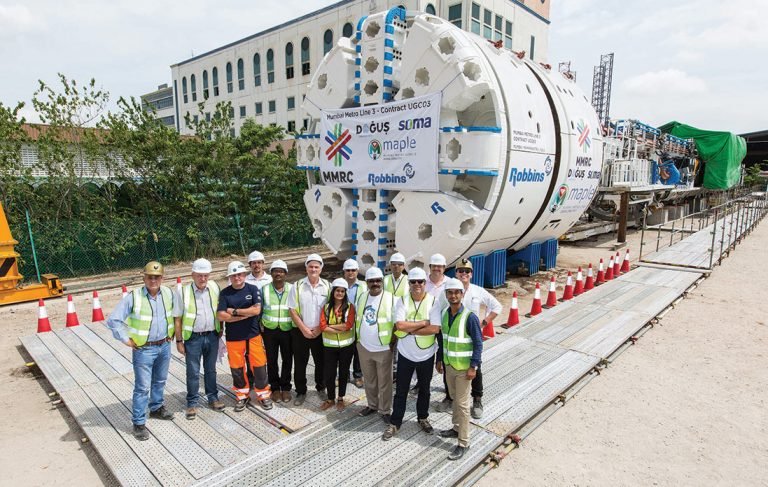
Mumbai:  Maharashtra CM Devendra Fadnacis on Thursday, launched the first Tunnel Boring Machine (TBM) into the Nayanagar shaft in Mahim, by pushing a button, for construction of the city’s first underground Metro corridor. In the backdrop of a setting sun and darkening clouds, the gantry lowered the cutter-head into the shaft before the front shield of the TBM. The launching of the TBM marks the beginning of the process that is expected to change the way the city travels.

“A new chapter has begun in Mumbai’s engineering field,” Maharashtra Chief Minister Devendra Fadnavis said Thursday after lowering the cutter-head of the first tunnel boring machine (TBM).

It will take 45 days to set up the 110-metre TBM and it is expected to complete a 2.5 km tunnel between Nayanagar and Dadar in a year.

On an average, it will tunnel 10 m per day. “The TBM will start its boring operations in the fourth week of October,” said Ashwini Bhide, Managing Director, Mumbai Metro Rail Corporation (MMRC). Twin tunnelling for the 33.5 km Colaba-Bandra-SEEPZ corridor (Metro 3) will require 17 TBMs.

Speaking after the event, the CM said, “The Metro is constructed for the convenience of the people and all the courts have also ruled in its favour. It will most importantly reduce pollution. The Metro can reduce as much pollution as 2 crore trees.”

He said Mumbai would soon have an integrated ticketing system. “We had a meeting with Ford Mobility Services on Wednesday and signed an MoU. It will provide an app through which you can decide your travel route and purchase a ticket for all public transports — Metro, suburban trains, Monorail, buses or even water transport after it is developed in the eastern front,” said Fadnavis. The CM suggested that the completion of all Metro lines and elevated rail corridors in the city would augment public transport capacity to 1.3 crore people per day.