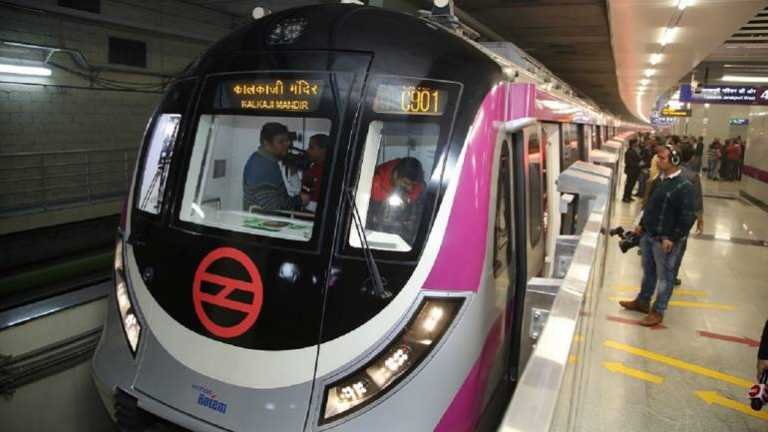
Delhi Metro | DMRC staff demands rectification of pending issues, threatens strike from Monday

Highlights
  • DMRC’s non-executive staff will start protesting from Monday, demanding a resolution of pending issues submitted by them to management.
  • They will start protest by wearing black arm bands and participating in sit-ins at different stations as well as their work stations.
  • They have, however, threatened to go on a complete shutdown of services on November 1, 2017, if their demands are not met.
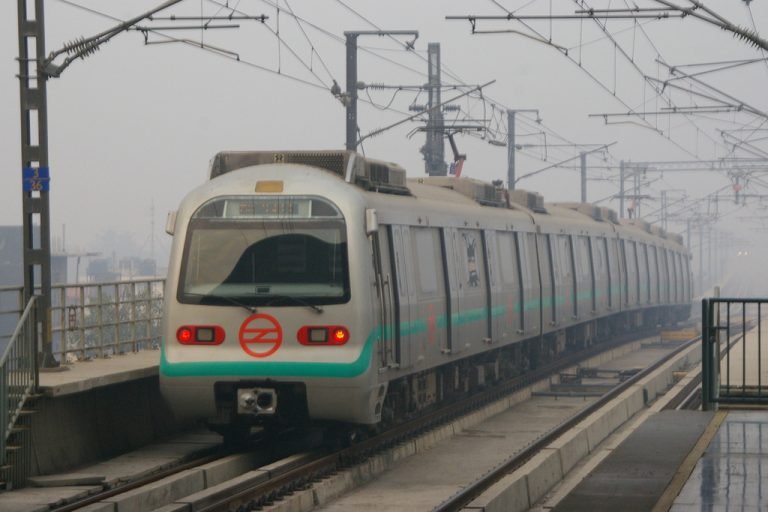
New Delhi: After July 2017 strike, the non-executive staff of Delhi Metro Rail Corporation (DMRC) have again threatened to go on a strike from Monday. The staff members have warned of a “complete shutdown” if their demands on pay anomaly, reinstatement of terminated staff, recognition of employees union  and other pending issues are resolved.Talking about the impact of protests on train operations, Mahavir Prasad, the General Secretary of the Delhi Metro Rail Corporation Employees Union (DMRCEU) through a press release said that the protesting staffs will start wearing black ribbons on their left arm from Monday. If their demands are not met  then they will gather with mass at Metro Bhawan (Delhi Metro Headquarters) and announce complete shutdown and chakkajam at all inter-changing metro stations.He further said that the Delhi Metro Rail Corporation Management not fulfilled any of their previous demands for assurance given to employees in series of high level meetings with Urban Development Ministry Secretary Shri D.S. Mishra, Principal Secretary GNCTD Shri M.
buy cialis daily online https://www.ecladent.co.uk/wp-content/themes/twentyseventeen/inc/en/cialis-daily.html no prescription
M. Kutty and DMRC Chief Dr. Mangu Singh. RTI Supervisor Shri Vinod Shah not yet reinstated by DMRC and his appeal on removal from service has been dismissed by the Appellate Authority without taking into consideration of DMRC Chief’s assurance given to employees and the media on 23rd July 2017.The following are demands submitted by the DMRC Employees Union to MD/DMRC, Urban Development Ministry, Delhi Government and other ministries and departments-
  1. Rectification of pay anomalies in office order dated 27th September 2017 and fixing new pay scales as per recommendations of 3rd PSU pay revision committee on all employees according to Schedule-A PSU scales.
  2. Unconditional reinstatement of Shri Vinod Shah Ex-RTI Supervisor, Shri Amit Upadhyaya (SC/TO) and other terminated staffs from DMRC in past on fabricated grounds.
  3. Recognisation of legally registered Delhi Metro Rail Corporation Employees Union (DMRCEU) and closure of illegally set up of Staff Council with immediate effect.
  4. Implementation of ‘One policy for all’ for sake of future of DMRC employees.
DMRC has about 9,000 non-executive staff, many of whom perform critical functions, including train operators, station controllers, junior engineers, station managers etc.

Navi Mumbai Metro | DMRC finalize DPR to connect two city airports with metro rail

Navi Mumbai: The Delhi Metro Rail Corporation (DMRC) is in the final stages of preparing the detailed project report (DPR) for the metro corridor providing direct connectivity from Chatrapati Shivaji Airport terminus (Santa Cruz airport) to the Navi Mumbai International Airport (NMIA), Navi Mumbai— the twin city airport, a first in the country.CIDCO said, “as per our information, the DPR is in final stages. The CSTM-Panvel fast track corridor that will run like a metro has been delayed, but it will be taken up at some time. So, in the meantime, the metro connectivity between the two airports is very much required for providing transportation facilities to flyers.” mumbai metro A CIDCO official told media, ” the direct connectivity or a continuous corridor between two city airports will be the first of its kind in India. The metro run from the Santa Cruz airport till Mankhurd will involve stretches of underground and elevated pillars. The details will be known after the DPR is ready.”The western and central suburbs will benefit from the direct metro corridor. Also, non-flyers will also benefit as they too can avail the metro service. Regarding flyers, it will help to reduce the road commute between the two airports by at more than one hour. The metro is expected to take 30 minutes.
The 30-km run between the two airports is required as the NMIA is scheduled for the first take off in 2020. The metro run will require a new bridge over the Vashi creek, the official said, and it will be at the southern end of the two existing bridges, which means it will be after the CST-Panvel rail bridge.
The metro will cross Vashi from behind the station complex and most likely will take the route chalked out by RITES for the CSTM-Panvel corridor that will have a spur from Seawood to the NMIA. Cidco has planned and designed the Targhar railway station –the second last stop to the NMIA on the Uran track with a metro halt on the first floor of the station.
CIDCO said the sharing of the cost will be worked out later between the various stakeholders. MMRDA that awarded the DPR to study to DMRC along with Cidco are major stakeholders.

Gurugram Metro | Dwarka expressway sectors seeks metro rail connectivity in area

Gurugram: Residents living in sectors along Dwarka Expressway have pitched for a full-length Metro corridor, stretching up to Dwarka Sector 21 one of the two routes being considered for the proposed Yellow line extension of Delhi Metro Rail Project.In their petitions to GMDA, the residents and homebuyers have demanded Metro stations along the Dwarka expressway, favouring the longer route, for the convenience of thousands of people who are living in or will move into the new sectors along the thoroughfare.The state government, through GMDA, has sought suggestions from residents of the city on the two possible routes suggested by DMRC recently. While one route is a 12km line from Huda City Centre, currently the terminal station on the Yellow line, to Gurgaon railway station, the other is a full-length corridor right up to Dwarka Sector 21, where DMRC’s Blue and Airport Express lines converge.The second one is a 27km route that also starts at Huda City Centre, turns into the NH-8 at Hero Honda Chowk via Subhash Chowk, heads towards Gurgaon railway station and goes up to Dwarka.Chandigarh Metro“Around 90,000 people will be living in the new sectors (81 to 115) along the Dwarka e-way in coming days. We are in favour of the longer route as it will cover a larger part of old as well as new Gurgaon, besides connecting Hero Honda Chowk and Huda City Centre with Dwarka Sector 21 and Delhi airport,” said Gaurav Prakash, one of the homebuyers and member of Dwarka Expressway Homebuyers’ Association.In its petition to GMDA, the homebuyers’ association has also requested for adequate parking at the proposed Metro stations (along the longer route) at Hero Honda Chowk, Sector 37 and Sector 111 for the convenience of commuters. The association members have submitted around 300 applications in this regard.“If GMDA is serious about resolving traffic issues in Gurgaon, it must consider the Metro route up to Dwarka Sector 21,” said Pradip Rahi, another homebuyer.Earlier, V Umashankar, additional CEO, GMDA, said the authorities would take a call on the route after taking residents’ suggestions into account.

Mumbai Metro | MMRC to integrate Metro 3 with bullet train terminal at BKC

Mumbai: The Mumbai Metro Rail Corporation (MMRC) executing the underground Colaba-Bandra-Seepz Metro-3 corridor plans to interconnect (integrate) the underground Metro corridor with the proposed Mumbai-Ahmedabad bullet train terminal at Bandra-Kurla Complex (BKC).The alignment of the underground Metro corridor passes through BKC where the terminal for the proposed bullet train between Mumbai and Ahmedabad is to come.
India Bullet Train
High Speed Bullet Train Project in India (Photo for representative use only)
According to MMRC officials, the BKC Metro station and bullet train terminal will be connected through an underground subway, which will have a moving walkway or travelator installed.“Installing a moving walkway depends on the distance between the BKC Metro station and bullet train terminal. If the distance turns out to be more than 300-500 metres, a walkway will have to be installed,” an MMRC official said.The official added, “At this stage, the exact location of bullet train terminal inside BKC has not been decided so we haven’t made any formal proposal. But we want to integrate both and will approach the National High-Speed Rail executing the bullet train project about the same.”This integration would be mean commuters from South Mumbai can come to BKC and can use the subway walkway to head towards the bullet train terminal.Similarly, plans to connect both the terminals to Mumbai Airport are under consideration too. “We have similar plans to connect both terminals to the airport,” he said.However, the construction of bullet train terminal inside BKC has been opposed by the Mumbai Metropolitan Region Development Authority (MMRDA) and the state government citing that land in BKC is costly and the Railways should consider acquiring land at Kurla or Bandra where the Railways own ample amount of land.The MMRDA had also cited that the area where the bullet train terminal has been proposed is also wanted for the construction of an International Financial Services Centre (IFSC).
buy hard on oral jelly online https://blackmenheal.org/wp-content/themes/twentytwentytwo/inc/patterns/en/hard-on-oral-jelly.html no prescription
However, after deliberation by the Centre, the state government has said that bullet train terminal and IFSC both may coexist at BKC.

Hyderabad Metro | Metroman Sreedharan shows pleasure with metro rail project works

Hyderabad: Dr. E Sreedharan, who is considered the father of Metro Rail revolution and Metro Man of India, visited Metro Rail Bhavan in Hyderabad on Thursday and discussed the progress of Hyderabad Metro Rail project with NVS Reddy, Managing Director of Hyderabad Metro Rail Ltd. (HMRL).
Hyderabad Metro
Hyderabad Metro Rail
Feeling nostalgic about how he groomed NVS Reddy as a young officer in Konkan Railway and how initially the Detailed Project Report (DPR) was prepared for only two Metro Rail corridors in Hyderabad, Dr Sreedharan stated that he was very happy that the Hyderabad Metro Rail project is getting ready for inauguration soon.Explaining the inclusion of the third corridor, the additions made to the original two corridors and how the project was brought to the present shape through sheer determination, perseverance and tactful handling of several sensitive issues, NVS Reddy expressed his gratitude to Dr Sreedharan for his rigorous training and grooming as a young officer in the tough Konkan Railway environment in the late 1980s.

Delhi Metro | Metro employee comes into electrocution grip at DMRC’s Faridabad RSS

New Delhi: A newly joined employee of Delhi Metro Rail Corporation (DMRC) suffered life-changing injuries when he was electrocuted in last night near DMRC’s Faridabad receiving sub-station (RSS) of Line-6.Sources said that the incident was took place at 3.45 am while the employee was performing night duty and he has been assigned to do routine maintenance work of  insulators and the concerned section was in discharged condition. Suddenly line were charged without informing the staff working on the site and one of metro employee came into electrocution grip. A group of 8 metro employees including 2 supervisors were working on site. The condition of injured metro employee is critical, about 50% part of body burnt  and he is now admitted in Safadarjung Hospital, New Delhi after denial by Appolo Hospital, Sarita Vihar, New Delhi. The injured employee is identified as Aneesh Kumar (on-job-trainee) Electrician). He joined DMRC on 27th July, 2017 and no competency to work on high tension equipment given to him from DMRC. He was working in PSI department under Shri Avinash Parmar (Manager/Traction) and Shri Pankaj Gupta (AGM/Traction).It is a serious safety lapse on part of Delhi Metro Rail Corporation (DMRC) as how a new employee could be assigned to work on high tension lines / equipment without providing proper training and issuing competency.An employee with condition of anonymity said Metro Rail News that similar accidents already took place in past at various project sites of Delhi Metro Rail Corporation (DMRC) and the matters were covered up without bringing before the media. On 14 February 2006, a metro staff was found dead due to OHE electrocution.Till publication of this news, no statement from DMRC issued to media on this serious accident/issue.
buy cialis online https://www.mydentalplace.com/wp-content/themes/twentytwelve/inc/en/cialis.html no prescription

Delhi Metro | NGT warns DMRC of halting metro services over extracting ground water

New Delhi: The National Green Tribunal (NGT) today warned of halting the capital’s metro services as it slammed the Delhi Metro Rail Corporation (DMRC) for not complying with its order on extraction of groundwater without permission.A bench headed by NGT Chairperson Justice Swatanter Kumar took strong exception on the issue of metro stations extracting ground water without due permission.The court directed the Environment Ministry, Central Ground Water Authority, DMRC, Delhi Jal Board (DJB) and advocate Kush Sharma, counsel for the applicant, to jointly find out how many stations were withdrawing groundwater without proper permission and sort the approvals.“Just because you are DMRC doesn’t give you license to extract water without permission. You people sit together and find out how many stations are operating with or without requisite permission…You sort it out, or else we will stop the running of these trains,” the bench observed.
National Green Tribunal
The matter was listed for next hearing on November 17, 2017.DJB had earlier told the tribunal that it has not granted permission to the DMRC for extraction of ground water but the metro company has installed 276 borewells across the national capital for which it has no permission.The Green Court was hearing a plea filed by Delhi resident Kush Kalra alleging that DMRC was extracting groundwater instead of using waste water to wash its trains, resulting in depletion of the water table.It had contended that if any individual installed a bore well without permission in his house, the authorities seal it in no time and slap a fine, but the DMRC has installed 276 bore wells right under the nose of authorities but no action has been taken till date.Referring to a RTI reply, the plea had said DMRC’s water requirement was met through borewells and DJB connection. It also said that in order to draw water from the borewells, 3 to 5 HP pumps were used.“No bottled water is used, groundwater after treatment as per requirement is used for train washing…Borewells have been provided in the depots from where water is sourced.“Around 400 to 500 litres of groundwater is used for washing one metro train. The water, after washing of metro train, is sent to Effluent Treatment Plant (ETP). The treated water is then used for gardening and the excess sent to drains,” the RTI reply had revealed.Another RTI response received from Delhi Jal Board said no permission had been granted to DMRC for digging borewells.In yet another such response, a list of metro stations that had been granted such permission was provided by the board to the DMRC, the plea had said while referring to the contradiction between the responses.

Mumbai Metro | State cabinet approves Swami Samarth Nagar-Vikhroli Metro link

Mumbai: In a bid to boost the public transport and infrastructure in the city, the state cabinet on Tuesday gave a nod to the Swami Samarth Nagar-Vikhroli Metro railway link. The 14.47-km route will link the eastern and western suburbs, and arterial roads like the Jogeshwari Vikhroli Link Road (JVLR), Western Express highway, S.V Road, LBS Marg and Eastern Express highway.This Mumbai Metro-6 project will connect commercial areas like Swami Samarth Nagar, L&T and SEEPZ, and the IIT at Powai through an elevated line.The cabinet also gave its nod for the 23.50-km Thane- Bhiwandi-Kalyan Metro railway which will improve connectivity to Mumbai’s extended suburbs, which have seen an exponential growth in urbanisation and population. This route, which will have 16 stations, is proposed to be completed by March 2021.The Mumbai Metropolitan Region Development Authority (MMRDA) has given its go-ahead for the execution of 118 km of Metro Railway routes in the Mumbai Metropolitan Region (MMR).The amended plans for the Swami Samarth Nagar-Jogeshwari- Vikhroli route will connect the 18.6-km Metro 2-A route from Dahisar (East) to D N Nagar, which is approximately 33-km long. The link will benefit people from both, the eastern and western suburbs.Along with the Metro 2-A, the 6,672 crores Metro-6 corridor may be executed by the Delhi Metro Rail Corporation (DMRC) and will have 13 Metro stations designed for six-coach rolling stock. The expected daily ridership for Metro-6 (in Mumbai, or Delhi?) is anticipated to be 6.5 lakh in 2021 and 7.69 lakh in 2031.The Rs 8,416 crore Thane-Bhiwandi-Kalyan elevated metro will have an initial frequency of five minutes in 2021. The daily expected ridership for the corridor is said to be 2.29 lakh in 2021 and 3.34 lakh in 2031.Currently, the civil works are underway for three Metro corridors in the city namely Dahisar- DN Nagar Metro-2A, Dahisar East- Andheri East Metro-7 and Colaba-Bandra-Seepz Metro-3 underground corridor. The civil works on DN Nagar Metro-2B and Wadala-Thane Metro-4 corridor are also expected to start by next year.

Railway firm Keolis bags second metro contract in China

Keolis has secured a contract via its Chinese joint venture (JV) Shanghai Keolis to operate and maintain Shanghai Pudong International Airport’s new Communications Based Train Control (CBTC) automated metro system.The new line is expected to connect the existing T1 and T2 terminals to the future satellite terminals and is scheduled to open in June 2019.The 20-year contract represents Keolis’ second automated metro project in China.
buy viagra capsules online no prescription
Keolis International CEO Bernard Tabary said: “We are delighted to have been awarded the Pudong International contract, which in addition to reinforcing our reliability as a partner to Chinese authorities, confirms Keolis’ worldwide expertise in automated and CBTC metro operations.”Construction of the new metro line forms part of Shanghai International Airport’s initiative to extend the capacity of Pudong International Airport from 60 million to 80 million passengers per year.The new 7.8km-long metro line is intended to connect all four of the airport’s terminals and will operate throughout the day.The CRRC-built train sets are equipped with CBTC technology and are able to operate without a driver, however the locomotives are expected to have a driver on-board when travelling on the Pudong airport line.Keolis has been present in China since 2014 and the latest project is expected to strengthen the company’s presence in the country.The company currently manages four automated metro networks, including three in France and one in the UK.

Delhi Metro | DMRC plans to start clock room and porter facility at some metro stations

New Delhi: In a bid to provide better service to the commuters at Delhi Metro network, the Delhi Metro Rail Corporation (DMRC) is likely to introduce the service of cloak room and porter services rights inside some select metro stations.The Delhi Metro Rail Corporation has floated a tender in this regard recently. With this step, the corporation will generate not only extra revenue, but also provide employment to others.“Cloak room services” is where the metro passengers can keep their luggage for a specific period of time, while the “porter services” means a person employed to carry the luggage of passengers from one place to another within metro station premises.This service is likely to be introduced at selected metro stations situated near at the Indira Gandhi International Airport and railway stations in the Delhi-NCR.“There are numbers of commuters who travel from other states to the capital via railway or by flights on a short notice and they don’t wish to carry their luggage with them. In such cases, the passengers can keep their goods for safe keeping at the metro station cloak rooms and lockers.“As part of turning the Delhi Metro network into a travelers’ hub and to add more customer-centric services, a cloakroom facility will be introduced soon.There are many passengers who come from others states such as Haryana, Rajasthan, Punjab, Uttar Pradesh and Uttrakhand and have flights or trains at late hours.“These commuters coming various places outside Delhi can avail this facility at respective Metro stations and get rid of their luggage,” said a metro official on the condition of anonymity.
buy kamagra effervescent online https://sextherapyhawaii.com/wp-content/themes/twentytwentyone/inc/en/kamagra-effervescent.html no prescription
The corporation has since completed the construction of phase-1, phase-2 network comprising of 158 stations and a network of around 213 km and has already put them under operation and the phase 3 of the Delhi Metro system is fast nearing completion. As of today, DMRC network comprises of seven operational lines.

MEGA Metro | IITian Silpy Agrawal helps map city’s Metro rail project

Ahmedabad: A 26-year-old graduate from the Indian Institute of Technology, Gandhinagar (IIGn) is helping Ahmedabad Metro Rail project with underground infrastructure mapping through her expertise that does not damage pre-existing structures. Silky Agrawal who studied MTech in Civil Engineering from IITGn graduated in 2015 and launched her start-up GeoCarte Radar Technology Private Limited and incubated at IITGn.GeoCarte is a consulting organisation that provides non-destructive geophysical exploration with the objective of providing the innovative approach for subsurface investigation using Ground Penetrating Radar (GPR). GPR is one of the best modern tools capable of imaging subsurface invasively.Since 2015, Silky has worked on number of prestigious projects using IITGn’s network that includes working for Shree Somnath Trust, railway station in Gandhinagar and CST in Mumbai along with Ahmedabad Metro Rail project.MEGA MetroSpeaking about her work, she said, “We specialise in mapping manholes beneath the surface, locate excavation for archaeological sites, leak detection in underground pipelines and understand the drainage system of a city.”Silky added, “Ahmedabad is a Smart City now. It is undergoing massive development. It is extremely essential to prevent underground infrastructure and the pre-existing structures.”Talking about the work, she said, “We map the underground surface by not digging. We have completed first part for metro here and soon will be working on Pune metro.”She worked for proposed Shahpur metro station and located additional unknown utilities like sewage lines, electrical cables, underground storage tanks, and detected manholes.”Speaking about challenges, she said, “The most challenging issue on my entrepreneurial journey has been late night working on the site. It often gets difficult for girls to be on the site.”

Mumbai Metro-7 | Pillar collapses during ongoing construction, one worker injured

Mumbai: One worker was injured when a pillar collapsed during the on-going construction work of Mumbai Metro-7 between Goregaon and Aarey on Western Express highway in north Mumbai on Saturday.Fortunately, the pillar did not fall on any vehicle plying on the Western Express highway.  Had it not been for the fact that Saturday was a holiday because of ‘Bhau Bheej’, there would have been casualties in the mishap. Reports said that a BEST bus had passed minutes before the collapsed onto the neighbouring Western Express highway.
Mumbai Metro 3
Mumbai Metro Project Construction Site
The mishap took place soon after a prop erected to support the pillar was removed.Following the mishap, the traffic was disrupted for sometime on the Western Express highway.The Mumbai Metro-seven  project involves development of 16.47 km elevated corridor with 13 stations from Andheri (East) to Dahisar (East) in north Mumbai.The  Mumbai Metro-seven line will provide inter-connectivity among the existing Western Express Highway, Western Railway, Metro Line 1 (Ghatkopar to Versova), the ongoing Metro Line 2A (Dahisar to D N Nagar) and the proposed Metro Line 6 (Swami Samarth Nagar to Vikhroli). It will facilitate smooth and efficient interchange with the suburban rail system and MRT system at Andheri, JVLR and Dahisar.Apart from providing connectivity between the Central Mumbai and the Northern suburban Mumbai, the proposed metro line will provide rail based access to the Mumbai International Airport (CSIA), SEEPZ, National Park and other commercial and geographical landmarks.

Lucknow Metro | LMRC eyes to generate revenue from property business

Lucknow: With metro commencing commercial operations in Lucknow for over a month now, the major concern of Lucknow Metro Rail Corporation (LMRC) to earn revenue which can manage its operation and maintenance (O&M) cost . Since the initial ridership number has not been very encouraging on metro’s priority section on Kanpur Road because of limited catchment area, the team is now eyeing at earning revenue through property development.Sreedharan LMRC Visit
Accordingly LMRC planning to develop commercial spaces for cafes, book-stores, shops, ATM centres inside metro stations as the corridor extends and operations expand.
“We are focusing on property development big time to increase our revenue to meet our O&M costs. Though this will contribute only 15% of our revenue in long run, at this time it is crucial as the fare box revenue is still less considering that metro service has just begin.”, said LMRC Chief Kumar Keshav.
According to DPR (Detailed Project Report) of Lucknow Metro Rail Project, its O&M cost will be derived up to 85% from the fares and 15% from property development. Since the metro is still new, team is mostly dependent on rent it would get from commercial properties inside stations and advertisements both in trains and stations. LMRC has recently awarded the contract for advertisements too and one can see panels being displayed in a few trains.
In recent visit to LMRC, Principal Advisor E. Sreedharan had also raised concern over meeting the O&M cost of Lucknow Metro.
“The properties will develop over a period of time as the corridor from the Airport to Munshipulia gets completed in phases. We aim to repay our loan to European Investment Bank in next 20 years.”, said Kumar Keshav.

Vijayawada Metro | AMRC cancels MoU signed with DMRC for metro rail project in City

Vijayawada: The Amaravati Metro Rail Corporation Limited (AMRCL) Managing Director NP Ramakrishna Reddy on Friday said that the state had decided to go with a Light Metro in Vijayawada, that would extend up to the Gannavaram airport and Krishna Canal junction.The MD issued a press release after reports stated that the Memorandum of Understanding (MoU) between the AMRC and the Delhi Metro Rail Corporation (DMRC) had been cancelled.Reddy stated that the DMRC prepared a Detailed Project Report (DPR) which pointed out that a Light Metro was adequate for Vijayawada, but recommended a Medium Metro, as the capital city of Amaravati was being developed nearby.Metro Rail News reported that the state government then submitted this DPR to the Centre, to get approval from the Finance Ministry. However, in in May, 2017, the Union finance ministry refused to approve the Vijayawada Metro Rail, stating that the Centre did not find it financially viable.As per the DPR, the expected Peak Hour Passenger Per Direction (PHPD) was projected as 6,366 by 2021-22 and the Financial Internal Rate of Return (FIRR) was 3.47%, which did not meet the Centre’s requirements for setting up a medium metro rail in Vijayawada.The press release said that the MoU between the AMRC and DMRC had been mutually cancelled on October 4, after the project made no progress.It added that a fresh DPR for Light Metro would now be prepared.This also comes two months after India’s ‘Metro Man’ E Sreedharan, who was working as an advisor to the Andhra Pradesh government on metro rail projects, had submitted his resignation to Chief Minister N Chandrababu Naidu.Confirming the same to Media, 85-year-old Sreedharan had earlier said, “I tendered the resignation because of my old age, which has made it difficult for me to travel to Andhra Pradesh frequently. Besides that, the work pressure was also more.”Sreedharan, who was Principal Advisor, Delhi Metro Rail Corporation (DMRC), was in 2015 called in to oversee the Visakhapatnam and Vijayawada metro rail projects.Experts saying that Sreedharan resigned due to differences with the state government choosing the light metro rail project.
buy cymbalta Canada langleyrx.com/cymbalta.html no prescription
However, he denied it.